

Bicolor Ragdoll Cats: Colors, Markings, Genetics and Kitten Development
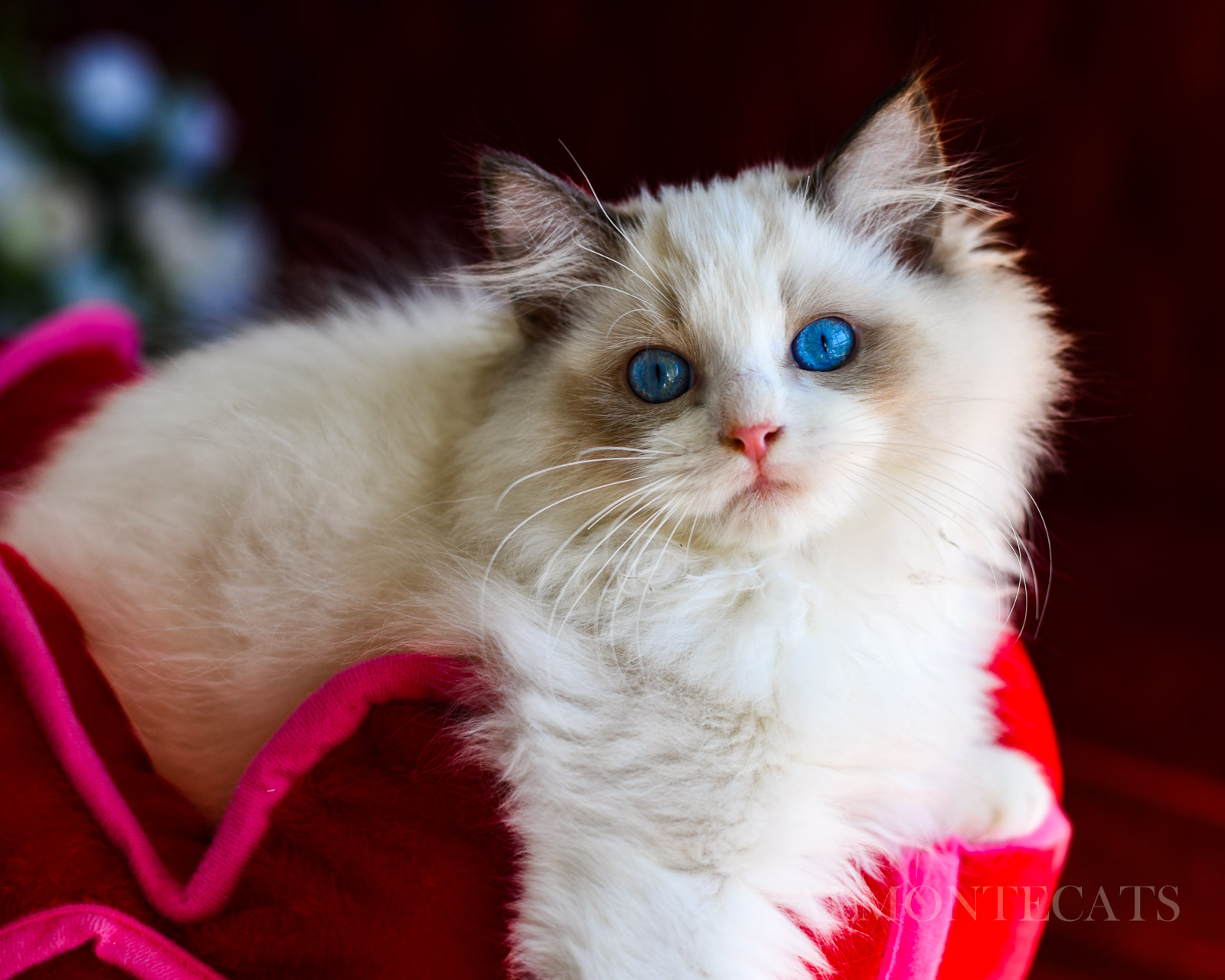
A Bicolor Ragdoll is a Ragdoll cat with a distinctive white pattern, usually including an inverted V on the face, white legs, a white chest, and a white belly. The contrast between their colored ears and bright white facial markings makes bicolor one of the most recognizable Ragdoll patterns.
Bicolor isn’t a coat color. It’s a pattern that can appear in seal, blue, chocolate, lilac, and other Ragdoll colors. You can even have a Lynx Bicolor Ragdoll with tabby markings.
If you’re trying to identify a bicolor kitten or wondering how those markings change as your cat grows, I’ll walk you through what to look for and what we’ve learned raising Ragdolls in our home.
Bicolor Ragdoll Quick Facts
| Feature | Description |
|---|---|
| Breed | Ragdoll |
| Coat pattern | Bicolor (pointed coat with white spotting) |
| Signature marking | Inverted white V on the face |
| Common colors | Seal, blue, chocolate, lilac, red, cream |
| Eye color | Blue |
| Nose color | Typically pink |
| Legs and belly | White |
| Coat length | Semi-longhair |
| Kitten coloring | Born nearly white; points develop with age |
| Adult color development | May continue darkening for several years |
| Temperament | Affectionate, social, generally gentle |
| Pattern genetics | Colorpoint pigmentation and white spotting |

What Is a Bicolor Ragdoll Cat?
A Bicolor Ragdoll is a purebred Ragdoll with white spotting combined with its pointed coloring. Unlike a traditional colorpoint Ragdoll, which has a darker face, ears, legs, and tail, a bicolor has large areas of white that create a very different appearance.
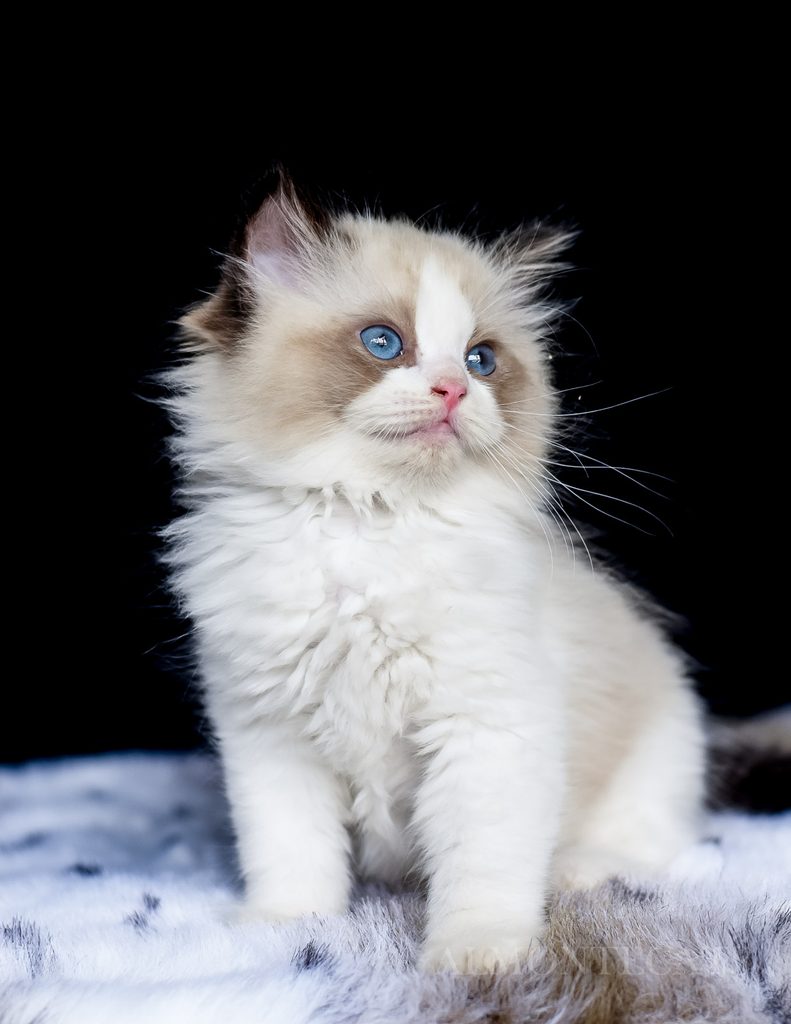
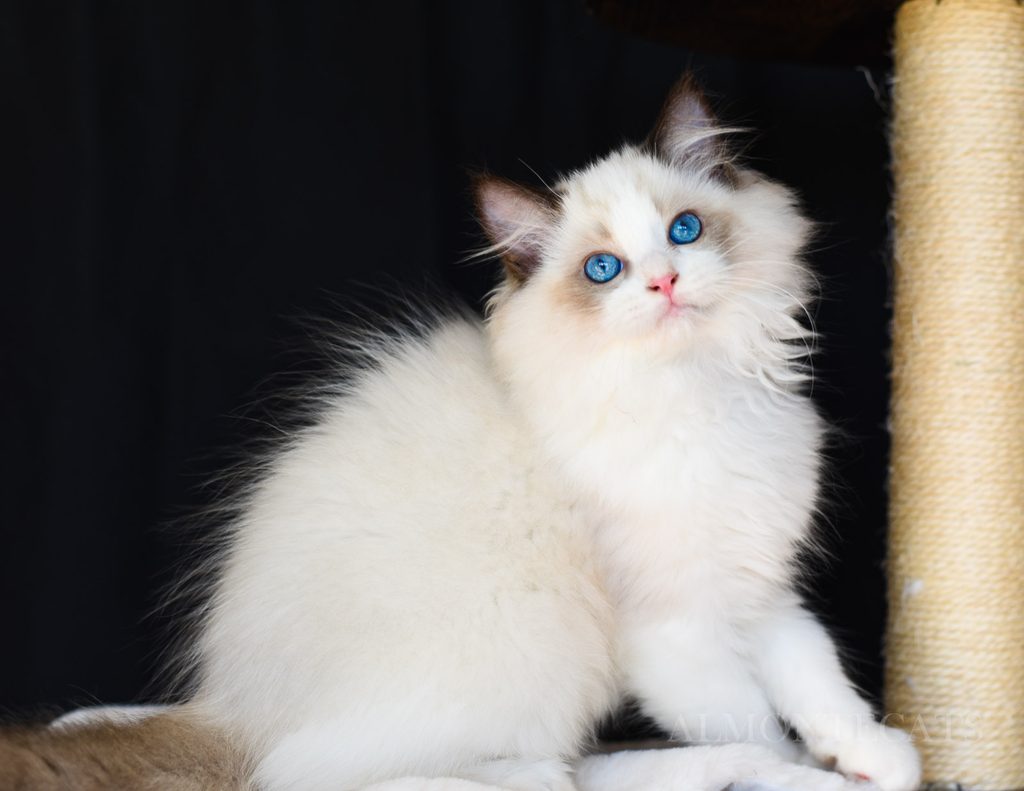
The most recognizable feature is the inverted white V on the face. It begins between the eyes and extends down toward the cheeks and muzzle, creating a beautiful contrast against the darker coloring on the ears and upper face.
Bicolor Ragdolls also have white legs, a white chest, and a white belly. Their backs may have varying amounts of color, depending on their genetics and individual markings.
Like other traditional pointed Ragdolls, they have blue eyes and a soft, semi-long coat.
The bicolor pattern doesn’t change a Ragdoll’s personality, size, or coat texture. A Seal Bicolor and a Blue Bicolor can have very different appearances, but both share the same breed characteristics.
Bicolor Ragdoll Colors Overview
Bicolor Ragdolls occur in six primary point colors: seal, blue, chocolate, lilac, red, and cream. Each combines temperature-sensitive point pigmentation with white spotting. All traditional pointed Bicolor Ragdolls have blue eyes.
| Color | Body Color | Point Color | Genetic Basis |
|---|---|---|---|
| Seal Bicolor | Ivory to cream | Dark seal brown | Black-based pigment (B/-), non-dilute (D/-) |
| Blue Bicolor | Bluish-white to cool gray | Slate blue-gray | Black-based pigment (B/-), dilute (d/d) |
| Chocolate Bicolor | Ivory | Warm chocolate brown | Chocolate (b/b or b/bˡ), non-dilute (D/-) |
| Lilac Bicolor | Frosty white | Pale pinkish-gray | Chocolate (b/b or b/bˡ), dilute (d/d) |
| Red (Flame) Bicolor | Creamy white | Red-orange | Orange-linked pigment (O), non-dilute (D/-) |
| Cream Bicolor | Creamy white | Pale cream | Orange-linked pigment (O), dilute (d/d) |
Genetic notation: B/- indicates at least one dominant black allele; D/- indicates at least one non-dilute allele. The white spotting pattern is inherited separately from the genes determining point color.
How to Identify a Bicolor Ragdoll
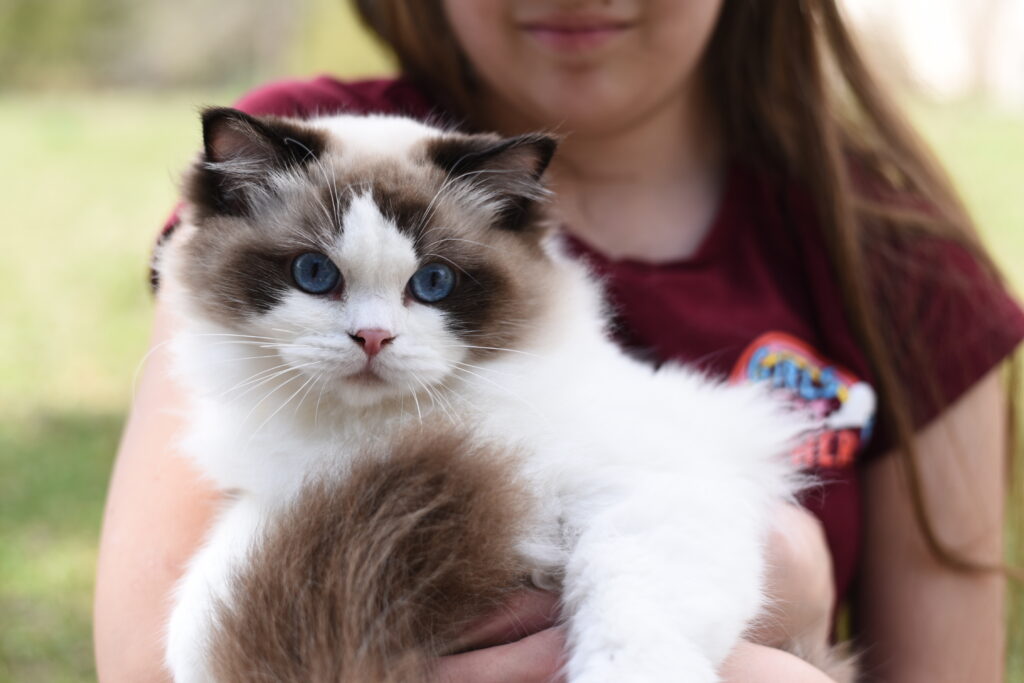
The easiest way to recognize a Bicolor Ragdoll is by looking at its face. That inverted white V is usually the first thing people notice, but there are several other markings that help distinguish a bicolor from a mitted or colorpoint Ragdoll.
The Inverted White V on the Face
A typical Bicolor Ragdoll has a white V that begins on the forehead and extends down across the nose and muzzle. The colored areas on either side create the contrast that makes this pattern so distinctive.
Some bicolors have a narrow, perfectly balanced V. Others have a wider blaze or slightly uneven markings.
Not every Bicolor Ragdoll has a perfectly symmetrical face. Show standards favor particular markings, but an uneven V doesn’t mean a cat isn’t purebred. It simply means the markings may not meet the ideal show standard.
White Legs, Chest, Belly and Pink Nose
Beyond the face, there are several characteristics to look for:
- White legs and paws: Bicolor Ragdolls typically have white on all four legs, rather than just the white mittens seen in mitted Ragdolls.
- White chest and belly: The white usually continues from the chin down through the chest and underside of the body.
- Pink nose leather: The white facial blaze typically includes the nose, giving bicolor Ragdolls their characteristic pink nose.
- Colored ears and tail: These retain the cat’s underlying point color, whether seal, blue, chocolate, or another recognized color.
- Color on the back: Some bicolors have large areas of color across their backs, while others have considerably more white.
The amount and placement of white can vary from one kitten to another, even within the same litter.
Can a Bicolor Ragdoll Have Imperfect Markings?
Absolutely. One of the things I’ve learned raising Ragdolls is that even kittens from the same litter can have very different facial markings.
One kitten might have a perfectly centered V, while another has a wider blaze or more white on one side of the face. Both can be beautiful, healthy, purebred Ragdolls.
Breed standards describe the ideal markings for showing, but those standards shouldn’t be confused with the qualities that make a good companion.
When families are choosing a kitten, I encourage them to look beyond how perfectly the white markings line up. A symmetrical face may be lovely in photographs, but temperament, health, and how well a kitten fits your home matter much more.
Looking for a Bicolor Ragdoll Kitten?
If you’ve fallen in love with the bicolor pattern, we’d love to introduce you to our Ragdoll kittens.
Our kittens are raised in our home, where we get to know their personalities as they grow. They come from health-tested, registered parents and go home with age-appropriate vaccinations, a veterinary examination, microchip, and a written health guarantee.
We plan only a few litters each year, and some kittens are reserved before they’re ready to go home.
Take a look at our available kittens page, and if someone catches your eye, we’d be happy to arrange a live video call so you can meet them.
Bicolor vs. Mitted vs. Colorpoint Ragdolls
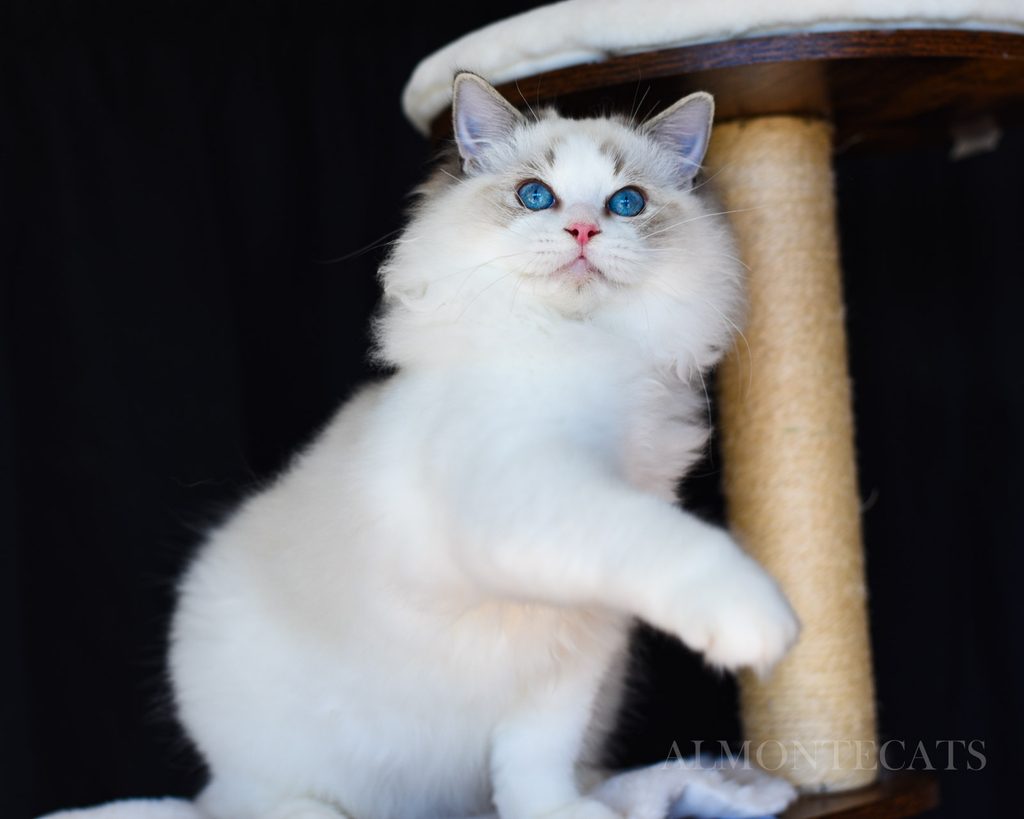
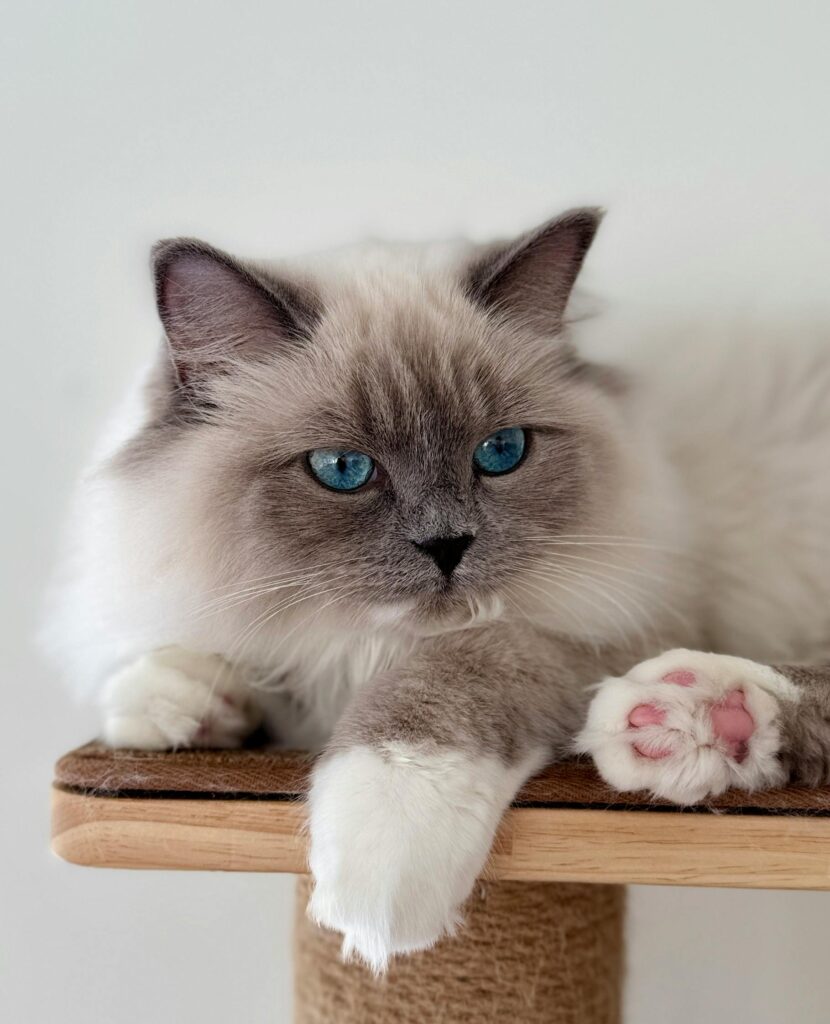
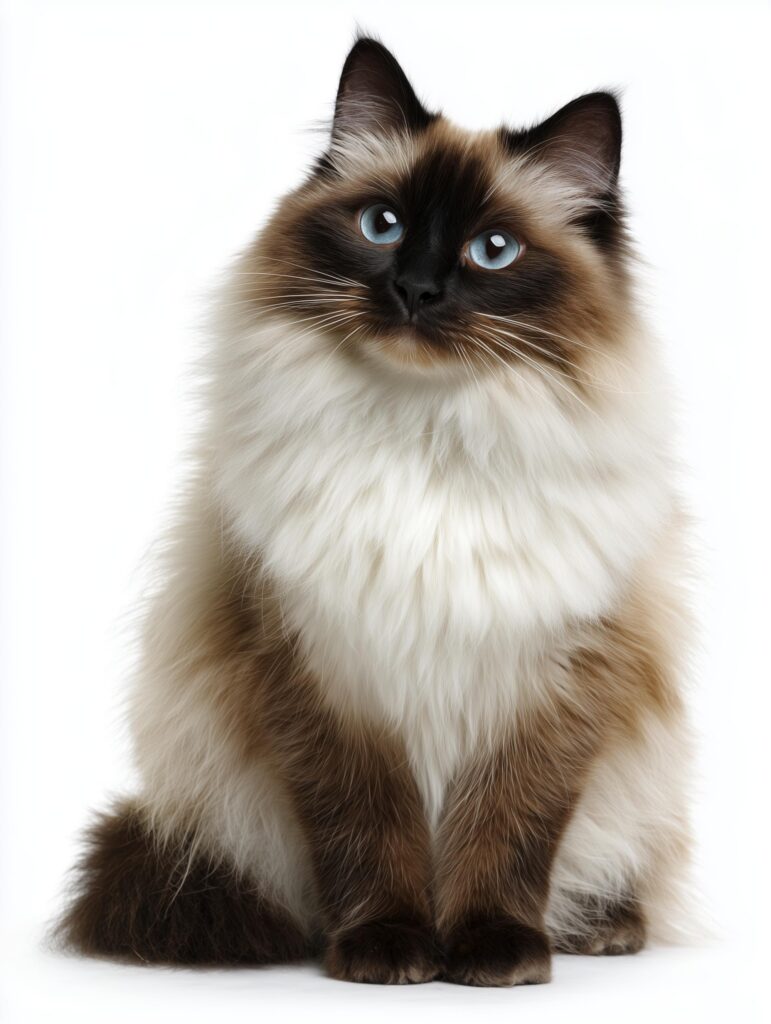
The difference between bicolor, mitted, and colorpoint Ragdolls is the distribution of white fur. All three patterns occur in purebred Ragdolls and can appear in seal, blue, chocolate, lilac, red, and cream.
Ragdoll Coat Pattern Comparison
| Feature | Bicolor Ragdoll | Mitted Ragdoll | Colorpoint Ragdoll |
|---|---|---|---|
| Face | Inverted white V | Colored mask, sometimes with a white blaze | Fully colored mask |
| Nose leather | Usually pink | Matches point color | Matches point color |
| Front paws | White legs and paws | White mittens | Colored |
| Back legs | White extends up the legs | White boots extending toward the hocks | Colored |
| Chin | White | White | Colored |
| Chest and belly | White | White chin and belly stripe | Lighter body color without white spotting |
| Ears and tail | Colored | Colored | Colored |
| Eye color | Blue | Blue | Blue |
Can a Mitted Ragdoll Be Mistaken for a Bicolor?
Yes. Some Ragdolls have more extensive white spotting than a typical mitted cat, making them difficult to distinguish from bicolors by appearance alone.
A high-mitted Ragdoll may have white extending farther up the legs and across the face. Depending on the markings, it can closely resemble a traditional bicolor.
This is especially important when evaluating breeding cats. The amount of visible white doesn’t always reveal the exact genetic combination responsible for the pattern.
For pet owners, the distinction is primarily visual. Both patterns occur in purebred Ragdolls and have the same general breed characteristics.
Bicolor Ragdoll Genetics: How the Pattern Is Inherited
Bicolor Ragdolls inherit two separate sets of genetic traits: the genes responsible for their point color and the genes influencing the distribution of white fur.
The colorpoint pattern is associated with variants of the TYR gene, which produces temperature-sensitive pigmentation. This is why Ragdoll kittens are born nearly white and gradually develop darker coloring on their ears, face, legs, and tail.
White spotting is a separate inherited trait associated with the KIT gene. It affects where pigment-producing cells develop, creating the white areas characteristic of bicolor and mitted Ragdolls.
The White Spotting Gene in Ragdolls
White spotting can produce different amounts and distributions of white, from small markings on the paws to extensive white areas across the face and body.
In Ragdolls, breeders have traditionally described patterns such as mitted, bicolor, and high-mitted. These descriptions are useful for identifying appearance, but the inheritance of white spotting is more complex than a simple visual classification.
Two kittens may look similar while carrying different genetic combinations associated with white spotting.
What Is a High-Mitted Ragdoll?
A high-mitted Ragdoll has more extensive white markings than a typical mitted Ragdoll. The white may extend farther up the legs and across the face, sometimes producing an appearance similar to a bicolor.
The term is used in Ragdoll breeding to describe particular white-spotting patterns and their inheritance.
Because visible markings can overlap, pedigree information and knowledge of the parents are important when evaluating these cats.
Can Two Bicolor Ragdolls Produce Mitted or Colorpoint Kittens?
Yes, depending on the genetic combinations carried by the parents.
A bicolor appearance does not always indicate the same underlying white-spotting genotype. Some combinations can produce kittens with less white, including mitted or colorpoint appearances.
Other combinations may produce kittens with extensive white markings.
Predicting these outcomes requires more than identifying the parents as bicolor. Their pedigrees, previous litters, and available genetic information are important.
Can DNA Testing Confirm a Bicolor Ragdoll?
DNA testing can identify several genes responsible for feline coat color, including colorpoint, dilution, chocolate, and certain white-spotting variants.
However, a DNA test cannot reliably classify every Ragdoll as bicolor, mitted, or high-mitted based on a single result.
White spotting can vary considerably in expression, and not all of the genetic factors influencing its distribution are fully understood.
For breeders, DNA testing is most useful when combined with documented pedigrees, known parentage, and observations from previous litters.
Bicolor Ragdoll Kitten Development: Birth to Adulthood
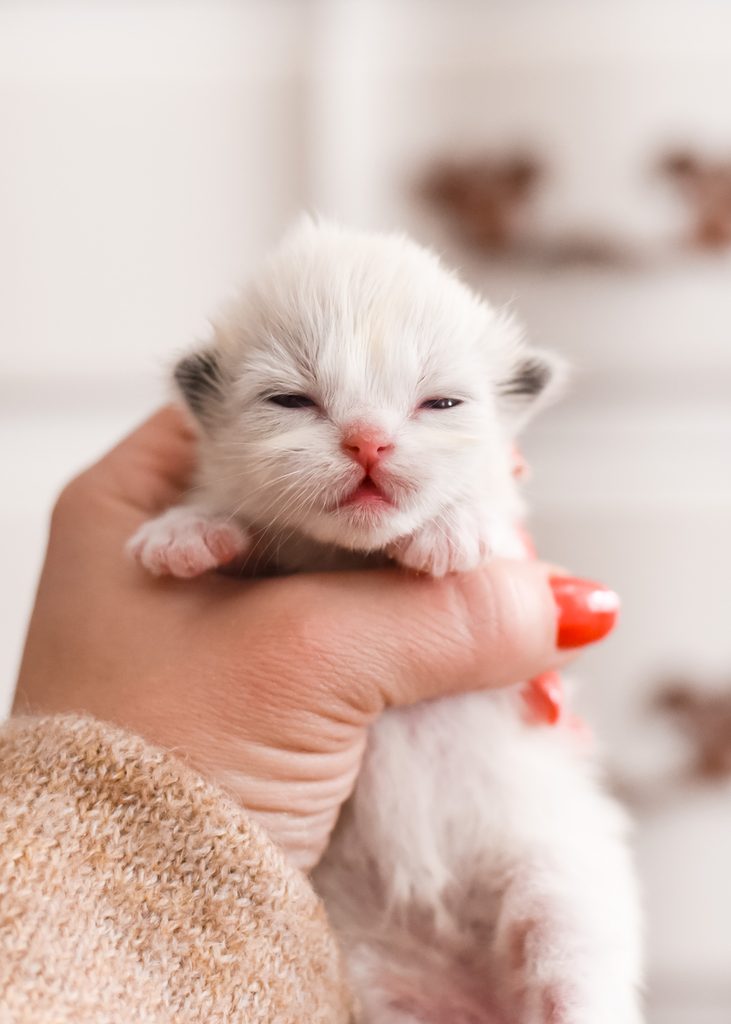
Bicolor Ragdoll kittens are born almost completely white. Their point colors develop gradually as they grow, while the white areas on their faces, legs, and bodies remain white.
This happens because Ragdolls carry a temperature-sensitive form of albinism. Pigment develops more readily in cooler areas of the body, particularly the ears, face, legs, and tail.
One of the things I enjoy most about raising Ragdolls is watching their colors develop. A Seal Bicolor kitten that looks almost white at four weeks can have a much darker face and ears by the time it’s a year old.
When Do Bicolor Ragdoll Kittens Get Their Markings?
The white spotting pattern is genetically established before birth, but it can be difficult to distinguish from the kitten’s pale coat during the first few weeks.
As point pigmentation develops, the contrast between the colored areas and white markings becomes easier to see.
Seal and blue bicolor kittens often show noticeable point color earlier than chocolate and lilac kittens, although development varies.
Bicolor Ragdoll Kitten Color Development by Age
| Age | Typical Color Development |
|---|---|
| Birth | Nearly white coat with little visible point pigmentation |
| 2 weeks | Faint color may begin appearing on the ears and tail |
| 4 weeks | Point color becomes more noticeable, making the facial V easier to identify |
| 6–8 weeks | Ears, tail, and facial markings become more defined |
| 12 weeks | Clearer contrast between colored points and white spotting |
| 6 months | Points darken, and some body shading begins to develop |
| 1 year | More mature point color and increasingly defined contrast |
| 2–3 years | Adult coloring continues to develop, with some cats becoming noticeably darker |
These ages are approximate. Coat development depends on the individual cat’s genetics, color, and environment.
Do Bicolor Ragdolls Get Darker With Age?
Yes. Most Bicolor Ragdolls develop darker point coloring as they mature.
Seal Bicolor Ragdolls generally show the strongest contrast, with deep brown ears and facial markings against their white areas. Blue Bicolors develop softer blue-gray points, while lilac and cream bicolors typically remain much lighter.
Temperature also influences pigmentation. New fur growing in cooler conditions may develop darker coloring than fur growing in warmer conditions.
The white areas of a bicolor coat are different. Because white spotting prevents pigment from developing in those regions, the inverted V, white legs, and white belly remain white as the cat matures.
Can You Predict a Bicolor Kitten’s Adult Color?
You can make an educated estimate, but you cannot predict exactly how dark an individual kitten will become.
When evaluating our kittens, I look at their developing point color, the coloring of both parents, and how related cats from the same bloodlines have matured.
Photographs of older siblings can be particularly helpful. They show how similar genetic backgrounds have developed over time, although each kitten will still have its own markings and degree of contrast.
This is why I encourage families to look beyond a kitten’s appearance at eight or twelve weeks. The little kitten they’re choosing will continue changing for several years, and its adult coat may look quite different from those first photographs.
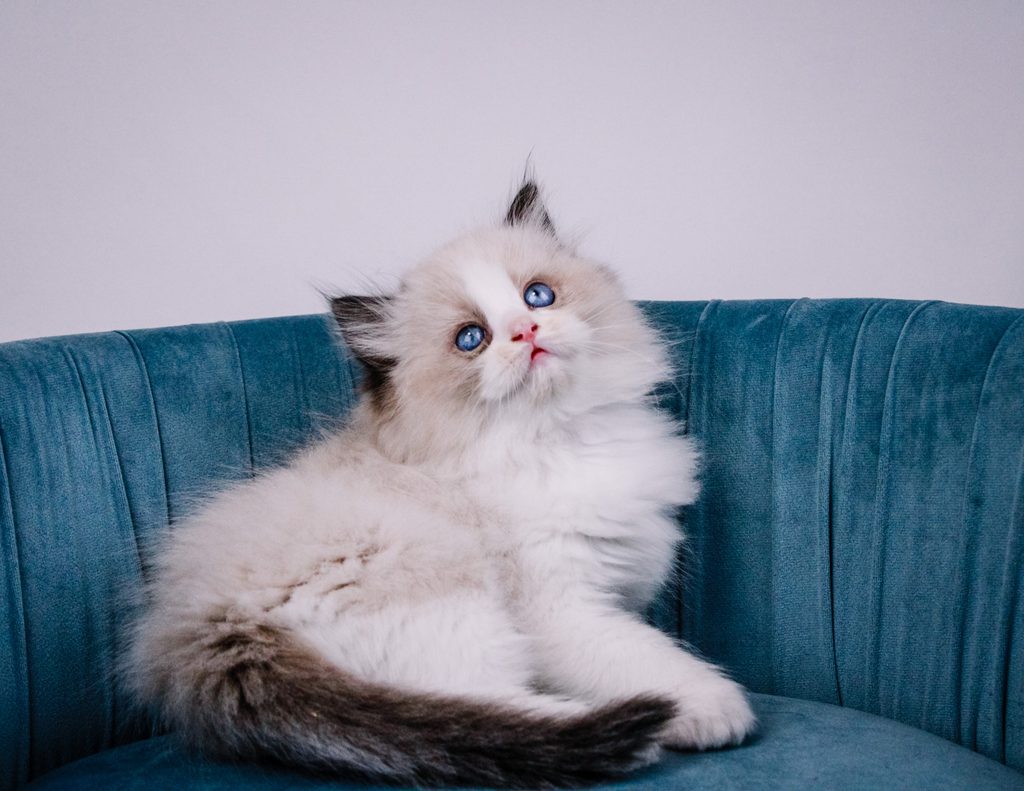
Bicolor Ragdoll Kittens: What to Expect
Are Bicolor Ragdoll Kittens are Born White?
All Ragdoll kittens, including bicolors, are born completely white. Their pattern and color points begin developing gradually as body temperature triggers pigment production. Around 2–3 weeks old, faint shading starts to appear on the ears, nose, and tail, giving early hints of whether the kitten will be seal, blue, chocolate, lilac, flame, or cream. See Ragdoll Cat Breed Standard.
Breeders watch closely during this stage, as even experienced eyes can take several weeks to accurately identify a kitten’s final color. This color transformation is one of the joys of raising Ragdolls — watching each kitten’s coat bloom into the soft, symmetrical look the breed is known for.
Developing Markings
Between 8 and 12 weeks, the bicolor pattern becomes clearly visible. You’ll begin to see the distinct inverted white “V” on the face, white chest and legs, and deeper shading along the ears and tail.
By the time kittens reach 10–12 weeks, their color contrast becomes stronger and their markings more defined. The most desirable bicolors have balanced symmetry, with the white “V” stopping just above the eyes and a clean separation between light and dark fur.
Even though the pattern stabilizes by 12 weeks, Ragdoll coats continue to deepen in tone for up to two years, gradually maturing into their adult color. This is especially noticeable in seal and blue bicolors, whose dark points intensify as they age.
Each bicolor Ragdoll kitten develops uniquely — some show their pattern early, while others take time to reach full definition.
Our Bicolor Ragdoll Kittens Temperament
From the moment their personalities start to emerge, bicolor Ragdoll kittens show the gentle, trusting nature that defines the breed. Around 10 weeks old, many begin to display the signature “Ragdoll flop” — the instinct to relax completely when picked up or cuddled.
Bicolor kittens are curious, social, and people-oriented, preferring to follow their humans rather than climb or hide. But they do like to play…a lot! We love watching them interact.
During the socialization stage (weeks 8–16), they learn confidence through gentle handling, grooming sessions, and supervised play. Kittens raised in-home — as they are at Almonte Cats — develop strong emotional resilience and adapt quickly to family life, children, and even friendly dogs.
Expect a kitten that greets you at the door, curls up beside you for naps, and maintains that affectionate “puppy-like” loyalty the Ragdoll breed is loved for.
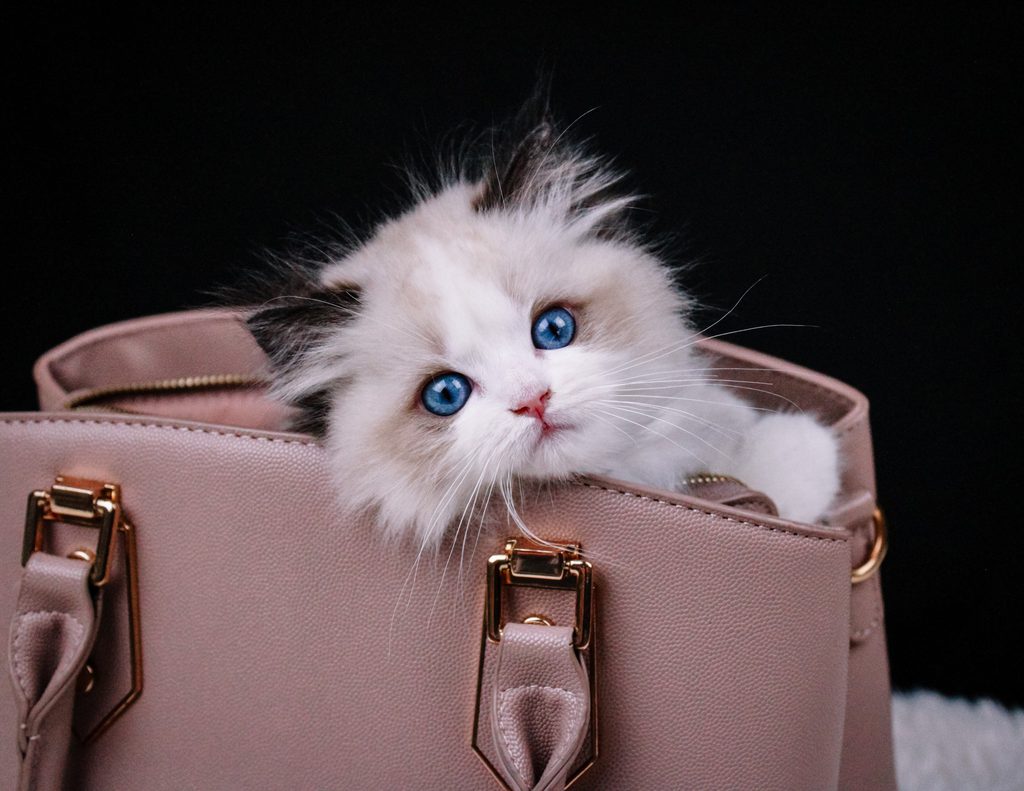
What We’ve Learned Raising Bicolor Ragdoll Kittens
After raising Ragdoll kittens in our home, one thing I’ve learned is that you can’t judge a bicolor kitten’s adult appearance by how it looks in its first few weeks. Even kittens from the same litter can develop very different coloring and contrast.
How Early Can You Identify a Bicolor Ragdoll Kitten?
With seal and blue kittens, the first hints of color often appear on the ears and tail within the first couple of weeks. As the facial coloring develops, the white V becomes easier to recognize.
Lighter colors, particularly lilac and cream, can take longer to show enough contrast to clearly see the pattern.
I prefer to give kittens time to develop before making firm predictions about their appearance. By six to eight weeks, we usually have a much better idea of their markings.
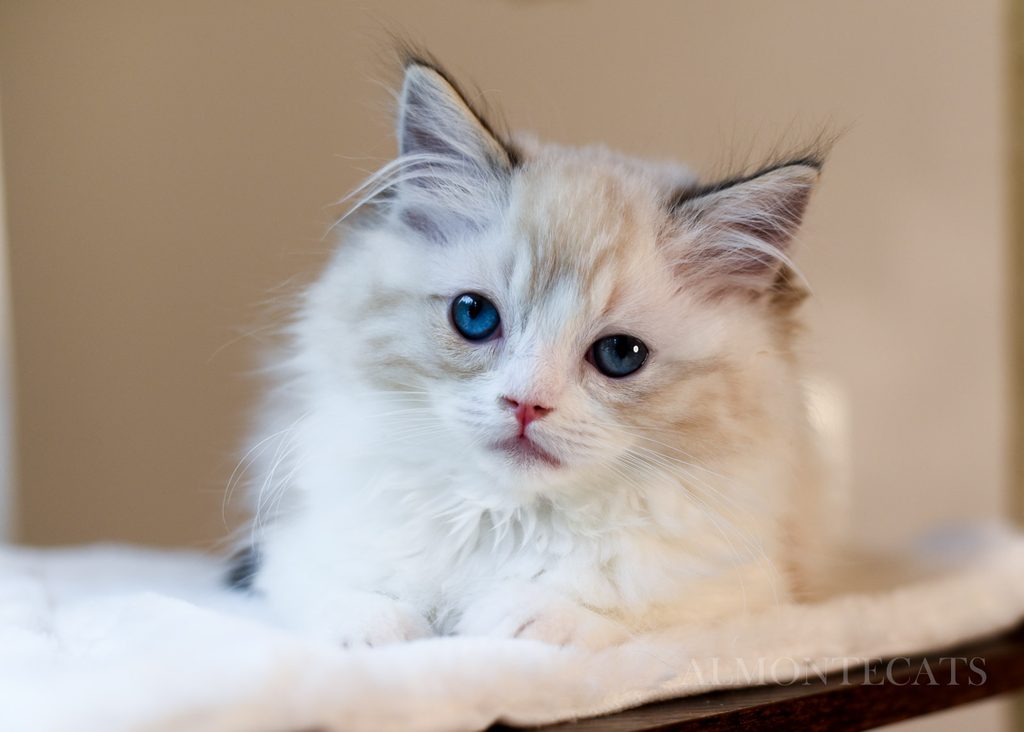
Why Do Some Bicolor Kittens Have More Contrast Than Others?
Two bicolor kittens can have the same point color and still look very different.
One Seal Bicolor may develop a deep brown mask and ears against a pale body. Another may develop more shading across the back, creating a softer contrast between the colored and white areas.
The amount of white spotting also varies. Some kittens have a narrow, symmetrical V, while others have a wider blaze or more white across the face.
These differences are part of each kitten’s individual appearance, not an indication of better health or temperament.
What Can the Parents Tell Us About a Kitten’s Adult Coloring?
The parents are one of the first things I look at when estimating how a kitten’s color might develop.
Their point colors, body shading, and white markings provide useful information. I also pay attention to older siblings and previous litters from the same bloodlines.
A kitten may inherit its father’s darker point coloring while developing a facial pattern that resembles its mother. Others may look quite different from both parents.
Parent photographs are helpful, but they aren’t a guarantee of what a kitten will look like as an adult.
For families choosing a Bicolor Ragdoll, I recommend looking at the kitten’s current markings alongside photographs of its parents and older relatives. That gives a much more realistic picture of how the coat may mature than relying on a single kitten photograph.

Are Bicolor Ragdolls Rare?
Bicolor Ragdolls are not rare. Bicolor is one of the established coat patterns recognized in the Ragdoll breed and is commonly seen in both pet and show lines.
However, some bicolor color combinations are less frequently available than others. Seal and Blue Bicolor Ragdolls are widely represented, while Chocolate, Lilac, Red, and Cream Bicolors may be harder to find depending on the breeder’s bloodlines.
The amount and placement of white also vary between individual cats. A perfectly symmetrical inverted V may be desirable for showing, but it doesn’t make a Ragdoll genetically rarer or a better companion.
If you’re choosing a Bicolor Ragdoll kitten, I recommend focusing on health, temperament, and the breeder’s experience rather than rarity claims.

Do Bicolor Ragdolls Have Different Personalities?
No. The bicolor pattern does not influence a Ragdoll’s personality. A Seal Bicolor isn’t naturally calmer than a Blue Bicolor, and a Lilac Bicolor isn’t more affectionate because of its coloring.
Ragdolls are generally known for their affectionate, social personalities. Many enjoy following their people around the house, being involved in everyday activities, and settling beside someone for attention.
But individual personalities still vary. Some kittens are outgoing and playful, while others are quieter and prefer a little more independence.
When raising our kittens, I pay close attention to how each one responds to handling, play, new experiences, and interaction with people. Those observations tell me much more about a kitten’s personality than its coat color ever could.
Bicolor Ragdoll Grooming and Care
Bicolor Ragdolls have the same soft, semi-long coat as other Ragdolls. Their white markings don’t require a different grooming routine, although dirt and staining may be more noticeable on the white areas.
I recommend combing your Ragdoll two to three times per week with a stainless steel comb, paying particular attention to the areas behind the ears, under the front legs, and around the hindquarters.
Regular nail trimming, dental care, and a complete, balanced diet are also important.
Most healthy Ragdolls don’t need frequent baths. Regular combing is usually enough to keep their coats clean and comfortable.
For a more detailed routine, see our complete Ragdoll grooming guide.
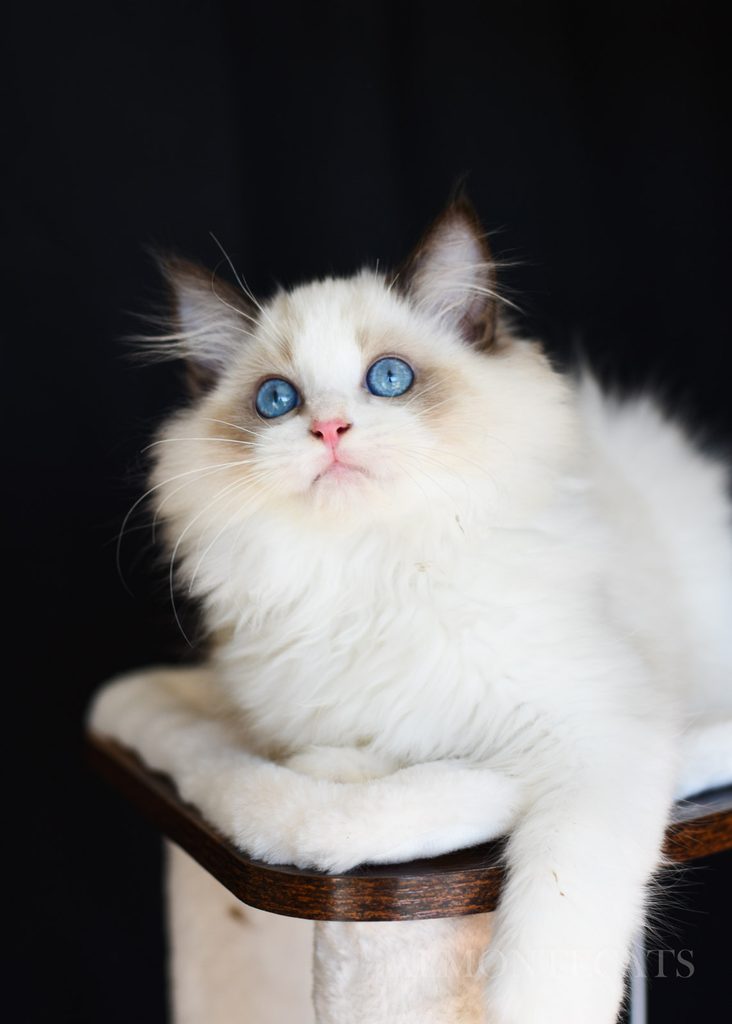
Frequently Asked Questions About Bicolor Ragdolls
What is a Bicolor Ragdoll?
A Bicolor Ragdoll is a Ragdoll cat with white spotting that typically creates an inverted white V on the face, white legs, a white chest, and a white belly. Bicolor describes the coat pattern, not the color. Bicolor Ragdolls can be seal, blue, chocolate, lilac, red, cream, and other color combinations.
What is the difference between a Bicolor and Mitted Ragdoll?
Bicolor Ragdolls typically have an inverted white V on the face and extensive white on their legs and underside. Mitted Ragdolls generally have a colored face, white chin, white front paws, and white boots on their back legs. Some high-mitted Ragdolls can resemble bicolors.
Are Bicolor Ragdolls purebred?
Yes. Bicolor is a recognized Ragdoll coat pattern. However, having bicolor markings does not automatically make a cat a purebred Ragdoll. Purebred status is established through documented pedigree and registration, not appearance alone.
Are all Bicolor Ragdoll kittens born white?
Traditional pointed Bicolor Ragdoll kittens are born nearly white because their temperature-sensitive colorpoint genes limit pigment production before birth. Their ears, face, and tail gradually develop color over the following weeks. The white spotting pattern becomes easier to identify as the surrounding pigmentation develops.
Do Bicolor Ragdolls have blue eyes?
Yes. Traditional pointed Bicolor Ragdolls have blue eyes, although the shade can vary between individuals. Eye color is associated with the colorpoint gene rather than the bicolor white spotting pattern. Green, gold, or copper eyes are not characteristic of traditional pointed Ragdolls.
Can a Bicolor Ragdoll have an uneven white V?
Yes. The inverted white V can vary in width, shape, and symmetry. An uneven blaze does not mean a cat isn’t purebred, although it may be considered a marking fault under breed show standards. Facial symmetry has no established relationship with health or temperament.
What is the rarest Bicolor Ragdoll color?
There is no reliable breed-wide ranking of bicolor color rarity. Chocolate and lilac bicolors may be less frequently encountered than seal and blue, depending on the breeding population. Availability also depends on which colors individual breeders produce.
Can a Bicolor Ragdoll have lynx markings?
Yes. A Lynx Bicolor Ragdoll combines tabby markings with the bicolor white spotting pattern. The colored areas may show forehead stripes, facial markings, and rings around the tail. Lynx bicolors can occur in seal, blue, and other point colors.
Do Bicolor Ragdolls get darker with age?
Yes. Most traditional pointed Bicolor Ragdolls develop darker point coloring as they mature. Seal bicolors often develop stronger brown pigmentation, while blue bicolors develop blue-gray markings. The white spotting areas remain white because those regions lack normal pigment production.
Are Bicolor Ragdolls more expensive?
Not necessarily. Bicolor markings alone do not determine a Ragdoll’s price. Pricing varies according to the breeder, pedigree, health testing, location, and whether the kitten is placed as a pet or for breeding. Unusual markings or colors may influence individual pricing, but they don’t guarantee greater quality.
Can two Bicolor Ragdolls produce colorpoint kittens?
Yes, certain genetic combinations can produce colorpoint kittens without visible white spotting. However, not every bicolor pairing can produce them. The outcome depends on the parents’ underlying white-spotting genetics, which cannot always be determined from appearance alone.
What is the difference between a Seal and Blue Bicolor Ragdoll?
A Seal Bicolor Ragdoll has dark brown points, while a Blue Bicolor Ragdoll has diluted blue-gray points. Both share the same general bicolor white spotting pattern and blue eyes. Blue is the dilute version of seal, resulting from inheriting two copies of the recessive dilution allele.
How Can I Reserve a Bicolor Ragdoll Kitten?
To reserve a Bicolor Ragdoll kitten, start by completing our kitten application. Once approved, you can reserve an available kitten or join our waitlist for an upcoming litter. We consider both your color preferences and the kitten’s personality to help you find the right fit.
See our Available Ragdoll Kittens for Sale Here.
Related Colors and Patterns
- Black Ragdoll Cat Color
- Chocolate Point Ragdoll Color
- Black and White Tuxedo Ragdolls
- Lilac Point Ragdoll
- How Much Does A Cinnamon Ragdoll Cost?
- Lynx Pattern Ragdoll Guide
- Blue Mitted Ragdolls
Ragdoll Breed Standards and Genetics Resources
For additional information about Ragdoll coat patterns, color inheritance, and breed standards, these organizations provide useful references.
- The International Cat Association (TICA) – Ragdoll breed information and recognized colors and patterns.
- Cat Fanciers’ Association (CFA) – Official Ragdoll breed standards, including bicolor markings.
- UC Davis Veterinary Genetics Laboratory – Feline coat color genetics and available DNA tests.
- University of Missouri Feline Genetics Laboratory – Research on feline genetics and inherited traits.
- Ragdoll Fanciers Club International – Ragdoll breed education and historical information.





Read the Comments +