
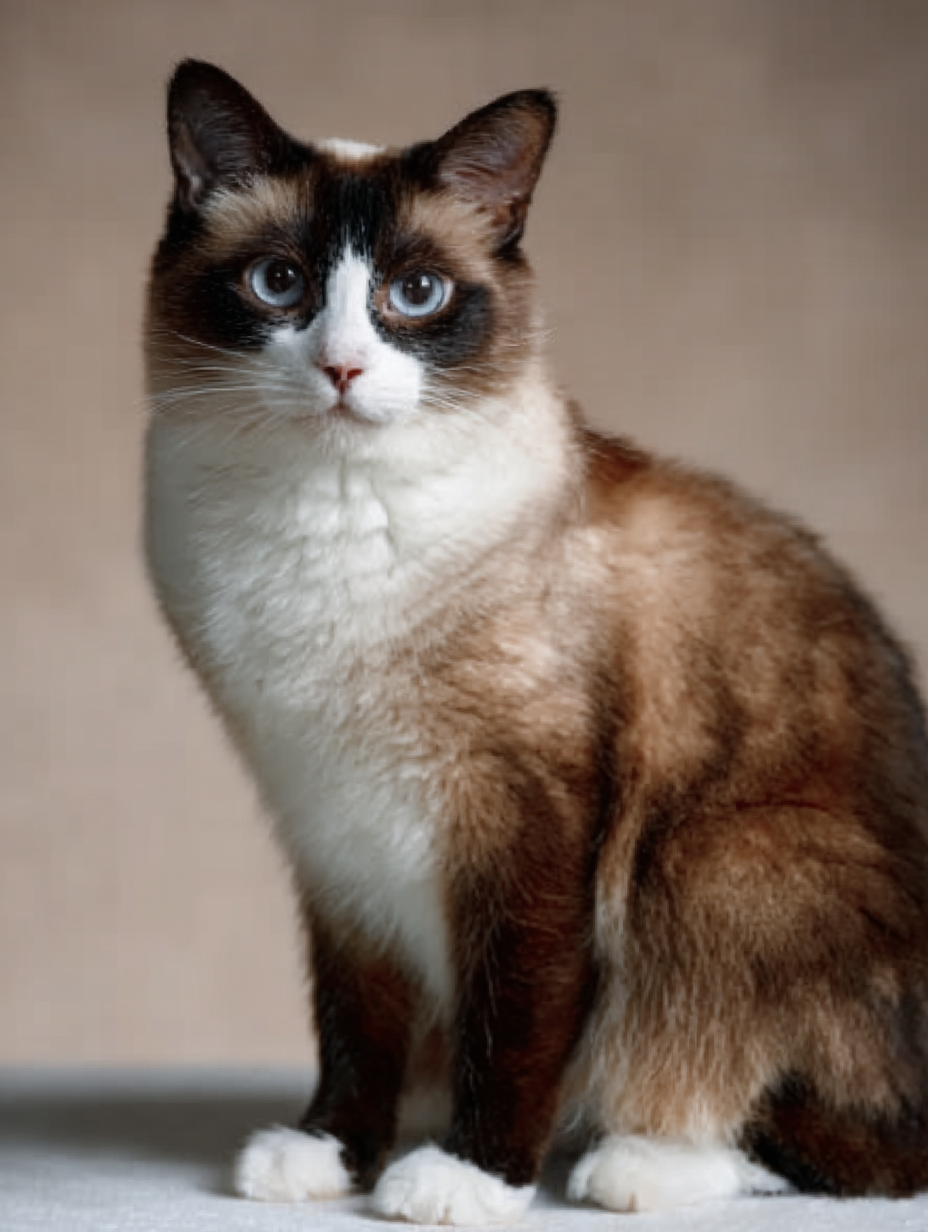
The Snowshoe cat is a rare, striking breed known for its vivid blue eyes, pointed coat, and signature white “snow-boot” feet. Developed from Siamese and American Shorthair lines, the Snowshoe blends the intelligence and vocal nature of the Siamese with the softer temperament and sturdy structure of the American Shorthair. The result is an affectionate, expressive, people-centered cat with a unique blend of elegance and athleticism.
Although the Snowshoe is adored for its beauty and gentle personality, many families still wonder what living with one is truly like. Are Snowshoes talkative? How large do Snowshoe cats get? What colors do they come in? Are they similar to Siamese cats? How social are they? This guide covers everything — appearance, structure, temperament, color genetics, grooming, personality, health considerations, and more.
Snowshoe Cat: Quick Overview
Snowshoe cats are medium-sized, blue-eyed, pointed cats with distinctive white markings that make them one of the rarest and most recognizable breeds. Known for their affectionate, social, and intelligent temperament, Snowshoes thrive in homes where people interact with them daily. Their short, sleek coats come in seal, blue, chocolate, and lilac point with white patterns that vary widely between kittens. The breed’s Siamese ancestry contributes to their expressive communication and bright minds, while American Shorthair roots provide balance, stability, and gentle friendliness. This article explains Snowshoe personality, size, health, grooming, color genetics, and kitten development to help owners understand exactly what to expect from this unique breed.
Snowshoe Cat Summary Table
| Feature | Summary |
|---|---|
| Breed Status | Recognized breed (TICA & CFA) |
| Coat Type | Short, smooth, low-maintenance |
| Temperament | Affectionate, social, intelligent, playful |
| Size | Medium; typically 8–12 lbs |
| Structure | Athletic, balanced, semi-foreign build |
| Activity | Moderate; enjoys play, climbing, and people interaction |
| Color Range | Pointed patterns with white markings |
| Eye Colors | Always blue |
| Maturity | Typically 1–2 years |
| Ideal Home | Families, multi-pet homes, owners wanting an interactive cat |
| Shedding | Low–moderate |
| Recognition | Accepted by CFA and TICA |
What Is a Snowshoe Cat?”
A Snowshoe cat is a purebred, recognized breed known for its pointed coat, blue eyes, and distinct white feet. Originating from Siamese and American Shorthair lines, Snowshoes have an athletic, medium-sized build, a short low-maintenance coat, and a social, affectionate temperament. Their markings are genetically complex, making them one of the rarest and most visually striking companion cats.
“Are Snowshoe Cats Rare?”
Snowshoe cats are considered rare because their markings are difficult to reproduce, and only a small percentage of kittens meet the full breed standard. Even in well-planned litters, ideal boots and facial V patterns appear unpredictably, which naturally limits availability and increases demand.
“Snowshoe Cat Personality”
Snowshoe cats are social, affectionate companions who bond strongly with their families. They blend Siamese intelligence with a calmer, balanced temperament, making them interactive without being overwhelming. They enjoy conversation, play, and routine, and adapt well to homes with children or other pets.
Searching for a Snowshoe Kitten?
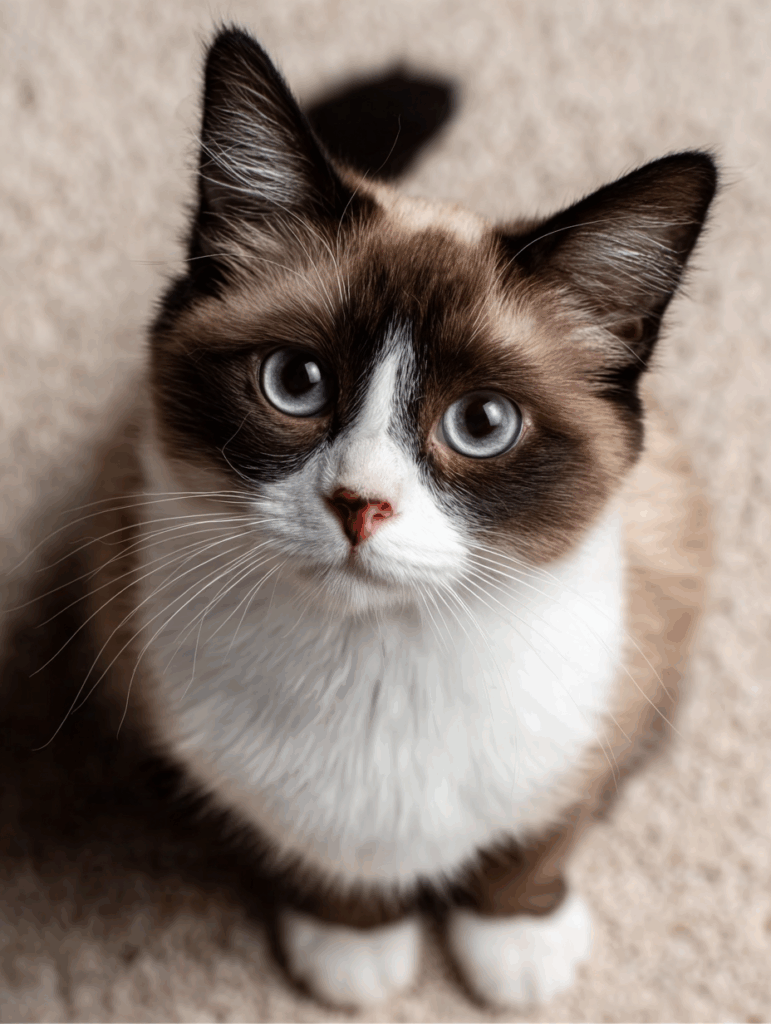
Snowshoe kittens appeal to families who want a companion with:
- A social, people-oriented personality
- Blue eyes and bold white markings
- A playful but gentle temperament
- Strong bonding behavior
- Intelligence, trainability, and emotional sensitivity
- A medium, athletic build that fits easily into most homes
Reputable Snowshoe breeders typically offer:
- CFA or TICA-registered kittens
- Health-tested breeding lines (HCM screening is common)
- In-home socialization to develop the Snowshoe’s interactive temperament
- Vet checks, vaccines, and health records
- Honest temperament evaluation to help match kittens to families
- Kitten contracts, health guarantees, and guidance for first-time owners
Because Snowshoes are a relatively rare breed with strict color and pattern requirements, availability varies widely and waitlists are common.
Breed Recognition, History & Development of the Snowshoe Cat
Registry Status
The Snowshoe is a recognized breed under both TICA and CFA with a clearly defined standard.
Unlike newer hybrid breeds, Snowshoes have a documented, intentional development process beginning in the 1960s.
- CFA: Fully recognized
- TICA: Fully recognized
- Status: Established breed with predictable traits
The Snowshoe’s signature appearance — the white feet, inverted V facial pattern, and colorpoint body — requires selective, thoughtful breeding to maintain consistency.
Snowshoe Cat History & Origin Story
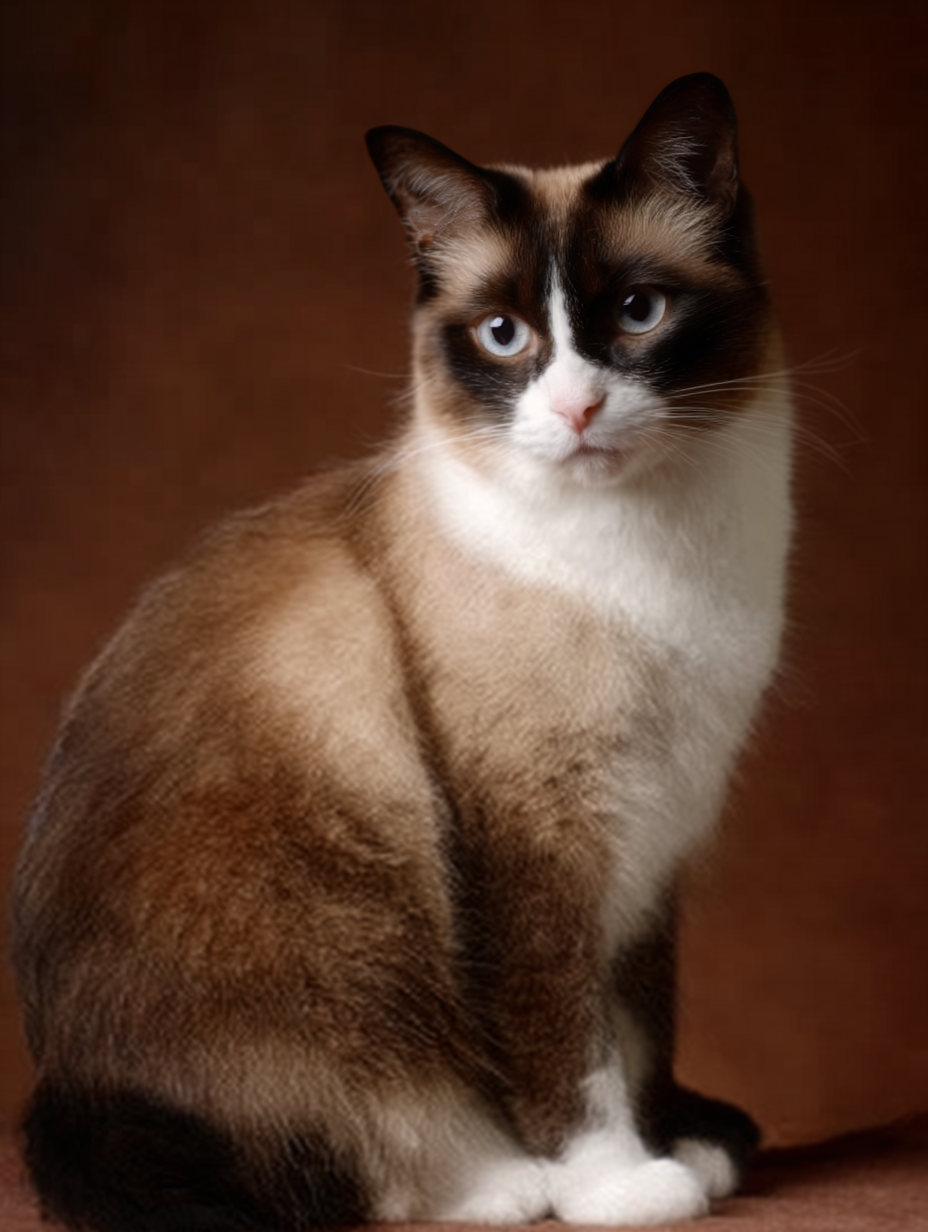
The Snowshoe cat originated in Philadelphia in the 1960s when Dorothy Hinds-Daugherty, a Siamese breeder, produced kittens with white paws. Intrigued by the combination of Siamese points and distinct white markings, she began developing a new breed using Siamese and bicolor American Shorthairs.
Key milestones in Snowshoe development include:
- Early breeders refined the unique white patterns through selective pairings
- The breed struggled initially due to the difficulty of producing the ideal markings reliably
- TICA recognized the Snowshoe in the 1980s
- CFA granted full recognition in the 1990s
- Modern breeders focus on consistency of markings, structure, and temperament
Today, Snowshoe cats retain the intelligence and vocal expressiveness of the Siamese while adding a calmer, more balanced temperament and a sturdier body.
Are Snowshoe Cats Purebred?
Yes. When produced from registered Snowshoe parents that meet CFA or TICA standards, Snowshoes cats are considered purebred. The breed was originally created through Siamese × American Shorthair pairings, but modern Snowshoe lines are generally pure and continue breeding true.
Snowshoes are known for:
- Predictable pointed coloration
- Blue eyes
- White “snow-boot” feet
- Inverted V facial patterns
- A confident but gentle personality
- Strong bonds with their families
Their genetic heritage means that no two Snowshoes look exactly alike — the pattern expression varies widely — but temperament, body structure, and coat type are consistent. See Snowshoe Cat vs Fauxshoe cat for more details.
How Snowshoe Cats Differ From Similar Breeds
Snowshoes often get compared to Siamese, Ragdolls, and colorpoint domestic mixes. While they share genetic roots with some of these cats, their temperament and appearance are distinct.
Snowshoe vs Siamese Cats
- Less vocal, though still communicative
- Softer, more moderate temperament
- Sturdier, more muscular build
- Shorter, denser coat
- White feet and facial patterns not found in Siamese
Compared to Ragdolls
- More active and playful
- Not floppy when held
- Shorter coat
- More agile, quicker movements
- Smaller and lighter overall
Compared to Colorpoint Shorthair or Domestic Colorpoint Mixes
- Predictable white markings
- Always blue eyes
- Recognized breed status
- Distinct standard and consistent temperament
Snowshoe cats sit firmly between Siamese expressiveness and shorthair athleticism, while adding a very people-focused, emotionally intuitive nature.
Understanding Snowshoe Cat Colors
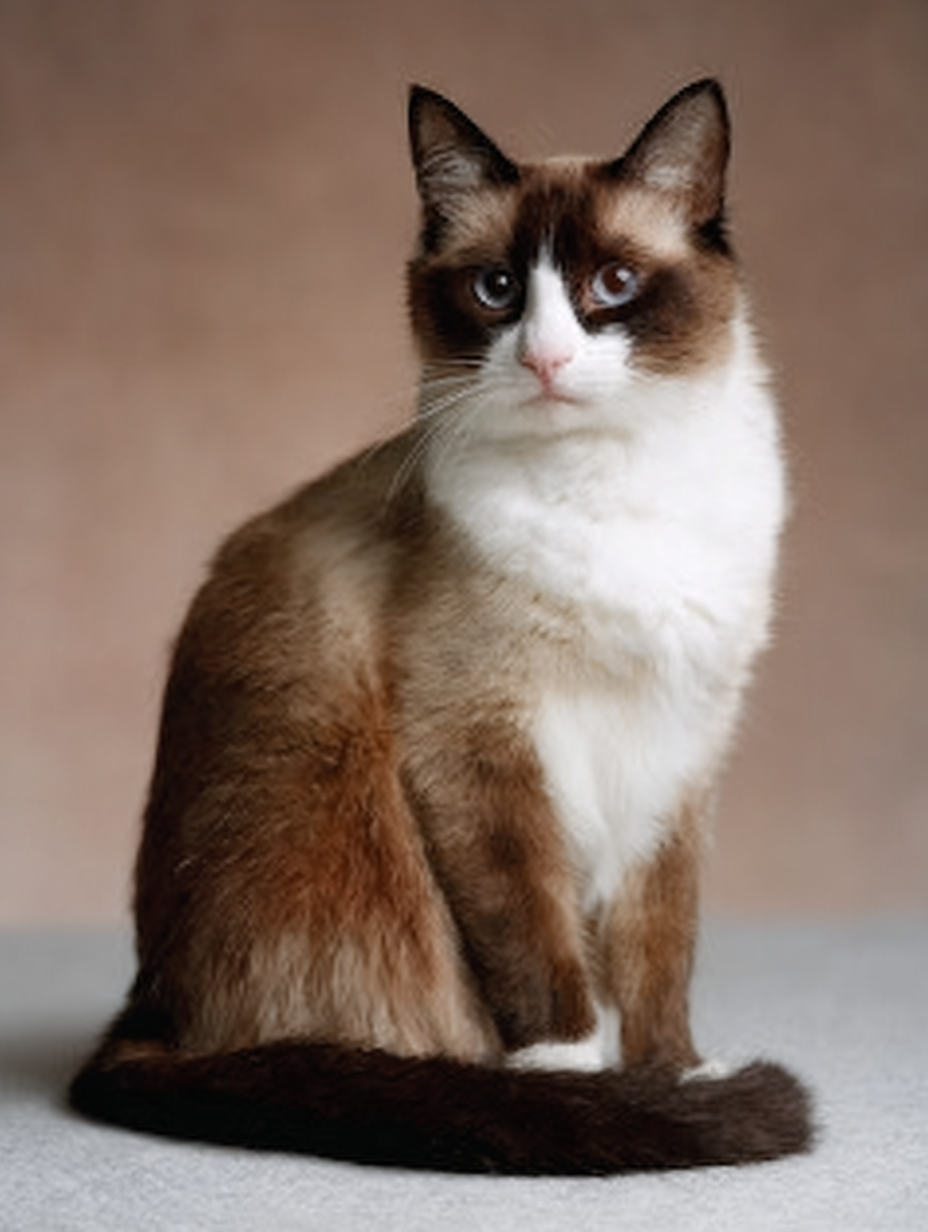
Snowshoe cats are always pointed, but their defining feature is the presence of white spotting on their feet, chest, face, and belly.
Accepted Snowshoe Cat Colors
Recognized by CFA and TICA:
- Seal point with white
- Blue point with white
- Chocolate point with white
- Lilac point with white
Patterns include:
- White mittens or boots (front and back feet)
- Inverted white V mask
- White chest and belly
- Symmetric or softly balanced markings
Coat Texture
Snowshoe coats are:
- Short
- Smooth and sleek
- Low-maintenance
- Low–moderate shedding
- Softer than Siamese but not plush like Ragdoll cats
Eye Color
Snowshoes must have blue eyes.
Shades range from pale cornflower blue to deep sapphire.
Because pattern, contrast, and expression vary, no two Snowshoe cats look the same — part of the breed’s charm.
Snowshoe Cat Price & Availability
Snowshoes are a rare, carefully developed breed with strict color and pattern requirements, which makes availability limited and prices variable. Because producing correct markings—especially the inverted white V mask and symmetrical white feet—is unpredictable, Snowshoe litters often contain only a few kittens that meet the full standard. As a result, pricing reflects rarity, breeder experience, and quality of pattern expression.
Typical Snowshoe Cat Price Range
- Pet-quality Snowshoe: $800–$1,500
- Show-quality Snowshoe: $1,500–$2,500
- Rare markings or exceptional symmetry: $2,000–$3,000+
- Retired adults: $200–$600
Prices vary depending on whether the pattern is balanced or meets show standard requirements, along with pedigree depth and health screening.
Factors That Influence Snowshoe Cat Pricing
- Accuracy of white markings
- Shape and clarity of the inverted facial V
- Coat contrast and point color
- Eye color intensity (deep blue is most desirable)
- Pedigree and show titles in the lineage
- CFA or TICA registration
- Breeder reputation and breeding program quality
- Genetic health screening (HCM testing is common)
- Home-raised vs. cage-raised kittens
- Early socialization, exposure, and temperament development
Because the Snowshoe pattern is genetically complex and difficult to reproduce consistently, breeders often maintain waitlists, especially for show-quality kittens.
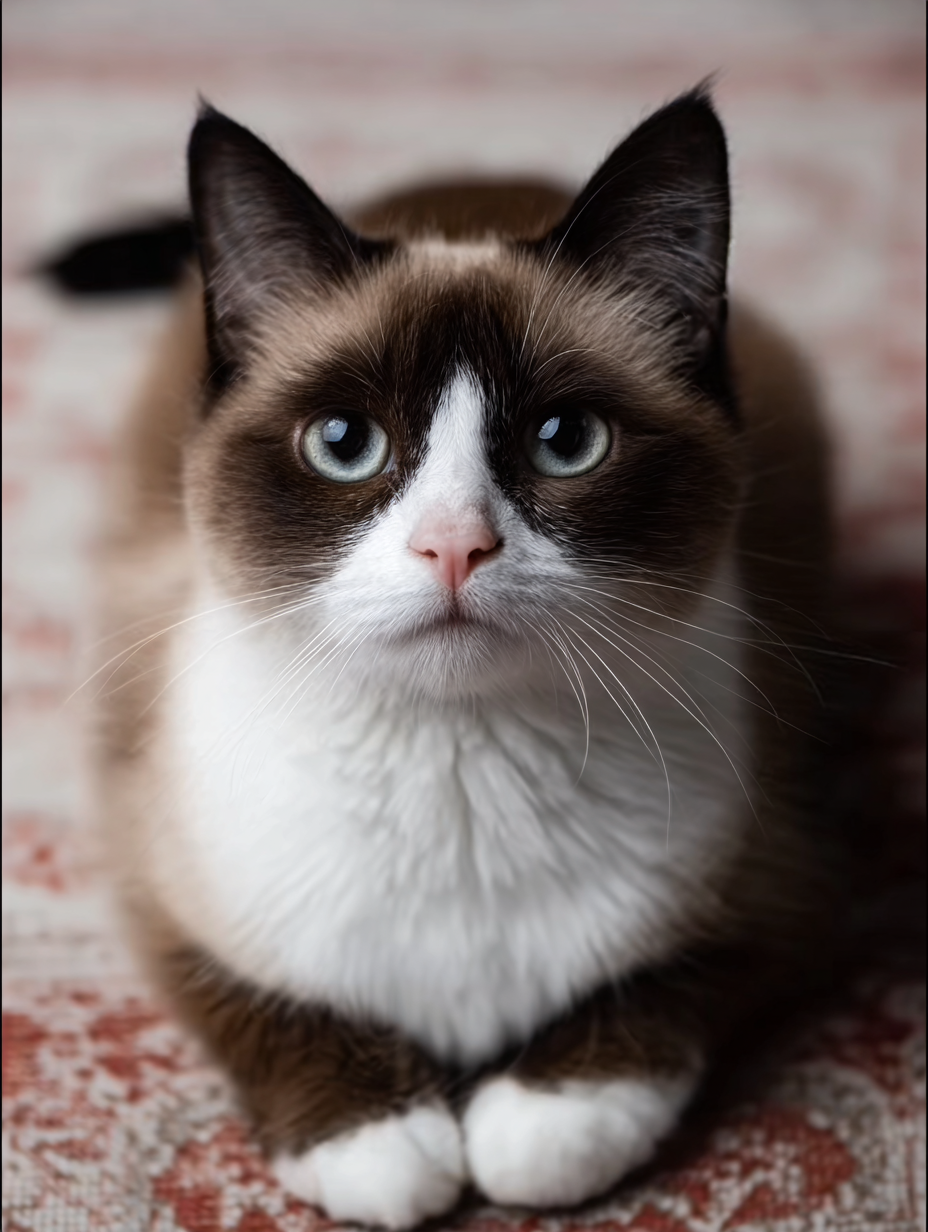
Snowshoe Kittens: What to Expect
Snowshoe kittens are affectionate, curious, and social from the start. They are known for developing strong bonds early, often choosing a “favorite person” while still remaining friendly with everyone in the household. Their markings begin developing quickly, but final contrast and clarity continue maturing through the first year.
Early Kitten Traits
Snowshoe kittens typically show:
- Bright blue eyes (present from birth)
- Point coloration emerging within days
- Early white markings on feet, chest, and nose
- Playful, people-focused behavior
- Strong curiosity and fast learning
- A desire for close interaction and vocal communication
Kitten Development Timeline
0–8 weeks:
Color points and white markings begin to appear; personality starts forming; kittens become increasingly social and vocal.
8–12 weeks:
Markings sharpen; kittens show clear attachment behaviors; play drive increases; early training becomes effective.
3–6 months:
Energetic, interactive, and expressive; point color deepens; white pattern becomes more defined.
6–12 months:
Coat contrast improves; body fills out; temperament begins to stabilize; jumping and climbing skills fully develop.
12–24 months:
Cats reach full adult size; coat and color fully mature; personality becomes consistent and predictable.
Snowshoes tend to keep a playful, affectionate nature well into adulthood, retaining a kitten-like curiosity and social intelligence.
Finding a Snowshoe Cat Breeder
Because Snowshoes are a rare, pattern-specific breed, choosing a knowledgeable breeder is essential. Producing well-marked Snowshoes requires an understanding of point genetics, white spotting patterns, and the breed’s sensitive temperament.
What to Look For in a Snowshoe Breeder
A reliable Snowshoe breeder typically:
- Uses CFA or TICA-registered Snowshoe breeding cats
- Understands the genetics behind point color and white spotting
- Screens for common feline health conditions (including HCM)
- Raises kittens in-home to support their highly social nature
- Provides a written contract and health guarantee
- Offers full veterinary records, vaccines, and deworming
- Shares developmental photos, videos, and personality notes
- Explains the breed’s vocal tendencies, emotional sensitivity, and social needs
- Is transparent about which kittens meet show standards and which do not
Breeders who cannot provide registration papers, health screening information, or evidence of in-home socialization should be approached cautiously.
Snowshoe Cat Temperament: Social, Affectionate & Intelligent
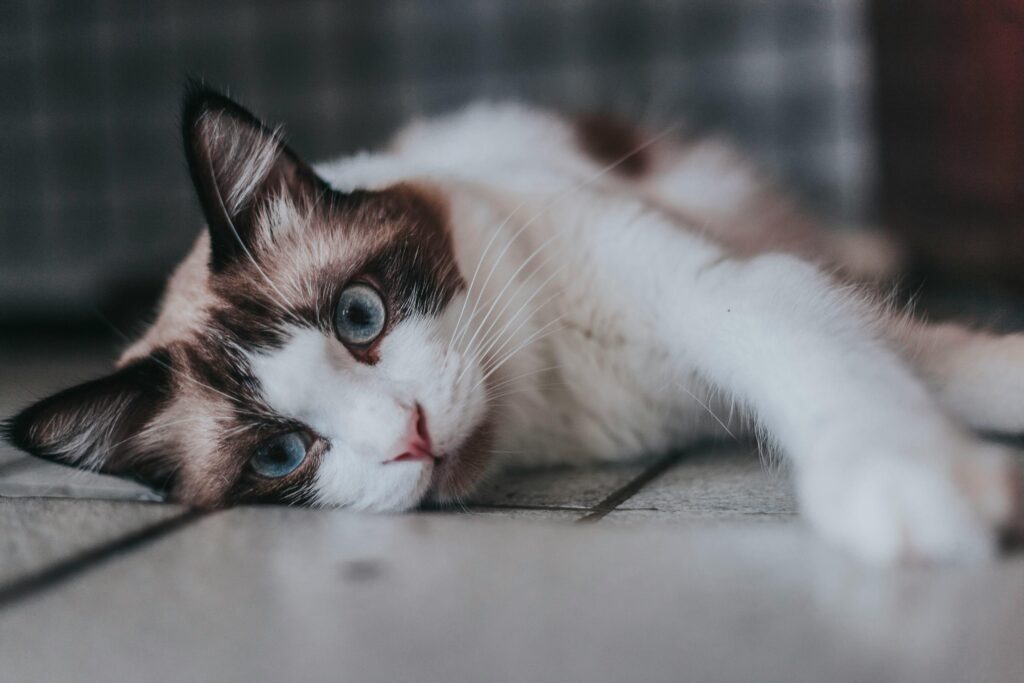
The Snowshoe cat is celebrated for its people-centered, emotionally attuned personality. These cats form deep bonds with their families and thrive on companionship. Their temperament blends the Siamese’s intelligence and expressiveness with the American Shorthair’s calmness and stability, creating an exceptional companion for homes that value interaction.
Characteristic Temperament Traits
Snowshoes are commonly described as:
- Affectionate and people-oriented
- Intelligent and highly trainable
- Gentle but playful
- Social with children and pets
- Expressive and conversational (but not as vocal as Siamese)
- Adaptable to both quiet and moderately active households
- Emotionally intuitive and routine-loving
Personality Profile
Snowshoe cats thrive in homes where people are present and interactive. They often follow their owners from room to room, curl beside them on the couch, and “supervise” everyday activities. They enjoy puzzle toys, wand play, and gentle training such as clicker work or learning simple cues.
Activity & Play Style
Snowshoe cats are agile, athletic cats that enjoy climbing and elevated perches. They are excellent jumpers, playful without being hyperactive, and capable of both quiet cuddling and enthusiastic play sessions. Their balanced energy level makes them suitable for most households.
Emotional Temperament
Snowshoes often:
- Bond with their families
- Prefer stable, predictable environments
- Seek human attention and companionship
- Display gentle affection rather than demanding behavior
- They can be chatty (think noisy)
- Respond well to consistency and daily routines
Their mix of expressiveness, sensitivity, and affection makes the Snowshoe an emotionally engaging and loyal companion cat breed.
Snowshoe Cat Size, Structure & Build
Snowshoe cats are medium-sized, athletic, and gracefully balanced. Their bodies are longer and more muscular than the traditional Siamese but sleeker and more refined than the American Shorthair. They carry a semi-foreign build — elegant but not fragile — with well-proportioned legs, a firm body, and a confident stance.
Unlike heavy-bodied breeds, Snowshoes have a naturally agile structure that enables them to climb, jump, and sprint with ease. Their distinctive appearance comes from the combination of their pointed pattern and white spotting, not from changes to body proportions or skeletal shape.
Snowshoe Cat Adult Size Expectations
Snowshoes typically fall into the medium size range, with healthy adults weighing:
- Males: 10–12 lbs
- Females: 8–10 lbs
They reach near-adult size between 12–18 months, although their contrast and point colors continue to mature through the second year.
Snowshoes should appear:
- well-toned
- moderately muscled
- neither cobby nor extreme
- proportioned from head to tail
This balanced, athletic shape helps support the breed’s active and social nature.
Structural Traits
Snowshoe cats generally show:
- a medium-length body with semi-foreign lines
- well-developed, firm musculature
- medium-length legs with oval paws
- a slightly longer hind leg, giving a natural rise to the rump
- a proportionate head with gentle contours
- a smooth, glossy coat that lies close to the body
Their structure supports a natural level of agility: Snowshoes are excellent jumpers, nimble climbers, and quick movers, making them playful without being hyperactive.
Head & Facial Expression
A Snowshoe’s face is one of its most iconic features. Common traits include:
- bright blue eyes in oval or walnut shapes
- a medium-sized head with softened, rounded angles
- a slightly tapered muzzle
- gentle cheekbones without exaggeration
- a well-balanced nose length
- an inverted white “V” marking on many Snowshoes
- alert, expressive ears with a forward tilt
The Snowshoe expression is often described as open, intelligent, and warmly curious — always watching and engaging with their environment.
Coat Care & Grooming for Snowshoe Cats
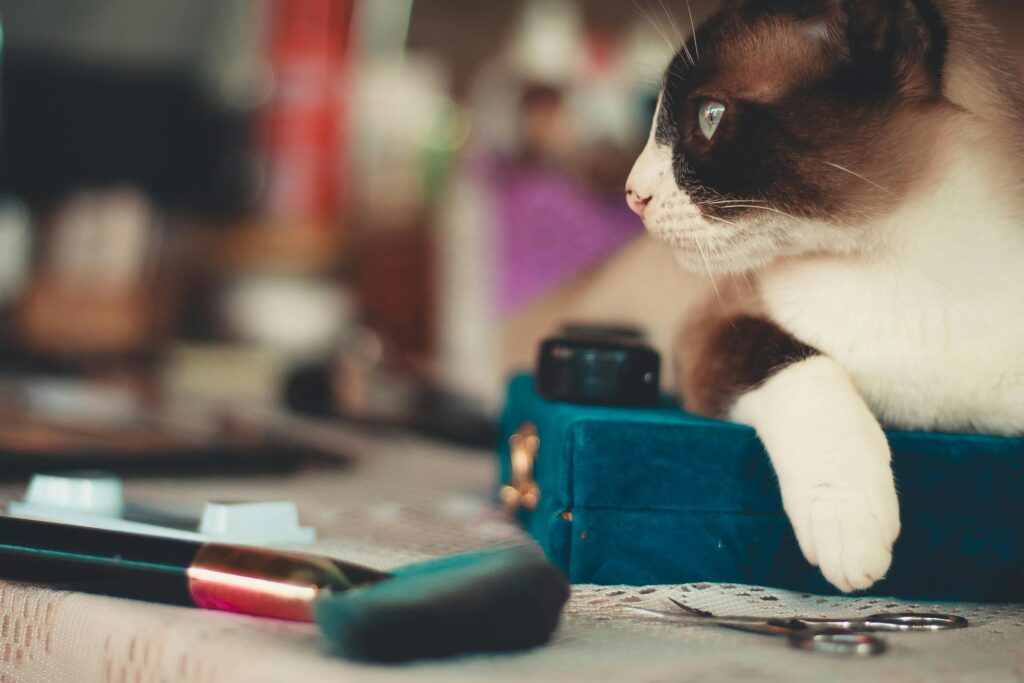
Snowshoe coats are low-maintenance, short, and smooth. They retain the velvety feel of their Siamese ancestry but with slightly more density thanks to American Shorthair influence. Their grooming needs remain minimal throughout life.
Weekly Grooming Routine
Most Snowshoes benefit from:
- brushing once per week to remove loose hair
- using a soft bristle or rubber brush
- checking the tail base and neck area during shedding seasons
- wiping the eyes gently if mild tearing appears (common in pointed cats)
Their coat naturally resists matting, and a simple, consistent routine keeps the fur glossy and healthy.
Bathing
Snowshoes generally need little to no bathing. When baths are given:
- use a gentle cat-safe shampoo
- avoid overbathing to preserve natural oil balance
- towel dry or allow a low-heat blow-dry for comfort
Because their coat is short and sleek, Snowshoes dry quickly and stay clean with minimal maintenance.
Seasonal Shedding
Shedding is low to moderate:
- Spring/Fall: increased shedding
- Summer/Winter: lighter shedding
Brushing during peak seasons reduces loose hair and keeps the coat neat.
Snowshoe Color Genetics Explained
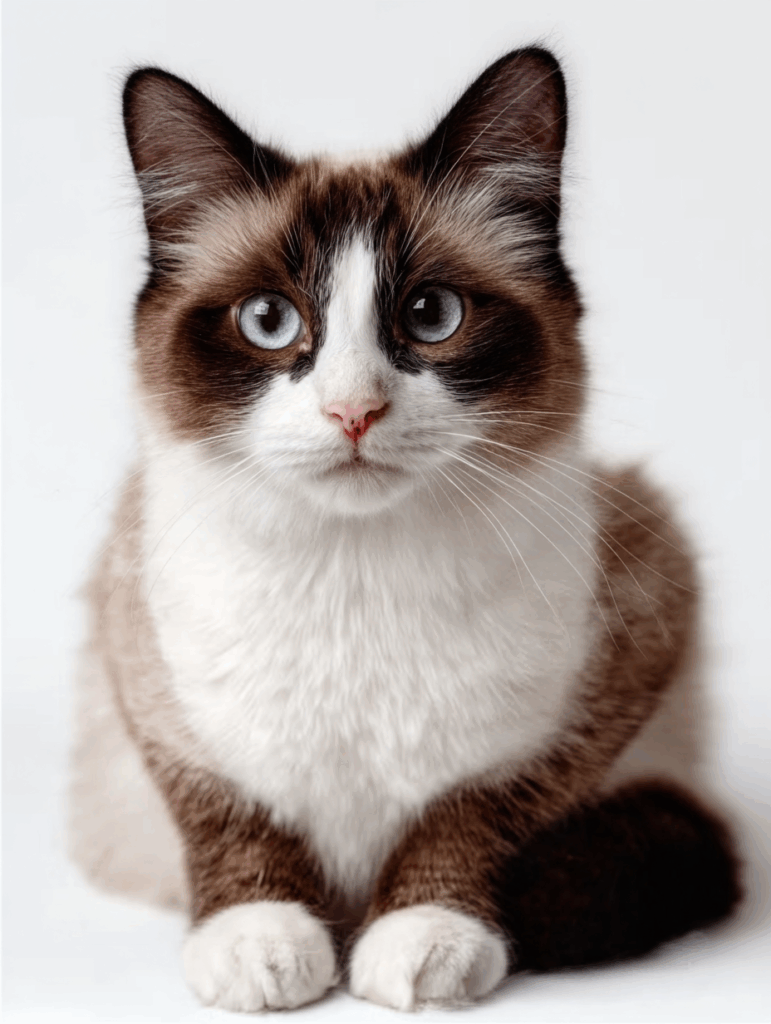
Snowshoes are a pointed breed, meaning the cooler parts of their body — face, ears, tail, feet — are darker. Their unique identity comes from the addition of white spotting, which creates the iconic white feet, white chest, and often a distinctive inverted white facial “V.”
Accepted Snowshoe Colors
Snowshoes appear in the classic pointed colors:
- Seal point with white
- Blue point with white
- Chocolate point with white
- Lilac point with white
The amount of white varies, but the most desirable patterns include:
- white mittens on the front feet
- white boots on the back legs
- a clean inverted V mask on the face
- white chest and belly
Because these markings are controlled by complex spotting genes, no two Snowshoes look exactly alike.
Snowshoe Cat Eye Colors
Snowshoes must have blue eyes, a requirement inherited from their Siamese ancestry. Eye color may range from:
- pale blue
- cornflower blue
- deep sapphire
Contrast between coat color and eye color is part of what gives Snowshoes their striking appearance.
Understanding Snowshoe Cat Breeding & Line Development
Snowshoe cats do not carry a mutation affecting body structure. Instead, their defining traits — point coloration and white spotting — come from combining:
- Siamese colorpoint genetics
- American Shorthair bicolor spotting genetics
Breeding Snowshoes requires an understanding of:
- dominant and recessive spotting genes
- the predictability of white placement
- point versus non-point offspring ratios
- maintaining structural balance without extreme traits
Because coat patterns vary widely and ideal markings are difficult to produce consistently, Snowshoe litters often contain a mix of show-quality, breeder-quality, and pet-quality kittens.
Responsible Snowshoe programs focus on:
- temperament
- health
- balanced structure
- correct points and markings
- blue eye clarity
Snowshoe breeding is pattern-driven rather than mutation-driven, and producing the perfect pattern often depends on generations of selective pairing.
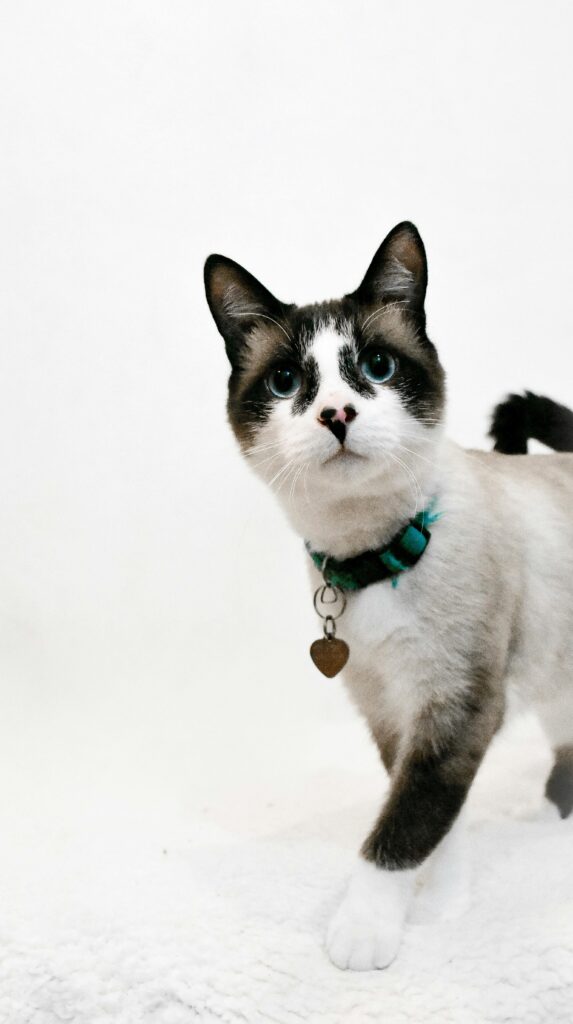
Most Common Snowshoe Outcrosses
Because Snowshoes are a relatively young breed and their distinctive markings (white feet, inverted facial V, and pointed coloration) can be difficult to reproduce consistently, early breeders used controlled outcrossing to strengthen genetic diversity and establish a stable foundation. These outcrosses were used primarily during the development of the breed and are now limited to specific programs that focus on preserving genetic health or refining markings.
Historically Used Outcrosses
Siamese
The foundation of the Snowshoe’s pointed pattern, blue eyes, and vocal intelligence.
Essential to establishing the breed’s color and contrast.
American Shorthair (bicolor lines)
Introduced in the early development years to bring the white spotting pattern necessary for Snowshoe markings.
Added body substance and moderated the Siamese temperament.
Domestic Shorthair (selected lines)
Used sparingly to increase genetic diversity and expand the pool of bicolor carriers.
Provided structural balance and broadened type.
Modern Snowshoe Breeding
Today, established breeders primarily use:
- Snowshoe × Snowshoe pairings
This produces the most consistent markings, temperament, and type. - Snowshoe × Siamese (approved lines)
Occasionally used to maintain strong point contrast and reinforce blue eye color. - Snowshoe × American Shorthair (rare)
Used only in some foundation or diversity-focused programs.
Modern Snowshoe breeders rely far less on outcrossing because the breed now has stable lines recognized by both CFA and TICA. Most registered Snowshoes today are bred from pure Snowshoe parents.
Is the Snowshoe Cat Breed Controversial?
Snowshoe cats are not surrounded by the same ethical debate as dwarf-type breeds, but the breed does face its own challenges rooted in genetics, rarity, and the difficulty of producing correct markings. Opinions differ on breeding practices, standard purity, and whether outcrossing should continue.
Concerns Commonly Raised About the Breed
Critics sometimes note that:
- Producing correct Snowshoe markings can require selective pairing, which some breeders worry may shrink genetic diversity if not managed carefully.
- Early Snowshoe lines faced extremely inconsistent markings, leading some registries to question breed stability in the beginning.
- Because the breed is rare, limited genetic depth may require thoughtful management.
- White spotting patterns are unpredictable, which can make responsible breeding complex and resource-intensive.
These concerns focus more on genetic management and breed sustainability rather than health or structural issues.
Points Often Raised by Supporters
Supporters emphasize that:
- Snowshoes are structurally normal cats with no mutation-based physical limitations.
- The breed’s temperament is exceptionally family-friendly and emotionally intelligent.
- Snowshoes display strong health and longevity when bred responsibly.
- Controlled outcrossing in early development helped prevent inbreeding and improve vigor.
- The breed is fully recognized by both CFA and TICA, indicating structural and genetic stability.
These arguments focus on function, temperament consistency, and the breed’s healthy physical design.
What Research Currently Shows
- Snowshoes do not carry a mutation affecting bones or cartilage.
- The complexities of Snowshoe breeding come from coat pattern genetics, not from structural or health-related mutations.
- Pattern predictability remains a challenge, and breeders often produce a range of white spotting outcomes.
- No unique or breed-specific health issues are currently documented beyond standard feline considerations.
The primary challenge of Snowshoe breeding is marking accuracy, not structural risk.
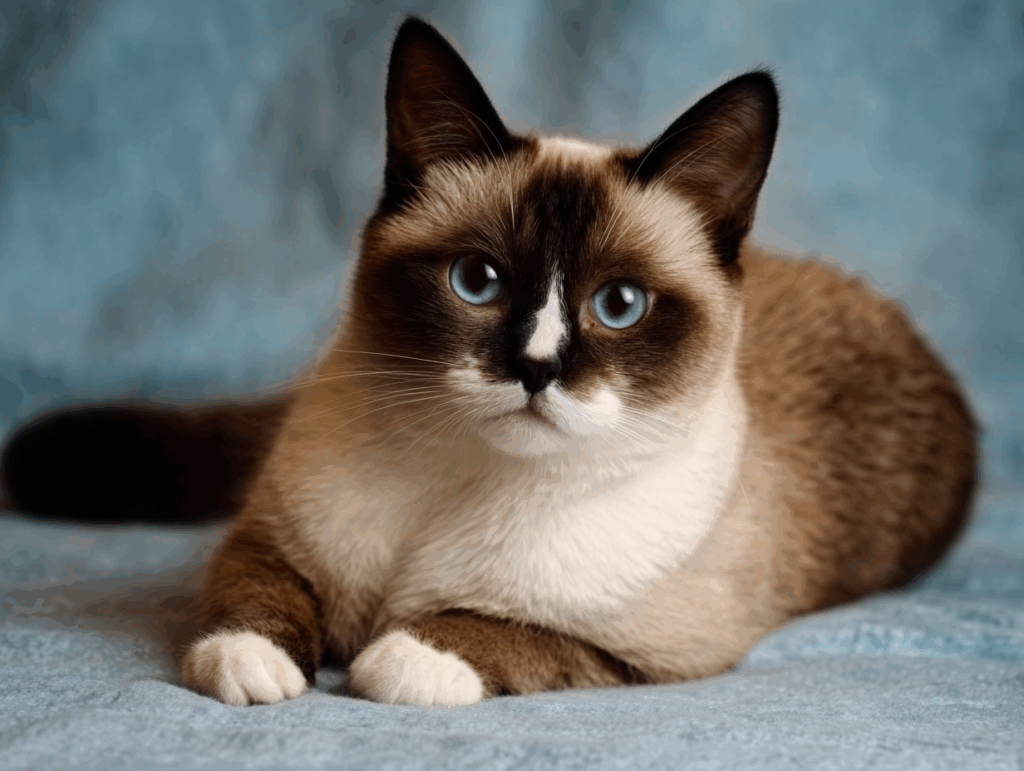
Myths About Snowshoe Cats: What’s True and What’s Not
Because Snowshoes resemble Siamese cats but have distinct patterns and temperament traits, misinformation is common. Some myths come from confusing Snowshoes with bicolor Siamese mixes, while others stem from misunderstanding how white spotting genetics work.
Myth 1: “Snowshoe cats are just Siamese with white feet.”
Fact: Snowshoes are a distinct, CFA- and TICA-recognized breed with standardized body type, temperament, and pattern requirements. They share ancestry with Siamese cats but are not simple color variants.
Myth 2: “Snowshoe cat markings always look the same.”
Fact: Markings vary widely. Producing perfect white boots and an inverted facial V is challenging, and even littermates may look very different.
Myth 3: “All Snowshoe cats have perfectly symmetrical faces.”
Fact: Symmetry is desirable but not guaranteed. Many pet-quality Snowshoes have partial or uneven V shapes, and these cats are still purebred.
Myth 4: “Snowshoe cats are high-maintenance or fragile.”
Fact: Snowshoes are sturdy, athletic cats with low-maintenance coats. They are not delicate, and they enjoy climbing, jumping, and energetic play.
Myth 5: “Snowshoe cats are too rare to find.”
Fact: They are uncommon but not impossible to obtain. Reputable breeders maintain waitlists, and availability varies regionally.
Myth 6: “Snowshoe temperament is unpredictable.”
Fact: Modern Snowshoe lines consistently show affectionate, people-oriented, highly social personalities. Variation exists, but the breed is known for emotional intelligence and stability.
Myth 7: “Snowshoe Cats are hypoallergenic.”
Fact: No cat breed is allergy-proof. Snowshoes shed moderately and may be tolerable for some allergy sufferers, but results vary.
Myth 8: “Snowshoe cats are just bicolor domestic cats.”
Fact: While bicolor domestic cats may look similar, Snowshoes have specific point coloration, blue eyes, and breed-standard body type that distinguish them.
Myth 9: “Snowshoe cats are vocal like Siamese cats.”
Fact: Snowshoes are communicative but typically softer-spoken and less intense than Siamese cats.
Myth 10: “Snowshoes have health issues related to their markings.”
Fact: Pointing and white spotting are coat traits, not structural risks. There is no evidence linking Snowshoe markings to health problems.
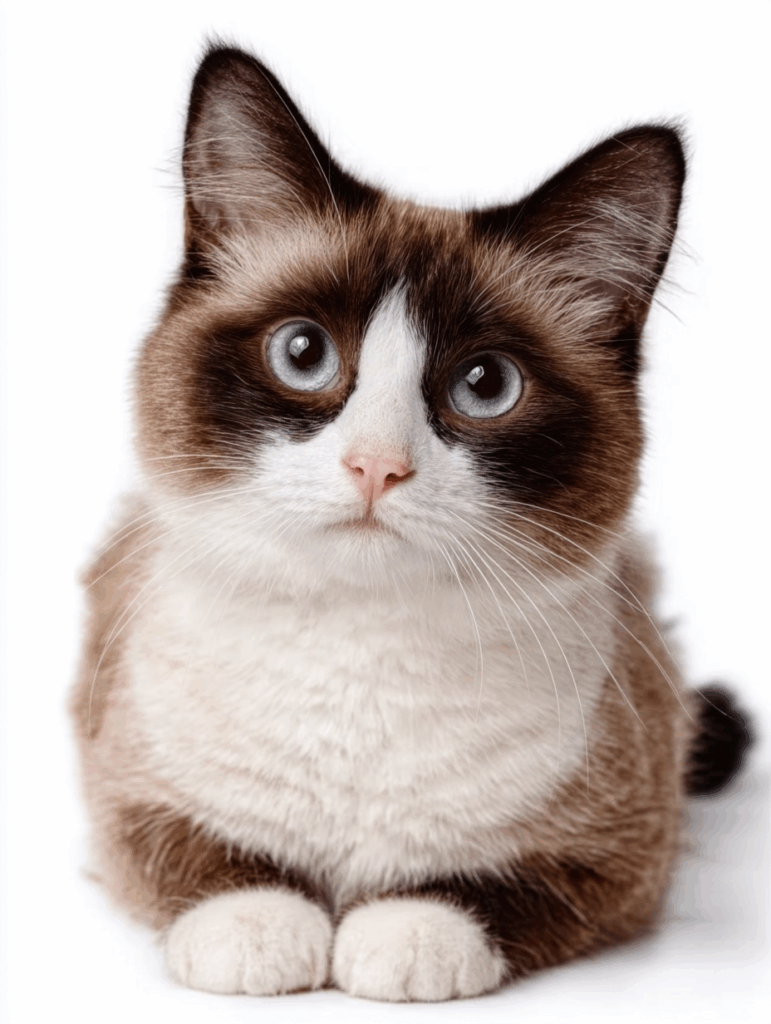
Snowshoe Cat FAQ
What is a Snowshoe cat?
A Snowshoe is a recognized purebred cat known for its pointed coloration, bright blue eyes, and distinctive white “snow boot” feet. The breed originated from Siamese and American Shorthair lines, combining the Siamese’s intelligence with a softer, more moderate temperament and sturdier structure. Snowshoes also feature an inverted white facial V, though the shape and symmetry vary naturally. Unlike random bicolors, Snowshoes have a consistent standard for body type, markings, and personality. They are considered a rare breed because producing the correct pattern is genetically unpredictable.
Are Snowshoe cats rare?
Yes. Snowshoes are one of the rarer recognized breeds because their markings are difficult to reproduce with consistency. Even in well-planned litters, only a small percentage of kittens develop ideal white boots and a clean facial V. Because breeders must prioritize health, temperament, and markings at the same time, production is naturally limited. This rarity often results in waitlists for well-bred Snowshoe kittens.
Are Snowshoe cats purebred or just Siamese mixes?
Snowshoes are purebred when produced from registered Snowshoe parents recognized by CFA or TICA. They originated from Siamese and bicolor American Shorthair lines, but have since developed their own breed standard for body structure, temperament, and pattern. A Snowshoe kitten must have the characteristic pointed coat, blue eyes, and white spotting to be considered breed-typical. Many cats with white feet and colorpoint coats may resemble Snowshoes but are not purebred without documented lineage. Only registry paperwork can verify true Snowshoe status.
What do Snowshoe cats look like?
Snowshoes have a short, sleek coat with pointed coloration and clearly visible white areas on the feet, chest, and face. Their eyes are always blue, ranging from pale to deep sapphire. The body is medium-sized, athletic, and balanced—less slender than a Siamese but more refined than an American Shorthair. The inverted facial V is iconic, though not always perfectly symmetric. Their overall look is elegant, expressive, and instantly recognizable.
What colors do Snowshoe cats come in?
Snowshoes come in pointed colors combined with white spotting: seal point with white, blue point with white, chocolate point with white, and lilac point with white. The shade of their points deepens as kittens develop, typically reaching full contrast within the first year. White spotting varies greatly between individuals, ranging from minimal boots to extensive facial V markings. The contrast between dark points and crisp white areas is one of the breed’s defining visual traits. No matter the pattern, Snowshoe coats remain short, smooth, and easy to care for.
Do Snowshoe cats always have blue eyes?
Yes. Blue eyes are a non-negotiable requirement of the breed standard. The blue color is caused by the pointed gene inherited from Siamese ancestry, which suppresses pigment in the iris. Eye color can vary in intensity, ranging from soft sky-blue to deep sapphire. If a cat that looks like a Snowshoe does not have blue eyes, it is not a true Snowshoe.
What is the temperament of a Snowshoe cat?
Snowshoes are affectionate, social, intelligent, and deeply people-oriented. They form strong bonds with their families and often follow them from room to room, wanting to participate in daily life. Though vocal, they are typically quieter and more moderate than Siamese cats. Snowshoes enjoy interactive play, gentle conversation, and structured routines. Their emotional sensitivity makes them excellent companions in homes where people are consistently present.
Are Snowshoe cats good with children?
Yes. Snowshoes are known for their gentle, tolerant nature, making them a solid choice for respectful children. They enjoy interactive play and often bond closely with younger family members who spend time with them. Their intelligence allows them to adapt well to household activity. However, like all breeds, they thrive most in environments where children handle them gently and predictably.
Do Snowshoe cats get along with other pets?
Most Snowshoes integrate well with other pets, including dogs, other cats, and even smaller animals when supervised. Their sociable nature and balanced energy level help them adjust to multi-pet households. They often enjoy the company of another friendly cat or a calm dog that respects boundaries. Early socialization supports smooth introductions. Because they dislike isolation, other pets can even enhance their quality of life.
How active are Snowshoe cats?
Snowshoes are moderately active but not hyperactive. They enjoy climbing, jumping, and playing with puzzle toys or wand-style toys. Their agility and curiosity keep them engaged throughout the day, but they also appreciate downtime and cuddling. Their activity level typically fits comfortably within most households, from quiet homes to moderately busy environments. Daily interaction and mental enrichment keep them happiest.
Are Snowshoe cats vocal?
Snowshoes are communicative, but not as intensely outspoken as Siamese cats. They may chirp, trill, or softly “talk” to their owners, often using their voices to express needs or affection. Their vocalizations tend to be gentle rather than loud or demanding. Many owners describe them as expressive without being overwhelming. Vocal personality varies between lines but remains moderate overall.
Do Snowshoe cats shed a lot?
Snowshoes shed a moderate amount. Their short, sleek coats minimize tangling and are easy to maintain with weekly brushing. Seasonal shedding may increase in spring and fall, but regular grooming keeps it manageable. They do not have the heavy, plush undercoat seen in longhaired breeds. For allergy-sensitive households, they are not hypoallergenic.
Are Snowshoe cats hypoallergenic?
No cat breed is completely hypoallergenic, including the Snowshoe. While they shed less than longhair breeds, they still produce Fel d 1, the protein responsible for most cat allergies. Some individuals may cause fewer reactions due to grooming habits and coat texture, but this varies from person to person. Potential owners with allergies should meet a Snowshoe in person before committing. Regular cleaning and grooming may help reduce allergens.
How big do Snowshoe cats get?
Most adult Snowshoes weigh between 8–12 pounds, with males typically on the larger end. They have a medium, athletic build that combines strength with agility. Their bodies are muscular yet refined, and their bone structure is moderate rather than heavy. They reach full size between 12–18 months. Their appearance remains balanced and proportionate throughout adulthood.
How long do Snowshoe cats live?
Snowshoe cats generally live 12–15 years, with many reaching 16+ when given excellent care. Their longevity is typical of healthy medium-sized domestic cats. Diet, weight management, dental care, and regular veterinary visits strongly influence lifespan. Because they are not a mutation-based breed, they do not have a known predisposition for shortened lifespans. A stable environment with enrichment helps maintain long-term health.
Do Snowshoe cats have any breed-specific health issues?
Snowshoes do not have a confirmed breed-specific genetic disorder. However, because of their Siamese ancestry, some lines may carry a risk of heart conditions such as hypertrophic cardiomyopathy (HCM). Responsible breeders screen breeding cats for heart health to reduce risk. Regular wellness exams help catch any emerging issues early. Overall, Snowshoes are considered a healthy, structurally sound breed.
How difficult is Snowshoe breeding?
Snowshoe breeding is considered challenging due to the unpredictability of white spotting and the facial V pattern. Even well-planned litters may produce kittens that do not meet the perfect-marking standard. Maintaining blue eye color, strong point contrast, and balanced structure adds additional complexity. Because of this, show-quality Snowshoe kittens are naturally limited. Breeders must prioritize genetic diversity, marking accuracy, and temperament together.
Why are Snowshoe markings so unpredictable?
White spotting genes do not express evenly, which means no breeding pair can guarantee perfect symmetry. The inverted V, white feet, and chest markings depend on multiple genetic factors working together. This unpredictability is part of the breed’s charm but also contributes to rarity. Even two perfectly marked Snowshoe parents may produce kittens with low, medium, or high white. Every Snowshoe is visually unique.
Do Snowshoe kittens change as they grow?
Yes. Point color darkens gradually as kittens mature, often reaching full intensity by 12–18 months. White markings stay relatively consistent but may sharpen in contrast as the darker points develop. Eye color may deepen from pale blue to richer sapphire shades. Their personality also becomes more confident and expressive as they reach adolescence. By adulthood, they show a stable blend of playfulness and affectionate calm.
Are Snowshoe cats good apartment pets?
Snowshoes adapt very well to apartments as long as they receive daily interaction and mental stimulation. Their moderate activity level, strong attachment to people, and calm disposition make them suitable for smaller living spaces. They thrive with cat trees, window perches, and interactive playtime. Because they dislike being isolated for long periods, apartment owners who work from home or have multiple pets see the best results. Their social nature is well-suited to close living environments.
Do Snowshoe cats travel well?
Many Snowshoes travel better than average cats due to their even temperament and strong attachment to their owners. Early crate training and positive exposure help immensely. They typically handle car rides well and can adapt to new environments with reassurance. Their social intelligence helps them remain calm when routines change. Some individuals may be more sensitive, but overall they tend to be good travelers.
Are Snowshoe cats easy to train?
Yes. Snowshoes are highly intelligent and respond well to clicker training, puzzle toys, and structured routines. They can learn commands, tricks, and even leash training with proper reinforcement. Their people-focused temperament makes them eager to participate in human-guided activities. Consistency and gentle encouragement are key. Early training creates a confident, well-adjusted adult.
How do I know if a Snowshoe cat is right for me?
A Snowshoe may be right for you if you want a cat that is social, interactive, affectionate, and emotionally intuitive. They do best with owners who enjoy engaging with their pets on a daily basis. Families, couples, and multi-pet homes often thrive with Snowshoes. If you prefer a totally independent, low-interaction cat, this breed may not be the best match. Their need for social connection is one of their defining traits.
Ready to Meet Your Kitten?
If you love affectionate, people-oriented cats, explore our available kittens.
Kittens Available
Ragdoll Kittens for Sale
British Shorthair Kittens for Sale
Maine Coon Kittens for Sale
Snowshoe Cat Resources
Ragamese
Snowshoe vs Fauxshoe
Pointed and Bicolor Cat Information
Ragdoll Mix Cat
Ragdoll Colors Explained
Siamese Cat Size
Cat Breed Comparisons
Ragdoll vs Siamese
Ragdoll vs Ragamuffin
Himalayan vs Persian
Sources
- CFA – Snowshoe Breed Standard
https://cfa.org/snowshoe - TICA – Snowshoe Breed Standard
https://tica.org/breeds/browse-all-breeds?view=article&id=880:snowshoe-cat-breed&catid=79 - International Cat Care – Feline Health & Behavior
https://icatcare.org - UC Davis Veterinary Genetics Laboratory – Colorpoint & White Spotting Genetics
https://vgl.ucdavis.edu/services/cat - Cornell Feline Health Center – General Feline Health Information
https://www.vet.cornell.edu/departments-centers-and-institutes/cornell-feline-health-center - Merck Veterinary Manual – Feline Congenital & Genetic Traits
https://www.merckvetmanual.com - Royal Veterinary College – Feline Anatomy & Health
https://www.rvc.ac.uk - ASPCA – Breed Policy & Feline Welfare Considerations
https://www.aspca.org/about-us/aspca-policy-and-position-statements - AVMA – Veterinary Guidelines & Feline Health
https://www.avma.org - Waltham Petcare Science Institute – Feline Nutrition & Behavior
https://www.waltham.com - PubMed – Peer-Reviewed Studies on Feline Genetics
https://pubmed.ncbi.nlm.nih.gov






Read the Comments +