
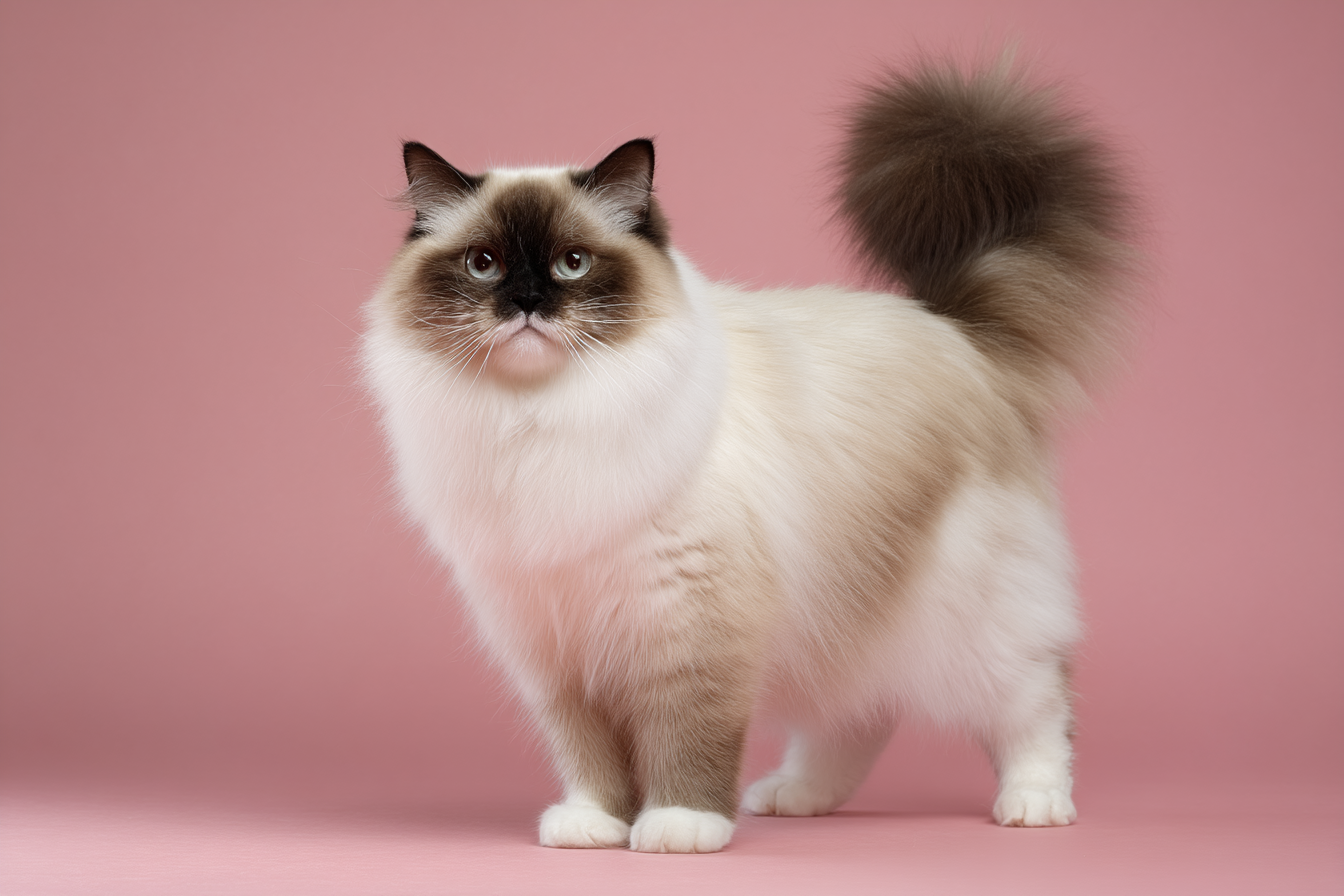
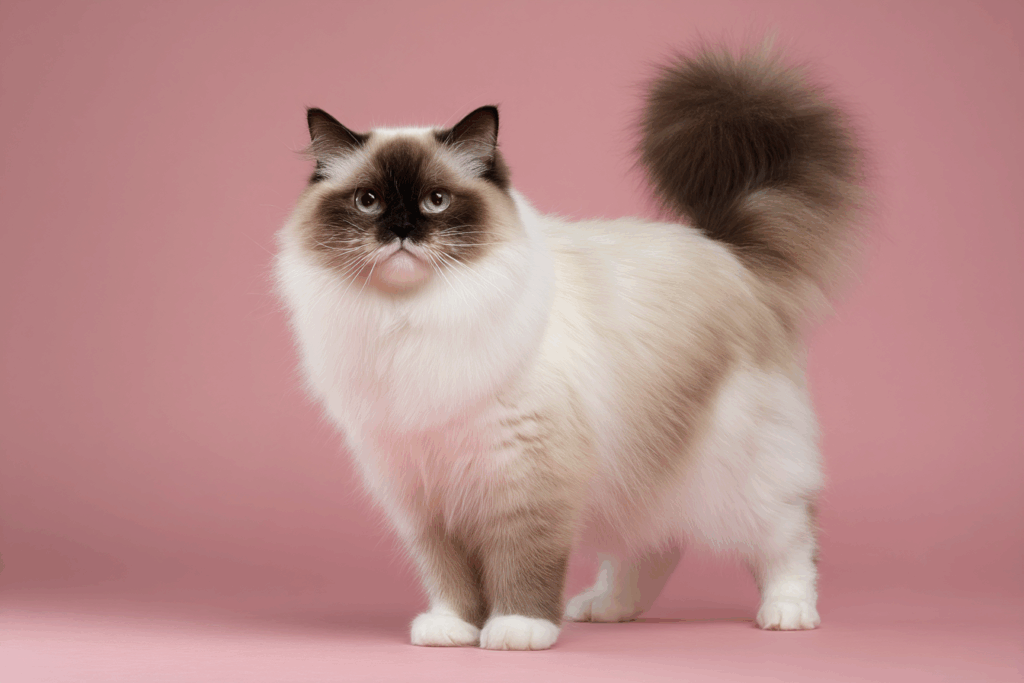
What is the difference between a Ragdoll vs Himalayan cat? The Ragdoll and the Himalayan are two of the most recognizable longhaired cat breeds in the world — adored for their beauty, cherished for their temperaments, and sought after for their gentle, family-friendly personalities. Yet despite their shared appeal, these breeds differ dramatically in structure, grooming needs, health concerns, and daily care requirements.
Whether you’re comparing the Ragdoll’s soft, semi-long silky coat with the Himalayan’s luxurious Persian-style undercoat, or deciding which breed fits into your home and lifestyle, this comprehensive guide explains every key difference: personality, grooming commitment, health, lifespan, energy levels, cost, and which households each breed is best suited for.
This comparison is intentionally thorough, giving you a clear, practical understanding of what it is really like to live with each breed — beyond the blue eyes and beautiful fur.
Quick Comparison Table: Ragdoll vs Himalayan
| Trait | Ragdoll | Himalayan |
|---|---|---|
| Personality | Affectionate, social, relaxed, “dog-like” | Sweet, quiet, serene, lap-focused |
| Activity Level | Low to moderate | Very low |
| Grooming Needs | Moderate | Extremely high |
| Coat Type | Silky semi-longhair, minimal undercoat | Dense double coat, long, easily matted |
| Face Structure | Moderate, open airway | Persian-style brachycephalic |
| Health Risks | Moderate; HCM screening needed | Higher; brachycephalic respiratory & eye issues |
| Lifespan | 12–15+ years | 12–15 years |
| Maintenance Level | Manageable for most homes | Very high; daily coat & eye care |
| Best For | Families, friendly pets, active homes | Quiet homes, dedicated groomers |
| Shedding | Seasonal but manageable | Heavy year-round |
Ragdoll vs Himalayan: Which Is Better?
Ragdolls are generally better for families, busy homes, and owners who want a friendly, low-maintenance longhaired cat. They are healthier, easier to groom, more social, and more adaptable. Himalayans are best for quiet households that enjoy gentle, calm lap cats and are willing to commit to daily grooming, eye care, and higher lifetime medical needs. Choose a Ragdoll for convenience and versatility; choose a Himalayan for sweetness and luxury with more hands-on care.
Breed Origins and History
Ragdoll Origins
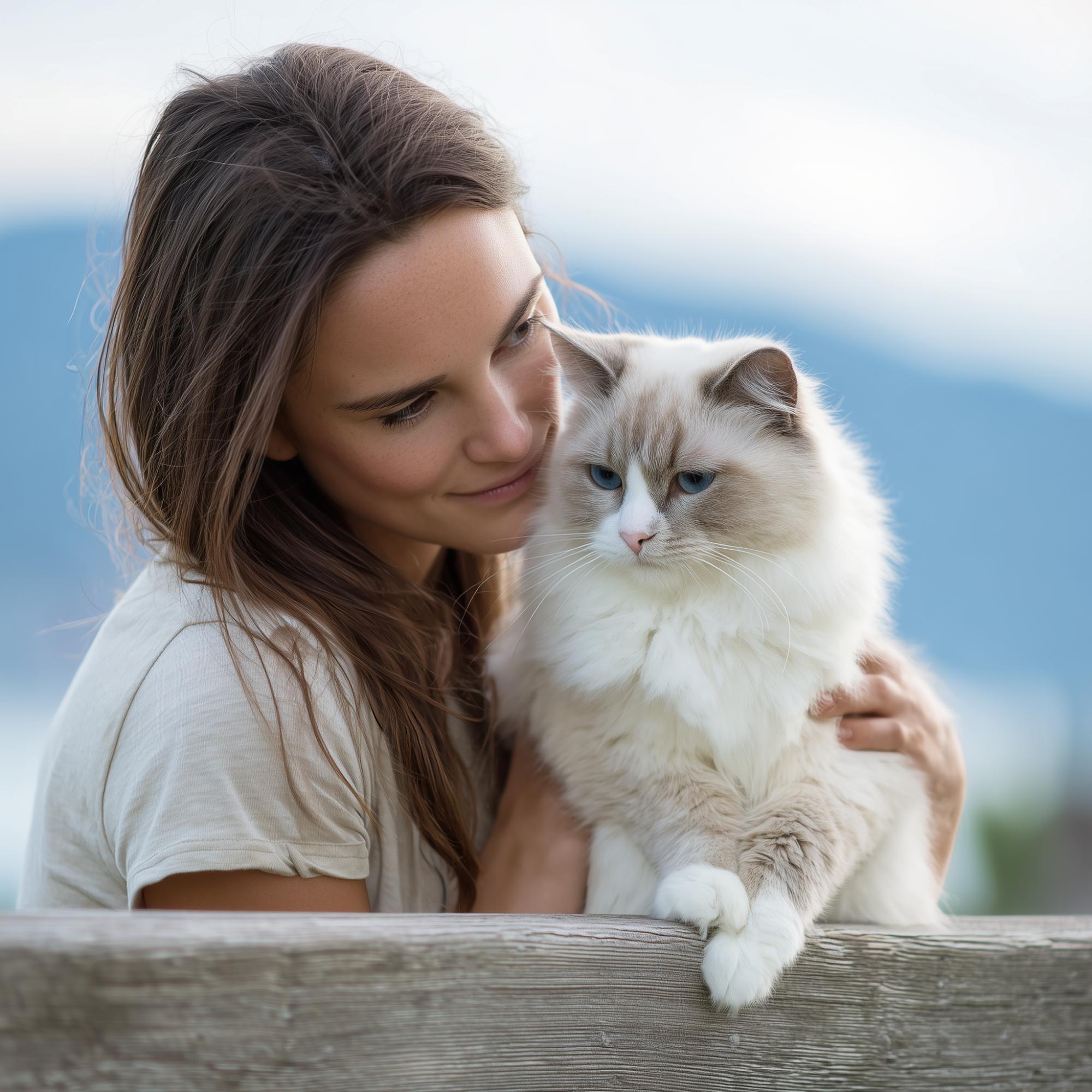
The Ragdoll is a relatively modern breed developed in California during the 1960s. Known for their calm demeanor and distinctive tendency to “go limp” when held, Ragdolls were purposefully created as gentle, people-oriented companions. Their early foundations centered around longhaired domestic cats with pointed coloration and exceptionally relaxed temperaments.
Today, Ragdolls are one of the most popular pedigree breeds registered with TICA and CFA, beloved for their predictable temperament, striking blue eyes, and silky semi-longhair coat.
Himalayan Origins
Himalayans were established by combining Persian cats with Siamese-type colorpoints to create a blue-eyed, point-colored Persian. Their heritage is shared directly with the Persian breed, which dates back thousands of years to ancient Mesopotamia. Over the 20th century, Himalayans were refined into the glamorous, thick-coated, doll-faced (or sometimes flat-faced) cats known today.
Many registries list Himalayans as a division of the Persian breed rather than a separate breed. While the colorpoint pattern came from Siamese ancestry, the structure, coat, and grooming needs remain pure Persian.
This shared lineage also means Himalayans inherit both the beauty and the health vulnerabilities associated with Persian facial structure.
Appearance Differences
Ragdoll Appearance
Ragdolls have a distinctive, semi-foreign body type — long, substantial, and soft in appearance without being cobby or thickset. They are known for:
- large, muscular bodies
- long torso and strong bone
- moderately broad head with gentle contours
- oval, vivid blue eyes
- soft, silky semi-longhair coat
- bushy tail that flows with movement
Their coat is lush but not excessively thick. Because Ragdolls have a minimal undercoat, they maintain a smooth, flowing appearance without the extreme density seen in Himalayan and Persian coats.
Ragdolls come in colorpoint, mitted, and bicolor patterns, with colors including seal, blue, chocolate, lilac, flame, cream, tortie, and lynx.
Everything about the Ragdoll is moderate and functional — no extreme facial flattening, no exaggerated features, just a balanced, elegant companion cat.
Himalayan Appearance
Himalayans, being colorpoint Persians, are defined by:
- a round, large head
- short nose with a distinct break (traditional to flat-faced depending on line)
- enormous, expressive round eyes
- small, rounded ears
- thick, cobby, low-to-the-ground body
- short, heavy-boned legs
- an extremely full, dense long coat
Their coat is their most iconic feature — a long, silky, heavily undercoated mane that creates a plush, dramatic silhouette.
Himalayans come in all Persian-approved point colors, including seal, blue, chocolate, lilac, cream, flame, tortie, and lynx variations.
The primary structural difference between Ragdolls and Himalayans is facial type. Himalayans often possess a brachycephalic (flat-faced) profile, with shortened nasal passages, tight nostrils, and tear duct abnormalities, causing lifelong tearing and respiratory difficulty. Ragdolls have none of these facial extremes.
Personality & Temperament: Relaxed vs Ultra-Calm
Both Ragdolls and Himalayans are gentle, affectionate cats — but their social style and activity patterns differ significantly.
Ragdoll Temperament
Ragdolls are known for being:
- outgoing
- friendly toward strangers
- playful but gentle
- tolerant of children and dogs
- emotionally stable
- extremely people-focused
- comfortable being carried or held
They display a famously relaxed posture when picked up, which earned them the name “Ragdoll.” Ragdolls often follow their owners from room to room, greet guests at the door, and remain involved in family life like a calm, affectionate dog.
They thrive in active homes, families, multi-pet households, and environments with predictable routines.
Himalayan Temperament
Himalayans share the Persian temperament, which is notably more reserved and serene:
- very quiet and gentle
- affectionate but not demanding
- enjoy soft beds, laps, and peaceful environments
- sensitive to noise and rushed activity
- easily stressed by chaotic or loud households
They have a dignified personality and often bond deeply with one or two people. While Himalayans enjoy affection, they prefer gentle, calm interaction and usually dislike being carried frequently.
For families with children or dogs, Himalayans can adapt — but only if the environment is calm and respectful.
Grooming & Maintenance: The Most Critical Difference
The single biggest lifestyle difference between Ragdolls and Himalayans is grooming.
Ragdoll Grooming
Ragdolls require moderate, manageable grooming due to their silky coat with minimal undercoat.
They need:
- brushing 2–3 times per week
- seasonal de-shedding
- occasional sanitary trims
- routine nails, ears, and dental care
Their fur resists matting much better than Persian-type coats. Even during seasonal shedding, most Ragdolls remain manageable with regular brushing. See more Ragdoll grooming tips here.
Himalayan Grooming
Himalayans require intensive daily grooming because they inherit the full Persian coat.
They need:
- daily combing and detangling
- regular baths every 2–4 weeks
- eye-wiping multiple times per day (due to brachycephalic tearing)
- sanitary trims to prevent matting and feces adhesion
- frequent professional grooming
- seasonal coat maintenance to avoid painful mats
Without this level of care, Himalayans quickly develop knots, mats, skin infections, and discomfort.
This difference alone determines which breed is appropriate for most families. Ragdolls are low-maintenance longhairs; Himalayans are one of the highest-maintenance cat breeds in the world.
Health & Genetic Concerns: Where These Breeds Diverge Most
Health is one of the most significant differences between the Ragdoll and the Himalayan. While both breeds are sweet, charming companions, the Himalayan inherits several health vulnerabilities from its Persian ancestry. Ragdolls have their own concerns, but their structural moderation gives them a health advantage.
Ragdoll Health
Common concerns include:
- Hypertrophic cardiomyopathy (HCM) – the primary genetic condition breeders test for
- predisposition to obesity if under-exercised
- occasional urinary issues in some lines
- dental maintenance required for longevity
Responsible Ragdoll breeders screen for HCM and maintain large, genetically diverse lines to minimize risk.
Himalayan Health
Himalayans inherit the health challenges associated with brachycephaly:
- chronic eye tearing
- narrowed nostrils and airway obstruction
- noisy or labored breathing
- dental crowding
- heat intolerance
- tear staining and infection risk
- increased anesthesia risks
- higher likelihood of PKD (polycystic kidney disease) if not genetically screened
- higher risk of fungal skin infections under the coat
This is why ethical breeders often prioritize more moderate facial structure and strict health screening.
Lifespan
Both breeds can live into the 12–15+ year range, but Himalayans may experience more day-to-day discomfort or veterinary needs if they have extreme facial features.
Bottom Line on Health
Ragdolls are structurally moderate, usually healthier, and have fewer chronic management requirements.
Himalayans are beautiful and loving, but their extreme head type creates lifelong care considerations owners must be prepared to handle.
Ragdoll Health Profile
Ragdolls are generally healthy, structurally moderate, and long-lived. Their natural head shape, open airway, and balanced body conformation make them one of the most physically stable longhaired pedigree cats when responsibly bred.
Key Ragdoll Health Risks:
Hypertrophic Cardiomyopathy (HCM)
This is the primary hereditary condition Ragdoll breeders screen for.
Polycystic Kidney Disease (PKD) — uncommon in well-tested lines
While not historically a Ragdoll issue, outcross mistakes can introduce it; reputable programs DNA test for PKD.
Obesity
The most common problem in pet Ragdolls due to their calm nature and strong appetite.
Dental tartar in adulthood
Slow buildup may occur without routine dental care.
Most of these issues can be prevented or well-managed through responsible breeding, appropriate diet, weight control, and annual veterinary examinations.
Why the Ragdoll is typically healthier:
- open airway
- no brachycephaly
- balanced facial structure
- strong bone density without extremes
- predictable temperament that reduces stress
- stable genetic lines in reputable programs
- no exaggerated physical traits
In responsible Ragdoll breeding programs, long-term health problems are minimal compared to flat-faced breeds.
Himalayan Health Profile
Himalayans are significantly more medically complex due to their Persian-based brachycephalic structure, which affects nearly every biological system — breathing, sinuses, eyes, coat, dental alignment, heat tolerance, and even anesthesia response. While Himalayans are sweet and beautiful, modern flat-faced lines require owners who understand how to manage chronic maintenance.
Common Himalayan Health Concerns:
- chronic tear overflow due to shallow tear ducts
- entropion (inward-rolling eyelids) in some lines
- nasal blockage and noisy breathing
- heat intolerance due to compromised airflow
- dental crowding and tooth alignment issues
- difficulty eating comfortably because of jaw shape
- higher rates of PKD in untested Persian-derived lines
- ringworm susceptibility because of dense undercoat
- fungal skin infections under mats, especially in neglected coats
- repeated anesthesia sensitivity due to airway structure
- higher chance of dystocia (birthing complications) in breeding females
Not every Himalayan will experience all of these conditions — but the baseline risk is dramatically higher than in Ragdolls, whose head structure is moderate and functional.
In short:
Ragdolls → low-maintenance, structurally healthy longhair
Himalayans → high-maintenance longhair with lifelong medical considerations
Lifespan: Which Breed Lives Longer?
Lifespan is another area where Ragdolls usually outperform Himalayans because of their open airway and moderate facial anatomy.
Ragdoll Lifespan — 12 to 15+ Years
Ragdolls have strong longevity when:
- kept indoors
- maintained at a healthy weight
- provided with HCM-screened genetics
- given routine veterinary care
Many Ragdolls exceed 15 years, especially those from careful, health-focused lines.
Their calm, stable temperament also reduces stress-related illness and contributes to healthier aging. See Ragdoll Cat Lifespan for more info.
Himalayan Lifespan — 12 to 15 Years
Himalayans live slightly shorter lives on average. Their respiratory challenges, eye disorders, skin issues, and kidney risks contribute to a reduced lifespan compared to structurally moderate breeds.
Extreme facial flattening = decreased overall longevity.
More moderately faced Himalayans with better airflow may live longer, but heavily brachycephalic lines often fall into the lower range of 12–14 years.
Activity Level & Energy: Relaxed vs Ultra-Calm
Both breeds are gentle, but the difference in activity level affects daily life and suitability for certain homes.
Ragdoll Activity Level
Ragdolls are:
- slow-paced but playful
- curious without being hyper
- interactive and “dog-like”
- social and people-oriented
- steady companions with soft, fun energy
They enjoy wand toys, fetch-style games, exploring high perches, and following their owners from room to room. They are low-energy compared to athletic breeds but far from sedentary.
Himalayan Activity Level
Himalayans are:
- extremely calm
- very quiet
- gentle and lap-oriented
- slow-moving
- content with minimal exercise
Himalayans tend to lounge and observe rather than play for extended periods. Their shortened nasal passages make vigorous play uncomfortable, naturally limiting their activity.
Summary:
Ragdoll → low-to-moderate activity, social and playful
Himalayan → ultra-low activity, prefers quiet rest
Grooming & Coat Maintenance
Grooming is one of the biggest deciding factors between these breeds — just as with British Shorthair vs Persian, the gap is enormous.
Ragdoll Grooming Needs
- brush two to three times weekly
- increase brushing during seasonal shedding
- occasional nail trims
- coat generally avoids tangles
- no daily combing required
- minimal undercoat compared to Himalayan/Persian
A Ragdoll’s coat stays neat with routine care and rarely forms mats unless neglected or overweight.
Himalayan Grooming Needs
Himalayans require daily and multi-step grooming due to their Persian-style double coat:
- daily combing to prevent tangles
- professional grooming every 4–6 weeks
- regular bathing
- daily facial and eye cleaning
- multiple eye-care wipes per day in flat-faced lines
- sanitary trims to avoid matting and fecal buildup
- constant coat monitoring during shedding seasons
A Himalayan can become fully matted within days if neglected. Their coat, tear ducts, and facial folds require continuous attention.
This is why many Himalayans arrive in rescue with severe mats — the grooming workload is dramatically higher than first-time owners anticipate.
Breathing & Facial Structure: Moderate vs Brachycephalic
This is one of the most essential SEO and welfare differences.
Ragdoll Facial Structure
Ragdolls have:
- normal-length nasal passages
- open, functional nostrils
- well-developed sinus cavities
- normal jaw alignment
- smooth, unrestricted airflow
- excellent heat tolerance
- clear tear drainage
They have zero brachycephalic features, so breathing difficulty, noisy respiration, and chronic tear overflow are not part of the breed’s anatomy.
Himalayan Facial Structure
Himalayans are a Persian-based breed and therefore often brachycephalic:
- shortened nasal bones
- very narrow nostrils
- restricted sinus structure
- frequent mouth breathing
- noisy or effortful breathing
- constant tear staining
- difficulty cooling themselves
- increased anesthesia risk
These structural issues impact everyday comfort and long-term health.
Moderate-faced Himalayans exist, but many show-line Himalayans are extremely flat-faced.
Shedding Differences: Manageable vs Heavy Year-Round
This matters significantly for families who are sensitive to shedding volume, cleanliness, or time commitment.
Ragdoll Shedding
Ragdolls shed:
- moderately
- seasonally
- predictably
Their silky coat sheds in manageable amounts, and because they lack a dense undercoat, their shed hair tends to stay close to the body rather than billowing through the home.
Weekly brushing controls most of their loose hair.
Himalayan Shedding
Himalayans shed:
- heavily
- constantly
- in long, thick strands
- with high matting risk
Their long double coat traps shedding fur deep within the underlayer, often turning into mats if not combed out daily. Shed hair spreads easily onto upholstery, carpets, clothing, and bedding.
Summary:
Ragdoll → moderate, manageable shedding
Himalayan → heavy, constant shedding that demands daily work
Cost, Price Ranges, and Lifetime Maintenance
Both breeds are premium longhaired pedigree cats, but the lifetime cost difference is vast due to the Himalayan’s high grooming and medical care requirements versus the Ragdoll’s low-maintenance nature.
Ragdoll Cost
Ragdoll kittens typically cost:
- $2,000–$4,500 depending on color, pattern, lineage, and breeder reputation
- Rare colors and show-quality lines can reach the top end of the range
Ongoing costs for Ragdolls are relatively low:
- moderate grooming (no professional grooming required)
- no daily coat upkeep
- minimal chronic medical concerns in responsibly tested lines
- predictable diet, enrichment, and routine veterinary care
Their moderate facial structure, healthier airway, and stable genetics make long-term ownership very manageable and cost-effective. Read: Ragdoll Cat Prices for more details.
Himalayan Cost
Himalayan kittens typically cost:
- $1,800–$3,500 for pet-quality kittens
- Higher pricing for rare colors, doll-faced lines, or show-potential kittens
But the purchase price is only the beginning for Himalayan owners.
Lifetime costs are significantly higher because of:
- professional grooming ($600–$1,500+ per year)
- daily coat care supplies (combs, sprays, detanglers, wipes)
- chronic eye-wiping products
- potential respiratory medications or veterinary management
- increased anesthesia risk (often requiring specialized vet care)
- dental procedures due to brachycephalic jaw crowding
- higher likelihood of veterinary intervention overall
Owning a Himalayan is comparable to maintaining a high-care dog breed, while Ragdolls remain one of the easiest longhaired cats to manage long-term.
Which Cat Is Easier to Own?
Ragdoll: One of the Easiest Longhaired Breeds
The Ragdoll is widely considered one of the easiest longhaired pedigree cats due to:
- moderate grooming needs
- predictable, gentle temperament
- high tolerance for children and pets
- excellent health when ethically bred
- adaptability to busy households
- affectionate but non-demanding nature
- long lifespan
- minimal daily maintenance
Ragdolls rarely mat, rarely need professional grooming, and remain emotionally stable in both active and quiet homes.
Himalayan: High Maintenance and Best for Specific Owners
Himalayans thrive with owners who:
- have ample time for daily grooming
- enjoy coat care routines
- can manage chronic eye drainage and wiping
- understand brachycephalic health concerns
- maintain a quieter, predictable home
- are comfortable with higher lifetime veterinary needs
Himalayans are not ideal for people who are away from home frequently or want a low-maintenance breed.
Their sweetness is unparalleled, but they require commitment and consistency.
Which Breed Is Best for Families, Kids, and Multicat Homes?
Ragdoll
Ragdolls are ideal for families because they are:
- calm
- patient
- physically sturdy
- highly tolerant of respectful children
- excellent with dogs
- welcoming toward guests
- emotionally stable
- adaptable to both quiet and busy homes
They handle noise, new routines, and household activity far better than brachycephalic longhairs.
Himalayan
Himalayans can do well with families, but only if the environment is:
- quiet
- predictable
- low-energy
- gently paced
They prefer peaceful households, adults, seniors, or older children who know how to handle cats gently.
In busy environments, Himalayans can become stressed — which often worsens their tearing, respiratory symptoms, and grooming challenges.
Which Breed Fits Your Lifestyle?
This section helps readers self-select correctly and boosts conversions by clarifying lifestyle fit.
Choose a Ragdoll if you want:
- a low-maintenance longhaired cat
- minimal grooming
- a longer average lifespan
- a structurally moderate, healthier breed
- a cat that follows you around but isn’t demanding
- a companion who tolerates solitude well
- a great match for children, dogs, and busy families
Ragdolls are exceptionally easy to integrate into modern life — including full-time work, multitasking households, and active family routines.
Choose a Himalayan if you want:
- a very calm, sweet, cuddly lap cat
- a luxurious long coat and dramatic beauty
- time to dedicate to daily grooming
- a quieter, slower-paced home
- predictable, mellow companionship
- a cat that enjoys serene environments and soft affection
Himalayans offer unmatched sweetness but require owners willing to support their high grooming and higher medical needs.
Ragdoll vs Himalayan: Pros & Cons
Ragdoll Pros & Cons
| Pros | Cons |
|---|---|
| Very low maintenance coat for a longhair | Can be clingy or follow owners around |
| Long lifespan | Prone to obesity without monitoring |
| Structurally healthy, no brachycephaly | Some individuals dislike being left alone too long |
| Gentle but playful | Slow to mature mentally and physically |
| Excellent for families and dogs | Not a high-energy playmate |
| Minimal shedding issues | Needs routine brushing |
Himalayan Pros & Cons
| Pros | Cons |
|---|---|
| Sweet, affectionate, gentle | Extremely high grooming needs |
| Gorgeous, plush Persian-style coat | Daily tear and face cleaning required |
| Very calm temperament | Brachycephalic breathing difficulty |
| Quiet and peaceful | High lifetime medical costs |
| Devoted lap cat | Shorter average lifespan |
| Great for quiet homes | Not suited for busy households |
Ragdoll vs Himalayan FAQ
Are Ragdolls or Himalayans better for families?
Ragdolls are typically better suited for families because they are extremely tolerant, social, and stable around children and dogs. Their moderate facial structure and easygoing personality make them comfortable in busy households with movement and noise. Himalayans can live in families too, but they thrive in calm, predictable environments. Their brachycephalic (flat-faced) structure makes them more sensitive to stress, loud sounds, and chaos, so they are best for quieter homes, older children, or adults who interact gently and consistently.
Which is more affectionate: a Ragdoll or a Himalayan?
Both breeds are deeply affectionate, but they show love differently. Ragdolls are “dog-like” in their affection, following their owners from room to room and often enjoying being carried or held. They seek physical closeness and want to be where their people are. Himalayans are extremely sweet, but they tend to prefer soft laps, calm petting sessions, and gentle companionship instead of constant interaction. They bond strongly with their favorite person but are less likely to follow the entire family around the house.
Are Ragdolls calmer than Himalayans?
Both are calm, but Himalayans are generally the calmest. The Himalayan’s Persian background makes them slow-moving, serene, and content with quiet lounging. Ragdolls are calm too, but they have more social curiosity, more playful interest, and more “participation energy.” Think of Ragdolls as relaxed but interactive, and Himalayans as peaceful, low-energy lap cats.
Do Ragdolls or Himalayans shed more?
Himalayans shed far more due to their thick Persian-style double coat. They shed constantly and can mat quickly without daily grooming. Ragdolls shed seasonally and moderately, with a silky coat that is easier to maintain and far less prone to tangling. If shedding volume is a priority, Ragdolls are much easier to manage, while Himalayans require both daily combing and periodic professional grooming.
Which cat requires more grooming: Ragdoll or Himalayan?
Himalayans require dramatically more grooming. Their long undercoat mats easily, their fur traps debris and oils, and their brachycephalic face requires daily tear cleaning. Most Himalayan owners brush daily and bathe every 2–4 weeks. Ragdolls need brushing only 2–3 times a week and rarely mat unless neglected or overweight. If time commitment matters, Ragdolls are far more manageable.
Which cat is healthier: Ragdoll or Himalayan?
Ragdolls are structurally healthier because they are not brachycephalic and have a functional facial structure. Their main inherited concern is HCM, which responsible breeders test for. Himalayans, due to Persian ancestry, are at higher risk for breathing difficulty, chronic tear overflow, dental crowding, PKD, eye problems, heat intolerance, and coat-related skin infections. While some Himalayans are moderate-faced and healthier, the average Himalayan has more lifelong medical needs.
Do Ragdolls or Himalayans live longer?
Ragdolls often live slightly longer because they have fewer structural health challenges. Many Ragdolls reach 14–16+ years. Himalayans usually live 12–15 years, but flat-faced lines may experience more chronic breathing and eye issues that affect quality of life. Moderate-faced Himalayans with responsible breeding can live longer, but overall, Ragdolls have the longevity advantage.
Which breed is more expensive to own long-term?
Himalayans are significantly more expensive over a lifetime due to:
- daily grooming supplies
- regular professional grooming
- tear-stain cleaners and wipes
- potential veterinary care for breathing and sinus issues
- dental work due to crowded jaws
- more frequent vet visits
Ragdolls have lower maintenance costs, rarely need professional grooming, and have fewer chronic medical needs, making them more cost-efficient long-term.
Which breed is easier for first-time cat owners?
Ragdolls are among the best breeds for first-time cat owners because they are predictable, tolerant, low-maintenance, and easy to groom. Himalayans are not beginner-friendly due to their coat complexity, facial care needs, and health management requirements. New owners often underestimate the grooming load of a Himalayan.
Are Ragdolls or Himalayans more playful?
Ragdolls are more playful. They enjoy wand toys, feather teasers, gentle chasing games, and interactive play sessions. Himalayans play too, but typically in short, quiet bursts. Because of their shortened nasal passages, Himalayans tire faster and prefer calm lounging over high-energy activity.
Are Ragdolls quieter than Himalayans?
Himalayans are generally quieter. They have a soft, gentle voice and rarely vocalize. Ragdolls are also quiet cats, but they may “chirr,” “coo,” or softly meow when they want attention or follow their humans around. Neither breed is talkative like a Siamese.
Which is more social: Ragdoll or Himalayan?
Ragdolls are more social and people-oriented. They enjoy greeting visitors, following their owners, and being involved in daily activities. Himalayans bond deeply but tend to stay close to their primary person rather than interact with everyone.
Do Ragdolls or Himalayans get along with dogs?
Ragdolls are one of the best cat breeds for families with dogs due to their calm confidence and social nature. Himalayans can co-exist with gentle dogs, but they do best with quiet canine companions who respect their space. Loud, energetic dogs may stress a Himalayan more than a Ragdoll. See Do Ragdolls Get Along with Dogs for more info.
Which breed handles being alone better?
Ragdolls generally tolerate alone time fairly well as long as they receive affection and enrichment when their owners return. Himalayans also tolerate solitude, but they may become stressed by loud environments or changes in routine. Both breeds benefit from having a companion (another cat or calm dog), but Ragdolls are more adaptable overall.
Are Ragdolls or Himalayans hypoallergenic?
Neither breed is hypoallergenic. Both produce Fel d 1, the primary cat allergen. However, Himalayans may be harder for allergy sufferers because their dense undercoat traps allergens and releases more fluffy, airborne particles. Ragdolls shed less intensely and may release allergens more slowly, but sensitive individuals should meet cats before committing.
Do Ragdolls or Himalayans have fewer genetic issues?
Ragdolls have fewer structural genetic issues because they are not brachycephalic. The biggest health risk for Ragdolls is HCM, which can be reduced through DNA testing and annual cardiac monitoring. Himalayans inherit multiple Persian-related risks, including PKD, respiratory difficulty, eye disorders, and dental crowding. Ethical breeders test for all of these, but the underlying structure of the breed makes them higher-risk overall.
Which breed is more high-maintenance for grooming?
Himalayans are significantly more high-maintenance. They require daily brushing, eye cleaning, and regular bathing. Ragdolls need brushing a few times a week. Even Ragdolls with thicker coats rarely mat like a Himalayan. If grooming commitment matters, the Ragdoll is almost always the better choice.
Which breed has a softer coat?
Ragdolls have a silky, semi-long coat that feels soft and smooth without being overly heavy. Himalayans have a longer, denser coat with a thick undercoat that feels plush and voluminous. While both coats are beautiful, the Himalayan’s is the more luxurious—and far more labor-intensive to maintain.
Are Ragdolls or Himalayans easier to train?
Ragdolls are easier to train because they are more engaged with their owners and motivated by attention. They can learn tricks, leash walking, fetch, and routines surprisingly well. Himalayans can learn basic habits but tend to be more passive and slower to respond due to their calm, low-energy nature.
Which breed adjusts better to new environments?
Ragdolls adjust more easily. Their stable temperament and social tendencies help them adapt to moves, new homes, new people, and household adjustments. Himalayans prefer familiar, quiet routines and may take longer to settle into a new environment.
Do Ragdolls or Himalayans make better lap cats?
Himalayans often make better strict lap cats due to their calm, still, and serene demeanor. Ragdolls enjoy lap time but also enjoy following their humans around, exploring, or observing from nearby spots. If someone wants an always-in-your-lap cat, Himalayans excel. If they want affectionate companionship without constant lap demand, Ragdolls are ideal.
Which breed smells more or needs more bathing?
Himalayans require more frequent bathing because their long, thick coat traps oil, debris, and loose hair. Their face folds also require daily cleaning to prevent odor or buildup. Ragdolls need only occasional baths and light brushing because their coat does not trap oils or mat as quickly.
Which breed is better overall: Ragdoll or Himalayan?
There is no universally “better” breed — it depends entirely on lifestyle. Choose a Ragdoll if you want a low-maintenance, affectionate, healthy, family-friendly cat. Choose a Himalayan if you want a quiet, sweet, luxurious lap cat and are committed to daily grooming and a slow-paced home.
Ready to Meet Your Perfect Kitten?
If you love the gentle temperament of Ragdolls or the sweetness of Himalayans, explore our available kittens and secure your place on the reservation list. Every kitten is raised with exceptional care, socialization, and lifelong breeder support.
👉 Start Your Kitten Application
More Ragdoll Information
- Ragdoll Kittens for Sale
- Ragdoll Cat Breed Standard
- Ragdoll Cats Hypoallergenic
- Ragdoll Prices
- Ragdoll Lifespan
- Ragdoll Cat Mixes
- Ragdoll Breeder Near Me
Ragdoll Breed Comparisons :
Other Popular Cat Breed Comparisons
- Ragamuffin vs Munchkin
- Bengal vs Maine Coon
- Himalayan vs Persian
- Exotic Shorthair vs Persian
- British Shorthair vs Persian
- British Shorthair vs Scottish Fold
- Maine Coon vs Norwegian Forest Cat
Sources for Ragdoll vs Himalayan Article
Cat Fanciers’ Association (CFA) – Breed Standards
- Ragdoll Breed Standard
https://cfa.org/ragdoll/ - Persian/Himalayan Breed Standard
https://cfa.org/persian/
The International Cat Association (TICA) – Breed Information
- Ragdoll Breed Overview
https://tica.org/breeds/browse-all-breeds/183-ragdoll - Himalayan (Persian-Colorpoint)
https://tica.org/breeds/browse-all-breeds/110-persian
Cornell University College of Veterinary Medicine
- Polycystic Kidney Disease (PKD) in Cats
https://www.vet.cornell.edu/departments-centers-and-institutes/cornell-feline-health-center/health-information/feline-health-topics/polycystic-kidney-disease - Hypertrophic Cardiomyopathy (HCM)
https://www.vet.cornell.edu/departments-centers-and-institutes/cornell-feline-health-center/hypertrophic-cardiomyopathy
American College of Veterinary Surgeons (ACVS)
- Brachycephalic Airway Syndrome
https://www.acvs.org/small-animal/brachycephalic-airway-syndrome
VCA Animal Hospitals
- Persian Cat Health Issues
https://vcahospitals.com/know-your-pet/persian-cats - Grooming Longhaired Cats
https://vcahospitals.com/know-your-pet/grooming-long-haired-cats
PetMD – Veterinary-Reviewed Articles
- Ragdoll Cat Breed Overview
https://www.petmd.com/cat/breeds/c_ct_ragdoll - Persian/Himalayan Overview
https://www.petmd.com/cat/breeds/c_ct_persian





Read the Comments +