
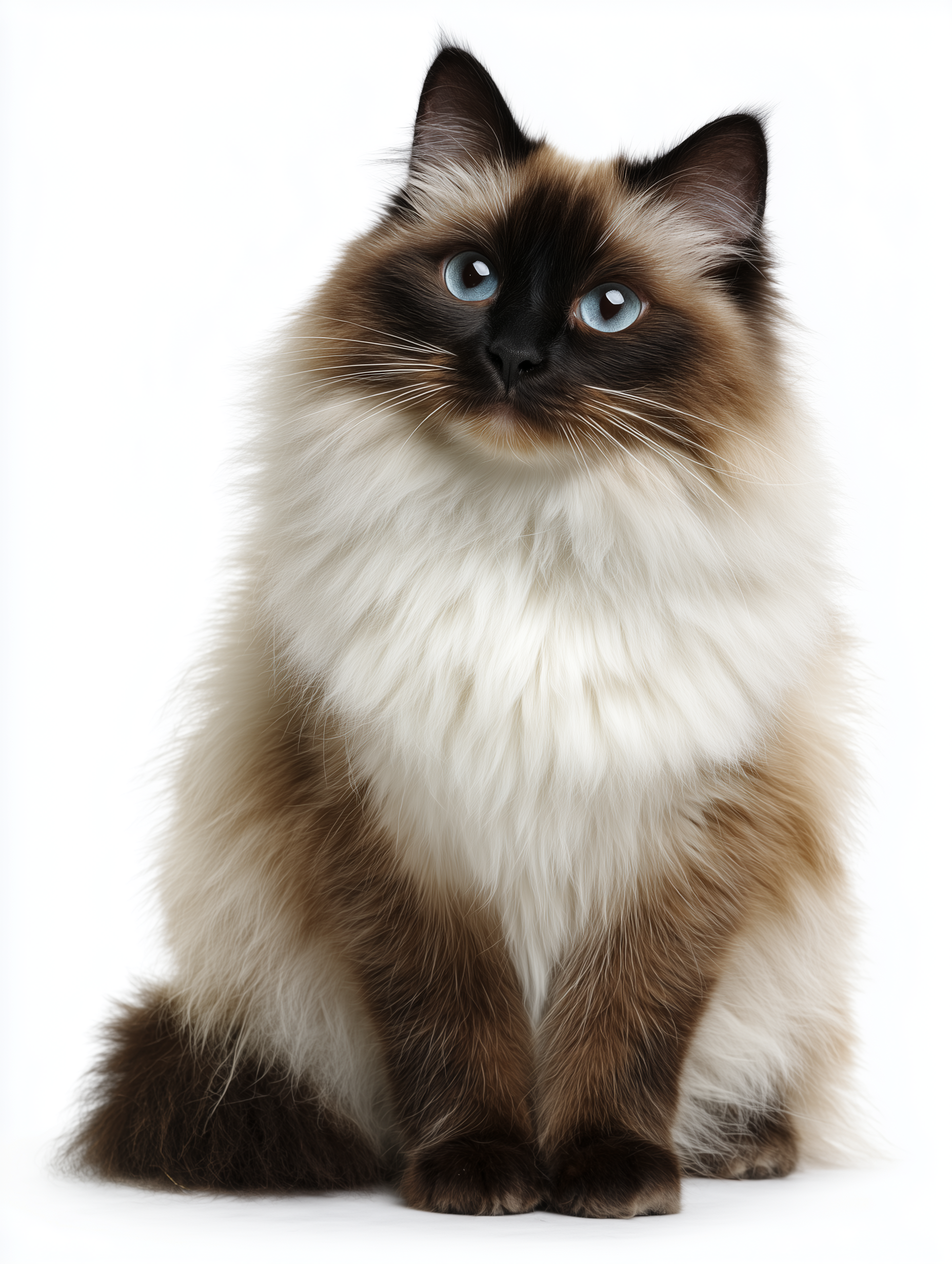
Ragdoll vs Birman: Complete Breed Comparison
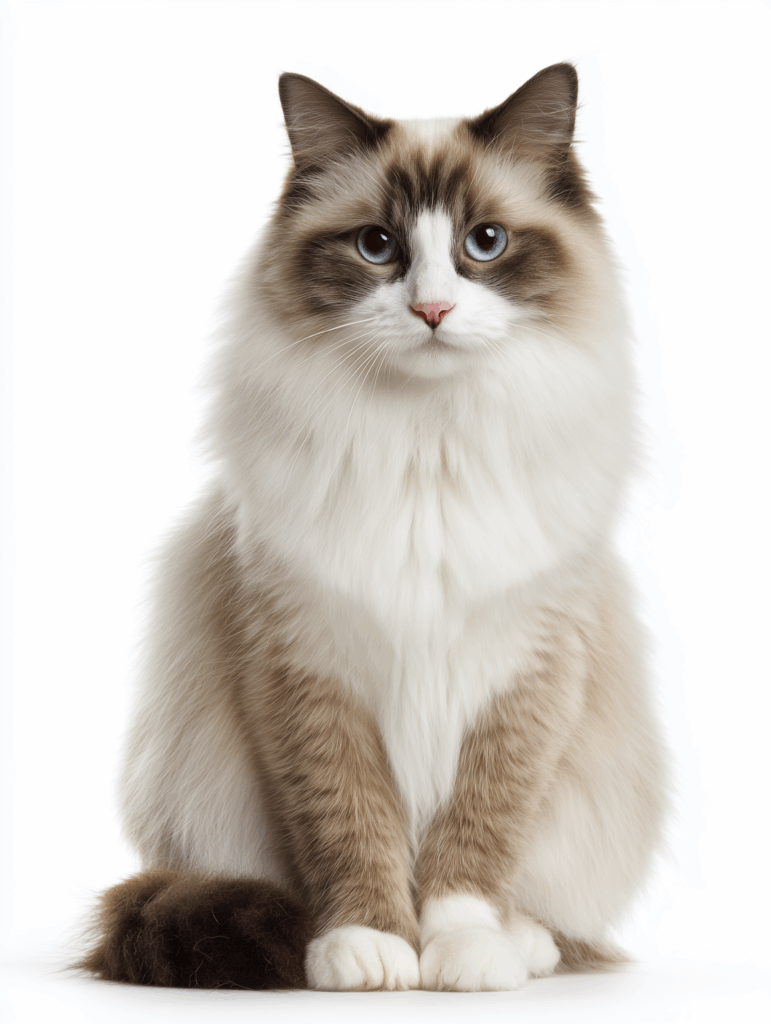
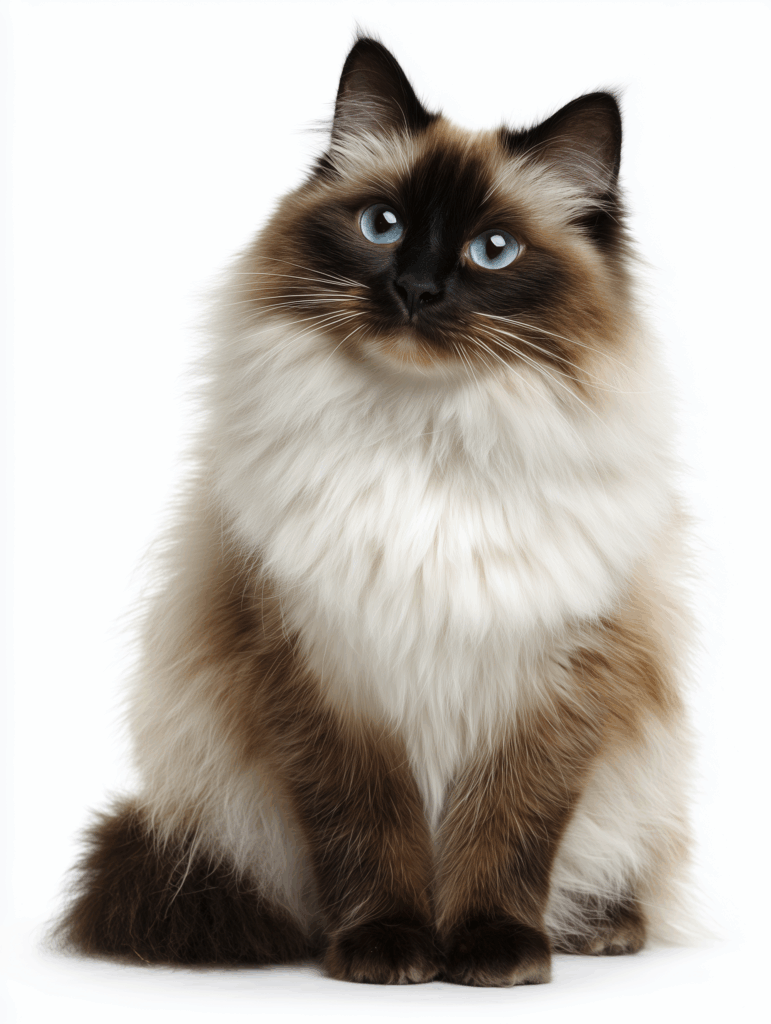
The Ragdoll vs Birman are two of the most beloved pointed, blue-eyed cat breeds in the world. Because their coloration appears similar, many buyers assume they are closely related — but these breeds developed independently and differ meaningfully in body structure, coat type, grooming needs, activity level, and overall daily care.
Although both breeds carry colorpoint patterns and striking blue eyes, their temperaments and physical builds create very different lifestyles for potential owners.
Whether you’re choosing between the Ragdoll’s large, relaxed, floppy companion style or the Birman’s balanced, moderate, soft-spoken presence, this guide breaks down everything you need: personality, health, coat care, size, cost, energy level, and which type of household each breed thrives in.
Quick Comparison Table: Ragdoll vs Birman
| Trait | Ragdoll | Birman |
|---|---|---|
| Personality | People-oriented, relaxed, very social | Gentle, quiet, observant, steady |
| Activity Level | Low to moderate | Low |
| Grooming Needs | Moderate | Low to moderate |
| Coat Type | Semi-long, plush, non-matting | Silky, single coat, rarely tangles |
| Size | Large | Medium |
| Body Type | Substantial, muscular, heavy-boned | Moderate, balanced, lighter frame |
| Health Risks | HCM, urinary concerns | HCM (less common), kidney concerns |
| Lifespan | 12–16 years | 14–16 years |
| Best For | Families, homes with other pets, social environments | Calm homes, first-time owners, quieter families |
| Shedding | Seasonal, manageable | Light to moderate year-round |
Breed Origins and History
Ragdoll Origins
The Ragdoll was developed in California during the 1960s. Breeders selected for a very specific combination of traits: a large, relaxed cat with striking blue eyes, a pointed coat, and an unusually calm, easygoing temperament that allowed them to “go limp” when held.
The breed’s foundations include cats with semi-long coats, substantial bone, and extremely people-oriented temperaments. Over the decades, Ragdolls were refined into a predictable breed with consistent size, type, and color patterns. Today, they are one of the most popular cat breeds in North America because of their gentle companionship style.
Birman Origins
The Birman, or “Sacred Cat of Burma,” has origins that date back to early 20th-century France, with legends linking them to temple cats of Burma. While the romantic stories are debated, the breed itself was established through careful breeding programs to preserve:
• the pointed coat
• deep blue eyes
• characteristic white gloves on all four paws
Because World War II nearly eliminated the breed, Birmans were rebuilt through small but well-documented breeding programs, creating the moderate, silky-coated companion cats we know today.
Ragdoll vs Birman Appearance
Ragdoll Appearance
Ragdolls are one of the largest companion cat breeds. Typical traits include:
• large, muscular, heavy body
• broad chest and substantial bone
• medium-sized ears
• oval blue eyes
• semi-long plush coat
• colorpoint, mitted, and bicolor patterns
The coat is dense but not prone to matting, making grooming easier than many longhaired breeds. Their size, head shape, and relaxed posture create the iconic “floppy” look.
Birman Appearance
Birmans are medium-sized, more moderate cats with a classic, elegant silhouette:
• medium frame
• slender but not fragile build
• rounder head with medium ears
• deep sapphire-blue eyes
• silky, low-maintenance single coat
• mandatory white gloves and laces on all paws
The Birman coat feels lighter and silkier than a Ragdoll coat and rarely mats, which significantly changes the daily grooming routine.
Structural Differences Recap
Ragdolls = large, substantial, plush-coated
Birmans = moderate, silky, lower-maintenance
Ragdoll vs Birman Personality & Temperament
Ragdoll Temperament
Ragdolls are known for:
• strong human bonding
• relaxed, floppy behavior when handled
• following their people from room to room
• thriving on interaction
• gentle, predictable behavior in family homes
• getting along well with children and pets
They are one of the most social cat breeds and do best in homes where people are around regularly or another cat is available for companionship.
Birman Temperament
Birmans are:
• gentle and calm
• affectionate without being demanding
• curious but soft-footed
• quiet companions
• emotionally steady
• good with peaceful households
They enjoy attention but do not require constant interaction. Their temperament suits first-time cat owners and quieter families.
Temperament Recap
Ragdoll = highly social, human-focused
Birman = gentle, observant, steady, less dependent
Health & Genetic Concerns: Ragdoll vs Birman
Because both breeds carry pointed coloring but come from different foundation lines, their health risks overlap in some areas but differ in frequency and severity.
Common considerations across both breeds include:
• hypertrophic cardiomyopathy (HCM)
• kidney function concerns
• dental health
• weight management
Ragdolls have a strongly documented HCM mutation within the breed, so testing and line selection matter significantly. Birman lines also experience HCM but at lower reporting levels, though kidney-related issues appear in some bloodlines.
Both breeds benefit from routine monitoring, controlled diets, and breeders who prioritize genetic testing and track long-term lineage health.
Ragdoll Health Profile
Ragdolls have a different structural foundation than Birmans, and their size, bone structure, and documented genetic lines influence their health profile. While they do not share the brachycephalic issues found in Persians, Ragdolls do have several breed-specific concerns, particularly involving the heart and urinary system.
Common Ragdoll health considerations include:
• Hypertrophic Cardiomyopathy (HCM)
HCM is the most widely recognized inherited condition in Ragdolls. A specific mutation (Ragdoll HCM mutation) has been identified in the breed, and responsible breeders screen breeding cats to prevent producing affected kittens. Even with testing, cardiac monitoring remains important because heart changes can occur independently of the mutation.
• Urinary Tract Sensitivity
Ragdolls can be prone to urinary health issues such as crystals, inflammation, or stress-related urinary changes. Their large size and calm nature mean hydration and routine monitoring are especially important.
• Joint & Weight-Related Stress
As a naturally large, heavy-boned breed, Ragdolls may show:
- early stiffness
- strain on joints
- tendency toward weight gain
Maintaining a lean, healthy body condition reduces long-term orthopedic stress.
• Tear Staining (Mild)
Ragdolls do not have structural tear-duct compression, but some lines experience mild tear overflow due to facial shape or seasonal irritation. This is generally manageable with routine cleaning.
• Coat & Skin Concerns
The semi-long coat is plush but not prone to heavy matting. However, issues may occur if grooming is neglected:
- tangles in armpits or groin
- buildup of oils close to the skin
- dry flakes or irritation if diet is not optimal
• Kidney Health Monitoring
Some Ragdoll lines have a slightly higher incidence of chronic kidney changes later in life. Routine senior bloodwork helps track early trends.
Health Summary for Ragdolls
Ragdoll health risks center primarily on HCM, urinary care, size-related stress, and moderate grooming needs. They avoid the structural problems linked to flat-faced breeds.
Birman Health Profile
The Birman has a different health profile from the Ragdoll, shaped by moderate size, lighter bone structure, and a silky single coat that rarely mats. Birmans tend to have fewer day-to-day grooming or airway concerns, but certain genetic conditions appear in the breed.
Common Birman health considerations include:
• Hypertrophic Cardiomyopathy (HCM)
Birmans also experience HCM, though reported mutation rates are lower than in Ragdolls. Not all lines are equally affected, making breeder screening and routine echocardiograms valuable for long-term health.
• Kidney-Related Concerns
Some Birman lines have a higher incidence of kidney changes over time. Regular monitoring, hydration support, and senior wellness panels are beneficial.
• Immune-Related Conditions
The Birman population historically showed certain immune-system sensitivities. While careful breeding has reduced risk, some lines remain more vulnerable to:
- chronic inflammation
- delayed healing
- mild autoimmune-linked conditions
• Eye & Tear Sensitivity (Mild)
Birmans may develop minor tear staining, though far less than flat-faced breeds. Cleaning needs are minimal compared to Ragdolls.
• Coat & Skin Care
Because the Birman coat lacks a dense undercoat, health concerns usually relate to:
- seasonal dryness
- occasional tangles around the ruff
- mild skin irritation if grooming is inconsistent
Health Summary for Birmans
Birman health concerns focus mainly on HCM, kidney monitoring, and immune-related sensitivities, with lighter grooming demands and fewer structural risks overall.
Health Differences: Ragdoll vs Birman
| Health Aspect | Ragdoll | Birman |
|---|---|---|
| Overall Health Profile | Moderate maintenance; larger size influences care | Lower maintenance; moderate size with fewer structural risks |
| Respiratory Issues | Rare; normal airway structure | Rare; normal airway structure |
| Tear Overflow | Mild in some lines; occasional cleaning | Minimal; occasional seasonal staining |
| Dental Concerns | Normal dental alignment; routine dental care needed | Normal alignment; routine dental care needed |
| Kidney Concerns | Present in some lines; monitoring recommended | Present in some lines; slightly higher monitoring need |
| Heart Disease (HCM) | Documented mutation in the breed; active screening needed | Lower reported rates; still requires screening |
| Urinary Health | More prone to crystal formation or stress-related urinary issues | Lower incidence; routine hydration important |
| Joint/Weight Stress | Higher due to large size | Lower due to moderate size |
| Skin & Coat Issues | Mats in armpits or groin if neglected | Very low matting; occasional dryness |
| Heat Intolerance | Normal tolerance; heavy body may affect exertion | Normal tolerance |
| Longevity Impact | Influenced by heart and urinary care | Influenced by kidney and cardiac care |
Ragdoll vs Birman Lifespan: Which Breed Lives Longer?
Ragdoll Lifespan — 12 to 16 Years
Ragdolls live 12–16 years on average. Longevity is influenced by cardiac screening, weight control, and urinary health management. Many moderately sized Ragdolls exceed 14 years with preventative care.
Birman Lifespan — 14 to 16 Years
Birmans typically live 14–16 years and sometimes longer. Their moderate size and lower structural risks contribute to steady, predictable longevity when paired with routine senior monitoring.
Activity Level & Energy: Calm vs Soft-Calm
Both Ragdolls and Birmans are low-energy cats, but the way they express that calmness differs.
Ragdoll Activity Level
Ragdolls are:
- relaxed
- people-driven
- playful in short bursts
- happiest nearby their owner
They enjoy gentle games and floor-level play but usually avoid high jumping or fast activity.
Birman Activity Level
Birmans are:
- calm
- quietly curious
- steady movers
- interested in observing without demanding
They enjoy exploring and perching but remain gentle and controlled in their movements.
Recap
Ragdolls lean toward social, interactive calmness.
Birmans lean toward quiet, observant calmness.
Grooming & Coat Maintenance
Grooming is one of the clearest differences between the Ragdoll and the Birman. Both are pointed, longhaired cats with blue eyes, but their coats behave very differently. Ragdolls have a plush, semi-long coat that can form tangles in friction areas, while Birmans have a silky single coat that rarely mats. For many families, this becomes a deciding factor.
Ragdolls require more hands-on coat management because of their density and size, while Birmans usually need far less day-to-day involvement. Understanding these differences helps buyers choose the breed that matches their grooming expectations.
Ragdoll Coat Care
A Ragdoll’s semi-long coat is soft, plush, and moderately dense. While it lacks the heavy undercoat of double-coated breeds, it can still tangle if left unmanaged. Their coat tends to mat behind the legs, in the armpits, and along the belly—especially as they mature and the coat thickens.
A full Ragdoll grooming routine usually includes:
• Brushing Several Times Per Week
The coat is not as prone to rapid matting as Persian-based breeds, but friction areas can tangle quickly. A steel comb and a slicker brush are typically enough to keep the coat smooth. During seasonal shedding, daily brushing may be helpful.
• Occasional Eye Cleaning
Some Ragdolls experience mild tear staining due to hair growth around the eyes. A quick wipe maintains cleanliness but is not a major part of the routine.
• Sanitary Maintenance
Because Ragdolls are large, longhaired cats, light trimming around the hindquarters can prevent debris from catching in the fur.
• Bathing (As Needed)
Bathing is optional but helpful for oily coats or heavy seasonal shedding. Many Ragdolls stay mat-free with proper brushing alone.
• Coat & Undercoat Monitoring
Ragdolls shed seasonally. Extra brushing during coat changes prevents loose hair from forming small mats close to the skin.
Overall, Ragdolls are moderate-maintenance: not overly demanding, but not low-maintenance either.
Birman Coat Care
The Birman coat is fundamentally different from the Ragdoll’s. It is a silky single coat with very little undercoat, and this dramatically reduces grooming needs. Even longhaired Birmans often stay mat-free with minimal effort.
A Birman grooming routine typically includes:
• Weekly Brushing
A simple weekly comb-through keeps the coat smooth. Because the coat is lighter, it does not trap moisture or debris the way dense coats do.
• Minimal Tear Care
Birmans may show minor tear staining in some lines, but routine cleaning is usually minimal.
• Limited Sanitary Trimming
Their coat texture makes it less likely for litter or debris to cling to the hindquarters.
• Occasional Bathing
Bathing is optional and mainly used for show cats or seasonal coat refreshes.
• Seasonal Coat Monitoring
Birmans shed modestly during seasonal changes. Soft, silky fur releases easily with brushing.
Birmans are low-maintenance, making them a better match for first-time owners or families wanting a longhaired cat without extensive daily grooming.
Recap on Grooming
Both breeds have long coats, but their grooming demands differ sharply:
Ragdoll
Moderate maintenance. Needs regular brushing, especially during shedding and in friction areas.
Birman
Low maintenance. Silky single coat rarely mats and requires only minimal weekly care.
Breathing & Facial Structure: Natural vs Moderate
Ragdoll vs Birman cats have similar facial structures. Neither are a flat faced cat breed.
Ragdoll Facial Structure
Ragdolls have:
- a broad, natural muzzle
- normal nasal passages
- open airways
- no brachycephalic compression
They breathe normally, tolerate heat well, and have no breed-specific structural respiratory issues. Tear drainage is generally effective, with only mild staining in certain lines.
Birman Facial Structure
Birmans also have:
- a moderate, natural skull shape
- normal sinus structure
- no flat-face compression
- clear tear drainage pathways
Breathing difficulties are not associated with the breed. Their moderate facial shape makes them one of the easier longhaired breeds to maintain.
Recap
Unlike Persian-based breeds, both Ragdolls and Birmans have normal facial structure and do not require special respiratory care.
Shedding Differences: Moderate vs Light to Moderate
Shedding varies more between these two breeds than many buyers expect.
Ragdoll Shedding
Ragdolls shed:
- moderately year-round
- heavily during seasonal coat changes
- with noticeable clumps of loose fur during shedding months
Their plush coat releases hair that may float through the home or accumulate in friction areas. Regular brushing keeps shedding manageable.
Birman Shedding
Birmans shed:
- lightly to moderately
- with a softer, finer release of coat
- less intensely during seasonal transitions
Their single coat sheds less and is easier to clean from furniture and fabric.
Summary
Ragdoll → moderate to heavy seasonal shedding
Birman → light to moderate shedding that is easier to manage
Ragdoll vs Birman Cost, Price Ranges, and Lifetime Maintenance
Both Ragdolls and Birmans are premium pedigree breeds, but their long-term costs differ noticeably because of coat type, grooming needs, size, and typical veterinary care. Understanding these differences helps buyers choose the breed that fits both their lifestyle and their budget.
Ragdoll Cost
Ragdoll kittens typically cost $2,000–$4,000, reflecting their popularity, large size, and predictable temperament. Prices rise for rare patterns such as mink or sepia, or for kittens from imported or show-quality lines.
Ongoing costs for Ragdolls include:
• Regular brushing and grooming tools
Their plush coat requires combing several times per week, and owners often invest in quality tools to prevent tangles in friction areas.
• Heart screening for HCM
Because Ragdolls carry a known HCM mutation, responsible ownership includes periodic cardiac checks, especially as the cat matures.
• Urinary health monitoring
Some Ragdolls are prone to crystals or inflammation, meaning owners may need to provide hydration support, prescription diets, or routine urinalysis.
• A larger food budget
Their size naturally results in higher food intake compared to medium-sized breeds like the Birman.
• Bigger supplies overall
Owners often need oversized carriers, litter boxes, and scratching posts to accommodate the breed’s large frame.
Ragdolls are not excessively expensive to maintain, but they do require a higher baseline level of care because of their size and health profile.
Birman Cost
Birman kittens typically range $1,800–$3,500, depending on color, lines, and breeder reputation. Their availability can be limited in some areas, which may shift pricing upward.
Lifetime costs for Birmans tend to be lower because:
• Their silky single coat needs minimal upkeep
Weekly brushing is usually enough, so owners spend far less on grooming tools and products compared to heavier-coated breeds.
• They eat smaller portions
Their moderate size makes them more economical to feed over a lifetime.
• Fewer orthopedic or weight-related issues
Their lighter frame reduces medical costs tied to obesity or joint strain.
• They rarely need professional grooming
Unlike heavy-coated breeds, Birmans do not require baths or salon grooming unless desired for showing.
• Veterinary needs are moderate
Routine wellness care is typically sufficient, though some lines benefit from kidney monitoring as they age.
Birmans are often considered one of the most cost-efficient longhaired cat breeds for long-term care.
Which Cat Is Easier to Own?
Ragdoll: Moderate Maintenance With Higher Physical Needs
• They require more grooming than Birmans
Their coat is not high-maintenance, but it does need consistent care to prevent friction mats behind the legs and under the arms.
• They need companionship
Ragdolls form strong bonds and often follow their people from room to room, which makes them less suited to homes where everyone is gone all day.
• They benefit from structured health care
HCM screening, weight monitoring, and urinary support are part of responsible Ragdoll ownership.
• They interact well with kids and pets
Ragdolls adapt beautifully to active homes because they enjoy social engagement and are highly tolerant.
Most families find Ragdolls easy to live with, but they do take more daily involvement than Birmans.
Birman: Low Maintenance and Predictable
• Their coat needs far less attention
A weekly comb-through is usually enough to keep their coat smooth and mat-free.
• They are affectionate but quiet
Birmans bond deeply but do not demand constant attention, which suits calm, predictable households.
• They handle smaller spaces well
Their moderate size and gentle movement style make them easy to accommodate.
• They have fewer size-related health expenses
Lower body weight means fewer orthopedic issues and reduced food consumption over time.
Birmans are one of the best longhaired options for first-time cat owners.
Which Breed Is Best for Families, Kids, and Multicat Homes?
Ragdoll
• Very social and people-oriented
They thrive in homes with children and pets because they enjoy interaction and rarely become overwhelmed by activity.
• Patient with gentle handling
Their calm, tolerant nature makes them ideal for family environments.
• Adaptable to busier homes
Ragdolls maintain stability even with moderate noise and movement.
Birman
• Better for quieter families
Birmans prefer gentle routines and may become stressed in high-activity households.
• Great with respectful children
They enjoy steady companionship but do best in homes where handling is calm.
• Thrive in peaceful, predictable environments
Their temperament shines in households with a consistent daily rhythm.
Ragdoll vs Birman: Which Breed Fits Your Lifestyle?
Choose a Ragdoll if you want:
- A large, interactive cat that seeks out your company.
- A breed that excels with kids, dogs, or multiple pets.
- A cat that enjoys being held and cuddled.
- A social companion for work-from-home or family households.
Ragdolls match best with owners who enjoy hands-on time with their pets.
Choose a Birman if you want:
- A gentle, easy-care longhaired cat.
- Minimal grooming requirements.
- A quiet companion who enjoys closeness without needing constant interaction.
- A cat suited for calm or adult homes.
Birmans offer a simplified ownership experience and steady companionship.
Ragdoll vs Birman: Pros & Cons
Ragdoll Pros & Cons
| Pros | Expanded Notes | Cons | Expanded Notes |
|---|---|---|---|
| Very social | Excellent for families and multi-pet homes | Higher grooming needs | Coat tangles in friction areas |
| Gentle and tolerant | Handles handling well | Prone to weight gain | Larger size increases dietary needs |
| Large, impressive breed | Many buyers love their size and presence | Needs companionship | Not ideal for owners gone all day |
| Predictable temperament | Steady, calm personality | HCM risk | Screening required |
Birman Pros & Cons
| Pros | Expanded Notes | Cons | Expanded Notes |
|---|---|---|---|
| Low-maintenance coat | Weekly brushing is often enough | Sensitive to stress | Prefers calm homes |
| Sweet temperament | Gentle and affectionate | Limited availability | Can be harder to find |
| Moderate size | Easy to handle | Some kidney sensitivities | Monitoring recommended |
| Good for first-time owners | Lower demands overall | Less interactive than Ragdolls | Not as people-dependent |
Ragdoll vs Birman FAQ
Are Ragdolls and Birmans the same breed?
No. Ragdolls and Birmans are often confused because they are both pointed, blue-eyed breeds, but they have completely separate origins and breeding histories. Ragdolls were developed in the United States during the 1960s, while Birmans originated in Europe in the early 20th century.
Ragdolls tend to be much larger, more social, and more dependent on human interaction. Birmans are moderate in size, gentler in expression, and require far less grooming. Despite similar coloring, they are not related and do not share the same body type, coat texture, or temperament.
Which is better: Ragdoll or Birman?
“Better” depends entirely on your lifestyle. Ragdolls are ideal for owners who want a highly social, people-oriented companion who follows them around and enjoys being handled. Birmans are better for households wanting a loving but lower-maintenance cat with a calmer, quieter presence.
If you want daily interaction and a cat that integrates into an active family, choose a Ragdoll. If you prefer gentle companionship without constant attention or grooming, the Birman is better suited to you.
What is the main difference between a Ragdoll vs Birman?
The biggest differences between a Ragdoll vs Birman cat involve size, coat type, grooming needs, and temperament:
- Size: Ragdolls are significantly larger than Birmans.
- Coat: Ragdolls have a plush, semi-long coat that can mat in friction areas; Birmans have a silky single coat that rarely mats.
- Temperament: Ragdolls are more interactive and people-centered; Birmans are quieter and more independent.
- Maintenance: Ragdolls require more grooming, larger supplies, and more structured health monitoring.
To most families, the distinction becomes clear once they compare the two breeds in person.
Do Ragdolls shed more than Birmans?
Yes. Ragdolls shed moderately year-round and heavily during seasonal coat changes, especially in spring. Their plush coat releases visible amounts of fur and can create tangles behind the legs, under the arms, or along the belly.
Birmans, by comparison, shed lightly to moderately and rarely mat because they have a silky single coat. Their shedding is easier to manage and causes fewer household cleanup needs.
Which breed is more affectionate: Ragdoll or Birman?
Ragdolls are typically more overtly affectionate. They follow their owners from room to room, enjoy being held, and actively seek interaction throughout the day.
Birmans are affectionate as well, but their expression is gentler and quieter. They are companion cats who enjoy closeness but do not demand constant attention. Many people describe Birmans as calm and steady rather than clingy.
Are Ragdolls or Birmans more social with children and pets?
Both breeds are excellent with respectful children and compatible pets, but Ragdolls generally adapt better to busy or active homes. Their tolerant, easygoing personality allows them to thrive in households with kids, dogs, or multiple cats.
Birmans do well in family environments too, but they prefer calm routines and may become stressed in unpredictable or noisy homes. For quieter families, Birmans are ideal.
Which cat is easier to groom: Ragdoll or Birman?
Birmans are easier to groom. Their coat is silky, fine, and low-tangle, requiring only a weekly combing to stay in beautiful condition.
Ragdolls require brushing several times per week, especially in friction areas. Their coat is not high-maintenance like a Persian’s, but it does mat if neglected. During seasonal shedding, daily brushing may be necessary.
Do Ragdolls or Birmans require professional grooming?
Most Birmans do not require professional grooming due to their mat-resistant coat.
Ragdolls rarely need professional grooming, but many owners choose to schedule occasional baths or comb-outs, especially during coat-blow seasons or if the cat tends to develop belly mats.
Which breed is larger: Ragdoll or Birman?
Ragdolls are one of the largest companion cat breeds. Adults often reach 12–20+ pounds, with males at the upper end of the range.
Birmans are moderate in size, typically 8–12 pounds, with a more balanced and less muscular frame.
Do Ragdolls flop like Birmans?
Ragdolls are famous for their “floppy” relaxation when picked up. Not all Ragdolls do this, but the trait is well documented.
Birmans do NOT typically flop. They enjoy being held but maintain more body tension than a Ragdoll.
Are Ragdolls or Birmans hypoallergenic?
Neither breed is hypoallergenic. Both produce the same Fel d 1 protein that triggers cat allergies.
However, Birmans usually shed less, which may reduce allergen spread throughout the home. But this does NOT make them hypoallergenic.
Which breed has fewer health problems: Ragdoll or Birman?
Both breeds require responsible breeding and health screening, but they have different genetic risk profiles:
- Ragdolls: HCM, urinary sensitivity, weight-related issues
- Birmans: kidney sensitivities in some lines, immune-system susceptibilities, HCM at lower rates
Because neither breed has brachycephalic traits, breathing issues are not a concern for either. In general, Birmans have slightly lower lifetime medical costs, but both benefit from regular veterinary checkups.
Which breed lives longer: Ragdoll or Birman?
Birmans tend to have a slightly longer lifespan on average.
- Ragdoll lifespan: 12–16 years
- Birman lifespan: 14–16+ years
Individual health care, genetics, and environment influence longevity for both breeds.
Are Ragdolls more high-maintenance than Birmans?
Yes. Ragdolls require more grooming, more emotional interaction, and more health monitoring than Birmans. Their size also increases food and supply costs.
Birmans are lower maintenance, need less grooming, and are easier for first-time cat owners.
Do Ragdolls or Birmans adapt better to apartment living?
Both adapt well to apartments, but Birmans may be easier because they take up less space and have lower activity bursts.
Ragdolls are fine in smaller spaces too, but their large size and desire to be near you means owners must provide enough vertical or horizontal space for comfort.
Which breed is quieter: Ragdoll or Birman?
Birmans are generally quieter. They communicate softly and rarely vocalize loudly.
Ragdolls are also gentle-voiced, but they tend to “talk” more, especially when following their owners or seeking attention.
Do Ragdolls or Birmans need companionship to stay happy?
Ragdolls strongly prefer companionship, whether from a human or another friendly cat. They may become lonely or bored if left alone for long hours.
Birmans enjoy company too, but they are more independent and handle brief periods of solitude better.
Which breed is better for first-time cat owners: Ragdoll or Birman?
Birmans are often easier for beginners because they have simpler grooming needs and fewer size-related challenges.
Ragdolls can also be wonderful for first-time owners, if the owner understands grooming, feeding, and companionship requirements.
Are Ragdolls or Birmans more expensive to own?
Ragdolls are more expensive long-term. Their size increases costs for food, litter, carriers, and veterinary care. They also require more grooming tools and may need more frequent veterinary monitoring.
Birmans, being smaller and lower maintenance, generally have lower lifetime costs.
Do Ragdolls and Birmans get along well with dogs?
Yes—both breeds typically coexist peacefully with gentle, well-trained dogs.
Ragdolls adapt more quickly to canine companionship because they are naturally social. Birmans accept respectful dogs but appreciate a calm introduction.
Is a Ragdoll more playful than a Birman?
Ragdolls are playful in short bursts and enjoy interactive toys, wand play, and gentle games.
Birmans are also playful but in a quieter, more controlled way. Their energy is moderate, not hyper, and they tend to engage in thoughtful exploration rather than big-play sessions.
Do Ragdolls or Birmans travel better?
Birmans generally travel more easily because they are smaller, lighter, and calmer in carriers.
Ragdolls can travel well too, but their size can make long trips less comfortable, and they bond strongly to home routines.
Which breed bonds more deeply: Ragdoll or Birman?
Ragdolls bond intensely with their owners and often form strong one- or two-person attachments.
Birmans bond deeply too, but in a more balanced way, spreading affection evenly rather than focusing heavily on one person.
Ragdoll vs Birman Summary
The Ragdoll and the Birman are two blue-eyed, pointed breeds that look similar at first glance, but they offer completely different ownership experiences. Ragdolls are larger, more interactive, and more people-oriented, often following their owners throughout the home and seeking hands-on attention. Their plush semi-long coat requires more grooming and they benefit from structured health care, especially heart and urinary monitoring. They fit best in family households, homes with children or dogs, and environments where companionship is consistently available.
Birmans are moderate in size with a silky single coat that rarely mats, making them one of the easiest longhaired breeds to maintain. They are gentle, quiet, balanced cats who enjoy closeness without demanding constant interaction. Their temperament suits calm homes, adults, and families who want a sweet, steady companion without the higher maintenance associated with larger breeds. While both breeds are affectionate and social, Ragdolls lean toward active involvement, while Birmans provide a peaceful and predictable companionship style.
Looking for a Cat With A Lovely Temperament?
If you love the calm, affectionate nature of Birmans and Ragdolls, you may also want to explore these breeds:
- Ragdoll Kittens for Sale
- British Shorthair Kittens for Sale
- Maine Coon Kittens for Sale
Each breed offers a gentle, family-friendly personality with stable dispositions and predictable traits.
Related Reading
Cat Breed Comparisons :
- Ragamuffin vs Munchkin
- Bengal vs Maine Coon
- Exotic Shorthair vs Persian
- British Shorthair vs Persian Cat
- Ragdoll vs Siamese
- Ragdoll vs Persian
- British Shorthair vs Scottish Fold
- Maine Coon vs Norwegian Forest Cat
- Ragdoll vs Himalayan
- Ragdoll vs Ragamuffin
Sources
- The International Cat Association (TICA) – Breed Standards
Ragdoll & Birman breed standards and history
https://tica.org/breeds - Cat Fanciers’ Association (CFA) – Official Breed Profiles
Ragdoll: https://cfa.org/ragdoll/
Birman: https://cfa.org/birman/ - UC Davis Veterinary Genetics Laboratory – Feline Genetic Testing (HCM, PKD, etc.)
https://vgl.ucdavis.edu/services/cat - Cornell University College of Veterinary Medicine – Feline Health Topics
Heart disease, kidney disease, behavior, grooming
https://www.vet.cornell.edu/departments-centers-and-institutes/cornell-feline-health-center - International Cat Care (iCatCare) – Breed Health & Care Guides
https://icatcare.org/advice/cat-breeds/ - AAFP (American Association of Feline Practitioners) – Feline Care Guidelines
https://catvets.com/guidelines - Journal of Feline Medicine and Surgery – Peer-Reviewed Research
Breed health, HCM prevalence, urinary issues
https://journals.sagepub.com/home/jfm - WSAVA (World Small Animal Veterinary Association) – Global Health Guidelines
https://wsava.org/WSAVA/media/Arpita-and-Emma-editorial/WSAVA-Global-Guidelines-for-Feline-Hyperthyroidism.pdf
(General feline welfare & medical reference) - Royal Veterinary College (RVC) – Feline Longevity & Disease Reports
https://www.rvc.ac.uk/vetcompass - VCA Animal Hospitals – Feline Health Conditions & Breed Overviews
https://vcahospitals.com/know-your-pet





Read the Comments +