
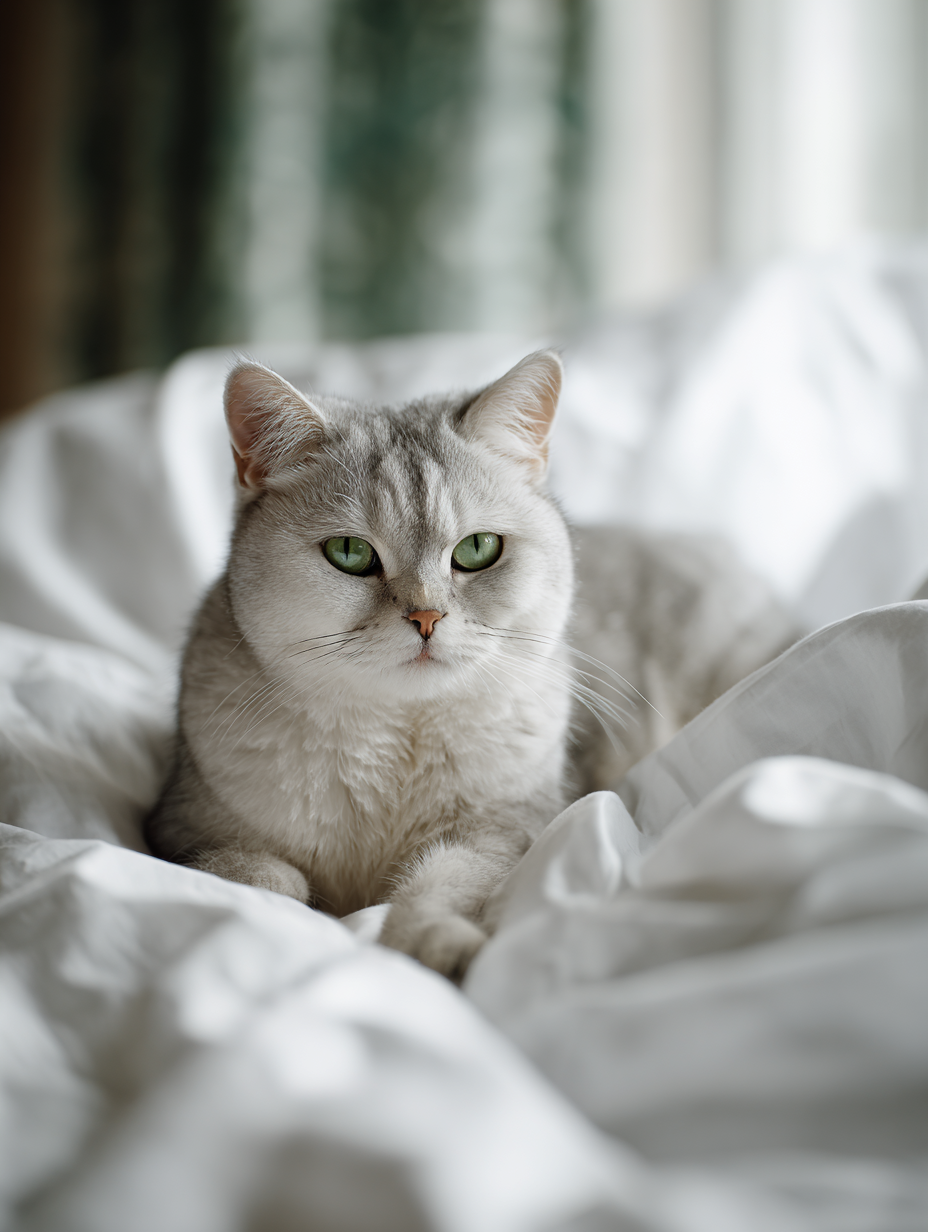
The Silver British Shorthair: Featuring Silver Shaded, Silver Tipped, and More
British Shorthair cats are known for their round faces, expressive eyes, calm temperaments, and plush coats — but can British Shorthairs be silver? Is the silver British Shorthair color authentic and recognized?
Yes. Silver British Shorthair cats are not only legitimate — they are one of the most established and visually striking color groups in the breed. Their unique appearance comes from a specialized “silver inhibitor gene” that lightens the base coat and creates the sparkling, frosted effect the color is famous for.
The silver British Shorthair is admired for its luminous, high-contrast look. Their coats appear bright, cool-toned, and lightly dusted with shimmer, especially in natural light. Depending on the variant, you may see subtle tipping (silver shaded) or a nearly white coat with darker accents (silver shell/chinchilla). Eye color ranges from emerald green to blue-green or gold, depending on the line and color class.
Below, you’ll find a clear breakdown of what defines silver British Shorthairs, how silver genetics work, how the coat develops from kittenhood to adulthood, and what to expect when comparing silver to other British Shorthair colors.
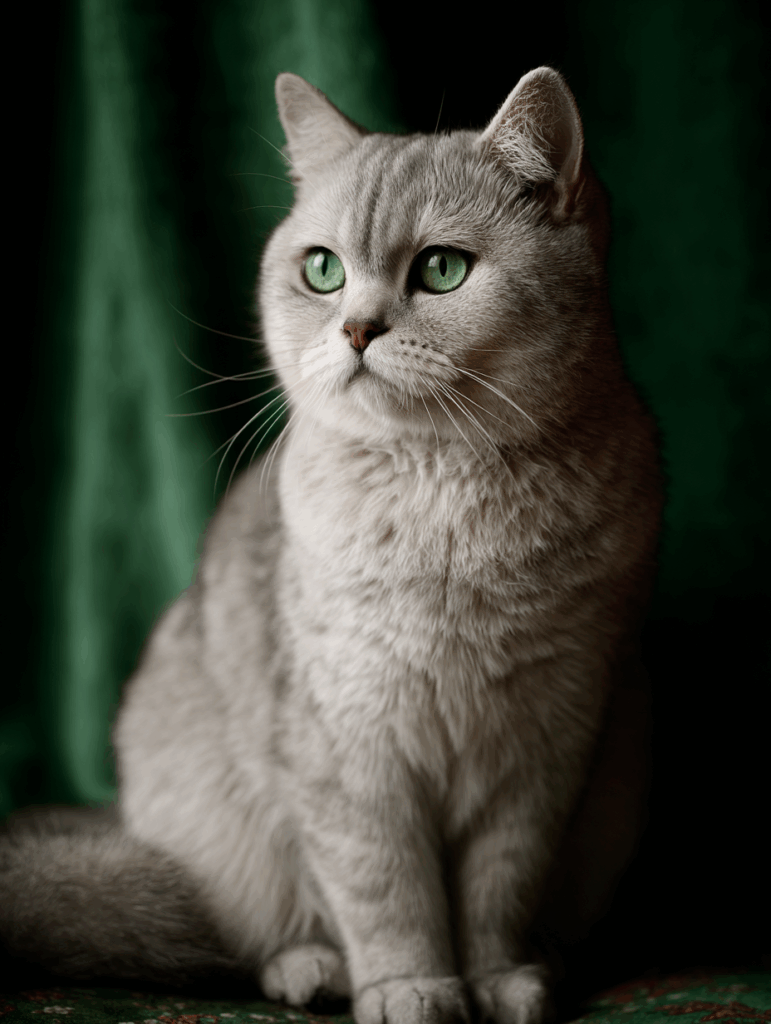
Searching for your own British Shorthair Kitten?
If you are here to find your very own British Shorthair baby, check out our Purebred British Shorthair Kittens for Sale.
At Almonte Cats, every kitten is:
- TICA / CFA registered from fully health-tested parents
- Raised in-home for confident, affectionate temperaments
- Vet-checked, vaccinated, and microchipped before going home
Reserve early — our litters are produced in limited numbers each year to preserve quality, true British Shorthair type, and excellent temperament. We currently specialize in golden British Shorthairs in both short and long hair types, with occasional blue British Shorthair kittens available depending on our pairing schedule.
See British Shorthair Kittens Available
Can British Shorthair Cats Be Silver?
Yes. British Shorthair cats can be silver, and the silver British Shorthair is one of the most established and visually distinctive color groups in the breed. Silver is fully recognized by major cat registries including CFA, TICA, GCCF, and FIFe, and unlike modern experimental colors, silver has a long, well-documented history within British lineage.
Silver British Shorthairs get their bright, frosted appearance from the inhibitor gene (I), which lightens the base coat and creates the signature sparkling silver effect. Depending on the degree of tipping, a cat may be classified as silver shaded, silver shell (chinchilla), or another silver variant. These cats often have green or blue-green eyes, though some lines carry golden or hazel tones.
Unlike solid colors, silver is not uniform across the body. Only the very tips of the hair are pigmented, while the base is a pale, clean white. This tipping creates movement, brightness, and contrast — the defining features of a true silver British Shorthair.
Quick Tip
Some families call them “white British Shorthairs,” “silver grey British Shorthairs,” or “silver tipped British Shorthairs.” All of these refer to cats expressing the silver inhibitor gene. No matter the terminology, the structure and temperament remain classic British Shorthair: calm, steady, affectionate, and easygoing.
Silver British Shorthair vs White British Shorthair: Is There a Difference?
Many new owners search for “white” or “silver grey” British Shorthairs, but these are not the same color class. A true silver British Shorthair is not a white cat — it is a tipped or shaded cat whose color appears light because the pigment exists only at the hair tips.
Here’s what matters:
1. Silver = The Official Breed Term
Registries use precise color names such as:
- Silver Shaded (black silver shaded 11)
- Silver Shell (black silver shell 12 / chinchilla)
- Silver Ticked (black silver ticked 25)
These designations refer to how much pigment appears at the hair tips.
There is no registry category called “silver grey” or “silver white.”
2. White = A Completely Different Genetic Category
Pure white British Shorthairs exist, but they are genetically unrelated to silver. White cats carry dominant white (W) or masking genes, not the silver inhibitor gene.
Families often confuse the two because silver shells can appear nearly white from a distance — but genetically, they are completely different.
3. No Difference in Temperament or Structure — Only Color
All silver British Shorthairs share:
- the inhibitor gene (I)
- the bright white undercoat
- the tipped or shaded pattern
- the classic British Shorthair build and personality
The difference is purely visual, not behavioral or structural.
4. Why Breeders Use “Silver” Instead of “White” or “Grey”
Breeders stick to “silver” because:
- it aligns with official registry terminology
- it prevents confusion with true white British Shorthairs
- it distinguishes silvers from blue or grey-toned cats
- it clearly identifies the presence of the inhibitor gene
When someone asks for a “silver grey British Shorthair,” they are almost always describing a silver shaded or silver shell.
5. Silver British Shorthair = One of the Breed’s Most Recognizable Luxury Colors
Silver British Shorthairs are highly sought after because of their:
- bright, shimmering coats
- expressive green or blue-green eyes
- crisp white undercoat
- photogenic contrast and definition
It is one of the most refined, elegant color classes in the breed, and one of the earliest patterned types recognized in British Shorthairs.
Quick Summary: Silver vs White British Shorthair
| Feature | Silver British Shorthair | White British Shorthair |
|---|---|---|
| Official Name | Silver (shaded, shell, tipped, etc.) | White |
| Genetics | Inhibitor gene (I) | Dominant white (W) or masking |
| Coat Structure | Pigment only on hair tips | No pigment in the coat |
| Appearance | Bright, frosted, sparkling silver | Solid white |
| Eye Color | Often green/blue-green | Blue, gold, or odd-eyed |
| Temperament | Classic BSH | Classic BSH |
| Registry Status | Fully recognized | Fully recognized |
| Are They the Same? | No | No |
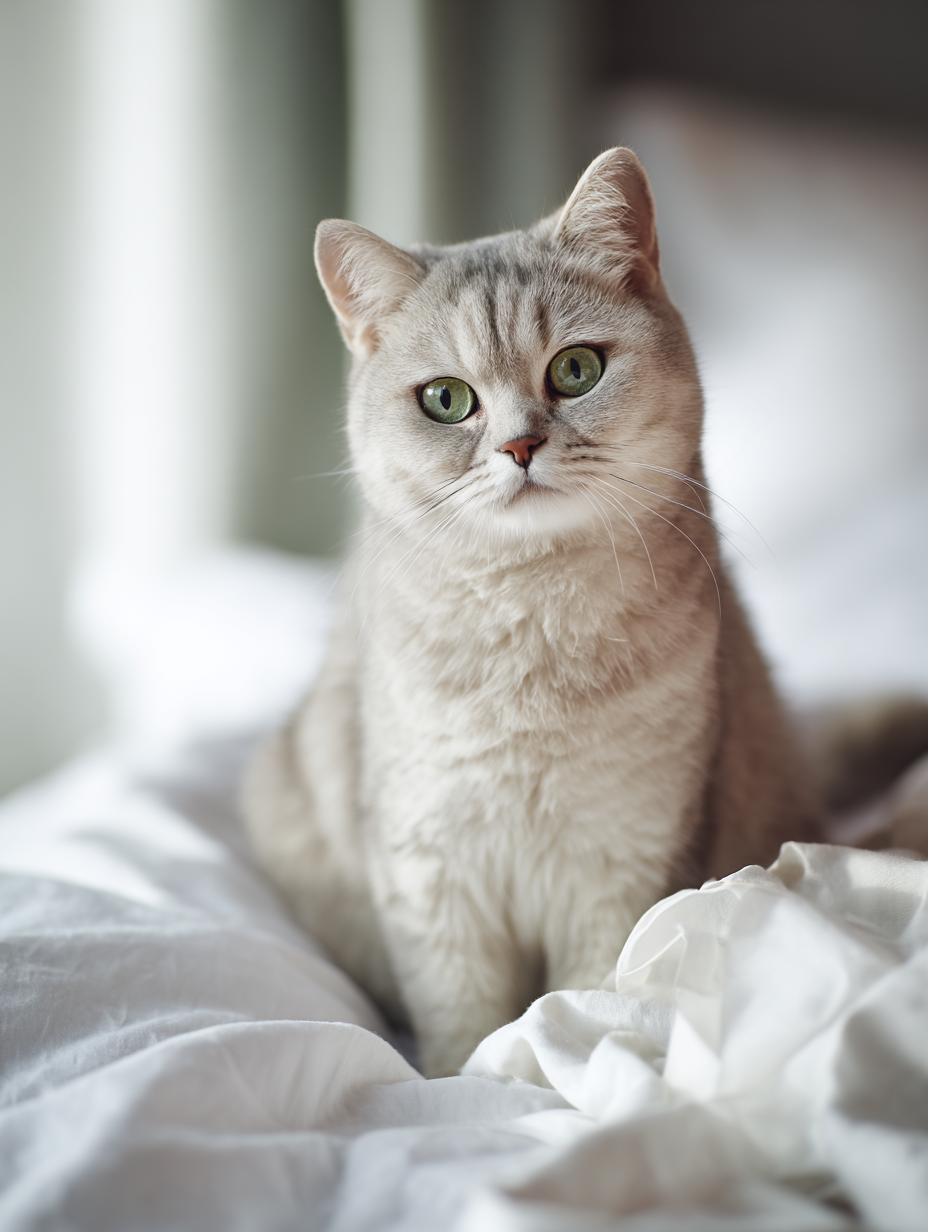
Understanding British Shorthair Cat Colors
The British Shorthair is known for having one of the largest and most diverse color ranges in the cat world, but few shades stand out visually the way the silver British Shorthair does. The sparkling silver coat — created by the unique inhibitor gene — has become one of the most recognizable patterned looks in the breed, especially in silver shaded and silver shell (chinchilla) variants.
Traditional British Shorthairs come in a wide list of recognized base colors, including:
- Black
- Blue
- Lilac
- Chocolate
- Red
- Cream
These base colors appear across multiple patterns:
- Solid
- Bicolor
- Tortoiseshell
- Shaded
- Shell (Chinchilla)
- Smoke
- Tabby
The silver British Shorthair fits naturally into this pattern spectrum. Silver is not new, experimental, or rare within the breed’s history — it has long been part of the British Shorthair standard and is fully recognized by major registries worldwide. Many families describe them as “silver grey,” “silver tipped,” or “white British Shorthairs,” but the registry-correct terminology is silver shaded, silver shell, silver ticked, or another silver classification depending on the degree of tipping.
Silver is valued for its:
- Bright, clean white undercoat
- Even distribution of dark pigment at the hair tips
- Sparkling, frosted appearance in motion
- High contrast with green or blue-green eyes (in many lines)
- Classic plush British Shorthair double coat
Whether you prefer a silver shaded cat with a soft gradient or a nearly white silver shell, all silver varieties are legitimate British Shorthair colors recognized by TICA, CFA, GCCF, and FIFe. Silver remains one of the most photogenic and visually striking color groups in the entire breed.
Silver British Shorthair vs. Other Traditional Colors: Comparison Guide
The silver British Shorthair stands out for its frosted coat and luminous contrast, but it belongs to the same long list of traditional British Shorthair shades. Many families compare silver to colors like blue, lilac, cream, or black when choosing a kitten. The chart below explains how silver differs while still maintaining classic British Shorthair temperament and structure.
| Feature | Silver British Shorthair | Traditional British Shorthair Colors |
|---|---|---|
| Registry Classification (TICA / CFA / GCCF) | Fully recognized as shaded, shell, tipped, or ticked silver | Fully recognized; includes blue, black, lilac, cream, red, etc. |
| Accepted Colors | Silver shaded, silver shell (chinchilla), silver ticked, silver tabby | Wide spectrum of dilute and non-dilute colors |
| Pattern | White undercoat with dark pigment only on hair tips (shaded/shell) | Solid, bicolor, tortie, shaded, smoke, tabby |
| Eye Color | Often green or blue-green; some lines show hazel or gold | Copper, gold, blue (in bicolors), or green (in silvers) |
| Coat Texture | Plush, dense, crisp double coat with visible tipping | Plush and dense across all colors |
| Temperament | Calm, affectionate, steady — classic British Shorthair personality | Identical across the breed |
| Genetic Makeup | Inhibitor gene (I) creating a white undercoat and silver tipping | Dilute or non-dilute depending on color |
| Show Eligibility | Fully showable; strongly represented in shaded/shell divisions | Fully showable depending on category |
| Registration | Recognized by TICA, CFA, GCCF, FIFe | Recognized by all major registries |
| Rarity | Moderately rare; silver shell is one of the rarer British colors | Ranges from common (blue, lilac) to rare (cinnamon, fawn) |
| Breed Authenticity | 100 percent British Shorthair lineage | 100 percent British Shorthair lineage |
| Best For | Families who want a sparkling, high-contrast coat with green eyes | Families choosing from traditional or dilute colors |
Summary
Both silver British Shorthairs and other traditional British Shorthair colors share the same cobby build, calm temperament, and steady, affectionate nature that define the breed. The difference lies entirely in how the coat expresses its color genes.
The silver British Shorthair offers a bright, shimmering, high-contrast appearance created by the inhibitor gene, producing one of the most elegant looks in the breed. Whether shaded or shell, silver British Shorthairs remain a favorite for families who want a visually striking cat with the classic British Shorthair temperament.
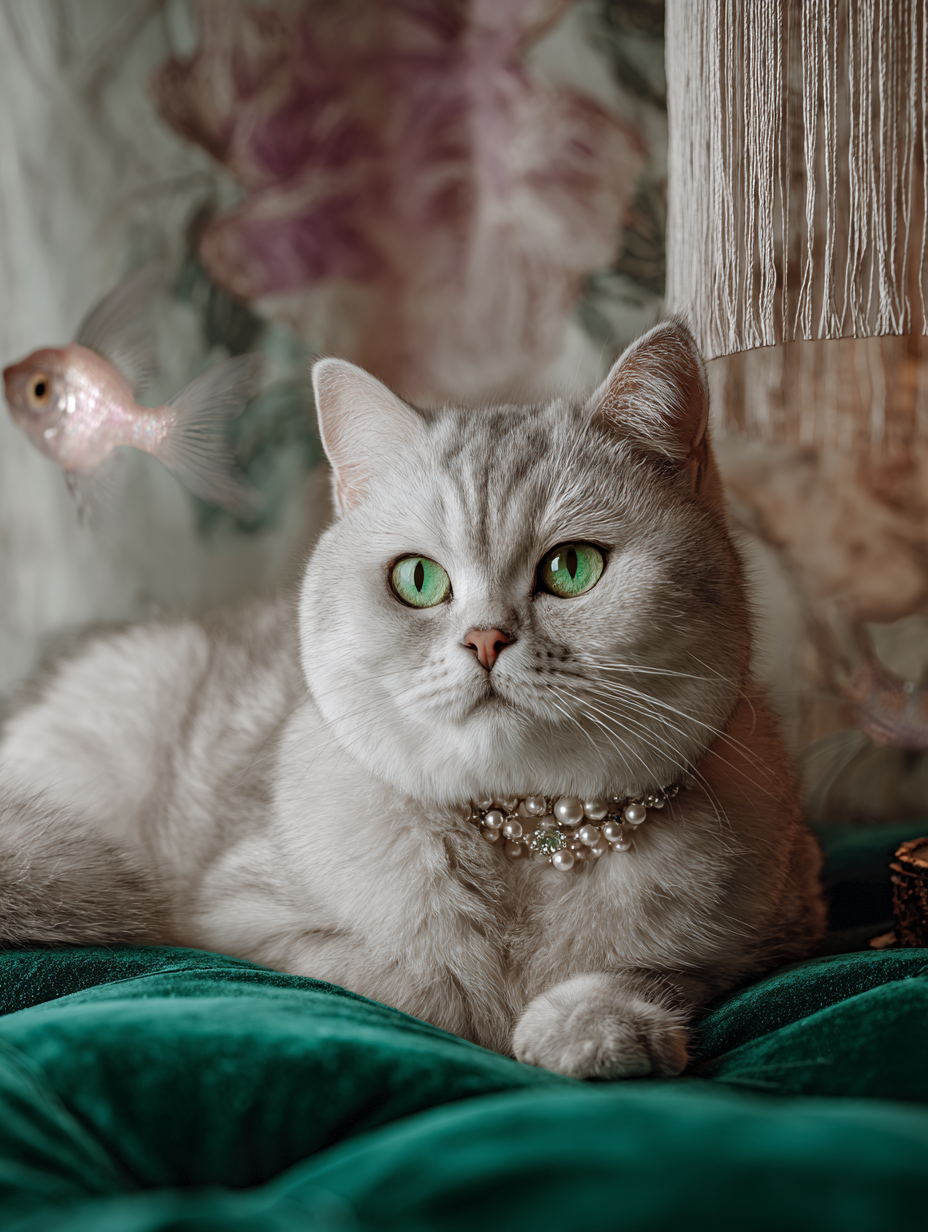
The Difference Between Shaded, Shell, Smoke, and Solid British Shorthairs
What Is a Silver Shaded, Silver Shell, or Silver Smoke British Shorthair?
A silver shaded, silver shell (also called chinchilla), or silver smoke British Shorthair has a bright white undercoat with darker pigment only at the tips of the fur. This creates the signature sparkling, dimensional, “frosted” look that silver British Shorthairs are famous for.
All silver patterns come from the inhibitor gene (I), which restricts pigment along the hair shaft and produces:
- Silver Shell (Chinchilla) — the lightest form; only 1/8 of the hair tip is colored, giving a nearly white appearance with soft tipping
- Silver Shaded — moderate tipping that creates a smooth, gradient-like silver veil
- Silver Smoke — appears solid from above but reveals a bright white undercoat when the coat parts or moves
These patterns can appear in black silver, blue silver, chocolate silver, and other variations depending on the underlying color.
Silver kittens typically lighten as they grow, revealing more of their white undercoat and developing the dramatic contrast silver owners love.
What Is a Solid British Shorthair?
A solid British Shorthair has one uniform color from root to tip — no white undercoat, no tipping, no contrast. Colors like black, blue, lilac, chocolate, cream, and red all fall into the solid category.
Solids are genetically different from silvers:
- Solids are fully pigmented
- Silvers have pigment only on the hair tips due to the inhibitor gene
Both types share the same body structure, temperament, and dense British Shorthair coat, but the visual effect is very different. Solids appear velvety and plush, while silvers appear luminous, bright, and reflective.
Families who want the classic “teddy bear” look often choose solids, while those who love a shimmering, sparkling, high-contrast appearance gravitate toward silvers.
Silver British Shorthair Colors Explained
The silver British Shorthair is one of the most visually striking color families in the breed. Instead of a full-body solid color, silvers display a white base with dark tipping, producing a wide range of cool-toned, elegant effects.
Here are the key silver variations:
| Variation | Description |
|---|---|
| Silver Shell (Chinchilla) British Shorthair | The lightest silver. Only the extreme tips of the hair carry pigment. The cat appears almost white with a gentle shimmer. Eye color is often vivid green or blue-green. |
| Silver Shaded British Shorthair | More pigment at the tips, creating a smooth gradient over a white undercoat. Appears softly frosted and luminous. A very popular silver pattern. |
| Silver Smoke British Shorthair | Appears darker on the surface but has a bright white undercoat revealed during movement or when the coat parts. Creates a dramatic, high-contrast effect. |
| Silver Ticked British Shorthair | Each hair has alternating light and dark bands with a white base. Produces a more textured, sparkling appearance. |
| Silver Tabby British Shorthair | A clear tabby pattern on a white or pale silver base. Strong contrast and clean markings distinguish this variant. |
| Blue Silver British Shorthair | A diluted version of the black-silver lines. The tipping appears softer, cooler, and powdery, with a pale silver-white undercoat. |
🌙 All silver variations maintain the classic British Shorthair temperament: calm, steady, affectionate, and relaxed. The pattern affects appearance only — never personality.
Silver British Shorthair Recognition Across Registries
The silver British Shorthair is widely recognized by all major registries — including TICA, CFA, GCCF, ACFA, and FIFe — as a legitimate, established pattern group.
Silver patterns have been part of British Shorthair development for generations. This full recognition allows breeders to maintain accurate lines and ensures families receive kittens that meet breed standards.
Registry benefits of silver classification include:
- Proper registration of silver shaded, silver shell, and silver smoke lines
- Preservation of historic silver British Shorthair color genetics
- Consistency in type, temperament, and coat quality
- Clear, standardized coloration across international registries
Whether a family is searching for:
- silver shaded British Shorthair
- silver shell (chinchilla) British Shorthair
- silver smoke British Shorthair
- silver tabby British Shorthair
— all of these are fully accepted, fully recognized, authentic British Shorthair colors.
Silver is not experimental, unusual, or rare within the registry framework — but it remains highly sought after because of its elegance, contrast, and luminous appearance.
British Shorthair Color Chart (Including Silver Variants)
Below is an updated British Shorthair color chart tailored for silver British Shorthair lines, along with other major colors recognized in the breed. This helps clarify how silvers fit into the larger color and pattern spectrum.
| Color Type | Pattern | Eye Color | Notes |
|---|---|---|---|
| Silver Shell (Chinchilla) | Shell / Tipped | Green, Blue-Green | Nearly white coat with minimal tipping; very bright and refined appearance |
| Silver Shaded | Shaded | Green, Hazel | Smooth gradient of tipping over a white undercoat; luminous and high-contrast |
| Silver Smoke | Smoke | Copper, Gold, or Green | Appears dark on top with a bright white undercoat revealed during movement |
| Silver Ticked | Ticked | Green | Banding on each hair with a silver base; sparkling, textured coat |
| Silver Tabby | Tabby | Green | Distinct tabby pattern on a white/silver base with crisp contrast |
| Black (Solid) | Solid | Copper, Gold | Deep, fully pigmented black coat |
| Lilac (Dilute Chocolate) | Solid | Copper | Pale lavender-grey coloring |
| Chocolate | Solid | Copper | Warm, rich brown tone |
| Cream | Solid | Copper | Dilute red tone with softness in the coat |
| Blue (Solid) | Solid | Copper, Gold | Classic British Blue; included here for color clarity |
| Red / Orange | Solid | Copper | Bright, fully pigmented red tone |
| Blue Silver Tabby / Black Silver Tabby | Tabby | Green | Popular patterned silver categories with excellent contrast |
If your audience also searches for “silver grey British Shorthair,” “white British Shorthair,” or “silver tipped British Shorthair,” this chart clarifies where silver truly fits in the breed standard.
Silver British Shorthair Kittens: What to Expect
Silver British Shorthair kittens are visually striking from the beginning, but their coats change dramatically as they grow. Many kittens are born with heavier shading or darker areas that gradually lighten to reveal the crisp white undercoat and precise tipping seen in adults.
Personality
Silver British Shorthair kittens share the same temperament as all British Shorthairs:
- calm
- steady
- gentle
- observant
- affectionate without being clingy
Their behavior does not differ from other colors — silver affects appearance only, not personality.
Size
Silver British Shorthair kittens grow at the same slow, steady pace as all British Shorthairs. Expect:
- males: 12–17 pounds
- females: 8–14 pounds
- full maturity: 3–5 years
Their bone structure, cheeks, and overall “teddy bear” build develop gradually.
Coat Care
Silver kittens require slightly more attention to coat maintenance than solids because contrast is part of the beauty of the color.
Key points:
- Brush 2–3 times weekly to keep tipping crisp
- Use a metal comb to maintain the clean separation between white undercoat and dark tips
- Avoid heavy deshedding tools that may blur the tipping or remove too much coat
The goal is to preserve the shimmering, frosted look that defines silver British Shorthairs.
💡 Tip: As silver kittens mature, their tipping becomes more defined. What looks dark at 8–12 weeks may lighten into a beautifully balanced shaded or shell pattern by adulthood.
The Genetics That Create Silver British Shorthairs
The stunning silver British Shorthair coat is produced by the inhibitor gene (I) — a dominant genetic factor that restricts pigment along the hair shaft. Instead of full-body coloration like solids, only the tips of the fur carry color. The rest of the hair remains bright white, creating the shimmering, frosted appearance silver British Shorthairs are known for.
Here’s how the genetics work:
- Traditional Black British Shorthair: B/B or B/b
- Silver Shaded British Shorthair: Black pigment + inhibitor gene (I-) with moderate tipping
- Silver Shell (Chinchilla) British Shorthair: Black pigment + inhibitor gene (I-) with very light tipping
- Silver Smoke British Shorthair: Black pigment + inhibitor gene (I-) + full surface pigmentation with a bright white undercoat
- Blue Silver British Shorthair: Dilute version of black + inhibitor gene (I-) producing a softer, cooler silver appearance
The inhibitor gene determines how far down the hair shaft color appears:
- Very small amount of tipping → Shell (Chinchilla)
- Medium-level tipping → Shaded
- Heavy surface pigment with white roots → Smoke
This is why silver British Shorthairs look luminous, bright, and dimensional — their coat literally reflects light differently because so much of each hair is white.
Silver is a genetically stable, long-established British Shorthair pattern. It is not a recent invention, not a mix, and not a “rare mutation.” Serious breeders maintain strong silver shaded and silver shell lines because these patterns enhance the breed’s elegance while keeping the traditional British Shorthair structure intact. See Golden British Shorthair vs Silver for more Info.
Silver British Shorthair Mix Cats
“Silver British Shorthair mixes” often appear in online listings, but most are not purebred silvers. Many domestic shorthairs can display shaded or lightly tipped coats, but they lack the defining British Shorthair structure.
A mix may have a silver-like color but typically lacks:
- the round British Shorthair cheek structure
- the thick, muscular cobby body
- heavy bone density
- the crisp, plush double coat
- green or blue-green eye development typical in silver lines
- the balanced, stocky proportions of a true BSH
Common mix combinations include:
- British Shorthair × Domestic Shorthair
- British Shorthair × American Shorthair
- British Shorthair × Persian (often produces a Persian-like face and longer coat)
- British Shorthair × Scottish Fold
These can be lovely pets, but they are not genetically or structurally equivalent to a pure silver British Shorthair. Potential buyers should request pedigree documentation or DNA testing if authenticity is in question.
Beware of extremely inexpensive listings advertising “silver British Shorthair kittens” — color alone does not make a cat a British Shorthair.
Why Silver British Shorthairs Are So Popular
While blue is historically the breed’s most recognized color, silver British Shorthairs have become one of the most sought-after and admired varieties due to their luminous appearance and striking contrast.
Here’s why silver remains one of the most desirable patterns in the breed:
1. The Sparkling, High-Contrast Coat
The white undercoat and dark tipping create a shimmering effect that looks almost metallic in certain lighting. Shell and shaded silvers are especially photogenic.
2. Unique Aesthetic Appeal
Silver British Shorthairs stand out instantly — they look bright, clean, and refined. Their appearance is often described as elegant, polished, or “storybook-like.”
3. Iconic Green Eyes
Many silver lines develop green or blue-green eyes, offering one of the most dramatic eye-and-coat combinations in the breed.
4. Classic British Shorthair Temperament
Silvers maintain the same calm, steady, affectionate personality the breed is known for. Families often associate the silver varieties with a gentle, composed household presence.
5. Balanced Rarity
Silvers are moderately rare — enough to feel special but still available through reputable breeders. Shell silvers tend to be the most coveted of all.
Related British Shorthair Colors and Patterns
- Golden British Shorthair Genetics
- Black British Shorthair
- Blue British Shorthair
- Russian Blue vs British Shorthair
- Lilac British Shorthair Cat
- Orange British Shorthair
- British Shorthair Kitten Colors Near Me
- Intro to All British Shorthair Colors
- Golden British Shorthair Kittens
The Appeal of the Silver British Shorthair
The silver British Shorthair captures one of the most striking and elegant expressions of this breed — the calm temperament, the plush coat, the balanced structure, and the gentle, observant expression that British Shorthairs are known for. Their bright white undercoat paired with soft dark tipping reflects light in a shimmering, dimensional way, giving silvers a naturally luminous appearance.
Silver British Shorthairs highlight the breed’s core qualities:
- steady, relaxed temperament
- quiet confidence
- muscular, cobby build
- plush, dense double coat
- gentle, loyal companionship
In silver varieties, these traits are enhanced by the way the coat moves and catches light. The contrast of the white undercoat and refined tipping emphasizes the breed’s rounded face, expressive eyes, and soft outline. Whether shaded, shell, smoke, or tabby, silver British Shorthairs bring a calm, peaceful presence into the home — with a color pattern that feels both classic and distinctly eye-catching.
Every silver pattern offers the same reliably affectionate personality and hallmark British Shorthair demeanor. The color determines appearance, not behavior.
How to Identify a True Silver British Shorthair
Because many domestic shorthair mixes can appear lightly shaded or “silver-ish,” it’s important to evaluate more than just color. A real silver British Shorthair is defined by structure, coat type, lineage, and the genetic expression of the inhibitor gene — not simply a pale or frosted coat.
Here’s what to look for:
✓ Official Registration (TICA, CFA, GCCF, ACFA, or FIFe)
Purebred silver British Shorthairs come from registered parents with verifiable pedigree. A reputable breeder will always provide registration papers and list the correct silver pattern name (silver shaded, silver shell, silver smoke, etc.).
✓ A Registered Cattery Name
Responsible breeders use their registered cattery prefix on all kittens. Avoid vague listings that provide no verifiable cattery information.
✓ True British Shorthair Structure
A silver British Shorthair has the same unmistakable physical features as all BSH varieties:
- full, rounded cheeks
- a short, thick neck
- strong bone and heavy structure
- broad chest and cobby body
- plush double coat with crisp texture
- large, round eyes (often green or blue-green in silvers)
These distinguishing traits separate purebred silvers from domestic shorthair mixes, even if the color appears similar.
✓ Correct Silver Coat Expression
A genuine silver British Shorthair will show:
- a bright white undercoat
- pigment only at the tips of the fur
- consistent patterning depending on the type:
- Shell = very light tipping
- Shaded = moderate tipping
- Smoke = dark surface color with white roots
- Silver tabby = clear tabby pattern on a silver base
They will not develop pointed shading, lynx-point markings, or color changes associated with pointed breeds.
✓ Eye Color Consistent With Silver Lines
Most silver British Shorthairs develop:
- green
- blue-green
- yellow-green
- hazel
Be cautious of sellers advertising “rare blue-eyed silver British Shorthairs.”
True silvers do not retain blue eyes unless they also carry white spotting or pointed genetics — which means they are not standard silvers.
Choosing a Silver British Shorthair Kitten
When selecting a silver British Shorthair kitten — whether silver shaded, silver shell (chinchilla), silver smoke, or silver tabby — prioritize health, temperament, and responsible breeding practices, not just the coat pattern.
What to Ask For:
- HCM and PKD testing for both parents
- Proof of registration (TICA, CFA, GCCF, ACFA, or FIFe)
- Accurate color classification (silver shell, shaded, smoke, or tabby — not vague “silver/white”)
- Early socialization and in-home raising
- Veterinary records — age-appropriate vaccines, deworming, microchipping
- A written health guarantee and contract
- Clear photographs or videos, since silver kittens often change drastically as their tipping develops
Silver British Shorthair kittens should be:
- confident and curious
- well-handled and accustomed to household sounds
- litter-trained
- calm, steady, and observant — classic British Shorthair temperament
- showing a bright white undercoat with early signs of correct tipping
At Almonte Cats, every British Shorthair kitten — whether silver, golden, blue, lilac, or cream — is registered, microchipped, vaccinated, and raised underfoot for consistent socialization and confidence.
FAQ: Silver British Shorthair Cats
What is a Silver British Shorthair?
A silver British Shorthair is a purebred British Shorthair with a white undercoat and dark tipping created by the inhibitor gene (I). The color appears in several patterns, including silver shaded, silver shell (chinchilla), silver smoke, silver tabby, and silver ticked. The breed standard, body type, and temperament are identical to all British Shorthairs; only the coat pattern differs.
Are silver British Shorthairs rare?
- Silver British Shorthairs are less common than solid colors such as blue or lilac, but they are not considered rare within reputable breeding programs.
- Silver shell (chinchilla) is the least common of the silver patterns because it requires specific degrees of shading and careful line selection.
- Silver tabbies and shaded silvers are more widely available.
What do silver British Shorthair kittens look like?
Silver kittens are usually darker at birth and lighten with age. Early tipping may appear heavier, especially along the spine. As the kitten matures, the white undercoat becomes more visible, and the pattern clarifies into shell, shaded, smoke, or tabby. Eye color typically shifts toward green or blue-green between 8–16 weeks.
Do silver British Shorthairs always have green eyes?
Most silver shaded and silver shell British Shorthairs develop green, blue-green, or yellow-green eyes. Silver tabbies may show gold, green, or hazel depending on their line. Smoke variants can have copper or gold eyes. Adult blue eyes are not standard in silvers unless the cat carries white spotting or pointed genetics.
Is a silver British Shorthair the same as a chinchilla British Shorthair?
A chinchilla British Shorthair is a specific type of silver — the silver shell (color code 12). All chinchillas are silvers, but not all silvers are chinchillas. Shell (chinchilla) cats have the least amount of pigment on the hair tips, giving them a nearly white appearance with light tipping.
What’s the difference between silver shaded and silver shell?
- Silver shell (12): Minimal pigment at the hair tip. Coat appears almost white.
- Silver shaded (11): Moderately more tipping, producing a soft, gradient effect over a white base.
Both are true silver patterns and are genetically similar; they differ only in how much tipping is expressed.
What is a silver smoke British Shorthair?
A silver smoke British Shorthair has full surface pigment over a bright white undercoat. The cat appears solid at rest but shows a dramatic silver base when the coat parts or moves. The contrast makes smokes visually different from shaded or shell cats, though all three share the inhibitor gene.
How big do silver British Shorthairs get?
Silver British Shorthairs follow standard breed size:
- Males: 12–17 pounds
- Females: 8–14 pounds
They grow slowly, with full maturity around 3–5 years. Color does not affect adult size or structure.
Are silver British Shorthairs good family pets?
Yes. Their temperament is identical to all British Shorthairs — calm, steady, gentle, and low-demand. Silvers thrive in homes with children, adults, seniors, and multi-pet households. They prefer routine and adapt well to indoor lifestyles.
How much do silver British Shorthair kittens cost?
Pricing varies by breeder and by pattern:
- Silver Shell (Chinchilla): typically the highest tier
- Silver Shaded: mid-to-high tier
- Silver Tabby: mid-range
- Silver Smoke: similar to shaded pricing
Factors influencing price include breeder reputation, pattern clarity, health testing, and eye color development.
Do silver British Shorthairs shed more than other colors?
No. All British Shorthairs have a dense double coat and shed moderately. Silvers may appear to shed more because white undercoat hairs are more noticeable on dark clothing. Routine grooming keeps coat maintenance manageable.
Do silver British Shorthairs change color over time?
Yes. Silvers lighten with age as the undercoat becomes more visible. Shells often appear darker as kittens and lighten dramatically. Shadeds typically maintain a gradient, while smokes show more contrast as adults. This gradual change is normal and expected.
How can I tell if a silver British Shorthair is purebred?
Look for:
- registration from TICA, CFA, GCCF, ACFA, or FIFe
- clear pattern classification (shaded, shell, smoke, tabby)
- British Shorthair structure: round cheeks, cobby body, thick bone, plush coat
- consistent tipping across the hair
Color alone cannot confirm purity; structure and pedigree matter most.
Do silver British Shorthairs require special grooming?
Not beyond normal British Shorthair care. They benefit from brushing 2–3 times weekly to keep the undercoat clean and preserve the contrast in their shading. Avoid heavy deshedding tools that may strip tipping from the coat.
Are silver British Shorthairs hypoallergenic?
No. No British Shorthair color or pattern is hypoallergenic. Allergies occur due to proteins in saliva and skin, not coat color. However, some families report milder reactions to shorthaired breeds compared to longhaired cats.
Can I get a silver British Shorthair with blue eyes?
Not in standard silver genetics. Blue eyes occur only in cats with white spotting (odd-eyes possible) or pointed genetics, which are not part of traditional silver lines. A silver British Shorthair with blue eyes is either misidentified or not purebred.
Do silver British Shorthairs behave differently from other colors?
No. Color does not influence behavior. Silvers display the same consistent British Shorthair temperament as blues, lilacs, creams, and goldens.
What is the rarest silver British Shorthair pattern?
The silver shell (12) — especially with vivid green eyes — is often considered the rarest and most sought-after pattern. Producing consistent shell quality requires careful selection and line breeding.
Summary: Can British Shorthair Cats Be Silver?
Yes — British Shorthair cats can absolutely be silver, and silver British Shorthairs are one of the most elegant, visually striking color groups in the breed. Their bright white undercoat and soft dark tipping are created by the inhibitor gene, producing the shimmering shaded, shell, smoke, and silver tabby patterns beloved by families worldwide.
Silver is fully accepted by every major cat registry, well established in British Shorthair lines, and recognized as a purebred, traditional pattern — not a mix, not a hybrid, and not a rare mutation. These cats share the same structure, bone, temperament, and lineage as any British Shorthair; only the coat pattern differs.
Whether you call them silver British Shorthairs, silver shaded, silver shell, chinchilla British Shorthairs, or silver smoke, they all offer the same calm, affectionate, low-drama personality that makes this breed a favorite for families, professionals, and multi-pet households.
Searching for a Cute British Shorthair Kitten?
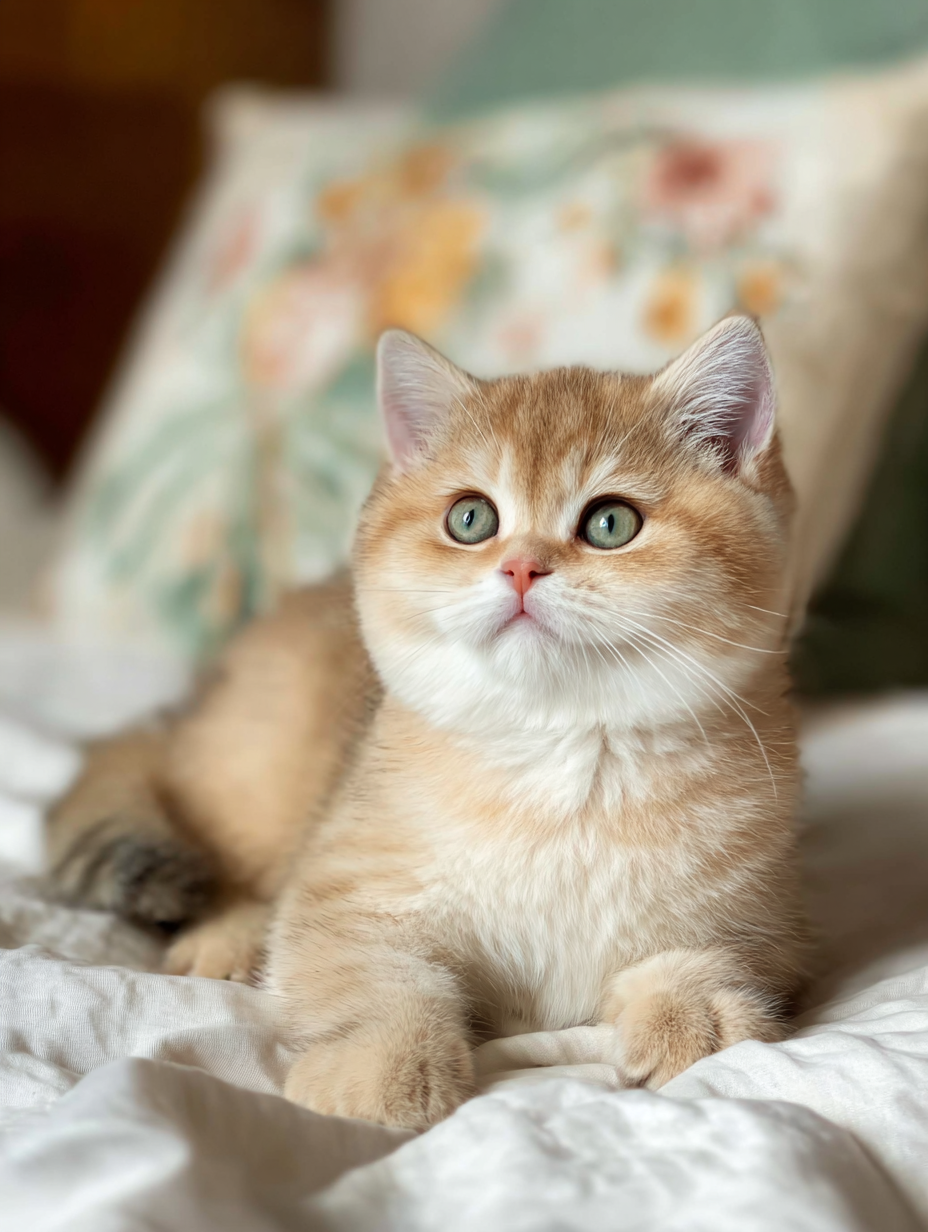
If you are here to find your very own British Shorthair baby, check out our Purebred British Shorthair Kittens for Sale.
At Almonte Cats, every kitten is:
- TICA and CFA registered from fully health tested parents
- Raised in home for confident, affectionate temperaments
- Vet checked, vaccinated, and microchipped before going home
Reserve early, our litters are produced in limited numbers each year to preserve quality and true British Shorthair type.
British Shorthair Kittens Available
Learn More About British Shorthair Cats
- British Shorthair Health Guide
- British Shorthair Lifespan
- British Shorthair Shedding
- British Shorthair Size
- British Shorthair Cat Care
- British Shorthair Personality
- British Shorthair Diet
- British Shorthair Kitten Growth Stages
- British Shorthair vs Ragdoll
SOURCES — SILVER BRITISH SHORTHAIR ARTICLE
- CFA – Cat Fanciers’ Association. “British Shorthair Breed Standard.”
https://cfa.org/british-shorthair/ - TICA – The International Cat Association. “British Shorthair Breed Overview & Accepted Colors.”
https://tica.org/breeds/british-shorthair - GCCF – Governing Council of the Cat Fancy. “British Shorthair Registration Policy & Colour Guidance.”
https://www.gccfcats.org/ - FIFe – Fédération Internationale Féline. “EMS Codes & Colour Descriptions for British Shorthairs.”
http://www1.fifeweb.org/wp/breeds/ems.php - Langford Veterinary Genetics (University of Bristol). “Polycystic Kidney Disease (PKD) Testing in Cats.”
https://www.langfordvets.co.uk/diagnostic-laboratories/veterinary-genetics - UC Davis Veterinary Genetics Laboratory. “Hypertrophic Cardiomyopathy (HCM) Testing in Cats.”
https://vgl.ucdavis.edu/ - Messybeast Feline Genetics Resource – Sarah Hartwell. “Colour Inhibitor Gene & Silver/Smoke Expression.”
https://messybeast.com/ - Dr. Leslie Lyons, University of Missouri – Feline Genetics Research.
https://animalgenetics.missouri.edu/ - Royal Veterinary College (RVC). “Feline Hereditary Conditions & Breed-Related Patterns.”
https://www.rvc.ac.uk/ - International Cat Care (ICC). “Understanding Coat Colours and Genetics in Cats.”
https://icatcare.org/





Read the Comments +