
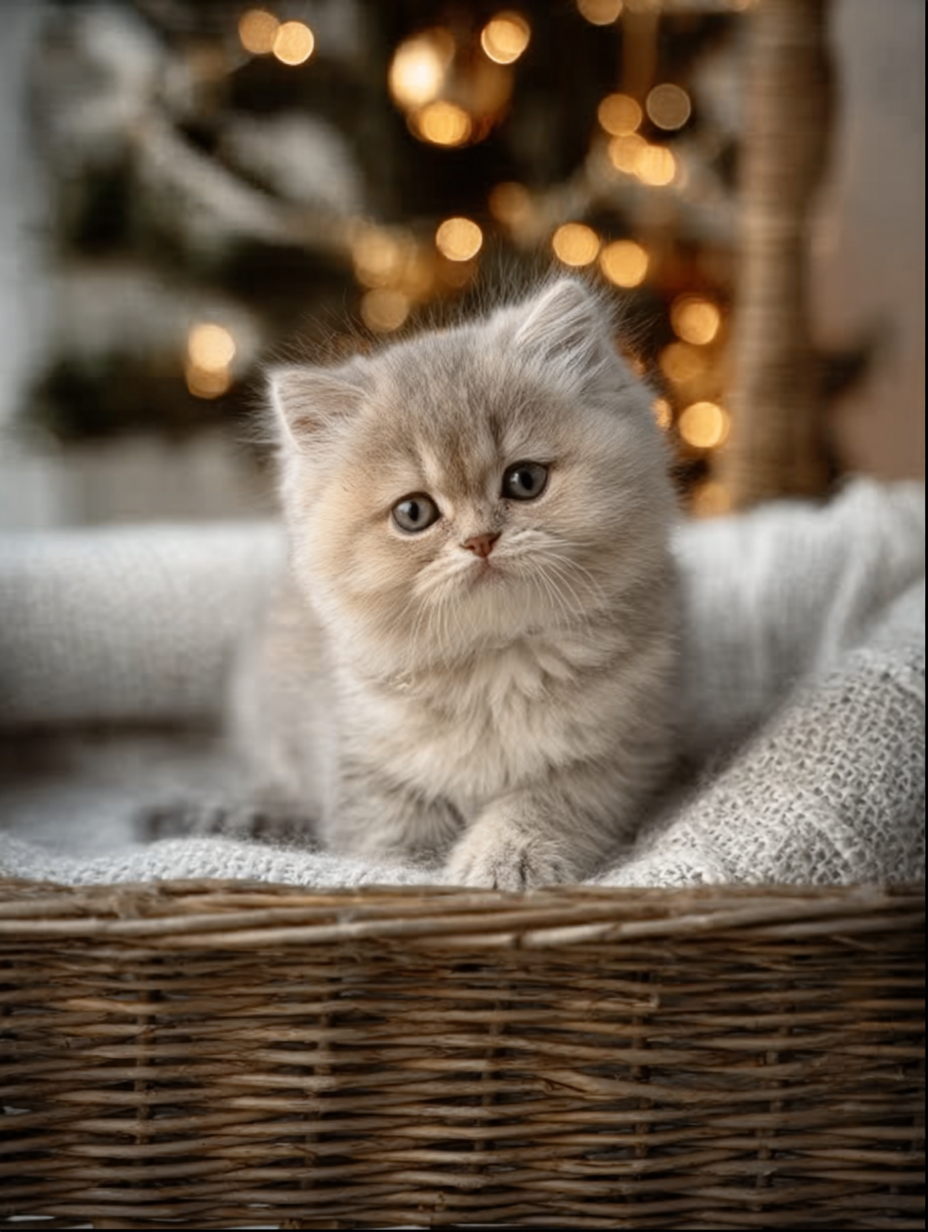
What Is a Lilac British Longhair?
The Lilac British Longhair is a recognized color variety within the British Longhair breed. Despite the name, the coat is not purple. Lilac appears as a pale, warm grey with pink-beige undertones, often described as a soft pastel tone rather than a cool grey.
Lilac is genetically the dilute form of chocolate. For a kitten to be lilac, both parents must carry the chocolate gene and the dilute gene, which makes this color less common than blue or black in British Longhair breeding programs.
Compared to blue British Longhairs, lilac tends to appear lighter and warmer in tone, while still maintaining the same British structure and temperament. The color does not affect personality.
Lilac is fully recognized by major registries, including TICA, CFA, and GCCF, and is considered a traditional British color rather than a modern or experimental one. The British Longhair variety retains all core breed traits—rounded head, strong bone, calm demeanor, and people-focused temperament—regardless of coat color.
Lilac British Longhair — Quick Summary
| Category | Lilac British Longhair |
|---|---|
| Official Color Name | Lilac |
| Genetic Base | Chocolate dilute (bbdd) |
| Common Confusion | Often mistaken for fawn or cream |
| Coat Color | Warm pale grey with pink-beige undertones |
| Coat Type | Longhair with dense undercoat |
| Pattern Types | Solid, bicolor, shaded (if bred) |
| Adult Eye Color | Copper, gold, amber |
| Blue Eyes as Adult | No |
| Nose Leather | Pink-lavender |
| Paw Pads | Pink-lilac |
| Temperament | Calm, people-focused, affectionate |
| Cuddliness | High (more snuggly than Shorthair) |
| Energy Level | Low–moderate |
| Size (Adult) | Males 12–17 lb / Females 8–14 lb |
| Grooming Needs | Moderate (2–3× weekly brushing) |
| Indoor / Outdoor | Indoor-only recommended |
| Rarity | Less common |
| Lifespan | ~12–18 years |
| Best For | Calm homes wanting a soft pastel color |
Lilac British Longhair Appearance
The Lilac British Longhair is defined by a light, warm-toned coat paired with the longhair variety’s dense coat length and rounded British structure. Lilac appears noticeably lighter and warmer than blue, but it is still a solid, uniform color, not a pattern.
Coat Color
A true lilac British Longhair appears as:
- a pale grey with pink-beige undertones
- evenly colored from roots to tips
- solid across the entire body (no points or shading unless bred as bicolor or shaded)
Lilac is genetically a dilute chocolate, which gives it a warmer appearance than blue, which is a dilute black.
Eye Color
Lilac British Longhairs typically develop:
- copper
- gold
- amber
Eye color remains stable into adulthood. Blue eyes are not correct for solid lilac British Longhairs.
Nose & Paw Pads
Correct pigmentation includes:
- nose leather: pink-lavender
- paw pads: pink-lilac
These are standard markers of the lilac color and help distinguish it from blue or cream.
Coat Texture (Longhair Variety)
British Longhairs have a different coat profile than Shorthairs.
The lilac longhair coat is:
- long with a dense undercoat
- not silky like a Persian, but not crisp like a Shorthair
- full and evenly distributed
Regular grooming is required to maintain coat condition and prevent matting.
Overall Structure
A correct lilac British Longhair shows:
- round head with full cheeks
- short, thick neck
- strong bone and broad chest
- medium-length, muscular body
- calm, relaxed expression
The long coat softens the outline compared to Shorthairs, but the underlying British structure remains the same.
Lilac British Longhair vs Other British Longhair Colors
| Color | Genetic Base | Coat Tone | Relative Frequency |
|---|---|---|---|
| Blue | Black dilute | Cool blue-grey | Common |
| Lilac | Chocolate dilute | Warm pale grey with pink-beige undertones | Less common |
| Chocolate | Non-dilute chocolate | Medium brown | Uncommon |
| Cream | Red dilute | Pale warm cream | Common |
| Black | Full pigment | Solid black | Moderate |
| Silver Shaded | Inhibitor gene | Silver undercoat with tipping | Less common |
The Lilac color is more rare because it requires both chocolate and dilute genetics, which makes it less frequently produced than blue.
Lilac British Longhair Genetics
The lilac British Longhair color is produced by a precise combination of recessive genes. Although the coat appears light and warm, the color originates from chocolate-based genetics that are then softened by dilution.
The B Locus (Chocolate Base)
The B locus controls whether a cat’s base color is black-based or chocolate-based.
- B (black) – dominant; produces black or blue
- b (chocolate) – recessive; produces chocolate or lilac
To produce a lilac British Longhair, a kitten must inherit:
- bb — two chocolate genes
This means the cat is genetically chocolate-based, even though the visible coat color appears much lighter.
Both parents must carry the chocolate gene, even if neither parent appears chocolate in color.
The Dilute Gene (D Locus)
The chocolate base becomes lilac only when paired with the dilute gene.
- D (dense) – dominant; color remains chocolate
- d (dilute) – recessive; softens the color
To express lilac, the kitten must inherit:
- dd — two dilute genes
When combined, the full genetic formula becomes:
- bbdd — lilac
This converts a dense chocolate coat into a pale, warm grey with pink-beige undertones, which defines the lilac color in British cats.
Why Lilac British Longhairs Are Less Common
Producing lilac kittens requires:
- both parents to carry chocolate
- both parents to carry dilute
- careful pairing across generations
- accurate pedigree tracking and DNA testing
Even with correct pairings, a litter may still include:
- blue kittens
- chocolate kittens
- cream kittens
- non-lilac carriers
For this reason, lilac British Longhairs are produced in limited numbers and are less common than blue or black varieties. Reputable breeders plan lilac pairings deliberately to preserve color accuracy while maintaining breed health and structure.
Lilac British Longhair Personality and Temperament
Lilac British Longhairs share the same temperament as other British Longhairs. Color does not influence personality.
Typical traits include:
- Calm, steady temperament
They are relaxed and predictable in daily life. - People-focused and affectionate
British Longhairs are generally more physically affectionate than British Shorthairs and often seek close proximity to their owners. - Affectionate without being demanding
They enjoy companionship but do not require constant attention. - Good with families and other pets
Their stable nature makes them suitable for households with children or calm animals. - Quiet communication style
They are not highly vocal and tend to communicate subtly. - Strong preference for routine and low stress
They thrive in structured, indoor environments.
The lilac color does not change behavior, but many owners are drawn to lilac British Longhairs because the soft coloration visually matches the breed’s calm, gentle demeanor.
Grooming and Care for a Lilac British Longhair
The lilac British Longhair has a longer coat with a dense undercoat, which requires more routine care than a British Shorthair but is still manageable with consistency. Proper grooming supports coat condition, skin health, and overall comfort.
Grooming Needs
- Brush 2–3 times per week to prevent tangles and reduce shedding
- Use a stainless-steel comb or wide-tooth comb to reach the undercoat
- Pay close attention to friction areas such as the chest, belly, and behind the legs
- Avoid frequent bathing; occasional baths are sufficient and overbathing can dry the coat
- Trim nails every 1–2 weeks
- Gently clean eyes as needed, as lighter coats can show tear staining more easily
Regular grooming helps maintain coat condition and prevents matting, which is especially important in longhair varieties.
Diet and Coat Support
A balanced, species-appropriate diet supports both coat and overall health.
Focus on:
- high-quality animal protein
- controlled fat levels
- omega-3 and omega-6 fatty acids for skin and coat
- moisture-rich meals to support hydration
British Longhairs can gain weight if overfed, so portion control and light daily activity are important throughout adulthood.
Health and Longevity of Lilac British Longhairs
Lilac British Longhairs share the same health profile as other British Longhairs. Coat color does not affect health or lifespan.
Average Lifespan
12–18 years with proper indoor care, nutrition, and veterinary support.
Health Screening in Responsible Programs
Ethical breeders screen for common hereditary concerns, including:
- HCM (Hypertrophic Cardiomyopathy)
- PKD (Polycystic Kidney Disease)
- FIV / FeLV
- routine veterinary examinations
- DNA testing to confirm accurate color genetics
Common Health Considerations
British Longhairs are generally robust but may be prone to:
- weight gain without appropriate diet and activity
- dental tartar buildup
- age-related joint stiffness in later years
With responsible breeding, preventive veterinary care, and consistent grooming, lilac British Longhairs typically enjoy long, stable, and affectionate lives.
Lilac British Longhair Kittens for Sale
At Almonte Cats, we offer Lilac British Longhair kittens from fully health-tested, pedigree British lines registered with TICA and CFA. Our lilac longhair kittens are bred for correct British structure, dense long coats, strong bone, rounded features, and the calm, people-focused temperament the British Longhair is known for.
Lilac is a recessive British color, produced only when both parents carry chocolate and dilute genetics. Because this genetic combination is uncommon, lilac British Longhair kittens are produced in very limited numbers and are often reserved well in advance.
Our program prioritizes:
- Correct British Longhair structure and proportions
- Dense long coats with healthy undercoat
- Calm, stable, people-oriented temperaments
- DNA-verified color genetics (chocolate and dilute)
- Responsible breeding with a focus on long-term health
All kittens are raised in-home, never in cages, to ensure they are confident, social, and comfortable with everyday household life.
How Our Lilac British Longhair Kittens Are Raised
Temperament is shaped early. Lilac British Longhairs develop their calm, affectionate nature through structured socialization and consistent handling.
Our kittens are raised with:
- daily gentle handling
- early neurological stimulation
- gradual introduction to grooming tools
- exposure to normal household sounds
- age-appropriate play and enrichment
- supervised interaction with children, other cats, and calm dogs
By the time kittens go home, they are:
- people-oriented
- comfortable with handling and grooming
- litter trained
- accustomed to routine household activity
This foundation supports easy transitions into new homes.
Health, Testing, and Registration
Every Lilac British Longhair kitten from Almonte Cats is bred from parents that meet or exceed TICA and CFA standards.
Before going home, each kitten:
- receives a full veterinary exam
- is vaccinated and dewormed for age
- is microchipped
- comes with official registration
- includes a written genetic health guarantee
All breeding cats in our program are screened for:
- Hypertrophic Cardiomyopathy (HCM)
- Polycystic Kidney Disease (PKD)
- FIV / FeLV
We utilize UC Davis Veterinary Genetics Laboratory and other accredited labs to confirm health and color genetics.
While lilac is a rare color, health, structure, and temperament always come before color in our breeding decisions.
Why Families Choose Lilac British Longhair Kittens
Lilac British Longhairs are chosen for their light, warm pastel coloring, calm demeanor, and strong human bonding. In longhair form, the lilac color appears especially soft due to coat length, while temperament remains consistent with the breed.
Families often choose our lilac kittens because:
- the color is uncommon but established
- genetics are verified and transparent
- British Longhairs are calm indoor companions
- kittens are raised in-home with structure
- ongoing breeder support is provided
Lilac British Longhair kittens appeal to families seeking a calm, affectionate companion with a lighter, pastel coat tone within the British Longhair breed.
Lilac vs Blue British Longhair Comparison
| Feature | Lilac British Longhair | Blue British Longhair |
|---|---|---|
| Genetic Base | Chocolate dilute (bbdd) | Black dilute (B-dd) |
| Coat Color | Warm pale grey with pink-beige undertones | Cool blue-grey |
| Overall Tone | Lighter and warmer | Deeper and cooler |
| Nose Leather | Pink-lavender | Blue-grey |
| Paw Pads | Pink-lilac | Blue-grey |
| Eye Color | Copper, gold, amber | Copper, gold, amber |
| Frequency | Less common | Common |
| Coat Length | Longhair | Longhair |
| Coat Type | Dense undercoat, full outer coat | Same |
| Temperament | Calm, people-focused, often snuggly | Calm, people-focused, often snuggly |
| Difficulty to Produce | Higher (recessive chocolate + dilute) | Lower |
Summary
Lilac and blue British Longhairs share the same breed structure and temperament. The difference is genetic base and visual tone, not personality.
- Lilac = chocolate dilute → warmer, lighter appearance
- Blue = black dilute → cooler, deeper appearance
Both are fully recognized colors, and both produce the same calm, people-oriented British Longhair temperament.
See: Blue British Longhairs for more blue comparisons.
Lilac vs Fawn British Longhair Comparison
| Feature | Lilac British Longhair | Fawn British Longhair |
|---|---|---|
| Genetic Base | Chocolate dilute (bbdd) | Cinnamon dilute (b1b1dd) |
| Coat Color | Pale warm grey with pink-beige undertones | Light beige with subtle rosy or mushroom undertones |
| Overall Tone | Soft pastel with balanced warm undertone | Warm, muted, sandy tone |
| Nose Leather | Pink-lavender | Pale rosy-pink or warm mushroom |
| Paw Pads | Pink-lilac | Pink-beige or light fawn |
| Eye Color | Copper, gold, amber | Copper, gold, amber |
| Relative Frequency | Less common | Very uncommon |
| Genetic Difficulty | High — requires chocolate + dilute | Very high — requires cinnamon + dilute |
| Registry Recognition | Fully recognized by TICA, CFA, GCCF | Recognized in dilute cinnamon categories (TICA / GCCF) |
| Coat Type | Longhair with dense undercoat | Longhair with dense undercoat |
| Visual Effect | Soft, light pastel appearance | Warm, champagne-beige appearance |
| Color Category | Dilute chocolate | Dilute cinnamon |
| Temperament | Calm, people-focused, affectionate | Calm, people-focused, affectionate |
| Best Fit For | Families wanting a light, pastel grey tone | Families seeking a very warm, uncommon beige tone |
Lilac vs Fawn British Longhair — Color & Genetics Explained
Fawn and lilac are two of the lightest dilute colors found in British Longhairs, but they are produced through different genetic pathways and result in clearly different appearances.
Lilac is a dilute chocolate color (bbdd). This produces a pale, warm grey coat with pink-beige undertones. In longhair form, the extended coat length blends the color softly, giving lilac British Longhairs a lighter, pastel appearance.
Fawn is a dilute cinnamon color (b1b1dd). Cinnamon genetics are less common overall, which makes fawn more difficult to produce. The resulting color appears as a warm beige or champagne tone, sometimes described as mushroom-colored rather than grey.
Both colors share:
- the same British Longhair structure
- copper-to-gold eye color
- pink-toned nose leather and paw pads
- calm, people-oriented temperament
The difference is visual and genetic, not behavioral.
- Choose lilac if you prefer a pale grey with soft warmth.
- Choose fawn if you want a very light beige tone and are comfortable with limited availability.
Both colors are specialty options within the British Longhair breed and are typically produced in small numbers by programs with carefully planned color genetics.
How to Tell if Your British Longhair Is Lilac or Fawn
Because lilac and fawn are both light, pastel colors, they are often confused—especially in kittens or indoor lighting. The difference comes down to undertone, nose and paw color, and genetics, not just how light the coat looks.
1. Look at the Coat Undertone (Not Just the Shade)
The easiest way to distinguish lilac from fawn is the base undertone.
- Lilac British Longhair
- Appears as a pale grey with pink or lavender undertones
- Reads slightly cooler overall, even though it is still a warm dilute
- Often described as “dusty lavender” or warm grey
- Fawn British Longhair
- Appears as beige or light tan
- Has a noticeably warm, sandy or mushroom tone
- Never looks grey in natural light
💡 Tip: View the coat in natural daylight, not indoor lighting, which can distort undertones.
2. Check the Nose Leather and Paw Pads
Pigmentation offers one of the most reliable clues.
- Lilac
- Nose leather: pink-lavender
- Paw pads: pink with a lilac tint
- Fawn
- Nose leather: pale pink, rosy-beige, or mushroom
- Paw pads: warm beige-pink
If the nose and pads look cooler or lavender-toned → lilac
If they look warm, beige, or tan → fawn
3. Compare the Coat Against a Blue or Cream Cat (If Possible)
Relative comparison helps.
- Lilac always looks greyer than cream
- Fawn always looks beigier than lilac
- If the coat sits between cream and lilac, leaning warm → likely fawn
4. Consider the Parents’ Colors and Genetics
Color inheritance matters.
- Lilac requires
- chocolate + dilute genes (bbdd)
- Fawn requires
- cinnamon + dilute genes (b1b1dd)
If neither parent carries cinnamon, fawn is genetically impossible.
A reputable breeder can confirm color through:
- pedigree records
- DNA color testing
5. Age Matters — Kittens Can Be Misleading
Young kittens often appear lighter and warmer than their adult coat.
- Lilac kittens may look beige at first but cool as the coat matures
- Fawn kittens usually remain warm-toned as they age
Final color clarity typically develops by 12–18 months in British Longhairs.
6. Eye Color Will NOT Help
Both lilac and fawn British Longhairs develop:
- copper
- gold
- amber eyes
Eye color does not distinguish these two colors.
Quick Lilac vs Fawn Identification Checklist
| Feature | Lilac | Fawn |
|---|---|---|
| Overall Tone | Pale grey with pink/lavender | Beige, tan, mushroom |
| Undertone | Slightly cool-warm blend | Warm |
| Nose Leather | Pink-lavender | Beige-pink |
| Paw Pads | Pink-lilac | Pink-beige |
| Reads as Grey? | Yes | No |
| Genetic Base | Chocolate dilute | Cinnamon dilute |
When in Doubt
If you’re unsure:
- ask for pedigree color records
- request DNA color testing
- consult a breeder experienced with dilute chocolate vs dilute cinnamon lines
Color identification is about genetics and undertone—not lighting or photos.
DNA Testing for Color Identification in British Longhairs
DNA color testing is the most accurate way to confirm coat color genetics in British Longhair cats, especially for dilute shades such as lilac and fawn that can appear similar visually. Testing is performed using a simple cheek swab or blood sample submitted to a veterinary genetics laboratory, such as UC Davis.
The analysis identifies key color genes, including the B locus (black, chocolate, or cinnamon) and the D locus (dense or dilute), which allows breeders and owners to determine whether a cat is genetically chocolate dilute (lilac) or cinnamon dilute (fawn). DNA results also indicate carrier status for recessive colors, supporting responsible breeding decisions.
While DNA testing does not alter the cat’s appearance, it provides clear, documented confirmation of true color genetics when coat length or lighting makes visual identification unreliable.
Lilac British Longhair FAQ — Complete Buyer & Breed Guide
What exactly is a lilac British Longhair?
A lilac British Longhair is a British Longhair cat with a dilute chocolate coat color. Genetically, lilac is produced when a cat inherits two chocolate genes and two dilute genes (bbdd). Visually, the coat appears as a pale warm grey with pink-beige undertones, not purple. The longhair coat softens the color even further, giving lilac British Longhairs a lighter, blended appearance compared to Shorthairs.
Is lilac a natural or man-made color?
Lilac is a naturally occurring genetic color, not a designer or artificially created shade. It has existed in British breeding lines for decades and is fully recognized by major registries. The color only appears when specific recessive genes align.
Is lilac a rare British Longhair color?
Yes. Lilac is less common than blue, black, or cream because both parents must carry chocolate and dilute genes. Even when both parents are carriers, not every kitten in a litter will be lilac. This makes availability limited and unpredictable.
Why does lilac look different in photos?
Lilac is highly sensitive to lighting. Indoor lighting can make it appear beige, cream, or grey depending on warmth. Natural daylight best reveals the true pink-grey undertone. Longhair coats also scatter light, which can blur undertones in photos.
Is lilac the same as grey in British Longhairs?
No. “Grey” is a casual term.
- Blue = grey-appearing dilute black
- Lilac = warm grey dilute chocolate
Lilac always has a warmer undertone than blue.
Is lilac the same as fawn?
No. Fawn is genetically cinnamon dilute and appears beige or mushroom-toned. Lilac is genetically chocolate dilute and always reads as grey, not tan.
How can I visually tell lilac from blue?
Lilac appears:
- lighter
- warmer
- less slate-toned
Blue appears:
- deeper
- cooler
- more steel or slate grey
Side-by-side comparison makes the difference obvious.
What eye color should a lilac British Longhair have?
Adult eye colors include:
- copper
- gold
- amber
Green or blue eyes in adulthood are not correct for solid lilac British Longhairs.
Do lilac British Longhair kittens have blue eyes?
Yes, temporarily. Most kittens are born with blue eyes that change as pigment develops. Permanent blue eyes indicate pointed ancestry or mixed breeding.
Are lilac British Longhairs affectionate?
Yes. British Longhairs are known for being people-focused and emotionally steady. Many enjoy physical closeness and snuggling, especially as adults.
Are lilac British Longhairs more cuddly than Shorthairs?
Often yes. British Longhairs tend to be more physically affectionate than British Shorthairs due to longhair ancestry, including Persian influence. This is a general trend, not a guarantee.
Are lilac British Longhairs lap cats?
Some are. Most prefer:
- sitting beside you
- leaning against you
- resting near legs or torso
They value contact without restraint more than forced lap time.
Do lilac British Longhairs like to be held?
They typically tolerate short holding but do not enjoy prolonged restraint. Respecting boundaries increases affection over time. See: Is the British Longhair Cuddly?
Are lilac British Longhairs clingy?
No. They enjoy companionship but are not demanding. They balance affection with independence well.
Are they good cats for first-time owners?
Yes. Their calm temperament, predictability, and low reactivity make them suitable for first-time owners who can commit to grooming.
Are lilac British Longhairs good with children?
Yes, when children are taught gentle handling. They do not tolerate rough play but are patient and steady.
Are lilac British Longhairs good with dogs?
Often yes, especially calm dogs. Introductions should be gradual and controlled.
Are male or female lilac British Longhairs more affectionate?
Either can be affectionate. Many owners report males being slightly more physically cuddly, but spay/neuter status and personality matter more than sex.
Does spaying or neutering affect temperament?
Yes. Fixed cats are generally:
- calmer
- more stable
- more predictable in affection
How much grooming does a lilac British Longhair need?
Expect:
- brushing 2–3 times per week
- more frequent grooming during shedding seasons
Longhair coats mat if neglected, regardless of color.
Does the lilac color require special grooming?
No. Color does not affect grooming needs. Coat length does.
Do lilac British Longhairs shed a lot?
They shed moderately year-round, with heavier seasonal shedding. Regular brushing greatly reduces loose hair.
Are lilac British Longhairs hypoallergenic?
No. No British Longhair is hypoallergenic.
How big do lilac British Longhairs get?
- Males: 12–17 lb
- Females: 8–14 lb
They mature slowly and reach full size between 3–5 years.
How long do lilac British Longhairs live?
Average lifespan is 12–18 years, with many living longer under proper care.
Does color affect lifespan or health?
No. Color has no impact on health or longevity.
What health issues are British Longhairs prone to?
Common considerations include:
- HCM (screened by breeders)
- dental disease
- weight gain without proper diet
- age-related joint stiffness
Are lilac British Longhairs expensive?
They are often priced higher due to:
- genetic rarity
- limited litters
- health testing
- breeding difficulty
Price reflects breeding investment, not color alone.
Are lilac British Longhair mixes the same as purebred cats?
No. Many longhaired cats with light coats are mixes. A true British Longhair requires:
- pedigree documentation
- correct structure
- registry registration
How can I confirm my cat is lilac?
The most reliable methods are:
- pedigree records
- DNA color testing (chocolate + dilute)
Visual identification alone is not always accurate.
Can DNA testing confirm lilac color?
Yes. DNA testing identifies:
- chocolate vs black vs cinnamon
- dilute vs non-dilute
This definitively confirms lilac genetics.
Is lilac a good choice for apartment living?
Yes. British Longhairs are quiet, calm, and well suited to indoor, apartment lifestyles.
Who should not choose a lilac British Longhair?
People who want:
- very high-energy cats
- constant handling
- minimal grooming
may be better suited to another breed.
FAQ Summary
A lilac British Longhair is a genetically specific, recognized British color paired with a calm, affectionate longhair temperament. The color is uncommon but established, and suitability depends on lifestyle, not aesthetics alone.
Looking for a British Longhair kitten?
At Almonte Cats, our kittens are raised in-home, fully health tested, and intentionally paired to represent the very best of the British breed.
If you’d like to be considered for an upcoming litter, you’re welcome to explore our available kittens or submit an application below.
View Available British Kittens
More British Longhair Resources
See more posts about the British Longhair breed:
- British Longhair Kittens: Growth Week by Week
A guide to kitten growth stages, coat transitions, socialization, and early care. - British Longhair Breed Overview
A complete introduction to the breed’s temperament, structure, care needs, and suitability for different homes. - How to Choose a British Longhair Breeder
How to choose a reputable British Longhair breeder and what to expect throughout the process. - British Longhair Shedding and Grooming
Step-by-step coat care, tools, and maintenance routines for the semi-long double coat. - British Longhair Diet and Nutrition
Important diet recommendations, feeding charts and more. - British Longhair Size: How Big do British Longhairs Get?
See estimated size and growth charts. - British Longhair Cat Health
An overview of British Longhair health. - Best British Longhair Breeders in the USA See a list of the best breeders in the USA and what makes them awesome.
More British Cat Breed Articles from Almonte Cats
- British Shorthair Health
- British Longhair Lifespan
- British Shorthair vs Ragdoll
- British Longhair vs Persian
Sources
- The International Cat Association (TICA)
British Longhair and British Shorthair breed standards, accepted colors, registration rules
https://tica.org - Cat Fanciers’ Association (CFA)
British Shorthair standards (foundation reference for British Longhair), color and eye standards
https://cfa.org - Governing Council of the Cat Fancy (GCCF)
British breed standards, dilute color definitions, longhair varieties
https://www.gccfcats.org - Fédération Internationale Féline (FIFe)
International breed recognition, color genetics, British Longhair acceptance
https://fifeweb.org - UC Davis Veterinary Genetics Laboratory
Feline coat color genetics, chocolate, cinnamon, dilute (D locus), DNA color testing
https://vgl.ucdavis.edu - International Cat Care (iCatCare / ISFM)
Feline behavior, temperament, handling tolerance, indoor cat care
https://icatcare.org - Cornell University College of Veterinary Medicine – Feline Health Center
Cat development, eye color changes, hereditary health considerations
https://www.vet.cornell.edu/departments-centers-and-institutes/cornell-feline-health-center - Journal of Feline Medicine and Surgery (JFMS)
Peer-reviewed research on feline behavior, stress, and health
https://journals.sagepub.com/home/jfm





Read the Comments +