
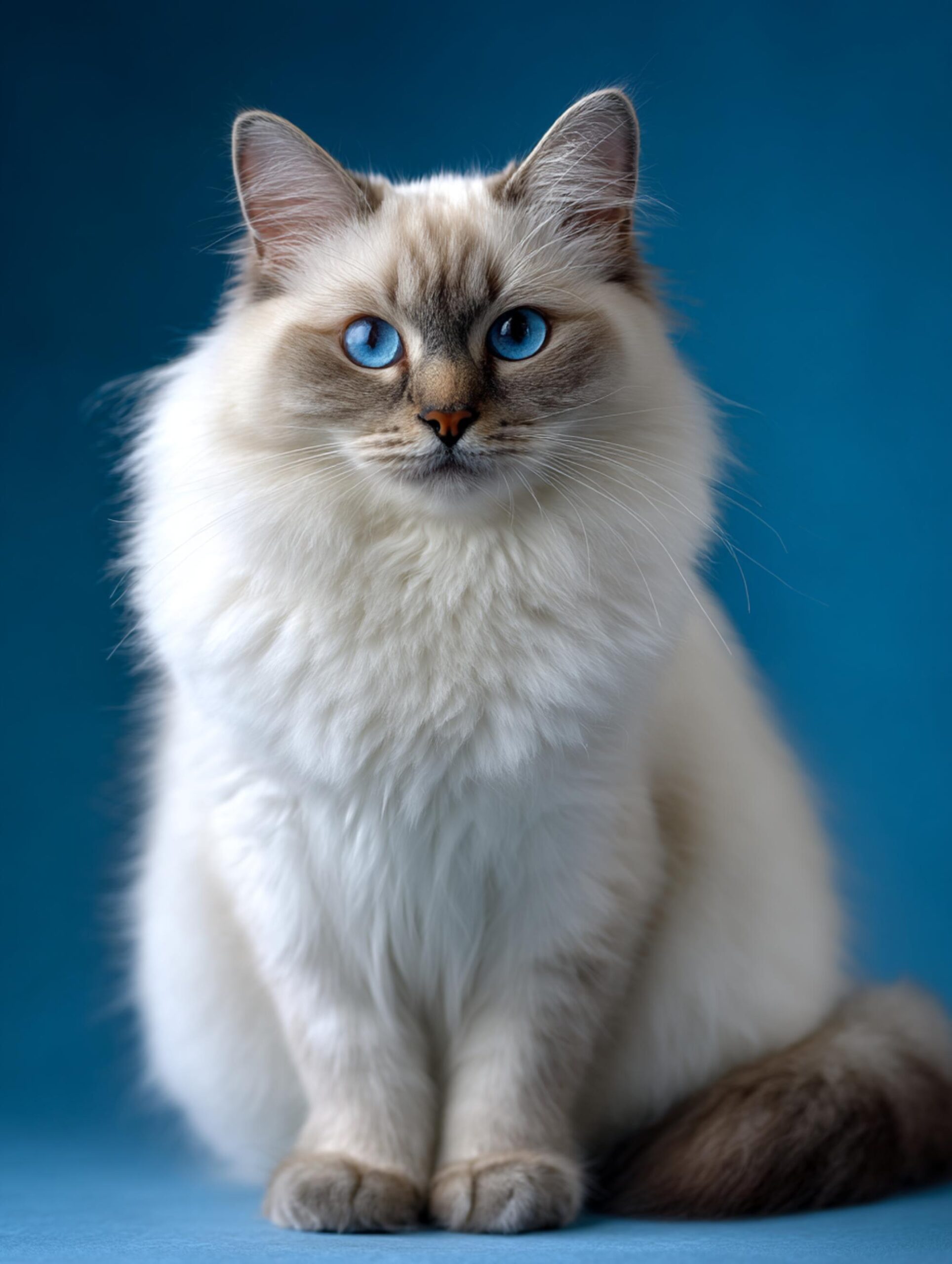
Neva Masquerade Siberian Cat History
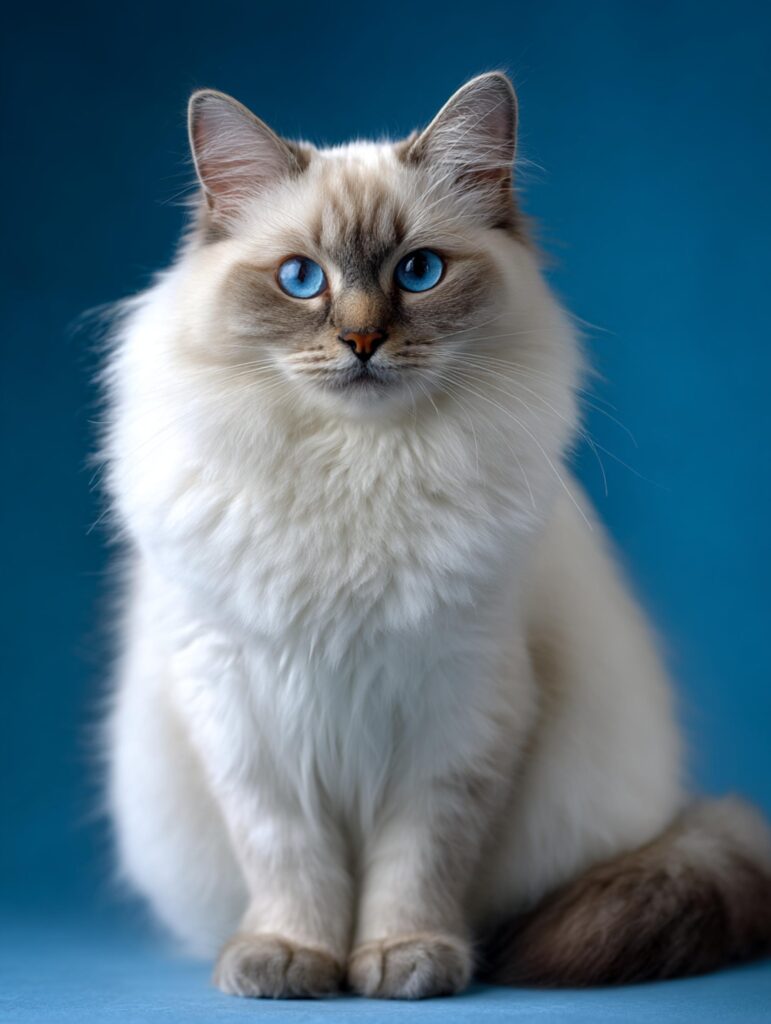
Neva Masquerade History: Quick Overview
The Neva Masquerade is the colorpoint variety of the Siberian cat, not a separate breed. The name originates from the Neva River region in Saint Petersburg and describes the mask-like facial pattern created by the colorpoint gene. This pointed coloration appeared naturally within early Siberian breeding programs as a recessive trait and does not require Siamese ancestry. Confusion around the Neva Masquerade comes from differing international registry classifications—some registries use the Neva Masquerade name formally, while others register these cats simply as colorpoint Siberians. Regardless of terminology, Neva Masquerades share the same genetic foundation, structure, temperament, and health expectations as all Siberian cats.
Siberian Cat History and Origins
The Siberian cat is a natural landrace of Russia, meaning it developed through environmental pressure rather than deliberate human breeding. For centuries, these cats lived alongside people in rural homes, farms, and cities, particularly across Siberia and European Russia.
Key environmental forces shaped the breed:
- Extreme cold selected for a dense, weather-resistant triple coat
- Seasonal scarcity favored strong bodies and efficient metabolism
- Natural selection reinforced resilience, fertility, and longevity
Because Siberians evolved without closed studbooks or aesthetic selection, they retained exceptionally broad genetic diversity compared to many Western breeds.
Formal breed development began in the late 20th century, as Russian breeders started documenting pedigrees and establishing standards during the final decades of the Soviet Union. These early programs did not “create” the Siberian cat—they organized and preserved an existing population.
(Full historical timelines, early clubs, and political context are covered in your Siberian history pillar and should be linked here.)
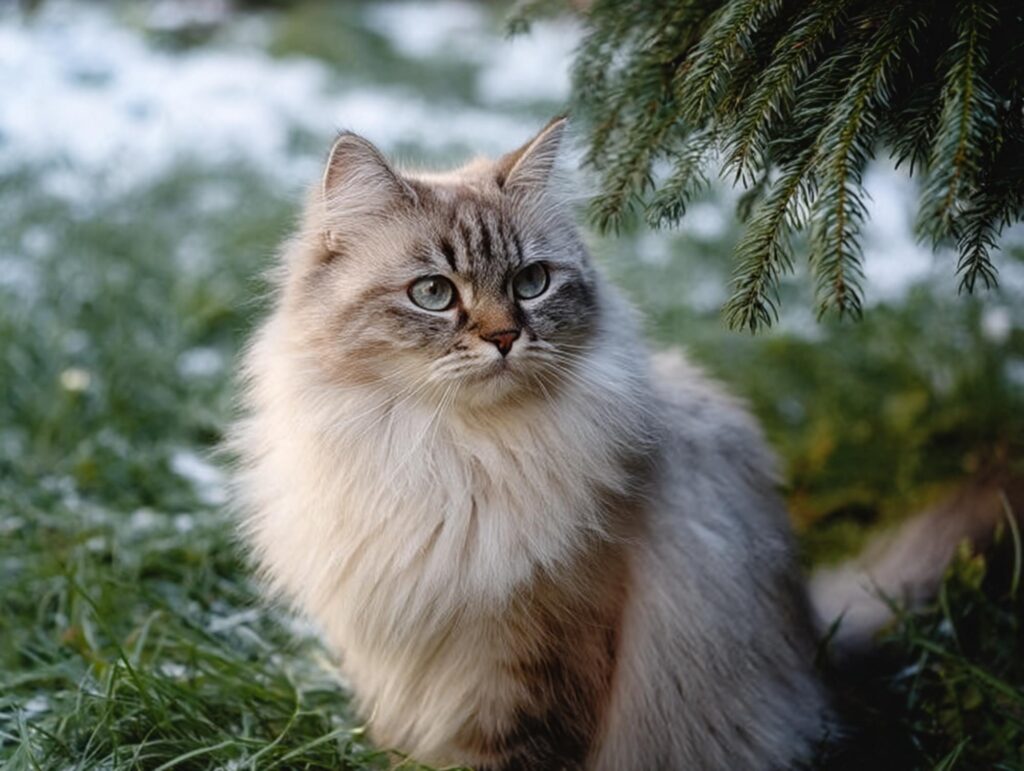
When Colorpoint Siberians First Appeared
This is where the Neva Masquerade story actually begins.
Colorpoint Siberians did not originate as a separate breeding project. They appeared naturally within early Siberian breeding programs once structured recordkeeping and intentional pairings began.
What is known:
- The colorpoint gene is recessive
- Recessive traits can remain hidden for generations
- When two carriers are bred, pointed kittens can appear unexpectedly
As breeders began pairing Siberians more deliberately in the 1980s and early 1990s, kittens with:
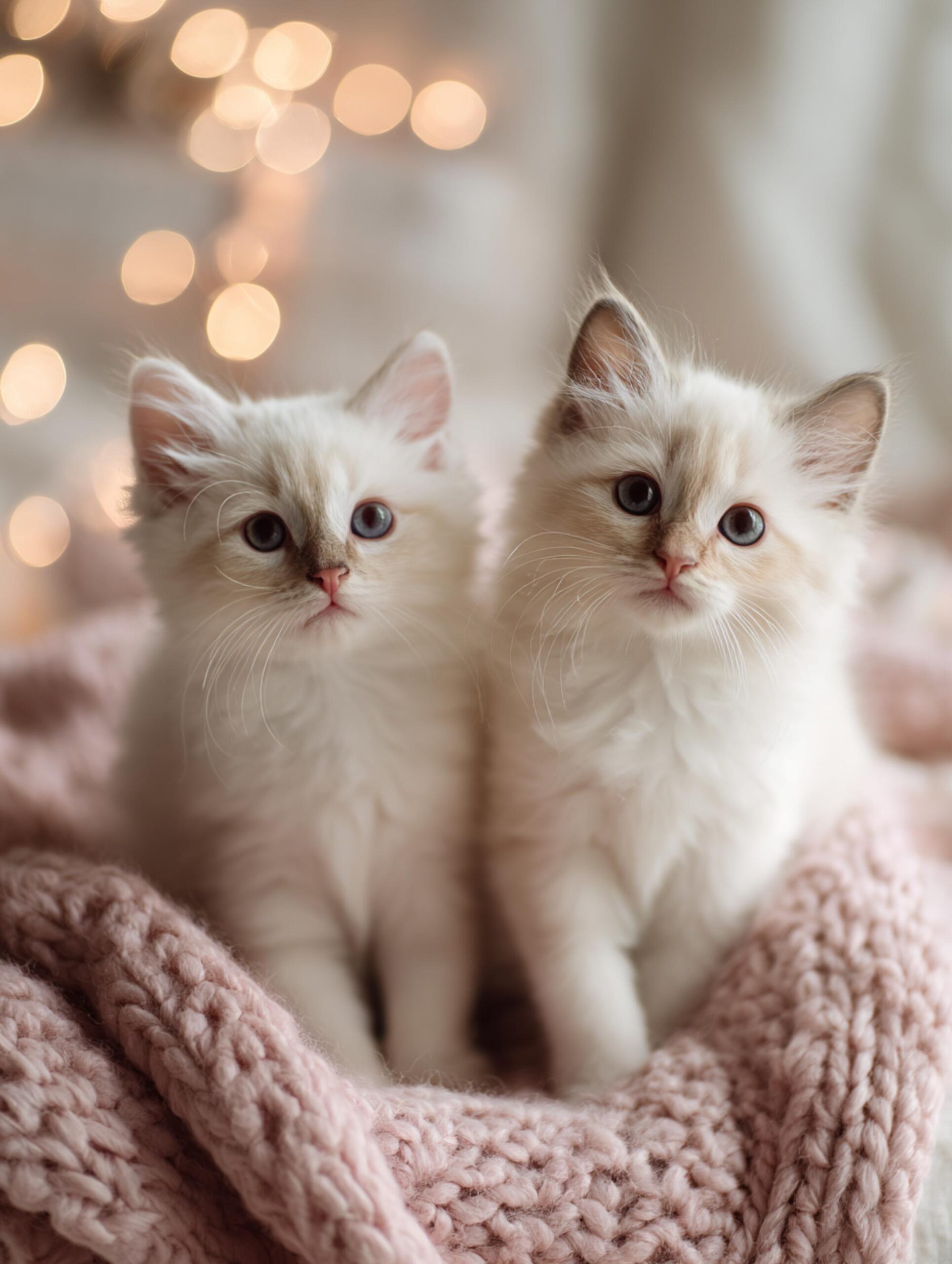
- blue eyes
- darker extremities
- lighter body color
started to appear within otherwise typical Siberian litters.
These cats were genetically Siberian, born to Siberian parents, with no requirement for outside influence.
Why Early Breeders Debated Legitimacy
The sudden visibility of colorpoint kittens caused disagreement among early breeders:
- Some questioned whether pointed cats belonged in the breed standard
- Others worried the coloration would dilute the “traditional” Siberian look
- A minority speculated about outside ancestry, largely due to unfamiliarity with recessive genetics
This debate was about appearance and identity, not proven lineage concerns.
Critical Clarification
Colorpoint expression does not require Siamese or Thai ancestry.
The presence of the colorpoint gene alone is sufficient. There is no documented evidence that early Siberian breeding programs relied on Siamese outcrosses to produce Neva Masquerades. The pointed phenotype emerged as a naturally occurring variation within a genetically diverse landrace.
This distinction is essential, because later registry decisions—and much modern misinformation—stem from misunderstanding this early moment.
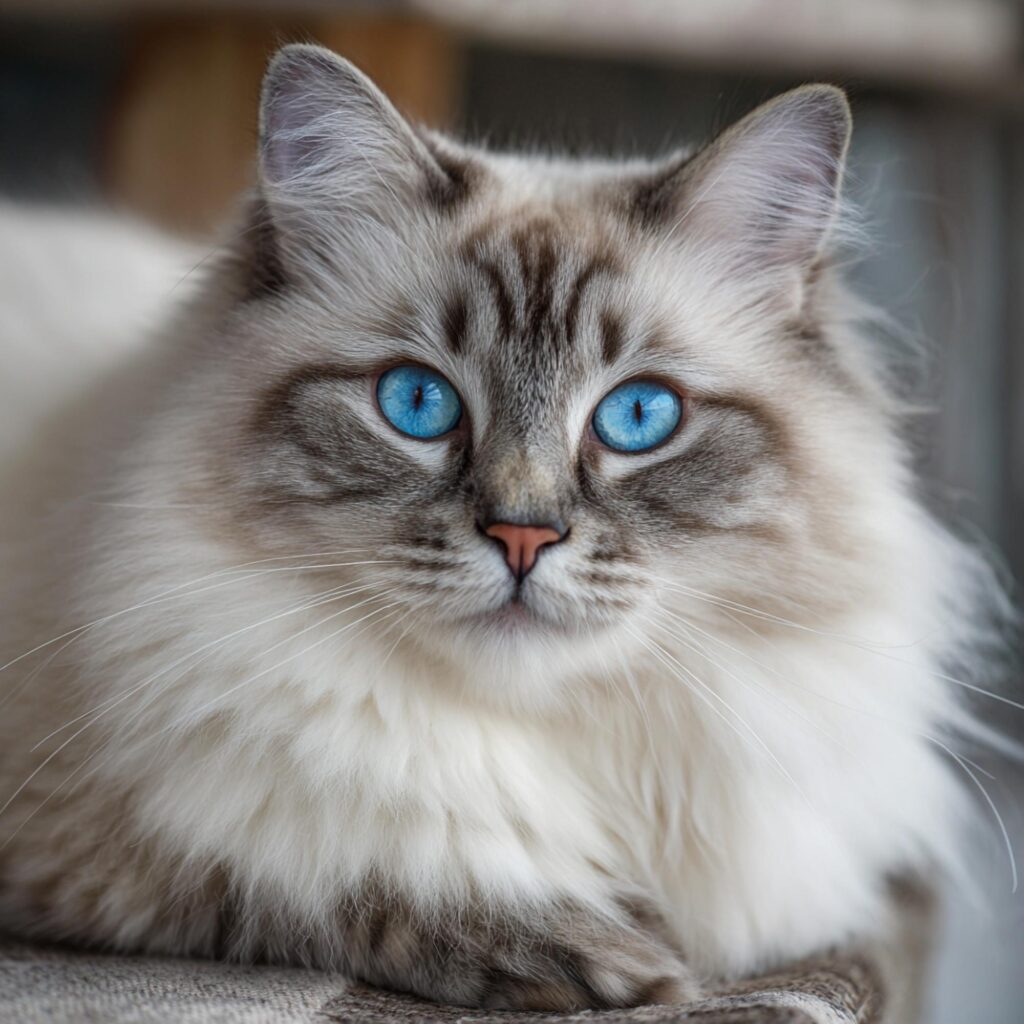
Why the Name “Neva Masquerade” Was Chosen
The name Neva Masquerade is descriptive, cultural, and geographic—not genetic.
- Neva refers to the Neva River, which runs through Saint Petersburg, one of the key regions where early Siberian breeding programs were documented and organized.
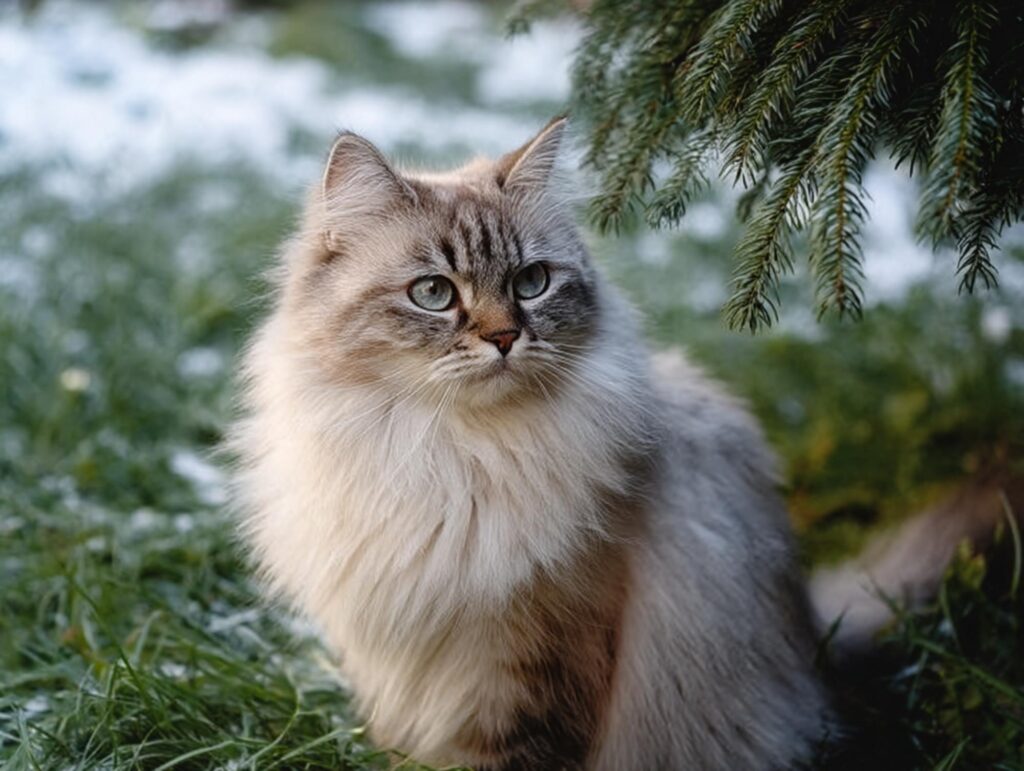
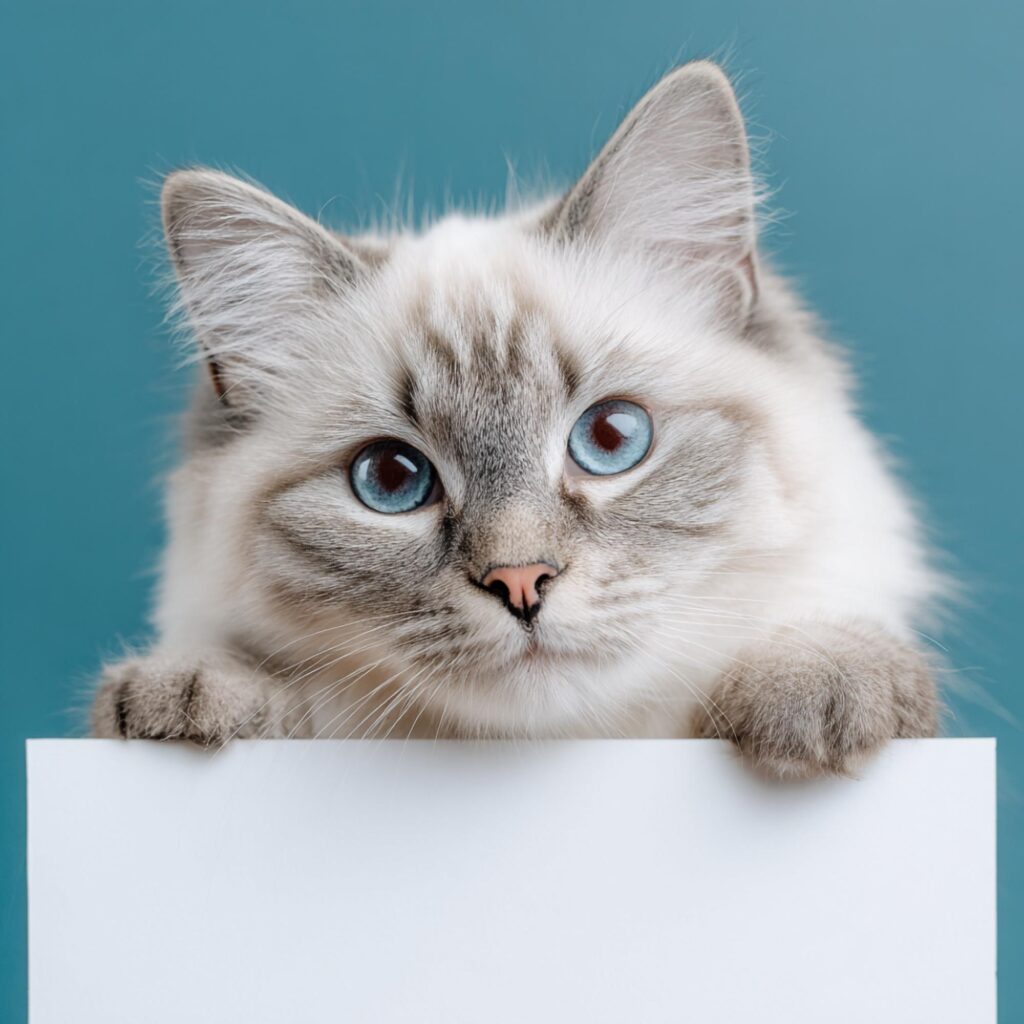
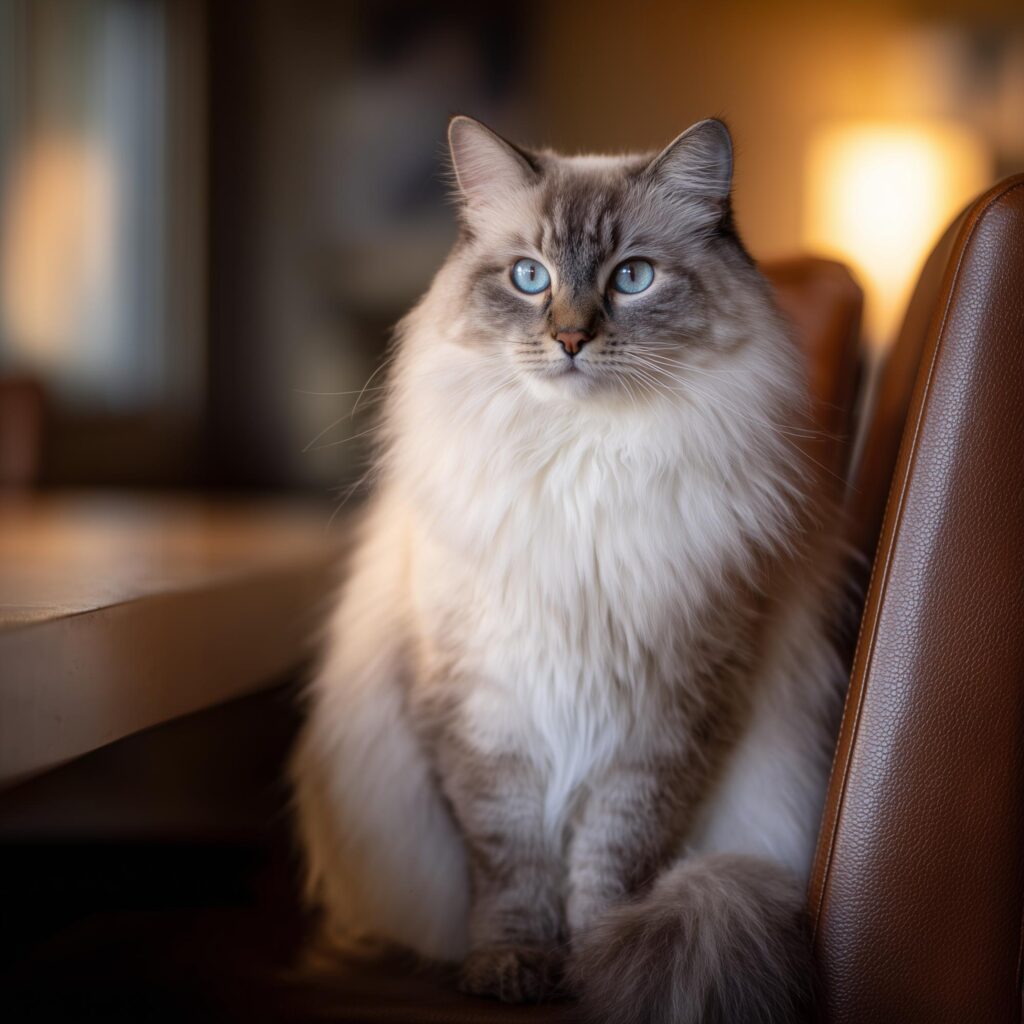
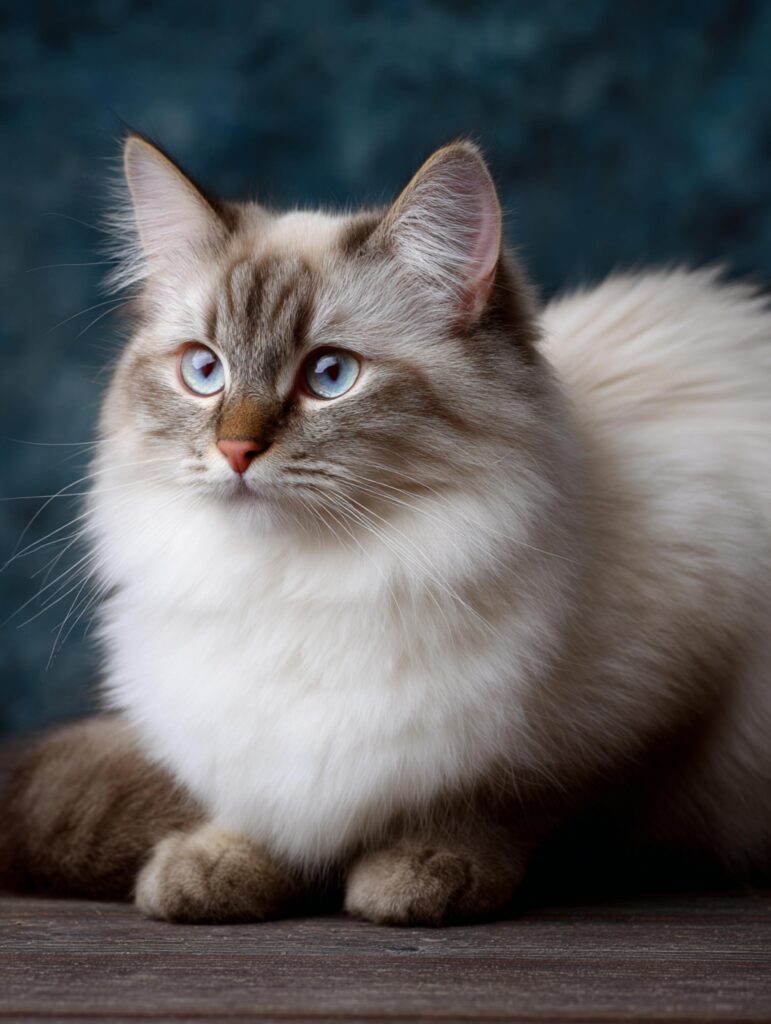
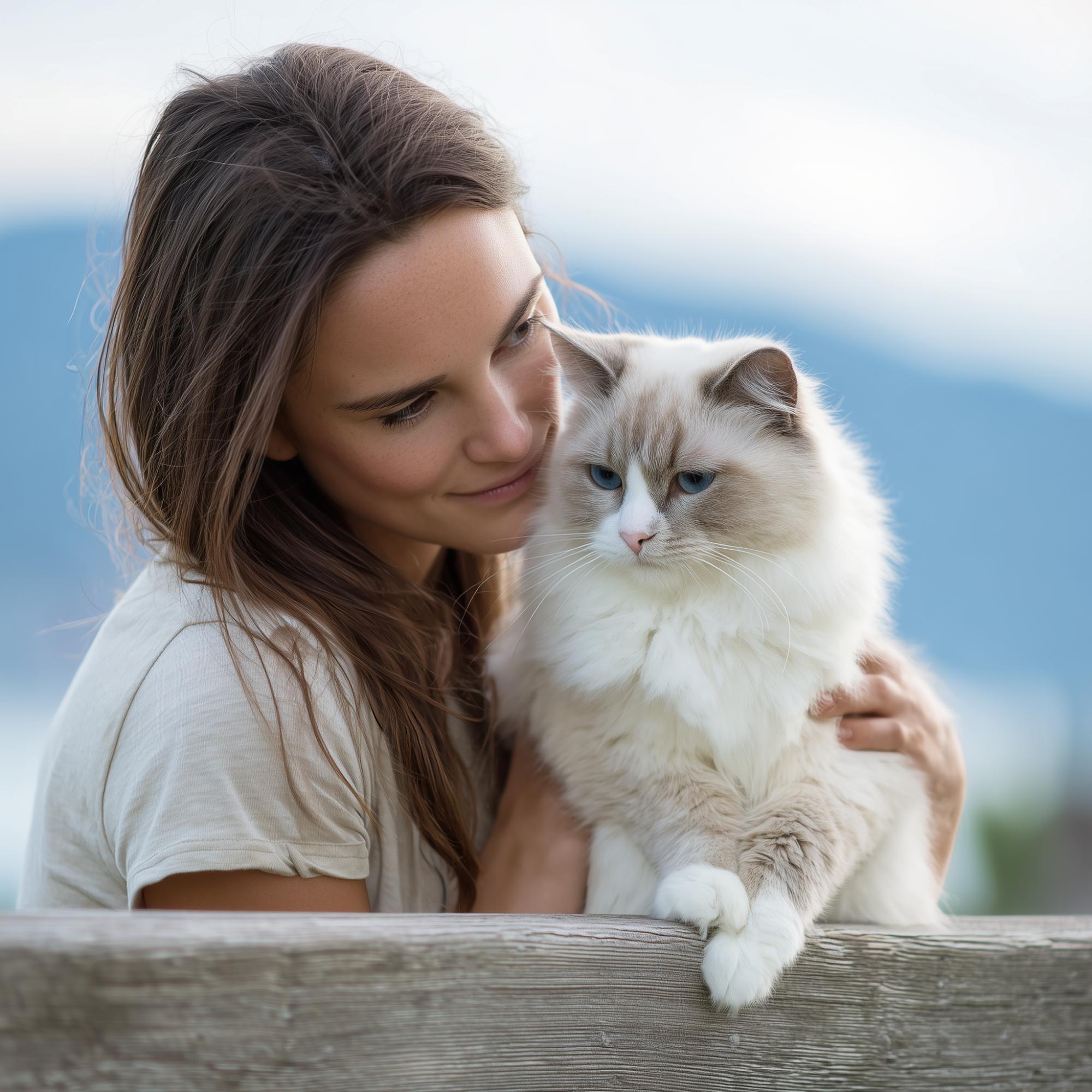
- Masquerade references the mask-like facial pattern created by the colorpoint phenotype: darker coloring on the face, ears, legs, and tail contrasted against a lighter body.
This naming follows a long-standing European and Russian convention of assigning poetic, place-based names to visually distinctive varieties—especially when a trait is striking but not considered sufficient to create a separate biological breed.
Importantly, the name was never intended to imply:
- a different ancestry
- a separate genetic population
- or a newly created breed
It was a descriptive label, adopted to identify colorpoint Siberians in conversation, recordkeeping, and later, registry classification.
Many modern sites misinterpret the name as evidence of genetic distinction. Historically, it functioned more like a regional nickname than a taxonomic boundary.
Early Breeder Debate and Controversy
The appearance of colorpoint Siberians—and the adoption of the Neva Masquerade name—sparked intense debate during the breed’s formative years.
Resistance From Traditionalists
Some early Siberian breeders strongly opposed recognizing pointed cats at all. Their concerns centered on:
- Preserving the “traditional” look of the Siberian landrace
- Avoiding fragmentation of an already young breed
- Maintaining credibility in newly forming registries
To these breeders, colorpoint kittens felt like a deviation from what they believed Siberians “should” look like.
Fear of Outcrossing Accusations
Because colorpoint cats were widely associated with Siamese-type breeds, breeders feared that:
- Accepting pointed Siberians would invite accusations of crossbreeding
- The legitimacy of the entire Siberian breed could be questioned internationally
- Years of work establishing the breed could be undermined
This fear was especially strong in the late 1980s and early 1990s, when Siberians were still fighting for recognition and respect within the global cat fancy.
Why Some Breeders Rejected the Neva Name Entirely
For some, the term “Neva Masquerade” itself was the problem.
They argued that:
- Assigning a separate name implied a separate origin
- Naming the color risked formal separation down the line
- Unity was safer than distinction during breed establishment
As a result, some breeders:
- Refused to use the Neva Masquerade term
- Declined to breed colorpoint cats
- Avoided registering pointed kittens even when they appeared naturally
How Registries Responded to the Disagreement
Registries were forced to choose how to handle the conflict:
- Some created administrative separation (separate naming, same foundation)
- Others preserved breed unity and treated colorpoint as a natural variety
These early decisions—made for political, cultural, and organizational reasons—solidified into today’s inconsistent registry landscape.
Why This Confusion Still Exists Today
Because the debate was never universally resolved, modern confusion is inherited rather than newly created.
What persists today is the result of:
- Early breeder disagreement
- Registry-level compromise rather than consensus
- Descriptive naming being mistaken for genetic distinction
Without understanding this history, it is easy to assume the Neva Masquerade controversy is about temperament or quality. In reality, it has always been about identity, perception, and classification—not the cats themselves.
Why the Neva Masquerade Is Controversial in the Cat Fancy
The Neva Masquerade (often abbreviated NEM) is one of the most debated designations in the modern cat fancy—not because of temperament or type, but because of registry classification.
All purebred cats are registered with pedigrees through one or more recognized national or international cat registry organizations. Each registry:
- Defines which breeds it recognizes
- Sets its own breed standards
- Determines how colors, varieties, and divisions are classified
Most established breeds are handled consistently across registries. The Neva Masquerade is a notable exception.
How Different Registries Define the Neva Masquerade
The meaning of “Neva Masquerade” depends entirely on which registry you are referencing.
Registries That Separate Neva Masquerade from Siberian
Some registries—most notably FIFe—list the Neva Masquerade as a separate breed name, despite it sharing the same origin, structure, and temperament as the Siberian cat.
In this framework:
- “Siberian” refers to non-colorpoint cats
- “Neva Masquerade” refers specifically to colorpoint cats
The separation is administrative and visual, not behavioral.
Registries That Classify Neva Masquerade as a Siberian Variety
Other registries take a unified approach. TICA, for example:
- Recognizes the Siberian as a single breed
- Accepts colorpoint as a natural coat variety
- Uses the term “Neva Masquerade” descriptively, not as a separate breed
Under this system, Nevas and non-pointed Siberians are genetically and registrationally the same breed.
As a result, there is no universal or globally “official” definition of the term Neva Masquerade—only registry-specific usage.
Why the Debate Exists at All
The Siberian cat is relatively new to the formal cat fancy, with official registration beginning in the late 1980s. However, it is an ancient landrace, present in Russia for centuries before breed standards existed.
Historical accounts of early landrace Siberian cats do not clearly document colorpoint examples, which led to disagreement once pointed kittens began appearing in registered breeding programs.
This sparked two opposing interpretations:
One View: Colorpoint Came From Crossbreeding
Some breeders argue that:
- Early landrace Siberians were not colorpoint
- The pointed phenotype must therefore have entered via crossbreeding with another colorpoint cat population
Because of this belief, certain breeders strongly oppose mixing Siberian and Neva Masquerade lines and view them as genetically distinct.
The Other View: Colorpoint as a Natural Variation
Other breeders maintain that:
- The Siberian landrace had wide genetic diversity
- The recessive colorpoint gene could have existed unnoticed
- Early breeding occurred while feral and free-roaming Siberian cats were still intermixing, particularly around the Neva River region
From this perspective, the Neva Masquerade represents a naturally expressed color variety, not a deliberate hybridization.
What Is Not Debated: Type and Temperament
Despite strong opinions about genetics and classification, there is broad agreement on one point:
Siberians and Neva Masquerades share the same temperament and overall type.
There are no consistent differences in:
- Personality
- Intelligence
- Sociability
- Activity level
- Family compatibility
The disagreement centers exclusively on coat color genetics and historical interpretation, not behavior.
A Matter of Registry Choice and Personal Philosophy
Because registry definitions differ, breeders and owners ultimately choose:
- Which registry to work with
- Which interpretation aligns with their breeding philosophy
- How they personally define the term “Neva Masquerade”
Owners may also register cats with different organizations if they disagree with a breeder’s chosen registry.
In practical terms, there is no single, universally accepted meaning of “Neva Masquerade.”
Depending on context, it can refer to:
- A separately named breed (registry-dependent), or
- A colorpoint coat variety of the Siberian cat
Understanding this distinction is essential for interpreting breeder claims, pedigrees, and online information accurately.
Registry Recognition and Classification
Registry treatment of the Neva Masquerade is the core reason confusion persists today. The disagreement is administrative and terminological—not biological.
TICA: Neva Masquerade as a Colorpoint Siberian
TICA recognizes the Siberian as one unified breed.
Within TICA:
- Colorpoint is accepted as a natural coat variety
- “Neva Masquerade” may be used descriptively
- Registration, judging, and breeding all occur under the Siberian breed standard
In this system, a Neva Masquerade is simply a colorpoint Siberian, no different genetically from non-pointed Siberians.
FIFe: Formal Use of the Neva Masquerade Designation
The FIFe registry took a different approach.
FIFe:
- Uses Neva Masquerade as a formal designation
- Separates pointed and non-pointed cats administratively
- Maintains the same foundation, type, and temperament expectations
This distinction exists primarily for classification and show structure, not because FIFe considers Nevas to be genetically separate animals.
Why Naming Conventions Differ Internationally
These differences reflect:
- Regional breeding culture
- Registry philosophy (unity vs visual categorization)
- Historical timing of Siberian recognition
European registries historically favored clear visual divisions, while North American registries prioritized breed cohesion—especially for young landrace breeds still establishing legitimacy.
Why This Does Not Make the Neva Masquerade a Separate Breed
Across registries:
- Nevas and non-pointed Siberians share the same ancestry
- They can be born in the same litter
- They interbreed freely within accepted programs
- They share identical temperament and structural standards
A difference in naming does not equal a difference in breed. The Neva Masquerade exists as a classification choice, not a biological boundary.
Spread Outside Russia
Export to Europe First
After formal Siberian breeding programs began in the late 1980s and early 1990s, cats were exported primarily to Europe. European breeders were the first to:
- Establish large, organized Siberian lines outside Russia
- Encounter and document colorpoint kittens consistently
- Adopt the Neva Masquerade name within registry systems
As a result, Europe became the earliest and strongest foothold for Neva Masquerades outside Russia.
Later Introduction to North America
North America encountered Neva Masquerades later and in much smaller numbers.
Early imports to the U.S. focused on:
- Establishing the Siberian breed itself
- Gaining registry recognition
- Proving health, temperament, and consistency
Colorpoint cats were not prioritized initially, which delayed their visibility and acceptance.
Why Neva Masquerades Remain Rarer in the U.S.
Several factors limit availability:
- Fewer foundational imports
- Breeder hesitation due to controversy
- Registry confusion discouraging some programs
- Smaller breeding populations overall
Even today, many U.S. Siberian breeders choose not to work with colorpoint lines at all.
Why Demand Quickly Outpaced Supply
As public awareness grew—especially around blue-eyed cats and allergy-friendly marketing—demand increased rapidly. However:
- Breeding programs remained limited
- Ethical breeders prioritized type and health over novelty
- Long waitlists formed quickly
This imbalance contributed to inflated pricing, misinformation, and misuse of the Neva Masquerade name—issues that still affect the market today.
Why Neva Masquerades Are Still Misunderstood Today
The Neva Masquerade’s history explains nearly every modern question—and misconception—surrounding it. What appears to be confusion today is the direct result of early breeder disagreement, inconsistent registry terminology, and modern marketing shortcuts.
“Is the Neva Masquerade a Real Breed?”
This question exists because some registries use the Neva Masquerade name formally, while others do not.
When people see:
- separate naming in European registries
- breeder websites advertising “Neva Masquerade kittens”
- higher prices attached to the term
they assume a separate breed must exist.
In reality, the term reflects classification differences, not a biological split. The cats themselves have never been genetically distinct from Siberians.
“Is the Neva Masquerade Part Siamese?”
This myth persists because:
- colorpoint is strongly associated with Siamese-type cats
- early breeder debate included fears of outcrossing accusations
- many modern sites oversimplify genetics for SEO
The historical record does not support Siamese ancestry as a requirement for Neva Masquerades. The colorpoint phenotype alone is enough to create the appearance, and that gene can exist naturally within a landrace population.
“Why Do Some Breeders Refuse to Work With Nevas?”
Breeder resistance is rarely about temperament or health.
More commonly, it stems from:
- philosophical opposition to colorpoint in the breed
- concern about public misunderstanding
- preference for preserving a traditional aesthetic
- disagreement with certain registry decisions
These choices are about breeding philosophy, not quality or legitimacy.
“Why Do Neva Masquerades Cost More?”
Higher pricing is driven by market forces, not breed status.
Factors include:
- limited breeding programs
- smaller genetic pools in some regions
- high consumer demand for blue-eyed cats
- long waitlists
Unfortunately, scarcity and confusion also allow unethical sellers to:
- inflate prices without justification
- imply separate-breed status
- market Nevas as rare or exotic
This makes historical clarity especially important for buyers.
Neva Masquerade Today: A Recognized Variety, Not a New Breed
When stripped of registry politics and marketing language, the conclusion is straightforward.
The Neva Masquerade is:
- the colorpoint variety of the Siberian cat
- recognized under different naming systems internationally
- bred from the same foundational population
Nevas and non-pointed Siberians share:
- the same structure
- the same temperament
- the same health expectations
- the same developmental timeline
The difference is appearance, not identity.
Understanding this allows owners, breeders, and buyers to evaluate Neva Masquerades accurately—based on health, ethics, and quality—rather than myths or terminology.
Neva Masquerade Myths vs Facts
This section exists to correct the most persistent and damaging misinformation surrounding Neva Masquerades. Nearly all modern confusion traces back to these myths being repeated without historical or genetic context.
Myth 1: The Neva Masquerade Is a Separate Breed
Fact:
The Neva Masquerade is not a separate breed. It is the colorpoint variety of the Siberian cat.
The belief that Nevas are a different breed comes from:
- Registry naming differences
- Breeder marketing language
- Consumers equating a different name with a different breed
Biologically, Nevas and non-pointed Siberians:
- Share the same gene pool
- Can be born in the same litter
- Are bred under the same foundational standards
A naming distinction does not create a new breed.
Myth 2: Neva Masquerades Are Part Siamese
Fact:
Colorpoint expression does not require Siamese ancestry.
This myth persists because:
- Colorpoint is visually associated with Siamese-type cats
- Early breeder debates included fear of outcrossing accusations
- Many modern articles oversimplify genetics
The colorpoint gene is recessive and can exist silently in a population for generations. There is no requirement—genetic or historical—for Siamese cats to be involved in the development of Neva Masquerades.
No documented evidence shows systematic Siamese outcrossing in early Siberian breeding programs.
Myth 3: Neva Masquerades Are Not “True” Siberians
Fact:
Neva Masquerades are fully Siberian in structure, temperament, and development.
They:
- Mature at the same slow rate
- Have the same dense triple coat
- Display the same intelligence and sociability
- Meet the same health expectations
The only difference is coat color expression, not breed identity.
Myth 4: Neva Masquerades Are Hypoallergenic While Other Siberians Are Not
Fact:
No cat breed—including Neva Masquerades—is truly hypoallergenic.
Siberians as a whole are often better tolerated by some allergy sufferers due to lower average Fel d 1 protein production, but:
- This varies by individual cat
- Colorpoint status does not guarantee lower allergen levels
- Nevas are not inherently more allergy-friendly than other Siberians
Marketing Nevas as uniquely hypoallergenic is misleading.
Myth 5: Neva Masquerades Are Rarer Because They Are a Separate Breed
Fact:
Nevas are rarer in some regions due to breeding choices, not breed status.
Lower availability is caused by:
- Fewer breeders working with colorpoint lines
- Historical controversy discouraging participation
- Limited foundational imports in certain countries
Rarity is regional and program-based, not biological.
Myth 6: Neva Masquerades Should Always Cost More
Fact:
Higher prices are driven by supply and demand, not breed legitimacy.
Price increases are commonly linked to:
- Smaller breeding populations
- Long waitlists
- Consumer preference for blue eyes and point coloration
While ethical breeders may price based on program costs and scarcity, inflated pricing justified by “separate breed” claims is a red flag.
Myth 7: Ethical Breeders Should Not Breed Siberians and Nevas Together
Fact:
Breeding philosophies differ, but interbreeding is not inherently unethical.
Because Nevas and non-pointed Siberians are the same breed:
- Mixing lines does not compromise type
- Genetic diversity can be preserved responsibly
- Registry rules—not genetics—dictate limitations
Refusal to breed Nevas is a philosophical choice, not a universal standard.
Bottom Line
Most Neva Masquerade myths exist because:
- Naming conventions were mistaken for genetic divisions
- Early breeder debate was never clearly explained
- Marketing simplified complex history
Understanding the facts protects buyers from misinformation and helps preserve the integrity of the Siberian breed as a whole.
Neva Masquerade FAQs
Is the Neva Masquerade a real cat breed?
The Neva Masquerade is not a separate biological breed. It is the colorpoint variety of the Siberian cat. Some registries use the Neva Masquerade name formally, while others treat it as a color classification within the Siberian breed.
Why do some registries call it Neva Masquerade and others don’t?
Registry philosophy differs.
Organizations like FIFe use “Neva Masquerade” as a formal designation for pointed Siberians, while TICA registers them simply as Siberians with a colorpoint coat. The difference is administrative, not genetic.
Are Neva Masquerades genetically different from Siberian cats?
No. Neva Masquerades and non-pointed Siberians share the same genetic foundation, structure, and temperament. They can be born in the same litter.
Do Neva Masquerades have Siamese ancestry?
There is no requirement for Siamese ancestry to produce a Neva Masquerade. The colorpoint gene is recessive and can exist naturally within a population without outcrossing.
Why did early breeders argue about Neva Masquerades?
The debate centered on:
- preserving the traditional Siberian appearance
- fear of outcrossing accusations
- registry recognition politics
It was never about temperament or health.
Why do some breeders refuse to breed Neva Masquerades?
This is a philosophical choice, not a quality issue. Some breeders prefer non-pointed Siberians for aesthetic or historical reasons, while others fully accept Nevas as a natural variety.
Are Neva Masquerades hypoallergenic?
No cat is truly hypoallergenic. Like all Siberians, Neva Masquerades may produce lower average Fel d 1 levels than some breeds, but allergen production varies by individual cat—not coat color.
Are Neva Masquerades rarer than Siberian cats?
In some regions, yes—but due to breeding choices and limited programs, not because they are a different breed. Availability depends on geography and breeder focus.
Why are Neva Masquerade kittens often more expensive?
Higher prices are usually driven by:
- limited supply
- long waitlists
- strong demand for blue-eyed, pointed cats
Price alone does not indicate a separate breed or superior quality.
Can Neva Masquerades and Siberians be bred together?
Yes. Because they are the same breed, interbreeding is genetically valid. Registry rules—not biology—determine how offspring are classified.
Do Neva Masquerades have different personalities than Siberians?
No. Personality traits—affection, intelligence, sociability—are the same. Any variation is individual, not tied to colorpoint status.
Are Neva Masquerades accepted in cat shows?
Yes, depending on registry rules. Some show them under the Siberian breed, others under the Neva Masquerade designation. Acceptance depends on the organization, not the cat’s legitimacy.
What does “Neva Masquerade” actually mean?
The name references:
- the Neva River region in Saint Petersburg
- the mask-like facial markings of colorpoint cats
It is a cultural and descriptive name, not a genetic label.
Is it wrong to call a Neva Masquerade a Siberian?
No. In many registries, that is the correct and preferred terminology.
What should buyers focus on instead of the name?
Buyers should prioritize:
- breeder ethics
- health testing
- temperament
- transparency about registry classification
The name matters far less than the quality of the breeding program.
Neva Masquerade Related Posts
- Neva Masquerade Kitten Information
- Neva Masquerade Cat Complete Overview
- Are Neva Masquerade Cats Cuddly?
See More About Siberian Cats
If you’re continuing your research, these related posts cover Siberian cat care, development, and ownership considerations:
- Are Siberian Cats Hypoallergenic?
- Siberian Cat Grooming
- Siberian Cat Lifespan
- Male vs Female Siberian Cats and Allergies
- Siberian Cat Size, Growth, and Maturity Timeline
- Siberian Kitten Growth: What to Expect Month by Month
- Living With a Siberian Cat When You Have Allergies
- Siberian Cat Diet and Nutrition
- Siberian Cat Fel d 1 Explained
- Do Siberian Kittens Trigger Allergies More then Adults?
- Siberian Cat Complete Overview
- Siberian Cats vs Other Hypoallergenic Breeds
Sources
- Fédération Internationale Féline (FIFe)
Siberian & Neva Masquerade breed standards and classification
https://fifeweb.org/breeds/breeds-siberian-neva-masquerade/ - The International Cat Association (TICA)
Siberian breed standard (colorpoint recognized as a natural variety)
https://tica.org/breeds/browse-all-breeds?view=article&id=190:siberian-breed&catid=48 - Cat Fanciers’ Association (CFA)
Siberian breed information and registration policies
https://cfa.org/siberian/ - Robinson, R. Genetics for Cat Breeders. Butterworth-Heinemann
https://www.sciencedirect.com/book/9780750642723/genetics-for-cat-breeders - Lyons, L. A. – University of Missouri College of Veterinary Medicine
Feline coat color genetics and population diversity
https://cvm.missouri.edu/research/feline-genetics/ - UC Davis Veterinary Genetics Laboratory
Feline coat color genetics and inheritance
https://vgl.ucdavis.edu/resources/cat-coat-color - Journal of Allergy and Clinical Immunology
Fel d 1 protein variability in cats
https://www.jacionline.org/article/S0091-6749(18)30959-7/fulltext - VCA Animal Hospitals
Fel d 1 protein and cat allergy explanations
https://vcahospitals.com/know-your-pet/do-hypoallergenic-cats-exist





Read the Comments +