
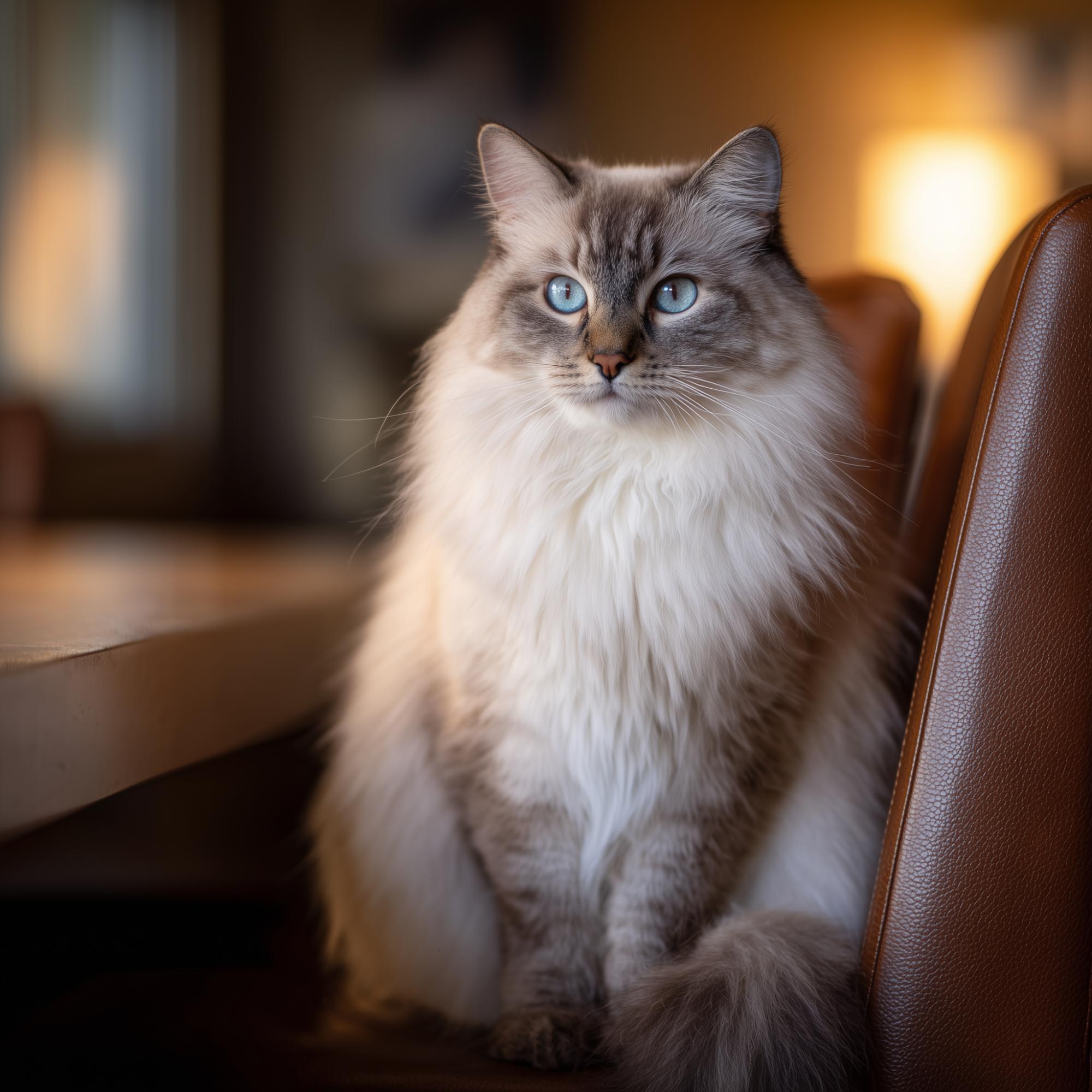
Neva Masquerade Cat Colors: Complete Overview of All Recognized Colors & Patterns
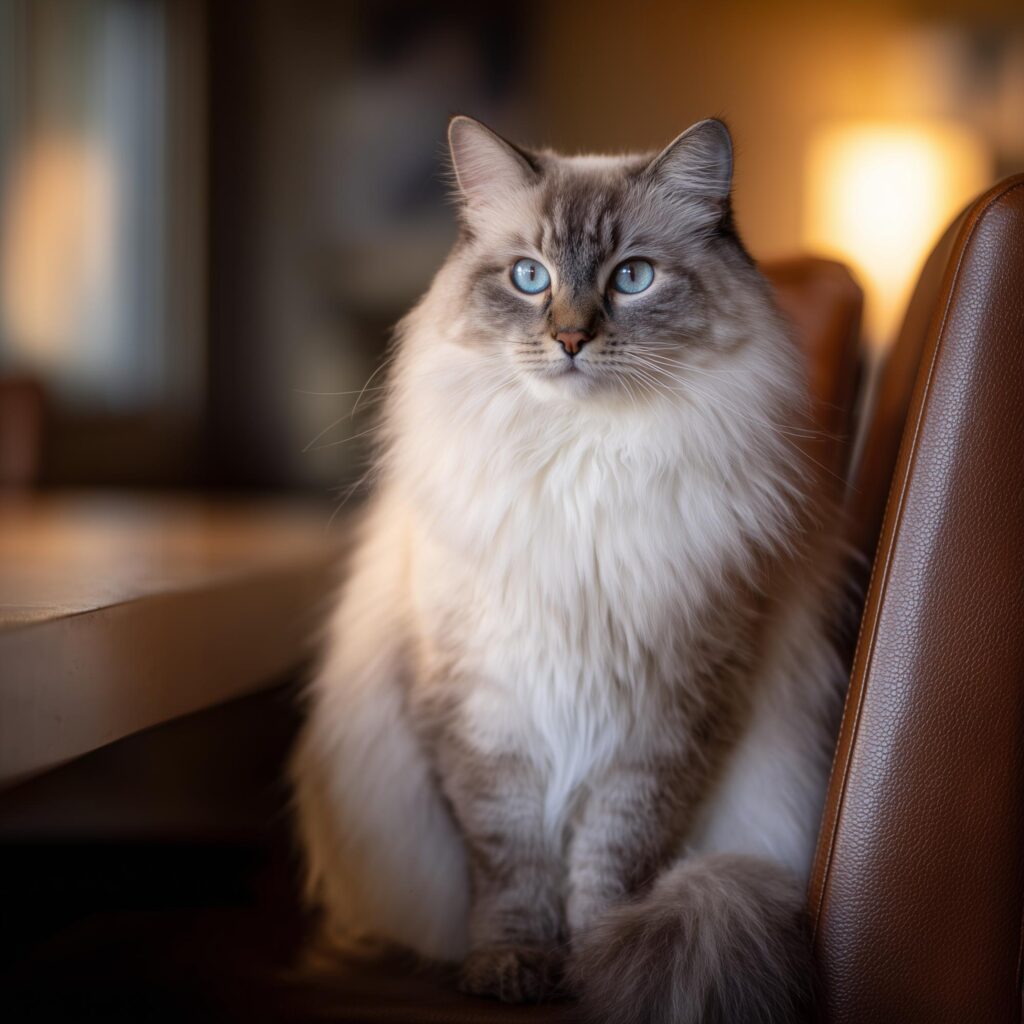
Neva Masquerade cats are Siberian color point cats best known for their exotic appearance. What defines a Neva Masquerade color is genetics, not rarity, temperament, or allergy potential.
Neva Masquerades are a colorpoint variety of the Siberian cat, which means their colors follow the same underlying Siberian color genetics, with the addition of the colorpoint gene. This relationship is important, because many myths arise when Neva colors are discussed as if they are separate or exotic traits rather than expressions of the same genetic foundation.
It’s also critical to clarify what color does not affect. Coat color and pattern influence appearance only. They do not determine personality, intelligence, health, or allergy compatibility. A blue point Neva and a seal lynx point Neva share the same behavioral and health expectations when bred responsibly.
This guide breaks down Neva Masquerade colors clearly, systematically, and without marketing exaggeration—so buyers know exactly what they’re looking at.
Neva Masquerade Cat Colors at a Glance
| Category | What It Means |
|---|---|
| Breed Type | Colorpoint variety of the Siberian cat |
| Eye Color | Always blue (result of the colorpoint gene) |
| Main Color Types | Seal, Blue, Chocolate, Lilac, Red, Cream |
| Common Patterns | Solid (point), Lynx (tabby), Tortie |
| White Variations | Colorpoint (no white), Mitted, Bicolor |
| Silver Variants | Possible, but often misidentified |
| Color Stability | Changes significantly from kitten to adult |
| Development Timeline | Full color may take 2–4+ years |
| Effect on Personality | None |
| Effect on Health | None |
| Effect on Allergies | None |
| Buyer Caution | Kitten photos rarely show final color |
Searching for a gorgeous Neva Masquerade kitten?
Sign up for our carefully planned litters, where color, personality, and health meet thoughtful placement for discerning homes.
See Neva Masquerade Kittens Available
What Makes a Siberian Cat a Neva Masquerade?
Before discussing individual colors, it’s important to understand what technically defines a Neva Masquerade.
Neva Masquerades are Siberian Cats that carry the color point gene (cs/cs). This gene causes temperature-sensitive pigmentation: cooler areas of the body (face, ears, tail, legs) develop darker color, while warmer areas remain lighter.
This gene is also why all Neva Masquerades have blue eyes. Blue eyes are a fixed trait of the colorpoint gene, regardless of the point color or pattern.
Visually, Neva Masquerades are defined by:
- A darker facial mask
- Darker ears and tail
- Darker points on the legs
- A lighter-colored body with varying contrast
As Nevas age, this contrast often becomes more pronounced. Bodies may darken slightly over time, while points deepen in color. Seasonal coat changes also influence appearance—winter coats tend to appear darker and fuller, while summer coats are often lighter and less dense.
Because of these changes, kittens rarely resemble their final adult coloration. Full color development can take several years, especially in slow-maturing Siberian lines.
How Neva Masquerade Colors Are Classified
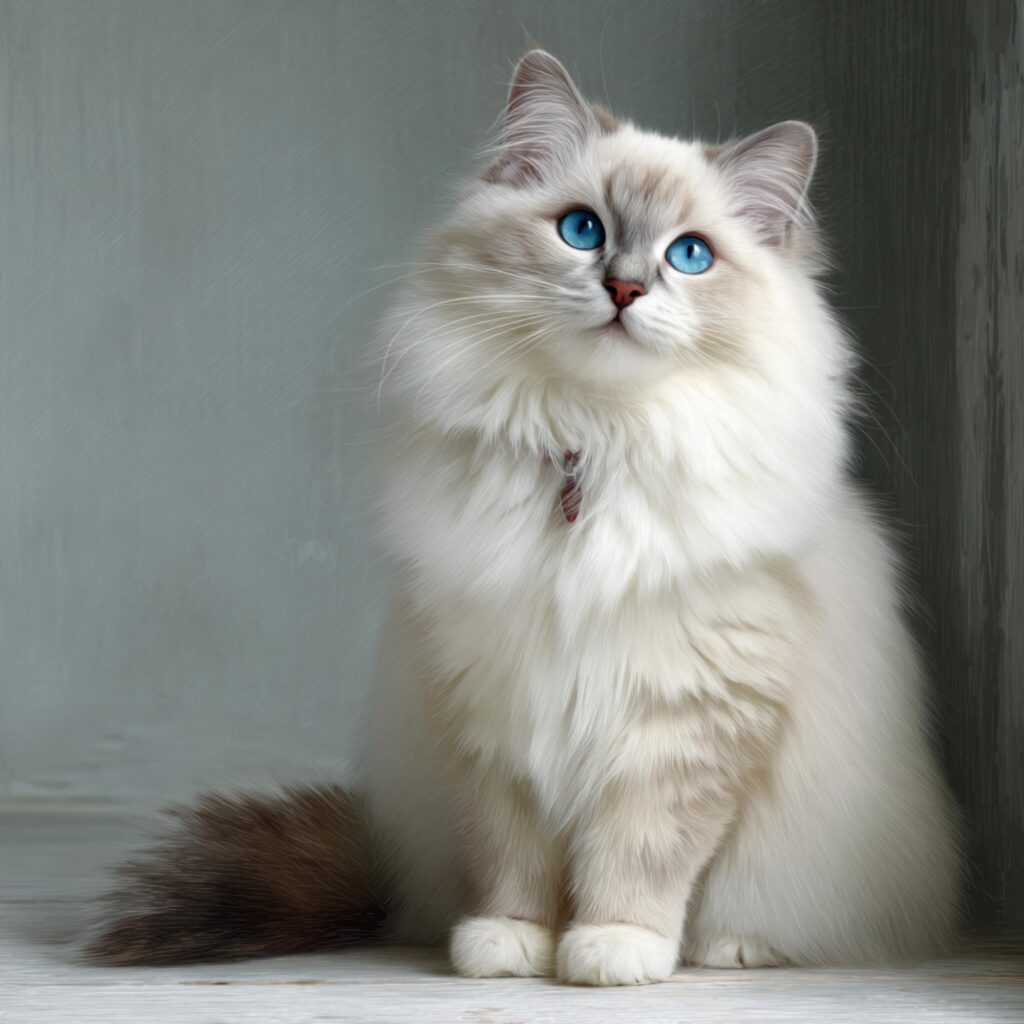
Neva Masquerade colors are classified using several layers, not a single label. Understanding these layers makes the rest of the color discussion much clearer.
Point color
This refers to the base color expressed on the points (for example: seal, blue, red, or cream).
Pattern
Patterns describe how that color appears:
- Solid (no striping)
- Tabby / lynx (visible striping on points)
- Tortie (a mix of red/cream with another color)
White patterning
Some Nevas have white markings:
- Colorpoint (no white)
- Mitted (white paws, chin, sometimes belly)
- Bicolor (larger white areas, often including an inverted facial “V”)
Silver vs non-silver
Silver indicates the presence of the silver inhibitor gene, which lightens the base of the hair shaft and creates higher contrast in tabby patterns.
Registry classification
Major registries such as The International Cat Association and Fédération Internationale Féline categorize Neva Masquerade colors using combinations of these elements rather than treating each visual look as a separate type.
Solid (Non-Tabby) Neva Masquerade Point Colors
Solid point Neva Masquerades have no lynx (tabby) striping on their points. The color appears smooth and uniform across the mask, ears, tail, and legs, creating a clean, classic color point look. Contrast develops gradually as the cat matures, and kittens rarely resemble their final adult coloration.
Seal Point Neva Masquerade
Appearance
Seal point Neva Masquerades feature deep brown to near-black points paired with a warm cream to light beige body. This is the darkest and most traditional Neva color, offering the strongest visual contrast once fully mature.
Color Development Over Time
Seal point kittens are often born very light, with faint point definition. Over the first two to four years, the points deepen significantly, and the body may warm slightly in tone. Seasonal coats can temporarily increase or soften contrast.
Common Misconceptions
Seal points are sometimes incorrectly referred to as “black points,” which is not an accepted color term. They are also mistakenly assumed to have stronger personalities. Color has no influence on temperament, dominance, or behavior.
Blue Point Neva Masquerade
Appearance
Blue point Neva Masquerades have cool gray to slate-blue points paired with a pale, icy-toned body. The overall look is softer and more muted than seal points, with less dramatic contrast but a refined, elegant appearance that many buyers find appealing.
Genetic Background
Blue is the dilute form of seal. The dilution gene reduces pigment intensity, transforming black pigment into gray-blue. This gene affects color depth only and does not alter pattern placement, coat texture, or any non-visual traits.
Color Development Over Time
Blue point kittens often appear extremely light at birth, sometimes leading buyers to believe the color will remain faint. Over the first one to three years, the points gradually deepen, particularly on the tail, ears, and facial mask. Body color may darken slightly but usually retains a cool undertone rather than warming significantly.
Differences Compared to Seal Points
Compared to seal points, blue points:
- Have cooler, gray-based pigment rather than warm brown
- Develop contrast more slowly
- Maintain a lighter overall appearance into adulthood
This difference is visual only and does not indicate rarity, quality, or temperament variation.
Photography vs Reality
Blue pigment reflects light very easily. As a result, blue point Nevas frequently photograph much lighter than they appear in person, especially under bright lighting or flash. Many owners report that adult color depth is noticeably richer than expected based on kitten photos.
Common Misconceptions
Blue points are often assumed to be rarer, more delicate, or more allergy-friendly than seal points. None of these assumptions are accurate. Blue is a common dilute color, and coat color has no impact on health, temperament, or allergen production.
Why Buyers Are Drawn to Blue Points
Buyers often choose blue points for their calm, understated appearance and soft contrast rather than bold coloration. Preference is aesthetic, not functional.
Chocolate Point Neva Masquerade
Appearance
Chocolate point Neva Masquerades have warm, milk-chocolate–colored points paired with an ivory to light cream body. Compared to seal points, the color is noticeably lighter and warmer, without the near-black depth seen in seals.
Genetic Background
Chocolate is a recessive color that requires both parents to carry the chocolate gene. This makes chocolate points less common in Siberian-based programs, where seal and blue dominate.
Color Development Over Time
Chocolate point kittens often start very pale, with soft brown points that deepen gradually over time. Full color expression may take several years, and contrast usually remains gentler than seal points even in adulthood.
Visual Differences Compared to Seal and Blue
Compared to seal points, chocolate points:
- Are lighter and warmer in tone
- Have less dramatic contrast
- Retain a softer, more blended appearance
Compared to blue points, chocolate points appear warmer and richer rather than cool-toned.
Registry Considerations
Chocolate is accepted in some registries and bloodlines but is not emphasized universally. Availability depends on breeder focus and genetic planning, not popularity or demand alone.
Common Misconceptions
Chocolate points are sometimes marketed as “rare” or “luxury” colors. In reality, they are simply less commonly bred and do not indicate superior quality, temperament, or health.
Lilac Point Neva Masquerade
Appearance
Lilac point Neva Masquerades display very pale gray-pink or lavender-toned points with a nearly white body. This is one of the softest and most subtle Neva color expressions.
Genetic Background
Lilac is the dilute form of chocolate, meaning the cat must carry both the chocolate gene and the dilution gene. This genetic combination results in very light pigment intensity.
Color Development Over Time
Lilac point kittens often appear extremely light, sometimes leading buyers to believe the color is underdeveloped. Over time, points become more visible, but contrast remains delicate even in fully mature adults.
Visual Characteristics
Lilac points:
- Maintain low contrast compared to seal or blue
- Have a soft, pastel appearance rather than bold definition
- Can look dramatically different depending on lighting
Seasonal coat changes can temporarily enhance or mute visible color.
Photography vs Reality
Lilac points are especially prone to being misrepresented in photos. Camera exposure often washes out the subtle pigment, making the cat appear nearly white in images.
Common Misconceptions
Lilac points are sometimes mistaken for young blue points or faded chocolates. In reality, lilac is genetically distinct and remains lighter throughout life.
Red (Flame) Point Neva Masquerade
Appearance
Red point Neva Masquerades have warm orange to flame-colored points paired with a cream to off-white body. Intensity can range from soft peach to rich red depending on pigment expression.
Sex-Linked Genetics
Red is carried on the X chromosome, which strongly influences how frequently it appears and in which sex.
Why Most Red Points Are Male
Male cats have one X chromosome, making it easier to express solid red. Female red points are rare because they require both X chromosomes to carry the red gene.
Color Development Over Time
Red point kittens may show uneven or patchy color early on. As the cat matures, pigment becomes more uniform and richer, especially on the tail and facial mask.
Visual Differences Compared to Cream
Red points are deeper and more saturated than cream points. Cream is not a “lighter red,” but a genetically dilute version with consistently softer coloration.
Common Misconceptions
Red points are sometimes assumed to be more energetic or outgoing. Color does not influence behavior, activity level, or personality.
Cream Point Neva Masquerade
Appearance
Cream point Neva Masquerades display pale peach, apricot, or soft buff-colored points with a very light body. Contrast is gentle and often understated.
Genetic Background
Cream is the dilute form of red, requiring both the red gene and the dilution gene. This combination softens pigment intensity significantly.
Color Development Over Time
Cream point kittens often appear nearly white with faint point shading. Over time, points warm and become more visible, but they never reach the intensity of red points.
Seasonal and Age-Related Changes
Seasonal coat changes can influence how visible cream points appear. Winter coats often show more depth, while summer coats may look lighter and less contrasted.
Common Buyer Confusion
Cream points are frequently mistaken for underdeveloped red points. In reality, cream points remain lighter throughout adulthood and do not “turn red” with age.
Why Buyers Choose Cream Points
Buyers are often drawn to cream points for their soft, elegant appearance and subtle contrast rather than bold coloration.
Lynx (Tabby) Point Neva Masquerade Colors
Lynx point Neva Masquerades are colorpoint cats with visible tabby striping on their points. The lynx pattern appears on the mask, ears, legs, and tail, adding definition and complexity to the colorpoint look. Body color remains lighter, while the tabby pattern is restricted to the cooler areas of the body.
Lynx points are often misunderstood because striping can appear faint, uneven, or incomplete in kittens. True lynx patterning becomes clearer with age and coat development.
Seal Lynx Point Neva Masquerade
Appearance
Seal lynx point Nevas combine deep brown seal coloring with dark tabby striping. The result is a bold, high-contrast look once fully mature.
Tabby Striping Clarity
Striping is typically most visible on the facial mask, legs, and tail rings. The striping overlays the seal color, creating strong definition compared to lighter lynx varieties.
Facial Markings
Seal lynx points usually display a clear tabby “M” on the forehead, eyeliner-style markings around the eyes, and defined cheek stripes. These markings often intensify with age.
Color Development Over Time
Seal lynx kittens may appear softly patterned early on. Over several years, both the base seal color and the striping deepen, producing a dramatic adult appearance.
Blue Lynx Point Neva Masquerade
Appearance
Blue lynx point Nevas have cool gray-blue points with soft tabby striping. The overall effect is elegant and subtle rather than bold.
Striping Characteristics
Striping is usually lighter and lower-contrast than in seal lynx points. The tabby pattern is often most visible on the tail and legs first.
Color Development
Blue lynx kittens often appear extremely pale. Over time, the blue pigment deepens and striping becomes more defined, especially after the first year.
Photography vs Reality
Blue lynx points are frequently misrepresented in photos, where striping can appear faint or disappear entirely under bright lighting.
Chocolate Lynx Point Neva Masquerade
Appearance
Chocolate lynx point Nevas display warm milk-chocolate points with softer brown tabby striping. The contrast is gentler than seal lynx points.
Genetic Context
Chocolate lynx points require both the chocolate gene and the tabby pattern gene, making them less commonly seen.
Striping and Contrast
Striping is visible but tends to blend more smoothly into the base color, giving a warm, refined look rather than sharp contrast.
Color Maturation
Chocolate lynx points develop slowly, with full striping clarity often not visible until adulthood.
Lilac Lynx Point Neva Masquerade
Appearance
Lilac lynx points are among the lightest Neva color variations. Points appear pale lavender-gray with very soft tabby striping.
Visual Characteristics
Contrast is minimal, especially in kittens. Striping can appear faint or “blurred,” which often leads to confusion about whether the cat is truly lynx.
Color Development
As lilac lynx Nevas mature, striping becomes more apparent but remains delicate. Full expression can take several years.
Common Misidentification
Lilac lynx points are frequently mistaken for blue lynx kittens or underdeveloped solid points due to their subtle pigmentation.
Red Lynx Point Neva Masquerade
Appearance
Red lynx point Nevas feature warm orange points with darker red tabby striping. This creates a vibrant, high-contrast look compared to solid red points.
Striping Visibility
Tabby striping is usually very clear in red lynx points, often more so than in other lynx colors.
Genetic Notes
As with solid red points, most red lynx points are male due to sex-linked genetics.
Color Changes With Age
Red lynx points may show uneven striping as kittens. With maturity, the pattern evens out and deepens in color.
Cream Lynx Point Neva Masquerade
Appearance
Cream lynx point Nevas have pale peach or buff-colored points with soft cream tabby striping.
Contrast Level
Striping is usually subtle and low-contrast, especially early in life.
Color Development
Cream lynx points warm slightly with age, and striping becomes more noticeable, though it remains softer than red lynx points.
Common Confusion
Cream lynx points are often mistaken for very light red lynx kittens. Cream remains genetically and visually lighter throughout adulthood.
How Lynx Markings Evolve Over Time
Lynx markings are rarely fully visible in young kittens. Striping typically:
- Appears faint or patchy at first
- Becomes clearer during adolescence
- Continues developing into adulthood
Seasonal coat changes can temporarily enhance or soften striping, especially in winter coats.
Ghost Tabby vs True Lynx Point
A ghost tabby refers to faint striping seen in kittens that fades as the cat matures. This is common in solid point kittens.
A true lynx point retains visible tabby striping into adulthood. The pattern remains present on the mask, legs, and tail throughout life, even if contrast varies seasonally.
Understanding this distinction prevents mislabeling kittens based on early photos alone.
Tortie Point Neva Masquerade Colors
(Almost exclusively female)
Tortie point Neva Masquerades combine two color families in the points—a base color (seal, blue, chocolate, or lilac) mixed with red or cream. The result is a mosaic pattern that appears on the mask, ears, legs, and tail, while the body remains lighter due to the colorpoint gene.
Because tortie expression is tied to sex-linked genetics, almost all tortie point Nevas are female. Their appearance is highly individual, and no two torties develop the same pattern.
Seal Tortie Point Neva Masquerade
Appearance
Seal tortie point Nevas display a mix of deep brown (seal) with red or cream patches on the points. The contrast can be bold, especially as the cat matures, creating a striking blend of dark and warm tones.
Pattern Distribution
Color patches may appear unevenly across the mask, ears, tail, and legs. Some seal torties have dramatic facial splits, while others show subtle mottling.
Color Development Over Time
Seal tortie kittens often start with faint or uneven color distribution. Over the first several years, both the seal base and the red/cream patches deepen and become more distinct.
Common Misconceptions
Seal torties are sometimes described as “messy” or “random,” but the pattern follows predictable genetic rules—only the placement is unpredictable.
Blue Tortie Point Neva Masquerade
Appearance
Blue tortie point Nevas combine cool gray-blue points with soft cream patches. The overall effect is gentler and more muted than seal torties.
Contrast and Subtlety
Because both blue and cream are diluted colors, contrast tends to be lower, especially in kittens. Pattern definition becomes clearer with age.
Color Development
Blue torties often look very pale early on. As pigment deepens, cream patches become more noticeable, especially on the ears and tail.
Photography vs Reality
Blue tortie patterns are frequently underrepresented in photos. Lighting can flatten contrast, making the tortie pattern appear less distinct than it is in person.
Chocolate Tortie Point Neva Masquerade
Appearance
Chocolate tortie point Nevas show warm milk-chocolate points mixed with red or cream patches. The look is softer and warmer than seal torties, with a refined overall appearance.
Genetic Context
Chocolate tortie points require both the chocolate gene and tortie expression, making them less common in Siberian-based breeding programs.
Pattern Expression
Patches often blend smoothly into the base color rather than appearing sharply divided. This gives chocolate torties a more cohesive, less dramatic look.
Maturation Timeline
Chocolate tortie patterns develop slowly, with full contrast often not visible until adulthood.
Lilac Tortie Point Neva Masquerade
Appearance
Lilac tortie point Nevas are among the softest-looking Nevas. Points are pale lavender-gray with gentle cream or pale red patches.
Low Contrast Characteristics
Contrast is minimal, especially in kittens. Tortie patches may be barely visible early on and become clearer only with maturity.
Color Development
Lilac torties take time to fully express their pattern. Even as adults, their coloration remains pastel and understated rather than bold.
Common Buyer Confusion
Lilac torties are often mistaken for blue torties or underdeveloped chocolates. Their genetic combination produces a distinct, consistently lighter appearance throughout life.
Red Tortie Point Neva Masquerade
(Rare context explanation)
What “Red Tortie” Means
Red tortie points involve red combined with another red-based expression, which makes true red tortie points extremely uncommon and often misunderstood.
Genetic Reality
Because tortie requires two X chromosomes and red is sex-linked, true red tortie point Nevas are rare and usually involve complex genetic combinations.
Visual Appearance
When present, red tortie points may show subtle tonal variation rather than dramatic contrast, making them harder to identify without genetic context.
Why They’re Rare
This rarity reflects genetics, not desirability or value. Most programs do not intentionally produce red tortie points.
Why Tortie Patterns Vary Dramatically
Tortie coloration is created through random X-chromosome inactivation during early development. This process determines where each color appears, resulting in unpredictable placement.
Because of this:
- Patch size and location vary widely
- Facial symmetry is never guaranteed
- Color balance differs from cat to cat
These variations are normal and expected.
No Two Torties Look Alike
Unlike solid or lynx points, tortie points are truly individual. Two tortie Nevas with the same color label can look completely different in pattern distribution, intensity, and contrast.
This individuality is part of what draws buyers to tortie Nevas—but it also means kittens should never be chosen based on a specific expected pattern. Tortie points evolve over time, and final appearance cannot be predicted from early photos alone.
Silver Neva Masquerade Colors
(Often confused and misidentified)
Silver Neva Masquerades are among the most misunderstood color variations in the breed. Many cats labeled “silver” are not genetically silver at all, while true silver Nevas are frequently overlooked or misidentified in kitten photos.
Understanding silver requires separating genetics from appearance and clearing up several persistent myths.
What Silver Means Genetically
Silver refers to the presence of the silver inhibitor gene. This gene lightens the base of each hair shaft while leaving the tip pigmented. In Neva Masquerades, silver expression is most visible in lynx (tabby) patterns, where the contrast between light and dark is enhanced.
Silver does not:
- Change the point color
- Affect eye color
- Influence temperament or health
It simply alters how pigment is distributed along the hair shaft.
Silver vs Smoke vs Light Undercoat
These terms are often used incorrectly and interchangeably, but they are not the same.
- Silver: Caused by the silver inhibitor gene. Hair shafts are pale at the base with darker tips, producing crisp, high-contrast tabby striping.
- Smoke: A solid-color cat with the silver gene, where the base is pale and the tips are dark, but without tabby striping. Smoke is uncommon and often misapplied in Nevas.
- Light undercoat: Many Neva Masquerades have naturally pale undercoats due to coat density or seasonal changes. This is not silver and does not involve the silver gene.
Mislabeling often happens when kittens are photographed young, when undercoat color and lighting exaggerate contrast.
Seal Silver Lynx Point Neva Masquerade
Appearance
Seal silver lynx point Nevas have dark brown seal striping layered over a silver base, creating very sharp contrast. The background between stripes appears noticeably lighter than in non-silver lynx points.
Visual Impact
Among silver Nevas, seal silver lynx points tend to show the most dramatic pattern definition. Facial markings, leg striping, and tail rings are often bold and crisp.
Color Development
Silver contrast becomes more pronounced with age. Kittens may appear lightly patterned, but striping clarity increases as the coat matures.
Common Misidentification
Seal silver lynx points are sometimes mislabeled as standard seal lynx points if silver is subtle early on.
Blue Silver Lynx Point Neva Masquerade
Appearance
Blue silver lynx points combine cool gray-blue striping with a pale silver base. The result is a softer, cooler-toned contrast than seal silver lynx points.
Contrast Characteristics
While contrast is still clear, it is more refined and less bold than seal silver. Striping often looks “etched” rather than dark.
Development Over Time
Blue silver lynx kittens frequently appear extremely light. As pigment deepens, striping becomes more defined, especially on the tail and facial mask.
Photography Challenges
Blue silver lynx points are especially prone to being misrepresented in photos, where silver can appear washed out or disappear entirely.
Other Silver Variations (Registry Dependent)
Some registries recognize additional silver-based Neva Masquerade variations, while others limit silver classification strictly to lynx points.
Possible variations may include:
- Chocolate silver lynx point
- Lilac silver lynx point
Acceptance depends on registry standards and breeder participation. These colors are uncommon not because they are undesirable, but because producing them requires specific genetic combinations that are not widely prioritized.
Silver Neva Masquerades are best evaluated in person or over time, or by dna testing for color, not from a single kitten photo. True silver expression becomes clearer as the coat matures, and early assumptions often lead to mislabeling.
Neva Masquerade White Pattern Variations
In addition to point color and pattern, Neva Masquerades are also classified by white patterning. White markings affect appearance only and are governed by separate genes from point color or lynx/tortie patterning. They do not indicate rarity, quality, temperament, or allergy potential.
Understanding white pattern variations helps buyers interpret breeder descriptions accurately and avoid common misconceptions.
Colorpoint (No White)
Definition
Colorpoint Neva Masquerades have no white markings. The points (mask, ears, legs, tail) are fully colored, and the body remains lighter due to the colorpoint gene.
Visual Characteristics
- Clean, uninterrupted point color
- No white on paws, chin, chest, or face
- Strong contrast develops with age
Common Misunderstandings
Colorpoint does not mean “more traditional,” “higher quality,” or more genetically correct. It is simply one white-pattern category among several accepted variations.
Mitted Neva Masquerade
White Paws and Chin
Mitted Neva Masquerades have white feet (mittens) and often a white chin. Some may also show white along the belly line. The rest of the points remain fully colored.
Symmetry Expectations
Mitted markings are ideally symmetrical, but minor asymmetry is common and acceptable. Perfectly matched mittens are not guaranteed and should not be expected.
Visual Balance
Mitted Nevas tend to have a softer, more balanced look compared to colorpoint cats. The white paws can accentuate contrast without overwhelming the point color.
Common Buyer Confusion
Mitted is sometimes mistaken for bicolor. The key difference is limited white—mitted cats do not have large white facial markings or extensive body white.
Bicolor Neva Masquerade
Inverted V Facial Marking
Bicolor Neva Masquerades display a white inverted “V” on the face, typically extending from the nose upward between the eyes. This is one of the most recognizable bicolor features.
White Distribution Rules
Bicolor Nevas have:
- White on the face
- White on the chest and belly
- White on the legs and paws
- Colored points remaining on the ears, tail, and parts of the mask
The exact distribution can vary, but white is always more extensive than in mitted cats.
Balance and Proportion
Registries focus on balanced white distribution rather than exact markings. Excessive or minimal white may affect show evaluation but does not affect pet quality.
Why White Patterning Does Not Affect Rarity Genetically
White patterning is controlled by genes independent of color and pattern genes. A bicolor Neva is not genetically rarer than a colorpoint Neva—white expression simply reflects inheritance patterns and breeder selection.
Perceived rarity often comes from breeding focus, not genetics. Some breeders prioritize colorpoint cats, others prefer mitted or bicolor lines. Availability reflects those choices, not intrinsic value.
White patterning does not affect:
- Health
- Temperament
- Intelligence
- Allergy compatibility
It is an aesthetic variation only.
Rare, Misunderstood, or Often Misnamed Neva Masquerade Colors
Neva Masquerade colors are frequently misidentified, especially in kittens. Some terms are used casually or incorrectly, leading to confusion about what a cat will actually look like as an adult.
Smoke Neva Masquerades — Clarification
“Smoke” is one of the most misused color terms in Neva Masquerades. True smoke requires the silver inhibitor gene combined with a solid (non-tabby) pattern, producing pale hair bases with darker tips and no striping.
In practice, true smoke Neva Masquerades are uncommon and often misidentified. Many cats labeled as smoke simply have:
- Naturally pale undercoats
- Seasonal lightening
- Strong contrast between points and body
Without genetic confirmation or clear adult coat expression, “smoke” is often an inaccurate label.
“Light Body” vs True Silver
A light-colored body does not indicate silver genetics.
Neva Masquerades naturally have lighter bodies due to the colorpoint gene, especially in kittens and during warm seasons. True silver involves hair shaft pigmentation, not body tone.
Key differences:
- Light body: normal colorpoint expression
- True silver: silver inhibitor gene with visible effect in tabby striping
Confusing these leads to frequent mislabeling, particularly in young cats.
Mislabeling From Kitten Photos
Photos are one of the biggest sources of color confusion.
Kittens often appear:
- Lighter than they will as adults
- Lower contrast than mature cats
- Differently colored depending on lighting
Camera exposure, white balance, and seasonal coat changes can all distort appearance. This is why relying on kitten photos alone is unreliable for accurate color identification.
Why Kittens Often Change Dramatically
Neva Masquerade kittens are born very light, with minimal contrast. Over time, pigmentation increases in the cooler areas of the body, and patterns become more defined.
These changes are normal and expected—not signs of misrepresentation.
How Neva Masquerade Colors Change With Age
Understanding color development is essential for realistic expectations.
Kitten Color vs Adult Color
Neva kittens rarely resemble their adult coloration. Early point color may be faint, uneven, or incomplete, especially in dilute or lynx varieties.
Adult color expression continues developing well beyond the first year.
Darkening Over the First 2–3 Years
Most Neva Masquerades darken noticeably over the first two to three years:
- Points deepen in color
- Contrast increases
- Striping or tortie patterns become clearer
Slow-maturing Siberian lines may continue changing even longer.
Seasonal Coat Influence
Seasonal changes strongly affect appearance:
- Winter coats often appear darker and fuller
- Summer coats may look lighter and less contrasted
These shifts are temporary and should not be mistaken for permanent color change.
Why Buyers Should Expect Variation
Color development is influenced by:
- Genetics
- Age
- Season
- Environment
Two kittens from the same litter may mature very differently. Buyers should choose a Neva Masquerade with the understanding that final appearance cannot be predicted from early photos alone.
Expecting variation prevents disappointment and supports informed decision-making.
Do Neva Masquerade Colors Affect Personality, Health, or Allergies?
The clear answer is no.
Neva Masquerade coat color and pattern affect appearance only. They do not influence temperament, intelligence, health, or allergy compatibility.
All Neva Masquerades share the same underlying breed genetics. A seal lynx point, blue bicolor, or lilac tortie Neva will have the same behavioral and health expectations when bred responsibly. Differences between individual cats come from genetics, environment, and socialization—not coat color.
Why These Myths Persist
Color myths persist for several reasons:
- Visual differences create emotional assumptions
- Social media reinforces “favorite” colors
- Early kitten tolerance is incorrectly linked to color
- Marketing language exaggerates rarity or desirability
Because Neva Masquerades already attract allergy-focused buyers, color myths often become layered onto allergy myths, even though there is no scientific connection.
Genetics vs Appearance
Color genes control pigment expression, not biological function. The genes responsible for point color, tabby pattern, or white spotting do not interact with genes affecting temperament, immune function, or allergen production.
In short: color changes how a Neva looks—not how it behaves or lives.
Which Neva Masquerade Colors Are Most Popular?
Popularity trends in Neva Masquerade colors shift regularly and are driven more by aesthetics than by availability or genetics.
Buyer Preference Trends
Currently, buyers tend to gravitate toward:
- Blue and blue lynx point Nevas
- High-contrast seal lynx points
- Bicolor Nevas with bold facial markings
These preferences are cyclical and often influenced by what buyers see most frequently online.
Photography and Social Media Influence
Some colors photograph more dramatically than others. High-contrast patterns and lighter bodies stand out in photos, which can skew perception of popularity.
Social media exposure often drives demand for a specific look, even when that look is not genetically uncommon.
Why Popularity Changes Over Time
As breeding programs shift focus or certain colors become overrepresented online, buyer interest moves on. Popularity reflects trends—not inherent value or quality.
Which Neva Masquerade Colors Are Rarest?
“Rare” is one of the most misunderstood terms in Neva Masquerade color discussions.
Genetic Rarity vs Breeder Focus
True genetic rarity depends on specific gene combinations. However, many colors described as rare are simply less commonly bred, not genetically exceptional.
For example:
- Chocolate and lilac points require specific genetic pairing
- Silver variations depend on the silver inhibitor gene
- Tortie patterns are limited by sex-linked genetics
Availability often reflects breeder priorities rather than difficulty.
Registry Acceptance Considerations
Some registries emphasize certain colors more than others. This can affect how frequently a color appears, but it does not imply superiority or desirability.
Why “Rare” Does Not Mean Better
A color labeled as rare is not:
- Healthier
- Better tempered
- More hypoallergenic
- More valuable as a companion
Rarity is a breeding and marketing concept, not a quality marker.
Neva Masquerade Colors: Rarity & Price Comparison
| Neva Masquerade Color | Genetic Rarity | Breeder Availability | Typical Price Range (USD) | Notes for Buyers |
|---|---|---|---|---|
| Seal Point | Common | Widely available | $2,500–$4,500 | Most traditional color; strong contrast develops with age |
| Blue Point | Common | Widely available | $2,500–$4,800 | Softer contrast; often appears lighter in photos |
| Seal Lynx Point | Common | Widely available | $2,800–$5,000 | High-contrast tabby pattern; very popular |
| Blue Lynx Point | Common | Widely available | $2,800–$5,200 | Elegant, subtle striping; strong photo appeal |
| Red (Flame) Point | Moderately uncommon | Limited | $3,000–$5,500 | Mostly male due to sex-linked genetics |
| Cream Point | Moderately uncommon | Limited | $3,000–$5,500 | Dilute red; lighter, softer appearance |
| Seal Tortie Point | Uncommon | Limited | $3,500–$6,000 | Almost exclusively female; high visual variation |
| Blue Tortie Point | Uncommon | Limited | $3,500–$6,200 | Softer contrast tortie; pattern develops slowly |
| Chocolate Point | Uncommon | Limited | $3,800–$6,500 | Requires specific genetics; not bred by all programs |
| Lilac Point | Uncommon | Limited | $4,000–$6,800 | Very soft pastel tones; slow color development |
| Chocolate Lynx Point | Rare (genetic) | Very limited | $4,500–$7,500+ | Depends heavily on breeder focus and registry |
| Lilac Lynx Point | Rare (genetic) | Very limited | $4,800–$8,000+ | Extremely subtle pattern; often misidentified as kittens |
| Seal Silver Lynx Point | Rare (breeding focus) | Very limited | $4,500–$7,500+ | True silver gene required; often mislabeled |
| Blue Silver Lynx Point | Rare (breeding focus) | Very limited | $4,800–$8,000+ | High photo demand; silver clarity increases with age |
| Bicolor (any point color) | Not genetically rare | Breeder-dependent | $2,800–$6,500 | White pattern does not affect genetic rarity |
| Mitted (any point color) | Not genetically rare | Breeder-dependent | $2,800–$6,500 | Pricing reflects demand, not genetics |
Choosing a Neva Masquerade Color Responsibly
Choosing a Neva Masquerade color should be an aesthetic preference, not a deciding factor in whether the breed is right for your home. Responsible selection starts with understanding what color can—and cannot—tell you.
Matching Color Expectations With Lifestyle
Some colors appear higher contrast, lighter, or more dramatic in photos, but those visual differences do not translate to differences in care or behavior. A pale lilac point and a dark seal lynx point require the same grooming, engagement, and long-term commitment.
Buyers should choose a color they enjoy across all life stages, not just as a kitten. Many Nevas change significantly as they mature, and early appearance rarely predicts the adult look.
Why Temperament and Health Matter More
Temperament, health testing, socialization, and breeder practices have far more impact on your experience than coat color. A well-bred Neva Masquerade of any color will be more rewarding than a poorly bred kitten chosen solely for appearance.
Color does not improve compatibility, reduce allergies, or change energy level. Those outcomes depend on genetics and environment, not pigment.
Avoiding Color-Only Decisions
Choosing based on color alone often leads to disappointment. When buyers prioritize appearance over fit, normal behavior or development can feel unexpected or frustrating.
Responsible decisions weigh:
- Breed temperament
- Household lifestyle
- Long-term expectations
- Breeder transparency
Color should be the final preference—not the primary filter. See Neva Masquerade Personality for more info.
Common Myths About Neva Masquerade Colors
Several myths persist around Neva Masquerade colors, largely driven by misunderstanding of genetics and marketing language.
“Some colors are more hypoallergenic”
No Neva Masquerade color is hypoallergenic. All colors produce allergens at similar levels.
“Lighter colors shed less”
Shedding is influenced by coat type and seasonal cycles, not pigment. Light-colored coats do not shed less than dark ones.
“Blue eyes mean Siamese mix”
Blue eyes are a direct result of the colorpoint gene. They do not indicate Siamese ancestry.
“Rare colors have better temperaments”
Temperament is unrelated to color. Rare colors are not calmer, smarter, or easier to live with.
These myths persist because color is visible and easy to fixate on—but they have no biological basis.
Neva Masquerade Cat Colors FAQ
1. What colors do Neva Masquerade cats come in?
Neva Masquerade cats come in all colorpoint variations of the Siberian breed, including seal, blue, chocolate, lilac, red, and cream, with solid, lynx (tabby), tortie, silver, mitted, and bicolor patterns.
2. Do all Neva Masquerade cats have blue eyes?
Yes. All Neva Masquerades have blue eyes due to the colorpoint gene. Eye color does not vary by point color or pattern.
3. Are some Neva Masquerade colors rarer than others?
Some colors are less commonly bred, but rarity usually reflects breeder focus rather than true genetic scarcity. “Rare” does not mean better, healthier, or more valuable.
4. Do Neva Masquerade colors affect personality?
No. Coat color and pattern do not influence temperament, intelligence, or behavior. Personality differences are individual, not color-based.
5. Do certain Neva Masquerade colors produce fewer allergens?
No. All colors produce allergens at similar levels. Color does not affect allergy compatibility.
6. Why do Neva Masquerade kittens look so different as adults?
Neva Masquerade kittens are born very light. Points darken gradually over the first 2–4 years, and patterns become clearer with age and seasonal coat changes.
7. What is the difference between lynx point and solid point Nevas?
Lynx point Nevas have visible tabby striping on the points, while solid point Nevas have smooth, even color without striping.
8. Are tortie point Neva Masquerades always female?
Almost always. Tortie coloration requires two X chromosomes, making tortie point Nevas overwhelmingly female. Male torties are extremely rare.
9. What is the difference between silver and smoke Neva Masquerades?
Silver involves the silver inhibitor gene and is usually visible in lynx patterns. Smoke refers to solid cats with silver roots and dark tips. Many cats labeled “smoke” are actually non-silver with light undercoats.
10. What does mitted mean in Neva Masquerades?
Mitted Nevas have white paws and often a white chin or belly line. White markings are limited compared to bicolor Nevas.
11. What is a bicolor Neva Masquerade?
Bicolor Nevas have more extensive white, including a white inverted “V” on the face, white legs, and white body areas. The exact distribution can vary.
12. Does white patterning make a Neva Masquerade rarer?
No. White patterning does not affect genetic rarity. Availability depends on breeder selection, not genetics.
13. Why do some Neva Masquerade colors photograph differently?
Lighting, camera exposure, and coat reflectivity can dramatically alter how colors appear in photos, especially blue, lilac, cream, and silver variations.
14. Can you accurately predict adult color from kitten photos?
No. Kitten photos rarely show final adult coloration. Contrast, depth, and pattern clarity develop over several years.
15. Which Neva Masquerade colors are most popular?
Popularity varies over time and is heavily influenced by social media and photography trends rather than genetics or suitability.
16. Are chocolate and lilac Neva Masquerades accepted by registries?
Acceptance varies by registry and breeding line. Availability depends more on breeder focus than on demand.
17. Do lighter Neva Masquerade colors shed less?
No. Shedding is influenced by coat type and seasonal cycles, not coat color.
18. Are silver Neva Masquerades always lynx patterned?
Yes. Silver expression is most visible in lynx (tabby) patterns. Solid silver Nevas are uncommon and often misidentified.
19. Is a Neva Masquerade with a light body considered silver?
No. A light body is normal for colorpoint cats. Silver refers to hair shaft pigmentation, not body color.
20. How should buyers choose a Neva Masquerade color?
Buyers should choose based on long-term preference, not kitten appearance, and prioritize temperament, health, and breeder practices over color.
Final Thoughts — Color Is Appearance, Not Identity
Neva Masquerade colors are visual variations only. They change how a cat looks, not who the cat is.
Choosing based on fit—temperament, lifestyle compatibility, breeder quality, and long-term expectations—leads to far better outcomes than choosing based on aesthetics alone.
Understanding color genetics helps buyers set realistic expectations, appreciate natural variation, and avoid disappointment as kittens mature into adults. When color is viewed correctly as appearance rather than identity, the Neva Masquerade’s true qualities can shine.
Thinking About a Neva Masquerade Kitten?
Our kittens are placed with families who understand that color affects appearance—not temperament, health, or allergies. Learn how our program approaches color genetics honestly, raises kittens for long-term success, and helps buyers choose based on fit rather than trends.
See Neva Masquerade Kittens Available
Neva Masquerade Related Posts
- Neva Masquerade Kitten Information
- Neva Masquerade Cat Complete Overview
- Are Neva Masquerade Cats Cuddly?
- Neva Masquerade Cat History
- Neva Masquerade vs Siberian Cat
- Neva Masquerade Cat Personality
See More About Siberian Cats
If you’re continuing your research, these related posts cover Siberian cat care, development, and ownership considerations:
- Are Siberian Cats Hypoallergenic?
- Siberian Cat Grooming
- Siberian Cat Lifespan
- Male vs Female Siberian Cats and Allergies
- Siberian Cat Size, Growth, and Maturity Timeline
- Siberian Kitten Growth: What to Expect Month by Month
- Living With a Siberian Cat When You Have Allergies
- Siberian Cat Diet and Nutrition
- Siberian Cat Fel d 1 Explained
- Do Siberian Kittens Trigger Allergies More then Adults?
- Siberian Cat Complete Overview
- Siberian Cats vs Other Hypoallergenic Breeds
Sources
- The International Cat Association (TICA)
Siberian Breed Standard
Confirms Neva Masquerade as the colorpoint variety of the Siberian and outlines accepted colors, patterns, and white variations.
https://tica.org/breeds/browse-all-breeds?view=article&id=843 - Fédération Internationale Féline (FIFe)
Siberian / Neva Masquerade Breed Description
Supports colorpoint definition, blue eye requirement, slow color development, and accepted color categories.
https://fifeweb.org/wp/breeds/breeds-s/ - Governing Council of the Cat Fancy (GCCF)
Siberian Cat Breed Standard
Confirms coat type, color acceptance, pattern distinctions (lynx, tortie, silver), and white patterning rules.
https://www.gccfcats.org/getting-a-cat/choosing/cat-breeds/siberian/ - International Cat Care (iCatCare)
Cat Coat Colour and Patterns
Explains basic coat color genetics, tabby patterns, dilution, and why appearance does not affect behavior.
https://icatcare.org/advice/cat-coat-colours-and-patterns/ - Robinson’s Genetics for Cat Breeders & Veterinarians
Comprehensive reference for colorpoint genetics (cs/cs), dilution, silver inhibitor gene, tortie sex-linkage, and white spotting. - Vella et al.
Color Inheritance in Cats
Veterinary genetics reference explaining sex-linked red, tortie expression, dilution, and silver vs smoke distinctions. - University of California Davis Veterinary Genetics Laboratory
Cat Coat Color Genetics Resources
Supports explanations of dilution, red/cream genetics, and why color does not influence health or temperament.
https://vgl.ucdavis.edu/resources/cat-genetics - Cat Fanciers’ Association (CFA)
Siberian Breed Profile
Confirms accepted colors and patterns and reinforces that Neva Masquerades are a colorpoint variety, not a separate breed.
https://cfa.org/siberian/





Read the Comments +