
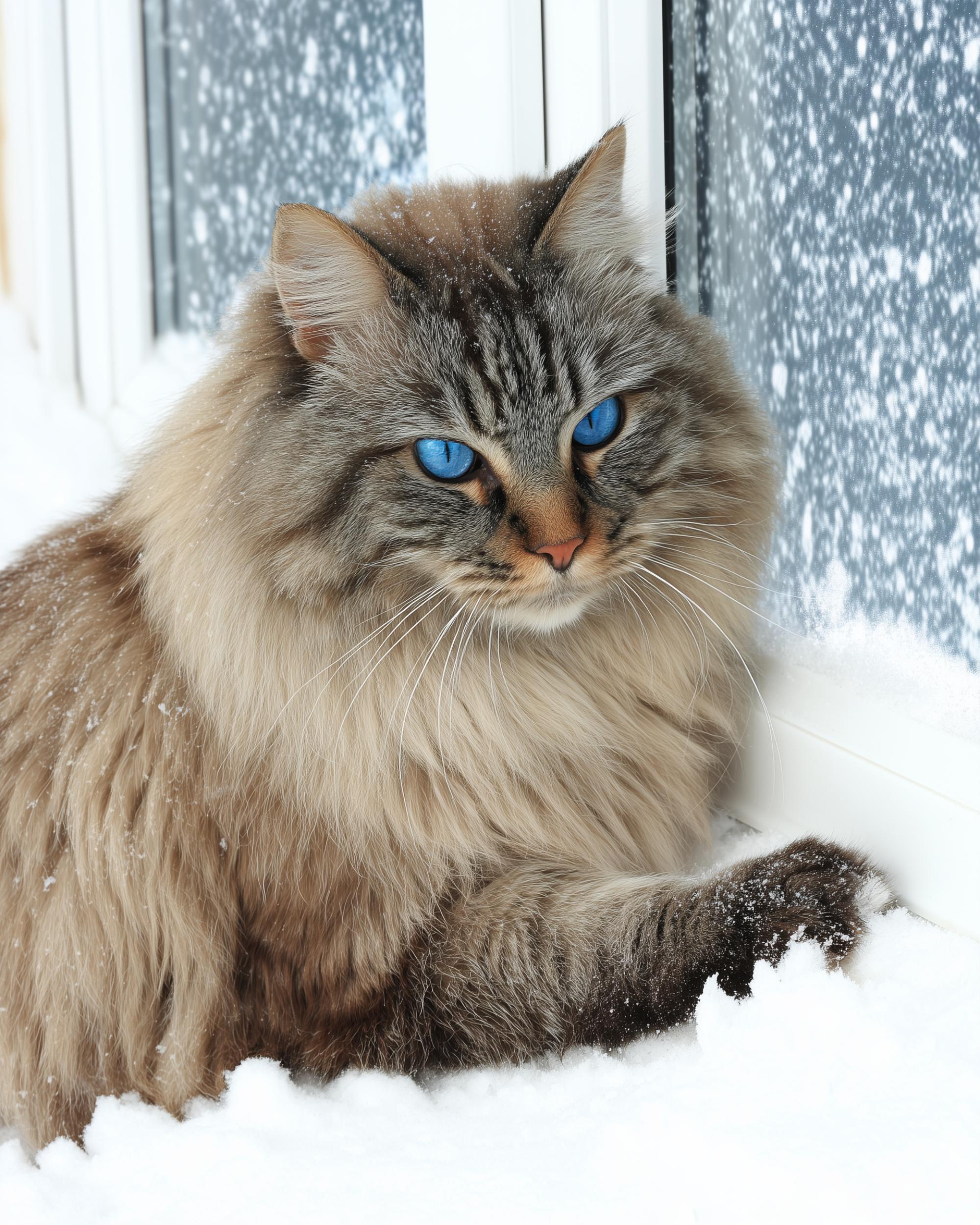
Siberian Cat Colors & Genetics: How Coat Color Really Works

Siberian cat colors are often discussed as if they define quality, rarity, or even temperament—but genetics tells a very different story. Siberians display one of the widest color and pattern ranges of any pedigreed breed, a result of their natural landrace origins rather than selective color breeding. From classic tabbies and solid colors to silvers, goldens, torties, and Neva Masquerade colorpoints, every Siberian color reflects pigment expression—not differences in health, personality, or biological value.
This guide explains how Siberian cat colors are inherited, how registry standards classify them, why coats change dramatically over time, and why many common assumptions about “rare,” “hypoallergenic,” or “better” colors persist despite clear genetic evidence. Whether you’re researching appearance, evaluating a kitten, or simply trying to understand what you’re seeing, this is a comprehensive, science-based reference designed to replace myth with clarity.
Siberian Cat Colors & Genetics — At-a-Glance Summary
| Key Topic | What Matters |
|---|---|
| Color range | Siberians come in nearly all naturally occurring feline colors and patterns |
| What color affects | Appearance only |
| What color does NOT affect | Health, temperament, lifespan, or allergen levels |
| Neva Masquerade | Colorpoint Siberian, not a separate breed |
| Color development | Changes significantly from kittenhood through 2–4 years |
| Seasonal impact | Coat color and contrast shift with seasonal coat cycles |
| “Rare” colors | Reflect breeding focus and demand, not genetic superiority |
| Genetics vs looks | Genotype (genes) matters more than phenotype (appearance) |
| Buyer takeaway | Color should be a preference, not a decision driver |
Siberian Cat Colors Quick Facts
- Siberian cats appear in nearly all naturally occurring feline colors and patterns
- Color affects appearance only — not health, temperament, or allergen levels
- Neva Masquerades are colorpoint Siberians, not a separate breed
- Coat color in Siberians changes noticeably with age and season
- “Rare” typically means less commonly bred, not genetically superior
What Defines a Siberian Cat Color?
Before discussing genetics, it’s important to understand how “color” is actually defined in Siberian cats. Much of the confusion around Siberian colors comes from mixing up appearance, pattern, and genetic modifiers as if they were the same thing. They are not.
How Registries Define Color, Pattern, and Modifiers
Major registries such as The International Cat Association and Fédération Internationale Féline separate coat description into three distinct components:
- Base color – the underlying pigment (for example black, blue, red, cream)
- Pattern – how that pigment is distributed (solid, tabby/lynx, tortie)
- Modifiers – genes that alter the visual expression (silver, golden, white spotting, colorpoint)
A single Siberian may combine all three. For example, a blue silver mackerel tabby with white is not a “type” of Siberian — it is a blue-based cat with the silver inhibitor gene, a tabby pattern, and white spotting.
Registries recognize Siberians in almost every naturally occurring color and pattern, excluding only a small number of historically non-native colors depending on registry rules. This broad acceptance reflects the breed’s natural landrace origins rather than recent artificial selection.
Why Siberians Have One of the Widest Accepted Color Ranges
Unlike many breeds that were created around a narrow visual standard, the Siberian developed as a natural population over centuries. Early breeding programs preserved this diversity instead of restricting it.
As a result:
- Siberians retained a broad genetic color pool
- Color diversity reflects population history, not designer breeding
- No single color defines the breed’s identity or quality
This is why you see Siberians ranging from classic brown tabbies to silvers, goldens, solids, torties, and colorpoints — all within the same breed framework.
Phenotype vs Genotype: Appearance Is Not the Blueprint
One of the most important distinctions in coat color genetics is the difference between phenotype and genotype.
- Phenotype is what you see: coat color, contrast, pattern clarity
- Genotype is the genetic code that produced that appearance
Two Siberians can look very different while sharing much of the same genetic foundation. Conversely, two cats that look similar may carry very different genetic combinations beneath the surface.
This distinction matters because:
- Visual appearance does not predict health
- Color does not determine temperament
- Coat shade does not correlate with allergen production
Color genes affect pigment cells, not organs, structure, or behavior.
Why Coat Texture Amplifies Color Perception in Siberians
Siberians have a dense, triple-layer coat with significant loft and texture. This coat structure changes how color is perceived compared to shorthaired or fine-coated breeds.
Because of this:
- Tabby patterns often appear bold and flowing
- Silvers show high contrast
- Goldens appear warm and luminous
- Solids may show depth and shading that looks like patterning
The coat itself enhances visual richness, which leads many buyers to assume color differences are more meaningful than they actually are.
Common Buyer Misconceptions About “Types” of Siberians
Many misunderstandings stem from applying marketing language or visual assumptions to genetics. Common misconceptions include:
- Thinking Neva Masquerades are a different breed rather than a color variety
- Assuming lighter colors shed less or produce fewer allergens
- Believing rare colors indicate better health or temperament
- Treating certain colors as “higher quality” Siberians
In reality, all Siberian cats — regardless of color — share the same foundational breed traits. Differences in outcome come from breeding decisions and line quality, not coat color.
Understanding how color is defined and inherited prevents disappointment and helps buyers evaluate Siberians based on what actually matters: health stability, temperament consistency, and long-term fit.
Siberian Cat Color Genetics — How Color Is Actually Inherited
Understanding Siberian cat colors requires separating pigment genetics from everything else people often assume color controls. Coat color results from a small, well-studied set of genes that affect pigment production and distribution only. These genes do not influence skeletal structure, organ development, temperament, or longevity.
This section explains how Siberian colors form at the genetic level and why visual diversity does not translate into biological difference.
The Base Color Genes (Eumelanin vs Pheomelanin)
All Siberian cat colors begin with one of two pigment systems. Every Siberian—regardless of final appearance—is genetically based on black pigment or red pigment.
Black-Based Pigment (Eumelanin)
Eumelanin produces:
- black
- brown (often called “seal” in colorpoint cats)
- blue (dilute black)
- chocolate
- lilac (dilute chocolate)
A Siberian with black-based genetics may appear solid black, blue, tabby, silver, golden, shaded, or colorpoint depending on additional genes layered on top of this base.
Red-Based Pigment (Pheomelanin)
Pheomelanin produces:
- red (also called flame)
- cream (dilute red)
Red pigment behaves differently from black pigment genetically. It is sex-linked, which explains why red and cream colors appear far more often in males and why tortie patterns occur almost exclusively in females.
Why Every Siberian Is Genetically Black- or Red-Based
There is no third pigment system. Every Siberian coat—no matter how complex—traces back to either eumelanin or pheomelanin. All other colors arise from dilution, pattern expression, or modifiers acting on one of these two pigments.
This is why:
- “Rare” colors are still built from the same genetic foundation
- Color diversity does not create separate genetic populations
- Appearance alone cannot indicate lineage quality or health
Dilution Gene (d/d)
The dilution gene alters how densely pigment is deposited along the hair shaft. It does not remove pigment; it spreads it out.
How Dilution Softens Pigment
When a cat inherits two copies of the dilution gene (d/d), pigment granules become more widely spaced. The result is a visually softer color.
Dilution transformations:
- Black → Blue
- Red → Cream
- Chocolate → Lilac
The underlying pigment remains the same. Only the visual intensity changes.
Why Dilution Does Not Mean “Lighter Shedding”
Dilution affects color concentration, not coat quantity or structure. A blue Siberian sheds the same amount as a black Siberian with the same coat density and grooming routine. Shedding relates to:
- coat length
- undercoat density
- seasonal cycles
—not pigment strength.
The idea that lighter colors shed less persists because pale fur appears less visible on furniture, not because less hair is produced.
Agouti Gene (Tabby Expression)
The agouti gene controls whether pigment bands appear along each hair shaft. It determines whether a coat shows pattern or appears solid.
How Agouti Controls Pattern Visibility
- Agouti on → tabby expression (striping, pattern)
- Agouti off → solid appearance
When agouti is active, hairs show alternating bands of pigment, creating tabby patterns. When inactive, pigment distributes evenly, producing a solid coat.
Why Solids Can Show Ghost Tabby as Kittens
Many solid Siberian kittens display faint striping early in life. This occurs because:
- kitten coats are thinner
- early pigment expression is uneven
- the agouti gene may partially express during development
As the adult coat grows in, true solids lose this striping. Ghost tabby does not indicate mixed pattern genetics; it reflects immature pigment expression.
True Solid vs Masked Tabby
A true solid has agouti fully suppressed. A masked tabby retains pattern genetically but appears solid due to modifiers or coat density. Visual similarity does not always equal genetic equivalence, which is why pedigree tracking matters more than appearance.
Pattern Genes
Pattern genes determine how tabby markings arrange themselves when agouti is active.
Classic Tabby
- Bold, swirling patterns
- Wide bands
- High contrast on the torso
Mackerel Tabby
- Vertical striping
- Narrow, evenly spaced lines
- Common in naturally developed populations
Spotted Tabby
- Broken striping forming spots
- Pattern clarity varies with coat density
How Coat Density Affects Pattern Expression
Siberians have exceptionally dense coats. This density can:
- blur fine striping
- soften edges of spots
- enhance contrast in silvers and goldens
Pattern genes remain the same, but the coat’s physical structure changes how clearly they appear.
Modifier Genes
Modifier genes sit on top of base color and pattern genes, altering visual outcome without changing pigment type.
Silver Inhibitor Gene
The silver gene suppresses pigment at the hair base, leaving pale roots and dark tips. This creates high contrast, especially in tabbies. Silver does not indicate rarity, health, or shedding differences.
Golden Gene
The golden modifier produces warm, luminous undercoats with darker tipping. Goldens require careful breeding to maintain clarity and warmth, which affects availability but not biological quality.
White Spotting Gene
The White spotting gene removes pigment entirely from selected areas, creating:
- mitted patterns
- bicolor patterns
- higher white distributions (registry dependent)
White is a masking effect, not a color itself.
Colorpoint Gene (cs/cs)
The colorpoint gene produces Neva Masquerades. It causes pigment to develop in cooler areas of the body, resulting in:
- darker points
- lighter torso
- blue eyes
Colorpoint expression depends on temperature sensitivity, not ancestry, health, or temperament.
Why These Genes Do Not Affect Health or Personality
Pigment genes operate in melanocytes, the cells responsible for color production. Structural genes, immune genes, neurological development, and organ formation occur on entirely separate genetic pathways.
Because of this:
- Coat color does not influence lifespan
- Pattern does not predict temperament
- Eye color does not signal genetic weakness
- “Rare” colors do not carry inherent risk
Why Myths Persist Despite Genetic Clarity
Humans associate visual difference with biological difference. This cognitive shortcut works in some species but fails in domestic cats, where color diversity exists without functional separation.
Marketing language, social media trends, and repeated misinformation reinforce these myths—even though feline genetics has explained coat inheritance clearly for decades.
In Siberians, breeding decisions, genetic diversity, and long-term line management determine outcomes. Color simply determines what you see.
Registry Recognition & Color Acceptance
Understanding how registries classify Siberian cat colors helps buyers interpret pedigrees correctly and avoid confusing administrative standards with biological reality. Registries document appearance for consistency and recordkeeping, but they do not redefine genetics. A Siberian’s color genes remain the same regardless of how a registry labels them.
TICA Color Acceptance Overview
The The International Cat Association (TICA) recognizes Siberians in nearly all naturally occurring colors and patterns, including:
- solids, tabbies, silvers, goldens, shaded and shell varieties
- tortie and torbie patterns
- white spotting (mitted, bicolor, higher white)
- colorpoint Siberians, listed as Neva Masquerade
TICA’s standard reflects the Siberian’s landrace origins and prioritizes breed type, structure, and temperament over restricting visual diversity. This broad acceptance is why many international programs register with TICA when maintaining wide color ranges.
FIFe Standards and Distinctions
The Fédération Internationale Féline (FIFe) also recognizes Siberians as a natural breed with extensive color diversity, but it classifies Neva Masquerades as a separate variety within the Siberian standard.
Key points under FIFe:
- Siberians and Neva Masquerades share the same breed foundation
- Colorpoint expression receives a distinct designation for show purposes
- Structural and health expectations remain identical
This separation exists for classification clarity, not because Nevas differ genetically or biologically from other Siberians.
CFA Differences (Where Applicable)
The Cat Fanciers’ Association (CFA) recognizes Siberians with a more limited color list compared to TICA and FIFe. Acceptance has expanded over time, but CFA historically emphasized a narrower set of traditional colors.
Important context:
- CFA limitations reflect standardization choices, not genetic exclusions
- Colors not accepted for showing may still exist genetically
- A Siberian does not become “less pure” or less healthy due to CFA classification
Buyers often misunderstand CFA restrictions as genetic judgments. They are not.
Chocolate & Lilac Acceptance Nuances
Chocolate and lilac Siberians illustrate how registry rules and genetics diverge.
- These colors require specific recessive genes
- They occur naturally but less frequently in Siberian populations
- Some registries accept them fully, others limit or exclude them from show classes
When a registry does not emphasize chocolate or lilac, it reflects historical prevalence and breed standard preferences, not health concerns or genetic incompatibility.
Availability depends on breeder focus, not biological feasibility.
Why Registry Rules Do Not Change Genetics
Registries document how a cat is described, not what genes it carries.
A Siberian remains genetically identical whether:
- a color is show-accepted or not
- a variety receives a separate name (such as Neva Masquerade)
- a registry emphasizes or de-emphasizes certain appearances
Color genes function independently of registry language. Health, temperament, and longevity depend on breeding decisions and genetic diversity, not paperwork categories.
Understanding registry distinctions prevents buyers from confusing administrative labels with biological meaning—and helps keep color discussions grounded in genetics rather than marketing.
Solid (Non-Tabby) Siberian Cat Colors
Solid Siberian cats show even pigment distribution without visible tabby striping across the body. While many solid kittens display faint markings early in life, true solids mature into coats where color appears uniform and continuous. The Siberian’s dense, triple-layer coat gives solid colors unusual depth, softness, and dimensionality compared to shorthaired breeds.
Because coat density, seasonal cycles, and age strongly influence appearance, solid Siberians often change more visibly over time than buyers expect.
Black Siberian
Appearance and Coat Depth
Black Siberians display rich, deep pigmentation that can range from jet black to charcoal depending on coat condition and lighting. The breed’s thick guard hairs and dense undercoat create visual depth, often making the coat appear almost iridescent in motion. A well-maintained black Siberian shows a glossy finish rather than a flat matte tone.
Sun Bleaching Effects
Black pigment is particularly sensitive to ultraviolet light. Sun exposure can cause visible rusting or brownish highlights, especially along the back and shoulders. This does not indicate poor genetics or coat quality. Seasonal shedding and reduced sun exposure often restore darker coloration as new coat growth replaces bleached hairs.
Kitten vs Adult Color
Black Siberian kittens frequently show ghost tabby striping during early development. These faint markings fade as the adult coat thickens and pigment expression stabilizes. Full adult depth typically develops between two and four years of age, with seasonal fluctuation continuing throughout life.
Blue Siberian
Dilution Genetics
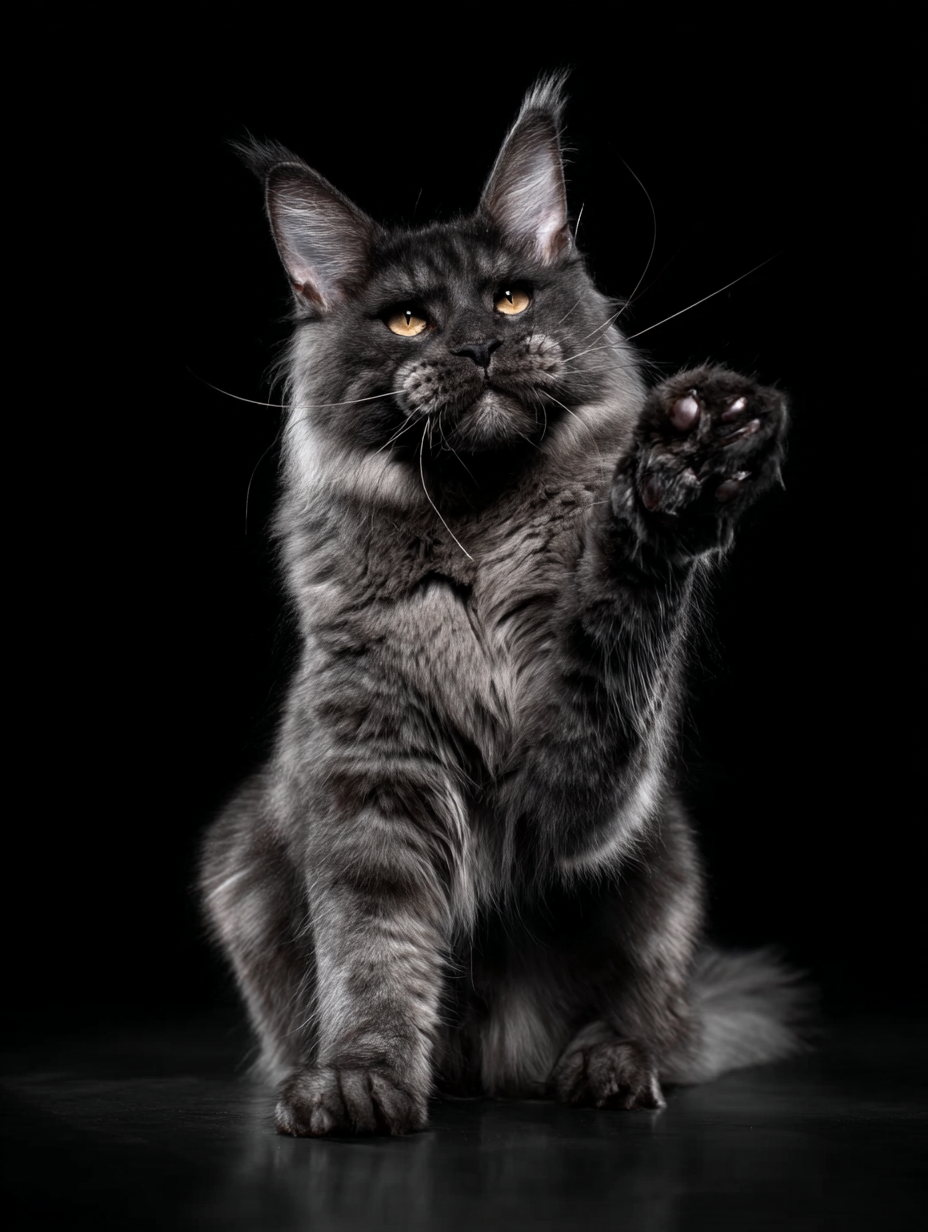
Blue Siberians carry the dilution gene acting on a black base. This gene spreads pigment granules along the hair shaft, producing a soft slate-gray appearance rather than true black. Genetically, blue cats remain black-based.
Why Blue Looks Different in Photos
Photography often misrepresents blue Siberians. Camera exposure and indoor lighting can wash out pigment, making coats appear pale or silvery. In person, blue Siberians usually show more depth and contrast, especially in natural light.
Seasonal Tone Changes
Blue coats frequently deepen during winter coat growth and lighten during seasonal shedding. Undercoat density plays a large role in perceived shade, making blue one of the most visually variable solid colors across the year.
White Siberian
Genetic Masking Explained
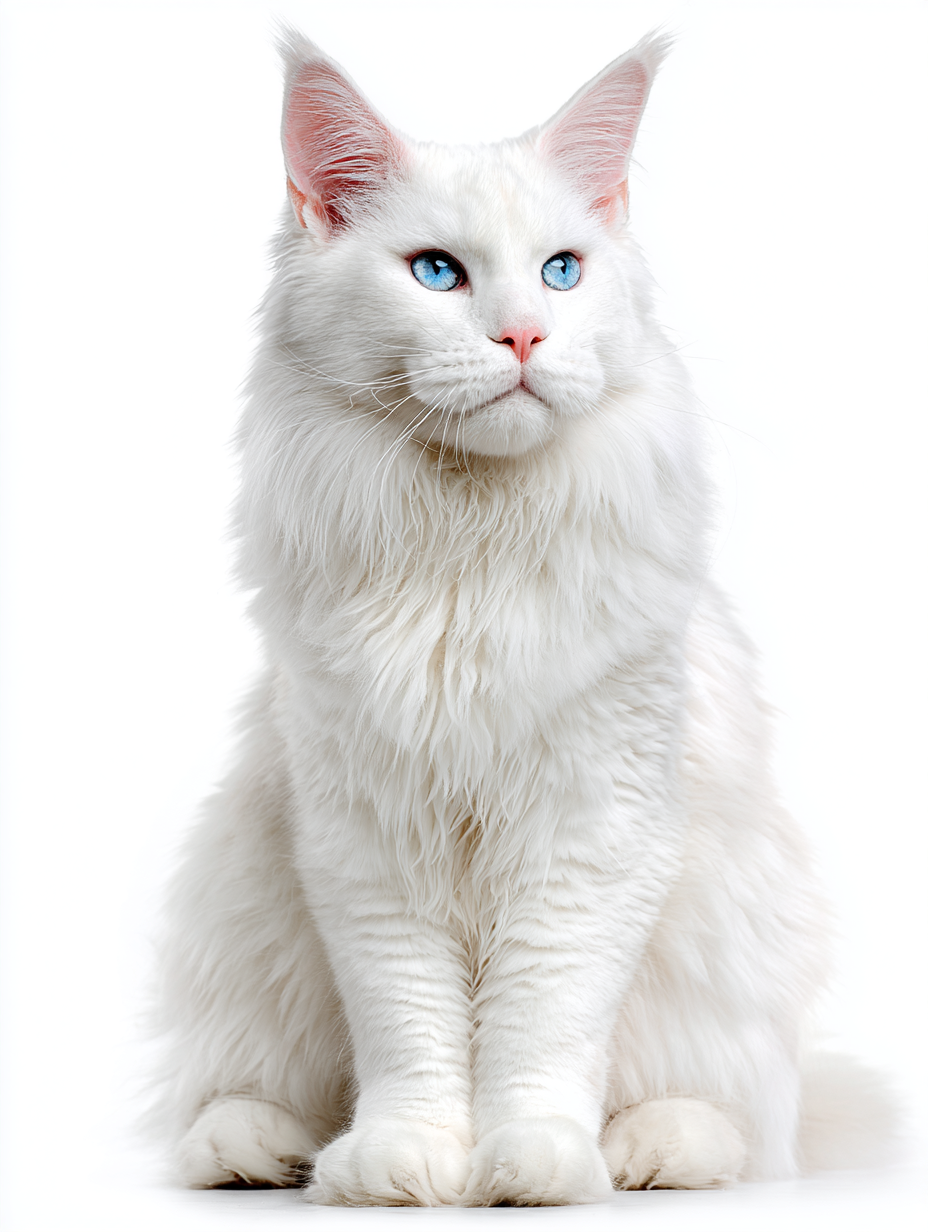
White Siberians are genetically colored cats whose pigment is fully masked by the dominant white gene. Beneath the white coat lies a black-based or red-based genetic color that cannot be determined by appearance alone.
Eye Color Possibilities
White Siberians may have blue, gold, green, or odd-colored eyes. Eye color reflects separate genetic pathways from coat pigment. Blue eyes in white Siberians do not indicate colorpoint genetics.
Health Myths Clarified
White Siberians are not inherently less healthy. Deafness concerns sometimes associated with white cats occur inconsistently and are not a defining trait of the breed. Responsible breeding practices focus on health and temperament, not coat color.
Red (Flame) Siberian
Sex-Linked Inheritance
Red Siberians express pheomelanin pigment controlled by genes located on the X chromosome. Because males have only one X chromosome, red coats appear far more frequently in males. Female red Siberians require two red-carrying X chromosomes and remain uncommon.
Coat Intensity Changes
Red pigment often intensifies with age. Kittens may appear pale peach or light orange, developing deeper warmth as the coat matures. Seasonal coat changes influence saturation, with winter coats typically appearing richer.
Red coats show texture particularly well, giving flame Siberians a plush, luminous appearance.
Cream Siberian
Dilute Red Explanation
Cream Siberians represent the diluted form of red. The dilution gene softens orange pigment into pale apricot or ivory tones. Genetically, cream cats remain red-based.
Aging and Warmth Shift
Cream coats often start very light in kittens and gradually warm over time. Adult coats retain softness rather than high contrast. Seasonal shedding can temporarily lighten or darken the coat depending on undercoat density.
Cream Siberians frequently show subtle shading rather than uniform color blocks, especially across the shoulders and flanks.
Chocolate Siberian
Genetic Requirements
Chocolate Siberians require both parents to carry the recessive chocolate gene. This gene modifies black pigment into warm milk-chocolate tones. Because the gene is recessive, chocolate kittens appear only when carefully planned pairings occur.
Registry Limitations
Some registries fully accept chocolate Siberians, while others limit or exclude them from show classes. These restrictions reflect historical standards rather than genetic incompatibility.
Breeding Challenges
Maintaining correct chocolate coloration without muddy tones requires careful selection. Chocolate pigment interacts strongly with coat density and lighting, making consistent expression more difficult than traditional black or blue.
Lilac Siberian
Dilute Chocolate Genetics
Lilac Siberians result from the dilution gene acting on chocolate pigment. This produces pale gray-pink or lavender tones with low contrast. Lilac remains one of the softest-looking solid colors.
Why Contrast Remains Soft
Lilac pigment distributes lightly along the hair shaft, creating an airy, pastel effect. Even with maturity, contrast stays gentle. Seasonal coat growth influences tone subtly rather than dramatically.
Lilac Siberians appeal to buyers drawn to understated elegance, but their rarity reflects genetic complexity and breeder focus—not superior quality.
Solid Siberian colors demonstrate how genetic simplicity combines with coat complexity to produce wide visual variation. Each color develops fully only with time, season, and proper coat care—reinforcing why patience matters when evaluating young Siberians.
Tabby Siberian Cat Colors
Tabby is the most common and genetically stable pattern in Siberian cats, and it’s also the pattern that generates the most buyer questions. Many people assume “tabby” is a color on its own, but tabby actually describes how pigment is arranged, not which pigment is present. In Siberians, tabby patterns often look especially bold due to the breed’s dense coat, heavy ruff, and flowing body structure.
Because tabby expression changes with age, coat cycle, and lighting, this pattern is frequently misunderstood—particularly in kittens.
Brown Tabby Siberian
Most Common Pattern
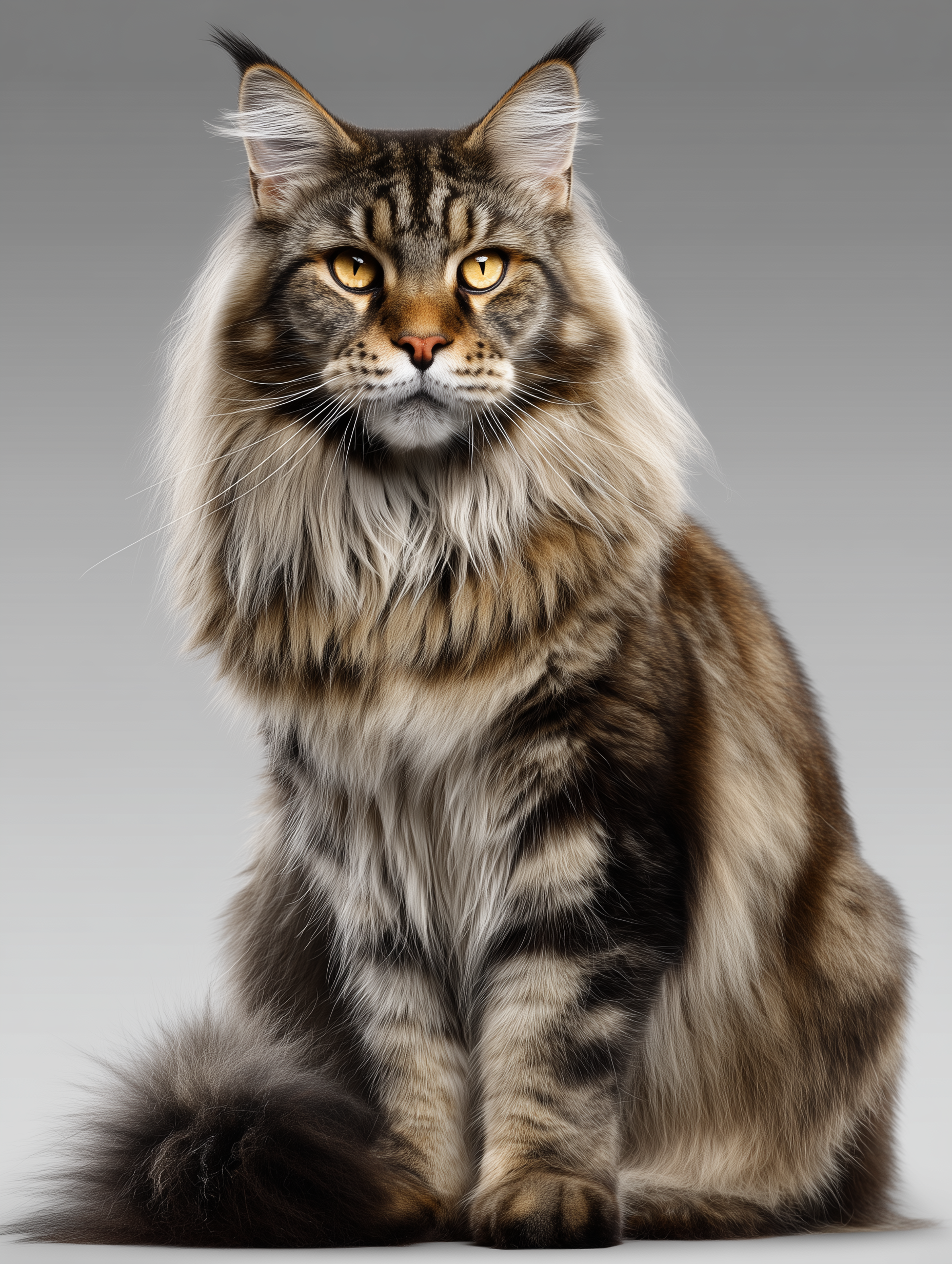
Brown tabby is the traditional and most frequently seen Siberian coloration. Genetically, this is a black-based tabby with warm brown background tones and black striping. Its prevalence reflects the Siberian’s natural landrace origins rather than selective breeding trends.
Coat Warmth and Contrast
Brown tabby Siberians often show a rich mix of warm browns, golds, and blacks. The thick undercoat adds depth, making patterns appear layered rather than flat. Seasonal coat changes can intensify warmth in winter and soften contrast during summer shedding.
Brown tabbies frequently mature into highly expressive adults, with bold facial markings, strong leg barring, and full tail rings that become more pronounced over time.
Blue Tabby Siberian
Blue tabby Siberians carry the dilution gene acting on a black tabby base. This transforms black striping into slate gray and warm brown backgrounds into cool gray-beige tones.
Blue tabbies often raise questions such as:
- Are they rarer than brown tabbies?
No. Blue tabbies depend on dilution genetics, not rarity. - Do they shed less?
No. Shedding depends on coat density and season, not color.
Blue tabby patterns may appear softer or less contrasted in photos, but in person they often show elegant striping with a misty, layered appearance.
Red Tabby Siberian
Red tabbies display pheomelanin pigment arranged in tabby striping. Because red pigment is sex-linked, red tabby Siberians are far more common in males.
Common questions include:
- Why do red tabbies look less striped?
Red pigment naturally produces lower contrast, so striping appears more subtle. - Do red tabbies get darker with age?
Often, yes. Coat warmth usually deepens as the adult coat develops.
Red tabby Siberians typically show strong facial markings and leg barring, even when body striping looks softer.
Cream Tabby Siberian
Cream tabbies represent the diluted form of red tabbies. Their striping appears pale peach or ivory against a soft cream background.
Because contrast is low, buyers often ask:
- Is this a solid cat?
No. Cream tabbies are fully patterned; the dilution gene simply softens visibility. - Will the pattern disappear?
No. Pattern remains genetically present, though it may look faint.
Cream tabbies often warm slightly with age but retain an understated, pastel appearance throughout life.
Tabby Pattern Types Explained
Tabby patterns describe how stripes flow across the body, not color.
Classic Tabby
- Bold, swirling patterns
- Broad bands on the torso
- “Bullseye” or marbled look on the sides
Classic tabbies often appear more dramatic as adults when coat density increases.
Mackerel Tabby
- Vertical striping
- Narrow, evenly spaced lines
- The most common pattern in naturally occurring populations
Mackerel striping may soften in Siberians due to coat thickness but remains genetically present.
Spotted Tabby
- Broken striping forming spots
- Pattern clarity varies widely
- Less common but naturally occurring
In Siberians, spotted patterns sometimes blur into rosettes or elongated spots due to coat length.
Facial Markings and Body Flow
Regardless of pattern type, Siberian tabbies almost always retain:
- an “M” on the forehead
- eyeliner-like facial striping
- leg barring
- tail rings
These markings often stay visible even when body pattern softens.
Ghost Tabby vs True Tabby
This distinction causes more confusion than almost any other color topic.
Ghost Tabby
- Appears in solid-colored kittens
- Faint striping visible early in life
- Fades as adult coat matures
Ghost tabby does not mean the cat is genetically tabby.
True Tabby
- Pattern remains visible throughout life
- Striping persists through seasonal coats
- Controlled by the agouti gene
Many solid Siberian kittens look tabby at first, leading buyers to believe coat color “changed.” In reality, pigment expression stabilized as the cat matured.
Why Tabby Siberians Change So Much Over Time
Tabby Siberians often look dramatically different between kittenhood and adulthood because:
- adult coats are much denser
- pigment settles over multiple growth cycles
- seasonal shedding alters contrast
- lighting and environment affect perception
This variability explains why tabby Siberians generate so many questions—and why early photos rarely reflect the final adult appearance.
Tabby Siberians represent the genetic backbone of the breed. Their patterns are natural, stable, and expressive, shaped more by coat structure and time than by rarity or trend.
Silver Siberian Cat Colors
Silver Siberian cats are among the most misunderstood and misidentified color groups in the breed. Many buyers use “silver” as a visual description without understanding what the term means genetically, which leads to confusion around smoke coats, pale undercoats, and even sun-faded colors. True silver Siberians follow a very specific genetic mechanism that affects how pigment distributes along each hair shaft.
Because silver creates dramatic contrast and photographs exceptionally well, these colors often attract strong interest—but visual appeal should not be mistaken for rarity, health differences, or special temperament traits.
What “Silver” Means Genetically
A Siberian is silver when it carries the silver inhibitor gene. This gene suppresses pigment at the base of each hair while allowing full color at the tip.
Genetically:
- The base of the hair grows very light (often white or pale gray)
- The tip of the hair retains full pigment
- Pattern remains genetically tabby
Silver does not remove color. It redistributes it. A silver Siberian is always a tabby at the genetic level, even when striping looks soft or partially obscured.
Silver vs Smoke vs Light Undercoat
This distinction causes frequent mislabeling.
True Silver
- Requires the silver inhibitor gene
- Always tabby-based
- Light roots with dark tipping
- Pattern visible at least in parts of the coat
Smoke
- Solid-colored cat with silver roots
- Pattern appears only when coat is parted or in motion
- Not tabby-based genetically
Light Undercoat
- No silver gene present
- Pale undercoat caused by coat density or seasonal growth
- Roots are not white, just lighter
Many cats marketed as “silver” are actually smokes or non-silver tabbies with lighter undercoats. Pedigree documentation—not photos—confirms silver genetics.
Why Silver Siberians Appear Higher Contrast
Silver Siberians show enhanced contrast because:
- The pale hair base amplifies dark striping
- Dense coats push pigment to the surface
- Seasonal coats exaggerate light-dark transitions
In winter, silver coats often appear bolder and more dramatic. During seasonal sheds, contrast can temporarily soften as undercoat density changes.
This visual effect creates the impression of rarity or special quality, but contrast alone does not indicate genetic superiority.
Black Silver Tabby Siberian
Black silver tabby Siberians combine a black-based tabby pattern with the silver inhibitor gene. The result is a striking coat with:
- Bright silver background
- Black striping
- Strong facial markings
- Clear tail rings and leg barring
This is the most common silver variation in the breed. Pattern clarity often improves with age as adult coat texture stabilizes. Many black silver tabbies develop extremely bold facial expression even when body striping softens slightly with coat length.
Blue Silver Tabby Siberian
Blue silver tabbies carry both the dilution gene and the silver inhibitor gene on a black tabby base. Their striping appears slate gray against a pale silver background.
Common questions include:
- Are blue silvers rarer than black silvers?
No. Availability depends on breeder focus, not rarity. - Why do they look pale in photos?
Camera exposure often washes out gray pigment.
In person, blue silver tabbies usually show layered contrast with a cool, refined appearance that changes noticeably across seasons.
Red Silver Tabby Siberian
Red silver tabbies combine sex-linked red pigment with the silver inhibitor gene. The result is a pale silver background with warm red or orange striping.
Because red pigment naturally produces lower contrast, red silver tabbies often appear softer than black or blue silvers. Facial markings usually remain clear even when body striping looks subtle.
Red silver Siberians are frequently mistaken for cream silver cats due to lighting and coat cycle variation.
Cream Silver Tabby Siberian
Cream silver tabbies represent the diluted form of red silver. They display:
- Very pale silver backgrounds
- Soft peach or ivory striping
- Low contrast overall appearance
These cats generate frequent confusion with non-silver creams. The key difference lies in the hair root: true cream silvers show distinctly pale roots due to the inhibitor gene.
Pattern visibility often improves slightly as the adult coat matures, though cream silvers remain among the most understated silver variations.
Why Silver Siberians Are So Often Misidentified
Silver coats change dramatically with:
- seasonal shedding
- coat length development
- lighting conditions
- grooming frequency
A Siberian may look “silver” in winter and appear non-silver after shedding. This variability fuels mislabeling, especially in kitten photos.
True silver status requires genetic confirmation through pedigree or breeding records—not visual assumption.
Silver Siberian cats offer visual drama created by pigment distribution, not by unique genetics beyond the inhibitor gene. Understanding how silver works prevents confusion, overpricing, and unrealistic expectations while allowing buyers to appreciate the coat for what it truly represents: a naturally occurring variation within a genetically unified breed.
Golden & Shaded Siberian Colors
Golden and shaded Siberian cats sit at the intersection of genetics, coat structure, and visual perception, which is why they generate so much discussion—and misunderstanding. These colors are often labeled “luxury” due to demand and difficulty of consistent expression, not because they represent a separate genetic class or higher biological quality.
What defines gold in Siberians is warmth at the hair base combined with controlled tipping, producing a luminous effect that changes with light, season, and coat cycle.
Golden Tabby Siberian
Golden tabby Siberians display a warm, honey-to-apricot background color with darker tabby striping layered on top. Unlike brown tabbies, which sit on cooler or neutral bases, golden tabbies show clear warmth even in low light.
Key characteristics:
- Warm golden undercoat visible between striping
- Darker brown or black tabby markings
- Strong facial patterning, including the forehead “M”
- Coat warmth that intensifies with maturity
Golden tabbies often appear especially vibrant in winter coats when undercoat density increases. In summer, contrast can soften, leading some buyers to think the color has “faded.” In reality, the genetic structure remains unchanged—only coat density has shifted.
Golden tabbies are not genetically rarer than other tabbies, but consistent warmth without muddiness requires careful line selection, which limits availability.
Golden Shaded Siberian
The Golden shaded Siberians differ from golden tabbies in how pigment distributes along the hair shaft. Instead of bold striping, shaded golds show light golden bases with darker tipping concentrated toward the ends of the hairs.
This creates:
- A softly glowing appearance
- Minimal visible striping
- Strong contrast between body and tipping
- Dramatic facial expression without heavy body pattern
Golden shaded coats rely heavily on coat quality. Dense coats enhance shading clarity, while thinner coats can blur the effect. This sensitivity makes shaded golds challenging to produce consistently.
Buyers often mistake golden shaded Siberians for shell varieties or assume they are “lighter versions” of tabbies. Genetically, they occupy a distinct position based on tipping percentage—not pigment type.
Golden Shell (Chinchilla) Siberian
Golden shell Siberians represent the most extreme expression of golden shading. Only the very tips of the hairs carry pigment, leaving the majority of the coat a pale, warm cream-gold.
Characteristics include:
- Minimal tipping (often under 1/8 of hair length)
- Very light body color
- Dramatic eye and facial contrast
- Highly reflective coat appearance
Golden shells demand precise genetic balance. Too much pigment results in shaded gold; too little can wash out warmth entirely. Because this balance is difficult to achieve reliably, golden shells appear less frequently.
Their scarcity reflects breeding complexity, not superiority or enhanced health.
Genetics Behind Warm Undercoats
Golden coloration relies on modifier genes that alter pigment distribution rather than pigment type. These genes interact with:
- base black pigment
- agouti patterning
- coat length and density
Warmth appears because pigment concentrates toward hair tips while the base remains light and warm-toned. The Siberian’s thick undercoat amplifies this effect, creating depth and glow.
Why Golds Are Difficult to Breed Consistently
Golden colors require:
- precise control of tipping
- avoidance of muddiness or over-shading
- stable coat texture across generations
Even well-planned pairings can produce a range of outcomes within a single litter. This unpredictability limits how many consistently correct golds any program can produce.
Why Gold Does Not Mean Healthier
Golden Siberians do not carry different health genes than other colors. The same considerations—genetic diversity, cardiovascular monitoring, and long-term planning—determine outcomes.
Gold reflects appearance, not biological advantage.
Tortie & Torbie Siberian Cats
Tortie and torbie Siberians demonstrate the most visually complex and genetically fascinating color expressions in the breed. These coats combine red-based and black-based pigments into mosaic patterns that are never repeated.
Why Torties Are Almost Always Female
Tortie coloration depends on sex-linked genetics. The red pigment gene sits on the X chromosome. Female cats have two X chromosomes, allowing both red and black pigment to express in different cells.
Males, with only one X chromosome, almost never display tortie coloration unless a rare chromosomal anomaly occurs. For practical purposes, tortie Siberians are female.
Black Tortie Siberian
Black torties combine black pigment with red patches distributed irregularly across the coat. The Siberian’s dense coat creates layered blending rather than sharp color blocks.
Black torties often:
- show high contrast
- display dramatic facial asymmetry
- deepen in color with age
No two black torties share the same pattern, even within the same litter.
Blue Tortie Siberian
Blue torties express diluted black pigment combined with red. The result is slate-gray blended with warm cream patches.
These coats appear softer than black torties, with:
- gentler contrast
- pastel blending
- subtle seasonal shifts
Blue torties often gain clarity as adult coats mature and pigment settles.
Chocolate Tortie Siberian
Chocolate torties require the recessive chocolate gene in addition to tortie genetics. They show warm brown pigment mixed with red.
These coats are uncommon due to:
- genetic complexity
- registry emphasis
- limited breeding focus
Chocolate torties often display rich warmth rather than stark contrast.
Lilac Tortie Siberian
Lilac torties combine diluted chocolate pigment with red. Their appearance remains soft and pastel, with gentle transitions rather than sharp divisions.
Contrast stays muted throughout life, making lilac torties one of the most understated tortie variations.
Torbie (Tortie Tabby) Siberian
Torbie Siberians express both tortie coloring and tabby patterning. This creates:
- striping layered over color patches
- complex facial markings
- flowing body patterns that shift with coat cycles
Torbie patterns evolve dramatically from kittenhood to adulthood as both tabby clarity and color distribution mature.
Why No Two Torties Look Alike
Tortie patterning results from random X-chromosome inactivation during embryonic development. This process assigns pigment expression cell by cell, producing unique mosaics.
Pattern placement cannot be predicted, replicated, or standardized.
Pattern Unpredictability Explained
Unlike tabby or solid colors, tortie patterning:
- does not follow symmetrical rules
- cannot be “designed”
- varies widely even between siblings
This unpredictability contributes to their appeal while reinforcing that appearance alone should never guide expectations about temperament or health.
White Pattern Variations in Siberians
White patterning in Siberian cats refers to where pigment is absent, not to a color of its own. The white spotting gene acts as an overlay on any base color, pattern, or modifier. A Siberian can be black, tabby, silver, golden, tortie, or colorpoint with or without white, and the presence of white does not change genetics beyond pigment distribution.
White patterning often causes confusion because it is highly visible, visually dramatic, and frequently described inaccurately in listings. Understanding how white works genetically helps separate appearance from meaning.
No White
A Siberian with no white shows uninterrupted expression of its base color and pattern across the entire coat. This does not mean the cat lacks the white spotting gene universally; it means the gene is not expressed.
Key points:
- No white is the default expression
- Pattern and color clarity appear uninterrupted
- Facial markings, leg barring, and tail rings show fully when present
Many buyers assume cats without white are more “traditional” or “pure.” In reality, white spotting has existed naturally within Siberian populations for centuries. Presence or absence of white does not indicate lineage quality or authenticity.
Mitted Siberians
Mitted Siberians show white restricted to specific areas, most commonly:
- paws (mittens)
- chin
- belly and inner legs
The rest of the coat displays the cat’s base color and pattern.
White Paws, Chin, and Belly
Mitted patterning often creates a balanced, soft look. The white areas usually appear clean and clearly defined, especially on darker base colors where contrast is strongest.
The amount of white can vary slightly even within the same litter. Some cats show crisp mittens; others show irregular edges or slightly extended white.
Symmetry Myths
Symmetry is one of the most persistent myths around mitted Siberians. Many buyers expect:
- identical white socks on all feet
- perfectly centered chin markings
- mirrored distribution
Genetically, white spotting does not guarantee symmetry. Pigment suppression occurs during early embryonic development and follows no strict rules. Minor asymmetry is normal and does not indicate poor breeding or incorrect patterning.
Bicolor Siberians
Bicolor Siberians display larger areas of white, typically including:
- white legs
- white chest and belly
- white facial markings
The classic bicolor look includes an inverted white “V” on the face, though exact shape and width vary.
Inverted V Explanation
The inverted V forms when pigment suppression affects the central facial area while leaving color on the outer face and ears. This pattern creates strong visual framing around the eyes and muzzle.
Not all bicolors show a textbook V. Some display partial or uneven facial white. This variation is expected and genetically normal.
Distribution Standards
Registries define bicolor broadly rather than narrowly. What matters is:
- clear contrast between white and colored areas
- consistent expression across the body
- overall balance rather than exact placement
White distribution does not follow a hierarchy. A bicolor Siberian is not more or less valuable than a mitted or no-white cat from the same breeding.
Harlequin & Van Patterns (Registry Dependent)
Harlequin and van patterns represent higher degrees of white spotting.
- Harlequin: predominantly white body with colored patches
- Van: white body with color restricted mainly to head and tail
These patterns occur naturally but appear less frequently because:
- they require stronger expression of the white spotting gene
- many breeding programs do not actively select for extreme white
Acceptance varies by registry and show standard. Some registries allow these patterns fully; others classify them separately or limit show eligibility.
Regardless of registry treatment, these cats remain genetically Siberian with the same health and temperament expectations.
Why White Does Not Affect Rarity Genetically
White patterning does not introduce new genetic material. It simply suppresses pigment in selected areas.
Important clarifications:
- White does not change base color genetics
- White does not affect shedding, coat density, or allergens
- White does not correlate with health or temperament
- “High white” is not biologically rarer, only less commonly selected
Availability depends on breeder preference, not genetic superiority.
White pattern variations add visual diversity to the Siberian breed, but they do not create categories of value or quality. Like all coat traits in Siberians, white is an aesthetic outcome layered on a shared genetic foundation.
Neva Masquerade (Colorpoint Siberian) Colors
Neva Masquerades represent the colorpoint expression of the Siberian cat, not a separate breed. Every Neva shares the same genetic foundation, structure, and temperament as other Siberians; the difference lies entirely in how pigment expresses across the coat. Because colorpoint genetics behave differently from non-pointed colors, Nevas deserve a dedicated explanation—especially given how often they’re misunderstood.
For a full, color-by-color deep dive with visuals and registry naming conventions, see our Neva Masquerade Cat Colors: Complete Guide
What Makes a Neva a Neva
Colorpoint Gene (cs/cs)
Neva Masquerades carry two copies of the colorpoint gene (cs/cs). This gene is temperature-sensitive, meaning pigment develops more strongly in cooler areas of the body and remains lighter in warmer areas. The result is a pale body with darker “points” on the face (mask), ears, legs, and tail.
This gene affects pigment placement only. It does not alter:
- body size or bone structure
- coat density
- temperament
- health or longevity
Blue Eyes Explained
Blue eyes in Nevas result directly from the colorpoint gene’s effect on pigment deposition in the iris. The gene reduces melanin in the eyes, producing blue coloration. This is not related to eye health, vision problems, or Siamese ancestry.
Temperature-Sensitive Pigment
Because pigment expression depends on temperature:
- Neva kittens are born very light
- points darken gradually over months and years
- the body often darkens with age
- seasonal changes can shift contrast noticeably
Nevas living in cooler climates frequently develop deeper point color earlier than those in warmer environments.
Solid Point Neva Colors
Solid point Nevas have no tabby striping in their points. The mask, ears, legs, and tail show smooth, even pigment.
Seal Point
Seal points display deep brown to near-black points on a warm cream body. This is the darkest and most traditional Neva color. Seal points often darken significantly over the first 2–4 years.
Blue Point
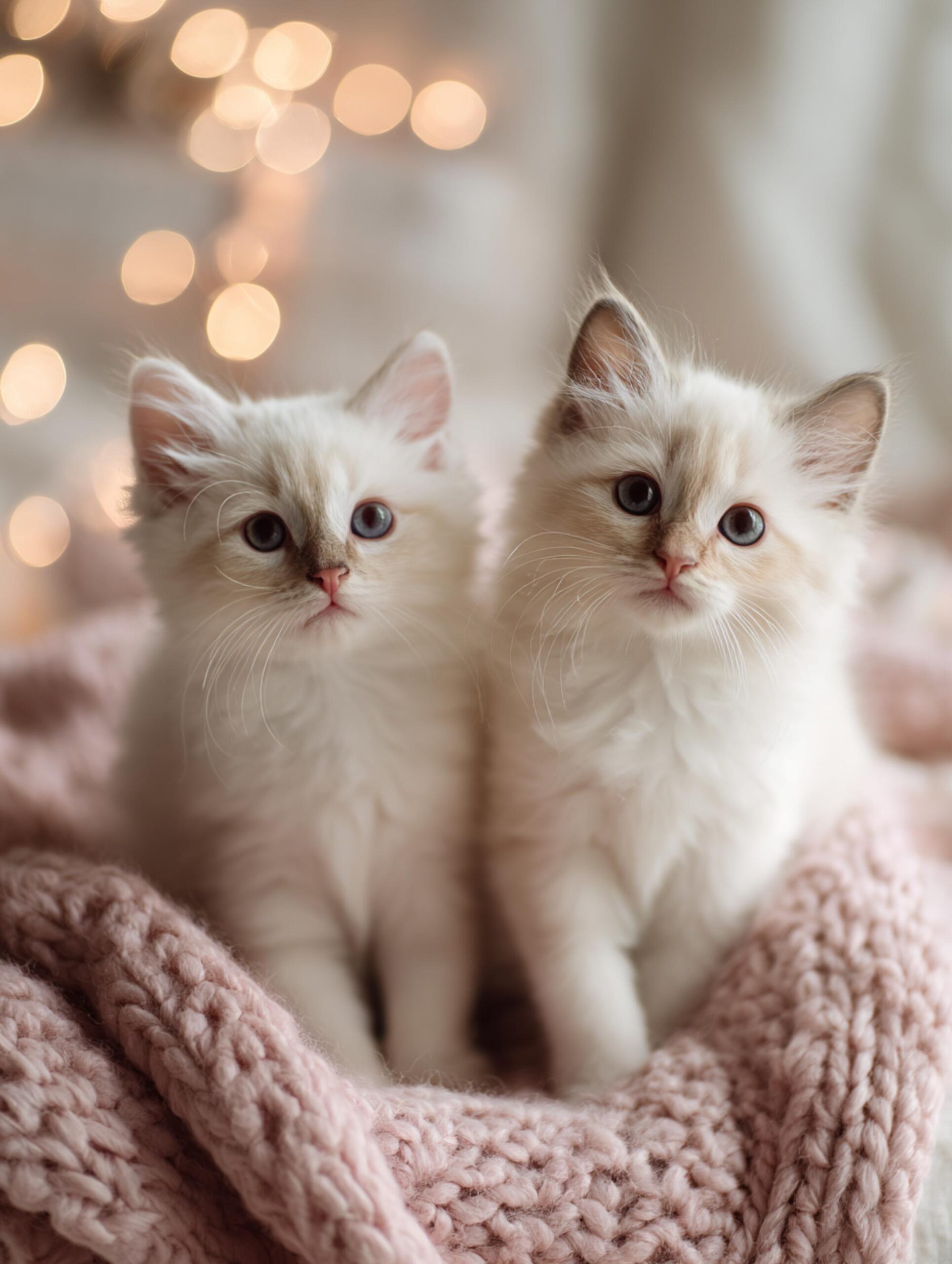
Blue points are the diluted form of seal. Points appear slate gray rather than brown. Contrast often looks softer, especially in kittens, but deepens with maturity and winter coat growth.
Red (Flame) Point
Red points show warm orange to copper-toned points. Because red pigment is sex-linked, red point Nevas are more common in males. Contrast tends to remain softer than in seal or blue points.
Cream Point
Cream points are the dilute form of red. They produce pale peach or ivory points with very gentle contrast. Cream point Nevas often appear extremely light early in life and warm gradually with age.
Chocolate & Lilac Points
Chocolate points show warm milk-chocolate tones, while lilac points display pale gray-pink hues. These colors require recessive genetics and appear less frequently. Registry acceptance varies, but genetically they follow the same colorpoint rules.
Lynx Point Nevas
Lynx point Nevas combine colorpoint genetics with tabby patterning. Striping appears within the points, adding complexity and facial detail.
Seal Lynx Point
Seal lynx points show dark brown striping over lighter brown points. Facial markings, including the forehead “M,” remain visible throughout life.
Blue Lynx Point
Blue lynx points display slate-gray striping with a cooler, softer overall look. Pattern clarity often improves as the adult coat develops.
Red Lynx Point
Red lynx points combine warm red pigment with tabby striping. Contrast appears subtle, but facial and leg markings usually remain distinct.
Cream Lynx Point
Cream lynx points show pale striping that can be difficult to see in young kittens. Pattern becomes clearer with maturity, though overall appearance stays gentle.
Lynx points frequently generate buyer questions because pattern visibility changes dramatically over time.
Tortie Point Nevas
Tortie point Nevas combine colorpoint expression with tortie genetics, producing a mosaic of red-based and black-based pigment within the points. As with all torties, these cats are almost exclusively female.
Characteristics include:
- mixed patchwork within mask, ears, legs, and tail
- uneven distribution of color
- dramatic variation between individuals
No two tortie point Nevas look alike, and pattern placement cannot be predicted in advance.
Silver Lynx Point Nevas
Silver lynx point Nevas carry the silver inhibitor gene in addition to lynx point genetics. This produces:
- pale silver hair bases
- darker striping at the tips
- high contrast within the points
Silver lynx Nevas are often misidentified from photos alone. True silver expression requires genetic confirmation through pedigree, not visual assumption.
Mitted & Bicolor Nevas
White spotting overlays any Neva color.
Mitted Nevas
Mitted Nevas show white paws, chin, and often a white belly. Symmetry varies and is not guaranteed.
Bicolor Nevas
Bicolor Nevas display larger white areas, often including an inverted white “V” on the face. White distribution follows the same genetic rules as in non-pointed Siberians.
White patterning affects appearance only. It does not change rarity genetically, nor does it influence health or temperament.
Why Neva Colors Change More Than Other Siberians
Neva Masquerades often change more dramatically than non-pointed Siberians because:
- colorpoint pigment develops slowly
- adult coat density alters contrast
- seasonal temperature affects expression
- full coloration may take several years
This explains why early kitten photos rarely reflect adult appearance and why patience is essential when evaluating Neva color.
Neva Masquerade colors showcase the same genetic diversity found across Siberians, expressed through the unique lens of colorpoint genetics. Understanding how these colors work prevents confusion, avoids unrealistic expectations, and reinforces the central truth: Nevas are Siberians first—color comes second.
How Siberian Cat Colors Change Over Time
One of the most common sources of confusion—and disappointment—for buyers comes from expecting a Siberian kitten’s color to remain static. Siberian coats do not behave that way. Color in this breed develops slowly, responds to environment, and shifts across multiple growth cycles. Understanding this timeline prevents unrealistic expectations and explains why early photos rarely predict adult appearance.
Kitten Coat vs Adult Coat
Siberian kittens are born with immature coats. The early coat is:
- shorter
- finer in texture
- lower in density
- uneven in pigment distribution
Because pigment expression is still stabilizing, kittens often look:
- lighter than they will as adults
- lower contrast
- blurrier in pattern
- inconsistent across the body
This is especially noticeable in:
- tabbies (striping may look faint or muddy)
- solids (ghost tabby may appear)
- silvers (contrast may be underdeveloped)
- Neva Masquerades (points may be barely visible)
As the adult coat develops, pigment settles, undercoat density increases, and visual clarity improves.
The 2–4 Year Maturation Window
Siberians mature slowly compared to many other breeds. Full color development typically unfolds over two to four years, not weeks or months.
During this window:
- patterns sharpen or soften depending on coat density
- contrast deepens in silvers and points
- warmth increases in goldens and reds
- solids gain depth and uniformity
This long timeline explains why a one-year-old Siberian often looks dramatically different from the same cat at three or four years old. Early judgments about “final color” are almost always premature.
Seasonal Coat Blow Effects
Siberians experience pronounced seasonal coat cycles.
- Winter coats are thicker, denser, and often darker or more contrasted
- Summer coats are lighter, shorter, and may appear washed out
Seasonal shedding changes:
- how much undercoat is visible
- how pigment reflects light
- how bold patterns appear
Silver cats may look intensely contrasted in winter and far subtler in summer. Goldens may glow warmly in winter and look paler after shedding. Neva Masquerades often darken in colder months and lighten again with seasonal warmth.
None of these changes indicate genetic instability. They reflect normal coat biology.
Why Photos Mislead Buyers
Photos freeze a single moment in a moving developmental process. They also distort color through:
- lighting conditions
- camera exposure
- background contrast
- coat cycle timing
A kitten photographed at 10 weeks under indoor lighting may look nothing like the same cat at 3 years old in natural light. This is why color-based purchasing decisions often lead to surprise later.
Responsible evaluation focuses on:
- genetic background
- breeder consistency
- realistic timelines
—not static images.
Do Siberian Cat Colors Affect Personality, Health, or Allergies?
Clear Scientific Answer: No
Coat color in Siberian cats affects appearance only. It does not influence:
- temperament
- intelligence
- affection level
- health outcomes
- lifespan
- allergen production
Pigment genes operate in melanocytes, which are responsible for color. Behavioral traits, immune function, and organ development arise from entirely separate genetic systems.
Why People Think Color Changes These Traits
Several factors reinforce false associations:
- humans instinctively link visual difference with biological difference
- social media amplifies striking colors and narratives
- marketing language implies “special” traits
- confirmation bias reinforces anecdotes
For example:
- calm behavior observed in a blue cat gets attributed to color
- allergy tolerance with one individual gets generalized to a color group
- dramatic coats get associated with “premium” quality
None of these assumptions hold up under genetic scrutiny.
Why Appearance Drives Assumptions
Appearance feels tangible and immediate, while genetics feels abstract. As a result, people reach for visible cues to explain complex outcomes.
In reality:
- two cats of the same color can differ widely in temperament
- two cats of different colors can behave nearly identically
- allergen levels vary by individual, not coat shade
- health outcomes track with breeding decisions, not pigment
When color becomes a proxy for quality, buyers risk misunderstanding what truly shapes long-term satisfaction.
Recap:
Siberian cat colors evolve over time and influence how a cat looks—not how it behaves, feels, or lives. Education about development and genetics replaces myth with clarity and allows appearance to be appreciated without being overinterpreted.
Which Siberian Colors Are Most Popular?
Popularity in Siberian cat colors is driven far more by visibility and perception than by genetics. What buyers see most often online, in photographs, and on social media platforms tends to shape demand, even when those colors are not biologically different from less-hyped alternatives.
Social Media Influence
Platforms like Instagram, TikTok, and Pinterest strongly influence which Siberian colors buyers seek out. High-contrast coats photograph well, attract engagement, and circulate widely. Over time, this creates a feedback loop: the colors that perform best visually appear more often, which reinforces the idea that they are more desirable or “special.”
Colors that benefit most from this cycle include:
- silver tabbies with strong contrast
- golden shaded and golden shell coats
- Neva Masquerade colorpoints with blue eyes
This popularity reflects aesthetic momentum, not intrinsic value. Breeders respond to demand, which further concentrates visibility around a small subset of colors.
Photography Bias
Cameras do not represent all colors equally. Certain Siberian colors naturally photograph better due to contrast, light reflection, and coat texture.
- Silvers and goldens show dramatic light-dark separation
- Colorpoints create instant focal contrast through mask and eyes
- High-white bicolors stand out clearly against backgrounds
In contrast, solid colors, cream tones, and some torbie patterns often appear flatter or washed out in images despite looking rich and complex in person. This creates a skewed perception where “popular” becomes synonymous with “photogenic,” even though many subtler colors are equally striking in real life.
Regional Demand Differences
Popularity also varies by region. In some areas:
- classic brown tabbies remain most common and widely accepted
- silver and golden lines dominate high-end markets
- Neva Masquerades command longer waitlists
These differences reflect local trends, breeder specialization, and buyer education, not universal standards. A color considered highly sought after in one region may be routine in another.
Which Siberian Colors Are Rarest?
The idea of rarity in Siberian colors requires careful definition. True genetic rarity is uncommon. What most people label as “rare” usually reflects breeding focus and registry emphasis, not biological scarcity.
Genetic Rarity vs Breeding Focus
From a genetic standpoint, most Siberian colors occur naturally. Differences in availability arise because:
- some colors require specific recessive genes
- certain combinations demand precise pairing
- breeders choose to emphasize or avoid particular expressions
For example:
- chocolate and lilac require recessive inheritance
- golden shaded and shell require tight control of tipping
- silver lynx points require multiple modifiers layered together
These colors appear less often not because they are fragile or superior, but because producing them consistently is complex and unpredictable.
Registry Acceptance Influence
Registry standards shape what breeders prioritize. When a registry:
- fully accepts a color, it appears more frequently
- limits or excludes a color from showing, fewer breeders pursue it
This administrative influence affects visibility, not genetics. A color excluded from one registry’s show ring still exists genetically and can be produced responsibly.
Why “Rare” Does Not Mean Better
Rarity often gets conflated with quality, health, or temperament. In Siberians, this association does not hold.
- Rare colors are not healthier
- Rare colors are not calmer or more affectionate
- Rare colors do not indicate superior breeding
They simply represent less common outcomes within a shared genetic pool. A well-bred brown tabby Siberian can be just as exceptional as a golden shell or silver lynx point.
Rare Siberian Cat Colors — What “Rare” Actually Means
| Siberian Color | Why It’s Less Common | Genetic Reason | Registry Influence | Important Clarification |
|---|---|---|---|---|
| Chocolate | Requires two recessive carriers | Recessive chocolate gene | Limited emphasis in some registries | Not healthier or higher quality |
| Lilac | Requires chocolate + dilution | Double recessive combination | Often underrepresented | Softer contrast, not weaker genetics |
| Golden Shaded | Hard to produce consistently | Precise tipping control | High demand, limited programs | Availability reflects breeder focus |
| Golden Shell (Chinchilla) | Extremely narrow tipping window | Modifier precision required | Often specialty lines only | Visual rarity, not biological rarity |
| Silver Lynx Point (Neva) | Multiple modifiers layered | Colorpoint + silver + tabby | Registry naming complexity | Commonly misidentified in photos |
| Chocolate/Lilac Points (Neva) | Recessive point colors | Colorpoint + recessive base | Registry-dependent acceptance | Same health expectations as others |
| High-White Van/Harlequin | Less commonly selected | Strong white spotting expression | Some registry restrictions | White does not equal genetic rarity |
Choosing a Siberian Color Responsibly
Color is often the first thing people notice about a Siberian cat, but it should never be the final decision point. Choosing a Siberian color responsibly means understanding what color can—and cannot—tell you about the cat you will live with long term. When expectations align with reality, satisfaction remains high regardless of which color walks into the home.
Matching Color Expectations With Lifestyle
Different Siberian colors draw attention for different reasons: contrast, softness, brightness, or rarity. However, the day-to-day experience of living with a Siberian depends far more on environment, routine, and interaction style than on coat shade.
For example:
- Light-colored coats may show dirt or seasonal shedding more visibly
- Dark coats may show sun bleaching or dust more readily
- High-contrast patterns can change dramatically with seasonal coat cycles
None of these factors change how much grooming, enrichment, or engagement a Siberian needs. Matching expectations to lifestyle means recognizing that color influences visual maintenance, not behavioral or care requirements.
Prioritizing Temperament and Health Over Aesthetics
Siberian cats share a consistent foundational temperament across all colors. Individual variation comes from genetics, early rearing, and personality—not pigment.
Responsible selection focuses on:
- stable, predictable temperament
- sound structure and movement
- long-term health planning within the line
- compatibility with household dynamics
A Siberian whose temperament fits the home will remain rewarding regardless of color trends or visual preference. In contrast, choosing purely for aesthetics increases the risk of disappointment when appearance evolves or when personality does not align with expectations.
Avoiding Color-Only Decisions
Color-only decisions often lead to unrealistic assumptions, such as:
- believing certain colors are calmer or more affectionate
- assuming rare colors indicate superior quality
- expecting kitten coloration to remain unchanged
Siberian coats develop slowly, shift seasonally, and mature over several years. What initially attracts attention may look different with time, while temperament remains the constant companion.
When color serves as a preference rather than a priority, buyers gain flexibility, clearer communication with breeders, and more successful long-term placements.
In practice:
Choosing a Siberian responsibly means letting color be the finishing detail—not the foundation—of the decision.
Common Myths About Siberian Cat Colors
Siberian cat colors generate a disproportionate amount of misinformation. Many myths persist because coat color is highly visible, easy to compare, and frequently used in marketing language. Genetics, however, does not support most of these assumptions. Separating fact from fiction helps prevent unrealistic expectations and poor decision-making.
Hypoallergenic Myths
Myth: Certain Siberian colors are more hypoallergenic than others.
Reality: No Siberian color produces fewer allergens than another.
Allergen production relates to individual biology, not coat color. Fel d 1 levels vary from cat to cat regardless of whether the coat is silver, golden, tabby, solid, or colorpoint. The idea that lighter colors, Neva Masquerades, or specific patterns reduce allergies has no genetic basis.
Color affects how fur looks—not how proteins are produced.
Shedding Myths
Myth: Lighter or shorter-looking colors shed less.
Reality: Shedding depends on coat density, season, and grooming—not pigment.
Siberians have a dense, triple-layer coat across all colors. A cream or silver Siberian sheds just as much as a black or brown tabby with the same coat structure. The perception of reduced shedding often comes from:
- lighter fur being less visible on furniture
- seasonal coat timing
- grooming frequency
Color does not alter hair growth cycles.
Siamese Mix Myths
Myth: Blue eyes or colorpoint markings mean a Siberian is mixed with Siamese.
Reality: Neva Masquerades are purebred Siberians expressing the colorpoint gene.
The colorpoint gene exists independently of breed mixing and has been present in Siberian populations for decades. Blue eyes result from pigment suppression in the iris—not from Siamese ancestry. Registries recognize Neva Masquerades as part of the Siberian breed.
Appearance alone does not indicate crossbreeding.
Health Myths
Myth: Rare or dramatic colors are healthier—or less healthy.
Reality: Health outcomes depend on breeding decisions, not coat color.
No Siberian color carries inherent health advantages or risks. Cardiovascular health, immune stability, and longevity track with:
- genetic diversity
- multi-generation planning
- responsible line management
Associating health with color confuses visual rarity with biological meaning.
Recap:
Siberian cat colors create visual diversity, not biological categories. When myths replace genetics, expectations drift away from reality. Understanding how color truly works allows appearance to be appreciated without being overinterpreted.
Siberian Cat Colors & Genetics FAQ
Do Siberian cat colors affect personality?
No. Siberian cat personality does not correlate with coat color or pattern. Temperament develops from genetics beyond pigment, early socialization, and individual personality—not appearance.
Are some Siberian colors more hypoallergenic than others?
No. No Siberian color produces fewer allergens than another. Fel d 1 levels vary by individual cat, not by color, pattern, or whether the cat is a Neva Masquerade.
Do lighter-colored Siberians shed less?
No. All Siberians shed according to coat density, season, and grooming routine. Lighter fur may appear less visible on furniture, but the amount of shedding remains the same.
Are Neva Masquerades a separate breed from Siberians?
No. Neva Masquerades are colorpoint Siberians. The term describes coat pattern and eye color only, not a different breed or genetic foundation.
Why do Siberian kittens change color as they grow?
Siberian coats mature slowly. Pigment settles over time, adult coat density increases, and seasonal coat cycles alter contrast. Most Siberians continue changing visually for 2–4 years.
Are rare Siberian colors healthier or higher quality?
No. “Rare” usually means less commonly bred, not genetically superior. Health and quality depend on breeding decisions, genetic diversity, and long-term line management—not color.
What is the rarest Siberian cat color?
True genetic rarity is uncommon. Colors often labeled “rare” (such as golden shell or chocolate) are less frequently produced due to breeding focus or complexity, not because they are biologically uncommon.
Can you tell a Siberian’s final color from kitten photos?
No. Kitten photos rarely predict adult appearance accurately. Coat length, density, pigment depth, and seasonal cycles all change significantly as the cat matures.
Why do silver Siberians look different in photos versus real life?
Silver coats reflect light strongly. Camera exposure often exaggerates contrast or washes out pigment, making photos unreliable indicators of true color expression.
Does coat color affect grooming needs?
No. Grooming needs depend on coat density and length, which are consistent across Siberian colors. All Siberians require regular brushing regardless of color or pattern.
Are white Siberians albino?
No. White Siberians are genetically colored cats with pigment masked by the dominant white gene. They are not albino, and their eye color can vary.
Why do some solid Siberians show stripes as kittens?
This is called ghost tabby. It occurs because early pigment expression is uneven. True solids lose these markings as the adult coat develops.
Do certain Siberian colors cost more?
Some colors may be priced higher due to demand or breeding complexity, but price reflects availability and breeder focus—not inherent value or quality.
Is coat color linked to lifespan?
No. Lifespan correlates with genetics, health monitoring, nutrition, and care—not pigment genes.
Should buyers choose a Siberian based on color?
Color should be a preference, not a priority. Long-term satisfaction depends on temperament fit, health stability, and lifestyle compatibility.
Looking to Adopt a Siberian Kitten?
Our kittens are placed with families who understand that color affects appearance—not temperament, health, or allergies. Learn how our program approaches color genetics honestly, raises kittens for long-term success, and helps buyers choose based on fit rather than trends.
See Siberian Kittens Available
See More About Siberian Cats
If you’re continuing your research, these related posts cover Siberian cat care, development, and ownership considerations:
- Are Siberian Cats Hypoallergenic?
- Siberian Cat Grooming
- Siberian Cat Lifespan
- Male vs Female Siberian Cats and Allergies
- Siberian Cat Size, Growth, and Maturity Timeline
- Siberian Kitten Growth: What to Expect Month by Month
- Living With a Siberian Cat When You Have Allergies
- Siberian Cat Diet and Nutrition
- Siberian Cat Fel d 1 Explained
- Do Siberian Kittens Trigger Allergies More then Adults?
- Siberian Cat Complete Overview
- Siberian Cats vs Other Hypoallergenic Breeds
- Indoor vs Outdoor Siberian Cats
Sources & References
Feline Genetics & Color Inheritance
University of California, Davis – Veterinary Genetics Laboratory
Foundational research on feline coat color genetics, dilution, silver inhibitor gene, and colorpoint inheritance.
https://vgl.ucdavis.edu
Cornell Feline Health Center
Peer-reviewed resources on feline genetics, development, and health distinctions unrelated to coat color.
https://www.vet.cornell.edu/departments-centers-and-institutes/cornell-feline-health-center
International Cat Care (ISFM / iCatCare)
Educational material on coat development, seasonal shedding, and feline biology.
https://icatcare.org
Registry Standards & Breed Classification
The International Cat Association (TICA)
Official Siberian and Neva Masquerade breed standards, color acceptance, and classification guidelines.
https://tica.org
Fédération Internationale Féline (FIFe)
Breed standards and color variety distinctions for Siberians and Neva Masquerades.
https://fifeweb.org
Cat Fanciers’ Association (CFA)
Historical and current Siberian breed standard documentation and color acceptance notes.
https://cfa.org
Coat Development, Color Change & Biology
American Association of Feline Practitioners (AAFP)
Guidelines on feline coat health, seasonal shedding, and development across life stages.
https://catvets.com
Royal Veterinary College
Research on coat structure, pigment distribution, and environmental influences on feline appearance.
https://www.rvc.ac.uk
Colorpoint & Neva Masquerade Context
The International Cat Association – Neva Masquerade Standard
Clarification that Neva Masquerades are colorpoint Siberians with identical breed expectations.
https://tica.org/breeds/browse-all-breeds?view=article&id=885
Fédération Internationale Féline – Siberian & Neva Masquerade Sections
Registry explanation of colorpoint expression within the Siberian breed.
https://fifeweb.org/wp/breeds/breed-siberian/
Myth Correction & Buyer Education
International Society of Feline Medicine
Evidence-based guidance separating coat color from health, temperament, and allergen production.
https://icatcare.org/advice
Editors Note
Coat color genetics in Siberian cats are well understood and documented in feline genetic research. Variations in appearance reflect pigment expression and coat structure, not differences in health, temperament, or biological quality.





Read the Comments +