

Maine Coon Coat Types: Kitten Coat vs Adult Coat (What to Expect as They Grow)
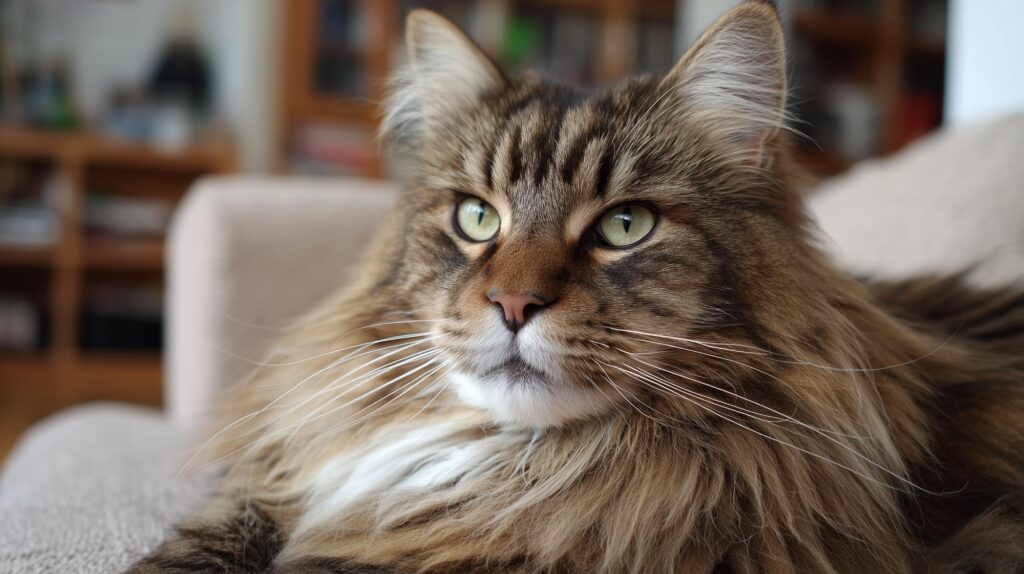
Maine Coon coats change dramatically from kittenhood to adulthood, and messy, uneven, or suddenly matting coats are often normal stages—not problems. Many owners panic when the coat seems to worsen instead of improve, especially during adolescence, but these shifts are part of how the breed develops.
Maine Coons confuse owners more than most cats because they grow slowly, mature unevenly, and carry a complex semi-long coat that behaves very differently at each stage. When the coat suddenly mats, sheds heavily, or feels patchy, owners often assume something is wrong—leading to frantic searches for answers.
This post explains how Maine Coon coats develop, why changes happen when they do, and how to care for the coat at each stage so owners can recognize what’s normal and respond with confidence instead of concern.
Maine Coon Kitten Coat vs Adult Coat — Quick Summary
| Coat Stage | Age Range | What the Coat Looks Like | Common Owner Concerns | What’s Normal |
|---|---|---|---|---|
| Kitten Coat | Birth–~12 months | Soft, fluffy, cotton-like; wispy ends | “The coat feels thin” | Fine undercoat and uneven density are expected |
| Early Transition | ~6–12 months | Mixed textures; patchy thickness | “Why is matting starting?” | Adult guard hairs pushing through kitten fluff |
| Late Transition | ~12–18 months | Heavy shedding; unstable feel | “Grooming suddenly doesn’t work” | Coat blow and undercoat retention peak |
| Young Adult Coat | ~18–36 months | Stronger texture; more structure | “Will this ever settle?” | Coat stabilizes gradually over multiple sheds |
| Fully Mature Coat | ~3–5 years | Thicker guard hairs; predictable density | “Is this the final coat?” | Adult coat finishes developing |
| Hormonal Influence | Varies | Softer, denser after spay/neuter | “Why did it change again?” | Hormonal shifts affect undercoat retention |
Maine Coon coats develop in stages, not on a fixed schedule. Messy, uneven, or suddenly matting coats usually signal normal growth—not grooming failure.
How Maine Coon Coats Develop Differently Than Other Cats
Maine Coons don’t follow the same coat timeline as most domestic cats. Their size, growth rate, and coat structure all contribute to changes that feel dramatic if you’re not expecting them.
Semi-Long Coat Structure Explained
The Maine Coon coat is classified as semi-long, which means it has layers that behave differently depending on age and season.
- Guard hairs form the visible outer layer. These hairs are longer, more resilient, and help repel moisture and debris.
- Undercoat sits beneath the guard hairs. It’s softer, finer, and designed for insulation.
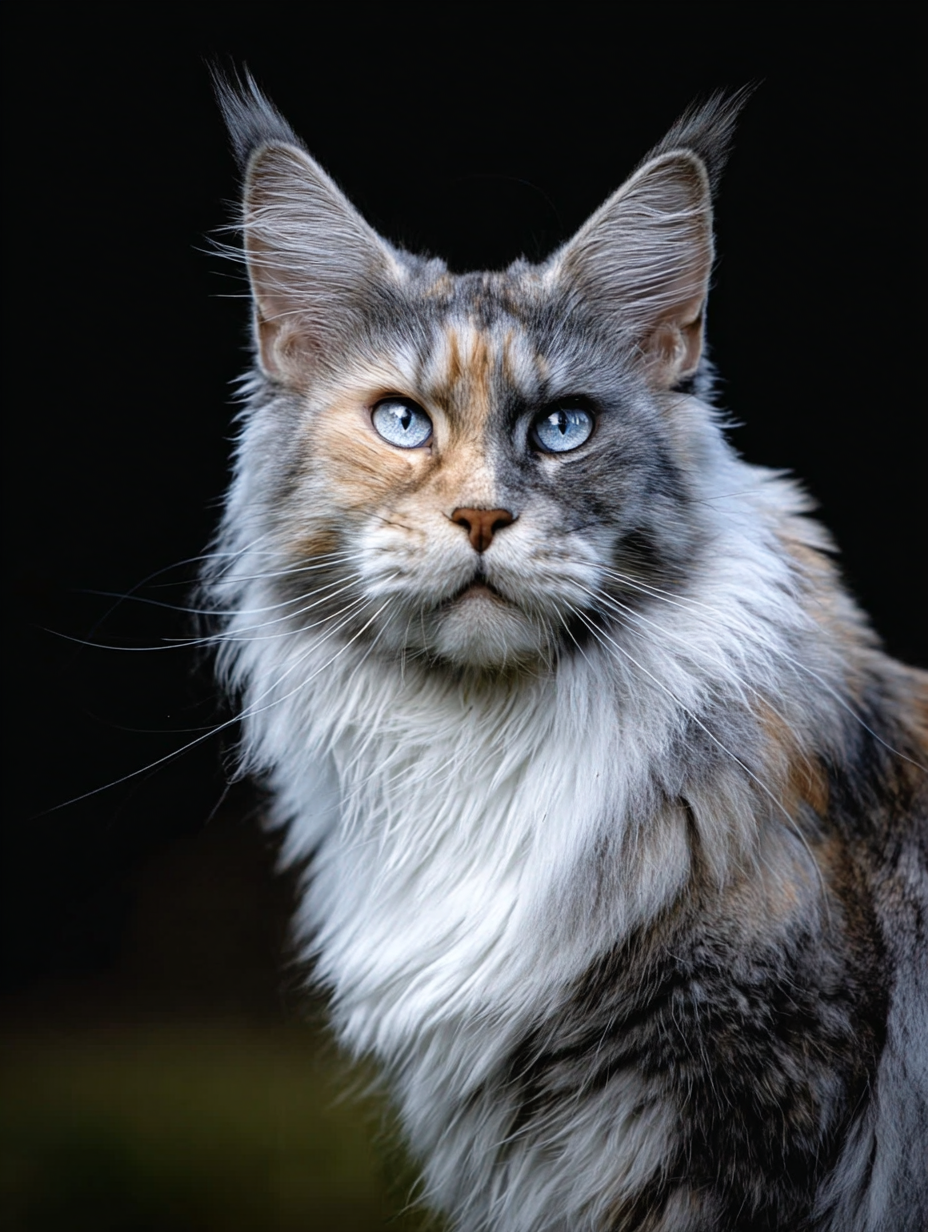
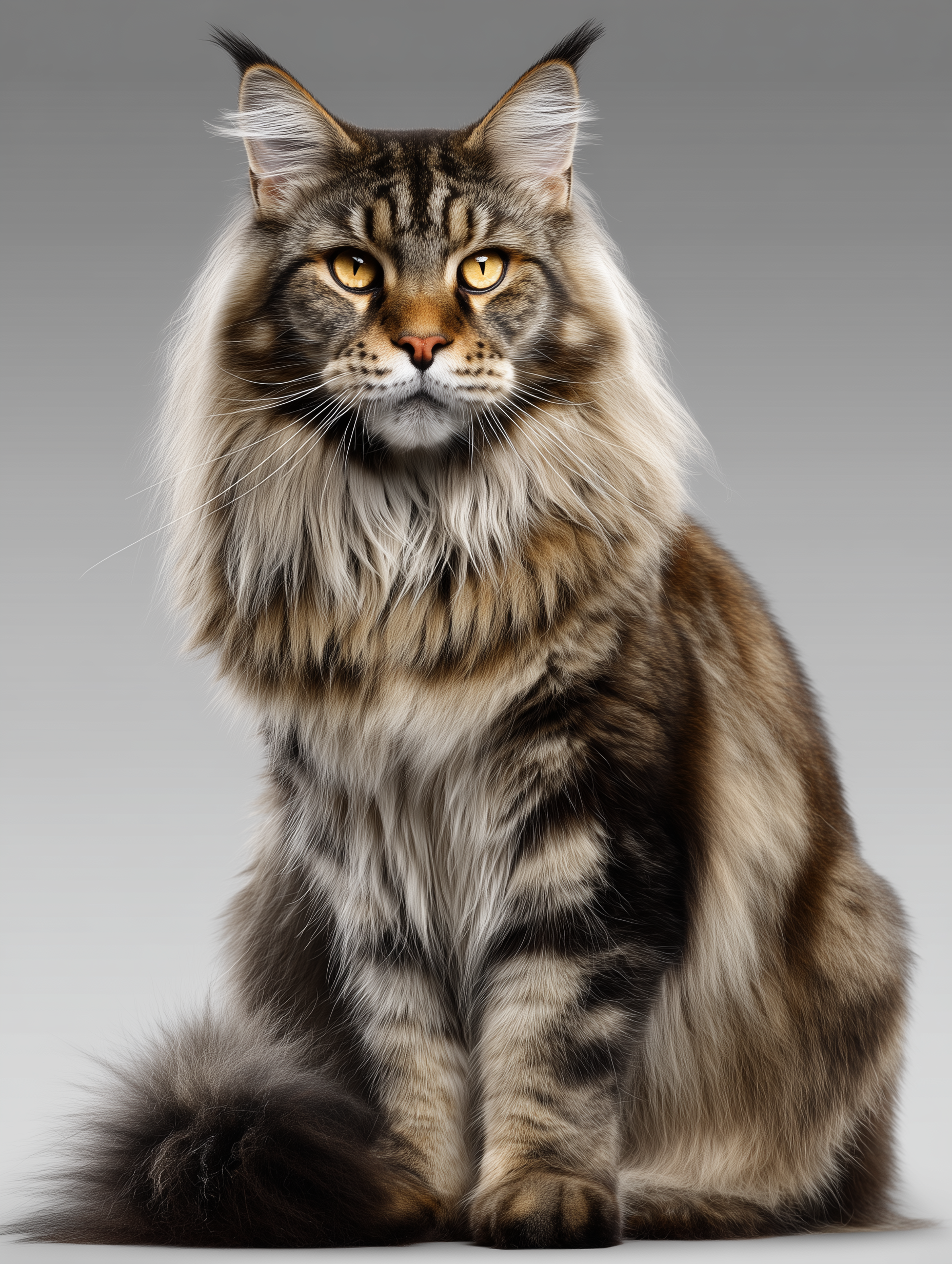
Because the guard hairs lie smoothly over the top, the coat can look sleek and well-managed—even when loose undercoat is quietly compacting underneath. This is why Maine Coon coats often look fine on the surface but tangle or mat below, especially during coat transitions.
Slow Maturity Is the Key Difference
What truly sets Maine Coons apart is how slowly they mature.
- Physical maturity takes 3–5 years, far longer than most cats.
- Coat maturity lags behind body growth, meaning a large, adult-sized Maine Coon may still be wearing a juvenile or transitional coat.
This mismatch is why owners often say, “My cat is huge, but the coat feels wrong.” The body may be close to adult size while the coat is still catching up. Understanding this slow timeline reframes coat changes as developmental—not defective—and helps owners adjust expectations as their Maine Coon grows.
The Maine Coon Kitten Coat (Birth to ~12 Months)
The kitten coat sets the stage for almost every grooming concern Maine Coon owners experience later. It looks harmless, feels soft, and often gives a false sense of security—until matting suddenly appears.
What the Kitten Coat Looks and Feels Like
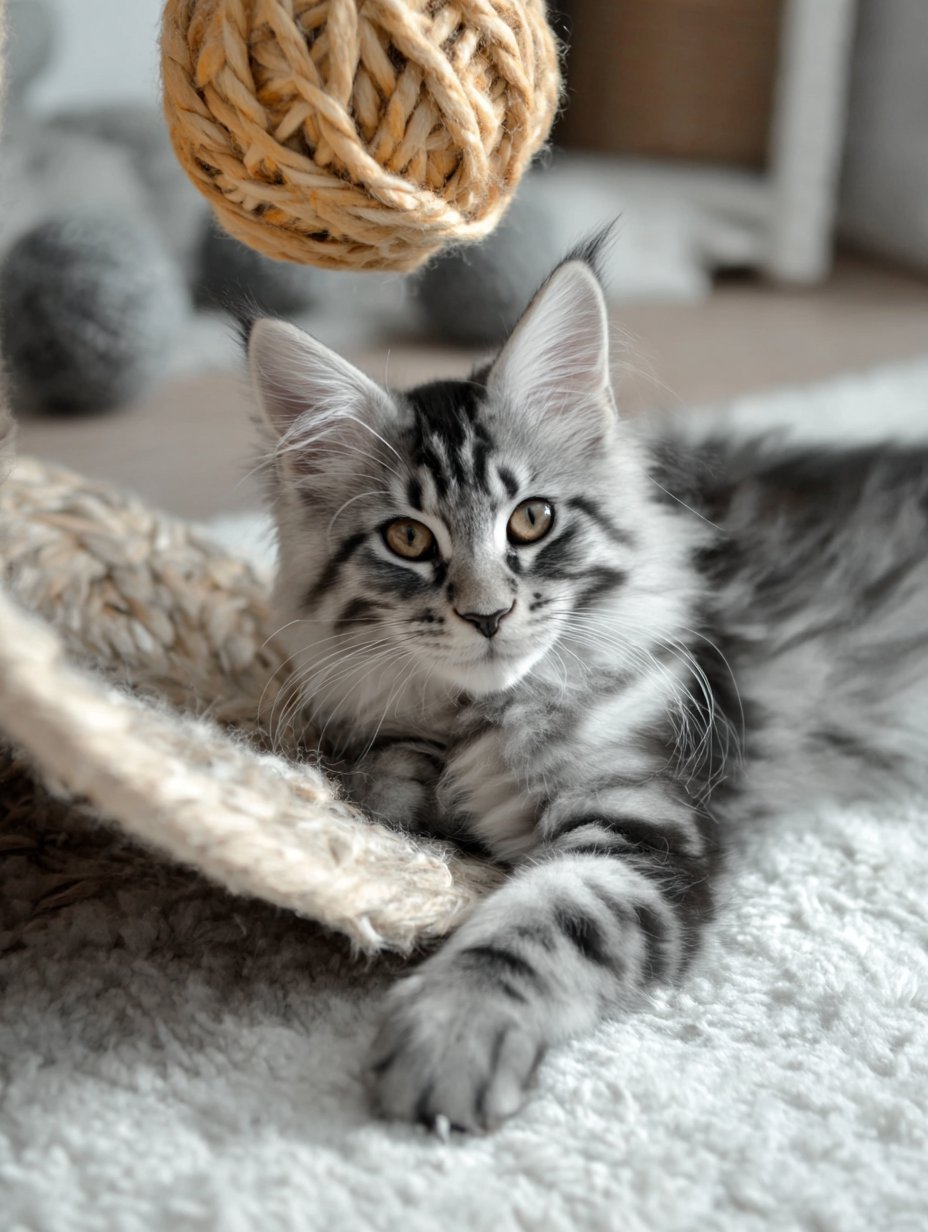
A Maine Coon kitten wears a coat that feels soft, fluffy, and cotton-like. This coat lacks the structure and resilience of the adult coat.
- The fur feels light and airy rather than heavy or sleek.
- Ends look wispy and uneven, especially along the belly, chest, and hind legs.
- Density varies across the body, with thicker patches next to noticeably thinner ones.
Because the kitten coat feels gentle and loose, many owners assume it won’t cause problems. In reality, this softness is exactly what makes it fragile.
Why Kitten Coats Tangle and Mat Easily
Kitten coats tangle because they lack the guard hair structure that stabilizes the adult coat.
- The undercoat is extremely fine, allowing hairs to twist around each other with minimal friction.
- Maine Coon kittens stay in near-constant motion—running, climbing, wrestling, and rolling.
- Friction from movement compresses the undercoat long before the coat has learned to shed efficiently.
Even with regular brushing, mats can form quickly because brushing smooths the surface without removing loose undercoat underneath. This is why owners often feel blindsided by mats appearing overnight.
Common Owner Reactions at This Stage
This stage triggers the first wave of concern.
- “The coat feels thin—shouldn’t it be thicker by now?”
- “Why is this matting already happening? He’s still a kitten.”
These reactions are normal. The kitten coat isn’t meant to look impressive—it’s transitional by design. Understanding that prevents owners from overcorrecting or assuming they’re doing something wrong.
The Transition Phase: Kitten Coat to Adult Coat (6–18 Months)
This is the stage that causes the most confusion, frustration, and panic. The coat stops behaving predictably, and many owners feel like grooming suddenly became ineffective.
Mixed Coat Textures
During this phase, the coat becomes a blend of two different systems.
- Soft kitten fluff remains in some areas.
- Adult guard hairs begin emerging in others.
- Texture changes from section to section across the body.
This creates a patchy, inconsistent feel. Some areas feel thick and coarse, while others stay soft and wispy. The coat may look uneven, dull in places, or bulky in others—all of which are normal signs of transition.
Increased Shedding and Coat Blow
As adult hair pushes out the kitten coat, shedding increases dramatically.
- Hair suddenly appears everywhere—floors, furniture, clothing.
- The coat releases loose hair in waves rather than gradually.
- Grooming sessions feel less effective because hair keeps coming back.
Owners often say, “I brush constantly, but it never ends.” That’s because the coat is actively replacing itself. Grooming feels harder during this phase because the coat resists stability until the transition completes.
What’s Normal vs What Deserves Attention
Most of what happens during this phase is normal chaos.
Normal signs include:
- uneven texture
- sudden matting in friction areas
- increased shedding
- coat that looks worse before it looks better
However, some signs deserve a closer look.
Check skin, nutrition, or health if you notice:
- sudden bald patches
- redness or irritation
- dramatic coat loss unrelated to shedding
- lethargy or appetite changes alongside coat decline
In most cases, the coat isn’t failing—it’s transforming. Once owners understand this phase, grooming becomes a matter of supporting change, not fighting it.
The Adult Maine Coon Coat (18 Months to 4+ Years)
The adult coat is what most people picture when they think of a Maine Coon—but it takes time to arrive. Even once the chaos of the transition phase settles, the coat continues to mature quietly for years.
When the Adult Coat Actually Finishes Developing
Many Maine Coons are not “done” at 1–2 years, even though their bodies may look fully grown.
- Coat development often continues until 3–5 years of age.
- The coat thickens gradually rather than switching all at once.
- Texture stabilizes only after multiple shedding cycles.
Sex also plays a role:
- Males tend to develop heavier ruffs, thicker britches, and more dramatic overall coats as they mature.
- Females usually carry a slightly lighter adult coat, with less extreme volume but similar structure.
This long timeline explains why owners sometimes say, “The coat finally makes sense now.” The adult coat doesn’t appear—it settles.
Adult Coat Characteristics
Once established, the adult Maine Coon coat becomes more cooperative.
- Guard hairs thicken and strengthen, helping the coat hold shape and resist tangling.
- The texture feels more resilient and less cottony than earlier stages.
- Undercoat sheds more predictably instead of compacting suddenly.
With this stability comes more predictable grooming needs. Owners no longer chase constant changes. Instead, grooming shifts into a maintenance rhythm that supports seasonal shedding and high-friction areas.
Why Matting Peaks During Coat Changes
Matting doesn’t happen because owners fail—it happens because the coat becomes temporarily unstable.
Transition Phases Create Perfect Matting Conditions
During coat transitions:
- Old hair loosens but doesn’t release cleanly.
- New hair grows in underneath, trapping loose strands.
- Mixed textures create friction inside the coat.
This internal conflict makes tangles form faster than brushing alone can prevent.
Why Owners Feel Like They “Suddenly Failed”
Many owners groom consistently for months with no issues—then matting appears out of nowhere.
That sudden shift feels personal, but it isn’t. The coat changed faster than the grooming approach did. What worked yesterday no longer works today, even though effort stayed the same.
Why Technique Matters More Than Frequency
During coat changes, brushing more often doesn’t always help.
- Surface brushing smooths the top layer but leaves loose undercoat behind.
- Repeated brushing over compacted hair can tighten mats instead of removing them.
Effective grooming during transitions depends on technique—working through layers, targeting friction zones, and removing loose undercoat before it binds. Once the coat stabilizes into adulthood, grooming becomes easier again, and matting risk drops sharply.
How Spaying and Neutering Can Influence Coat Changes (Brief Overview)
Spaying and neutering don’t change whether a Maine Coon grows an adult coat—they change how that coat behaves once it develops. Hormonal shifts affect shedding cycles, undercoat retention, and overall coat balance, which is why some coat changes feel sudden or unexpected.
Why Hormones Affect Coat Texture
Sex hormones help regulate the balance between guard hairs and undercoat.
- After altering, the coat tends to retain more undercoat instead of releasing it cleanly.
- Hair often grows back softer and denser, especially in males.
- Guard hairs may play a slightly smaller role, which reduces the coat’s natural resistance to tangling.
These changes don’t harm the coat, but they do alter how it responds to friction and grooming.
What Owners Often Notice After Altering
Many owners report similar patterns after spaying or neutering:
- The coat feels softer than it did before.
- Matting risk increases, particularly in neutered males and high-friction areas.
- Changes don’t appear right away—they often show up months later, usually during the next major shed.
Because the timing is delayed, owners often connect the changes to grooming or diet rather than hormones.
Want the full explanation?
For a detailed breakdown of how spaying and neutering affect the Maine Coon coat—including neuter coat, grooming adjustments, and long-term expectations—see our in-depth guide:
How Spaying and Neutering Affect the Maine Coon Coat → (internal link)
Grooming Adjustments by Coat Stage
The biggest grooming mistake Maine Coon owners make is using the same routine at every age. The coat changes, and grooming needs must change with it. When you match your approach to the coat stage, grooming becomes easier and far more effective.
Grooming a Kitten Coat
Treat the kitten coat as a training phase, not a maintenance phase.
- Keep sessions short and gentle, even if the coat doesn’t look like it needs much work yet.
- Focus on handling and positive association rather than perfect grooming.
- Use light pressure and stop before the kitten loses patience.
Building tolerance early matters more than removing every loose hair. A calm kitten becomes a cooperative adult.
Grooming During Coat Transition
The transition phase demands the most attention.
- Increase grooming frequency, but shorten sessions to avoid frustration.
- Focus on friction areas—armpits, chest, belly, hindquarters, and behind the ears.
- Work through layers rather than brushing the surface repeatedly.
This stage isn’t about perfection. It’s about preventing small tangles from becoming compact mats while the coat reorganizes itself.
Grooming an Adult Coat
Once the adult coat stabilizes, grooming becomes more predictable.
- Shift from constant intervention to maintenance and prevention.
- Remove loose undercoat regularly to support natural shedding cycles.
- Adjust grooming intensity during seasonal changes, when shedding increases.
Adult coats reward consistency. When you maintain them properly, matting becomes far less common.
Common Myths About Maine Coon Coat Changes (Debunked)
Coat transitions trigger anxiety, and anxiety fuels myths. Clearing these up helps owners stay calm and make better grooming decisions.
“My Cat’s Coat Is Ruined”
Coat changes don’t equal damage. Most Maine Coons simply move through awkward, temporary stages before their coat settles. What feels wrong now often resolves naturally with time and adjusted grooming.
“The Adult Coat Should Be In by One Year”
Maine Coons mature slowly. Many don’t finish developing their adult coat until three years or older. Expecting a finished coat at one year sets owners up for unnecessary worry.
“Matting Means Bad Grooming”
Matting often appears during periods of rapid coat change—not because grooming stopped, but because the coat changed faster than the routine. Adjusting technique usually fixes the issue.
Maine Coon Coat Development FAQ
(Answers to the questions owners actually ask in Facebook groups, Reddit, and forums)
When does a Maine Coon get its adult coat?
Most Maine Coons do not finish developing their adult coat until 3–5 years of age. While some changes appear between 12–18 months, the coat continues to thicken, strengthen, and stabilize through multiple shedding cycles.
Is it normal for a Maine Coon’s coat to look worse before it looks better?
Yes. Coat transitions often make the coat look patchy, thin, dull, or overly fluffy before it settles. This is especially common between 6–18 months when kitten fur and adult fur overlap.
Why is my Maine Coon suddenly matting when they never did before?
Sudden matting usually coincides with coat transition or hormonal changes, not a grooming failure. Mixed textures trap loose undercoat, especially in friction areas, even if you brush regularly.
Can a Maine Coon mat even with daily brushing?
Yes. Daily brushing that only smooths the surface can miss loose undercoat underneath, allowing mats to form anyway. Technique matters more than frequency during coat changes.
Why does my Maine Coon feel huge but still have a “baby” coat?
Body growth happens faster than coat maturity in Maine Coons. A large cat can still be wearing a juvenile or transitional coat, which feels softer and less structured than the adult coat.
Why does the coat feel thin in some places and thick in others?
During transition phases, adult guard hairs emerge unevenly. This creates inconsistent density and texture, which is normal until the coat evens out.
Is shedding supposed to be this intense?
Heavy shedding often peaks during coat transitions and seasonal coat blows. Maine Coons shed in waves, not steadily, which makes hair feel suddenly unmanageable.
Why does my Maine Coon look fluffier after being spayed or neutered?
Hormonal changes increase undercoat retention and reduce guard hair dominance. This makes the coat feel softer and fuller over time, especially in neutered males and spayed females.
Why do intact females often look less fluffy?
Intact females cycle hormonally. During heats, pregnancy, and nursing, the body prioritizes reproduction over coat fullness, resulting in a lighter-looking coat that often fills in after spay.
Why did my cat’s coat change months after spay or neuter?
Coat changes follow hair growth cycles, not surgery dates. New hair grown under altered hormones replaces old hair gradually, often showing up months later during shedding.
Does neutering cause matting?
Neutering doesn’t cause matting directly, but it increases undercoat density and slows shedding, which raises matting risk if grooming routines don’t adjust.
Will my Maine Coon’s coat ever go back to how it was?
The coat may not return to its exact intact texture, but it stabilizes. Many owners find the post-alter coat easier to predict once they adapt grooming techniques.
Should I groom more or less during coat transitions?
Groom more strategically, not just more often. Short, frequent sessions focused on friction areas and undercoat removal work better than long surface brushing sessions.
Is it okay to trim or shave during coat changes?
Targeted trimming in high-friction areas can help. Full shaving is rarely necessary and doesn’t prevent future matting unless grooming routines change afterward.
How do I know if coat changes are normal or health-related?
Normal coat changes come with growth, shedding, and energy. Check with a vet if you see bald patches, skin irritation, lethargy, appetite changes, or sudden coat loss unrelated to shedding.
Does diet affect coat transitions?
Yes. Adequate protein, essential fatty acids (especially omega-3s), and proper calories support healthy coat regrowth during transitions.
Why does grooming feel harder all of a sudden?
Because the coat changed faster than your routine did. What worked last month may not work during a transition phase.
Will grooming get easier again?
Yes. Once the adult coat stabilizes, grooming becomes more predictable and matting risk decreases significantly with proper maintenance.
Is this just a Maine Coon thing?
Largely, yes. Maine Coons mature slowly and carry complex coats that change dramatically over time, making transitions more noticeable than in most breeds.
What’s the biggest mistake owners make with coat changes?
Assuming something is wrong—or that they’re doing something wrong—when the coat is simply developing as intended.
Maine Coon Coat Reassurance
Many owners worry when their Maine Coon doesn’t look as shaggy, rugged, or dramatic as the photos they see online—especially during the kitten and adolescent stages. In reality, coat variation is normal, and a less exaggerated coat during youth does not mean something is wrong.
Maine Coons do not grow a uniform coat all at once. Their coat develops in uneven stages, with different lengths and textures across the body. The hair along the spine and head is naturally shorter, while the belly, britches, and chest develop length and fullness later. This uneven structure is part of the breed design, not a flaw.
During kittenhood and adolescence, many Maine Coons look sleeker or less “rugged” than expected. The mane may be minimal, the coat may feel thin in places, and the overall look can seem less dramatic than adult examples. This often leads owners to question pedigree, grooming, or care—but it’s simply a matter of timing.
Another common source of confusion is comparison. Photos online often show fully mature adults, frequently males, at peak coat development. Kittens, young females, and adolescents—especially under two years old—rarely match that look yet. Maine Coons continue to grow and develop for four to five years, and coat maturity often lags well behind body size.
Lineage also plays a role. Some lines develop heavier coats earlier, while others fill in later and more subtly. Size and extreme fluff are not required for correct development. A kitten with a lighter or less dramatic coat can still grow into a fully correct adult.
The key takeaway for owners is this: a Maine Coon kitten does not need to look rugged or heavily coated to be developing normally. Given time, proper care, and patience, the coat will evolve on its own schedule—and for most Maine Coons, the best coat is still years away.
In Conclusion:
Maine Coon coat changes are developmental, hormonal, and temporary. When owners understand the stages and adjust grooming accordingly, most coat concerns resolve without drastic measures.
Related Maine Coon Care Posts
If you’re managing a Maine Coon coat, these guides will help you understand the bigger picture behind grooming, shedding, and long-term coat health:
- Maine Coon Grooming Guide: How Often to Brush, What Tools Actually Work, and Common Mistakes
- Maine Coon Shedding Explained: Seasonal Coat Blow, What’s Normal, and When to Worry
- How Spaying and Neutering Affect the Maine Coon Coat: Why they get fluffier.
- Maine Coon Lion Cuts: What Works, What Fails, and What Can Make Matting Worse
- Maine Coon Matting: How to prevent them before they start.
- Maine Coon Polydactyl Care: Extra love for the extra toes.
- Maine Coon Diet and Coat Health: How Nutrition Affects Shedding, Dryness, and Mat Formation
- How to Prepare Your Home for a Maine Coon Kitten: details on starting good grooming habits
- Maine Coon Cat Care: Environmental Factors That Affect Coat Condition and Grooming Needs
Sources & References
- Cornell University College of Veterinary Medicine – Feline Health Center
Feline Hair Growth Cycles, Shedding, and Coat Development
https://www.vet.cornell.edu/departments-centers-and-institutes/cornell-feline-health-center - Merck Veterinary Manual
Hair Coat and Skin Disorders in Cats
https://www.merckvetmanual.com/integumentary-system/hair-coat-disorders - International Cat Care (ISFM / iCatCare)
Understanding Cat Coat Types, Grooming, and Development
https://icatcare.org/advice/cat-grooming/ - BSAVA Manual of Feline Practice
Coat Structure, Maturation, and Seasonal Changes
(British Small Animal Veterinary Association clinical reference) - VCA Animal Hospitals
Normal Shedding, Coat Changes, and Growth in Cats
https://vcahospitals.com/know-your-pet/shedding-in-cats - ASPCA Veterinary Resources
Cat Grooming, Shedding, and Coat Health Basics
https://www.aspca.org/pet-care/cat-care/cat-grooming-tips - Royal Veterinary College (UK)
Feline Growth, Maturity, and Developmental Timelines
https://www.rvc.ac.uk/small-animal-vet/general-practice/feline





Read the Comments +