
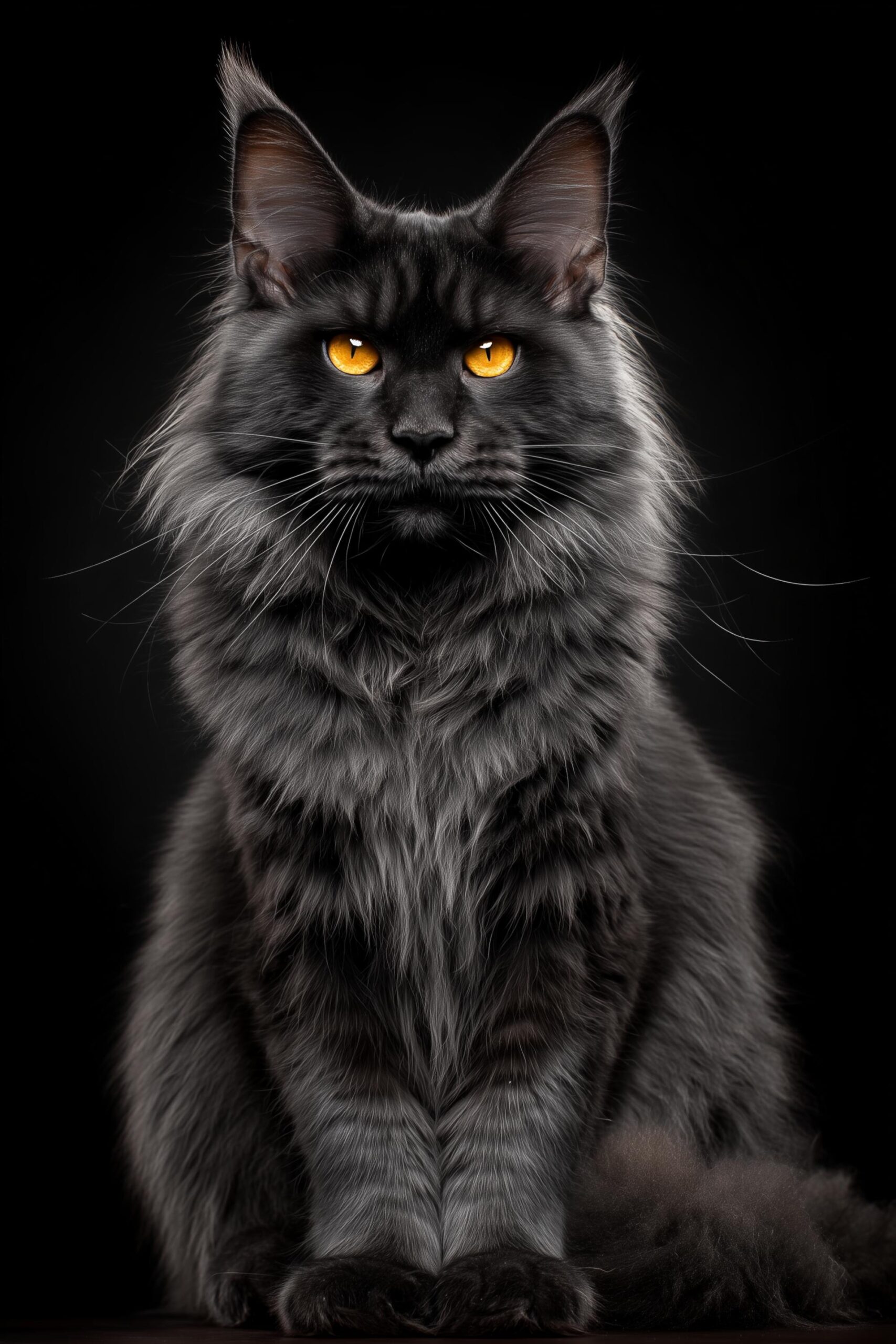
Maine Coon Health Testing Explained

Maine Coon health testing can lower risk and improve long-term outcomes, but it can’t promise a disease-free cat. Testing works best as a decision tool: it helps breeders make smarter breeding choices and helps buyers understand what has been evaluated, what hasn’t, and what still relies on good care and good luck.
Maine Coons deserve a more specific conversation than “vet checked” because some of the breed’s biggest concerns—especially heart and orthopedic issues—can be silent early on. A kitten can look perfectly healthy while still carrying inherited risk or developing changes later.
This guide breaks down the main types of health testing Maine Coons can get, including DNA testing versus clinical screening, what those results actually mean, what is optional versus commonly prioritized, and how to have a clear, respectful conversation with breeders about their testing approach.
Maine Coon Health Testing — Quick Summary
| Topic | What It Means | What to Know |
|---|---|---|
| Purpose of health testing | Reduces inherited risk | Testing lowers risk but never guarantees lifetime health |
| Main health risks | Heart, joints, neuromuscular | HCM, hip/structure concerns, and SMA are the primary focus |
| Core tests used | Echo, DNA, sometimes hips | Echocardiograms and DNA testing form the foundation |
| DNA testing | Identifies known mutations | Negative results do not rule out future disease |
| Heart testing | Screens for structural disease | Must be done by a cardiologist and repeated over time |
| Hip testing | Evaluates joint structure | Helpful data, but feline science is still evolving |
| Testing age | Adult screening only | Kittens cannot be fully health tested |
| Cost range | Significant breeder expense | Often $2,000–$5,000+ per breeding cat over time |
| Line tracking | Long-term data across families | Patterns matter more than single cats |
| Buyer responsibility | Informed ownership | Choosing a purebred means accepting managed risk |
Maine Coon health testing helps reduce inherited risk, but it cannot eliminate disease or replace long-term line tracking.
What “Health Tested” Actually Means
“Health tested” can mean different things depending on who’s using the phrase. In the most practical sense, it usually refers to two categories of evaluation: genetic testing (DNA) and screening tests (clinical exams and imaging).
Genetic tests vs screening tests
DNA tests look for specific known genetic variants (mutations) associated with certain inherited conditions. They help identify:
- whether a cat is clear, a carrier, or affected for a tested mutation (depending on the condition and test)
- inherited risk that may not show up on a physical exam
DNA testing is powerful, but it only tests for what we currently know how to test for—and it does not capture every possible cause of disease.
Screening tests evaluate the cat’s current physical status. These tests look at how the body is functioning right now. Examples include heart imaging or orthopedic evaluations. Screening often needs repeating because:
- some conditions develop over time
- a normal result today does not always predict the future
In short: DNA helps with inherited risk. Screening helps with real-time health status. Both can matter, but they answer different questions.
Why a one-time vet exam isn’t health testing
A routine wellness exam is important, but it’s not the same as health testing aimed at breed-related risks. A general exam can confirm things like:
- basic body condition
- coat/skin health
- normal heart and lung sounds (by stethoscope)
- eyes/ears/teeth observations
But wellness exams often do not detect silent disease, especially early on. For example:
- early heart changes may not produce a murmur
- developing joint issues may not show obvious symptoms until later
- subtle changes can require imaging or specialist assessment to confirm
So when people say “vet checked,” that usually means the cat was examined and appeared well at that time—which is valuable—but it doesn’t necessarily mean specialized risk areas were screened.
The two goals of ethical testing
When breeders invest in health testing, it generally serves two practical goals:
1) Reduce inherited disease risk
Testing helps guide mating decisions to lower the chance of producing kittens affected by certain inherited conditions, especially when reliable DNA tests exist.
2) Track lines over time to improve outcomes
Even strong breeding cats can develop issues later. Ongoing screening—especially for conditions that appear with age—helps breeders understand what is happening in their lines and make better long-term choices.
The most useful mindset is to view health testing as a risk-reduction strategy, not a guarantee. It’s one of the clearest ways to stack the odds in favor of healthier outcomes while still acknowledging that biology is never perfectly predictable.
The Big Three Maine Coon Health Risks Buyers Should Understand
Hypertrophic cardiomyopathy (HCM)
Hypertrophic cardiomyopathy is the most significant inherited health concern in Maine Coons. It is a disease where the heart muscle thickens abnormally, reducing the heart’s ability to fill and pump blood efficiently.
What makes HCM especially challenging is that it can remain completely silent for years. Cats may appear outwardly healthy while the disease progresses internally. In some cases, the first visible sign is sudden heart failure, a blood clot, or collapse.
Because HCM can develop later in life and may not be detectable in kittens or young adults, responsible breeders focus on ongoing cardiac evaluation and family history, not one-time testing.
Hip dysplasia and orthopedic soundness
Maine Coons are a large, slow-maturing breed with substantial bone and muscle mass. Their size alone places greater mechanical stress on hips and joints than in lighter, more compact cats.
Hip dysplasia in cats is less discussed than in dogs, but it does exist—particularly in large breeds. Structural weakness or shallow hip sockets can lead to arthritis, reduced mobility, pain with jumping, and early joint degeneration.
Orthopedic screening is about structural integrity, not just the absence of obvious lameness. Cats are excellent at masking discomfort, which makes objective imaging far more valuable than casual observation.
Spinal muscular atrophy (SMA)
Spinal muscular atrophy is an inherited neuromuscular condition specific to Maine Coons. It affects the motor neurons responsible for muscle strength and coordination.
Affected kittens typically show muscle weakness, tremors, or an abnormal gait early in life. While SMA is not painful and does not affect intelligence, it significantly impacts quality of life.
The good news is that SMA is fully manageable through DNA testing, making it one of the most preventable inherited conditions in the breed.
Core Health Tests Ethical Maine Coon Breeders Use
This section reflects testing that addresses known, meaningful risks in the breed—not optional extras or marketing claims.
Cardiac testing: Echocardiogram (the gold standard)
An echocardiogram is a specialized ultrasound of the heart performed by a veterinary cardiologist. It directly evaluates heart structure and function, including:
- Thickness of the heart walls
- Chamber size
- Blood flow and outflow patterns
- Overall cardiac performance
An echo is the most reliable way to detect HCM before symptoms appear. Because HCM can develop over time, a normal scan reflects the heart’s status at that point—not lifelong immunity. Ethical breeding programs understand that long-term cardiac monitoring and line tracking matter more than a single snapshot result.
DNA testing: HCM mutation(s)
DNA tests screen for known genetic mutations associated with HCM in Maine Coons. A negative result means the cat does not carry the specific mutation being tested. A positive result means the mutation is present.
What DNA testing does:
- Identifies cats at increased genetic risk
- Helps guide breeding decisions
- Reduces the chance of producing high-risk offspring
What DNA testing does not do:
- Guarantee that a negative cat will never develop HCM
- Replace echocardiograms
- Detect unknown or undiscovered mutations
DNA testing is a tool for risk reduction, not a substitute for cardiac imaging.
DNA testing: SMA
SMA testing categorizes cats as:
- Clear – no mutation present
- Carrier – one copy of the mutation, not affected
- Affected – two copies of the mutation
Because SMA is recessive, carriers do not develop the disease. Ethical breeding programs may use carriers responsibly when paired only with clear cats, ensuring no affected kittens are produced while preserving genetic diversity.
This approach prevents disease without unnecessarily shrinking the gene pool.
Hip evaluation: OFA vs PennHIP
Hip screening in Maine Coons borrows methodology from canine orthopedics because feline-specific data is still limited. Leading feline orthopedic specialists currently agree that testing after one year of age provides meaningful structural insight for cats.
Orthopedic Foundation for Animals (OFA)
- Uses radiographs to evaluate hip joint conformation
- Results describe hip structure and degree of dysplasia
- “Passing” indicates acceptable joint formation for breeding purposes
PennHIP
- Measures hip joint laxity using a distraction index
- Provides a quantitative assessment of joint looseness
- Useful for identifying structural trends within lines
In practical terms, a passing or acceptable result means the hips demonstrate functional stability and reasonable joint depth, not perfection.
Because cats mature differently than dogs and long-term feline orthopedic data is still evolving, testing after one year is considered appropriate and responsible by specialists working in feline orthopedics today. The goal is to screen for meaningful structural risk and to evaluate the joints.
Secondary Tests That Improve Confidence (But Vary by Program)
These evaluations are not universally required across all Maine Coon breeding programs, but many established breeders include them to add context, reduce avoidable risk, and better understand their lines over time.
Patella evaluation (knees)
Patella evaluations assess whether the kneecap tracks correctly within the groove of the femur. In cats, patellar luxation is less common than in dogs, but it does occur—particularly in larger, heavier-bodied breeds.
Some Maine Coon programs include patella screening because:
- Large size increases mechanical load on joints
- Subtle instability can contribute to long-term mobility issues
- Cats compensate well, making mild issues easy to miss without imaging or hands-on evaluation
When used, patella exams are best understood as structural information, not a pass/fail judgment. They help breeders identify trends and make more informed pairing decisions rather than eliminate otherwise sound cats unnecessarily.
Dental/oral health and bite
Oral structure, jaw alignment, and bite quality sit at the intersection of genetics and management.
What tends to be influenced by heredity:
- Jaw width and symmetry
- Tooth spacing
- Overall bite alignment
What is primarily management-related:
- Periodontal disease
- Tartar buildup
- Gingivitis and tooth loss due to hygiene
Breeders who monitor oral health are usually looking for structural consistency, not cosmetic perfection. A correct, functional bite supports lifelong comfort and reduces the likelihood of early dental intervention, but daily care and diet play a much larger role in long-term oral health than genetics alone.
Kidney screening context
Maine Coons are not considered a primary polycystic kidney disease (PKD) breed. PKD is most strongly associated with Persian-derived lines, and routine DNA testing for PKD is not universally necessary in Maine Coons.
That said, baseline kidney monitoring can still matter because:
- Chronic kidney disease is common across the general cat population
- Large, slow-maturing breeds place higher metabolic demand on the body
- Early baseline values help distinguish inherited trends from age-related change
Programs that include kidney ultrasounds or bloodwork typically do so for long-term data tracking, not because the breed is predisposed to PKD.
FeLV/FIV status and infectious disease protocols
FeLV and FIV testing protects both the breeding cats and the broader household environment.
Responsible programs typically:
- Test all breeding cats prior to entry into the program
- Retest periodically or when introducing new cats
- Maintain closed or carefully managed catteries to limit exposure
Testing cadence depends on household structure, intake practices, and whether cats attend shows or outside facilities. The goal is risk management, not constant retesting without cause.
Clear infectious disease protocols allow breeders to focus on genetics, health tracking, and stability without introducing preventable variables into their program.
Eye Health Considerations in Maine Coon Cats
Maine Coons are not considered a breed with highly prominent eyes or a high rate of inherited eye disease. Their eyes are large, well-set, and slightly oval, fitting a broad, strong facial structure. That said, as a large, slow-maturing breed, certain structural and functional eye issues can occur, and understanding them helps owners recognize changes early.
Entropion in Maine Coon cats
Entropion, where the eyelid rolls inward toward the eye, is seen more often in Maine Coons than ectropion, though it is still not considered a high-prevalence breed defect.
In Maine Coons, entropion is most often:
- Mild to moderate
- Developmental, appearing during growth phases
- Related to facial and eyelid structure, not eye prominence
Because Maine Coons mature slowly, eyelid position can change as the head and facial bones finish developing. Some cases improve with maturity, while others remain stable and simply require monitoring.
When entropion causes symptoms, they may include:
- Persistent tearing
- Squinting or blinking
- Redness along the eyelid margin
Most cases are identified during routine veterinary exams. Management depends on severity and comfort, ranging from observation to medical treatment, and in rare cases, surgical correction.
As with many structural traits in large breeds, the focus is on comfort and function, not eliminating every anatomical variation from breeding lines.
Ectropion and eyelid structure
One eye condition occasionally seen in Maine Coons is ectropion, where the lower eyelid turns outward slightly instead of resting flush against the eye.
When ectropion occurs, it can:
- Expose the conjunctiva
- Increase tearing or mild irritation
- Make the eye more susceptible to environmental debris
In most cases, ectropion in cats is mild and manageable, not painful, and does not impair vision. It is typically a structural variation rather than a progressive disease. Monitoring comfort and cleanliness is often sufficient unless irritation becomes chronic.
Tear drainage and mild irritation
Because Maine Coons have substantial facial bone and heavier tissue than lighter breeds, some individuals experience:
- Mild tear overflow
- Intermittent watery eyes
- Temporary irritation during growth phases or seasonal changes
These findings are often functional, influenced by anatomy and environment rather than pathology.
Inflammatory and infectious eye issues
Like all cats, Maine Coons can develop:
- Conjunctivitis
- Viral flare-ups affecting the eyes
- Secondary bacterial irritation
These are not breed-specific conditions, but they may be more noticeable in large cats with heavier eyelids or broader eye openings.
What breeders and owners realistically monitor
Ethical Maine Coon programs typically focus on:
- Normal eyelid position and eye comfort
- Absence of chronic redness, discharge, or squinting
- Whether eyelid or tear issues repeat consistently within related cats
Routine ophthalmic certification is not universally required for Maine Coons, but pattern tracking within lines is valuable when structural eye traits appear.
What owners should watch for
Owners should consult their veterinarian if they notice:
- Persistent tearing with redness
- Eyelids that roll outward and remain irritated
- Cloudiness or visible changes in the eye surface
- Ongoing discomfort or squinting
Early evaluation helps distinguish structural quirks from treatable conditions.
Big-picture context
Maine Coons have existed and thrived long before modern eye screening protocols. Current veterinary understanding supports monitoring, documentation, and proportionate response, rather than assuming that every structural variation represents disease.
Eye health in Maine Coons is best approached the same way as joint and cardiac health: with measured observation, respect for genetic diversity, and practical veterinary care, not alarmism.
What Results Should Look Like: How to Read Them Without Getting Fooled
Health results are only useful if you understand what they actually show—and what they don’t. None of these tests are crystal balls. They are snapshots in time, interpreted within the limits of current feline science.
How to read DNA results
DNA reports usually classify results as clear, carrier, or affected.
- Clear means the tested mutation was not found
- Carrier means one copy of the mutation is present but the cat is not clinically affected
- Affected means two copies of a recessive mutation are present
What matters on a DNA report:
- The laboratory name
- The cat’s registered name and/or ID number
- Matching identifiers such as a microchip number
DNA tests tell you about known mutations only. They do not measure overall health, structure, or whether a cat will ever develop disease. They are best understood as genetic risk information—not a verdict.
How to read cardiac results
Cardiac testing should be performed by a board-certified veterinary cardiologist, not a general practice vet.
A complete cardiac report includes:
- The cardiologist’s name and credentials
- The date of the exam
- Objective measurements of heart structure and function
Wording matters. Common terms include:
- Normal – no detectable abnormalities at the time of the exam
- Equivocal – borderline or unclear findings that warrant monitoring
- Mild changes – early structural changes that may or may not progress
Date context is important. A normal echocardiogram reflects the heart on that day, not for life. This is why many programs recheck over time rather than relying on a single result.
How to read hip results
Hip evaluation in cats is an evolving area. The tools used—OFA and PennHIP—were developed for dogs and later adapted for cats because feline-specific orthopedic data is still limited.
Orthopedic Foundation for Animals (OFA) results describe hip joint conformation and note whether dysplasia is present.
PennHIP reports a distraction index (DI), which measures joint laxity.
Key context to understand:
- There is no universally accepted feline “cutoff” for ideal hips
- Results are best interpreted comparatively, within lines
- Structural findings do not automatically predict pain or quality of life
A statement like “the vet says the hips look good” is not the same as a formal orthopedic evaluation with standardized positioning and measurement. Formal screening simply provides documented structure data, not certainty or guarantees.
Testing Timelines: When Tests Should Be Done and Repeated
Before first breeding
Some tests are done once, others establish a baseline.
- DNA tests for known mutations are typically done one time
- Baseline echocardiograms are usually performed after physical maturity
- Orthopedic evaluations, when included, are generally done after one year of age
These timelines reflect the reality that cats mature gradually and that early testing cannot capture adult structure or late-onset conditions.
Ongoing rechecks
Certain conditions can develop over time, even in cats that tested normal earlier.
- Echocardiograms are often repeated every 1–2 years in active breeding cats
- Breeding decisions are adjusted if structural or functional changes appear
Stopping or continuing breeding is not about perfection. It is about pattern recognition, line management, and weighing genetic diversity alongside health data.
Why kittens can’t be “fully health tested”
Kittens can inherit risk, but they cannot complete adult health screenings.
- Their hearts are still developing
- Their joints are still forming
- Late-onset conditions cannot be ruled out
This is why no kitten—of any breed—comes with complete lifetime health guarantees. Responsible programs focus on adult testing, family history, and longitudinal tracking, rather than claiming certainty where science does not yet exist.
Health testing in cats is a developing field. Good programs work within what is known, acknowledge what is still uncertain, and avoid discarding valuable genetics based on incomplete or misunderstood data.
Health Testing vs Line Tracking: Why Data Over Time Matters More Than Single Cats
Health testing is an important tool in Maine Coon breeding, but it is often misunderstood as a way to label individual cats as “safe” or “unsafe.” In reality, inherited disease does not behave that neatly. Genetics expresses itself across families and generations, not in isolation. This is why experienced programs place as much—or more—emphasis on line tracking as they do on individual test results.
This distinction matters, because focusing too narrowly on single cats can create a false sense of security on one end and unnecessary genetic loss on the other.
Why inherited disease shows up in patterns, not individuals
Most inherited conditions in cats are polygenic or incompletely understood. Even when a specific mutation is known, expression can vary widely. Two cats with the same genetic status may have very different outcomes, while cats that appear unrelated may share underlying risk through distant ancestry.
Because of this, disease tends to appear as a pattern over time, such as:
- Multiple affected cats emerging from the same family line
- Similar issues appearing in siblings or half-siblings
- Recurring findings across repeated breedings
A single cat’s test result—whether normal or abnormal—cannot fully capture this complexity. What matters is how that result fits into a larger body of data.
Why one “perfect” cat does not equal a safe line
It is entirely possible for a cat to:
- Test negative on all available DNA panels
- Have a normal echocardiogram
- Appear structurally sound
- Live a healthy life
…and still belong to a line that later produces affected offspring.
This is not deception or failure. It reflects the limits of current feline genetics. Many inherited risks:
- Are carried silently
- Require multiple genes to express
- Do not appear until later in life
When buyers or breeders fixate on a single “perfect” cat, they often miss what matters more: what that cat produces, and how its relatives have fared over time.
How ethical programs actually track health over time
Long-term breeding programs operate more like data collection systems than pass/fail testing pipelines. They look at relationships, repetition, and outcomes rather than isolated snapshots.
This typically includes tracking:
Siblings
Full siblings and half-siblings provide valuable insight because they share a significant portion of their genetic makeup. If multiple siblings develop similar health issues, that information carries far more weight than a single normal test result.
Offspring
What a cat produces is one of the most meaningful indicators of inherited risk. Ethical programs monitor:
- Whether offspring remain healthy into adulthood
- Whether similar issues appear across different litters
- Whether concerns repeat regardless of the mate used
Patterns in offspring often reveal risks that no test could detect at the time of breeding.
Repeated pairings
Using the same pairing more than once allows breeders to see whether outcomes are consistent. If a health issue appears repeatedly from the same combination, that pairing can be adjusted or discontinued even if both parents tested “normal.”
This type of tracking requires time, record-keeping, and honest self-evaluation. It is not fast, and it does not produce simple marketing claims—but it produces better decisions.
Why some cats test “normal” but still produce affected descendants
This reality often surprises people new to breeding or to health testing discussions. A normal result does not mean a cat carries no genetic risk. It means:
- No known mutation was detected
- No structural abnormality was present at the time of screening
It does not account for:
- Undiscovered mutations
- Polygenic inheritance
- Interactions between genes
- Late-onset expression
When affected descendants appear, ethical programs do not pretend the result “came out of nowhere.” They reassess the line, look at related cats, and adjust future breeding decisions accordingly. This is how health outcomes improve gradually and sustainably, rather than through dramatic but damaging eliminations.
Why removing every imperfect cat collapses genetic diversity
One of the greatest risks in modern breeding is not inherited disease—it is genetic bottlenecking.
If every cat with:
- A carrier result
- A borderline screening
- A non-ideal structural finding
is immediately removed from breeding, the gene pool narrows rapidly. In a breed like the Maine Coon, which already relies on a finite foundation population, this can lead to:
- Increased inbreeding
- Loss of resilience
- Higher rates of other, previously uncommon issues
Genetic diversity is not a theoretical concern. Once lost, it cannot be recreated.
Ethical programs balance health testing with genetic stewardship. They ask not only “Is this cat perfect?” but:
- What does this cat contribute?
- What risks are manageable?
- What happens if we remove this line entirely?
Often, the answer is careful use, not elimination.
The role of judgment in responsible breeding
Health testing provides data. Line tracking provides context. Judgment is what connects the two.
Two breeders can look at the same results and make different decisions—and both can be acting responsibly—because they are working with different histories, different lines, and different long-term goals. Ethics in breeding is not about uniform behavior; it is about informed, accountable decision-making.
The bigger picture
Maine Coons existed and thrived long before modern health testing. Today’s tools allow breeders to reduce risk more effectively than ever before, but only when they are used with humility and perspective.
Health testing helps identify what we know.
Line tracking helps reveal what we don’t yet know.
Programs that respect both tend to produce cats that are not just well-tested on paper, but well-supported across generations.
What Ethical Breeders Do With Imperfect Results
No breeding program works with flawless data or perfect animals. Ethical decision-making is about how results are used, not whether every test reads “ideal.”
Carrier management (SMA / HCM mutations)
For recessive conditions like SMA—and known HCM mutations—being a carrier does not mean a cat is unhealthy or should automatically be removed from breeding.
Common, science-based approaches include:
- Breeding a carrier only to a clear cat
- Ensuring no affected kittens can be produced
- Tracking offspring results to confirm expectations
Transparency matters here. Ethical programs document carrier status, understand what it means, and communicate clearly with buyers without overstating risk or minimizing it.
Borderline screening results
Not every result is cleanly “normal” or “abnormal.” Borderline findings happen, especially with conditions that can evolve over time.
Responsible responses often include:
- Temporarily holding the cat back from breeding
- Retesting after an appropriate interval
- Seeking a second opinion from a specialist
These decisions are rarely rushed. Borderline results are treated as signals to monitor, not immediate failures.
When a breeder should retire a cat
Retirement decisions are based on patterns, not isolated data points.
Common decision triggers include:
- Progressive cardiac changes on repeat echocardiograms
- Structural findings that worsen or repeat across offspring
- Health trends emerging within related cats
When retirement happens, ethical programs explain the reasoning honestly. Buyers deserve clarity—not reassurance language that avoids reality, and not alarmism that exaggerates it.
Best DNA Testing Labs for Maine Coon Cats (How Breeders Actually Use Them)
When it comes to DNA testing Maine Coons, there is no single “perfect” lab and no universal agreement on one testing route. Different programs choose different labs based on what questions they are trying to answer, how much data they want, and how they balance health screening with genetic preservation.
What matters most is understanding what each lab does well, what its limits are, and how results are meant to be used alongside clinical screening and long-term line tracking.
Broad DNA panels commonly used by breeders (Wisdom & Orivet)
Many Maine Coon breeders today rely on large multi-condition panels because they provide a wide snapshot of genetic information from a single test.
Wisdom Panel
Wisdom Panel is widely used across both the pet and breeding communities. For Maine Coons, it is typically used to:
- Screen for dozens of known inherited conditions in one test
- Identify the presence or absence of known HCM-associated mutations
- Confirm blood type and traits
- Establish genetic identity documentation tied to the cat
Breeders who use Wisdom Panel generally understand that:
- It detects known mutations only, not every possible genetic cause of disease
- A negative HCM mutation result does not rule out future heart disease
- The value lies in risk reduction and documentation, not guarantees
Wisdom Panel is often chosen because it is accessible, standardized, and easy to share with buyers in a clear report format.
Orivet
Orivet is also widely used by Maine Coon breeders, particularly those who want:
- A health-focused DNA screen rather than heavy ancestry emphasis
- Clear carrier/clear reporting
- Integrated tools that help track results over time
Orivet’s testing philosophy tends to appeal to breeders who view DNA testing as one layer of a long-term management plan, not a pass/fail filter. Like Wisdom, Orivet panels:
- Do not replace echocardiograms
- Do not capture unknown mutations
- Are best used for carrier management and line monitoring
Many programs use Orivet specifically because it fits well into responsible carrier-to-clear breeding strategies without pushing unnecessary elimination of cats.
Breed-specific academic testing (UC Davis and similar labs)
Some breeders supplement or replace large panels with targeted, research-based testing from academic institutions.
UC Davis Veterinary Genetics Laboratory
UC Davis is frequently referenced because it offers:
- A Maine Coon–specific HCM DNA test targeting the well-studied MYBPC3 mutation
- Results tied directly to published veterinary genetics research
This type of testing is valued for:
- Precision
- Scientific grounding
- Clear interpretation of a single known mutation
However, many breeders intentionally combine UC Davis testing with broader panels rather than using it alone, because:
- It tests one mutation, not the full genetic picture
- It does not address other inherited conditions or traits
Academic labs are especially useful when breeders want confirmation of a specific risk, rather than a broad scan.
European and international labs (Laboklin, Genomia, others)
International breeders often use European labs such as:
- Laboklin
- Genomia
These labs provide:
- Multi-condition feline DNA panels
- Clear carrier/clear reporting
- Options well aligned with European breeding programs
Results from these labs are generally comparable in function to Wisdom or Orivet and are often used when importing cats or maintaining consistency across countries.
How ethical breeders actually use DNA results
Across programs, responsible use tends to look similar regardless of lab:
- DNA testing is used to identify known risks, not to label cats as “good” or “bad”
- Carriers are bred strategically, not discarded
- Results are combined with:
- Echocardiograms
- Physical exams
- Line history
- Offspring outcomes
Most experienced breeders understand that over-eliminating cats based on DNA alone can permanently damage genetic diversity, especially in a breed where science is still evolving.
What buyers should understand about lab choice
From a buyer’s perspective:
- Multiple labs can be valid
- The presence of documented results matters more than the brand name
- A breeder who understands and explains their testing strategy is more important than which logo appears on the certificate
No lab can promise disease-free cats. What good labs provide is clarity, traceability, and informed risk management—tools that ethical Maine Coon programs use to make better decisions without pretending the science is more complete than it actually is.
DNA testing in cats is still developing. Maine Coons have thrived long before these tools existed, and the best programs today use them carefully, conservatively, and with respect for the genetics we cannot afford to lose.
What Maine Coon Health Testing Actually Costs (Realistic, Updated Ranges)
Health testing for Maine Coons is not standardized, subsidized, or inexpensive. Costs vary widely based on test type, specialist involvement, anesthesia requirements, geographic region, and reporting fees. Some categories—particularly orthopedic testing—are often underestimated.
What follows are realistic ranges breeders actually encounter, not idealized averages.
DNA testing costs
DNA testing is typically the lowest-cost and most accessible component of health screening.
Most breeders use either:
- A broad multi-condition panel (Wisdom, Orivet, similar), or
- A targeted mutation test through an academic lab
Typical cost range:
- $120–$300 per cat, depending on panel size and lab
DNA testing is usually performed once per lifetime, since genetic material does not change.
Cardiac testing (echocardiograms)
Cardiac screening requires a board-certified veterinary cardiologist, which is why costs escalate quickly.
Typical cost range:
- $400–$900 per echocardiogram, per cat
Costs depend on:
- Regional specialist availability
- Whether the scan is done privately or during a clinic event
- Whether sedation is required
Because hypertrophic cardiomyopathy can develop later in life, many programs repeat echocardiograms every 1–2 years for active breeding cats. Over time, cardiac screening alone can total several thousand dollars per cat.
Orthopedic evaluations (hips, PennHIP, OFA)
Orthopedic testing is often the most underestimated cost category, particularly when PennHIP is used.
Typical cost ranges:
- OFA hip radiographs: $300–$600
- PennHIP evaluations: $700–$1,000+
PennHIP costs are higher because they require:
- Certified PennHIP-trained veterinarians
- Precise positioning and multiple radiographic views
- Mandatory sedation or anesthesia
- Submission and interpretation fees
These costs increase further if repeat imaging or specialist consultation is needed.
Because feline orthopedic science is still developing, some breeders collect this data selectively rather than repeating it routinely—especially given the financial and genetic tradeoffs.
Maine Coon Health Testing Cost Summary (Typical Ranges)
Health testing costs for Maine Coon cats vary widely based on the tests performed, specialist involvement, and whether screenings are repeated over time.
| Health Test | What It Screens | Typical Cost Range (USD) | How Often It’s Done |
|---|---|---|---|
| DNA Health Panel (Wisdom, Orivet, similar) | Known inherited mutations (HCM variants, SMA, blood type, traits) | $120 – $300 | Once per lifetime |
| Targeted HCM DNA Test (academic labs) | Specific MYBPC3 mutation | $60 – $150 | Once per lifetime |
| Echocardiogram (Cardiologist) | Heart structure and function (HCM screening) | $400 – $900 | Every 1–2 years in breeding cats |
| OFA Hip Radiographs | Hip joint structure | $300 – $600 | Once after maturity |
| PennHIP Evaluation | Hip joint laxity (DI score) | $700 – $1,000+ | Once after maturity |
| Patella Evaluation | Knee stability | $75 – $200 | Once or as needed |
| FeLV / FIV Testing | Infectious disease status | $50 – $150 | Intake / periodic |
| Baseline Bloodwork / Kidney Monitoring | General organ health | $150 – $350 | Periodic |
| Ophthalmic Exam (when indicated) | Eyelids, cornea, internal eye | $150 – $400 | As needed |
| Sedation / Anesthesia Add-On | Required for imaging | $100 – $300 | Per procedure |
Estimated Lifetime Health Testing Cost Per Maine Coon Breeding Cat
$2,000 – $5,000+, depending on:
- Number of echocardiograms repeated
- Whether PennHIP is used
- Geographic region
- Specialist availability
(This does not include routine vet care, emergencies, pregnancy, or kitten-related costs.)
Secondary or situational testing
Additional health-related expenses may include:
- FeLV/FIV testing: $50–$150
- Baseline bloodwork or kidney monitoring: $150–$350
- Ophthalmic exams (when indicated): $150–$400
- Sedation or anesthesia add-ons: $100–$300, depending on protocol
These tests are usually performed as needed, not universally.
What this looks like over a breeding career
For a single breeding cat, realistic lifetime health testing costs often fall into the range of:
- $2,000–$5,000+ per cat, and sometimes higher
This does not include:
- Routine veterinary care
- Emergency treatment
- Pregnancy, kittening, or neonatal care
- Retesting triggered by borderline or evolving results
In multi-cat programs, health testing represents a significant ongoing operational expense, not a marketing checkbox.
Why cost differences matter—but don’t define ethics
Programs allocate resources differently. Some invest heavily in:
- Repeat echocardiography
- Orthopedic data collection
Others prioritize:
- Genetic diversity preservation
- Line tracking across generations
- Monitoring offspring outcomes rather than repeating expensive tests
Higher testing spend does not automatically equal better breeding, just as lower spend does not automatically indicate negligence. What matters is how results are interpreted and used, not the raw dollar amount alone.
The Questions Buyers Should Ask (Copy/Paste Checklist)
These questions are designed to help buyers understand how a program operates, not to interrogate or “catch” anyone.
Heart testing questions
- “Do you do cardiologist echocardiograms?”
- “How often are breeding cats re-scanned?”
- “Can I see the most recent report?”
DNA questions
- “Which lab do you use?”
- “Which mutations are you testing for?”
- “Can I see the certificate tied to the specific cat?”
Hips / structure questions
- “Do you use OFA or PennHIP?”
- “What were the results or scores?”
- “At what age was the evaluation done?”
Program questions
- “What conditions have appeared in your lines over time?”
- “How did your program respond to those findings?”
- “Do you offer a written health guarantee, and what does it actually cover?”
Good answers don’t sound rehearsed or defensive. They sound experienced, specific, and grounded in real decision-making rather than promises that no breeder can realistically make.
Red Flags That “Health Testing” Is Mostly Marketing
Health testing language is easy to use and easy to misunderstand. These signs don’t automatically mean a breeder is unethical—but they do suggest that the term “health tested” may be doing more marketing work than scientific work.
- Only DNA testing, no echocardiograms
DNA tests are useful, but they do not evaluate heart structure or function. A program that relies on DNA alone is missing the primary screening tool for HCM. - “Vet checked” presented as health tested
Routine wellness exams are important, but they do not screen for silent heart disease, orthopedic structure, or inherited neuromuscular conditions. - Results can’t be shared or aren’t documented
Ethical programs can usually show reports or certificates tied to the specific cat. Documentation matters because it anchors claims to real data. - “No issues ever” claims without context or history
Every long-running program encounters health findings over time. Claims of zero issues, paired with no supporting data, are more often a sign of limited tracking than exceptional outcomes. - Absolute-sounding guarantees
Promises that suggest lifelong certainty ignore how late-onset conditions and genetic complexity actually work. Ethical programs describe risk management, not absolutes.
Choosing a Maine Coon Means Accepting Risk — Breeders Cannot Prevent All Health Issues
This needs to be said plainly.
When someone chooses a Maine Coon, they are choosing a purebred cat. Purebred animals come with known, managed health risks. That is not breeder failure. That is genetics.
Breeders do not control:
- Incomplete science
- Undiscovered mutations
- Late-onset disease
- The limits of current testing tools
Health testing reduces risk. It does not erase it. Anyone expecting certainty is asking for something that does not exist.
Ethical Breeders are not the problem — biology is
Blaming breeders every time a health issue appears misunderstands how breeding works.
If Maine Coon breeders stopped breeding every cat that wasn’t genetically perfect:
- Genetic diversity would collapse
- The breed would shrink into a bottleneck
- And eventually, there would be no Maine Coons at all
No breeding means no breed. That part is non-negotiable.
Ethical Maine Coon breeders make risk-managed decisions using imperfect tools because that is the only way breeds survive long term.
If you want the lowest possible genetic risk, don’t choose a Maine coon
This is where people need to be honest with themselves.
If your priority is minimal inherited risk, the correct choice is probably mixed-breed cat with a broad genetic background. That comes with less predictability in size, temperament, and traits — but potentially fewer breed-associated risks.
Choosing a Maine Coon means choosing:
- Predictable traits
- Known strengths
- Known vulnerabilities
That is the tradeoff. It is not a scam, and it is not a failure of breeders.
Responsibility is shared
Breeders reduce risk where science allows.
Owners accept risk when they choose the breed.
When people understand that distinction, conversations around health testing become productive instead of accusatory — and Maine Coons continue to exist, improve, and thrive instead of being judged against an impossible standard.
That is science, whether we all like it or not.
What Owners Can Do After Purchase (Health Testing Doesn’t End at Pickup)
Health screening doesn’t stop when a kitten goes home. Owners play a meaningful role in long-term outcomes—especially in large, slow-maturing breeds.
Baseline checks to consider
Within the first year, most owners focus on routine wellness care. For Maine Coons, it’s also reasonable to:
- Discuss breed-specific cardiac risk with your veterinarian
- Establish a baseline clinical record while the cat is young and asymptomatic
This doesn’t mean intensive testing for every kitten. It means building a health history that can be referenced later if questions arise.
Weight and growth management
Maine Coons are naturally large, but large does not mean overweight.
Keeping growth steady and body condition lean:
- Reduces mechanical stress on developing joints
- Lowers long-term strain on the heart
- Supports mobility and comfort into adulthood
Rapid weight gain in young cats often causes more harm than slow, controlled growth.
Insurance and budgeting reality
Large breeds tend to incur higher veterinary costs over a lifetime simply because diagnostics, anesthesia, and procedures scale with size.
Pet insurance can be valuable because:
- Cardiac imaging and orthopedic work are expensive
- Coverage decisions are easier before any conditions are noted
- It allows owners to make care decisions based on need rather than cost alone
For many Maine Coon owners, insurance or a dedicated veterinary savings plan becomes one of the most practical health tools available.
Maine Coon Health Testing FAQ
1. Can a Maine Coon pass all health tests and still develop disease later?
Yes. Health testing reduces risk, it does not eliminate it.
Most tests show what is detectable at the time of testing or identify known genetic mutations. Conditions like hypertrophic cardiomyopathy can develop later in life, even in cats that previously tested normal. This is why ethical programs rely on repeat screening and line history, not one-time results.
2. Does a negative HCM DNA test mean a Maine Coon won’t get heart disease?
No.
A negative HCM DNA result means the cat does not carry the specific mutation being tested. It does not rule out:
- Other, unknown mutations
- Non-genetic causes
- Late-onset disease
This is why DNA testing and echocardiograms serve different purposes and are not interchangeable.
3. Why do some breeders repeat echocardiograms while others don’t?
Because HCM can be progressive and age-dependent.
Some programs re-scan breeding cats every 1–2 years to monitor for changes, while others rely more heavily on:
- Early baseline scans
- Family history
- Offspring outcomes
Both approaches can be reasonable depending on the program’s size, history, and risk tolerance.
4. Is hip testing actually proven to prevent problems in cats?
At this time, evidence is limited.
Hip evaluation tools were developed for dogs, and feline orthopedic research is still evolving. Hip testing in cats is best understood as:
- A way to document structure
- A method to observe trends within lines
It is not proven to predict pain, arthritis, or lifespan in the same way it does in dogs. Many ethical breeders use hip data cautiously to avoid eliminating valuable genetics prematurely.
5. Why don’t all Maine Coon breeders test hips?
Because reasonable professionals interpret the current science differently.
Some breeders believe hip screening adds useful context in a large breed. Others question whether current methods are sufficiently validated in cats to justify excluding cats from breeding. Both positions can be defensible when decisions are made thoughtfully and transparently.
6. What does “carrier” actually mean in DNA testing?
A carrier has one copy of a recessive mutation and is not clinically affected.
For conditions like SMA:
- Carriers live normal lives
- Carriers can be bred safely to clear cats
- No affected kittens will be produced when paired correctly
Carrier status is a management consideration, not a diagnosis.
7. Should buyers avoid kittens from carrier parents?
Not automatically.
What matters is whether the breeder:
- Understands carrier inheritance
- Pairs carriers only with clear cats
- Tracks outcomes over time
Many healthy Maine Coons worldwide descend from responsibly managed carrier lines.
8. Why can’t kittens be fully health tested before going home?
Because many conditions require physical maturity to evaluate.
Kittens:
- Cannot undergo meaningful echocardiograms for adult-onset disease
- Do not have fully developed joints
- Have not lived long enough for late-onset conditions to appear
Kittens inherit risk profiles, not completed health outcomes.
9. Is more testing always better?
Not necessarily.
More testing can provide more data, but it can also:
- Create false certainty
- Shrink genetic diversity
- Encourage elimination of cats based on unclear significance
Ethical programs aim for useful, interpretable data, not maximum testing at any cost.
10. How should buyers compare two breeders with different testing approaches?
Focus less on which tests and more on:
- How results are explained
- Whether limitations are acknowledged
- How the breeder responds to findings
- Whether decisions are consistent and reasoned
Two ethical breeders may make different choices using the same information. Transparency and understanding matter more than uniformity.
11. Are male Maine Coons at higher risk for health problems than females?
Male Maine Coons are often larger and heavier than females, which can influence how certain conditions present, but this does not mean they are inherently less healthy.
Larger body mass can:
- Place more mechanical load on joints
- Make cardiac changes easier to detect once they occur
- Increase anesthesia and imaging costs
However, sex alone is not a reliable predictor of disease. Line history, structure, growth rate, and overall management play a much larger role than whether a cat is male or female.
12. Do larger Maine Coons have more health problems than smaller ones?
Not necessarily, but extremes matter.
Very large size achieved through slow, balanced growth is different from rapid weight gain or exaggerated bone mass. Health concerns are more closely tied to:
- Growth speed during kittenhood
- Adult body condition
- Structural balance
Moderate, well-proportioned Maine Coons—whether large or average-sized—tend to fare better long-term than cats pushed toward size extremes without regard for structure.
13. Does importing Maine Coons from Europe mean better health testing?
Importing does not automatically mean better or worse testing.
European breeders may:
- Use different labs
- Follow different screening traditions
- Prioritize different data points
What matters is not where a cat comes from, but whether:
- Testing is documented
- Results are understood
- Decisions are made using the data rather than prestige
Imported cats can strengthen genetic diversity, but they still require the same thoughtful evaluation as domestic lines.
14. Why do some breeders test for many conditions that rarely affect Maine Coons?
Broad DNA panels often include conditions that are uncommon or undocumented in the breed. Breeders may still use them because:
- Panels come bundled
- Unexpected findings occasionally occur
- They want baseline data for future reference
This does not mean those conditions are expected to appear. It reflects a screening approach, not a prediction of disease.
15. Can health testing results change how a kitten should be raised?
Sometimes, but not usually in dramatic ways.
In certain cases, results may influence:
- Growth rate management
- Weight monitoring
- Activity expectations
Most kittens, however, are raised the same way regardless of test outcomes. Good nutrition, steady growth, and routine veterinary care remain the foundation.
16. Why do some breeders stop testing certain cats even if they are otherwise healthy?
Testing decisions are influenced by:
- Age
- Reproductive plans
- Previous results
- Program direction
If a cat is nearing retirement or has already contributed offspring that are being monitored, a breeder may choose to stop repeating tests that no longer influence decision-making. This is a resource allocation decision, not a sign of neglect.
17. Are health guarantees proof that a breeder’s cats are healthier?
Health guarantees reflect policy, not certainty.
A guarantee shows:
- How a breeder responds if something happens
- What support is offered
- What responsibilities are shared
It does not mean disease will not occur. The structure and honesty of the guarantee matter more than how bold the wording sounds.
18. What does “lines are clear” actually mean?
This phrase is often misunderstood.
It usually means:
- No known affected cats have been identified
- No diagnosed cases have appeared within tracked generations
- Known mutations are being managed
It does not mean:
- Zero risk
- Lifetime certainty
- That disease has never existed anywhere in the extended pedigree
Responsible breeders treat “clear lines” as a working description, not a promise.
19. Should buyers ask to see health testing for grandparents or older relatives?
This can be useful when it exists, but it is not always available.
Older cats may:
- Have been born before certain tests existed
- Have incomplete records
- Have data stored privately
What matters more is whether the breeder:
- Tracks outcomes across generations
- Adjusts plans when patterns emerge
- Can explain how older cats influenced current decisions
20. Why do ethical breeders talk about uncertainty instead of reassurance?
Because uncertainty is honest.
Genetics, especially in cats, is still an evolving science. Ethical breeders understand that:
- Overconfidence misleads buyers
- Transparency builds long-term trust
- Acknowledging limits does not weaken credibility
Programs that speak carefully about what testing can and cannot do are usually the ones making the most thoughtful decisions behind the scenes.
21. Why didn’t my regular veterinarian mention some of these tests?
Most general practice veterinarians focus on individual patient care, not population-level breeding risk. Their role is to diagnose and treat the cat in front of them, not to manage genetic trends across generations.
Breeders and veterinary specialists often work with:
- Long-term pattern recognition
- Inherited risk across families
- Decisions that affect future cats, not just current ones
This difference in scope explains why some testing conversations originate in breeding contexts rather than routine wellness visits.
22. If health testing is imperfect, why do it at all?
Because imperfect data is still better than no data—when it is used carefully.
Health testing helps:
- Reduce the likelihood of producing affected kittens
- Identify trends early
- Inform breeding decisions over time
The problem is not testing itself, but overinterpreting results or treating them as guarantees rather than tools.
23. Can lifestyle and care matter as much as genetics?
Yes, especially for large breeds.
Genetics influence risk, but outcomes are also shaped by:
- Growth rate during kittenhood
- Adult weight and body condition
- Diet quality
- Environmental stress
- Access to veterinary care
A genetically low-risk cat raised poorly may fare worse than a moderate-risk cat raised thoughtfully.
24. Why do some breeders seem defensive when asked about testing?
Often because questions are framed as accusations rather than curiosity.
Health testing conversations can become emotionally charged due to:
- Online misinformation
- Public shaming culture
- Pressure to prove perfection
Programs that respond calmly, explain their reasoning, and acknowledge limits tend to be the most reliable—even if their answers are not the simplest.
25. Is it a red flag if a breeder says “we monitor instead of eliminate”?
No. In many cases, it is a sign of experience.
Monitoring allows breeders to:
- Preserve valuable genetics
- Observe outcomes before making irreversible decisions
- Avoid shrinking the gene pool prematurely
Elimination without context can feel decisive, but it often creates long-term problems that are harder to fix.
26. How should buyers think about “risk” in Maine Coon health?
Risk is not binary.
Every living being carries some degree of health risk. The goal is not to eliminate risk entirely, but to:
- Understand it
- Reduce it where possible
- Respond appropriately if something develops
Ethical breeding is about risk management, not risk denial.
27. Does social media accurately reflect real-world Maine Coon health?
No. Social media heavily skews toward extremes.
What you see online is often:
- Worst-case outcomes
- Simplified narratives
- Emotionally amplified stories
What you don’t see are the thousands of Maine Coons living long, normal lives with no dramatic health events. Responsible decisions should be based on data and experience, not algorithms.
28. Why do some breeders avoid publicizing every test result online?
Public posting can:
- Invite misinterpretation
- Encourage harassment
- Strip context from nuanced data
Many ethical breeders prefer to:
- Share documentation privately
- Explain results directly
- Answer questions in context
Privacy does not equal secrecy. How information is shared matters.
29. What should buyers reasonably expect from a well-bred Maine Coon?
A well-bred Maine Coon should offer:
- Thoughtful risk reduction
- Documented testing where appropriate
- Honest communication
- A breeder who remains a resource
What buyers should not expect is absolute certainty, lifetime guarantees against all disease, or perfection in a biologically complex breed.
30. What is the most important takeaway about Maine Coon health testing?
Health testing is a support system, not a promise.
The strongest programs:
- Combine testing with observation
- Balance data with genetic stewardship
- Adapt as science evolves
When buyers and breeders understand that health testing is about informed care over time, rather than guarantees at birth, the entire relationship becomes healthier—for people and for cats.
Final Thoughts
Maine Coon health testing exists to reduce risk, not to promise perfection. Breeders work within the limits of current science, track their lines over time, and make decisions based on real data—not guarantees. Choosing a Maine Coon means accepting that reality. When people understand that shared responsibility matters more than blame, the breed stays healthy, sustainable, and here to exist at all.
Related Maine Coon Articles
If you’re researching Maine Coons seriously, these guides expand on the topics covered above:
- Maine Coon Heart Disease (HCM): What Owners Should Know
- Maine Coon Lifespan: How Long They Live and What Affects Longevity
- How Much Does a Maine Coon Cat Cost? Price, Vet Care, and Long-Term Expenses
- Should You Get a Maine Coon? An Honest Compatibility Guide
- What Makes an Ethical Maine Coon Breeder (and What Doesn’t)
- Maine Coon Size, Growth, and Weight: What’s Normal and What’s Not
Sources & Further Reading
Hypertrophic Cardiomyopathy (HCM)
- UC Davis Veterinary Genetics Laboratory – Maine Coon HCM
https://vgl.ucdavis.edu/test/maine-coon-hcm - American College of Veterinary Internal Medicine (ACVIM) – Feline Cardiology Resources
https://www.acvim.org - Fox PR, et al. Hypertrophic cardiomyopathy in cats: clinical and genetic insights. Journal of Veterinary Cardiology.
Cardiac Screening & Echocardiography
- Veterinary Cardiology Specialists – Feline Echocardiography Guidelines
- Journal of Veterinary Internal Medicine – Feline HCM progression and screening studies
https://onlinelibrary.wiley.com
Genetic Testing & Carrier Management
- Wisdom Panel – Feline Genetic Health Testing Overview
https://www.wisdompanel.com - Orivet Genetic Pet Care – Cat Health DNA Testing
https://orivet.com - Lyons LA. Feline genetics and inherited disease. Annual Review of Animal Biosciences.
Spinal Muscular Atrophy (SMA) in Maine Coons
- UC Davis VGL – SMA in Maine Coon Cats
https://vgl.ucdavis.edu/test/spinal-muscular-atrophy-cat - Omia – Online Mendelian Inheritance in Animals (Feline SMA)
https://omia.org
Orthopedic Health & Hip Dysplasia in Cats
- Orthopedic Foundation for Animals (OFA) – Feline Hip Dysplasia
https://ofa.org - PennHIP – Hip Evaluation Methodology
https://pennhip.org - Keller GG, et al. Hip dysplasia in cats: prevalence and radiographic findings. Veterinary Radiology & Ultrasound.
General Feline Health & Breed Context
- International Cat Association (TICA) – Maine Coon Breed Overview
https://tica.org - Cornell University College of Veterinary Medicine – Feline Health Resources
https://www.vet.cornell.edu - American Association of Feline Practitioners (AAFP) – Feline Care Guidelines
https://catvets.com
Genetic Diversity & Breeding Ethics
- Pedersen NC. Genetic diversity and inherited disease in cats. UC Davis publications.
- Leroy G. Genetic diversity, inbreeding, and breeding strategies in purebred animals. Animal Genetics.
Veterinary science and genetic testing continue to evolve; recommendations and interpretations may change as new research becomes available.






Read the Comments +