

Hip Dysplasia in Maine Coons: Testing Limits, Risk & What Matters
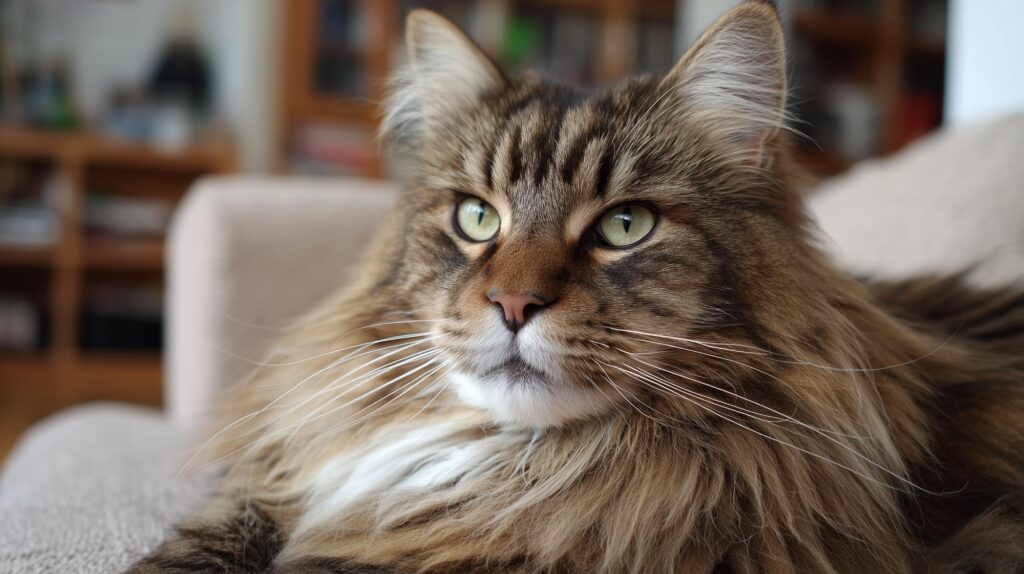
Hip dysplasia does exist in Maine Coons, but it is far less understood in cats than it is in dogs. Most of what people think they know about hip dysplasia comes from canine medicine, where the disease has been heavily studied, screened, and standardized—none of which fully applies to cats.
This topic causes confusion and conflict online because dog-based testing standards are often applied to cats without enough context, leading to accusations, oversimplification, and unrealistic expectations of breeders.
This article explains what hip dysplasia actually is, why feline science is limited, how current testing works (and where it falls short), the role of genetics versus environment, and what realistic, responsible management looks like in Maine Coons.
What Is Hip Dysplasia?
Hip dysplasia is a condition where the hip joint does not form or fit together as tightly as intended. The ball of the femur and the socket of the pelvis may be shallow, misaligned, or unstable, which can affect how the joint moves over time.
In practical terms, hip dysplasia can:
- Alter joint mechanics
- Increase wear on cartilage
- Contribute to arthritis later in life
It is important to understand that structure does not equal pain. Some cats with abnormal hip structure remain comfortable for years, while others with seemingly normal structure can still develop joint problems.
Cats also compensate very differently than dogs. They are lighter on their feet, distribute weight across multiple joints, and instinctively mask discomfort. This means:
- Lameness is less obvious
- Pain may not present as limping
- Structural issues can exist without visible symptoms
These differences are a major reason why applying dog-based assumptions to cats—especially large, slow-maturing breeds like Maine Coons—often leads to misunderstanding rather than clarity.
Why Hip Dysplasia Is Discussed Differently in Cats Than Dogs
Most of what people think they know about hip dysplasia comes from dog medicine, not feline medicine. The condition has been studied extensively in dogs for decades, especially in large and working breeds, which is why standardized screening systems, breeding thresholds, and long-term outcome data exist on the canine side.
Cats simply do not have that same body of research behind them.
Canine models don’t translate cleanly to cats for several reasons. Dogs carry more weight through their hips, have different gait mechanics, and show pain and lameness much more obviously. Cats distribute weight differently, jump rather than run for distance, and are exceptionally good at compensating for joint irregularities without showing overt signs of discomfort. A structural issue that would sideline a dog may barely register behaviorally in a cat.
There is also a lack of long-term feline outcome data. In dogs, we have decades of information connecting hip structure to arthritis severity, pain levels, mobility decline, and lifespan impact. In cats, that data is sparse. We do not yet have strong, large-scale studies that clearly link a specific radiographic hip appearance to future pain, functional impairment, or quality of life.
This gap in knowledge is the reason hip dysplasia in cats—and especially in Maine Coons—remains a topic of debate rather than consensus.
Hip Dysplasia in Maine Coons Specifically
Hip dysplasia is discussed more often in Maine Coons primarily because they are a large, slow-maturing breed. Larger size increases mechanical load on joints, and slow maturation means joint development continues well into adulthood. Both factors can influence how hips form and how they are interpreted on imaging.
What we know from limited feline studies and long-term clinical observation is this: hip irregularities do appear in Maine Coons more often than in smaller, lighter cats, but the clinical significance of those findings varies widely. Some cats with noticeable structural changes remain active and comfortable for years. Others may develop stiffness or arthritis later in life, influenced by multiple factors beyond hip shape alone.
Prevalence numbers are often unclear or overstated because:
- Screening is not standardized across the breed
- Many cats are never imaged unless there is a reason
- Studies often involve small sample sizes
- Dog-based assumptions are sometimes applied to feline data
As a result, percentages quoted online frequently reflect who was tested, not how common clinically meaningful hip disease actually is in the population.
Genetics vs Environment: Why Hip Dysplasia Is Not a Simple Inherited Disease
Hip dysplasia is polygenic, meaning it is influenced by multiple genes rather than a single inherited mutation. There is no single “hip dysplasia gene” that can be tested for or eliminated. Instead, risk is shaped by a combination of genetic tendencies and how those tendencies interact with development and environment.
This complexity is why two related cats can have very different outcomes, and why removing one cat from breeding does not automatically remove risk from a line.
Environmental contributors play a major role, especially during growth. These include:
- Growth rate during kittenhood
- Body weight and condition
- Nutrition quality and balance
- Activity level and surface traction
- Overall muscle development
A genetically moderate-risk cat raised with controlled growth and appropriate weight may fare far better than a genetically lower-risk cat that grows too quickly or carries excess weight early in life.
This interaction between genetics and environment is a key reason hip dysplasia in Maine Coons cannot be managed through testing alone—and why thoughtful judgment often matters more than rigid rules.
Environmental Factors That Shape Hip Outcomes
Hip structure does not develop in isolation. How a Maine Coon grows and lives—especially in the first year—can significantly influence how hips function long term.
Growth rate
Rapid growth places stress on developing joints before supporting muscle and connective tissue have fully matured. Slow, steady growth allows the hips to stabilize gradually, which is especially important in large, slow-maturing breeds like Maine Coons.
Weight during development
Excess weight in kittenhood increases mechanical load on immature joints. Even moderate extra weight can amplify joint laxity or accelerate wear in cats that are already structurally borderline.
Nutrition
Balanced nutrition matters more than high-calorie feeding. Overfeeding in the name of “supporting size” can do more harm than good. Appropriate protein, controlled calories, and balanced minerals support joint development without forcing rapid growth.
Activity and surface type
Regular movement builds muscle that helps stabilize joints, but environment matters. Slippery floors, repetitive high-impact jumping, or limited traction can affect how joints are stressed during development. Cats raised with varied, stable surfaces tend to develop better muscular support.
Why two cats with similar genetics can have very different outcomes
Because hip dysplasia is polygenic and environmentally influenced, two closely related cats can diverge dramatically. One may remain comfortable for life, while another develops stiffness or arthritis. Genetics set the range of possibility; environment often determines where within that range an individual cat lands.
Current Hip Testing Methods and Their Limits
Hip screening in cats relies on tools originally developed for dogs. While these methods can provide useful information, they come with important limitations when applied to feline patients.
OFA Hip Evaluation
Orthopedic Foundation for Animals (OFA) hip evaluations were designed to assess canine hip conformation and later adapted for cats.
In cats, OFA evaluates:
- Hip joint conformation
- Femoral head and socket alignment
- Signs of dysplasia or degenerative change
What OFA results do tell us:
- Whether hip structure appears within an acceptable range at the time of imaging
- How a cat compares structurally to others evaluated using the same system
What OFA results do not tell us:
- Whether the cat will experience pain
- Whether arthritis will develop
- How the cat will function over a lifetime
OFA provides a structural snapshot, not a prognosis.
PennHIP
PennHIP measures hip joint laxity using a distraction index, offering a numerical assessment rather than a visual grade.
What PennHIP requires:
- Anesthesia or heavy sedation
- A veterinarian trained and certified in the PennHIP method
- Specialized positioning and imaging
These requirements contribute to its higher cost.
Why feline interpretation is still evolving:
- PennHIP thresholds were established using canine populations
- There is limited feline-specific outcome data linking distraction index values to pain or arthritis
- “Better” or “worse” scores in cats do not yet correlate clearly with quality of life
Why higher cost does not equal definitive answers:
PennHIP can provide detailed structural data, but more detail does not automatically mean more certainty. In cats, especially Maine Coons, the ability to predict long-term outcome from laxity measurements remains limited.
For this reason, many ethical breeders view hip testing—whether OFA or PennHIP—as contextual data, not a final verdict. The results inform decisions, but they do not replace judgment, line tracking, or an understanding of how cats actually live with their joints over time.
Why a “Normal” Hip Result Doesn’t Guarantee a Problem-Free Life
Hip imaging can be useful, but it is often misunderstood as a predictor of comfort or longevity. In cats, especially Maine Coons, that assumption doesn’t hold up well.
Structure ≠ pain
A radiograph shows how a joint looks, not how it feels. Cats can function comfortably with hips that appear imperfect on imaging, and they can experience discomfort even when imaging looks unremarkable. Pain perception, muscle support, body condition, and activity level all influence outcome in ways an image cannot capture.
Why some cats with abnormal hips live comfortably
Many cats with radiographic irregularities never show clinical signs. Cats are lighter, distribute weight differently than dogs, and rely heavily on muscular compensation. If muscle tone is good and weight is well managed, structural imperfections may never translate into functional problems.
Why some cats with normal imaging still develop arthritis
Arthritis is influenced by more than joint shape. Age, weight, activity patterns, prior injury, and inflammation all contribute. A “normal” hip at one point in time does not protect a cat from degenerative change later, especially as joints age.
Limits of snapshot testing
Hip evaluations capture a single moment. They cannot predict how a joint will respond to years of use, growth patterns, or environmental stressors. This is why imaging is best viewed as contextual information, not a guarantee.
Why Some Ethical Breeders Do Not Hip Test
The absence of hip testing does not automatically indicate neglect or avoidance. In many cases, it reflects a reasoned response to the current limits of feline orthopedic science.
Science gaps in feline orthopedics
Most hip testing protocols were developed for dogs. Feline-specific data linking hip scores to pain, arthritis severity, or quality of life is still limited. Without strong outcome data, some breeders question how actionable the results truly are.
Risk of eliminating valuable genetics prematurely
Using imperfect tools to make irreversible decisions can remove cats that contribute important traits—temperament, health strengths in other areas, genetic diversity—without clear evidence that hip findings would ever become clinically meaningful.
Cost vs actionable benefit considerations
Hip testing, especially advanced methods, can be expensive. Some breeders prioritize testing that directly informs decision-making, such as cardiac screening and line tracking, rather than investing heavily in tests with unclear predictive value.
Why not testing ≠ hiding information
Many breeders manage hips through observation, offspring outcomes, weight management, and long-term tracking rather than formal imaging. Choosing not to test is not the same as ignoring the issue; it is often a different management strategy.
Why Eliminating Cats Based on Hip Results Can Harm the Breed
Over-correction can be just as damaging as inaction.
Genetic diversity concerns
Maine Coons come from a finite foundation population. Removing every cat with a borderline or imperfect hip result quickly narrows the gene pool, increasing inbreeding and reducing resilience.
Bottleneck risks
Bottlenecks amplify other problems. As diversity shrinks, unrelated issues—immune weakness, fertility problems, other inherited conditions—can rise, even if hip scores improve on paper.
Lessons from dog breeds
In some dog breeds, aggressive selection for hip scores led to reduced diversity without eliminating joint disease. Focusing too narrowly on one metric created new health challenges elsewhere.
Long-term consequences of overcorrection
Once genetic diversity is lost, it cannot be recovered. Ethical breeding balances risk reduction with stewardship, recognizing that no single test should outweigh the long-term health of the breed.
Hip management in Maine Coons works best when imaging, observation, environmental control, and line history are considered together—rather than allowing one result to dictate decisions that affect the breed for generations.
What Responsible Hip Management Actually Looks Like
Responsible hip management in Maine Coons focuses on long-term observation and decision-making, not checklists. Because feline hip science is still evolving, ethical programs use multiple data points over time instead of relying on a single test result.
Monitoring structure, movement, and comfort over time
Breeders actively watch how cats move, jump, sit, and age. Changes in gait, posture, or ease of movement across years often reveal more than one image taken at a single age.
Tracking offspring outcomes instead of isolated results
What a cat produces matters more than how one set of hips appears on an X-ray. Ethical programs follow offspring into adulthood and evaluate whether they stay mobile and comfortable, and whether issues repeat across litters or resolve with different pairings.
Managing weight and growth in kittens
Breeders control growth intentionally. Slow, steady development and lean body condition place far less stress on immature hips than rapid growth or excess weight, making growth management one of the most effective protective tools available.
Adjusting breeding plans based on patterns, not fear
When patterns emerge across siblings, offspring, or repeated pairings, breeders change course. They base decisions on accumulated evidence, not isolated findings or outside pressure.
What Buyers Should Ask About Hips (Without Accusation)
Buyers don’t need to demand specific tests to understand how a breeder manages hips. The most useful questions focus on process, observation, and experience.
How breeders evaluate structure overall
Ask how breeders assess structure in daily life, not just on paper. Experienced programs can explain what they look for in movement, balance, and physical development.
What they’ve observed in their lines over time
Long-running programs track how cats age. Ask what has appeared, what hasn’t, and how breeding decisions changed as new information became available.
How offspring age and move as adults
Adult offspring provide the clearest insight. Ask whether cats remain active, mobile, and comfortable as they mature.
How nutrition and growth are managed
Ask how kittens are fed, how breeders monitor weight, and how they pace growth. These practices directly influence joint outcomes and often matter more than any single test result.
What We Do at Almonte Cats to Reduce Hip Dysplasia Risk
Hip dysplasia is not something we approach casually, but we also don’t pretend it’s a problem that can be solved with a single test or checklist. Our approach focuses on risk reduction through structure, environment, and long-term management, not dog-based standards applied blindly to cats.
Here’s what that looks like in practice.
- X-ray new lines and active breeding cats
When we bring in new lines or evaluate breeding cats, we use imaging as a data point, not a guarantee. We are looking for obvious structural problems, not chasing “perfect” hips based on tools that were never designed with cats in mind. - We do not breed cats with clear signs of hip dysplasia
Cats showing obvious structural abnormalities or movement issues are not bred. This is a straightforward decision. Reducing risk does not require eliminating every borderline or unknown—it requires not compounding known problems. - We raise kittens on grippy, stable surfaces
Environment matters. Our kittens are raised on surfaces that provide traction, not slippery flooring that forces joints to compensate during critical growth periods. This reduces unnecessary stress on developing hips. - We limit jumping and cat trees until maturity
Maine Coons are large, slow-maturing cats. We intentionally limit high-impact jumping and excessive vertical activity while kittens are still developing. Cat trees and unrestricted jumping are introduced thoughtfully as structure and muscle mature. - We prioritize nutrition and joint support
Kittens and adults are fed a high-quality, balanced diet designed to support steady growth—not rapid size gain. We also use joint-support supplements as part of an overall long-term management strategy, not as a quick fix. - We do not overbreed cats
Overbreeding increases physical stress and reduces the body’s ability to recover and maintain musculoskeletal health. Cats in our program are bred conservatively, with rest and longevity in mind.
Reduced Risk
None of these steps eliminate risk entirely—nothing does. But taken together, they significantly reduce the likelihood that structural predispositions turn into functional problems. This is how hip management actually works in cats: through consistency, restraint, and long-term thinking, not optics or pressure to follow dog-based rules that don’t fit feline reality.
What Owners Can Do After Purchase
Owners play a significant role in long-term joint health, regardless of genetics.
Keeping Maine Coons lean
Excess weight is one of the strongest contributors to joint strain. Lean cats place less stress on hips and maintain mobility longer.
Supporting joint health through lifestyle
Regular, moderate activity builds muscle that stabilizes joints. Providing traction, varied surfaces, and safe climbing options helps maintain strength without overloading joints.
Recognizing signs of discomfort
Cats rarely limp dramatically. Subtle signs such as reduced jumping, hesitation, stiffness after rest, or changes in posture deserve attention.
When imaging is actually useful
Imaging is most helpful when there are persistent signs of discomfort, changes in movement, or when veterinary guidance suggests it will change management. Routine imaging without context often adds little.
Responsible hip care in Maine Coons is about steady management, realistic expectations, and long-term observation—not chasing perfect images or blaming breeders for an evolving area of science.
How to Support a Cat With Hip Dysplasia
Supporting a cat with hip dysplasia is less about aggressive intervention and more about reducing joint strain, maintaining comfort, and preserving mobility over time. Many cats do very well with thoughtful management and never require invasive treatment.
Keep body weight lean and stable
Excess weight is the single biggest factor that worsens joint stress. Keeping a cat lean:
- Reduces mechanical load on the hips
- Slows arthritic changes
- Improves overall mobility and stamina
Even small weight changes matter, especially in large-framed cats.
Support movement without overloading joints
Movement is important, but it should be controlled and consistent, not extreme.
Helpful adjustments include:
- Encouraging gentle, regular activity
- Avoiding forced jumping or repeated high-impact leaps
- Using ramps or step stools for favored surfaces
Muscle strength supports joints. Inactivity often makes stiffness worse.
Improve the home environment
Small environmental changes can significantly reduce joint strain:
- Use rugs or runners on slippery floors
- Provide low-entry litter boxes
- Choose wide, stable resting areas instead of narrow perches
Cats naturally adjust their movement when their environment supports them.
Use nutrition and supplements thoughtfully
A high-quality, balanced diet supports joint health indirectly by maintaining ideal body condition. Some cats also benefit from:
- Joint-support supplements recommended by a veterinarian
- Omega-3 fatty acids for inflammation support
Supplements don’t “fix” hips, but they can improve comfort for some cats.
Watch for subtle changes
Cats rarely show dramatic pain signals. Signs that support needs adjustment may include:
- Reduced jumping or climbing
- Hesitation before movement
- Stiffness after resting
- Changes in posture or sitting position
These signs don’t always mean progression, but they do warrant attention.
Work with your veterinarian when needed
Veterinary involvement matters when:
- Discomfort becomes persistent
- Mobility declines noticeably
- Pain management is required
Imaging and medication are most useful when they will change management, not simply confirm what is already suspected.
The bigger picture
Many cats with hip dysplasia live comfortable, active lives. Support works best when it focuses on long-term comfort, weight control, and environment, rather than chasing perfect imaging or assuming decline is inevitable.
Hip dysplasia in cats is often something to manage, not something that defines the cat’s quality of life.
Common Myths About Hip Dysplasia in Maine Coons
Hip dysplasia in Maine Coons is often discussed using dog-based assumptions and oversimplified claims. These myths create unnecessary fear and unfairly frame responsible breeding decisions.
“All large cats get hip dysplasia”
Size alone does not cause hip dysplasia. While larger cats place more load on their joints, many large Maine Coons never develop clinically meaningful hip problems. Size can influence risk, but it does not determine outcome.
“Hip testing guarantees soundness”
Hip testing provides structural information at one point in time. It does not predict pain, arthritis, or lifetime comfort. A normal result does not guarantee future soundness, and an abnormal result does not guarantee a poor quality of life.
“Breeders who don’t test are irresponsible”
Hip testing in cats is still based largely on canine models with limited feline-specific outcome data. Some ethical breeders choose to manage hips through observation, offspring tracking, and growth control rather than formal imaging. Choosing not to test is not the same as ignoring the issue. See more Health Testing for Maine Coons information here.
“Hip dysplasia always causes pain”
Hip dysplasia describes joint structure, not pain level. Many cats with structural abnormalities remain comfortable and active, while some cats with normal imaging still develop arthritis. Pain depends on multiple factors, not hip shape alone.
Final Thoughts
Hip dysplasia can occur in Maine Coons, but it is poorly defined in cats and cannot be managed with dog-based rules. Current testing tools provide limited, snapshot information and do not reliably predict pain, mobility, or quality of life. Genetics, growth rate, weight, environment, and long-term management all interact to shape outcomes. Responsible breeding and ownership focus on risk reduction, observation over time, and practical management, not guarantees or fear-driven decisions.
Related Maine Coon Articles
If you’re researching Maine Coons seriously, these guides expand on the topics covered above:
- Maine Coon Health Testing: What Owners Should Know
- Maine Coon Lifespan: How Long They Live and What Affects Longevity
- HCM in Maine Coons: Risks, Testing and Genetics
- Why Maine Coons are not for Everyone: An Honest Compatibility Breakdown
- What Makes an Ethical Maine Coon Breeder (and What Doesn’t)
- Maine Coon Size, Growth, and Weight: What’s Normal and What’s Not
Sources & References
- Orthopedic Foundation for Animals (OFA)
Feline hip dysplasia overview and radiographic evaluation framework
https://ofa.org - PennHIP
Joint laxity measurement methodology and limitations outside canine populations
https://pennhip.org - Journal of Feline Medicine and Surgery
Clinical observations on feline orthopedic disease, pain expression, and mobility - Veterinary Radiology & Ultrasound
Studies on radiographic hip findings in cats and their limited correlation with clinical signs - American Association of Feline Practitioners (AAFP)
Feline musculoskeletal health, pain recognition, and management guidance
https://catvets.com - Keller GG, et al.
Hip dysplasia in cats: radiographic findings and clinical relevance. Veterinary Radiology & Ultrasound. - Pedersen NC.
Genetic diversity and inherited disease in cats. UC Davis publications.
Feline orthopedic research is still evolving; current screening tools and recommendations are adapted from canine models and should be interpreted with caution in cats.






Read the Comments +