
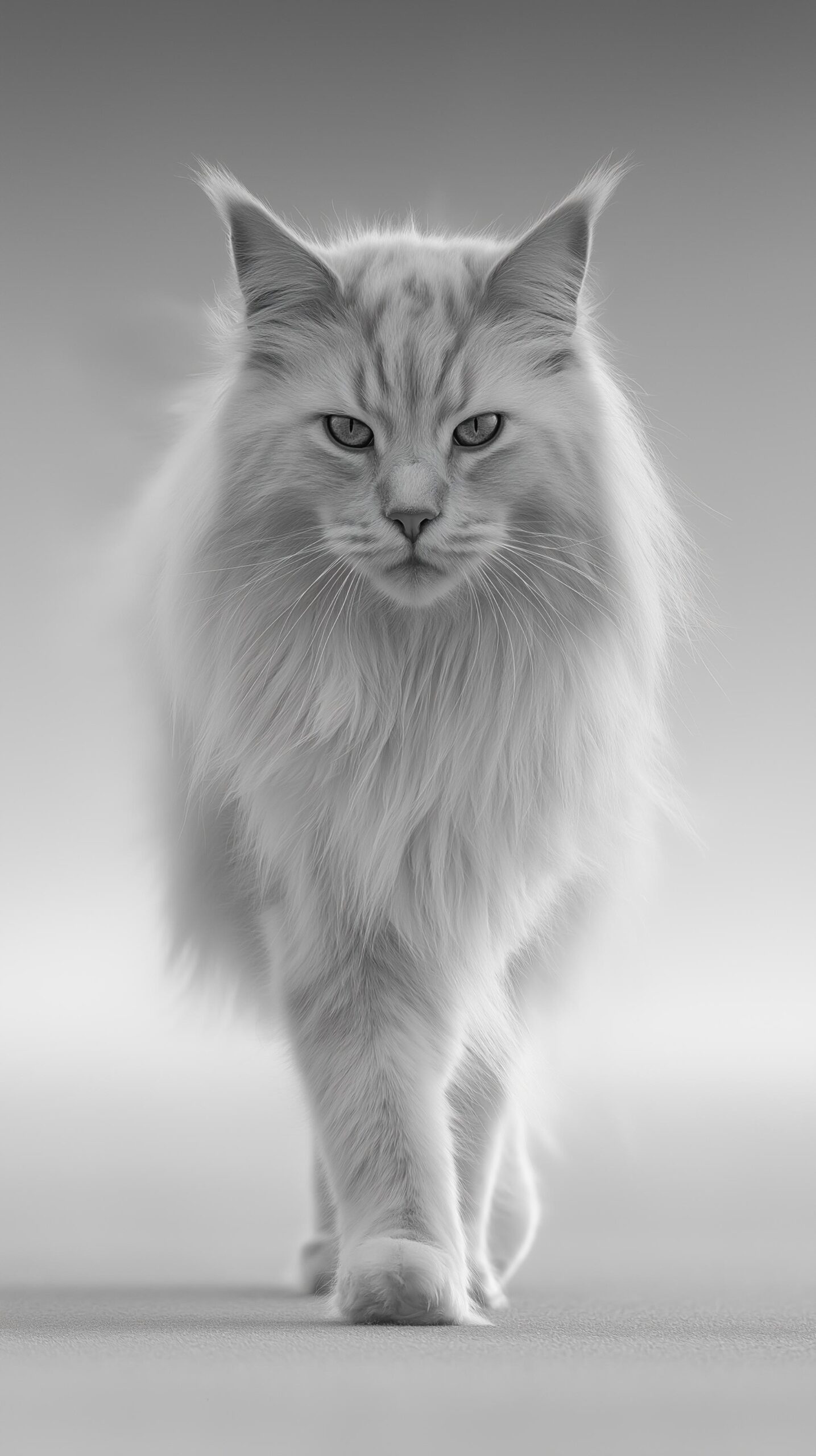
Shaded vs Smoke Maine Coons: Differences, Prices, and How to Tell Them Apart
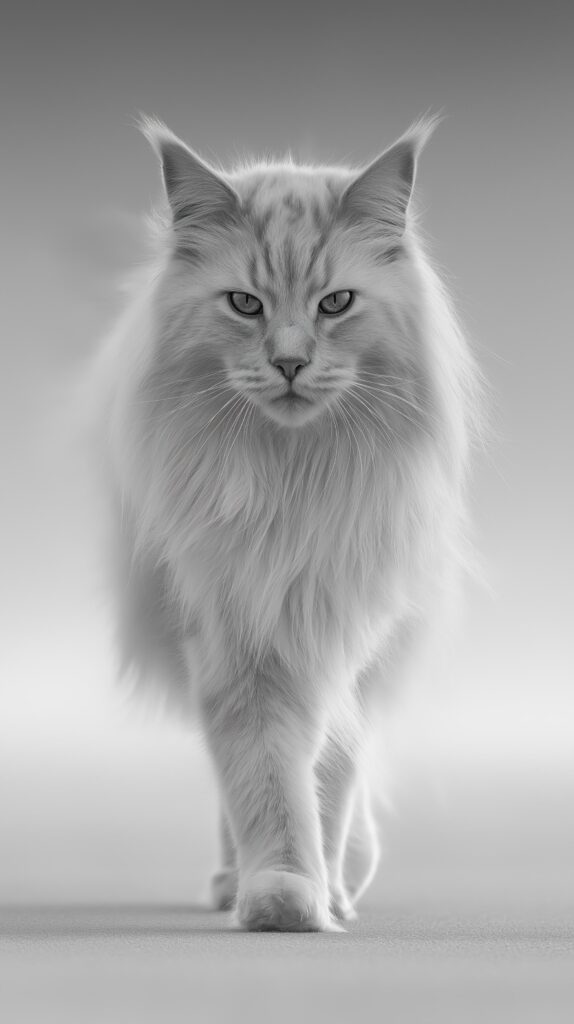
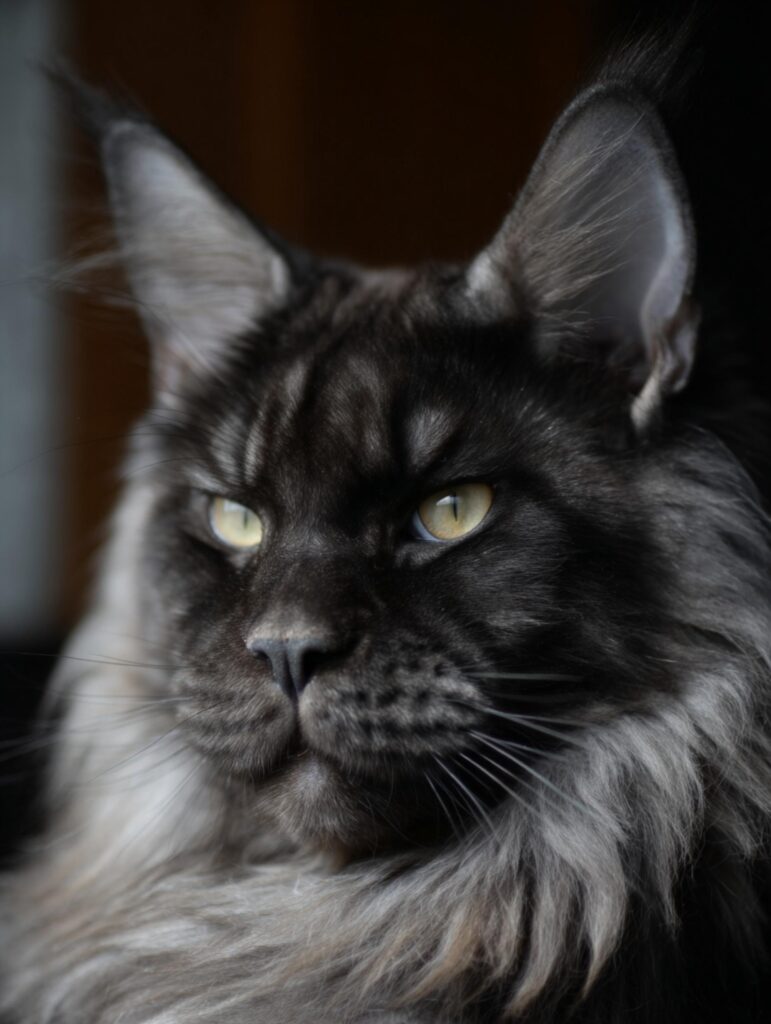
Shaded vs smoke Maine Coons are often confused because both involve silver genetics and both change significantly as kittens mature. The true difference, however, lies in how pigment is distributed on each individual hair, not in surface color or early appearance.
Shaded Maine Coons have light bases with darker tipping that creates a visible gradient across the coat, while smoke Maine Coons are solid-colored cats with silver roots hidden beneath a dark outer layer.
This post explains the genetic structure, visual development, pricing differences, and buyer considerations so you can confidently tell shaded and smoke Maine Coons apart and choose the coat that you want most.
Shaded vs Smoke Maine Coons — At-a-Glance Summary
| Topic | Shaded Maine Coon | Smoke Maine Coon |
|---|---|---|
| Coat Structure | Light base with darker tipping at the ends of each hair | Dark pigment along most of the hair with silver only at the root |
| Visual Effect | Soft, luminous gradient visible across the coat | Solid appearance at rest with silver revealed when parted or moving |
| Hair-Level Difference | Dark pigment sits at the tip | Dark pigment covers the shaft, silver at the base |
| Kitten Appearance | Rarely looks clearly shaded early | Often appears lighter before dark topcoat develops |
| Adult Appearance | Refined, layered, elegant | Bold, dramatic, high-contrast |
| Visibility of Silver | Visible without parting | Hidden unless coat is separated |
| Development Timeline | Clarity stabilizes ~12–24 months | Darkens and stabilizes with maturity |
| Grooming Impact | Separation enhances contrast | Grooming smooths surface, silver stays hidden |
| Typical Price Range | ~$6,000–$10,000+ | ~$5,000–$8,000 |
| Buyer Appeal | Luxury, understated aesthetic | Dramatic, striking contrast |
Snippet target:
The difference between shaded and smoke Maine Coons lies in how pigment is distributed on each hair—shaded coats have dark tipping, while smoke coats are solid with silver roots.
Shaded vs Smoke Maine Coons: What is the Difference?
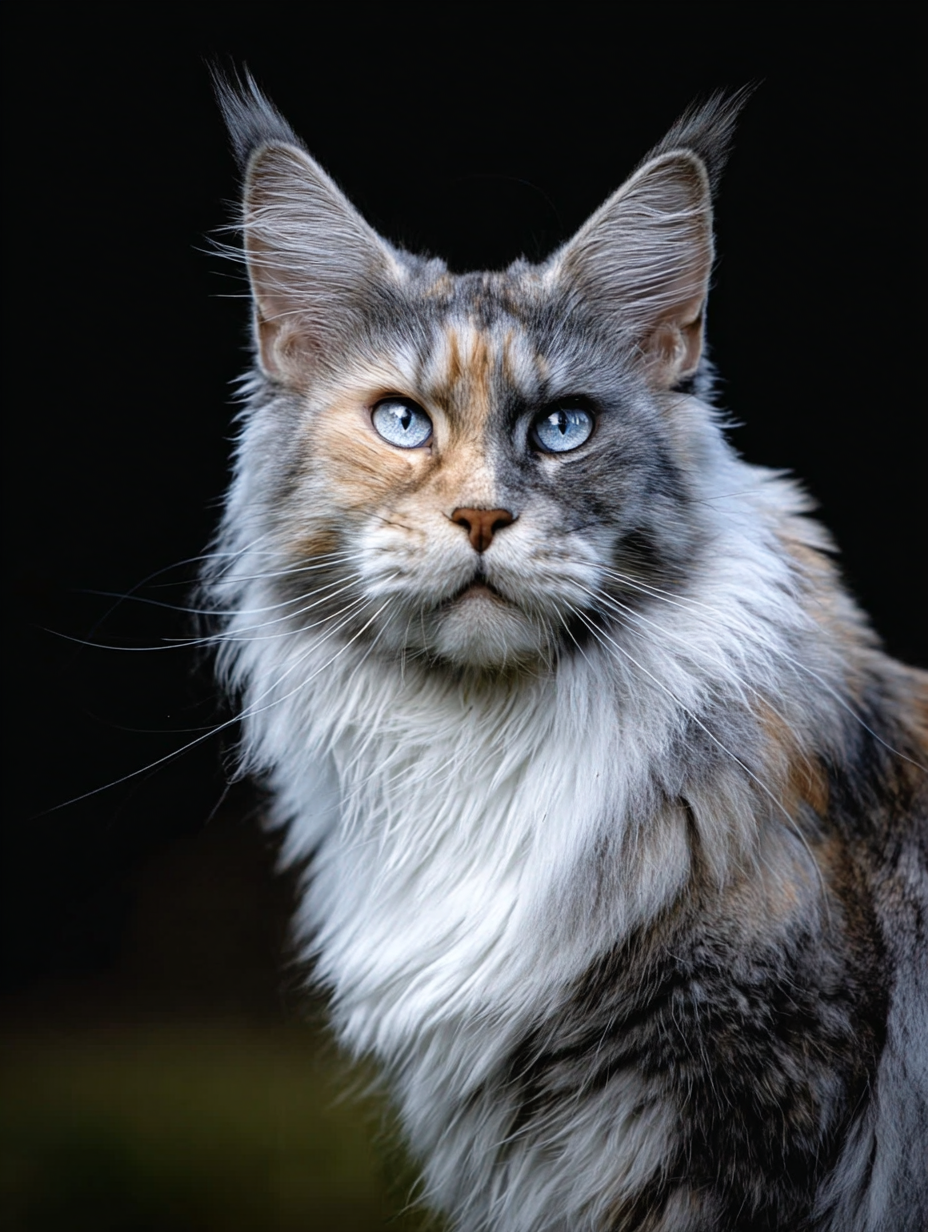
Shaded and smoke Maine Coons are often confused because both involve the silver gene and both can appear light during kittenhood, but they are built on different coat structures. In a shaded Maine Coon, each hair is light at the base with darker pigment concentrated toward the tip, creating a visible gradient across the coat.
In a smoke Maine Coon, each hair is dark along most of its length with silver only at the root, which remains hidden unless the coat is parted or the cat moves. These coats are most commonly confused because early kitten coats lack mature pigment placement and because lighting and photos can obscure where color actually sits on the hair.
What a Smoke Maine Coon Is
A smoke Maine Coon is genetically a solid-colored cat with silver influence, not a patterned or tipped coat. The defining feature of smoke is where the silver appears on the hair shaft.
Smoke Coat Structure
- Solid color genetics
Smoke Maine Coons are genetically solid (black, blue, red, or cream), meaning the pigment is intended to cover the hair evenly rather than form stripes or gradients. - Silver inhibitor gene affecting only the base
The silver gene lightens the hair at the root, close to the skin, while leaving the rest of the hair unaffected. - Dark pigment covering most of the hair
The majority of each hair shaft is dark. Only the base is silver, which is why smoke coats often look solid until the fur is separated.
This structure is consistent and does not change with age, even though its visibility does.
How Smoke Looks in Real Life
- Solid appearance at rest
When a smoke Maine Coon is sitting or standing still, the coat typically reads as a solid color with little visible silver. - Silver revealed when parted or in motion
When the coat is parted by hand or lifted by movement, the silver roots become visible, creating a dramatic contrast effect. - Why smoke coats appear dramatic as adults
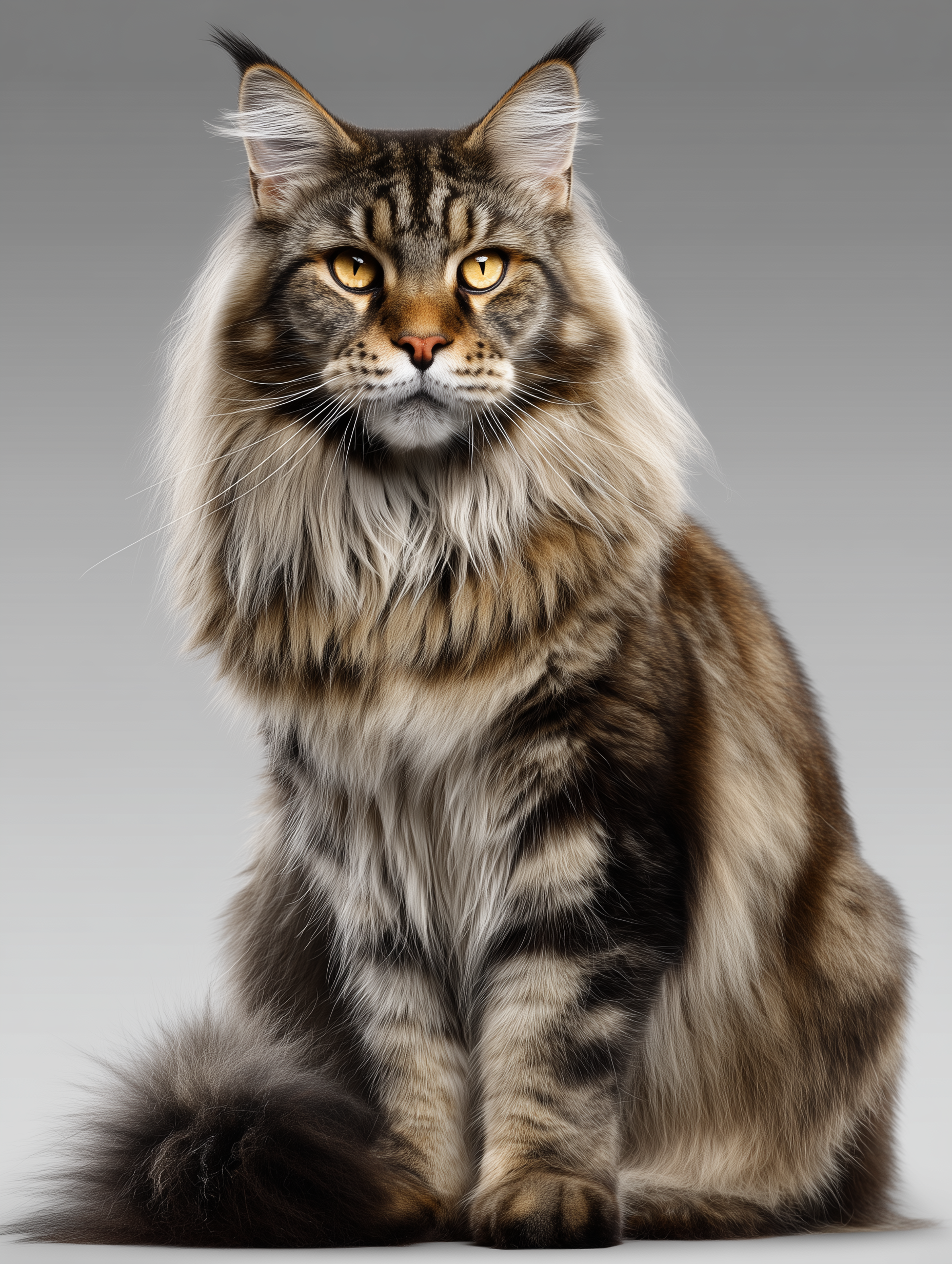
As the coat lengthens and dark pigment fully develops, the contrast between the dark outer coat and bright silver base becomes more pronounced. Adult smoke Maine Coons often have a bold, high-contrast look that is not apparent in kittens.
This delayed visual impact is one of the main reasons smoke kittens are frequently mistaken for shaded kittens early on, before the adult coat fully expresses itself.
What a Shaded Maine Coon Is
A shaded Maine Coon is defined by a tipped coat structure, not by a solid color or a bold pattern. The shaded effect comes from how pigment is placed along each individual hair, creating depth and luminosity rather than high contrast.
Shaded Coat Structure
- Patterned coat with silver influence
Shaded Maine Coons are genetically patterned cats influenced by the silver inhibitor gene. This means the coat is not solid; instead, silver modifies how pigment expresses along the hair. - Light base with darker tipping
Each hair is pale or silver at the root and mid-shaft, with darker pigment concentrated toward the end. The darker portion typically covers roughly one-third of the hair, creating a soft veil of color rather than a solid overlay. - Gradual pigment transition
Unlike smoke coats, where pigment shifts abruptly at the root, shaded coats show a gradual transition from light to dark. There is no sharp line separating silver and color.
This structure is what produces the shaded effect and distinguishes it genetically from smoke, even when early coats look similar.
How Shaded Looks in Real Life
- Luminous, layered appearance
Shaded Maine Coons appear bright and dimensional. Light reflects through the silver base and off the darker tips, giving the coat a layered, almost glowing quality. - Gradient visible without parting
The shaded gradient is visible across the surface of the coat without needing to part the fur. This is one of the easiest ways to distinguish shaded from smoke in mature cats. - Softer contrast than smoke
Shaded coats have a refined, understated look. The contrast is intentionally softer than smoke, which relies on dramatic dark-to-silver contrast when the coat moves.
Shaded vs Smoke — Hair-Level Comparison (Core Section)
The most reliable way to distinguish shaded and smoke Maine Coons is to ignore overall color impressions and focus on where pigment sits on each hair.
- Where the dark pigment sits on the hair
In shaded coats, dark pigment sits at the tip of the hair. In smoke coats, dark pigment covers most of the hair, with silver restricted to the root. - How much of the hair is pigmented
Shaded Maine Coons typically show dark pigment on about one-third of the hair. Smoke Maine Coons show dark pigment along the majority of the hair length. - Root vs tip visibility
In shaded coats, the light base and dark tip are both visible without manipulation. In smoke coats, the silver base is hidden until the coat is parted or lifted. - Why structure matters more than the color name
Labels can be applied loosely, especially in kitten listings, but hair structure does not change. Understanding pigment placement provides clarity that photos and names cannot, and it explains why shaded and smoke coats develop so differently over time.
This hair-level distinction remains consistent throughout the cat’s life and is the foundation for accurate identification.
Why Shaded and Smoke Are Confused So Often
Shaded and smoke Maine Coons are confused more than any other coat types because both involve silver genetics and both change significantly as the cat matures. The confusion is not caused by poor breeding knowledge alone, but by normal developmental and presentation factors that obscure early identification.
- Kitten coat immaturity
Young kittens have short, fine coats that lack the length needed to show clear pigment placement. Without sufficient hair length, the difference between dark tipping and dark shafts is difficult to see, making shaded and smoke kittens appear similar. - Delayed pigment development in smoke
Smoke coats often develop their dark outer layer later than expected. Before this pigment fully settles, smoke kittens can appear pale or softly colored, closely resembling shaded kittens during early growth stages. - Lighting and photography distortion
Lighting conditions dramatically alter how silver and pigment appear. Bright lighting can wash out contrast, while low lighting can exaggerate darkness. Still photos freeze a single moment and often fail to show where pigment sits along the hair. - Social media mislabeling
Online platforms prioritize visual appeal over accuracy. Shaded and smoke kittens are frequently mislabeled based on appearance rather than structure, and these labels are repeated and normalized across posts, further spreading confusion.
Shaded vs Smoke Kittens vs Adults
Understanding how shaded and smoke coats evolve over time is essential for accurate identification and realistic expectations.
Kitten Stage Confusion
- Why both can look light early
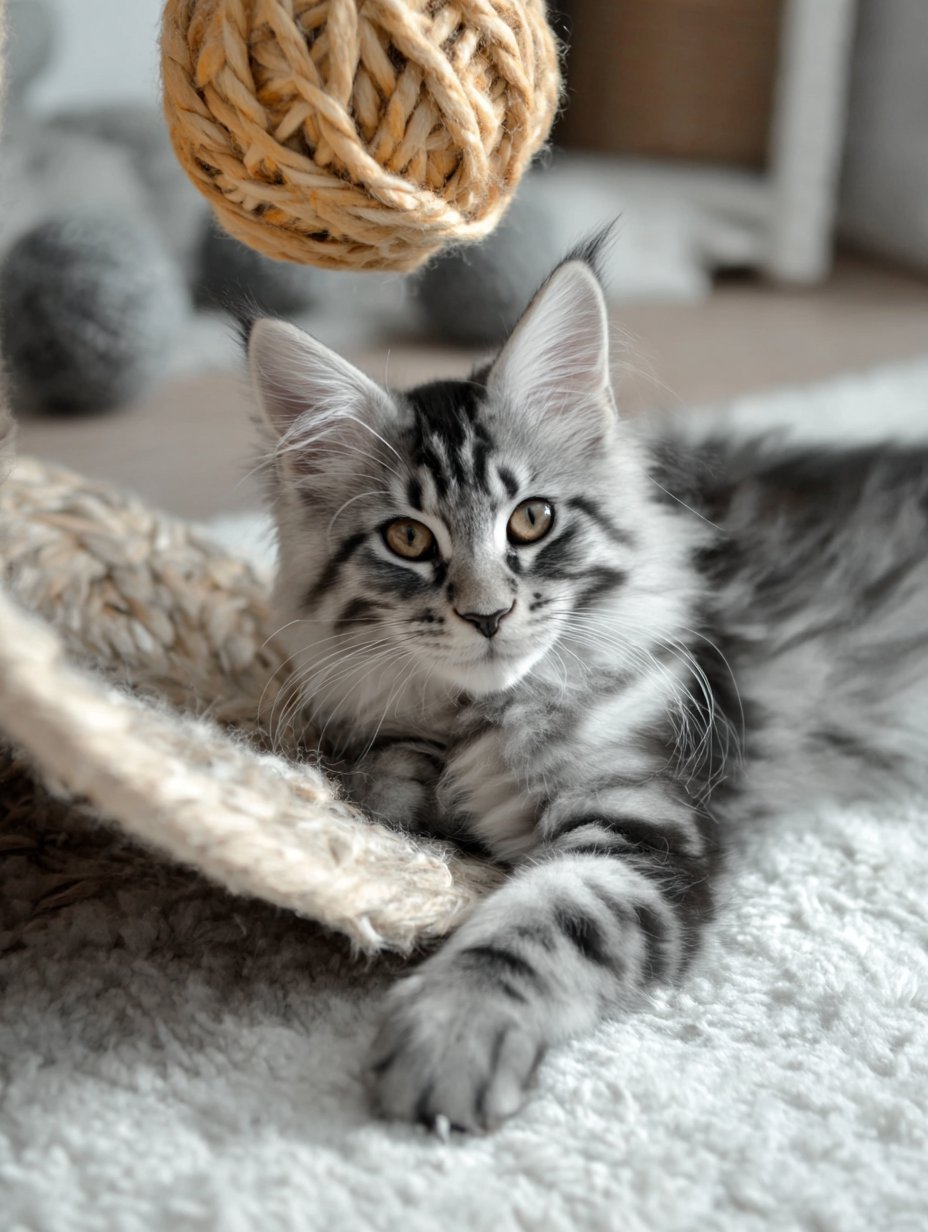
During kittenhood, neither shaded nor smoke coats have fully developed pigment distribution. Smoke kittens have not yet built a dense dark topcoat, and shaded kittens have not yet developed clear tipping. - Why early photos are unreliable
Early images capture incomplete coat development and are heavily influenced by lighting and grooming. Without mature hair structure, photos cannot reliably predict adult coat type.
At this stage, visual differences are subtle and often misleading.
Adult Coat Clarity
- When smoke darkens
As smoke Maine Coons mature, the dark pigment spreads fully along the hair shafts. The coat appears solid at rest, with silver visible only when the fur is parted or the cat moves. - When shaded gradients stabilize
Shaded Maine Coons gradually develop consistent tipping as guard hairs lengthen. The light-to-dark gradient becomes visible across the coat surface without manipulation. - Timeline comparison
Early signs may appear between 6–12 months, but reliable identification typically occurs between 12–24 months. By full maturity, shaded and smoke coats are clearly distinguishable and remain stable thereafter.
This developmental timeline explains why early classification often changes, while adult coats provide lasting clarity.
Grooming, Lighting, and Presentation Differences
Shaded and smoke Maine Coons respond very differently to grooming and presentation because their defining pigment sits in different locations on the hair shaft. Understanding this explains why the same cat can look dramatically different across environments and photos.
How Grooming Affects Each Coat Differently
Grooming enhances different features depending on coat type. Smoke coats benefit from smoothness, while shaded coats depend on separation and lift. Brushing does not change genetics, but it determines which visual elements are emphasized.
Why Smoke Hides Silver Unless Parted
In smoke Maine Coons, dark pigment covers most of the hair length, with silver confined to the root near the skin. When the coat lies flat, the silver remains hidden. The contrast appears only when the coat is parted by hand or lifted through movement, which is why smoke coats often look solid at rest and dramatic in motion.
Why Shaded Depends on Coat Separation
Shaded Maine Coons rely on visible contrast between the light base and darker tips. When the coat is compacted, the darker tips collapse into the lighter undercoat, flattening the gradient. Proper grooming separates the hairs, allowing light to pass through the base and reflect off the tips, restoring depth and clarity.
Indoor vs Natural Light Effects
Lighting changes perception significantly. Natural daylight reveals layered coats more accurately, enhancing gradients in shaded cats and subtle silver flashes in smoke cats. Indoor lighting—especially warm or overhead light—flattens contrast, often making shaded coats look paler and smoke coats look darker than they truly are.
Temperament Myths About Shaded vs Smoke Maine Coons
Temperament myths persist largely because humans assign meaning to appearance. Coat type, however, has no behavioral influence in Maine Coons.
No Temperament Difference by Coat
Shaded and smoke Maine Coons share the same breed temperament profile. Coat pattern does not affect sociability, calmness, intelligence, or affection. Two kittens from the same litter—one shaded, one smoke—can have identical personalities.
Why Visual Bias Influences Perception
Lighter, softer-looking coats are often interpreted as gentle or calm, while darker, high-contrast coats are perceived as bold or intense. Shaded coats appear refined and understated, which leads to assumptions of softness. Smoke coats appear dramatic, which can be misread as assertiveness. These associations are visual, not biological.
What Actually Determines Personality
True temperament is shaped by:
- Line: long-term selection for stable, people-oriented traits
- Early socialization: handling, exposure, and confidence-building
- Environment: routine, stimulation, and household dynamics
Buyers seeking a specific temperament should evaluate breeder practices and individual kitten behavior rather than coat type.
Price Differences Between Shaded and Smoke Maine Coons
Pricing differences between shaded and smoke Maine Coons exist, but they reflect market dynamics and breeding strategy, not inherent genetic value.
Market Demand vs Genetics
Shaded Maine Coons are currently among the most sought-after luxury expressions in the breed. Demand has increased faster than availability, particularly in programs that consistently produce shaded adults. Genetically, shaded and smoke coats are closely related, but demand drives pricing.
Why Shaded Often Prices Higher
Shaded Maine Coons often command higher prices because:
- Consistent shaded expression requires long-term selection
- Adult coat evaluation delays breeding decisions
- Programs producing shaded cats tend to operate at lower volume
- Buyers actively seek shaded as a luxury aesthetic
These factors increase opportunity cost, which is reflected in price.
Why Price Does Not Equal Quality
Higher pricing does not automatically indicate better health, temperament, or structure. Smoke and shaded kittens from the same program often share identical quality markers. Ethical breeders do not equate coat pattern with overall merit.
When Smoke Kittens Reach Similar Pricing
Smoke Maine Coons can reach comparable price points when they:
- Come from the same high-investment lines
- Display exceptional size, balance, or structure
- Are part of imported or limited programs
- Align with current buyer demand
In these cases, pricing reflects the breeding program as a whole rather than coat type alone.
Maine Coon Price Comparison — Shaded vs Smoke
| Price Category | Smoke Maine Coon | Shaded Maine Coon |
|---|---|---|
| Typical Entry Range | $5,000 – $6,500 | $6,000 – $7,500 |
| Mid-Range Pricing | $6,500 – $7,500 | $7,500 – $9,000 |
| High-End (Luxury / Top Lines) | $7,500 – $8,000 | $9,000 – $10,000+ |
| Factors That Raise Price | Show potential, imports, large structure, rare modifiers | Consistent adult shading, imports, selective silver lines, low production |
| Demand Influence | Strong but more common than shaded | Very high among luxury buyers |
| Program Investment Indicator | Good indicator when paired with health & structure | High indicator when shading is predictable and confirmed in adults |
| Price ≠ Quality Note | Can equal shaded if from top program | Higher price reflects demand and breeder strategy, not inherent superiority |
How Ethical Breeders Describe Shaded vs Smoke
Ethical breeders today rely on both genetic testing and real-world coat development. Color DNA testing can confirm what a breeding pair is capable of producing, but presentation and maturity still matter for how coats express visually.
Language Used for Smoke
Smoke Maine Coons are genetically solid cats with silver roots, which makes them more straightforward to describe once genetics are known.
- “Black smoke” / “Blue smoke”
Used when DNA confirms solid color inheritance with the silver inhibitor gene. Even if the kitten appears light early on, the breeder understands the coat will darken with maturity. - “Developing smoke”
Indicates that genetics support smoke, but the kitten’s coat has not yet fully expressed its adult depth. This reflects developmental timing, not uncertainty in genetics.
This language shows the breeder understands both genetic outcome and coat maturation.
Language Used for Shaded
Shaded coats are also genetically predictable at the inheritance level, but their visual clarity depends on how tipping develops, which cannot be fully assessed in very young kittens.
- “Developing shading”
Confirms silver and patterned genetics are present while acknowledging that tipping length and clarity are still maturing. - “Likely shaded”
Used when genetic testing and line history support shaded expression, but adult coat balance is still forming. - “Silver with shaded tendency”
A precise description indicating confirmed silver genetics with developing tipped expression.
This language reflects responsible interpretation of DNA results combined with phenotypic development.
Important Clarification on “Red Flags”
With modern DNA testing, ethical breeders can know what coat categories a pairing will produce. The concern is not genetic confirmation — it is how claims are framed for buyers.
Potential concerns arise when:
- Genetic results are presented as guaranteeing final visual expression rather than inheritance
- Early kitten photos are used to promise a specific adult look without reference to line history
- Marketing language ignores normal coat maturation timelines
Genetic testing confirms what is possible and likely, not how dramatic or refined tipping will appear in adulthood.
How to Tell Shaded vs Smoke Without Guessing
Accurate identification comes from combining genetic data, lineage history, and coat development, not from visual guesswork alone.
What to Ask Breeders
Ask questions that connect genetics to outcomes:
- What color and pattern genetics have been confirmed in the parents?
- How do shaded and smoke coats typically mature in your lines?
- At what age do you evaluate final coat presentation?
Breeders who understand their program will answer comfortably and in detail.
What Adult Photos to Request
Genetics explain possibility; adults show reality.
Request:
- Adult photos of parents and close relatives
- Images taken at full maturity
- Photos in natural, everyday settings
Adult outcomes demonstrate how consistently a breeder’s genetics express visually.
What Explanations Indicate Genetic Understanding
Strong explanations include:
- Reference to solid vs patterned inheritance
- Clear distinction between silver roots and tipped hairs
- Discussion of how tipping length stabilizes with maturity
- Integration of DNA results with adult coat history
This shows the breeder understands both genotype and phenotype.
What Signals Marketing vs Expertise
Marketing-driven presentations focus on:
- Visual certainty without developmental context
- One-off kitten appearance
- Buzzwords detached from genetics
Expert breeders focus on:
- Confirmed genetic testing
- Multi-generation outcomes
- Honest timelines for coat maturity
When genetics, development, and presentation are explained together, buyers are no longer guessing — they are making informed decisions.
Which Is Right for You — Shaded or Smoke?
Choosing between a shaded and a smoke Maine Coon is not about which coat is “better,” but about which outcome aligns with your preferences, expectations, and lifestyle. Both are luxury expressions with distinct long-term appearances.
Visual Preference vs Lifestyle
Shaded Maine Coons appeal to buyers who prefer a refined, luminous look with soft depth rather than bold contrast. The coat reads light, layered, and elegant in most settings. Smoke Maine Coons suit those drawn to dramatic contrast, where the coat appears solid at rest and reveals silver only with movement.
Your daily environment matters. Homes with varied natural light tend to showcase shaded coats beautifully, while smoke coats maintain a striking presence regardless of lighting conditions.
Maintenance Expectations
Both shaded and smoke Maine Coons require regular grooming due to coat length and density, not color. The difference lies in presentation. Shaded coats benefit more from consistent brushing to preserve separation and contrast, while smoke coats are more forgiving of minor grooming lapses because their silver remains hidden unless revealed by movement.
Long-Term Appearance Differences
Shaded Maine Coons change gradually, with full clarity typically emerging between one and two years of age. Their appearance remains dynamic across seasons. Smoke Maine Coons tend to darken more noticeably as they mature, settling into a stable, high-contrast adult look.
Understanding these timelines helps align expectations with reality.
Choosing Based on Outcome, Not Trend
Trends shift, but adult coats are permanent. The best choice is the coat type you will enjoy five, ten, and fifteen years from now, not the one currently highlighted online. Reviewing adult cats from the same breeding lines is far more valuable than selecting based on current popularity.
Shaded vs Smoke Maine Coon FAQ
Can a smoke kitten turn shaded?
No. Smoke and shaded coats are genetically and structurally different. What appears to be a change is usually early misclassification during kittenhood, before the adult coat develops.
Why did my “shaded” kitten darken?
This typically indicates the kitten is smoke rather than shaded. Smoke coats develop a darker topcoat as they mature, while shaded coats retain visible tipping across the surface.
Are shaded rarer than smoke?
Shaded Maine Coons are less commonly produced and more selectively bred, which makes them less available. This does not mean they are genetically rare, but they are less frequently produced consistently.
Do shaded Maine Coons shed differently?
No. Shedding is influenced by coat length, density, and seasonal cycles, not by whether a cat is shaded or smoke.
Why do shaded cats look lighter in photos?
Lighting and photography flatten gradients. Shaded coats rely on light passing through the silver base, which is often washed out in still images, making them appear lighter than they are in person.
Can breeders predict smoke more reliably than shaded?
Yes. Smoke is genetically more straightforward because it is a solid color with silver roots. Shaded expression depends on tipping development, which adds an additional layer of variability in visual outcome.
Recap: Shaded vs Smoke Maine Coons Without the Confusion
Shaded and smoke Maine Coons are often mixed up because both involve silver genetics, but the distinction is simple once you look at hair structure rather than surface color. Shaded Maine Coons have light bases with darker tipping that creates a visible gradient across the coat. Smoke Maine Coons are solid-colored cats with silver only at the roots, which stays hidden unless the coat is parted or the cat is moving.
This difference does not change with age, even though kitten coats, lighting, and photos can blur it early on. Shaded coats mature into a layered, luminous look, while smoke coats settle into a darker, high-contrast appearance.
For buyers, the best choice is the coat you will enjoy long-term, not the one trending online. Reviewing adult cats from the same lines and choosing a breeder who understands and reliably produces these coat types matters more than labels. For deeper context, explore our Maine Coon colors guide or visit our breeder selection resources to continue your research.
Related Maine Coon Posts
If you’re continuing your research, these guides expand on key topics mentioned above:
- Maine Coon Kitten Colors Explained
Learn how Maine Coon coat colors appear in kittens, why early color can be misleading, and how to set realistic expectations as coats mature. - Maine Coon Colors: Complete Genetics, Identification, and More
A detailed breakdown of Maine Coons Colors. - Maine Coon Pricing Explained: What Goes Into the Cost of a Well-Bred Kitten
Understand how breeding practices, health testing, and care standards influence pricing—separate from color myths. - The Lifetime Cost of Owning a Maine Coon
A realistic look at long-term expenses, veterinary care, and planning for a 12–15+ year commitment. - Is a Maine Coon A Good First Time Cat
A practical guide to lifestyle fit, grooming needs, and what daily life with a Maine Coon actually looks like. - Black Smoke Maine Coon Coats: Genetics, Identification, and Cost
A detailed breakdown of black smoke Maine Coons, explaining how smoke coats differ from silver tabby and shaded patterns, and why black smoke is so often misidentified.
Sources & References
- The International Cat Association (TICA). Maine Coon Breed Standard and Color Descriptions.
https://tica.org - Cat Fanciers’ Association (CFA). Maine Coon Breed Profile and Accepted Colors.
https://cfa.org - Robinson, R. (1991). Genetics for Cat Breeders. Butterworth-Heinemann.
(Foundational reference on silver inhibitor gene, solid vs patterned inheritance, smoke and shaded coats.) - Vella, C. M., Shelton, L. M., McGonagle, J. J., & Stanglein, T. W. (1999). Robinson’s Genetics for Cat Breeders and Veterinarians. Elsevier.
(Detailed discussion of silver, smoke, shaded, and chinchilla coat expression.) - Lyons, L. A. (2010). Feline Genetics and Genomics.
University of Missouri College of Veterinary Medicine.
https://felinegenetics.missouri.edu - The Governing Council of the Cat Fancy (GCCF). Colour and Pattern Definitions.
https://www.gccfcats.org - Little, S. (2011). The Cat: Clinical Medicine and Management. Elsevier.
(Coat condition, grooming, and environmental effects on coat appearance.) - TICA Genetics Committee Publications. Silver, Smoke, Shaded, and Chinchilla Clarifications.
https://tica.org/resources/our-publications





Read the Comments +