
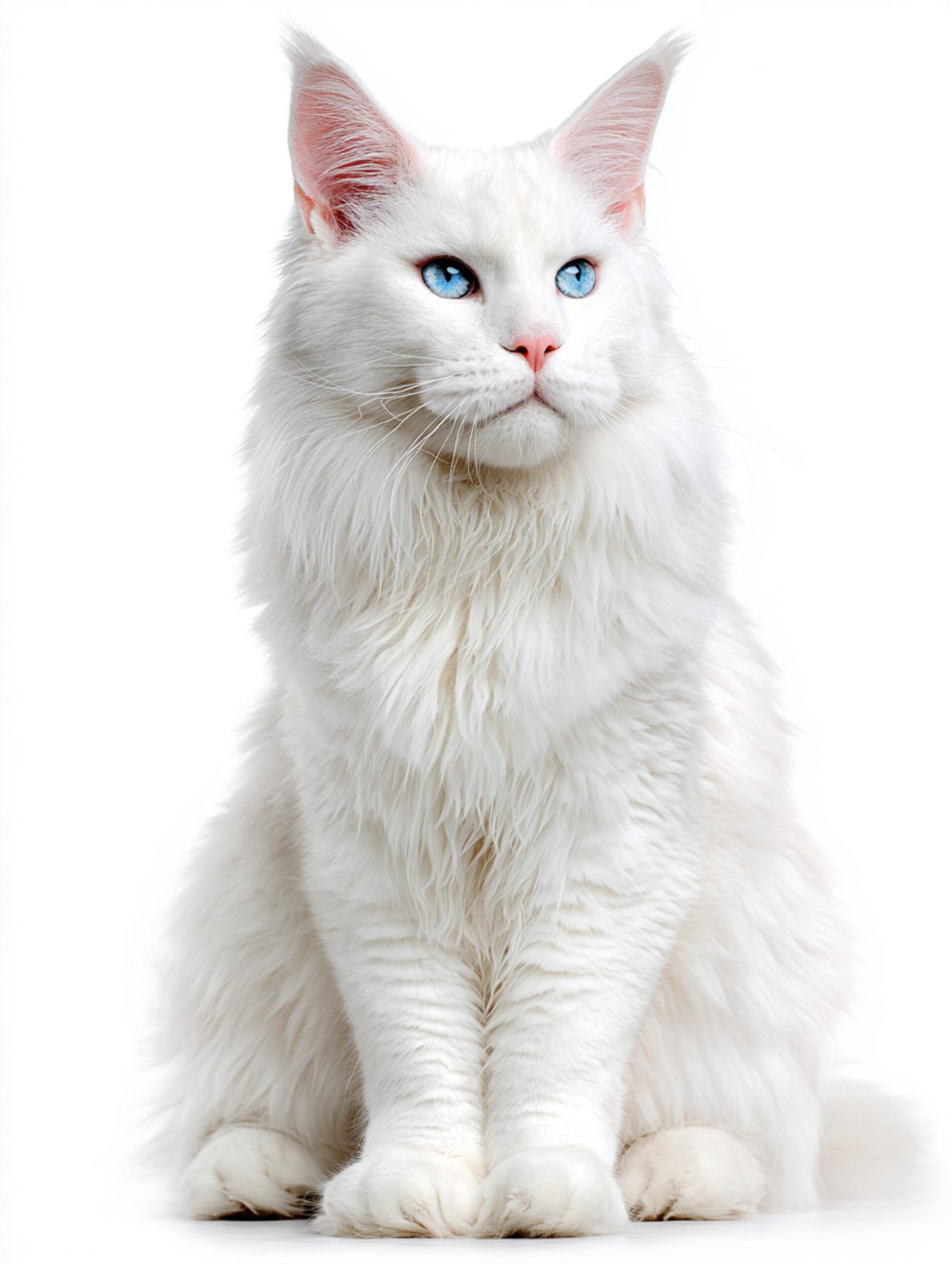
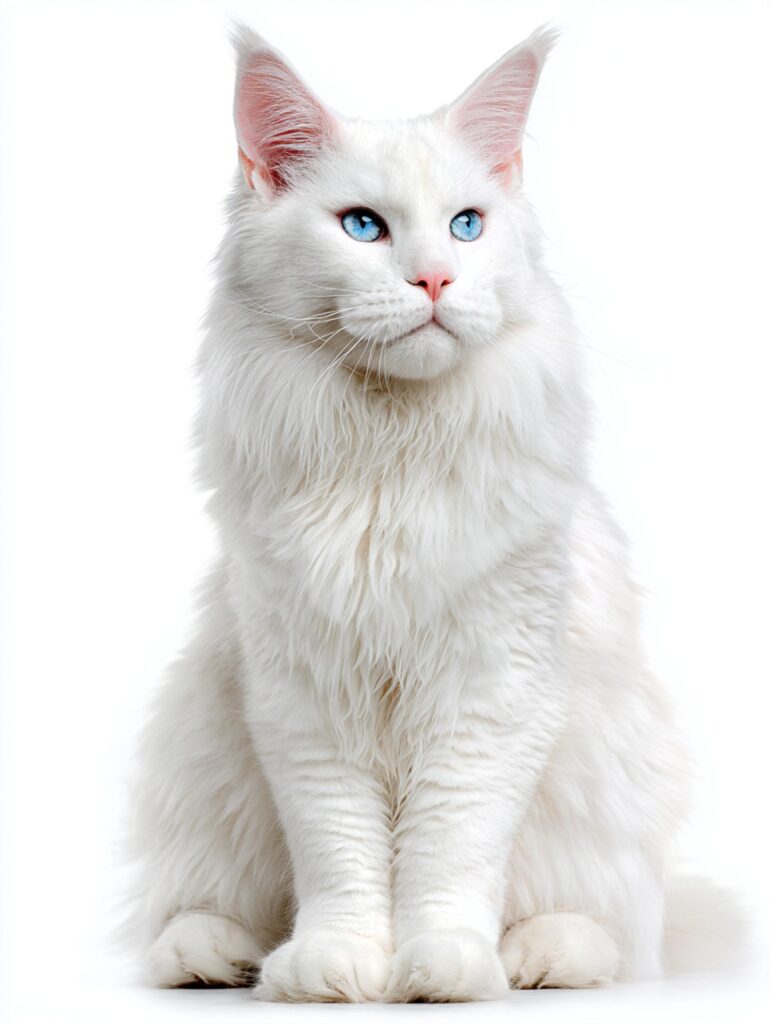
Dominant Blue Eyes in Maine Coons
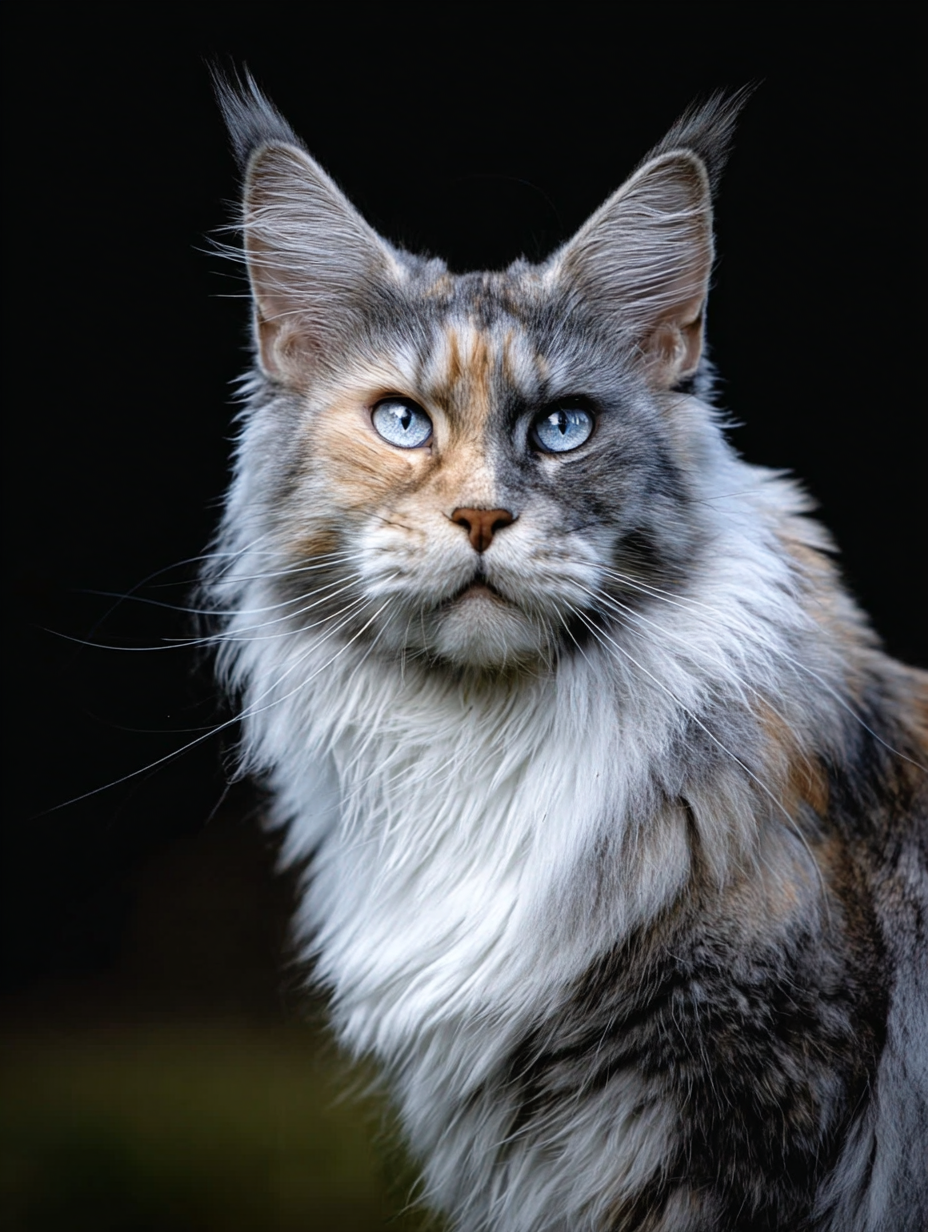
Dominant blue eyes in Maine Coons are one of the most discussed and misunderstood traits in the breed. Unlike blue eyes caused by color point coats or white spotting, dominant blue eyes arise from a separate genetic mechanism and can appear in fully pigmented Maine Coons with no white at all.
This post explains how the dominant blue eye gene works, how it differs from traditional blue eye causes, what is currently known about health and ethics, and what buyers should understand before choosing a Maine Coon with this eye color.
Dominant Blue Eyes in Maine Coons — At-a-Glance Summary
| Topic | Key Takeaway |
|---|---|
| What Dominant Blue Eyes Are | A blue eye color caused by a separate dominant genetic mechanism, not by colorpoint or white spotting. |
| Coat Color Requirement | Can appear in fully pigmented Maine Coons with no white and no colorpoint ancestry. |
| Inheritance Pattern | Dominant — one copy of the gene can produce blue eyes. |
| How It Differs From Traditional Blue Eyes | Independent of temperature-sensitive pigmentation (colorpoint) and pigment migration issues (white spotting). |
| Visual Expression | May appear as solid blue eyes, odd eyes, or sectoral blue eyes with variable intensity. |
| Deafness Association | Not equivalent to white-associated blue eyes; potential risk exists but is not yet quantified for Maine Coons. |
| Health Data Status | Limited long-term, breed-specific data; outcomes vary due to incomplete penetrance. |
| Registry Recognition | Generally not recognized within Maine Coon breed standards; may affect show eligibility. |
| Market Demand | High due to novelty and rarity within programs, often commanding premium prices. |
| Ethical Breeding Consideration | Many breeders proceed cautiously or avoid the gene due to limited historical data. |
| Buyer Guidance | Choose breeders who disclose genetic testing, discuss unknowns honestly, and share adult outcomes. |
Snippet target:
Dominant blue eyes in Maine Coons are caused by a separate genetic mechanism from colorpoint or white spotting and can appear in cats without white coats or Siamese ancestry.
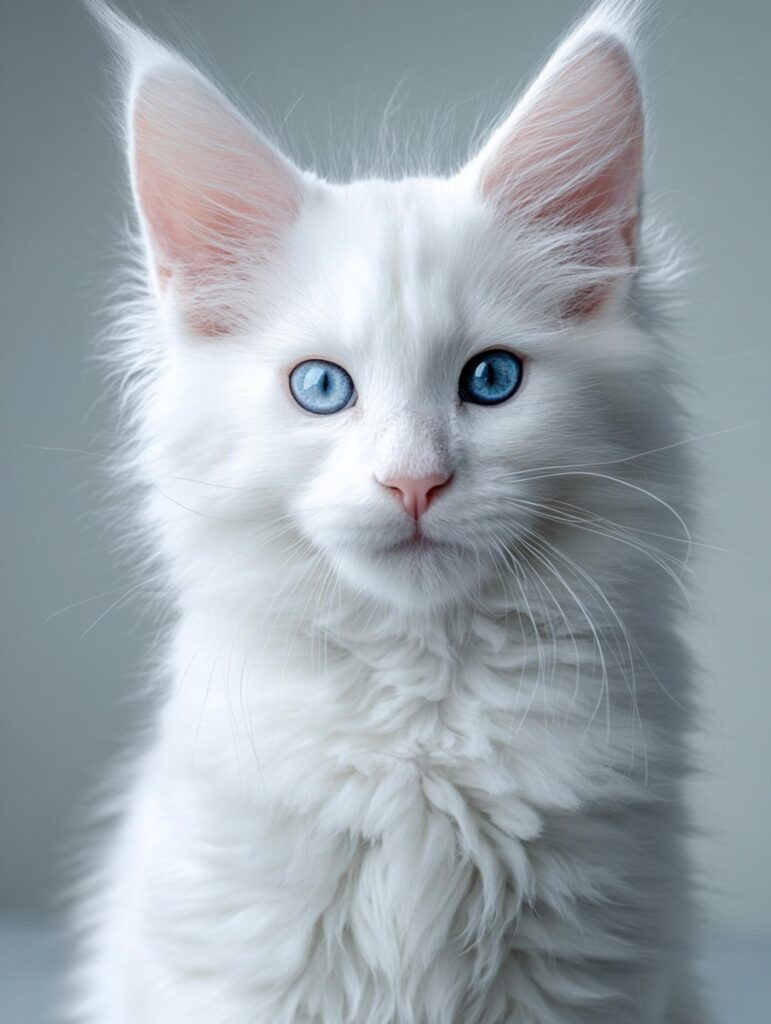
Quick Answer — What Causes Dominant Blue Eyes in Maine Coons?
Dominant blue eyes in Maine Coons are caused by a separate dominant genetic mechanism that affects eye pigmentation directly, rather than being tied to coat color, temperature-sensitive pigment, or white spotting. Unlike traditional blue eyes seen in colorpoint cats or cats with high white, this gene can produce blue eyes in Maine Coons with fully pigmented coats and no white at all. It is considered controversial because it is newer, less historically established in the breed, and still under evaluation for long-term health implications and ethical use. While inheritance is genetically predictable, visual expression and long-term impact are still being actively assessed, which is why experienced breeders approach it cautiously rather than treating it as a cosmetic novelty.
The Common Ways Blue Eyes Occur in Maine Coons (Context Section)
Before understanding dominant blue eyes, it is essential to clarify how blue eyes have traditionally appeared in Maine Coons. This prevents confusion and helps buyers recognize that the dominant blue eye gene is not an extension of existing blue-eye mechanisms.
Blue Eyes From Colorpoint Genetics
One established cause of blue eyes in cats is colorpoint genetics, which are linked to temperature-sensitive pigmentation.
- Colorpoint cats have a gene that restricts pigment production in warmer areas of the body.
- Because pigment is reduced in the iris, blue eyes are required in colorpoint cats.
- Eye color and coat color are genetically linked in this case.
- Maine Coons carrying colorpoint genetics will always have blue eyes if the colorpoint pattern is expressed.
This mechanism is completely unrelated to dominant blue eye genes. Dominant blue eyes do not rely on temperature sensitivity and do not require colorpoint coats.
Blue Eyes Associated With White Spotting
Another traditional source of blue eyes in Maine Coons is white spotting, particularly when white coverage is extensive.
- High white expression can interfere with pigment migration during development.
- This can result in:
- Blue eyes
- Odd eyes (one blue, one non-blue)
- Partial or sectoral blue eyes
- The eye color outcome depends on how pigment cells populate the iris during development.
This mechanism is also independent of dominant blue eye inheritance. Blue eyes caused by white spotting are a byproduct of pigment distribution, not a gene specifically targeting eye color.
Why This Context Matters
Understanding these two traditional pathways—colorpoint and white spotting—creates a clear baseline. Dominant blue eyes in Maine Coons do not require:
- Colorpoint genetics
- White coats
- High white spotting
This distinction is critical for buyers, because dominant blue eyes represent a separate genetic pathway rather than a variation of something already established in the breed.
What the Dominant Blue Eye Gene Is
The dominant blue eye gene in Maine Coons refers to a genetic mechanism that directly affects eye pigmentation, rather than coat color or pigment placement elsewhere on the body. Unlike traditional blue-eye causes in cats, this gene can express blue eyes without white coats, white spotting, or colorpoint genetics.
How the Dominant Blue Eye Gene Works
- Single dominant inheritance pattern
The gene follows a dominant mode of inheritance, meaning it only needs to be present once to express blue eyes. A cat does not need two copies for the trait to appear. - Expression independent of coat color
Eye color expression occurs regardless of coat pattern or pigment density. Maine Coons with this gene may be solid, tabby, shaded, smoke, or silver while still expressing blue eyes. - Can produce blue eyes in solid, tabby, or shaded cats
This is what visually distinguishes the dominant blue eye gene from other mechanisms. Cats may have fully pigmented coats with no white and still display blue eyes, which is not possible through traditional blue-eye pathways.
This independence from coat color is what makes the gene genetically distinct and visually striking.
Why It’s Called “Dominant”
- One copy required for expression
A single copy of the gene is sufficient to produce blue eyes. Cats carrying the gene will visually express it rather than silently pass it on. - Transmission predictability
Because the gene is dominant, breeders can reliably predict that some offspring will inherit blue eyes when one parent carries the gene. This predictability makes outcomes easier to anticipate compared to polygenic traits. - Why it spreads quickly in breeding programs
Dominant traits do not hide. When introduced into a breeding population, they appear immediately and consistently. This visibility allows the gene to spread rapidly if actively selected for, which is one reason ethical discussion around its use has emerged.
How Dominant Blue Eyes Look in Maine Coons
Dominant blue eyes in Maine Coons present with a range of visual expressions, all tied to how the gene affects eye pigmentation rather than coat interaction.
- Solid blue eyes in non-white cats
The most striking presentation is fully blue eyes in cats with dark or fully pigmented coats and no white spotting. This appearance is visually distinct from all traditional blue-eye causes. - Odd eyes and sectoral blue eyes
Some cats express the gene asymmetrically, resulting in one blue eye and one non-blue eye, or eyes with partial blue sections. This variation reflects how pigment development unfolds during eye formation. - Variability in shade and intensity
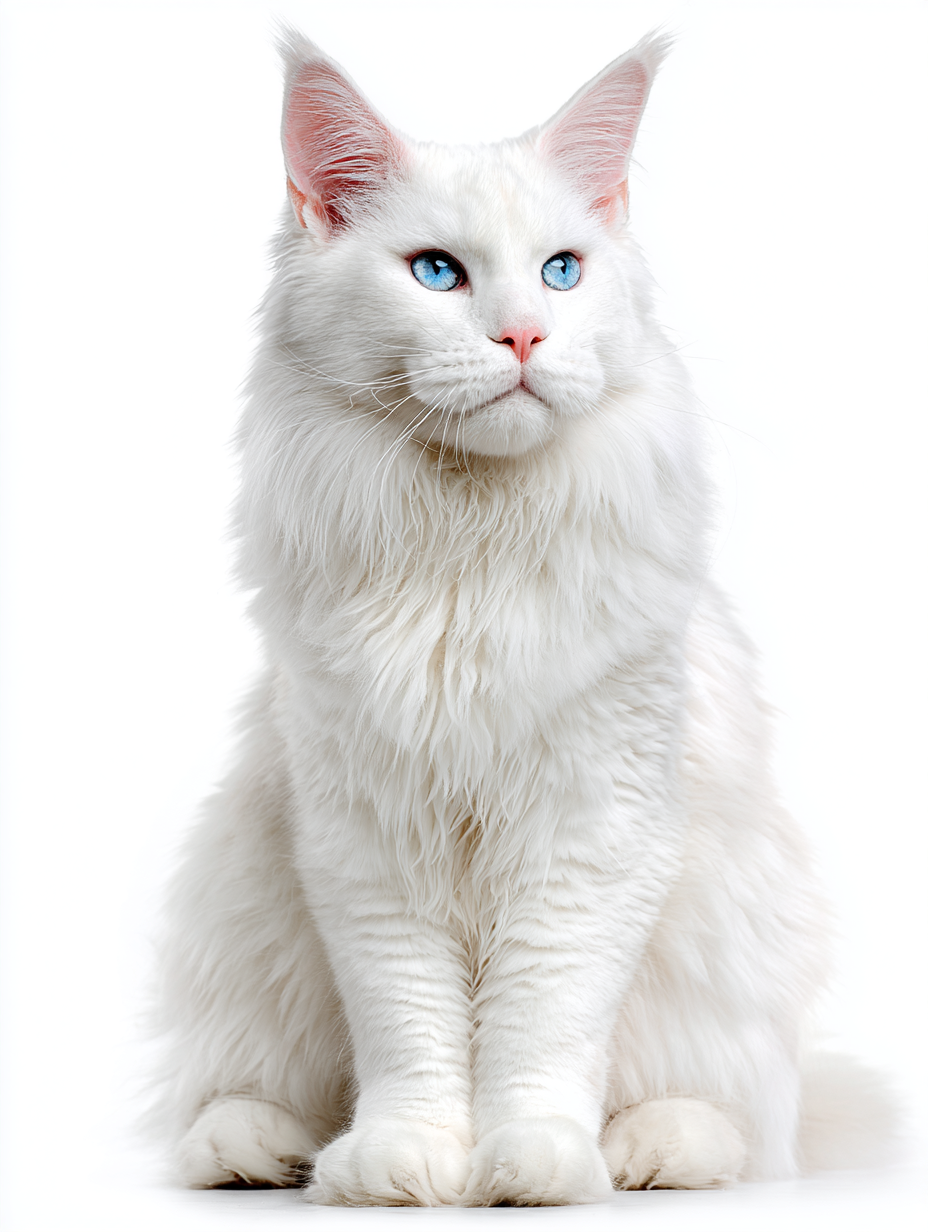
Blue eyes may range from pale ice blue to deeper sapphire tones. Intensity can vary between individuals and even between eyes in the same cat. - Why photos often exaggerate eye color
Lighting, camera exposure, and image editing frequently intensify blue tones. Still photos often make eyes appear brighter or more saturated than they are in everyday light, which can lead to unrealistic expectations.
How Dominant Blue Eyes Differ From Traditional Blue Eyes
Dominant blue eyes differ fundamentally from traditional blue eyes in both genetic origin and developmental behavior.
- Genetic mechanism comparison
Traditional blue eyes in Maine Coons are linked to either temperature-sensitive pigment (colorpoint) or disrupted pigment migration (white spotting). Dominant blue eyes arise from a separate mechanism that affects eye pigmentation directly and independently. - Development timeline differences
Colorpoint and white-associated blue eyes are apparent early and follow predictable developmental patterns. Dominant blue eyes may stabilize at different points in development, depending on how pigment expression unfolds in the iris. - Stability of eye color into adulthood
Dominant blue eyes typically remain blue into adulthood, but intensity and clarity may shift slightly as the cat matures. The eye color does not transition based on coat development. - Why kitten eye color can be misleading
All kittens are born with blue eyes. Differentiating dominant blue eyes from normal kitten eye color requires time and observation. Early eye color alone is not sufficient to confirm the presence of the dominant blue eye gene without genetic context.
Health and Ethical Considerations (Critical Section)
Discussion of dominant blue eyes in Maine Coons must separate what is known, what is suspected, and what is still unknown. Ethical evaluation is not about panic or promotion—it is about responsible decision-making in a breed with a long-established health profile.
Known and Suspected Health Associations
Current discussion around the dominant blue eye gene focuses on areas where eye pigment development overlaps with other neurological and sensory systems. This does not mean problems are guaranteed, but it does mean caution is warranted.
Hearing considerations
In cats generally, some blue-eye mechanisms—particularly those linked to extensive white spotting—are associated with congenital deafness. The dominant blue eye gene is not the same mechanism, but because it also affects pigment-related pathways, hearing outcomes are an area of active attention. At this time, no large, breed-specific datasets exist that conclusively link the dominant blue eye gene in Maine Coons to deafness, but responsible breeders monitor hearing carefully rather than assuming neutrality.
Vision development concerns
Eye color itself does not determine vision quality. However, genes that alter pigment development in the eye can sometimes correlate with subtle differences in ocular development. There is currently no conclusive evidence that dominant blue eyes impair vision in Maine Coons, but long-term data is limited, and ethical programs treat eye health as something to be evaluated across generations, not assumed.
Neurological observations (where applicable)
Some dominant eye-color genes in other species have been linked, in rare cases, to neurological differences. In Maine Coons, there is no confirmed neurological syndrome tied to dominant blue eyes, but the gene’s novelty means ongoing observation is appropriate. Ethical breeders remain cautious rather than dismissive.
What Is Proven vs What Is Speculated
One of the biggest challenges with dominant blue eyes is the gap between documented evidence and online claims.
What is currently supported
- The gene is inherited in a dominant pattern
- It can produce blue eyes independent of coat color or white
- Expression is visually consistent once established
What remains speculative
- Long-term population-level health impact
- Rare associations that may only appear after multiple generations
- Whether risks vary based on how broadly the gene is used
Because the gene is relatively new in Maine Coons, much of the information circulating online is anecdotal. Ethical breeding relies on transparency—acknowledging what is known, clearly stating what is still being studied, and avoiding absolute claims in either direction.
Why Many Ethical Breeders Avoid the Gene
Many established Maine Coon breeders choose not to work with the dominant blue eye gene, even when it is visually striking.
Long-term breed health priorities
Maine Coons already face known health challenges such as cardiomyopathy and joint disease. Ethical breeders often prioritize reducing established risks rather than introducing new variables with limited historical data.
Limited historical data
Unlike coat colors and patterns that have existed in the breed for decades, dominant blue eyes lack a deep, multi-generation track record. Without long-term outcomes, cautious breeders prefer to wait rather than experiment.
Risk vs novelty evaluation
For many programs, eye color is considered purely cosmetic. When weighed against even theoretical health concerns, novelty alone is not enough justification to incorporate the gene into a breeding program focused on longevity, temperament, and structural integrity.
Avoidance does not imply condemnation; it reflects a conservative approach grounded in responsibility rather than trend adoption.
Are Dominant Blue Eye Maine Coons Recognized by Registries?
Registry recognition and show eligibility are separate from pet-home demand, and this distinction is important for buyers to understand.
Current registry positions
Most major cat registries recognize blue eyes only when they arise from established mechanisms such as colorpoint or white spotting. Dominant blue eyes fall outside traditional standards and are therefore not universally recognized within Maine Coon breed definitions.
Show eligibility limitations
Because the dominant blue eye gene is not part of the historical breed standard, cats expressing it may face restrictions or be excluded from competition in many show settings. This is a standards issue, not a judgment of the cat’s quality as a companion.
Why recognition differs from pet demand
Pet buyers are often drawn to rarity and visual uniqueness, while registries focus on preserving a consistent, historically defined breed type. As a result, strong market demand for dominant blue eyes can exist alongside limited or nonexistent show acceptance.
For buyers, this means understanding that a visually striking feature does not equate to breed standard recognition—and deciding whether that distinction matters for their goals.
Pricing and Market Demand for Dominant Blue Eye Maine Coons
Dominant blue eye Maine Coons attract strong buyer attention, and that interest directly affects pricing. Breeders price these cats based on demand, perceived rarity, and the additional scrutiny involved in working with a newer genetic trait.
Why These Cats Command Premium Prices
Breeders often set higher prices for dominant blue eye Maine Coons because buyers actively seek the look. The eye color stands out immediately, and many buyers associate blue eyes with exclusivity. Limited availability further drives pricing, especially in programs that produce few litters and place kittens selectively.
Scarcity vs Novelty
Market scarcity does not always mean genetic rarity. The dominant blue eye gene remains uncommon in Maine Coons primarily because many breeders choose not to work with it. That restraint creates limited supply, while novelty fuels demand. Together, those forces elevate prices even though the gene itself does not require complex inheritance.
Why High Price Does Not Equal Higher Quality
Price reflects market dynamics, not inherent quality. A dominant blue eye Maine Coon does not automatically have better health, structure, or temperament than a standard-eyed cat from the same program. Ethical breeders continue to evaluate kittens using the same benchmarks regardless of eye color.
Long-Term Demand Sustainability
Trends shift. Some buyers chase novelty, while others value long-term consistency. Because dominant blue eyes remain outside traditional breed standards, long-term demand depends on whether buyers continue to prioritize visual uniqueness over established traits. Breeders who focus on sustainability evaluate demand carefully rather than assuming permanence.
Genetic Codes Behind Blue Eyes in Maine Coons — and Their Relationship to Deafness
Blue eyes in Maine Coons can arise through different genetic pathways, and not all of them carry the same health implications. Understanding which gene causes the blue eyes matters far more than the eye color itself.
The Genetic Mechanisms That Produce Blue Eyes
1. Colorpoint (Temperature-Sensitive Tyrosinase Gene)
- Gene affects pigment production based on body temperature
- Suppresses melanin in the iris, producing blue eyes
- Always paired with colorpoint coats
- Not associated with deafness
This pathway links eye color directly to coat color and has a long, well-documented history in cats.
2. White Spotting / Dominant White (KIT Pathway)
- Gene affects migration of pigment cells during development
- Can result in blue eyes, odd eyes, or partial blue
- May interfere with inner ear pigment development
Relationship to deafness:
- Deafness risk increases with high white coverage
- Studies across cat populations show approximately 20–65% deafness rates in fully white, blue-eyed cats
- Risk varies by degree of white and whether one or both eyes are blue
This is the most established blue-eye–deafness association in cats.
3. Dominant Blue Eye (DBE) Gene — Separate Mechanism
The dominant blue eye gene discussed in modern Maine Coons represents a distinct pathway that does not require white coats or colorpoint genetics.
- Acts directly on eye pigmentation pathways
- Can produce blue eyes in fully pigmented cats
- Inherits as a dominant trait
- Identified in recent genetic studies as a regulatory change affecting eye development genes (commonly discussed in connection with ALX4 regulatory regions, not KIT)
This mechanism explains blue eyes in cats with no white and no colorpoint ancestry.
Is the Dominant Blue Eye Gene Linked to Deafness?
This is where nuance matters.
What researchers currently observe
- Some populations of cats with dominant blue eyes show increased deafness risk
- Other cats with the same eye phenotype show normal hearing
- The gene shows incomplete penetrance, meaning not every cat expresses the same outcomes
What percentages can responsibly be stated
- There is no breed-specific, long-term dataset for dominant blue eye Maine Coons
- Available data across cats suggests deafness risk is lower than dominant white, but not zero
- Current estimates discussed in research contexts place deafness occurrence in a minority of affected cats, often described in low-to-moderate percentage ranges, not majority outcomes
Because the gene is newer in the breed, no single percentage can be responsibly claimed for Maine Coons specifically.
Why Dominant Blue Eyes and Deafness Get Conflated
People often assume all blue eyes carry the same risks. That assumption is incorrect.
- White-associated blue eyes involve pigment migration failure
- Colorpoint blue eyes involve pigment suppression, not loss
- Dominant blue eyes involve eye-specific developmental regulation, not coat-wide pigment absence
Each pathway affects the inner ear differently—or not at all.
Why Ethical Breeders Still Proceed Carefully
Even without definitive percentages, ethical breeders evaluate risk using a precautionary approach:
- The gene lacks decades of multi-generation data in Maine Coons
- Incomplete penetrance complicates prediction
- Eye development genes overlap with neurological pathways
Responsible programs monitor hearing, track adult outcomes, and avoid dismissive claims rather than assuming neutrality.
Notes for Buyers
- Blue eyes alone do not cause deafness
- The genetic pathway matters
- White-associated blue eyes carry the highest documented risk
- Dominant blue eyes may carry some risk, but science has not yet quantified it precisely in Maine Coons
Buyers should expect transparency, testing disclosure, and honest discussion, not absolute guarantees or fear-based claims.
Blue Eye Genetics in Maine Coons — Summary Table
| Blue Eye Cause | Primary Gene / Pathway | Requires White Coat? | Requires Colorpoint? | Known Deafness Association | Estimated Deafness Risk | Notes |
|---|---|---|---|---|---|---|
| Colorpoint Blue Eyes | Temperature-sensitive tyrosinase (TYR) | No | Yes | No established link | ~0% | Long-established mechanism; blue eyes required in colorpoints |
| White Spotting / Dominant White | KIT pathway affecting pigment migration | Yes (high white) | No | Yes | ~20–65% in fully white, blue-eyed cats | Risk varies by white coverage and whether one or both eyes are blue |
| Dominant Blue Eye (DBE) | Eye-specific regulatory pathway (often linked to ALX4 regions) | No | No | Possible association | Unknown; appears lower than dominant white, not zero | Limited breed-specific data; incomplete penetrance observed |
| Odd Eyes / Sectoral Blue | Variant of white spotting or DBE expression | Sometimes | No | Variable | Lower than fully blue-eyed white cats | Depends on underlying genetic mechanism |
How to Read This Table
- Gene pathway matters more than eye color alone
- The highest documented deafness risk occurs with extensive white coats and blue eyes
- Dominant blue eyes are not equivalent to dominant white, but long-term data remains limited
How Ethical Breeders Talk About Dominant Blue Eyes
Responsible breeders communicate clearly and directly when they work with dominant blue eyes. They explain what the gene does, what it does not do, and what remains under evaluation.
Language Used by Transparent Programs
Ethical breeders use precise, neutral language. They describe the eye color accurately without framing it as superior or guaranteed. They avoid exaggeration and focus on explanation rather than persuasion.
Disclosure of Genetic Testing
Transparent programs disclose which genetic tests they have run and what those tests confirm. They explain inheritance patterns clearly and connect genetic results to breeding decisions. This openness allows buyers to understand what genetics can predict and where uncertainty remains.
Discussion of Risks and Unknowns
Ethical breeders address open questions directly. They acknowledge the lack of long-term data and explain how they monitor health outcomes. They do not dismiss concerns, and they do not claim absolute safety or inevitability.
What Responsible Communication Looks Like
Responsible communication balances confidence with restraint. Ethical breeders educate buyers, set realistic expectations, and invite informed questions. They present dominant blue eyes as a cosmetic trait with considerations, not as a selling point that overrides health, structure, or temperament.
Red Flags in Dominant Blue Eye Marketing
Buyers should evaluate dominant blue eye Maine Coons with the same scrutiny they apply to any high-investment animal. Certain marketing patterns signal oversimplification or omission rather than transparency.
Claims of “Harmless,” “Natural,” or “Fully Proven Safe”
Breeders who describe the dominant blue eye gene as harmless, natural, or fully proven safe overstate current knowledge. The gene remains relatively new in Maine Coons, and no one can claim complete long-term certainty. Ethical breeders acknowledge ongoing evaluation instead of presenting absolutes.
Lack of Genetic Explanation
Responsible programs explain how the dominant blue eye gene works and how it inherits. Marketing that avoids genetic discussion or relies only on visual appeal often masks a lack of understanding. If a breeder cannot explain inheritance clearly, buyers should pause.
Focus on Eye Color Over Health and Structure
Ethical Maine Coon breeding prioritizes health, structure, and temperament first. Marketing that centers exclusively on blue eyes while ignoring cardiac testing, skeletal health, size, balance, or temperament reflects misplaced priorities.
No Discussion of Registry Status
Breeders who omit registry context leave buyers without critical information. Because most registries do not recognize dominant blue eyes within the Maine Coon standard, ethical programs disclose show limitations openly. Silence on this topic signals selective disclosure.
Myths That Persist About Dominant Blue Eyes in Maine Coons
Myth: All blue-eyed Maine Coons are deaf
Fact: Deafness risk depends on the genetic pathway. White-associated blue eyes carry the highest documented risk. Dominant blue eyes use a different mechanism and do not automatically imply deafness.
Myth: Dominant blue eyes are just colorpoint eyes without the coat
Fact: Colorpoint blue eyes result from temperature-sensitive pigment suppression. Dominant blue eyes arise from a separate mechanism that does not affect coat color.
Myth: The gene is either completely safe or extremely dangerous
Fact: Neither extreme is accurate. The gene lacks long-term breed-specific data, which is why ethical breeders monitor outcomes rather than making absolute claims.
Myth: Higher price means better health
Fact: Pricing reflects demand and scarcity, not health, structure, or temperament.
Myth: Registries reject dominant blue eyes because they are unhealthy
Fact: Registries focus on breed standards and historical consistency, not pet-market trends.
How to Evaluate a Dominant Blue Eye Maine Coon as a Buyer
Buyers can make confident decisions by asking direct questions and evaluating how breeders respond. Clear answers matter more than polished marketing.
Questions to Ask Breeders
Ask questions that require explanation, not slogans:
- How do you genetically confirm dominant blue eyes in your program?
- How do these cats mature over time?
- What outcomes have you observed in adults from these lines?
Breeders who understand their program answer comfortably and consistently.
What Testing Should Be Disclosed
Ethical breeders disclose all relevant genetic and health testing, including:
- Confirmation of dominant blue eye inheritance
- Standard Maine Coon health screenings
- Any monitoring protocols specific to these lines
Transparency allows buyers to assess risk realistically.
What Long-Term Health Guarantees Should Address
Health guarantees should cover more than immediate wellness. Ethical programs address:
- Congenital conditions
- Sensory health where applicable
- Reasonable timeframes for observation
Clear guarantees demonstrate accountability beyond placement.
Why Adult Outcomes Matter
Adult cats show what genetics truly produce. Breeders who share adult photos, long-term health data, and honest evaluations provide buyers with reliable expectations. Adult outcomes reduce guesswork and separate experienced programs from trend-driven sellers.
Dominant Blue Eye Maine Coon FAQ
What are dominant blue eyes in Maine Coons?
Dominant blue eyes in Maine Coons refer to blue eye color caused by a separate dominant genetic mechanism that acts directly on eye pigmentation. Unlike traditional blue eyes linked to colorpoint coats or white spotting, this gene can produce blue eyes in cats with fully pigmented coats and no white.
Are dominant blue eyes the same as colorpoint blue eyes?
No. Colorpoint blue eyes result from temperature-sensitive pigmentation that affects the entire coat and iris together. Dominant blue eyes occur independently of coat color and do not require colorpoint genetics.
Can a Maine Coon have dominant blue eyes without white fur?
Yes. This is one of the defining features of the dominant blue eye gene. Cats may have solid, tabby, shaded, or smoke coats with no white and still display blue eyes.
Is the dominant blue eye gene naturally occurring?
The gene exists naturally as a genetic mutation, but it does not have a long historical presence in the Maine Coon breed. Its recent introduction into the breed is why ethical discussion focuses on evaluation rather than assumption.
Is the dominant blue eye gene linked to deafness?
The answer depends on the genetic pathway.
- Blue eyes linked to white spotting or dominant white have a well-documented association with deafness.
- Colorpoint blue eyes do not carry a known deafness risk.
- Dominant blue eyes appear to carry a possible but unquantified risk, which is currently believed to be lower than dominant white, but not proven to be zero.
No large, long-term, breed-specific studies exist yet for Maine Coons.
What percentage of dominant blue eye Maine Coons are deaf?
There is no reliable percentage specific to Maine Coons that can be responsibly stated at this time. Available data suggests deafness occurs in a minority of affected cats, but exact rates remain unknown due to limited population tracking and incomplete penetrance.
Any breeder claiming a precise percentage is overstating current science.
What does “incomplete penetrance” mean?
Incomplete penetrance means that not every cat carrying the gene will show the same outcome. Some cats with the dominant blue eye gene may have blue eyes with no hearing or neurological issues, while others may show different expressions. This variability complicates prediction.
Do dominant blue eyes affect vision?
Blue eye color alone does not impair vision. However, because the gene affects eye pigmentation pathways, ethical breeders monitor eye health over time rather than assuming neutrality. At present, no conclusive evidence shows routine vision impairment caused by dominant blue eyes in Maine Coons.
Can dominant blue eye Maine Coons be shown?
Most registries do not currently recognize dominant blue eyes within the Maine Coon breed standard. As a result, cats with this trait may face show eligibility restrictions. This reflects breed standard policy, not the cat’s value as a companion.
Why do some breeders avoid the dominant blue eye gene entirely?
Many established breeders avoid the gene because:
- It lacks long-term, multi-generation data in Maine Coons
- The breed already manages known health priorities
- Eye color is considered cosmetic, not essential
Avoidance reflects caution, not condemnation.
Why do some breeders work with the gene anyway?
Breeders who work with dominant blue eyes often do so selectively and transparently. They may prioritize careful monitoring, limited use, and full disclosure to buyers. Buyer demand also plays a role, but ethical programs balance demand against responsibility.
Can genetic testing confirm dominant blue eyes?
Genetic testing can confirm inheritance patterns and rule out other blue-eye mechanisms. However, testing cannot guarantee the visual intensity, symmetry, or long-term health outcomes associated with the gene.
Why do dominant blue eyes look brighter in photos?
Lighting, camera exposure, and image enhancement exaggerate blue tones. Still photos often oversaturate eye color, making eyes appear brighter or more intense than they look in everyday light.
Do dominant blue eyes stay blue for life?
In most cases, yes. Dominant blue eyes typically remain blue into adulthood, though shade and intensity may shift slightly as the cat matures.
Are dominant blue eye Maine Coons more expensive?
Yes, they often command premium prices due to demand and limited supply. Higher pricing reflects novelty and market interest, not higher health, temperament, or structural quality.
Does a higher price mean a better cat?
No. Price reflects market dynamics, not inherent quality. Health testing, structure, temperament, and breeder practices matter far more than eye color.
What questions should buyers ask breeders?
Buyers should ask:
- How do you genetically confirm dominant blue eyes?
- What long-term outcomes have you observed in adults?
- How do you monitor hearing and eye health?
- What does your health guarantee cover?
Clear, calm answers matter more than confident marketing.
Should buyers avoid dominant blue eye Maine Coons?
Avoidance is not mandatory, but informed consent is essential. Buyers should understand:
- The genetic mechanism involved
- The lack of long-term breed-specific data
- The distinction between cosmetic appeal and health priorities
An ethical purchase depends on transparency and realistic expectations.
What is the most responsible way to approach dominant blue eyes?
The most responsible approach combines:
- Genetic understanding
- Conservative breeding decisions
- Ongoing monitoring
- Honest buyer education
Neither hype nor fear serves the breed.
Conclusion: Understanding Dominant Blue Eyes in Maine Coons
Dominant blue eyes in Maine Coons come from a separate genetic mechanism that acts directly on eye pigmentation and does not rely on colorpoint coats or white spotting. This distinction matters, because not all blue eyes share the same inheritance patterns or health considerations. Understanding the genetic pathway provides clarity and prevents inaccurate assumptions about appearance or risk.
Ethical discussion around dominant blue eyes centers on responsibility, not alarm. The gene lacks long-term, breed-specific data, which is why many established breeders choose caution while others proceed selectively with full transparency. Eye color remains a cosmetic trait, and ethical programs continue to prioritize health, structure, temperament, and longevity over novelty.
For buyers, the right decision comes from asking informed questions, reviewing adult outcomes, and choosing breeders who clearly explain genetics, testing, and long-term monitoring. Avoid marketing that relies on absolutes or visuals alone, and focus instead on programs that demonstrate consistency and accountability.
To continue learning, explore our Maine Coon genetics resources for deeper context, or visit our breeder ethics and selection guides to understand how responsible programs make breeding decisions beyond trends.
Related Maine Coon Posts
If you’re continuing your research, these guides expand on key topics mentioned above:
- Maine Coon Kitten Colors Explained
Learn how Maine Coon coat colors appear in kittens, why early color can be misleading, and how to set realistic expectations as coats mature. - Maine Coon Colors: Complete Genetics, Identification, and More
A detailed breakdown of Maine Coons Colors. - Maine Coon Pricing Explained: What Goes Into the Cost of a Well-Bred Kitten
Understand how breeding practices, health testing, and care standards influence pricing—separate from color myths. - The Lifetime Cost of Owning a Maine Coon
A realistic look at long-term expenses, veterinary care, and planning for a 12–15+ year commitment. - Is a Maine Coon A Good First Time Cat
A practical guide to lifestyle fit, grooming needs, and what daily life with a Maine Coon actually looks like. - Black Smoke Maine Coon Coats: Genetics, Identification, and Cost
A detailed breakdown of black smoke Maine Coons, explaining how smoke coats differ from silver tabby and shaded patterns, and why black smoke is so often misidentified. - Shaded vs Smoke Maine Coon Colors What’s the difference.
Sources & References
- Lyons, L. A. (2015). Feline Genetics and Genomics.
University of Missouri College of Veterinary Medicine.
https://felinegenetics.missouri.edu - Gandolfi, B., et al. (2018). A Dominant Blue Eye Phenotype in Domestic Cats Is Associated With Regulatory Variants Near ALX4.
PLOS Genetics.
https://journals.plos.org/plosgenetics - Robinson, R. (1991). Genetics for Cat Breeders. Butterworth-Heinemann.
(Foundational reference on eye color inheritance, pigment pathways, and dominant traits.) - Vella, C. M., Shelton, L. M., McGonagle, J. J., & Stanglein, T. W. (1999). Robinson’s Genetics for Cat Breeders and Veterinarians. Elsevier.
(Detailed explanation of eye color mechanisms, dominant inheritance, and pigment migration.) - Strain, G. M. (2011). Congenital Deafness in Domestic Animals.
Veterinary Journal.
(Primary reference on deafness associations with white spotting and blue eyes.) - The International Cat Association (TICA). Maine Coon Breed Standard and Eye Color Guidelines.
https://tica.org - Cat Fanciers’ Association (CFA). Maine Coon Breed Profile and Standards.
https://cfa.org - The Governing Council of the Cat Fancy (GCCF). Colour and Eye Colour Definitions.
https://www.gccfcats.org










Read the Comments +