
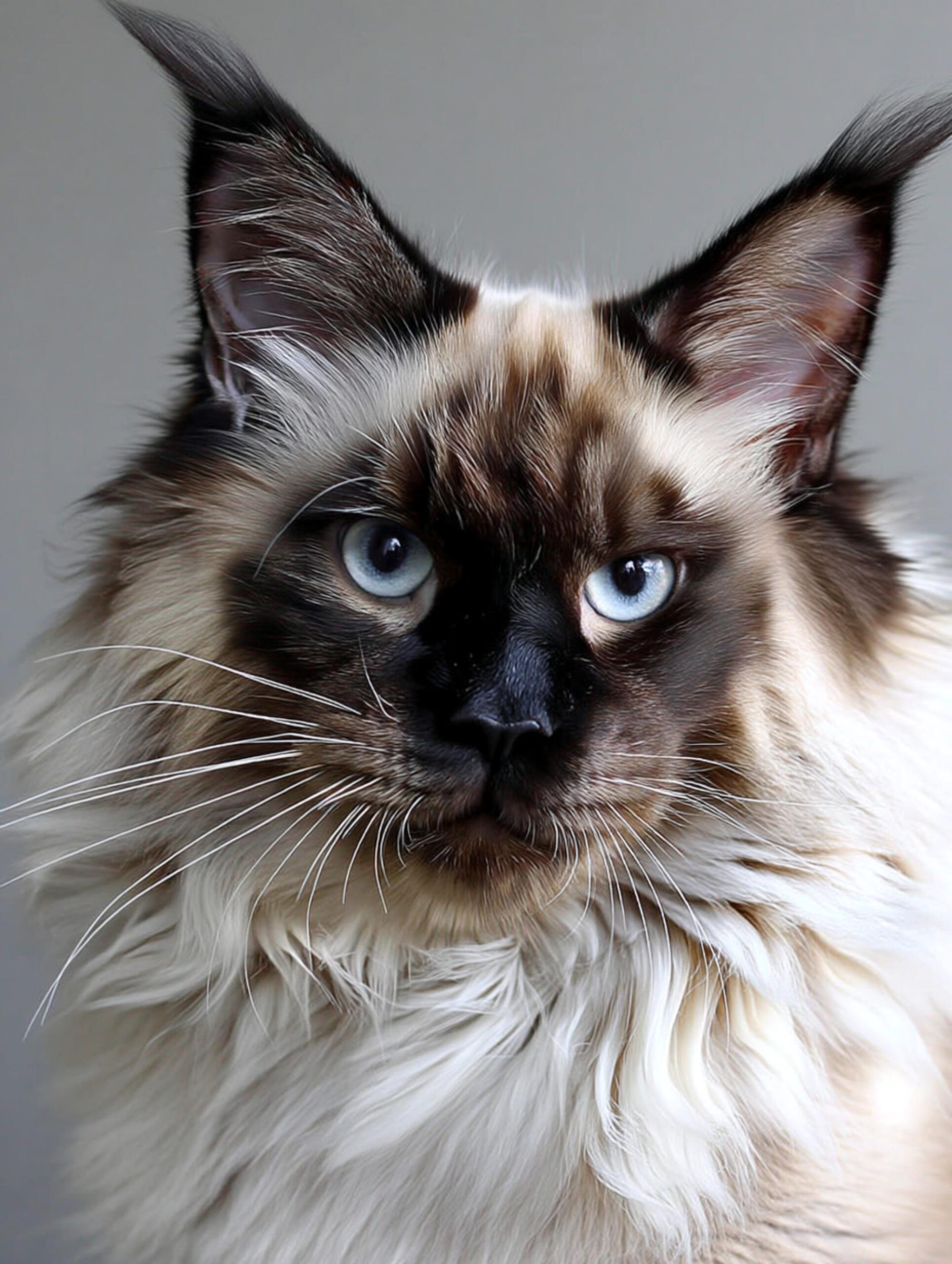
Colorpoint Maine Coons: Genetics, Blue Eyes, and Buyer Guide
Colorpoint Maine Coons are known for their pale bodies, darker points, and striking blue eyes, but the genetics behind this pattern are often misunderstood. The colorpoint gene in Maine Coons is not a separate breed or a sign of mixed ancestry. It is a temperature-sensitive coat pattern that controls where pigment develops on the body and how eye color forms.
This post explains how color point Maine Coons develop, what the pattern means for health and temperament, and what buyers should understand before choosing a color point kitten.
Colorpoint Maine Coons — Historical & Genetic Summary
| Topic | Accurate Context |
|---|---|
| Origin of Colorpoint | Entered the Maine Coon gene pool early through naturally occurring domestic cat ancestry before closed registries existed. |
| Breed Status | Colorpoint Maine Coons can be fully purebred with long, documented pedigrees. |
| Role of Recessive Genetics | The colorpoint gene is recessive and can remain hidden for many generations before appearing. |
| Modern Breeding Reality | Breeders do not need to cross Maine Coons with other breeds to produce colorpoint kittens today. |
| Early Documentation | Many early colorpoint kittens were quietly placed or removed from breeding programs, not eliminated genetically. |
| Geographic Emergence | Colorpoint Maine Coons became more visible in the late 20th century, especially in Europe. |
| Genetic Legitimacy | Modern DNA testing confirms colorpoint inheritance within established Maine Coon lines. |
| Registry Position | Exclusion in some registries reflects breed philosophy, not genetic impurity. |
| Health Implications | The colorpoint pattern does not introduce additional health risks. |
| Buyer Takeaway | Colorpoint reflects inherited genetics, not recent crossbreeding or lowered breed quality. |
| Ethical Breeding Focus | Transparency, health testing, and adult outcomes matter more than coat pattern. |
Snippet target:
Colorpoint Maine Coons have lighter bodies with darker points caused by temperature-sensitive pigmentation, the same genetic mechanism seen in other colorpoint cats.
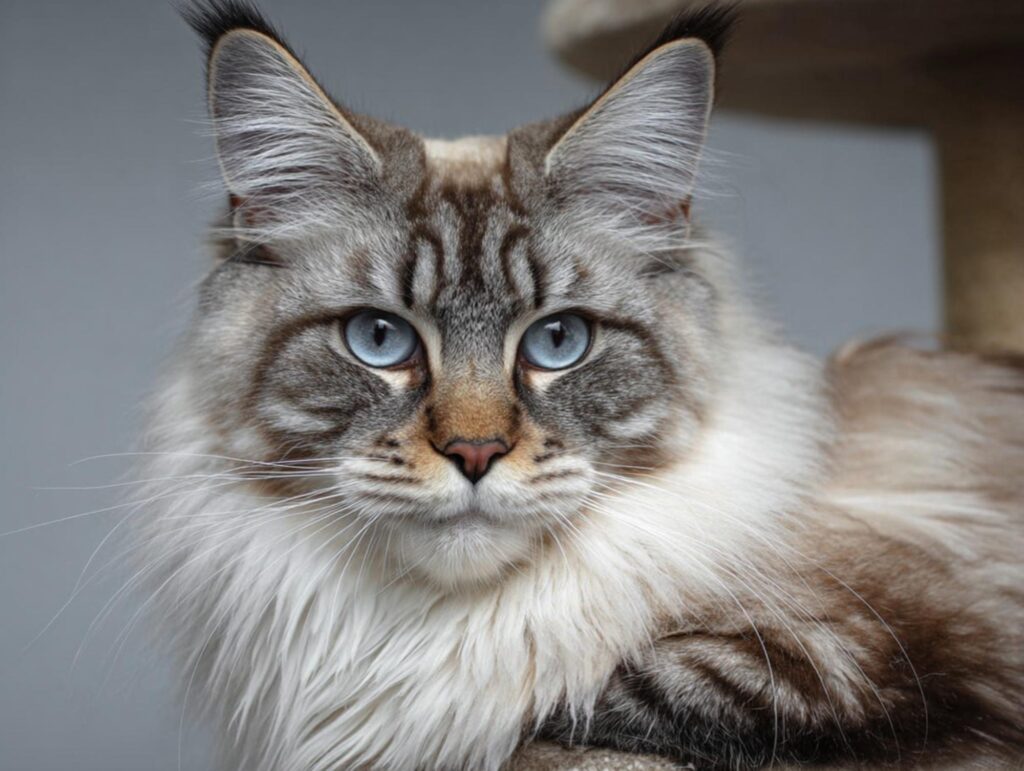
Quick Answer — What Is a Colorpoint Maine Coon?
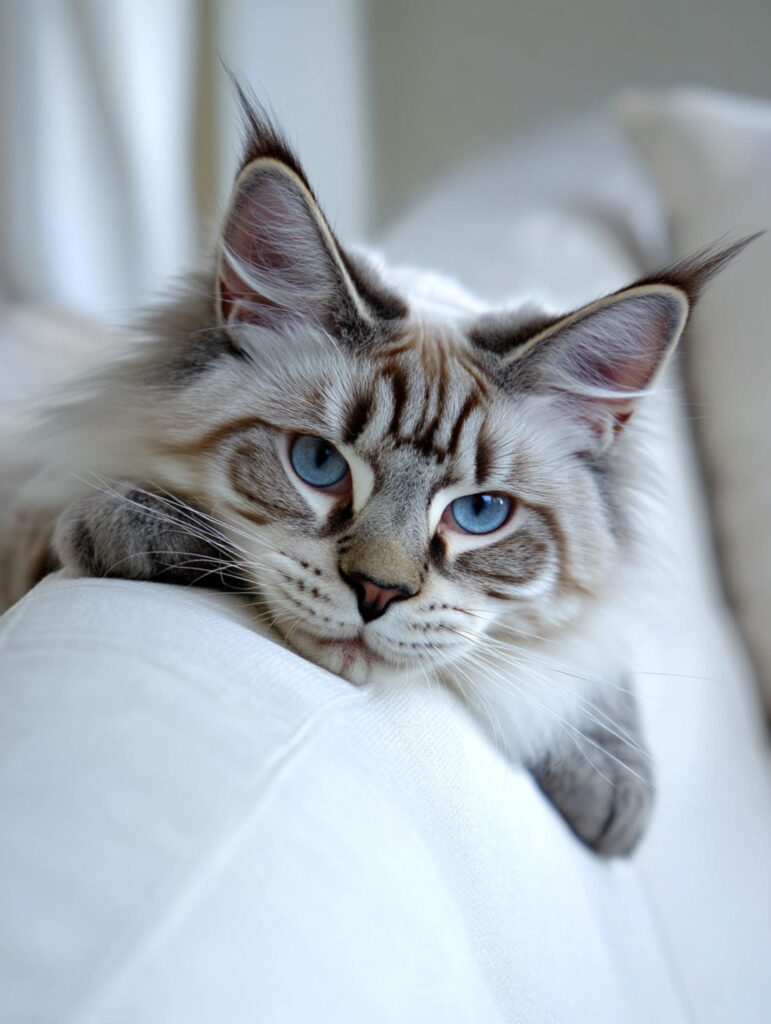
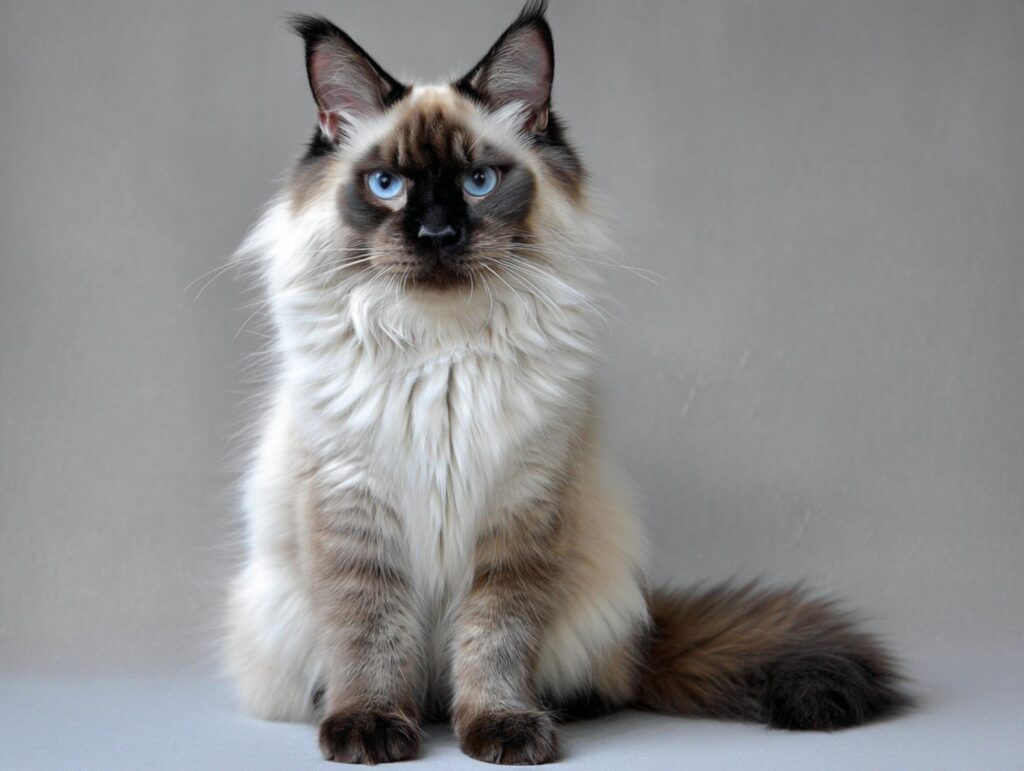
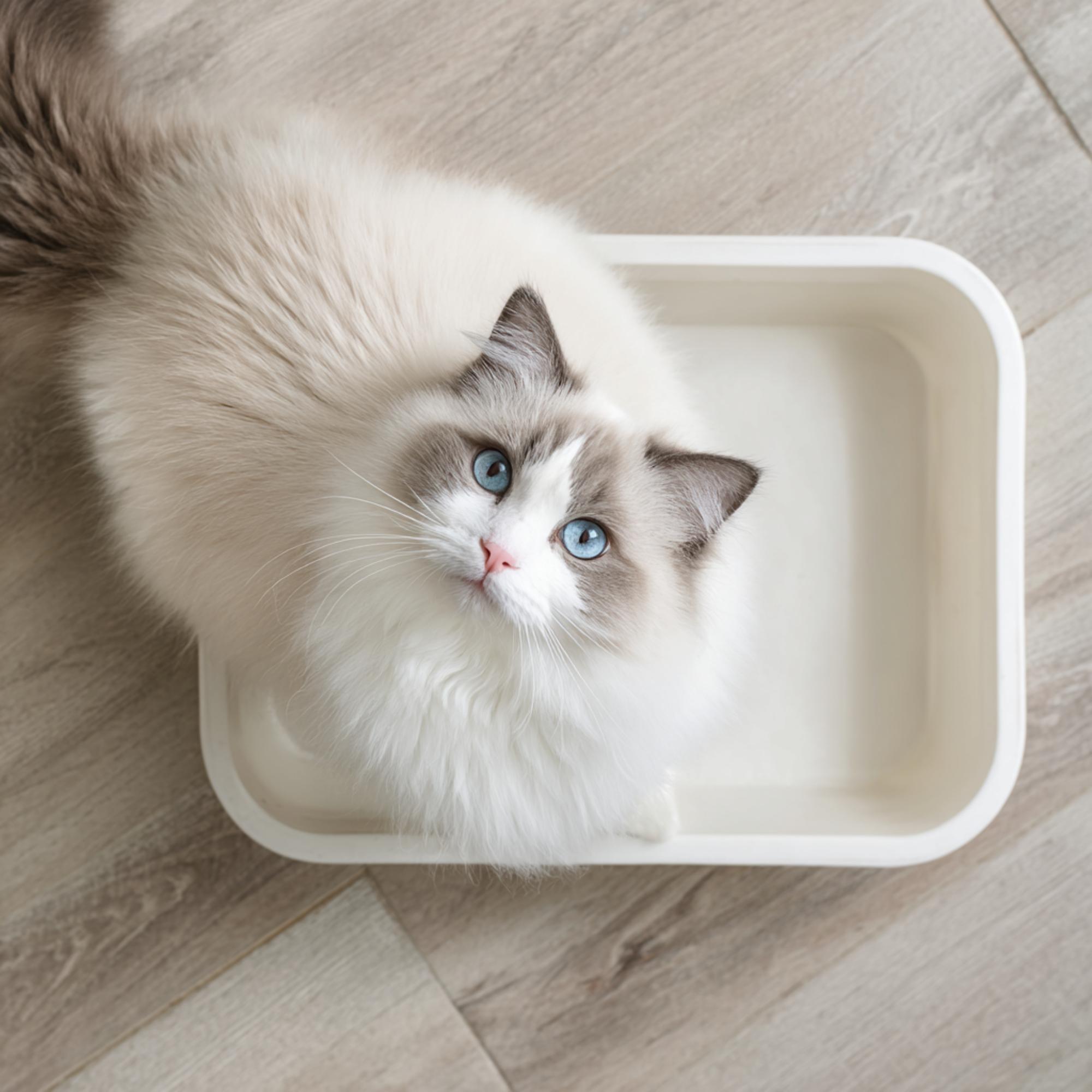
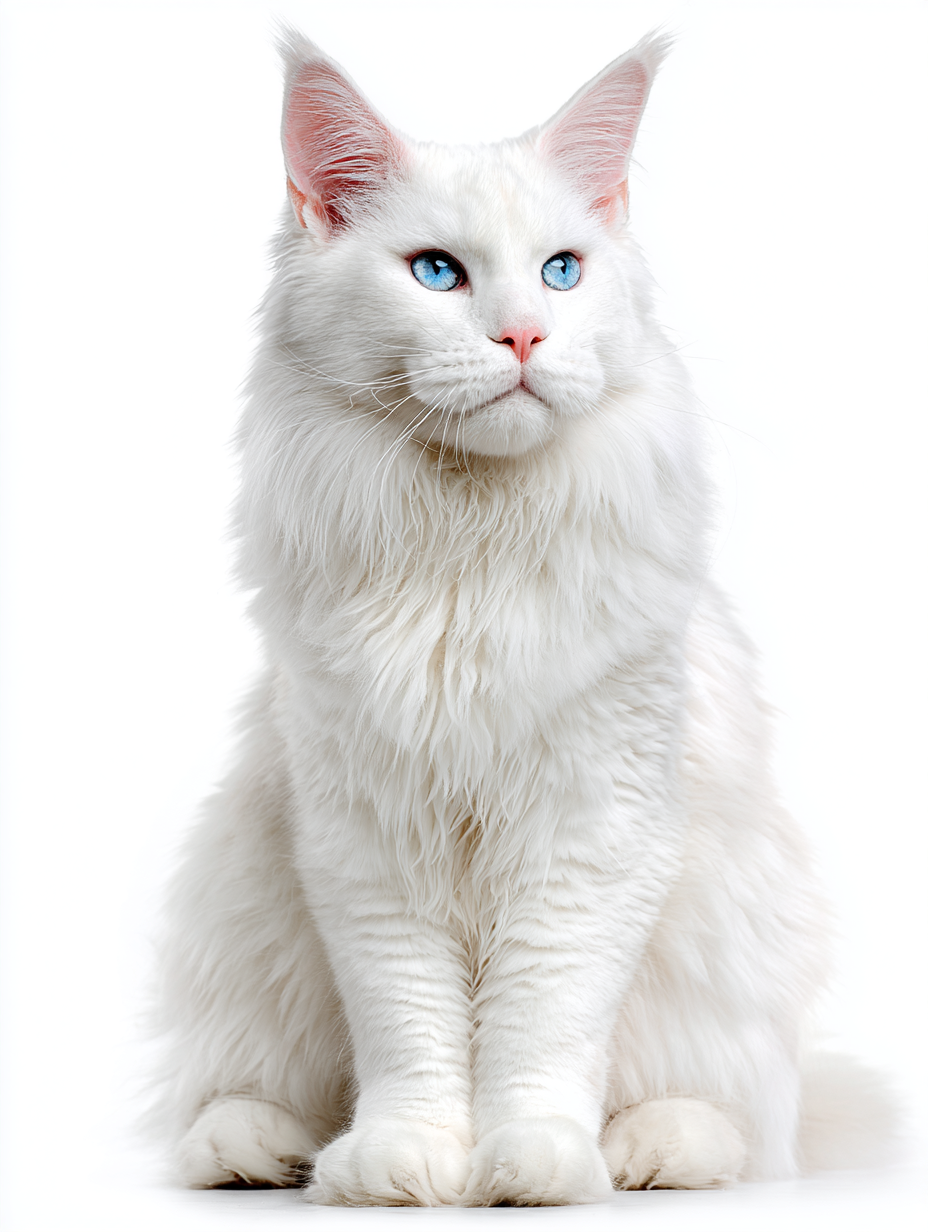
A colorpoint Maine Coon is a Maine Coon whose coat shows a light-colored body with darker coloring on the extremities, known as points. These points appear on the face mask, ears, legs, tail, and sometimes the paws. The contrast happens because pigment develops more strongly in cooler areas of the body. Colorpoint Maine Coons always have blue eyes, regardless of their point color, because the same genetic mechanism that limits pigment in the coat also prevents full pigment development in the iris. This pattern is genetic, predictable, and well understood, and it reflects a coat pattern rather than a separate breed or mixed ancestry.
What “Colorpoint” Means in Cats
Definition of Temperature-Sensitive Pigmentation
Colorpoint refers to a coat pattern caused by temperature-sensitive pigmentation, where pigment production decreases in warmer areas of the body and increases in cooler areas. This mechanism affects how melanin forms during coat growth, not how much pigment the cat carries overall.
How Melanin Production Varies by Body Temperature
In warmer areas such as the torso, pigment production is reduced, resulting in a lighter coat color. In cooler areas such as the ears, face, legs, and tail, pigment production increases, producing darker coloration. This temperature relationship continues throughout the cat’s life and explains why colorpoint coats can change with age, season, or environment.
Why Extremities Develop Darker Color
The extremities remain cooler than the core of the body. As a result, these areas consistently allow more pigment to develop, forming the darker points that define the colorpoint pattern. The contrast becomes more noticeable as the cat matures and coat length increases.
Why Colorpoint Is a Pattern, Not a Color
Colorpoint does not describe a single color. Instead, it describes how color is distributed across the coat. A colorpoint Maine Coon can be seal point, blue point, red point, cream point, or carry additional patterns such as lynx or tortie. The underlying color genetics determine the shade of the points, while the colorpoint gene determines where that color appears.
Understanding this distinction helps buyers avoid confusion between colorpoint as a visual pattern and the actual colors expressed within it.
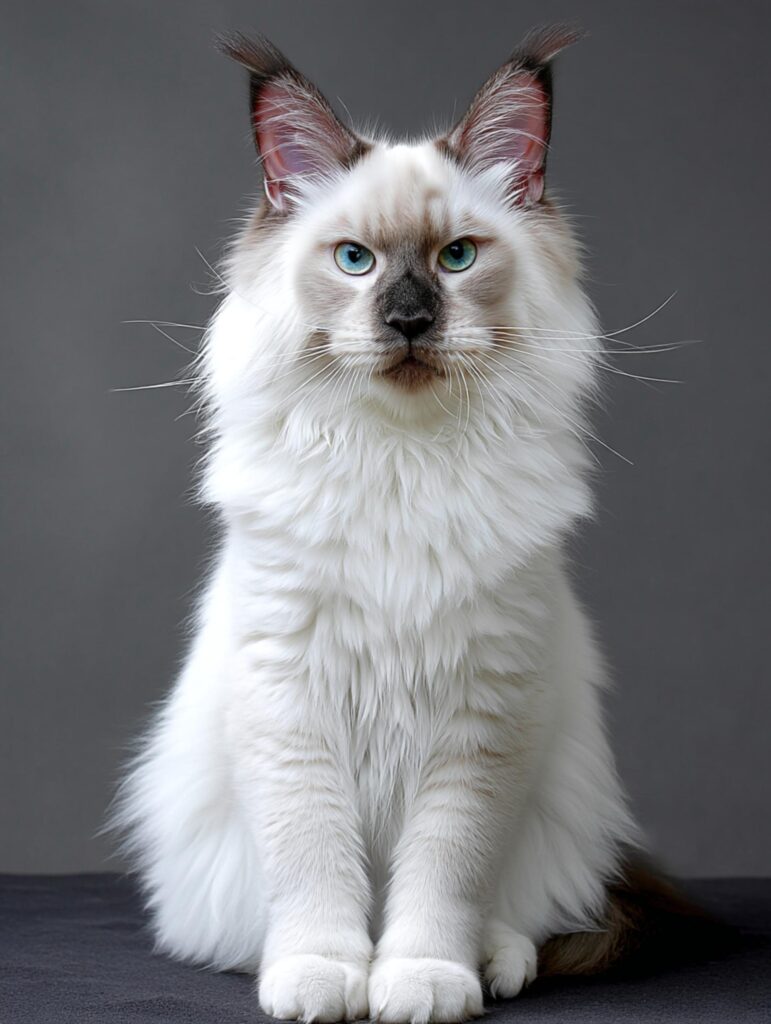
The History of Colorpoint in Maine Coons
Colorpoint Maine Coons are not a modern invention, nor are they the result of recent crossbreeding. Their presence reflects the early development of the breed, the realities of foundation registration, and the long-term behavior of recessive genes within a closed gene pool.
Maine Coons as a Natural Breed With Early Genetic Diversity
The Maine Coon developed as a natural breed in its region of origin, but “natural” does not mean genetically isolated. Before formal registries and closed studbooks existed, domestic cats bred freely.
Early Maine Coons emerged from:
- Farm cats
- Ship cats in port towns
- Unregistered domestic populations
This environment allowed a wide range of recessive genes to enter the early gene pool, including genes that would not appear visibly for generations.
How the Colorpoint Gene Entered the Maine Coon Gene Pool
The colorpoint gene is recessive. A cat can carry it without showing any visible sign. When two carriers are bred together, there is a predictable chance that a colorpoint kitten will appear.
This inheritance pattern explains why:
- Colorpoint can surface unexpectedly
- The gene can persist for decades without being seen
- Modern breeders can produce colorpoint without introducing new ancestry
The presence of colorpoint today does not require recent outcrossing.
Foundation Registration and Hidden Recessive Traits
During the 1960s and 1970s, many Maine Coons were registered as foundation cats with little or no documented ancestry. At that time:
- DNA testing did not exist
- Pedigrees were incomplete or short
- Visual type mattered more than genetic tracking
Because of this, recessive traits already present in domestic cats, including colorpoint, entered the registered Maine Coon population and remained hidden.
Why Early Colorpoint Maine Coons Were Rarely Documented
When colorpoint kittens appeared in early generations, breeders often removed them quietly from breeding programs. Common practices included:
- Placing kittens as non-breeding pets
- Excluding them from pedigrees
- Avoiding public discussion of the trait
This suppression did not remove the gene. It only allowed it to continue silently in the population.
Documented Emergence of Colorpoint Maine Coons
By the late 20th century, colorpoint Maine Coons began appearing more visibly, particularly in Europe. These kittens were born to registered Maine Coon parents within established lines.
Key points:
- No new breed introductions were required
- The kittens matched Maine Coon type structurally
- The only difference was coat pattern
Their appearance confirmed that the gene had existed in the population for generations.
The Role of Early Lines in Carrying the Colorpoint Gene
Pedigree analysis later revealed that several early and influential lines carried the colorpoint gene. Once breeders recognized this, many programs:
- Identified carriers through test breeding (before DNA testing)
- Neutered carriers or adjusted breeding plans
- Reduced or eliminated the gene intentionally
These actions further confirm that the gene already existed within registered Maine Coons.
Why Colorpoint Does Not Indicate Recent Crossbreeding
A critical clarification for modern buyers:
A breeder producing colorpoint Maine Coons today does not need to crossbreed.
Because the gene:
- Is recessive
- Has existed in the gene pool for decades
- Can remain hidden indefinitely
Its appearance today reflects inheritance, not recent mixing with Siamese, Himalayan, or other breeds.
Modern genetic testing allows breeders to:
- Identify carriers accurately
- Plan pairings responsibly
- Maintain closed pedigrees
Historical Debate vs Modern Genetic Understanding
Early controversy around colorpoint arose from limited genetic knowledge and incomplete records. Today, DNA testing and pedigree tracking have replaced speculation.
Modern understanding shows that colorpoint in Maine Coons is:
- Genetically explainable
- Historically traceable
- Not evidence of impurity
The debate now centers on breed standards and philosophy, not on genetic legitimacy.
Why Some Registries Still Exclude Colorpoint
Some registries exclude colorpoint because:
- The pattern does not align with their historical vision of the breed
- They aim to preserve a specific traditional appearance
These exclusions reflect policy decisions, not genetic impossibility or health concerns.
What This History Means for Buyers Today
For buyers, the information is there to do with what they will:
Colorpoint Maine Coons exist because of long-standing recessive genetics, not because breeders are crossing cats today.
Evaluating a breeder should focus on:
- Transparency
- Health testing
- Adult outcomes
- Genetic understanding
Not on outdated assumptions about coat pattern origins. If you do not want to have an off standard Maine coon, that is your choice. If you do want a colorpoint Maine coon look for a breeder with documented color point lines.
The Genetics Behind Colorpoint Maine Coons
Colorpoint Maine Coons express a well-documented genetic pattern that affects both coat color distribution and eye color. This mechanism is established, predictable, and separate from other causes of blue eyes in the breed.
The Colorpoint Gene (Temperature-Sensitive Tyrosinase)
The colorpoint pattern results from a temperature-sensitive version of the tyrosinase gene, which plays a key role in pigment production.
- How the gene restricts pigment in warmer areas
In warmer parts of the body, the altered tyrosinase enzyme functions poorly, which reduces melanin production. This causes the torso and core of the body to remain lighter in color. - Why eyes remain blue
The same gene limits pigment development in the iris. Because melanin does not fully develop in the eyes, colorpoint Maine Coons always have blue eyes. - Why body color darkens over time
As Maine Coons age, overall body temperature can decrease slightly and coat density increases. Cooler temperatures allow more pigment to develop, which is why colorpoint cats often darken with age, particularly in cooler climates.
This genetic mechanism affects where pigment appears, not how much pigment the cat carries.
Recessive Inheritance Explained
Colorpoint follows a recessive inheritance pattern, which shapes how and when it appears in litters.
- Why both parents must carry the gene
A kitten must inherit the colorpoint gene from both parents to express the pattern. If only one copy is present, the kitten will not appear colorpoint. - How carriers produce non-colorpoint kittens
Cats carrying a single copy of the gene look non-colorpoint but can pass the gene to offspring. When two carriers are bred, some kittens may express colorpoint while others appear standard. - Why colorpoint kittens can appear unexpectedly
Because carriers show no visible signs, breeders may produce colorpoint kittens even when neither parent displays the pattern. This outcome reflects hidden inheritance, not accidental breeding.
Understanding recessive inheritance helps buyers recognize why colorpoint does not always appear consistently across litters.
Colorpoint vs Other Blue-Eyed Maine Coons (Critical Distinction)
Not all blue-eyed Maine Coons share the same genetic cause. Distinguishing colorpoint from other blue-eye mechanisms prevents confusion and incorrect assumptions about health or ancestry.
Colorpoint vs White-Associated Blue Eyes
- Pigment suppression vs pigment migration
Colorpoint blue eyes result from pigment suppression, where pigment production is reduced. White-associated blue eyes result from pigment migration failure, where pigment cells never reach certain areas. - Health implications comparison
Colorpoint blue eyes do not carry the same deafness risks associated with extensive white spotting. Health considerations depend on the genetic pathway involved, not on eye color alone.
Colorpoint vs Dominant Blue Eyes
- Genetic mechanism differences
Colorpoint blue eyes arise from a long-established recessive gene affecting pigment production. Dominant blue eyes result from a separate dominant mechanism that directly affects eye pigmentation. - Why colorpoint does not require novelty genes
Colorpoint does not involve newly introduced or experimental genes. It relies on a well-known genetic pathway with decades of documentation across cat breeds.
This distinction ensures buyers do not confuse colorpoint Maine Coons with cats expressing blue eyes for entirely different genetic reasons.
Colorpoint Maine Coon Kittens vs Adults
Colorpoint Maine Coons change dramatically as they mature. Early appearance often misleads buyers who are unfamiliar with how temperature-sensitive pigmentation develops over time.
Why Kittens Look Pale at Birth
- Uniform cream bodies
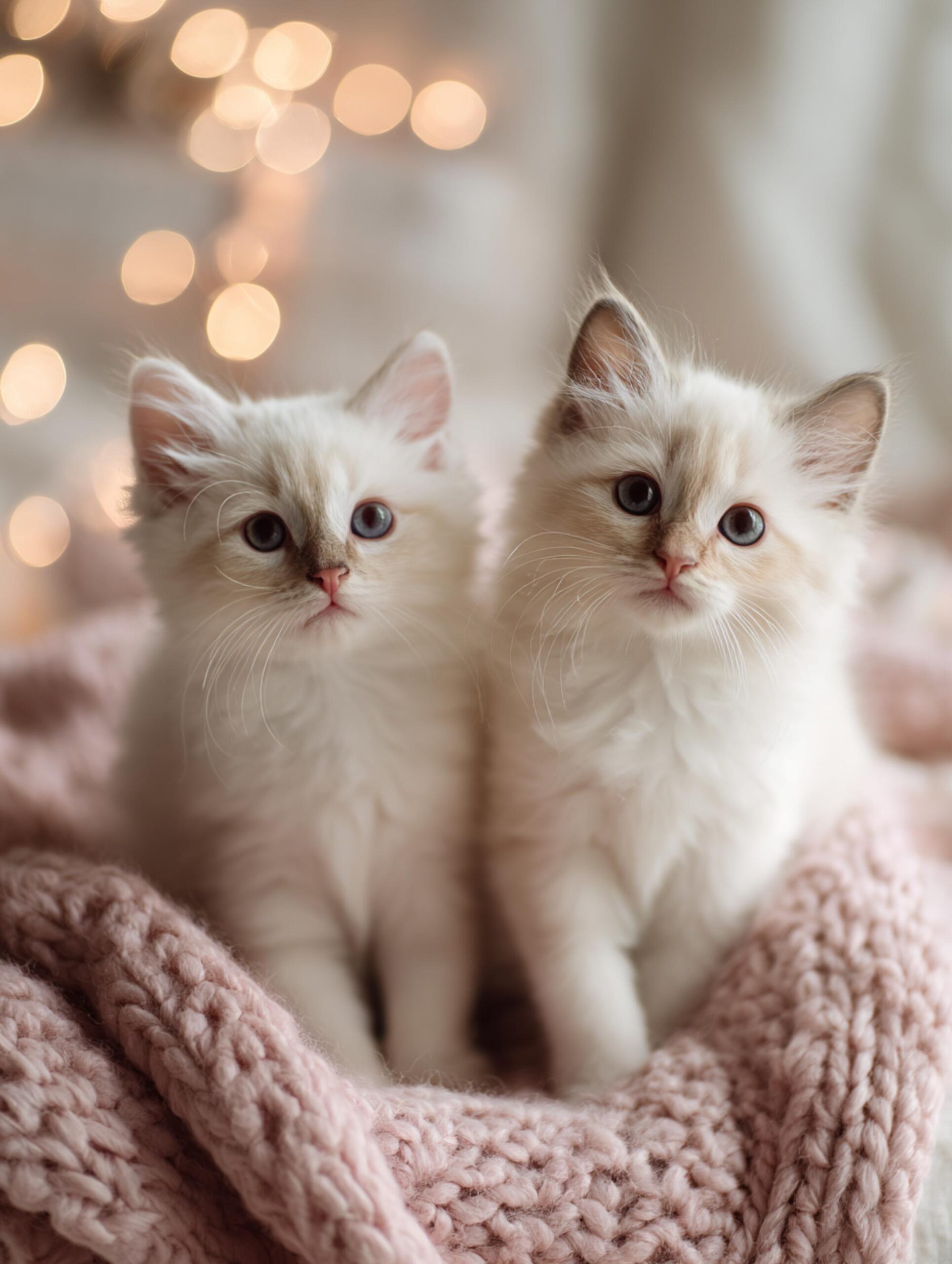
Colorpoint kittens are born with very light, often cream-colored coats. At birth, their entire bodies are warm, which suppresses pigment production almost everywhere. - Late point development
Points do not appear immediately. As kittens grow and their extremities cool, pigment begins to develop in the face, ears, legs, and tail. This delay explains why very young kittens may not show clear contrast.
This pale beginning is normal and does not indicate weak color or poor genetics.
When Points Darken and Stabilize
- 6–12 months: early contrast
During this stage, points become clearly visible. Facial masks sharpen, ears darken, and tail color deepens, though contrast may still look uneven. - 12–24 months: adult depth
Full colorpoint expression typically settles during this period. The body retains a lighter tone while points reach their mature depth and clarity. - Seasonal temperature effects
Cooler environments and winter coats often increase contrast, while warmer seasons may soften it slightly. These shifts reflect temperature sensitivity, not genetic change.
Understanding this timeline helps buyers set realistic expectations and avoid judging color too early.
Recognized Colorpoint Maine Coon Colors
Colorpoint describes where color appears, not which color appears. The underlying color genetics determine the shade of the points.
Seal Point
- Rich dark brown points
Seal point Maine Coons have deep brown to near-black points that contrast strongly with a lighter body. - Most common expression
This is the most frequently seen colorpoint expression and often shows the strongest contrast.
Blue Point
- Diluted gray-blue points
Blue point is the diluted version of seal, producing soft slate or blue-gray points. - Softer contrast
The overall look is more muted and refined, with less dramatic contrast than seal point.
Chocolate Point
- Warm brown points
Chocolate point Maine Coons display lighter, warmer brown points compared to seal. - Less common due to genetics
Chocolate requires specific recessive genetics, which makes it less frequently produced.
Lilac Point
- Diluted chocolate
Lilac point combines chocolate with dilution, producing pale lavender-gray points. - Very pale, refined appearance
Contrast is subtle and often appears elegant rather than bold, especially in adulthood.
Red and Cream Point
- Flame and soft pastel points
Red point cats show warm flame-colored points, while cream point cats display softer pastel tones. - Color instability considerations
Red-based pigments can shift with age and season, sometimes appearing uneven or mottled before stabilizing.
Tortie and Lynx Point Variations
- Combined pattern expressions
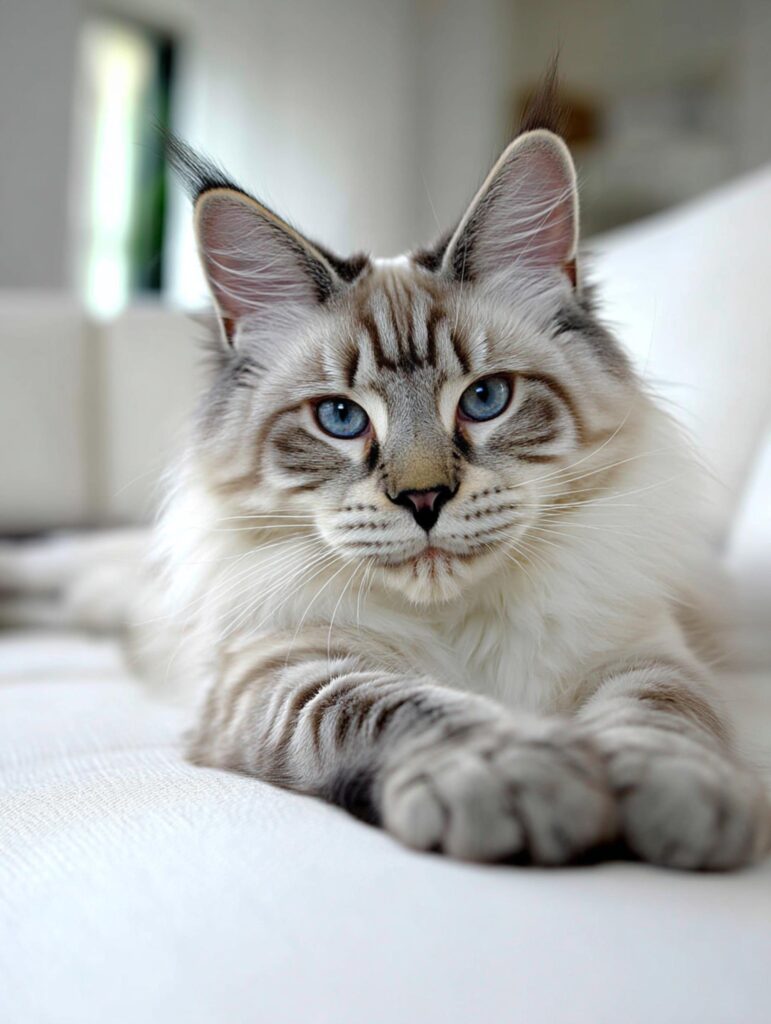
Tortie point combines red and black-based coloring in the points, while lynx point overlays tabby striping onto the colorpoint pattern. - Why these require careful genetic explanation
These variations involve multiple interacting genes. Ethical breeders explain inheritance clearly to avoid confusion about final appearance and consistency.
These recognized colorpoint expressions illustrate the range possible within the pattern while reinforcing that development takes time and patience.
Registry Recognition and Breed Standards
Colorpoint Maine Coons are genetically well understood, but registries evaluate them based on breed standards, not market popularity. Understanding how standards work helps buyers separate pet suitability from show eligibility.
Registries define colorpoint as a temperature-sensitive pattern that produces a lighter body, darker points, and blue eyes. This definition focuses on genetic mechanism and visual consistency rather than rarity or demand.
Key considerations include:
- Acceptance varies between registries
- Recognition does not always equal championship eligibility
- Pattern rules differ by organization
Some registries allow colorpoint Maine Coons within specific classes, while others restrict or exclude them entirely. These differences reflect how each organization interprets historical breed presentation, not concerns about health or temperament.
Because of this, some breeders avoid colorpoint simply to maintain alignment with show goals. This decision reflects program direction, not a judgment of the cats themselves.
Pricing and Market Demand for Colorpoint Maine Coons
Colorpoint Maine Coons often attract premium pricing, but pricing follows demand and production realities, not genetic superiority.
Buyer interest in blue-eyed Maine Coons remains strong, and colorpoint offers a predictable way to achieve that look. At the same time, recessive inheritance limits how often colorpoint kittens appear.
Pricing is influenced by:
- Strong buyer demand for blue eyes
- Limited production due to recessive genetics
- Program size and placement strategy
Higher prices do not indicate better health, structure, or temperament. Ethical breeders evaluate all kittens using the same standards, regardless of coat pattern.
How Ethical Breeders Describe Colorpoint Maine Coons
Breeder language plays a major role in buyer understanding. Ethical programs describe colorpoint Maine Coons with clarity rather than hype.
Responsible breeders:
- Use accurate terms like “colorpoint,” “seal point,” or “blue point”
- Explain how recessive inheritance works
- Avoid exaggerated claims or guarantees
Because colorpoint expression changes over time, breeders avoid promising final contrast or depth. Instead, they rely on adult outcomes from the same lines to guide placement and set realistic expectations.
This approach protects buyers and keeps the focus on long-term health, temperament, and consistency rather than early appearance alone.
Red Flags in Colorpoint Marketing
Some marketing around colorpoint Maine Coons relies on exaggeration or misinformation. Buyers should watch for language that prioritizes appeal over accuracy.
- “Hypoallergenic” claims
Breeders who claim colorpoint Maine Coons are hypoallergenic misrepresent the breed. No Maine Coon coat pattern changes allergen production. - Claims of fragility or weakness
Colorpoint Maine Coons share the same structure, strength, and health potential as any other Maine Coon. Marketing that suggests delicacy or reduced resilience creates false expectations. - Guaranteed color depth promises
Colorpoint pigmentation responds to temperature, age, and environment. Breeders cannot guarantee final contrast or shade, and responsible programs avoid making such promises. - Confusion with Himalayan or Siamese ancestry
Some listings imply or state that colorpoint Maine Coons come from Siamese or Himalayan crosses. Ethical breeders explain that the colorpoint pattern reflects a genetic mechanism, not mixed ancestry.
How to Choose a Colorpoint Maine Coon as a Buyer
Buyers make the best decisions when they focus on genetics, outcomes, and transparency rather than early appearance.
- Questions to ask breeders
Ask breeders to explain how colorpoint inheritance works, whether both parents carry the gene, and how often colorpoint appears in their program. - What genetic context should be disclosed
Responsible breeders discuss recessive inheritance, carrier status, and how temperature-sensitive pigmentation develops over time. They place colorpoint within the cat’s full genetic profile. - Why adult photos matter
Adult cats show true contrast, coat texture, and overall balance. Breeders who share adult outcomes help buyers understand how colorpoint Maine Coons mature. - Matching expectations to lifestyle
Colorpoint Maine Coons thrive in the same environments as other Maine Coons. Buyers should choose based on temperament, activity level, and long-term compatibility rather than on color alone.
These steps help buyers select a color point Maine Coon with confidence and realistic expectations.
Colorpoint Maine Coon FAQ
What is a colorpoint Maine Coon?
A colorpoint Maine Coon is a Maine Coon with a light-colored body and darker points on the face, ears, legs, tail, and sometimes paws. This pattern occurs due to temperature-sensitive pigmentation, where cooler areas of the body develop more color. Colorpoint is a coat pattern, not a separate breed or mix.
Are colorpoint Maine Coons purebred?
Yes. Colorpoint Maine Coons can be fully purebred Maine Coons. The colorpoint pattern results from a known genetic mechanism and does not require Siamese, Himalayan, or other breed ancestry.
Why do colorpoint Maine Coons always have blue eyes?
The same gene that limits pigment production in the coat also limits pigment in the iris. As a result, colorpoint Maine Coons always have blue eyes, regardless of the color of their points.
Are colorpoint Maine Coons rare?
Colorpoint Maine Coons are less common, but not genetically rare. Because the colorpoint gene is recessive, both parents must carry it. This limits how often colorpoint kittens appear, especially in programs that do not breed for the pattern intentionally.
Do colorpoint Maine Coon kittens look different at birth?
Yes. Colorpoint kittens usually appear very pale or cream-colored at birth. Their bodies are warm, which suppresses pigment production. Points develop gradually as the kitten grows and body temperature differences become more pronounced.
When do colorpoint Maine Coons reach their final color?
Most colorpoint Maine Coons develop noticeable contrast by 6–12 months and reach more stable adult color between 12–24 months. Subtle changes can continue beyond that, especially with seasonal temperature shifts.
Why do colorpoint Maine Coons darken as they age?
As Maine Coons mature, coat density increases and average skin temperature may decrease slightly. Cooler temperatures allow more pigment to develop, which can darken the body over time. This is a normal part of colorpoint expression.
Do colorpoint Maine Coons shed differently?
No. Colorpoint Maine Coons shed the same way other Maine Coons do. Seasonal shedding may make contrast appear stronger or softer, but it does not change the genetic pattern.
Are colorpoint Maine Coons more sensitive to cold?
No. Colorpoint Maine Coons regulate body temperature normally. Cooler environments may increase coat contrast, but they do not cause discomfort or health issues related to temperature.
Are colorpoint Maine Coons more fragile or delicate?
No. Colorpoint Maine Coons have the same structure, bone density, and strength as other Maine Coons. The pattern does not affect physical resilience.
Are colorpoint Maine Coons hypoallergenic?
No. Colorpoint Maine Coons are not hypoallergenic. Coat pattern does not reduce allergen production. Anyone claiming otherwise is providing incorrect information.
Are colorpoint Maine Coons more likely to be deaf?
No. Colorpoint blue eyes do not carry the same deafness risk associated with extensive white spotting. The colorpoint gene suppresses pigment production rather than preventing pigment migration, which is why hearing development remains unaffected.
Can colorpoint Maine Coons be shown?
Show eligibility depends on the registry. Some registries allow colorpoint Maine Coons in certain classes, while others restrict or exclude them from championship competition. This does not reflect health or quality, only breed standard interpretation.
Why do some breeders avoid colorpoint Maine Coons?
Some breeders avoid colorpoint to align with their show goals or interpretation of traditional breed presentation. This choice reflects program focus, not concerns about health or temperament.
Are colorpoint Maine Coons more expensive?
They often are. Demand for blue-eyed Maine Coons remains high, and recessive inheritance limits supply. Pricing reflects market demand and breeding strategy, not superior quality.
Does a higher price mean a better cat?
No. Price does not indicate better health, temperament, or structure. Ethical breeders apply the same quality standards to all kittens, regardless of coat pattern.
Can breeders guarantee final color depth or contrast?
No. Because colorpoint pigmentation responds to temperature, age, and environment, breeders cannot guarantee final color depth or contrast. Responsible breeders explain this clearly and avoid promises.
How can buyers evaluate a colorpoint Maine Coon responsibly?
Buyers should:
- Ask breeders to explain colorpoint inheritance clearly
- Request adult photos from the same lines
- Evaluate health testing, structure, and temperament
- Choose based on long-term fit rather than early appearance
Is colorpoint the same as dominant blue eyes?
No. Colorpoint blue eyes result from a recessive, temperature-sensitive gene. Dominant blue eyes come from a different genetic mechanism entirely. Confusing the two leads to incorrect assumptions.
What is the most responsible way to choose a colorpoint Maine Coon?
The most responsible approach is to select a breeder who understands and consistently produces the pattern, explains the genetics honestly, shares adult outcomes, and prioritizes health and temperament over appearance.
Final Summary: Understanding Color point Genetics in Maine Coons
Colorpoint Maine Coons express a well-documented, recessive genetic pattern that limits pigment production in warmer areas of the body and produces darker points on cooler extremities. This same temperature-sensitive mechanism explains why colorpoint Maine Coons always have blue eyes and why their coats continue to develop and darken with age.
The colorpoint pattern does not introduce additional health risks. Blue eyes in colorpoint Maine Coons do not affect vision or hearing, and the pattern does not create fragility, temperature sensitivity, or weakness. Health outcomes depend on overall genetics, screening, and breeding practices rather than coat pattern.
For buyers, the most reliable approach is to focus on breeder transparency, adult outcomes from the same lines, and complete health and temperament evaluation. Colorpoint should remain a preference, not the foundation of the decision.
To continue learning, explore the full Maine Coon colors guide or the genetics overview to understand how patterns, inheritance, and ethical breeding choices shape the breed as a whole.
Related Maine Coon Posts
If you’re continuing your research, these guides expand on key topics mentioned above:
- Dominant Blue Eyed Maine Coon Odd-eyed Maine Coons develop when pigment settles differently in each eye during early development.
- Odd Eyed Maine Coon Dominant blue eyes in Maine Coons are caused by a separate genetic mechanism from colorpoint.
- Maine Coon Kitten Colors Explained
Learn how Maine Coon coat colors appear in kittens, why early color can be misleading, and how to set realistic expectations as coats mature. - Maine Coon Colors: Complete Genetics, Identification, and More
A detailed breakdown of Maine Coons Colors. - Maine Coon Pricing Explained: What Goes Into the Cost of a Well-Bred Kitten
Understand how breeding practices, health testing, and care standards influence pricing—separate from color myths. - The Lifetime Cost of Owning a Maine Coon
A realistic look at long-term expenses, veterinary care, and planning for a 12–15+ year commitment. - Is a Maine Coon A Good First Time Cat
A practical guide to lifestyle fit, grooming needs, and what daily life with a Maine Coon actually looks like. - Black Smoke Maine Coon Coats: Genetics, Identification, and Cost
A detailed breakdown of black smoke Maine Coons, explaining how smoke coats differ from silver tabby and shaded patterns, and why black smoke is so often misidentified. - Shaded vs Smoke Maine Coon Colors What’s the difference.
Sources & References
- Lyons, L. A. (2015). Feline Genetics and Genomics.
University of Missouri College of Veterinary Medicine.
https://felinegenetics.missouri.edu - Robinson, R. (1991). Genetics for Cat Breeders. Butterworth-Heinemann.
(Foundational reference on colorpoint inheritance and temperature-sensitive pigmentation.) - Vella, C. M., Shelton, L. M., McGonagle, J. J., & Stanglein, T. W. (1999). Robinson’s Genetics for Cat Breeders and Veterinarians. Elsevier.
(Detailed explanation of recessive colorpoint genetics, pigment suppression, and eye color outcomes.) - Gandolfi, B., et al. (2010). Melanin Biology and Temperature-Sensitive Pigmentation in Domestic Cats.
Journal of Heredity.
(Explains how temperature affects melanin expression in colorpoint cats.) - Strain, G. M. (2011). Congenital Deafness in Domestic Animals.
The Veterinary Journal.
(Referenced to clarify that colorpoint blue eyes do not share the deafness risk associated with white spotting.) - The International Cat Association (TICA). Maine Coon Breed Standard and Color Definitions.
https://tica.org - Cat Fanciers’ Association (CFA). Maine Coon Breed Profile and Standards.
https://cfa.org - The Governing Council of the Cat Fancy (GCCF). Colour and Pattern Definitions.
https://www.gccfcats.org






Read the Comments +