
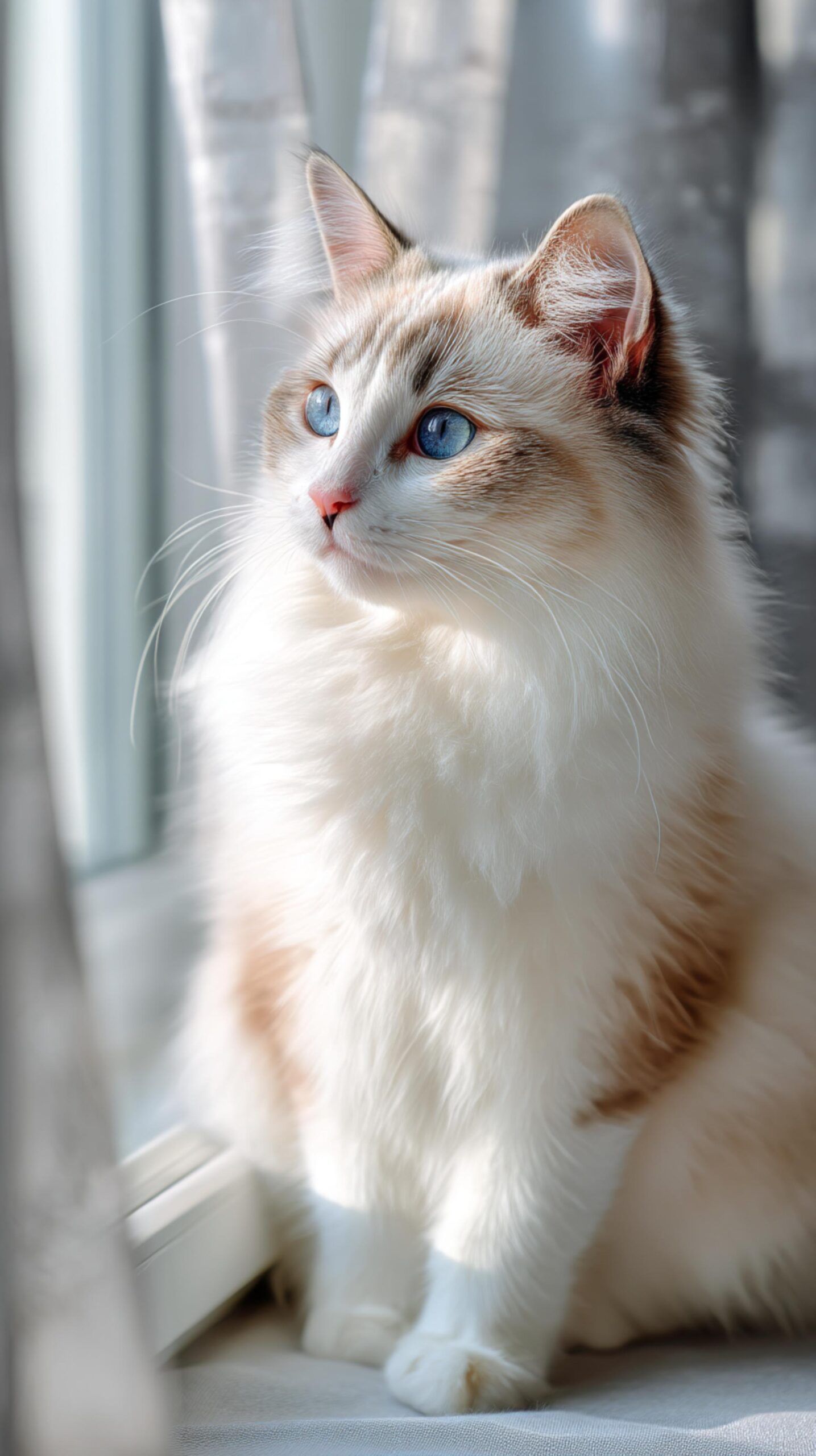
Are Ragdoll Cats Indoor Only?

“Are Ragdoll cats indoor only?” is one of the most argued questions in cat ownership because it sits at the intersection of safety, freedom, ethics, and emotion. Few topics generate as much debate, anecdote, and contradiction—especially in forums and Reddit threads where personal experience often replaces long-term data.
Ragdolls are singled out more than other breeds for one simple reason: their temperament changes the risk equation. What feels manageable with a street-savvy domestic cat can become dangerous with a breed that is unusually trusting, people-focused, and non-territorial. That difference is often minimized or misunderstood online.
There is also a clear gap between:
- Breeder guidance, which overwhelmingly favors indoor-only placement
- Veterinary recommendations, which prioritize risk reduction and longevity
- Reddit and forum opinions, which often rely on short-term anecdotes (“my cat is fine”) rather than lifetime outcomes
This article closes that gap by addressing the question directly and without euphemism. It explains what “indoor only” actually means for Ragdolls and why the recommendation exists in the first place.
Specifically, this article answers the question through five lenses:
- Safety
- Behavior
- Health
- Longevity
- Ethical placement standards
Are Ragdoll Cats Indoor Only? — Summary Table
| Topic | Key Takeaway |
|---|---|
| Breed Recommendation | Ragdolls should be indoor only as the standard of care |
| Primary Reason | Trusting, people-oriented temperament increases outdoor risk |
| Outdoor Roaming | Unsupervised outdoor access is unsafe for Ragdolls |
| Supervised Outdoor Access | Acceptable only with full containment (catio, secure enclosure, cautious harness use) |
| Temperament Outdoors | Calm, non-defensive behavior becomes a liability |
| Injury Risk | Higher risk of trauma, abscesses, fractures, and emergency surgery |
| Disease Exposure | Increased risk of FIV, FeLV, parasites, and infections outdoors |
| Lifespan Impact | Indoor-only Ragdolls live significantly longer on average |
| Behavioral Effects | Outdoor access can increase anxiety, door-fixation, and frustration |
| Indoor Fulfillment | Achieved through routine, enrichment, vertical space, and human presence |
| Apartment Suitability | Well suited when space is structured and enriched |
| Breeder Standards | Most ethical breeders require indoor-only placement |
| Owner Responsibility | Decisions should prioritize long-term welfare over preference |
| Who Should Reconsider | Owners committed to free roaming or outdoor-only lifestyles |
| Final Takeaway | Indoor-only living protects Ragdolls’ health, safety, and emotional stability |
What People Mean When They Ask “Indoor Only”
The phrase “indoor only” is often used loosely, which is where much of the confusion begins. In practice, people mean very different things when they ask this question.
Indoor Only vs Outdoor Access vs Free Roaming
True indoor-only
A cat lives entirely indoors and does not have unsupervised access to the outside. Stimulation, exercise, and enrichment are provided through play, environment design, and social interaction rather than roaming.
Supervised outdoor access
This includes controlled exposure such as:
- Harness and leash walks
- Catios or fully enclosed outdoor structures
- Secure enclosures attached to the home
The cat is never loose, never unsupervised, and cannot leave the controlled space.
Unrestricted outdoor roaming
The cat is allowed outside freely and unsupervised. This includes neighborhoods perceived as “quiet,” “safe,” or “rural.”
Why These Are Not Equivalent
These three scenarios are often discussed as if they exist on the same spectrum of risk. They do not.
Risk exposure differences
Unrestricted outdoor access exposes a cat to traffic, predators, toxins, parasites, disease, theft, and injury every single time they leave the house. Supervised access dramatically limits those risks. Indoor-only living minimizes them.
Behavioral consequences
Outdoor exposure changes behavior. Free-roaming cats develop territorial stress, door-dashing behaviors, frustration when access is inconsistent, and heightened vigilance. Indoor-only cats operate within predictable boundaries.
Long-term health outcomes
The difference is not about one afternoon outside—it is about cumulative exposure over years. Risk compounds with time. A cat that “does fine” for two years may not do fine over twelve or fifteen.
Understanding these distinctions is essential before evaluating whether Ragdolls, specifically, belong outside.
Ragdoll Temperament: Why This Breed Is Different Outdoors
Core Temperament Traits
Ragdolls are defined by a temperament that is unusually trusting and socially oriented.
- Exceptionally trusting nature
Ragdolls approach people readily, including strangers. They are less likely to flee, hide, or defend themselves when uncertain. - Low defensive aggression
They rarely escalate conflict. When threatened, many freeze or attempt proximity rather than retreat. - People-oriented over territory-oriented
Unlike many cats, Ragdolls bond more strongly to people than to physical territory. They do not patrol, defend, or assess space the way street-smart cats do.
These traits make them excellent companions indoors—and uniquely vulnerable outdoors.
Why These Traits Increase Outdoor Risk
Lack of threat assessment
Ragdolls are poor at evaluating danger. They do not reliably recognize moving vehicles, aggressive animals, or hostile humans as threats requiring immediate avoidance.
Poor street awareness
They are slow to react and unlikely to flee quickly. This is not a training issue—it is temperament.
Minimal self-preservation behaviors
Many Ragdolls do not climb to escape, defend themselves, or retreat effectively. What looks like “calm confidence” indoors becomes passivity outdoors.
Why “Calm” Is Not the Same as “Street-Smart”
Calm temperament is often misinterpreted as competence. They are not the same.
Confidence vs survival instinct
Ragdolls are confident around people because they are socially secure—not because they are equipped to survive unpredictable environments.
Why friendliness becomes a liability outdoors
A friendly cat is more likely to:
- Approach strangers
- Be picked up or taken
- Fail to retreat from threats
What makes a Ragdoll desirable as a companion is exactly what makes free roaming dangerous.
This is why breeders, veterinarians, and experienced long-term owners converge on the same conclusion: Ragdolls are not indoor-only because they are fragile—they are indoor-only because their temperament does not support outdoor survival.
Why Most Breeders Require Ragdolls to Be Indoor Only
Contractual Indoor-Only Clauses
Ethical Ragdoll breeders almost universally require indoor-only placement in their contracts. This is not arbitrary, and it is not about control—it is about risk management, welfare, and responsibility for the life they produced.
Breeders include indoor-only clauses because they are accountable for outcomes, not just placements. When a breeder produces a cat with a known temperament profile—high trust, low defensiveness, strong human orientation—they also carry an ethical obligation to place that cat in an environment where those traits do not become liabilities.
There is also a legal and reputational dimension. Outdoor placement dramatically increases the likelihood of injury, disappearance, or death. When that happens, it reflects back on the breeder’s program, even when the cause was environmental rather than genetic. Indoor-only clauses protect:
- the cat’s welfare
- the integrity of the breeding program
- the placement relationship with the owner
Ethical breeding does not end at the point of sale. Indoor-only requirements are part of long-term placement responsibility.
What Breeders See That Owners Often Don’t
Most owners evaluate outdoor access based on short-term experience: weeks or months of uneventful outings. Breeders, by contrast, see outcomes over decades and across hundreds of cats.
Long-term outcomes of outdoor placement
Breeders track what happens years after placement. They see patterns that individual owners cannot:
- cats injured after years of “safe” outdoor access
- cats disappearing suddenly after long uneventful periods
- cats developing chronic stress or medical issues after outdoor exposure
These outcomes rarely appear in online discussions because people stop posting once a cat is lost or injured.
Injury, disappearance, and rehoming rates
Outdoor Ragdolls are statistically more likely to:
- suffer traumatic injuries
- be picked up by strangers
- go missing permanently
- require rehoming due to behavioral or safety issues
Breeders often become the point of contact when these situations occur, which gives them a clearer view of risk than any forum thread.
Patterns that don’t show up in Reddit anecdotes
Reddit discussions are dominated by survivors. Owners whose cats were injured, stolen, or killed usually leave the conversation entirely. Breeders do not have that luxury—they see the full dataset, not just the visible success stories.
This is why breeder recommendations are consistent even when online opinions are not.
Can Ragdoll Cats Go Outside Safely?
The honest answer depends entirely on how “outside” is defined. Unsupervised outdoor access is not safe for Ragdolls, regardless of location or prior experience.
Unsupervised Outdoor Access: Full Risk Breakdown
Traffic and vehicle impact risk
Ragdolls lack reliable street awareness. They are slow to react, unlikely to flee quickly, and often freeze rather than move away from danger. Traffic incidents are one of the most common causes of severe injury and death in outdoor cats, and Ragdolls are disproportionately vulnerable.
Theft, intentional removal, and “friendly cat syndrome”
Ragdolls approach people willingly. This makes them easy to pick up, remove, or “rescue” by well-meaning strangers who assume the cat is lost. Intentional theft is also a real risk due to the breed’s appearance and value.
Predators and territorial aggression from other animals
Ragdolls are not territorial fighters. Encounters with dogs, coyotes, foxes, or aggressive cats often end badly because Ragdolls do not escalate or defend themselves effectively.
Exposure to toxins, plants, and chemicals
Outdoor environments contain hazards that are invisible to owners: pesticides, antifreeze, rodenticides, toxic plants, and contaminated water sources. Ingestion or contact can cause acute emergencies or long-term health damage.
Infectious disease exposure (FIV, FeLV, parasites)
Outdoor cats face significantly higher exposure to:
- FIV and FeLV through bites and contact
- fleas, ticks, and internal parasites
- fungal and bacterial infections
Preventatives reduce risk but do not eliminate it.
Why “My Area Is Safe” Is Not a Safety Plan
Statistical vs anecdotal safety
Anecdotes describe what has happened so far. Statistics describe what happens over time. Most outdoor-related injuries occur after long periods without incident, which creates a false sense of security.
Why risk compounds over time
Every outdoor outing is another exposure event. Risk does not reset daily—it accumulates. A cat that goes outside for ten years has experienced thousands of opportunities for something to go wrong. Eventually, probability catches up.
This is why safety assessments based on neighborhood quietness, rural location, or past luck are unreliable. Environment changes. People move. Animals migrate. Vehicles appear where they didn’t before.
For Ragdolls, whose temperament does not support rapid threat assessment or defensive behavior, unsupervised outdoor access is a matter of when—not if—something goes wrong.
Supervised Outdoor Options (What Is Actually Acceptable)
Supervised outdoor access is the only context in which outdoor exposure can be considered appropriate for Ragdolls. Even then, it works for some cats and households—not all—and it requires realistic expectations about limits and risk.
Harness and Leash Training
Which Ragdolls tolerate it well
Some Ragdolls accept harness training better than other breeds due to their calm temperament and tolerance for handling. Cats that are confident indoors, comfortable being touched, and not easily startled tend to adapt best. Kittens introduced early generally adjust more smoothly than adults, though adult Ragdolls can learn with patience.
That said, tolerance is not universal. Many Ragdolls freeze rather than explore, and freezing should not be mistaken for enjoyment.
Training timeline and limitations
Harness training is slow. Expect weeks to months of indoor acclimation before stepping outside. Progress is incremental: wearing the harness indoors, walking indoors, brief outdoor exposure, then gradual expansion. Some cats never progress beyond short, stationary outings.
Leash walks are not equivalent to walking a dog. Ragdolls do not navigate environments independently; they observe, pause, and retreat. Owners must follow the cat’s pace, not the other way around.
Risks owners underestimate
Harnesses can fail. Sudden noises, dogs, or unexpected movement can cause a cat to panic and escape even well-fitted gear. Ragdolls are not fast escape artists, but panic overrides temperament. Once loose, retrieval is unpredictable and dangerous.
Owners also underestimate stress. A cat that tolerates a harness may still experience elevated stress hormones outdoors, even if behavior appears calm.
Catios and Enclosed Outdoor Spaces
Why catios are the gold standard
Catios provide outdoor exposure without free-roaming risk. They allow sunlight, airflow, visual stimulation, and scent exposure while maintaining physical containment. For Ragdolls, catios offer enrichment without relying on the cat’s ability to assess danger.
They are the safest and most consistent form of outdoor access.
Design considerations for Ragdolls
Catios must be fully enclosed—top included. Ragdolls are not agile jumpers, but they will climb, lean, and test edges. Structures should include:
- solid flooring or secure mesh
- climbing shelves that do not require jumping gaps
- shaded areas to prevent overheating
Access should be controlled directly from the home to prevent escape during transitions.
Why balconies and DIY fencing fail
Balconies are high-risk. Falls, rail gaps, and spooked jumps are common causes of severe injury. DIY fencing often fails due to poor anchoring, climbable surfaces, or gaps created over time. Ragdolls do not need athletic escape ability—only one moment of imbalance or panic.
Controlled Yard Access
Why “fenced yard” ≠ safe
Standard fencing does not contain cats. Ragdolls can slip under gaps, squeeze through loosened boards, or be lifted over fences by startled reactions. Fences also do nothing to prevent predators, other animals, or humans from entering the space.
A yard that feels safe to a human does not translate to feline safety.
Escape behaviors and injury risks
Even calm cats bolt when startled. Sudden noises, unfamiliar animals, or territorial encounters can trigger flight responses. Injuries often occur during these moments—falls, collisions, or entanglement with fencing.
Controlled yard access without full enclosure relies on luck, not containment.
Health Risks: Indoor vs Outdoor Ragdoll Cats
Disease and Parasite Exposure
Fleas, ticks, and worms
Outdoor exposure significantly increases parasite risk. Fleas and ticks transmit additional diseases, and internal parasites are common even in areas perceived as “low risk.” Parasites can be brought indoors, affecting other pets and increasing treatment costs.
FIV / FeLV risk analysis
FIV and FeLV are transmitted through bites and close contact. Ragdolls’ low aggression does not protect them—it increases vulnerability. They are more likely to be bitten than to defend themselves, which raises transmission risk even with limited outdoor exposure.
Why preventatives do not eliminate exposure
Preventatives reduce risk; they do not create immunity. Breakthrough infections occur. Missed doses, resistant parasites, and environmental load all contribute. Preventative care should be viewed as harm reduction, not protection from all outcomes.
Injury and Emergency Care
Fractures, abscesses, and bite wounds
Outdoor cats experience higher rates of trauma. Bite wounds often appear small but cause deep infections requiring surgery and hospitalization. Abscesses, fractures, and internal injuries are common emergency presentations.
Emergency surgery likelihood
Outdoor injuries frequently require advanced diagnostics, anesthesia, surgical intervention, and extended recovery. Even a single incident can escalate quickly into multi-thousand-dollar care.
Cost differences between indoor and outdoor injuries
Indoor emergencies are often medical and caught earlier. Outdoor emergencies are more likely to be traumatic, acute, and severe—leading to higher costs, longer recovery, and increased long-term impact.
Supervised outdoor access can be appropriate only when containment is absolute and stress is minimal. Anything relying on the cat’s judgment, calmness, or past luck is not supervision—it is exposure.
Lifespan Reality: Indoor vs Outdoor Ragdolls
Average Lifespan Comparison
Indoor-only lifespan
Ragdolls kept indoors with appropriate enrichment routinely live 15–18 years, and many reach their late teens. Indoor living minimizes exposure to trauma, infectious disease, parasites, and environmental toxins. Veterinary care tends to be preventive rather than reactive, which supports longer, more stable lifespans.
Indoor/outdoor lifespan
Cats with mixed access typically live significantly shorter lives than indoor-only cats. While some may reach older age, the risk profile increases every year. Injuries, disease exposure, and cumulative stress reduce average lifespan even when owners perceive access as “limited” or “controlled.”
Outdoor lifespan
Fully outdoor cats have the shortest average lifespan, often less than half that of indoor-only cats. Trauma, poisoning, infectious disease, and predation are leading causes. Ragdolls, due to temperament, fall at the higher-risk end of this category.
The difference is not marginal—it is structural.
Why Longevity Matters More for Ragdolls
Long-lived breed = compounded risk
Ragdolls are not short-term companions. Every additional year alive is another year of exposure to risk. A breed that routinely lives into its late teens cannot rely on luck or anecdotal safety without consequences.
More years = more exposure
Risk compounds with time. A cat that goes outside for one year has a limited exposure window. A cat that goes outside for ten or fifteen years experiences thousands of exposure events. Eventually, probability overtakes good fortune. This is why “my cat has been fine so far” is not predictive of long-term outcome.
For a long-lived breed, minimizing exposure is not overprotection—it is responsible risk management.
Behavioral Impact of Outdoor Access
Do Ragdolls “Need” to Go Outside?
No. Ragdolls do not require outdoor access to be fulfilled.
What enrichment actually means
Enrichment is about meeting physical, mental, and social needs. For Ragdolls, the most important elements are:
- human interaction
- predictable routines
- play and problem-solving
- environmental variety indoors
These needs can be met fully inside the home.
Why stimulation ≠ roaming
Outdoor roaming provides novelty, not stability. While novelty can be stimulating, it is also unpredictable and stressful. Ragdolls thrive on familiarity and routine more than exploration. Stimulation without safety does not improve welfare.
Common Behavioral Problems Triggered by Outdoor Access
Door-dashing
Once a cat associates the door with access to stimulation, fixation develops. This increases escape attempts and injury risk, even in cats that were previously calm indoors.
Frustration and vocalization
Inconsistent access—outside sometimes, inside other times—creates frustration. Cats do not understand why access is granted one day and denied the next. Vocalization, pacing, and agitation often follow.
Anxiety when access is inconsistent
Ragdolls are particularly sensitive to inconsistency. Changes in routine elevate stress hormones and can lead to withdrawal, overgrooming, or clinginess. Owners often misinterpret these behaviors as boredom rather than stress.
Why Outdoor Access Can Increase Stress, Not Reduce It
Loss of predictability
Predictability is central to feline wellbeing. Outdoor exposure introduces variables the cat cannot control: other animals, people, noises, and threats. This erodes the sense of security that supports calm behavior.
Territorial insecurity
Outdoor access forces cats to navigate territory they cannot defend or control. For a non-territorial breed like the Ragdoll, this creates chronic low-level stress rather than confidence.
What appears to be “freedom” often translates into vigilance and uncertainty, especially over time.
Indoor Enrichment: What Actually Keeps Ragdolls Fulfilled
Play vs Social Fulfillment
Ragdolls are fulfilled less by space and more by presence. Unlike highly independent or territorial cats, they prioritize proximity to their people over environmental dominance. A large house without interaction is less satisfying to a Ragdoll than a smaller space with consistent human engagement.
Why human presence matters more than space
Ragdolls regulate emotionally through social contact. Sitting nearby, being spoken to, following routines, and sharing quiet activities all contribute to their sense of security. Interactive play matters, but so does passive togetherness. This is why Ragdolls often settle near desks, couches, or kitchens rather than isolating themselves in unused rooms.
Play supports physical health, but social fulfillment supports emotional stability. For this breed, the two are not interchangeable.
Environmental Setup That Works
Vertical space
Vertical access provides observation, not escape. Cat trees, shelves, and elevated resting spots allow Ragdolls to survey their environment calmly. Height gives choice and perspective without requiring roaming.
Window access
Windows offer visual stimulation and predictable activity. Watching birds, people, and changing light cycles provides mental engagement without physical risk. Window perches are especially effective for indoor-only Ragdolls.
Predictable routines
Routine anchors behavior. Feeding times, play windows, grooming schedules, and rest periods help Ragdolls anticipate what comes next. Predictability reduces anxiety and replaces the perceived need for novelty-driven stimulation.
Apartment Living vs Houses
Why square footage matters less than structure
Ragdolls adapt well to apartments because they do not require large territories. What matters is how space is used, not how much exists. Vertical layering, designated play areas, and shared living zones matter more than open floor plans.
Common apartment mistakes
The most common mistake is assuming small space equals insufficient stimulation. The real issue is lack of structure: no play routine, no vertical access, no windows, and inconsistent interaction. When these elements are addressed, apartments meet Ragdoll needs effectively.
“Happiness” vs Safety: Reframing the Debate
What Happiness Looks Like in Cats
Feline happiness is not measured by novelty or freedom of movement. It is reflected in:
- stability
- routine
- low stress levels
Relaxed posture, predictable behavior, healthy appetite, and steady social engagement indicate wellbeing far more reliably than exploratory behavior.
Ragdolls, in particular, show contentment through calm presence rather than constant activity.
Why Outdoor Novelty Is Not the Same as Quality of Life
Stress hormones vs stimulation
Outdoor environments elevate cortisol, even when behavior appears calm. The body responds to unpredictability with vigilance. What owners perceive as excitement is often physiological stress.
Short-term excitement vs long-term safety
Novel experiences create momentary engagement but introduce cumulative risk. Quality of life is built over years, not afternoons. For a long-lived breed, long-term safety and emotional stability outweigh short-lived stimulation.
Choosing indoor enrichment over outdoor exposure is not deprivation. It is a deliberate choice to prioritize predictable wellbeing over unmanaged risk.
Common Myths About Indoor-Only Ragdolls
“Indoor cats are bored.”
Boredom is not caused by being indoors; it is caused by lack of structure, interaction, and enrichment. Ragdolls thrive on routine, social contact, and predictable engagement. A well-managed indoor environment with play, vertical space, windows, and human presence meets their needs more reliably than outdoor exposure, which often introduces stress rather than fulfillment.
“Cats are meant to roam.”
Domestic cats are not wild animals living in natural ecosystems. They are companion animals living in human-controlled environments. Ragdolls, in particular, were developed for close human companionship, not independent roaming. What a species evolved from does not dictate what is safest or healthiest in modern conditions.
“Ragdolls are too lazy to get hurt.”
Calm is not the same as safe. Ragdolls are not lazy—they are non-reactive. That lack of urgency, hesitation to flee, and low defensiveness increases risk outdoors. Injury occurs not because a cat is active, but because it fails to assess or respond to danger quickly enough.
“Supervised outdoor access always stays supervised.”
Supervision assumes control. In reality, unexpected noises, animals, equipment failure, or human distraction can turn a supervised outing into an emergency in seconds. Even responsible owners underestimate how quickly conditions can change. The question is not intention—it is margin for error.
When Outdoor Access Becomes a Problem
Door fixation
Once outdoor access becomes part of a cat’s routine, doors become focal points. This increases escape attempts, stress around transitions, and injury risk during everyday activities like taking out trash or answering the door.
Increased anxiety
Inconsistent outdoor access creates uncertainty. Cats do not understand why access is allowed sometimes and denied at others. This unpredictability elevates stress rather than relieving it.
Aggression redirected indoors
Outdoor stimulation can trigger frustration or territorial stress that has nowhere to go. The result may be redirected aggression toward people or other pets inside the home—behavior that did not exist before outdoor exposure.
Owners trapped in constant supervision
Outdoor access often shifts responsibility from enrichment to vigilance. Owners become managers of risk rather than providers of stability. Over time, this leads to burnout, inconsistency, and escalating stress for both cat and human.
Ethical Considerations: Responsibility vs Preference
Owner desire vs animal welfare
Wanting to give a cat “freedom” is understandable. But ethical care prioritizes outcomes over intention. The question is not what feels enriching to the owner, but what reliably protects the cat’s wellbeing over its lifetime.
Why “my cat likes it” is not the full equation
Enjoyment does not equal safety. Many animals engage willingly in activities that carry long-term risk. Ethical decisions require weighing immediate preference against cumulative harm and probability.
Long-term responsibility framing
Ragdolls are a long-term commitment. Ethical ownership means making choices that support health, longevity, and emotional stability across 15–18+ years—not decisions based on short-term satisfaction or isolated experiences.
Choosing indoor-only living for a Ragdoll is not about restriction. It is about accepting responsibility for outcomes, not just intentions.
Questions Owners Should Ask Themselves Honestly
Can I meet enrichment needs indoors?
Meeting a Ragdoll’s needs indoors requires intention, not excess space. Daily interaction, structured play, environmental variety, and predictable routines are the foundation. If enrichment is treated as optional or reactive rather than planned, indoor-only living will feel inadequate—not because the cat needs outside access, but because core needs are not being met.
Am I prepared for emergency outcomes?
Outdoor access increases the likelihood of emergency veterinary care. Preparation means accepting that injuries, illness, or sudden loss are realistic possibilities—not rare hypotheticals. Owners must be prepared emotionally and financially to act quickly, without hesitation, if something goes wrong.
Is outdoor access for the cat—or for me?
This question is uncomfortable but necessary. Many outdoor-access decisions stem from human values about freedom or enjoyment rather than feline welfare. Ethical care requires separating what feels meaningful to the owner from what consistently benefits the cat over time.
Would I accept the worst-case scenario?
Every risk-based decision carries an outcome spectrum. If the worst case—severe injury, disappearance, or death—would feel unacceptable in hindsight, then the decision itself needs reconsideration. Responsible ownership means planning for outcomes, not just intentions.
See Are Ragdoll Cats Good for First Time Cat Owners
Final Answer: Are Ragdoll Cats Indoor Only?
Yes. Ragdoll cats should be indoor only as the standard of care.
Indoor-only living is the safest option because it aligns with the breed’s temperament, health profile, and longevity. It minimizes exposure to preventable risks and supports emotional stability over a long lifespan.
Supervised outdoor access can be appropriate in limited cases—when containment is absolute, stress is minimal, and supervision does not rely on the cat’s judgment or past luck. Even then, it is an optional supplement, not a necessity.
Prospective owners should reconsider owning a Ragdoll if unrestricted outdoor roaming is non-negotiable. The breed’s trusting nature and low defensiveness make free-roaming incompatible with long-term welfare.
Closing summary:
Ragdolls are not indoor-only because they are fragile.
They are indoor-only because they are trusting, social, and safest when protected.
Continued Ragdoll Reading
If you’re still deciding whether a Ragdoll fits your home, these guides expand on temperament, care, and long-term ownership realities:
- Ragdoll Cats Explained by a Breeder
A complete breakdown of temperament, care needs, health realities, and who the breed is truly suited for. - Ragdoll Cat Health Complete Health review of Ragdoll cats.
- Is A Ragdoll Right for You?
A Ragdoll is right for you if you want calm companionship, routine, and emotional presence - How Ragdoll Kittens are Raised Our Ragdoll kittens are raised through a structured, stage-based process that supports confidence, handling tolerance, and adaptability.
- Are Ragdoll Cats Hypoallergenic?
A realistic explanation of allergies, Fel d 1, and why coat type doesn’t equal allergy safety. - What Living With A Ragdoll is Like
Living with a Ragdoll doesn’t match the extremes you see online. - Ragdoll Cat Lifespan: Lifespan and health tips.
- Ragdoll Health Testing Explained
What breeders test for, what results actually mean, and why testing reduces risk but never guarantees outcomes. - Ragdoll Cat Shedding Ragdoll shedding is normal, consistent, and manageable when expectations match the reality of the breed.
- Ragdoll Cat Lifetime Costs Ragdoll cats are a long-term financial commitment that extends beyond the initial kitten price.
- Are Ragdoll Cats Good for First Time Owners Ragdolls can be a good choice for first-time owners when expectations match reality.
Sources & References
- Cat Fanciers’ Association (CFA) — Ragdoll breed standard and temperament
https://cfa.org/ragdoll/ - The International Cat Association (TICA) — Ragdoll breed information
https://tica.org/ragdoll/ - International Cat Care (iCatCare) — Indoor cats, enrichment, welfare, and behavior
https://icatcare.org/advice/ - Cornell Feline Health Center — Feline health, injury prevention, indoor vs outdoor risks
https://www.vet.cornell.edu/departments-centers-and-institutes/cornell-feline-health-center - Merck Veterinary Manual (Cat Owners) — Infectious disease risk, trauma, parasites
https://www.merckvetmanual.com/cat-owners - American Veterinary Medical Association (AVMA) — Pet safety, indoor vs outdoor guidance
https://www.avma.org/resources-tools/pet-owners - VCA Animal Hospitals — Outdoor risk, emergency care, feline behavior and stress
https://vcahospitals.com/know-your-pet





Read the Comments +