
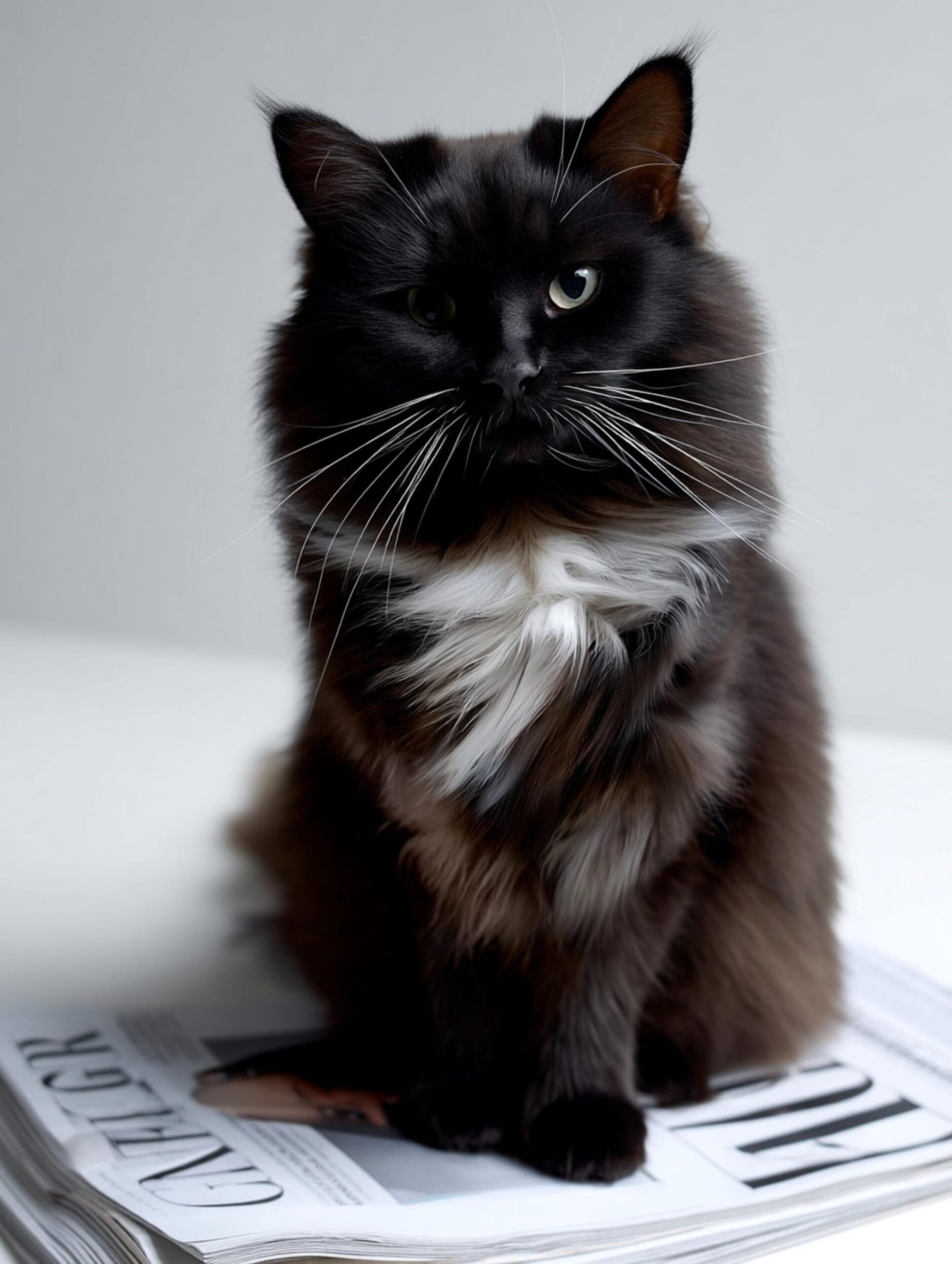
Why Does TICA Only Recognize Cherubims?
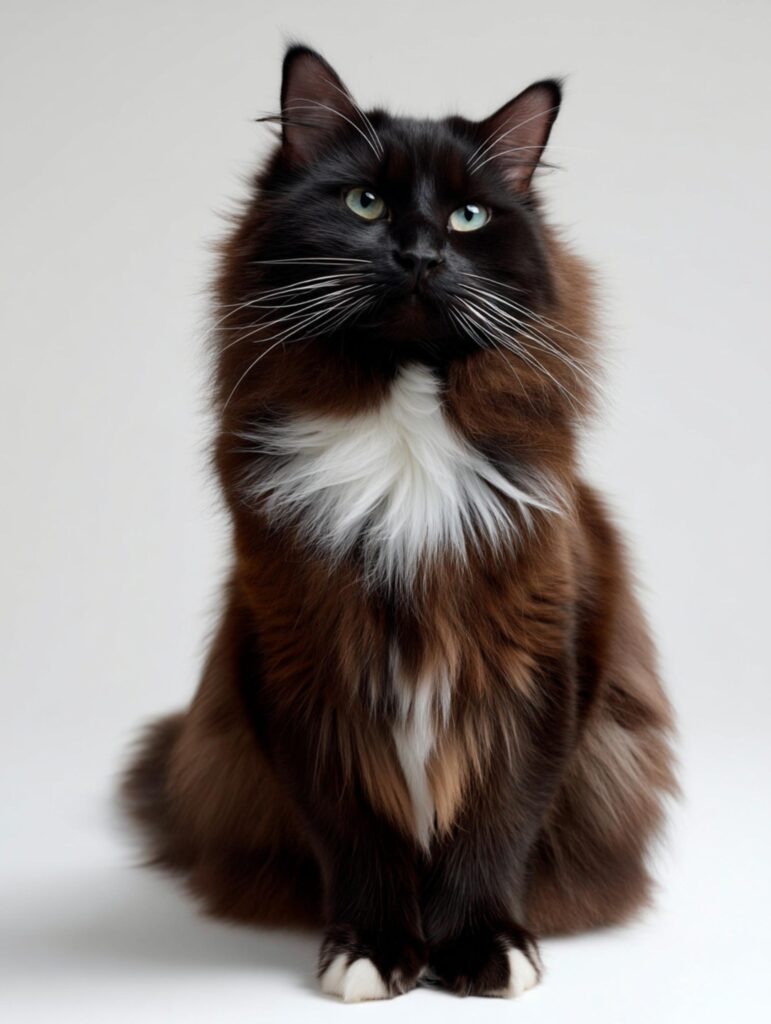
The International Cat Association recognizes Cherubim cats as a distinct registration category because of how early Ragdoll history, naming rights, and registry standards intersect, not because Cherubims are inferior, mixed, or “not real” Ragdolls.
From the beginning of the breed, **Ann Baker registered multiple names associated with her breeding program, including both Ragdoll and Cherubim. Modern registry treatment reflects how those names and standards were later formalized, not a change in the cats themselves.
TICA Ragdoll vs Cherubim: What the Classification Actually Means
| Topic | Ragdoll (TICA) | Cherubim (TICA) |
|---|---|---|
| Lineage | Ragdoll foundation lines | Ragdoll foundation lines |
| Coat requirement | Pointed only | Non-pointed expressions |
| Why TICA uses this label | Meets the pointed Ragdoll show standard | Does not meet the pointed standard |
| Breed origin | Ragdoll | Ragdoll-related |
| Show eligibility | Yes, under Ragdoll standard | Yes, under Cherubim standard |
| Purpose of the category | Preserve the pointed Ragdoll standard | Allow honest registration and showing |
| Effect on temperament | None | None |
| Effect on health or quality | None | None |
| Companion suitability | High | High |
| Practical impact for pet buyers | Minimal | Minimal |
| Practical impact for show buyers | Determines show category | Determines show category |
What Is TICA and What Does “Recognition” Actually Mean?
TICA functions as a registry and standards organization, not a referee of breeder intent or historical nuance. Its responsibility is to maintain consistent, enforceable classifications that can be applied uniformly across generations.
What TICA does regulate:
- Breed standards used for exhibition
- Registration categories for pedigree tracking
- Clear labeling based on visible standard compliance
What TICA does not regulate:
- Which cats are “better”
- Companion suitability
- Breeder ethics, intent, or historical disputes
In registry language, recognition simply means that a category exists within the system and is defined clearly enough to be recorded and enforced.
Important distinctions:
- Breed recognition
The breed exists within the registry’s framework. - Registration categorization
Cats are recorded based on how they align with written standards. - Show standards vs companion placement
Show standards require strict visual rules. Homes do not.
Registries must draw clear, enforceable lines. Without them, pedigrees lose clarity and standards become impossible to apply consistently.
Ann Baker, Early Naming Rights, and the Origins of the TICA Cherubim Category
What can be stated accurately is this:
- Ann Baker registered both the Ragdoll name and the Cherubim name
- Multiple names existed within the early foundation framework
- Registry naming and classification came before modern standardized show rules
What cannot be stated with certainty is that every non-pointed cat was explicitly labeled “Cherubim” in the way the term is used today. Early records were inconsistent, proprietary, and not aligned with modern registry systems.
This distinction matters.
As registries later formalized the pointed-only Ragdoll show standard, they faced a structural challenge:
- Cats existed in pedigrees that traced back to the foundation stock
- Those cats did not meet the visible requirements of the show standard
- The names associated with the early program already existed
Rather than erase cats from pedigrees or blur standards, registries created separate registration categories that aligned with both history and enforceable rules.
TICA’s recognition of Cherubims reflects:
- Existing early naming rights
- The need for accurate pedigree tracking
- Preservation of the pointed Ragdoll show standard
It does not imply that Cherubims are newer, lesser, or outside the breed’s historical development.
Why TICA Created the Cherubim Category
TICA did not create Cherubim as a new breed or an alternate version of the Ragdoll. Cherubim exists as a registry solution. It provides a way to accurately record cats that fall outside the pointed-only Ragdoll show standard while preserving pedigree integrity and historical continuity.
From a registry perspective, TICA had to solve a structural problem.
- Cats existed with legitimate Ragdoll lineage
- Those cats did not meet the visual requirements of the pointed Ragdoll standard
- The registry still needed a way to record them honestly and consistently
Creating a separate category allowed TICA to do three critical things at once.
- Honest registration
Cats are labeled according to what they visibly are, not what buyers or breeders wish they were called. - Accurate pedigree tracking
Lineage remains transparent across generations without forcing cats into categories they do not meet by standard. - Preservation of the pointed Ragdoll standard
The pointed-only definition remains intact and enforceable in the show ring.
This approach protects both populations. Pointed Ragdolls retain a clear, stable standard, while non-pointed cats are not erased, hidden, or misrepresented in registry records.
Key takeaway for SERPs:
Cherubims exist because registries must categorize cats by standard compliance, not because the cats lack quality or lineage.
Why TICA Recognizes Cherubims but Not Non-Pointed Ragdolls
One of the most common sources of confusion is the phrase “non-pointed Ragdoll.” In the context of The International Cat Association, that term does not exist as a registrable category.
The reason is straightforward.
- The Ragdoll standard in TICA is pointed-only
- Registration categories must align with written, enforceable standards
- A cat that does not meet the pointed requirement cannot be registered as a Ragdoll within that system
Cherubim functions as the correct and precise label for these cats inside TICA’s framework. It is not a downgrade, workaround, or euphemism. It is the category that accurately reflects how the cat fits the registry rules.
Using a distinct category avoids several long-term problems.
- Pedigree confusion
Records remain clear and traceable instead of blending incompatible standard definitions. - Buyer misrepresentation
Buyers are not led to believe a cat meets a show standard it does not. - Standard drift over time
The pointed Ragdoll definition remains stable rather than expanding informally through relabeling.
In short, TICA recognizes Cherubim cats because the solid colored Ragdolls matter. The category exists to protect clarity for registries, breeders, and buyers alike without making any statement about the cat’s quality, temperament, or legitimacy.
Does TICA Cherubim Recognition Affect Quality, Health, or Temperament?
TICA recognition does not determine the quality of an individual cat. Registry classification reflects how a cat fits a written standard, not how well that cat is bred, raised, or suited to life as a companion.
Recognition does not determine:
- Coat quality
Texture, density, and grooming needs are influenced by genetics and breeding choices, not registry labels. - Size
Adult size and growth rate depend on lineage and selection, not whether a cat is registered as a Ragdoll or a Cherubim. - Structure
Bone, balance, and overall build are breeder priorities, not registry outcomes. - Temperament
The calm, people-oriented personality associated with Ragdoll-type cats is selected for by breeders and reinforced through early handling. It is not altered by paperwork. - Health testing standards
Health screening is a breeder responsibility. Registries do not enforce or replace responsible testing practices.
Many Cherubims:
- Come from established Ragdoll lines with long, documented pedigrees
- Are intentionally placed as companions rather than show prospects
- Are not bred for the show ring by design, even when their lineage would otherwise qualify
For buyers, this distinction matters. A cat’s registration category does not predict how it will live in a home. Breeding decisions, early environment, and breeder ethics do.
Why Some Registries Handle This Differently
Not all registries approach standards in the same way. Differences in classification reflect philosophy, not hierarchy.
Some registries choose to expand standards to include a wider range of expressions under a single breed name. Others choose to preserve narrow definitions to maintain visual consistency in the show ring.
Neither approach is automatically better.
What matters is consistency. A registry must apply its rules uniformly so breeders and buyers understand what a label means within that system.
For buyers, registry differences should never replace due diligence. The most reliable indicators of quality remain the same regardless of registry.
Buyers should focus on:
- Breeder transparency
Clear explanations of lineage, registration, and placement goals. - Health testing
Documented screening that goes beyond minimum requirements. - Temperament consistency
Predictable behavior shaped by intentional breeding and early socialization.
Registry labels provide structure. Breeders working with lines help determine the state of the breed.
Common Myths About TICA and Cherubims
Misinformation about Cherubims spreads easily online, especially in forums and comment threads where registry language gets oversimplified. These are the most common claims and the facts that correct them.
Myth: “TICA doesn’t recognize them because they’re mixed.”
TICA does not use registry categories to flag crossbreeding. Cherubims come from documented Ragdoll lineage. The registry separates them because they do not meet the pointed-only show standard, not because of mixed ancestry.
Myth: “Cherubims are pet quality rejects.”
Breeders do not place Cherubims as companions due to inferiority. Many breeders intentionally breed and place Cherubims as pets because they prioritize temperament and home suitability over show competition.
Myth: “They’re a made-up breed.”
Registries do not invent categories casually. TICA created the Cherubim category to maintain accurate records and enforce standards consistently. The name exists to describe how a cat fits registry rules, not to fabricate a new type of cat.
Myth: “They can’t be real Ragdolls.”
Lineage defines breed origin. Cherubims trace back to Ragdoll lines and share the same foundational traits. The registry label reflects standard compliance, not the cat’s genetic history or legitimacy.
Clear definitions prevent confusion. Most myths disappear once buyers understand how registries classify cats and why those distinctions exist.
What This Means for Buyers Looking for a Ragdoll-Type Cat
For most buyers, TICA’s classification makes no practical difference at all. The cat does not change. The temperament does not change. Daily life does not change.
Where it does matter is simple and specific.
If you want to show a non-pointed Ragdoll-type cat in TICA, you now have a legitimate path to do so under the Cherubim category. The registry gives those cats a place in the show ring without rewriting the pointed Ragdoll standard.
If you do not plan to show, the registration label has little relevance. The cat’s behavior, health, and suitability for your home remain the same regardless of whether the paperwork says Ragdoll or Cherubim.
In practical terms:
- Show-focused buyers gain access to competition eligibility
- Companion-focused buyers see no functional difference
- Breeders gain clarity and honesty in registration
For buyers choosing a companion, the label rarely affects the decision. For buyers interested in exhibition, it determines whether the cat can participate.
That is the actual distinction.
FAQ: TICA, Cherubims, and Ragdoll Registration
Why is my Ragdoll cat called a Cherubim in TICA?
TICA labels your cat based on whether it meets the pointed-only Ragdoll show standard. If your cat comes from Ragdoll lines but does not express point coloration, TICA registers it as a Cherubim. The registry uses this label to match the cat to the correct standard, not to question its lineage.
How does TICA decide whether a cat is a Ragdoll or a Cherubim?
TICA looks at visible standard compliance, not intent or preference. If a cat meets the pointed Ragdoll standard, TICA registers it as a Ragdoll. If it does not meet that requirement but traces to Ragdoll lines, TICA registers it as a Cherubim.
Is a Cherubim genetically different from a Ragdoll?
No. Cherubims and Ragdolls can share the same lineage. The distinction reflects coat expression and standard rules, not a different genetic origin.
Does being registered as a Cherubim mean my cat is lower quality?
No. Registration categories do not measure quality, health, temperament, or value. Breeding choices and early care determine those traits, not registry labels.
Can Cherubims be shown in TICA?
Yes. TICA allows Cherubims to compete under their own standard. This gives non-pointed cats from Ragdoll lines a legitimate path into the show ring without altering the pointed Ragdoll standard.
Why doesn’t TICA just call them non-pointed Ragdolls?
TICA requires clear, enforceable categories. The term “non-pointed Ragdoll” conflicts with a pointed-only Ragdoll standard. Using the Cherubim category keeps records accurate and standards consistent.
Do other registries handle this differently?
Yes. Registries follow different philosophies. Some expand breed standards. Others preserve narrow definitions. TICA chose categorization to maintain clarity and pedigree accuracy within its system.
Does this registration matter if I just want a pet?
For most companion homes, it does not. The label affects show eligibility and paperwork. It does not change how your cat behaves or lives in your home.
Bottom line:
**The International Cat Association registers cats by standard compliance. When a cat does not meet the pointed Ragdoll standard but comes from Ragdoll lines, TICA uses the Cherubim category to stay accurate and consistent.
Final Perspective
TICA recognizes Cherubims to create clarity, not exclusion. The category allows non-pointed cats from Ragdoll lines to exist honestly within the registry system and, when desired, enter the show ring under a defined standard.
Registry categories organize rules. They do not assign worth.
A well-bred Cherubim is not a lesser cat. It is a clearly categorized one.
TICA recognizes Cherubims because accuracy matters, and informed buyers care more about function and fit than labels.
Related Guides and Resources
- Are Ragdoll Cherubim Cats Real
- Ragdoll Kittens: What Ethical Ragdoll Breeders Guarantee
- Cherubim Ragdoll Kittens Available and Upcoming Litters
- Complete Cherubim Breed Guide
- Ragdoll vs Cherubim: What’s the Difference?
- Mink Ragdoll Cats Explained
- Black Ragdoll Cats Explained
- Black Tuxedo Ragdoll Cats
- Ragdoll Cat Temperament
- Ragdoll Cat Health, Lifespan, and What Matters Most
- Complete Guide to Ragdoll Cats
Sources & References
- The International Cat Association (TICA) – Ragdoll Breed Standard
https://tica.org/wp-content/uploads/2025/04/Ragdoll.pdf - The International Cat Association (TICA) – Ragdoll Breed Information
https://tica.org/breed/ragdoll/ - TICA Registration Rules and Breed Standards Overview
https://tica.org/registration/ - TICA Show Rules and Competitive Categories
https://tica.org/competitive-rules/ - Background on Ragdoll History and Registry Development
https://tica.org/breeds/







Read the Comments +