

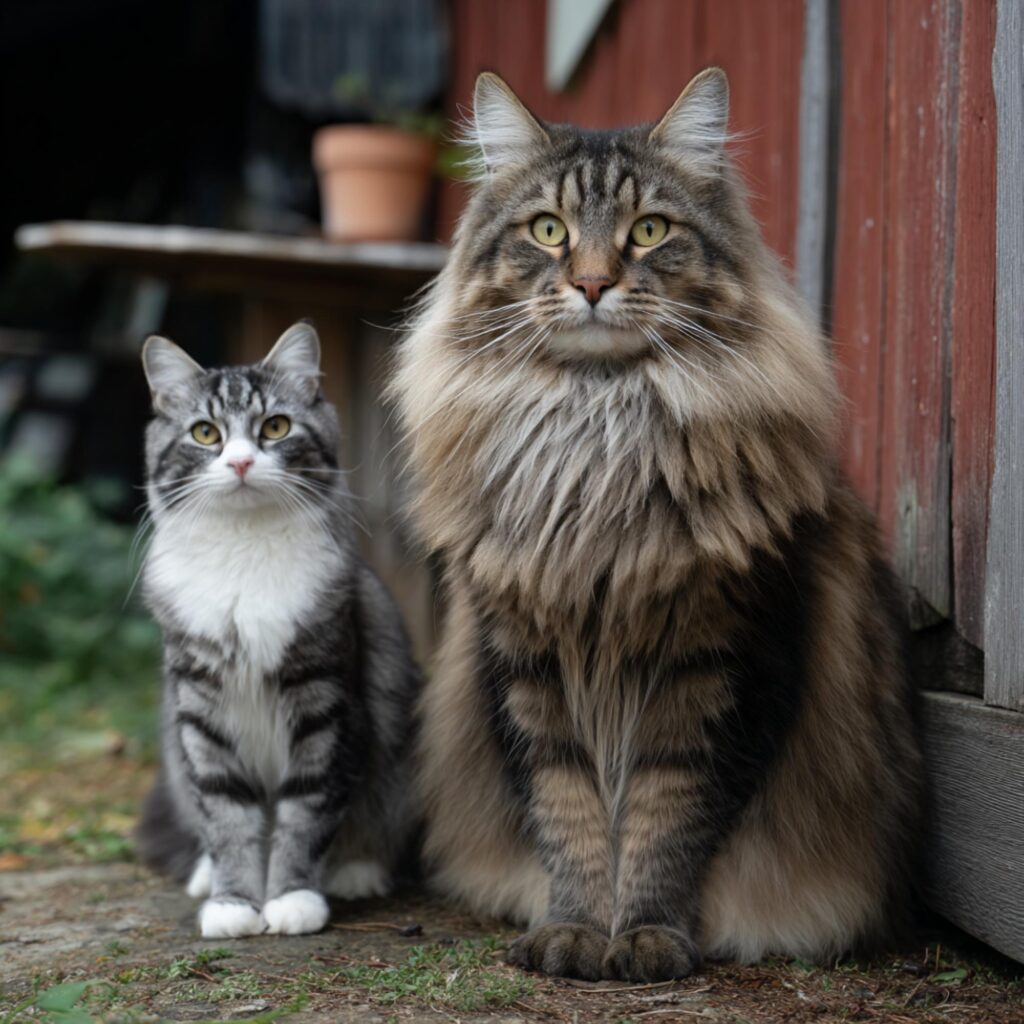
Why 2 Cats Can Look Like Maine Coons But Not Be Maine Coons
Two cats can share large size, ear tufts, and shaggy coats yet have completely different genetic backgrounds. Visual similarity does not automatically mean shared ancestry. A Maine Coon is defined by documented pedigree through recognized registries, not by appearance alone. Resemblance can be striking, but breed identity is determined by lineage, not looks.
The Short Answer (Fast Clarity Section)
Physical traits overlap across many cat populations.
Large size, long fur, bushy tails, and dramatic ear furnishings are not exclusive to Maine Coons. Domestic longhair cats, which are mixed-breed cats with long coats, can naturally develop similar features through genetic variation.
Only pedigree confirms breed status.
Without documented ancestry through recognized registries, there is no way to verify that a cat is a true Maine Coon — even if it looks nearly identical to one.
Traits vs Lineage
| Category | Visual Traits | Verified Lineage |
|---|---|---|
| Large Size | Can occur in many cats | Confirmed through pedigree |
| Ear Tufts | Common in longhairs | Not proof of breed |
| Shaggy Coat | Seen in mixed cats | Breed standard defines texture |
| Bushy Tail | Common feature | Must align with pedigree |
| Breed Status | Assumed by appearance | Proven by registration |
A cat may check every visual box and still not be a Maine Coon if there is no documented ancestry.
Why Appearance Alone Is Misleading
It is natural to identify breeds based on appearance. Humans categorize visually. However, breed identity in animals is genealogical, not cosmetic.
Traits can overlap across populations because many characteristics are influenced by multiple genes. That means size, coat length, and ear furnishings can appear in unrelated cats without shared breed ancestry.
Looking like a Maine Coon does not equal being a Maine Coon.
Large Size Is Not Unique to Maine Coons
One of the biggest misconceptions is that any large cat must be a Maine Coon.
In reality:
• Domestic cats naturally vary in size
• Male cats are typically larger than females
• Nutrition and overall health influence growth
• Mixed ancestry can produce larger individuals
Some domestic longhair males can easily reach weights similar to female Maine Coons. That overlap creates confusion.
Maine Coons are known for their substantial bone structure and rectangular body shape, but size alone is not exclusive to the breed.
A large cat without pedigree documentation may simply be a well-developed domestic longhair.
Ear Tufts and Lynx Tips Are Not Exclusive
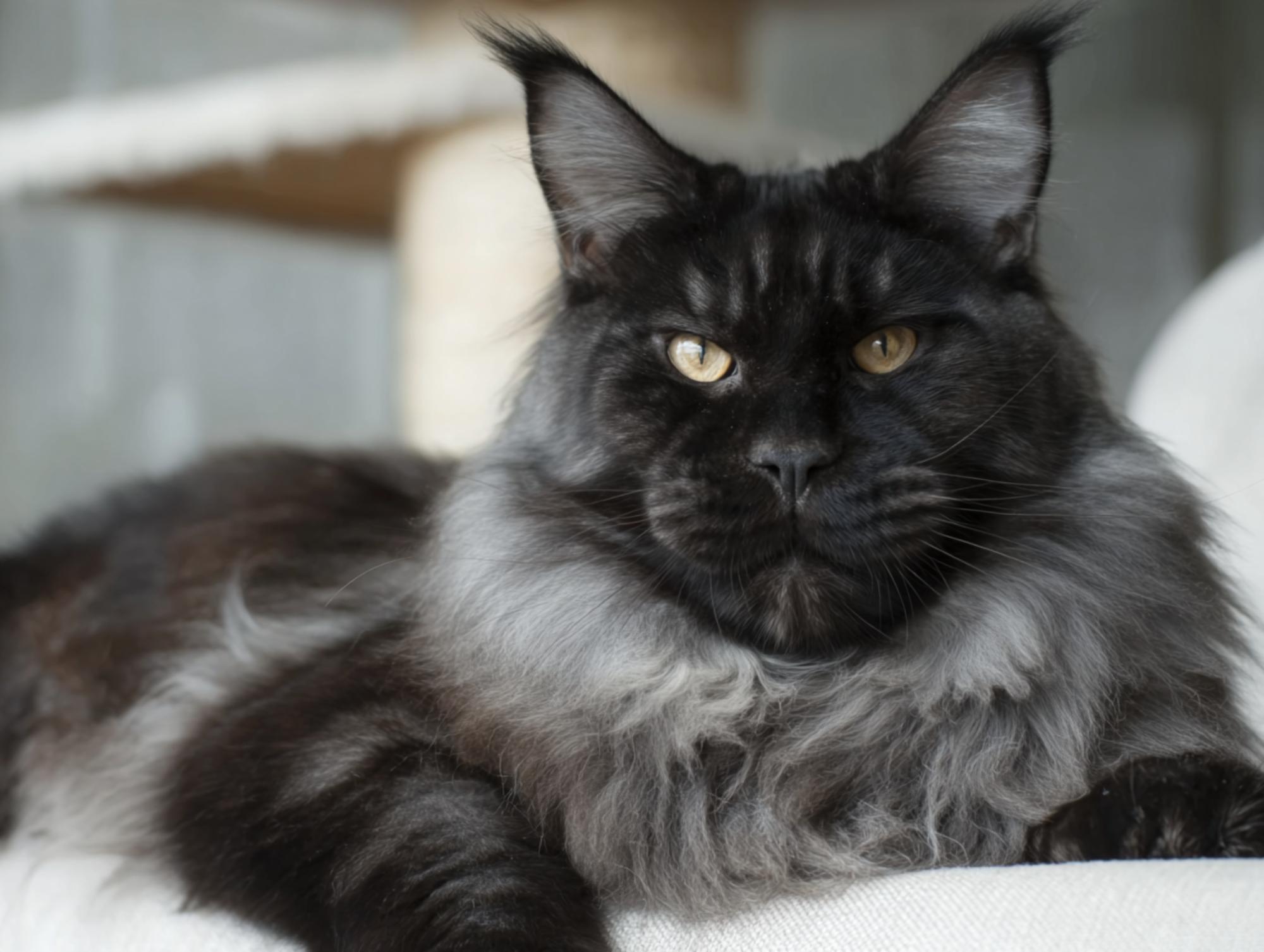
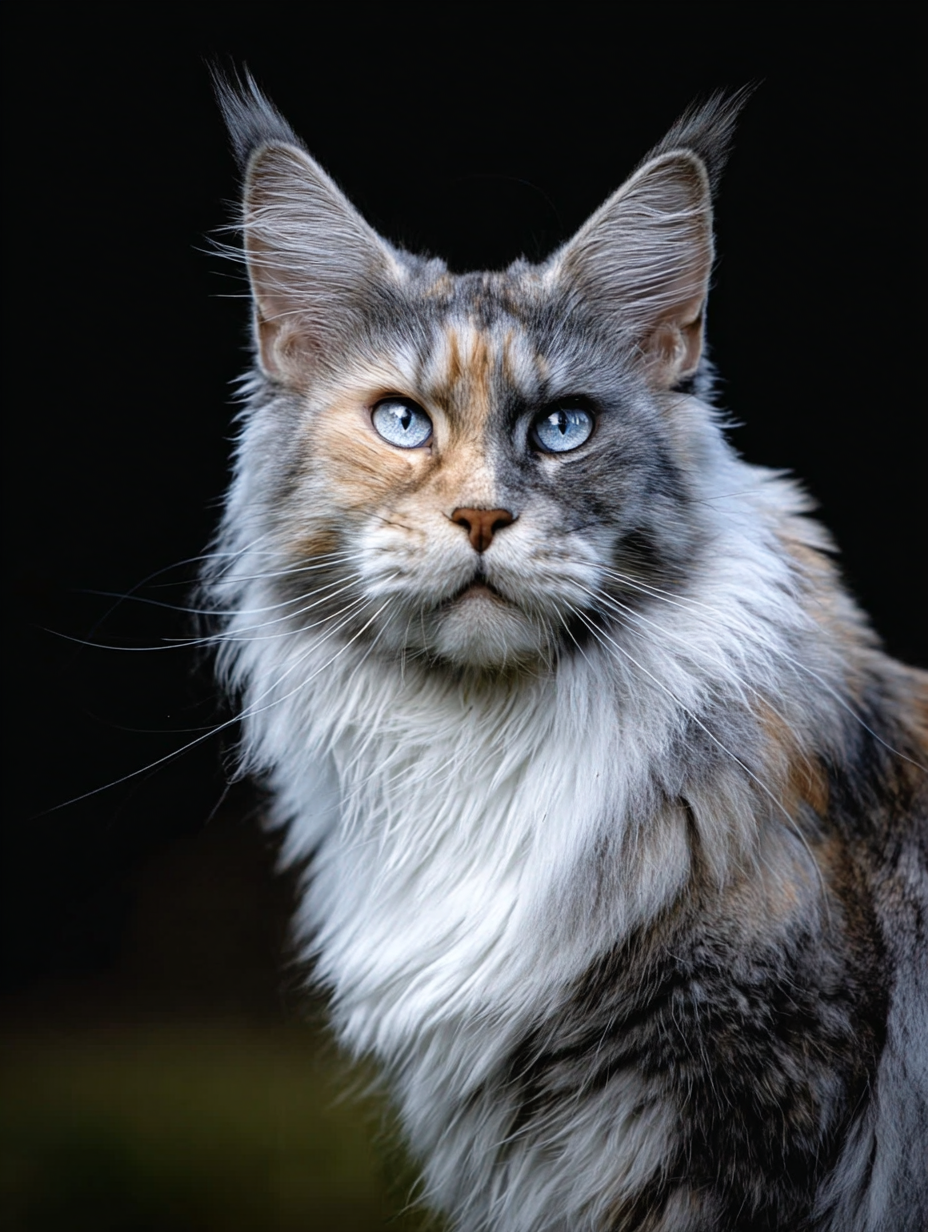
Ear tufts, often called lynx tips, are strongly associated with Maine Coons. They give the breed a dramatic, wild expression. However, they are not unique to Maine Coons.
Ear furnishings appear in many longhaired domestic cats and other breeds. They are simply a naturally occurring hair trait influenced by genetics.
It is important to distinguish between a cosmetic trait and a structural standard.
Lynx tips are a cosmetic feature.
Structure defines the breed.
A true Maine Coon is evaluated on overall head shape, ear set, bone structure, and proportion. Tufts enhance appearance, but they do not confirm lineage. A cat can have impressive ear tufts and still have no documented Maine Coon ancestry.
Fluffy Coat Does Not Equal Breed Type
Long fur is one of the most common sources of confusion.
Many people assume that a fluffy cat with a full tail must be a Maine Coon. In reality, coat length alone is not breed-defining.
Maine Coons have a specific coat texture described in breed standards. The coat should be:
• Shaggy and layered
• Slightly oily or weather-resistant
• Shorter on the shoulders
• Longer on the stomach and britches
In contrast, many domestic longhairs have:
• Soft, cottony coats
• Uniform length across the body
• Heavy undercoat without structure
Texture matters. The Maine Coon coat developed for harsh New England winters. It is functional, not just fluffy.
A soft, plush coat may look impressive but does not automatically indicate breed type.
Shared Traits Across Domestic Longhair Cats
Much of the confusion stems from misunderstanding what a domestic longhair actually is.
A domestic longhair is not a breed. It is a category used to describe mixed-breed cats with long coats. These cats have diverse ancestry and unpredictable genetic combinations.
Because of that diversity:
• Size can vary widely
• Coat patterns can vary widely
• Ear shape and furnishings can vary widely
• Bone structure can range from light to substantial
Mixed ancestry increases visual overlap. When many genes blend across generations, certain traits can resemble recognized breeds purely by coincidence.
Natural genetic diversity creates look-alikes.
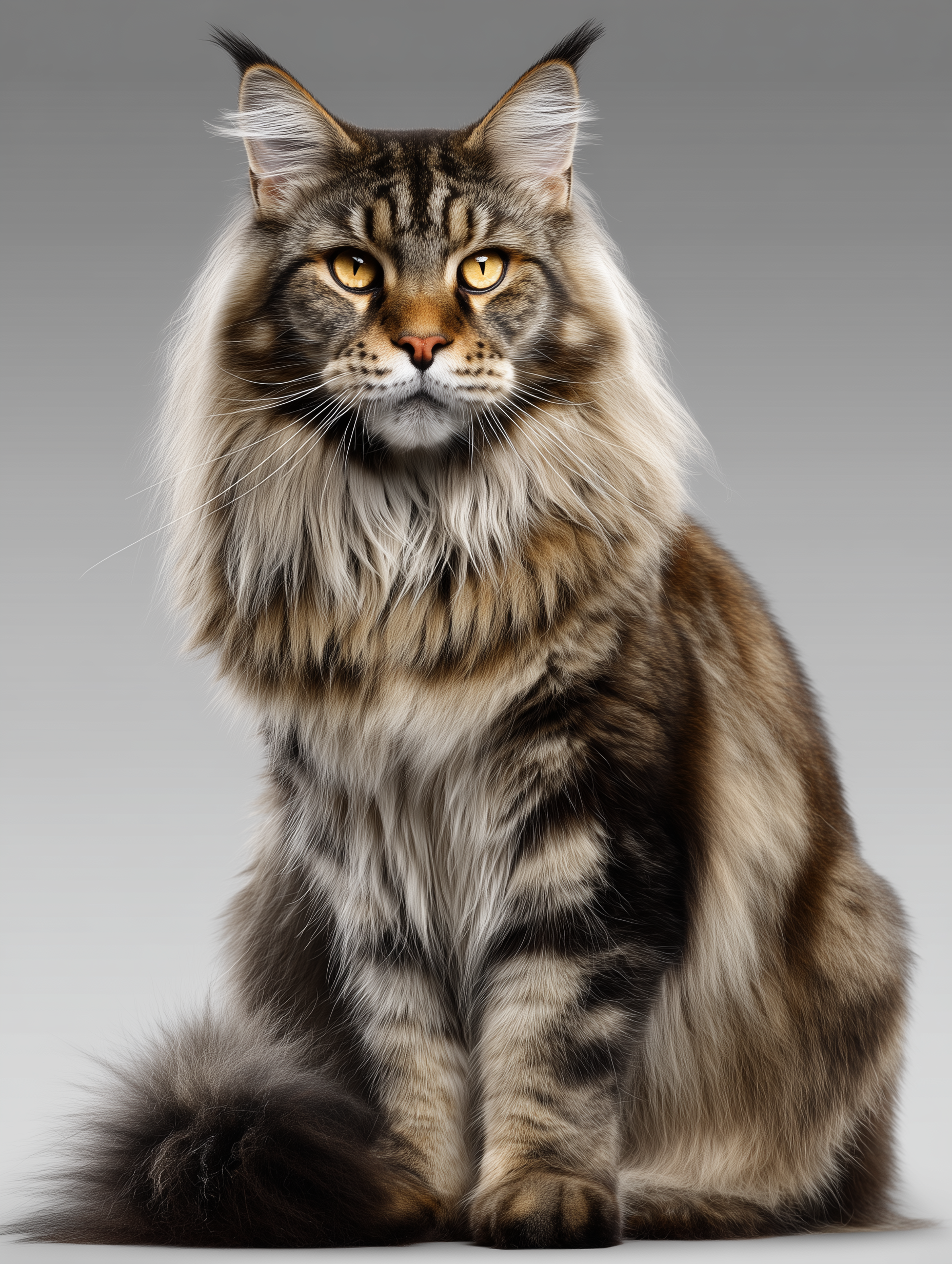
A large brown tabby domestic longhair with ear tufts may strongly resemble a Maine Coon. That resemblance does not confirm shared lineage. It simply reflects overlapping traits within the broader domestic cat population.
Maine Coon vs Longhair Cat Comparison
| Feature | Maine Coon | Longhair Cat |
|---|---|---|
| Breed Status | Recognized breed | Not a breed |
| Pedigree | Documented multi-generation lineage | Mixed or unknown ancestry |
| Body Shape | Rectangular, heavy bone | Variable |
| Muzzle | Square | Tapered or undefined |
| Coat Texture | Shaggy, weather-resistant | Often soft or cottony |
| Growth Timeline | 3–5 years to full maturity | Typically 1–2 years |
| Temperament | Predictable patterns | Highly variable |
Visual overlap does not eliminate genealogical difference.
Genetics 101 — How Traits Overlap Without Shared Lineage
Understanding basic genetics helps clarify why two cats can look similar without being related.
Polygenic Traits
Many physical characteristics are polygenic. That means they are influenced by multiple genes working together rather than a single gene.
Size, coat length, bone density, and ear furnishings are all polygenic traits. When multiple genes interact across a mixed population, similar features can appear in unrelated cats.
Two cats can inherit similar combinations of genes even if their ancestry is completely different.
Independent Inheritance of Size and Coat
Size and coat length are inherited independently.
A cat may inherit:
• Large body size from one ancestor
• Long coat from another
• Ear furnishings from yet another
These traits can combine in a way that resembles a Maine Coon without any documented Maine Coon lineage present.
Shared traits do not automatically mean shared ancestry.
Why Visual Similarity Does Not Equal Genealogical Identity
Breed identity is genealogical. It refers to a recorded, documented population with controlled lineage tracking.
Visual similarity is phenotypic. It describes how something looks.
Two cats can have similar phenotypes and completely different genotypes.
In simple terms:
They can look alike without being related.
A true Maine Coon is defined by documented ancestry preserved through recognized registries. Appearance supports breed type, but lineage establishes identity.
Resemblance explains confusion. Pedigree resolves it.
The Role of Pedigree in Defining a Breed
A breed is not a visual category. It is a recorded, documented population maintained through structured lineage tracking.
Organizations such as the Cat Fanciers’ Association and The International Cat Association define breeds through written standards and multi-generation documentation. These registries do not determine breed identity by appearance alone. They define it through ancestry.
Registry Standards
Both CFA and TICA publish detailed breed standards that describe:
• Body structure
• Head shape
• Coat texture
• Ear placement
• Proportion and balance
These standards create consistency within a recorded population. However, meeting the visual standard is not enough. A cat must also descend from registered parents to be formally recognized as part of the breed.
Structure supports identity. Documentation confirms it.
Multi-Generation Documentation
Pedigree records trace lineage across multiple generations. This documentation shows:
• Registered ancestors
• Verified parentage
• Continuity within the breed
Without this genealogical record, breed status cannot be confirmed. Even if a cat closely matches the written standard, it is not considered a Maine Coon unless its ancestry is recorded within the registry system.
Breed Preservation
Pedigree tracking protects breed integrity. It allows breeders to:
• Maintain structural consistency
• Monitor health trends
• Preserve temperament traits
• Prevent uncontrolled genetic drift
This is what separates a recognized breed from a general population of similar-looking cats.
A breed is a recorded population with documented ancestry.
It is not simply a group of animals that look alike.
Why Social Media Increases the Confusion
Modern online culture amplifies visual traits while minimizing genealogical context.
Viral “Giant Cat” Videos
Videos of exceptionally large cats circulate widely. These cats are frequently labeled as Maine Coons, whether or not their pedigree is confirmed. The more dramatic the size, the faster the assumption spreads.
Over time, size becomes synonymous with breed identity in the public mind.
Shelter Labeling Practices
Shelters must categorize cats for adoption listings. When a large longhaired tabby arrives, “Maine Coon mix” often becomes a convenient description based on appearance.
This is not malicious. It is visual shorthand. However, repeated labeling reinforces the idea that resemblance equals breed.
“Maine Coon Mix” as a Default Description
Because Maine Coons are widely recognized, the name is often used generically. A fluffy brown tabby may be labeled a Maine Coon mix even without evidence of registered ancestry.
The term becomes a marketing descriptor rather than a genealogical claim.
Marketing Language
Some sellers intentionally use breed names to increase perceived value. Phrases like “Maine Coon type” or “looks like a Maine Coon” blur the distinction between resemblance and documentation.
Social media rewards visuals. Registries rely on records. The mismatch creates confusion.
Common Scenarios Where Two Cats Look the Same But Aren’t
Understanding realistic scenarios helps clarify how this confusion happens.
Shelter Cat vs Registered Kitten
A shelter cat may closely resemble a Maine Coon in coat and size. A registered kitten from a documented breeding program may appear visually similar.
One has documented multi-generation ancestry. The other does not.
Both can be wonderful companions. Only one is a verified purebred.
Backyard Breeder Cat vs Registered Breeder Cat
A backyard breeder may own two large longhaired cats and advertise the kittens as Maine Coons. Without registry documentation and pedigree tracking, the lineage cannot be verified.
A registered breeder provides documentation through recognized organizations, along with health testing and structured breeding practices.
The kittens may look alike as babies. The difference lies in recorded ancestry.
Large Domestic Male vs Female Maine Coon
A large domestic longhair male can sometimes outweigh a female Maine Coon. Size overlap alone can make visual comparison misleading.
However, the Maine Coon will typically display breed-consistent structure, documented lineage, and predictable growth patterns that a domestic longhair does not.
Longhair Tabby vs Actual Pedigreed Maine Coon
Brown tabby coloring, shaggy coats, and bushy tails are common in the general cat population. A domestic longhair tabby may strongly resemble a Maine Coon in photographs.
The distinction becomes clear when examining:
• Pedigree documentation
• Structural consistency
• Multi-generation ancestry
• Registry verification
Two cats can look remarkably similar. Only one belongs to a documented breed population.
Resemblance explains why confusion happens. Pedigree explains why the distinction matters.
Can DNA Testing Solve This?
DNA testing is often suggested as the modern solution to breed confusion. If two cats look similar, why not simply test their genetics and settle the question?
The answer is more nuanced than many people expect.
Similarity Markers
Commercial feline DNA tests analyze segments of a cat’s genetic code and compare them to a reference database. These tests look for markers that are more common in certain breed populations.
The result is typically expressed as a percentage of similarity. For example, a test may suggest that a cat shows genetic similarity to Maine Coons.
However, similarity is not the same as pedigree confirmation.
DNA panels estimate how closely a cat’s genetic markers align with the company’s stored breed samples. They do not access registry databases. They do not verify parentage unless specific parent testing has been performed.
A similarity score cannot replace documented ancestry.
Database Limitations
Every DNA company builds its own reference database. The accuracy of results depends on:
• The size of their Maine Coon sample population
• The genetic diversity represented in that sample
• How the company categorizes mixed ancestry
Different companies may return different results for the same cat. That variability highlights the limitation of database-dependent testing.
Additionally, many physical traits are shared across cat populations. Long coat, size, and certain head features can appear in multiple genetic backgrounds. DNA tests may detect overlapping markers without confirming breed lineage.
Why Registry Documentation Still Defines Breed
Recognized registries such as the Cat Fanciers’ Association and The International Cat Association define breeds through documented genealogical records.
A breed is a recorded population with traceable ancestry.
DNA testing can provide insight into genetic composition. It cannot retroactively establish official pedigree status. Only documented lineage within a recognized registry confirms that a cat belongs to the Maine Coon breed population.
DNA testing can support curiosity and health awareness. Registry documentation defines breed identity.
Why This Distinction Matters (But Isn’t About Superiority)
Clarifying whether a cat is a true Maine Coon is not about elevating one cat above another. It is about setting accurate expectations.
This is about definition, not value.
Predictability of Temperament
When lineage is documented and selectively preserved, temperament patterns become more predictable. Maine Coons are widely known for being social, intelligent, and adaptable.
That predictability is one reason families seek out the breed. A domestic longhair may share those traits, but there is less generational consistency guiding outcome.
Understanding the difference allows buyers to choose based on expectations rather than assumptions.
Health Tracking
Structured breeding programs track health across generations. Multi-generation pedigrees allow breeders to monitor inherited conditions and make informed pairing decisions.
Without recorded lineage, long-term health patterns are more difficult to track. That does not mean a mixed-breed cat is unhealthy. It means health trends cannot be systematically preserved within a defined population.
Documentation supports transparency.
Show Eligibility
For those interested in showing cats, registry documentation is required. Organizations like CFA and TICA operate within structured breed standards.
Without pedigree verification, a cat cannot compete as a Maine Coon within those systems.
For some owners, this matters greatly. For others, it is irrelevant. The distinction exists regardless.
Buyer Investment Protection
When buyers invest thousands of dollars in a kitten advertised as a Maine Coon, documentation protects that investment.
Registration papers, pedigrees, and health testing records align price with proof. Without documentation, buyers rely solely on appearance and verbal claims.
Again, this is not about superiority. A rescue cat and a pedigreed Maine Coon can both be deeply loved companions.
The distinction matters because accuracy matters.
Visual Comparison Table
| Trait | Maine Coon | Look-Alike Longhair |
|---|---|---|
| Pedigree | Documented | Unknown |
| Body Type | Rectangular | Variable |
| Muzzle | Square | Tapered |
| Growth Timeline | 3–5 years | 1–2 years |
| Registration | Yes | No |
This table does not imply quality differences. It highlights definitional differences.
FAQ: Why Two Cats Can Look Like Maine Coons But Not Be Maine Coons
How can my cat look exactly like a Maine Coon but not be one?
Many Maine Coon traits — large size, ear tufts, shaggy coat, bushy tail — also appear in the general domestic cat population. These traits are not exclusive to the breed. Without documented pedigree through a recognized registry, there is no way to confirm that a cat belongs to the Maine Coon breed population, even if it looks identical.
Are Maine Coon mixes real?
Yes, Maine Coon mixes can exist if one parent is a documented Maine Coon and the other is not. However, most cats labeled “Maine Coon mix” — especially in shelters — are identified by appearance rather than verified lineage. Without proof of a registered parent, the term is often an educated guess.
Why do shelters label cats as Maine Coon mixes?
Shelters typically assign breed descriptions based on visual traits. A large longhaired brown tabby may resemble a Maine Coon, so “Maine Coon mix” becomes a practical label for adoption listings. This is visual classification, not pedigree verification.
Can two unrelated cats look nearly identical?
Yes. Many physical traits are polygenic, meaning they are influenced by multiple genes. Different genetic backgrounds can produce similar combinations of size, coat length, and ear shape. Visual similarity does not automatically indicate shared ancestry.
Does size alone prove a cat is a Maine Coon?
No. While Maine Coons are one of the larger domestic breeds, large size can occur naturally in mixed-breed cats, especially males. Size must be evaluated alongside structure and documented lineage to confirm breed status.
Do ear tufts guarantee Maine Coon heritage?
No. Ear tufts and lynx tips appear in many longhaired cats. They are cosmetic features, not proof of pedigree. A true Maine Coon may have dramatic ear furnishings, subtle ones, or none at all.
Can DNA testing confirm if my cat is a Maine Coon?
Commercial DNA tests estimate breed similarity based on internal databases. They do not replace registry documentation. Breed identity in official terms is defined by recorded pedigree through recognized organizations, not by percentage similarity results.
Is it bad if my cat isn’t a real Maine Coon?
Not at all. A cat’s emotional value and companionship are not determined by breed status. Many domestic longhair cats share traits similar to Maine Coons and make exceptional companions. The distinction is about accurate identification, not superiority.
Why does this distinction matter at all?
It matters when expectations involve predictable temperament, show eligibility, structured health tracking, or financial investment in a purebred kitten. For casual companionship, the distinction may be less important. For breed-specific goals, documentation provides clarity.
How can I verify if a Maine Coon is legitimate?
Ask for:
• Multi-generation pedigree
• Registration eligibility through recognized registries
• Health testing documentation
• Breeder transparency
Without verifiable lineage, breed status cannot be officially confirmed. See Best Maine Coon Breeders in the USA for more info.
Summary Table: Why Two Cats Can Look Like Maine Coons But Not Be Maine Coons
| Category | True Maine Coon | Look-Alike Longhair |
|---|---|---|
| Breed Status | Recognized breed | Not a breed category |
| Pedigree | Multi-generation documented lineage | Unknown or mixed ancestry |
| Registration | CFA or TICA eligible | No official registration |
| Definition | Recorded population with traceable ancestry | Identified by appearance only |
| Body Structure | Rectangular, heavy bone, balanced proportions | Variable body types |
| Muzzle Shape | Square and defined | Often tapered or narrower |
| Coat Texture | Shaggy, layered, weather-resistant | Soft, cottony, or uniform length |
| Ear Tufts | Common but not required | Also common in longhairs |
| Growth Timeline | 3–5 years to full maturity | Typically 1–2 years |
| Temperament | Predictable breed patterns | Highly variable |
| Health Tracking | Lineage-based monitoring | No structured pedigree tracking |
| DNA Testing | Pedigree confirms breed | DNA may show similarity, not proof |
| Proof of Identity | Registry documentation | Visual resemblance only |
Core Takeaway
Two cats can share striking physical similarities, but without documented pedigree and registry verification, they are not the same breed. Breed identity is genealogical, not visual.
Final Perspective — Resemblance Is Not Identity
It is completely understandable why confusion happens. Maine Coons have dramatic features that overlap with many longhaired domestic cats. Size, ear tufts, bushy tails, and tabby coats are visually striking and widely shared.
But breeds are not defined by visual similarity. They are defined by recorded ancestry and preserved lineage within recognized registries.
Two cats can look nearly identical in photographs. One may have documented multi-generation pedigree tracing back through registered Maine Coon lines. The other may have mixed ancestry without any recorded lineage.
They can both be beautiful. They can both be loved.
Two cats can look remarkably similar, but without documented pedigree, they are not the same breed — because breed identity is defined by lineage, not resemblance.
Related Maine Coon Buyer Posts
- How to Find a Maine Coon Breeder You Can Trust
(Evaluating breeders, standards, and red flags before committing) - Maine Coon Health Overveiw: Health, Temperament, and Ethics
(What responsible breeding programs document and why it matters) - Why Reputable Maine Coon Breeders Have Waitlists
(How intentional breeding and placement works) - How Much Maine Coon Kittens Cost (Explained by a Breeder)
(What pricing reflects and what it does not) - How Maine Coon Kittens are Placed
(Common policies of ethical sellers and how this protects the buyer and kittens) - Questions to Ask a Maine Coon Breeder Before Buying
(What ethical breeders expect and how responsible programs communicate) - How to Tell if A Maine Coon Breeder is Legitimate
(Why location matters less than breeding standards) - Where to Buy a Maine Coon Kitten
- (What to look for and what to avoid)
- Maine Coon Cat Mix
(Appearance vs pedigree explained clearly) - Why Searching Maine Coon Kittens near me might be Risky
Sources
- Cat Fanciers’ Association (CFA) – Maine Coon Breed Standard
https://cfa.org/breed/maine-coon/ - The International Cat Association (TICA) – Maine Coon Breed Information & Standard
https://tica.org/breeds/browse-all-breeds?view=article&id=1813:maine-coon-breed&catid=48 - Guinness World Records – Longest Domestic Cat Records
https://www.guinnessworldrecords.com/search?term=longest%20cat - University of California Davis Veterinary Genetics Laboratory – Feline Genetic Testing Information
https://vgl.ucdavis.edu/ - American College of Veterinary Internal Medicine (ACVIM) – Feline Hypertrophic Cardiomyopathy (HCM) Resources
https://www.acvim.org/





Read the Comments +