
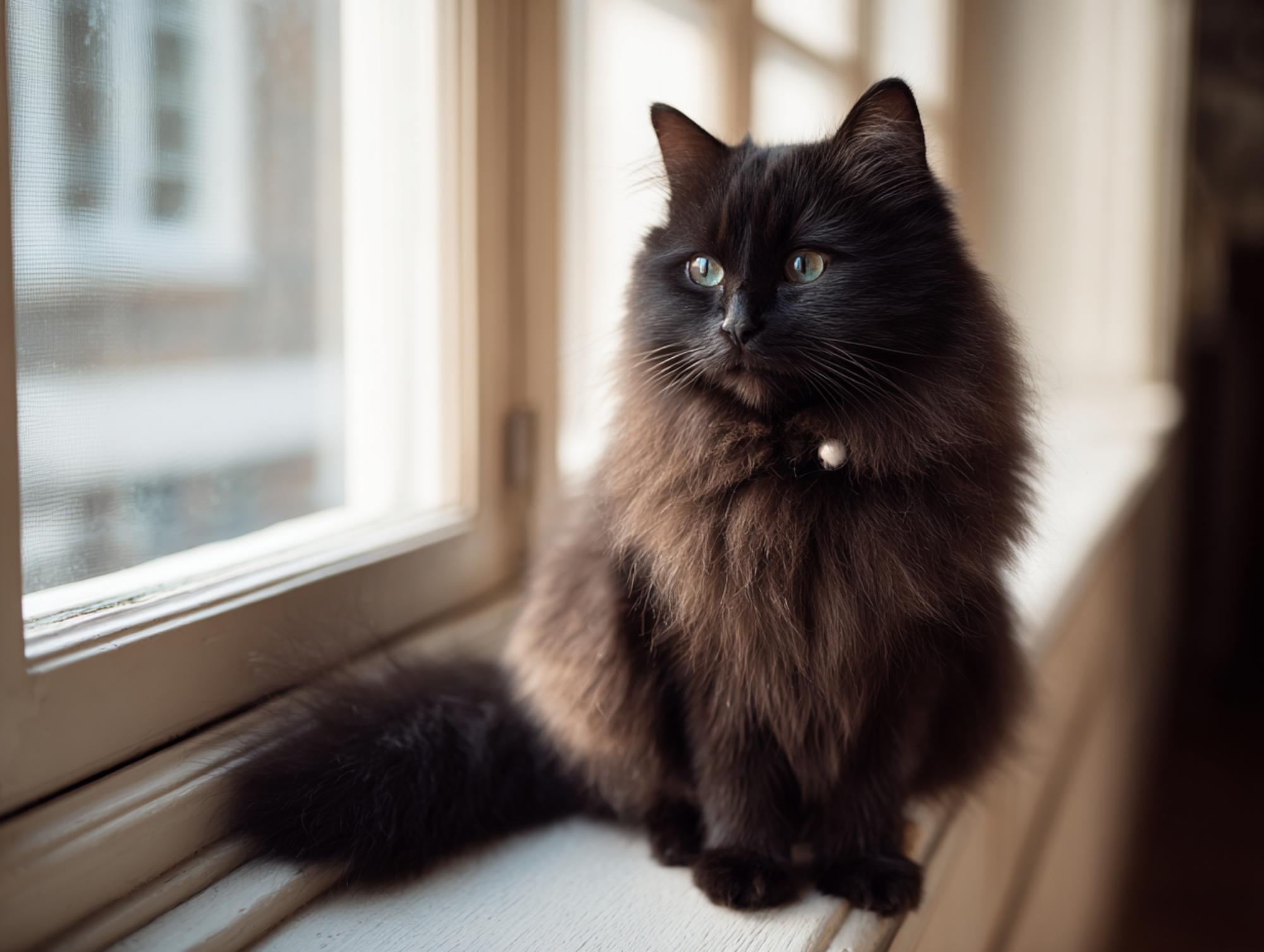
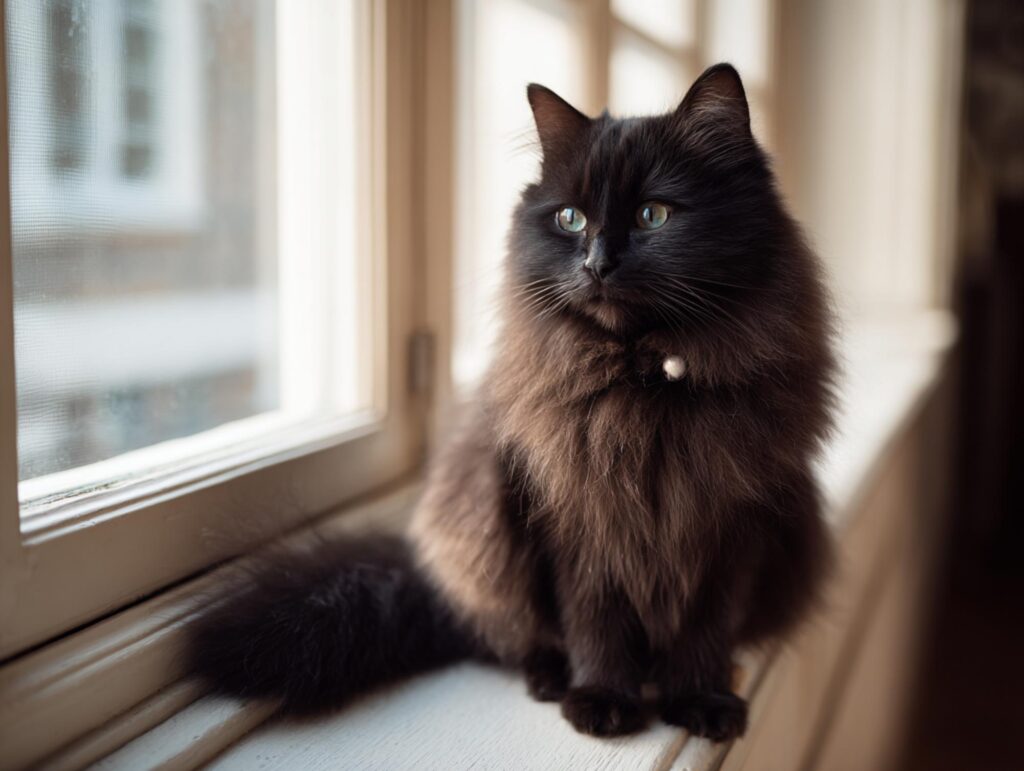
Black Ragdoll Cat Price: Cost, Classification, and What to Expect
The average Black Ragdoll kitten price in the United States ranges between $1,800 and $5,000 depending on pedigree, health testing, and breeder reputation. Black Ragdolls are not part of the traditional CFA breed standard, which means their prices vary more widely. Some breeders sell black Ragdoll-type cats at lower prices as “pet only,” while others market them as rare or unique and charge a premium. Expect anywhere from $1,200 to $4,500 depending on registration, health guarantees, and availability.
A quick clarification:
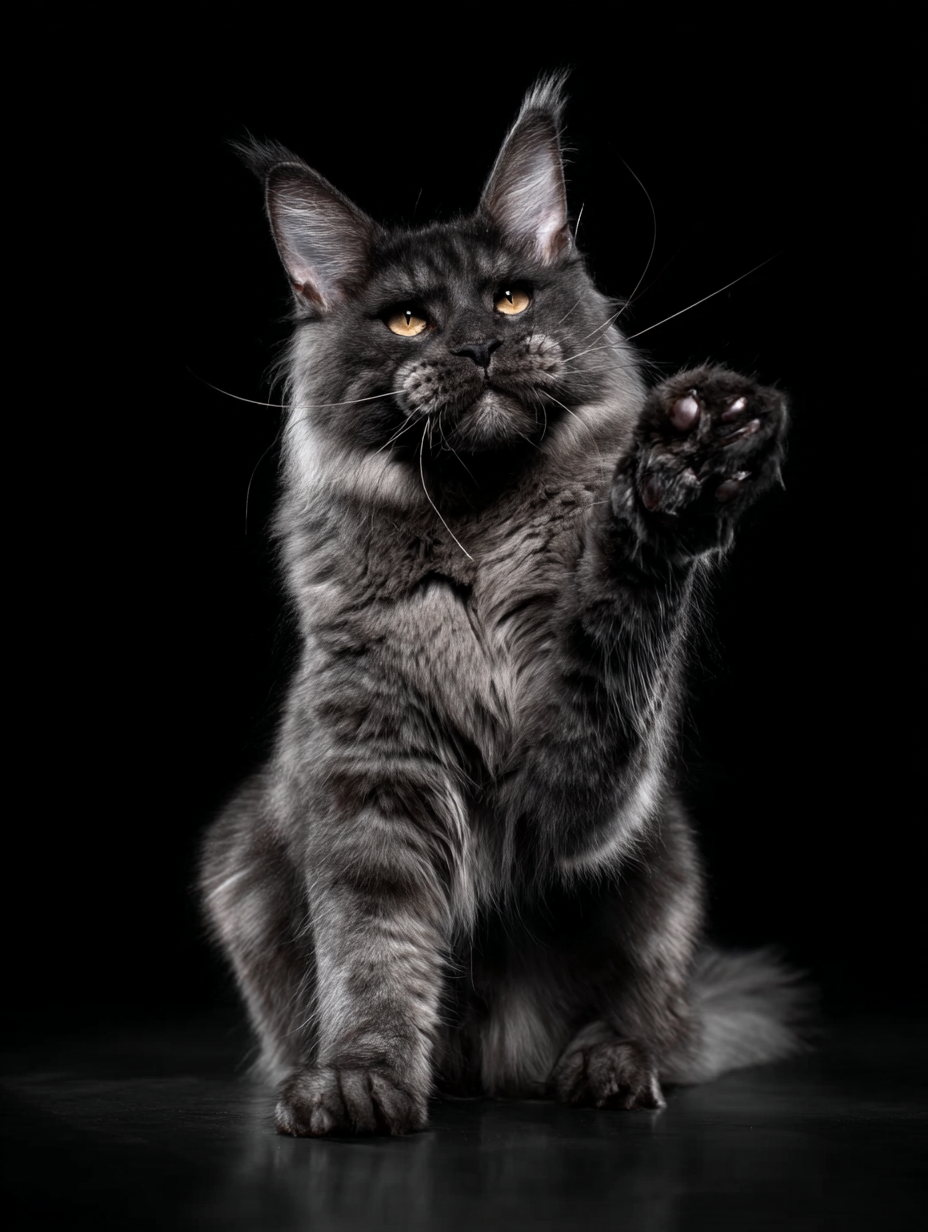
Under traditional Ragdoll standards, solid black is not a recognized color. However, black-coated cats do exist under the Cherubim classification, which developed from Ragdoll outcross programs. Because of shared ancestry and appearance, these cats are often described as “black Ragdolls.”
[Ragdoll vs Cherubim: What’s the Difference?]
Black Ragdoll Cat Price: What Affects Cost
| Price Factor | Why It Matters | How It Affects Price |
|---|---|---|
| Classification | Ragdoll vs variant/related classification | Variant-classified kittens are often priced differently |
| Placement Type | Pet vs breeding placement | Pet placement is typically lower priced |
| Health Practices | Parent screening and vet care | More testing usually means higher cost |
| Registration & Documentation | Clear paperwork vs none | Documented kittens cost more |
| Breeding Program Standards | Small, planned litters vs high volume | Higher standards increase price |
| Market & Region | Demand varies by location | Prices fluctuate by area |
| Age at Placement | Older kittens vs young | Older placements may be priced lower |
What “Black” Means in a Ragdoll
How “Black Ragdoll” Is Used in Pricing Discussions
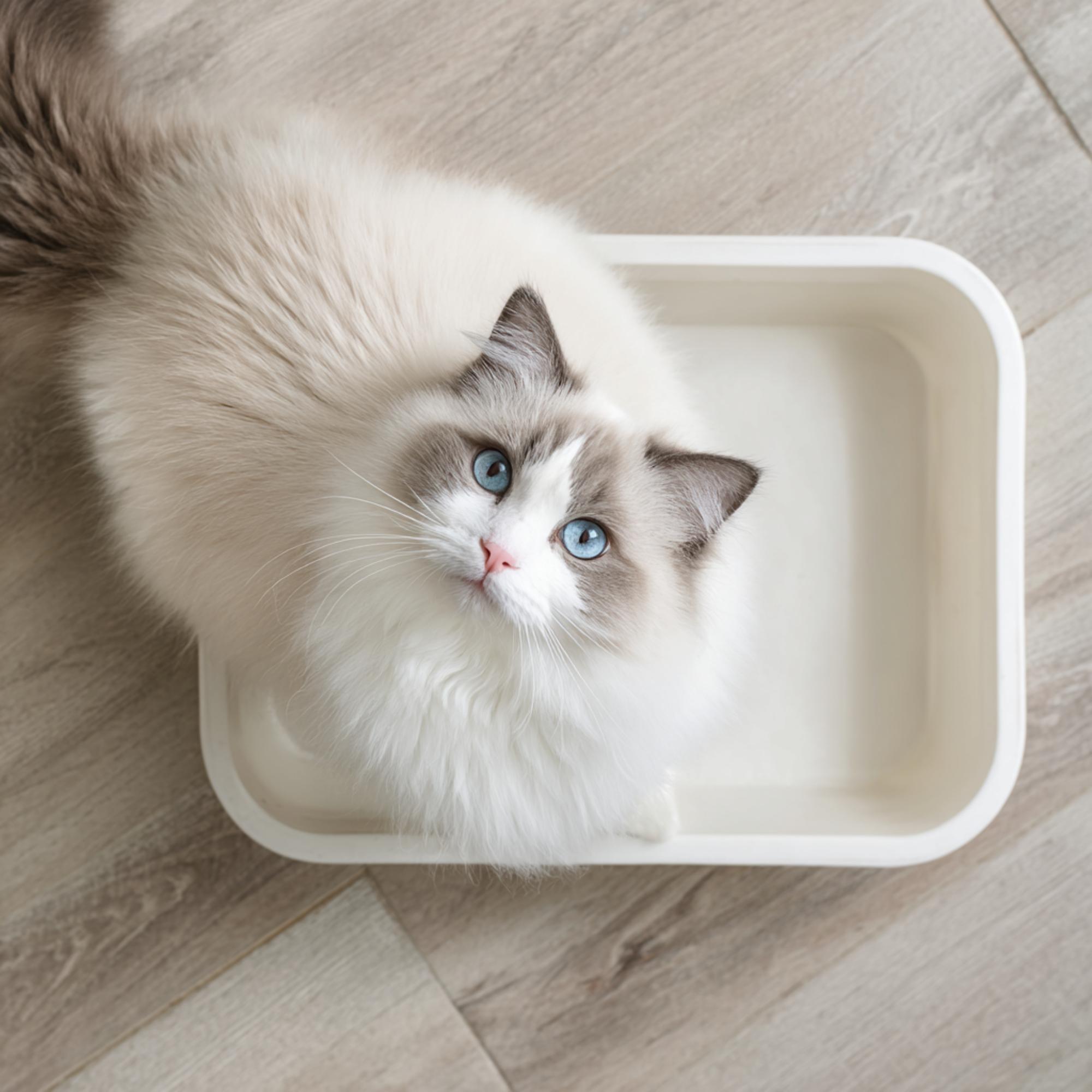
In traditional breeding programs, Ragdolls are known as pointed cats, meaning they develop darker pigment at the face, ears, legs, and tail while the body remains lighter. This is the framework most people are familiar with when researching Ragdoll kittens.
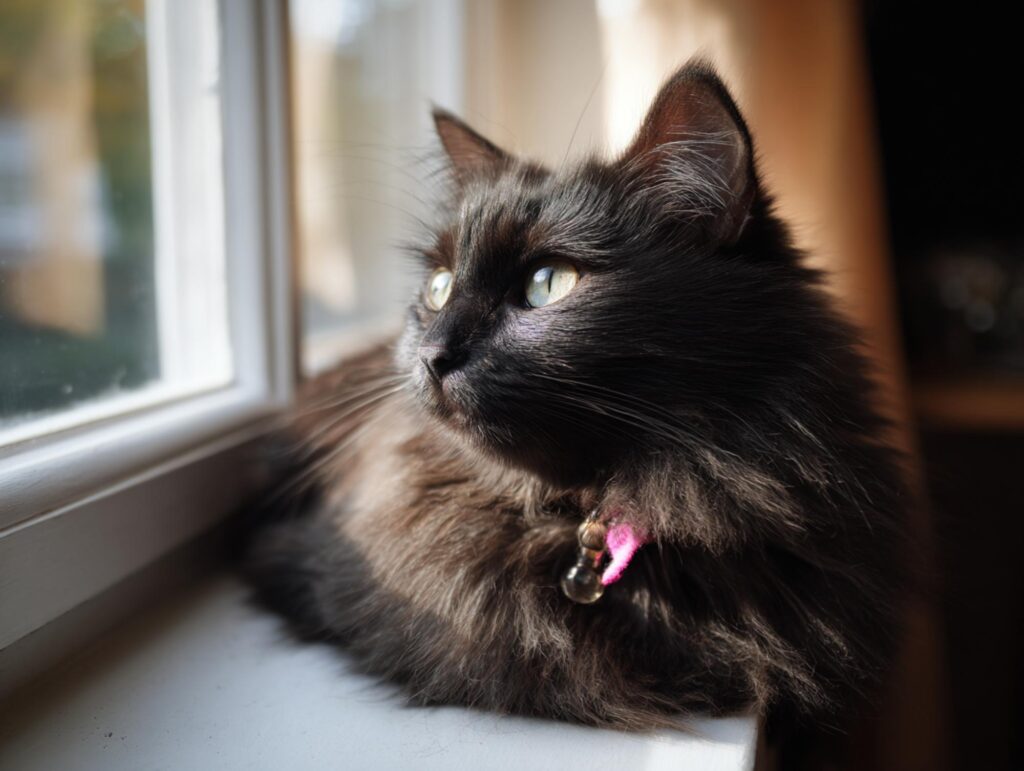
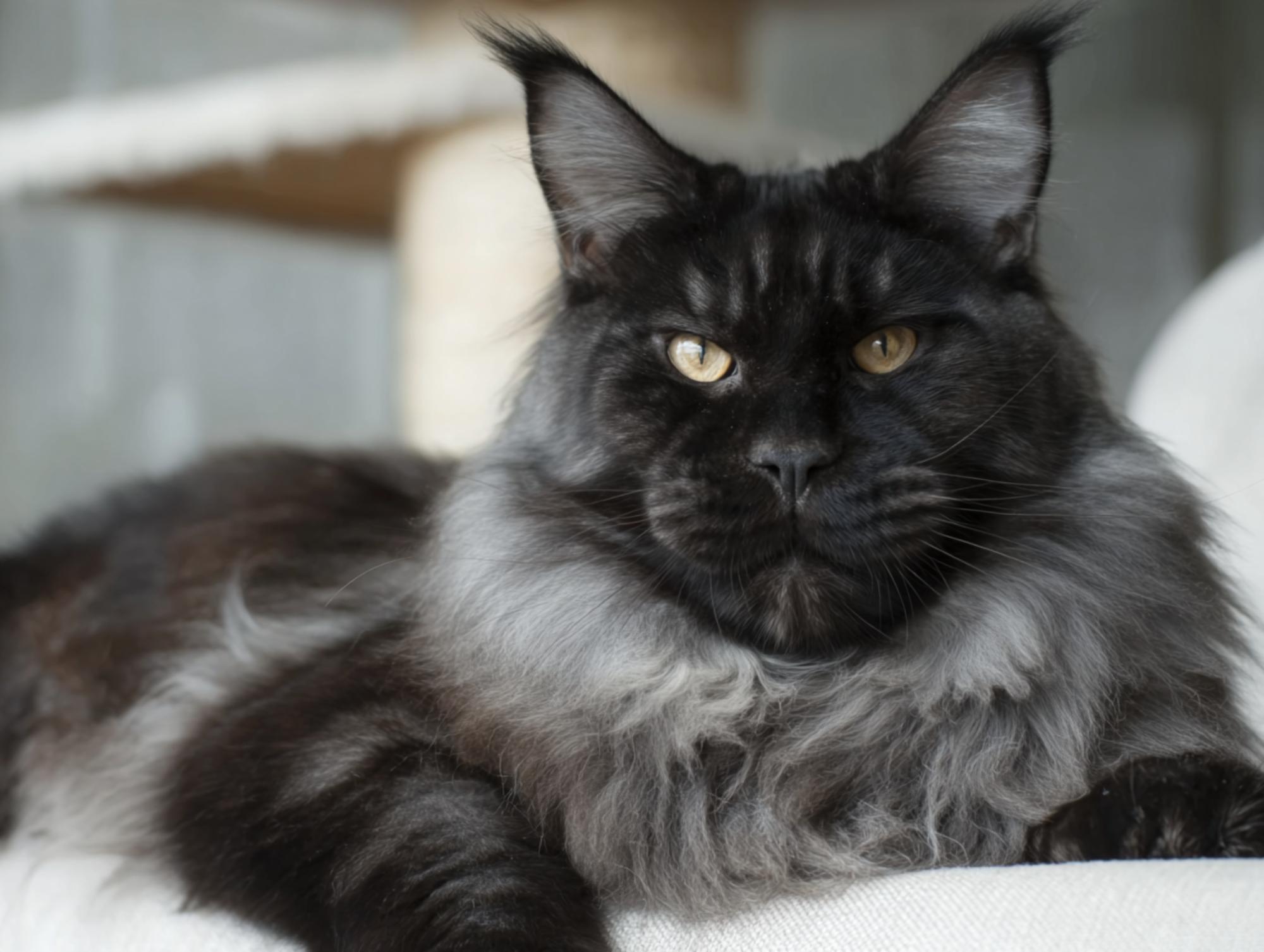
However, the term black Ragdoll is often used differently in price discussions. In many cases, it refers to solid black cats from Ragdoll-derived lines, where full-body pigment is present and eye color is not limited to blue. These cats are typically classified outside standard show Ragdoll definitions, even when they share ancestry, structure, and temperament traits associated with the breed.
Because of this, listings using the term black Ragdoll may describe cats that differ genetically and registrationally, which directly affects pricing expectations.
For readers who want a detailed breakdown of color genetics and terminology, a full explanation is covered separately in the Ragdoll vs Cherubim comparison post.
Are Black Ragdolls Recognized in Breed Standards?
From a pricing perspective, what matters most is how the kitten is classified and registered, not the color label used in an advertisement.
- Under mainstream Ragdoll standards, solid black coats are not part of championship show recognition.
- Cats described as black may instead be registered under variant or related classifications, depending on lineage and registry.
As a result, black-coated cats are usually placed as pet-quality companions, even when well bred and health tested. This placement category plays a larger role in price than the color itself.
Where Black Ragdoll–Type Cats Are Most Often Found
In practice, cats marketed as black Ragdolls are most commonly seen in:
- Companion-focused breeding programs
- Programs working with non-traditional expressions such as solid, mink, or sepia
- Markets where demand for visually distinctive cats is high
Because these cats are not bred for the show ring, they are less common in strictly traditional Ragdoll catteries and more common in programs prioritizing temperament and placement over exhibition standards.
Why This Matters for Price
The label black Ragdoll alone does not determine cost. Pricing is influenced far more by:
- Registration and classification
- Health testing and lineage documentation
- Breeding program standards
- Intended placement (pet vs breeding)
Understanding how the term is being used helps buyers interpret price ranges realistically and avoid comparing kittens that are not classified the same way.
How to Find a Black Ragdoll Kitten
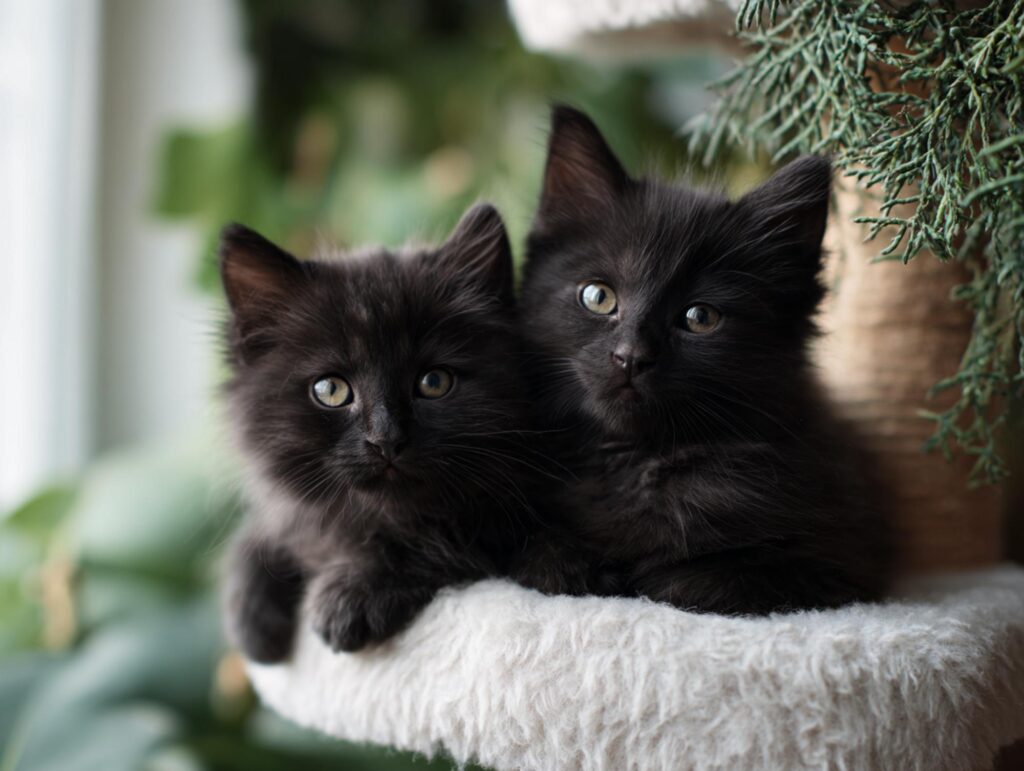
Start by deciding what matters most to you: pedigree paperwork, health testing, or simply the look and temperament. Because black is outside the traditional accepted Ragdoll Colors, many programs place these black ragdoll kittens as pets only. That is not a bad thing.
Focus on Black Ragdoll Cat breeders who publish parent health testing (HCM and PKD at minimum), clear reservation policies, and transparent contracts. Read multiple posts and FAQs on their sites to understand how they raise kittens, what’s included, and how they socialize.
Next, verify how the Black ragdoll kitten breeder represents color and registration. Ask whether the parents are traditional pointed Ragdolls producing a solid kitten without the cs gene, or whether the cattery works with non-traditional varieties like mink or sepia in parallel.
How To Reserve a Black Ragdoll Kitten
Finally, compare total value rather than price alone. A well run cattery will provide a written health guarantee, microchip, age-appropriate vaccines, and lifetime support. Ask about temperament goals and how they match families to kittens. If distance is an issue, request live videos of the kittens if you need proof it is not a scam.
If everything feels right, join the waitlist and be ready to place a deposit promptly. Black Ragdoll kittens appear less frequently than pointed colors, so the best placements go quickly.
Can I register my black Ragdoll Kitten?
Clarify how or if your black ragdoll kitten will be registered and what the paperwork will say. If color genetics matter to you, request the basic DNA panels that document coat color status and any health screening the breeder performs. A reputable program will be comfortable discussing results and limitations.
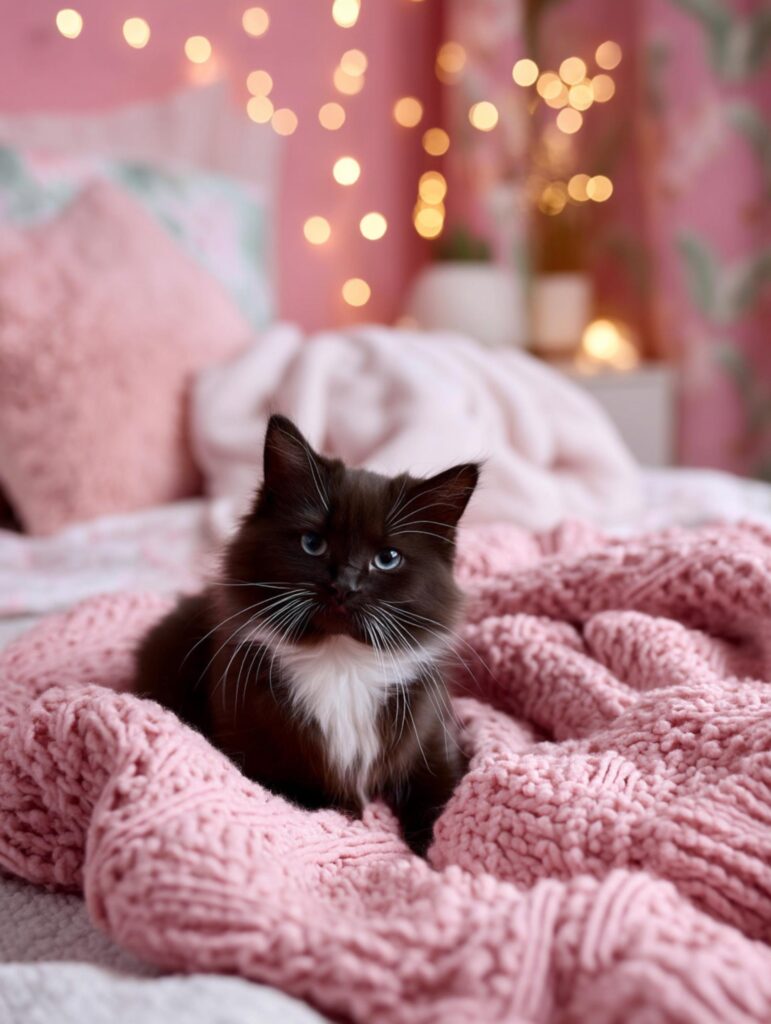
What Actually Drives Black Ragdoll Cat Price
When people search for black Ragdoll cat price, they often assume coat color is the primary driver of cost. In reality, color plays a minor role compared to structural, genetic, and program-level factors. Understanding these variables explains why prices vary so widely across listings.
Breeding Program Standards
One of the strongest influences on price is the standard of the breeding program itself. Programs that invest in health testing, controlled breeding, early socialization, and long-term placement support incur significantly higher costs. These costs are reflected in kitten pricing regardless of coat color.
Lower-priced listings often come from programs that:
- Skip or limit health testing
- Do not track lineage beyond parents
- Focus on volume rather than placement
- Provide minimal post-sale support
In contrast, higher-priced kittens are typically placed by programs that breed selectively and plan litters around health, temperament, and long-term outcomes.
Health Testing and Veterinary Investment
Health testing directly affects price, especially for Ragdoll-derived lines. Screening for conditions such as hypertrophic cardiomyopathy (HCM), along with routine veterinary care, vaccinations, and preventive testing, adds measurable cost per kitten.
Because these expenses are not visible in photos or listings, they are often overlooked by buyers comparing prices online. However, they represent one of the most significant differences between low-cost and responsibly priced kittens.
Registration and Documentation
Registration status also plays a role in pricing. Kittens that come with proper registry documentation, clear classification, and traceable lineage are priced higher than kittens sold without paperwork or with vague registration claims.
For black Ragdoll–type cats, classification clarity matters. Cats registered under related classifications or variant programs may still be well bred, but pricing reflects how the kitten is documented and placed rather than the label used in marketing.
Placement Category: Pet vs Breeding
Placement type strongly influences price. Most black-coated Ragdoll-type cats are placed as pet companions, even when well bred. Pet placement typically includes spay or neuter requirements and limits breeding rights, which lowers cost compared to breeding placements.
Breeding placements, when offered, involve additional evaluation, contracts, and long-term considerations, which is why they are priced differently.
Early Socialization and Development
Programs that raise kittens in structured home environments, expose them to routine handling, and support behavioral development often price kittens higher. These investments reduce long-term adjustment issues and improve companion outcomes, which many buyers prioritize over color.
Market Demand and Buyer Perception
Finally, demand influences price — but not always in predictable ways. While black coats may be described as unusual, demand varies by region and buyer preference. In some markets, darker cats command more interest; in others, they are priced similarly to standard colors.
This variability explains why no single “black Ragdoll price” exists. Instead, pricing reflects how the kitten fits within a specific program and placement context.
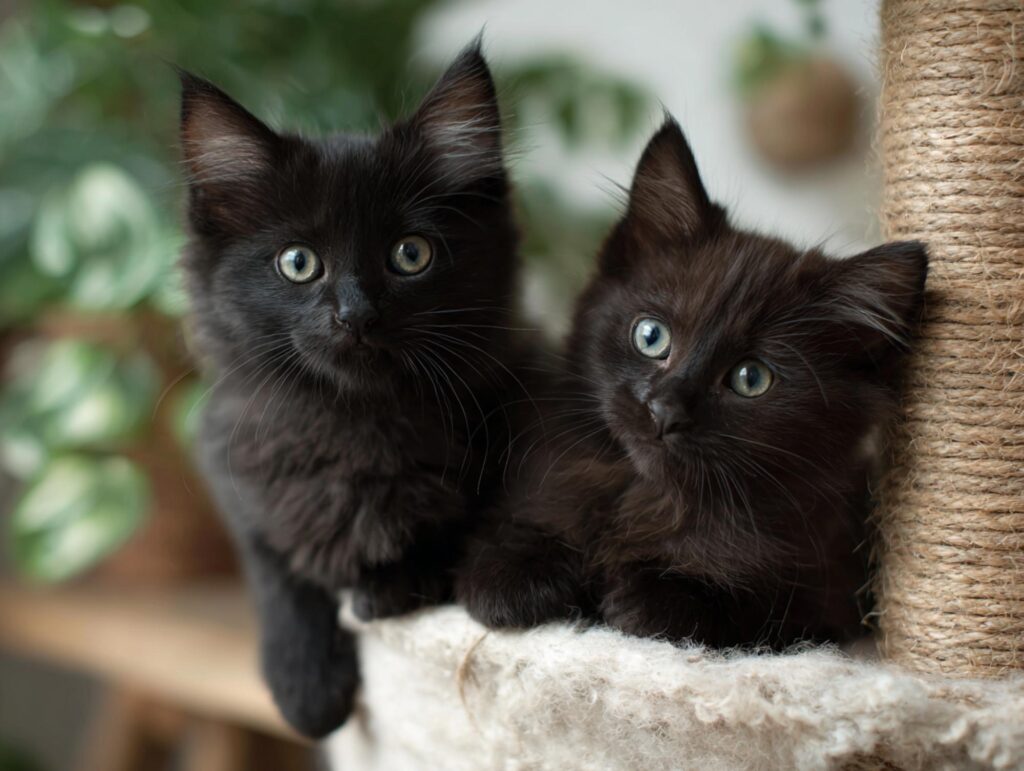
What Drives the Black Ragdoll Cat Price
- Registry Status: Since black is not an accepted show color, kittens are usually sold as pets only.
- Breeder Reputation: Established breeders with strong health testing (see UC Davis HCM Test) often price black kittens at the higher end.
- Market Demand: Unique looks can command higher prices where rarity is valued (Ragdoll Breed Club UK).
- Health Testing & Care: Always ask about HCM and PKD testing (PKD Test – UC Davis), microchipping, and vaccinations (AVMA – Cat Health).
Working Estimate Today: Expect $1,200–$4,500 for a black Ragdoll kitten, depending on breeder practices and location.
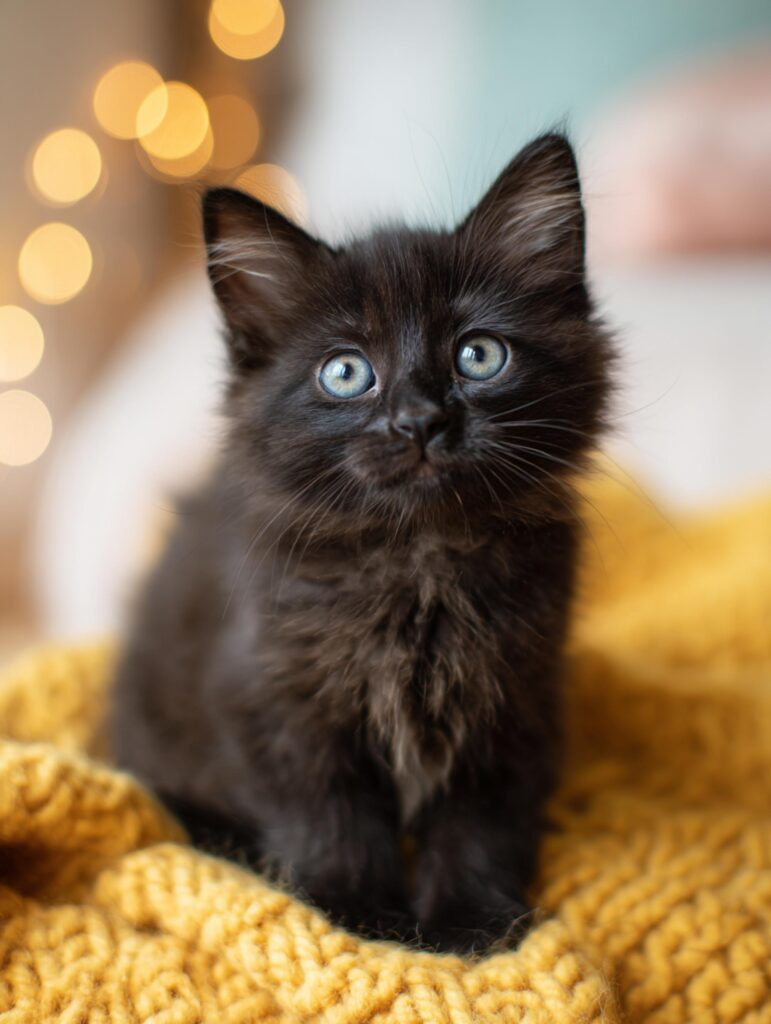
Buyer Checklist for Black Ragdoll Kitten Price
Before comparing prices, make sure you understand what is being offered, not just how it is labeled.
- Confirm classification
Ask whether the kitten is registered as a Ragdoll or as a related/variant classification. This alone explains many price differences. - Ask about basic health testing
At minimum, confirm that the parents have been screened for major inherited issues commonly discussed in Ragdoll lines, such as HCM. You do not need lab reports — clarity matters more than paperwork at this stage. - Understand placement type
Black-coated Ragdoll-type cats are typically placed as companions rather than show cats. Pricing should reflect pet placement, not show claims. - Clarify what the price includes
Ask whether the price covers routine veterinary care, registration paperwork (if applicable), and spay or neuter requirements. - Watch for vague language
If a seller avoids explaining classification, registration, or why the kitten is labeled “black Ragdoll,” that uncertainty often shows up later — regardless of price.
Bottom Line for Buyers
A realistic black Ragdoll kitten price reflects classification, basic health practices, and placement, not color alone. You do not need to overanalyze — just make sure the label, paperwork, and price tell the same story.
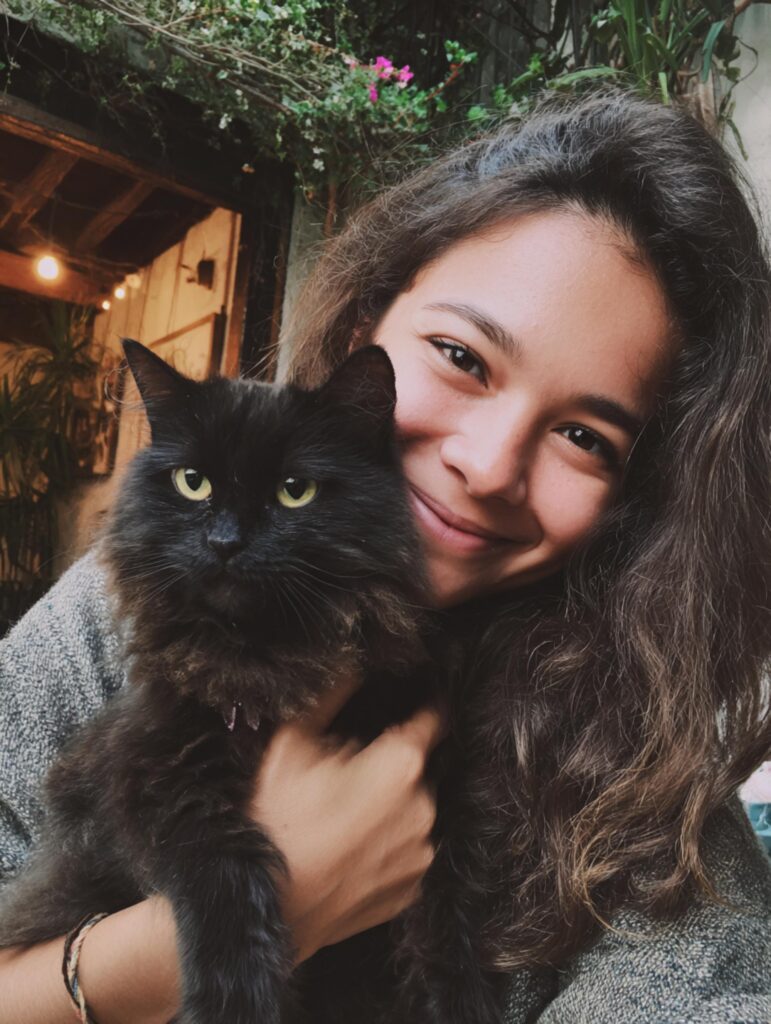
Cost to Adopt a Black Ragdoll or Ragdoll Mix
Some people comparing black Ragdoll cat prices also consider adoption. In rescue settings, cats described as black Ragdoll are typically labeled as Ragdoll mixes, based on appearance rather than confirmed lineage.
Typical adoption fees for Ragdoll-type or long-haired cats range from $100 to $500, depending on the organization, location, and age of the cat.
Adoption fees usually cover:
- Spay or neuter surgery
- Basic vaccinations
- A veterinary exam
- Shelter or foster care costs
Unlike breeder pricing, adoption fees do not reflect:
- Verified pedigree or registration
- Parent health testing
- Predictable coat or color genetics
As a result, adoption cost and breeder price are not directly comparable. Both options serve different goals, and the difference in price reflects documentation, predictability, and breeding investment, not quality or worth.
Frequently Asked Questions About Black Ragdoll Cat Price
How much does a black Ragdoll cat cost?
A kitten marketed as a black Ragdoll typically falls in the $2,000–$4,500+ range, depending on classification, breeder practices, and placement type. Price varies widely because the term “black Ragdoll” is used for more than one type of cat, not because of color alone.
Why do black Ragdoll prices vary so much online?
Prices vary because listings often describe different classifications under the same label. Some cats are dark seal Ragdolls, while others are solid black cats from Ragdoll-derived lines or variant programs. Differences in registration, health practices, and placement explain most price gaps.
Are black Ragdolls more expensive than other Ragdoll colors?
No. Black-appearing Ragdoll-type cats do not automatically cost more than standard Ragdoll colors. In many cases, they are priced similarly to other companion-placement kittens. Price reflects breeding program quality and documentation, not coat darkness.
Is a cheap black Ragdoll kitten a red flag?
Sometimes, but not always. Very low prices can indicate unclear classification, limited health investment, or mislabeling. However, some companion-focused programs price kittens lower intentionally. The key is whether the price matches the kitten’s registration, placement, and care level.
Are black Ragdolls rare?
Black coats are uncommon within traditional Ragdoll standards, but they are not inherently rare overall. Availability depends more on which breeding programs you are looking at than on true scarcity.
Does eye color affect the price of a black Ragdoll?
Eye color alone does not determine price. Blue eyes are typical for traditional Ragdolls, while black-coated Ragdoll-type cats may have gold, green, or aqua eyes depending on genetics. Eye color is a classification detail, not a pricing multiplier.
Are black Ragdolls eligible for cat shows?
Cats described as black Ragdolls are generally not eligible for championship showing under traditional Ragdoll standards. Because of this, they are usually placed as companions, which influences price expectations.
Why do some black Ragdolls look solid while others have contrast?
Some cats marketed as black Ragdolls are actually very dark seal or mink Ragdolls whose contrast deepens with age or temperature changes. Others are solid-colored cats from related classifications. Visual appearance alone does not tell you how the cat is classified.
Does registration affect black Ragdoll cat price?
Yes. Registration and documentation help explain pricing differences. Kittens sold with clear classification and paperwork are typically priced higher than those sold without registration or with vague descriptions.
Will a black Ragdoll kitten stay black as it grows?
That depends on classification. Dark seal Ragdolls often change significantly with age, showing more contrast over time. Solid black cats generally remain dark but may still experience coat changes with maturity and season.
Are black Ragdolls harder to find?
They may take longer to locate through traditional Ragdoll programs, but they are more commonly found through breeders working with non-traditional expressions or related classifications. Availability varies by region and breeder focus.
What should I compare when looking at black Ragdoll prices?
Compare kittens based on:
- Classification and registration
- Placement type (pet vs breeding)
- Basic health practices
- What the price includes
Comparing prices without these factors often leads to misleading conclusions.
Bottom Line on Black Ragdoll Cat Price
There is no single “correct” black Ragdoll cat price. What matters is whether the kitten’s label, classification, and price align. When they do, pricing becomes much easier to interpret — without overthinking the process.
Related Ragdoll Color & Classification Guides
For deeper context on color genetics, classification, and how black fits within Ragdoll-derived lines, see the related guides below:
- Ragdoll Cat Colors & Patterns Explained
(Primary classification and genetics reference) - Ragdoll vs Cherubim: What’s the Difference?
(Detailed explanation of breed classification and color acceptance) - Seal Ragdoll Cat Guide
(Why dark seal Ragdolls are often mistaken for black) - Mink Ragdoll Cats Explained
(How darker coats and eye color affect appearance and pricing) - Sepia Ragdoll Cats Explained
(Non-traditional modifiers and why they are often confused with black) - Are Black Ragdoll Cats Real?
(Educational color guide, not price-focused) - How Much Does a Ragdoll Kitten Cost?
(General pricing context across colors and placements)
Sources & References
- Ragdoll Cat Breed Colors & Classification — Recognized Ragdoll Colors & Patterns
- Cat Fanciers’ Association – Ragdoll Breed Standard (official PDF) — CFA Ragdoll Standard PDF
- Cat Fanciers’ Association – Ragdoll Breed Overview — Ragdoll Breed (CFA)
- The International Cat Association – Ragdoll Breed Info — TICA Ragdoll Breed Page







Read the Comments +