
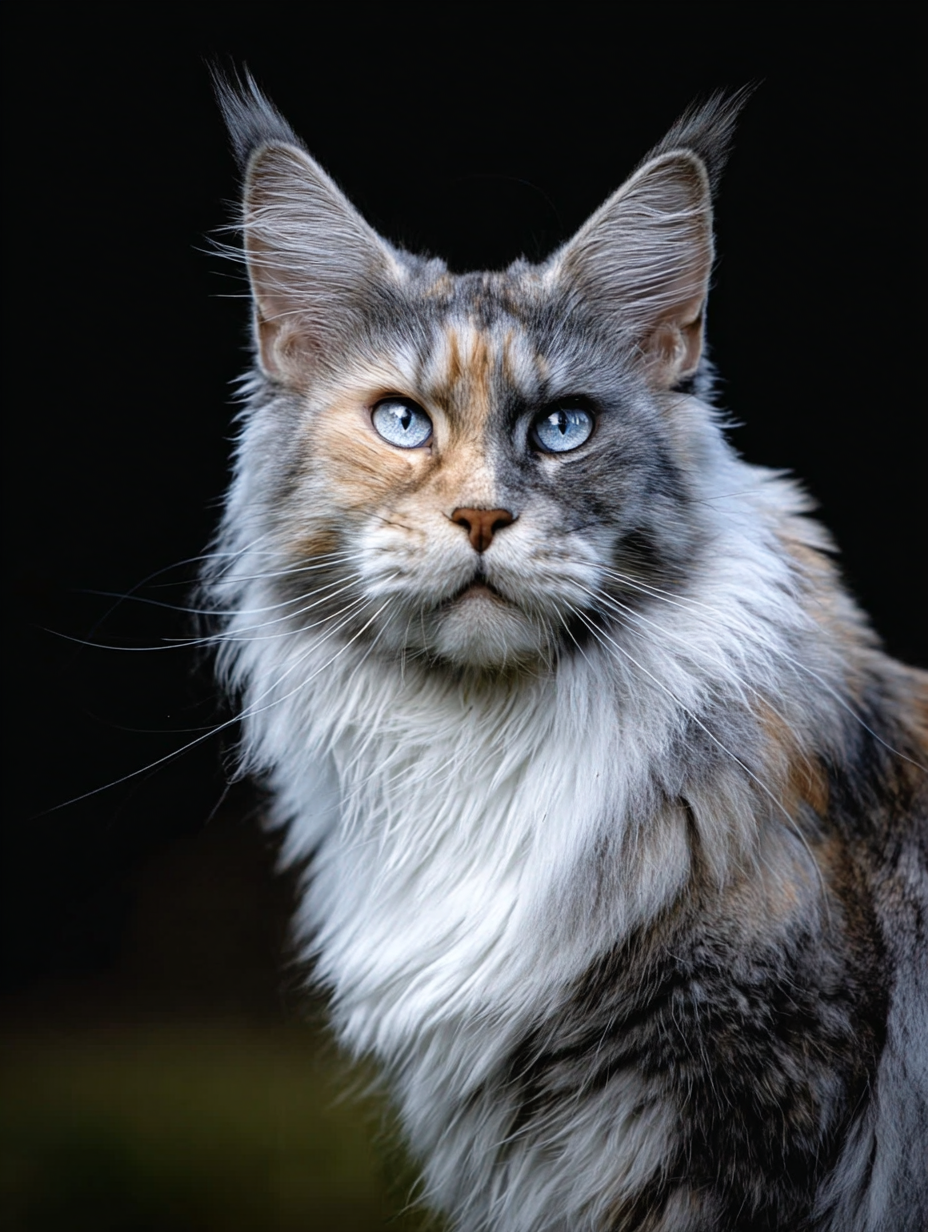
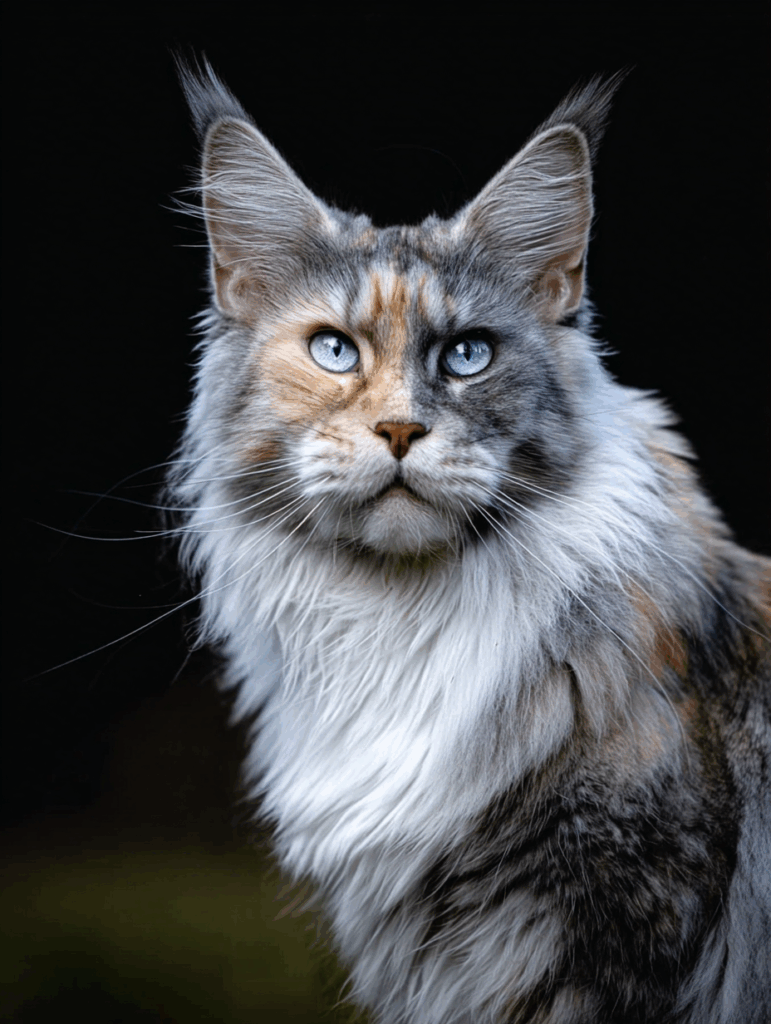
Maine Coon Tortie: Complete Guide to Tortie Maine Coon Cats and Kittens
Tortie Maine Coons are some of the most striking cats in the breed. Their vivid patchwork patterns, bold personalities, and diverse color combinations make them highly sought after by families who want a kitten with both beauty and character. This post covers tortie genetics, color variations, personality traits, prices, and what makes tortie Maine Coon kittens from reputable breeders stand out.
Tortie Maine Coon Overview
| Category | Details |
|---|---|
| Primary Pattern | Tortoiseshell (red + black or blue + cream) |
| Gender Likelihood | 99% Female |
| Price Range | $4,000 – $6,500 |
| Common Variations | Black Tortie, Torbie, Tortie and White |
| Rare Variations | Smoke Tortie, Blue Tortie, Dilute Tortie and White, Male Tortie |
| Eye Colors | Gold, Green, Hazel, Copper |
| Personality Traits | Confident, Vocal, Intelligent, Independent |
| Genetic Basis | Red + black pigment genes on the X chromosome |
| Waitlist Recommended | Yes, especially for rare colors |
What Is a Maine Coon Tortie?
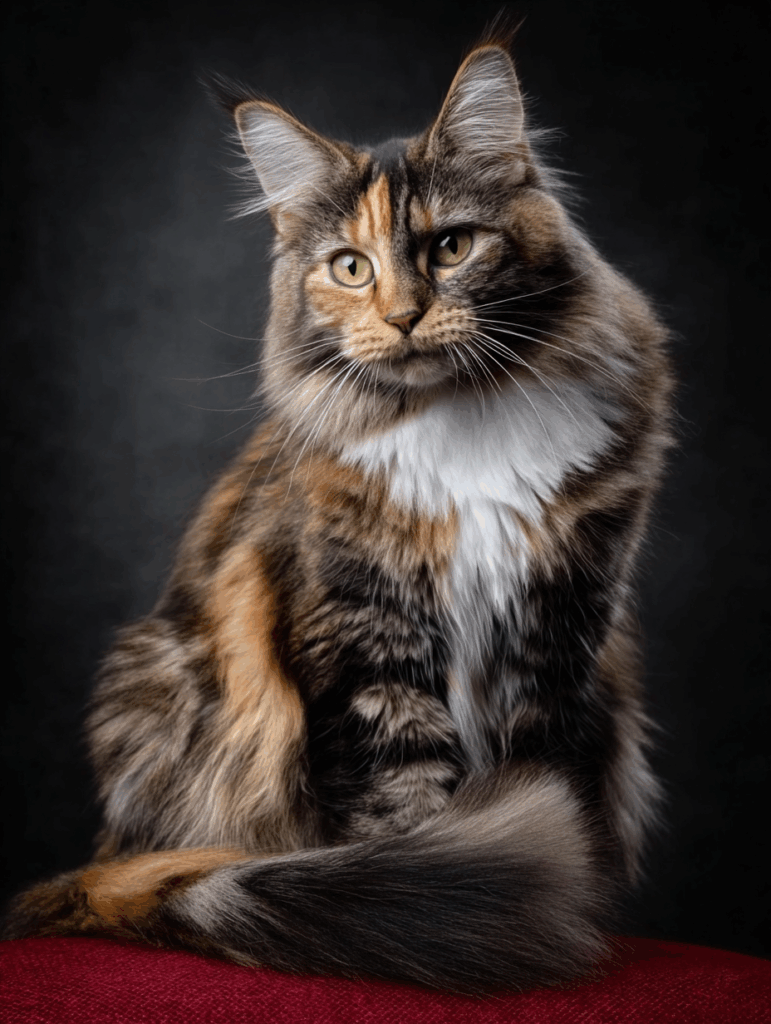
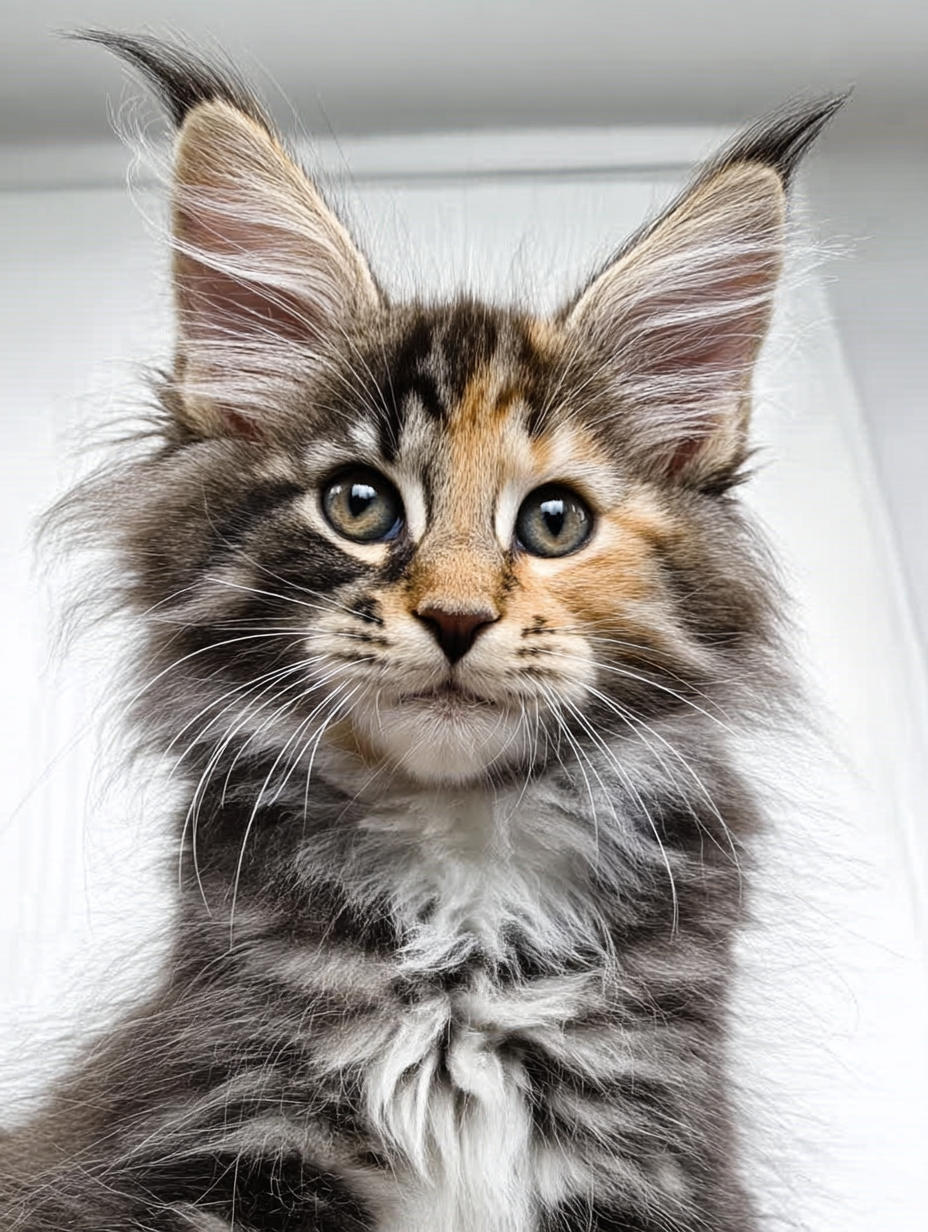
A Maine Coon tortie is a Maine Coon with the tortoiseshell color pattern, created by a mix of black and red pigments. Tortie coats appear in patches, swirls, marbling, or blended mosaics depending on how the genes express. Torties can be solid, tabby, smoke, dilute, or patterned variations.
Because the gene for tortie coloring is linked to sex chromosomes, almost all tortie Maine Coons are female.
Tortie is not a separate breed. It is a color pattern within the Maine Coon breed.
Tortie and Tortoiseshell Maine Coons: What Is the Difference?
Tortie and tortoiseshell Maine Coons refer to the same color pattern. “Tortie” is simply the shortened version of the word “tortoiseshell,” and both describe a Maine Coon with a mix of red and black patches. Breeders, registries, and cat owners use the terms interchangeably because there is no structural, genetic, or standard difference between a tortie and a tortoiseshell.
Most buyers use the informal word “tortie,” while many people searching online use the full term “tortoiseshell.” Including both terms helps families understand the pattern more clearly and ensures your kitten listing appears in searches for both. Whether someone types tortie Maine Coon or tortoiseshell Maine Coon, they are describing the exact same coat pattern within the breed.
Searching for a Tortie Maine Coon Kitten for Sale?
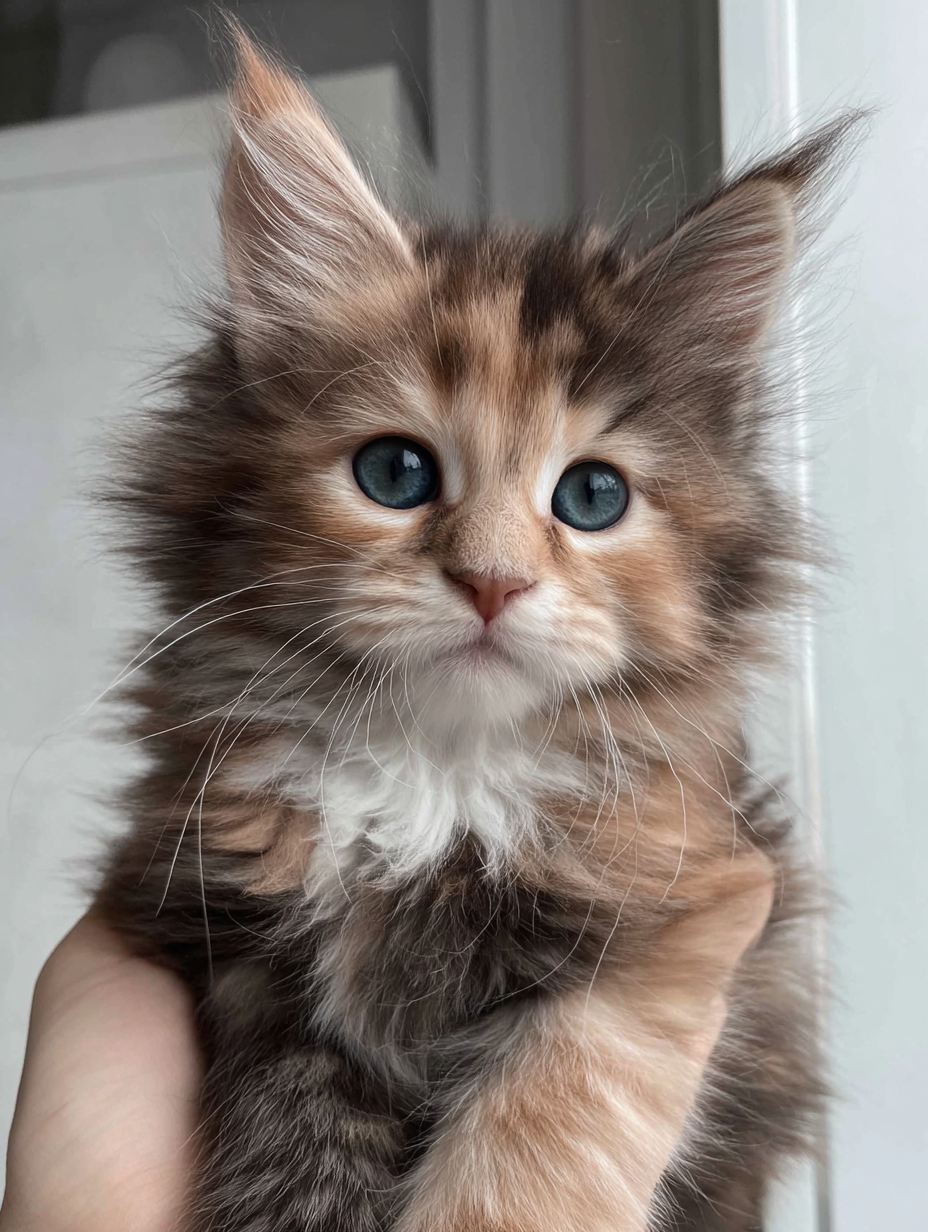
If you are here to find your very own Maine Coon baby check out our Purebred Maine Coon Kittens for Sale.
At Almonte Cats, every kitten is:
- TICA / CFA registered from fully health-tested parents
- Raised in-home for confident, affectionate temperaments
- Vet-checked, vaccinated, and microchipped before going home
We advise our families to reserve early — our litters are produced in limited numbers each year to preserve quality and true Maine Coon type.
View Available Kittens & Apply Here
Tortie Maine Coon Color Variations
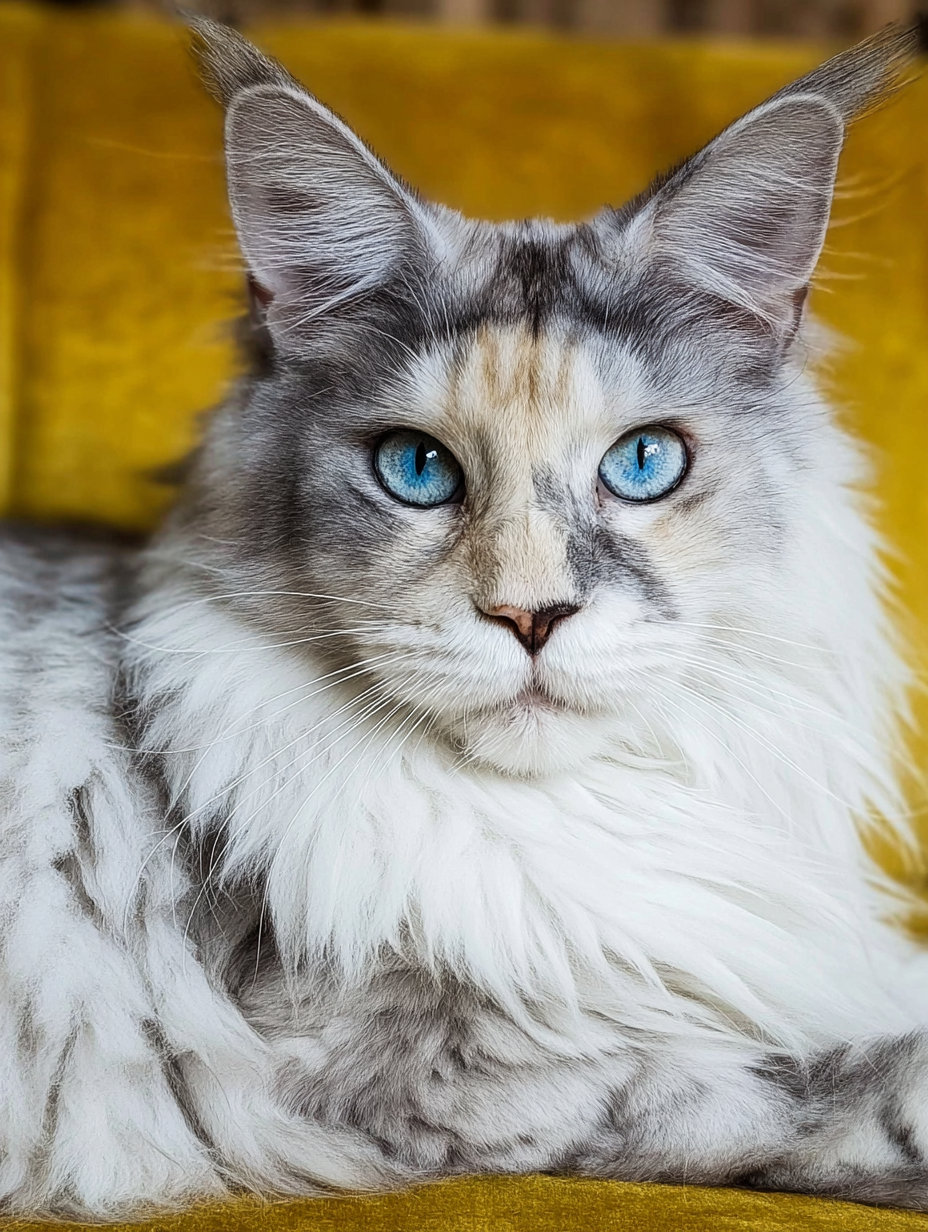
There are many visually different tortie variations in the Maine Coon breed. Each one has its own look, pattern clarity, and color intensity. These variations appeal to different types of buyers and allow your cattery to reach multiple high-search phrases. Understanding each type also helps families choose a kitten whose markings match what they have in mind. Below you will find the most popular and high-value tortie Maine Coon color options and how they develop over time.
Tortie Color Variations
| Tortie Type | Description | Rarity | Notes |
|---|---|---|---|
| Black Tortie | Black + red patches | Common | Classic tortie look |
| Blue Tortie | Blue + cream dilute pattern | Rare | Soft pastel appearance |
| Torbie | Tortie + tabby stripes | Common | Stripe overlay with tortie |
| Blue Cream Torbie | Dilute torbie pattern | Uncommon | Watercolor-like coloring |
| Smoke Tortie | Silver undercoat + tortie topcoat | Very Rare | Shimmering contrast |
| Tortie and White | Tortie with white spotting | Common | High contrast tri-color |
| Dilute Tortie & White | Blue, cream, and white | Rare | Pastel tri-color pattern |
| Male Tortie | XXY or chimera genetics | Extremely Rare | Usually sterile |
Black Tortie Maine Coon (Black and Red Tortie)
A black tortie Maine Coon is the most traditional tortie pattern. These kittens display strong patches of jet black mixed with rich red, orange, or fiery amber tones. The contrast makes them visually striking, especially in longhaired kittens whose coats create dimension as they fluff out. Some black torties have bold patches with very defined color separation, while others have a softer marbled look where red and black blend slightly at the edges.
As they mature, black areas often deepen in tone, and red pigment can brighten, leading to even stronger contrast. Black torties tend to photograph beautifully due to their dramatic color layout. This variation has high buyer demand because it represents the “classic” tortoiseshell Maine Coon look that many families imagine when they hear the word tortie.
Blue Tortie Maine Coon (Blue Cream Tortie)
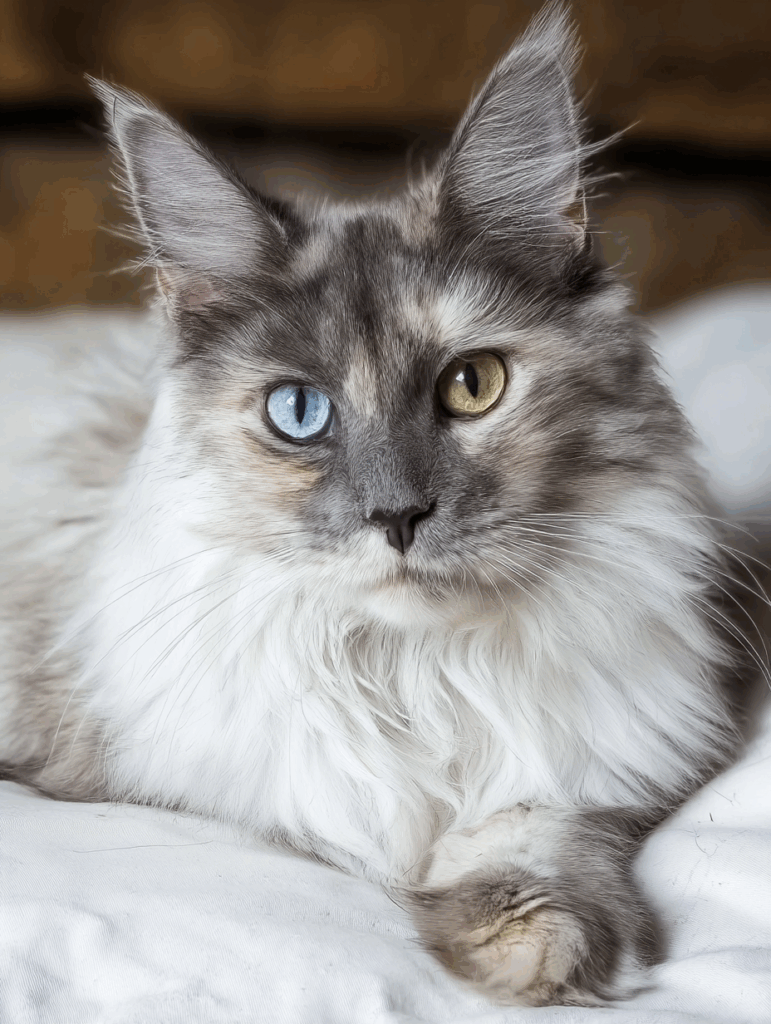
Blue torties are the dilute version of the black tortie pattern. Instead of black and red, the coat shows soft blue and warm cream. The overall effect is dreamy, pastel, and gentle. Blue tortie Maine Coons often have a velvety look, especially in natural light where their dilute pigmentation softens the coat even further.
Buyers who prefer a calmer, more elegant palette often choose blue torties because they feel less bold and more refined. Some blue torties develop subtle smoky undertones, while others stay bright and airy. Their coats tend to lighten or shift as they age, revealing new cream highlights as they mature.
Tortie Tabby Maine Coon (Torbie Maine Coon)
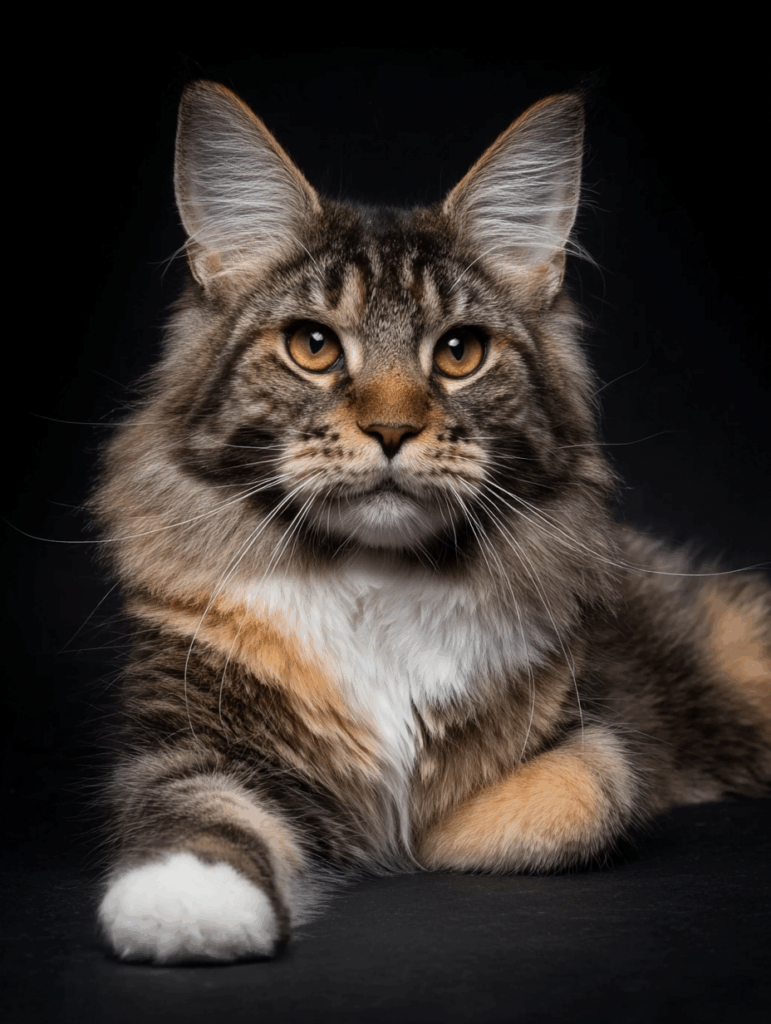
A torbie is a tortie with visible tabby striping. This pattern mixes tortie patchwork with tabby features such as the classic forehead “M,” face stripes, leg striping, body swirls, and ringed tails. Torbies are one of the most common tortoiseshell variations in Maine Coons because the breed naturally carries strong tabby genes.
The combination of red, black, and tabby creates a layered, dynamic coat that changes dramatically in different lighting. Many torbie kittens have brighter red patches in their tabby areas and deeper shading along the spine. Torbies are popular because they offer the bold contrast of tortie coloring with the structure of a tabby pattern, making them one of the most visually complex Maine Coon color variations.
Blue Cream Torbie Maine Coon
Blue cream torbies are dilute torbies, meaning their black pigment becomes blue and their red pigment becomes cream. They display blue and cream tabby striping throughout their patches, which gives them a soft, muted, watercolor appearance. These kittens appeal to families who love torbies but prefer softer tones.
Blue cream torbies tend to develop more visible stripes as they age, especially in the cream areas. Their muted colors often highlight their Maine Coon facial structure and ear furnishings, making them popular for owners who love gentle color patterns with strong breed type.
Smoke Tortie Maine Coon
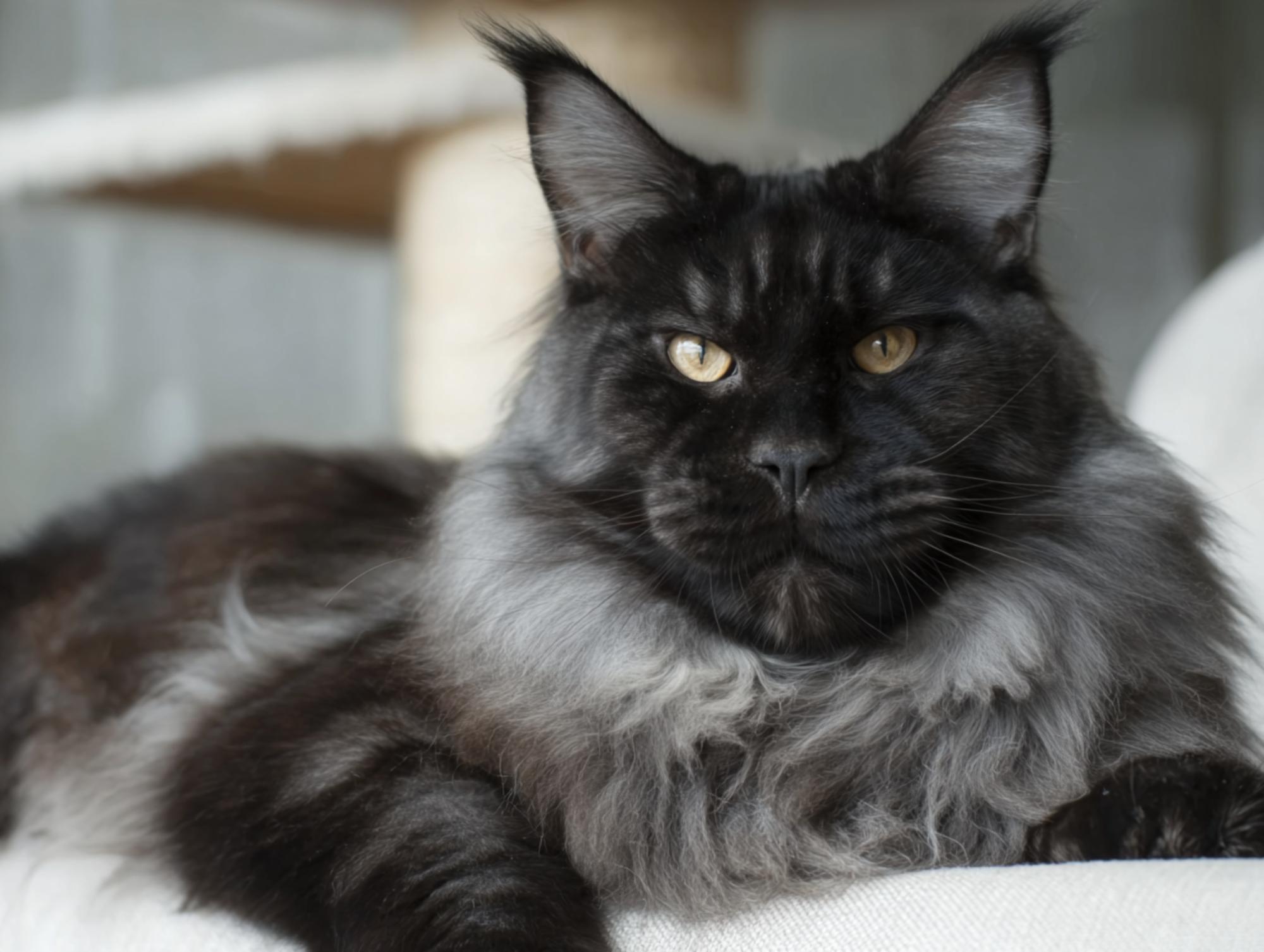
Smoke tortie Maine Coons are some of the rarest and most captivating tortie variations. The coat appears solid tortie on top, but when the fur parts or moves, a bright silver or white undercoat becomes visible. This creates a glowing, misty effect that makes smoke torties stand out in photos and videos.
Smoke torties often appear darker as kittens, and the smoke effect becomes more dramatic as they grow and develop a fuller coat. Because the smoke gene is recessive and harder to produce, smoke tortie Maine Coons are highly prized and often have longer waitlists. Buyers looking for unique or show-quality markings frequently request this variation.
Tortie and White Maine Coon
Tortie and white Maine Coons have traditional tortie patches paired with clean white spotting. The white may show as small mittens or as full bicolor patterns with white chests, paws, faces, or bellies. The contrast between tortie patches and bright white makes these kittens visually bold and instantly recognizable.
Patterns range from minimal white to large areas of white that break up the tortie patches. Families who love high-contrast coats often choose tortie and white kittens because they have the energy of tortie colors combined with the crispness of white spotting. This variation usually photographs very well and tends to rank strongly in search because buyers often include “and white” in their color queries.
Dilute Tortie and White Maine Coon
Dilute tortie and white Maine Coons display blue, cream, and white in a soft, pastel pattern. These kittens are highly sought after due to their rarity and gentle coloring. Blue and cream patches paired with clean white produce a powdery, delicate look that appeals to buyers who prefer lighter coats.
As they mature, cream areas often brighten, and blue areas can soften or take on a silvery cast. Dilute tortie and white kittens often have very photogenic expressions, and their coats look especially beautiful in natural light. Because dilute genes and white spotting genes must align perfectly, this variation is produced less often and is typically reserved early on breeder waitlists.
Why Are Tortie Maine Coons Mostly Female?
Tortie Maine Coons are overwhelmingly female because the genetics behind the tortoiseshell pattern are carried on the X chromosome. Both the red pigment gene and the black pigment gene sit on the X chromosome, and these two colors must both be present for a tortie pattern to appear. Since female cats have two X chromosomes (XX), they can carry one version of the gene on each chromosome. One X can carry the red gene, and the other can carry the black gene, allowing both colors to show on the coat at the same time.
How X Inactivation Creates the Tortie Pattern
X-inactivation is the reason tortoiseshell patterns form. Early in development, a female kitten randomly “switches off” one X chromosome in each cell.
- Cells where the red gene stays active produce red or orange fur.
- Cells where the black gene stays active produce black or brown fur.
Because this activation pattern happens randomly across millions of cells, the familiar patchwork tortie look appears. No two tortie Maine Coons ever have the same pattern because each kitten’s X-inactivation is completely unique.
Why Male Tortie Maine Coons Are Rare
Male Maine Coons have one X and one Y chromosome (XY). With only one X chromosome, a male cat can show either the red gene or the black gene, but not both. This is why most male Maine Coons are black, red, or a tabby variation of those colors. They simply do not carry the second X chromosome needed to express both pigments.
The Genetics Behind Male Tortie Maine Coons
Male tortie Maine Coons do exist, but they are extremely rare. Most male torties have a genetic condition called XXY chromosomes, also known as Klinefelter syndrome. With two X chromosomes and one Y, they can show both red and black. However, these males are almost always sterile and cannot be used in breeding programs.
In very rare cases, male torties are chimeras, meaning two embryos fused early in development. These cats have two different sets of DNA in their bodies, which can create tortie coloring even though they are male. Like XXY males, chimeras are not typical and are usually sterile.
Why Almost All Tortie Maine Coons Are Female
Because normal male genetics only allow one X chromosome, 99 percent of tortoiseshell Maine Coons are female. This is why breeders list almost every tortie, torbie, blue tortie, or dilute tortie kitten as female. Male torties are genetic exceptions, not a separate color or pattern.
Tortie Maine Coon Personality
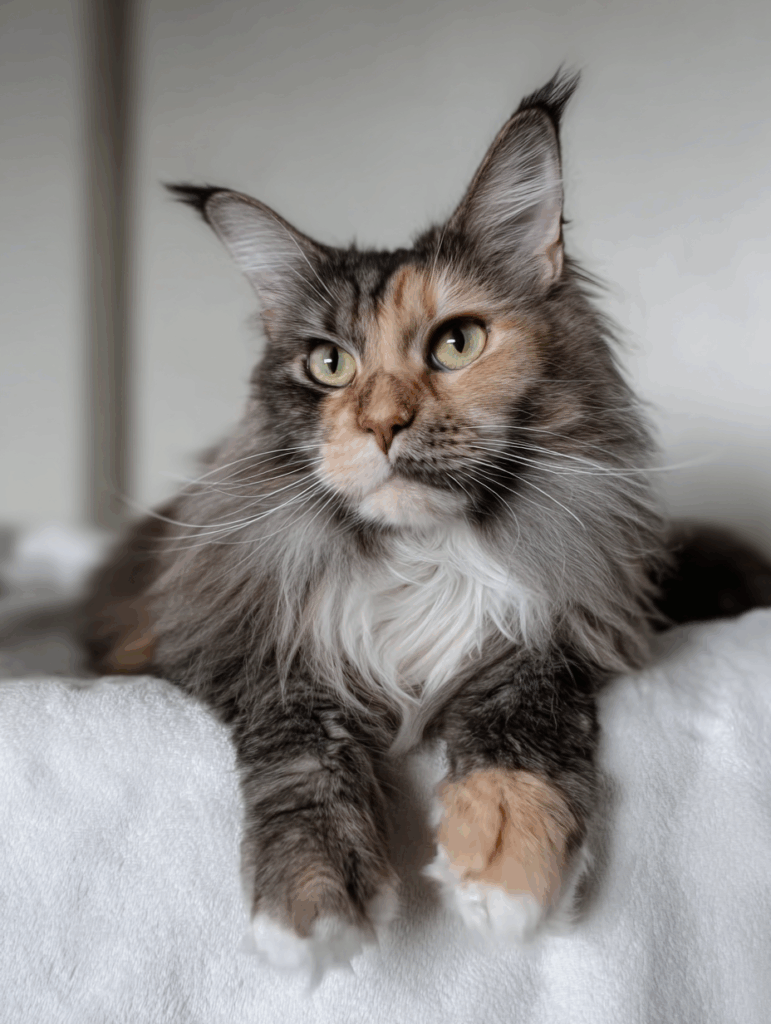
There is a long held belief in something called “tortitude,” the idea that tortoiseshell and tortie cats have bold, sassy, or opinionated personalities. Tortie Maine Coons, like torties in other breeds, are often described as spirited, expressive, and highly intelligent. While “tortitude” is not a scientific term, many owners notice a consistent personality style that shows up in tortie females more often than other colors.
Is Tortitude a Real Trait or a Myth?
The concept of tortitude has been discussed for decades. Some people believe torties have stronger personalities because of their genetics, while others think it is simply a myth based on how expressive these cats tend to be. There is no confirmed study linking coat color to personality, but many owners consistently report that their tortie Maine Coon is the most vocal, opinionated, or interactive cat in their home.
In reality, tortitude is likely a mix of breed traits and human interpretation. Maine Coons are naturally social, confident, and intelligent cats. Torties often amplify these traits simply because they interact more, communicate more, and show their preferences clearly. Buyers may notice this expressiveness and label it as “attitude,” even though it is really just personality showing through.
Why Tortie Maine Coons Are Often Seen as Sassy
Tortie Maine Coons are not actually moody or difficult. Instead, they tend to be:
- highly aware of their environment
- vocal when they want attention
- quick to form strong opinions about routines or preferences
- confident in expressing likes and dislikes
- bonded to one person or family structure
This combination can look like attitude, especially compared to calmer colors like blue, cream, or shaded variations. Their natural intelligence also means they learn quickly, understand boundaries, and sometimes “test” their humans to see what they can get away with.
Are Tortie Maine Coons More Independent?
Many tortie owners describe their cats as independent thinkers. Tortie Maine Coons typically enjoy affection, but on their own terms. They want connection but may not be clingy. They like to be part of every activity but may choose how and when they participate. This preference-driven behavior often reads as strong-willed, but it is completely normal and healthy within the breed.
Do Tortie Maine Coons Bond Strongly With One Person?
Some torties form especially deep bonds with one family member. This is not guaranteed, but it is common enough that many owners mention it. Torties that bond strongly tend to be very affectionate, follow their chosen person around the home, and show clear loyalty. Their confidence makes them expressive companions who are very tuned in to their humans’ routines.
Core Personality Traits Seen in Many Torties
While every cat is an individual, many tortie Maine Coons are known for:
- Strong confidence in social situations
- Playful behavior and high interaction levels
- A sense of independence that adds character
- Vocal communication, especially chirps and trills
- Intelligent problem solving and quick learning
- Expressive body language that makes them feel animated and lively
The Real Personality of a Tortie Maine Coon
Tortie Maine Coons tend to be expressive and people focused but with a bit of extra flair. They are social and affectionate, and they thrive when included in daily family life. This combination of intelligence, confidence, and expressiveness makes torties memorable companions. Whether “tortitude” is real or simply perception, many families enjoy the distinct personality that tortie girls bring to the Maine Coon breed. a bit of extra flair. They bond deeply with their families and thrive on routine and affection. See Maine Coon Temperament and Personalities here.
People Also Ask About Tortie Maine Coons
What is a tortie Maine Coon cat?
A tortie Maine Coon is a Maine Coon with a mix of red and black pigments or their dilute versions, blue and cream. Almost all torties are female because the pattern requires two X chromosomes. Their patchwork coloring is unique to each kitten.
Are tortie Maine Coon kittens rare?
Common tortie patterns like black tortie and torbie appear regularly in litters, but blue torties, smoke torties, dilute tortie and white, and male torties are considered rare. These variations often require joining a breeder waitlist.
Rarest Maine Coon Tortie Colors
| Rarity Level | Tortie Colors |
|---|---|
| Extremely Rare | Male Tortie, Smoke Tortie, Dilute Tortie and White |
| Rare | Blue Tortie, Blue Cream Torbie |
| Common | Black Tortie, Torbie, Tortie and White |
How much does a tortie Maine Coon cost?
Tortie Maine Coon kittens usually cost $4,000 to $6,500 depending on rarity, pattern clarity, pedigree, and breeder standards. Rare colors such as dilute, smoke, or blue tortie may be priced higher.
Can Maine Coons be tortoiseshell?
Yes, Maine Coons can be tortoiseshell. Tortie and torbie Maine Coons are common in the breed and include black tortie, blue tortie, dilute tortie, smoke tortie, and tortie-and-white variations. Nearly all torties are female.
What is the rarest tortie cat?
The rarest tortie is a male tortoiseshell, which occurs only in rare cases of XXY chromosomes or chimerism. Among females, smoke torties and dilute tortie and white Maine Coons are highly sought after.
Do tortie cats have different personalities?
Many owners describe tortie cats as expressive and confident, a trait often called “tortitude.” While not scientifically proven, torties tend to be vocal, intelligent, independent, and very people-focused.
What colors do tortie Maine Coons come in?
Tortie Maine Coons appear in combinations of black and red or blue and cream. They can be classic tortie, torbie, dilute tortie, smoke tortie, calico, or tortie-and-white. Each kitten’s patch distribution is unique.
What is a blue tortoiseshell Maine Coon?
A blue tortoiseshell Maine Coon is a dilute tortie showing soft blue and cream patches instead of black and red. These pastel colors are highly desired and less commonly produced.
Is a tortie Maine Coon the same as a calico?
No. A tortie has red and black pigments, while a calico has those same colors plus large white spotting. Calico Maine Coons are a type of tortie but have additional white due to a separate spotting gene.
Why are most tortie Maine Coons female?
The tortie pattern requires two X chromosomes. Female cats have XX, allowing red and black pigments to appear together. Male cats are XY, which usually limits them to one color.
Tortie Maine Coon Kitten Prices
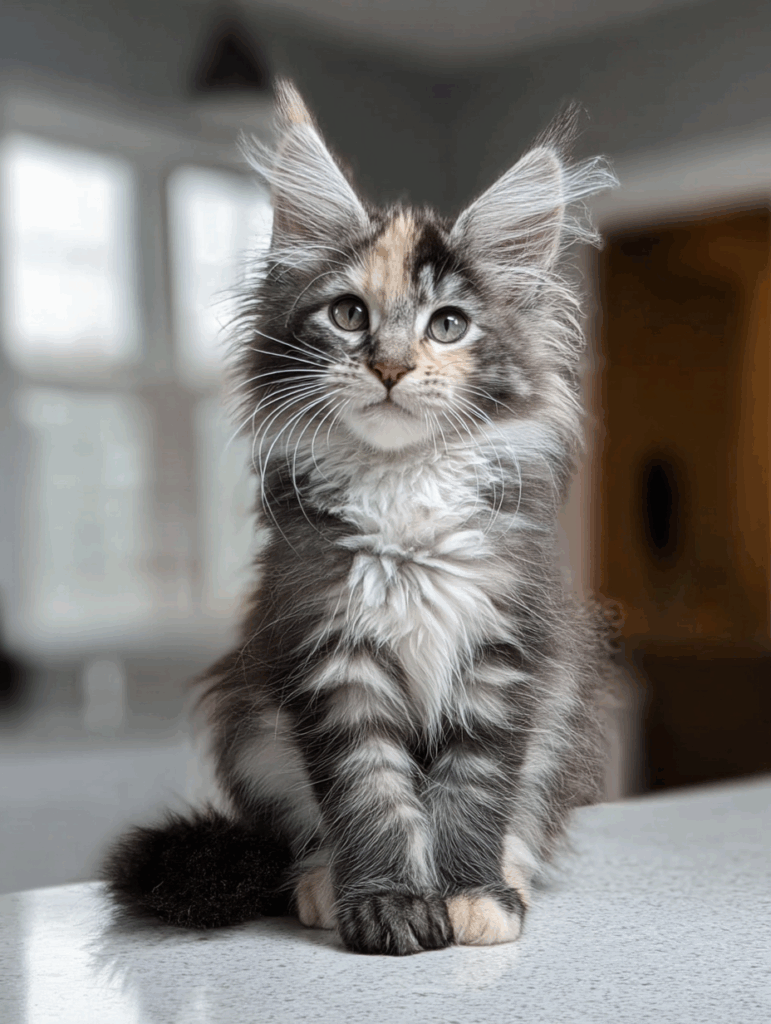
Tortie Maine Coon kittens typically cost between $4,000 and $6,500 in the United States.
Tortie Maine Coon kittens often sit on the higher end of Maine Coon pricing because the tortoiseshell pattern is more complex to produce. The genetics required for tortie coloring do not occur as often as other coat types, which increases rarity and demand. Their striking patchwork patterns, especially in longhaired or smoke variations, also make them some of the most requested kittens in reputable breeding programs.
Tortie Maine coon kittens attract strong buyer interest because every kitten’s pattern is completely unique. Families searching for bold, expressive coat types often prioritize tortie and torbie females, which leads to quicker reservation times.
At reputable catteries, pricing usually depends on:
- pattern clarity
- coat variation (torbie, smoke, dilute, etc.)
- pedigree and registration
- parent health testing
- structure and breed type
At Almonte Cats, pricing reflects health, structure, temperament, and color rarity within the litter.
If you are hoping to bring home a tortie Maine Coon kitten, you can view our available kittens and submit your application here: Apply for a Maine Coon Kitten at Almonte Cats
Average Tortie Kitten Pricing by Color Type in the USA
| Tortie Type | Typical Price Range | Notes |
|---|
| Black Tortie | $4,000 – $5,000 | Most common |
| Torbie | $4,000 – $5,500 | High demand |
| Blue Tortie | $4,500 – $6,500 | Pastel dilute |
| Blue Cream Torbie | $4,500 – $6,500 | Dilute torbie |
| Tortie & White | $4,000 – $5,500 | Tri-color pattern |
| Dilute Tortie & White | $5,000 – $6,500 | Rare dilute + white combo |
| Smoke Tortie | $5,500 – $6,500+ | Very rare |
| Male Tortie | Varies | Rare due to genetics |
Are Tortie and Calico Maine Coons the Same?
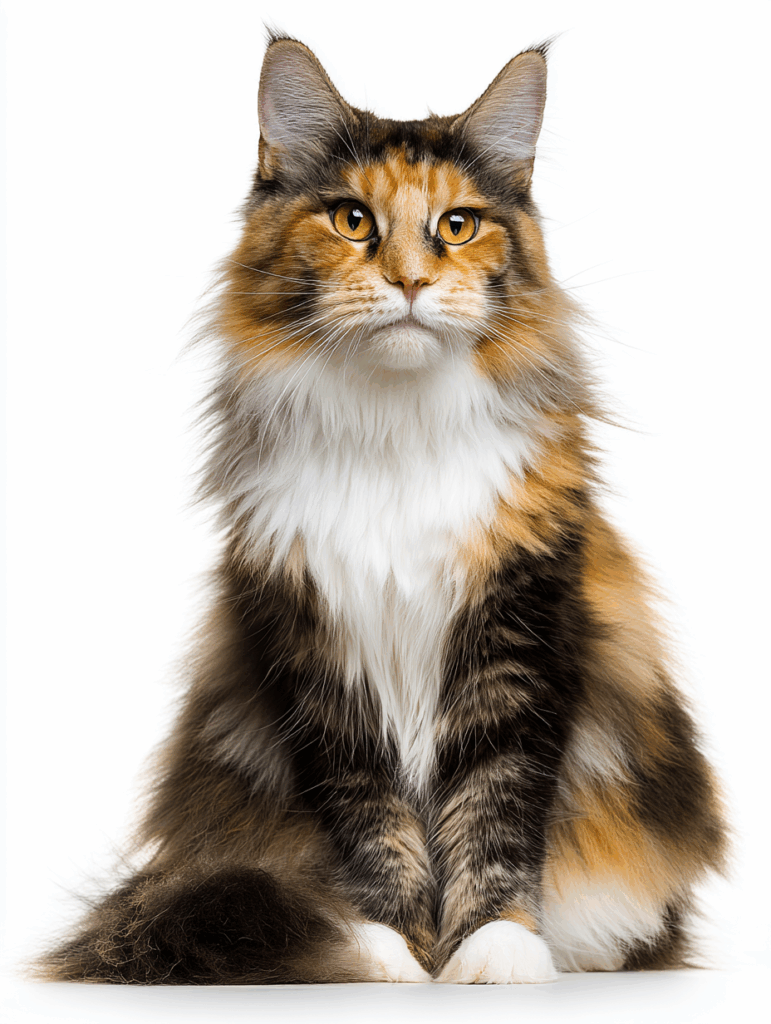
Tortie and calico Maine Coons are closely related, but they are not the same pattern. Both come from the same red and black (or blue and cream) pigment genetics found on the X chromosome, which is why almost all tortie and calico Maine Coons are female. The difference comes from whether the cat also inherits the white spotting gene.
A tortie Maine Coon has a mixture of red and black or blue and cream pigments without large areas of white. Their colors blend in patches, swirls, or marbling.
A calico Maine Coon has the same tortie coloring but with significant white areas added through the white spotting gene. This creates the classic tri-color look, usually with white on the chest, belly, face, and paws, and patches of tortie throughout the coat.
Both tortie and calico Maine Coons are visually striking, but calicos tend to be more high contrast, while torties appear denser and more blended. Calico patterns are generally less common because they require an extra genetic element, making them especially popular among buyers who want a Maine Coon with dramatic color separation. See Calico Maine Coons here.
Tortie Maine Coon Genetics Explained
Tortie patterns occur when the gene for red pigment (O gene) and the gene for black pigment interact through X chromosome inactivation. As a female embryo develops, one X chromosome turns off at random in each cell, creating distinct patches of color.
Dilute genes lighten these pigments, smoke genes add silver undercoats, and tabby genes add striping. This is why tortie coats vary widely.
Genetics Breakdown
| Cat Type | Chromosomes | Pattern Outcome | Notes |
|---|---|---|---|
| Female | XX | Can show red + black → tortie | Most torties are female |
| Male | XY | Usually one color only | Cannot be tortie without anomaly |
| Male Tortie (XXY) | XXY | Red + black tortie | Genetic anomaly, almost always sterile |
| Chimera Male | Two merged embryos | Tortie appearance | Extremely rare |
Eye Colors in Tortie Maine Coon Cats
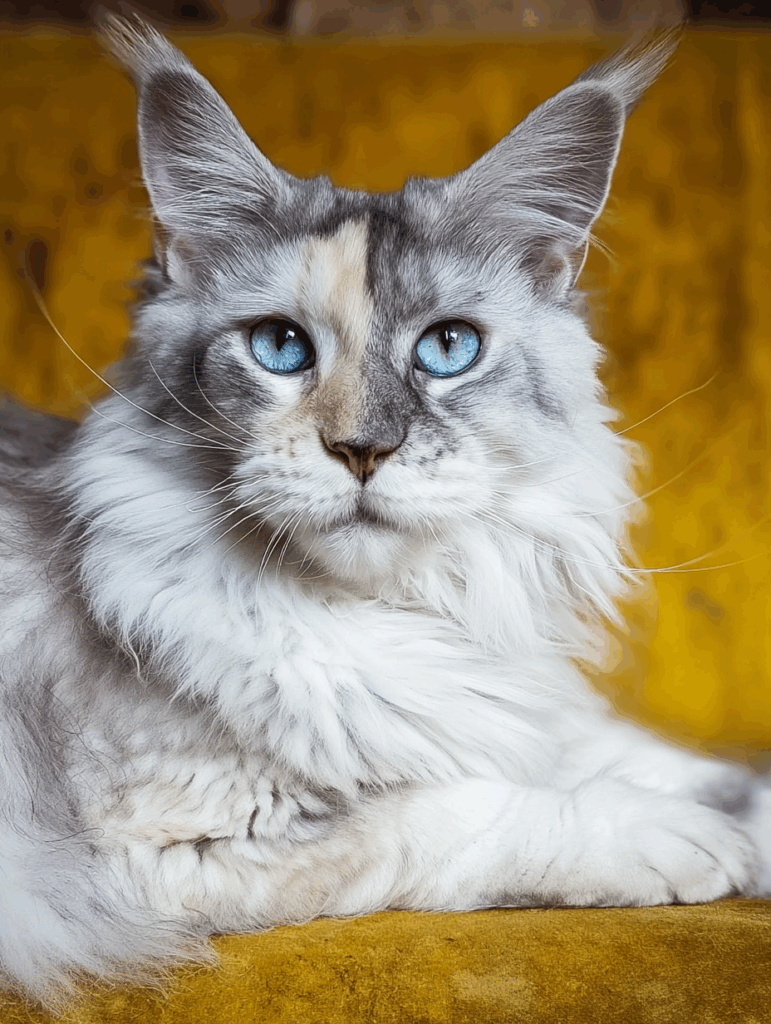
Tortie Maine Coons can have a wide range of eye colors, and the shade they develop is not determined by their tortie or tortoiseshell pattern. Instead, their eyes are influenced by polygenes that control pigment density and how color is deposited in the iris. This means tortie Maine Coon kittens from the same litter can grow up with completely different eye colors.
Common eye colors in tortie Maine Coon cats include:
- gold
- green
- hazel
- copper
Some torties may start with lighter kitten eyes that deepen significantly over the first year. Gold and green are the most common in the breed, while richer copper shades typically appear in lines selected for stronger pigment expression.
Because eye color is independent of coat pattern, both classic black torties and dilute torties can develop the same range of shades. Linking this section to your full eye color guide helps buyers understand how Maine Coon eye development works and what to expect as their kitten matures. See Maine Coon eye colors here.
Are Tortie Maine Coons Rare?
Some tortie Maine Coon variations are fairly common in well-planned litters, such as classic black torties and torbies. These patterns appear more frequently because they require only the standard red and black pigment genes. Families looking for traditional tortie coloring usually have more options to choose from throughout the year.
Other tortie variations are considered rare and tend to have longer reservation times, including:
- male tortie Maine Coons
- smoke torties
- blue torties
- dilute tortie and white
These color combinations require additional genetic factors, which are not as common in most breeding lines. Because they occur less frequently and have such high visual appeal, they often fill waitlists quickly and may be reserved before birth.
If you are hoping for a rare tortie or torbie Maine Coon kitten, joining the waitlist is the best way to secure a spot in an upcoming litter.
Apply for a Kitten
Tortie Maine Coon Coat Development
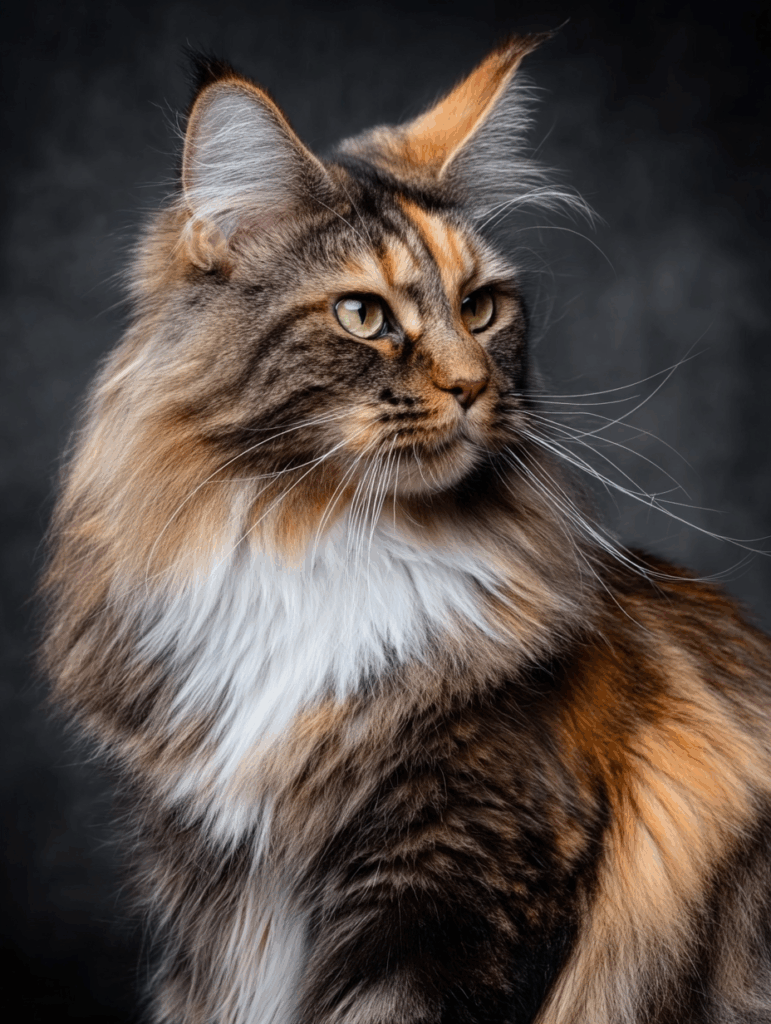
Tortie Maine Coon kittens change dramatically as they grow. Their red and black areas often shift, spread, darken, or brighten. Most torties show their clearest color distribution between 8 and 12 months of age.
Patterns can:
- sharpen
- blend
- develop new depth
- reveal silver undercoats
This makes watching them mature a fun experience for families.
How Tortie Maine Coon Patterns Develop Over Time
Tortie patterns are among the most dynamic coat types in the Maine Coon breed. Families often notice that their tortie kitten looks very different at 4 weeks, 8 weeks, and 12 weeks. This is because both red and black pigments develop at different speeds. Red patches often appear brighter and more defined as the kitten matures, while black areas may deepen or soften depending on whether the kitten carries silver or dilute genes.
During the first few months, the coat usually shows faint or muted patches. By 10 to 16 weeks, the pattern sharpens. Many breeders describe tortie development as “unfolding,” because the pattern becomes clearer as the kitten grows a full coat and starts producing richer pigments. Longhaired tortie Maine Coons display the most dramatic shifts because their thick undercoat creates dimension. Smoke torties show even more contrast since their silver undercoat is revealed each time the fur moves.
Owners often enjoy taking month by month photos because torties can look like completely different kittens at different ages. Their markings mature into their final appearance between 1 and 2 years old, especially in longhaired or smoke kittens.
Tortie Maine Coon Cats as Family Pets
Tortie Maine Coons make excellent family companions. The breed itself is known for stable temperaments, and tortie girls often bring a little extra personality. They bond strongly with their families, especially when raised in-home with daily handling, structured routines, and clear expectations. Families who want an expressive, intelligent, people focused cat often gravitate toward torties because they tend to be more interactive.
Many tortie Maine Coons enjoy following their owners from room to room, “helping” with daily tasks, and supervising household activities. They can be a bit opinionated, and they communicate clearly through chirps, trills, and vocal cues. Their confidence makes them adaptable, and with proper introductions they typically coexist well with children, other cats, and even cat friendly dogs.
Their intelligence means enrichment is important. Puzzle feeders, window perches, wand toys, and daily play sessions help keep them stimulated. Torties often appreciate predictable routines and mental engagement, which supports their natural problem solving drive.
Grooming a Tortie Maine Coon
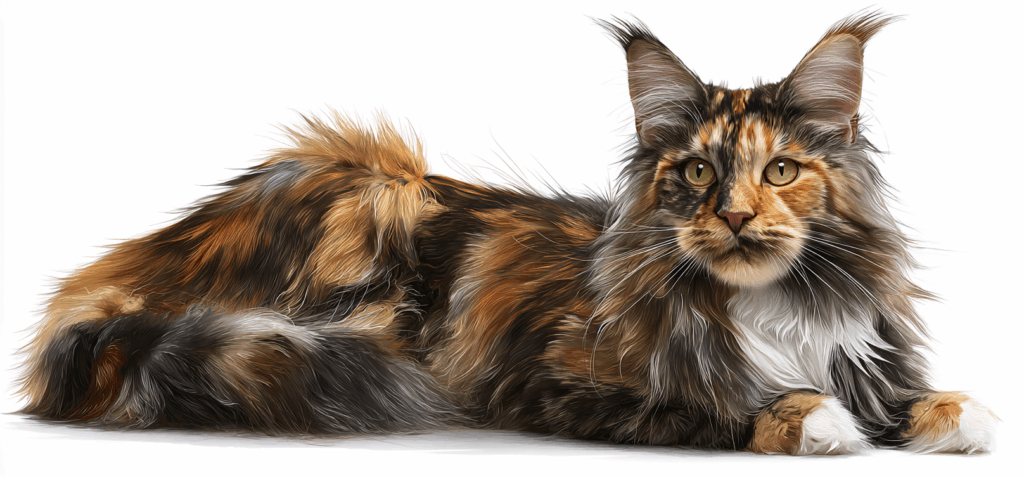
Tortie Maine Coons require the same grooming routine as other Maine Coon colors, but their thick coats make regular maintenance essential. Their long fur can tangle or form knots behind the ears, under the armpits, and near the hindquarters, especially during seasonal shedding.
A good weekly routine includes:
- metal comb for detangling
- slicker brush to lift loose undercoat
- gentle belly brushing
- checking behind the ears
- wiping the eyes and nose if needed
During spring and fall shedding seasons, brushing several times a week helps prevent matting. Tortie coats hide mats more easily than solid colors, so families should check regularly for texture changes, clumps, or thicker areas of fur.
Bathing is optional but helpful for show quality coats or longhaired torties. A gentle cat shampoo keeps the coat bright and lifts oils, and a blow dry can add fluff and volume. Smoke torties especially benefit from occasional baths because it enhances the contrast between their dark surface coat and pale undercoat.
Why Tortie Maine Coons Are Popular With Buyers
Tortie Maine Coons consistently attract attention from buyers because no two are ever the same. Their markings are completely unique, creating a one of a kind look that cannot be replicated. Many families specifically request tortie kittens for this reason alone.
In addition to their visual appeal, torties have strong personality traits that align well with what Maine Coon families want. They are expressive, affectionate, intelligent, and social. Many owners report that their tortie is the most talkative or interactive cat in their home. These traits, combined with rarity in certain patterns like smoke or dilute, make tortie Maine Coons some of the most requested kittens in responsible breeding programs.
FAQ About Tortie Maine Coons, Colors, and Personality
Can a Maine Coon be tortie?
Yes, Maine Coons can absolutely be tortie. The tortoiseshell pattern appears in the breed when a female kitten inherits both the red and black pigment genes on her X chromosomes. Tortie Maine Coons are common in reputable breeding programs and include black tortie, blue tortie, smoke tortie, torbie, and dilute variations.
What is a Maine Coon tortie mix?
A Maine Coon tortie mix refers to a cat that has some Maine Coon traits but is not a purebred Maine Coon. These mixes may show tortoiseshell coloring, larger size, or tufted ears, but they will not have the predictable structure, temperament, or pedigree of a purebred Maine Coon. Tortie mixes often appear on rescue sites and may include domestic longhair ancestry.
What is a blue tortoiseshell Maine Coon?
A blue tortoiseshell Maine Coon, also called a blue tortie or blue cream tortie, is a dilute variation of the classic black and red tortie pattern. Instead of black and orange patches, the coat appears in soft blue and cream. These kittens are highly desired because of their pastel coloring, gentle expression, and refined look.
What is a tortoiseshell Maine Coon kitten?
A tortoiseshell Maine Coon kitten has a coat made of interwoven black and red pigments or their dilute versions. The kittens often show scattered patches or marbling that become more defined as they mature. Tortie Maine Coon kittens are usually female and tend to reserve quickly due to their unique, one-of-a-kind patterns.
What are calico tortoiseshell Maine Coon kittens?
Calico tortoiseshell Maine Coon kittens are tortie kittens that also carry white spotting. This creates a three-color pattern of black, red, and white (or blue, cream, and white in dilute calico). Calico tortie Maine Coons are rare and often in high demand because the white adds crisp contrast to the tortie patches.
What is a tortoiseshell Ragamuffin Maine Coon cat?
A tortoiseshell Ragamuffin Maine Coon cat describes a mixed lineage between a Ragamuffin and a Maine Coon that expresses tortie coloring. These cats may have longer plush coats, rounded faces, or calmer temperaments, depending on which traits they inherit. They are not purebred Maine Coons and should not be marketed as such.
What is a dilute tortoiseshell Maine Coon?
A dilute tortoiseshell Maine Coon has blue and cream coloring instead of the classic black and red. Dilutes are produced when the kitten inherits the dilute gene from both parents. These cats are softer in tone, often appear pastel, and tend to be more visually subtle than bold black torties.
What is a black tortie Maine Coon?
A black tortie Maine Coon shows the strongest contrast of any tortie variation. The coat combines deep black patches with bright red or orange areas. Black torties often look more dramatic as adults, as the black darkens and the red intensifies over time.
What is the rarest tortie cat?
The rarest tortie cat is a male tortie, which occurs only in cases of genetic anomalies such as XXY chromosomes or chimerism. Among female torties, rare variations include smoke torties, blue torties, and dilute tortie and white. These patterns require specific genetic combinations and appear less frequently in litters.
How much is a tortie Maine Coon?
Tortie Maine Coon kittens typically cost $4,000 to $6,500, depending on color clarity, pedigree, structure, and rarity. Smoke torties, dilute torties, blue torties, and torbies may sit on the higher end of that range. Reputable catteries often have waitlists for rare tortie patterns.
Why are tortie cats special?
Tortie cats are special because their patterns are completely unique to each individual. No two torties ever look alike, and their patchwork coloring is created by complex X-chromosome genetics. Many owners also describe torties as expressive, intelligent, and full of personality, which adds to their appeal.
What color are tortoiseshell Maine Coon cats?
Tortoiseshell Maine Coons have a blend of black and red pigments or their dilute versions, blue and cream. These colors can appear in patches, swirls, marbling, smoke effects, or tabby striping. Some tortoiseshell Maine Coons also have white spotting, creating calico or tortie-and-white variations.
What color cat is the naughtiest?
There is no scientific evidence linking color to behavior, but many owners humorously claim that torties and calicos are the “cheekiest” or most spirited. This reputation comes from their expressive personalities and strong preferences, often nicknamed “tortitude.” However, personality is shaped by breed traits and environment, not color alone.
What color cat is the least desired?
In general cat adoption statistics, solid black cats experience the slowest adoption rates due to old myths and low visibility in photos. This trend does not apply to Maine Coons, where black, black smoke, and black torties remain extremely popular. Within the tortie category, all patterns have strong buyer demand.
Can a Maine Coon be tortoiseshell?
Yes, a Maine Coon can absolutely be tortoiseshell. Tortie or tortoiseshell Maine Coons are common in the breed and come in black tortie, blue tortie, torbie, smoke, calico, and dilute variations. Almost all tortie Maine Coons are female because the pattern requires two X chromosomes.
Do tortie Maine Coons have different temperaments than other colors?
Many owners report that tortie Maine Coons have more expressive or outspoken personalities, often described as “tortitude.” While this is not scientifically proven, torties tend to be confident, interactive, and clever. Their strong social awareness and communication style can make them seem more spirited compared to calmer color variations.
Are blue tortie Maine Coons more expensive than black torties?
Blue tortie Maine Coons are often priced higher than black torties because the dilute gene is recessive and harder to produce. The pastel blue and cream patches also have strong buyer appeal, increasing demand. Many catteries have longer waitlists for blue tortie kittens due to their rarity and softer coloring.
What is the difference between a tortie and a torbie Maine Coon?
A tortie Maine Coon has patches of red and black, while a torbie has those same tortie patches combined with visible tabby striping. Torbies have the classic “M” mark on the forehead, striped legs, and ringed tails. Many buyers choose torbies for their complex, layered appearance that mixes two color patterns.
Are dilute tortie Maine Coons rare?
Yes, dilute torties are considered rare because the dilute gene must be inherited from both parents. This produces the soft blue and cream coloration instead of black and red. Dilute torties, especially dilute tortie and white Maine Coons, often have higher demand and longer reservation times.
Do tortie Maine Coons shed more than other colors?
Tortie Maine Coons shed the same amount as any other Maine Coon. Shedding depends on coat length, seasonal changes, and grooming habits, not color. Regular brushing helps maintain the coat and enhances patch clarity in both classic and dilute tortie variations.
Do tortie Maine Coons change color as they grow?
Yes, tortie Maine Coons change significantly as they mature. Red patches can brighten, black can darken, and dilute cream areas may expand or lighten. Smoke torties show even more dramatic changes as their silver undercoat becomes more visible with age.
Are male tortie Maine Coons healthy?
Male tortie Maine Coons are extremely rare and often have chromosomal anomalies like XXY genetics. These males are usually sterile and may have slightly higher health considerations depending on the genetic cause. Most tortie Maine Coons in breeding programs are female because they carry the correct XX structure.
Do tortie Maine Coons get along with other pets?
Yes, tortie Maine Coons typically get along well with other cats and cat-friendly dogs when introduced properly. Their confidence and intelligence help them adapt easily. They often take a leadership or supervisory role in multi-pet households.
What causes the tortoiseshell pattern in Maine Coons?
The tortoiseshell pattern is caused by the interaction of red and black pigment genes located on the X chromosome. Only cats with two X chromosomes—almost always females—can display both colors simultaneously. Random X-inactivation creates the patchwork pattern that makes torties unique.
What is the difference between calico and tortoiseshell Maine Coons?
A tortoiseshell Maine Coon has red and black patches, while a calico also has significant white spotting in addition to those colors. Calicos may have large white areas on the chest, belly, paws, or face, which creates a tri-color look. Both patterns are genetically related, but white spotting genes determine whether a tortie becomes a calico.
How can I reserve a Maine Coon kitten?
Begin by completing our adoption application on the AlmonteCats.com website. Once approved, families are matched with kittens based on personality fit, lifestyle, and color preference. Because our litters are raised in small numbers for quality and socialization, early reservations are highly recommended.
See our Available Maine Coon Kittens for Sale Here.
Related Colors and Patterns
- Tuxedo Kitten for Sale
- Giant Maine Coon Cats
- Baby Maine Coon Kittens
- Maine Coon Personality
- How Much is a Maine Coon
- Black Smoke Maine Coon Cats
- Polydactyl Maine Coon Kittens for Sale
Sources & References
- 1. Cat Fanciers’ Association (CFA). Feline Color Genetics and Breed Standards.
https://cfa.org - 2. The International Cat Association (TICA). Maine Coon Breed Standard & Color Descriptions.
https://tica.org - 3. Lyons, Leslie A., PhD. Feline Genetics: Coat Colors, Patterns, and Inheritance. University of Missouri College of Veterinary Medicine.
https://medicine.missouri.edu - 4. UC Davis Veterinary Genetics Laboratory. Red, Black, Dilute, and White Spotting Genes in Cats.
https://vgl.ucdavis.edu - 5. Journal of Heredity. X-Linked Coat Color Expression in Domestic Cats.
Oxford University Press.
https://academic.oup.com/jhered - 6. Messybeast Feline Genetics Database. Tortoiseshell, Calico, and Dilute Coat Color Expression.
https://messybeast.com - 7. International Cat Care. Understanding Feline Behavior, Social Traits, and “Tortitude.”
https://icatcare.org - 8. Searle, A.G. Comparative Genetics of Coat Color in Mammals.
Cambridge University Press. - 9. American Veterinary Medical Association (AVMA). Feline Health, Genetics, and Hereditary Traits.
https://avma.org





Read the Comments +