
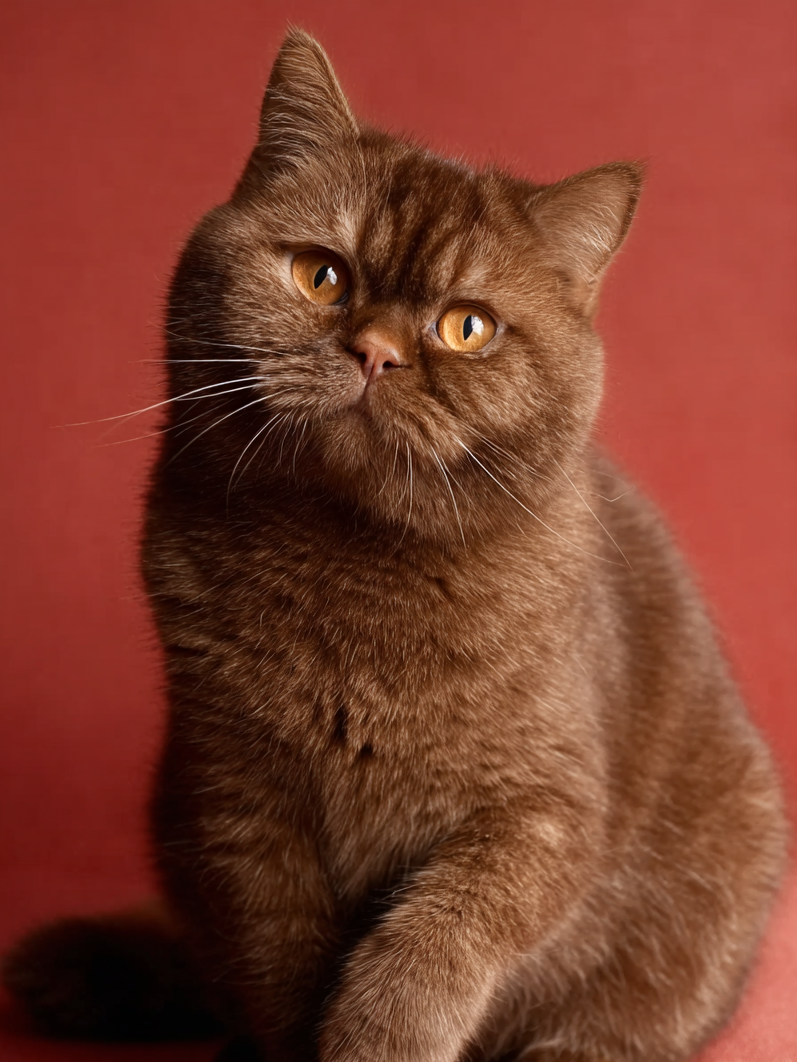
The Chocolate British Shorthair: Featuring Solid Browns and More
British Shorthair cats are instantly recognizable for their round faces, plush coats, and calm, affectionate temperaments — but can a British Shorthair be brown? Is the chocolate British Shorthair a real, purebred color?
Yes. Chocolate British Shorthair cats do exist, and the rich brown coat is fully legitimate, officially recognized, and deeply rooted in modern British Shorthair color genetics. Often called brown British Shorthair cats or solid brown shorthair cats, chocolates are one of the warmest, most luxurious colors in the breed.
Their smooth cocoa-toned fur, paired with copper or gold eyes, gives them a rare, velvety, teddy-bear look that stands out from classic blues and lilacs. Below, you’ll learn everything about chocolate British Shorthair cats, brown coat genetics, solid-brown development, and what to expect from chocolate British Shorthair kittens, plus how the warm brown color compares to other British Shorthair shades.
Searching for Your Own British Shorthair Kitten?
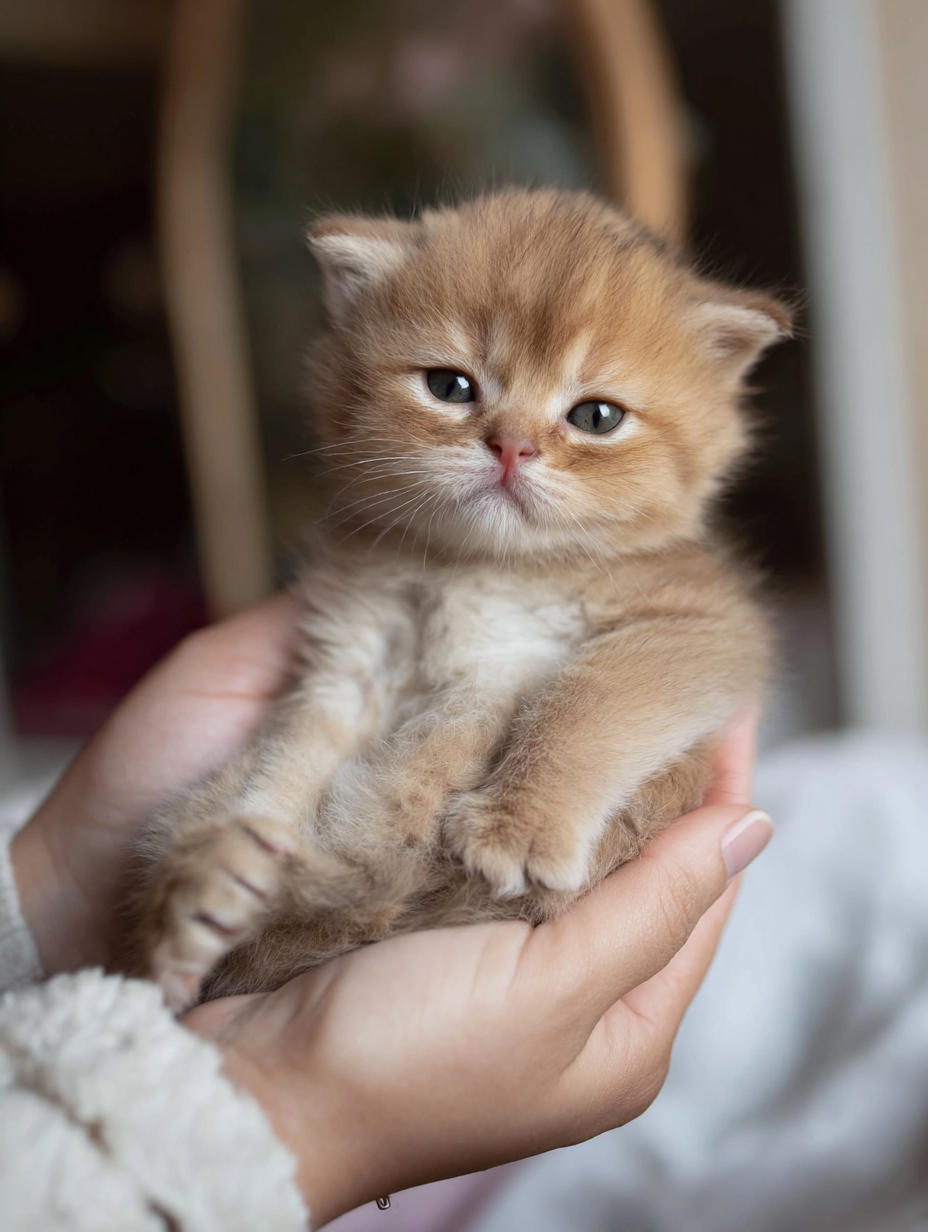
If you are here looking for a British Shorthair kitten of your own check out our Purebred British Shorthair Kittens for Sale.
At Almonte Cats, every kitten is:
- TICA / CFA registered from fully health-tested parents
- Raised in-home, not in cages
- Vet-checked, vaccinated, and microchipped
- Socialized for confident, easygoing temperaments
Our program specializes in golden and rare British Shorthair colors, with chocolate British Shorthair kittens and brown British Shorthair kittens produced occasionally depending on color-pairing schedules.
Can British Shorthair Cats Be Chocolate or Brown?
Yes. British Shorthairs can be solid chocolate, and the color is fully recognized by TICA, CFA, GCCF, ACFA, and FIFe. While many people casually search for brown shorthair cats or brown British Shorthair kittens, the correct registry color name is chocolate.
Chocolate British Shorthairs are created through the recessive b/b gene, which produces warm cocoa-brown pigment throughout the entire coat. This is not a pattern, not a mix, and not a modern invention — it is an accepted solid color in the breed standard.
The coat appears:
- Rich brown
- Even and full-body
- Velvety and plush
- Warm-toned
- Slightly glossy in natural light
Chocolate is a non-dilute pigment, so the color is deeper and warmer than lilac (which is its dilute form). A solid chocolate British Shorthair has the same structure, temperament, coat thickness, and bone density as every other British Shorthair — only the color differs.
✔ Quick Tip
People searching for a brown shorthair cat are almost always describing the chocolate British Shorthair.
“Brown,” “cocoa,” “mocha,” and “chocolate” all refer to this same full-pigment b/b coat.
Chocolate British Shorthair vs. Brown British Shorthair: Is There a Difference?
Many people searching for a “brown shorthair cat” or “brown British Shorthair kitten” are describing the chocolate British Shorthair, since that is the official color recognized by every major registry.
In cat breeding, chocolate is the correct term. “Brown” is simply the everyday word families use when they see the warm, cocoa-colored coat. The genetics, temperament, and purebred status are identical.
Key points to understand:
- Chocolate = The Official Breed Term
- Used by TICA, CFA, GCCF, ACFA, and FIFe
- Describes the warm, solid cocoa-brown color created by the b/b gene
- Appears as a smooth, even, medium-to-dark brown coat
- Brown = The Casual Everyday Term
Families often say:- brown shorthair cat
- brown British Shorthair
- chocolate brown cat
All of these refer to the same solid chocolate coat.
- No Difference in Genetics, Coat, or Temperament
Chocolate and brown British Shorthairs share:- identical b/b genetics
- identical solid-color structure
- identical copper or gold eyes
- identical plush double coats
- identical calm British Shorthair temperament
- Why Breeders Use “Chocolate” Instead of “Brown”
- It matches registry standards
- It avoids confusion with cinnamon, fawn, or brown tabbies
- It clearly identifies the recessive b/b gene
- It aligns with international terminology
If someone says they want a “brown British Shorthair,” the correct color they are referring to is chocolate.
Understanding British Shorthair Colors (Chocolate Edition)
The British Shorthair breed is known for one of the most diverse color groups of any pedigree cat. Alongside traditional shades like blue, black, cream, and lilac, chocolate is a recognized and established solid color that adds warmth and richness to the breed’s palette.
The most widely accepted solid colors include:
- Blue
- Black
- Lilac (dilute chocolate)
- Chocolate
- Red
- Cream
These colors appear in multiple patterns:
- Solid
- Bicolor
- Tortoiseshell
- Smoke
- Shaded
- Tabby
Chocolate British Shorthairs fall into the solid category. Their warm brown coat is consistent from kittenhood through adulthood and stays clear, even, and velvety when bred responsibly.
Chocolate is valued for:
- Its rich, warm cocoa pigment
- Clear, even coloring without fading
- Strong contrast with copper or gold eyes
- The plush, crisp texture of the British Shorthair double coat
While the British Blue remains the most iconic color, chocolate is rapidly increasing in popularity among families who want a more unique, luxurious tone.
Chocolate British Shorthair vs. Other Traditional Colors: Comparison Overview
| Feature | Chocolate British Shorthair | Other BSH Colors |
|---|---|---|
| Registry Status | Fully recognized by TICA, CFA, GCCF | All major colors recognized |
| Genetic Makeup | Full-pigment b/b (non-dilute) | Dilute or non-dilute depending on color |
| Coat Appearance | Warm cocoa brown | Varies: blue, lilac, black, cream, red |
| Eye Color | Copper, gold, amber | Copper, gold, blue (bicolors), green (silvers) |
| Pattern | Solid warm brown | Solid, bicolor, tortie, shaded, smoke, tabby |
| Temperament | Calm, affectionate, steady | Identical across the breed |
| Rarity | Moderate to rare | Blue is common; lilac/shaded varieties rarer |
| Best For | Families who want a warm-toned, rare, elegant color | Families choosing between classic or specialty tones |
Chocolate brings warmth and richness to the breed while still maintaining the British Shorthair’s signature rounded features, calm personality, and thick plush coat.
The Difference Between Shaded/Smoke and Solid Chocolate British Shorthairs
What Is a Shaded or Smoke Chocolate British Shorthair?
A chocolate shaded or chocolate smoke British Shorthair has a light undercoat with darker brown or chocolate tipping along the ends of the fur. This creates a shimmering, dimensional, almost metallic effect. Smoke is the most dramatic variation, where the top of the coat appears chocolate, but when the fur moves or parts, the silver-white undercoat is clearly visible.
These color effects come from the inhibitor gene (I-), which restricts pigment on the hair shaft and exposes more of the pale undercoat. Chocolate smoke British Shorthair kittens tend to appear darker at birth and gradually reveal more contrast as they mature.
Shaded and smoke versions exist in many British Shorthair colors, including blue, black, lilac, and goldens. The chocolate smoke is less common than blue or silver smoke, making it an unusual, eye-catching choice.
What Is a Solid Chocolate British Shorthair?
A solid chocolate British Shorthair has even, full-body pigmentation from nose to tail with no pale roots, no silver undercoat, no tipping, and no pattern-related contrast. The coat is rich cocoa brown, smooth, and plush, with warm undertones and a uniform color throughout.
Solid colors in this group include:
- Solid chocolate
- Solid lilac
- Solid black
- Solid cream
- Solid blue
Among these, solid chocolate stands out for its warm, luxurious tone and clarity of pigment. Many families choose chocolate British Shorthairs because the solid coat highlights the classic British Shorthair structure — round face, thick bone, plush double coat, and large copper eyes.
Solid chocolate British Shorthairs are fully recognized by TICA, CFA, and GCCF and represent true, purebred British Shorthair color genetics.
Chocolate British Shorthair Colors Explained
Below is an updated British Shorthair color chart featuring the most common chocolate variations alongside other traditional colors recognized in the breed.
British Shorthair Color Chart
| Color Type | Pattern | Eye Color | Notes |
|---|---|---|---|
| Chocolate | Solid | Copper, Gold, Amber | Warm cocoa color; distinctive full-pigment b/b genetics |
| Chocolate Smoke | Smoke | Gold to Copper | Pale undercoat with dark chocolate tipping |
| Chocolate Shaded/Silver | Shaded/Tipped | Green, Hazel | Chocolate tipping over a pale silver base |
| Lilac (Dilute Chocolate) | Solid | Copper | Soft lavender-grey; dilute version of chocolate |
| Blue | Solid | Copper, Gold | Classic British Shorthair color; dilute black |
| Black | Solid | Copper, Gold | Deep full-pigment tone |
| Cream | Solid | Copper | Dilute red |
| Red | Solid | Copper | Bright, strong red tone |
| Chocolate Tortie (Females) | Tortie | Copper | Chocolate + cream patches |
| Black Silver Tabby | Tabby | Green | Strong pattern on silver undercoat |
The chocolate British Shorthair can appear in several beautiful variations depending on coat genetics and pattern expression. Here are the most common types:
Solid Chocolate British Shorthair
A warm, even cocoa-brown color from ears to tail. Texture is plush, crisp, and dense. Eye color is typically copper, gold, or amber. This is the standard and most popular form of the chocolate British Shorthair.
Chocolate Smoke British Shorthair
Appears chocolate on the surface, but the undercoat is pale silver-white. When the coat moves, a dramatic smoke effect appears. This variation is created by the inhibitor gene and is far rarer than blue or black smoke.
Chocolate Tortoiseshell British Shorthair (Females)
Chocolate base coat mixed with cream or red patches. The pattern appears warm, marbled, and richly colored. Only females can be tortoiseshell due to X-linked genetics.
Chocolate Bicolor British Shorthair
Chocolate and white patches that may appear in classic bicolor, harlequin, or van patterns. The contrast between warm chocolate and crisp white is striking and uncommon.
Chocolate Silver or Chocolate Shaded British Shorthair
Chocolate tipping over a pale silver undercoat creates a soft, warm contrast. These variations are rare and often sought after by families who love the shimmering British Shorthair look found in silvers and goldens.
Each variation carries the same calm, steady British Shorthair temperament. The pattern or shade affects appearance, not behavior.
Chocolate British Shorthair Recognition Across Registries
The chocolate British Shorthair is fully accepted by every major cat association. This means chocolate is not experimental, rare-only, or unrecognized — it is part of the official breed standard.
Recognized by:
- TICA
- CFA
- GCCF
- ACFA
- FIFe
Breeders can register:
- Solid chocolate
- Chocolate smoke
- Chocolate tortie
- Chocolate silver
- Chocolate bicolor
- Chocolate shaded
This recognition allows breeders and families to maintain proper lineage, track color genetics, preserve diversity, and ensure that chocolate British Shorthair kittens meet official breed expectations for type, structure, and temperament.
Chocolate British Shorthairs are true purebreds — not mixes, not modern creations, and not crossbred for color.
Chocolate British Shorthair Eye Colors — What to Expect
British Shorthairs are known for their warm, rich eye colors that pair beautifully with the brown coat. Unlike blue-eyed or color-changing breeds, chocolate British Shorthairs develop stable, warm-toned eye colors that deepen with age.
Typical adult eye colors include:
- Copper
- Gold
- Deep amber
These shades create a striking contrast with the warm chocolate coat, making the eyes appear bright and expressive. Chocolate British Shorthairs do not have blue or green adult eyes unless the cat is part of a patterned silver or shaded line.
Silver-based chocolate varieties (such as chocolate silver or chocolate shaded) may show:
- Green
- Hazel
- Yellow-green
But a solid chocolate British Shorthair always maintains the classic copper-gold spectrum.
If you see a “brown British Shorthair with blue eyes,” especially in an adult cat, it is not a purebred chocolate British Shorthair. Blue eyes in adulthood indicate a mix with a pointed breed.
Chocolate British Shorthair Kittens: What to Expect
Chocolate British Shorthair kittens are especially appealing because their coat shows warm brown tones from early kittenhood. Unlike shaded or colorpoint breeds, chocolate pigment is visible and consistent at birth and remains stable throughout life.
Personality
Chocolate British Shorthair kittens share the classic temperament the breed is known for. They are calm, affectionate, observant, and easygoing. They enjoy companionship without being demanding and adapt well to homes with children, seniors, or other pets.
Size
Expect males to reach 12–17 pounds and females 8–14 pounds. Chocolate British Shorthairs mature slowly, developing thicker bone, round cheeks, and the plush build that defines the breed.
Coat Care
Their coat is dense, crisp, and plush. The warm brown shade becomes richer with age, especially with proper grooming.
Recommended care:
- Brush two to three times per week
- Use a wide-tooth metal comb to support shedding cycles
- Avoid excessive bathing
- Feed a high-quality diet with omegas for coat shine
A well-groomed chocolate British Shorthair has a smooth, uniform, velvety appearance that enhances the warmth of the brown coat.
The Genetics That Create the Chocolate British Shorthair
The signature brown coat of the Chocolate British Shorthair is created by the recessive b/b genotype at the B locus.
Here is how the genetics work:
- B (dominant) produces black pigment
- b (recessive) produces chocolate pigment
- A kitten must inherit b from both parents to express chocolate
Therefore:
- Chocolate British Shorthair = b/b
- Lilac British Shorthair = b/b + dd (dilute of chocolate)
- Black British Shorthair = B/B or B/b
Chocolate is not a mix or a hybrid color. It is a pure, genetically defined, full-pigment British Shorthair shade recognized across global breed standards.
Many breeders intentionally preserve chocolate lines to maintain genetic diversity and expand the breed’s warm-toned color range.
Brown British Shorthair Mix Cats
When searching online for a brown shorthair cat or “brown British Shorthair,” many families come across cats that look similar in color but are not purebred British Shorthairs. The brown coat can appear in many mixed-breed cats, which often leads to confusion. A cat may be brown, but that does not make it a British Shorthair.
A true brown (chocolate) British Shorthair has specific features that set it apart:
- Round, full cheeks
- A cobby, muscular body
- Thick bone
- A plush double coat
- Copper or gold eyes
- A wide head and short, strong neck
Mixed cats may have a similar brown shade but typically lack one or more of these defining traits. The most common mixes mistakenly advertised as “brown British Shorthairs” include:
- Domestic Shorthair × British Shorthair
- American Shorthair × British Shorthair
- Persian or Exotic × British Shorthair
- Scottish Fold × British Shorthair
These cats may make wonderful pets, but they are not genetically or structurally the same as a British Shorthair.
If a listing shows a “brown British Shorthair kitten” at a price far below the typical purebred range, it is usually a mixed cat or an unregistered line. Color alone does not determine breed purity — pedigree, structure, and coat texture do.
Why Brown British Shorthairs Are Becoming More Popular
The warm, rich brown coat has become one of the most desired colors in recent years. Unlike the cool-toned blues and silvers that traditionally dominate the breed, the brown British Shorthair offers a deeper, more luxurious tone that stands out while still fitting the breed standard.
Several reasons explain the growing demand:
1. The Color Is Distinctive but Not Flashy
Brown has a natural, elegant warmth that photographs beautifully and looks striking without being overly bold. Families who prefer soft, natural colors often gravitate toward brown.
2. It Compliments the British Shorthair Structure
The round cheeks, plush fur, and dense coat look especially rich in a warm brown shade. The color enhances the breed’s teddy-bear appearance in a way that feels timeless and sophisticated.
3. Brown Is Less Common Than Blue
Blue remains the most widely bred British Shorthair color. Brown (chocolate), while recognized and established, is not as common. That makes brown kittens feel special while remaining fully breed-standard.
4. Ideal for Families Who Want Something Different
Some families love the British Shorthair’s temperament and structure but want a color that is less mainstream. Brown provides that unique look without entering rare or experimental territory.
5. Clear, Predictable Genetics
The brown gene is stable and produces consistent coloration. Families who want a pure solid color with no pattern or shading often choose chocolate-brown British Shorthairs for their clarity of pigment.
Chocolate (Brown) vs. Lilac: What’s the Difference?
Although lilac and brown are related genetically, they look completely different in person.
| Feature | Brown British Shorthair | Lilac British Shorthair |
|---|---|---|
| Genetics | b/b (full brown pigment) | b/b + dd (dilute version of brown) |
| Appearance | Warm cocoa, medium-to-dark brown | Soft lavender-grey, lighter and cooler |
| Eye Color | Copper, gold, amber | Copper or warm gold |
| Coat Tone | Rich, warm, dense | Silky, frosted, lighter |
| Rarity | Moderate | Moderate to rare |
In simple terms:
Lilac is the diluted, pastel version of brown.
Brown is deeper and warmer, while lilac has a misty, lavender-beige tone.
Brown (Chocolate) vs. Cinnamon and Fawn
Some families confuse “brown” with cinnamon shades. However, cinnamon and fawn are genetically different and lighter.
| Feature | Brown (Chocolate) | Cinnamon | Fawn (Dilute Cinnamon) |
|---|---|---|---|
| Tone | Deep cocoa | Warm reddish-tan | Soft beige, mushroom tone |
| Genetics | b/b | bl/bl | bl/bl + dd |
| Depth of Color | Dense and rich | Lighter and brighter | Pale, muted |
| Breed Recognition | Fully recognized | Recognized but uncommon | Recognized but rare |
Brown British Shorthairs look significantly richer than cinnamon or fawn cats. If a breeder advertises a “rare brown British Shorthair,” verify whether it is truly chocolate or a different warm-toned color.
Summary of the Brown (Chocolate) British Shorthair
The brown British Shorthair remains one of the most elegant, warm-toned colors in the breed. With its rich cocoa coat, copper eyes, and plush texture, it highlights everything people love about the British Shorthair — structure, temperament, and presence. Brown British Shorthairs are fully recognized, genetically stable, and increasingly popular among families who want a classic breed with a unique color variation.
FAQ: Brown (Chocolate) British Shorthair Cats
Are brown British Shorthairs and chocolate British Shorthairs the same?
Yes. “Brown” is the everyday term families use, while “chocolate” is the correct registry name for the color. The coat is produced by the recessive b/b gene and appears as a warm cocoa shade. Whether a breeder says brown or chocolate, it refers to the same genetically recognized solid color.
Are chocolate British Shorthair cats rare?
Brown British Shorthairs are less common than blue or lilac, but they are not considered rare. They are produced by specific pairings that carry the recessive chocolate gene. High-quality brown kittens are in steady demand because the color is distinctive without being experimental.
Do brown British Shorthairs change color as they grow?
Their overall tone stays consistent, but the coat often deepens and becomes richer with age. Kittens may start with a slightly lighter or softer brown that darkens into a more solid cocoa shade during the first 18 months.
Do brown British Shorthairs have blue eyes?
No. Solid brown British Shorthairs develop copper, gold, or amber eyes as adults. Blue eyes in an adult brown or chocolate cat indicate a mix with a pointed breed, not a purebred BSH.
What distinguishes a true brown British Shorthair from a mixed-breed brown cat?
A true British Shorthair has a round face, full cheeks, a cobby body, thick bone, a plush double coat, and copper-gold eyes. Mixed cats may share the brown color but usually lack the signature structure and density that define the breed.
Are Chocolate British Shorthair kittens more expensive?
Prices depend on pedigree, structure, color clarity, and breeder reputation. Brown often costs slightly more than blue because it is less commonly bred. Expect similar pricing to lilac and black British Shorthairs.
What personality do brown British Shorthair cats have?
Their temperament is identical to all British Shorthair colors — calm, affectionate, steady, and observant. They enjoy companionship but are not clingy, making them ideal for families and professionals who want a low-maintenance cat.
Do brown British Shorthairs shed a lot?
They shed moderately and follow a typical British Shorthair cycle. Their double coat benefits from regular brushing two to three times per week to keep the texture crisp and reduce seasonal shedding.
How big do brown British Shorthairs get?
Males typically reach 12–17 pounds, while females range from 8–14 pounds. Full maturity usually occurs between 3–5 years, when the body, cheeks, and coat fully develop.
Are brown British Shorthairs good with children and other pets?
Yes. They are known for being patient, gentle, and tolerant. They adapt well to multi-pet households when introduced gradually and are ideal for homes with children due to their stable temperament.
Do brown British Shorthairs require special grooming?
No special grooming is required beyond standard British Shorthair care. Their coat does not mat easily but benefits from routine brushing to maintain density and shine. Overbathing should be avoided to preserve texture.
What eye colors occur in brown British Shorthairs?
Copper, gold, and amber are the traditional eye colors. Silver-based chocolate lines may produce green or hazel eyes, but solid brown British Shorthairs should show warm copper or gold tones.
Can brown British Shorthairs be longhaired?
Yes. When a British Shorthair carries the longhair gene, the result is a brown British Longhair. Structure and temperament remain the same, but the coat is longer and requires additional grooming.
What patterns exist in brown British Shorthairs?
Brown can appear as a solid, smoke, shaded, tortie (females), bicolor, or tabby. The most iconic version is the solid brown with a uniform cocoa-colored coat. Shaded and smoke versions have a light undercoat due to the inhibitor gene.
Are brown British Shorthairs good for busy households?
Yes. They are independent, quiet, and low-maintenance. Many people who work full-time choose this breed because they enjoy companionship without requiring constant attention.
How can I confirm a kitten is a purebred brown British Shorthair?
Ask for registration papers (TICA, CFA, GCCF), health testing for both parents, pedigree lineage, and photos of the parents. Structure, coat texture, and eye development also indicate purity.
Do brown British Shorthairs get along with dogs?
Most do very well with calm, respectful dogs. Their confident, steady nature makes them adaptable in multi-pet homes as long as introductions are supervised and gradual.
Are brown British Shorthairs suitable for apartments?
Yes. They are quiet, clean, and content with indoor life. Their low activity level and sturdy build make them ideal for apartments and smaller homes.
Do brown British Shorthairs have strong hunting instincts?
British shorthair cats have moderate prey drive. They enjoy interactive play and enrichment but are not hyperactive hunters. They regulate their own energy well and settle easily.
Where can I buy a chocolate British Shorthair kitten?
Always choose a registered breeder who raises kittens in-home, provides health testing, and offers a written health guarantee. Avoid unverified listings or “brown kittens” with no documentation. You can view available kittens or apply through Almonte Cats.
Resources and Related Posts
Learn More About British Shorthair Cats
- British Shorthair Lifespan
- British Shorthair Personality
- British Shorthair Kitten Growth Stages
- British Shorthair vs Ragdoll
Sources & References
- TICA – British Shorthair Breed Standard
- https://tica.org/breeds/british-shorthair
- 2. CFA – British Shorthair Breed Profile
- https://cfa.org/british-shorthair/
- 3. GCCF – British Shorthair Official Breed Information
- https://www.gccfcats.org/breeds/british-shorthair/
- 4. FIFe – British Shorthair Breed Standard (PDF)
- https://fifeweb.org/wp/breeds/british-shorthair/
- 5. ACFA – British Shorthair Breed Information
- https://www.acfacats.com/breed-profiles
- 6. UC Davis Veterinary Genetics Laboratory – Feline Coat Color Genetics
- https://vgl.ucdavis.edu/services/cat-coat-color
- 7. Messybeast – Feline Coat Color Genetics & Dilution Gene Reference
- https://messybeast.com/colour-charts.htm
- 8. International Cat Care – Feline Coat Types, Colors & Patterns
- https://icatcare.org/advice/cat-coats-and-colours/





Read the Comments +