
Ragdoll vs Munchkin: Size, Coat, Temperament, and Breed Differences
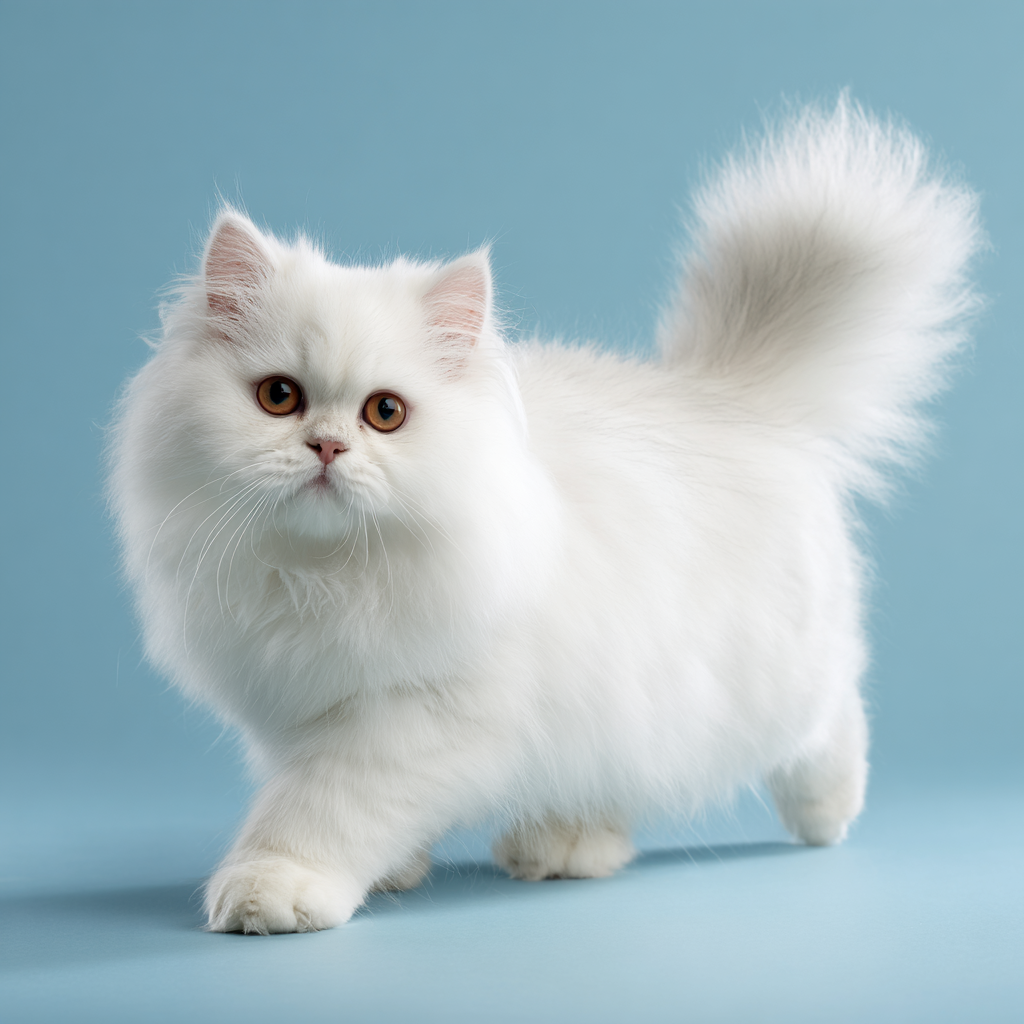
What is the difference between Ragdoll vs Munchkin cats? Ragdolls and Munchkins are both affectionate, people-loving cats, but they differ dramatically in size, structure, movement, temperament, and predictability. Ragdolls are large, silky-coated, blue-eyed giants known for their calm, floppy nature and consistent breed traits. Munchkins are small, energetic, playful cats defined by their short legs — a result of a natural genetic mutation.
Families comparing these breeds often do so because they want a loving, social cat, but the experience of living with each one is very different. This guide explains every meaningful difference so you can confidently choose the cat that best matches your lifestyle.
History & Origins of the Ragdoll and Munchkin
Ragdoll History
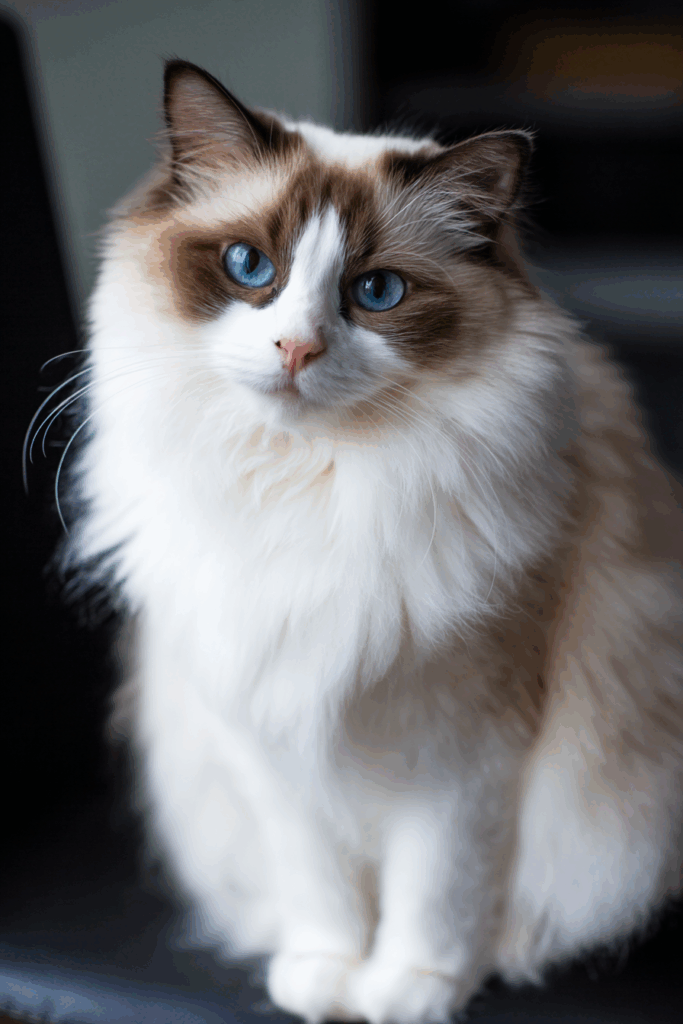
The Ragdoll breed began in the 1960s in California when Ann Baker selectively bred large, gentle, longhaired cats with striking blue eyes and calm temperaments. Over decades, breeders refined the Ragdoll’s relaxed disposition, predictable personality, and silky, low-matting coat. Today, Ragdolls are recognized by every major registry worldwide, including CFA and TICA. Their blue eyes and pointed patterns are fixed traits, making the breed one of the most predictable in structure and temperament.
Munchkin History
The Munchkin breed began in the early 1980s when breeders discovered short-legged cats resulting from a naturally occurring dominant gene mutation. The short legs stem from achondroplasia-like dwarfism, but ethical breeding practices pair short-legged cats with normal-legged cats to prevent harmful double mutations. Munchkins were officially recognized by TICA in the 1990s, but CFA and many European registries do not accept them due to dwarfism-related concerns.
Why the Breeds Differ
Ragdolls were built from intentional, temperament-driven selection over decades.
Munchkins were built from a spontaneous mutation that breeders carefully preserved and standardized.
Their origins influence everything from movement and size to breed acceptance.
| Feature | Ragdoll | Munchkin |
|---|
| Size | Large (10–20 lbs) | Small–medium (5–9 lbs) |
| Legs | Normal length | Short legs |
| Coat | Silky, long, low matting | Short or long; variable |
| Shedding | Moderate | Moderate–heavy (longhair) |
| Temperament | Calm, floppy, gentle | Playful, lively, curious |
| Recognition | CFA, TICA, worldwide | TICA only |
Ragdoll vs Munchkin Size & Structure
Ragdoll Size
Ragdolls are one of the largest companion cat breeds.
- Males: 15–20+ lbs
- Females: 10–15 lbs
They have long, rectangular bodies, heavy bone, broad chests, and a silky, flowing appearance.
Munchkin Size
Munchkins are small to medium cats.
- Average Weight: 5–9 lbs
Their defining feature is their short legs, but their body length is normal. The short stature comes only from the mutation affecting limb length.
Movement Differences
- Ragdolls: Smooth, flowing, slow, relaxed gait
- Munchkins: Quick, bouncy, playful, “bunny-like” movement
Size Summary
If you want a large, floppy, substantial cat → Ragdoll.
If you want a small, quirky, lively cat → Munchkin.
Coat, Grooming & Shedding Comparison
Ragdoll Coat
Ragdolls have:
- Silky, semi-long coats
- Little cottony texture
- Minimal matting
- Low-maintenance weekly grooming
- Seasonal shedding that is moderate, not extreme
Their coat drapes and flows rather than mats or tangles.
Munchkin Coat
Munchkins come in short and longhair variants:
- Shorthair: Sleek, smooth, easy
- Longhair: Soft, moderate undercoat, may tangle lightly
Shedding varies:
- Shorthaired Munchkins: Moderate
- Longhaired Munchkins: Moderate to heavy
Shedding Summary
- Ragdoll: Moderate shedding, very low tangling
- Munchkin: Moderate to heavy depending on coat type
If you want easier coat upkeep, the Ragdoll’s silky texture is simpler to maintain. See Ragdoll Cat Grooming for more info.
Temperament & Personality Differences
Ragdoll Personality
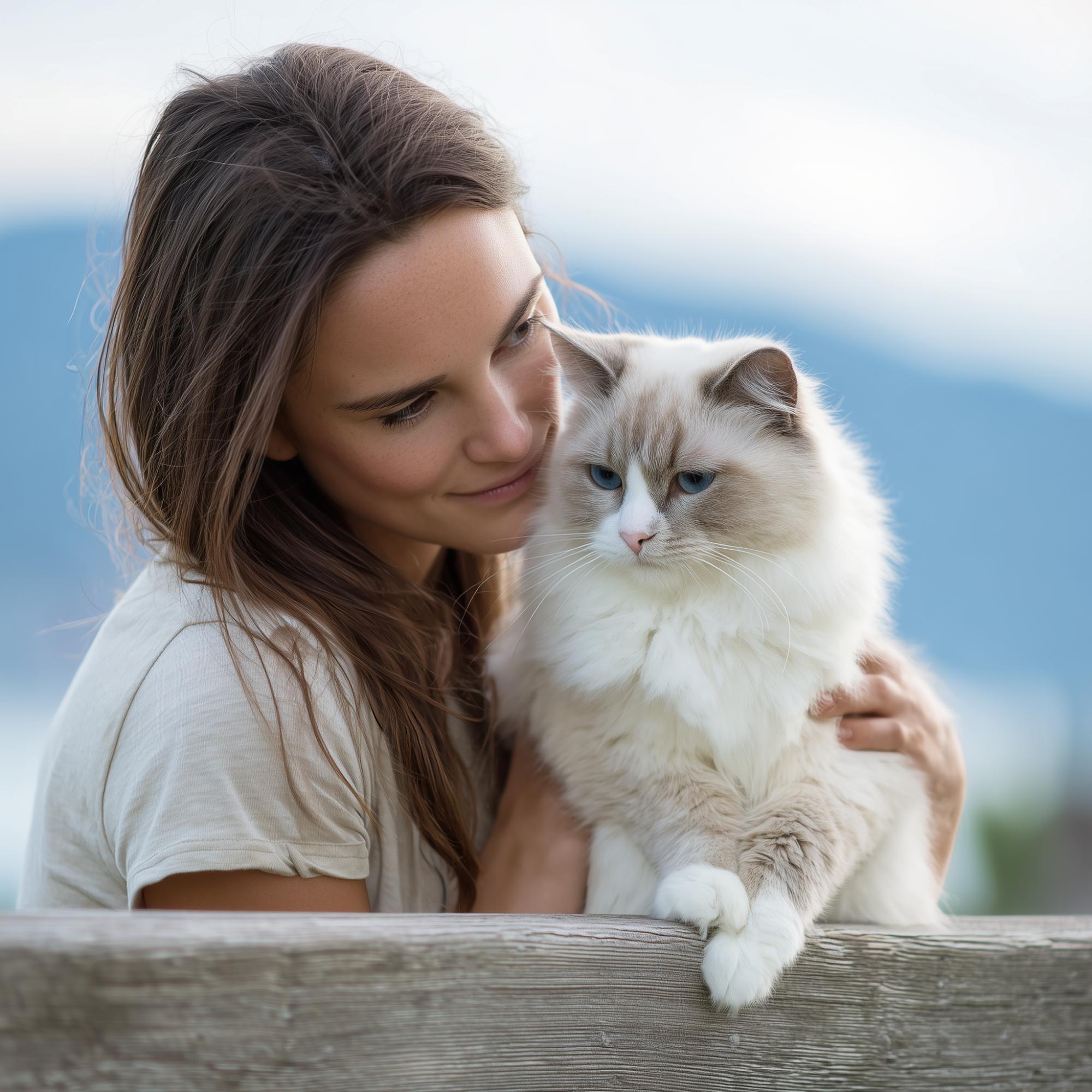
Ragdolls are famously calm, gentle, affectionate, and relaxed.
They are:
- quiet
- floppy in your arms
- extremely people-oriented
- patient with children
- soft, serene companions
A Ragdoll’s affection is peaceful and consistent — they enjoy staying nearby without overwhelming their family.
Munchkin Personality
Munchkins are playful, curious, high-energy social cats.
They are:
- fun
- mischievous
- fast-moving
- outgoing
- confident with new people
While also affectionate, Munchkins express it through play, interaction, and activity rather than calm closeness.
Temperament Summary
If you want a relaxed “companion shadow,” choose a Ragdoll.
If you want a lively, entertaining, spirited cat, choose a Munchkin.
Trainability & Behavior Differences
Ragdoll Training
Ragdolls are extremely easy to train because:
- they are calm
- they enjoy human routines
- they respond well to gentle guidance
- they learn manners quickly
They excel at:
- harness walking
- carrier training
- grooming cooperation
- household behavior
Ragdolls are ideal for first-time cat owners.
Munchkin Training
Munchkins are highly intelligent but more playful than cooperative.
They learn quickly but:
- require short, fun training sessions
- respond best to toys and treats
- may get distracted
- often turn training into a game
They can learn tricks, agility elements, and interactive tasks but need more direction.
Behavior Summary
- Ragdoll: calm learner, predictable, steady
- Munchkin: energetic learner, fast but playful
Energy Levels, Movement & Enrichment Needs
Ragdolls have gentle, moderate energy and prefer following, cuddling, and slow play.
Munchkins have higher energy and enjoy racing, chasing toys, and exploring. Their short legs limit jumping height but not enthusiasm.
Owners must provide:
- for Ragdolls → soft toys, cuddle time, routine
- for Munchkins → tunnels, interactive toys, lower cat trees, floor play zones
Munchkins remain kitten-like longer; Ragdolls mellow quickly.
Shedding Differences: Ragdoll vs Munchkin
Ragdolls shed moderately throughout the year and experience slightly heavier shedding during seasonal changes. However, because their coat is silky and contains minimal woolly undercoat, loose hairs fall away easily and rarely tangle. Weekly brushing is usually all they need, and even long-coated Ragdolls tend to maintain a smooth appearance without matting.
Munchkin shedding varies dramatically depending on coat length.
- Shorthair Munchkins: Shed moderately and require very little grooming. Their coat is similar to a well-kept domestic shorthair.
- Longhair Munchkins: Shed moderately to heavily during seasonal changes and may develop light tangles along the belly or haunches without consistent brushing. See Are Munchkins Hypoallergenic for more Info
Overall, Ragdolls shed less volume because they have fewer layers of dense undercoat. Munchkins, especially longhaired lines, may produce more noticeable shedding even though they’re much smaller cats.
Health & Lifespan Differences
Ragdoll Health
Ragdolls are generally healthy when bred responsibly, but they have known genetic considerations:
- HCM (Hypertrophic Cardiomyopathy): The most important breed-specific condition, tested by reputable breeders.
- PKD (Polycystic Kidney Disease): Rare today but still screened as a precaution.
- Bladder crystal sensitivity in some lines.
Typical lifespan: 12–16+ years, with many reaching senior years in excellent health.
Munchkin Health
Munchkins are the center of debate due to their short legs, caused by a dominant genetic mutation. Ethical breeders avoid breeding two short-legged parents, which prevents the dangerous double-mutation combination.
Potential considerations include:
- Mild spinal sensitivity or lordosis in some lines
- Lower jumping height
- Occasional joint stiffness in older age (not universal)
Despite concerns, responsibly bred Munchkins are active, healthy cats with typical feline lifespans of 12–15+ years. See Munchkin Cat Lifespan
Health Summary
- Ragdolls: predictable, well-documented genetic risks
- Munchkins: mobility-related considerations but typically healthy when bred responsibly
Both require reputable breeders with transparent health testing. See Ragdoll Cat lifespan for more info.
The Munchkin DNA & Their Short-Leg Gene
Munchkins carry a naturally occurring autosomal dominant gene that shortens the long bones of the legs. This mutation creates the breed’s signature low-to-the-ground look, but it also makes their genetics very different from long-legged breeds like the Ragdoll. The gene itself is not harmful when inherited from only one parent; however, if a kitten inherits two copies, the pregnancy is not viable. Because of this, ethical Munchkin breeders always pair a short-legged cat with a normal-legged cat.
The short-leg mutation can slightly change how a Munchkin moves and jumps. They run and play normally, but they cannot jump as high and may have a bit more pressure on joints or spine as they age. Responsible breeding greatly reduces health concerns, and many Munchkins live normal, active lives, but the gene is still considered a “deformity mutation” by some registries — which is why CFA and several European associations do not accept the breed. See Scottish Fold Munchkin Cats for more DNA info.
In comparison, Ragdolls do not carry dwarfism genetics, which contributes to their predictable structure, full jumping ability, and broad acceptance in all major cat registries.
Ragdoll vs Munchkin Price Comparison
Ragdoll Price (USA 2025)
- $2,000–$4,500+ for pet quality
- $4,500–$7,500+ for show/breeder quality
- Blue eyes, rarity of certain patterns, and line quality influence cost
Ragdolls command higher prices because:
- They are fully standardized
- They’re a globally recognized breed
- Demand for calm, blue-eyed, family-friendly cats is very high
Munchkin Price (USA 2025)
- $1,500–$4,000+ for short-legged Munchkins
- $1,200–$2,500+ for long-legged variants
- Longhair and rare colors may cost more
Short-legged Munchkins are always priced higher because the short-leg trait is dominant but must be bred safely.
Price Summary
Ragdolls are typically more expensive due to their predictability and global standardization.
Munchkins’ pricing depends heavily on leg length, coat length, and rarity.
Ideal Home for a Ragdoll vs Munchkin
Best Home for a Ragdoll
Ragdolls thrive in environments that value:
- Calm routines
- Gentle affection
- Cuddling and companionship
- Predictable interactions
- Quiet play
- Children or seniors who enjoy relaxed pets
Ragdolls are ideal for owners wanting a peaceful, devoted companion cat.
Best Home for a Munchkin
Munchkins excel in homes that offer:
- Active playtime
- Floor-level enrichment
- Social interaction
- Fun toys, tunnels, and puzzle feeders
- Kids or families who like entertaining pets
They bring humor, energy, and charm to everyday life.
Lifestyle Summary
If your home is calm and cozy → Ragdoll.
If your home is lively and playful → Munchkin.
Ragdoll vs Munchkin Breed Recognition & Standardization
Ragdoll Recognition
Ragdolls are recognized by:
- CFA
- TICA
- GCCF
- FIFé
- ACFA
- Practically all international registries
Because of this, Ragdolls have:
- Highly predictable structure
- Mandatory blue eyes
- Strict pattern rules
- Strong temperament consistency
- Broad breeder accountability
Their global acceptance contributes heavily to their uniformity.
Munchkin Recognition
Munchkins are recognized by:
- TICA (full championship status)
- Several independent registries
But not recognized by:
- CFA
- GCCF
- Many European governing bodies
This is due to ongoing debate around dwarfism traits, even though ethical breeding reduces health risk. See: Munchkin Cat: Everything You Want to Know post for more info.
Why Recognition Matters
- Ragdolls benefit from long-term international oversight, making their traits stable and predictable.
- Munchkins vary more because only one major registry recognizes the breed, leading to more diversity in body type and coat.
Recognition Summary
- Ragdoll: Mainstream, standardized, globally accepted
- Munchkin: TICA-recognized, popular for novelty, still debated in some regions
Identification: How to Tell a Ragdoll From a Munchkin
Size & Build
- Ragdoll: Large, long-bodied, heavy bone
- Munchkin: Small-medium, compact, short legs
Eyes
- Ragdoll: Always blue
- Munchkin: Any eye color
Coat Texture
- Ragdoll: Silky, flowy, minimal matting
- Munchkin: Short or long; texture varies by line
Movement
- Ragdoll: Smooth, calm, floating stride
- Munchkin: Fast, bouncy, signature “quick-step” gait
Temperament
- Ragdoll: Calm, floppy, cuddly
- Munchkin: Playful, energetic, curious
Jumping Ability
- Ragdoll: Normal jumping height
- Munchkin: Reduced jumping height
Ragdoll vs Munchkin Identification Table
| Trait | Ragdoll | Munchkin |
|---|---|---|
| Size | Large (10–20 lbs) | Small–medium (5–9 lbs) |
| Leg Length | Normal | Short (dominant dwarfism gene) |
| Body Type | Long, rectangular, heavy-boned | Compact, low-to-the-ground |
| Eyes | Always blue | Any color |
| Coat | Silky, long, low matting | Short or long; variable texture |
| Movement | Smooth, relaxed gait | Fast, bouncy, quick-step gait |
| Temperament | Calm, floppy, affectionate | Playful, lively, curious |
| Trainability | Very easy | Quick learner but distractible |
| Shedding | Moderate | Moderate–heavy depending on coat |
| Recognition | CFA, TICA, worldwide | TICA only |
| Ideal Home | Calm homes, seniors, quiet families | Active families, playful households |
Ragdoll vs Munchkin: FAQ Section
Are Ragdolls more affectionate than Munchkins?
Yes, but with a different style of affection. Ragdolls are calm, cuddly, and relaxed cats who bond deeply and prefer to stay close, often following their owners from room to room. They enjoy long cuddle sessions and are known for melting into your arms when picked up. Munchkins are affectionate too, but their affection is more playful and interactive. They show love through activity, engagement, and curiosity rather than prolonged cuddling. If you want quiet closeness, a Ragdoll is the better match; if you want lively affection, a Munchkin fits beautifully.
Do Munchkins have mobility issues because of their short legs?
Most responsibly bred Munchkins do not have major mobility issues. They run, climb, and play normally — they simply cannot jump as high as long-legged cats. They may prefer lower furniture, ramps, or wide platforms. The real concerns arise only when two short-legged cats are bred together, which ethical breeders avoid. With proper breeding, Munchkins remain active, agile cats with a slightly modified movement style.
Do Ragdolls go limp when held?
Yes. The classic “floppy” behavior is one of the defining traits of the Ragdoll breed. Many Ragdolls fully relax their bodies in your arms, becoming soft and loose with trust. Munchkins do not typically flop when held. They might enjoy being carried, but they don’t exhibit the dramatic relaxed behavior Ragdolls are known for.
Which breed is better for first-time cat owners?
Ragdolls are generally better for beginners because of their calm temperament, predictable behavior, and ease of training. They adapt easily to household routines and rarely challenge new owners. Munchkins are also beginner-friendly, but their higher energy level and playful personality require more engagement, interactive toys, and stimulation. Both are loving breeds — choose based on energy level.
Do Ragdolls shed less than Munchkins?
Usually yes. Ragdolls have a silky, low-matting coat that sheds moderately and does not trap undercoat as much as dense-furred breeds. Shorthair Munchkins shed similarly to domestic shorthairs — moderate but consistent. Longhair Munchkins shed more heavily and can tangle if not brushed. Overall, Ragdolls shed cleaner and more predictably, while longhair Munchkins shed more volume.
Are Munchkins healthier than Ragdolls?
Not necessarily. Both breeds can be healthy when bred responsibly, but they have different considerations. Ragdolls have known hereditary risks such as HCM and PKD, which reputable breeders screen for. Munchkins may be prone to mild spinal sensitivity or joint changes later in life due to their short-legged gene. Ethical breeding practices reduce these risks significantly. With proper testing and care, both breeds have long, healthy lifespans.
Which breed is more playful: Ragdoll or Munchkin?
Munchkins are significantly more playful. They are curious, kittenlike, and full of personality even as adults. Ragdolls enjoy play too but prefer slower, softer sessions and affectionate companionship. Munchkins will chase toys with enthusiasm, while Ragdolls are more likely to lounge nearby or follow calmly.
Are Munchkins recognized by major cat registries?
Only TICA recognizes the Munchkin as a championship breed. CFA and many European registries do not recognize Munchkins due to concerns about the dwarfism mutation. This does not affect their health or popularity when bred responsibly, but it does mean the breed has less global standardization compared to Ragdolls.
Are Ragdolls bigger than Munchkins?
Yes — dramatically. Ragdolls are one of the largest domestic cat breeds, reaching 10–20 lbs. Munchkins are small to medium, usually 5–9 lbs. The biggest structural difference is the Munchkin’s short legs, which give them a low-to-the-ground appearance and a unique movement style.
Are Munchkins harder to groom than Ragdolls?
It depends on coat type. Ragdolls, despite their length, are easier to groom because of their silky texture. Shorthair Munchkins require almost no grooming, while longhair Munchkins need more brushing than Ragdolls because their undercoat is denser and more prone to tangling. If grooming ease is a priority, Ragdolls and shorthair Munchkins are the simplest options.
Which breed is more predictable in appearance and temperament?
Ragdolls are much more predictable. Their breed has been standardized for decades and is recognized by all major registries. They must have blue eyes, pointed coloration, a defined body structure, and a known calm temperament. Munchkins vary widely in coat, pattern, size, and personality because TICA allows variation across many lines. Predictability = Ragdoll; variety = Munchkin.
Which breed is better for children?
Both are good for families, but in different ways.
Ragdolls are gentle, patient, and extremely tolerant — perfect for children who appreciate soft, calm pets.
Munchkins are playful, funny, and engaging — ideal for kids who enjoy active pets that want to play.
Both breeds bond strongly with families.
Do Munchkins climb well despite short legs?
Yes. They climb surprisingly well and can scale cat trees, beds, and couches without issue. They simply choose lower platforms or gradual steps over high, vertical leaps. Their agility is impressive for their structure.
Do Ragdolls get along with other pets better than Munchkins?
Both breeds are excellent with other pets, but Ragdolls tend to integrate more smoothly because of their gentle, non-confrontational nature. Munchkins are social and friendly too but may have higher prey drive or playful chasing tendencies due to their energetic personalities.
Closing Summary
Ragdolls and Munchkins are both affectionate, people-loving cats, but they offer completely different experiences. Ragdolls are calm, floppy, gentle giants with silky coats, predictable temperaments, and a soothing presence in the home. Munchkins are small, lively, playful, and endlessly entertaining, with a quirky movement style and bright, curious personality.
Choosing between them depends on your home environment and the type of companionship you prefer. Want calm cuddles and a relaxed, easygoing cat? Choose a Ragdoll. Want fun, energy, and personality in a small, low-to-the-ground package? Choose a Munchkin. See Munchkin Kittens for Sale.
Looking for a Ragdoll Kitten?
If you love the calm, affectionate nature of the Ragdoll, our kittens are raised in-home, socialized from birth, and come from exceptional, health-tested lines. They make gentle, loving family companions with predictable structure and temperament.
More Ragdoll Information
- Ragdoll Kittens for Sale
- Ragdoll Cat Breed Standard
- Ragdoll Cats Hypoallergenic
- Ragdoll Prices
- Ragdoll Lifespan
- Ragdoll Cat Mixes
- Ragdoll Breeder Near Me
Ragdoll Breed Comparisons :
Other Popular Cat Breed Comparisons
- Ragamuffin vs Munchkin
- Ragamese Cats: Ragdoll Siamese Mix
- Bengal vs Maine Coon
- Himalayan vs Persian
- Exotic Shorthair vs Persian
- British Shorthair vs Persian
- British Shorthair vs Scottish Fold
- Maine Coon vs Norwegian Forest Cat
Source List for “Ragdoll vs Munchkin” Comparison Post
Breed Standards & Official Registries
- The International Cat Association (TICA) — Ragdoll Breed Standard
https://tica.org/breeds/browse-all-breeds?view=article&id=865:ragdoll - The International Cat Association (TICA) — Munchkin Breed Standard
https://tica.org/breeds/browse-all-breeds?view=article&id=854:munchkin
Breed History & Recognition
- Cat Fanciers’ Association (CFA) — Ragdoll Breed Profile
https://cfa.org/ragdoll/ - Cat Fanciers’ Association (CFA) — Breed Recognition Lists
https://cfa.org/breeds/
(CFA does not recognize Munchkins, which you can cite as a contrast.)
Health & Genetics
Munchkin Dwarfism (M Gene) Information
- University of Missouri, College of Veterinary Medicine — Munchkin Genetic Studies
https://medicine.missouri.edu
(Search: “Munchkin cat achondroplasia study” — MU is the primary source of feline genetic research.) - VCA Animal Hospitals — Achondroplasia & Dwarfism in Cats
https://vcahospitals.com/know-your-pet/dwarfism-in-cats - Cornell University College of Veterinary Medicine — Feline Genetic Conditions
https://www.vet.cornell.edu/departments-centers-and-institutes/cornell-feline-health-center
General Health, Size & Care
- PetMD — Ragdoll Cat Breed Information
https://www.petmd.com/cat/breeds/c_ct_ragdoll - PetMD — Munchkin Cat Breed Information
https://www.petmd.com/cat/breeds/c_ct_munchkin





Read the Comments +