
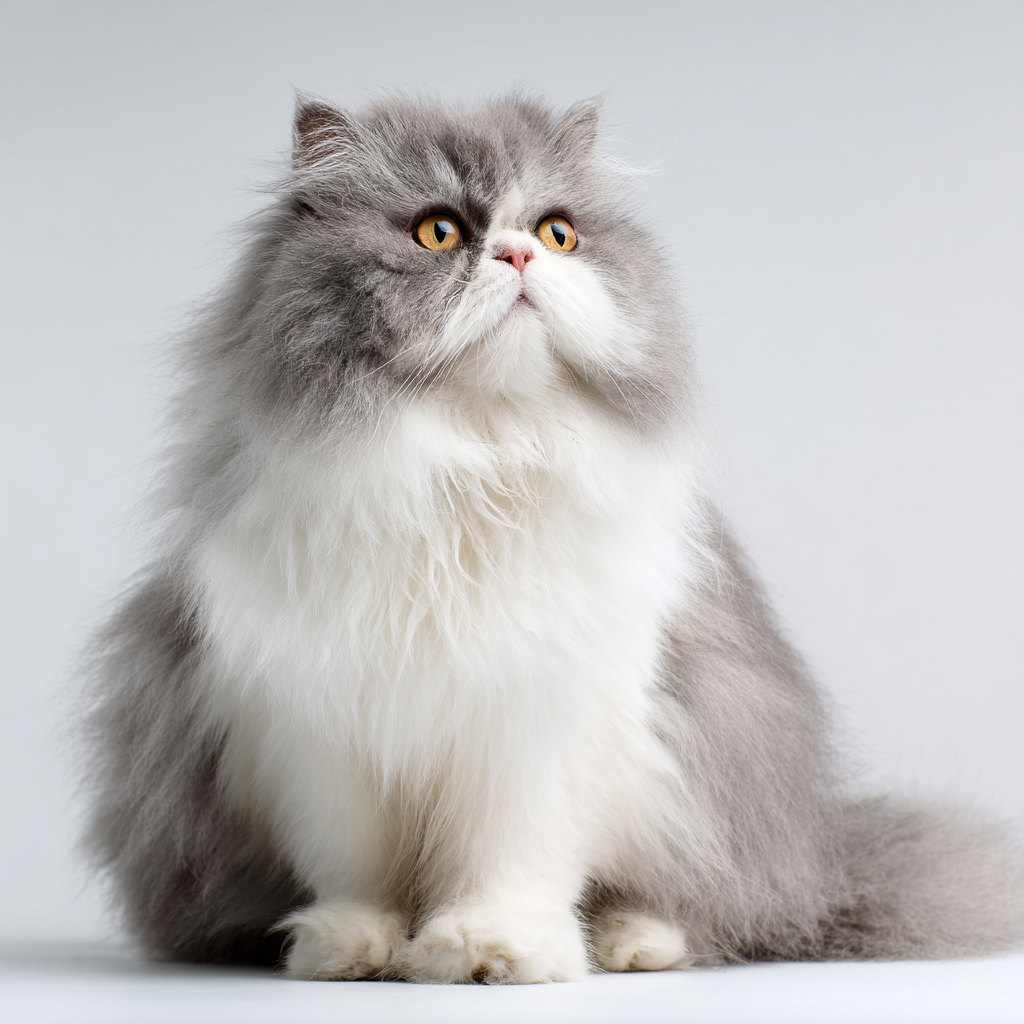
Exotic Shorthair vs Persian: A Complete, Long-Form Comparison for Families and Future Owners
The Exotic Shorthair and Persian are sister breeds with closely shared ancestry, identical personalities, and extremely similar facial structures. The key difference is the coat. The Persian has the iconic, ultra-long, silky coat that requires intensive daily grooming, while the Exotic Shorthair has a plush short coat that preserves the Persian look but dramatically reduces coat maintenance.
Because of this, the Exotic Shorthair is often considered the “lazy person’s Persian” or “Persian in pajamas” — same temperament, same sweetness, same calm, loving personality, but without the daily brushing and mat prevention that Persians require.
Both breeds are affectionate, gentle, and quiet. However, their grooming demands, health risks, shedding patterns, and long-term care costs are very different.
Quick Comparison Table: Exotic Shorthair vs Persian Cat
| Category | Exotic Shorthair | Persian |
|---|---|---|
| Coat Length | Short, plush, dense | Long, silky, mats easily |
| Grooming Needs | Low–moderate | Very high, daily |
| Personality | Calm, sweet, slightly playful | Extremely calm, gentle, quiet |
| Shedding | Heavy seasonal | Heavy year-round |
| Health Risks | Brachycephalic issues | Brachycephalic + coat-related issues |
| Lifespan | 12–16+ years | 12–15+ years |
| Beginner-Friendly | Yes | Typically no |
| Family-Friendly | Excellent | Good for quiet homes |
| Maintenance Cost | Lower | Higher |
| Activity Level | Low–moderate | Very low |
| Adaptability | Strong | Moderate |
| Allergy Impact | Slightly better | High (more dander trapping) |
Origin & History of the Persian
The Persian cat is one of the oldest and most iconic breeds in the world. Its history traces back hundreds of years, with early longhaired cats documented in Persia (modern-day Iran), Afghanistan, and surrounding regions. These cats fascinated early travelers and traders who brought them into Europe during the 1600s, where selective breeding eventually shaped the Persian into the luxurious, full-coated breed we recognize today.
During the Victorian era, the Persian became one of the first formally recognized cat breeds in feline exhibitions. Their calm demeanor, ornate coats, and sweet, expressive faces captured the attention of aristocracy, breeders, and early cat fanciers. Over time, selective breeding emphasized rounded features, plush coats, and a distinct brachycephalic face that became the breed’s defining hallmark.
By the 20th century, the Persian existed in two distinct forms:
- Traditional (Doll-face) featuring a more moderate, natural face
- Show Persian (Ultra-type) featuring a highly flattened face with a pronounced stop
Breed clubs and registries helped cement the Persian as a fixture in the purebred world, and today the Persian remains one of the most recognizable cats globally — elegant, sweet, gentle, and adored for its soft, serene presence.
Origin & History of the Exotic Shorthair
The Exotic Shorthair was created intentionally to preserve the Persian temperament while drastically reducing the grooming demands associated with the Persian’s long coat. In the mid-1900s, American Shorthair breeders began crossing Persians with shorthaired breeds in hopes of producing kittens with:
- the Persian’s plush structure
- the Persian’s calm temperament
- the Persian’s sweet expression
- but with a short, easy-care coat
When these coat traits proved genetically consistent, the new breed was developed and eventually standardized as the Exotic Shorthair.
Registries recognized the Exotic in the 1960s and 1970s, and over time, Exotic breeders primarily used pure Persians in their programs. Today, the Exotic Shorthair is genetically almost entirely Persian, differing mainly in coat length thanks to the shorthair gene (L).
The result is a cat that:
- looks like a Persian
- behaves like a Persian
- loves like a Persian
- but doesn’t need daily grooming
This is why the Exotic Shorthair is often lovingly called “the Persian in pajamas.”
Breed Recognition & Standards
Persian Recognition
The Persian is fully recognized by all major registries worldwide, including:
- CFA
- TICA
- GCCF
- ACFA
- FIFe
- CCA-AFC
- WCF
It is one of the most established and highly standardized breeds in the world.
Exotic Shorthair Recognition
The Exotic Shorthair is also recognized universally:
- CFA
- TICA
- ACFA
- GCCF
- CCA-AFC
- WCF
- FIFe
However, the Exotic is defined almost entirely by the Persian standard — same head, same body, same profile — with the only major difference being coat length.
How Standards Differ
- Persian: long, shimmering coat; broad chest; round head; extreme brachycephalic potential depending on breeder
- Exotic: same Persian structure, but coat is short, dense, and plush
Many registries evaluate Exotics under rules that mirror the Persian standard, which reinforces how closely related these two breeds are.
Appearance: Head, Face, and Expression
Head Type
Both breeds have a highly rounded head with:
- circular skull
- tiny nose
- deep nose break
- broad cheeks
- large, round eyes
- small, rounded ears
This shape gives them a teddy-bear or doll-like appearance that is instantly recognizable.
Facial Structure
Persians and Exotics share:
- short muzzle
- flat face
- deep stop
- low nose placement
- large, expressive eyes
In extreme lines, the face is extremely flat, and in moderate lines, the stop is gentler and more anatomically comfortable.
Eyes
Both breeds have:
- wide-set, round eyes
- soft expression
- bold colors (copper, blue, green, odd-eyed for specific colors)
The Exotic’s eyes often look slightly larger simply because the short coat doesn’t frame the face as heavily.
Coat Type & Grooming Needs
Exotic Shorthair Coat
- short
- thick
- plush
- double-layered
- “pom-pom” or “teddy bear” texture
- requires minimal brushing
- does not mat easily
- sheds seasonally
The coat is the Exotic’s greatest advantage. They maintain the Persian “look” without needing labor-intensive maintenance.
Persian Coat
- extremely long
- silky and full
- prone to tangles and mats
- requires daily brushing
- benefits from regular baths
- picks up debris easily
- demands significant owner involvement
Many new owners underestimate how much time is required to prevent painful matting. Because of this, Persians are best suited for highly attentive owners willing to maintain a full grooming routine.
Temperament & Personality
Shared Personality Traits
Both breeds are famously loving and calm. They share:
- gentle affection
- quiet, sweet behavior
- deep loyalty
- slow, relaxed play
- excellent emotional steadiness
- strong preference for cozy environments
- low activity needs
They are not high-energy like Bengals or Siamese. Instead, they are peaceful, contemplative, and charmingly laid-back.
Differences in Personality
- Exotic Shorthairs are slightly more playful and kitten-like because their grooming needs are lower and their coat doesn’t weigh them down.
- Persians are more serene, preferring soft lounging and quiet companionship. Some Persians approach near-complete tranquility as adults.
Both breeds do exceptionally well in apartments, multi-pet homes, and homes with gentle children.
Shedding, Coat Care, and Allergy Considerations
Shedding Patterns
Both breeds shed, but not at the same intensity or in the same way. The Exotic Shorthair sheds heavily during seasonal coat changes but is far easier to maintain because the hair does not tangle or knot in the same way a longhaired Persian coat does. Their short, plush fur naturally releases during brushing, and dead hairs do not accumulate into mats.
Persians shed year-round. Their long coat constantly releases fine strands that collect on clothing, upholstery, carpets, and bedding. Because the strands are long and lightweight, they tend to float through the home and cling to soft fabrics. Owners must commit to consistent grooming to keep shedding under control and maintain coat health.
Allergy Profile
Neither breed is hypoallergenic, but Persian coats trap more dander because their fur is long, dense, and slow to release allergens. Exotic Shorthairs may be easier for allergy-sensitive families simply because their coat does not store as much dander, and short hair is easier to wash from surfaces. However, families with severe allergies should still proceed cautiously.
Seasonal Coat Blows
Exotics experience dramatic seasonal coat blows in spring and fall. During these periods, brushing 3–4 times per week is ideal to help remove thick undercoat. Persians also shed seasonally, but their long coat requires proactive grooming year-round, not only during shedding seasons.
Grooming Requirements: Daily vs Minimal Commitment
Exotic Shorthair Grooming Needs
One of the biggest advantages of the Exotic Shorthair is its low-maintenance coat. Their plush double coat benefits from brushing a few times per week, but daily grooming is not required. Owners typically spend 5–10 minutes brushing, checking the eyes for tear staining, and maintaining basic hygiene.
Because Exotics have a shorter coat, baths are significantly easier and faster. Trimming their nails, occasional baths, and routine ear cleaning are sufficient to keep an Exotic Shorthair well-groomed.
Persian Grooming Needs
Persians are among the most grooming-intensive breeds in the cat world. Their long, silky coats tangle extremely easily. Mats form behind the ears, under the armpits, between the legs, and along the flanks if brushing is not performed daily. Many Persian owners also incorporate:
- weekly baths
- blow-drying
- detangling sprays
- sanitary trims
- professional grooming when needed
Neglecting grooming can cause painful knots that require shaving under sedation. This makes the Persian ideal only for owners who love grooming or are willing to maintain a strict routine.
Grooming & Maintenance Details
| Topic | Exotic Shorthair | Persian |
|---|---|---|
| Daily Brushing | Not required | Required |
| Matting Risk | Low | Very high |
| Bathing Needs | Occasional | Frequent |
| Tear Staining | Moderate | High |
| Coat Tools Needed | 1–2 tools | 5–8 tools |
| Grooming Time/Week | 10–20 minutes | 1–2 hours minimum |
| Professional Grooming | Rarely | Often helpful or necessary |
Health & Genetic Concerns in Both Breeds
Shared Brachycephalic Risks
Both breeds share many genetic and structural risks because their head type is the same. These include:
- chronic tear overflow
- sinus inflammation
- nasal restriction
- elevated risk of respiratory infections
- heat intolerance
- snoring and noisy breathing
- potential for airway obstruction in extreme lines
Moderate-faced cats tend to live longer, breathe easier, and experience fewer complications.
PKD (Polycystic Kidney Disease)
Persians historically had high PKD rates, but DNA testing has allowed ethical breeders to eliminate it. Both breeds must be tested due to their shared ancestry. Reputable breeders remove PKD-positive cats from breeding programs.
Dental and Bite Issues
Persians and Exotics commonly experience dental malocclusion due to shortened muzzles. This can lead to overcrowded teeth, gum disease, and tartar buildup. Routine dental care is essential.
Persian-Specific Health Concerns
Because Persians have long fur and tighter facial folds, they are more prone to:
- eye infections
- skin yeast
- facial oil buildup
- tear staining
- fungal growth in damp fur
Exotic-Specific Health Concerns
While the Exotic shares Persian structural risks, their short coat reduces:
- matting
- skin infections under knots
- grooming-related stress
However, Exotics still require eye care because irritation from tear overflow can occur in both breeds.
Lifespan & Longevity Comparison
Exotic Shorthair Lifespan
The average Exotic Shorthair lives 12–16 years, with well-bred moderate-faced lines sometimes reaching 17–18 years. Their shorter coat reduces secondary health risks related to grooming neglect, and their overall lifestyle supports steady longevity.
Persian Lifespan
Persians typically live 12–15 years, though carefully bred, moderate-faced Persians may live longer. Lifespan is heavily influenced by:
- face structure
- brachycephalic severity
- grooming routine
- PKD testing
- respiratory health
Extreme faces often live shorter lives due to chronic breathing difficulties and repeated respiratory infections.
Why Exotics Often Outlive Persians
The Exotic avoids matting, coat-related skin issues, and painful grooming neglect, making it easier to maintain long-term comfort and hygiene. Clean coat and skin = lower inflammation → longer lifespan.
Health & Lifespan Comparison
| Health Category | Exotic Shorthair | Persian |
|---|---|---|
| Respiratory Issues | Possible (moderate) | Likely in extreme faces |
| Tear Duct Blockage | Common | Very common |
| PKD Risk | Must be tested | Must be tested |
| Skin Issues | Low | Higher due to coat |
| Dental Problems | Some (crowding) | Common (short muzzle) |
| Heat Sensitivity | Yes | Severe |
| Lifespan Range | 12–16+ years | 12–15+ years |
Activity Level & Playfulness
Exotic Shorthair Energy Levels
Exotics maintain a soft, gentle playfulness into adulthood. They may play more frequently than Persians because:
- they breathe slightly easier
- grooming takes less time
- shorter hair feels lighter when moving
- they are more comfortable exploring
Their activity level is low-to-moderate, and they enjoy toys, feather wands, gentle climbing, and window watching.
Persian Energy Levels
Persians have extremely low energy levels. They prefer quiet companionship, soft naps, gentle petting sessions, and serene environments. Many adult Persians are content spending hours resting in warm spots.
Persians are wonderful for quiet homes, seniors, and individuals seeking a calm, peaceful cat with minimal exercise needs.
Compatibility With Families, Seniors & Other Pets
Exotic Shorthair Compatibility
Exotics tend to adapt more easily to:
- families with children
- households with moderate noise
- multi-pet homes
- busy owners
- individuals seeking easy grooming
Their low-maintenance lifestyle and affectionate temperament make them ideal for a wide range of homes.
Persian Compatibility
Persians thrive in:
- quiet homes
- low-stress households
- gentle families
- senior homes
- peaceful environments
They can coexist with other pets, but loud or chaotic environments can overwhelm them. Persian owners must be prepared to maintain calm routines.
Cost of Ownership: Upfront, Ongoing, and Lifetime Expenses
Upfront Kitten Cost
Both breeds are premium, purebred cats with globally high demand, but Persians generally run more expensive due to grooming complexity, coat maintenance in breeding lines, and the cost of raising longhaired kittens.
Exotic Shorthair Price Range
- Pet quality: $2,000–$4,500
- Show/breeding quality: $4,500–$7,000+
- Rare colors (chocolate, lilac, odd-eyed white, chinchilla): +20–40%
Persian Price Range
- Pet quality: $2,500–$5,000
- Show/breeding quality: $5,000–$8,000+
- Rare colors or extreme-type lines: significantly higher
Prices vary depending on region, breeder reputation, facial structure, coat length, and pedigree.
Lifetime Maintenance Costs
Persians almost always cost more over their lifetime due to:
- professional grooming
- coat products (detanglers, shampoos, conditioners)
- tear-stain removal supplies
- dermatology visits
- potential respiratory treatments
Exotic Shorthairs require fewer grooming tools and fewer grooming-related vet visits, leading to a lower overall cost of ownership.
Unexpected Expenses
Persians can incur additional costs for:
- dental care
- skin infections under mats
- fungal issues from moisture trapped under long fur
- respiratory management in extreme-faced lines
Exotics may still need dental and eye care but rarely require coat-related medical intervention.
Shedding, Home Cleaning, and Daily Household Impact
Exotic Shorthair Shedding Profile
Exotic Shorthairs have a thick double coat that sheds heavily during seasonal transitions. The shed hair is shorter and easier to vacuum, lint-roll, and remove from soft surfaces. Because it does not tangle or knot, the shedding is cleaner and less burdensome.
Persian Shedding Profile
Persians shed constantly. Their long fur mats, floats, clings, and accumulates rapidly on:
- fabrics
- carpets
- furniture
- clothing
- air filters
- vents
Owners often vacuum daily and brush multiple times per day during coat blows. Without consistent grooming, shedding becomes overwhelming and mats form quickly.
Home Environment Adjustments
For Persians, many owners invest in:
- HEPA filters
- strong vacuums
- professional grooming
- tile or hardwood flooring instead of carpet
- daily lint-rolling
Exotics typically require far fewer environmental adjustments.
Beginner-Friendly Comparison: Which Breed Is Easier?
Exotic Shorthair for Beginners
Exotics are widely considered one of the best beginner-friendly purebred cats due to:
- low grooming needs
- gentle temperament
- low activity level
- quiet, steady nature
- easy-to-manage coat
- lower maintenance cost
Beginners who want a calm, affectionate cat without committing to daily coat care will thrive with an Exotic.
Persian for Beginners
Persians are not beginner-friendly for most families. While their personality is perfect for new cat owners, their grooming demands are not. Many inexperienced owners underestimate how quickly mats develop and how much daily work is required to keep the coat healthy.
Persians are best for:
- experienced owners
- people who enjoy grooming
- individuals who already understand coat maintenance
Both breeds are sweet; the difference is workload.
Overall Health Comparison: Which Breed Is Healthier?
Exotic Shorthair Health Outlook
Exotics are generally considered healthier than Persians solely because:
- their coat does not trap bacteria and moisture
- they experience fewer grooming-related complications
- they avoid matting-associated skin infections
However, they do share Persian structural risks due to brachycephaly, including:
- breathing challenges
- dental misalignment
- chronic tearing
Well-bred Exotics with moderate faces tend to live long, comfortable lives.
Persian Health Outlook
Persians can be completely healthy — but only when responsibly bred. The risk factors in extreme lines include:
- chronic eye discharge
- respiratory distress
- sinus blockages
- dental crowding
- tear-stain dermatitis
- brachycephalic airway syndrome
- fungal skin infections under matted fur
Moderate-face Persians (sometimes called “doll face,” though the proper term is “traditional”) typically live longer, healthier lives with fewer breathing complications.
Conclusion on Health
The Exotic Shorthair is usually the healthier choice simply because its coat introduces fewer hygiene risks. But the true determining factor in both breeds is breeder ethics and face structure, not coat length alone.
Choosing the Right Breed for Your Household
Choose an Exotic Shorthair If You Want:
- Persian sweetness without Persian grooming
- a calm but slightly more playful personality
- lower maintenance costs
- a cat that adapts well to families
- a cat that doesn’t require daily brushing
- a breed suitable for beginners
- a quieter, more predictable temperament
Exotics are ideal for most households, including first-time owners.
Choose a Persian If You Want:
- a luxurious, longhaired, silky coat
- a calm, soft, endlessly gentle cat
- a quiet home with low activity
- time to commit to daily brushing and bathing
- the traditional Persian aesthetic
- involvement in showing or preserving the breed
Persians are stunning, devoted, and sweet — but they are not low-maintenance.
Which Breed Is Better for Allergies?
Allergy Considerations
Neither breed is suitable for severe allergy sufferers. However, if someone has mild or moderate allergies, the Exotic Shorthair may be more manageable.
Why the Exotic Shorthair Is Easier
- shorter coat → less surface area for dander
- coat releases fewer allergens into the environment
- easier to wipe down + clean
- weekly baths are faster and less stressful
Why Persians Are More Challenging
- long fur traps dander
- saliva-coated hair spreads easily
- grooming spreads allergens
- shedding is extremely heavy
Families with allergies often find Persians overwhelming unless they commit to constant grooming and home-cleaning routines.
Which Breed Is Better Overall?
Personality Verdict
Both breeds are incredibly gentle, quiet, and loving. If you want a peaceful, non-destructive companion who adores cozy laps and calm environments, either breed fits beautifully. The Exotic Shorthair is slightly more playful and curious into adulthood, while the Persian embodies serenity and soft companionship.
Maintenance Verdict
This is where the two breeds differ dramatically.
If you want the Persian look but do not want daily grooming, mat prevention, routine bathing, and coat management, the Exotic Shorthair is the clear winner. The Persian requires intense, lifelong coat care simply to remain healthy and comfortable.
Health Verdict
Moderate-faced cats in both breeds can be healthy and long-lived. However, many Persians—especially extreme-type lines—are at higher risk of breathing issues, tear duct blockages, and skin infections. The Exotic Shorthair avoids coat-related risks, which often means fewer secondary medical problems over time.
Beginner-Friendly Verdict
The Exotic Shorthair is unquestionably more beginner-friendly.
First-time cat owners often underestimate Persian grooming and end up overwhelmed by the maintenance. The Exotic provides the same sweetness with far less work.
Family & Multi-Pet Home Verdict
While Persians do well in calm households, Exotics adapt better to:
- children
- reasonable household noise
- multiple pets
- owners with varied schedules
Overall Winner for Most Households
Exotic Shorthair, unless the owner is deeply committed to grooming and wants the full, dramatic longhaired coat of a Persian.
Comparison Table: Exotic Shorthair vs Persian
| Feature | Exotic Shorthair | Persian |
|---|---|---|
| Coat Length | Short, plush, dense | Long, silky, prone to mats |
| Grooming Needs | Low–moderate | Very high, daily |
| Personality | Sweet, calm, playful | Very sweet, very calm, low-energy |
| Shedding | Seasonal heavy shedding | Heavy, constant shedding |
| Health Risks | Brachycephalic issues | Brachycephalic issues + coat/skin risks |
| Beginner-Friendly | Yes | No (due to grooming intensity) |
| Lifespan | 12–16+ years | 12–15+ years (moderate-face lines longer) |
| Good for Families | Yes | Yes, but best in quiet homes |
| Cost | $2,000–$4,500+ | $2,500–$5,000+ |
| Maintenance Cost | Lower | Higher |
| Adaptability | Excellent | Moderate |
| Energy Level | Low–moderate | Very low |
| Allergy Friendliness | Slightly better | More challenging |
| Registry Recognition | All major registries | All major registries |
Which Breed Fits Which Type of Owner?
Best for Busy Families
Exotic Shorthair
The Exotic is sturdy, gentle, low-maintenance, and tolerant of normal household activity. Families with children, working adults, or multiple pets find Exotics easier to manage.
Best for Seniors or Retired Owners
Persian
Retired owners or individuals who enjoy daily grooming routines often love Persians. The coat care becomes a bonding ritual, and the cat’s calm nature fits a peaceful lifestyle.
Best for First-Time Cat Owners
Exotic Shorthair, for sure.
The Persian’s coat upkeep overwhelms most beginners, while Exotics deliver the same sweetness without the grooming demands.
Best for Allergic Households
Exotic Shorthair, but only if allergies are mild.
While neither is hypoallergenic, the Persian’s long coat traps and distributes more allergens.
Best for People Wanting a Velvety, Plush-Teddy Look
Exotic Shorthair
Their plush coat and round features give them a teddy bear-like appearance without the longhair upkeep.
Best for Show Enthusiasts
Both can excel, but Persian grooming requires significantly more commitment.
Living Environment & Household Noise Tolerance
Exotic Shorthair Home Environment
Exotics thrive in:
- apartments
- family homes
- multi-pet households
- busy lifestyles
- homes with structured routines
They are adaptable, emotionally steady, and enjoy interaction.
Persian Home Environment
Persians thrive in:
- quiet, low-energy homes
- consistent routines
- gentle households
- low-noise environments
Persians dislike chaos and are sensitive to loud, unpredictable activity. They thrive when every day looks roughly the same.
Training & Socialization Differences
Exotic Shorthair
Exotics are easier to train because they are:
- slightly more active
- responsive to positive reinforcement
- eager to bond
- food-motivated
- curious about their surroundings
They learn litter routines, schedules, and simple tricks more readily.
Persian
Persians are:
- intelligent but uninterested in structured training
- emotionally delicate
- easily stressed by new activities
- happiest when routines remain calm and predictable
Socialization must be extremely gentle and at the cat’s pace.
Which Breed Is Easier to Care For Overall?
In nearly every practical category—grooming, maintenance, health, adaptability, and beginner-friendliness—the Exotic Shorthair is easier than the Persian.
Families who love the Persian personality but cannot commit to daily grooming often choose the Exotic Shorthair as the more responsible, sustainable option.
Families who specifically want a longhaired luxury coat, know how to groom properly, and enjoy the process may be more fulfilled by a Persian.
FAQ: Exotic Shorthair vs Persian
Are Exotic Shorthairs and Persians the same breed?
Exotic Shorthairs and Persians are considered sister breeds with nearly identical breed standards. They share the same body structure, head type, brachycephalic facial traits, temperament profile, and historical ancestry. The only meaningful difference is coat length. The Persian has a long, silky coat that requires daily grooming, while the Exotic Shorthair was developed as a shorthaired alternative with drastically lower maintenance requirements. Genetically, modern Exotics are almost entirely Persian, with the shorthair gene being the primary differentiator.
Which breed is healthier: Exotic Shorthair or Persian?
In general, Exotic Shorthairs are slightly healthier because the short coat eliminates many grooming-related risks such as mats, skin infections, and fungal issues under tangled fur. Both breeds share the same brachycephalic risks—tear overflow, sinus congestion, dental crowding, and restricted nasal passageways—but Persians experience additional coat-related complications. The biggest determinant of health in either breed is the degree of facial flattening and the breeder’s commitment to producing moderate, structurally sound lines.
Do Exotic Shorthairs and Persians have the same personality?
Yes. Temperamentally, the two breeds are close to identical: calm, sweet, gentle, affectionate, quiet, and steady. Both enjoy lounging, gentle laps, soft blankets, and predictable routines. The Exotic Shorthair is often described as a bit more playful into adulthood, simply because its coat requires less time-consuming grooming and it can move more comfortably without long fur dragging behind it. Persians tend to lean toward extreme tranquility, preferring slow movements and peaceful interactions.
Which breed is more expensive to maintain?
The Persian is more expensive over a lifetime due to grooming. Daily brushing, regular baths, blow-drying, detangling products, and occasional professional grooming add up significantly. Additional costs may arise from treating coat-related skin conditions or severe matting. Exotic Shorthairs have lower grooming expenses and fewer coat complications, making their lifetime cost meaningfully lower. Both breeds may require eye cleaning, dental care, and routine veterinary monitoring for brachycephalic features.
Are these breeds good for families with children?
Exotics are better suited for families with children because they adapt well to moderate activity and don’t require strict daily grooming. They tolerate gentle play and adjust comfortably to the presence of kids and other pets. Persians can live with children, but they prefer quiet environments and may become stressed by noise, fast movement, or inconsistent household routines. Persians thrive in calm homes; Exotics thrive in mild-to-moderate activity homes.
Do Exotic Shorthairs or Persians get along better with other pets?
The Exotic Shorthair typically integrates more easily into multi-pet homes. Their temperament is gentle but flexible, and their moderate curiosity allows them to adjust to new animals at a steady pace. Persians can live peacefully with other pets, but they prefer calm companions who respect their need for quiet personal space. Dogs with energetic or boisterous personalities are better suited to Exotics than to Persians.
FAQ: Exotic Shorthair vs Persian
Which breed sheds more?
Persians shed substantially more due to their long, voluminous coat that releases fine hairs continuously. Even with daily brushing, loose fur accumulates quickly on furniture, bedding, and clothing. Exotic Shorthairs shed as well—especially during seasonal coat changes—but their shorter hairs are easier to vacuum and less likely to form floating clumps around the home. The Exotic’s coat is dramatically more manageable for most modern households.
Are Exotic Shorthairs or Persians hypoallergenic?
Neither breed is hypoallergenic. The Persian’s coat traps more dander and saliva, which are the primary allergy triggers, leading to greater allergen exposure in the home. Exotic Shorthairs may be slightly easier for individuals with mild allergies because their shorter coat does not store as much dander. However, individuals with significant cat allergies should avoid both breeds or meet multiple cats in person before adopting.
Which breed is easier for first-time cat owners?
The Exotic Shorthair is far easier for first-time owners. Their grooming routines are straightforward, their coat rarely mats, and their health maintenance is simpler overall. Persians require a very specific grooming lifestyle that many beginners underestimate. Without daily brushing and scheduled baths, Persians develop painful tangles that can require shaving or medical care. Only owners who are ready for consistent grooming should choose a Persian.
Which breed lives longer?
Both breeds typically live 12–15 years, though Exotics may sometimes reach 16–17 years due to their reduced grooming-related health complications. Persian longevity varies widely depending on face shape, genetics, and grooming quality. Traditional-faced Persians often live longer than ultra-typed show Persians. The Exotic’s simplified coat structure often supports better skin health overall, contributing to slightly longer average lifespans in well-bred lines.
Do both breeds have breathing problems?
Both can, depending on the degree of brachycephaly. Flat facial structure restricts airflow, reduces nasal passage openness, and can contribute to chronic snoring, noisy breathing, reverse sneezing, sinus congestion, and heat sensitivity. Moderate-faced cats, in both breeds, experience fewer problems. Extreme faces increase the risk of lifelong respiratory issues. Choosing responsible, moderate-typed breeders significantly reduces these risks.
Do these breeds make good apartment cats?
Absolutely. Both Exotic Shorthairs and Persians are ideal apartment cats due to their low energy levels, quiet voices, gentle temperaments, and minimal jumping. They adapt well to smaller spaces and prefer cozy lounging spots over athletic climbing. The Exotic Shorthair may explore more than a Persian, but both breeds thrive in calm, indoor environments.
Do Exotic Shorthairs require eye cleaning like Persians?
Yes, both breeds often require routine eye cleaning due to their brachycephalic facial structure. Tear ducts may not drain properly, leading to tear overflow, staining, and moisture buildup. Exotics tend to have slightly fewer eye issues simply because their shorter coat does not trap moisture or debris as easily. Persians, with their long fur and thick facial furnishings, often need daily cleaning to prevent yeast buildup and skin irritation around the eyes.
Are Persians more high-maintenance than Exotic Shorthairs?
Yes. The Persian is one of the highest-maintenance cat breeds due to its long coat, which mats rapidly without daily brushing and regular bathing. The Exotic Shorthair eliminates nearly all long-hair–related maintenance while retaining the Persian’s gentle personality. For this reason, the Exotic is considered far easier for most families, especially those with full schedules or limited grooming experience.
Which breed is calmer: Persian or Exotic Shorthair?
The Persian is generally calmer. While both breeds are quiet and sweet, the Persian is exceptionally mellow, preferring long naps, soft blankets, and predictable routines. The Exotic Shorthair shares this peaceful temperament but tends to remain slightly more animated and playful into adulthood. However, both are among the calmest breeds in the cat world.
Do Exotic Shorthairs or Persians handle heat better?
Neither breed tolerates heat well due to their flattened faces, which restrict airflow and make temperature regulation more difficult. However, Persians often struggle more because their long coat traps heat, making them prone to overheating faster. Exotics still need cool environments, but their shorter coat gives them a slight advantage in warm climates. Neither breed should be exposed to heat or humidity for extended periods.
Which breed is better for seniors or retired individuals?
Persians are wonderful for seniors who enjoy grooming and want a calm, quiet cat that spends most of its day resting. Grooming can become a bonding activity that both cat and owner enjoy. Exotic Shorthairs are also great for seniors who prefer less physical effort and less daily maintenance. Both breeds are affectionate and gentle, making them excellent companions for older adults.
Which breed is more playful?
Exotic Shorthairs are noticeably more playful and kittenlike into adulthood. Their short coat allows them to move more freely, and they retain a curious, fun-loving personality without becoming hyperactive. Persians enjoy gentle play but typically avoid high-energy activity. Their long coat and flat facial structure make them less inclined to chase toys or engage in extended exercise.
Do Exotic Shorthairs or Persians meow a lot?
Both breeds are quiet by nature. Exotic Shorthairs may vocalize slightly more, offering soft chirps or gentle meows when they want affection. Persians tend to be very quiet, using subtle cues such as eye contact or slow movements to communicate. If a family wants a peaceful, low-noise cat, either breed is an excellent choice.
Which breed requires more veterinary care?
Persians usually require more veterinary care due to coat maintenance, eye issues, and the complications associated with extreme facial flattening. Skin infections, mats, and tear duct problems are common in poorly groomed or extremely flat-faced Persians. Exotic Shorthairs share some medical risks but typically experience fewer coat-related complications. Both benefit greatly from choosing moderate, health-focused breeders.
Are Exotic Shorthairs or Persians better for people who work full-time?
Exotics are better suited for full-time workers because they are low-maintenance, emotionally steady, and less demanding of daily grooming. They do well on structured schedules and are content resting or observing their environment while their owners are away. Persians can stay alone safely as well but may require more time and attention for grooming after work hours.
Do both breeds bond strongly with their owners?
Absolutely. Both breeds are deeply affectionate in a quiet, non-demanding way. They bond strongly, follow their owners from room to room, and prefer to be near their people without being clingy. Exotics may show affection through playful nudges or interactive behavior. Persians express their bond through stillness, gentle purring, and quiet companionship.
Do Exotic Shorthairs or Persians travel better?
Exotic Shorthairs travel better due to their lower grooming needs and more adaptable temperament. Persians may become stressed by car rides, changes in routine, or unfamiliar environments, and their long coat makes travel grooming more complicated. While neither breed loves travel, Exotics handle transitions more comfortably.
Which breed is better for small apartments?
Both breeds thrive in small apartments. Their low activity levels, quiet personalities, and love of stable routines make them excellent urban companions. The Exotic Shorthair adapts more easily to moderate urban noise, while the Persian appreciates quieter environments but can thrive in any calm household.
Do Exotic Shorthairs or Persians need scratching posts and cat trees?
Both breeds benefit from stable, low-level cat trees and scratching posts. Although they aren’t climbers like Bengals or Abyssinians, they enjoy gentle elevation. Choose sturdy furniture that supports their cobby build. Neither needs tall structures, and both prefer horizontal or low-inclined scratching surfaces.
Which breed is more sensitive to stress?
Persians are more sensitive to stress and environmental changes. Loud noises, new pets, and frequent household activity can overwhelm them. Exotic Shorthairs tend to handle stress better, making them more adaptable to everyday life. If the household is busy or unpredictable, an Exotic is the better choice.
Are Exotic Shorthairs easier to groom during shedding season?
Yes. Exotics shed heavily twice a year, but brushing is easy and mats do not form. Persians require significantly more work when they shed because long hairs tangle instantly and mats form quickly. Seasonal shedding is the time when Persians require even more grooming than usual.
Which breed is the better all-around choice for most owners?
For most families, the Exotic Shorthair is the more practical and sustainable choice. It captures everything people love about the Persian—sweetness, calm personality, large expressive eyes, doll-like face—but with a coat that is 10x easier to maintain. The Persian is still a wonderful choice for dedicated owners who genuinely enjoy grooming and maintaining a luxurious long coat.
Meet Your New Kitten here
Looking for a well-bred, healthy, affectionate British Shorthair kitten?
Explore our European-imported golden, lilac, and rare-colored British Shorthair kittens at Almonte Cats.
Every kitten is:
- TICA/CFA registered
- health-tested
- vet-checked
- temperament-evaluated
- raised in-home for confident personalities
More Luxury Cat Articles from Almonte Cats
- British Shorthair vs Persian Cat
- Why You Need a Golden British Shorthair
- Russian Blue vs British Shorthair Comparison
- British Shorthair Kitten Growth Stages
- British Shorthairs with Green Eyes
- British Shorthair vs Ragdoll Cats
Sources & Veterinary References
- The International Cat Association (TICA) – British Shorthair Breed Standard
https://tica.org/breeds/breed-standards/british-shorthair-bs - Cat Fanciers’ Association (CFA) – British Shorthair Breed Profile
https://cfa.org/british-shorthair/ - Cornell Feline Health Center – General Feline Longevity & Senior Care
https://www.vet.cornell.edu/departments-centers-and-institutes/cornell-feline-health-center - American Association of Feline Practitioners – Senior Cat Care Guidelines (AAFP)
https://catvets.com/guidelines - Royal Veterinary College – Longevity & Causes of Death in Cats Study
https://www.rvc.ac.uk/vetcompass - National Library of Medicine – Longevity & Mortality in Domestic Cats (Peer-Reviewed Study)
https://pubmed.ncbi.nlm.nih.gov/30730974/ - American Veterinary Medical Association – Cat Health & Indoor vs Outdoor Safety
https://www.avma.org/resources/pet-owners/petcare/cats-and-outdoors - ASPCA – Indoor Cat Life Expectancy & Safety
https://www.aspca.org/pet-care/cat-care - Wisdom Panel / Optimal Selection – Feline Genetic Health Overview
https://www.wisdompanel.com/en-us/cat - PawPeds – British Shorthair Health Program & Genetic Guidance
https://www.pawpeds.com/cms/index.php/en/ - American College of Veterinary Nutrition (ACVN)
https://acvn.org/ - PetMD – Senior Cat Nutrition & Lifespan Health
https://www.petmd.com/cat





Read the Comments +