
Bengal vs Maine Coon Cats: Which Breed is Best for You?
Bengal vs Maine Coon cats are two of the most sought-after breeds in the world, but they couldn’t be more different. One is an agile, high-energy athlete with exotic wild-type markings, while the other is a gentle giant known for softness, patience, and family-friendly charm.
Whether you’re comparing size, shedding, temperament, trainability, cost, or overall lifestyle compatibility, this guide explains every major difference between Bengals and Maine Coons in a clear, practical way. If you’re trying to decide which breed fits your home, your energy level, and your long-term expectations, this in-depth comparison will help you make a confident, informed choice.
Bengal vs Maine Coon Quick Comparison Table
| Feature | Bengal | Maine Coon |
|---|---|---|
| Origin | Hybrid/domestic breed developed in the U.S. | Natural breed from Maine, USA |
| Size | Medium, athletic | Large to giant |
| Coat Length | Short, pelt-like | Semi-long, shaggy |
| Shedding Level | Low to moderate | Moderate to heavy seasonally |
| Temperament | Energetic, curious, demanding | Gentle, calm, family-friendly |
| Trainability | High (needs experienced owner) | High (easy, cooperative learner) |
| Good for Families | Yes, but needs enrichment | Yes, extremely family-friendly |
| Activity Level | Very high | Moderate |
| Noise Level | Loud, expressive | Quiet chirps/trills |
| Health Risks | HCM, PRA-b, PK-def | HCM, hip dysplasia, SMA |
| Average Lifespan | 12–16 years | 12–15 years |
| Ideal Home Type | Active, high-stimulation | Calm, stable, multi-pet friendly |
| Grooming Needs | Low | Moderate |
| Kitten Price | $1,500–$6,000 | $2,000–$6,500+ |
| Beginner-Friendly | No | Yes |
Origin & History of the Bengal Cat
The Bengal cat is one of the most visually striking breeds in the world, originally developed from a foundation that included the Asian leopard cat (Prionailurus bengalensis), a small wild feline known for its bold coat pattern. Early breeders explored the possibility of creating a domestic cat with the wild leopard appearance while retaining a stable, affectionate temperament suited for household life. By the 1980s and 1990s, selective breeding refined the Bengal into a fully domestic breed recognized by major registries.
Modern Bengals are typically F4 or later, meaning they are fully domestic and no longer considered hybrid or wild in temperament. The breed is famous for its muscular build, glittered coat, dramatic rosettes, and high-energy intelligence. Over the past several decades, the Bengal has become one of the most popular designer breeds due to its exotic look, playful behavior, and interactive personality. Today’s Bengals are confident, athletic, and affectionate cats with strong bonds to their families.
Origin & History of the Maine Coon
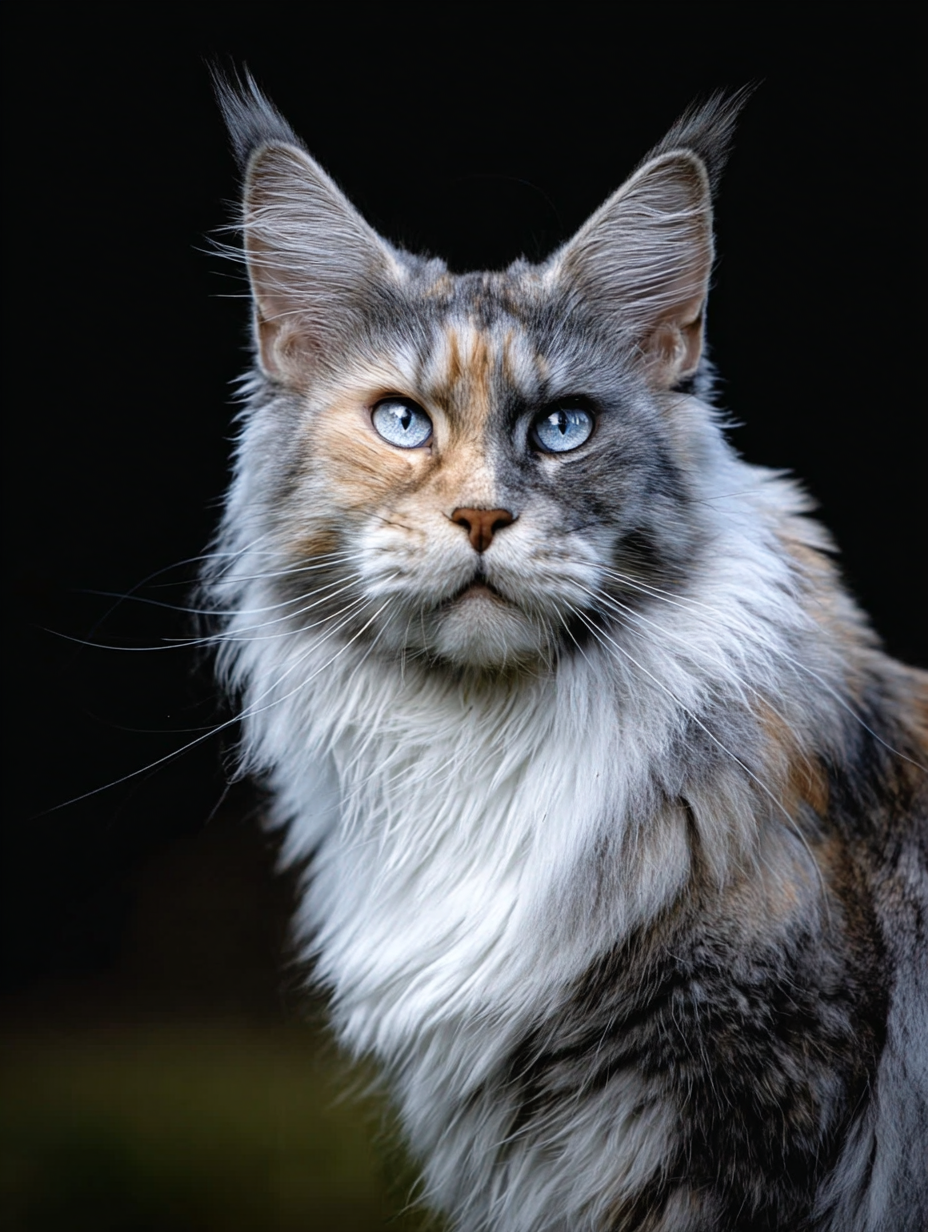
The Maine Coon is one of the oldest natural cat breeds in North America, believed to have developed organically in the Northeastern United States. While legends describe them as ship cats, Viking descendants, or the offspring of longhaired European cats brought by early settlers, the truth is that the Maine Coon evolved naturally as a hardy, cold-weather feline in rural Maine.
Their large size, tufted ears, long bushy tail, and thick winter-ready coat made them highly effective farm cats. Over generations of natural selection, only the strongest, most adaptable cats thrived in Maine’s harsh climate. This created the breed’s signature rugged beauty, robust health, and impressive physique. They were recognized as a show breed in the late 1800s, long before many modern breeds existed. Today, Maine Coons are beloved for their size, intelligence, dog-like loyalty, and warm, sweet nature.
Breed Recognition & Standards
Bengal Recognition
The Bengal is fully recognized by TICA and most major registries, including:
- TICA
- CFA (domestic Bengal, SBT generation)
- GCCF (with restrictions)
- ACFA
- AACE
Early-generation hybrid Bengals (F1–F3) are not eligible for competition, but SBT Bengals (studbook traditional) are fully registered and shown professionally. Bengals are judged on coat quality, contrast, rosettes, horizontal flow, athletic build, and temperament.
Maine Coon Recognition
The Maine Coon is globally recognized by all major registries, including:
- CFA
- TICA
- WCF
- FIFe
- ACFA
- GCCF
The breed has a well-defined standard emphasizing a rectangular body, strong muzzle, lynx-tipped ears, and a long flowing tail. Unlike the Bengal, the Maine Coon does not come from hybrid ancestry and is considered a natural, long-established breed.
Appearance Comparison
Head & Face Structure
Bengal:
- Slightly wedge-shaped head
- Strong muzzle
- Large oval to almond eyes
- Prominent whisker pads
- Wildcat-inspired profile
- Sleek, muscular neck
Maine Coon:
- Large, squared muzzle
- High cheekbones
- Prominent chin
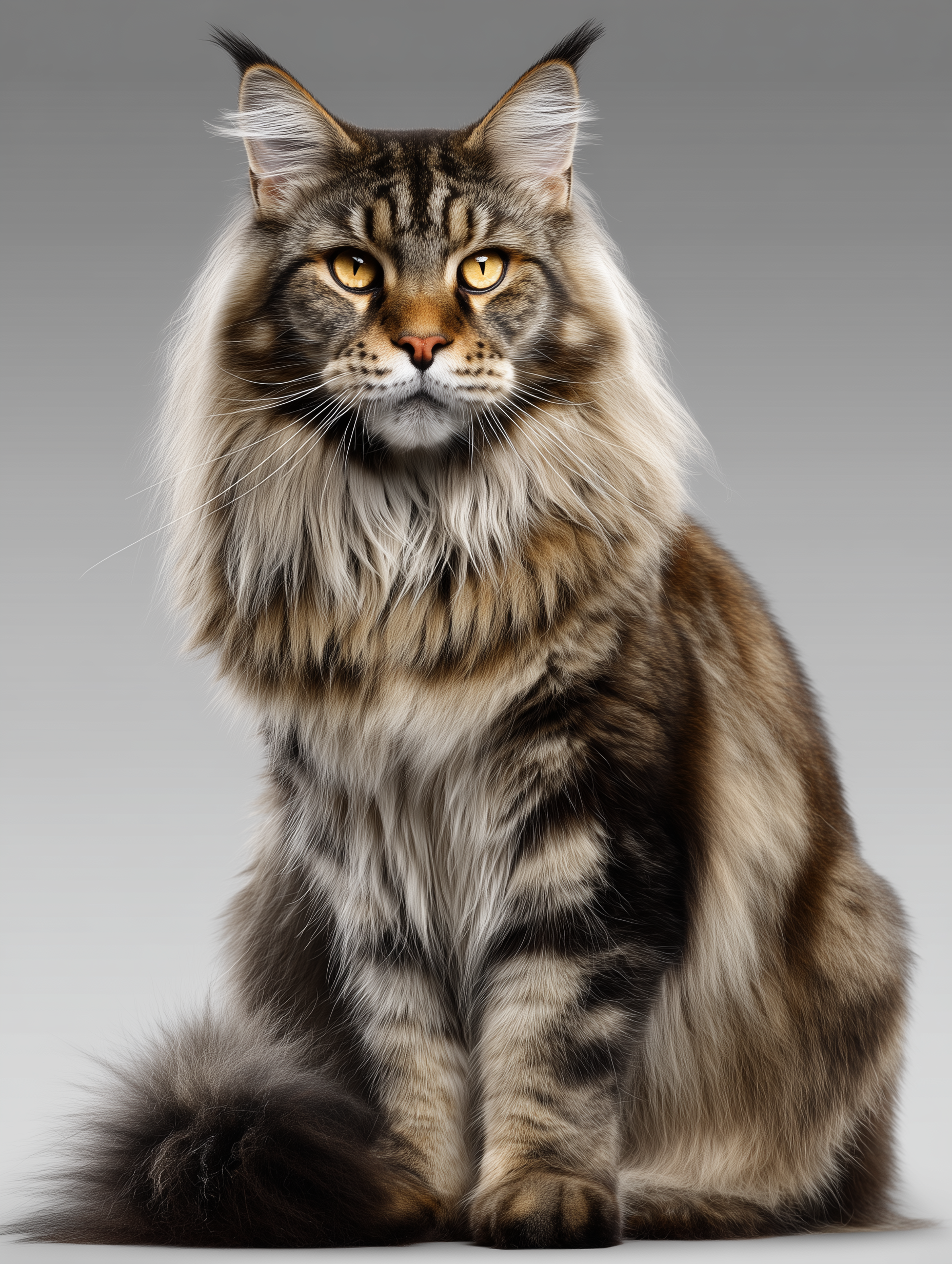
- Large ears with lynx tips
- Expressive oval eyes
- Long, powerful neck
Bengals look exotic and wild. Maine Coons look majestic and powerful.
Body Type
Bengal:
Medium to large, extremely athletic, lean, muscular, built for speed and agility.
Maine Coon:
One of the largest domestic cats in the world, rectangular in shape, heavily boned, long-bodied, with a substantial frame.
Coat Type, Pattern, and Grooming Needs
Bengal Coat
The Bengal’s coat is one of its most defining features:
- sleek, soft, and closely lying
- minimal shedding
- may have “glitter” (shimmering effect)
- rosettes, spots, marbling, or charcoal pattern
- low maintenance
- rarely mats
Bengals require brushing once a week and occasional baths, making them extremely easy to groom.
Maine Coon Coat
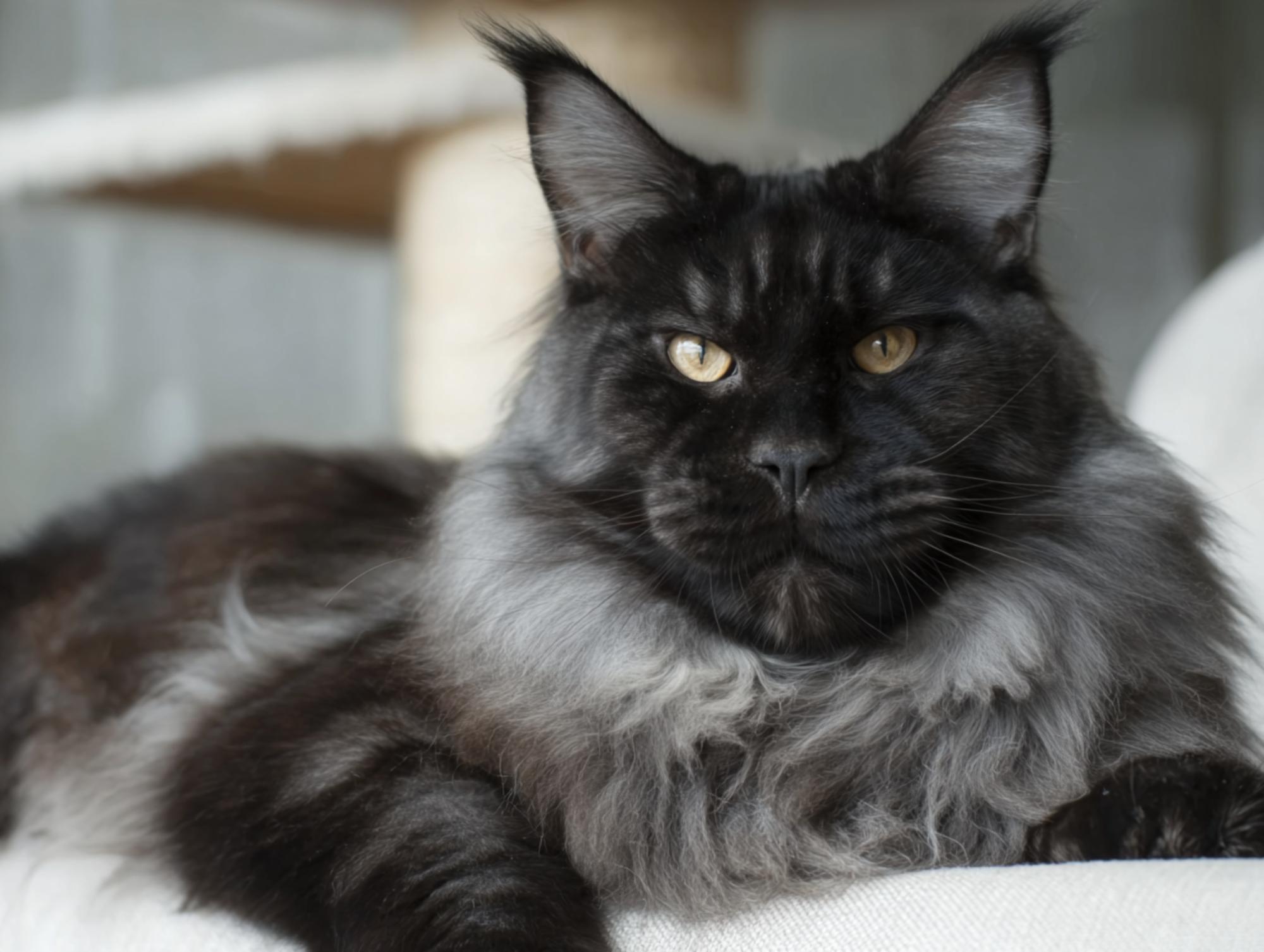
The Maine Coon has a striking, layered, weather-resistant coat:
- semi-longhair
- shaggy and uneven length
- longer around the mane and britches
- thick undercoat
- seasonal shedding
- can mat if neglected
They require brushing 2–3 times per week, and during shedding seasons, more often.
Temperament & Personality
Bengal Personality
Bengals are one of the most energetic, intelligent, and interactive cat breeds. They resemble a working dog more than a typical housecat. Traits include:
- high activity
- love for climbing, running, interactive play
- strong curiosity
- problem-solving intelligence
- water fascination
- desire for constant stimulation
- vocal, expressive communication
- deeply bonded to their people
Bengals thrive in active homes where they receive daily engagement.
Maine Coon Personality
Maine Coons are famously gentle giants:
- affectionate but not clingy
- dog-like loyalty
- easygoing with children and pets
- calm, steady temperament
- playful but not hyper
- intelligent and trainable
- low drama, low anxiety
- incredibly tolerant
They adapt beautifully to nearly every household type, from quiet homes to busy families.
Temperament & Lifestyle Table
| Trait | Bengal | Maine Coon |
|---|---|---|
| Energy Level | Very high | Moderate |
| Social Needs | High | High |
| Stress Tolerance | Low to moderate | Very high |
| Vocalization | Loud, expressive | Soft chirps |
| Bonding Style | Selective, intense | Wide, stable affection |
| Kid Compatibility | Good with active kids | Excellent with all ages |
| Dog Compatibility | Good with calm dogs | Excellent with most dogs |
Activity Level & Daily Energy Needs
Bengal Activity Level
Bengals are one of the most active, high-energy cat breeds in the world. They require significant daily stimulation to stay mentally and physically satisfied. A Bengal’s natural instincts make them:
- fast, athletic, and agile
- constantly exploring or climbing
- drawn to high perches and vertical spaces
- attracted to interactive toys, puzzles, and water
- prone to mischief if under-stimulated
- vocal and expressive when bored
- intensely curious about every movement and sound
A Bengal will thrive in a home where their family actively participates in play, enrichment, and environmental upgrades such as cat walls or climbing structures.
Maine Coon Activity Level
Maine Coons are playful but far steadier and calmer. They enjoy activity, but in moderation. Expect them to:
- play in short, relaxed bursts
- enjoy wand toys, puzzles, and explorer-style enrichment
- remain puppy-like well into adulthood
- avoid hyper or chaotic behavior
- be happy with predictable, gentle playtime
- prefer social engagement over intense exercise
They are active enough to entertain themselves but calm enough for families who don’t want a cat bouncing off the walls.
Trainability & Intelligence
Bengal Intelligence
Bengals are genius-level problem solvers, and they frequently mimic the intelligence of working dog breeds. They can be taught:
- tricks
- leash walking
- fetch
- agility patterns
- puzzle solving
- touch/target training
- advanced recall cues
Their intelligence is a gift, but also a challenge. An untrained Bengal becomes frustrated quickly, leading to undesirable behaviors like climbing curtains, opening cabinets, or demanding constant attention. Bengals thrive when treated like an intelligent species that requires structure and stimulation.
Maine Coon Intelligence
Maine Coons are highly intelligent—just in a different way. They are:
- steady thinkers
- emotionally intelligent
- excellent problem solvers
- gentle learners
- very responsive to their owners
- easy to leash-train
- incredible at communication
They learn quickly but do not require the same level of nonstop stimulation as a Bengal. Training a Maine Coon is easy because they are cooperative, affectionate, and geared toward pleasing their people.
Family Compatibility
Bengal in Families
Bengals are excellent for families who:
- have older children
- enjoy active pets
- want daily engagement
- can provide enrichment
- want a highly interactive companion
They are not ideal for households:
- with toddlers who might overwhelm them
- where no one has time for active play
- where owners expect a calm “lap cat”
Bengals thrive in busy, playful, stimulating homes with plenty of attention.
Maine Coon in Families
The Maine Coon is one of the best family cats in the world. They are:
- extremely tolerant
- patient with children
- friendly with visitors
- adaptable to noise
- emotionally stable
- gentle even when handled imperfectly
- wonderful with respectful toddlers
Their steady temperament makes them a top choice for families of all ages and activity levels.
Compatibility With Other Pets
Bengal With Other Pets
Bengals can coexist very well with other pets, especially:
- confident cats
- active breeds
- cat-friendly dogs
However, Bengals may over-stimulate shy animals. Their high energy can feel overwhelming to:
- seniors
- timid cats
- low-activity breeds
They are better paired with other active, playful pets.
Maine Coon With Other Pets
Maine Coons are famously tolerant and adaptable. They integrate smoothly into:
- multi-cat homes
- dog-friendly homes
- small animal households (with supervision)
Their even temper and minimal prey drive make them easy to manage around calmer animals. They rarely show territorial aggression and usually form close bonds with other pets.
Health & Genetic Issues
Bengal Health Considerations
Well-bred Bengals are extremely athletic and healthy, but may be predisposed to:
- Hypertrophic Cardiomyopathy (HCM)
- PK-def (Pyruvate kinase deficiency)
- Progressive Retinal Atrophy (PRA-b)
- Food sensitivities
- Stress-related digestive issues
- High arousal leading to overactivity injuries
Bengals need mental stimulation to avoid behavioral stress, which can influence physical health.
Maine Coon Health Considerations
Maine Coons are robust but can be predisposed to:
- HCM (Maine Coon mutation)
- Hip dysplasia
- Spinal muscular atrophy (SMA)
- Polycystic kidney disease (in some older lines)
- Joint strain due to large size
Responsible breeders screen carefully for these conditions, and consistent weight management is essential for protecting joints.
Lifespan Comparison
Bengal Lifespan
Bengals typically live:
- 12–17 years
Highly active Bengals with good genetic lines often live into their late teens. Their athleticism, lean body composition, and mental agility support long-term health.
Maine Coon Lifespan
Maine Coons typically live:
- 12–15 years
Some live 16–18 years with excellent care. Their large size can shorten lifespan if obesity or joint strain develops, but well-managed Maine Coons are long-lived, sweet seniors.
Grooming & Shedding Comparison
Bengal Grooming Needs
Bengals have one of the easiest coats to maintain among purebred cats. Their short, sleek, pelt-like fur lies close to the body and rarely tangles. Weekly brushing is usually sufficient to remove loose hairs and maintain the coat’s shine. Bengals also have minimal natural oil buildup, and many dislike long grooming sessions, so quick, gentle brushing works best.
Shedding is moderate but very manageable. Bengals shed far less than longhaired breeds, and their short hairs don’t mat or accumulate into large clumps. Because of their wild ancestry, the coat is designed for efficiency—low maintenance, low matting, and high durability.
Maine Coon Grooming Needs
The Maine Coon has a semi-long double coat with a distinctive shaggy texture. It is not as silky as a Persian’s, but it can still tangle, especially around the pantaloons, ruff, and belly. Weekly brushing is ideal during normal seasons, and brushing 2–4 times per week is recommended during heavy shedding periods.
While their fur is long, it is designed to be moisture-resistant and cold-tolerant, which means it does not mat as easily as some other longhair breeds. However, if neglected, the undercoat can tighten into knots, especially behind the ears and under the arms.
Shedding Differences
- Bengal: short hairs, minimal shedding, almost no matting
- Maine Coon: seasonal heavy shedding, potential matting in thick areas
Families wanting a low-maintenance coat almost always prefer the Bengal.
Grooming & Coat Care Table
| Category | Bengal | Maine Coon |
|---|---|---|
| Coat length | Short | Semi-long |
| Matting risk | Very low | Moderate |
| Shedding | Low | High in seasons |
| Grooming frequency | Weekly | 2–3x weekly |
| Tools required | Rubber brush | Slicker, metal comb |
| Allergen release | Lower | Higher |
Allergy Profile
Are Bengals Better for Allergies?
Bengals are often marketed as “low-shedding” or “low-allergen,” but they are not hypoallergenic. However, many allergy-sensitive owners find Bengals more tolerable because:
- their coat traps less dander
- they shed less
- their fur does not float or cling the way long fur does
- weekly brushing keeps dander low
Some individuals with mild allergies do better with Bengals than with longhaired breeds.
Are Maine Coons Good for Allergies?
Maine Coons shed significantly more and produce more airborne dander than Bengals. Their long coat holds onto saliva proteins, which are the true allergen, and releases those particles throughout the home. While some mild-allergy owners handle Maine Coons well, those with moderate or severe allergies may struggle.
Allergy Verdict
If allergies are a concern:
Bengal > Maine Coon
Neither breed is hypoallergenic, but the Bengal’s short coat makes allergen management easier.
Cost of Ownership: Upfront, Ongoing & Lifetime
Upfront Kitten Price
Bengal Cost Range
- Pet quality: $1,500–$3,000
- High-end or charcoal/melanistic/rosetted lines: $3,000–$6,000+
- Show/breeding: $4,000–$8,000
Maine Coon Cost Range
- Pet quality: $2,000–$4,000
- European-imported or polydactyl lines: $3,000–$6,000
- Show/breeding quality: $4,000–$8,000+
Maine Coons tend to be slightly more expensive because they take longer to reach breeding maturity and produce smaller, harder-to-plan litters.
Lifetime Maintenance Costs
Bengal:
- fewer grooming expenses
- fewer coat-care tools
- food, enrichment, and vet care are primary expenses
- may require extra stimulation toys to prevent boredom
Maine Coon:
- grooming tools
- more food (large breed)
- joint supplements
- larger litter box, larger carrier, larger furniture
- potential hip dysplasia care
Both breeds can be expensive to feed due to their size and energy, but Maine Coons often cost more in the long run because of their large build.
Home Environment & Space Requirements
Bengal Home Needs
Bengals require:
- vertical climbing options
- interactive play
- puzzle feeders
- stimulation-rich environments
- daily owner engagement
- safe, enriched indoor space
Bengals thrive with cat walls, cat wheels, tunnels, and high perches. They do not do well in small apartments without enrichment.
Maine Coon Home Needs
Maine Coons adapt to almost any home because they are calm, emotionally stable, and less reliant on intense activity. They appreciate:
- large, sturdy cat trees
- window perches
- spacious litter boxes
- stable routines
- gentle play
They don’t require vertical play spaces as intensely as Bengals but enjoy climbing if given the option.
Home Requirement Verdict
- Active home, enrichment-focused → Bengal
- Family-friendly, stable, cozy → Maine Coon
Beginner-Friendliness
Is a Bengal Good for Beginners?
No. Bengals are not typically recommended for first-time cat owners because they require:
- high engagement
- advanced behavior understanding
- structured training
- strong enrichment routines
- consistent handling
Without proper stimulation, Bengals can be destructive, anxious, or demanding. They’re wonderful for experienced owners who understand cat behavior deeply.
Is a Maine Coon Good for Beginners?
Yes. Maine Coons are one of the most beginner-friendly cat breeds in the world. They are:
- gentle
- forgiving
- patient
- adaptable
- emotionally steady
- tolerant of mistakes
First-time owners often succeed with Maine Coons because they match almost any lifestyle.
Which Breed Fits Which Type of Owner?
Choose the Bengal if You Want:
- a highly intelligent, interactive cat
- daily enrichment and play
- a wild-looking, exotic coat
- a cat that acts like a working dog
- high athleticism
- a curious, talkative companion
- endless entertainment
Bengals are ideal for active individuals, large households, or experienced cat owners who enjoy high-energy pets.
Choose the Maine Coon if You Want:
- a gentle giant
- a calm, affectionate companion
- a sociable, family-friendly cat
- easy, predictable temperament
- a trainable cat with dog-like behavior
- a breed that adapts to kids, dogs, and guests
- a companion who is playful but never overwhelming
Maine Coons suit almost any home, including families, seniors, first-time owners, and multi-pet households.
Trainability & Intelligence
Bengal Intelligence and Training Style
Bengals are one of the most intelligent domestic cat breeds. Their cognitive abilities and problem-solving instincts are closer to working-dog breeds than typical house cats. Bengals excel in clicker training, trick training, leash training, puzzle-solving, and high-level enrichment. They understand routines, learn commands quickly, and often invent new behaviors when bored. Because of their hybrid ancestry, Bengals think and respond differently than traditional domestic cats — they analyze their environment, test boundaries, and adapt behaviors rapidly.
This intelligence requires structured daily interaction. Bengals thrive when owners provide:
- clicker training sessions
- puzzle feeders
- interactive toys
- vertical courses or cat walls
- supervised outdoor walks
Without this structure, their cleverness can turn into mischief: opening drawers, turning on faucets, or dismantling objects.
Maine Coon Intelligence and Training Style
Maine Coons are also intelligent, but in a calmer, more cooperative way. They are highly social problem-solvers and love to participate in family activities. Their intelligence is expressed through patience, observation, and a doglike desire to please rather than boundary-testing behavior.
Maine Coons easily learn:
- simple commands
- leash walking
- household routines
- name recognition
- social behaviors
- gentle play
They are steady learners, not impulsive thinkers. They do not require high-intensity training to stay satisfied, making them accessible to first-time cat owners or families.
Intelligence Verdict
- Bengal: intense, fast-learning, high-drive intelligence
- Maine Coon: easy, cooperative, emotionally intuitive intelligence
Both are smart — but in completely different ways.
Activity Level & Daily Lifestyle
Bengal Activity Patterns
Bengals have high daily activity needs. They thrive in homes that can provide:
- fast-paced play sessions
- climbing structures
- interactive toys
- environmental rotation
- supervised outdoor adventures (optional)
They can be demanding if their needs are not met. A bored Bengal may vocalize, become destructive, or seek outlets that frustrate inexperienced owners.
Maine Coon Activity Patterns
Maine Coons are moderately active. They enjoy playtime, but they do not require constant stimulation. Their activity comes in waves — short bursts of playful energy followed by long periods of calm rest.
Ideal for:
- families
- households with children
- people who work outside the home
- multi-pet environments
The Maine Coon’s independent nature makes them easier to manage in busy lifestyles.
Lifestyle Verdict
- Busy, active owners → Bengal
- Calm, family-oriented homes → Maine Coon
Suitability for Children, Dogs & Multi-Pet Homes
Bengal Compatibility
Bengals are extremely social but thrive best in well-structured homes. They get along with:
- large, calm dogs
- confident cats
- active children
- experienced multi-pet families
They may struggle in chaotic or unpredictable homes. Their strong prey drive may conflict with small pets (rabbits, rodents, birds).
Maine Coon Compatibility
Maine Coons are famously good with:
- toddlers
- seniors
- dogs
- other cats
- high-traffic households
Their patient temperament makes them one of the most universally compatible cat breeds. They adjust well to new people, routines, environments, and pets without stress.
Family-Friendly Verdict
If your home includes young kids or multiple dogs/cats:
Maine Coon > Bengal
Noise Level & Communication Style
Bengal Vocalization
Bengals are very vocal. They chirp, trill, yowl, and use expressive sounds to communicate:
- boredom
- hunger
- excitement
- frustration
- attention-seeking
They hold full “conversations” with their people and often vocalize loudly when needs aren’t met.
Maine Coon Vocalization
Maine Coons are known for their gentle chirps and trills. They rarely yowl and almost never shout for attention. Their communication style is soft and endearing.
Noise Verdict
Bengals: loud, expressive, talkative
Maine Coons: soft, gentle, quiet
If you want a quiet cat, the Maine Coon is the better match.
Emotional Sensitivity & Stress Tolerance
Bengals
Bengals are emotionally intense and highly sensitive to:
- boredom
- inconsistency
- changes in environment
- new pets
- new people
- unpredictable routines
They require stable, structured environments to stay emotionally balanced. When stressed, they may show:
- overgrooming
- vocalization
- inappropriate elimination
- destructive behavior
This breed thrives with confident, calm, experienced owners.
Maine Coons
Maine Coons are one of the most emotionally stable cat breeds. They handle:
- visitors
- travel
- schedule shifts
- household noise
- environmental change
with minimal stress.
They are steady, forgiving, and slow to react emotionally — ideal for families or new cat owners.
Stress Verdict
If your home is dynamic or unpredictable:
Maine Coon is the better fit.
Which Breed Is Easier to Live With?
Bengals Are Easier If You Want:
- a cat who acts like a working dog
- adventure, energy, excitement
- high intelligence and constant engagement
- a sleek wild-looking coat
- a companion with strong personality
They are amazing — but only with the right owner.
Maine Coons Are Easier If You Want:
- a gentle, affectionate companion
- a family-friendly, beginner-friendly cat
- low emotional reactivity
- moderate activity levels
- quiet communication
- a large but easygoing breed
The Maine Coon is widely considered one of the easiest purebred cats to integrate into almost any home.
Health & Structural Differences
Bengal Health Overview
Bengals are generally healthy when produced by responsible breeders who screen for genetic conditions. Their hybrid ancestry contributes to overall vigor, but they still have breed-specific risks, including:
- Hypertrophic cardiomyopathy (HCM)
- Progressive retinal atrophy (PRA-b)
- Pyruvate kinase deficiency (PK-def)
- Food sensitivities
- Higher risk of stress-related gut issues
Because Bengals are athletic, they are less prone to joint dysplasia than large domestic breeds. However, they require a home that supports physical activity to prevent anxiety-based behaviors and digestive imbalances.
Maine Coon Health Overview
Maine Coons are a giant breed with known structural vulnerabilities. Their most common health risks include:
- Hypertrophic cardiomyopathy (HCM) — breed-specific mutation
- Hip dysplasia
- Spinal muscular atrophy (SMA)
- Polydactyly (benign but genetically inherited)
- Joint strain due to size
- Dental crowding in some lines
Their large build and slow growth mean careful weight management and joint support are essential. With proper screening and responsible breeding, Maine Coons can be long-lived, but they require more orthopedic support compared to Bengals.
Health Comparison Verdict
- Bengal: fewer structural problems; more stress-sensitive
- Maine Coon: excellent longevity but higher risk of orthopedic issues
Both require breeders who perform full DNA and cardiac testing.
Lifespan Comparison
How Long Do Bengals Live?
Bengals typically live:
- 12–16 years
Some reach 17–18 with exceptional care, stable routines, and proper hydration.
Factors influencing Bengal lifespan:
- low stress
- high enrichment
- proper diet
- genetic screening
Emotional stress is one of the biggest lifespan reducers in Bengals, so the right home environment matters significantly.
How Long Do Maine Coons Live?
Maine Coons live:
- 12–15 years on average
Well-bred indoor Maine Coons frequently reach 15–17 years, though their large size and orthopedic risks may shorten lifespan in poorly bred lines.
Strict weight control is the #1 factor influencing Maine Coon longevity.
Lifespan Verdict
Bengal: slightly longer average lifespan
Maine Coon: slightly shorter average but still strong longevity for a giant breed
Diet & Nutrition Requirements
Bengal Diet Needs
Bengals have high metabolic demands and thrive on:
- high-protein diets
- low-carbohydrate formulas
- wet food or raw-inclusive feeding
- regular hydration
Because of their high energy and prey-driven nature, Bengals do best with multiple protein-rich meals per day.
Maine Coon Diet Needs
Maine Coons require:
- joint-supportive nutrition
- high-quality protein
- controlled calories
- slow-feeding strategies to prevent overeating
- omega-3s for coat and joint health
Their large size means they eat more than the average cat, but their metabolism is not as fast as a Bengal’s — balance is crucial.
Nutrition Verdict
- Bengal: high-protein, athletic diet
- Maine Coon: joint-supportive, portion-monitored diet
Coat Texture, Colors & Patterns
Bengal Coat Characteristics
Bengals have:
- short, sleek, pelt-like coats
- rosetted, marbled, or spotted patterns
- glitter gene that creates shimmer
- patterns that resemble wild cats
Their coat is hypo-shedding compared to longhair breeds, and the texture is smooth and luxurious.
Maine Coon Coat Characteristics
Maine Coons have:
- shaggy semi-long coats
- water-resistant guard hairs
- bushy tails and pronounced ruffs
- wide range of colors including solids, tabbies, smokes, silvers, and more
Grooming is essential but manageable with routine care.
Coat Verdict
- Bengal: exotic, wild-type patterns
- Maine Coon: classic longhair luxury
Price Comparison: Bengal vs Maine Coon
Bengal Kitten Price
Pet quality: $1,500–$3,000
High-end/rare colors: $3,000–$6,000+
Show/breeding: $4,000–$8,000
Maine Coon Kitten Price
Pet quality: $2,000–$4,000
European imports: $3,500–$6,000+
Show/breeding: $4,000–$8,500+
Why the Price Difference?
Maine Coons cost more because:
- they mature slowly (longer time before breeding)
- litters can be smaller
- orthopedic testing increases breeder costs
- they require larger housing and more resources
Price Verdict
Maine Coons = higher upfront and lifetime cost
Bengals = high but slightly lower ongoing cost
Frequently Asked Questions: Bengal vs Maine Coon
Are Bengal cats more active than Maine Coons?
Yes. Bengals are one of the most high-energy cat breeds in the world. They need daily exercise, climbing structures, mental stimulation, and interactive play to stay balanced. Maine Coons enjoy playtime too, but their activity level is moderate, slower paced, and far easier to manage.
Do Maine Coons or Bengals shed more?
Maine Coons shed significantly more because of their semi-long double coat. Seasonal shedding can be heavy, requiring regular brushing. Bengals have short, sleek coats with low matting risk and only light shedding, making them easier for grooming and home maintenance.
Which breed is better for first-time cat owners?
Maine Coons are an excellent choice for beginners. They are patient, adaptable, and emotionally stable. Bengals require experienced owners who understand enrichment, training, and high-drive behavior. A bored Bengal can develop unwanted habits, so they’re better for confident or knowledgeable cat owners.
Are Bengals more destructive than Maine Coons?
They can be if not properly stimulated. Bengals may climb shelves, chew items, or open cabinets out of curiosity or boredom. Maine Coons are rarely destructive and tend to behave calmly around the home.
Do Bengals or Maine Coons get along with dogs better?
Both breeds can live well with dogs, but in different ways. Bengals do well with energetic, confident dogs who can match their play style. Maine Coons usually accept dogs easily because of their calm, gentle personalities.
Which breed is more affectionate?
Maine Coons are consistently affectionate, people-oriented, and family-friendly. Bengals are affectionate in their own way, but their love is tied to activity, play, and interaction. They bond deeply but often prefer engagement over cuddling.
Are Maine Coons quieter than Bengals?
Yes. Maine Coons communicate through soft chirps and trills. Bengals are much more vocal and expressive, using a wide range of sounds including chirps, yowls, and conversational meows.
Do Bengals or Maine Coons require more grooming?
Maine Coons require more grooming due to their long coat, especially during seasonal shedding. Bengals need far less maintenance and rarely mat. Weekly brushing is usually enough for a Bengal.
Is either breed hypoallergenic?
No cat is fully hypoallergenic, but many allergy-sensitive families tolerate Bengals better. Their short coat releases fewer airborne allergens. Maine Coons have a long coat that traps saliva proteins and spreads dander more easily.
Which breed has fewer health problems?
Both have breed-specific risks. Bengals may face HCM, PK-def, and PRA-b. Maine Coons may face HCM, hip dysplasia, and spinal issues due to their size. Good breeding practices reduce these risks.
Which breed is more expensive?
Maine Coons usually cost more upfront and throughout life. Their size increases food consumption, litter needs, grooming costs, and long-term joint care. Bengals are still premium-priced but usually have lower lifetime expenses.
Do Bengals or Maine Coons live longer?
Bengals often live 12–16 years. Maine Coons live about 12–15 years on average, though some reach 16–17 with exceptional care. Healthy breeding and indoor living influence both lifespans.
Which breed is more social?
Maine Coons are universally social and welcoming. Bengals are social but selective; they bond deeply with their favorite person and need structured interaction to thrive.
Can Bengals be left alone during the day?
They can, but they require enrichment when alone—cat wheels, puzzle feeders, window perches, and climbable furniture. Maine Coons handle independence more gracefully and are fine with moderate alone time.
Are Maine Coons good with children?
Yes. Maine Coons are famous for being tolerant, calm, and gentle with kids. Bengals also do well with respectful, energetic children but may be overstimulated by unpredictable behavior.
Do Bengals need outdoor time or leash training?
They don’t need outdoor time, but many benefit mentally and physically from supervised adventures. Maine Coons enjoy leash walks as well but do not depend on them.
Which breed is easier to train?
Both are highly trainable, but for different reasons. Bengals are quick learners with fast problem-solving skills but require firm boundaries. Maine Coons learn steadily and cooperatively because they aim to please.
Is the Maine Coon really a giant cat?
Yes. Maine Coons are one of the largest domestic breeds. Most weigh between 12–25 pounds, depending on gender and genetics. Bengals are much smaller and known for their athletic, lean build.
Do Bengals climb more than Maine Coons?
Yes. Bengals are extreme climbers and thrive in vertical environments. Maine Coons enjoy climbing but tend to stay lower or move more slowly due to their size.
Which breed is better for apartment living?
Maine Coon. Their calm, quiet temperament fits apartment life well. Bengals can adapt but only with high-level enrichment, structured play sessions, and vertical space.
Do Bengals enjoy water like Maine Coons?
Often, yes. Bengals commonly play in sinks or fountains. Maine Coons also enjoy water and may dip their paws or follow you to the bathroom, but their interest is generally gentler and less intense.
Which breed handles change better?
Maine Coons adapt to new routines, people, and environments easily. Bengals are more sensitive to change and may become stressed without stability.
Are Bengals good for seniors?
They can be, but usually Maine Coons are the better fit. Bengals require high activity and mental stimulation, while Maine Coons thrive in relaxed, slow-paced homes.
Which breed gets bored more easily?
Bengals. Their intelligence and high energy means boredom can quickly lead to unwanted behavior. Maine Coons stay emotionally balanced even with moderate daily engagement.
Which breed is ultimately easier to live with?
For most families, Maine Coons are easier due to their gentle temperament, quiet communication, and ease of integration. Bengals are incredible companions but require a home that can meet their high physical and mental demands.
Which Breed Is Better for You? Final Buyer’s Guide
Choose a Bengal If You Want:
- a highly active, athletic companion
- constant stimulation and adventure
- a cat who behaves like a working dog
- wild, exotic patterning
- extremely high intelligence
Great for experienced owners who value activity and engagement.
Choose a Maine Coon If You Want:
- a calm, affectionate family cat
- a gentle companion for kids or seniors
- a quiet temperament
- a large, impressive breed
- a cat that adapts without stress
Ideal for almost every type of household.
Overall Verdict
Both breeds are extraordinary, but they suit entirely different lifestyles.
- Bengal = high energy + high intelligence + high involvement
- Maine Coon = calm + social + beginner-friendly
More Luxury Cat Articles from Almonte Cats
- Why You Need a Golden British Shorthair
- Russian Blue vs British Shorthair Comparison
- British Shorthair Kitten Growth Stages
- British Shorthairs with Green Eyes
- British Shorthair vs Ragdoll Cats
Sources & Veterinary References
- The International Cat Association (TICA) – British Shorthair Breed Standard
https://tica.org/breeds/breed-standards/british-shorthair-bs - Cat Fanciers’ Association (CFA) – British Shorthair Breed Profile
https://cfa.org/british-shorthair/ - Cornell Feline Health Center – General Feline Longevity & Senior Care
https://www.vet.cornell.edu/departments-centers-and-institutes/cornell-feline-health-center - American Association of Feline Practitioners – Senior Cat Care Guidelines (AAFP)
https://catvets.com/guidelines - Royal Veterinary College – Longevity & Causes of Death in Cats Study
https://www.rvc.ac.uk/vetcompass - National Library of Medicine – Longevity & Mortality in Domestic Cats (Peer-Reviewed Study)
https://pubmed.ncbi.nlm.nih.gov/30730974/ - American Veterinary Medical Association – Cat Health & Indoor vs Outdoor Safety
https://www.avma.org/resources/pet-owners/petcare/cats-and-outdoors - ASPCA – Indoor Cat Life Expectancy & Safety
https://www.aspca.org/pet-care/cat-care - Wisdom Panel / Optimal Selection – Feline Genetic Health Overview
https://www.wisdompanel.com/en-us/cat - PawPeds – British Shorthair Health Program & Genetic Guidance
https://www.pawpeds.com/cms/index.php/en/ - American College of Veterinary Nutrition (ACVN)
https://acvn.org/ - PetMD – Senior Cat Nutrition & Lifespan Health
https://www.petmd.com/cat





Read the Comments +