
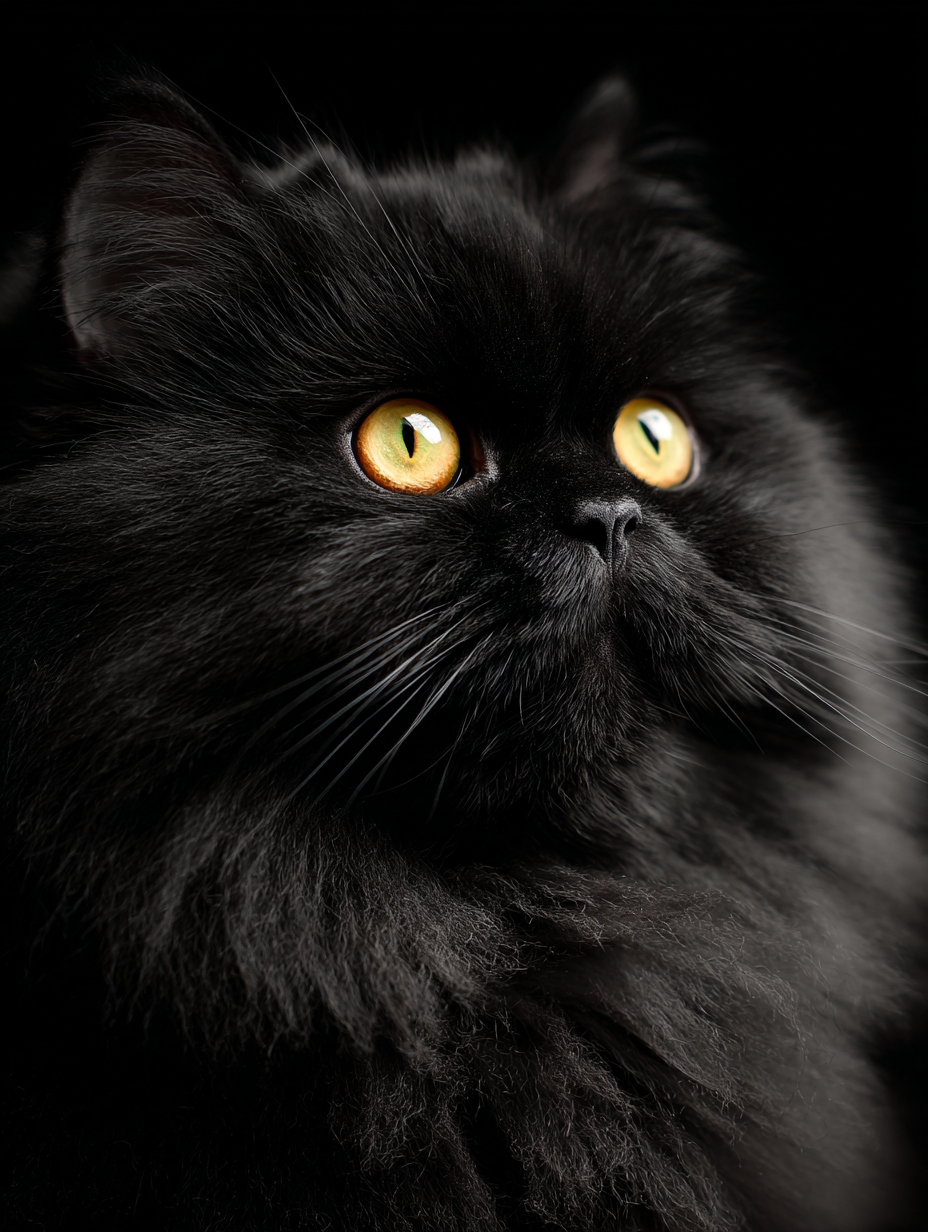
Black British Longhair Cat: Color Facts, Eye Color, Price, Temperament & FAQs
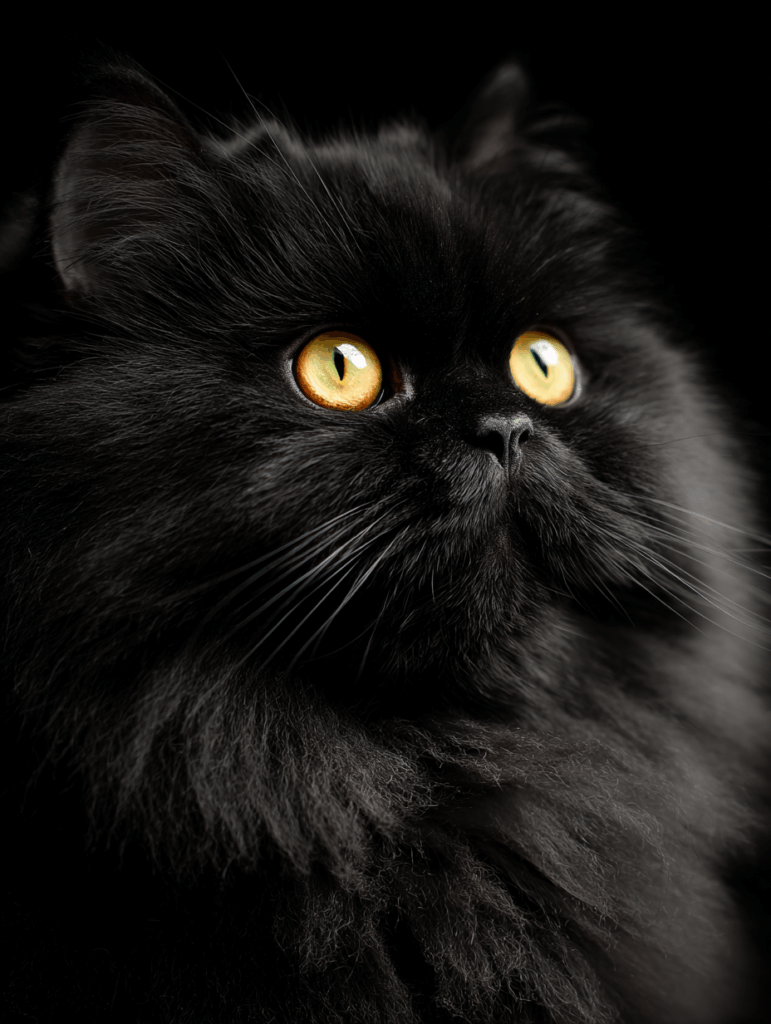
Black British Longhair cats are fully recognized, purebred British Longhairs known for their deep black coats, copper or gold eyes, calm temperament, and plush semi-long fur. Though less common than blue or silver, black British Longhairs are highly sought after for their elegant appearance, strong structure, and steady, affectionate personality. When responsibly bred, they offer the same health, longevity, and family-friendly nature as all British Longhairs—wrapped in one of the breed’s most striking colors.
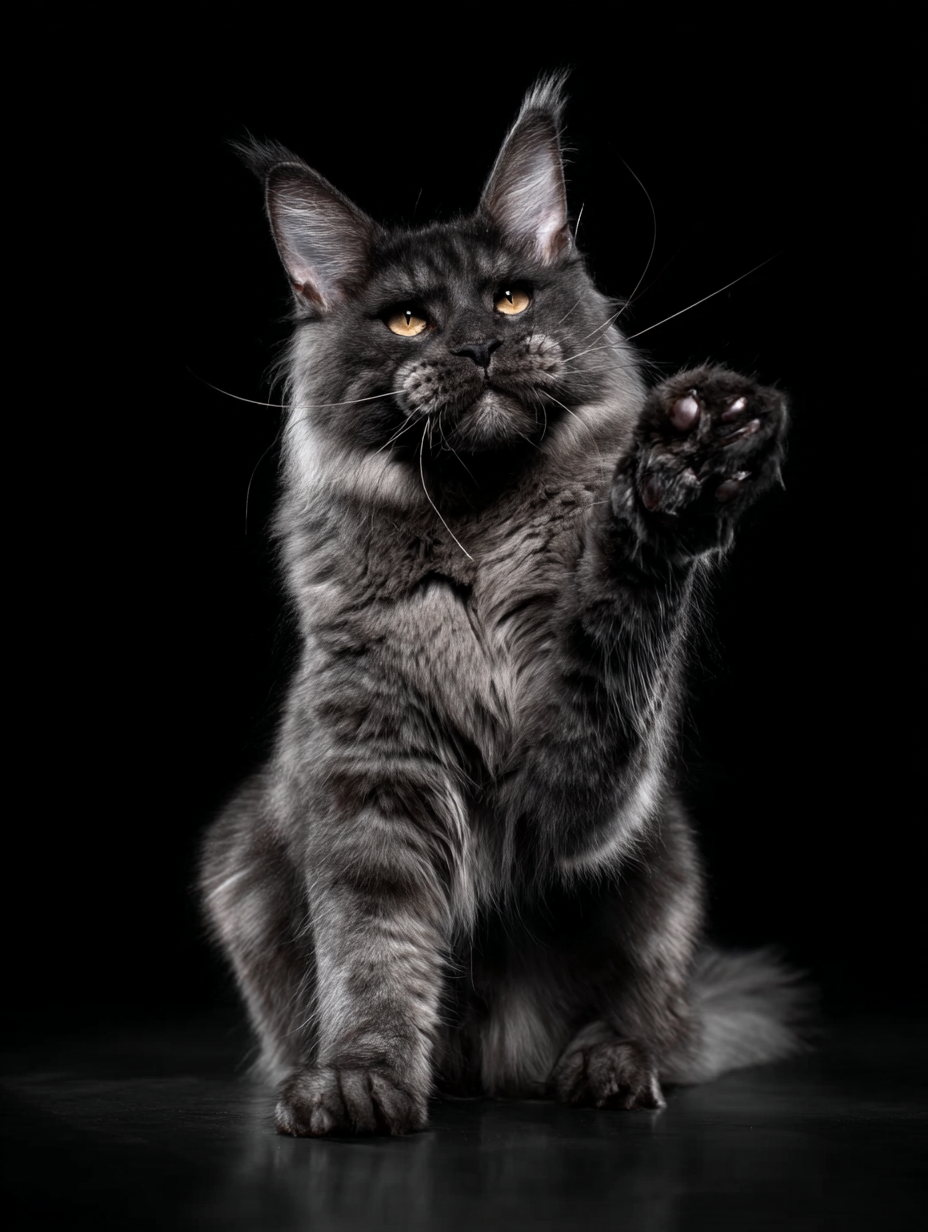
The black British Longhair is striking and elegant, offering a bold, classic appearance softened by a dense, flowing coat. Their deep black fur appears rich and velvety, often with a subtle sheen, and their warm copper or gold eyes create dramatic contrast against the dark coat. Combined with the breed’s gentle, emotionally steady nature, black British Longhairs appeal to families who want a refined, quietly luxurious companion.
In this guide, we’ll cover everything you need to know about black British Longhair cats — including color genetics, coat development, eye color expectations, how black compares to other British Longhair colors, and what to expect from black British Longhair kittens as they mature.
Black British Longhair Cat — Quick Summary
| Feature | Black British Longhair |
|---|---|
| Breed | British Longhair |
| Color Recognition | Fully recognized by TICA, CFA, GCCF, FIFe |
| Coat Color | Solid black (non-dilute) |
| Coat Type | Semi-long, dense, plush, even |
| Undercoat | Thick double coat |
| Eye Color | Copper, gold, deep amber |
| Blue Eyes | ❌ No (not breed-standard) |
| Temperament | Calm, emotionally steady, affectionate but not clingy |
| Activity Level | Low to moderate |
| Shedding | Moderate year-round, heavier seasonally |
| Grooming Needs | Brushing 2–4× per week |
| Health Profile | Generally robust when responsibly bred |
| Average Lifespan | 14–18+ years |
| Rarity | Less common than blue or silver |
| Show Eligibility | Fully showable |
| Family Friendly | Yes — excellent with respectful children |
| Shelter Availability | Extremely rare |
| Price Range | Premium; higher for exceptional lines |
Can British Longhair Cats Be Black?
Yes. British Longhair cats can be black, and the black color is fully recognized and accepted by major registries such as TICA, GCCF, and FIFe (with longhair recognition varying by registry category). The black British Longhair displays a solid, even, deeply pigmented coat that develops from kittenhood into adulthood.
British Longhairs share the same color genetics as British Shorthairs, with the addition of the recessive longhair gene. Black British Longhairs express the non-dilute, full-pigment form of the color gene, producing a rich, inky black that appears consistent throughout the coat rather than fading or pointing.
This means black British Longhairs are fully purebred, traditional, and authentic, bred from registered British lines—just with a longer, flowing coat.
Tip: You may see them referred to as solid black British Longhairs. They share the same calm temperament, sturdy bone, round head, and gentle presence as other British Longhairs—the only difference is the dramatic color paired with a plush long coat.
Understanding British Longhair Colors
British Longhairs come in one of the widest color ranges of any longhaired breed. Because they share the same color genetics as British Shorthairs, black is considered a foundation color, not a novelty.
Common British Longhair colors include:
- Blue
- Black
- Lilac
- Chocolate
- Red
- Cream
These colors may appear in multiple patterns:
- Solid
- Bicolor
- Tortoiseshell
- Shaded
- Smoke
- Tabby
Black British Longhairs fit cleanly within these classifications and are considered classic rather than experimental. Historically, black has been present since early British cats and remains valued for its depth, clarity, and contrast.
In longhairs, the color often appears even more luxurious due to the dense, cushioned coat that softens and deepens the visual effect of black.
Black British Longhair vs Other British Longhair Colors
| Feature | Black British Longhair | Other British Longhair Colors |
|---|---|---|
| Registry Status | Fully recognized solid color | Fully recognized across many colors |
| Accepted Expression | Solid black only | Solid, bicolor, tortie, shaded, smoke, tabby |
| Coat Appearance | Deep black with soft sheen | Varies by color and pattern |
| Eye Color | Copper or gold preferred | Copper, gold, green (silvers), blue (whites/bicolors) |
| Coat Texture | Dense, plush, flowing; black often looks glossier | Dense and plush across all colors |
| Temperament | Calm, affectionate, emotionally steady | Same across all British Longhairs |
| Genetics | Non-dilute, full pigmentation (B-) | Dilute or non-dilute depending on color |
| Show Eligibility | Showable where British Longhairs are accepted | Showable depending on color category |
| Rarity | Moderately uncommon | Blue most common; others vary |
| Breed Authenticity | 100% British Longhair lineage | 100% British Longhair lineage |
| Best For | Families wanting a bold, elegant look | Families preferring classic or lighter tones |
Black British Longhairs carry all the hallmark traits of the breed—calm temperament, emotional balance, solid structure, and plush coat—with the added visual impact of a deep, dramatic black color. The difference between black and other British Longhair colors is purely aesthetic, not behavioral or structural.
For families drawn to a timeless, elegant look paired with a gentle, steady companion, the black British Longhair offers classic British character with striking presence.
The Difference Between Shaded/Smoke and Solid British Longhairs
What Is a Shaded or Smoke British Longhair?
A shaded or smoke British Longhair has a lighter undercoat with darker pigment concentrated toward the tips of each hair. This creates a soft, luminous contrast that becomes especially visible when the cat moves or when the coat parts.
- Smoke British Longhairs appear dark at rest, but reveal a bright silver or pale undercoat when the fur shifts
- Shaded British Longhairs have lighter bases with more delicate dark tipping, creating a glowing, halo-like effect
This contrast is caused by the inhibitor gene, which limits pigment deposition along part of the hair shaft. As British Longhair kittens mature and their coats lengthen and thicken, the undercoat becomes more visible—so shaded and smoke kittens often change noticeably with age.
In longhaired cats, this effect is especially dramatic because the flowing coat amplifies light reflection and depth.
What Is a Solid British Longhair?
A solid British Longhair has even, uninterrupted pigmentation from root to tip, with no pale undercoat, tipping, or contrast. The color appears consistent across the entire coat, regardless of length.
Solid black British Longhairs fall into this category, along with solid:
- Blue
- Chocolate
- Lilac
- Cream
Solid British Longhairs are highly valued for:
- Color clarity
- Depth of pigment
- Uniform coat presentation
Many families are drawn to black British Longhairs for their rich, velvety appearance, soft sheen, and striking contrast against warm copper or gold eyes.
Black British Longhair Color Variations Explained
Black British Longhairs can appear in several recognized forms depending on pattern genetics:
| Variation | Description |
|---|---|
| Solid Black British Longhair | Deep, even black from roots to tips. Plush, dense coat with a soft sheen. Eye color typically copper or gold. |
| Black Smoke British Longhair | Appears black on the surface, but reveals a bright silver-white undercoat when the fur parts. |
| Black Tortoiseshell British Longhair (females) | Black base coat with red or cream patches, creating a rich mosaic pattern. |
| Black Bicolor British Longhair | Black combined with white in balanced distribution, often with white chest, paws, or facial markings. |
| Black Silver (Shaded) British Longhair | Black tipping over a silver base, producing a luminous, sparkling contrast. |
🌙 Regardless of pattern, all black British Longhairs share the same hallmark temperament: calm, affectionate, emotionally steady, and deeply loyal.
Black British Longhair Recognition Across Registries
The British Longhair breed includes one of the broadest recognized color ranges among longhaired cats. Black and black-based patterns are fully accepted by major registries where British Longhairs are recognized, including TICA, GCCF, and FIFe (classification varies by registry).
Recognized black-based varieties include:
- Solid black
- Black smoke
- Black silver (shaded)
- Black tortoiseshell
- Black bicolor
This recognition allows breeders and families to:
- Preserve genetic diversity responsibly
- Register kittens accurately
- Track lineage and health across generations
A black British Longhair is not a separate breed or subtype—it is a fully purebred British Longhair expressing one of the breed’s foundational full-pigment colors.
Black British Longhair Eye Color — Facts vs Myths
Black British Longhairs are best known for warm, saturated eye colors that contrast beautifully with the dark coat.
Typical eye colors include:
- Deep copper
- Rich gold
- Warm amber
In some black silver or shaded lines, eyes may show greenish tones, but solid black British Longhairs retain warm eye colors.
❗ Black British Longhairs do not have blue eyes as adults.
Blue eyes are associated with pointed or partial-albino genetics, which are not part of the British Longhair standard.
If you encounter an adult cat advertised as a black British Longhair with blue eyes:
- It is not a purebred British Longhair
- It is likely a mix with a pointed breed or a non-pedigree cat
In Summary
- Solid black British Longhairs have uniform pigment and dramatic depth
- Shaded and smoke British Longhairs display contrast created by the inhibitor gene
- All variations are fully recognized and genetically authentic
- Coat pattern affects appearance—not temperament, health, or breed quality
British Longhair Color Chart (Including Black Variants)
| Color Type | Pattern | Eye Color | Notes |
|---|---|---|---|
| Black (Solid) | Solid | Copper, Gold, Amber | Deep, even pigmentation from root to tip; appears especially rich and velvety in a long coat |
| Black Smoke | Smoke | Gold to Copper | Dark surface with a bright silver-white undercoat that shows when the coat parts |
| Black Silver | Shaded / Tipped | Green, Hazel | Crisp silver base with black tipping; produces a luminous, flowing contrast |
| Blue (Dilute Black) | Solid | Copper | Soft blue-gray tone; plush and dense with a classic British look |
| Chocolate | Solid | Copper | Warm cocoa tone with depth enhanced by coat length |
| Lilac | Solid | Copper | Pale lavender-gray with a soft, powdery appearance |
| Cream | Solid | Copper | Dilute red with a smooth, uniform finish |
| Black Tortie (Females) | Tortie | Copper | Black base with red or cream patches; rich contrast in a long coat |
📘 For visual examples, see our full British Longhair Color Chart featuring solid, smoke, shaded, silver, and tortoiseshell varieties—including black-based coats.
Black British Longhair Kittens: What to Expect
Black British Longhair kittens are born dark and remain consistently pigmented as they grow. Unlike colorpoint breeds, their color does not change with temperature. As the coat lengthens and density increases, the black color develops remarkable depth and softness.
Personality
Black British Longhair kittens share the same temperament as the breed as a whole:
- Calm and emotionally steady
- Affectionate without being demanding
- Observant and thoughtful
- Comfortable in family homes, apartments, and multi-pet environments
Coat color does not influence temperament—black kittens are just as gentle, loyal, and people-focused as any other British Longhair.
Size & Maturity
British Longhairs are slow to mature.
- Males typically reach 12–17 pounds
- Females average 8–14 pounds
- Full physical and coat maturity occurs between 3–5 years
Black British Longhairs develop the same strong bone structure, rounded features, and balanced proportions that define the breed.
Coat Care
The semi-long, dense coat of a black British Longhair gives the color a soft sheen rather than a sharp shine.
- Brush 2–3 times per week
- Increase brushing during seasonal coat changes
- Use a wide-tooth metal comb to prevent tangles without pulling
- No routine bathing required unless recommended
💡 Proper grooming enhances the depth and richness of black coats, especially as adults.
The Genetics Behind Black British Longhairs
The black coat in British Longhairs is produced by the dominant B (black) gene, which expresses full, non-diluted pigment evenly along the entire hair shaft.
Unlike pointed or temperature-sensitive breeds, British Longhairs maintain consistent color across the entire body, regardless of environment.
In simple terms:
- Solid Black British Longhair: B/B or B/b (full pigment expression)
- Blue British Longhair: Dilute form of black (dd)
- Black Smoke British Longhair: Black base plus inhibitor gene (I-)
These cats are 100% purebred British Longhairs, sharing the same structure, temperament, and breed standard as all other color varieties.
Many ethical breeders intentionally preserve black lines to:
- Maintain genetic diversity
- Support strong pigment clarity
- Preserve foundational British color genetics
In Summary
- Black British Longhairs are fully recognized and historically rooted
- Solid, smoke, silver, tortie, and bicolor black variations are all legitimate
- Eye color is warm (copper, gold, amber), never blue in solid blacks
- Coat color affects appearance only—not temperament or health
Black British Longhair Mix Cats
If you see a listing for a “black British Longhair mix”, especially online, it is usually a cross between a British-type cat and another longhaired breed such as a Domestic Longhair, Persian, or sometimes a British Shorthair carrying the longhair gene.
Mixed cats may resemble British Longhairs at first glance, but they typically differ in key areas:
- Eye color: lighter yellow, green, or inconsistent tones rather than rich copper, gold, or amber
- Head shape: narrower face, less cheek fullness
- Bone structure: lighter frame, less dense body
- Coat texture: silky or wispy rather than plush, dense, and resilient
- Overall balance: lacks the rounded, teddy-bear silhouette of a true British Longhair
A purebred Black British Longhair will always come with verifiable pedigree documentation. Registration papers—not appearance alone—confirm breed authenticity.
True British Longhairs show:
- Round head and full cheeks
- Strong bone and compact, balanced body
- Semi-long, dense, plush coat
- Warm eye colors (never blue in solid blacks)
Why Black British Longhair Kittens Are Rare
Black British Longhair kittens are produced in much smaller numbers than blues, silvers, and goldens—not because the color is unaccepted, but because breeder focus tends to follow demand.
Most British programs prioritize:
- British Blue
- Golden shaded
- Silver shaded and tipped lines
Longhair expression itself is recessive, which already limits numbers. When combined with solid black, availability becomes even more limited.
That rarity is exactly why black British Longhairs are increasingly sought after. Their coats appear deep, velvety, and dramatic in a long, plush texture—especially striking when paired with copper or gold eyes.
At Almonte Cats, black British Longhair kittens are produced occasionally and intentionally, always from health-tested, registered lines.
✨ Black British Longhair kittens are often reserved early due to limited annual availability.
Black British Longhair Kitten Cost — Real Price Range (USD)
| Category | Typical Price Range | Notes |
|---|---|---|
| Pet-quality (registered, health-tested) | $3,500 – $5,500 | Most well-bred black British Longhairs fall here |
| Show-quality / exceptional coat | $5,500 – $7,500 | Dense coat, strong structure, correct eye color |
| Rare or elite lines (imported parents, top programs) | $7,500 – $10,000+ | Gold-level programs, limited availability |
| Retired adult (occasionally) | $1,500 – $3,000 | Rare, placement-based |
Why Black British Longhairs Reach the Upper Range
- Fewer breeders actively produce true solid black longhair
- Dense black coats require excellent coat genetics to avoid rusting or fading
- Imported British lines (UK / EU) add $3K–$6K+ in breeder costs
- Buyers seeking black specifically create scarcity pressure
- Luxury catteries price on structure, temperament, and lineage, not just color
Red Flags to Avoid
Be cautious if you see:
- “Black British Longhair” kittens under $2,500
- No registration or vague “papers coming later”
- Claims of blue eyes in adults
- No health testing documentation
- No photos/videos of parents
These are often domestic longhairs or mixed cats, not British Longhairs.
The Beauty of the Black British Longhair
The black British Longhair showcases the breed’s elegance in its most dramatic form. The longer coat softens the color visually, creating depth rather than shine, and gives the black fur a rich, luxurious presence.
Black British Longhairs embody the core traits of the breed:
- Calm, emotionally steady temperament
- Quiet confidence
- Solid, well-balanced structure
- Plush, dense semi-long coat
- Deep loyalty to their people
The appeal of the British Longhair has never been about color alone. Black simply highlights the breed’s natural balance, gentleness, and timeless presence.
How to Identify a True Black British Longhair Kitten
Look for the following before placing a deposit:
- Pedigree papers from TICA, CFA, GCCF, or FIFe
- Registered cattery name with traceable history
- Breed-specific structure: round cheeks, thick neck, compact body
- Correct coat type: dense, plush, semi-long—not silky or thin
- Consistent black color from kittenhood (no point shading or fading)
Avoid sellers claiming:
- “Rare blue-eyed black British Longhairs”
- Extremely low prices
- No registration or parent information
❗ Solid black British Longhairs never have blue eyes as adults.
Blue eyes indicate a different genetic pathway and are not part of the solid British Longhair standard.
A responsible breeder will always provide documentation, health testing details, and transparent communication.
Choosing a Black British Longhair Kitten
When selecting a black British Longhair kitten, focus on health, temperament, and proper early development rather than color alone. A well-bred British Longhair should show balance, calm confidence, and a dense, plush coat from the start.
Responsible steps to take:
- Request DNA color confirmation if you want verification of true solid black (non-smoke, non-shaded)
- Ask for HCM and PKD health screening on both parents
- Confirm kittens are raised in-home, not in cages or isolated rooms
- Look for early litter training and gentle handling from birth
- Expect a written health guarantee and contract
- Verify registry papers (TICA, CFA, GCCF, or FIFe)
At Almonte Cats, every British Longhair kitten — including black, blue, golden, silver, shaded, and cream — is:
- Fully registered
- Microchipped
- Age-appropriate vaccinated
- Vet-checked before placement
- Raised underfoot with structured, calm socialization
Color never changes the standard of care. Whether a family chooses a classic shade or a rarer black British Longhair, each kitten receives the same investment, transparency, and lifetime breeder support.
Summary: Can British Longhair Cats Be Black?
Yes — British Longhair cats can be black, and the color is fully recognized, traditional, and genetically stable within the breed.
Black British Longhairs are solid-colored cats with deep, even pigmentation, a dense semi-long plush coat, and the same balanced structure and temperament that define the British type. They remain completely purebred British Longhairs in lineage, behavior, and conformation, even though the color is produced less frequently than blue or silver.
Black British Longhairs are an excellent choice for families who want:
- A calm, emotionally steady companion
- Manageable longhair grooming
- A rare yet classic color
- A bold, elegant appearance without sacrificing temperament
The appeal of the British Longhair is rooted in structure, stability, and presence — black simply showcases those traits in one of the breed’s most striking forms.
Black British Longhair Cat FAQ
Can British Longhair cats be black?
Yes. Black is a fully recognized and accepted color in British Longhairs by major registries such as TICA, CFA, GCCF, and FIFe. A black British Longhair is a solid-colored, purebred British Longhair with the same structure, temperament, and breed standard as other colors.
Are black British Longhairs rare?
Black British Longhairs are less common, but not because the color is restricted. Many breeders prioritize blue, silver, or golden lines due to demand, so black kittens are produced in smaller numbers. When well bred, black British Longhairs are considered special and highly sought after.
Is a black British Longhair more expensive than other colors?
Price depends on lineage, coat quality, breeder investment, and demand.
- Standard black British Longhair kittens often fall in the mid to upper price range
- Exceptional solid blacks, show-quality coats, or imported lines can be priced higher
Color alone does not determine value—health testing, structure, and socialization matter most.
A well-bred black British Longhair kitten in the U.S. realistically costs $3,500–$7,500, with elite imported lines reaching $10,000 or more.
Do black British Longhair kittens stay black as they grow?
Yes. Solid black British Longhairs maintain consistent pigmentation from kittenhood into adulthood. Some kittens may show faint “ghost tabby” markings early on, which usually fade as the coat matures and thickens.
What eye color do black British Longhairs have?
Most black British Longhairs have:
- Copper
- Gold
- Deep amber
Green eyes may appear in black silver or shaded lines, but solid black British Longhairs do not have blue eyes as adults.
Can a black British Longhair have blue eyes?
No. Adult blue eyes indicate colorpoint or albinism genes, which are not part of the British Longhair breed standard. A “black British Longhair with blue eyes” is almost always a mix or misrepresented cat.
Are black British Longhairs more aggressive or different in temperament?
No. Coat color does not affect temperament. Black British Longhairs are known for the same traits as all British Longhairs:
- Calm and emotionally steady
- Affectionate without being clingy
- Quiet and observant
- Excellent indoor companions
Personality is shaped by genetics, socialization, and environment—not color.
Do black British Longhairs shed more than other colors?
No. Shedding level depends on coat density and seasonal cycles, not color. British Longhairs shed moderately year-round with heavier seasonal shedding, regardless of whether the coat is black, blue, or silver.
Is grooming harder for black British Longhairs?
Grooming needs are the same as any British Longhair:
- Brushing 2–4 times per week
- More brushing during shedding seasons
- Occasional sanitary trims if needed
Black coats may show loose hair more visibly on light furniture, but grooming effort is not higher.
How can I tell if a black British Longhair is purebred?
A true black British Longhair should have:
- Registration papers (TICA, CFA, GCCF, or FIFe)
- Round head and full cheeks
- Dense, plush semi-long coat
- Thick bone and cobby body
- Calm, confident demeanor
Always request pedigree documentation and health testing.
What is the difference between black smoke and solid black British Longhair?
- Solid black: Even black pigment from root to tip
- Black smoke: Dark tips with a pale silver or white undercoat
Smoke kittens often look lighter as they grow, while solid blacks remain uniformly dark.
Are black British Longhairs good for families?
Yes. They are excellent family cats because they are:
- Patient with respectful children
- Emotionally stable
- Not overly reactive or demanding
- Comfortable in structured households
They adapt well to both quiet homes and steady family routines.
Do black British Longhairs get hotter than other colors?
No. Coat color does not significantly affect body temperature indoors. British Longhairs regulate heat well when kept at a healthy weight and brushed regularly.
Can black British Longhairs be shown?
Yes. Solid black British Longhairs are fully show-eligible in all major registries, provided they meet conformation, coat, and eye color standards.
Are black British Longhair kittens available from shelters?
Almost never. British Longhairs are a rare, pedigreed breed and are typically placed directly through breeders. Shelter cats labeled as “British Longhair” are almost always domestic longhairs with similar coloring.
How much does a black British Longhair kitten cost?
Prices vary by breeder and lineage, but expect:
- Well-bred black British Longhair kittens to fall in the premium price range
- Imported or exceptional lines to cost more
Unusually low prices are a red flag for misrepresentation or lack of health testing.
Should I choose a black British Longhair over other colors?
Choose based on:
- Temperament fit
- Grooming comfort
- Breeder quality
- Long-term companionship goals
Color is a personal preference, but black British Longhairs offer the same calm, loyal companionship as any other British Longhair—wrapped in a striking, elegant coat.
Searching for Your Soul Cat?
If you’re looking for a thoughtfully bred, in-home–raised kitten with excellent temperament and type, explore our available kittens.
At Almonte Cats, every kitten is:
- TICA / CFA registered
- Raised in-home for confident, social temperaments
- From fully health-tested parents
- Vet-checked, vaccinated, and microchipped
We produce limited litters each year, and early reservations are encouraged.B
See British Longhair Kittens Available
More British Longhair Resources
See more posts about the British Longhair breed:
- British Longhair Kittens: Growth Week by Week
A guide to kitten growth stages, coat transitions, socialization, and early care. - British Longhair Breed Overview
A complete introduction to the breed’s temperament, structure, care needs, and suitability for different homes. - How to Choose a British Longhair Breeder
How to choose a reputable British Longhair breeder and what to expect throughout the process. - British Longhair Shedding and Grooming
Step-by-step coat care, tools, and maintenance routines for the semi-long double coat. - British Longhair Diet and Nutrition
Important diet recommendations, feeding charts and more. - British Longhair Size: How Big do British Longhairs Get?
See estimated size and growth charts. - British Longhair Cat Health
An overview of British Longhair health. - Best British Longhair Breeders in the USA See a list of the best breeders in the USA and what makes them awesome.
- How Much Does a British Longhair Kitten Cost? See current prices based on colors etc.
Sources & References
- Cat Fanciers’ Association (CFA)
British Longhair & British Shorthair Breed Standards and Color Recognition
https://cfa.org/breeds/british/ - The International Cat Association (TICA)
British Longhair Breed Group, Color & Pattern Standards
https://tica.org/breeds/british-longhair
https://tica.org/phocadownload/breed-standards/british.pdf - Governing Council of the Cat Fancy (GCCF)
British Shorthair & British Longhair Registration and Color Standards
https://www.gccfcats.org/breeds/british-shorthair/
https://www.gccfcats.org/breeding-policy/ - Fédération Internationale Féline (FIFe)
British Longhair (BLH) Breed Standard and EMS Codes
https://fifeweb.org/breeds/breed-standards/ - Robinson’s Genetics for Cat Breeders & Veterinarians
Understanding solid, smoke, shaded, and inhibitor gene expression
(Elsevier Academic Press, widely cited breeder reference) - UC Davis Veterinary Genetics Laboratory
Feline coat color genetics and dilution vs non-dilute pigmentation
https://vgl.ucdavis.edu - Cornell University College of Veterinary Medicine
General feline health, longevity, and breed stability references
https://www.vet.cornell.edu - ISFM / International Cat Care
British breed temperament, grooming, and welfare guidance
https://icatcare.org





Read the Comments +