
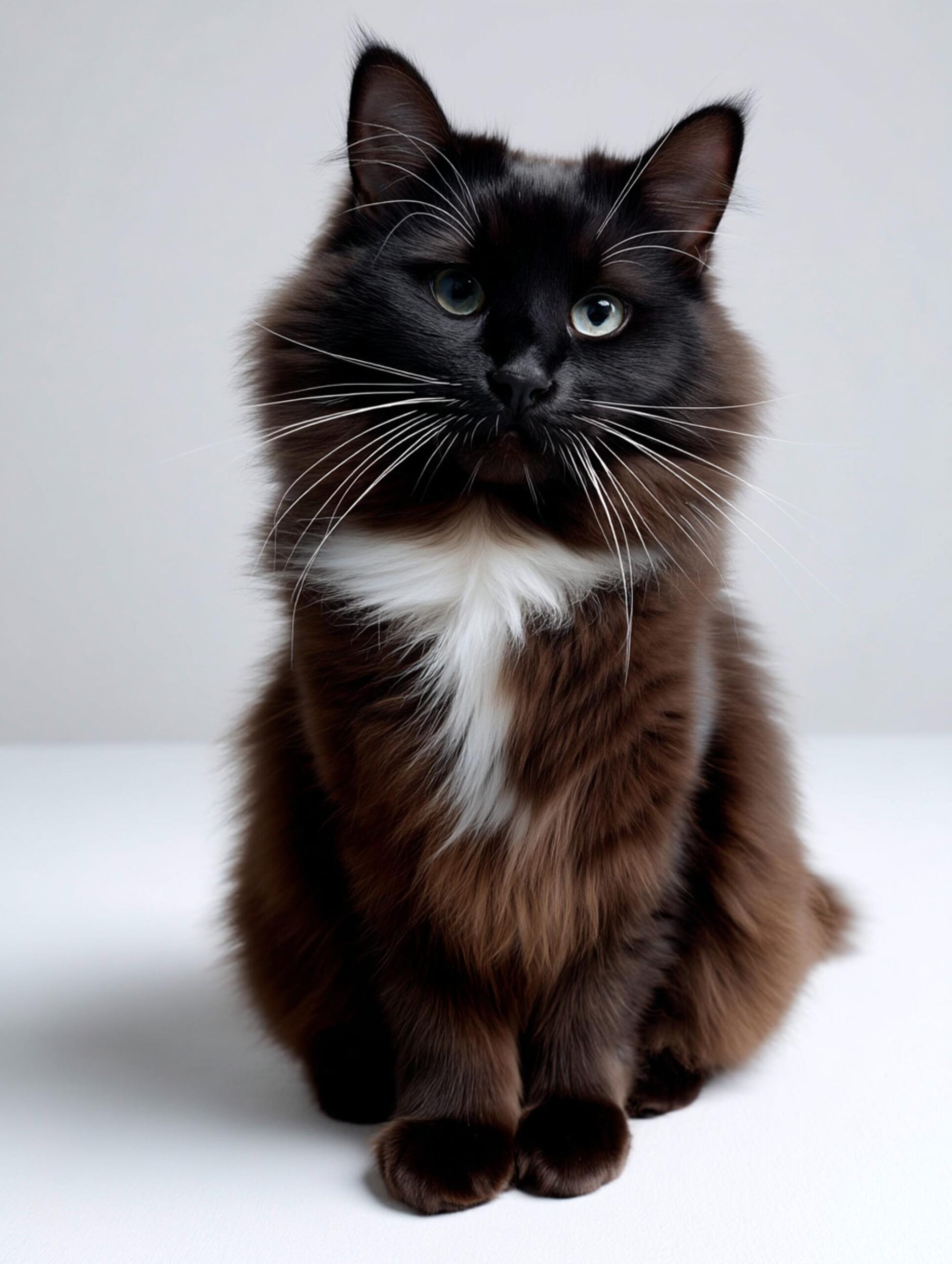
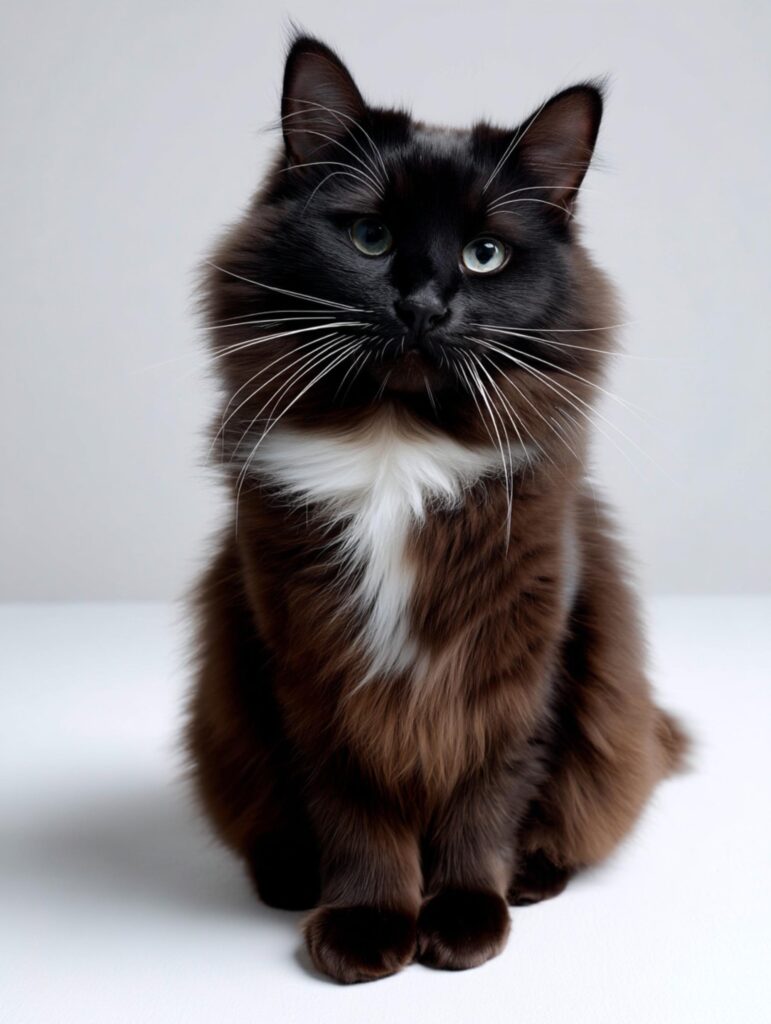
Black Ragdoll Cat: What the Term Means and How It’s Classified
Ragdoll cats are known for their blue eyes, relaxed temperament, and pointed coats — which naturally raises the question: can a Ragdoll cat be black? The idea of a black Ragdoll surprises many people because solid black does not fit neatly into the traditional pointed image of the breed.
The answer is nuanced. Black Ragdoll cats do exist, but they are not considered traditional under classic pointed Ragdoll standards. In practice, the term black ragdoll cat is used to describe either very dark Ragdolls or solid black cats from Ragdoll-derived/Cherubim lines, depending on genetics and classification.
This guide explains what people usually mean when they say black ragdoll cat, how black coats relate to Ragdoll color genetics, the difference between colorpoint and solid coats, and what to expect as black Ragdoll kittens mature. By separating appearance from classification, the confusion around black Ragdoll cats becomes much easier to understand.
Black Ragdoll Cats: Quick Facts & Summary
| Topic | Black Ragdoll Cats Explained |
|---|---|
| Are Black Ragdolls Real? | Yes. Black Ragdolls exist and come from Ragdoll lines. |
| Breed Status | Same Ragdoll breed; coat expression differs |
| Coat Color | Solid black (non-pointed) |
| Eye Color | May be blue, aqua, green, or gold (not limited to blue) |
| Registry Classification | Classified separately in some registries (e.g., Cherubim in TICA) |
| Genetics | Result of non-pointed color expression within Ragdoll lines |
| Temperament | Same calm, affectionate Ragdoll temperament |
| Size | Large, slow-maturing (same as all Ragdolls) |
| Coat Length | Semi-long, plush |
| Grooming Needs | Moderate, routine brushing |
| Shedding | Moderate, seasonal |
| Health Profile | Same as other Ragdolls when well bred |
| Lifespan | 14–18+ years |
| Family Friendly | Yes |
| Rare or Common? | Uncommon due to standard preferences, not genetics |
| Why They’re Controversial | Many people confuse “non-standard” with “not real” |
Black Ragdoll cats are real Ragdolls with a solid black coat, separated by classification rules — not breed, temperament, or health.
Can Ragdoll Cats Be Black?
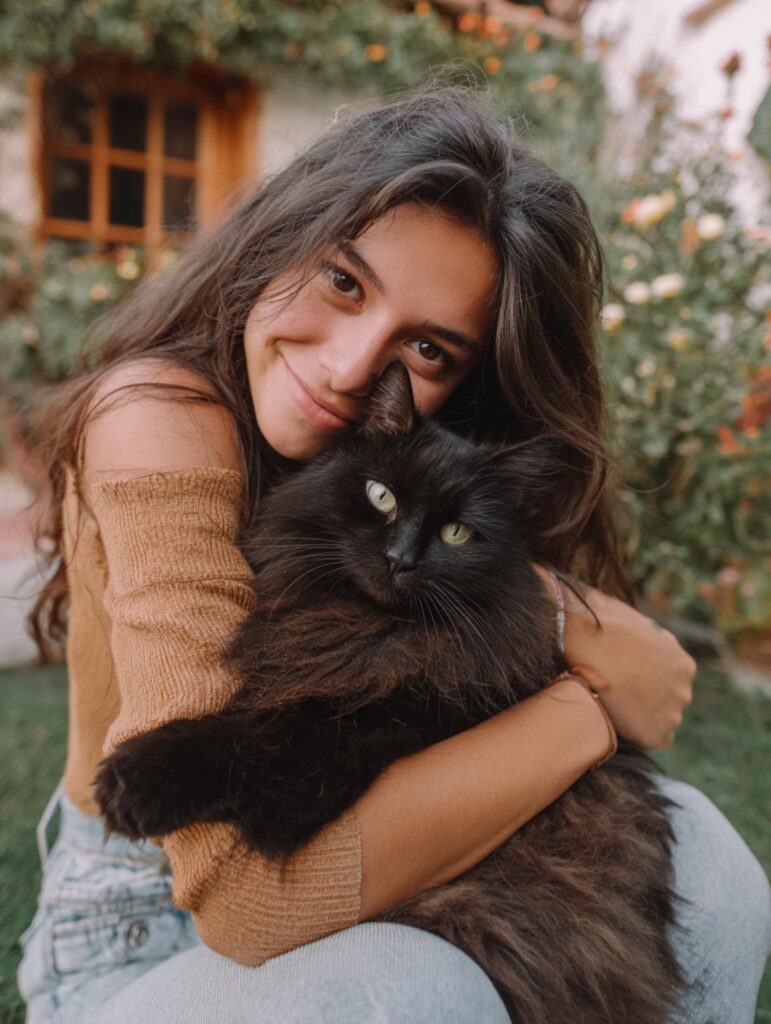
Yes. Ragdoll cats can be black, but they aren’t officially recognized as a show color under traditional pointed Ragdoll TICA or CFA standards. TICA recognizes non-pointed ragdolls under the Cherubim class. That means a black Ragdoll cat can be registered and shown under the Cherubim division, preserving its pedigree and authenticity within the breed.
Most Ragdolls carries the colorpoint gene, which restricts pigment to cooler areas of the body — the face, tail, ears, and legs. Black Ragdolls, however, lack this temperature-sensitive gene, resulting in a full, rich coat color that doesn’t fade at the body like typical Ragdoll patterns.
This makes black Ragdolls “non-traditional,” yet purebred if they descend from registered Ragdoll lines.
✅ Tip: Some breeders call them “solid Ragdolls” or “non-pointed Ragdolls.” They share the same affectionate temperament, large frame, and silky coat, only the color differs.
Why Black Ragdoll Cats Are So Commonly Misunderstood
Black Ragdoll cats are widely misunderstood because the term black Ragdoll is used to describe multiple different things at once. In casual conversation, listings, and social media, it may refer to a very dark seal Ragdoll, a mink Ragdoll, or a solid black non-pointed Ragdoll classified separately under modern registry frameworks.
This confusion is amplified by outdated charts, inconsistent breeder terminology, and image searches that group visually similar cats together without regard for genetics or classification. As a result, people often receive conflicting answers depending on who they ask.
The misunderstanding is not caused by disagreement about the cats themselves, but by mixing appearance-based language with registry-based definitions. Once those are separated, the topic becomes far clearer.
To see more about Ragdolls read the complete guide here.
Understanding Ragdoll Colors in Relation to Black Coats
Traditional Ragdolls are defined by a pointed color system, built around six core colors:
- Seal
- Blue
- Chocolate
- Lilac
- Red (flame)
- Cream
These colors appear in three primary patterns:
- Colorpoint
- Mitted
- Bicolor
Together, these combinations account for the classic, pointed Ragdoll look most people recognize.
Black Ragdoll cats fall outside this pointed color framework, but they are still Ragdolls. When a Ragdoll expresses a solid (non-pointed) coat, including black, that cat is now classified under the Cherubim designation in TICA. This classification exists specifically to encompass non-pointed and expanded color expressions that originate from Ragdoll lines.
In other words, a black Ragdoll is not a new Ragdoll color — it is a non-pointed Ragdoll, formally recognized and classified as Cherubim. This distinction explains why black Ragdoll cats exist, why they share Ragdoll structure and temperament, and why their color does not appear in traditional pointed color charts.
See the Ragdoll Cat breed standard here.
Black Ragdoll Cats: History and Genetics
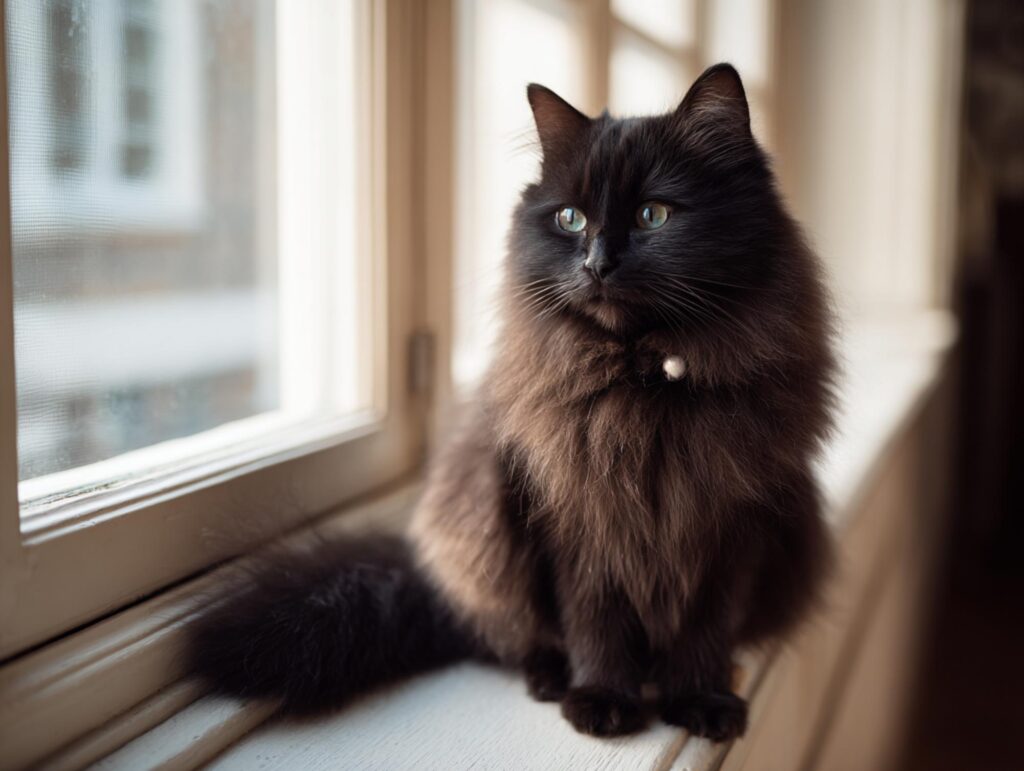
Black Ragdoll cats did not emerge suddenly, nor are they a novelty color added for trend appeal. Instead, they are the result of long-standing genetic variation within Ragdoll lines that express non-pointed coats. What has changed in recent years is not the cat itself, but how these cats are formally classified.
Under traditional Ragdoll standards, only pointed cats were recognized. However, Ragdolls that express solid or non-pointed colors, including black, are now classified by The International Cat Association (TICA) under the Cherubim designation. This classification exists specifically to encompass Ragdoll-derived cats that do not express the colorpoint gene, while retaining Ragdoll structure, temperament, and lineage.
Genetically, the difference between a traditional pointed Ragdoll and a black Ragdoll is centered on the presence or absence of the colorpoint restriction gene. Traditional Ragdolls carry temperature-sensitive colorpoint genetics that limit pigment to the extremities. Black Ragdolls do not express this restriction, allowing pigment to develop uniformly across the coat.
In simple terms, black Ragdolls are not “colored differently” — they are expressing color differently. Their solid black coat reflects full pigment expression rather than the restricted pattern seen in pointed cats. This is why black Ragdolls can exist within Ragdoll breeding programs while falling outside classic color charts.
Importantly, classification as Cherubim does not indicate a different breed in the conventional sense. It is a registry framework that allows accurate documentation of non-pointed Ragdolls without altering the genetic or behavioral identity of the cat.
Black Cherubim Ragdoll vs. Traditional Ragdoll: Comparison Guide
| Feature | Black Cherubim Ragdoll | Traditional Pointed Ragdoll |
|---|---|---|
| Registry Classification (TICA) | Cherubim Ragdoll – recognized as non-pointed | Ragdoll (Traditional) – recognized as pointed only |
| Accepted Colors | Black, blue, chocolate, lilac, cinnamon, smoke, shaded, mink, sepia | Seal, blue, chocolate, lilac, flame, cream (pointed only) |
| Pattern | Solid or full-body color, no contrast between points and body | Colorpoint, mitted, or bicolor, light body with darker extremities |
| Eye Color | Gold, copper, green, or aqua (mink) | Always vivid blue |
| Coat Texture | Semi-long, silky, same plush texture as traditional Ragdolls | Semi-long, soft, draping coat |
| Temperament | Calm, affectionate, gentle — identical to pointed Ragdolls | Calm, affectionate, gentle — classic Ragdoll personality |
| Genetic Makeup | Lacks the color-restricting gene (full pigment expression) | Carries temperature-sensitive colorpoint gene |
| Show Eligibility (TICA) | Shown as Cherubim Ragdolls or in “New Traits / Household Pet” classes | Shown in Traditional Ragdoll divisions only |
| Registration | Fully registerable with TICA as Cherubim (non-pointed) | Fully registerable with TICA, CFA, ACFA (pointed) |
| Rarity | Rare – produced in limited numbers; valued for uniqueness | Common within breed standards |
| Breed Authenticity | 100% Ragdoll lineage; same pedigree and conformation | 100% Ragdoll lineage; conforms to traditional show type |
| Best For | Families who love Ragdoll temperament but prefer darker or unique colors | Families seeking classic blue-eyed, pointed Ragdoll look |
Summary
Both Ragdoll Color types share the same loving, people-oriented temperament that defines the Ragdoll breed. The only difference is how their color genes express. See Ragdoll vs Cherubim for more details.
Physical Characteristics and Appearance of the Black Ragdoll Cat
Black Ragdoll cats retain the physical hallmarks that define the Ragdoll breed. Their appearance is shaped far more by structure and coat texture than by color alone.
Typical characteristics include:
- Size: Large, substantial cats. Males often mature between 15–20 pounds, with females typically ranging from 10–15 pounds.
- Build: Long, rectangular bodies with solid bone structure and balanced musculature.
- Coat: Medium-long, plush, and silky, with a lighter undercoat than many long-haired breeds.
- Head and Expression: Broad head with soft contours and a relaxed, open expression consistent with Ragdoll type.
- Eye Color: Unlike traditional pointed Ragdolls, eye color is not restricted to blue. Black Ragdolls may have green, gold, or copper eyes depending on genetic background.
The black coat itself can vary in tone. Some cats display a deep, jet-black appearance, while others develop warmer undertones as they mature. In certain lighting — particularly sunlight — faint patterning or ghost markings may appear. These subtle variations are normal and do not indicate tabby classification.
Because Ragdolls mature slowly, both size and coat depth often continue developing for several years. A young black Ragdoll may look very different at four months than at four years.
Personality and Care Considerations
In temperament, black Ragdoll cats are indistinguishable from their pointed counterparts. Color expression does not influence personality. These cats retain the behavioral traits that made the Ragdoll breed well known for companionship.
Temperament Traits
Black Ragdolls are typically:
- Calm and people-oriented
- Comfortable with handling and physical affection
- Social without being demanding
- Well suited to families, including those with children or other pets
Many exhibit the relaxed, trusting behavior that gave the breed its name, though individual personalities vary as they do in all cats.
Coat and Grooming Needs
While their grooming needs are similar to other Ragdolls, black coats make certain aspects more noticeable.
- Regular brushing helps prevent matting and keeps the coat glossy.
- Dust, lint, and loose hair are more visible on dark coats, making consistent grooming especially helpful.
- Seasonal shedding still occurs, though the Ragdoll coat lacks the dense undercoat seen in some long-haired breeds.
Environmental and Health Considerations
- Dark coats can absorb more heat, so providing cool resting areas during warmer months is beneficial.
- Like all Ragdolls, black Ragdolls benefit from routine veterinary care and monitoring for conditions commonly discussed within the breed.
- Coat color itself does not increase health risk.
Overall, care requirements for black Ragdolls are not specialized or difficult. They are best viewed as Ragdolls first, with color being a secondary characteristic rather than a defining trait.
Finding and Choosing a Black Ragdoll Cat
Finding a black Ragdoll cat requires a slightly different approach than searching for traditional pointed Ragdolls. Because black coats fall outside classic pointed standards, availability depends largely on how breeders classify and register non-pointed Ragdolls rather than on simple demand.
Most black Ragdolls are placed through breeders who work intentionally with non-pointed Ragdoll lines and register them under the Cherubim designation with The International Cat Association (TICA). This means your search should focus less on color listings and more on breeder transparency and classification clarity.
Rather than expecting to find many “black Ragdoll” listings publicly advertised, buyers often locate these cats by:
- Contacting Ragdoll breeders who openly discuss non-pointed programs
- Reviewing breeder education pages rather than kitten listings alone
- Asking how solid colors are registered and placed
A breeder’s willingness to explain classification clearly is often a better indicator of quality than the number of available kittens.
Choosing a Reputable Breeder
Because terminology around black Ragdolls is frequently misused online, the breeder’s communication matters as much as their cats.
A reputable breeder should be able to clearly explain:
- How their black Ragdolls are classified and registered
- Whether the kittens are placed strictly as companions
- What health screening is standard within their program
You should expect straightforward answers, not evasive language or vague assurances.
What Typically Distinguishes Responsible Programs
- Routine health screening of breeding cats, especially for conditions commonly discussed in Ragdoll lines
- Clean, home-based environments where kittens are raised with people
- Early socialization that produces confident, people-oriented kittens
- Consistent terminology that matches registry definitions
Breeders who rely heavily on novelty language or avoid discussing registration often create confusion later in the process.
Black Ragdoll Cat Price Expectations
Black Ragdoll cats are typically placed as companion animals, not show cats. As a result, pricing reflects pet placement rather than championship potential.
Most buyers can expect pricing to fall within a range similar to other companion Ragdolls from the same program. Price differences are usually driven by:
- Health testing and veterinary care
- Registration and documentation
- Breeder scale and region
Color alone does not justify a premium, and extremely high or unusually low prices should prompt clarification rather than assumptions. See Black Ragdoll Cat price info here.
Black Ragdoll Kittens: What to Expect
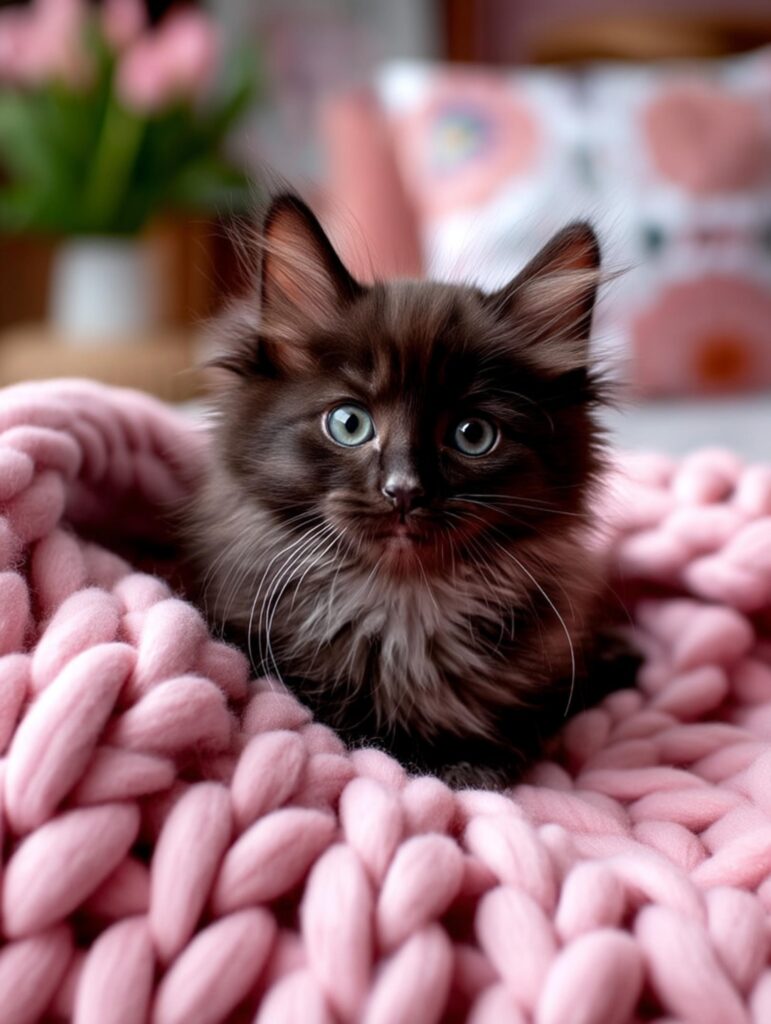
Black Ragdoll kittens often look different at each stage of development, which can surprise first-time buyers.
In early kittenhood:
- Coats may appear softer, lighter, or uneven in tone
- Subtle patterning or ghost markings may be visible
- Eye color may continue changing for several months
As kittens mature:
- Black pigment typically deepens and becomes more uniform
- Coat texture develops into the plush, silky feel associated with Ragdolls
- Final size and color depth may take several years to fully stabilize
Because Ragdolls are slow-maturing cats, it is normal for black kittens to change noticeably between adoption and adulthood. Early photos are not reliable predictors of final appearance.
A Practical Perspective for Buyers
Choosing a black Ragdoll cat is less about finding a rare color and more about understanding classification, expectations, and long-term temperament. When breeders are clear about how their cats are registered and placed, black Ragdolls offer the same calm, affectionate companionship that defines the breed.
The Difference Between Colorpoint and Solid Ragdolls
What Is a Ragdoll Colorpoint?
A colorpoint Ragdoll has lighter body fur with darker extremities (face, paws, tail, and ears). This signature pattern comes from the cs gene, which limits pigment production based on temperature.
That’s why kittens are born white — color develops as they grow and body temperature changes.
What Is a Solid Ragdoll?
A solid Ragdoll has full-color pigmentation across the body — no pale torso or light shading.
Black Ragdolls belong to this group, along with solid blue, chocolate, lilac, and even red variants.
Solid Ragdolls are purebred, but not “show type” in the classic sense. Many pet families love them for their unique, mysterious look.
Black Ragdoll vs Dark Seal Ragdoll: How to Tell the Difference
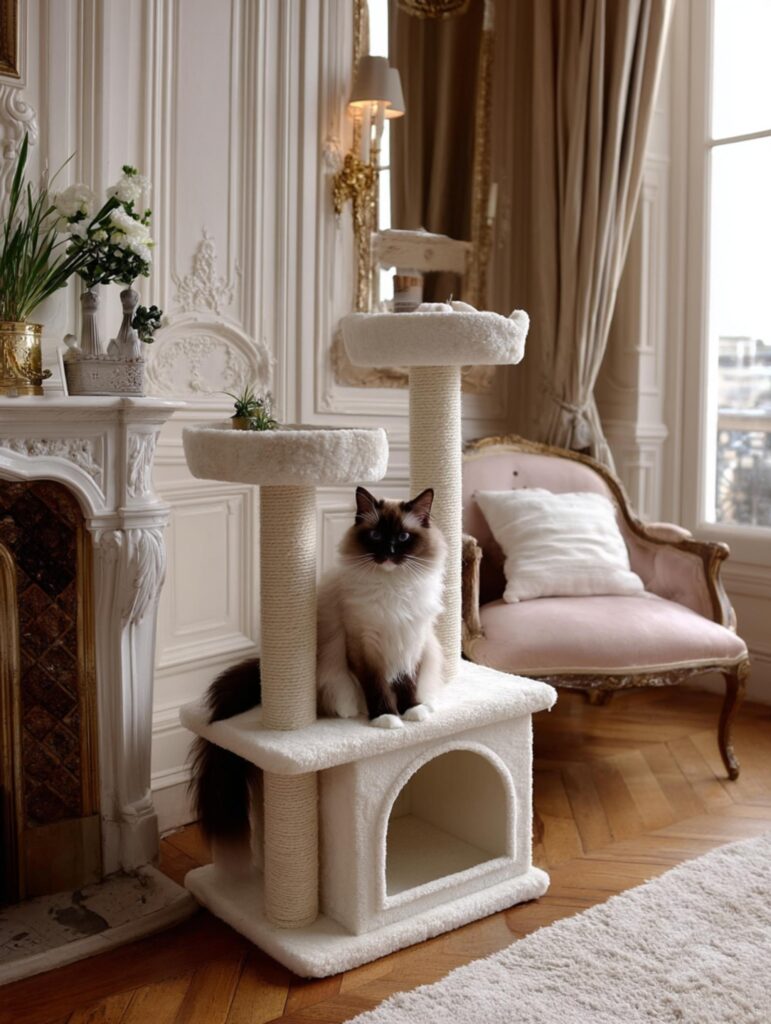
One of the most common sources of confusion is the difference between a black Ragdoll and a very dark seal Ragdoll. While they can look similar in photos, they are not the same.
A dark seal Ragdoll:
- Is still a pointed cat
- Has lighter body shading compared to the points
- Typically shows blue eyes
- Continues to darken gradually with age but retains contrast
A black Ragdoll:
- Has full pigment expression across the entire coat
- Does not display classic point contrast
- May have green, gold, or copper eyes
- Appears uniformly dark rather than shaded
Kittens make this distinction harder, because seal Ragdolls can appear very dark early on. Over time, point contrast becomes clearer in seal Ragdolls, while solid black coats remain uniform.
Black Ragdoll Cat Colors Explained
Ragdolls with black genes come in several variations depending on coat pattern, dilution, and genetics:
| Variation | Description |
|---|---|
| Solid Black Ragdoll Cat | Jet black from nose to tail, with a rich, glossy coat. Eye color varies from gold to copper. |
| Black Smoke Ragdoll Cat | Appears black at first glance, but the undercoat is pale silver or white, giving a “smoky” shimmer. |
| Black Mink Ragdoll Cat | Carries the mink gene, producing a deep, velvety black with aqua or teal eyes. |
| Black Sepia Ragdoll Cat | The darkest version of all, with a rich espresso tone and greenish-gold eyes. |
| Black Bicolor Ragdoll Mix | Black patches over white, often resembling tuxedo patterns. Common in black Ragdoll mixes. |
Each variation maintains the Ragdoll’s trademark calm personality and plush coat, even though the color deviates from the traditional point pattern.
Black Cherubim Ragdolls and TICA Recognition
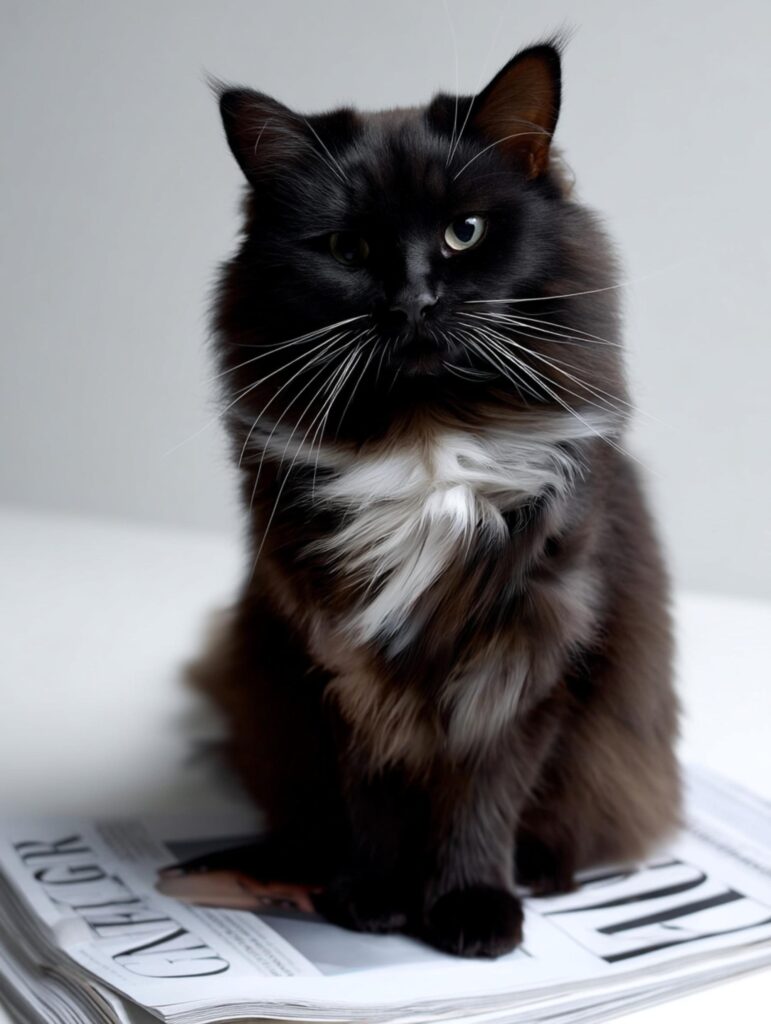
The term Cherubim Ragdoll refers to Ragdolls that are non-pointed — meaning they do not have the traditional color-restricted pattern or blue eyes.
While the original Ragdoll standard describes only the pointed variety (seal, blue, chocolate, lilac, flame, cream, etc.), TICA recognizes that cats from the same lines can produce other colors and patterns. To include them within the same genetic family, TICA allows them to be registered under the Cherubim Ragdoll classification.
This category includes solid, mink, and sepia Ragdolls, which can come in many shades — including black, chocolate, cinnamon, smoke, and shaded. These cats are genetically Ragdolls with the same structure, coat texture, and temperament, but without the pointed pattern.
In short, TICA recognizes non-pointed Ragdolls as Cherubims. That means a black Ragdoll cat can be registered and shown under the Cherubim division, preserving its pedigree and authenticity within the breed.
The Cherubim distinction gives breeders the ability to:
- Maintain genetic diversity within Ragdoll lines.
- Register and track non-traditional colors.
- Acknowledge that black, mink, and sepia Ragdolls are part of the same heritage as the traditional blue-eyed variety.
A black Ragdoll is not necessarily a different breed — it’s simply a Cherubim Ragdoll, a non-pointed expression of the same gentle, people-focused cat. See Ragdoll Temperament Explained here.
Are Black Ragdoll Cats Rare?
Black Ragdoll cats are often described as rare, but rarity depends on context, not color alone.
Within traditional pointed Ragdoll programs, black coats are uncommon because solid colors fall outside classic standards. However, within programs that intentionally work with non-pointed Ragdolls, black cats are not unusual.
Availability is shaped by:
- Breeder focus and goals
- Registry classification
- Demand for companion placements
Because many breeders choose not to work with non-pointed lines, black Ragdolls may take longer to locate, but they are not genetically rare.
Why Some Breeders Do Not Work With Black Ragdolls
Some breeders choose not to work with black Ragdolls, not because the cats lack quality, but because their breeding programs are intentionally structured around traditional pointed Ragdoll standards.
Classic Ragdoll programs are built to produce cats that meet long-standing show criteria: blue eyes, colorpoint coats, and consistent pattern expression. For breeders whose primary focus is show participation or strict adherence to pointed standards, non-pointed cats — including black Ragdolls — fall outside their program goals.
This decision is strategic, not evaluative.
Program Focus and Show Eligibility
Many breeders avoid black Ragdolls because:
- Traditional Ragdoll shows accept only pointed cats
- Solid or non-pointed kittens cannot be shown in classic Ragdoll classes
- Maintaining a show-focused program requires narrow genetic consistency
For these breeders, introducing non-pointed expression complicates long-term planning and does not align with their objectives.
Genetics and Why Both Can Appear
It is important to understand that black Ragdolls do not come from a separate or unrelated gene pool. They arise from Ragdoll lines where the colorpoint restriction gene is not consistently expressed.
In programs that work with both pointed and non-pointed genetics:
- Cats may carry genes for both expressions
- When bred thoughtfully, a single breeding program — and in some cases a single litter — can produce:
- traditional pointed Ragdolls
- non-pointed Ragdolls, including black
This is one reason classification matters. Under The International Cat Association (TICA), non-pointed Ragdolls are now classified as Cherubim, allowing accurate registration without redefining the traditional Ragdoll standard.
Breeders who do not wish to manage both outcomes often choose to work only with pairings that reliably produce pointed kittens. See more about Ragdolls from a breeder perspective here.
Black Ragdoll Cat Blue Eyes: Myth or Reality?
Blue eyes are a defining trait of traditional colorpoint Ragdolls, where eye color is genetically linked to the colorpoint restriction gene. This same gene is responsible for the lighter body and darker points seen in classic Ragdolls.
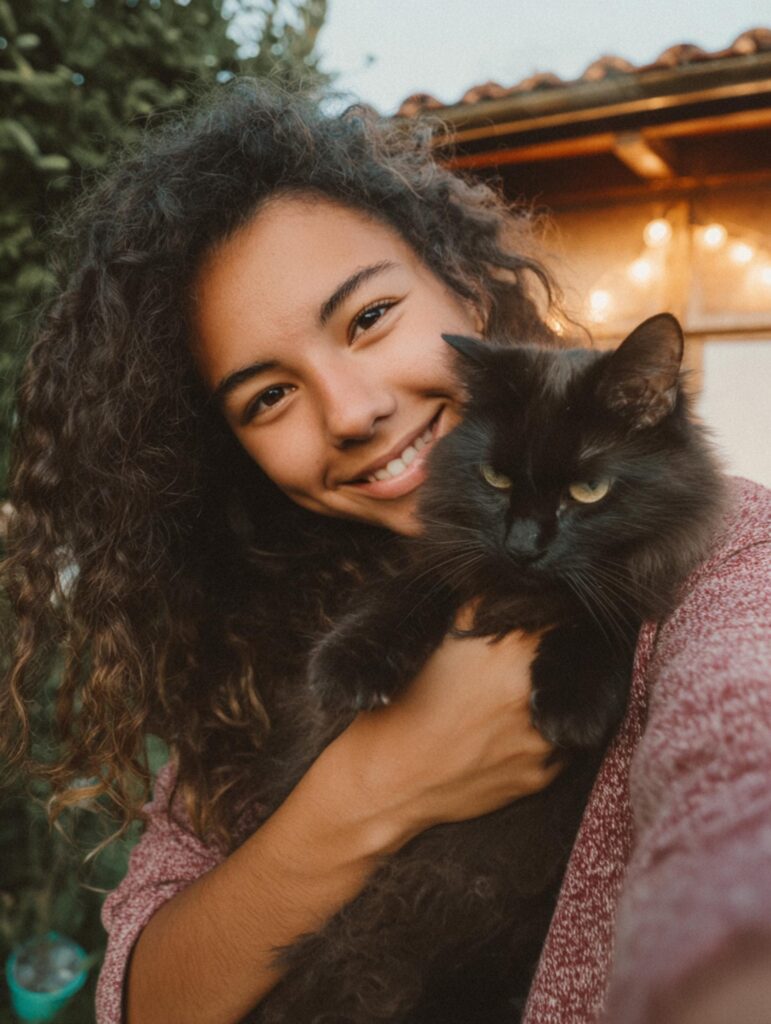
Black Ragdoll cats do not express this colorpoint gene, which means blue eyes are not typical. Instead, black Ragdolls most commonly have:
- Gold
- Copper
- Green
In some non-pointed Ragdolls with mink or sepia expression, eye color may appear aqua or blue-green, but this is different from the vivid blue associated with colorpoint Ragdolls.
When a cat described as a black Ragdoll has bright blue eyes, it is usually one of two things:
- A dark colorpoint or mink Ragdoll, not truly solid black
- A Ragdoll mix where eye color and coat color are not genetically linked in the traditional way
In short, solid black Ragdoll cats do not normally have blue eyes. Eye color follows genetics, not coat darkness, and understanding that link helps resolve much of the confusion surrounding black Ragdolls.
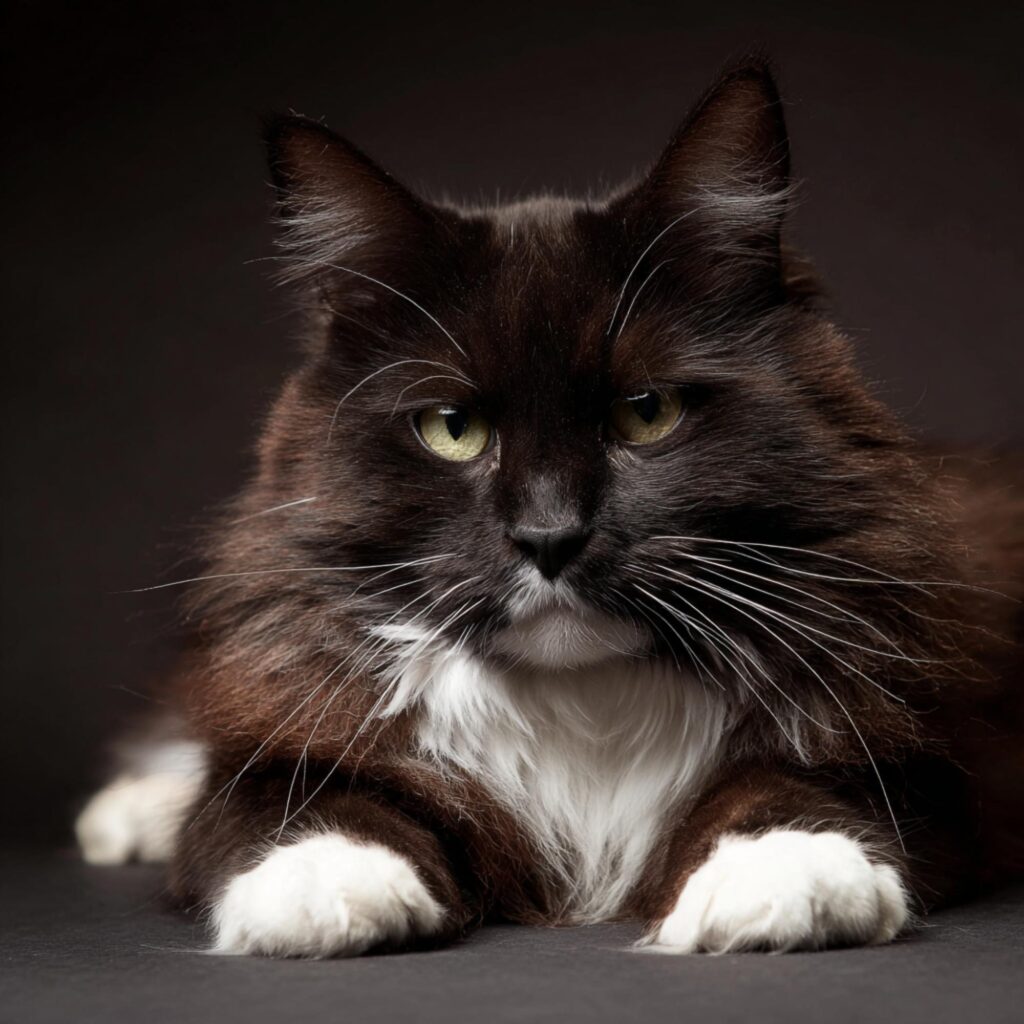
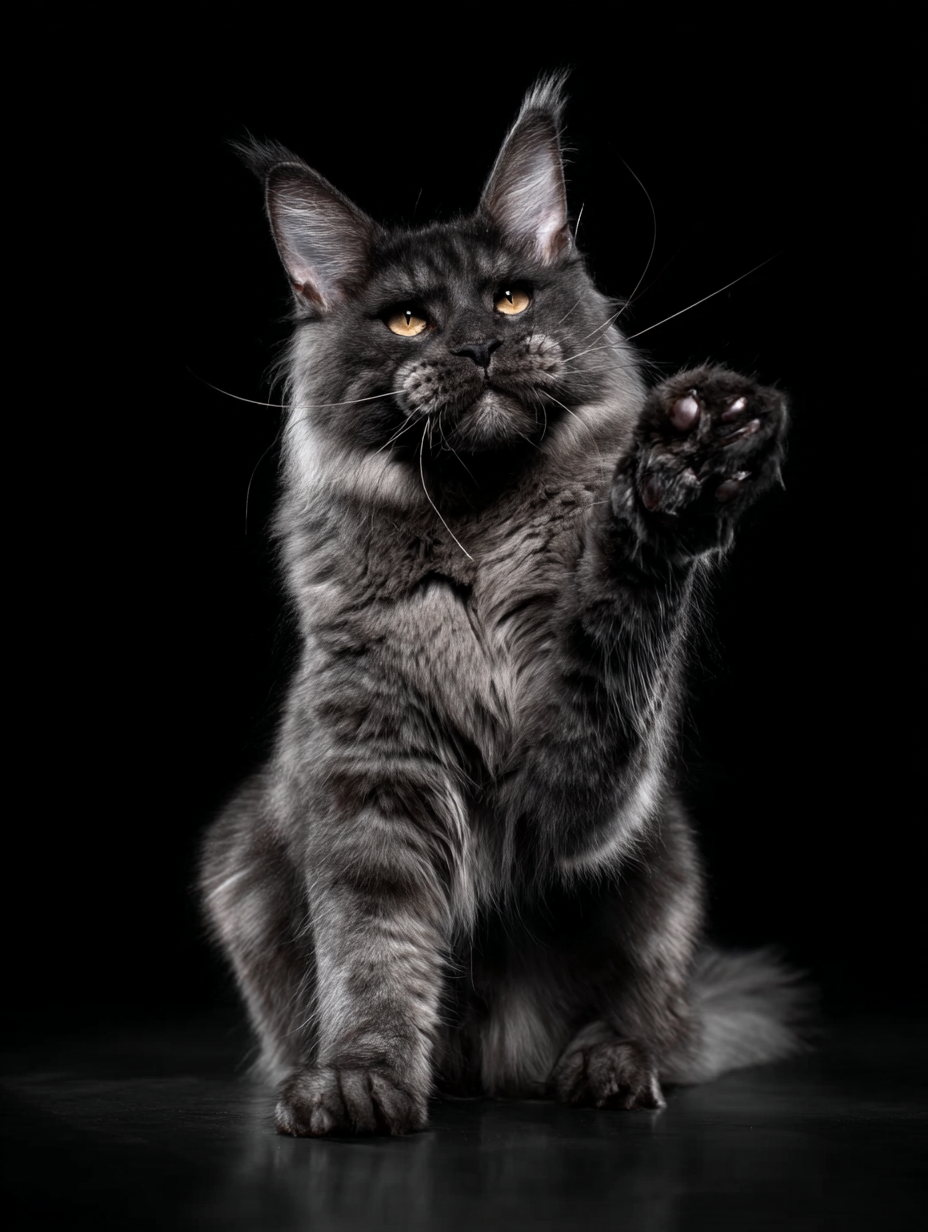
Black Ragdoll Cat Photos
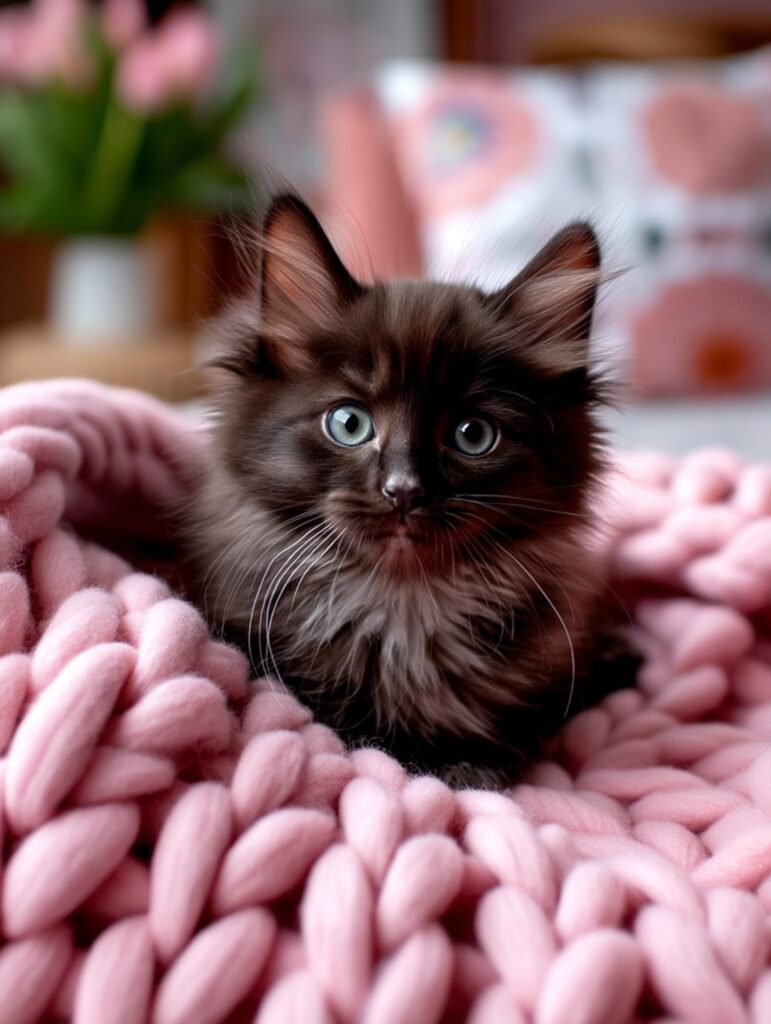
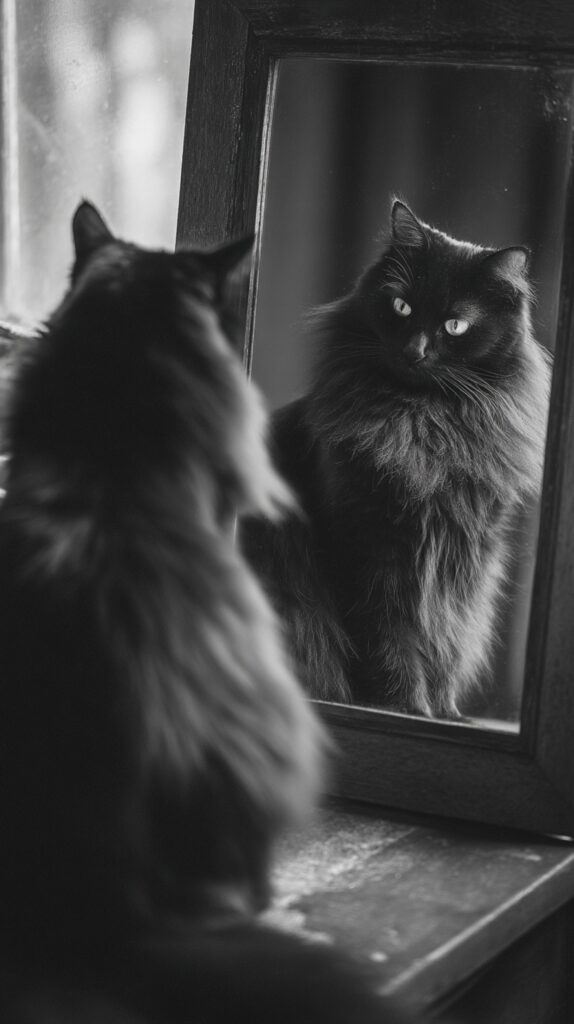
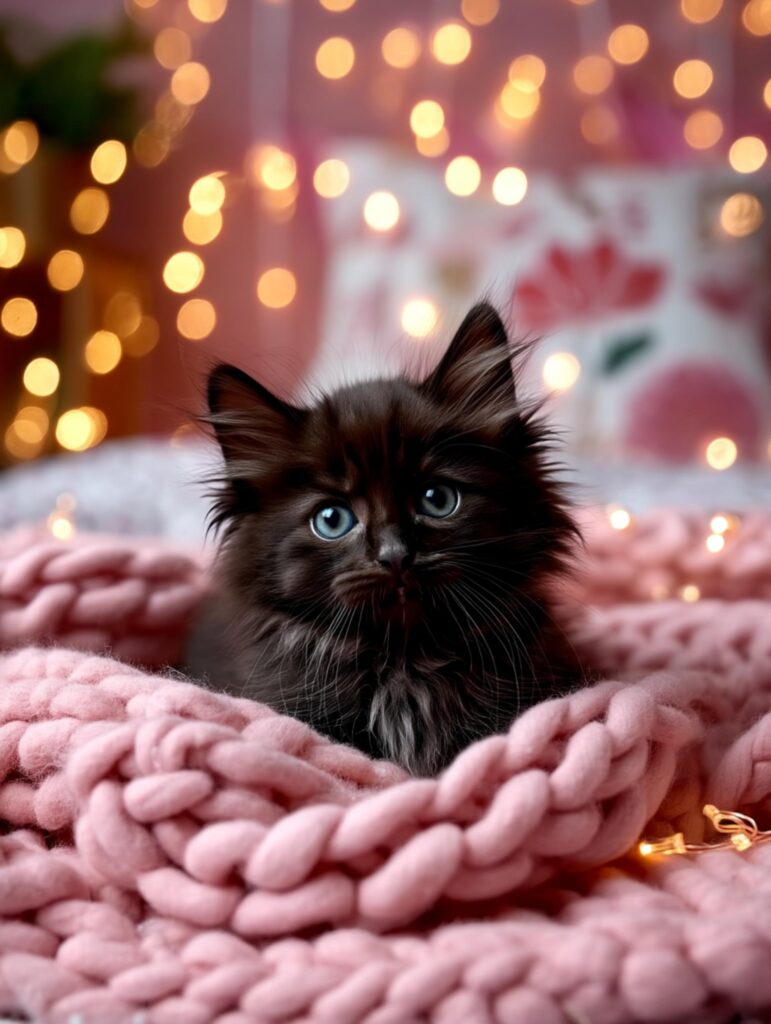
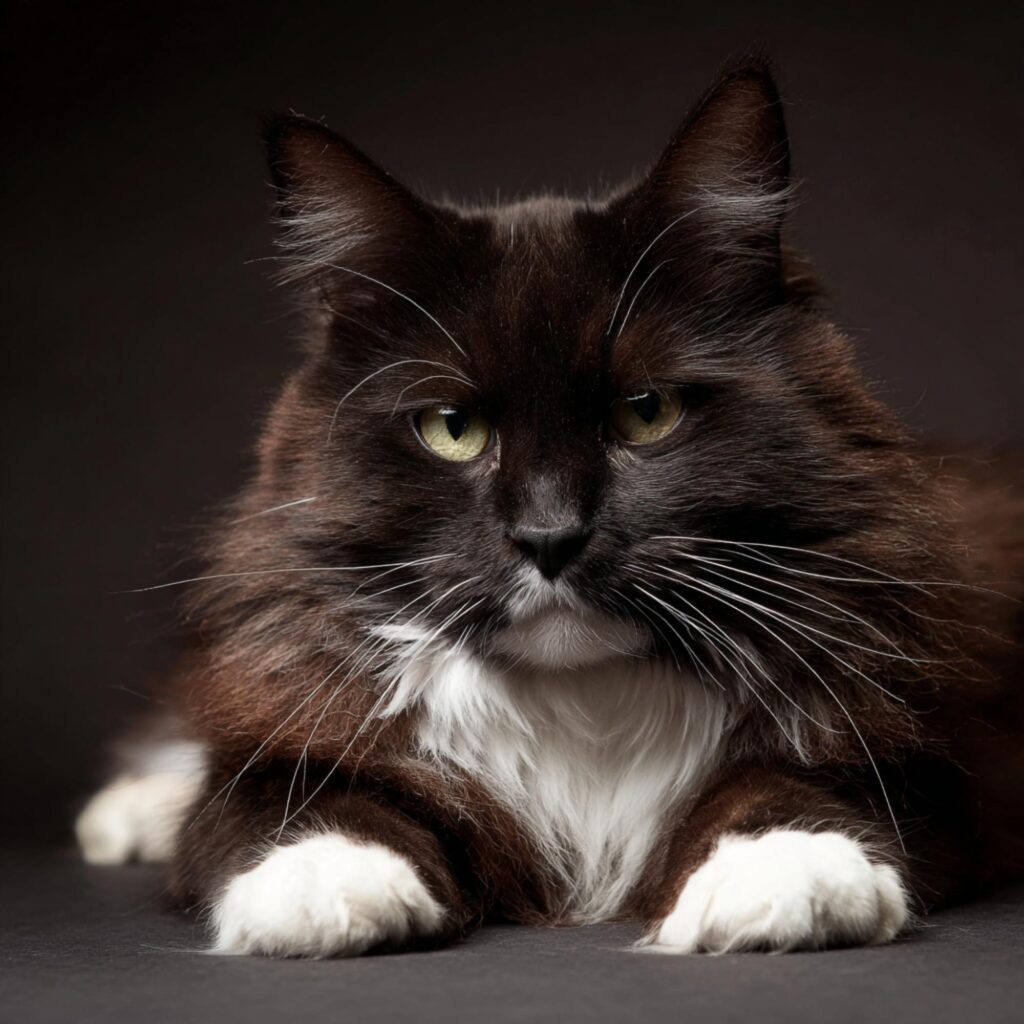
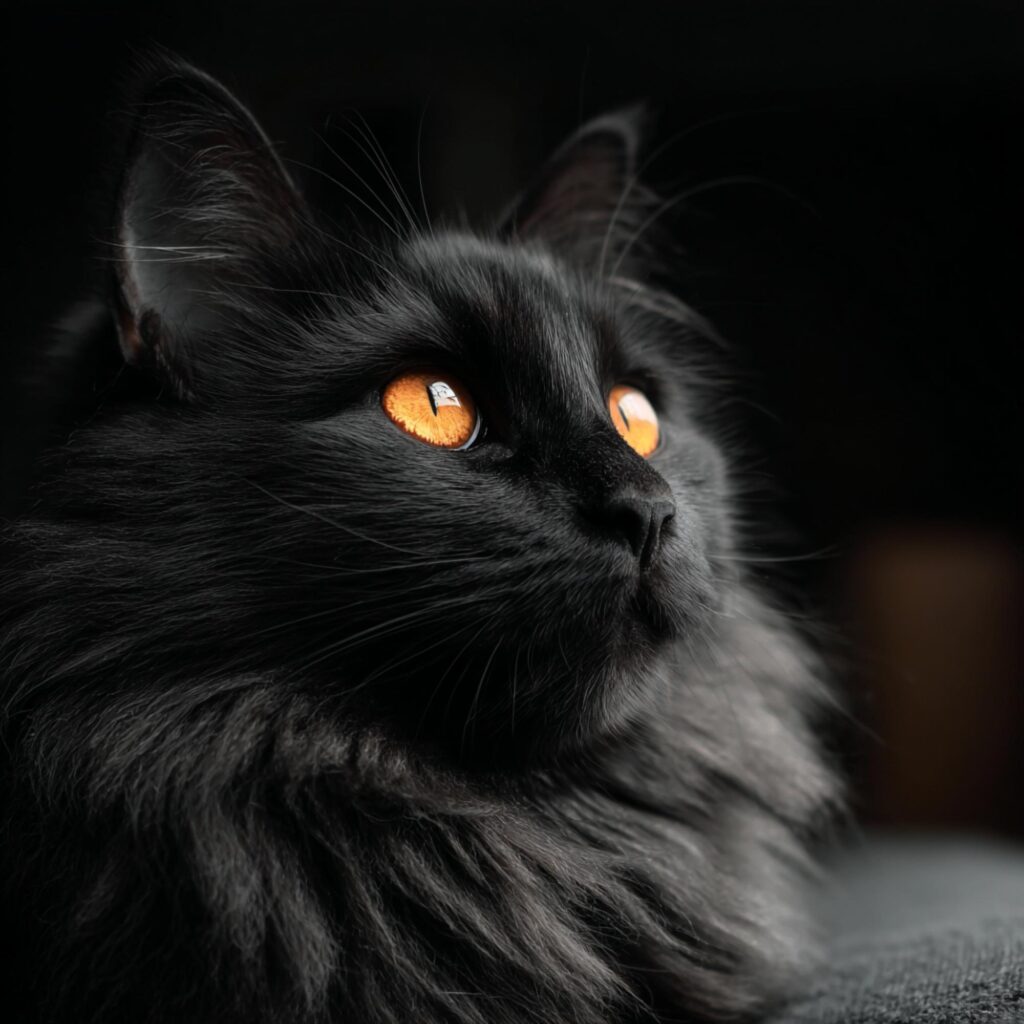
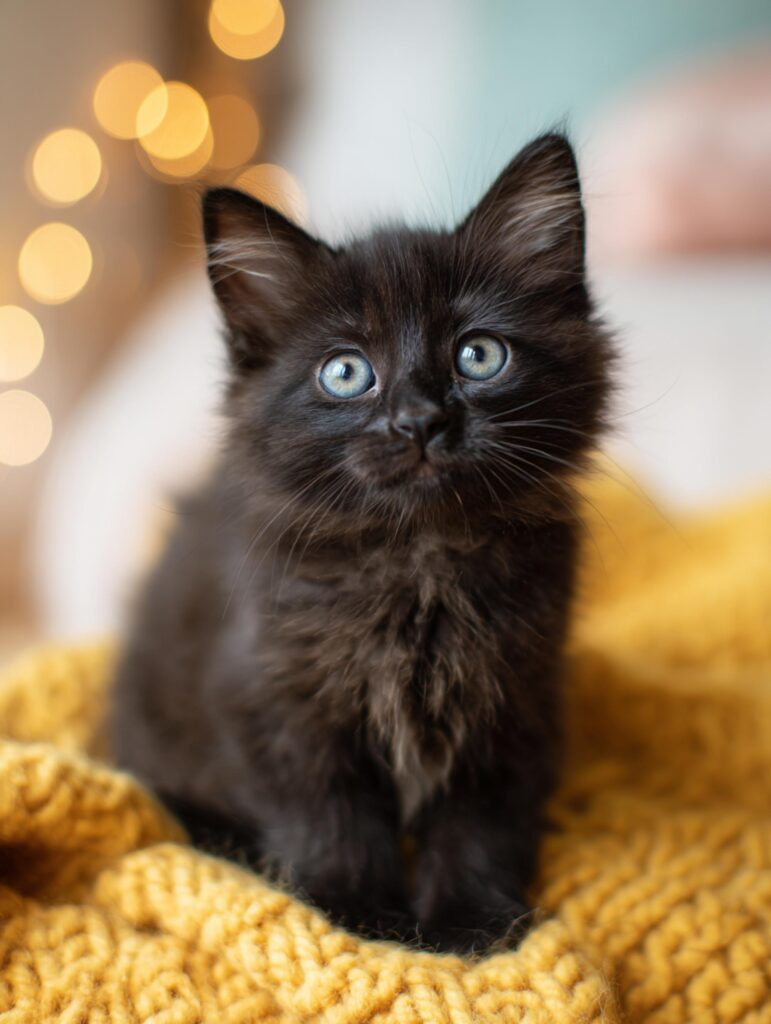
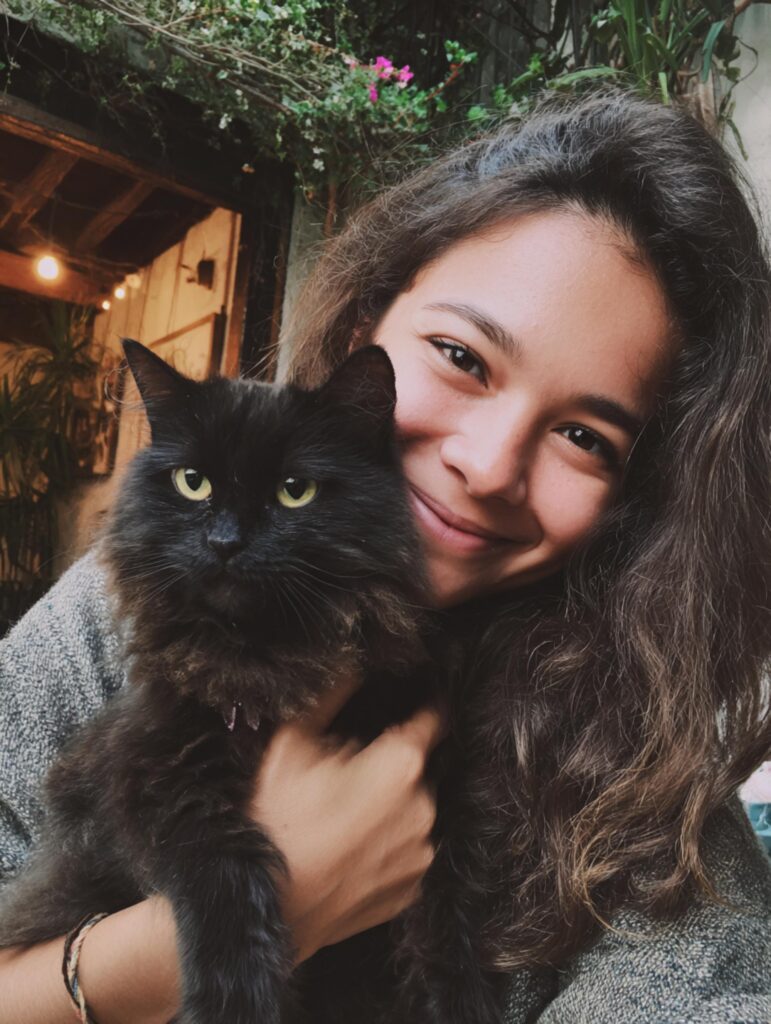
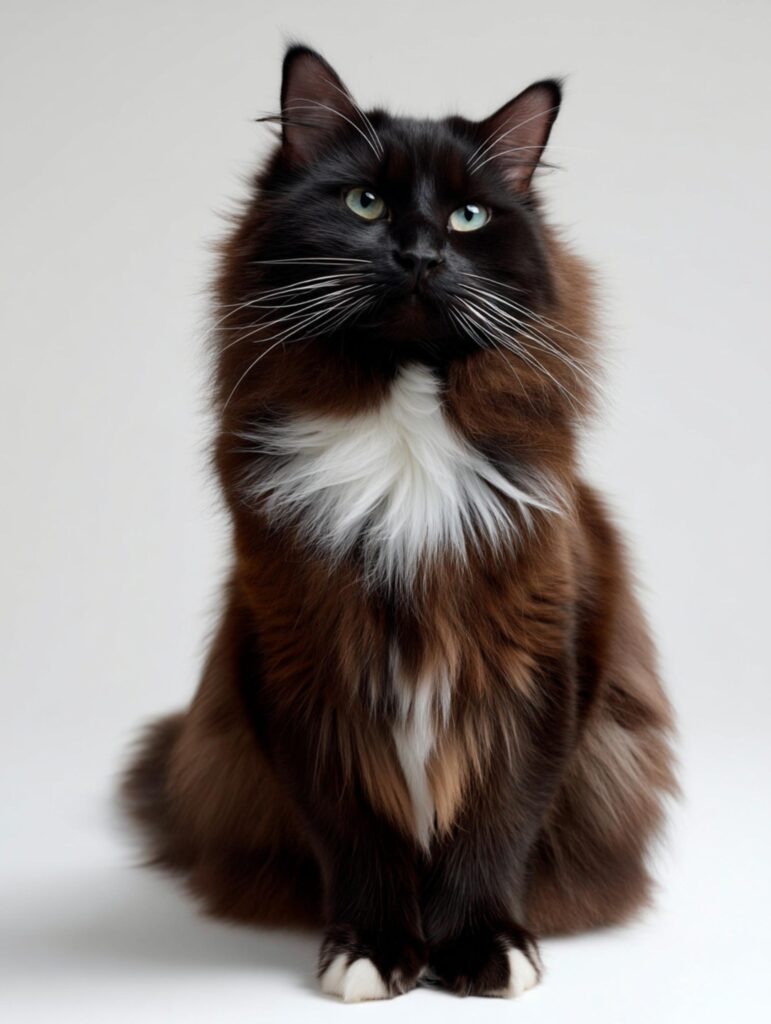
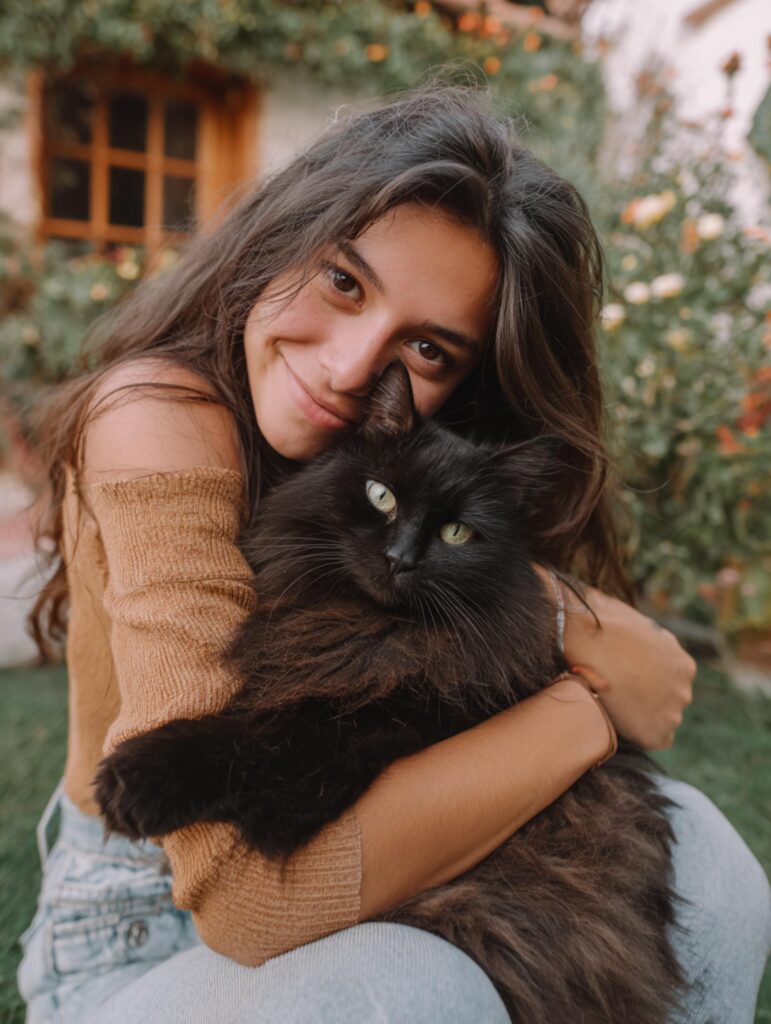
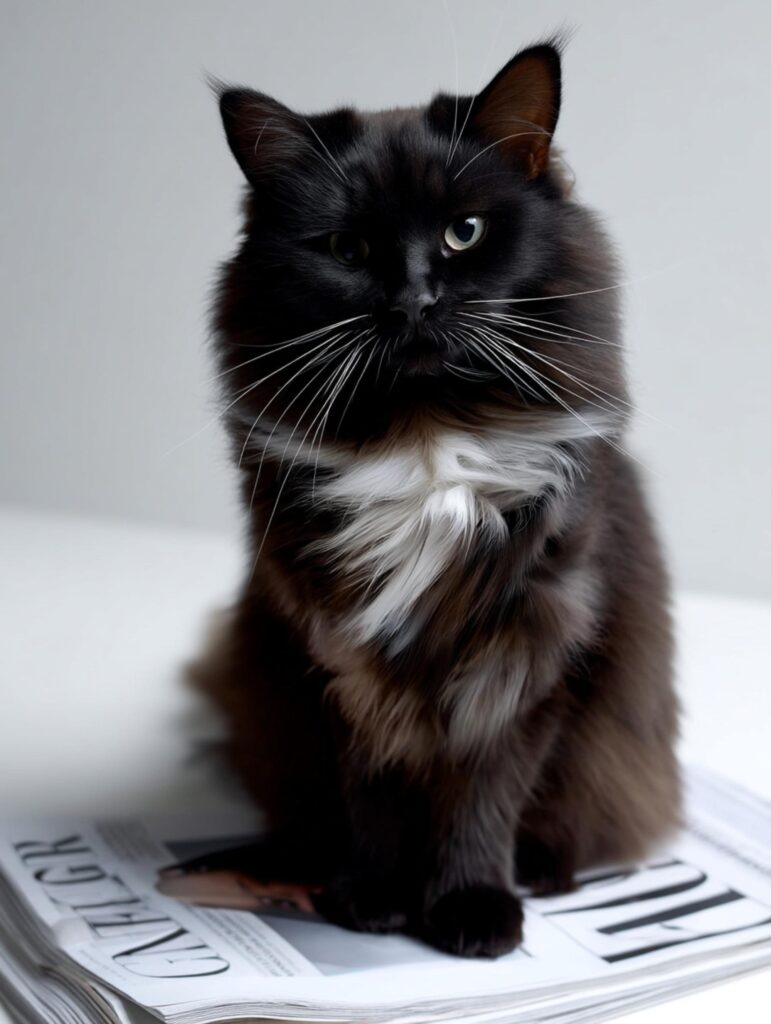
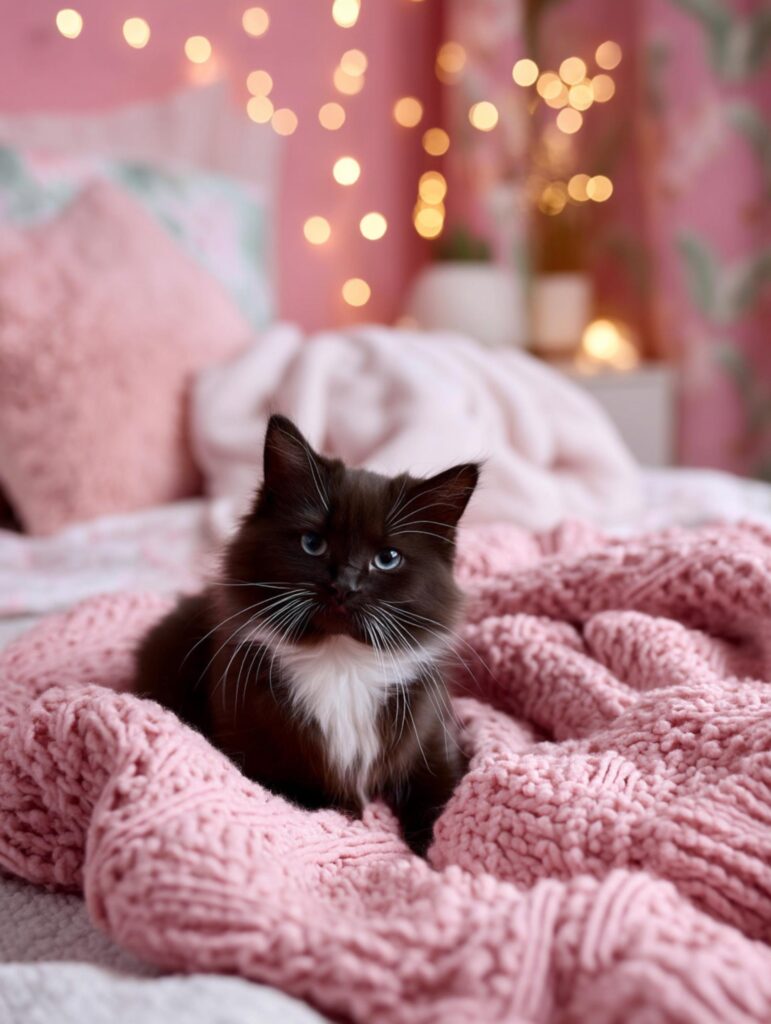
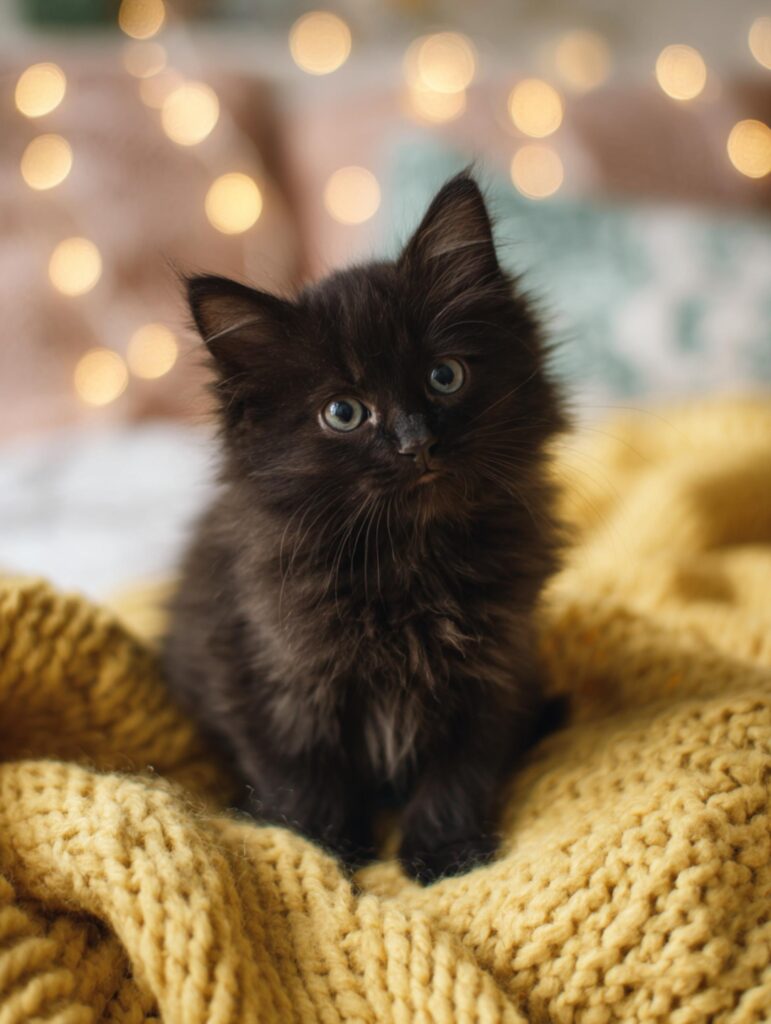
Despite their non-traditional status, black Ragdolls capture the same magic — calm, affectionate, and beautiful in motion.
Their silky black coats shimmer in the light, and their relaxed personality makes them ideal companions for families or quiet homes alike.
They prove that the Ragdoll’s appeal isn’t just in color — it’s in character.
Common Myths About Black Ragdoll Cats
People misunderstand black Ragdoll cats more than almost any other Ragdoll expression. Most confusion comes from mixing appearance with genetics, relying on outdated standards, and repeating casual online terminology. These myths appear repeatedly and need direct correction.
Myth 1: Black Ragdoll Cats Are Not Real Ragdolls
People often claim that black Ragdolls are not real Ragdolls. This claim is incorrect. Black Ragdoll cats come from Ragdoll lines and share the same structure and temperament as other Ragdolls. The difference lies in coat expression, not breed origin. Modern registries classify non pointed Ragdolls separately to preserve traditional standards, not to exclude the cats themselves.
Myth 2: Black Ragdolls Are Mixed Breeds
Many assume a solid black coat means crossbreeding. In reality, black Ragdolls result from non pointed genetic expression within Ragdoll lines. Coat color alone does not indicate mixed ancestry. Judging breed status by color reflects a misunderstanding of feline genetics.
Myth 3: Black Ragdolls Are Just Dark Seal Ragdolls
People frequently confuse black Ragdolls with very dark seal Ragdolls. Although photos can make them look similar, they are not the same. Seal Ragdolls remain colorpoint cats with lighter body shading and blue eyes. Black Ragdolls show full pigment across the entire coat and usually do not have blue eyes.
Myth 4: Black Ragdoll Cats Are Aggressive or Less Friendly
Some believe black Ragdolls behave differently from other Ragdolls. Color does not influence temperament. Black Ragdolls display the same calm, affectionate, people oriented behavior the breed is known for. Individual personality, early socialization, and environment shape behavior, not coat color.
Myth 5: Black Ragdolls Are Rare and Therefore More Valuable
People often label black Ragdolls as rare and assume higher value. Availability depends on breeder focus, not genetic rarity. Traditional show focused programs produce fewer non pointed cats, but that does not make black Ragdolls biologically rare. Color alone does not determine quality, value, or price.
Myth 6: Black Ragdolls Should Have Blue Eyes
Blue eyes come from the colorpoint gene, not from being a Ragdoll. Black Ragdolls do not express colorpoint genetics, so blue eyes are not typical. Most black Ragdolls have gold, copper, or green eyes. Some non pointed expressions show aqua tones, but this differs from the vivid blue seen in pointed Ragdolls.
Myth 7: Black Ragdolls Are a New or Trend Color
Black Ragdolls did not appear recently. Breeders have seen them within Ragdoll lines for decades. What changed is classification clarity. Modern registry frameworks now allow accurate registration instead of forcing mislabeling or exclusion.
Myth 8: Breeders Avoid Black Ragdolls Because Something Is Wrong With Them
Breeders who avoid black Ragdolls usually focus on traditional pointed show standards. Their decision reflects program goals, not flaws in the cats. Many companion focused breeders intentionally include black Ragdolls and place them successfully.
Final Clarification
Most myths about black Ragdoll cats exist because people confuse appearance with classification. Once genetics, coat expression, and registry structure are separated, the confusion disappears. See the truth about Ragdoll floppy cats here.
Black Ragdoll Mix Cats: What the Term Usually Means
The phrase black Ragdoll mix cat is commonly used online to describe cats that look Ragdoll-like but do not meet the genetic or registry definition of a purebred Ragdoll. These cats often have long coats, large size, or relaxed temperaments, which leads to the Ragdoll label being applied based on appearance alone.
In practice, a black Ragdoll mix is typically a cross between a Ragdoll and another long-haired or medium-haired cat, such as a domestic longhair or another pedigreed breed. Because solid black is not part of the traditional pointed Ragdoll color framework, mixed cats are more likely to appear black than purebred, pointed Ragdolls.
Why Black Ragdoll Mixes Are So Commonly Labeled Online
Several factors contribute to the frequent use of the term black Ragdoll mix:
- Visual similarity: Large size, plush coat, and calm demeanor can resemble a Ragdoll
- Eye color confusion: Mixed cats may have blue, green, or gold eyes, which leads to mislabeling
- Shelter and rescue descriptions: Many organizations use “Ragdoll mix” as a best guess rather than a confirmed classification
- Lack of documentation: Without pedigree papers, appearance becomes the default identifier
As a result, many cats described as black Ragdoll mixes are simply long-haired black cats with some Ragdoll-like traits.
Common Differences Between Black Ragdoll Mixes and Purebred Ragdolls
While individual cats vary, black Ragdoll mixes often differ from purebred Ragdolls in several consistent ways:
- Eye color: Green, gold, or amber are common; blue eyes alone do not confirm Ragdoll ancestry
- Bone structure: Faces may be narrower, with less of the broad, soft expression typical of Ragdolls
- Coat texture: The coat may be thicker, cottony, or prone to matting rather than silky and draping
- Temperament: Personality can be affectionate but is usually less predictable than in selectively bred Ragdolls
None of these traits indicate a problem — they simply reflect mixed ancestry.
How to Tell Whether a Black Cat Is a Ragdoll Mix or a Purebred
The only reliable way to confirm whether a cat is a purebred Ragdoll or a mix is through documentation, not appearance.
- Pedigree papers from a recognized registry confirm purebred status
- DNA testing can sometimes identify breed markers but is not definitive for Ragdolls
- Visual traits alone are not enough to distinguish a mix from a non-pointed Ragdoll
Without papers, a black cat should be described as a Ragdoll mix or Ragdoll-type cat, even if it strongly resembles the breed.
A Practical Clarification
Black Ragdoll mix cats can make wonderful companions, but they should not be confused with purebred black Ragdolls (non-pointed Ragdolls classified under modern registry frameworks). The distinction matters for expectations around size, coat, temperament consistency, and classification — not for the cat’s value as a pet.
How to Identify a True Black Ragdoll Cat or Kitten
Look for:
- Pedigree papers from TICA or CFA
- Registered breeder name (avoid generic listings)
- Consistent Ragdoll features: large bone structure, medium-long fur, soft temperament
- Early photos showing solid black color at birth (not white with darkening points)
Avoid scammers claiming “rare black Ragdolls with blue eyes” at suspiciously low prices. Always verify with established breeders.
Summary: Can Ragdoll Cats Be Black?
Yes — Ragdolls can be black, but they are solid-colored, not pointed.
They remain genuine Ragdolls in body, temperament, and lineage, even if they fall outside traditional show categories.
Black Ragdoll cats are perfect for families who value uniqueness, low maintenance, and a luxurious look that’s still unmistakably Ragdoll at heart.
Frequently Asked Questions About Black Ragdoll Cats
Can Ragdoll cats be black?
Yes. Ragdoll cats can be black, though they are not considered traditional pointed Ragdolls. Instead, they are registered within TICA as Cherubim Ragdolls, which includes non-pointed varieties such as solid, mink, and sepia. See more about Ragdoll coat colors here.
What is a Cherubim Ragdoll?
Cherubim Ragdoll is the term TICA uses for non-pointed Ragdolls. These cats are from the same lineage and share the same temperament, coat texture, and body type as pointed Ragdolls, but they come in a wider range of colors — including black, chocolate, cinnamon, and smoke.
Are black Ragdolls purebred?
Yes. As long as the cat comes from registered Ragdoll parents, a black Ragdoll is purebred. The difference is only in color expression, not genetics. The black coat simply shows full pigment instead of being limited to the points like traditional colors.
Are black Ragdolls recognized by TICA?
Yes. While the traditional show standard covers pointed colors only, TICA registers black and other non-pointed Ragdolls under the Cherubim category. This means a black Ragdoll can be fully registered and shown in the appropriate division.
Do black Ragdolls have blue eyes?
Usually not. The famous blue eyes of pointed Ragdolls come from the temperature-sensitive colorpoint gene. Black Ragdolls lack this gene, so their eye color ranges from gold and copper to green or aqua (in mink varieties).
What is the difference between a traditional Ragdoll and a black Ragdoll?
Traditional Ragdolls have light bodies with darker extremities and always blue eyes.
Black Ragdolls are full-color cats — the pigment covers the entire body, and the eyes can be any shade from green to gold. Temperament, coat texture, and body size remain identical.
Are black Ragdolls rare?
Yes. Most breeders focus on show-standard pointed colors, so solid black or Cherubim Ragdolls are produced in smaller numbers. Their rarity and elegant appearance make them highly sought after among pet owners.
Can a black Ragdoll be shown?
Yes, but under different rules. Traditional pointed Ragdolls compete in the standard Ragdoll class, while black and other non-pointed Ragdolls are exhibited as Cherubim Ragdolls or in TICA’s New Traits or Household Pet divisions.
What colors do Cherubim Ragdolls come in?
Cherubim Ragdolls include black, blue, chocolate, lilac, red, cream, smoke, and shaded coats in solid, mink, or sepia expressions. This classification allows breeders to preserve color diversity within the same Ragdoll bloodlines.
Are black Ragdolls different in personality?
No. Whether pointed or solid, all Ragdolls share the same affectionate, relaxed temperament. The color of the coat doesn’t influence behavior — only genetics and early socialization do.
How can I tell if a black Ragdoll is authentic?
Ask for registration papers or pedigree from TICA or another recognized registry. Reputable breeders will provide documentation showing that the kitten is a registered Cherubim Ragdoll and part of verified Ragdoll lineage. See Black Ragdoll Cat Prices here.
Do black Ragdolls have long coats like other Ragdolls?
Yes. Black Ragdolls have the same semi-long, silky coat as traditional Ragdolls. The texture may appear even softer because of how the solid black fur reflects light.
Why do some breeders not list black Ragdolls on their websites?
Some breeders focus exclusively on show-eligible pointed Ragdolls. Others, like programs that include Cherubim Ragdolls, intentionally preserve these lines for diversity and pet families who prefer darker coats. See the best Ragdoll breeders in the USA here.
What makes black Cherubim Ragdolls special?
They combine the signature Ragdoll temperament — calm, social, affectionate — with the striking beauty of a jet-black, full-color coat. As recognized Cherubim Ragdolls in TICA, they represent the natural evolution of the breed’s color diversity while maintaining true Ragdoll character.
Summary: Can Ragdoll Cats Be Black?
Yes. Ragdoll cats can be black. Black Ragdolls are solid colored rather than pointed, which is why they do not appear in traditional Ragdoll color charts. Even so, they share the same body type, temperament, and lineage as other Ragdolls, despite falling outside classic show standards and being classified separately under modern registries.
The phrase “black Ragdoll cat” is used loosely online and often refers to different things. In some cases it describes a non pointed Ragdoll. In others it refers to a very dark pointed Ragdoll or a Ragdoll mix. Understanding how the term is used is key to avoiding confusion.
Boundary statement:
This page explains what people usually mean when they say black Ragdoll cat, how black coats occur within Ragdoll lines, and how these cats are classified. It does not compare prices, rank colors by value, or recommend breeders. For pricing questions, see the dedicated black Ragdoll cat price guide. For classification details, see the Ragdoll vs Cherubim comparison.
In short, black Ragdoll cats are not a contradiction within the breed. They are a non pointed expression that makes sense once genetics and classification are separated from appearance.
Interested in a Black Ragdoll Kitten?
If you are exploring black Ragdoll cats and would like to learn whether we currently have kittens or upcoming litters, you are welcome to view our available kittens or reach out for more information.
We place kittens as companions and are happy to answer questions about classification, temperament, and what to expect as they mature.
👉 View Available Ragdoll Kittens
👉 Contact Us to Learn About Future Litters
Related Ragdoll Color Articles
- Cherubim Ragdoll Cats
- Ragdoll vs Cherubim
- Mink Ragdoll Cats
- Chocolate Point Ragdoll Cats
- Can Ragdolls be Tabby?
- Black Tuxedo Ragdoll Cats
- Flame Point Ragdoll Cats: Guide to the Red-Point Beauty
Sources & References
- The International Cat Association (TICA) – Official Ragdoll & Cherubim Ragdoll Breed Standards
🔗 https://tica.org/breeds/browse-all-breeds?view=article&id=859 - Cat Fanciers’ Association (CFA) – Traditional Ragdoll Breed Profile
🔗 https://cfa.org/ragdoll/ - Ragdoll Fanciers Club International (RFCI) – Breed History and Color Standards
🔗 https://rfci.org/ - TICA Colors & Genetics Resource Library – Understanding Mink, Sepia, and Solid Color Inheritance
🔗 https://tica.org/breeds/genetics - Messybeast Cat Genetics Database – Colorpoint and Full-Color Gene Expression in Cats
🔗 https://www.messybeast.com/genetics.htm - LoveToKnow Cats – Ragdoll Cat Colors Explained
🔗 https://cats.lovetoknow.com/ragdoll-cat-colors - Almonte Cats (Official Site) – Cherubim and Traditional Ragdoll Lines, Color Variations, and Kitten Standards
🔗 https://almontecats.com






Read the Comments +