
Blue Bicolor Ragdoll Cats: Color, Genetics, Temperament, Eye Color & Photos
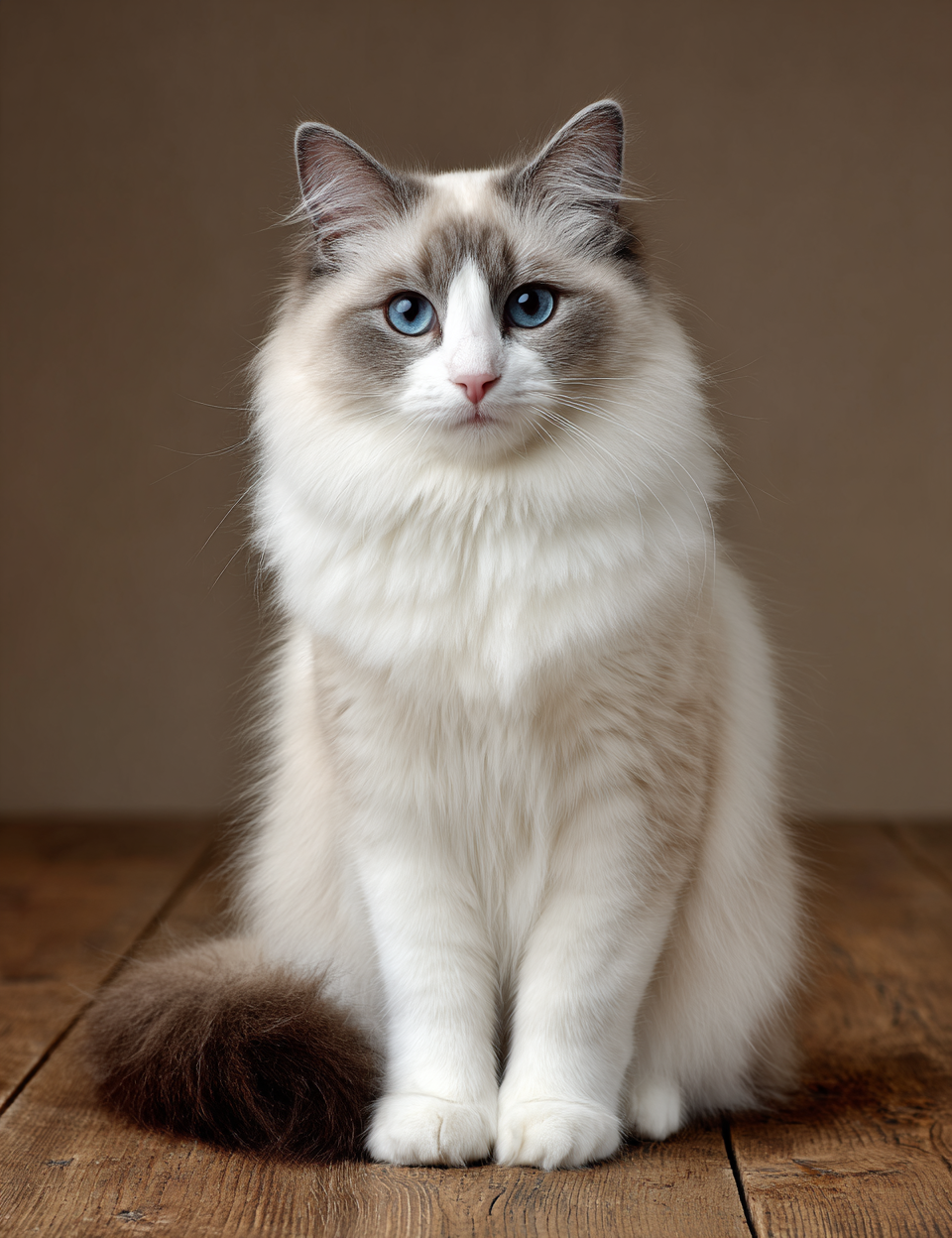
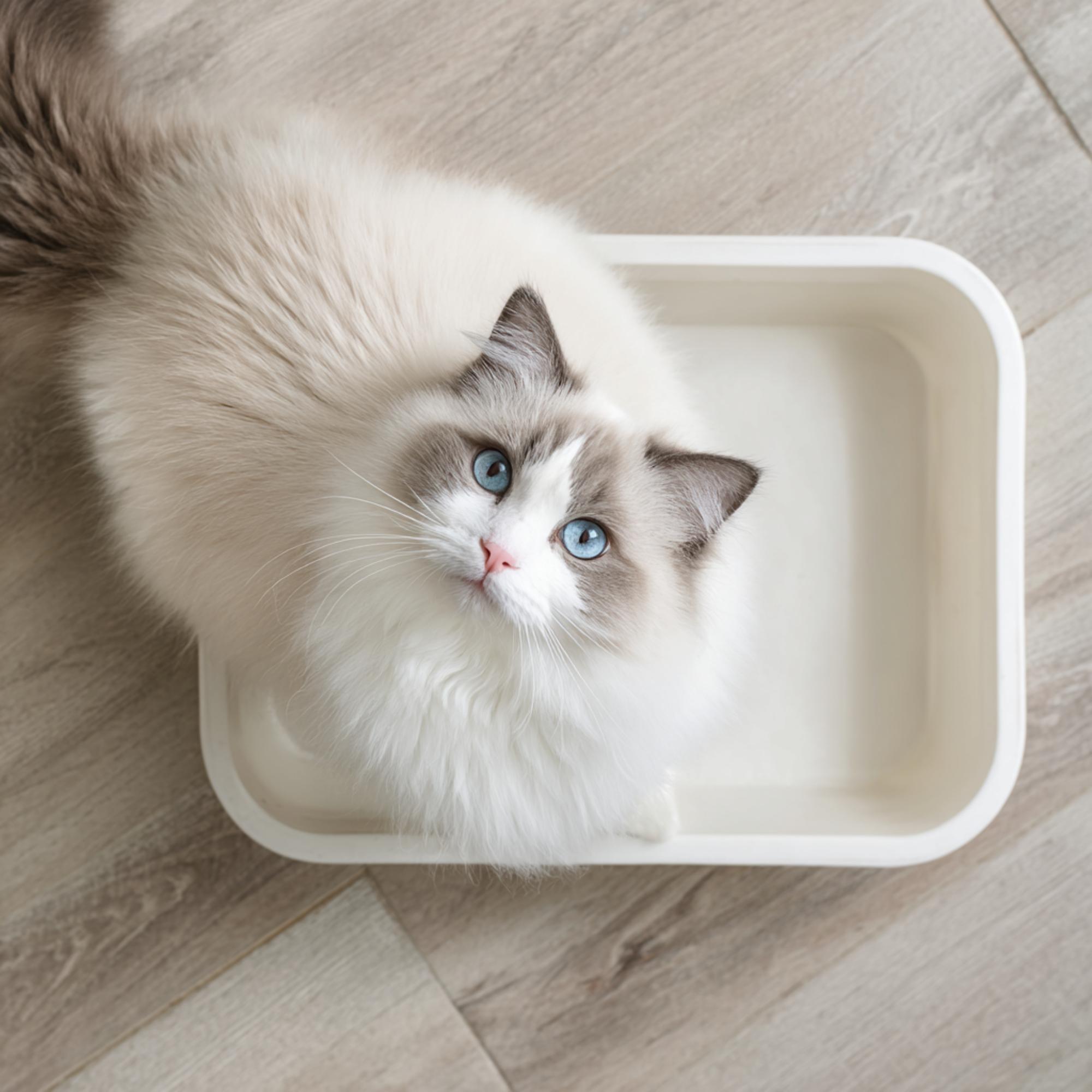
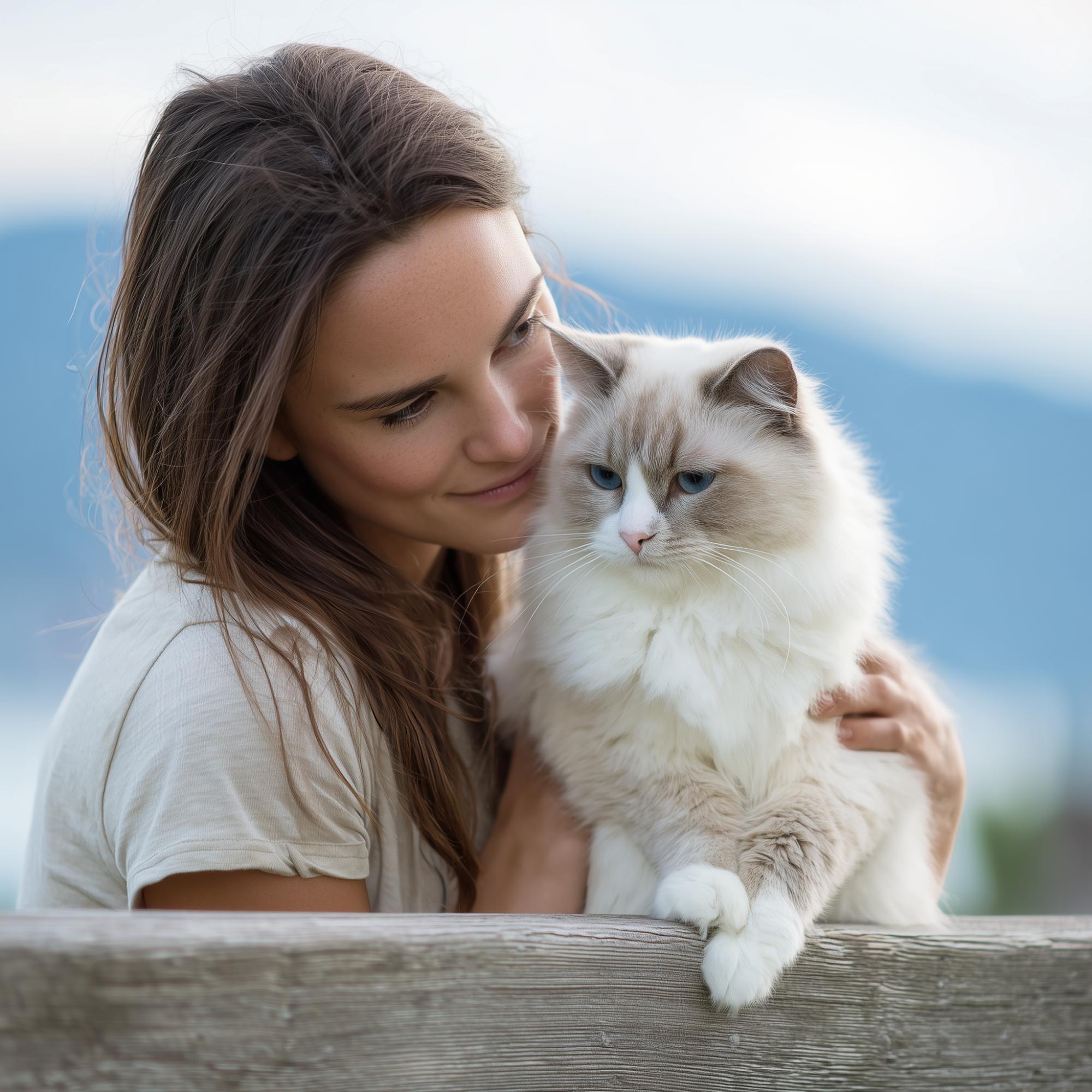
Blue bicolor Ragdolls are one of the most iconic, recognizable, and requested patterns in the entire Ragdoll breed. Their soft blue-gray points, inverted white “V” mask, white legs, and plush semi-long coat give them a dreamy, doll-like appearance that families fall in love with instantly. Blue bicolors have deep sapphire blue eyes, gentle faces, and a balanced mix of white and color that remains consistent throughout life.
This color is famous for its classic Ragdoll look: cool-toned, elegant, fluffy, and extremely photogenic. Blue bicolor Ragdolls are affectionate, floppy, sweet-natured, and deeply people-oriented — embodying everything the breed is loved for.
This guide covers everything you want to know about the blue bicolor pattern, including color genetics, mask development, coat care, rarity, eye color, personality traits, grooming, kitten development, and what to expect when bringing home a blue bicolor Ragdoll kitten.
Quick Summary: Blue Bicolor Ragdoll Cats
| Topic | Key Points |
|---|---|
| Color Genetics | A combination of blue (diluted seal) + bicolor pattern (white spotting gene). Creates soft gray points + white legs, chest, and facial “V.” |
| Eye Color | Always blue. The depth varies by lineage. |
| Personality | Gentle, affectionate, intelligent, relaxed, social. Color does not influence temperament. |
| Grooming | Easy to moderate. White areas may show staining; blue-gray points stay clean easily. |
| Hearing | No hearing risks associated with this pattern. |
| Size & Build | Large, muscular, slow-maturing; full size reached at 3–4 years. |
| Rarity | One of the most popular and commonly requested patterns. High demand keeps availability limited. |
| Kittens | Born white; color and mask develop between 4–12 weeks. Blue points fully mature by 2–3 years. |
Blue Bicolor Ragdolls are one of the most recognizable and requested patterns in the entire breed. Their soft gray-blue points, crisp white legs and chest, and signature inverted V mask create the dramatic contrast Ragdolls are known for. This post explains color genetics, marking variations, age development, temperament, rarity, and what families should expect from both kittens and adults.
Searching for a Blue Bicolor Ragdoll Kitten?
If you are looking for a blue bicolor Ragdoll kitten, visit our Purebred Ragdoll Kittens for Adoption page.
At Almonte Cats, every kitten is:
- TICA / CFA registered from fully health-tested parents
- Raised in-home for confident, affectionate temperaments
- Vet-checked, vaccinated, and microchipped before going home
- Matched to the right family based on personality and needs
Our litters are produced in limited numbers each year to maintain exceptional quality, structure, and type. Blue bicolors often reserve quickly due to high demand.
→ View Available Kittens and Apply
What Makes a Ragdoll Blue Bicolor?
A blue bicolor Ragdoll is not a separate breed — it is a color + pattern combination within the standard Ragdoll pattern category.
Two genetic components create the blue bicolor pattern:
1. The Blue Color (Dilute Seal)
- “Blue” in cats means soft gray, not pure blue.
- This gray color appears on the ears, tail, and portions of the face.
- It is caused by a dilution gene that lightens seal (dark brown) to blue (soft gray).
2. The Bicolor Pattern (White Spotting)
The bicolor gene adds:
- the white inverted “V” mask
- white legs
- white chest
- a white underside
This is what creates the classic symmetrical look blue bicolors are known for.
Key points:
- Blue bicolors always have blue eyes.
- The coat is semi-long, soft, and silky, typical of the Ragdoll breed.
- The white spotting gene does not affect health or hearing.
- The kitten’s mask and blue points deepen as they age.
Are Blue Bicolor Ragdolls Purebred and Registrable?
Yes — blue bicolor Ragdolls are fully accepted in CFA and TICA and are considered completely purebred when produced from registered parents.
Blue bicolor is:
- a standard pattern
- part of the official Ragdoll breed standard
- eligible for showing and registration
- one of the most recognizable Ragdoll looks worldwide
The pattern does not change the structure, temperament, or breed authenticity.

Blue Bicolor Ragdoll Marking Variations
High-White vs. Low-White Blue Bicolor Patterning
Blue bicolor Ragdolls can appear in high-white or low-white variations depending on how much white spotting the kitten inherits. High-white blue bicolors display dramatic expanses of white covering the legs, chest, belly, and often large parts of the back. Their inverted “V” mask appears bold and broad. Low-white blue bicolors show more blue-gray on the saddle and body, sometimes with narrower facial Vs or smaller white patches. Both variations are accepted in the breed standard and do not affect quality or temperament.
Symmetrical vs. Asymmetrical Inverted “V” Masks
The iconic inverted “V” is the hallmark of the bicolor pattern. A show-quality symmetrical V is perfectly even on both sides of the face, framing the eyes cleanly and balancing across the nose. A pet-quality V may be wider, narrower, or slightly off-center. Asymmetry does not alter personality or health, but it may influence price and show potential. Many families adore the uniqueness of asymmetrical markings because they create a distinct, memorable look.
Blue Bicolor vs. Blue Mitted vs. Blue Colorpoint
- Blue bicolors are often confused with blue mitted and blue colorpoints.
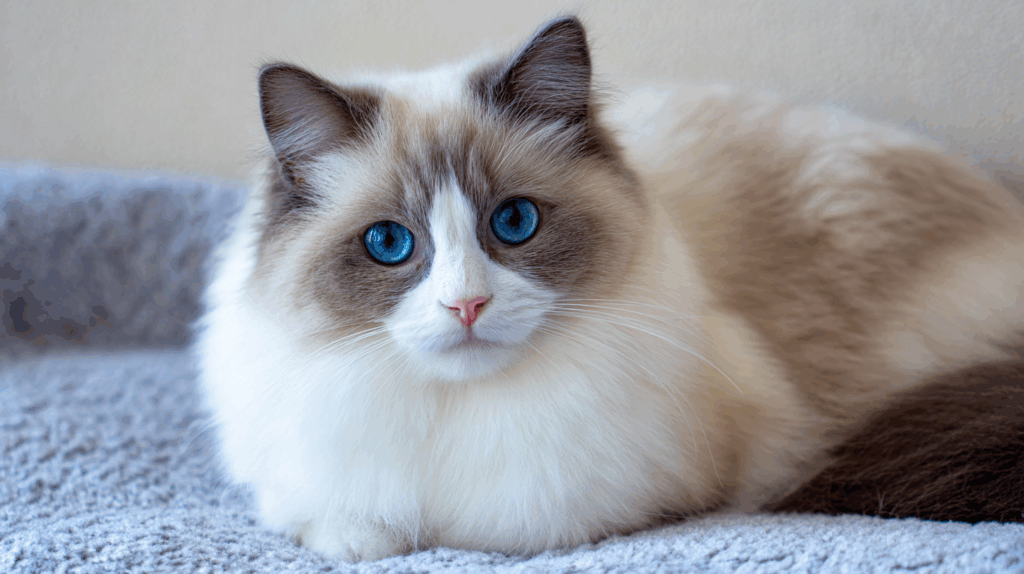
- Blue bicolors have the white facial V, white boots, and recognizable white underbelly. Blue mitted Ragdolls have white mittens and a chin blaze but no V.
- Blue colorpoints have no white at all, showing fully colored faces, ears, tails, and legs.
Understanding these differences helps prevent misidentification and ensures buyers know which pattern they are viewing.
Does Asymmetry Impact Temperament?
No. Blue bicolor marking variations — symmetry, V shape, high-white, or low-white — have zero influence on personality, health, or temperament. These variations are purely cosmetic. All blue bicolor Ragdolls share the breed’s calm, affectionate nature, regardless of marking precision.
How Blue Bicolor Ragdolls Change With Age
Newborn Phase — All White at Birth
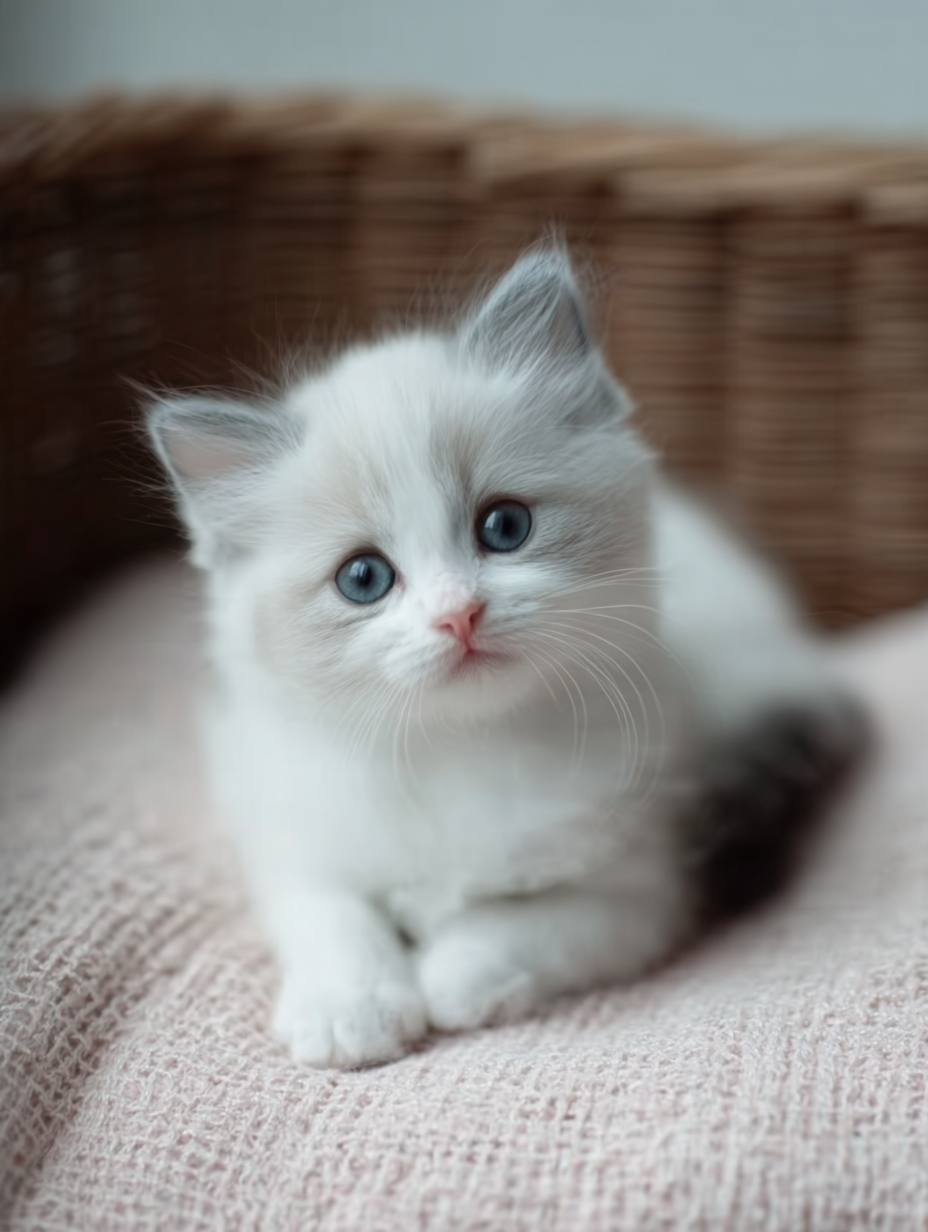
Blue bicolor kittens are born entirely white. Their pink noses and pale paw pads give no immediate clues to pattern. Even experienced breeders wait several days for subtle hints of color to appear on the ears or tail.
4–8 Weeks — Early Mask and Point Development
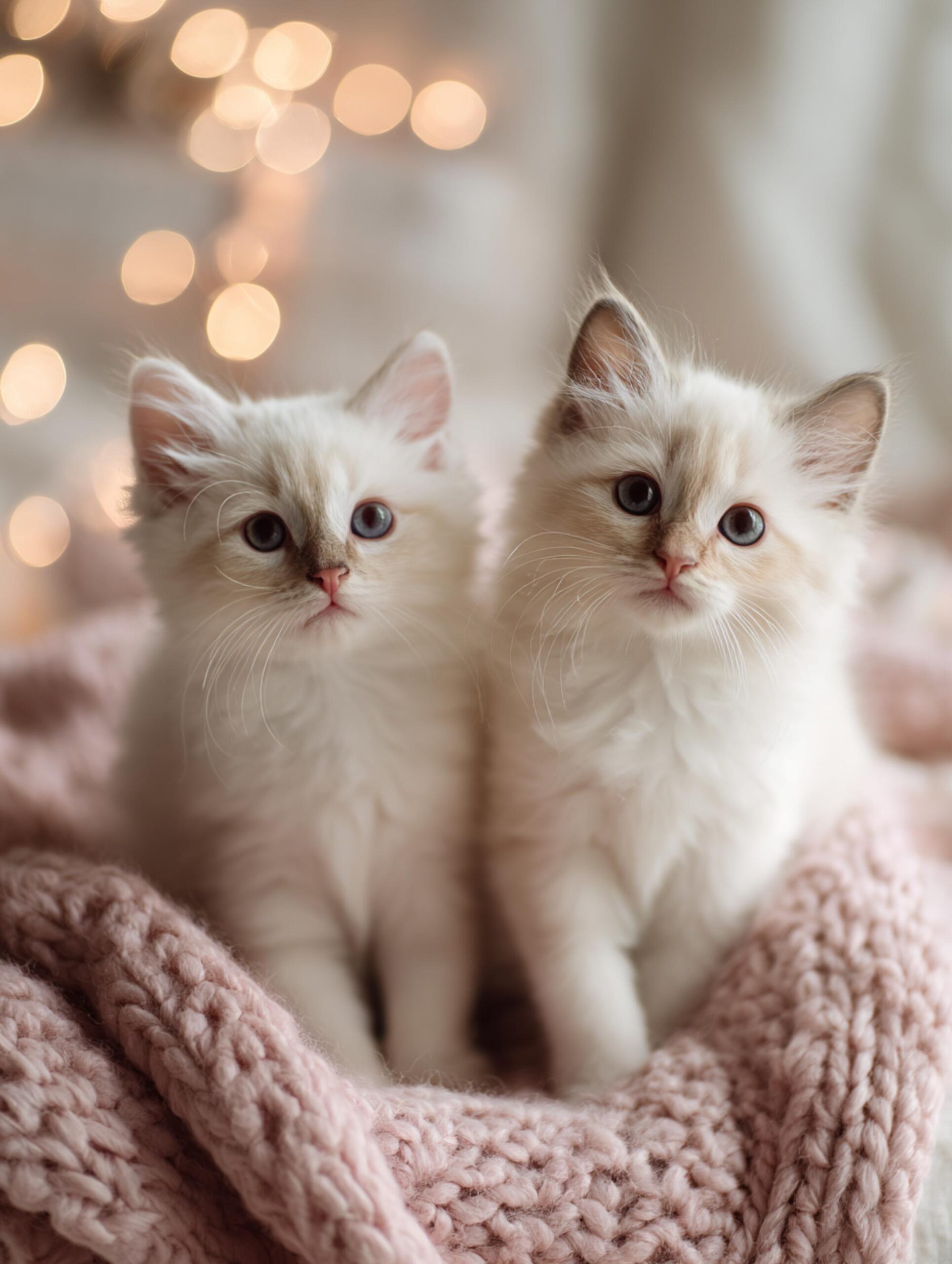
Between four and eight weeks, faint blue-gray shading appears on the ears and tail. The inverted “V” begins to show soft edges. Some kittens look very pale at this stage, which is normal for blue dilution.
8–12 Weeks — Color Contrast Becomes Clearer
During this period, blue-gray points deepen and the mask develops sharply. The V shape becomes more defined, and the leg whiteness stabilizes. This is when buyers can most accurately identify pattern quality.
6 Months — Pattern and Boot Symmetry Revealed
By six months, the bicolor pattern is clearly established. The saddle shading appears, the blue dilution strengthens, and the facial V reaches 80–90% of its final appearance.
1–3 Years — Full Maturity and Coat Bloom
Ragdolls are famously slow to mature. A blue bicolor’s full depth of color, coat thickness, and contrast will appear between one and three years. The blue may darken or soften depending on genetics, and the coat becomes plush, full, and dramatically photogenic.
Blue Bicolor vs. Blue Mitted vs. Blue Colorpoint
Why These Patterns Are Often Confused
Blue Ragdolls share the same diluted color base, making it easy for beginners to confuse the patterns. However, each has distinct white spotting differences.
Pattern Comparison Table
| Trait | Blue Bicolor | Blue Mitted | Blue Colorpoint |
|---|---|---|---|
| Face | White inverted V | Dark mask + blaze | Full blue-gray mask |
| Legs | All white | White mittens | No white |
| Chest | White | White chin + bib | Colored |
| Body | White patches + color | Mostly color | All color |
| Eyes | Blue | Blue | Blue |
What Makes a Bicolor Unique
The inverted “V” mask is exclusive to bicolor Ragdolls. No other pattern has this facial structure, making blue bicolors instantly recognizable. Their white legs and belly also set them apart from mitteds and colorpoints.
Why Buyers Prefer Bicolors
Blue bicolors are often considered the “classic” Ragdoll look because of their soft contrast, bright eyes, and iconic symmetry. Families commonly choose bicolors for their photogenic appearance and expressive features.
Temperament of Blue Bicolor Ragdolls
The Signature Ragdoll Personality
Like all Ragdolls, blue bicolors are affectionate, docile, intelligent, and people-oriented. They enjoy being close to their families, following them from room to room, and lounging wherever the household activity is.
Why Blue Bicolors Are Perceived as Extra Gentle
Although color does not genetically affect personality, many families describe blue bicolors as appearing “softer,” “sweeter,” or “more expressive” due to their facial contrast. The bright inverted V frames their eyes, giving them a gentle, open expression that enhances emotional connection.
Social and Emotional Behavior
Blue bicolor Ragdolls communicate through quiet chirps, gentle headbutts, and long, calm eye contact. They thrive on predictable routines and soft affection. Most enjoy being held, carried, and snuggled, with many demonstrating the classic Ragdoll “flop.”
Ideal Homes for Blue Bicolor Ragdolls
These cats do exceptionally well in families, multi-pet homes, and quiet or moderately active households. Their patience and gentle nature make them ideal companions for children and seniors.

Is the Blue Bicolor Ragdoll Pattern Rare?
Genetic Availability vs. Actual Availability
Blue bicolor is not genetically rare — breeders who work with bicolor lines can consistently produce them. However, demand far exceeds supply, making them feel rare in practice.
Why Perfectly Marked Bicolors Are Difficult to Produce
A symmetrical inverted V is challenging to achieve. Even with strong genetics, litters often contain only one or two kittens with show-quality symmetry. This makes those kittens far more desirable — and often more expensive.
Regional Availability Differences
Not all breeders specialize in bicolor patterns. In some areas, mitted or colorpoint lines are more common, which inflates waitlists for blue bicolors specifically.
Why Many Buyers Consider Blue Bicolor “Rare”
Between high demand, fast reservation rates, and the difficulty of producing symmetry, blue bicolors often appear limited. They are among the first colors reserved in most reputable catteries, adding to the impression of rarity.
Blue Bicolor Ragdoll Eye Colors
Blue bicolors always have blue eyes — this is part of the breed standard for all pointed Ragdolls and bicolors.
Eye shades can vary:
- pale sky blue
- medium sapphire
- deep royal blue
- icy or crystal blue
- violet-blue undertones (rare but possible in certain lines)
Most common questions:
Do blue bicolor kittens always have blue eyes?
Yes. Blue bicolor Ragdolls retain blue eyes for life.
Why do some blue bicolors have deeper eye color?
Genetics. Certain lines produce stronger pigment concentration in the iris.
Can a blue bicolor have odd eyes?
Not in purebred Ragdolls. Odd eyes indicate a non-Ragdoll color gene (like dominant white).
Coat Care and Tangle Management
Blue bicolor coats are silky, soft, and low-maintenance, but the white sections benefit from consistent care.
Brush these areas regularly:
- ruff (neck area)
- behind the ears
- tail and hindquarters
- belly and armpits
White areas show dirt faster than blue points, so weekly grooming keeps the coat fresh, fluffy, and bright.
How Often Should You Groom a Blue Bicolor Ragdoll?
A simple routine is enough:
Weekly:
- full brushing
- chin wipe
- tear area cleaning
- paw wipe
Monthly:
- bath if needed
- whitening shampoo on white areas
- grooming powder for brightness
Their coat resists matting, but regular care keeps the white sections bright.
Blue Bicolor Ragdoll Kittens
Blue bicolor kittens are born completely white.
Their blue points begin appearing around 4–10 weeks:
- ears darken first
- tail color emerges
- blue-gray patches develop
- white “V” mask becomes clear
- eye color deepens through 12–14 weeks
Full coloration develops over the first 2–3 years, as Ragdolls are slow maturing.
Blue bicolor kittens are widely considered the “classic Ragdoll look,” making them extremely photogenic and consistently high in demand.
Blue Bicolor Ragdoll Price & Availability
The Blue bicolor kittens are one of the most requested Ragdoll patterns.
Average price range:
- $3,500–$5,000 — pet quality
- $5,000–$7,000 — show/breeding quality
- Top show lines or exceptionally marked kittens may exceed that range
Prices reflect:
- rarity of symmetrical patterns
- depth of eye color
- coat quality
- breeder reputation
- registration and health testing
Blue bicolors consistently reserve quickly due to their iconic look.
Blue Bicolor Ragdoll FAQ
Are blue bicolor Ragdolls born white?
Yes. All blue bicolor Ragdoll kittens are born completely white because the temperature-sensitive colorpoint gene has not yet activated. As the kitten grows and the body temperature stabilizes, pigment begins to appear on the ears, tail, and face. The inverted V marking becomes more visible between 4–12 weeks, and the kitten’s contrast continues sharpening for the first 6–12 months. Full color maturity is typically reached between two and three years of age, meaning your adult cat will be much richer, deeper, and more defined than the kitten you first bring home.
What makes a Ragdoll a true blue bicolor?
A blue bicolor Ragdoll has the blue dilution gene (which creates the soft gray-blue shade) combined with the bicolor white spotting gene. Together, these produce the hallmark features: the inverted V on the face, white legs, white belly, white chest, and pink nose leather. All blue bicolors also have blue eyes because of the colorpoint gene. The amount of blue shading, saddle depth, and symmetry varies widely, but the genetic components remain the same.
Do blue bicolor Ragdolls always have blue eyes?
Yes. All pointed and bicolor Ragdolls—including blue bicolors—must have blue eyes to meet breed standards. The shade can vary from pale glacier blue to intense sapphire. Eye color continues developing for many months, and some kittens do not show their final depth of blue until they are a year old. Lines known for exceptional eye saturation often produce show-quality bicolors prized for their vivid contrast.
Do blue bicolor Ragdolls get darker as they age?
Almost always. The blue dilution deepens with age due to temperature, hormones, and coat development. Cooler areas of the body darken more dramatically—this is why the tail, ears, and mask intensify first. Many kittens start very pale and become noticeably darker around the second winter. By age three, most blue bicolors display their final slate-blue tone.
Why does my blue bicolor look lighter or darker than others?
Shade differences are normal and influenced by genetics, temperature, coat length, grooming, sun exposure, and age. Some lines produce soft, powder-blue coats, while others produce deeper charcoal-blue tones. Cats living in cooler climates or air-conditioned homes often develop richer point colors.
How can I tell if my kitten is blue bicolor or blue mitted?
- Blue bicolors always have the inverted V, white legs, and a pink nose.
- Blue mitted kittens have a full mask without the V, white mittens on the front paws, a white chin, and sometimes a blaze on the forehead.
- Blue colorpoints have no white at all. By 8–12 weeks, the differences are extremely clear.
Is the blue bicolor Ragdoll pattern rare?
The color blue is common, but perfectly marked blue bicolors—especially those with symmetrical Vs, strong contrast, and clean white legs—are much harder to produce. Breeders often see only a small percentage of visually ideal bicolors in each litter. Show-quality blue bicolors with precise symmetry are significantly rarer than pet-quality bicolors with asymmetry.
Are blue bicolor Ragdolls more expensive?
Yes, they often cost more than other patterns because of demand and the difficulty of producing symmetrical markings. Pricing varies by breeder, region, eye color intensity, structure, and pedigree but typically ranges from $3,500 to $7,000 in the U.S. Show-marked kittens with perfect symmetry or deep blue eyes are the most expensive and usually reserved early.
What is the difference between high-white and low-white blue bicolors?
High-white bicolors have extensive white—bright white legs, a white belly, a large white chest patch, and sometimes more white on the back. Low-white bicolors show more blue-gray shading along the saddle or legs. Both are genetically bicolor. High-white expressions appear flashier and are more popular in show homes and photography.
Why is the inverted V so important?
The inverted V defines the bicolor pattern and contributes to the breed’s classic, sweet expression. A clean, centered V enhances the cat’s symmetry and is a major factor in show evaluation. Off-center or irregular Vs are pet-quality traits but have zero effect on health or temperament. Many families even prefer asymmetric bicolors because they are charming and unique.
Do blue bicolor Ragdolls shed a lot?
They shed moderately year-round and more during spring and fall. Ragdolls have a semi-long coat without a dense undercoat, so shedding is easier to manage compared to high-maintenance breeds. Weekly brushing reduces loose hair and keeps the coat soft and tangle-free. Blue bicolors also hide staining better than lighter colors like flame or cream.
Are blue bicolor Ragdolls good with children and other pets?
Yes. They are among the most family-friendly purebred cats in the world. Blue bicolors are calm, tolerant, and affectionate. They adapt well to gentle children, cat-friendly dogs, and multi-pet households. Their predictable temperament makes them an ideal choice for families who want a steady, loving companion without high-energy demands.
How big do blue bicolor Ragdolls get?
They grow just as large as all other Ragdoll patterns. Males typically reach 15–20+ pounds, while females average 10–15 pounds. Growth is slow and steady, with full maturity taking up to four years. Their large bone structure, long body, and muscular build make them one of the most impressive-looking blue dilute cats in the feline world.
How does a blue bicolor Ragdoll kitten’s color change over time?
The progression is dramatic. Newborn kittens are white, then develop faint blue shading on the ears and tail after several weeks. The facial V becomes more defined around 8–12 weeks, and the saddle shading appears between three and six months. Color continues deepening for several years, and many adults look significantly richer or more contrasted than they did as kittens.
Does the blue bicolor pattern cause any health issues?
No. Coat color does not influence health. Blue bicolor Ragdolls share the same breed-specific considerations as all Ragdolls, including screening for HCM and PKD. The marking pattern has no link to heart conditions, immune issues, allergies, deafness, or lifespan. Asymmetry also has no health impact.
Why do some blue bicolor Ragdolls have darker saddles?
Saddle depth is genetic. Some bloodlines produce pale, powder-blue saddles; others produce deep slate-blue shading. Climate and hormonal changes can also influence the intensity. Cooler homes often produce deeper blues, while warmer environments may lighten the shading. Both variations are normal and expected.
Can a blue bicolor Ragdoll be show-quality?
Yes. Blue bicolor is one of the most successful and recognized show patterns in TICA and CFA. To be show-quality, a kitten needs a well-centered inverted V, deep blue eyes, white legs, a pink nose, long body, strong bone structure, and correct head type. Perfectly marked bicolors are rare and highly sought after.
How do I know if my blue bicolor Ragdoll is purebred?
A purebred Ragdoll must come from registered, pedigree-proven Ragdoll parents. Appearance alone is not reliable—many domestic longhairs mimic bicolor patterns. True purebreds come with TICA or CFA registration, documented lineage, and testing from reputable breeders. Structure, temperament, coat type, and size also help distinguish purebreds from mixes.
Is the blue bicolor Ragdoll the most popular color?
It is consistently one of the top three most requested Ragdoll patterns. Its balance of contrast, blue eye intensity, and classic “storybook cat” look makes it one of the most photogenic colors. Families often choose blue bicolor specifically because it is both visually dramatic and strongly associated with the iconic Ragdoll appearance.
Why Choose a Ragdoll Kitten From Almonte Cats?
Almonte Cats does not produce white Ragdolls—and that is intentional. We focus on healthy, genetically sound, purebred Ragdoll kittens in the breed’s traditional colors, raised in-home with correct temperament, structure, and socialization. Our kittens come from health-tested, registered lines and are raised with care designed to support confidence, affection, and long-term well-being.
More Ragdoll Color Resources
- Bicolor Ragdoll Kitten Color Post
- Seal Bicolor Ragdoll Kittens
- Blue Bicolor Ragdoll Kittens
- Seal Bicolor Ragdoll Cats
- White Ragdoll Cats
- Lilac Ragdoll Cats
- Lynx Ragdoll Cats
More Ragdoll Information
- Ragdoll Breeder Near Me
- Ragdoll Kittens for Sale
- Ragdoll Cat Breed Standard
- Ragdoll Cats Hypoallergenic
- Ragdoll Prices
- Ragdoll Lifespan
- Ragdoll Cat Mixes
- Ragdoll Grooming
- Can Ragdoll Cats be Tabby
Sources for This Post
Breed & Color Genetics
- UC Davis Veterinary Genetics Laboratory – Cat Coat Color Genetics
https://vgl.ucdavis.edu - “Robinson’s Genetics for Cat Breeders and Veterinarians,” 5th Edition
- Cat Fanciers’ Association (CFA) Breed Standard: Ragdoll
https://cfa.org - The International Cat Association (TICA) Ragdoll Standard
https://tica.org
White Coat & Hearing Research
- Strain, G.M. “White Cats with Blue Eyes: Prevalence of Deafness.”
Journal of Veterinary Internal Medicine. - Cornell University College of Veterinary Medicine – White Coat & Deafness Resource
https://vet.cornell.edu
Grooming & Coat Care
- International Cat Care – Coat Care and Grooming Guides
https://icatcare.org - American Association of Feline Practitioners (AAFP) – Feline Grooming Guidelines
Sun Sensitivity & Skin Health
- Merck Veterinary Manual – Dermatology/Sunburn in Cats
https://www.merckvetmanual.com - ASPCA Pet Health – Sun Exposure Risks in Cats





Read the Comments +