
Blue British Shorthair vs Golden British Shorthair: Luxury Color Guide for High-End Buyers
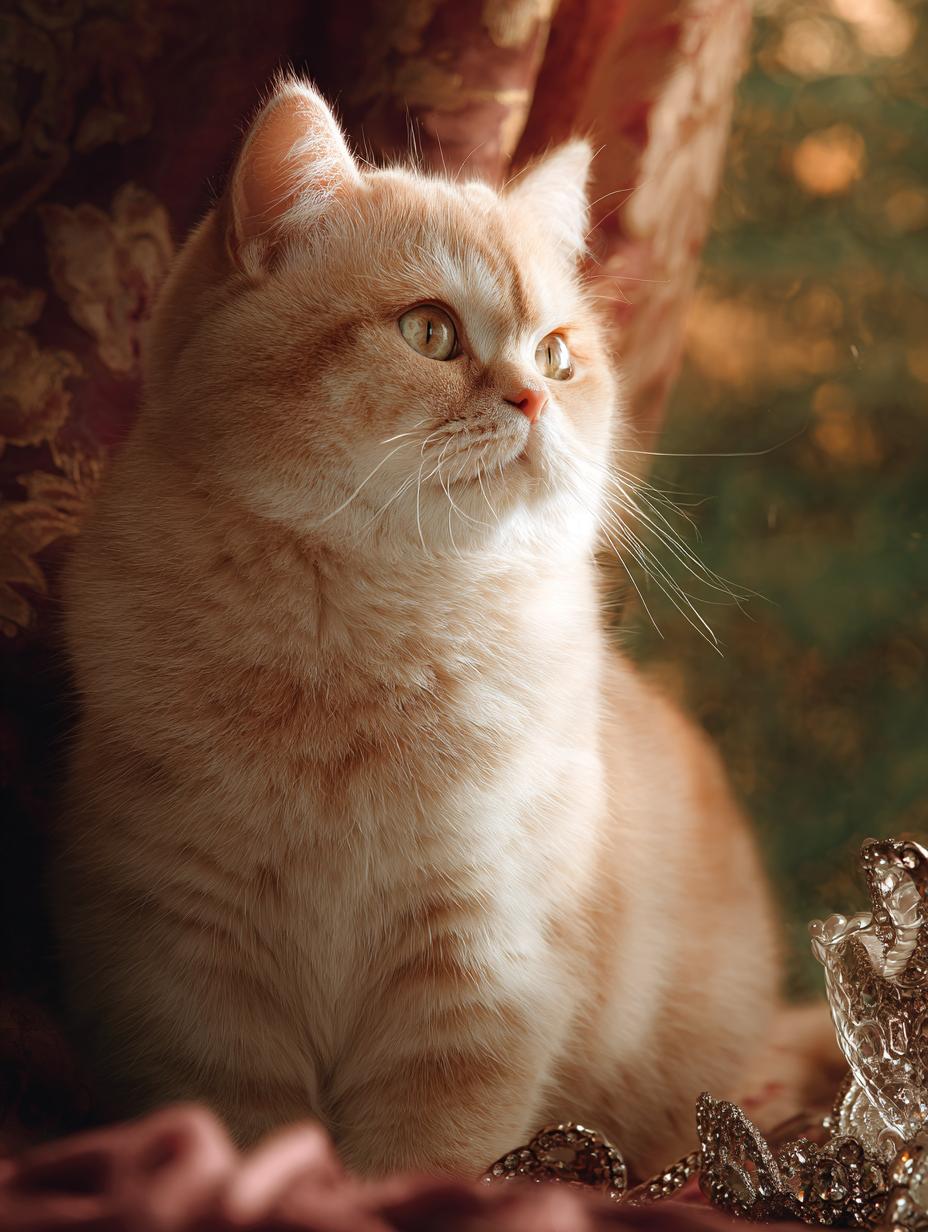
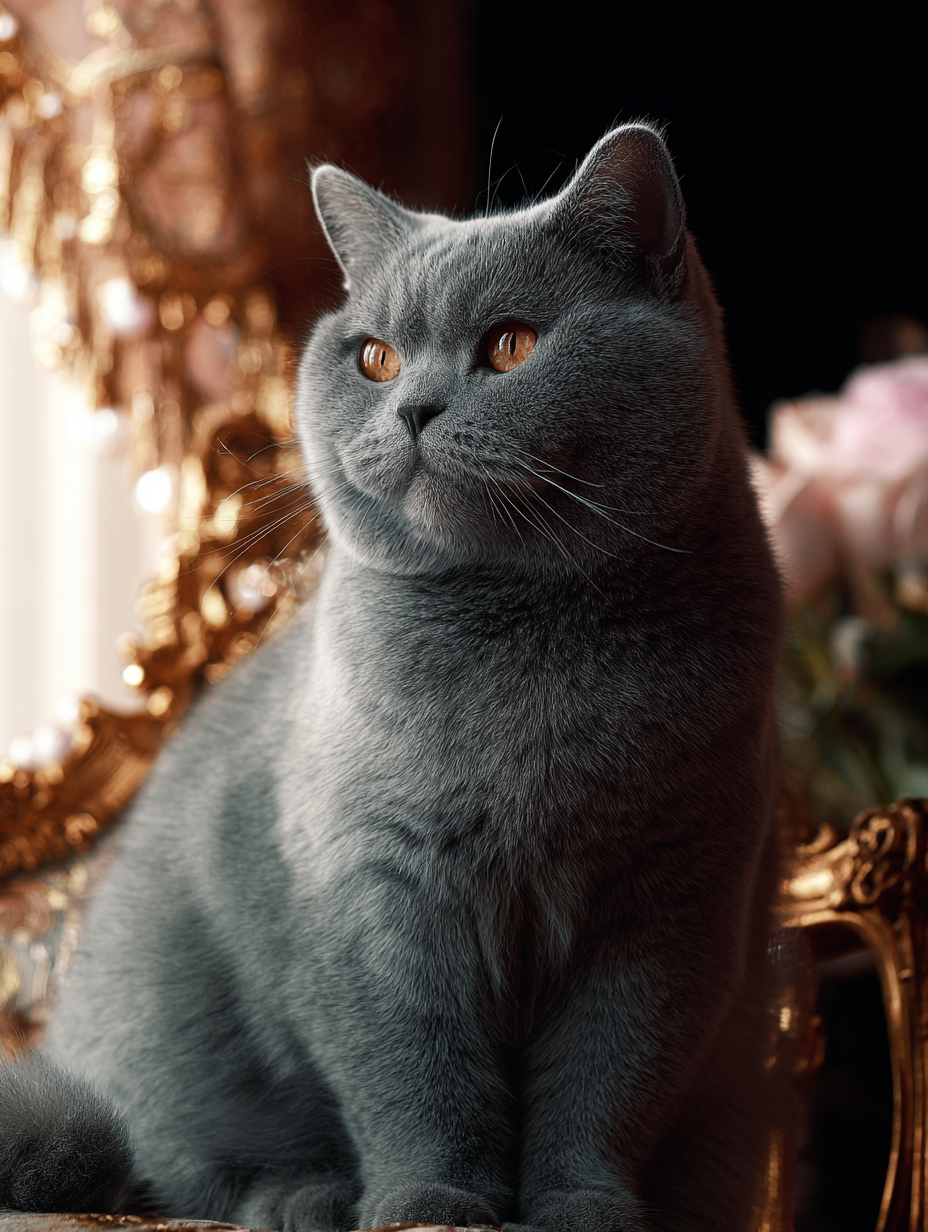
Blue vs Golden British Shorthair: which color fits best with your lifestyle asthetic? This comparison focuses on two of the most requested British Shorthair colors: the blue that built the breed’s identity and the golden lines that attract buyers looking for rarity, warmth, and visual contrast. Each color creates a different presence in the home and appeals to different types of collectors and luxury-focused families.
Blue vs Golden British Shorthair: Quick Comparison Table
| Feature | Blue British Shorthair | Golden British Shorthair |
|---|---|---|
| Coat Appearance | Solid blue-gray | Warm gold with black tipping or shading |
| Pattern Options | Solid only | Shell, shaded, ticked, classic/mackerel/spotted |
| Eye Color | Copper or deep gold | Green, blue-green, or gold |
| Rarity | Widely produced | Less common, limited lines |
| Demand | Consistent year-round | Surges with social media exposure |
| Color Stability | Highly predictable | Develops gradually to full tone |
| Photographic Style | Matte, uniform, minimal-contrast | High-contrast, luminous, eye-catching |
What a Blue British Shorthair Looks Like
Breed-Standard Description
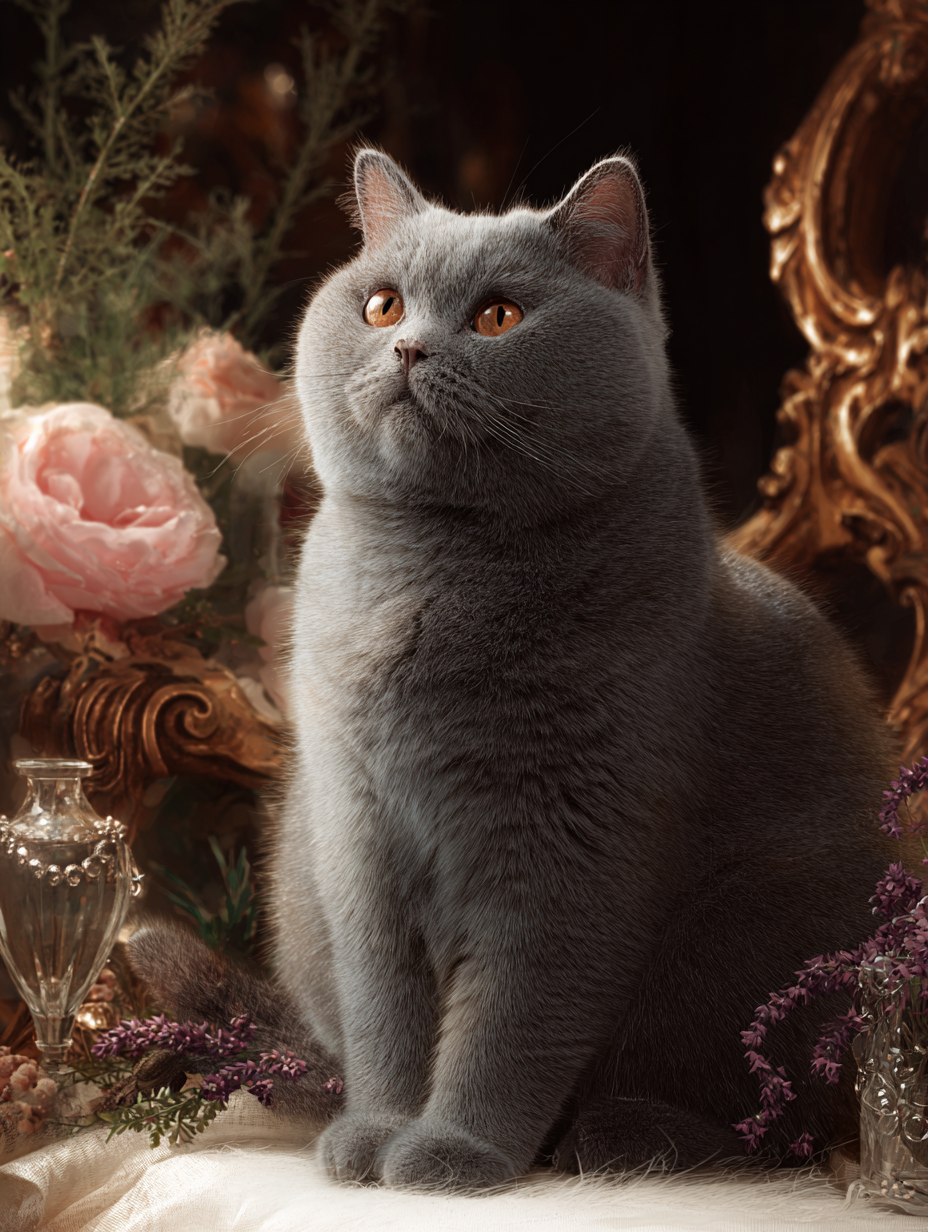
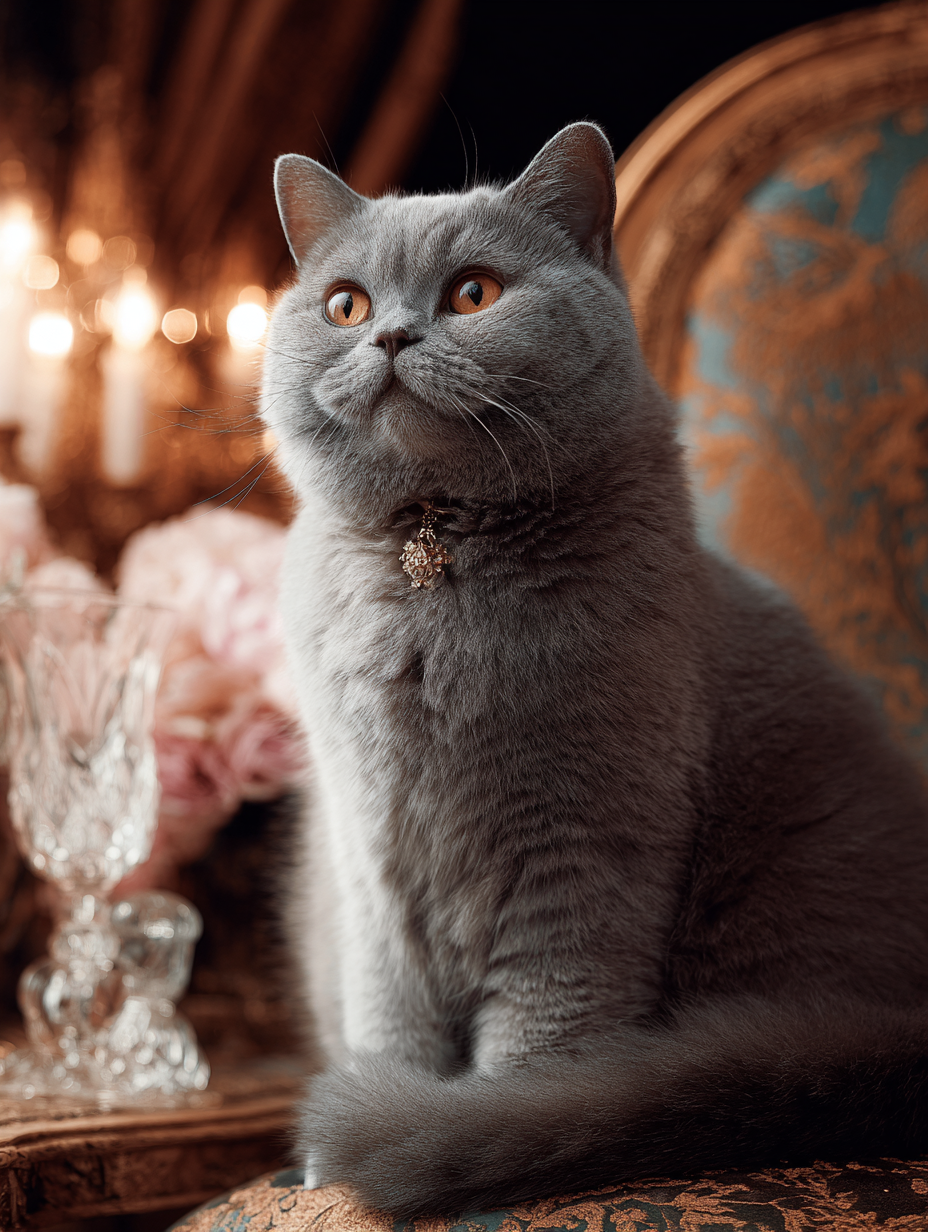
The blue British Shorthair conforms to the classic breed ideal: a solid coat with no markings, even pigment from root to tip, and a dense, plush texture that supports the breed’s round structure. The standard emphasizes uniformity and depth of color.
Coat Tones & Shading
Blues range from lighter steel to deeper slate. True blue maintains an even shade across the body, head, and tail. Guard hairs and undercoat match, keeping the coat visually consistent under all lighting conditions. There is no tipping or pattern.
Eye Color Tendencies
Blue British Shorthairs develop copper, orange, or deep gold eyes as they mature. Eye color strengthens over time, reaching full depth after the first year. The copper tone is a defining feature of the classic blue phenotype.
Marking Variations
None. Breed standards require a clean solid coat with no tabby lines, silvering, or patches. Temporary “ghost tabby” lines may appear in kittens but fade as the coat matures.
Kitten-to-Adult Color Development
Blue kittens are born with a soft gray tone that deepens steadily. The coat becomes denser and more uniform between 6 and 18 months. Eye color transitions from blue to copper during this period. The adult coat remains stable for life. See more about British Blue breeders here.
Photo-Style Descriptions
“Round, plush blue coat with even pigment and matte texture under natural light.”
“Solid slate tone with uniform shading across the head and body.”
“Copper eyes contrasting against a smooth, cool-toned blue coat.”
Read more about Blue British Shorthair Cats here.
What a Golden British Shorthair Looks Like
Breed-Standard Description
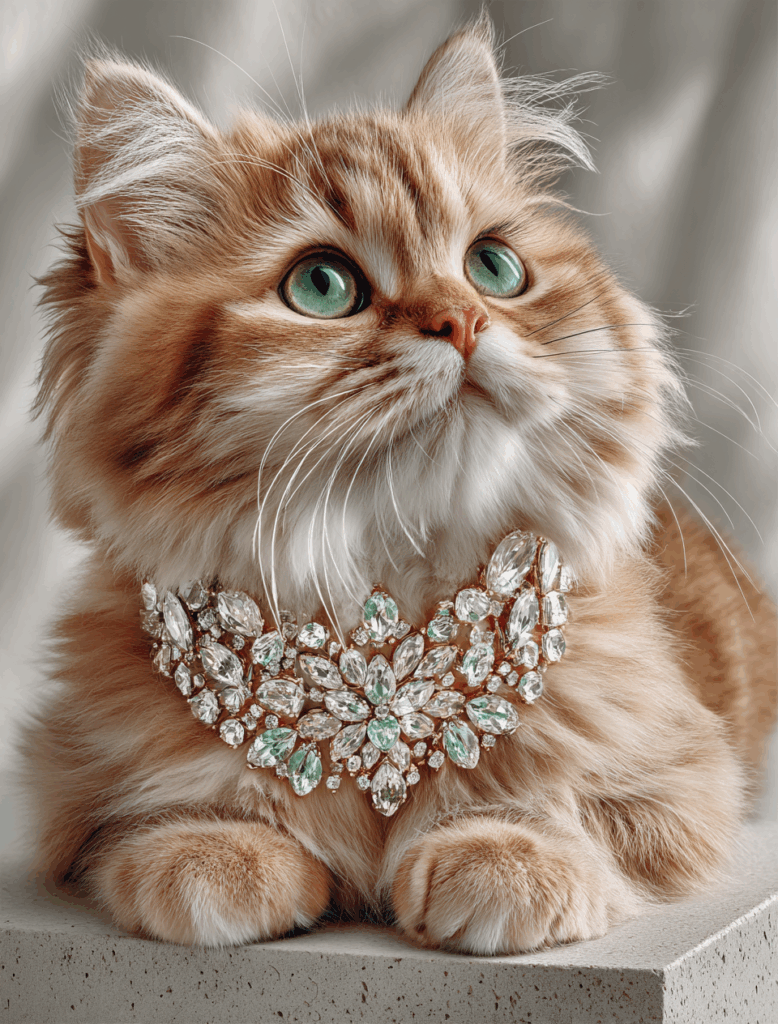
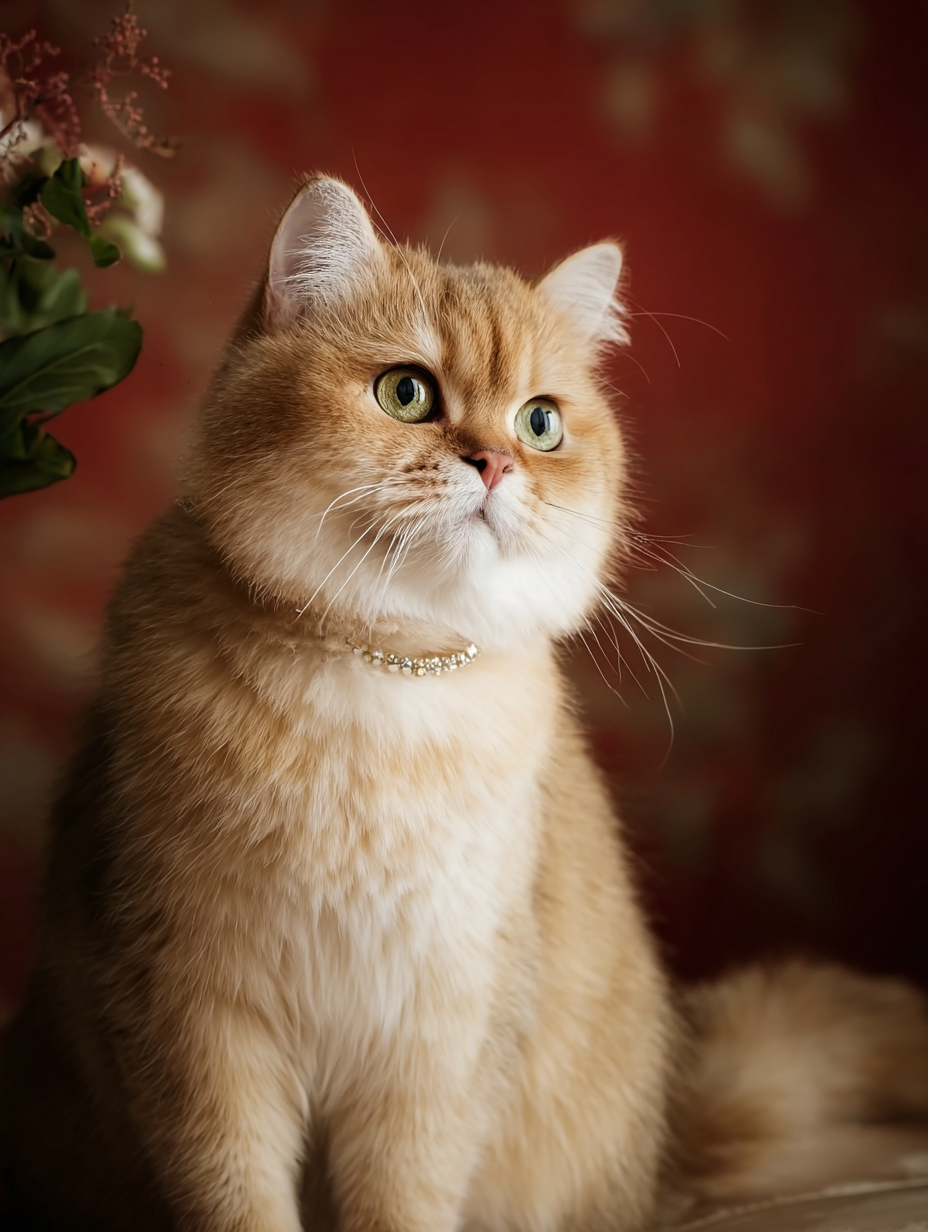
Golden British Shorthairs fall within the warm-toned tabby-derived color classes, including shell, shaded, ticked, and classic patterns. Standards focus on strong contrast between warm undercoat and dark tipping or pattern lines, creating a luminous effect without altering British type.
Coat Tones & Shading
Golden coats combine a warm cream-to-apricot undercoat with black tipping or defined tabby lines. Shell (12) carries light tipping, shaded (11) carries medium tipping, and ticked (25) presents evenly distributed ticking. Classic, mackerel, and spotted patterns show clear lines over the golden base.
Eye Color Tendencies
Green and blue-green eyes are common in golden lines. Some golden cats mature into gold eyes depending on lineage. Eye tone intensifies as the undercoat warms, creating strong contrast valued by buyers.
Marking Variations
• Shell (12) – minimal tipping
• Shaded (11) – moderate tipping
• Ticked (25) – no stripes, evenly ticked
• Classic/mackerel/spotted – tabby pattern over golden base
All are accepted depending on registry rules.
Kitten-to-Adult Color Development
Golden kittens appear pale at birth. Warmth increases gradually as the undercoat develops. Tipping strengthens with age, and eye color transitions slowly into green or blue-green. Full color maturity can take 12–24 months, especially in shaded lines.
Photo-Style Descriptions
“Warm golden base with fine black tipping that creates depth in direct light.”
“Green eyes contrasted against a bright golden undercoat.”
“Evenly ticked golden coat with clear warmth along the face and back.”
See more Golden British Shorthair Cat info here.
Color as a Lifestyle Choice
Blue British Shorthair Buyer Profile
Blue attracts buyers who want a consistent, uniform look that fits into minimal, structured, or neutral-focused homes. These buyers tend to select a cat that blends with existing décor rather than one that becomes a focal point. Blue appeals to families who want the classic British Shorthair appearance and prefer predictable color development with no pattern change over time.
Golden British Shorthair Buyer Profile
Golden attracts buyers who want a visually striking cat that immediately stands out in the home. These buyers typically enjoy warm interiors, natural tones, and visually dynamic photography. Golden appeals to clients who prioritize unique colors, active social media presence, or limited-production lines. This color is selected by buyers who want contrast and visual depth rather than uniformity.
Aesthetic Impact in Luxury Homes
Lighting Effects
Blue maintains the same tone under most lighting conditions. The coat absorbs light evenly, creating a stable appearance in natural daylight and indoor warm light.
Golden changes more noticeably with lighting. Warm light intensifies golden tones, while natural daylight reveals contrast between undercoat and tipping. Golden coats appear more dimensional in direct sunlight due to reflective warmth.
Interior Design Compatibility
Blue matches modern, minimal, industrial, and grayscale interiors. Its uniform tone pairs easily with neutral palettes and does not compete with décor.
Golden pairs well with warm woods, natural tones, and layered interiors. The coat becomes part of the visual landscape, creating contrast against white, cream, or mixed-material spaces.
Social Media & Editorial Photography Impact
Blue produces consistent, matte-toned photography with little color shift across environments. It is easy to photograph and maintains the same visual identity regardless of background.
Golden produces high-contrast images that draw attention immediately. Golden cats photograph differently in every setting, which increases post variety and reach. Buyers who rely on visual storytelling tend to prefer golden lines for this reason.
Exclusivity Score
Actual Rarity
Blue is widely produced and remains the most common British Shorthair color worldwide.
Golden relies on specific lineage combinations and is produced in significantly smaller numbers, especially in shell and shaded patterns.
Perceived Rarity
Blue is seen as the traditional British Shorthair. Buyers view it as accessible and always available.
Golden is viewed as rare even when availability increases. The warm tone and tipping create a look many buyers have not seen in person, reinforcing exclusivity regardless of actual production numbers.
Waitlist Demand
Blue waitlists remain steady with predictable placement times.
Golden waitlists fluctuate and often fill quickly, especially for shaded and shell kittens. Buyers focused on color-specific outcomes reserve earlier to secure availability.
Which Color Sells First
Golden kittens typically place first due to limited availability and high social media visibility. Blue kittens place consistently but do not sell out as quickly unless selected for type or lineage rather than color alone.
Investment Value for Luxury Buyers
Long-Term Demand
Blue maintains stable year-round demand due to its association with the breed standard.
Golden demand increases with each new generation of improved color lines and greater exposure online. This color continues to grow in recognition.
Predictability of Color Quality
Blue offers highly predictable outcomes. Color tone, eye development, and overall appearance stabilize early.
Golden shows slower development and greater variation between lines. Buyers rely more heavily on breeder expertise to evaluate early color quality.
Market Trends
Blue remains the foundational color and maintains consistent search volume across regions.
Golden shows rapid trend growth, driven by social media imagery and increased interest in rare warm-toned cats. Shell and shaded lines see the highest increase in buyer inquiries.
Visual Longevity
Blue retains the same appearance throughout adulthood with minimal change.
Golden becomes richer and more defined with age as tipping strengthens and undercoat warms. This progression increases the cat’s visual impact over time.
Does Color Affect Temperament?
Coat color does not determine temperament in British Shorthairs. Personality is shaped by genetics, early environment, structure, and breeder selection. Blue and golden kittens raised in the same program show the same core British Shorthair traits: steady behavior, predictable routines, and low reactivity. Differences seen between individual kittens relate to lineage and handling, not color. Buyers choosing between blue and golden should make decisions based on appearance and availability, not expectations of personality differences.
Grooming & Coat Care Differences
Blue coats require simple maintenance. The solid coat hides minor shedding, and the uniform tone keeps the cat looking tidy between grooming sessions. Weekly brushing is typically sufficient to remove loose undercoat.
Golden coats show shedding more visibly due to the warm undercoat and black tipping or pattern lines. Shaded and shell coats benefit from more frequent brushing to manage loose hair and maintain clean tipping. Ticked and patterned goldens require the same routine but may show transitional coat stages more clearly. Both colors maintain the dense British Shorthair texture, but golden coats may require additional attention during seasonal shedding. See British Shorthair Grooming Care here.
Blue British Shorthair vs Golden British Shorthair Luxury Price Comparison
In the luxury pet market, pricing reflects rarity, lineage depth, and selective breeding practices. British Shorthair colors fall into distinct investment tiers based on production volume and visual impact.
Blue British Shorthairs from established, limited-production lines typically range from $4,500–$6,000. This color remains the foundation of the breed, offering stable demand and predictable development, which places it in the entry tier of the luxury British Shorthair market.
Golden British Shorthairs occupy a higher tier, with most kittens ranging from $5,000–$7,500. Golden lines are produced in smaller numbers, require more selective pairing, and involve slower color development, which naturally elevates market value.
Longhaired Golden British Shorthairs represent one of the most exclusive categories. These kittens commonly fall within the $7,000–$10,000+ range. Their rarity, lineage limitations, and strong visual presence align them with other premium companion animals priced for collectors and high-end households.
Within luxury markets, these price ranges are considered standard. Many high-end buyers invest similar or higher amounts in accessories, furnishings, or personal items, so the value placed on a rare, well-produced cat with a decade-long lifespan aligns with established luxury buying behavior.
Luxury British Shorthair Kitten Color Price Overview
| Color Variety | Description | Typical Luxury-Market Range |
|---|---|---|
| Blue | Classic solid foundation color with stable demand | $4,500 – $6,000 |
| Golden Shaded | Warm undercoat with black tipping; limited production | $5,000 – $7,500 |
| Golden Shell (Chinchilla) | Lightest golden variant with minimal tipping | $6,500 – $9,000+ |
| Longhaired Golden | Rare longhair version of golden shaded or shell | $7,000 – $10,000+ |
| Lilac Chinchilla | Extremely rare pastel chinchilla variant; limited global lines | $8,000 – $12,000+ |
| Teddy Bear British Shorthair (plush-type goldens & chocolates used in marketing language) | Popularized for rounder expression and high-contrast features | $6,500 – $10,000 |
| Brown Tabby / Brown Classic | Rich warm tone with bold markings; trending among luxury buyers | $5,500 – $8,500 |
| Black Golden Shaded / Black Golden Ticked | High-contrast golden variants with strong lineage selection | $6,000 – $9,000+ |
| Silver Shaded / Silver Shell (Chinchilla Silver) | One of the oldest luxury British color classes; strong demand | $6,000 – $9,500+ |
| Lilac | Dilute color with soft tone; produced in smaller quantities | $5,500 – $8,000 |
Buyer Considerations
Buyers selecting between blue and golden British Shorthairs typically base their decision on appearance, rarity, and long-term visual impact.
Blue appeals to individuals who want a consistent, uniform color that maintains the same tone in all environments. The solid coat integrates easily into minimal or modern interiors and provides a stable photographic presence with little variation over time. Blue offers predictable development and a straightforward selection process for buyers who prioritize reliability.
Golden appeals to buyers who prefer a visually distinctive cat with noticeable contrast and ongoing color development. The warm undercoat, tipping, and gradual maturation create a dynamic appearance that becomes more defined with age. This color aligns with buyers who value rarity, limited production, and high visual impact within the home or on social media.
Buyers who want a classic, steady appearance often choose blue. Buyers who want a standout, collectible color with a strong presence typically choose golden, especially in shaded, shell, or longhaired variations.
Common Misconceptions
“Golden cats are a different breed.”
Golden is a recognized color within the British Shorthair standard, not a separate breed.
“Blue cats have calmer personalities.”
Temperament relates to genetics and handling, not coat color.
“Golden kittens show full color early.”
Golden tones and tipping strengthen gradually. Pale kittens often mature into strong golden shades.
“Golden lines are silver cats that changed color.”
Golden and silver colors are genetically distinct. A golden line does not shift from silver, and vice versa.
“Blue is outdated compared to golden.”
Blue remains the foundation color of the breed and continues to hold strong demand and show presence.
Summary Table: Blue vs Golden British Shorthair
| Feature | Blue British Shorthair | Golden British Shorthair |
|---|---|---|
| Coat Type | Solid, uniform blue | Warm undercoat with black tipping or tabby lines |
| Pattern Options | Solid only | Shell, shaded, ticked, classic/mackerel/spotted |
| Eye Color | Copper to deep gold | Green, blue-green, or gold |
| Development Speed | Fast, predictable | Slow, develops over 12–24 months |
| Rarity | Common | Limited production |
| Photographic Presence | Matte, consistent | High contrast, dynamic |
| Typical Luxury-Market Price | $4,500–$6,000 | $5,000–$7,500+ |
| Ideal Buyer | Prefers classic uniformity | Prefers rarity and visual impact |
FAQ: Blue vs Golden British Shorthairs
Are golden British Shorthairs more expensive than blue?
Yes. Golden British Shorthairs typically fall into a higher price tier because they are produced in smaller numbers and require selective pairing to achieve consistent golden undercoat, tipping, and eye color development. Blue British Shorthairs remain at a stable price point due to broader availability and long-established lineage groups.
Which color is rarer: blue or golden?
Golden is rarer. Blue is the foundational color of the breed and is widely produced, while golden lines are limited, especially in shaded, shell, and longhaired variations. Golden kittens appear less frequently and have higher waitlist demand.
Do blue and golden kittens mature at the same rate?
No. Blue stabilizes earlier, often reaching full tone and density by 12–18 months. Golden develops gradually over 12–24 months as the undercoat warms, tipping strengthens, and eye color shifts toward green or blue-green depending on lineage.
Does coat color affect temperament?
No. Coat color does not influence personality. Temperament is shaped by genetics, structure, handling, and consistent early development. Blue and golden kittens raised in the same program show the same British Shorthair behavior patterns.
Which color photographs better?
Both photograph well but in different ways. Blue creates uniform, matte-toned images that appear consistent in all lighting. Golden produces higher contrast, with undercoat and tipping showing more depth in natural and warm light. Buyers seeking varied visual output for social media commonly choose golden.
Do golden kittens look very pale at birth?
Yes. Golden kittens usually begin with pale or muted tones. The warm undercoat and tipping strengthen gradually, becoming more defined between 8 and 16 weeks and continuing into adulthood.
How predictable is the adult appearance of each color?
Blue is highly predictable. The final tone can be estimated accurately early in kittenhood.
Golden is predictable with experience, but the degree of warmth and tipping becomes clearer as the coat develops. Shell, shaded, and ticked patterns reveal full definition later than blue.
Are golden British Shorthairs a separate breed?
No. Golden is a recognized color class within the British Shorthair breed. It belongs to the warm-toned tabby-based group that includes shaded, shell, and ticked variants.
What eye colors are typical for each color?
Blue British Shorthairs develop copper, orange, or deep gold eyes.
Golden British Shorthairs most often develop green or blue-green eyes, though some mature into gold depending on lineage.
Are there longhaired versions of blue and golden?
Yes. Both colors occur in the British Longhair variant. Longhaired golden kittens are significantly rarer and fall into one of the highest price tiers in the luxury pet market. Longhaired blue kittens are less rare but still occur in lower volume than shorthaired blue.
Which color works better in modern or minimal homes?
Blue integrates easily into neutral and monochrome interiors due to its uniform tone. Buyers wanting a cat that blends visually into a structured space often choose blue.
Which color creates more visual contrast in the home?
Golden creates stronger contrast. The warm undercoat, black tipping, and green or blue-green eyes create more definition in photographs and bright interior spaces.
Do golden British Shorthairs shed more than blue?
Shedding volume is similar, but golden shedding may be more visible due to lighter undercoats and darker tipping. Regular brushing manages both colors effectively.
Which color is easier to identify early in a litter?
Blue is easier to identify at birth because tone is visible immediately.
Golden requires more time. Tipping, warmth, and eye color direction become clearer as the kitten grows.
Are shaded and shell goldens the same as chinchilla?
Chinchilla refers to shell (12) and shaded (11) patterns. These represent specific degrees of tipping and belong to the golden or silver color classes depending on undercoat.
Can two blue British Shorthairs produce golden kittens?
No. Golden requires specific genetic components not present in solid blue lines. Golden kittens come from tabby-based golden or silver ancestral lines.
Which color has stronger resale or future breeding value?
Golden lines typically hold higher value due to rarity, slower development, and limited production. Shell and shaded goldens, as well as longhaired variations, represent the highest tiers. Blue maintains consistent demand but is not considered rare.
Do blue cats ever develop patterns as adults?
No. True blue is a solid color. Ghost tabby markings may appear in kittens but fade as the coat matures.
Which color sells first in most litters?
Golden kittens, especially shell and shaded variations, usually place first due to limited availability and higher market demand. Blue kittens follow with steady but less competitive placement.
Do golden British Shorthairs always have green eyes?
Not always. Green and blue-green eyes are common, but some lines mature into gold or copper tones. Eye color development varies by lineage and coat pattern.
In Conclusion: Blue vs Golden British Shorthair
Blue and golden offer two distinct colors within the British Shorthair breed.
Buyers prioritizing uniformity, predictable development, and a consistent photographic presence tend to choose blue. The solid coat maintains the same tone from kittenhood to adulthood, creating a steady, minimal, architectural appearance in the home.
Golden appeals to buyers who value rarity, contrast, and ongoing visual development. The warm undercoat, tipping, and eye color transition create a dynamic presence that strengthens over time. Golden functions as a focal point in a space, especially in interiors with warm materials, natural light, or layered textures.
Both colors hold long-term demand, but golden occupies a higher tier in exclusivity and scarcity. Longhaired and chinchilla variants remain among the rarest British Shorthair colors, aligning with luxury buyers who prefer limited-production animals with unique visual profiles.
The choice between blue and golden is ultimately determined by lifestyle aesthetics:
• Blue fits environments where cohesion and tonal consistency matter.
• Golden fits environments where contrast and distinction are central to the visual layout.
Reserve Your Blue or Golden British Shorthair Kitten
Choosing a British Shorthair in blue or golden is more than selecting a color.
It is choosing the presence you want living in your home every day.
Blue brings a calm, steady energy.
A quiet companion who settles into the room the moment you walk in.
A color that feels grounded, stable, and timeless.
Golden brings warmth and light.
A cat that becomes part of the atmosphere—glowing in doorways, catching sunlight, drawing the eye every time it moves.
A living piece of art that changes and deepens as it matures.
Both colors carry a different kind of beauty, but the right one will feel instinctively yours.
If you already know which presence belongs in your home—
the steady blue that blends into your world
or the golden shimmer that transforms it—
now is the moment to reserve a kitten in the color that speaks to you.
Beautiful cats are born every year.
The rare ones are not available for long.
Choose the color that feels like home.
Begin your reservation.
Learn More About British Shorthair Cats
- British Shorthair Lifespan
- British Shorthair Size
- British Shorthair Cat Care
- British Shorthair Personality
- British Shorthair Diet
- British Shorthair Kitten Growth Stages
- British Shorthair vs Ragdoll
Related British Shorthair Colors and Patterns
- Black British Shorthair
- Brown Tabby British Shorthair
- Russian Blue vs British Shorthair
- Lilac British Shorthair
- Blue British Shorthair
- Orange British Shorthair
- Chocolate British Shorthair
- Intro to All British Shorthair Colors
- Golden British Shorthair Kittens
Sources
- British Shorthair Breed Standard — The Cat Fanciers’ Association (CFA)
https://cfa.org/british-shorthair/ - British Shorthair Breed Standard — The International Cat Association (TICA)
https://tica.org/breeds/british-shorthair - British Shorthair Breed Standard — Governing Council of the Cat Fancy (GCCF)
https://www.gccfcats.org/breeds/british-shorthair/ - Feline Coat Color Genetics Overview — UC Davis Veterinary Genetics Laboratory
https://vgl.ucdavis.edu/resources/cat-genetics - Feline Color Terminology: Tipping, Shading & Shell — FIFe Standards
https://fifeweb.org/wp/breeds/ - General Feline Color Inheritance Guide — Messybeast Genetics Resource
https://messybeast.com/colour-genetics.htm - British Longhair & British Shorthair Color Classes — World Cat Federation
https://wcf.de/en/breeds/





Read the Comments +