
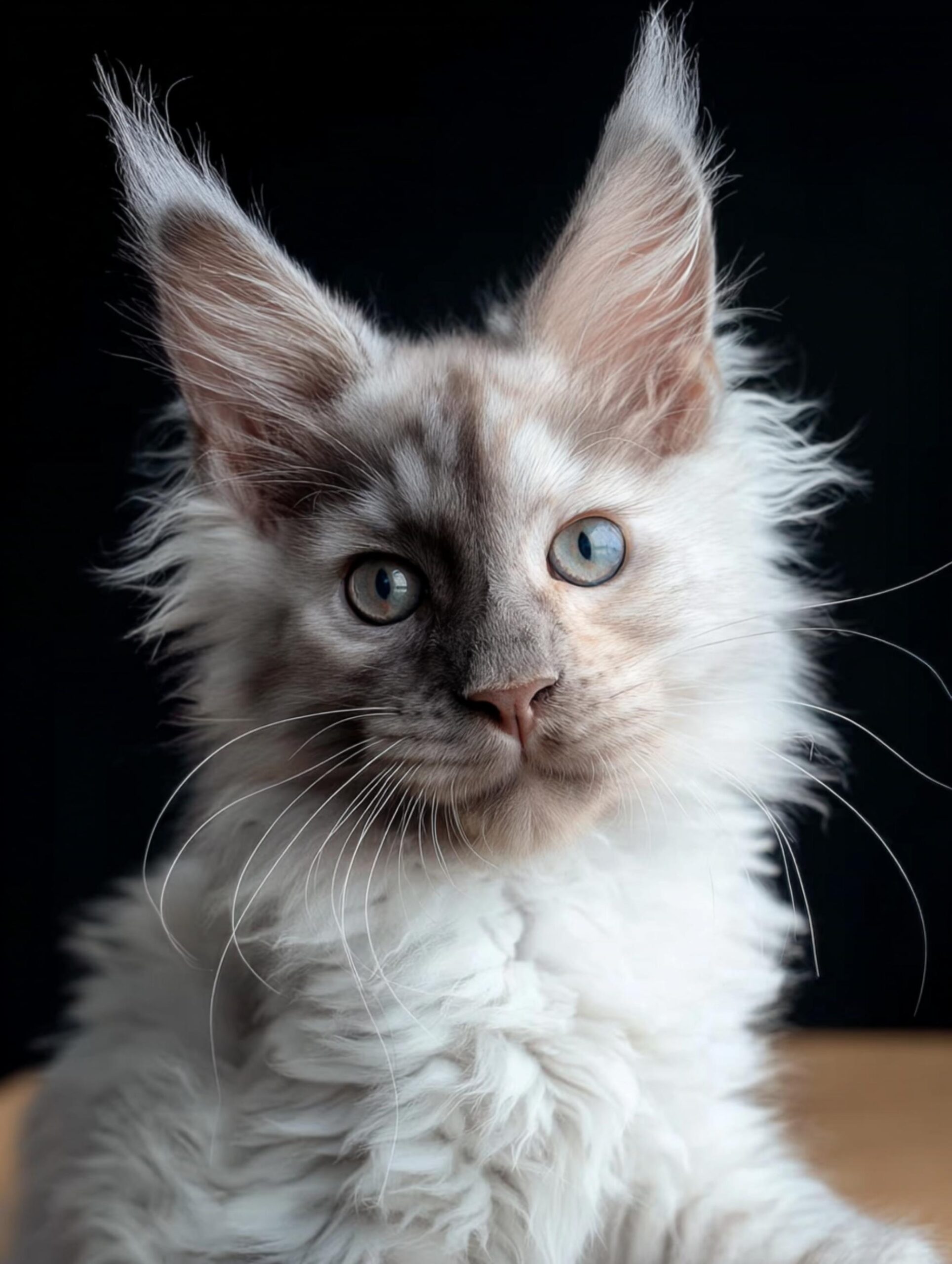
What to Expect After Bringing a Maine Coon Kitten Home
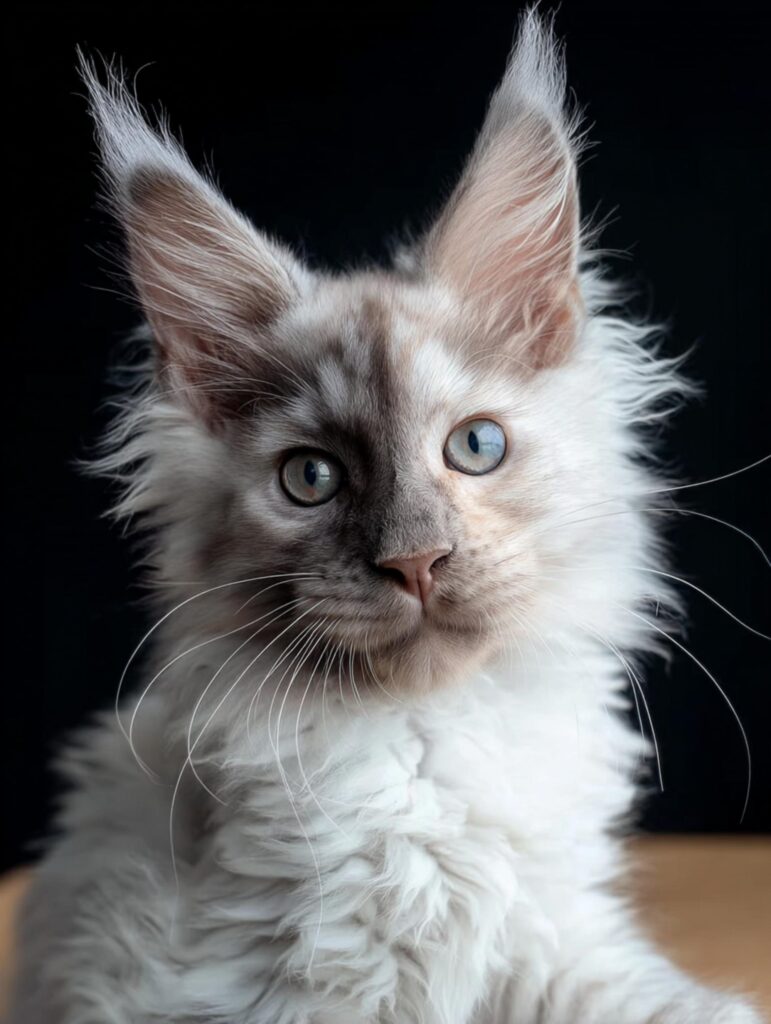
Bringing a Maine Coon kitten home is exciting, but it often comes with a few surprises. Many new owners expect immediate affection, constant play, or dramatic reactions. Instead, Maine Coon kittens frequently respond in quieter, more observant ways that can feel confusing if you’re used to other breeds or past kitten experiences.
Maine Coons develop differently than most cats. They mature slowly, think before they act, and tend to take in their environment carefully before fully engaging. Some appear confident right away, while others seem reserved or unusually calm. Both responses are normal for this breed.
This post walks you through what most owners experience during the early adjustment period, including:
- How to setup a space for your Maine coon Kitten
- The first 24 hours after arrival
- The first week at home
- The first month of settling in
- Common behavior changes
- Early growth, bonding, and adjustment concerns
Most early worries are temporary. Understanding what is normal for Maine Coon kittens helps reduce anxiety and allows you to support your kitten calmly and confidently as they adjust.
What to Expect After Bringing a Maine Coon Kitten Home: Quick Summary
| Stage | What’s Normal | What It Means |
|---|---|---|
| First 24 hours | Hiding, sleeping a lot, quiet observation | Your kitten is processing a major change and settling in |
| Eating & drinking | Delayed appetite for up to 24 hours | Stress-related and usually temporary |
| Litter box use | Slight hesitation or one early accident | Adjustment to a new space, not poor training |
| First week | Personality starts emerging, more curiosity | Growing confidence and comfort |
| Sleep patterns | Night activity and long daytime naps | Normal kitten rhythm, especially during adjustment |
| Bonding style | Following you, sitting nearby | Early attachment without forced cuddling |
| Energy levels | Bursts of play, sudden zoomies | Healthy development and curiosity |
| Growth appearance | Long legs, big ears, awkward proportions | Normal slow growth phase for Maine Coons |
| Stress responses | Mild loose stool, pickiness, clinginess or independence | Common and usually short-lived |
| By one month | Predictable routines, stronger attachment | Your kitten feels at home |
| When to call the vet | Persistent appetite loss, lethargy, worsening symptoms | May indicate illness rather than adjustment |
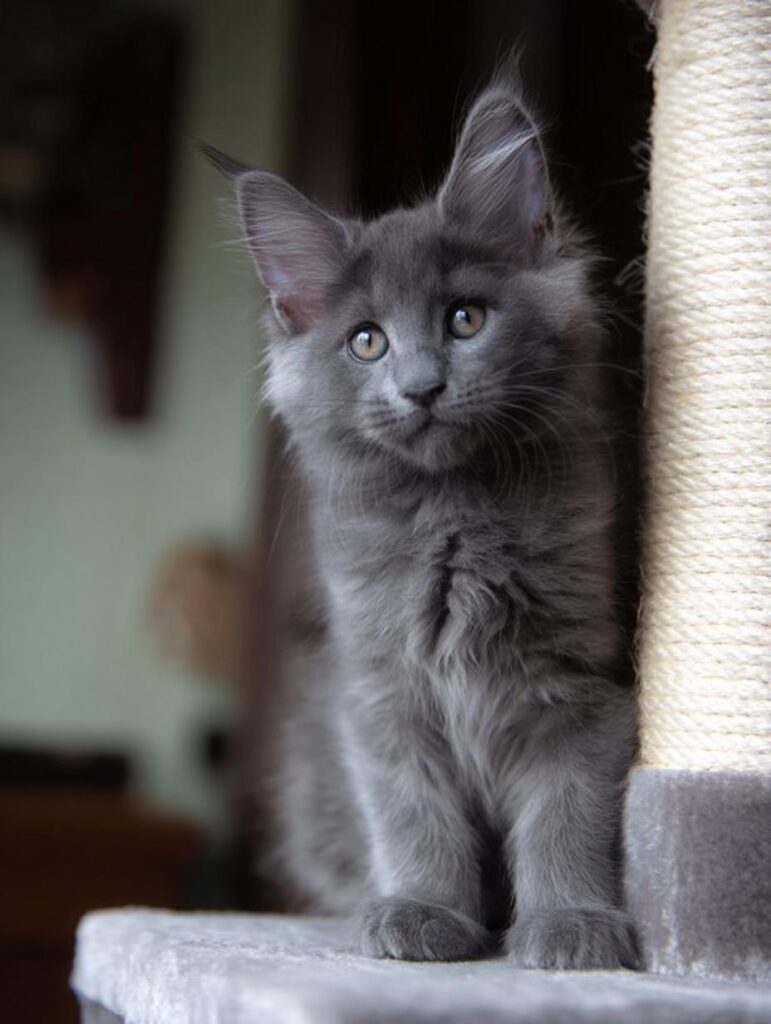
How to Set Up a Safe Room for Your Maine Coon Kitten
Starting your Maine Coon kitten in one quiet, contained room helps reduce stress and makes the transition home smoother. Even confident kittens benefit from a smaller space at first. A safe room allows your kitten to learn where food, water, and the litter box are without feeling overwhelmed.
Choose the Right Room
A bathroom, small bedroom, office, or laundry room works well. The space should be:
- Quiet and low-traffic
- Easy to close off
- Free from hazards like cords, small objects, or open vents
Avoid large open areas at first. Too much space too soon can increase anxiety and delay eating or litter box use.
Set Up the Essentials
Litter box
Place the litter box in an open, easy-to-find spot. Use the same litter your kitten is already familiar with if possible. Keep it away from food and water, but within clear walking distance.
Food and water
Set food and water bowls on the opposite side of the room from the litter box. Fresh water should be available at all times. Food can be offered on a predictable schedule or left available depending on your routine.
Bed and comfort items
Provide a soft bed, blanket, or towel. If you have something that smells familiar from the breeder or previous environment, place it in the room. Familiar scent helps lower stress.
Add Safe Hiding and Resting Spots
Include at least one hiding option, such as:
- A covered bed
- A carrier with the door left open
- A small box or nook
Hiding is a normal coping behavior. Providing a safe place to retreat helps kittens feel secure and speeds adjustment.
Keep the Room Simple
Avoid overloading the space with toys or furniture at first. A few quiet toys are enough. The goal is calm, not stimulation.
Lighting should be soft, and noise should be minimal, especially during the first day or two.
When to Expand Access
Your kitten can begin exploring the rest of the home once they are:
- Eating and drinking reliably
- Using the litter box consistently
- Moving around the room with relaxed body language
- Showing curiosity rather than fear
This may take a day or several days, depending on the kitten. Gradual expansion supports confidence and prevents setbacks.
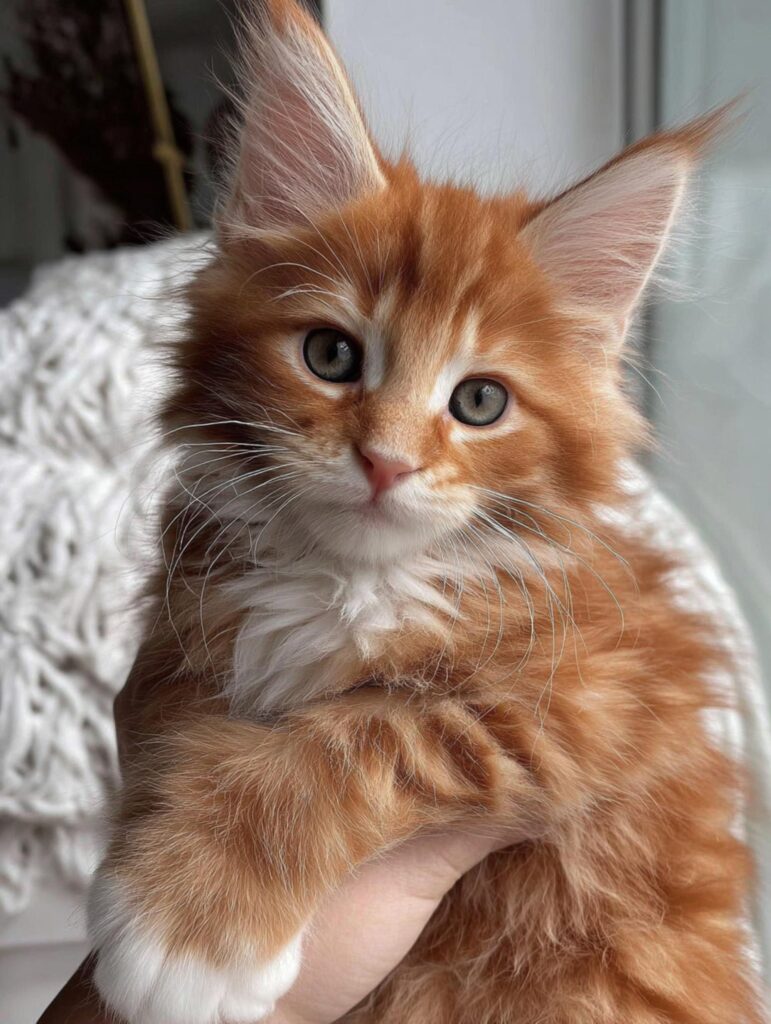
The First 24 Hours With a Maine Coon Kitten
The first day is less about bonding and more about orientation. Your kitten is processing a major transition, even if they appear relaxed on the surface.
What Your Kitten Is Experiencing
Separation from litter and breeder
Your kitten has just left the only environment they have known. Even confident kittens register this change internally. Some respond by seeking closeness, while others withdraw briefly to self-regulate.
Sensory overload in a new environment
New smells, sounds, lighting, surfaces, and people all arrive at once. Maine Coons are intelligent and observant, which means they often pause to assess before acting. This can look like calmness, hesitation, or quiet alertness.
Why Maine Coons may appear confident or unusually quiet
Many Maine Coon kittens do not panic or cry excessively. Instead, they may sit still, watch carefully, or choose a single safe location. This does not indicate fear or detachment. It reflects the breed’s tendency to process before reacting.
Common First-Day Behaviors
Hiding
It is very common for a Maine Coon kitten to choose a hiding spot during the first several hours. This may be under furniture, behind a toilet, or in a carrier. Hiding is a coping strategy, not a sign that something is wrong.
Vocalizing
Some kittens chirp, trill, or softly meow when separated from familiar smells or people. Others remain completely silent. Both responses are normal, especially during the first night.
Exploring cautiously
Instead of racing through the house, many Maine Coon kittens explore slowly. They may investigate one room at a time, sniff corners, and retreat to a safe spot between short exploration periods.
Sleeping more than expected
The stress of transition is tiring. Many kittens sleep for long stretches during the first day. This rest helps them regulate and adjust to the new environment.
Eating, Drinking, and Litter Box Use
When to expect the first meal
Some Maine Coon kittens eat within a few hours of arriving home. Others wait until the environment feels quieter or until nighttime. A delay of up to 24 hours is not unusual, especially after travel.
Normal appetite delays
Temporary disinterest in food is common during the first day. Offering the same food the kitten was eating previously and placing it near their safe space often helps. Appetite usually returns once stress levels drop.
Litter box adjustment timeline
Most Maine Coon kittens use the litter box within the first 12–24 hours. Occasional hesitation or one missed attempt can happen during the adjustment phase. Keeping the litter box easily accessible and using familiar litter supports a smooth transition.
The first day sets the emotional tone, but it does not define long-term behavior. Calm routines, gentle interaction, and patience during these first hours make the rest of the adjustment period easier for both you and your kitten.
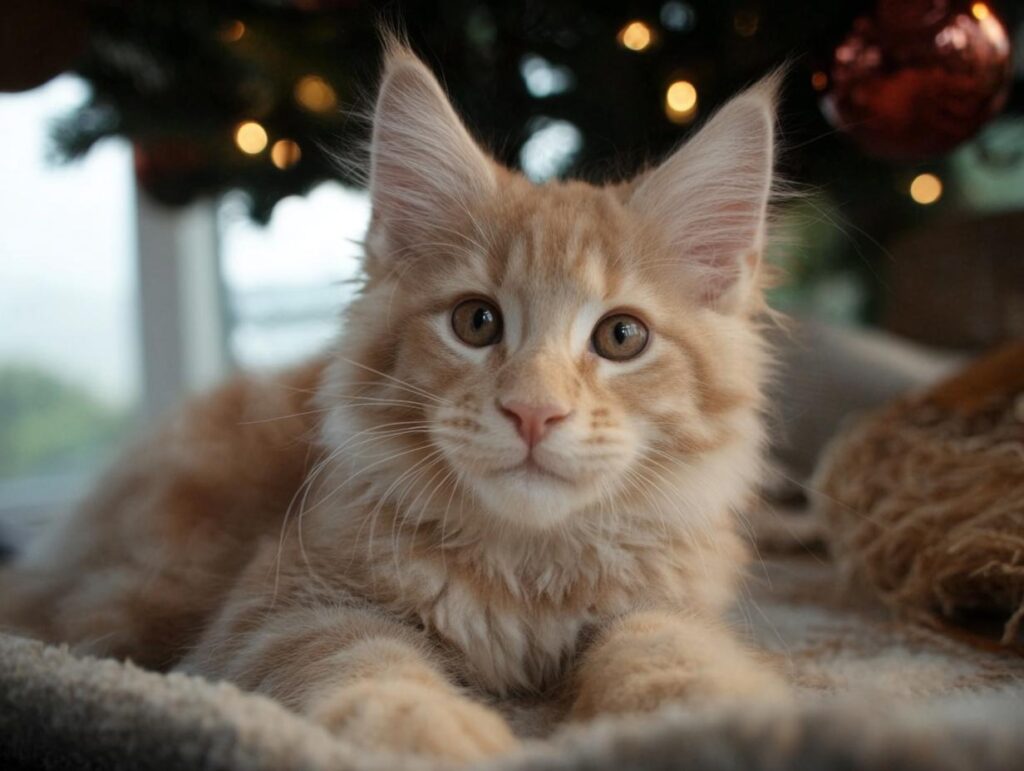
The First Week at Home
By the end of the first few days, most Maine Coon kittens begin to relax into their new environment. This is when owners often notice real personality traits emerging and routines starting to take shape.
Personality Emergence
How Maine Coons “come online” socially
Maine Coon kittens often appear reserved at first, then suddenly become more interactive once they feel secure. Rather than reacting immediately, they observe, process, and then engage. This shift can feel dramatic: a kitten who hid on day one may be following you room to room by day five.
Why many bond quickly but deeply
Once trust is established, Maine Coons tend to attach strongly. Their bonding style is often steady rather than frantic. They prefer proximity, shared space, and routine interaction over constant physical contact. This is why many owners describe them as companionable rather than clingy.
Early attachment behaviors
Common early signs of bonding include:
- Following you from room to room
- Sitting nearby rather than on your lap
- Watching daily activities closely
- Responding to your voice or routine cues
These behaviors signal comfort and engagement, even if the kitten is not overtly cuddly yet.
Sleep Patterns
Night activity
Maine Coon kittens, like all cats, are naturally more active at dawn and dusk. During the first week, nighttime activity may increase as your kitten gains confidence. Short bursts of play, exploration, or vocalization are common, especially if the environment is quiet.
Daytime naps
Long daytime sleep periods are normal. Growth and adjustment are energy-intensive, and Maine Coons often nap deeply between short activity windows.
Why Maine Coons adjust differently than other kittens
Because Maine Coons mature slowly and are more deliberate by nature, their sleep-wake rhythm may feel less chaotic than other kittens. Many settle into a predictable pattern faster once routines are consistent.
Normal Stress Responses
Loose stool
Temporary digestive upset is common during the first week. Stress, environmental change, and minor diet shifts can all contribute. Stool usually normalizes as the kitten relaxes and routines stabilize.
Reduced appetite
Some kittens eat less during the first few days, especially during daylight hours. Appetite often improves in the evening or after routines feel familiar.
Extra clinginess or independence
Stress responses vary. Some Maine Coon kittens seek constant reassurance and follow closely. Others prefer brief check-ins followed by independent rest. Both responses are normal during adjustment.
Maine Coon Kitten Behavior in the First Month
As the weeks pass, Maine Coon kittens begin to show clearer patterns in how they move, play, communicate, and interact with their environment.
Curiosity and Confidence
Fearlessness vs caution
Maine Coons are often confident without being reckless. Some kittens explore boldly, while others test boundaries carefully. Confidence tends to grow steadily rather than appearing all at once.
Why Maine Coons explore vertically early
Many Maine Coon kittens show interest in climbing and elevated viewpoints early on. This is tied to their size potential, intelligence, and desire to observe their surroundings. Providing safe vertical spaces helps channel this instinct productively.
Play Style and Energy Levels
Interactive play needs
Maine Coons thrive on interaction. Wand toys, games that involve human participation, and problem-solving play tend to be more satisfying than toys left on the floor.
Object play vs social play
Some kittens enjoy batting toys independently, but most prefer play that includes people. Social play strengthens bonding and helps regulate energy levels.
Why boredom causes mischief
Intelligent kittens look for stimulation. Without adequate engagement, Maine Coons may redirect energy into climbing, knocking objects over, or testing boundaries. Regular play sessions reduce unwanted behaviors.
Vocalization Changes
Chirping, trilling, and talking
Maine Coons are known for their expressive vocalizations. Many kittens begin with soft chirps and trills rather than loud meows. These sounds often increase as confidence grows.
When vocalization increases
Vocalization commonly increases during the first month as kittens become more comfortable communicating needs, greetings, and play invitations.
What is normal vs concerning
Occasional vocalization is normal, especially during play, feeding times, or social interaction. Sudden, persistent crying paired with lethargy, appetite loss, or hiding may warrant closer attention.
The first month sets the foundation for long-term behavior. With consistent routines, appropriate stimulation, and patience, Maine Coon kittens typically develop into confident, socially engaged companions.
Bonding and Attachment With a Maine Coon Kitten
Bonding with a Maine Coon kitten often looks different than people expect. Instead of instant lap-sitting or constant physical contact, attachment tends to develop through presence, routine, and shared space.
How Maine Coons Bond With People
Following behavior
One of the earliest signs of bonding in Maine Coons is following. Your kitten may trail you from room to room, sit nearby while you work, or appear quietly at your feet. This is not clinginess. It reflects curiosity, trust, and a desire to stay connected.
Room-to-room companionship
Many Maine Coons prefer to be in the same space rather than directly on top of their people. They settle nearby, watch activities, and move with you throughout the day. This style of companionship often deepens over time.
“Helper” tendencies
As they mature, Maine Coons often insert themselves into daily routines. They investigate bags, supervise chores, sit on papers or keyboards, and observe closely. This involvement is part of how they bond, especially with the people they trust most.
Affection on Their Terms
Lap cats vs side-by-side cats
Some Maine Coons become lap cats, but many prefer side-by-side contact. Sitting next to you, leaning lightly, or resting nearby is a common expression of affection for the breed.
Why forced cuddling backfires
Trying to hold or cuddle a Maine Coon kitten before they are ready often slows bonding rather than speeding it up. These kittens respond best to choice. When affection is voluntary, trust grows faster and more securely.
Building trust through routine
Predictable routines help Maine Coons feel safe. Feeding times, play sessions, and quiet periods teach your kitten what to expect and who to rely on. Over time, this consistency builds deep attachment without pressure.
Bonding With Children and Other Adults
Respectful interaction
Maine Coons generally tolerate handling well, but they bond most strongly with people who respect their boundaries. Calm voices, gentle touch, and allowing the kitten to approach first encourage positive relationships.
Why Maine Coons often choose a primary person
While Maine Coons can be friendly with many people, they often form a particularly strong bond with one individual. This is usually the person who spends the most time interacting, feeding, and maintaining routines. The preference reflects familiarity and trust, not exclusivity.
Growth Changes You’ll Notice (And When)
Maine Coon kittens grow in a way that often surprises owners. Their development is slow, uneven, and very different from most other cats.
The “Awkward” Growth Phase
Long legs
As kittens grow, legs often lengthen before the rest of the body catches up. This can make your kitten look tall, lanky, or slightly uncoordinated.
Narrow frames
During early growth, bodies remain slim and narrow. Chests have not broadened, and muscle mass is still developing.
Why Maine Coons look unfinished
These traits combine to create the classic “unfinished” look. Ears appear oversized, legs look too long, and the body seems out of proportion. This phase is normal and temporary.
Weight Gain vs Visual Size
Why your kitten feels light but looks big
Maine Coon kittens often appear large due to length, ear size, and tail length, even when they are relatively light. Their frames develop before muscle fills in.
Muscle development timeline
Muscle mass increases gradually over the first few years. What looks like a thin or lightweight kitten often becomes a solid, athletic adult over time.
Slow Maturity Compared to Other Cats
Why Maine Coons are still kittens at 12–18 months
Unlike many breeds that reach full size by one year, Maine Coons continue developing well into adolescence. At 12 to 18 months, they are still mentally and physically immature compared to adult cats.
What normal development looks like at each stage
- Early kittenhood: rapid length growth, little bulk
- Adolescence: uneven proportions, high energy, slim build
- Young adulthood: muscle fills in, chest broadens, movement becomes more controlled
This extended growth period is a defining characteristic of the breed and explains why patience is essential when evaluating size, behavior, and maturity.
Feeding and Appetite After Coming Home
Feeding changes are one of the most common concerns during the first weeks at home. Even confident Maine Coon kittens can show temporary shifts in appetite as they adjust to a new environment, schedule, and routine.
Initial Feeding Adjustments
Transitioning food
Ideally, your kitten continues eating the same food they were receiving before coming home. Even small changes in brand, protein source, or texture can upset digestion during an already stressful transition. If a change is necessary, it should be gradual and introduced over time once the kitten has settled.
Temporary pickiness
Some Maine Coon kittens hesitate to eat at first or show interest in only one type of food. This is often a stress response rather than true pickiness. Appetite usually improves as the kitten becomes comfortable with their surroundings.
Stress-related appetite changes
Reduced appetite during the first 24–48 hours is common. Kittens may eat smaller portions or prefer to eat at quieter times of day. As stress levels decrease, appetite typically returns to normal without intervention.
How Much a Maine Coon Kitten Eats
Growth-driven hunger
Maine Coons grow for a long time, and their nutritional needs reflect that. Periods of intense hunger often coincide with growth spurts. During these phases, kittens may seem to want food constantly.
Why Maine Coons seem constantly hungry
This breed builds large frames and strong muscle gradually. Energy demands are higher than in many other kittens, especially during active developmental stages. Increased appetite is usually a sign of healthy growth rather than overeating.
Avoiding underfeeding during growth
Restricting food too early can interfere with proper development. Kittens should have adequate access to nutrition to support bone, muscle, and organ growth. Monitoring body condition matters more than counting calories at this stage.
Feeding Schedule Expectations
Free-feeding vs meals
Many Maine Coon kittens do well with free access to food during growth, while others thrive on scheduled meals. The best approach depends on the individual kitten’s appetite, activity level, and household routine.
Wet vs dry balance
A combination of wet and dry food is common. Wet food supports hydration and palatability, while dry food can provide convenience and allow grazing. Balance matters more than format alone.
Hydration habits
Maine Coons often prefer running or fresh water. Some drink more readily from fountains or wide bowls. Encouraging consistent water intake supports digestion and urinary health, especially during growth.
Litter Box Habits and Bathroom Changes
Bathroom habits often shift temporarily after a kitten arrives home. Understanding what is normal helps distinguish adjustment-related issues from problems that need attention.
Normal Litter Box Learning Curve
Accidents in the first days
Occasional accidents can happen during the first few days, especially if the kitten becomes distracted or overwhelmed. This does not indicate poor litter training. Keeping the litter box nearby and easily accessible reduces mistakes.
Preference for box type and litter
Some kittens show clear preferences. Box size, depth, and litter texture can influence comfort. Providing a box similar to what the kitten used previously helps maintain consistency during transition.
Stress-Related Digestive Changes
Loose stool
Mild stool softening is common after relocation. Stress affects digestion, and Maine Coon kittens are no exception. In most cases, stool normalizes within a few days.
Temporary diarrhea
Short-lived diarrhea can occur, especially when combined with dietary changes. As long as the kitten remains active, hydrated, and interested in food, this often resolves on its own.
When to monitor vs intervene
Monitoring is appropriate when stool changes are mild and short-lived. Veterinary guidance is recommended if diarrhea persists, worsens, or is accompanied by lethargy, vomiting, or appetite loss.
Grooming and Coat Changes After Arrival
Grooming needs often change during the first weeks at home as your Maine Coon kitten settles, grows, and transitions from a kitten coat toward adult texture.
Coat Texture Changes
Kitten coat vs adult coat
Maine Coon kittens start with a soft, fluffy coat that feels lighter and finer than their adult coat. Over time, this texture changes. The adult coat becomes denser, more water-resistant, and slightly coarser, especially along the ruff, belly, and tail.
When shedding increases
Shedding often increases during environmental transitions or seasonal changes. Stress can temporarily loosen fur, and growth cycles may cause coat shifts that surprise new owners. This is normal and usually stabilizes as routines settle.
Introducing Grooming Early
Brushing tolerance
Early, gentle brushing helps kittens accept grooming as a normal part of life. Short sessions with a soft brush are usually better received than long, infrequent grooming attempts.
Nail handling
Handling paws early supports stress-free nail trimming later. Light, calm touch helps your kitten learn that paw contact is safe and routine.
Ear and paw sensitivity
Maine Coon kittens can be sensitive around ears and paws at first. Brief, non-invasive handling paired with positive reinforcement helps build tolerance without forcing compliance.
Hairballs and Grooming Needs
Why Maine Coons groom thoroughly
Maine Coons are attentive groomers. Their long coats mean they ingest more hair during self-grooming than shorthaired cats.
Managing hair ingestion early
Regular brushing reduces loose fur and lowers hairball formation. Consistent grooming habits established early help prevent discomfort as the coat thickens with age.
Sleep, Routine, and Daily Rhythm
Daily rhythm plays a major role in how smoothly your kitten adjusts to home life. Maine Coons respond well to structure and predictability.
Creating Predictable Routines
Feeding
Feeding at consistent times helps regulate appetite and digestion. Predictability reassures kittens and reduces stress-driven behaviors.
Play
Scheduled play sessions provide an outlet for energy and mental stimulation. Interactive play also strengthens bonding and reduces unwanted behaviors.
Quiet time
Designated quiet periods allow your kitten to rest and self-regulate. Maine Coons often appreciate calm spaces where they can observe without being disturbed.
Nighttime Activity
Zoomies
Short bursts of high energy, often in the evening or early morning, are common. These zoomies are a normal way for kittens to release stored energy.
Why Maine Coons wake owners
Nighttime activity often increases when kittens are understimulated during the day or when feeding schedules are inconsistent. Curiosity and social tendencies also draw them toward sleeping humans.
How routines reduce disruption
Consistent evening play followed by feeding and quiet time helps shift activity earlier. Over time, predictable routines encourage longer nighttime rest for both kitten and owner.
Maine Coon Kitten Socialization After Coming Home
Socialization after arrival shapes how your Maine Coon kitten relates to other animals in the household. While Maine Coons are often confident and adaptable, thoughtful introductions set the tone for long-term harmony.
Introducing Other Cats
Timeline
Most kittens benefit from a gradual introduction over several days to a couple of weeks. Rushing the process can create unnecessary tension, even when both cats are generally social.
Scent swapping
Scent is the primary way cats recognize each other. Swapping bedding, toys, or gently rubbing each cat with a soft cloth and placing it near the other allows familiarity to develop before face-to-face meetings.
Slow integration
Short, supervised interactions help build positive associations. Over time, sessions can lengthen as comfort increases. Maine Coon kittens often adjust well, but pacing still matters.
Introducing Dogs
Maine Coons’ typical confidence
Many Maine Coons approach dogs with curiosity rather than fear. Their size potential and calm demeanor often help them feel less intimidated than smaller kittens.
Safe first meetings
Initial introductions should be calm and controlled. Dogs should be leashed or otherwise managed, allowing the kitten to observe from a safe distance and approach at their own pace.
Managing size differences
Even confident kittens need protection from accidental roughness. Ensuring dogs understand boundaries and supervising early interactions supports safe, positive relationships.
Common Concerns New Maine Coon Owners Have
Many questions that arise during the first weeks reflect normal developmental stages, not problems.
“My Kitten Isn’t Cuddly Yet”
Some Maine Coon kittens take time to warm up physically. Affection often develops through proximity first, then contact later. Sitting nearby, following behavior, and relaxed body language are early signs of attachment.
“My Kitten Is Too Wild”
High energy is common during growth phases. Maine Coon kittens are intelligent and playful, and without enough engagement, that energy can look overwhelming. Structured play helps channel it productively.
“My Kitten Is Too Quiet”
A calm or reserved kitten is not necessarily unhappy. Many Maine Coons are observant by nature and may spend time watching before engaging fully. Quiet confidence is common, especially early on.
“My Kitten Seems Independent”
Independence does not mean lack of bonding. Some Maine Coons prefer parallel companionship rather than constant contact. Trust and attachment often deepen quietly over time through routine and shared space.
What Changes After the First Month
By the end of the first month, most Maine Coon kittens begin to feel fully at home. The early adjustment phase gives way to more consistent behavior, clearer communication, and deeper bonding.
Increased Confidence
As familiarity grows, your kitten moves through the home with more ease. Exploration becomes purposeful rather than cautious. New sounds or changes are handled with curiosity instead of hesitation. This confidence often shows up as relaxed posture, willingness to engage, and more frequent initiation of play or interaction.
Stronger Attachment
Attachment tends to deepen quietly. Many Maine Coons become more attentive to their people, seek proximity more often, and respond more consistently to routines and voices. This period often marks the transition from adjustment to companionship, where the kitten’s presence feels integrated rather than temporary.
More Predictable Behavior Patterns
Sleep, play, and feeding schedules stabilize. Energy peaks become more predictable, and routines feel natural rather than enforced. This predictability helps both kitten and owner settle into a rhythm that supports long-term harmony.
When to Call the Vet vs When to Wait
Distinguishing between normal adjustment symptoms and signs of illness helps prevent unnecessary worry while ensuring timely care when needed.
Normal Adjustment Symptoms
During the first days or weeks, it is common to see:
- Mild appetite changes
- Occasional loose stool
- Temporary hiding or quiet behavior
- Short bursts of vocalization
These symptoms usually improve as the kitten settles and routines stabilize.
Signs That Need Medical Attention
Veterinary guidance is recommended if you notice:
- Persistent vomiting or diarrhea
- Lethargy or weakness
- Refusal to eat for more than 24 hours
- Rapid weight loss
- Labored breathing or unusual posture
These signs suggest more than adjustment and should be evaluated promptly.
Stress vs Illness Indicators
Stress-related behaviors tend to fluctuate and improve over time. Illness-related symptoms often worsen or persist. Monitoring patterns, duration, and overall demeanor helps clarify the difference. When in doubt, contacting a veterinarian for guidance is always appropriate.
Long-Term Expectations for Maine Coon Owners
Life with a Maine Coon evolves gradually. What begins as an adjustment period grows into a long-term relationship defined by awareness, interaction, and steady companionship.
Emotional Intelligence and Awareness
Maine Coons are highly observant cats. Over time, many owners notice that their cat becomes attuned to household routines, emotional shifts, and subtle changes in behavior. They often respond to tone of voice, follow patterns closely, and position themselves nearby during moments of activity or rest. This awareness contributes to the sense that they are engaged participants in daily life rather than passive pets.
Lifelong Playfulness
Playfulness does not fade quickly in this breed. Maine Coons often retain a playful, curious nature well into adulthood. Games evolve from kitten bursts of energy into more deliberate interaction, puzzle-solving, and shared routines. Regular engagement supports mental stimulation and maintains physical condition throughout life.
Why Maine Coons Mature Into “Companion Cats”
As Maine Coons mature, their attachment style becomes clearer. They tend to favor presence over constant physical contact, choosing to stay close, observe, and interact on their terms. This creates a form of companionship that feels steady and intentional. For many owners, this balance of independence and connection defines what makes living with a Maine Coon uniquely rewarding.
What to Expect After Bringing a Maine Coon Kitten Home – FAQ
How long does it take a Maine Coon kitten to adjust to a new home?
Most Maine Coon kittens begin to relax within the first few days, but full adjustment usually takes several weeks. Confidence, routine, and consistent behavior patterns typically emerge by the end of the first month. Some kittens settle faster, while others take more time, especially in busy households.
Is it normal for my Maine Coon kitten to hide at first?
Yes. Hiding during the first hours or days is a common response to a new environment. Maine Coons often observe quietly before engaging. As long as your kitten is eating, drinking, and using the litter box, brief hiding periods are not a cause for concern.
Why does my Maine Coon kitten seem calm or unusually quiet?
Many Maine Coon kittens process change internally rather than reacting loudly. Quiet observation, long sleep periods, or stillness are typical early behaviors. As comfort increases, most become more interactive and expressive.
When should my Maine Coon kitten start eating normally?
Some kittens eat within hours of arriving home, while others take up to 24 hours. Temporary appetite reduction is common after travel or relocation. Appetite usually returns as stress levels drop and routines stabilize.
Is loose stool normal after bringing a Maine Coon kitten home?
Mild digestive changes are common during the first week. Stress, environmental changes, or food transitions can temporarily affect stool. If loose stool persists, worsens, or is accompanied by lethargy or appetite loss, veterinary advice is appropriate.
How much should a Maine Coon kitten eat?
Maine Coon kittens often eat more than other kittens because they grow for a longer period. Growth spurts can increase hunger noticeably. Adequate nutrition during development supports healthy bone and muscle growth.
Should I free-feed my Maine Coon kitten?
Many Maine Coon kittens do well with free access to food during growth, while others thrive on structured meals. The best approach depends on the kitten’s appetite, activity level, and household routine.
Why does my Maine Coon kitten wake me up at night?
Nighttime activity is common, especially during the first weeks. Maine Coons are naturally more active at dawn and dusk. Evening play sessions followed by feeding help shift energy earlier and reduce nighttime disruption.
When will my Maine Coon kitten become cuddly?
Affection develops at different speeds. Some Maine Coons prefer proximity over physical contact at first. Sitting nearby, following behavior, and relaxed presence are early bonding signs. Physical affection often increases with time and trust.
Is it normal for my Maine Coon kitten to follow me everywhere?
Yes. Following behavior is a common bonding trait in Maine Coons. It reflects curiosity, trust, and social engagement rather than dependence.
Why does my Maine Coon kitten chirp or trill instead of meowing?
Maine Coons often communicate with chirps, trills, and soft vocalizations. These sounds usually increase as confidence grows and are part of the breed’s expressive nature.
When do Maine Coon kittens start to calm down?
Energy levels change gradually. Maine Coons remain playful longer than most breeds and often stay active well into adolescence. While behavior becomes more predictable over time, playfulness is a lifelong trait.
Why does my Maine Coon kitten look awkward or unfinished?
Long legs, narrow frames, and oversized ears are typical during growth phases. Maine Coons mature slowly, and uneven proportions are normal until muscle and structure fill in over time.
How long does it take a Maine Coon to reach full size?
Most Maine Coons continue developing until three to five years of age. At 12 to 18 months, they are still physically and mentally immature compared to adult cats.
Are Maine Coon kittens good with other cats?
Many are, especially when introductions are handled gradually. Maine Coons tend to be adaptable, but slow integration and scent-based introductions support positive relationships.
Are Maine Coon kittens good with dogs?
Often yes. Their confidence and size potential help, but early interactions should be calm and supervised. Proper introductions reduce stress for both kitten and dog.
When should I worry about behavior changes?
Behavior that improves over time is usually part of adjustment. Persistent lethargy, refusal to eat, ongoing diarrhea, or sudden changes in behavior may require veterinary attention.
What should I expect emotionally as a Maine Coon owner long term?
Many owners describe Maine Coons as companion-oriented cats. They tend to be emotionally aware, engaged in daily routines, and present without being demanding. Attachment deepens steadily rather than all at once.
Is it normal to feel overwhelmed during the first weeks?
Yes. Bringing home a kitten involves adjustment for both the kitten and the owner. Most early worries resolve with time, routine, and understanding of normal developmental stages.
Final Thoughts — The Maine Coon Adjustment Period
The adjustment period after bringing a Maine Coon kitten home is less about doing everything perfectly and more about allowing time for trust to form. Maine Coons are thoughtful, observant cats. They respond best to calm consistency rather than constant correction or intervention. Patience creates the space your kitten needs to settle, explore, and engage at their own pace.
Early routines play a lasting role in shaping behavior. Consistent feeding times, regular play, and predictable quiet periods help your kitten understand what to expect from daily life. These patterns build confidence and reduce stress, laying the groundwork for balanced behavior as your kitten matures.
Most early concerns fade on their own. Temporary changes in appetite, sleep, energy, or sociability are common during transition. As your kitten becomes familiar with their environment and routines, these behaviors typically stabilize. With time, the adjustment phase gives way to the steady companionship Maine Coons are known for.
Related Articles From Almonte Cats
If you are researching Maine Coons, the following posts may also be helpful. These posts explain our standards, expectations, and long-term approach in more depth.
- Maine Coon Size, Growth, and Weight: What’s Normal and What’s Not
A detailed breakdown of realistic size ranges, growth timelines, and how to tell healthy structure from excess weight. - How to find a Maine Coon Breeder You can Trust
A practical guide explaining common scam patterns, verification steps, and what ethical programs do differently. - Maine Coon Health Overview: What Responsible Owners Should Know
Covers genetic screening, lifespan expectations, preventive care, and early warning signs owners should never ignore. - Why Maine Coons are Not for Everyone
An honest look at temperament, grooming, space needs, and daily life with a Maine Coon. - Maine Coon Kitten Growth Stages: What to Expect From 8 Weeks to Adulthood
Explains normal development, awkward phases, and why slow growth is a feature of the breed.
SOURCES
- TICA – Maine Coon Breed Overview
https://tica.org/breed/maine-coon/ - CFA – Maine Coon Cat Breed Profile
https://cfa.org/breed/maine-coon-cat/ - TICA Breed Group Standard – Maine Coon / Maine Coon Polydactyl (growth, temperament, breed traits)
https://tica.org/phocadownload/MC-MCP.pdf - International Cat Care (iCatCare) – Bringing Home a New Cat or Kitten
https://icatcare.org/advice/bringing-home-a-new-cat/ - International Cat Care – Kitten Behaviour and Development
https://icatcare.org/advice/kitten-behaviour/ - ASPCA – Bringing a New Cat Home
https://www.aspca.org/pet-care/cat-care/bringing-new-cat-home - VCA Animal Hospitals – New Kitten Care and Adjustment
https://vcahospitals.com/know-your-pet/bringing-home-a-new-kitten - The Spruce Pets – Maine Coon Cat Breed Profile (behavior, grooming, activity level)
https://www.thesprucepets.com/maine-coon-cat-breed-profile-characteristics-and-care-5221962






Read the Comments +