
Do British Shorthairs Get Along With Dogs?
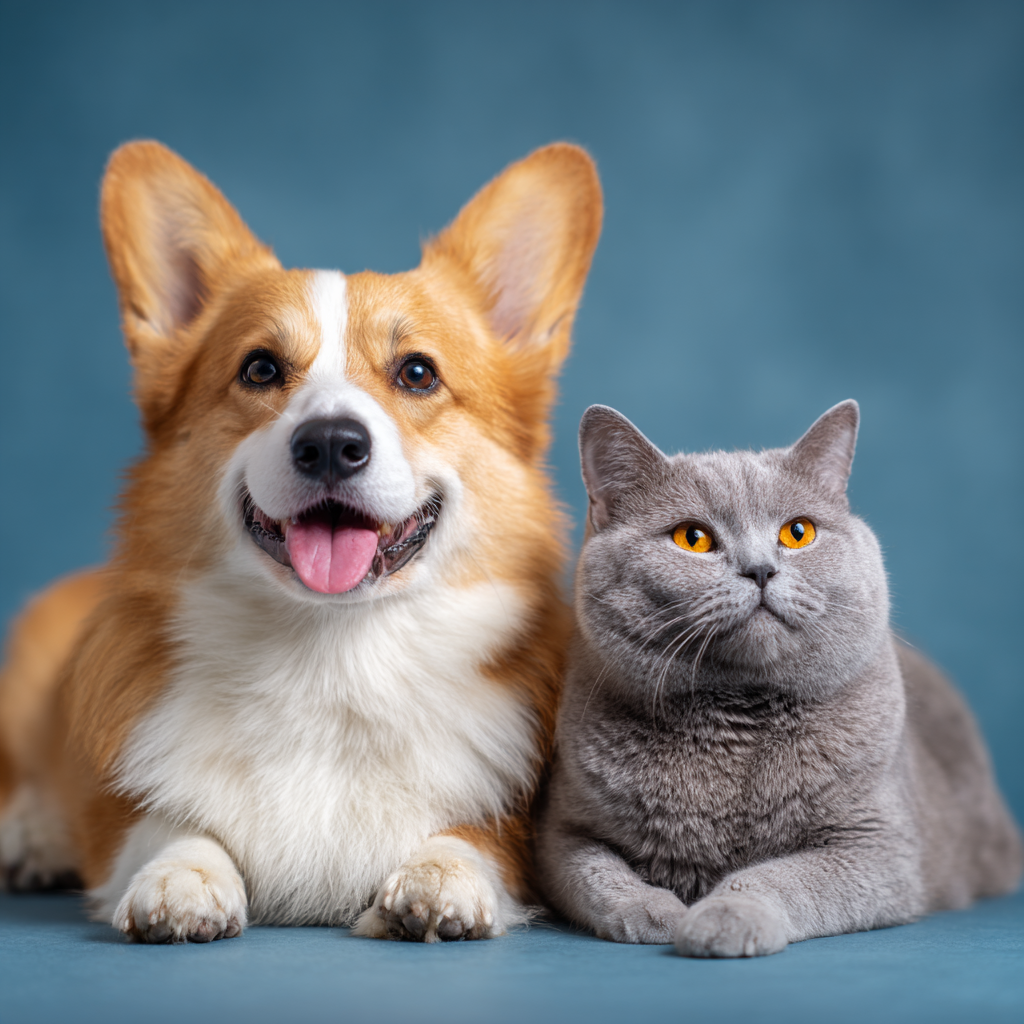
Many families want both a British Shorthair and a dog, and one of the most common questions is:
“Do British Shorthairs get along with dogs?”
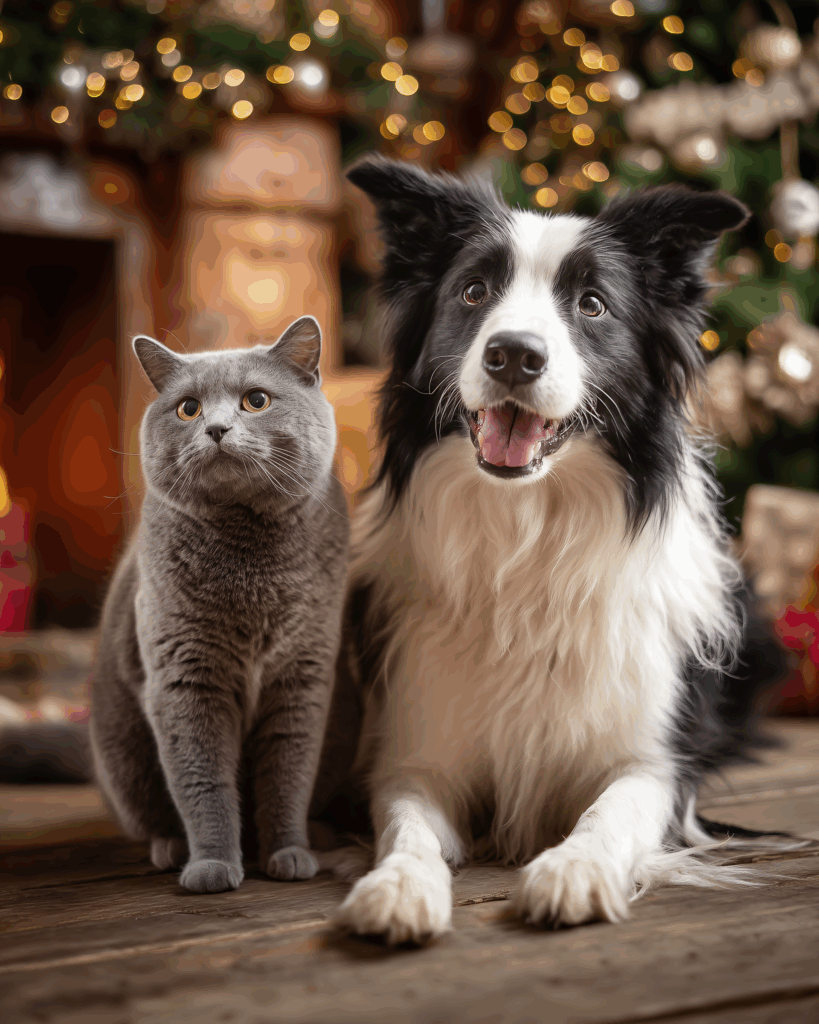
The short answer is yes—British Shorthairs generally coexist well with calm, respectful dogs, especially when introductions are done slowly and the home environment is predictable. Their steady temperament, quiet confidence, and low-reactivity personality make them one of the easier breeds to integrate into multi-species homes.
British Shorthairs are not clingy or anxious cats. They prefer a peaceful, stable household and tend to form comfortable, low-drama relationships with dogs who respect their space.
This guide explains why British Shorthairs usually do well with dogs, which dog types are the best match, and how to structure introductions for long-term success.
Quick Comparison: British Shorthairs and Dogs Living Together
| Topic | Summary |
|---|---|
| Overall Compatibility | British Shorthairs are highly dog-tolerant due to their calm, stable temperament and low-reactivity nature. |
| Best Dog Matches | Calm, gentle, predictable dogs with low prey drive: Golden Retrievers, Cavapoos, Cavaliers, Labradors, Bernese Mountain Dogs, Poodles, and mellow mixed breeds. |
| Introduction Difficulty | Moderate. British Shorthairs prefer slow, quiet introductions—not rushed or high-energy meetings. |
| Behavior Strengths | Confident, rarely panicked, low territorial aggression, independent enough not to feel threatened by dogs. |
| Common Challenges | High-energy dogs, chase-oriented breeds, barking-heavy environments, pushy puppies, resource guarding. |
| Do British Shorthairs Need Companions? | They can thrive alone or with pets. They enjoy peaceful coexistence but rarely “need” a companion dog. |
| Signs of Bonding | Relaxed posture near the dog, choosing shared spaces, slow blinking, sitting nearby, tail-tip twitching in curiosity. |
| Special Considerations | Provide vertical spaces, separate feeding zones, slow exposure, and protected retreat areas for the cat. |
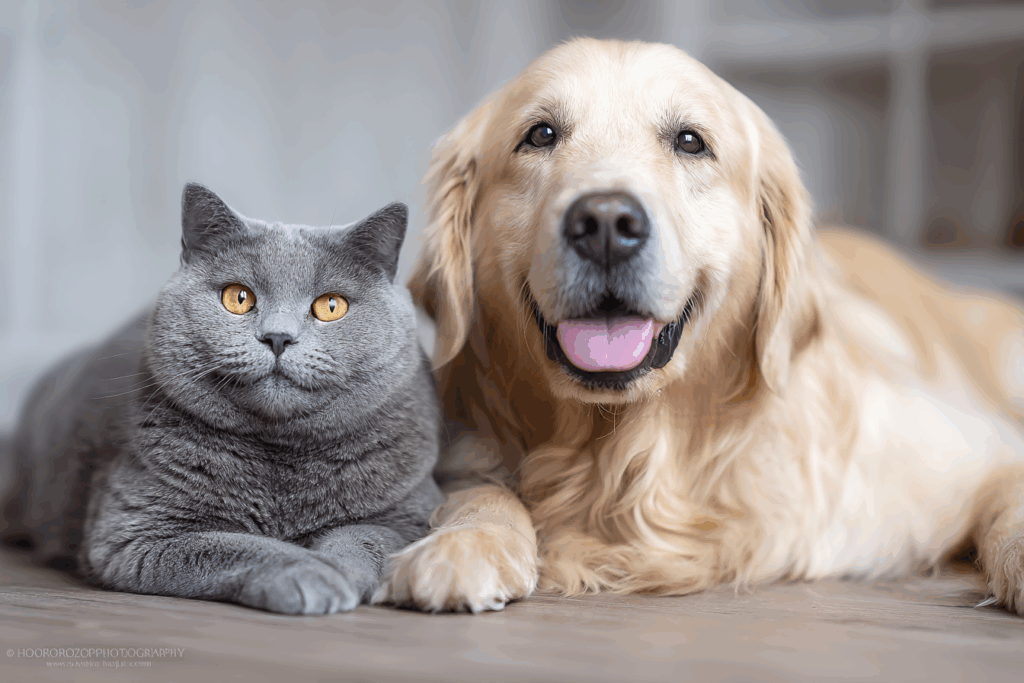
British Shorthair Personality Overview & Why They Often Do Well With Dogs
British Shorthairs are known for:
- Calm, unbothered temperament
- Low reactivity to movement, noise, or unfamiliar animals
- Confidence without aggression
- Strong preference for routine
- Steady, observant behavior instead of impulsive reactions
These traits make them naturally suited for life with dogs who behave predictably.
Unlike more nervous or high-alert breeds, British Shorthairs do not startle easily and rarely run—which means they do not trigger chase instincts in dogs as often as fast-moving or vocal cats do.
Their approach to household changes is slow, thoughtful, and controlled. When introductions are properly managed, most British Shorthairs simply observe the dog, set boundaries, and settle into peaceful coexistence.
Are British Shorthairs Good With Dogs?
Yes—most British Shorthairs coexist comfortably with dogs, especially if:
- The dog is calm or moderately active
- The dog has low prey drive
- The dog understands boundaries
- Introductions are slow, controlled, and positive
- The home environment is stable
British Shorthairs are sturdy, confident cats who prefer to avoid conflict rather than escalate it. They communicate clearly with dogs by using quiet body language, steady eye contact, and controlled movement.
They are unlikely to swat without warning, but they also won’t tolerate rude or chaotic behavior from dogs.
Dog breeds commonly compatible with British Shorthairs include:
- Golden Retrievers
- Labrador Retrievers
- Cavapoos & other doodle mixes with low prey drive
- Cavaliers & gentle spaniels
- Bernese Mountain Dogs
- Poodles (Standard or Mini)
- Calm mixed-breed dogs
- Senior or low-energy adult dogs
Less ideal matches:
- High-prey-drive breeds (Huskies, Malinois, some terriers)
- Puppies in “zoomies” stages
- Dogs that bark excessively
- Dogs who guard toys, food, or people
British Shorthairs will happily coexist—but they do not enjoy chaos.

Signs Your British Shorthair and Dog Are Bonding
Look for calm, subtle behavior:
- Cat naps in the same room as the dog
- Curious tail-tip twitching when the dog enters
- Sitting within a few feet of the dog
- Following the dog from room to room (British Shorthairs do this quietly)
- Nose touches or gentle head tilts
- Sharing window perches or rest areas
British Shorthairs show affection softly, not dramatically.
Why British Shorthairs Tolerate Dogs Better Than Many Cat Breeds
British Shorthairs have several natural traits that make them surprisingly compatible with the right kind of dog. While they are not as socially driven as some breeds, their calm, steady temperament helps them coexist peacefully in multi-species homes.
Low Startle Response
British Shorthairs rarely react dramatically to sudden noise or motion.
Their quiet confidence helps prevent panic reactions, which in turn reduces the chances of triggering a dog’s chase instinct.
Confident, Grounded Body Language
British Shorthairs carry themselves with calm, controlled posture.
They stand their ground rather than darting away, which communicates stability and discourages predatory behavior in dogs.
Independent but Socially Tolerant Nature
They do not cling to people, but they enjoy being part of the household environment.
This steady presence helps them adapt to dogs who behave predictably and respect boundaries.
Play Style That Doesn’t Trigger Dogs
British Shorthairs have slow, deliberate play movements rather than fast, skittish bursts.
This makes their behavior easier for many dogs to interpret without becoming overstimulated.
Quiet, Observant Temperament
Rather than rushing toward or fleeing from a dog, British Shorthairs take time to assess a situation.
This patience helps early introductions go more smoothly.
Strong Attachment to Routine
British Shorthairs thrive in structured homes.
If a dog is part of that routine, they gradually accept them as another stable element of their environment.
Together, these traits make British Shorthairs more dog-tolerant than many people expect and one of the easier breeds to integrate into calm, well-managed multi-species homes.
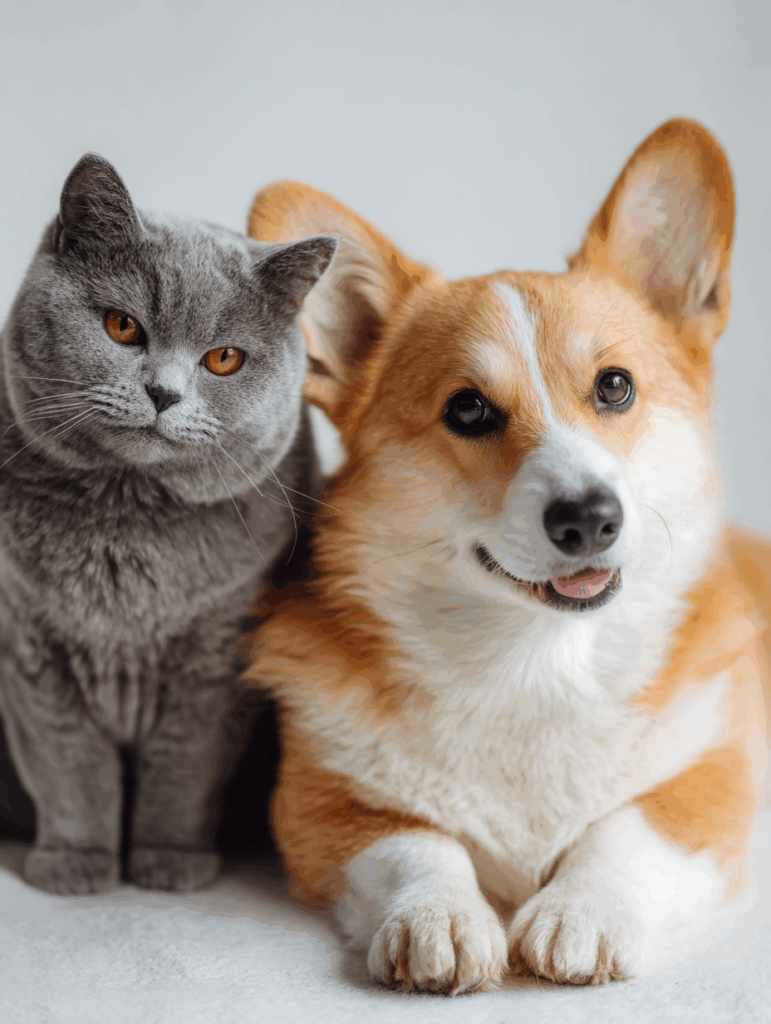
British Shorthairs and Dogs Living Together: What a Healthy Relationship Looks Like
A successful British Shorthair–dog relationship depends on slow introductions, predictable routines, and a home environment where the cat always has options for retreat. When these needs are met, British Shorthairs settle into peaceful coexistence with relative ease.
A healthy dynamic typically includes:
- Relaxed body language when the dog is near
- Parallel coexistence in shared spaces like living rooms or hallways
- Curiosity from a distance, gradually becoming comfortable proximity
- Choice-based interactions, where the British Shorthair approaches the dog on its own timeline
- Vertical space or safe resting zones, which allow the cat to observe without pressure
- Soft sniffing or quiet acknowledgment rather than avoidance or agitation
British Shorthairs often take the lead in boundary-setting. They use subtle signals such as:
- Sitting upright and still rather than withdrawing
- Slowly blinking or calmly observing the dog
- Walking away without panic when they want space
A well-matched dog responds appropriately by slowing down, giving space, or offering neutral body language. Over time, the pair often develop comfortable, predictable routines—resting in the same room, following family members together, or sharing quiet companionship.
Some British Shorthairs even form close bonds with dogs, choosing to nap near them or accompany them around the house. Others prefer peaceful coexistence without physical closeness. Both outcomes are normal for the breed.
Do British Shorthairs Need a Companion?
British Shorthairs do not require a dog or a second pet to be emotionally healthy, but many enjoy the presence of another calm animal in the home.
They are independent but not solitary; they appreciate quiet companionship and predictable background activity. For families who work long hours, a polite, low-energy dog can help:
- Reduce boredom
- Provide gentle social presence
- Support routine and emotional stability
- Prevent loneliness in quieter homes
A good canine companion offers the kind of calm, consistent background company British Shorthairs find comforting—but only when the dog respects boundaries and does not overwhelm the cat.
A second cat can also fulfill this role, but many British Shorthairs coexist just as well (or better) with the right dog, especially one with a soft temperament and low prey drive.
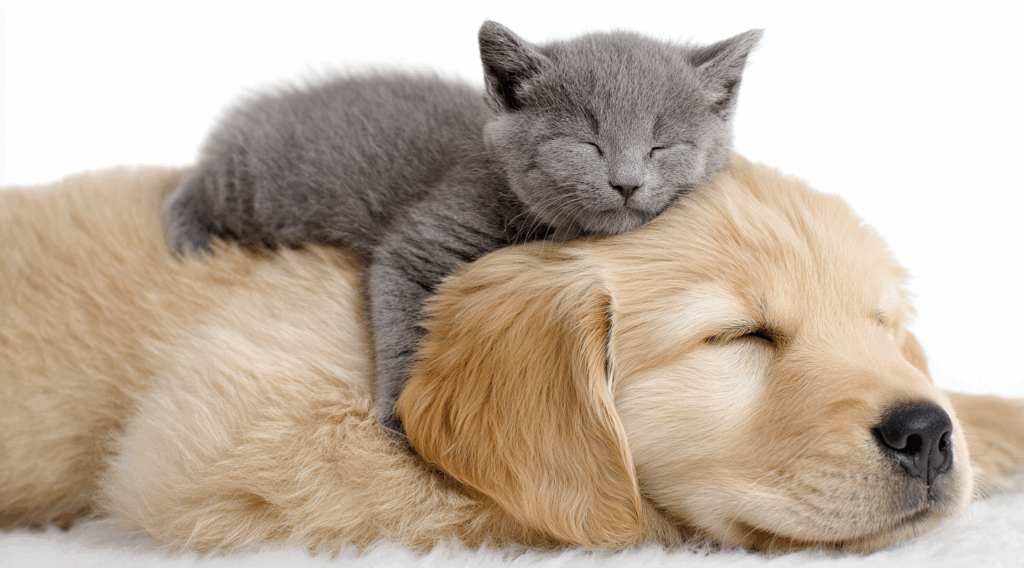
What Dogs Are Good With British Shorthairs? Ideal Breeds and Temperament Traits
British Shorthairs do best with dogs that are calm, predictable, and respectful of feline boundaries. Because British Shorthairs are steady, quiet, and deliberate in their movements, they rarely trigger a dog’s chase instinct — but temperament matching matters far more than breed alone.
Dog breeds commonly compatible with British Shorthairs include:
- Golden Retrievers
- Labrador Retrievers
- Standard or Miniature Poodles
- Cavalier King Charles Spaniels
- Bernese Mountain Dogs
- Great Pyrenees
- Bichon Frise
- Maltese
- Calm, low-prey-drive mixed breeds with solid obedience training
British Shorthairs thrive with dogs that offer:
- Gentle curiosity instead of chasing or pouncing
- Patience for a cat that may not initiate contact quickly
- Soft, controlled play style
- Ability to read slow feline body language
- Low reactivity to sudden movement or sounds
- Respect for the cat’s personal space and retreat zones
High-energy dogs can coexist with British Shorthairs — but only if they have impulse control and understand not to chase. The breed’s grounded posture and steady presence help prevent misunderstandings, but the dog must match this calm energy for long-term harmony.
How to Introduce a British Shorthair to a Dog Safely
British Shorthairs are confident and composed, but they are also independent and routine-oriented. This means introductions must be slow, predictable, and cat-led.
1. Begin With Scent Exchange
Scent is the first step in building familiarity.
Swap:
- bedding
- blankets
- soft toys
- resting mats
This allows each pet to adjust without pressure or face-to-face contact.
2. Add Controlled Visual Contact
Use barriers such as:
- baby gates
- secure screen doors
- cracked doors
- carriers
The British Shorthair should control the distance. Their calm assessment period is essential — they approach when they feel ready.
Signs a British Shorthair is comfortable:
- tail held neutrally or upright
- slow blinking
- grooming in the dog’s presence
- relaxed shoulders and cheeks
- steady, silent observation rather than retreating
3. Move to Supervised Interaction
Keep the dog on a leash during early meetings.
Reward:
- calm sniffing
- gentle curiosity
- quiet behavior
- sitting or lying down instead of lunging
Provide vertical spaces so the British Shorthair can observe from above. A cat that has options feels safer and more confident.
4. Increase Freedom Gradually
Sessions should stay short until both pets show consistent, relaxed behavior.
Progress looks like:
- ignoring each other calmly
- walking through shared rooms without tension
- sitting or resting in the same area
- parallel activities (dog plays with a toy while cat lounges nearby)
Some British Shorthairs warm up quickly. Others take several weeks — especially adults who value their space and routine. Slow pacing ensures long-term peace.
Essential Body Language to Watch During Cat–Dog Introductions
Successful cat–dog relationships depend on correctly reading both animals. British Shorthairs are calm, observant, and subtle communicators, so owners must pay close attention to their signals during early interactions.
British Shorthair Stress Signals
These cues mean the cat needs distance, reassurance, or a slower pace:
- tail flicking or low tail held stiffly
- slight crouching or lowering of the body
- ears rotating sideways or backward
- avoiding eye contact
- quick, repetitive grooming (a common stress displacement behavior)
- freezing or holding breath briefly when the dog moves
British Shorthair Comfort Signals
When a British Shorthair feels safe and confident around a dog, you may see:
- upright or softly curved tail
- slow blinking toward the dog or owner
- calm, steady walking around the room
- choosing to sit or rest near the dog
- quiet sniffing, relaxed whiskers, or a soft head turn
- grooming themselves in full view of the dog (indicates relaxation)
Dog Signals to Watch
Safe & friendly signs:
- soft, relaxed eyes
- loose, open mouth
- slow tail wagging at mid-height
- sniffing without pushing or crowding
- pausing when the cat signals discomfort
Warning signs:
- stiff or frozen posture
- intense staring
- whining, lunging, crouching, or stalking movements
- fast, high, or tight tail wagging (excitement or predatory arousal)
When both the dog and British Shorthair consistently display calm, curious, and non-reactive body language across several sessions, they are ready for more freedom together.
Creating Safe Zones for British Shorthairs in Dog-Friendly Homes
British Shorthairs adapt well to homes with dogs, but they must have access to controlled spaces where they can observe safely, retreat when needed, and maintain their independence.
Because British Shorthairs are grounded, laid-back, and less agile than some breeds, secure elevated options become especially important.
Key safe-zone elements include:
Vertical Territory
British Shorthairs appreciate:
- stable cat trees
- wide window perches
- heavy, secure cat shelves
- tall scratching posts
These give the cat a place to go where the dog cannot follow, reducing tension and preventing cornering. British Shorthairs are confident cats, but they still prefer having a vantage point where they can assess the dog’s behavior calmly.
Private Feeding Stations
Protecting food is essential to maintaining peace.
Use:
- raised shelves
- countertops
- gated rooms
- elevated feeding towers
This prevents:
- dogs from eating the cat’s food
- food-related stress
- resource guarding behaviors
- disrupted mealtimes
Dog-Proof Litter Areas
Place litter boxes:
- behind baby gates
- inside closets with cat doors
- in rooms the dog cannot access
Dogs investigating litter boxes is one of the fastest ways to create fear, irritation, or territorial tension.
Retreat & Resting Areas
Give your British Shorthair access to quiet spaces such as:
- covered beds
- cat cubes
- tunnels
- spare rooms
These areas allow the cat to regulate the amount of social interaction they want, which helps build trust and comfort more quickly.
When a British Shorthair knows escape routes always exist, they become more relaxed — and therefore more open to interacting with the dog.
Training Dogs to Respect British Shorthair Cats
While British Shorthairs are tolerant, confident, and rarely skittish, successful cat–dog homes depend heavily on the dog’s training. The cat should never be responsible for “teaching” the dog boundaries.
Essential training skills for the dog include:
- a reliable “leave it”
- no chasing (ever)
- controlled movement around the cat
- gentle sniffing instead of pushy greetings
- loose-leash walking indoors during introductions
- the ability to settle calmly on cue
Reward-based training is ideal. Dogs should earn:
- treats
- praise
- toys
- access to the room
only when they behave appropriately around the cat.
What Proper Training Looks Like
Short, structured practice sessions help the dog learn:
- slow approaches
- soft body posture
- turning away when the cat signals discomfort
- backing up or pausing instead of pushing forward
Because British Shorthairs communicate clearly — with stillness, slow tail movement, and calm eye contact — most well-trained dogs understand their signals quickly.
Over Time, Many Dogs Adjust Naturally
As routines settle, many dogs begin to:
- check in gently with the British Shorthair
- lower their energy when the cat enters the room
- wait patiently before approaching
- walk past the cat without excitement
- rest in the same area peacefully
This steady, predictable environment helps the British Shorthair feel secure, which supports long-term harmony and companionship.
Common Challenges Between British Shorthairs and Dogs
Even well-matched pets can face early challenges when adjusting to each other. British Shorthairs are steady, composed cats, but they value predictability and personal space, which means the first few weeks require structure.
Common issues include:
High-energy puppies or dogs
Fast movements, rough play, and persistent sniffing can overwhelm a British Shorthair. While they are confident cats, they prefer calm, measured interactions—especially during early introductions.
Chasing behavior
Some dogs have strong prey drive triggered by motion. A British Shorthair’s short bursts of play or trotting across the room can activate chasing instincts in a dog that has not been trained to control impulses.
Resource guarding
Either pet may become defensive over:
- food bowls
- sleeping areas
- toys
- access to the owner
Structured feeding and allowing each animal their own territory prevent unnecessary conflict.
Noise sensitivity
British Shorthairs are generally tolerant, but loud barking or sudden excitement may cause them to retreat temporarily until they feel secure again.
Limited escape routes
British Shorthairs like wide, clear pathways. In small or cluttered spaces, they may feel cornered, leading to swatting or defensive vocalizing.
These challenges are manageable with:
- calm, supervised interactions
- dog-free safe zones
- elevated resting areas
- consistent routines
- slow, steady exposure
Once early adjustment is complete, most British Shorthairs settle comfortably and coexist peacefully with well-mannered dogs.
How Age Affects Compatibility Between British Shorthairs and Dogs
The age of both pets influences how quickly trust and comfort form.
British Shorthair Kittens (8–16 weeks)
Kittens usually adapt the fastest. Their curiosity and developing confidence make them open to calm, gentle dogs. Early positive experiences create lifelong ease around dogs.
Adolescent British Shorthairs
They become more independent and cautious. They may assert boundaries more clearly and need slower introductions to avoid feeling pressured by playful dogs.
Adult British Shorthairs
Adults adapt well, but they prefer gradual changes. They need time to evaluate routines, scent, and dog behavior before choosing to interact.
Senior British Shorthairs
Older cats prefer low-energy dogs and predictable environments. They do not appreciate energetic puppies or fast-paced activity near them. Calm, mature dogs make the best matches for seniors.
Dog age also matters:
- Puppies: often too energetic unless heavily supervised
- Adult dogs: usually easiest to integrate due to stable manners
- Senior dogs: often ideal partners for British Shorthairs due to lower activity
Matching energy levels and respecting each pet’s preferred pace creates the smoothest long-term relationship.
How to Build Positive Associations Between a British Shorthair and a Dog
British Shorthairs are highly routine-oriented. They trust slowly but deeply. The goal is to help them associate the dog with calm predictability rather than pressure or unpredictability.
Strong strategies include:
Use feeding time to build positive emotions
Place meals on opposite sides of a gate or baby barrier. This pairs the dog’s presence with something safe and pleasant, without forcing closeness.
Reward calm behavior
Whenever:
- the dog sits quietly
- the British Shorthair enters the room confidently
- the cat sniffs the air or approaches voluntarily
reward the moment with treats, praise, or gentle verbal encouragement. Both animals learn that relaxation creates reward.
Short, predictable interaction windows
British Shorthairs dislike chaotic or drawn-out sessions. Brief, calm interactions repeated daily help them develop confidence at a pace they can control.
Controlled distance
Allow the British Shorthair to choose how close to get. They bond more strongly when they feel empowered to approach rather than coerced.
Shared routines
Let both pets coexist during predictable household moments, such as:
- morning coffee
- evening downtime
- gentle play sessions
- supervised exploration
This normalizes the dog’s presence and removes novelty-based tension.
Over time, British Shorthairs begin associating the dog with:
- safety
- predictable behavior
- stable household patterns
- non-threatening companionship
This foundation often leads to long-term coexistence, and in many homes, genuine friendship.
Play Styles: Understanding the Differences Between British Shorthairs and Dogs
British Shorthairs are confident, steady cats, but their play style is very different from a dog’s. Understanding these differences prevents misunderstandings, reduces accidental chasing, and protects both animals as they learn to coexist.
British Shorthair play style is typically:
- Calm, deliberate, and low-intensity
- Focused on batting, stalking, and short bursts of play, not long athletic sessions
- Object-based, preferring feather toys, rolling balls, or wand toys
- Predictable and measured, rarely chaotic or frantic
- Short-lived — British Shorthairs enjoy play but tire quickly and prefer rest over extended activity
Many dogs play using:
- mouth-based grabbing
- fast chasing bursts
- high-energy barking or jumping
- full-body movements that can overwhelm a steady, slow-moving cat
- paw batting that is too forceful for feline comfort
These instincts differ significantly. British Shorthairs appreciate structured, low-pressure play sessions where the dog’s energy is managed. Supervision is essential during the first several months so the dog learns:
- not to chase
- not to pounce
- not to crowd the cat
- to use calm curiosity instead of excitement
When both pets learn each other’s play rhythm, shared activities become safer, smoother, and more enjoyable.
Establishing a Routine That Supports British Shorthairs and Dogs Living Together
British Shorthairs thrive on routine, stability, and slow transitions. A predictable daily structure reduces stress and builds confidence in mixed dog–cat homes.
A balanced multi-species routine includes:
Feeding schedules that prevent resource tension
British Shorthairs feel safest when:
- meals occur at consistent times
- feeding zones are elevated or gated
- the dog cannot access the cat’s food
This protects the British Shorthair’s sense of control and prevents guarding behavior from either pet.
Exercise routines that regulate the dog’s energy
A well-exercised dog is calmer indoors, which directly benefits the British Shorthair’s comfort. Calm dogs make it easier for the British Shorthair to explore shared spaces without fear.
Quiet, predictable downtime
Even though British Shorthairs enjoy companionship, they still need peaceful rest periods. Quiet evenings or structured relaxation windows help them:
- settle in the same room as the dog
- observe calmly
- build trust at their own pace
Many British Shorthairs begin choosing to rest near the dog once they feel secure.
Consistent supervision patterns
British Shorthairs dislike unpredictable chaos. They integrate best when:
- interactions follow familiar daily patterns
- safe zones are always accessible
- dog boundaries remain the same every day
Routine is one of the strongest contributors to long-term harmony.
What to Avoid During Early Introductions
Certain mistakes can slow the introduction process or create fear. Avoiding them helps the British Shorthair feel safe enough to build positive associations with the dog.
Avoid:
- Unsupervised early interactions — even friendly dogs may chase without meaning harm
- Forced proximity — picking up the cat and placing it near the dog undermines trust
- Allowing the dog to rush, bark at, or corner the cat
- Introducing them in doorways — these eliminate escape routes and trigger defensive reactions
- Giving the dog access to the cat’s litter box or food — this creates territorial stress and long-term resentment
Protecting the British Shorthair’s sense of control is key. When they feel safe, they approach on their own terms — and this is when genuine trust begins to form.
Signs a British Shorthair Cat and Dog Are Starting to Bond
British Shorthairs are naturally calm and composed, and while they don’t rush into friendships, they show clear, steady signs once they begin accepting a dog as part of their social circle.
Early bonding signs include:
- Choosing to sit or rest in the same room as the dog
- Approaching with relaxed posture rather than staying at a distance
- Slow blinking, stretching, grooming, or calmly observing while the dog is nearby
- Walking through shared spaces without hesitation
- Allowing brief nose touches or gentle sniffing
- Resting on elevated surfaces while watching the dog without tension
As trust develops, many British Shorthairs:
- nap in the same general area
- follow household routines that include the dog
- engage in parallel play
- groom themselves or knead near the dog
These changes show that the relationship has moved from tolerance to true comfort.
Managing High-Energy Dogs Around British Shorthairs
British Shorthairs value predictability, quiet movement, and calm interactions. High-energy dogs can coexist with them, but structure and management are essential.
Key strategies include:
Daily exercise for the dog
Tired dogs have better impulse control. Walks, training sessions, and play reduce the likelihood of spontaneous chasing.
Mental enrichment
Puzzle toys, scent games, and obedience work help the dog regulate excitement when the British Shorthair enters the room.
Controlled greetings
Use leashed, slow introductions. This teaches the dog not to rush forward, jump, or overwhelm the cat.
Safe vertical space for the British Shorthair
Sturdy cat trees, window shelves, and tall furniture allow the British Shorthair to:
- observe from above
- avoid unwanted contact
- approach only when ready
When managed correctly, even energetic dogs learn to soften their behavior around a calm, steady British Shorthair. Many dogs eventually adjust their indoor energy to match the cat’s rhythm.
The Best Home Setups for British Shorthairs and Dogs Living Together
British Shorthairs thrive in environments that offer structure, clear traffic flow, and protected personal space. A well-planned layout reduces stress and encourages confident, voluntary interactions.
Effective home setups include:
Vertical territory
Cat trees, shelves, window perches, and wide stable furniture give the British Shorthair secure vantage points. While they may not climb as much as athletic breeds, they appreciate elevated safety options.
Separated feeding stations
Use raised surfaces or gated rooms. This prevents:
- food stealing
- resource guarding
- unnecessary tension during meals
Protected litter areas
Place litter boxes where the dog cannot access them, using:
- baby gates
- closet areas with cat doors
- top-entry litter boxes
Quiet retreat rooms
A predictable refuge — such as an office or guest room — helps the British Shorthair decompress when needed.
Clear pathways around the dog
Avoid cornered spaces. Open routes allow the cat to move freely and safely.
A structured home gives the British Shorthair the confidence to approach the dog on their own terms, which is the foundation of long-term harmony.
How British Shorthair Temperament Influences Multi-Pet Households
British Shorthairs are one of the most dog-compatible breeds due to their calm nature, stable behavior, and lack of skittishness. Their temperament naturally supports peaceful coexistence when paired with well-mannered dogs.
Key traits that help British Shorthairs integrate with dogs:
- Low reactivity — they rarely panic or bolt, which prevents chase-triggering behavior
- High tolerance for routine and structure — they settle easily into predictable homes
- Quiet curiosity — they observe calmly before engaging, instead of hiding
- Clear boundary communication — a tail flick, step back, or slow stare tells the dog to soften behavior
- Independent confidence — they do not feel threatened easily, which reduces tension
Because British Shorthairs prefer calm, consistent environments, they often become a grounding influence in multi-pet homes. Their even temperament promotes cooperation and reduces conflict, making them one of the best cat breeds for households with dogs.
Dogs That May Not Be Ideal for British Shorthair Cats
British Shorthairs get along well with many well-mannered dogs, but certain canine temperaments require extra caution. Even though British Shorthairs are confident, sturdy cats, they still depend on predictability, quiet environments, and controlled introductions.
Dogs that may be more challenging for British Shorthairs include:
• High-prey-drive breeds
Sighthounds, terriers, and hunting dogs may be triggered by quick feline movements. British Shorthairs avoid frantic running, but a startled dash can activate a dog’s chase instinct.
• Strong herding breeds
Border Collies, Heelers, Corgis, and similar breeds may try to herd, block, or nudge a British Shorthair — something this independent breed dislikes.
• Reactive or anxious dogs
Unpredictable barking, pacing, or sudden lunging can disrupt a British Shorthair’s sense of safety and slow bonding significantly.
These dogs can coexist with British Shorthairs, but success requires:
- solid training
- impulse control
- structured routines
- slow, respectful exposure
Matching individual temperament and energy level is far more important than the breed itself.
Helping a British Shorthair Adjust to a Newly Adopted Dog
If a British Shorthair already rules the home and a new dog arrives, the transition should be gradual, quiet, and controlled. British Shorthairs are territorial but not reactive; they simply need time to evaluate the dog safely.
Strategies that protect the British Shorthair’s confidence:
- Keep the cat in control of key rooms and pathways
- Start with scent exchanges (blankets, bedding, toys)
- Use short, calm, supervised meetings behind gates or cracked doors
- Pair the dog’s presence with something positive for the cat (treats, play, food)
- Keep the dog leashed or in a stationary command during early face-to-face introductions
- Always provide elevated perches and escape routes
This approach gives the British Shorthair space, autonomy, and time to decide when they feel ready to interact. Once they feel secure, they typically begin approaching the dog voluntarily and observing more closely.
Helping a Dog Adjust to a Newly Adopted British Shorthair
When the dog is the established resident and the British Shorthair is the newcomer, training the dog is the most important factor in long-term success.
Effective steps include:
- Begin with scent-only introductions to reduce excitement
- Use leashed greetings so the dog cannot rush or crowd the cat
- Reward calm behavior anytime the cat enters the room
- Provide the dog with daily exercise to lower overstimulation
- Give the cat safe, elevated spaces where they can observe without pressure
- Increase freedom only when the dog shows consistent impulse control and the British Shorthair displays calm posture
Most dogs adjust quickly once they learn that calm behavior earns rewards — and that chasing is never permitted.
How British Shorthairs Communicate Boundaries with Dogs
British Shorthairs communicate subtly but clearly. Understanding their signals helps prevent misunderstandings and allows the dog to learn respectful behavior.
Common boundary signals include:
- Tail movements
Slow swishing or brief tail flicks indicate discomfort or overstimulation. - Ear rotation
Ears turning outward or sideways signal uncertainty or mild irritation. - Choosing height
Jumping to a perch, shelf, or cat tree means the cat needs distance and wants to observe from a secure vantage point. - Controlled exit
Walking calmly out of the room shows the cat prefers space — not that they are frightened. - Stillness or narrowing eyes
A British Shorthair may pause and quietly evaluate the dog before deciding whether to engage or disengage.
As dogs learn to respect these cues, interactions become smoother, calmer, and more predictable.
Predictability builds trust — and trust leads to long-term harmony between a British Shorthair and a well-matched dog.
FAQ: Do British Shorthairs Get Along With Dogs?
Do British Shorthairs get along with dogs?
Yes, British Shorthairs usually get along well with calm, respectful dogs. Their steady temperament, low-reactive behavior, and preference for predictable environments help them coexist with dogs that understand boundaries. They are not clingy and do not crowd dogs, which reduces conflict. Success depends on slow introductions, protected resources, and a dog that does not chase.
What dogs are best for British Shorthairs?
British Shorthairs do best with dogs that have:
- low prey drive
- slow, predictable movement
- good impulse control
- strong training foundations
Breeds commonly compatible include Golden Retrievers, Labradors, Poodles, Cavaliers, Bernese Mountain Dogs, Bichons, Maltese, and calm mixed-breed dogs. The dog’s temperament matters far more than breed.
What dogs are not ideal for British Shorthairs?
Dogs that tend to overwhelm British Shorthairs include:
- high-prey-drive sighthounds and terriers
- herding breeds that chase or “eye” movement
- reactive or anxious dogs that bark or rush
These dogs can still succeed with strict training, but require more supervision and structure.
Why do British Shorthairs tolerate dogs better than some cats?
Because British Shorthairs have:
- low startle responses
- slow, deliberate movements
- independent personalities that avoid conflict
- strong spatial awareness
- good boundary communication
They rely on calm observation rather than defensive reactions, which helps dogs understand how to behave around them.
Do British Shorthairs like dogs, or do they just tolerate them?
Most British Shorthairs tolerate dogs first and may later develop companionship if the dog is respectful. They rarely “bond” like social breeds such as Ragdolls, but they often rest in the same room, share quiet routines, or follow the dog at a distance once trust forms. See British Shorthair Pros and Cons for more insight.
Can British Shorthair kittens live with dogs?
Yes. British Shorthair kittens adapt quickly to gentle, predictable dogs. Early exposure builds long-term comfort. Puppies should be calm, leashed, or structured during interactions so they don’t overwhelm the kitten.
Do adult British Shorthairs adjust easily to dogs?
Adults can adjust very well, but they usually prefer a slower introduction process. They rely on predictable routines and need time to assess the dog’s behavior before engaging.
Do senior British Shorthairs get along with dogs?
Senior British Shorthairs do best with older, low-energy dogs. They avoid unpredictable movement and may retreat to quiet areas if a dog is too active. Providing clear pathways and gentle routines helps seniors feel secure.
How do I introduce a British Shorthair to a dog?
The safest method is:
- begin with scent-only exchanges
- use baby gates or cracked doors for controlled viewing
- keep the dog on leash during first in-person meetings
- give the cat elevated escape routes
- increase freedom slowly as both animals relax
Consistency is more important than speed.
How can I tell if my British Shorthair is stressed around the dog?
Watch for:
- tail flicking
- ears rotating outward
- crouched posture
- leaving the room
- hiding immediately when the dog enters
These signals mean the cat needs more space and slower exposure.
How can I tell if my British Shorthair is comfortable around the dog?
Signs of comfort include:
- choosing to rest in the same room
- sitting on elevated perches while observing calmly
- slow blinking
- grooming normally
- approaching with relaxed posture
These behaviors show the cat feels safe and in control.
Will a British Shorthair stand up to a dog if needed?
Yes. British Shorthairs are sturdy and will signal boundaries with slow tail movements or a controlled walk-away. They rarely escalate, but they will swat or hiss if a dog repeatedly disrespects space.
Do British Shorthairs need escape routes in a dog home?
Absolutely. British Shorthairs thrive when they can observe from above. Safe zones prevent cornering and allow them to navigate rooms confidently. Cat trees, window perches, and gated areas are essential in multi-pet homes.
Can British Shorthairs and dogs play together?
Yes — but only after trust forms. British Shorthairs prefer object-based play (feathers, wand toys, small chases) rather than physical play. Dogs must learn to moderate excitement and never paw, mouth, or chase the cat.
Can a British Shorthair become friends with a dog over time?
Yes. Many British Shorthairs develop comfortable, predictable routines with dogs. Some nap nearby, follow the dog, or show curiosity during shared activities. Others maintain polite coexistence without direct interaction.
What should I avoid during introductions?
Avoid:
- unleashing the dog too early
- forcing the cat to interact
- introducing pets in doorways
- allowing the dog to rush
- letting the dog access the cat’s food or litter box
These mistakes create long-term tension.
Can a high-energy dog live with a British Shorthair?
Yes, but only with:
- daily exercise
- strict training
- controlled initial exposure
- consistent supervision
Dogs with unmanaged energy are the most common cause of failed introductions.
Should British Shorthairs and dogs share food areas?
No. Always separate feeding stations. Dogs investigating the cat’s bowl often leads to resource tension, retreat behavior, or conflict.
Do British Shorthairs get jealous of dogs?
British Shorthairs rarely show jealousy. They prefer quiet predictability and will simply move to another space if they feel crowded. They do best with individual attention and routine-based bonding.
Do British Shorthairs enjoy having a dog companion?
Many do. They appreciate the structure and calm presence of a respectful dog. While they may not seek cuddle-level closeness, they often choose to spend time in the same environment once trust is built.
Will getting a dog make my British Shorthair less affectionate?
Not usually. If the introduction is smooth and the cat’s routines remain intact, most British Shorthairs maintain their normal affection patterns. If affection decreases suddenly, it may indicate stress, pain, or a routine disruption.
Is a British Shorthair the best cat breed for homes with dogs?
They are one of the best low-reactivity, low-maintenance cats for dog households. Their calm temperament, independent nature, and tolerance for quiet shared spaces make them a reliable choice for multi-species homes.
Searching for a British Shorthair Kitten?
Our kittens are raised in-home, well-socialized, and bred for health, structure, and classic British type. If you’re ready to welcome a calm, steady companion into your home, view available British Shorthair kittens or join the waitlist today.
More British Shorthair Breed Articles from Almonte Cats
- Why are British Shorthairs not Affectionate?
- British Shorthair Health
- British Shorthair Lifespan
- British Shorthair Shedding
- British Shorthair Size
- British Shorthair Cat Care
- British Shorthair Personality
- British Shorthair Diet
- British Shorthair Kitten Growth Stages
- British Shorthair vs Ragdoll
SOURCES
- International Cat Association (TICA) – British Shorthair Breed Overview
https://tica.org/breeds/british-shorthair - Cat Fanciers’ Association (CFA) – British Shorthair Breed Profile
https://cfa.org/british-shorthair - International Cat Care – Cat–Dog Relationships & Integration
https://icatcare.org/advice/introducing-cats-and-dogs - American Veterinary Medical Association (AVMA) – Companion Animal Behavior Guidelines
https://www.avma.org/resources/pet-owners/petcare/behavior-resources - American College of Veterinary Behaviorists – Cat and Dog Coexistence Guidance
https://www.dacvb.org - Cornell Feline Health Center – Stress, Environment & Multi-Pet Homes
https://www.vet.cornell.edu/departments-centers-and-institutes/cornell-feline-health-center - Royal Society for the Prevention of Cruelty to Animals (RSPCA) – Introducing Cats to Dogs
https://www.rspca.org.uk/adviceandwelfare/pets/cats/environment/introducingcatsanddogs - American Association of Feline Practitioners (AAFP) – Environmental Needs for Cats
https://catvets.com/guidelines/practice-guidelines/feline-environmental-needs-guidelines - VCA Animal Hospitals – Feline Body Language & Stress Signals
https://vcahospitals.com/know-your-pet/cat-behavior-problems-aggression - PDSA – Cat Stress, Behavior & Introducing Pets
https://www.pdsa.org.uk/pet-help-and-advice/pet-behaviour







Read the Comments +