
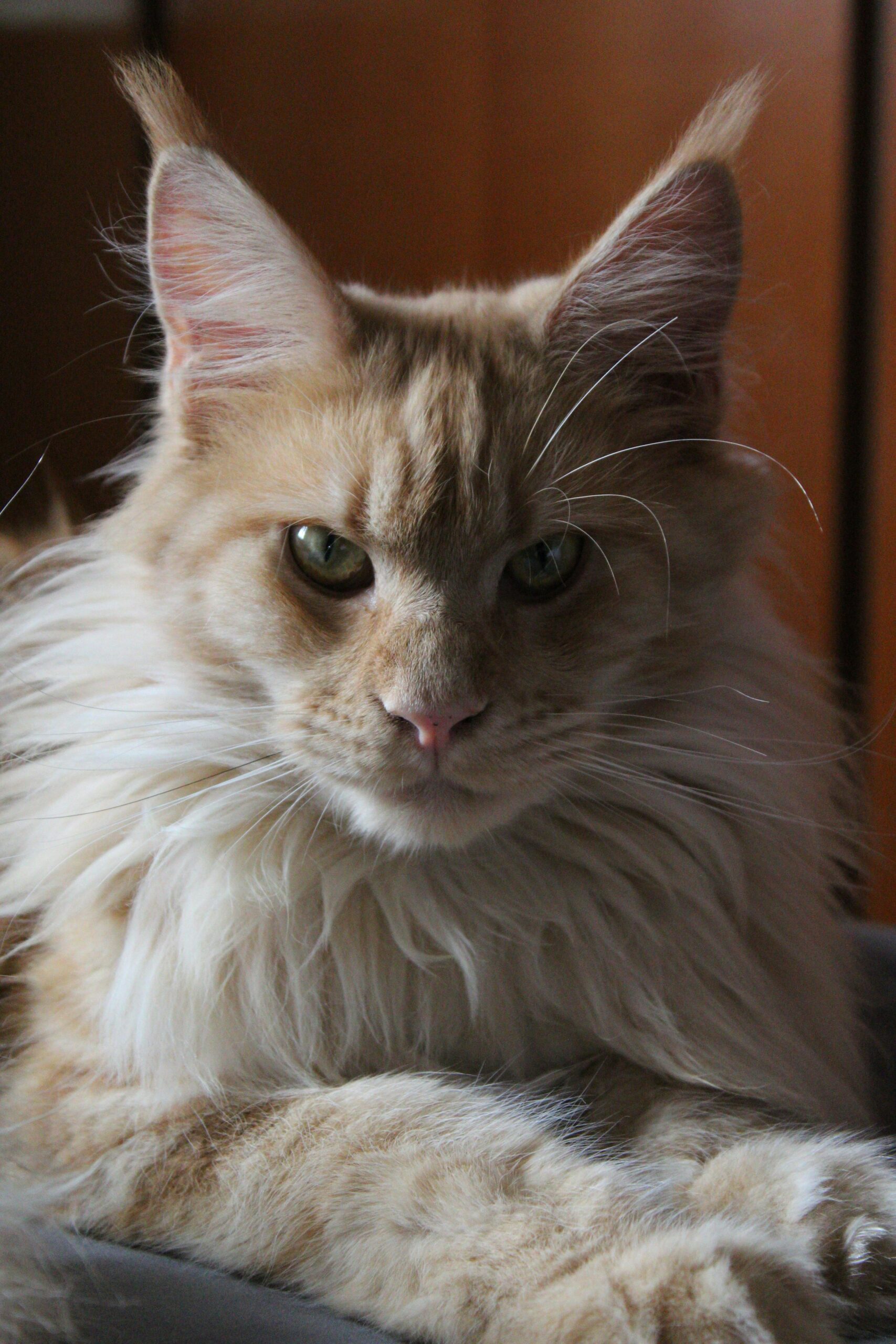
Do Maine Coons Talk a Lot? (Yes — Here’s What That Actually Sounds Like)
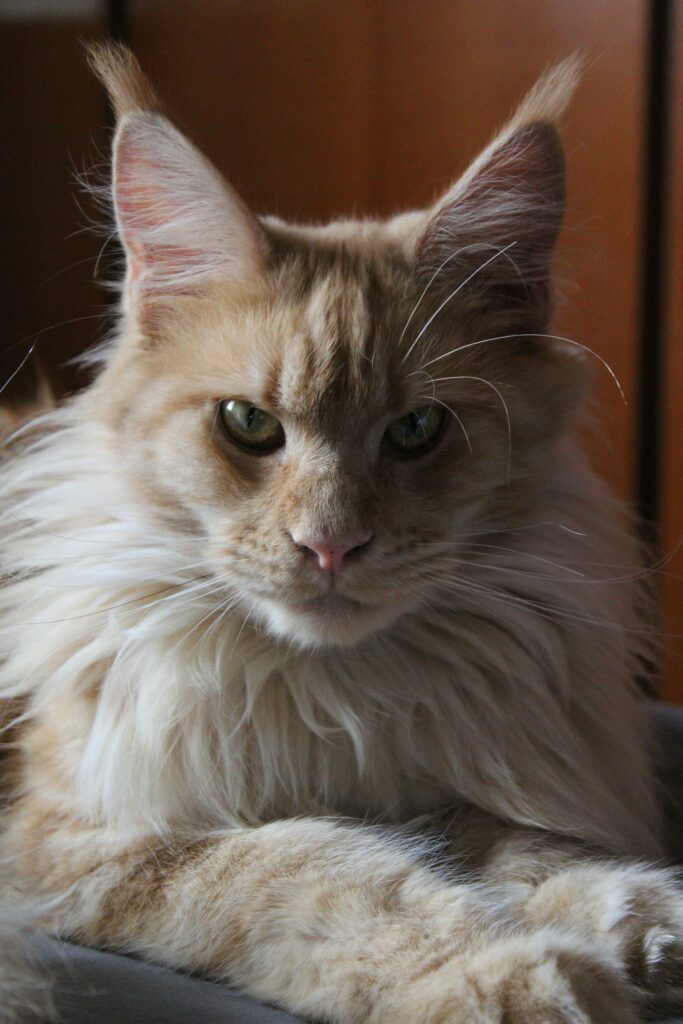
Do Maine Coons talk a lot? Yes, Maine Coons are more vocal than most cats, but they are not loud or constantly meowing. Instead, they communicate through chirps, trills, and soft commentary that sounds conversational rather than demanding.
People often confuse “talkative” with “noisy” because Maine Coons communicate frequently and respond to their humans, even though their sounds are usually quiet and gentle.
This article explains exactly how Maine Coons communicate, why it sounds like talking, and how to tell normal vocal behavior from true problem meowing.
Maine Coon Vocalization Summary Table
| Topic | What to Expect With Maine Coons |
|---|---|
| Are Maine Coons talkative? | Yes — they communicate frequently, but not loudly |
| Are they noisy? | No — most sounds are soft, brief, and low-volume |
| Common sounds | Chirps, trills, quiet meows, murmurs |
| Why they “talk” | Social intelligence and desire to interact |
| Do they meow constantly? | No — constant meowing is not typical for the breed |
| Peak vocal age | Adolescence to young adulthood |
| Do males or females talk more? | Neither consistently — personality matters more |
| Compared to Siamese or Bengals | Less loud, less demanding, more conversational |
| When vocalization is normal | During routines, movement, and interaction |
| When it’s not normal | Sudden increases, night crying, behavior changes |
| Can vocalization be reduced? | Yes — through routine, stimulation, and selective response |
| Best fit owners | People who enjoy interaction and engagement |
| Poor fit owners | Those wanting a silent or low-interaction cat |
Short Answer: How Vocal Are Maine Coons Really?
Maine Coons are moderately to highly vocal, but their communication style is soft, expressive, and purposeful rather than loud or disruptive. They tend to vocalize often—especially during interaction, movement, or routine changes—but their sounds are typically chirps, trills, and low meows instead of sharp, repetitive cries.
Clear distinctions that matter:
- Talkative ≠ loud: Maine Coons “comment” on life with quiet sounds rather than shouting for attention.
- Frequent communication ≠ problem behavior: Regular vocal interaction is a breed trait, not a sign of distress or poor manners.
Bottom line:
Maine Coons vocalize more often, not more aggressively—their talking reflects social intelligence and engagement, not neediness or noise.
What “Talking” Means in Maine Coons
When owners say Maine Coons “talk,” they’re not describing nonstop meowing—they’re describing interactive communication. Maine Coons vocalize in response to people, movement, and routine, often pairing sound with eye contact and body language. Reddit threads list anecdotes; they rarely explain the mechanism: Maine Coons use short, low-intensity sounds to participate in social exchange, not to demand attention.
Chirps and Trills (Primary Vocalization)
Why this sound evolved
Chirps and trills are short, melodic sounds tied to hunting communication and close-range social contact. They’re efficient, non-threatening, and designed to signal awareness or excitement without escalating volume.
What it usually means
- Acknowledgment (“I see you”)
- Anticipation (food, play, routine transitions)
- Mild excitement or curiosity
Why owners mistake it for “meowing a lot”
Chirps happen frequently—often every time the cat moves, notices something, or engages with a person. Because they’re frequent, owners label the behavior as excessive, even though the sound itself is soft and brief.
Soft Meows, Murmurs, and Replies
Responding when spoken to
Maine Coons commonly answer when addressed. The reply is typically a low meow or murmur, not a loud call.
Call-and-response behavior
Many Maine Coons engage in conversational loops: human speaks → cat replies → interaction continues. This back-and-forth is why owners describe the behavior as “talking.”
How this differs from attention-seeking meowing
Attention-seeking meowing is repetitive, escalating, and goal-driven. Maine Coon replies are contextual and non-escalating—they stop when the interaction ends.
Do Maine Coons Meow Constantly?
No. Maine Coons do not meow constantly, and they are not a high-volume breed.
When vocalization is normal
- During routine transitions (feeding, play, bedtime)
- While following owners from room to room
- When responding to speech or eye contact
When vocalization increases
- Adolescence and young adulthood
- Periods of increased interaction or change
- Environments where vocal replies are consistently reinforced
When it becomes excessive
- Sudden increase paired with restlessness or distress
- Nighttime crying with pacing
- Vocalization combined with appetite, litter box, or behavior changes
Explicit comparison
Breeds that truly meow constantly produce loud, repetitive, escalating vocalizations designed to demand attention. Maine Coons are the opposite: frequent but quiet, expressive without being piercing, and conversational rather than demanding.
Why Maine Coons Are More Vocal Than Average Cats
Maine Coons are more vocal than average cats because their communication is tied to social engagement, not noise-making. Their vocal behavior developed alongside close human interaction, strong social awareness, and a tendency to stay mentally connected to their environment. What Reddit frames as “my cat just talks a lot” is actually a predictable result of how this breed processes interaction.
Social Intelligence
People-oriented breed
Maine Coons are unusually people-focused. They track human movement, routines, and emotional cues more closely than many breeds.
Communication as interaction, not demand
Their vocalizations function as feedback. A chirp or murmur is often the equivalent of acknowledgement, agreement, or participation—not a request for something. This is why Maine Coons “answer” rather than shout.
Following Behavior
“Narrating” daily routines
Maine Coons commonly trail their owners throughout the house. As they move, they vocalize in short bursts—especially during transitions like cooking, cleaning, or settling for the night.
Talking while moving room to room
Because movement creates constant context changes, vocalizations appear frequent. The cat isn’t calling for attention; it’s staying socially synchronized. Owners perceive this as talking because it happens alongside activity, not in isolation.
Owner Reinforcement (Why Some Maine Coons Talk More Than Others)
How humans unintentionally train vocal cats
Responding every time a Maine Coon vocalizes—talking back, petting, feeding, or engaging—reinforces the behavior. Over time, the cat learns that communication reliably produces interaction.
Why Reddit stories vary so wildly
Two Maine Coons can have identical genetics and very different vocal patterns depending on household response. Reddit threads reflect this inconsistency because they describe outcomes, not the reinforcement patterns that created them.
Maine Coon Vocalization by Age
Kittens
- Naturally vocal as they learn communication
- Chirping and soft mews increase during exploration
- Vocalization is developmental, not problematic
Expectation: Frequent but light sounds that fade as confidence grows
Adolescents
- Increased vocalization during social and physical growth
- More call-and-response behavior
- Higher energy equals more commentary
Expectation: Peak “talking” phase for many Maine Coons
Adults
- Communication becomes more intentional
- Vocalizations tied to routine, interaction, and movement
- Less random noise, more context-based sounds
Expectation: Stable, conversational vocal patterns
Seniors
- Some become quieter and more observant
- Others vocalize slightly more due to sensory changes or reassurance-seeking
- Sudden changes should always be evaluated
Expectation: Either steady communication or gentle increase—never sudden extremes
Fun to Know:
Maine Coon vocalization is predictable, age-linked, and interaction-driven. When you understand the pattern, the “they talk a lot” narrative stops sounding mysterious and starts making sense.
Male vs Female Maine Coons — Who Talks More?
Short answer: personality matters more than sex.
Both male and female Maine Coons show the same underlying communication style. Individual temperament, environment, and owner interaction shape vocal behavior far more than gender.
General trends (not rules):
- Some males vocalize slightly more during social interaction
- Some females use quieter, more selective sounds
- Many households see no consistent difference at all
Effect of spay/neuter on vocal behavior
Spaying or neutering often reduces hormonally driven vocalization, such as calling or restlessness related to mating behavior. It does not eliminate the breed’s natural tendency to communicate. After surgery, most Maine Coons keep their conversational sounds but lose the urgency or repetition tied to hormones.
Maine Coons vs Other “Talkative” Cat Breeds
- Maine Coon vs Siamese
Siamese cats use loud, repetitive meows designed to demand attention. Maine Coons use softer sounds to participate in interaction. - Maine Coon vs Bengal
Bengals vocalize with intensity and volume, often paired with high energy. Maine Coons vocalize frequently but at a lower volume and calmer pace. - Maine Coon vs Ragdoll
Ragdolls tend to stay quieter overall and communicate through body language. Maine Coons engage more vocally during movement and routine.
Takeaway:
Maine Coons are expressive, they are cute and fun sounding, not annoying.
When Talking Is NOT Normal in Maine Coons
Maine Coons communicate regularly, but certain changes signal that vocalization needs attention.
Sudden increase in vocalization
A noticeable change in frequency or intensity often points to stress, confusion, or discomfort.
Night crying
Repeated nighttime vocalizing can relate to anxiety, environmental disruption, or age-related sensory changes.
Vocalization plus behavior changes
Talking paired with appetite shifts, litter box issues, withdrawal, or restlessness deserves investigation.
Medical vs environmental causes
- Medical: pain, thyroid imbalance, sensory decline
- Environmental: schedule changes, boredom, stress, or household disruption
Normal Maine Coon vocalization stays consistent and contextual. Abrupt changes are not typical and should never be dismissed as “just the breed.”
Can You Reduce Maine Coon Vocalization?
You can shape Maine Coon vocalization, but you should not try to eliminate it. Vocal behavior in this breed reflects communication and engagement, not misbehavior. The goal is to reduce unnecessary or disruptive talking while preserving healthy interaction.
Why Punishment Fails
Punishing vocalization does not work with Maine Coons. Yelling, startling, or ignoring all communication attempts creates confusion rather than quiet. These cats vocalize to stay socially connected; punishment either increases anxiety-driven sounds or suppresses communication temporarily without solving the cause.
Punishment also damages trust. Maine Coons rely heavily on predictable responses from their people. When vocal behavior leads to unpredictable reactions, cats often vocalize more as they attempt to regain clarity.
What Actually Works
Predictable routines
Maine Coons talk more when their environment feels uncertain. Consistent feeding times, play sessions, and daily rhythms reduce unnecessary commentary. When the cat knows what happens next, it has less reason to check in vocally.
Mental stimulation
Under-stimulated Maine Coons often vocalize out of boredom. Interactive play, puzzle feeders, climbing structures, and window access give the cat appropriate outlets for its intelligence. A mentally satisfied cat communicates less frequently and more calmly.
Responding selectively
Responding to every sound teaches a Maine Coon that vocalizing always produces engagement. Instead, respond to calm, appropriate communication and avoid reinforcing repetitive or escalating sounds. This does not mean ignoring the cat entirely—it means shaping when and how interaction happens.
Framing vocalization as communication, not a flaw
When owners view talking as a problem, they often react inconsistently. Viewing vocalization as information—“What is my cat responding to right now?”—leads to better adjustments. Once needs are met, unnecessary vocalization naturally declines.
Should You Avoid a Maine Coon If You Want a Quiet Cat?
Maine Coons are not the right choice for every household, and vocal behavior should factor into breed selection.
Who Enjoys a Talkative Cat
- Owners who like interactive pets
- Households where people talk to their animals
- Homes with predictable routines and engagement
- People who enjoy personality-driven behavior
These owners often find Maine Coon vocalization endearing rather than disruptive.
Who May Struggle
- People who prefer silent or low-interaction pets
- Households sensitive to any vocal noise
- Owners with unpredictable schedules
- Those expecting an independent, background companion
For these homes, even gentle, frequent communication can feel overwhelming.
Why Vocal Behavior Should Factor Into Breed Choice
Maine Coons do not simply “grow out of” talking. Their communication style is part of the breed’s temperament. Choosing a Maine Coon means choosing a cat that participates in daily life. When expectations match reality, vocal behavior feels natural rather than frustrating.
If quiet is your top priority, another breed may suit you better. If you value interaction and connection, Maine Coon vocalization comes with the package, it is not something that needs fixed.
Maine Coon Talking & Vocalization FAQ
Are Maine Coons louder than other cats?
No. Maine Coons are not louder than most cats. They tend to vocalize more frequently, but their sounds are usually soft, low, and brief. Owners notice the talking because it happens often, not because it is loud or disruptive.
Why does my Maine Coon chirp instead of meow?
Chirping and trilling are normal Maine Coon vocalizations. These sounds come from close-range social and hunting communication. Your cat uses them to acknowledge you, express mild excitement, or stay socially connected, not to demand attention.
Do Maine Coons talk more at night?
They can, but it isn’t automatic or inevitable. Nighttime vocalization usually increases when:
- routines change
- stimulation drops during the day
- the cat expects interaction at night
Consistent schedules and daytime engagement often reduce nighttime talking.
Is constant meowing normal for Maine Coons?
No. Constant, repetitive, or escalating meowing is not typical for the breed. Normal Maine Coon communication is contextual and stops when the interaction ends. Persistent vocalization usually signals unmet needs, stress, or a change that should be addressed.
Can boredom make a Maine Coon talk more?
Yes. Maine Coons are intelligent and socially aware. When they lack mental stimulation, they often vocalize to create interaction. Increasing play, enrichment, and problem-solving activities usually reduces unnecessary talking.
Do Maine Coons become quieter with age?
Often, yes. Many Maine Coons peak in vocal behavior during adolescence and young adulthood. As adults, their communication becomes more intentional. Seniors may become quieter—or occasionally vocalize more for reassurance—but sudden changes are not normal.
Are male Maine Coons more talkative than females?
Not consistently. Personality and environment matter far more than sex. Some males vocalize slightly more during interaction, while some females communicate more selectively. Spaying or neutering often reduces hormonally driven vocalization but does not change the breed’s conversational nature.
Does responding to my Maine Coon make them talk more?
It can. When owners respond to every sound, cats learn that vocalizing always produces engagement. Responding selectively helps shape calmer, more appropriate communication without suppressing healthy interaction.
Is vocalization a sign of anxiety in Maine Coons?
Not by itself. Maine Coons naturally communicate often. Vocalization becomes concerning only when it:
- increases suddenly
- pairs with pacing, appetite changes, or withdrawal
- occurs persistently at night
Context matters more than frequency alone.
Can you train a Maine Coon to be quiet?
You can shape vocal behavior, but you should not expect silence. Training focuses on routine, stimulation, and response patterns—not punishment. Maine Coons communicate as part of their temperament.
Should I choose a different breed if I want a very quiet cat?
Possibly. If minimal vocal interaction is a priority, a lower-communication breed may be a better fit. Maine Coons thrive in homes that enjoy engagement, feedback, and personality-driven behavior.
Final Thoughts: Talking Is Engagement, Not Misbehavior
Maine Coons don’t talk because something is wrong. They talk because they’re engaged. This breed is wired to stay connected to the people and routines around them, and vocalization is simply one of the ways they do that. It isn’t misbehavior, and it isn’t a problem to fix.
Most owners who live with a Maine Coon long enough end up loving this trait. What starts as “wow, you have a lot to say” turns into something familiar and comforting. The little chirps, replies, and murmurs become part of daily life, not noise in the background.
For anyone considering the breed, clear expectations matter. Maine Coons are not silent observers. They participate. If you’re open to a cat that communicates and checks in with you, the talking feels natural—often one of the reasons people fall so hard for them in the first place.
Related Maine Coon Cat Posts
If you are reading about the Maine Coon Breed these posts will help:
- Maine Coon Grooming Guide: How Often to Brush, What Tools Actually Work, and Common Mistakes
- Do Maine Coons Need Professional Grooming: When and how often.
- Maine Coon Shedding Explained: Seasonal Coat Blow, What’s Normal, and When to Worry
- How Spaying and Neutering Affect the Maine Coon Coat: Why they get fluffier.
- Maine Coon Lion Cuts: What Works, What Fails, and What Can Make Matting Worse
- Maine Coon Matting: How to prevent them before they start.
- Maine Coon Polydactyl Care: Extra love for the extra toes.
- Maine Coon Diet and Coat Health: How Nutrition Affects Shedding, Dryness, and Mat Formation
- Maine Coon Kitten vs Adult Coat: How the Adult Coat Develops
- Maine Coon Cat Care: Environmental Factors That Affect Coat Condition and Grooming Needs
Sources
- Cornell University College of Veterinary Medicine
Normal vs abnormal feline vocalization and behavior
https://www.vet.cornell.edu/departments-centers-and-institutes/cornell-feline-health-center/health-information/feline-health-topics/behavior-problems-cats - International Cat Care (iCatCare)
Understanding cat communication and vocal behavior
https://icatcare.org/advice/cat-communication/ - American Association of Feline Practitioners (AAFP)
Feline behavior and communication guidelines
https://catvets.com/guidelines/practice-guidelines/feline-behavior-guidelines - The Cat Fanciers’ Association (CFA)
Maine Coon breed profile and temperament overview
https://cfa.org/maine-coon/ - The International Cat Association (TICA)
Maine Coon breed standards and behavioral traits
https://tica.org/breeds/browse-all-breeds?view=article&id=819 - VCA Animal Hospitals
Excessive meowing and vocalization in cats
https://vcahospitals.com/know-your-pet/meowing-and-yowling-in-cats - ASPCA
Common causes of feline vocalization and environmental factors
https://www.aspca.org/pet-care/cat-care/common-cat-behavior-issues





Read the Comments +