
How to Choose a Himalayan Cat Breeder
Finding a reputable Himalayan cat breeder requires more than browsing listings or responding to online ads. Because the term Himalayan is frequently misused, buyers often encounter mixed-breed kittens, poorly bred cats, or programs that prioritize appearance over health and long-term welfare. Knowing how to evaluate a breeder correctly is the difference between bringing home a healthy, well-adjusted companion and inheriting preventable problems.
This post explains how responsible Himalayan cat breeders operate, what standards matter when evaluating a program, and how ethical breeders protect both their cats and the families they place them with. Whether you are early in your research or actively speaking with breeders, this page is designed to help you make an informed, confident decision rooted in health, transparency, and responsible breeding practices.
Himalayan Cat Breeder Guide — Summary Table
| Topic | Key Takeaway for Buyers |
|---|---|
| Breed Type | Himalayans are colorpoint Persians with blue eyes and long coats |
| Temperament | Calm, gentle, affectionate, best suited for quiet homes |
| Lifestyle Fit | Ideal for adults, seniors, apartments, and low-activity households |
| Registry Matters | Legitimate Himalayans are registered through recognized cat registries |
| Health Priorities | Ethical breeders screen for PKD, HCM, and structural soundness |
| Facial Structure | Moderate facial structure supports better breathing and eye health |
| Grooming Needs | Daily grooming is required; not a low-maintenance breed |
| Breeder Standards | Responsible breeders use waitlists and temperament-based placement |
| Red Flags | Instant availability, no health testing, vague lineage |
| Best Buyer Approach | Focus on breeder quality and fit, not speed or appearance |
Breed Basics: History & Origin of the Himalayan Cat
The Himalayan cat is a deliberately developed breed, created to combine the luxurious long coat and calm temperament of the Persian with the striking colorpoint pattern and blue eyes associated with pointed breeds. The goal was not novelty, but refinement — preserving Persian structure and personality while introducing colorpoint expression.
Early Himalayan breeding programs focused heavily on consistency. Breeders worked to stabilize body type, coat density, facial structure, and temperament alongside color genetics. Because of this careful selection, Himalayans are not simply “pointed Persians” in casual terms, but the result of decades of controlled breeding aimed at predictability and breed integrity.
Today, Himalayans are known for their gentle disposition, low activity level, and strong preference for quiet companionship. They are not bold, athletic cats, and they do not thrive in chaotic environments. Instead, they excel as calm, affectionate companions when bred and raised with attention to structure, health, and temperament.
Understanding this background helps buyers recognize why responsible Himalayan breeding is slower, more selective, and less commercially driven than mass-produced longhair cats marketed under the same name.
Himalayan Cat Recognition & Why Registry Matters
Because the term Himalayan is often misused, registry recognition plays a critical role in verifying whether a kitten is truly Himalayan or simply a colorpoint longhair mix. Ethical breeders rely on established registries to document lineage, enforce breed standards, and preserve consistency across generations.
Registries Accepting Himalayans
Himalayan cats are recognized within major cat registries, typically under Persian breed groupings. The most common registries include:
- Cat Fanciers’ Association (CFA)
- The International Cat Association (TICA)
While classification details vary slightly by registry, both treat Himalayans as part of the Persian breed family, with colorpoint expression as the defining difference.
Why Registry Matters for Buyers
Registration is not just paperwork. It is one of the clearest signals that a breeder is accountable to recognized standards. Proper registration confirms:
- documented parentage and pedigree history
- adherence to breed standards for structure and type
- accurate breed representation
- traceability across generations
A kitten advertised as Himalayan without registry documentation should be approached with caution. Colorpoint patterning alone does not define the breed. Without verified lineage, there is no way to confirm whether a kitten meets Himalayan standards or is a mix being marketed under a desirable name.
For buyers, registry transparency is a foundational step in avoiding misrepresentation and ensuring expectations align with the cat they are bringing home.
The Top 10 Himalayan Cat Breeders in the USA (2026)
1. KaristaKats — New Jersey
KaristaKats has been breeding CFA-registered Himalayans since 2000. They focus on traditional “doll-face” Himalayans rather than the extreme flat-faced Persians. This cattery is known for maintaining healthy lines and offering kittens that retain the breed’s classic look with fewer health issues tied to extreme brachycephalic features.
2. Burnbrae Cattery — Maryland
Located in Maryland, Burnbrae is a small cattery dedicated to producing healthy Persian and Himalayan kittens. Registered with CFA, they focus on health, type, and temperament. They are selective in their breeding, producing only a small number of kittens each year, which means long waitlists but excellent individual care.
3. Gems of the South — Florida
Established in 2002, Gems of the South breeds Persian and Himalayan kittens. They operate under CFA guidelines and provide registration papers once kittens are altered. Their site is frequently updated with new kitten announcements, and they emphasize both health and early socialization for family life.
4. Central Coast Persians — California
Based in California’s central coast region, this CFA-registered cattery offers Persians and Himalayans raised in a home environment. They prioritize socialization and transparent communication with buyers. Known for producing sweet-tempered kittens, they appeal to families across the West Coast.
5. KingdomKatz — Midwest
KingdomKatz is a small CFA-registered show cattery breeding Himalayans and Persians. They emphasize type, health, and happiness, producing kittens that are well-adjusted for both show and companion homes. Their reputation in the show ring also signals their commitment to maintaining breed standards.
6. Rocky Mountain Persians — Colorado
This Colorado-based program breeds Persians, Himalayans, and Exotics. CFA-registered, they educate buyers on the registration process and prioritize health and conformation. Their Himalayan kittens are particularly well-regarded for their balanced features and loving personalities.
7. Beljapur Cattery — Texas
Beljapur breeds Persians and Himalayans with CFA registration. Their focus is on champion bloodlines, routine vaccinations, and raising kittens in the home environment. Families who adopt from Beljapur often praise their kittens’ friendly temperaments and beautiful coats.
8. Lilac Farms Cattery — Connecticut
Victorian Gardens is a CFA-registered cattery that breeds Persian and Himalayan kittens. They highlight PKD-negative DNA testing, HCM ultrasound checks, and other proactive health measures. They maintain a closed cattery for disease control and breed for health and temperament.
9. Berryhill Cattery — Pennsylvania
Berryhill is one of the longer-standing catteries, registered with CFA and TICA. Originally focused on Himalayans, they continue to breed and show in the Persian/Himalayan world. Their kittens are well-known in the Mid-Atlantic region and beyond.
10. Khloe’s Kittens — New Jersey
Khloe’s Kittens is a family-run program specializing in Persian, Himalayan, and Exotic Shorthairs. Conveniently located near NYC and Philadelphia, they are accessible for buyers in the Northeast. Their kittens are raised with hands-on care, making them well-socialized pets for busy households.
Established Himalayan Cat Breeders in the United States
| Breeder / Cattery | State / Region | Breed Focus | Registry Affiliation* |
|---|---|---|---|
| KaristaKats Cattery | New Jersey | Himalayan, Persian | CFA |
| Lionzden Cattery | Multi-state (USA) | Persian, Himalayan | CFA |
| Prentiss Persians & Exotics | Massachusetts | Persian, Himalayan | CFA |
| Gems of the South Persians | Florida | Persian, Himalayan | CFA |
| Khloe’s Kittens | New Jersey / New York | Persian, Himalayan | CFA |
| JAEMAK Kittens | Virginia | Himalayan | CFA |
| Shore Kittens | New Jersey | Persian, Himalayan | CFA |
| Purrepiphany Persians | United States | Persian, Himalayan | CFA / PKD-aware |
| Lilac Farms Cattery | California | Persian, Himalayan | CFA |
| Felinart Cattery | California | Persian, Himalayan | CFA / TICA |
*Registry affiliation should always be independently verified, as breeding programs and participation can change over time.
How We Selected the Breeders
When you search “Himalayan cat breeders” online, you’re immediately faced with dozens of options. Some look professional, others look questionable, and a few are outright scams. So how do you know who really deserves a spot on a Top 10 list? The truth is, not every breeder meets the standards that ensure a kitten will grow into a healthy, well-adjusted adult cat.
For this roundup, we used a set of strict criteria to decide which breeders to highlight. These standards aren’t just arbitrary; they reflect what matters most to buyers who want a Himalayan that will be part of their family for the next 12–18 years.
1. Verified Registry Memberships
Every breeder on this list is registered with at least one major cat registry — CFA (Cat Fanciers’ Association) or TICA (The International Cat Association). Why does this matter? Because registration shows the breeder is operating within recognized breed standards. CFA and TICA also require accurate record-keeping of pedigrees, which reduces the risk of fraudulent claims about lineage.
2. Commitment to Health Testing
Himalayans, like their Persian relatives, are prone to certain hereditary conditions. Polycystic Kidney Disease (PKD) is one of the most common, but breeders can easily test their cats with a simple DNA swab. Reputable breeders test all breeding cats and are transparent about results. We prioritized breeders who openly discuss PKD, FeLV/FIV, and general veterinary care.
3. Reputation & Longevity
Anyone can create a slick website overnight, but true credibility comes from years of consistent work in the breed. Breeders who have been active for a decade or more, or who have champion cats in CFA/TICA shows, demonstrate stability and dedication. We gave preference to catteries with a visible history rather than new or unverified programs.
4. Breeding Ethics & Kitten Rearing
Raising Himalayan kittens isn’t just about producing a pretty cat — it’s about socialization, care, and preparing them for family life. We favored breeders who raise kittens inside their homes or in carefully managed spaces, not in mass-production kennel environments. Early socialization, exposure to everyday sounds, and hands-on interaction make a huge difference in a kitten’s future temperament.
5. Transparency & Buyer Support
Finally, we looked at how breeders communicate with potential buyers.
- Do they provide contracts?
- Do they clearly explain their policies for deposits, spay/neuter, and health guarantees?
- Do they offer ongoing advice after the kitten goes home?
Transparency is one of the strongest signs of a breeder who cares about both their cats and their clients. These catteries aren’t identical but all of them meet the bar for ethics, health, and quality. Please do your own research before getting a kitten.
How to Choose the Right Himalayan Cat Breeder
Choosing a Himalayan breeder can feel overwhelming, especially when every website promises beautiful kittens and happy families. But the truth is, not all breeders are the same. Some operate as passionate preservationists of the breed, while others cut corners — skipping health testing, raising kittens in poor conditions, or even selling without proper registration. Taking the time to evaluate a breeder carefully can save you from years of heartache and unexpected costs.
Start with Registration and Reputation
The first thing to confirm is whether the breeder is registered with CFA (Cat Fanciers’ Association) or TICA (The International Cat Association). Registration shows that the breeder is accountable to recognized standards and that their cats are pedigreed. While registration alone isn’t proof of quality, it’s an important baseline.
Reputation is equally vital. Look for breeders with a track record — those who have been in the community for years, have shown cats, or have been recommended by other owners. Avoid catteries with no online presence, no testimonials, or suspiciously perfect reviews that read like marketing copy.
Ask About Health Testing
Himalayans are prone to Polycystic Kidney Disease (PKD), a hereditary condition that can shorten lifespan and lead to costly veterinary care. Ethical breeders will test their cats for PKD and share results. They should also test for FeLV/FIV and maintain routine veterinary care. If a breeder avoids questions about health or cannot provide proof, that’s a red flag.
Evaluate Socialization Practices
A Himalayan kitten’s temperament is shaped early. Kittens raised in the home, with exposure to sounds, people, and handling, are far more likely to grow into affectionate, adaptable adults. Ask breeders how they raise their kittens. If they are kept in cages or barns with minimal interaction, you may end up with a shy or fearful cat.
Understand Contracts and Policies
A reputable breeder will always provide a written contract. Look for key elements:
- Health guarantees covering genetic conditions.
- Spay/neuter agreements for pet-quality kittens.
- Clear refund or replacement policies in case of major health issues.
- Terms for when registration papers are released (often after proof of spay/neuter).
Avoid breeders who sell kittens without contracts or who seem unwilling to answer detailed questions about policies.
Communication and Support
The best breeders don’t disappear after you take your kitten home. They act as a lifelong resource, answering grooming questions, helping with diet choices, and celebrating milestones with you. Ask yourself: does this breeder feel approachable and supportive? Or are they rushing you to place a deposit without building trust?
Red Flags to Watch For
- Prices far below the market average.
- No verifiable registration with CFA or TICA.
- Refusal to send videos of kittens.
- Demands for wire transfers or unusual payment methods.
- Stock photos used instead of real kitten images.
By applying these filters, you’ll narrow your choices to breeders who genuinely care about the breed and the families they place kittens with. See Himalayan Kittens For Sale Guide for more info.
Persian vs Himalayan: What Buyers Should Understand
Persian and Himalayan cats share the same foundation, but they are not interchangeable. Many buyers encounter confusion because Himalayans are closely tied to Persians in both structure and registry classification. Understanding how they are related — and how they differ — helps buyers choose the breed that best fits their preferences and expectations.
Shared Foundation and Breed Type
Himalayans are colorpoint Persians. Structurally, they follow the Persian breed standard for body type, coat length, bone density, and facial structure. Both breeds are known for their long, dense coats, compact bodies, and calm, people-oriented temperament.
Because of this shared foundation, well-bred Persians and Himalayans behave very similarly in the home. Neither breed is high-energy or demanding, and both prefer predictable routines, quiet companionship, and gentle handling.
Color Genetics and Visual Differences
The primary difference between Persians and Himalayans is coat color expression.
Persians are bred in a wide range of colors and patterns, including solids, shaded, smoke, tabby, and bicolor variations. Eye color varies depending on coat color and genetics.
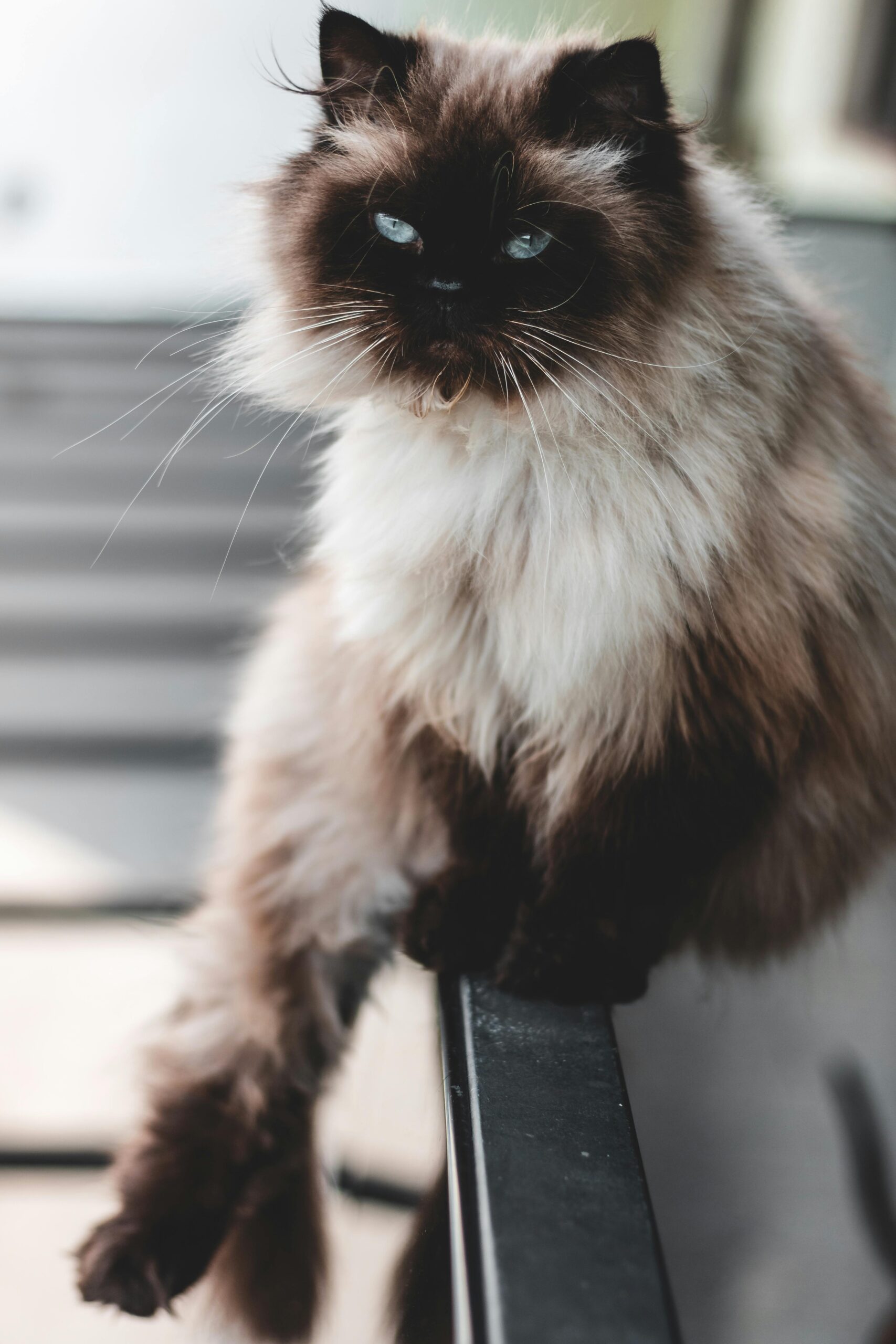
Himalayans, by contrast, always display colorpoint patterning. Their bodies are pale, with darker points on the face, ears, legs, and tail, and they always have blue eyes. This consistent color expression is the defining trait of the Himalayan.
Buyers drawn to dramatic contrast and blue eyes tend to prefer Himalayans. Buyers who want more flexibility in color choices often gravitate toward Persians.
Temperament and Lifestyle Fit
Temperament differences between the two breeds are minimal when bred responsibly. Both are gentle, affectionate, and well suited to calm households. They are not typically vocal, athletic, or assertive, and they do best in low-chaos environments.
Any perceived personality differences are more often the result of individual lines or upbringing rather than breed distinction. Buyers should focus on breeder practices and kitten socialization rather than expecting one breed to be noticeably more active or social than the other.
Breeding Programs and Availability
Another practical difference lies in breeding focus and availability. Persian breeding programs often have more flexibility in pairings and color outcomes, which can result in greater availability overall.
Himalayan breeding programs are more restricted. Breeders must maintain correct Persian structure while also preserving consistent colorpoint expression. This narrower focus often leads to fewer kittens being available at any given time and longer waitlists.
Buyers should not assume Himalayans are easier to find simply because they are part of the Persian family.
Which Breed Is the Right Choice
A Himalayan is the right choice for buyers who want a Persian-type cat with colorpoint patterning and blue eyes. A Persian may be a better fit for buyers who value the same calm temperament and coat type but prefer a broader range of colors and patterns.
In both cases, ethical breeding practices matter more than the label. Health testing, moderate facial structure, and transparent lineage are far more important indicators of quality than whether a kitten is classified as Persian or Himalayan.
Understanding Himalayan Kitten Costs Without Fixating on Price
When researching Himalayan kittens, many buyers naturally want to understand what goes into the overall cost. While price is part of the decision, it should never be the starting point. For Himalayans especially, cost reflects breeder standards, health testing, structure, and long-term support rather than appearance alone.
Reputable Himalayan breeders invest heavily in genetic screening, veterinary care, responsible pairing decisions, and proper kitten development. These factors influence cost far more than coat color or availability, and they vary widely between programs. Because of this, comparing prices without context often leads buyers toward poorly bred kittens or misrepresented cats.
For families who want a clear breakdown of what influences Himalayan kitten pricing and how ethical breeders structure their programs, we’ve outlined that information separately.
Learn more about what goes into Himalayan kitten pricing and what responsible breeders prioritize.
👉 [Himalayan Ragdoll Cat Price Guide]
Why Are Himalayans So Expensive?
Several factors drive the price of Himalayan kittens:
- Health Testing: Ethical breeders DNA test for PKD and screen for FeLV/FIV, which adds costs but ensures healthier cats.
- Veterinary Care: Kittens receive vaccinations, deworming, and sometimes microchipping before going home.
- Socialization & Time: Raising kittens in-home with constant attention requires effort and limits litter numbers.
- Coat & Grooming: Himalayans have high-maintenance coats that require daily care even from an early age. Breeders often begin grooming training, which takes time.
- Champion Bloodlines: Show-quality pedigrees carry a premium due to their rarity and influence on the breed’s future.
Budgeting Beyond the Kitten Price
It’s important to budget for ongoing care:
- Initial Supplies: Litter boxes, scratching posts, food bowls, carriers (~$200–$300).
- Grooming: Combs, brushes, detangling sprays, and professional grooming if needed (~$100–$400 annually).
- Veterinary Care: Annual check-ups, vaccinations, and emergency funds (~$400–$600 per year).
- Pet Insurance: Optional but recommended for this breed due to potential health issues (~$30–$50/month).
The Value of Luxury Kittens
While it might seem tempting to choose the cheapest option, investing in a Himalayan from a well-regarded breeder pays off in health, temperament, and support. Luxury kittens, like those raised in programs that emphasize socialization, health testing, and lifelong breeder support, often cost more upfront but save buyers from costly vet bills and behavior issues down the line.
Choosing the Right Himalayan Kitten for Your Home
Selecting the right Himalayan kitten is about aligning temperament, care requirements, and household dynamics. Himalayans are gentle, people-oriented cats who thrive in calm, predictable environments. When placed thoughtfully, they settle easily and form deep, affectionate bonds. When mismatched, they may struggle with stress or unmet care needs.
This section helps buyers evaluate whether a Himalayan kitten truly fits their lifestyle and expectations.
Best Suited for These Homes
Himalayan kittens tend to thrive in households that offer:
- adults or seniors
- gentle, respectful children
- apartment or low-activity living
- consistent routines and quiet environments
They prefer steady interaction over constant stimulation and do best where noise and chaos are limited.
Good Match for Owners Who Want
Himalayans are well suited for people seeking:
- a calm, cuddly lap companion
- a cat with low prey drive
- a classic longhaired appearance
- affectionate but undemanding behavior
- predictable, stable temperament
They enjoy closeness and attention, but on their own quiet terms.
Not the Right Choice for Every Home
Himalayans may not be ideal for:
- families wanting an energetic or highly interactive breed
- owners unable to commit to daily grooming
- households with significant allergy concerns
- buyers seeking a low-maintenance pet
Himalayans require ongoing coat care and benefit from consistent routines. They are best suited for owners who value presence and care over convenience.
Health & Genetic Testing Best Practices for Himalayans
Responsible Himalayan breeding prioritizes health, structure, and long-term welfare. Because Himalayans share ancestry with Persians, ethical breeders focus on screening for conditions known to affect Persian-type cats. Health testing helps reduce the risk of inherited disease and supports informed placement decisions.
Core Health Screenings to Expect
Ethical Himalayan breeders typically screen breeding cats for:
- PKD (Polycystic Kidney Disease)
A hereditary condition that can be identified through DNA testing. Responsible breeders only breed PKD-negative cats. - HCM (Hypertrophic Cardiomyopathy)
A cardiac condition monitored through echocardiograms or specialist evaluation. While not fully preventable, screening helps reduce risk. - General Structural Health
Assessment of facial structure, jaw alignment, and airway openness to avoid extreme brachycephalic issues.
Why Testing Matters
Health testing is not a guarantee, but it significantly lowers risk and reflects breeder accountability. Breeders who invest in testing demonstrate commitment to long-term welfare rather than short-term production.
Buyers should feel comfortable asking which tests are performed, how often they are updated, and how results influence breeding decisions. Transparency around health screening is one of the strongest indicators of a responsible Himalayan breeding program.
Breeder Support After Placement
Responsible Himalayan breeders view placement as the beginning of a long-term relationship, not the end of a transaction. Ongoing breeder support protects both the kitten and the family and is a key indicator of ethical breeding practices.
Buyers should expect continued access to their breeder for questions about care, grooming, diet, and adjustment during the transition period and beyond. Ethical breeders remain available as a resource throughout the cat’s life.
What Post-Placement Support Typically Includes
- clear vaccination records appropriate for the kitten’s age
- documentation of veterinary care and health screening
- written contracts outlining health guarantees and responsibilities
- guidance on grooming routines and coat maintenance
- support during the initial adjustment period
- willingness to answer questions long after the kitten goes home
Many responsible breeders also include return or rehoming clauses in their contracts. These clauses ensure that if a family’s circumstances change, the cat is protected and does not enter rescue or unstable situations.
Consistent post-placement support reflects a breeder’s commitment to the welfare of their cats and to responsible ownership.
Your Next Steps: How to Connect With a Himalayan Breeder
Once you understand the breed, breeder standards, and your own lifestyle fit, the next step is to begin conversations with reputable Himalayan breeders. This process should feel unhurried and transparent.
Start by reaching out with thoughtful questions rather than requests for immediate availability. Ethical breeders appreciate buyers who are prepared, patient, and focused on long-term care rather than quick placement.
How to Begin the Conversation
- introduce yourself and your household
- share your experience with cats, if any
- explain what draws you to the Himalayan breed
- ask about health testing, structure, and placement process
- inquire about waitlists rather than expecting instant availability
Responsible breeders may ask questions of their own. This is a positive sign and reflects thoughtful placement rather than gatekeeping.
Taking the time to build a relationship with a breeder helps ensure that when a Himalayan kitten does join your home, the match is well considered and set up for long-term success.
Frequently Asked Questions About Himalayan Kittens
1. How much does a Himalayan kitten cost?
In 2026, Himalayan kittens from reputable breeders typically cost $1,500–$4,000+. Pet-quality kittens are on the lower end, while show-quality and breeding-quality kittens are priced higher. Regional demand also plays a role, with West Coast and Northeast kittens often being more expensive.
2. Are Himalayan cats good pets for families?
Yes. Himalayans are affectionate, gentle, and adaptable. They tend to bond closely with their families and enjoy quiet companionship. While they’re not as active as some breeds, they thrive in households that can give them daily grooming and attention. They do well with children and other pets when properly socialized.
3. Do Himalayan cats require a lot of grooming?
Absolutely. Himalayans have long, dense coats inherited from their Persian ancestry. Daily combing is recommended to prevent mats and tangles. Many owners also invest in grooming tools like slicker brushes, wide-tooth combs, and detangling sprays. Professional grooming every few months can also help maintain the coat’s health.
4. What health problems are common in Himalayan cats?
The most common hereditary issue is Polycystic Kidney Disease (PKD), which ethical breeders test for. They can also experience brachycephalic concerns (breathing issues tied to flat faces), eye tearing, and dental concerns. Regular veterinary check-ups, a quality diet, and choosing a PKD-tested kitten help reduce risks.
5. Are Himalayan cats hypoallergenic?
No. Himalayans are not hypoallergenic. Their long coats can trap dander and saliva proteins that cause allergic reactions. If you have allergies, spend time with Himalayans before committing to adoption, and consider investing in air purifiers and regular grooming to help manage allergens.
6. How long do Himalayan cats live?
Himalayan cats typically live 12–15 years, with some reaching 17 years or more when well cared for. Longevity depends on genetics, diet, preventive veterinary care, and a safe indoor lifestyle. Cats from breeders who perform health testing tend to live longer, healthier lives.
7. What is the difference between Persian and Himalayan cats?
The Himalayan is essentially a Persian with Siamese-style pointed coloring (darker ears, face, tail, and paws). They share the same body structure, luxurious coat, and calm temperament as Persians but are distinguished by their striking blue eyes and pointed patterns.
8. How can I tell if a Himalayan breeder is reputable?
Look for CFA or TICA registration, proof of PKD and FeLV/FIV testing, written contracts, and transparent communication. Reputable breeders will gladly answer questions, show you the kittens via live video, and explain their policies on spay/neuter and health guarantees.
9. What colors do Himalayan kittens come in?
Himalayans come in a variety of point colors, including seal, blue, chocolate, lilac, flame, cream, tortie, and lynx points. Seal and blue are the most common, while chocolate and lilac are rarer and often more expensive. The points develop as the kitten grows, with full color contrast visible by one year of age.
10. Where can I find Himalayan kittens for sale near me?
Start with CFA and TICA breeder directories, then look at established catteries such as KaristaKats (NJ), Gems of the South (FL), Victorian Gardens (NC), and Central Coast Persians (CA). Always research carefully, ask for health testing proof, and avoid deals that seem “too good to be true.”
For families seeking a luxury adoption experience, you can also explore available kittens at almontecats.com.
See Himalayan Kitten for Sale Guide for more info.
Summary: What the Best Himalayan Cat Breeders Have in Common
The best Himalayan cat breeders in the United States share consistent standards, regardless of location or cattery size. Rather than focusing on volume or constant availability, they prioritize health, structure, temperament, and responsible placement.
Reputable Himalayan breeders typically:
- work within recognized registries and maintain verifiable pedigrees
- health test breeding cats for known hereditary risks
- avoid extreme facial structure in favor of moderation and long-term welfare
- raise kittens in stable, low-stress home environments
- use waitlists and placement matching rather than first-come sales
- remain available to families after placement for ongoing support
Buyers should view any breeder list as a starting point, not a guarantee. Even well-known programs vary in philosophy, structure, and availability over time. The most important step is direct communication, asking informed questions, and verifying that a breeder’s practices align with your expectations and lifestyle.
The strongest outcomes come from choosing a breeder whose standards, transparency, and placement approach match the long-term needs of both the cat and the home.
Related Himalayan Cat Posts
- Himalayan Cat Lifespan
- Himalayan vs Persian
- Himalayan Ragdoll Cat Price
- 7 Best Cat Breeds for Apartments
- How Ethical Catteries Operate
Each post is packed with facts, tips, and advice to help you choose the perfect kitten for your family.
Sources & Further Reading
The following resources provide authoritative information on Himalayan cats, breed standards, registry recognition, and health considerations referenced throughout this guide:
- Cat Fanciers’ Association (CFA)
Himalayan and Persian breed standards, registration rules, and breeder ethics
https://cfa.org/breeds/persian/ - The International Cat Association (TICA)
Breed classification, registry policies, and breeder directories
https://tica.org/browse-all-breeders/ - UC Davis Veterinary Genetics Laboratory
PKD testing and inherited disease information in Persian-type cats
https://vgl.ucdavis.edu/ - Cornell University College of Veterinary Medicine
Brachycephalic airway issues and feline health education
https://www.vet.cornell.edu/ - American Veterinary Medical Association (AVMA)
General feline health, vaccination standards, and breeder guidance
https://www.avma.org/ - International Cat Care (iCatCare)
Grooming, coat care, and longhair cat welfare
https://icatcare.org/






Read the Comments +