
How Maine Coon Kittens Are Raised (What Ethical Breeders Do)
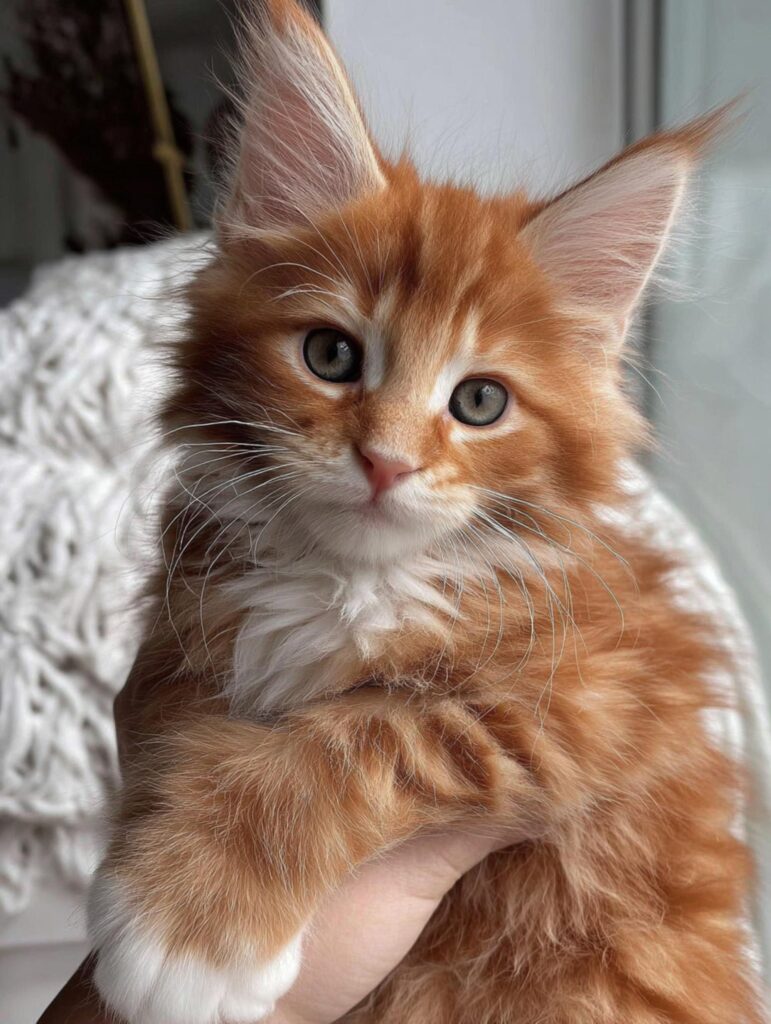
Maine Coon kittens are not shaped by genetics alone. The way they are raised during their first weeks and months determines how confidently they handle people, change, grooming, and everyday life as adults.
Ethical programs use structured handling, controlled socialization, careful health monitoring, and development-based timing to support stable temperament and long-term wellbeing. This post explains how Maine Coon kittens are raised when the focus is on preparing the kitten to be a confident, well-adjusted cat.
How Maine Coon Kittens Are Raised — At a Glance
| Stage of Raising | What Ethical Programs Focus On | Why It Matters |
|---|---|---|
| Early Handling | Gentle, purposeful contact | Builds trust without overstimulation |
| Socialization | Controlled, age-appropriate exposure | Creates confidence and stress resilience |
| Environment | Structure over chaos | Prevents anxiety and fear responses |
| Nutrition | Balanced growth, not speed | Protects joints, digestion, and coordination |
| Litter & Grooming Habits | Early, calm introduction | Makes lifelong care easier |
| Health Monitoring | Observation and timing | Supports immune and emotional development |
| Placement Timing | Developmental readiness | Reduces transition stress |
| Breeder Approach | Process over marketing | Produces stable adult cats |
| Buyer Outcome | Confidence and adaptability | Long-term success in real homes |
Snippet target:
Maine Coon kittens are raised through structured early handling, controlled socialization, health monitoring, and gradual independence-building that supports stable temperament and long-term health.
Why How a Maine Coon Kitten Is Raised Matters
Genetics set the foundation, but they do not determine the outcome on their own. The way a Maine Coon kitten is raised shapes how that genetic potential expresses itself over a lifetime. Early environment influences confidence, stress tolerance, adaptability, and how a kitten learns to interact with people and the world around them.
Two kittens from the same parents can develop very differently when their early experiences differ. Subtle differences in handling, exposure, routine, and response to stress can create noticeable differences in adult temperament. This is why responsible programs focus on process, not just pedigree.
Buyers often see photos, colors, and size projections, but those elements reveal very little about how a kitten will cope with change, handle grooming, or settle into a new home. Ethical raising prioritizes consistency, observation, and age-appropriate development over marketing milestones. Understanding how a kitten is raised gives buyers far more insight than appearance alone.
See: Are Maine Coons High Maintenance
The First Days — Birth to 2 Weeks (Foundational Stability)
The neonatal period sets the emotional and physical baseline for everything that follows. At this stage, stability matters more than stimulation. Ethical programs focus on protection, regulation, and quiet observation rather than early “socialization.”
Neonatal Care and Monitoring
From birth through the first two weeks, Maine Coon kittens rely entirely on their environment for regulation. Ethical programs maintain consistent warmth and humidity, monitor nursing, and track weight daily to ensure steady growth.
Key priorities during this stage include:
- Maintaining a stable, warm environment to support digestion and circulation
- Tracking daily weight to confirm proper intake and development
- Observing breathing, tone, and movement without excessive handling
Health observation at this stage is deliberate and calm. Ethical programs watch closely but intervene only when necessary, allowing kittens to rest, nurse, and grow without disruption.
Early Handling Philosophy
Early handling is purposeful, not constant. Gentle, brief contact helps kittens associate human presence with safety, but excessive handling at this stage can overwhelm an undeveloped nervous system.
Ethical early handling focuses on:
- Short, calm interactions
- Supporting the body fully without restraint
- Returning kittens promptly to warmth and rest
Overstimulation during the neonatal period can increase stress responses later in life. Responsible programs prioritize trust and stability over performative handling or content creation. This restraint is intentional. It reflects an understanding that confidence develops from feeling safe first, not from being pushed too early.
Trust signal: Ethical programs show patience and restraint at this stage. They prioritize long-term outcomes over early display.
Early Development — 2 to 4 Weeks (Awareness Without Pressure)
Between two and four weeks of age, Maine Coon kittens begin to transition from reflex-driven newborns to aware, responsive individuals. This stage introduces the world gently, without demanding interaction or performance. Ethical programs focus on exposure without expectation, allowing kittens to notice their environment while remaining secure.
Sensory Exposure Done Correctly
At this stage, kittens start to process light, sound, and movement, but their nervous systems are still developing. Ethical exposure introduces these elements gradually rather than all at once.
Responsible sensory exposure includes:
- Soft, natural lighting rather than sudden brightness
- Low, consistent household sounds instead of abrupt noise
- Gentle movement in the environment without direct stimulation
Timing matters because fear imprinting can occur if a kitten experiences stress before it has the capacity to recover. Ethical programs avoid startling experiences and allow kittens to observe at their own pace. When exposure stays controlled, kittens build curiosity instead of caution.
Beginning Human Association
Human association begins to form during this window, but it should feel neutral and safe rather than intrusive. Calm human presence teaches kittens that people are part of the environment, not a source of pressure.
Best practices include:
- Sitting quietly near the kittens
- Brief, supportive handling without restraint
- Allowing kittens to initiate contact when possible
This stage sets the emotional tone for future interactions. Kittens that associate people with calm, predictable behavior tend to develop steady, confident temperaments. Pushing interaction too quickly can create avoidance patterns that persist into adulthood.
👉 Internal link: Maine Coon Kitten Development Timeline
Socialization — 4 to 8 Weeks (Critical Window)
The period between four and eight weeks represents the most influential socialization window in a Maine Coon’s development. What happens here shapes how a kitten interprets novelty, handles stress, and interacts with people for the rest of its life. Ethical programs treat this stage with precision rather than intensity.
What Ethical Socialization Actually Means
Ethical socialization does not mean constant handling or nonstop exposure. Instead, it focuses on controlled experiences that build confidence without overwhelming the kitten.
True socialization involves:
- Short, intentional interactions rather than continuous holding
- Introducing one new experience at a time
- Watching body language and adjusting immediately
Kittens communicate stress clearly through posture, vocalization, and withdrawal. Ethical programs respond to these signals instead of pushing through them. This approach builds trust and emotional resilience rather than compliance.
Household Conditioning
Kittens raised in ethical programs experience normal household activity in a measured way. Exposure to everyday life prepares them for real homes without flooding them with stimulation.
Household conditioning includes:
- Vacuum and appliance sounds at a distance
- Walking across different floor textures
- Observing routine human movement
Home environments differ from barns, outbuildings, or high-traffic breeding rooms. Ethical programs raise kittens in settings that resemble their future homes, helping them transition smoothly after placement.
People Socialization
People socialization focuses on quality, not quantity. Kittens benefit from interacting with a variety of calm individuals rather than being passed around.
Key principles include:
- Exposure to adults first, then older children who can follow instructions
- Encouraging gentle interaction rather than excitement
- Allowing kittens to retreat when needed
Forced affection undermines confidence. Ethical programs allow kittens to choose interaction, which results in adults that seek human contact willingly and comfortably.
Maine Coon Kitten Raising Timeline (Birth to Placement)
| Age Range | Developmental Focus | What Ethical Programs Do | Why It Matters Long Term |
|---|---|---|---|
| Birth–2 weeks | Foundational stability | Maintain warmth, monitor nursing, track daily weight, minimal handling | Supports nervous system regulation and physical survival |
| 2–4 weeks | Awareness without pressure | Gentle sensory exposure, calm human presence, brief handling | Builds curiosity without fear imprinting |
| 4–6 weeks | Early socialization | Controlled exposure to sounds, surfaces, and people | Establishes confidence and stress tolerance |
| 6–8 weeks | Critical social window | Structured interaction, household conditioning, litter habits | Shapes adaptability and emotional resilience |
| 8–10 weeks | Skill development | Continued socialization, grooming exposure, environment expansion | Improves handling tolerance and routine acceptance |
| 10–12 weeks | Independence building | Solid food transition, enrichment balance, observation of temperament | Supports emotional regulation and self-confidence |
| 12–14+ weeks | Placement readiness | Assess maturity, stress recovery, social balance | Reduces anxiety during transition to new homes |
How to Read This Timeline
- Developmental readiness matters more than age alone
- Some kittens move through stages faster or slower
- Ethical programs adjust pacing per kitten rather than forcing milestones
- Later placement often reflects care, not delay
How To Find a Maine Coon Breeder Near Me
Weaning, Nutrition, and Physical Development
Weaning and early nutrition shape more than size. They influence digestion, growth rate, joint health, and long-term eating behavior. Ethical programs approach this stage deliberately, supporting steady development rather than rushing milestones.
Natural Weaning Process
Maine Coon kittens wean gradually. Ethical programs allow the transition from nursing to solid food to happen in stages, following the kitten’s readiness rather than a fixed timeline.
A responsible weaning process includes:
- Introducing soft, easily digestible foods alongside nursing
- Allowing kittens to continue comfort nursing as needed
- Observing stool quality and appetite closely
Rushing weaning can overwhelm an immature digestive system. It often leads to loose stools, food aversion, or long-term sensitivity. Supporting digestive development means moving slowly and adjusting based on individual response rather than convenience.
Early Nutrition Choices
Early nutrition should support balanced growth, not exaggerated size. Maine Coons grow large over time, but pushing calories early does not produce healthier adults.
Ethical nutrition focuses on:
- Adequate protein for muscle development
- Balanced fat and mineral intake
- Portions appropriate to age and activity level
“Feeding for size” creates unnecessary strain on joints and can disrupt normal growth patterns. Ethical programs feed to support strength, coordination, and steady development rather than rapid weight gain.
Litter Training and Early Habits
Early habits form quickly. Ethical programs introduce litter and grooming routines in ways that feel natural and low-pressure, helping kittens adapt easily to home life.
Litter Box Introduction
Litter training starts as soon as kittens become mobile. Environment setup plays a larger role than training itself.
Best practices include:
- Using boxes large enough for kittens to turn comfortably
- Keeping substrate consistent during early learning
- Placing boxes close to resting and play areas
Accidents during this stage almost always reflect environment issues, such as box placement or substrate changes. They do not indicate stubbornness or poor temperament. Ethical programs adjust setup rather than blaming the kitten.
Grooming Introduction
Grooming exposure begins early but remains gentle and brief. The goal is familiarity, not compliance.
Ethical grooming introduction includes:
- Short brushing sessions using soft tools
- Handling paws and nails calmly
- Ending sessions before stress appears
By keeping grooming neutral and predictable, ethical programs help kittens accept care without anxiety. This early foundation makes lifelong grooming easier for future owners.
👉 Internal link: How to Groom a Maine Coon
Environment Matters More Than Toys
When people think about raising confident kittens, they often focus on toys and stimulation. In reality, environmental structure has a much greater impact on emotional development than the number of objects a kitten can play with. Ethical programs design spaces that support security first, curiosity second.
Space, Structure, and Predictability
Kittens thrive when their environment feels understandable and safe. Ethical programs provide defined spaces rather than large, chaotic areas filled with constant activity.
Effective environments include:
- Clear resting areas where kittens can retreat undisturbed
- Predictable layouts that do not change daily
- Gradual expansion of space as confidence grows
Open chaos overwhelms developing nervous systems. Too much access, too many people, or constant movement can increase anxiety rather than confidence. Structure allows kittens to explore voluntarily instead of reacting defensively.
Enrichment Without Overload
Enrichment should support natural behaviors without creating pressure. Ethical programs prioritize quality over quantity.
Appropriate enrichment includes:
- Opportunities to climb and observe from safe heights
- Quiet spaces for resting and self-regulation
- Simple objects that encourage movement without overstimulation
Too many toys can reduce confidence by forcing constant engagement. Kittens benefit from pauses, observation, and rest as much as from play. Enrichment works best when it supports choice rather than demand.
👉 Internal link: Best Enrichment for Maine Coons
Health Monitoring During Kittenhood
Health monitoring during kittenhood focuses on consistency and early detection, not frequent intervention. Ethical programs track development closely while allowing the body to mature naturally.
Routine Health Checks
Routine checks happen daily through observation rather than constant handling. Ethical programs monitor patterns instead of reacting to isolated moments.
Key areas of attention include:
- Weight gain and steady growth trends
- Eye clarity and ear cleanliness
- Coat condition and hydration
- Digestive consistency and appetite
Tracking changes over time matters more than isolated measurements. Subtle shifts often signal developing issues long before symptoms become obvious.
Veterinary Care and Timing
Veterinary care supports healthy development when applied thoughtfully. Ethical programs prioritize timing over frequency.
Responsible veterinary planning includes:
- Scheduling care around developmental readiness
- Avoiding unnecessary early interventions
- Coordinating vaccinations and procedures to minimize stress
Too many interventions too early can disrupt immune development and increase stress sensitivity. Ethical programs work with veterinarians to balance protection with physiological maturity.
👉 Internal link: Maine Coon Health Testing Explained
What Ethical Breeders Do Differently
Ethical Maine Coon breeding programs separate themselves through structure, transparency, and restraint. Their focus stays on long-term outcomes rather than speed, trends, or volume. This approach builds trust because it prioritizes the kitten’s development over immediate convenience.
Structure Over Speed
Ethical breeders do not rush kittens out the door. They evaluate developmental readiness, not calendar age.
“Ready now” often signals:
- Incomplete social development
- Rushed weaning
- Limited environmental exposure
Ethical programs watch how each kitten eats, plays, handles stress, and interacts before determining placement timing. Two kittens of the same age may not be equally ready. Waiting allows confidence, coordination, and coping skills to develop fully.
Transparency Over Marketing
Ethical breeders explain how kittens are raised, not just what they look like. They describe daily routines, socialization methods, and health monitoring clearly and calmly.
Transparency includes:
- Sharing raising practices in detail
- Discussing challenges openly when they arise
- Showing adult cats from the same lines
Photos of kittens alone reveal very little. Ethical programs provide context by showing adult outcomes so buyers can understand what those kittens grow into, both physically and temperamentally.
Placement Over Profit
Ethical breeders prioritize matching kittens to the right homes. They ask questions, listen carefully, and decline placements when fit is poor.
Responsible placement means:
- Matching temperament and energy level to lifestyle
- Considering household dynamics and experience
- Saying no when expectations do not align
This selectivity protects the kitten and the buyer. Ethical programs value long-term success over short-term sales.
👉 Internal link: How to Find a Maine Coon Breeder You Can Trust
How We Raise Our Maine Coon Kittens at Almonte Cats
We raise our Maine Coon kittens with the understanding that early structure shapes lifelong outcomes. Our goal is not speed or volume. It is to support confident, adaptable kittens who transition easily into real homes.
A Calm, Structured Start
From the first days, we focus on stability rather than stimulation. We make sure mom feels secure and is not stressed out.
- We maintain a warm, predictable environment
- We limit handling to purposeful, gentle interactions
- We avoid overstimulation during the neonatal period
Early handling builds trust, but constant handling at this stage can create stress. We allow kittens to rest, nurse, and grow before asking them to engage with the world.
Gradual Exposure, Not Forced Socialization
As kittens mature, we introduce new experiences in stages.
- Sensory exposure happens gradually
- Social interaction increases as kittens show readiness
- Each kitten sets its own pace
We watch how kittens respond, not just how they perform. If a kitten needs more time at any stage, we slow down rather than pushing through discomfort. We gradually introduce our kittens to different environments and experiences.
Raised in a Real Home Environment
Our kittens grow up in a true household setting, not an isolated or chaotic space.
- Normal household sounds become familiar over time
- Movement, routines, and daily life are introduced gradually
- Kittens learn to observe before they are expected to participate
This approach helps kittens transition smoothly to new homes without becoming overwhelmed.
Balanced Growth and Nutrition
We support steady development rather than exaggerated size.
- Weaning happens gradually
- Nutrition focuses on balanced growth, not rapid gain
- We avoid feeding practices that stress joints or digestion
Maine Coons mature slowly, and we respect that timeline.
Daily Health Monitoring Without Over-Intervention
Health monitoring happens through observation, not constant handling.
- We track weight and growth trends
- We watch digestion, coat condition, and behavior
- Veterinary care is timed thoughtfully
This allows kittens to develop resilience while still receiving appropriate care.
Placement Based on Readiness, Not Age
We decide when a kitten is ready based on development, not a calendar date.
- We assess confidence and stress recovery
- We evaluate social balance and independence
- We allow extra time when a kitten needs it
Some kittens are ready sooner than others. We respect individual differences rather than rushing placement.
Our Long-Term Goal
Our goal is to raise Maine Coon kittens who:
- Adapt easily to new environments
- Tolerate grooming and routine care calmly
- Develop stable, confident temperaments
We believe that how a kitten is raised matters just as much as who the parents are, and we raise our kittens accordingly.
See Why Ethical Breeders Have Waitlists for more breeder info.
Common Myths About Raising Maine Coon Kittens (Debunked)
Misinformation about kitten raising spreads easily in online forums. These myths often push intensity over understanding and create unrealistic expectations.
“Handling them constantly makes them friendlier.”
Constant handling overwhelms developing kittens. Calm, controlled interaction builds confidence far more effectively than nonstop contact.
“The earlier they leave, the better they bond.”
Kittens need time with their mother and littermates to learn regulation, boundaries, and communication. Leaving too early often increases anxiety rather than bonding.
“Big kittens need to be pushed to grow fast.”
Rapid growth stresses joints and digestion. Ethical programs support steady, balanced development instead of size-driven feeding.
“All socialization is the same.”
Socialization quality matters more than quantity. Controlled exposure builds resilience. Chaos builds fear responses.
This is why ethical raising focuses on timing, structure, and observation rather than volume or speed.
How This Early Raising Affects Adult Maine Coons
Early raising practices shape how a Maine Coon moves through the world as an adult. The effects show up not just in personality, but in adaptability, health, and how easily the cat integrates into everyday life.
Confidence and Adaptability
Kittens raised with structure and appropriate exposure tend to become adults who handle change with far less stress. They adapt more easily to new environments, tolerate travel better, and recover faster from unfamiliar experiences.
Well-raised Maine Coons often:
- Handle vet visits without panic
- Adjust smoothly to new homes or routine changes
- Remain curious instead of fearful in unfamiliar situations
Confidence develops when kittens learn early that new experiences are manageable. Ethical raising creates adults who assess situations calmly rather than reacting defensively.
Grooming and Handling Tolerance
Early exposure to gentle handling directly affects how a Maine Coon responds to grooming and routine care later in life. Kittens introduced to brushing, nail handling, and body contact in a calm, predictable way grow into adults who accept care without resistance.
This matters because Maine Coons require regular grooming throughout their lives. Early familiarity prevents:
- Stress during brushing
- Fear responses during nail trims
- Struggles during routine health checks
When handling feels normal from the beginning, maintenance remains simple rather than stressful.
Long-Term Health and Behavior
Stress plays a major role in long-term health and behavior. Kittens raised with predictable routines and appropriate stimulation develop stronger stress resilience as adults.
Benefits include:
- More stable temperament
- Lower reactivity to everyday disruptions
- Better coping skills during illness or aging
Early raising does not eliminate all challenges, but it significantly reduces the likelihood of anxiety-driven behaviors and stress-related health issues.
👉Pros and Cons of Maine Coon Cats
What Buyers Should Ask About How Kittens Are Raised
Understanding how a kitten is raised requires asking the right questions. Ethical breeders welcome these conversations because they reflect informed, prepared buyers.
Use this checklist to guide discussions:
- How are kittens handled daily?
Look for calm, purposeful handling rather than constant interaction. - What environments are they exposed to?
Ask whether kittens experience normal household settings similar to your home. - How is socialization structured?
Ethical programs describe timing, limits, and observation rather than vague claims. - What happens if a kitten struggles?
Responsible breeders adjust approach, provide support, and delay placement if needed.
Clear answers indicate experience and accountability. Vague or dismissive responses often signal a lack of structure.
Frequently Asked Questions About How Maine Coon Kittens Are Raised
How are Maine Coon kittens handled during their first weeks?
Ethical programs use gentle, purposeful handling rather than constant contact. In the first weeks, kittens need warmth, rest, and stability more than stimulation. Handling focuses on health checks and brief human association, allowing kittens to feel safe without overwhelming their developing nervous systems.
Can too much handling harm Maine Coon kittens?
Yes. Excessive or forced handling, especially in the neonatal stage, can increase stress sensitivity. Ethical raising balances exposure with restraint, allowing kittens to build confidence naturally rather than becoming overstimulated or avoidant.
When does socialization actually begin?
Socialization begins gradually, not all at once. Awareness develops around two to four weeks, while intentional socialization occurs primarily between four and eight weeks. Ethical programs time exposure carefully to avoid fear imprinting and allow kittens to process new experiences successfully.
What does ethical socialization look like in practice?
Ethical socialization involves controlled exposure, not constant activity. Kittens experience new sounds, surfaces, and people one at a time, with careful monitoring of stress signals. The goal is confidence, not compliance.
Why is constant stimulation not ideal for kittens?
Kittens need time to rest, observe, and self-regulate. Too much stimulation can reduce confidence, increase anxiety, and interfere with normal development. Structure allows kittens to engage voluntarily rather than reactively.
Are kittens raised in homes better adjusted than those raised in barns or outbuildings?
Home-raised kittens often transition more smoothly into pet homes because they experience realistic household environments. Ethical programs raise kittens in settings similar to where they will live, helping them adapt more easily to daily routines.
How does early raising affect adult temperament?
Early raising directly influences adaptability, stress resilience, and confidence. Well-raised Maine Coons tend to handle change, travel, grooming, and vet visits more calmly because they learned early that new experiences are manageable.
Why do ethical breeders delay placement even when kittens look ready?
Appearance does not equal readiness. Ethical breeders evaluate behavior, coordination, social skills, and emotional stability before placement. Some kittens need more time, even if they are physically mature.
What is the right age for a Maine Coon kitten to go home?
Ethical placement focuses on developmental readiness rather than a fixed age. Many Maine Coon kittens benefit from staying longer than the minimum because of their slow maturation and size.
How are Maine Coon kittens weaned?
Weaning happens gradually, with nursing tapering off as kittens transition to solid food. Ethical programs support digestive development by avoiding rushed transitions and monitoring stool quality and appetite closely.
Why is “feeding for size” discouraged?
Rapid growth stresses joints, digestion, and coordination. Ethical programs feed to support balanced development rather than exaggerated size, allowing Maine Coons to grow steadily into strong, healthy adults.
How are litter habits established?
Litter training relies on environment, not discipline. Ethical programs use appropriately sized boxes, consistent substrates, and accessible placement. Accidents usually signal environmental issues, not behavioral problems.
How are kittens introduced to grooming?
Grooming introduction starts early with short, calm sessions. Ethical programs expose kittens to brushing and nail handling without restraint, building tolerance rather than fear. This foundation makes lifelong grooming easier.
How do ethical breeders monitor kitten health?
Health monitoring focuses on patterns over time. Ethical programs track weight, growth, digestion, coat condition, and behavior daily, intervening only when necessary rather than reacting to isolated changes.
Why does timing matter more than frequency in veterinary care?
Too many interventions too early can increase stress and disrupt immune development. Ethical programs coordinate veterinary care thoughtfully, balancing protection with physiological maturity.
What happens if a kitten struggles with development?
Ethical breeders adjust their approach. They may slow exposure, modify environment, or delay placement. They do not push kittens through milestones for convenience.
How do ethical breeders differ from high-volume sellers?
Ethical breeders prioritize structure, transparency, and placement fit. High-volume sellers often prioritize speed, availability, and marketing language. Ethical programs explain their process clearly and welcome informed questions.
Why don’t ethical breeders promise personality outcomes?
Because temperament develops through both genetics and environment. Ethical breeders guide expectations based on raising practices and lineage but avoid guarantees that oversimplify development.
Can two kittens from the same parents turn out very differently?
Yes. Small differences in early experience, handling, and environment can produce noticeable differences in confidence and adaptability, even among littermates. See Should I Get One Kitten or Two if you are considering getting 2 kittens from the same litter.
Why should buyers ask about how kittens are raised?
Because raising practices affect the cat’s entire life. Understanding the process provides more meaningful insight than photos, color, or size projections.
What should raise concern when asking about kitten raising?
Vague answers, heavy focus on appearance, pressure to commit quickly, or an inability to explain daily routines often signal a lack of structure.
What is the biggest mistake buyers make?
Choosing based on impulse rather than process. Well-raised kittens come from programs that value development over speed and transparency over hype.
Recap for Buyers
The way a Maine Coon kitten is raised matters just as much as who its parents are. Ethical raising produces cats that adapt, cope, and thrive over the long term.
Final Thoughts — Raising Maine Coon Kittens Is a Labor of Love and There Are No Shortcuts
Exceptional Maine Coon kittens are not the result of clever marketing or fast timelines. They are the result of deliberate, structured raising that prioritizes development over display. Good outcomes are built day by day through thoughtful handling, appropriate exposure, and careful observation. They cannot be rushed, staged, or replicated through shortcuts.
Calm, structured raising consistently outperforms flashy claims. Programs that focus on noise, volume, or speed often overlook the quiet work that actually produces confident, adaptable adults. Ethical raising values timing, restraint, and responsiveness because those elements shape how a kitten copes with stress, change, and everyday life long after it leaves the breeder.
If you are evaluating breeders or considering adding a Maine Coon to your family, prioritize transparency, structure, and developmental readiness. Those qualities matter far more than labels or timelines.
Related Articles From Almonte Cats
If you are researching Maine Coons, the following posts may also be helpful. These posts explain our standards, expectations, and long-term approach in more depth.
- How Ethical Catteries Operate Waitlists, deposits, health contracts and more.
- Maine Coon Size, Growth, and Weight: What’s Normal and What’s Not
A detailed breakdown of realistic size ranges, growth timelines, and how to tell healthy structure from excess weight. - How to find a Maine Coon Breeder You can Trust
A practical guide explaining common scam patterns, verification steps, and what ethical programs do differently. - Maine Coon Health Overview: What Responsible Owners Should Know
Covers genetic screening, lifespan expectations, preventive care, and early warning signs owners should never ignore. - Why Maine Coons are Not for Everyone
An honest look at temperament, grooming, space needs, and daily life with a Maine Coon. - Maine Coon Kitten Growth Stages: What to Expect From 8 Weeks to Adulthood
Explains normal development, awkward phases, and why slow growth is a feature of the breed. - Is A Maine Coon A Good First Cat Maine Coons tend to suit first-time owners who want a companion rather than a low-effort pet.
- Maine Coon Indoor vs Outdoor
The modern Maine Coon is shaped for life alongside people, not independent outdoor survival.
Sources & References
- Overall, K. L. (2013). Manual of Clinical Behavioral Medicine for Dogs and Cats. Elsevier.
(Foundational reference for early handling, stress responses, social development, and long-term behavior.) - Bateson, P. (1979). How Do Sensitive Periods Arise and What Are They For?
Animal Behaviour, 27, 470–486.
(Core research on critical socialization windows and fear imprinting.) - Fox, M. W. (1978). The Dog: Its Domestication and Behavior. Garland STPM Press.
(Widely cited for mammalian neonatal development and early environmental effects; principles apply across species.) - Buffington, C. A. T. (2011). Environmental Enrichment for Indoor Cats.
Journal of Feline Medicine and Surgery.
(Supports structured environments, enrichment balance, and stress reduction.) - Bradshaw, J. (2013). Cat Sense: How the New Feline Science Can Make You a Better Friend to Your Pet. Basic Books.
(Human–cat interaction, early experience, and behavioral development.) - American Association of Feline Practitioners (AAFP). Feline Life Stage Guidelines.
https://catvets.com
(Guidance on kitten development stages, preventive care, and veterinary timing.) - McCune, S. (1995). The Impact of Paternity and Early Socialization on the Development of Cats’ Behavior.
Applied Animal Behaviour Science.
(Evidence for early environment shaping adult temperament.) - Lyons, L. A. (2015). Feline Genetics and Genomics.
University of Missouri College of Veterinary Medicine.
https://felinegenetics.missouri.edu
(Used for context on genetics vs environment and why early raising matters.) - The International Cat Association (TICA). Maine Coon Breed Profile and Breeder Guidelines.
https://tica.org
(Breed expectations, development, and ethical breeder standards.) - Cat Fanciers’ Association (CFA). Caring for Kittens and Breed Development.
https://cfa.org
(General kitten care and development standards.)






Read the Comments +