


Kittens change dramatically during the first weeks of life. In a short period of time they move from helpless newborns to active, curious young cats exploring their surroundings.
Understanding the stages of kitten development helps caretakers recognize what is normal at each age. Physical growth, neurological development, and social learning all happen quickly during the first two months.
Quick Answer
Kittens develop rapidly during their first eight weeks of life. They are born blind and deaf, begin opening their eyes around 7–14 days, start walking by three weeks, and develop coordinated play by five to six weeks. By eight weeks, most kittens are active, social, and ready for adoption preparation.
Kitten Development Timeline at a Glance
The first eight weeks of a kitten’s life include rapid changes in physical growth, sensory development, and behavior. The chart below summarizes the major milestones that typically occur week by week.
| Week | Physical Development | Sensory Development | Behavior Milestones |
|---|---|---|---|
| Birth | Eyes closed, ears closed | Cannot see or hear | Sleeping and nursing almost constantly |
| Week 1 | Limited crawling movement | Smell and touch guide behavior | Staying close to mother and littermates |
| Week 2 | Eyes begin opening | Light perception begins, hearing developing | Slightly stronger movement |
| Week 3 | Walking begins | Vision and hearing improving | Early exploration and littermate interaction |
| Week 4 | Better balance and coordination | Clearer vision | Curiosity increases and early play may begin |
| Week 5 | Stronger muscles and coordination | Fully functional sight and hearing | Play behavior becomes frequent |
| Week 6 | Running, climbing, and jumping | Sensory awareness well developed | Active social play and environmental exploration |
| Week 7 | Confident movement | Fully aware of surroundings | Increasing independence |
| Week 8 | Strong coordination and mobility | Mature sensory awareness | Social interaction and clear personality traits |
Key takeaway:
The first eight weeks represent the most important developmental window for kittens. During this period they gain vision, hearing, mobility, social awareness, and the early behaviors that shape their adult temperament.
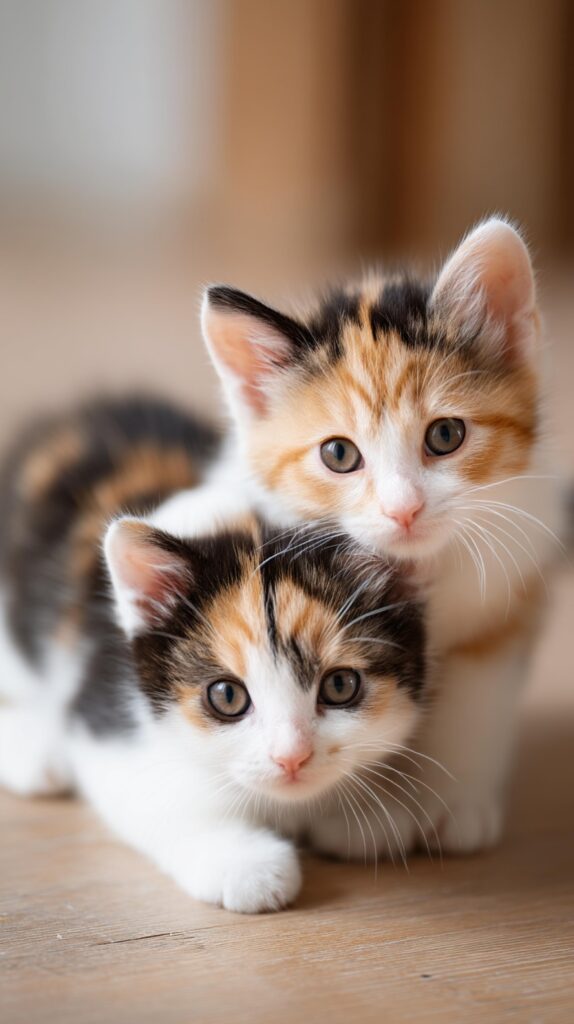
Why the First Eight Weeks of Kitten Development Matter
The earliest weeks of life shape a kitten’s physical health, neurological development, and long-term behavior. Many of the systems that adult cats rely on are still forming during this stage.
One major process happening during this period is neurological development. The brain is rapidly forming connections that control coordination, sensory processing, and learning ability.
At the same time, kittens experience rapid sensory development. Their sight, hearing, and sense of smell gradually come online, allowing them to interact more with their environment and littermates.
This stage is also an important socialization window. Kittens learn how to communicate, play, and establish boundaries through interactions with their mother and siblings. These early lessons help shape confidence and behavior later in life.
Another key factor is immune system development. In the early weeks, kittens rely heavily on antibodies passed through their mother’s milk. As they grow, their own immune system begins strengthening.
Because so much learning and physical growth occurs during these weeks, a stable environment and proper care have a lasting influence on a kitten’s long-term health and temperament.
Newborn Kittens (Birth to 1 Week)
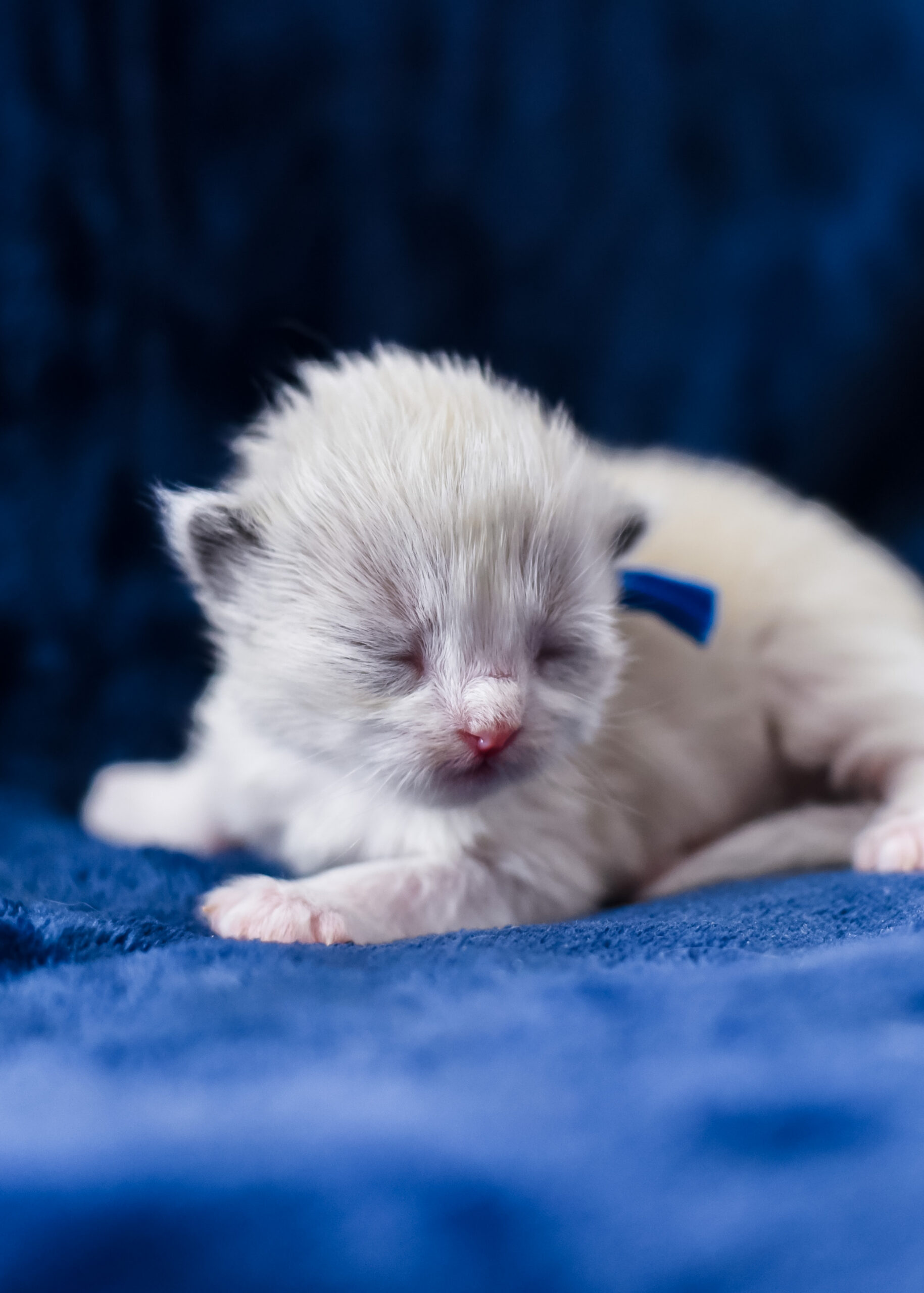
During the first week of life, kittens are extremely fragile and completely dependent on their mother. Their bodies are still developing many basic functions that older animals take for granted.
Physical Development
- Eyes remain fully closed
- Ear canals are sealed shut
- Kittens cannot regulate their body temperature
- Movement is limited to crawling and stretching
Because they cannot control their body heat, newborn kittens rely on their mother and the nest environment to stay warm.
Behavior
- Kittens sleep for most of the day
- They nurse frequently for nutrition
- Movement is slow and uncoordinated
- They depend entirely on their mother for survival
Most activity during this stage revolves around feeding and sleeping.
Breeder Monitoring
Responsible caretakers monitor newborn kittens closely during the first week.
Typical monitoring includes:
- Daily weight checks to ensure steady growth
- Maintaining warmth and a stable nesting area
- Watching to confirm that each kitten is nursing successfully
Careful observation during these early days helps ensure that kittens remain healthy and continue developing normally.
Week 2 — Eyes Begin Opening
During the second week of life, kittens begin reaching one of their earliest visible milestones. Their bodies are still developing quickly, but small changes in their senses and movement start becoming noticeable.
Physical Changes
Several physical developments begin occurring during this stage.
- Eyelids start slowly separating, marking the beginning of eye opening
- Ears begin unfolding and lifting away from the head
- Kittens show slightly stronger movements as their muscles develop
The process of eye opening usually takes several days and does not happen all at once.
Sensory Development
Although their senses are still limited, early sensory development begins during this week.
- Kittens begin detecting light through partially opened eyes
- Hearing begins developing as the ear canals gradually open
These early sensory signals help kittens start becoming aware of their surroundings.
What Is Normal
Several patterns are completely normal during this stage of development.
- One eye often opens before the other
- Newly opened eyes usually appear blue or blue-gray
- Coordination remains very limited and unsteady
Even though the eyes are opening, kittens cannot see clearly yet. Their vision will continue improving over the next several weeks.
Week 3 — First Steps
By the third week of life, kittens become noticeably more active. Their muscles strengthen, their senses improve, and they begin interacting more with their environment.
Mobility
This week marks the beginning of early movement and balance development.
- Kittens begin standing on their legs
- Walking attempts appear wobbly and unsteady
- Early balance and coordination begin forming
Movement may still look clumsy, but strength and coordination improve quickly.
Sensory Awareness
Sensory development continues advancing during this stage.
- Vision becomes clearer than in previous weeks
- Kittens begin reacting to sounds as hearing develops
These improvements allow kittens to start responding to activity around them.
Early Exploration
With improving mobility and awareness, kittens begin exploring their immediate environment.
- Some kittens venture slightly outside the nesting area
- They begin interacting more with their littermates
These early interactions are important for learning social behaviors and play skills that will continue developing over the coming weeks.
Week 4 — Awareness Expands
By the fourth week of life, kittens become noticeably more alert and aware of their surroundings. Their senses are improving quickly, and their movement is becoming more coordinated. This stage marks the transition from fragile newborns to curious young animals beginning to interact with the world around them.
Vision and Coordination
Vision continues improving during this stage, allowing kittens to move with greater confidence.
- Eyes are more fully open with clearer vision
- Walking becomes more stable and controlled
- Kittens begin navigating short distances with better balance
Although coordination is still developing, movement becomes less wobbly compared to the previous week.
Behavior
Kittens begin showing stronger curiosity and more social activity.
- Curiosity increases as kittens investigate their surroundings
- Interaction with littermates becomes more frequent
- Early playful movements may begin appearing
This growing curiosity is an important part of neurological and behavioral development.
First Social Development
Early social awareness also begins during this stage.
- Kittens may respond to familiar human voices
- Increased alertness to sounds and movement
- Greater interest in activity around the nesting area
These early interactions help kittens begin recognizing people and environmental cues.
Week 5 — Play and Social Skills
By week five, kittens become much more active and playful. Their improved vision and coordination allow them to engage in behaviors that help develop social skills and physical strength.
Play Behavior
Play becomes an important part of development during this stage.
- Kittens begin pouncing on moving objects
- They may chase their siblings around the nesting area
- Wrestling and playful batting become common
These playful behaviors help strengthen muscles and improve coordination.
Learning Through Play
Play also teaches important social skills.
- Kittens begin learning bite inhibition, understanding how hard they can bite during play
- They start recognizing social boundaries with littermates
Interactions with siblings help kittens develop communication and social behaviors that continue into adulthood.
Early Grooming
Self-care behaviors begin appearing around this time.
- Kittens may begin grooming their fur with their tongue
- They often imitate grooming behaviors they observe from their mother
These habits help kittens maintain cleanliness and begin learning basic self-maintenance.
Week 6 — Confidence and Coordination
By the sixth week, kittens show a significant increase in strength, coordination, and confidence. Their movements become much more controlled, and their personalities start becoming more noticeable.
Physical Ability
Physical development advances quickly during this stage.
- Kittens can run short distances and attempt small jumps
- Coordination and balance become much stronger
- Movement becomes faster and more controlled
These improvements allow kittens to engage in more energetic play.
Social Behavior
Social interaction continues expanding.
- Kittens often show increased interest in interacting with people
- Play with littermates becomes more energetic and structured
Through these interactions, kittens continue refining social skills and communication.
Environmental Awareness
Curiosity about the environment becomes much stronger.
- Kittens explore beyond the immediate nesting area
- They investigate new objects and sounds
This stage marks a major shift toward independence as kittens become more confident in their surroundings.
Week 7 — Independence Growing
By the seventh week, kittens begin showing much greater independence. Their physical abilities, coordination, and social skills are continuing to develop rapidly. At this stage, kittens move with confidence and spend much of their time exploring and playing.
Development
Physical development allows kittens to move more confidently and engage in complex play.
- Movement becomes confident and coordinated
- Kittens demonstrate advanced play behaviors, including stalking and chasing
- Jumping, climbing, and rapid running become common
These behaviors help build strength, coordination, and hunting instincts.
Learning
Important social lessons are still being learned from littermates and the mother.
- Kittens continue social learning through play with siblings
- They begin understanding boundaries and communication signals, such as when play becomes too rough
These interactions help shape healthy social behavior in adult cats.
Curiosity
Curiosity becomes a strong driver of behavior during this stage.
- Kittens show increased interest in exploring their surroundings
- They investigate new objects, sounds, and spaces
This growing curiosity supports cognitive development and confidence.
Week 8 — Transition to Adoption Age
By eight weeks of age, kittens are far more independent than they were just a few weeks earlier. Their senses, coordination, and social behaviors are well developed, allowing them to interact comfortably with people and their environment.
Physical Development
Physical abilities are much stronger at this stage.
- Kittens show strong coordination and balance
- Active play, climbing, and chasing behavior become common
Their bodies are becoming stronger and more capable of sustained activity.
Social Development
Social development becomes more noticeable.
- Kittens are often comfortable interacting with humans
- Individual personality traits start becoming clear
This stage allows caretakers to observe temperament and social preferences.
Health Preparation
Many basic health preparations begin around this age.
- Kittens may receive their first veterinary checkups
- The vaccination schedule often begins
These early health steps help support long-term wellbeing.
Kitten Milestones Summary Table
| Age | Key Milestones |
|---|---|
| Birth | Eyes closed, deaf |
| Week 2 | Eyes opening |
| Week 3 | Walking begins |
| Week 4 | Vision improving |
| Week 5 | Play behavior |
| Week 6 | Running and climbing |
| Week 7 | Increased independence |
| Week 8 | Social and active |
Kitten Growth by Weight
Weight gain is one of the most reliable indicators of healthy kitten development. During the first several weeks of life, kittens should gain weight steadily as they nurse and grow. Consistent daily weight gain shows that a kitten is receiving enough nutrition and developing normally.
Most healthy kittens gain approximately 10–15 grams per day during the early weeks of life. Breeders and caretakers often weigh kittens daily to ensure they are growing at a healthy rate.
While exact weights can vary depending on breed and litter size, the following chart shows a typical growth pattern for young kittens.
| Age | Average Weight |
|---|---|
| Birth | 85–115 grams |
| 1 week | 150–200 grams |
| 2 weeks | 200–300 grams |
| 3 weeks | 300–400 grams |
| 4 weeks | 400–500 grams |
| 6 weeks | 600–700 grams |
| 8 weeks | 800–1000 grams |
It is normal for kittens within the same litter to vary slightly in size. However, kittens that fail to gain weight consistently should be monitored closely. Sudden weight loss or lack of growth can indicate nursing problems, illness, or developmental issues.
Regular weight monitoring helps caretakers detect problems early and ensures kittens remain on track for healthy development.
When Do Kittens Get Their Teeth?
Kittens begin developing their first teeth during the first month of life. These early teeth are called deciduous teeth, commonly known as baby teeth. The appearance of teeth is an important milestone because it signals that kittens are preparing to transition from milk to solid food.
The first teeth usually appear around two to three weeks of age, and additional teeth continue erupting over the following weeks.
| Age | Tooth Development |
|---|---|
| 2–3 weeks | baby incisors appear |
| 3–4 weeks | canine teeth emerge |
| 4–6 weeks | premolars develop |
| 6–8 weeks | most baby teeth present |
By the time kittens reach six to eight weeks old, most of their baby teeth have erupted. These teeth allow them to chew soft foods and begin the weaning process.
The presence of teeth also influences kitten behavior. During this stage, kittens often begin chewing, play biting, and exploring objects with their mouths. These behaviors are a natural part of development as they learn to control bite pressure during play with littermates.
Complete Kitten Development Chart
The first eight weeks of a kitten’s life involve rapid changes in physical ability, behavior, and sensory awareness. The chart below summarizes the major milestones that typically occur during each stage of development.
| Week | Physical Development | Behavior |
|---|---|---|
| Week 1 | eyes closed, ears closed | sleeping and nursing |
| Week 2 | eyes opening | limited movement |
| Week 3 | walking begins | early exploration |
| Week 4 | vision improving | curiosity increasing |
| Week 5 | stronger coordination | play behavior begins |
| Week 6 | running and climbing | active social play |
| Week 7 | confident movement | increased independence |
| Week 8 | fully mobile and alert | strong social interaction |
Although kittens generally follow a similar developmental pattern, individual timing can vary slightly. Factors such as genetics, litter size, and environment may influence how quickly certain milestones appear.
Understanding these stages helps caretakers recognize what is typical for each week of growth and ensures kittens receive appropriate care as they develop.
How Mother Cats Support Kitten Development
Mother cats play a central role in the survival and development of newborn kittens. During the first weeks of life, kittens depend almost entirely on their mother for warmth, nutrition, protection, and early social learning.
One of the most important contributions a mother cat provides is nursing and nutrition. Her milk supplies essential calories, fats, and antibodies that help build the kitten’s immune system and support rapid early growth. These antibodies passed through milk help protect kittens from infectious diseases during the first weeks of life.
Mother cats also stimulate their kittens through grooming behavior. By licking their kittens, the mother cleans their bodies and stimulates circulation and digestion. Grooming also helps kittens learn basic self-care behaviors that they will begin imitating later in development.
Another important role is regulating body temperature. Newborn kittens cannot control their own body heat during the first weeks of life, so the mother keeps them warm by staying close and allowing them to nest against her body. Without this warmth, kittens can quickly become hypothermic.
Mother cats also guide early social behavior within the litter. As kittens grow and begin interacting with siblings, the mother may intervene when play becomes too rough. Through gentle corrections and body language, she teaches kittens boundaries and appropriate social signals.
These interactions help kittens learn critical behaviors such as bite control, communication, and cooperation. In this way, the mother’s presence helps shape both physical development and early temperament.
When Do Kittens Start Eating Solid Food?
Kittens begin transitioning from milk to solid food through a process called weaning. This gradual shift typically begins when kittens are about three to four weeks old and becomes fully established by about eight weeks of age.
During this stage, kittens become more mobile and curious about their surroundings. They may begin investigating their mother’s food and showing interest in new textures and smells.
| Age | Feeding Stage |
|---|---|
| Birth–3 weeks | milk only |
| 4 weeks | beginning weaning |
| 5 weeks | soft food introduced |
| 6–7 weeks | mostly solid food |
| 8 weeks | fully weaned |
The weaning process often starts with soft or mashed kitten food mixed with formula or water, allowing kittens to learn how to chew and swallow properly. As their baby teeth develop and coordination improves, they gradually transition to fully solid meals.
By around eight weeks of age, most kittens are eating solid food independently and rely much less on their mother’s milk.
This stage is also an important time for caretakers to monitor nutrition carefully, since kittens require a balanced diet designed for growth to support their rapidly developing bodies.
Safe Environment for Developing Kittens
A stable and safe environment plays an important role in supporting healthy kitten development. During the early weeks of life, kittens are highly sensitive to temperature, noise, and environmental stress.
A proper setup usually begins with a quiet nesting area. The nest should be located in a calm space away from loud activity so the mother cat and kittens can rest without frequent disturbance.
Temperature control is also critical during the neonatal period. Because newborn kittens cannot regulate their own body temperature, the nesting environment must remain warm and stable to prevent chilling.
Soft bedding materials help provide insulation and comfort. Blankets or soft towels allow kittens to stay warm and create a secure sleeping space where they can gather together.
It is also important to limit stress and sudden environmental changes. Excessive noise, constant handling, or abrupt disruptions can cause anxiety for the mother cat and litter.
As kittens grow and become more mobile, their environment should expand gradually. A slow introduction to larger spaces allows kittens to explore safely while building confidence and coordination.
Providing a calm, warm, and secure environment during the first weeks helps support healthy physical development, early learning, and stable behavior as kittens mature.
Do All Breeds Develop at the Same Rate?
Most kittens follow the same general developmental timeline during the first eight weeks of life. Milestones such as opening their eyes, beginning to walk, and developing early play behavior typically occur at roughly the same ages across domestic cats.
However, there can be subtle differences between breeds, especially when it comes to overall maturity and growth rate. Larger breeds often develop physically at a slower pace, while smaller breeds may appear to mature more quickly.
For example, large and slow-maturing breeds such as Maine Coons or Norwegian Forest Cats may take several years to reach full adult size. In contrast, smaller or moderate-sized breeds tend to reach physical maturity much earlier.
Personality traits may also begin appearing early. Some kittens show bold, exploratory behavior from a young age, while others are more cautious or observant. These tendencies can be influenced by both genetics and early environmental experiences.
Although these differences exist, the core developmental milestones during the first eight weeks remain broadly consistent across breeds.
Breed Development Comparison
| Breed Type | Early Kitten Milestones | Overall Growth Rate | Full Maturity |
|---|---|---|---|
| Domestic Shorthair | Typical development timeline | Moderate growth | ~12 months |
| Ragdoll | Typical early milestones | Slower physical maturity | ~3 years |
| Maine Coon | Typical early milestones | Slow growth due to large size | ~3–5 years |
| Siamese | Often active and vocal early | Faster physical maturity | ~12–18 months |
| British Shorthair | Typical milestones | Slower muscular development | ~2–3 years |
These differences highlight that while the first eight weeks follow a similar pattern across most kittens, breed genetics can influence how quickly cats grow and reach full adult maturity.
Veterinary Care Timeline for Kittens
Routine veterinary care is an important part of supporting healthy kitten development. During the first months of life, kittens receive several preventive treatments and vaccinations that help protect them from common infectious diseases.
The following timeline outlines the typical veterinary care schedule during early kittenhood.
| Age | Veterinary Care |
|---|---|
| 6–8 weeks | first vaccinations and general health check |
| 8–10 weeks | booster vaccinations |
| 12 weeks | additional vaccine boosters |
| 16 weeks | final kitten vaccination series |
Veterinary visits during this stage allow professionals to monitor growth, evaluate overall health, and address any early concerns. Preventive care during kittenhood helps build a strong foundation for long-term health.
Behavioral Milestones in Kittens
Behavioral development is just as important as physical growth during the early weeks of life. Many behaviors that adult cats rely on begin forming during kittenhood.
One important milestone is the development of hunting behavior. Even in domestic environments, kittens begin practicing stalking, pouncing, and chasing during play. These behaviors help build coordination and mimic natural hunting instincts.
Kittens also learn important social signals from interactions with their littermates and mother. Through play and communication, they learn how to interpret body language, vocalizations, and boundaries.
Another major developmental step is learning litter box habits. Kittens often begin using a litter area naturally once they become mobile and start observing their mother’s behavior.
Finally, kittens gradually form human bonds during early social experiences. Positive interaction with people during the first weeks can help kittens grow into confident cats that are comfortable around humans.
Together, these behavioral milestones shape how kittens interact with their environment and influence their temperament as adult cats.
Kitten Development Myths
Many misconceptions about kitten development circulate online and in casual advice. These myths can lead to misunderstandings about how kittens grow and what they need during their early weeks of life. Understanding the facts helps ensure kittens receive proper care during this critical stage.
Myth 1: Kittens Can Leave Their Mother at 6 Weeks
Some people assume kittens are ready to leave their mother once they are eating solid food and moving confidently. However, six weeks is still very early in a kitten’s development.
During the seventh and eighth weeks, kittens continue learning important social skills from their mother and littermates. These include bite inhibition, play boundaries, and communication signals. Separating kittens too early can lead to behavioral problems later in life.
Myth 2: Kittens Become Independent Quickly
Kittens may appear active and curious after only a few weeks, but they remain highly dependent on their mother during early development.
Mother cats provide warmth, nutrition, grooming, and behavioral guidance. Even when kittens begin exploring, they still rely on their mother for stability and learning important survival behaviors.
Myth 3: Bottle Feeding Kittens Is Easy
Bottle feeding orphaned kittens is often portrayed as simple, but in reality it requires significant care and experience.
Young kittens must be fed frequently, sometimes every few hours, and their temperature and hydration must be carefully monitored. Improper feeding techniques can lead to serious problems such as aspiration or digestive issues.
Myth 4: Kittens Can Regulate Their Own Body Temperature
Newborn kittens cannot control their body temperature during the first weeks of life. Without the warmth provided by their mother and the nesting environment, they can quickly become too cold.
Maintaining a warm and stable environment is essential for healthy early development.
Myth 5: Kittens Instantly Know How to Use a Litter Box
Many kittens begin learning litter habits by watching their mother and exploring the environment. While this instinct develops naturally, it still depends on proper setup and observation.
Young kittens typically begin using a litter area once they become mobile and start mimicking their mother’s behavior.
Myth 6: Early Milestones Always Happen on the Same Day
Kitten development follows a general timeline, but small variations are normal. Some kittens open their eyes slightly earlier, while others take a few extra days.
As long as kittens are gaining weight, nursing well, and showing normal activity, small differences in timing are usually part of healthy development.
Common Development Questions
Kittens change quickly during the first two months of life, and many caretakers wonder when certain milestones should happen. The answers below cover some of the most common questions people search when learning about kitten development.
When do kittens open their eyes?
Most kittens begin opening their eyes between 7 and 14 days after birth. The eyelids separate gradually over several days rather than opening all at once. When the eyes first open, vision is very blurry and continues improving over the following weeks.
When do kittens start walking?
Kittens usually begin attempting their first steps around three weeks of age. Early walking is often wobbly and unsteady because their muscles and balance are still developing. Over the next one to two weeks, coordination improves and movement becomes much more stable.
When do kittens begin playing?
Play behavior usually begins around four to five weeks of age. During this stage kittens start chasing their littermates, pouncing, and batting at objects. Play is important because it helps develop coordination, social skills, and early hunting instincts.
When do kittens start exploring?
Most kittens begin exploring their surroundings around three to four weeks of age. As their vision and hearing improve, they become more curious about their environment and may venture outside the immediate nesting area. Exploration increases quickly over the next several weeks.
When are kittens fully coordinated?
Kittens gain much stronger coordination around five to six weeks of age. By this stage they can run, climb, and play with much greater control. Coordination continues improving as they grow, but most kittens move confidently by the time they reach two months old.
Signs of Healthy Kitten Development
Healthy kittens show consistent progress in growth, activity, and behavior during the first weeks of life. While every kitten develops at its own pace, several signs usually indicate that development is progressing normally.
Common signs of healthy kitten development include:
- Steady weight gain — Healthy kittens typically gain weight every day during the early weeks. Consistent weight gain shows that the kitten is nursing well and receiving enough nutrition.
- Bright, clear eyes — Once kittens open their eyes, they should appear clear and free from swelling or discharge. Healthy eyes are an important sign of proper early development.
- Active movement — As kittens grow, they gradually become more mobile and begin crawling, walking, and eventually playing. Increasing activity is a positive sign of physical development.
- Normal curiosity — Kittens naturally become curious about their surroundings as their senses develop. Interest in movement, sounds, and objects is a normal part of neurological growth.
- Strong nursing behavior — Healthy kittens nurse regularly and compete with littermates for access to the mother’s milk. Consistent nursing supports proper growth and immune system development.
Together, these signs indicate that a kitten is progressing through the normal stages of early growth.
Warning Signs During Kitten Development
While most kittens develop normally, certain symptoms can indicate that something may be wrong. Early detection of health problems is important because young kittens are especially vulnerable during the first weeks of life.
Warning signs to watch for include:
- Failure to gain weight — Lack of weight gain or weight loss can indicate poor nursing, illness, or other health concerns. Newborn kittens should steadily increase in weight each day.
- Lethargy — Healthy kittens are usually active during feeding and gradually become more mobile as they grow. A kitten that appears weak, unusually quiet, or unresponsive may require medical attention.
- Eye discharge — Swelling, crusting, or discharge around the eyes may signal infection, such as neonatal conjunctivitis. Early treatment helps prevent damage to the developing eye.
- Breathing problems — Rapid breathing, coughing, or nasal discharge can indicate respiratory infection. These conditions can spread quickly in litters and require prompt care.
- Lack of coordination — Some wobbliness is normal during early walking, but extreme imbalance or inability to move normally may signal developmental issues.
If any of these signs appear, it is important to contact a veterinarian as soon as possible. Early veterinary care can often resolve problems quickly and protect the kitten’s long-term health.
Why Early Socialization Shapes Adult Cat Behavior
Early socialization plays a major role in shaping how a cat behaves throughout its life. During the first several weeks, kittens are learning how to interpret their environment, communicate with others, and respond to new experiences. These early lessons influence confidence, stress responses, and social behavior in adulthood.
One of the most important influences during this stage is social learning from littermates. Kittens interact constantly with their siblings through play, grooming, and competition for resources. These interactions help them learn boundaries, communication signals, and bite inhibition.
Another key factor is exposure to human interaction. Gentle handling, calm voices, and positive experiences with people help kittens learn that humans are safe and predictable. Early positive contact with humans often leads to cats that are more comfortable with handling and household activity later in life.
Early socialization also plays a role in fear prevention. Kittens that are gradually exposed to normal household sights, sounds, and human presence during this stage are less likely to develop fear responses as adults. Controlled exposure during this sensitive period helps build resilience and adaptability.
Finally, this period strongly influences temperament development. Confidence, curiosity, and sociability often emerge during the early weeks when kittens are exploring their environment and interacting with others. A stable environment and positive early experiences help support balanced adult behavior.
Because of these factors, the social experiences kittens receive during their early weeks can have long-lasting effects on how they respond to people, new environments, and everyday life.
Frequently Asked Questions About Kitten Development
How fast do kittens grow in the first eight weeks?
Kittens grow very quickly during their first two months of life. Most kittens gain about 10–15 grams per day during the early weeks, steadily increasing in size and strength. By eight weeks of age, many kittens weigh roughly 800 grams to 1 kilogram, depending on breed and individual growth patterns.
What should a 3 week old kitten be doing?
At three weeks of age, kittens usually begin walking for the first time, although their movement is still wobbly and unsteady. Their eyes are open, hearing is improving, and they may start exploring the nesting area. Interaction with littermates also begins increasing during this stage.
What should a 4 week old kitten be doing?
By four weeks old, kittens become much more aware of their surroundings. They typically walk more confidently, begin investigating objects, and may start experimenting with soft food. Curiosity and early play behavior often appear during this week.
What should a 5 week old kitten be doing?
Five-week-old kittens are usually very active and playful. They begin pouncing, chasing siblings, and wrestling, which helps develop coordination and social skills. During this stage many kittens are also transitioning to soft solid foods as part of the weaning process.
When do kittens start running?
Kittens usually begin running around five to six weeks of age. Their coordination improves significantly during this time, allowing them to move quickly, chase objects, and engage in energetic play.
When do kittens start climbing?
Climbing behavior often appears around five to six weeks of age as kittens gain strength and confidence. They may begin climbing small objects, furniture, or scratching posts while exploring their environment.
When do kittens start grooming themselves?
Kittens begin grooming themselves around four to five weeks old. They often imitate the grooming behaviors they observe from their mother, gradually learning how to clean their fur and maintain hygiene.
When do kittens begin using a litter box?
Many kittens begin using a litter area naturally around three to four weeks of age once they become mobile. They often learn by watching their mother and instinctively covering their waste with litter.
When do kittens stop nursing?
The weaning process usually begins around four weeks of age when kittens start experimenting with soft foods. Most kittens gradually stop nursing between seven and eight weeks, although some may continue occasionally nursing for comfort.
When do kittens become independent?
Kittens begin showing independence around six to eight weeks of age as their coordination, confidence, and curiosity increase. However, they still benefit from time with their mother and littermates for continued social learning.
When do kittens start recognizing people?
Kittens often begin recognizing familiar people around four to five weeks of age. During this time they become more responsive to voices, movement, and gentle handling.
When do kittens start playing with toys?
Kittens typically begin playing with small objects and toys around four to five weeks old. These activities help them develop coordination and practice natural hunting behaviors.
When do kittens develop hunting instincts?
Early hunting behaviors appear during play around five weeks of age. Kittens begin stalking, pouncing, and chasing moving objects, which helps build skills they would use for hunting in the wild.
When do kittens begin exploring outside the nest?
Exploration usually begins around three to four weeks of age. As their vision and hearing improve, kittens start venturing outside the immediate nesting area to investigate their surroundings.
When do kittens develop strong coordination?
Kittens develop noticeably stronger coordination between five and six weeks of age. During this stage they can run, jump, and change direction more smoothly while playing.
When do kittens start showing personality?
Personality traits often begin emerging around five to six weeks old. Some kittens become adventurous and outgoing, while others appear calmer or more cautious. These early tendencies can continue developing as kittens grow.
How long should kittens stay with their mother?
Most veterinarians and breeders recommend that kittens remain with their mother and littermates until at least eight weeks of age, and often longer. This time allows kittens to learn important social behaviors and complete the early stages of development.
Do kittens from the same litter develop at the same pace?
Not always. Kittens within the same litter may reach milestones a few days apart. Small differences in timing are normal as long as kittens are healthy, nursing well, and gaining weight.
What is the most important stage of kitten development?
The first eight weeks of life are considered the most important developmental period. During this time kittens gain their senses, mobility, and early social skills that influence their behavior as adult cats.
When do kittens act like adult cats?
Kittens gradually begin behaving more like young cats around three to four months of age. By this stage they have stronger coordination, clearer vision, and more developed social behavior, though they will continue maturing for many months afterward.
Final Perspective — The First Eight Weeks Shape a Cat’s Life
The first eight weeks of a kitten’s life represent the most rapid developmental stage. During this short period, kittens transition from fragile newborns into active young animals capable of exploring and interacting with their environment.
Throughout these weeks, kittens gain vision, hearing, mobility, and increasing awareness of the world around them. At the same time, they learn important social behaviors through interaction with their mother, littermates, and caretakers.
Careful monitoring, proper nutrition, and a stable environment help support healthy development during this critical stage. When kittens receive consistent care and early social experiences, they are far more likely to grow into healthy, confident adult cats.
Sources
- Cornell University College of Veterinary Medicine — Kitten Development and Early Care
https://www.vet.cornell.edu/departments-centers-and-institutes/cornell-feline-health-center/health-information - American Veterinary Medical Association — Caring for Newborn Kittens
https://www.avma.org/resources-tools/pet-owners/petcare/caring-new-kittens - ASPCA — Kitten Care and Development Guide
https://www.aspca.org/pet-care/cat-care/kitten-care - International Cat Care — Caring for Newborn Kittens
https://icatcare.org/advice/caring-for-a-newborn-kitten/ - VCA Animal Hospitals — Kitten Growth and Development
https://vcahospitals.com/know-your-pet/kitten-growth-and-development - PetMD — Kitten Development Timeline
https://www.petmd.com/cat/general-health/kitten-development-stages - American Association of Feline Practitioners — Kitten Care Guidelines
https://catvets.com/guidelines/practice-guidelines/kitten-care













Read the Comments +