
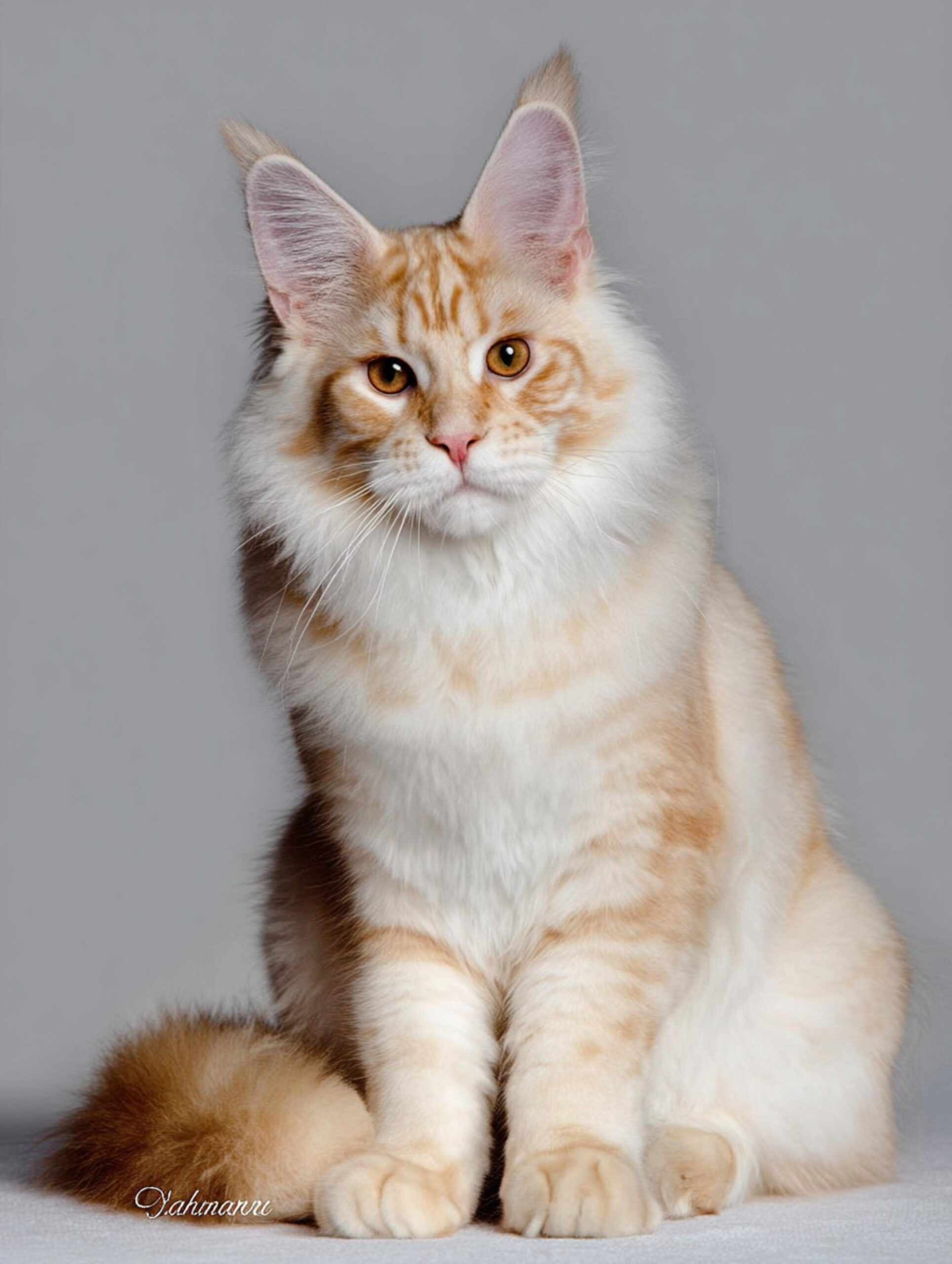
Maine Coon Growth Timeline: When Do They Fully Mature?
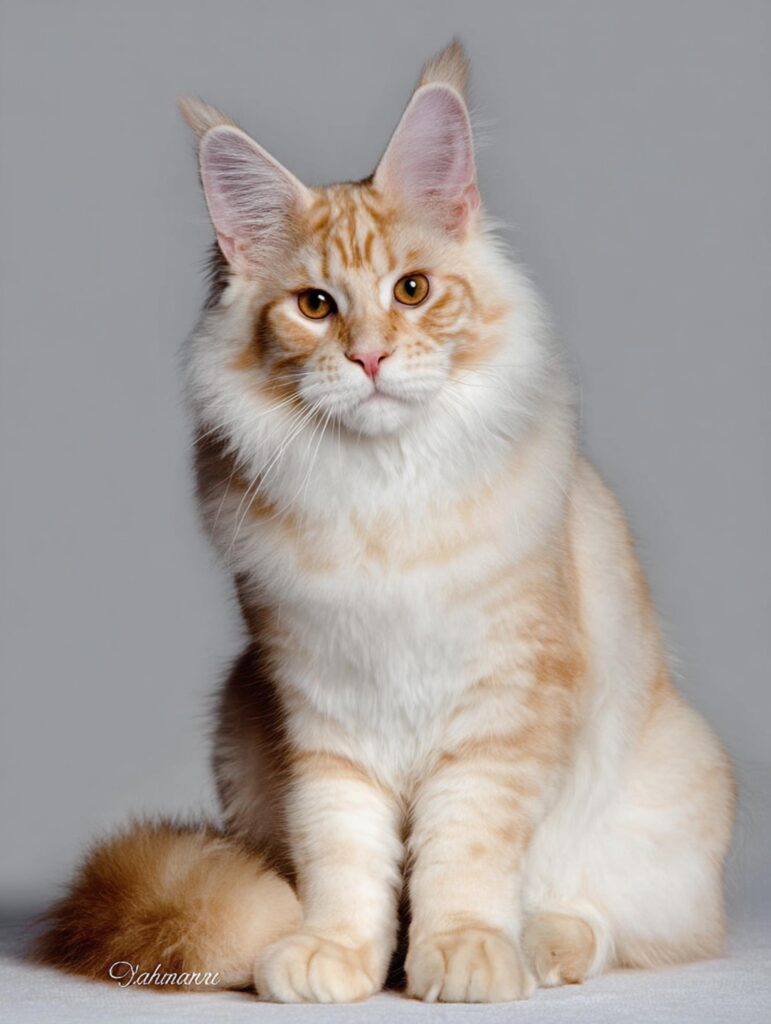
What is the normal Maine Coon growth timeline? Maine Coons mature far more slowly than the average domestic cat. While many breeds reach full physical maturity around 12–18 months, Maine Coons develop in layered structural phases that can continue until 3 to 5 years of age. This extended maturation period is one of the defining characteristics of the breed.
Height, body length, muscle density, chest width, head shape, and coat fullness do not develop all at once. A Maine Coon may look “adult” at 12 months because they have reached near-final height, but their chest may still be narrow, their head structure immature, and their muscle mass underdeveloped. True maturity involves skeletal closure, rib cage expansion, skull broadening, and full coat density — not just numbers on a scale.
Understanding this phased growth prevents common mistakes such as overfeeding during the lanky stage, misjudging body condition, assuming development is complete at one year, or making premature decisions based solely on size appearance.
Maine Coons do not simply “grow bigger” — they mature in structural phases that continue years beyond kittenhood.
Quick Summary — Maine Coon Growth Timeline at a Glance
| Development Area | When It Mostly Happens | What’s Changing |
|---|---|---|
| Height Growth | 3–12 months | Limb lengthening and spine elongation; near adult height by 10–12 months |
| Frame Expansion | 6–18 months | Bone structure establishes; body appears tall and narrow |
| Chest & Rib Cage Development | 12–24 months | Chest deepens and widens; shoulder mass increases |
| Head & Muzzle Broadening | 12–36 months | Muzzle squares, chin strengthens, skull width increases (especially in males) |
| Muscle Density | 18 months–4 years | Body fills out; neck and shoulder thickness increase |
| Coat Maturity | 12 months–4 years | Mane develops, ruff thickens, full coat density achieved |
| Growth Plate Closure | 18–24 months | Long-bone growth plates gradually close |
| Behavioral Maturity | 18 months–3 years | Impulse control improves; temperament stabilizes |
| Metabolic Stabilization | 3–5 years | Caloric needs level out; risk of overfeeding increases |
Bottom Line:
Maine Coons reach near adult height by one year, but true structural, muscular, and coat maturity unfolds gradually over 3–5 years. They mature in phases — not all at once.
The Three Phases of Maine Coon Growth
Rather than thinking in weeks or focusing on weight, it is more accurate to understand Maine Coon development in three structural phases.
Phase 1 — Frame Expansion (3–12 Months)
This is the height and length phase.
During this stage:
- Limb bones lengthen rapidly
- The spine elongates
- Paw size becomes pronounced
- Overall bone structure establishes
- The body appears tall and lanky
- Growth plates remain fully active
By 10–12 months, most Maine Coons have reached close to their adult height. However, they often look narrow, leggy, and under-filled. This “teenage” appearance is normal.
Height is nearly achieved by the end of this phase, but maturity is not.
Phase 2 — Structural Consolidation (12–24 Months)
This stage focuses on width and density rather than height.
During structural consolidation:
- The chest deepens
- The rib cage widens
- Shoulder mass begins forming
- The head broadens
- The muzzle becomes more square
- Muscle layering begins increasing
- Growth plates gradually begin closing
This is when Maine Coons begin to look more balanced. The lanky frame starts filling out. Males, in particular, show noticeable changes in head and chest structure during this window.
Although growth slows compared to the first year, significant structural changes are still occurring.
Phase 3 — Muscular & Coat Maturity (2–5 Years)
This is the refinement phase.
In this final stage:
- Muscle density increases significantly
- Intact males develop neck and shoulder thickness
- The chest reaches full expansion
- Skull width stabilizes
- The square muzzle becomes fully defined
- Full mane and ruff development occur
- The adult coat reaches maximum density
- Metabolism begins to stabilize or slow slightly
Many Maine Coons do not reach full muscular and coat maturity until 3–4 years, and some males continue subtle filling out until 5 years.
This stage explains why a two-year-old Maine Coon can still look noticeably different at four years of age.
When Do Maine Coons Reach Full Height?
Most Maine Coons reach near adult height between 10 and 12 months of age. By their first birthday, the long bones of the legs have completed most of their vertical elongation, and the cat may appear fully grown at a glance.
However, several important distinctions matter:
- Height stabilizes before overall body width
- Spine length may continue subtle adjustment beyond 12 months
- The body remains narrow and under-filled during adolescence
- Muscle mass is still developing
Because height is achieved earlier than width and density, a one-year-old Maine Coon can look “done” while still being structurally immature.
It is common for owners to assume growth has stopped at 12 months. In reality, the cat has only completed the vertical phase of development. Width, chest depth, muscle layering, and head structure continue evolving well beyond this stage.
Height ≠ full maturity.
Full maturity involves skeletal consolidation, muscular filling, coat density, and proportional balance — all of which extend into later phases.
When Does the Maine Coon Chest Fully Develop?
Chest development is one of the most overlooked — and most telling — indicators of true maturity.
Unlike height, which stabilizes in the first year, chest widening continues through 2–3 years of age. This expansion dramatically changes the cat’s silhouette.
During this period:
- The rib cage deepens after approximately 18 months
- The thoracic cavity widens
- Shoulder breadth becomes more pronounced
- Overall body mass distribution shifts forward
Males typically expand longer than females. In intact males, testosterone contributes to:
- Greater chest breadth
- Thicker neck musculature
- More pronounced shoulder mass
- Extended filling-out period
Neutered males may still broaden significantly, but intact males often show a longer structural expansion window.
Chest development is not reflected solely on a scale. A cat may weigh the same at 18 months and 3 years, yet appear dramatically wider and more substantial due to rib cage and muscle expansion.
Chest width is a maturity marker — not simply a weight increase.
Head & Facial Structure Timeline
Head development in Maine Coons is gradual and often misunderstood.
Muzzle Broadening
After 12 months:
- The square muzzle becomes more defined
- The whisker pads appear fuller
- The overall facial balance shifts
This change is especially noticeable between 12 and 24 months.
Chin Strength
Chin and jaw strength continue developing through roughly 2 years. Early adolescent Maine Coons may appear slightly softer in profile compared to their mature structure.
Skull Width
In males, skull width may continue increasing up to 3–4 years of age. As the skull broadens:
- The face appears more powerful
- The muzzle looks more square
- The ear set appears proportionally smaller
This optical shift is due to widening of the skull rather than actual ear size reduction.
Important Clarification
The head shape you see in a kitten is not the final head shape.
Young Maine Coons often have:
- Taller-appearing ears
- Narrower skull width
- Less pronounced muzzle structure
As maturation progresses, proportion changes significantly. This is why evaluating a Maine Coon’s long-term structure based solely on kitten photos can be misleading.
Facial maturation is one of the final visible indicators that a Maine Coon has reached structural adulthood.
Growth Plate Closure in Maine Coons
Maine Coons are a large-breed cat, and their skeletal maturation reflects that.
- The long bones of the legs remain open longer than in average domestic cats
- Most growth plate closure occurs between 18–24 months
- Full skeletal consolidation may extend toward the end of that window
Growth plates are areas of developing cartilage near the ends of long bones. As long as they remain open, structural growth is still occurring. In Maine Coons, this period is extended compared to many smaller breeds.
Because of this:
- Frame development continues beyond the first year
- Orthopedic discussions in large breeds often account for delayed closure
- Jumping ability and coordination may improve as skeletal strength stabilizes
This extended growth window is also why conversations around spay timing sometimes intersect with orthopedic development. Hormones influence growth plate signaling, and large-breed discussions often consider the balance between structural development and reproductive management. That topic is explored in depth elsewhere, but it is important to recognize that skeletal maturity in Maine Coons does not conclude at 12 months.
Understanding growth plate timing helps explain why a Maine Coon may look tall at one year yet still be structurally immature.
Muscle Development Timeline
Muscle development in Maine Coons lags behind height growth. This is why many adolescents appear narrow and underfilled.
Lean Adolescent Stage (6–12 Months)
- Long limbs dominate appearance
- Muscle definition is minimal
- Body appears tall and narrow
- Chest not yet filled
This is the classic “teenage phase.” The cat may be large but lacks density.
Filling Out Stage (18–30 Months)
- Muscle layering increases
- Shoulders broaden
- Neck thickens
- Chest depth improves
During this stage, the frame begins matching the earlier skeletal expansion.
Peak Density (3–4 Years)
- Full muscular structure achieved
- Balanced proportions
- Strong shoulder and hindquarter development
Intact males often continue thickening longer due to testosterone influence, especially in the neck and shoulder region.
A 1-year-old Maine Coon is not finished developing muscle. Height may be close to complete, but muscular maturity continues well beyond the first birthday.
Coat Development Timeline
Coat maturation follows its own pattern and does not align perfectly with skeletal growth.
Kitten Coat
- Soft
- Fine-textured
- Less dense
- Minimal mane
Transitional Coat (6–12 Months)
- Texture begins changing
- Guard hairs develop
- Slight increase in density
Mane Development (12–18 Months)
- Ruff becomes noticeable
- Neck fur thickens
- Early adult appearance emerges
Full Ruff Density (2–3 Years)
- Coat becomes fuller
- Seasonal variation more obvious
- Tail plume thickens
Maximum Coat Volume (3–4 Years)
- Full adult density
- Mature texture
- Seasonal changes pronounced
Maine Coons are seasonal coat shifters. Winter coats are fuller, denser, and longer. Summer coats may appear leaner and shorter, sometimes causing owners to think development has reversed. Coat fluctuation does not equal regression — it reflects environmental adaptation.
Behavioral Maturity Timeline
Physical growth and emotional maturity do not occur simultaneously.
Adolescence Peak (8–14 Months)
- High energy
- Boundary testing
- Increased independence
- Play intensity elevated
Impulse Control Improves (Around 18 Months)
- Reduced chaotic behavior
- More predictable routines
- Improved focus
Emotional Stability (2–3 Years)
- Temperament settles
- Greater confidence
- Calmer presence
The “gentle giant” personality often associated with Maine Coons tends to stabilize later than many expect. While kittens and adolescents are playful and sometimes dramatic, true emotional maturity frequently emerges closer to 2–3 years of age.
Maine Coons are slow to mature not only structurally, but behaviorally as well.
Metabolic Changes Across Growth Phases
Growth is not only structural — it is metabolic. Maine Coons experience shifting energy demands as they move through each phase of development.
High Caloric Need Under 12 Months
During the frame expansion stage:
- Energy demand is high
- Protein requirements support bone and tissue growth
- Appetite is often strong
- Rapid cellular turnover occurs
This is the period of fastest structural growth. Underfeeding during this stage can impact development, while overfeeding does not necessarily accelerate maturity — it simply increases fat deposition.
Stabilization (12–24 Months)
As height growth slows:
- Caloric demand begins stabilizing
- Muscle layering replaces rapid bone elongation
- Appetite may fluctuate
This is often when owners become confused. The cat may still appear narrow or lanky, leading to unnecessary calorie increases. However, structural filling out happens gradually and is not driven solely by food quantity.
Slight Metabolic Slowdown After 3 Years
After 3 years:
- Structural growth is complete
- Muscle density has stabilized
- Energy needs may decrease slightly
- Risk of weight gain increases if intake remains at adolescent levels
Many Maine Coons transition from a growth metabolism to a maintenance metabolism during this stage.
Risk of Overfeeding During the “Looks Skinny” Stage
Between 8 and 18 months, many Maine Coons appear tall and narrow. Owners may assume the cat needs more food because the body looks underfilled.
However:
- This stage reflects frame-first growth
- Muscle will layer naturally over time
- Excess calories during this phase increase fat, not structural development
Feeding should support development — not attempt to force maturity.
Common Growth Myths
“My Maine Coon stopped growing at 1 year.”
Not exactly.
Skeletal elongation slows around 10–12 months, which creates the illusion of finished growth. However, chest expansion, muscle density, head structure, and coat maturation continue well beyond the first birthday.
A one-year-old Maine Coon is typically not fully mature.
“Bigger kitten means bigger adult.”
Not necessarily.
Early size does not always predict final proportions. Maine Coons develop in layers. A smaller, well-proportioned kitten may mature into a broader adult than a taller adolescent peer.
Proportion shifts over time as width and muscle replace early height growth.
“They are done at 2 years.”
Often incorrect.
While many females stabilize structurally around 2–3 years, males frequently continue filling out until 4–5 years of age — particularly in head width, chest depth, and neck thickness.
Maturity in Maine Coons is gradual and layered, not abrupt.
Growth Timeline Summary Table (Structural Focused)
| Age Range | Primary Development |
|---|---|
| 3–12 months | Height & frame expansion |
| 12–24 months | Chest & structural widening |
| 2–3 years | Muscle density & coat thickening |
| 3–5 years | Final maturation & metabolic stabilization |
This summary reflects structural progression — not weight milestones.
Maine Coons mature in phases, with height first, width second, density third, and metabolic stabilization last.
FAQs — Maine Coon Growth Timeline
At what age is a Maine Coon fully grown?
Most Maine Coons reach near adult height by 10–12 months, but they are not fully mature at that stage. Structural widening, muscle density, chest depth, head shape, and coat fullness continue developing until 3–5 years of age, especially in males.
Do Maine Coons really grow until 5 years old?
Yes — in terms of full maturity. While vertical growth slows after the first year, muscular filling, chest expansion, skull width, and coat density can continue evolving into the fourth or even fifth year.
They grow in phases, not in a single continuous size increase.
Why does my 1-year-old Maine Coon look skinny?
Between 8 and 18 months, many Maine Coons appear tall and narrow. This is the “frame-first” growth phase. Height and limb length develop before muscle and chest width.
Looking lean at one year does not mean underdeveloped — it is often normal structural progression.
When do Maine Coons stop getting taller?
Height typically stabilizes around 10–12 months. After that, development shifts from vertical growth to widening and densifying.
Height completion does not equal full maturity.
When does a Maine Coon’s chest fill out?
Chest widening and rib cage deepening often continue between 18 months and 3 years. Males may continue expanding longer than females.
Chest width is a strong maturity indicator and often changes well after the first birthday.
When does the Maine Coon head reach its final shape?
Head and muzzle broadening typically begin after 12 months. Chin strength and skull width may continue developing through 2–4 years, particularly in males.
Kitten head proportions are not final proportions.
Do Maine Coons calm down as they mature?
Yes. Adolescence peaks around 8–14 months. Emotional stability typically improves around 18 months, with true adult temperament often settling between 2–3 years.
Their “gentle giant” personality often emerges fully after physical maturity begins stabilizing.
Does spaying or neutering affect growth?
Hormones influence development timing, particularly growth plate signaling and muscle density. However, skeletal maturation in Maine Coons naturally extends longer than in average cats. Timing decisions should be discussed separately with your veterinarian.
Should I feed more because my Maine Coon looks lanky?
Not necessarily. The lanky stage reflects skeletal elongation before muscular filling. Overfeeding during this stage can increase fat rather than accelerate healthy structural development.
Balanced nutrition is more important than excess calories.
What is the safest way to think about Maine Coon growth?
Think in phases:
- Height first
- Width second
- Muscle and coat third
- Metabolic stabilization last
Maine Coons mature in stages over several years — not in a single growth curve.
Final Perspective — Maine Coons Mature in Phases, Not Months
Maine Coons are not simply “large cats.” They are a slow-developing breed whose growth unfolds in clearly defined layers.
They do not mature in a straight line.
- They grow in stages.
- Height comes first.
- Width and muscle come later.
- Head structure refines gradually.
- Coat density builds over time.
- True maturity can take 3–5 years.
This phased development explains why a one-year-old Maine Coon may look tall but unfinished, why a two-year-old may still be filling out, and why a four-year-old male can appear noticeably broader than he did at eighteen months.
Comparing Maine Coons to standard domestic cats often creates unrealistic expectations. Most domestic cats complete structural development by 12–18 months. Maine Coons are different. Their skeletal consolidation, muscular density, chest expansion, and coat maturity extend well beyond that window.
Understanding this timeline prevents overfeeding, misjudging body condition, and assuming development has stopped prematurely.
Maine Coons reach structural, muscular, and coat maturity in distinct phases that often extend to 3–5 years, making them one of the slowest-maturing domestic cat breeds.
Related Maine Coon Articles
If you’re researching Maine Coons, see more health articles here:
- Maine Coon Health Testing: What Owners Should Know
- Maine Coon Lifespan: How Long They Live and What Affects Longevity
- HCM in Maine Coons: Risks, Testing and Genetics
- Why Maine Coons are not for Everyone: An Honest Compatibility Breakdown
- Hip Dysplasia in Maine Coons: Screening, Genetics and Lifestyle
- Maine Coon Health Genetics: Testing, Carriers and More
- How to Increase a Maine Coons Lifespan
- Maine Coon Diarrhea: What is Normal and What is Not
- Maine Coon Size Health: Common Problems, Care & Prevention
- When to Neuter a Maine Coon
Sources & Veterinary References
The developmental and physiological information in this Maine Coon growth timeline is supported by the following veterinary and breed-focused references:
- Merck Veterinary Manual — Growth and Development of Dogs and Cats
https://www.merckvetmanual.com/management-and-nutrition/growth-and-development/growth-and-development-of-dogs-and-cats - American Association of Feline Practitioners (AAFP) — Feline Life Stage Guidelines
https://catvets.com/guidelines/practice-guidelines/life-stage-guidelines - Nelson & Couto — Small Animal Internal Medicine
Elsevier - Feldman & Nelson — Canine and Feline Endocrinology and Reproduction
Elsevier - Case, Carey & Hirakawa — Canine and Feline Nutrition
Mosby / Elsevier - The Cat Fanciers’ Association (CFA) — Maine Coon Breed Standard
https://cfa.org/maine-coon/ - The International Cat Association (TICA) — Maine Coon Breed Standard
https://tica.org/breeds/browse-all-breeds?view=article&id=837
These sources outline feline skeletal maturation, growth plate development, metabolic changes across life stages, breed standards, and the structural characteristics that define mature Maine Coons.









Read the Comments +