
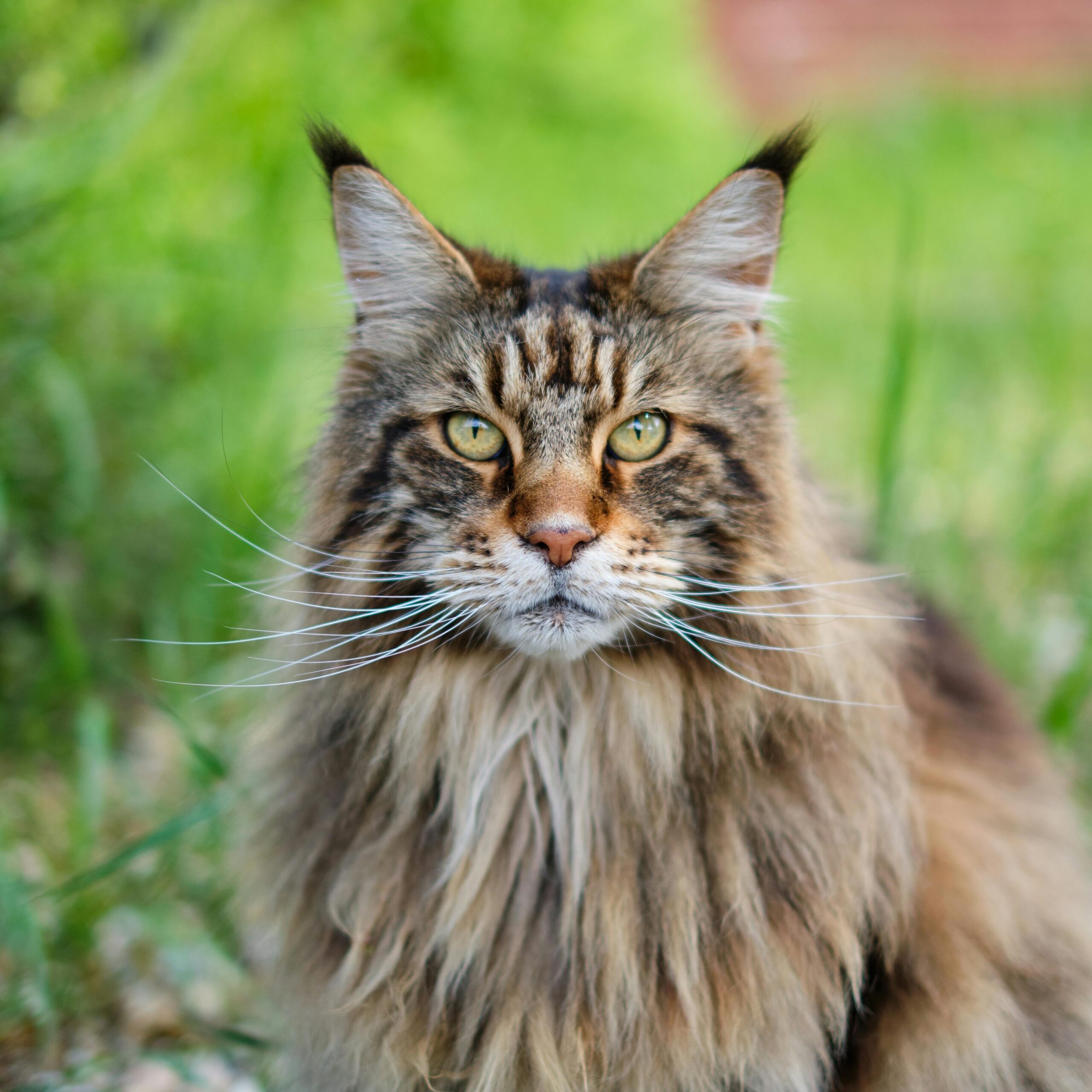
Maine Coon vs Domestic Longhair: What’s the Difference?
What is the difference between a Maine Coon vs Domestic Longhair cat? Direct answer: Maine Coons are a pedigreed cat breed with predictable size, structure, coat type, and temperament, while Domestic Longhairs are mixed-breed cats defined only by having long hair. One is shaped by generations of selective breeding; the other reflects natural genetic variety.
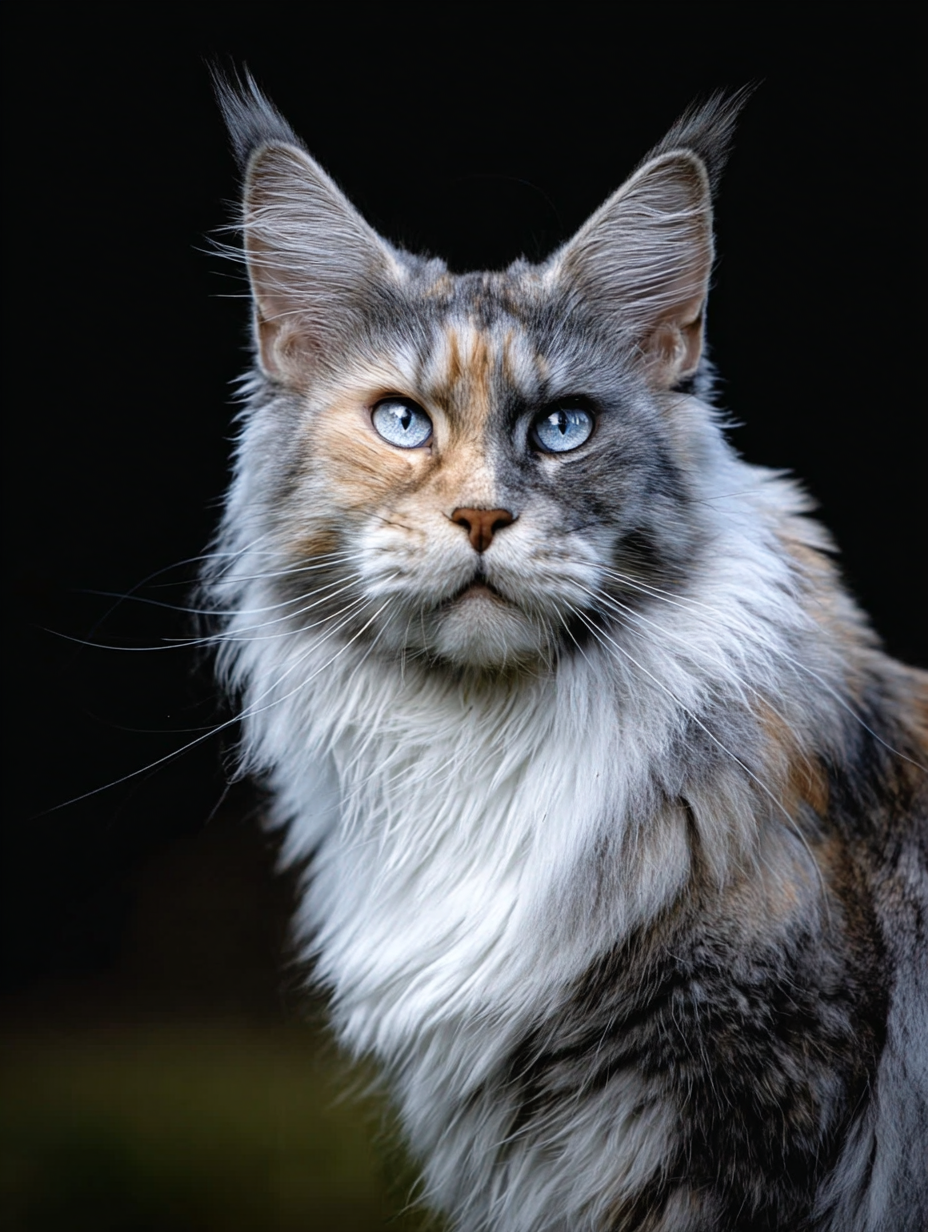
These two are often confused because many Domestic Longhairs have fluffy coats, ear tufts, or large frames that look similar at a glance. Online listings, shelters, and social media frequently label any big, long-haired cat as a “Maine Coon mix,” which adds to the misunderstanding.
This post clarifies the real differences in size, coat, grooming needs, temperament, predictability, and cost, so you can understand what you’re actually looking at—and what that means long-term.
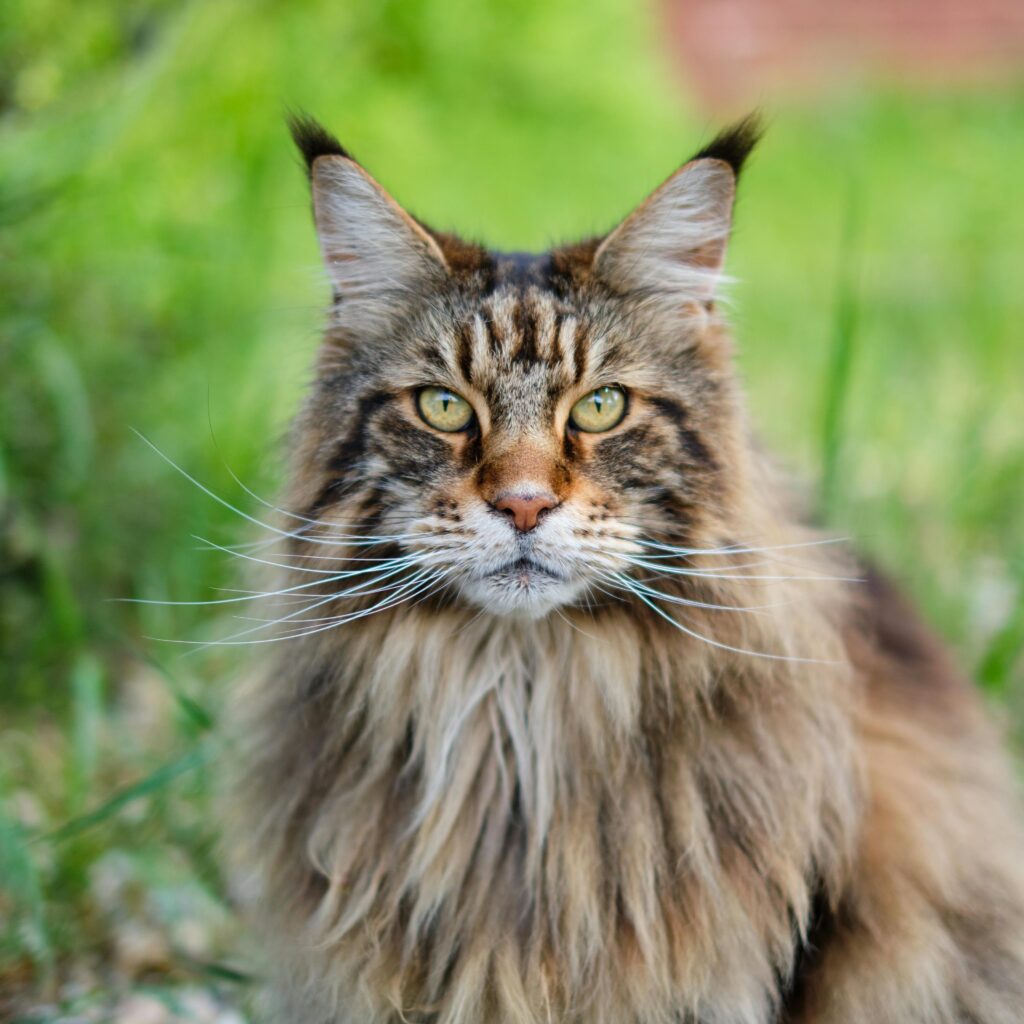
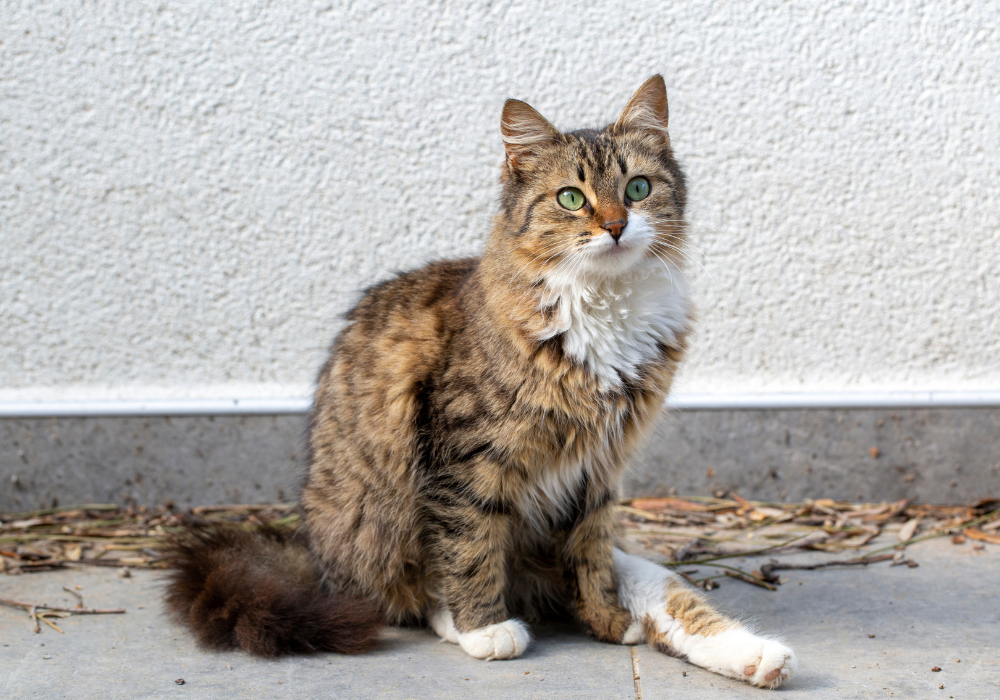
Maine Coon vs Domestic Longhair: Quick Comparison
| Feature | Maine Coon | Domestic Longhair |
|---|---|---|
| Breed Status | Pedigreed, recognized breed | Mixed-breed classification |
| Genetic History | Documented lineage and breeding history | Unknown or mixed ancestry |
| Adult Size | Large and consistent; slow, extended growth | Variable; usually average-sized |
| Bone & Structure | Heavy bone, rectangular body, long legs | Inconsistent structure; varies widely |
| Coat Type | Layered, weather-resistant, shaggy | Highly variable texture and density |
| Grooming Needs | Moderate, predictable | Varies from minimal to intensive |
| Shedding Pattern | Seasonal, more predictable | Often year-round and unpredictable |
| Temperament | Consistent, social, people-oriented | Individual and highly variable |
| Predictability | High | Low to moderate |
| Health Transparency | Known breed risks, health-tested lines | Unknown genetic background |
| Upfront Cost | High purchase price | Low adoption fee |
| Long-Term Costs | Planned and predictable | Variable and sometimes unexpected |
| Best Fit For | Families wanting size, structure, consistency | Flexible, adoption-focused homes |
What Is a Domestic Longhair Cat?
Domestic Longhair (DLH) is not a breed. It is a coat-length classification used for cats with long or semi-long fur whose ancestry is unknown or mixed.
Why DLH Is Not a Breed
- There is no registry, standard, or pedigree for Domestic Longhairs
- They are not bred for specific size, structure, or temperament
- Two DLHs can look and behave completely differently
“Domestic Longhair” simply means a cat with long hair and mixed genetics.
Coat Length vs Genetics
Long hair is controlled by a recessive gene that exists across many cat populations. When two carriers reproduce—intentionally or not—long-haired kittens can appear. That coat trait alone does not indicate breed heritage.
Why Appearance Varies So Widely
Because DLHs come from diverse genetic backgrounds:
- Body size can range from small to very large
- Faces may be round, wedge-shaped, or anything in between
- Coats can be silky, cottony, or dense
- Temperament varies widely—even within the same litter
There is no predictable “DLH look.”
Why DLHs Are Often Mislabeled as Maine Coons
Common reasons include:
- Large size or long tail
- Ear tufts or toe fluff
- Brown tabby coloring
- Fluffy ruff around the neck
These traits exist in many mixed-breed cats. Without documented lineage, they do not confirm Maine Coon ancestry.
What Makes a Maine Coon Different From a Domestic Longhair?
Pedigree vs Mixed Ancestry
Maine Coons are a recognized breed developed through selective breeding over generations. Each cat has:
- Documented parentage
- Traceable lineage
- Breeding decisions guided by a written standard
Domestic Longhairs have unknown ancestry and no intentional selection.
Predictability vs Variability
With Maine Coons, you can reasonably predict:
- Adult size range
- Body structure and bone
- Coat density and texture
- General temperament traits
With DLHs, outcomes are genetic guesswork.
Why Breeding History Matters
Selective breeding doesn’t just shape looks—it influences:
- Growth rate and adult mass
- Energy levels and sociability
- Grooming demands
- Long-term health tendencies
Maine Coons were bred for hardiness, adaptability, and stable temperament. DLHs reflect whatever genetics happened to combine. See How to Find a Maine Coon Breeder You Can Trust for more info.
How Standards Shape Structure and Temperament
Breed standards define:
- Rectangular body shape
- Strong bone and musculature
- Large ears with proper placement
- Balanced, social, people-oriented temperament
Domestic Longhairs are not bred toward any standard, so structure and behavior are entirely individual.
Maine Coon vs Domestic Longhair Size Comparison
Typical Maine Coon Size and Weight Ranges
Maine Coons rank among the largest domesticated cat breeds. Adult males usually weigh 18–25 pounds, with some exceeding that range when bred for strong bone and frame. Females typically weigh 12–18 pounds. Height at the shoulder often reaches 10–16 inches, and body length from nose to tail base commonly exceeds 40 inches.
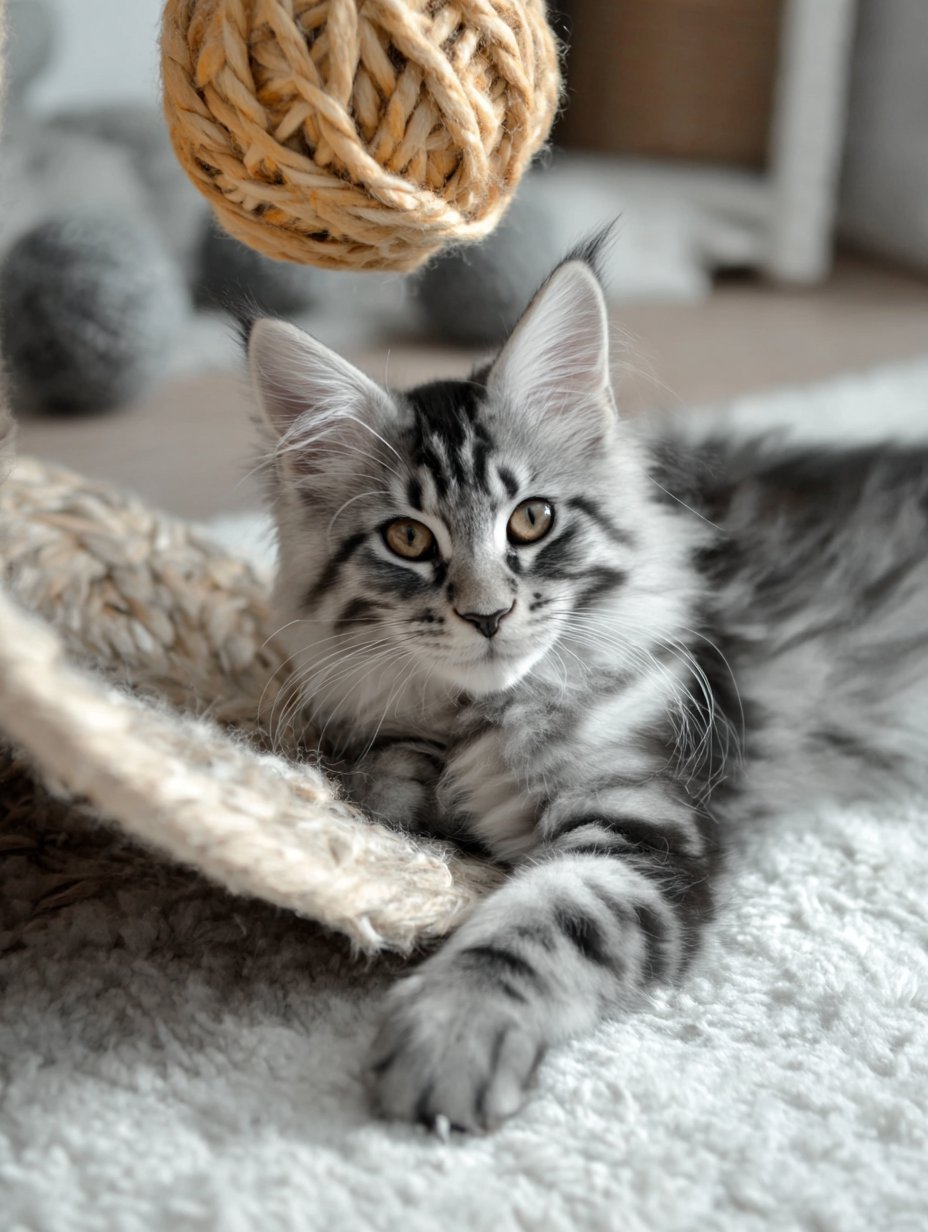
Maine Coons grow slowly. Many continue filling out until three to five years of age, which allows muscle, bone density, and chest width to develop fully. This long growth window creates the substantial, rectangular body shape the breed is known for.
Typical Domestic Longhair Size Ranges
Domestic Longhairs show no standardized size. Most adults weigh 8–14 pounds, with males slightly heavier than females. Height and length vary widely, but the majority fall within average domestic cat dimensions.
Some Domestic Longhairs grow larger than average, but they do not do so consistently or predictably. Two kittens from the same litter can mature into very different sizes.
Why Some DLHs Look “Big” but Are Not Structurally Large
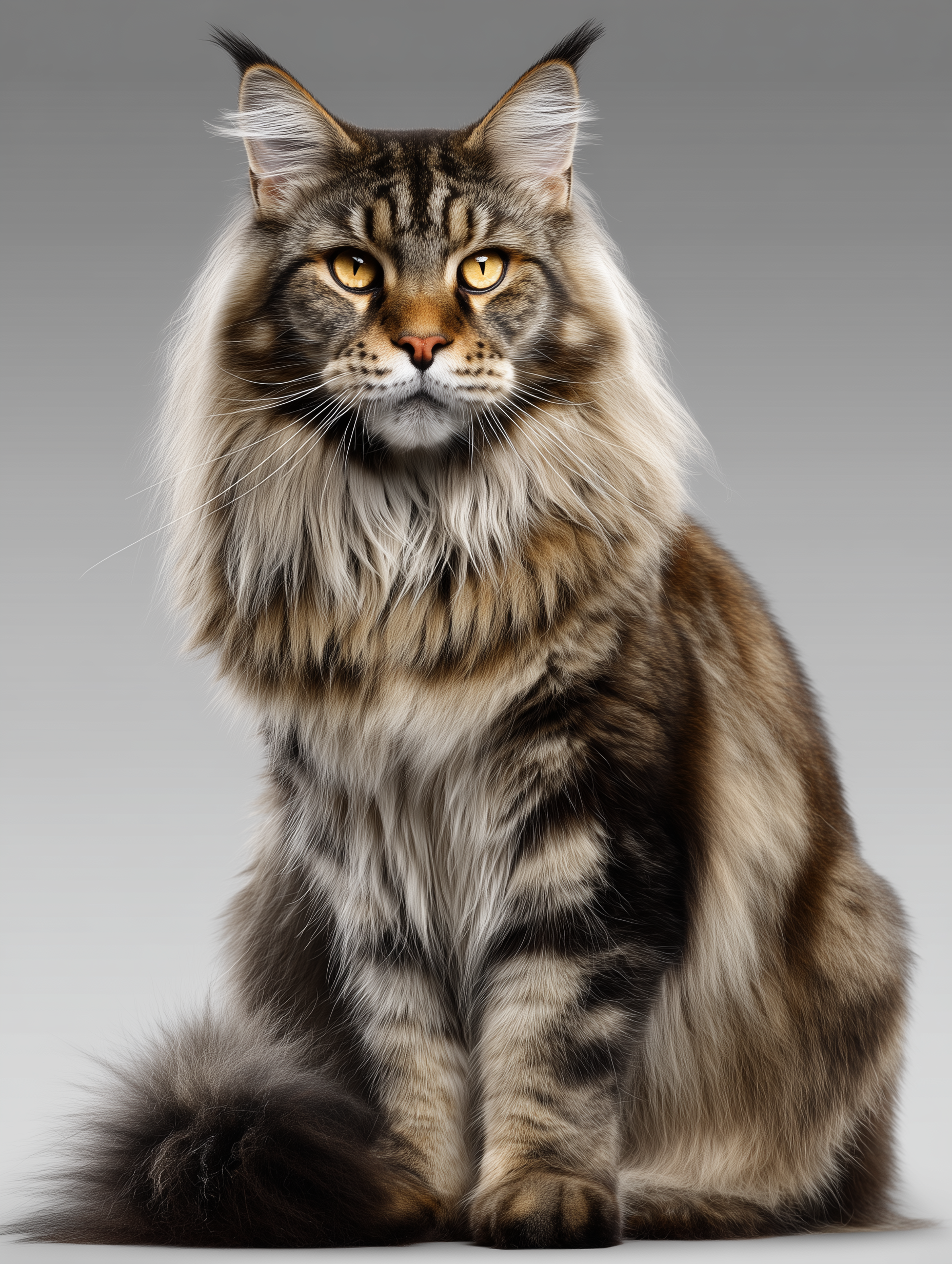
Fluff creates illusions. A thick or cottony coat adds visual volume without adding mass. Long fur around the chest, tail, and hindquarters often makes a Domestic Longhair appear larger than it actually is.
When shaved or wet, many “huge” DLHs reveal:
- Narrow shoulders
- Light bone
- Slim torso
True size comes from skeleton and muscle, not coat.
Length, Height, and Bone Differences
Maine Coons develop:
- Broad chests
- Heavy bone
- Long legs with substantial joints
- Thick tails supported by strong vertebrae
Domestic Longhairs vary. Some have long bodies but fine bone. Others have short legs with dense coats. No consistent structure defines them.
Visual Size vs Actual Mass
Visual size depends heavily on fur length and density. Actual mass depends on bone thickness and muscle development. Maine Coons combine both, which explains why they feel heavier when handled and occupy more physical space even when calm or seated.
Coat Type and Grooming Differences
Maine Coon Coat Structure
Maine Coons carry a shaggy, layered coat designed to shed snow and repel moisture. The coat shortens over the shoulders and lengthens along the back, belly, and tail. A dense undercoat supports longer guard hairs without forming excessive bulk.
This structure protects the skin while allowing airflow, which reduces mat formation when maintained correctly.
Domestic Longhair Coat Variation
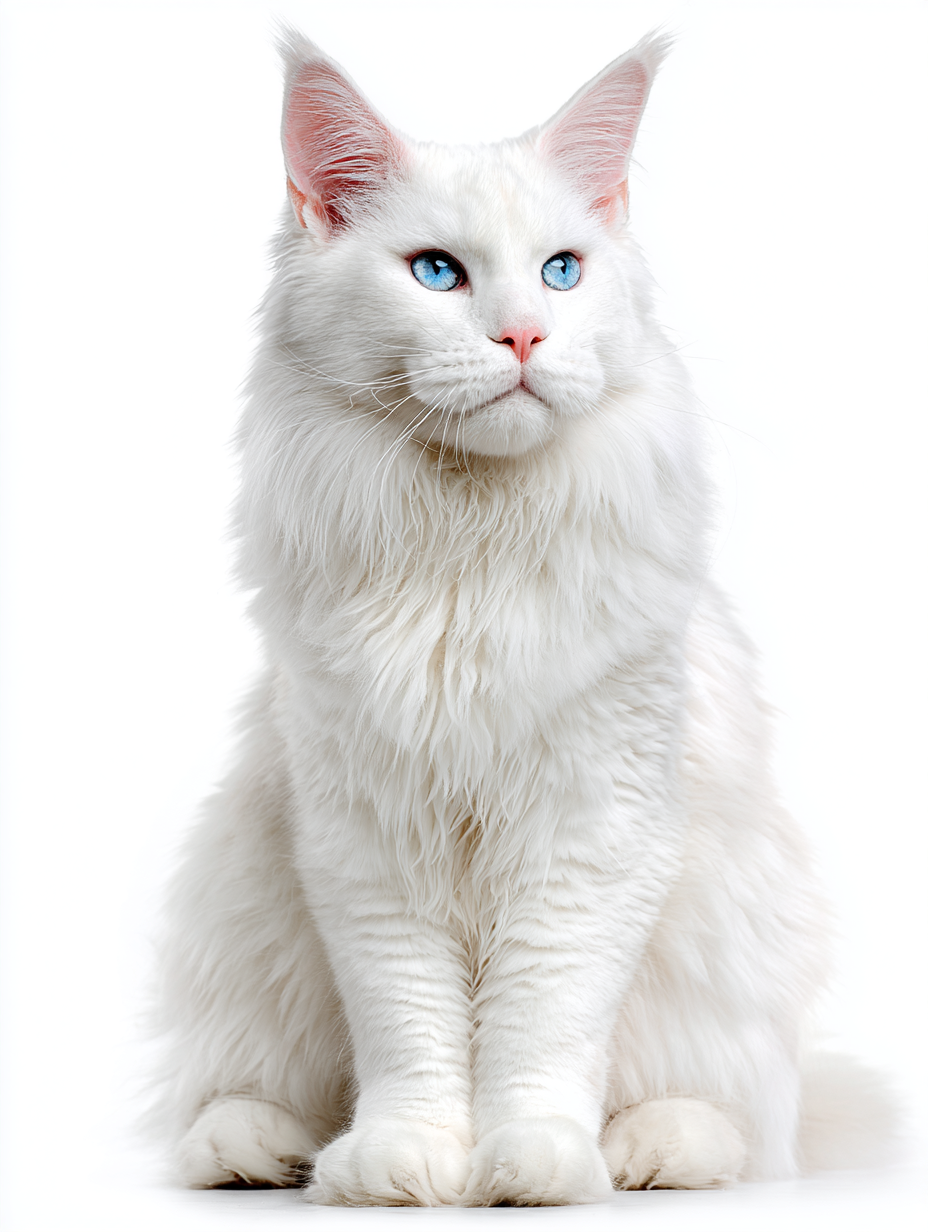
Domestic Longhairs display wide coat variation. Some carry a single coat with silky texture. Others develop thick double coats with dense underlayers. Texture can range from fine and floaty to coarse and wool-like.
Because genetics vary, grooming needs vary just as widely.
Shedding Patterns
Maine Coons shed seasonally. Heavy sheds usually occur during spring and fall as daylight changes. Outside of those periods, shedding remains moderate when grooming stays consistent.
Domestic Longhairs shed unpredictably. Some shed lightly year-round. Others drop heavy amounts continuously, especially when indoor lighting disrupts natural coat cycles.
Matting Risk Comparison
Maine Coons resist matting better than many longhaired cats due to their coat texture. Mats usually form in friction areas only when grooming lapses.
Domestic Longhairs face higher matting risk, especially those with fine or cottony coats. Mats can form quickly behind the ears, under the arms, and along the belly.
Grooming Frequency Expectations
Maine Coons thrive with:
- Brushing 2–3 times per week
- Increased grooming during seasonal sheds
Domestic Longhairs often need:
- Daily or near-daily brushing for fine or dense coats
- Close monitoring for mats
Grooming time varies more with DLHs because coat type remains unpredictable.
Temperament and Behavior Differences
Maine Coon Temperament Consistency
Maine Coons show reliable temperament patterns. They tend to act:
- Social without being demanding
- Curious without being destructive
- Confident without aggression
Breeders select for emotional stability across generations, which creates consistency from cat to cat.
Domestic Longhair Personality Variability
Domestic Longhairs show wide personality range. Some act affectionate and outgoing. Others prefer independence or quiet environments. Temperament depends on genetics, early socialization, and individual experience rather than breed tendency.
No predictable behavioral profile exists.
Social Behavior Differences
Maine Coons often follow people from room to room. They engage without clinging. Many tolerate children and other pets when introductions are handled properly.
Domestic Longhairs vary. Some bond deeply to one person. Others prefer minimal interaction. Multi-pet compatibility cannot be assumed.
Activity Level and Engagement
Maine Coons enjoy interactive play, puzzle toys, and routine engagement. They often remain playful well into adulthood.
Domestic Longhairs may show high activity or low interest depending on the individual. Energy levels can shift dramatically with age or environment.
Why Predictability Matters for Families
Predictability reduces stress. Families with children, busy households, or specific lifestyle needs benefit from knowing what to expect. Maine Coons offer that clarity. Domestic Longhairs offer individuality but less certainty.
Choosing between them means choosing between known traits and open-ended possibility.
Health Predictability and Genetic Transparency
Health Testing in Maine Coons
Responsible Maine Coon breeders test breeding cats for known hereditary risks common to the breed. These tests often include cardiac screening for hypertrophic cardiomyopathy, DNA testing for inherited mutations, and orthopedic evaluations where appropriate. Breeders track results across generations and use that data to guide future pairings.
This process does not guarantee perfect health, but it does reduce unknowns. Buyers gain insight into family history, inherited risk, and long-term expectations before bringing a kitten home.
Unknown Genetic History in Domestic Longhairs
Domestic Longhairs come from mixed and often undocumented ancestry. No standardized health testing exists for DLHs because no defined genetic baseline exists. Even when a cat appears healthy, hidden hereditary risks remain unknown.
Shelters and rescues do important work, but they cannot provide lineage data that does not exist. Health becomes something owners discover over time rather than plan for in advance.
Why Predictability Matters Long-Term
Predictability allows owners to plan responsibly. When you understand likely risks, you can:
- Choose appropriate insurance coverage
- Budget for preventive care
- Monitor early warning signs
Uncertainty does not mean poor outcomes, but it does increase surprise costs and emotional stress when issues arise unexpectedly.
Insurance and Veterinary Planning Differences
Many insurance providers recognize pedigreed Maine Coons as a distinct breed and structure coverage accordingly. Veterinarians also reference breed-specific tendencies during exams and screening recommendations.
Domestic Longhairs fall under general domestic cat guidelines. Vets treat them reactively rather than proactively because no breed-specific roadmap exists.
Cost Comparison (Upfront and Long-Term)
Maine Coon Purchase Price vs Adoption Fees
Maine Coons from reputable breeders usually cost several thousand dollars. That price reflects health testing, structured breeding programs, early socialization, and long-term care of breeding cats.
Domestic Longhairs usually come through shelters or rescues with adoption fees that range from low to moderate. These fees often include spay or neuter surgery and basic veterinary care.
Grooming and Maintenance Costs
Maine Coons benefit from routine grooming but rarely require frequent professional services when owners maintain their coats consistently.
Domestic Longhairs vary widely. Some require minimal grooming. Others need regular professional grooming due to matting or coat texture. Costs can surpass expectations quickly.
Veterinary Expectations
Maine Coons often require:
- Regular cardiac monitoring as they age
- Preventive screenings tied to breed risk
Domestic Longhairs may incur:
- Unexpected medical costs due to unknown genetics
- Variable health needs depending on individual background
Neither option guarantees lower veterinary expenses. The difference lies in predictability.
Why Cost Alone Should Not Drive the Decision
Initial price tells only part of the story. Long-term costs include time, care, grooming, medical planning, and emotional investment. Choosing based solely on upfront cost often leads to mismatched expectations.
A good match costs less in stress than a “cheaper” mistake.
Why Domestic Longhairs Are Often Mistaken for Maine Coons
Long Fur and Ear Tufts
Long hair and ear furnishings appear in many mixed-breed cats. These traits alone do not indicate Maine Coon ancestry.
Large Tails and Ruffs
Full tails and prominent neck ruffs create visual drama. Without bone and body length to support them, they remain cosmetic features rather than structural indicators.
Color Patterns That Resemble Maine Coons
Brown tabby, silver tabby, and high-contrast patterns commonly appear in Maine Coons, but they also appear frequently in Domestic Longhairs. Color does not equal breed.
Structural Traits DLHs Do Not Have
Maine Coons show:
- Rectangular bodies
- Heavy bone
- Large paws with structure, not just fluff
- Long legs proportional to body length
Most DLHs lack this full combination, even when they appear large.
Why Photos Online Create Confusion
Photos flatten depth and exaggerate fur. Angles hide bone structure and body length. Social media labels reward attention over accuracy. A fluffy cat in a photo can look far larger and more “breed-like” than it actually is in real life.
Without documented lineage, visual identification remains unreliable.
Which Is the Better Choice for Your Home?
Choose a Maine Coon if You Want Predictability, Size, and Consistency
A Maine Coon fits best when you want to know what you are signing up for. Predictable size, stable temperament, and consistent grooming needs make planning easier over the long term. Families who value structure often appreciate that Maine Coons grow slowly, mature steadily, and settle into reliable adult behavior.
Maine Coons work well for households that want a large, social cat without constant unpredictability. Their confidence and adaptability help them integrate smoothly into busy homes when introductions and routines stay consistent.
Choose a Domestic Longhair if You Are Flexible and Adoption-Focused
Domestic Longhairs suit homes that value individuality and adaptability. Each cat brings a unique combination of personality, coat type, and energy level. Owners who enjoy discovering a cat’s traits over time often find DLHs rewarding companions.
Adoption-focused households also appreciate the opportunity to give a home to a cat in need without expectations tied to breed traits. Flexibility matters more than appearance in these cases.
Lifestyle Considerations
Households with children often benefit from predictable temperament and tolerance, which Maine Coons usually provide. Homes with dogs also see smoother integration when a cat shows confidence and curiosity rather than fear.
Apartments work for both, but Maine Coons need vertical space and engagement to match their size and intelligence. Domestic Longhairs adapt well when their individual energy level aligns with the space available.
Daily routines matter. Maine Coons thrive on interaction and structured play. Domestic Longhairs adjust more easily to varying schedules, depending on the cat.
Common Myths About Maine Coons vs Domestic Longhairs
“Domestic Longhairs Are Basically Maine Coons”
Domestic Longhairs share long fur with Maine Coons, but that similarity stops there. Breed involves genetics, lineage, and structure. Coat length alone does not create equivalence.
“Size Means They’re the Same”
Large size does not equal breed identity. Some Domestic Longhairs grow big, but they do not develop the bone, body length, or muscle distribution that define Maine Coons.
“Coat Length Equals Breed”
Long hair exists across many cat populations. Genetics determine coat length independently of breed heritage. Many long-haired cats have no connection to any established breed.
“DLHs Are Just Poorly Bred Maine Coons”
Domestic Longhairs are not failed Maine Coons. They are mixed-breed cats with no breeding standard. Labeling them as poorly bred implies lineage that does not exist.
Is a Domestic Longhair a Good Alternative to a Maine Coon?
When It Can Be
A Domestic Longhair works well as an alternative when:
- You value temperament over size guarantees
- You enjoy flexibility and individuality
- You prioritize adoption
- You accept uncertainty in coat, growth, and behavior
Many DLHs grow into affectionate, beautiful companions that meet or exceed expectations when owners remain open-minded.
When It Is Not
A DLH does not replace a Maine Coon when:
- You want predictable adult size
- You expect specific temperament traits
- You plan around known grooming patterns
- You prefer documented health history
In these cases, uncertainty can lead to disappointment rather than joy.
Why Expectations Matter More Than Labels
Problems arise when labels create assumptions. Choosing based on realistic expectations protects both the cat and the owner. A Maine Coon offers consistency shaped by generations of selection. A Domestic Longhair offers individuality shaped by chance.
Neither choice is better in absolute terms. The right choice depends on how much predictability you want and how much variability you are willing to embrace.
Frequently Asked Questions: Maine Coon vs Domestic Longhair
How can I tell if my cat is a Maine Coon or a Domestic Longhair?
You cannot confirm a Maine Coon based on appearance alone. Maine Coons come with documented pedigree from a recognized registry. Without paperwork, a long-haired cat is classified as a Domestic Longhair, even if it has ear tufts, a big tail, or a large body. Physical traits can resemble Maine Coons, but only lineage confirms breed.
Are Maine Coon mixes common?
True Maine Coon mixes are uncommon. Responsible breeders sell kittens with spay or neuter agreements, which limits unplanned breeding. Most cats labeled as “Maine Coon mixes” lack documented ancestry and should be considered Domestic Longhairs. The label often reflects appearance, not genetics.
Do Domestic Longhairs grow as large as Maine Coons?
Most do not. While some Domestic Longhairs grow larger than average, they rarely reach the consistent size, bone density, and body length of Maine Coons. Fluffy coats can exaggerate size visually, but actual mass and structure usually differ significantly. See Maine Coon vs Normal Cat Size for size comparisons.
Are Maine Coons harder to groom than Domestic Longhairs?
Not always. Maine Coons have a structured, weather-resistant coat that often resists matting when brushed regularly. Many Domestic Longhairs have softer or cottony coats that mat more easily and require more frequent grooming. Grooming difficulty depends more on coat texture than length alone.
Which sheds more: a Maine Coon or a Domestic Longhair?
Maine Coons tend to shed seasonally in heavier bursts. Domestic Longhairs often shed more unpredictably throughout the year. Indoor lighting and climate can amplify shedding for both, but Maine Coons usually follow more defined seasonal cycles.
Are Maine Coons better with children and dogs?
Maine Coons generally show higher consistency in tolerance and sociability, which helps in homes with children or dogs. Domestic Longhairs can also do well, but outcomes depend on the individual cat’s personality and early experiences. Predictability favors Maine Coons in busy households.
Do Maine Coons have more health problems than Domestic Longhairs?
Not necessarily. Maine Coons carry known breed-specific risks, which breeders monitor through testing and screening. Domestic Longhairs have unknown genetic backgrounds, which can hide risks until symptoms appear. Predictability differs, not overall health potential.
Is a Domestic Longhair healthier because it is mixed-breed?
Mixed ancestry does not guarantee better health. While genetic diversity can reduce certain inherited risks, it also removes the ability to track known issues. Health outcomes depend on individual genetics, environment, diet, and veterinary care.
Is insurance easier for Maine Coons or Domestic Longhairs?
Insurance companies often categorize Maine Coons by breed and Domestic Longhairs as mixed-breed cats. Coverage availability usually exists for both, but Maine Coon owners may plan more proactively for breed-specific monitoring. Premiums vary more by age and location than breed alone.
Why are Maine Coons so much more expensive?
The price reflects health testing, breeding infrastructure, veterinary care, socialization, and long-term responsibility for breeding cats. Ethical breeding involves years of planning and expense. Adoption fees for Domestic Longhairs reflect rescue costs rather than breeding investment.
Does a higher price mean a Maine Coon is a better pet?
No. Price reflects predictability and breeding practices, not emotional value or companionship quality. Many Domestic Longhairs become exceptional companions. The difference lies in consistency, not worth.
Can shelters accurately identify Maine Coons?
Shelters usually identify cats based on appearance. Without pedigree records, these identifications remain estimates. Shelters focus on placement, not breed verification, and breed labels should be viewed as descriptive rather than definitive.
Do Maine Coons act differently from Domestic Longhairs?
Maine Coons tend to show consistent traits such as sociability, curiosity, and engagement. Domestic Longhairs show broader behavioral variation. Individual personality always matters, but breed history influences consistency.
Is a Domestic Longhair a good choice if I want a “gentle giant”?
It can be, but there is no guarantee. Some Domestic Longhairs grow large and calm, while others remain average-sized or highly energetic. If size and temperament matter deeply, Maine Coons offer clearer expectations.
Are Maine Coons suitable for apartments?
Yes, when owners provide vertical space, interactive play, and routine engagement. Size alone does not prevent apartment living. Energy management matters more than square footage.
Do Domestic Longhairs adapt better to changing routines?
Often yes. Many Domestic Longhairs adjust more easily to irregular schedules because they are not bred for constant engagement. Individual temperament still determines adaptability.
Is one choice more ethical than the other?
Ethics depend on sourcing. Ethical breeders prioritize health and welfare. Ethical rescues prioritize care and placement. Both paths can be responsible when approached thoughtfully.
What is the biggest mistake people make when choosing between the two?
Assuming appearance predicts behavior or outcome. Disappointment usually comes from unmet expectations, not from the cat itself. Choosing based on lifestyle compatibility matters more than choosing based on looks.
If I want a Maine Coon but choose a Domestic Longhair, will I regret it?
Regret happens when expectations remain fixed. Owners who accept variability often feel satisfied. Those who expect breed-specific traits without breed lineage often feel misled. Clarity upfront prevents regret later.
What matters more: breed or environment?
Both matter, but environment shapes daily experience. Even predictable breeds need structure, care, and engagement. Even variable cats thrive when placed in suitable homes. Breed sets the framework. Environment determines quality of life.
Conclusion
Maine Coons and Domestic Longhairs differ in ways that matter long after the novelty of appearance fades. Maine Coons offer predictability in size, structure, temperament, grooming needs, and health planning because intentional breeding shapes them over generations. Domestic Longhairs offer individuality, genetic variety, and flexibility, with outcomes that depend more on the individual cat than on any defined standard.
Neither option is better in absolute terms. Each suits different homes, priorities, and lifestyles. Problems arise only when expectations do not match reality—when a mixed-breed cat carries breed-level assumptions, or when a pedigreed breed gets treated as interchangeable with any long-haired cat.
The most successful placements happen when owners choose with clarity rather than appearance. Predictability benefits some households. Flexibility suits others. Both choices can lead to deeply rewarding relationships when expectations stay realistic from the start.
Related Articles From Almonte Cats
If you are researching Maine Coons, the following posts may also be helpful. These posts explain our standards, expectations, and long-term approach in more depth.
- Maine Coon Size, Growth, and Weight: What’s Normal and What’s Not
A detailed breakdown of realistic size ranges, growth timelines, and how to tell healthy structure from excess weight. - How to find a Maine Coon Breeder You can Trust
A practical guide explaining common scam patterns, verification steps, and what ethical programs do differently. - Maine Coon Health Overview: What Responsible Owners Should Know
Covers genetic screening, lifespan expectations, preventive care, and early warning signs owners should never ignore. - Why Maine Coons are Not for Everyone
An honest look at temperament, grooming, space needs, and daily life with a Maine Coon. - Maine Coon Kitten Growth Stages: What to Expect From 8 Weeks to Adulthood
Explains normal development, awkward phases, and why slow growth is a feature of the breed.
These resources reflect how we approach breeding, placement, and long-term support, and they are written to help families make informed decisions rather than rushed ones.
Sources
- Cat Fanciers’ Association (CFA)
– Maine Coon Breed Profile
– Explanation of domestic cat classifications
https://cfa.org - The International Cat Association (TICA)
– Maine Coon Breed Standard
– Pedigree and registration definitions
https://tica.org - Cornell University College of Veterinary Medicine
– Domestic cat genetics and coat inheritance
– Mixed-breed vs purebred health considerations
https://www.vet.cornell.edu - UC Davis Veterinary Genetics Laboratory
– Feline coat genetics
– Breed-related genetic testing and inheritance
https://vgl.ucdavis.edu - VCA Animal Hospitals
– Domestic Longhair cat overview
– Grooming, shedding, and coat care
https://vcahospitals.com - Merck Veterinary Manual
– Feline breed health considerations
– Genetic vs environmental disease risk
https://www.merckvetmanual.com - ASPCA
– Domestic cat classifications
– Adoption and mixed-breed considerations
https://www.aspca.org





Read the Comments +