
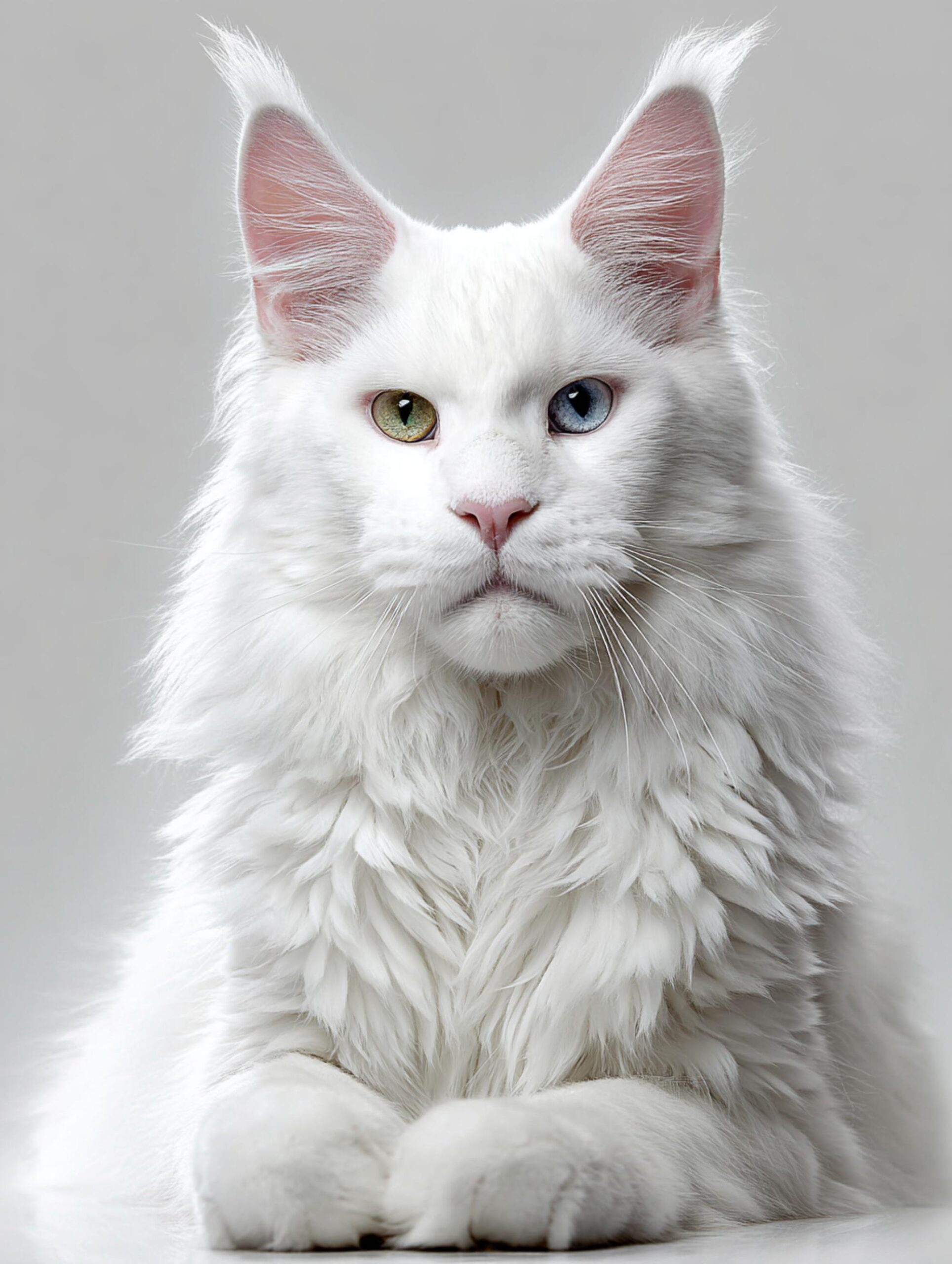
Maine Coons and Water: Why Most Show Interest (And What That Actually Means)
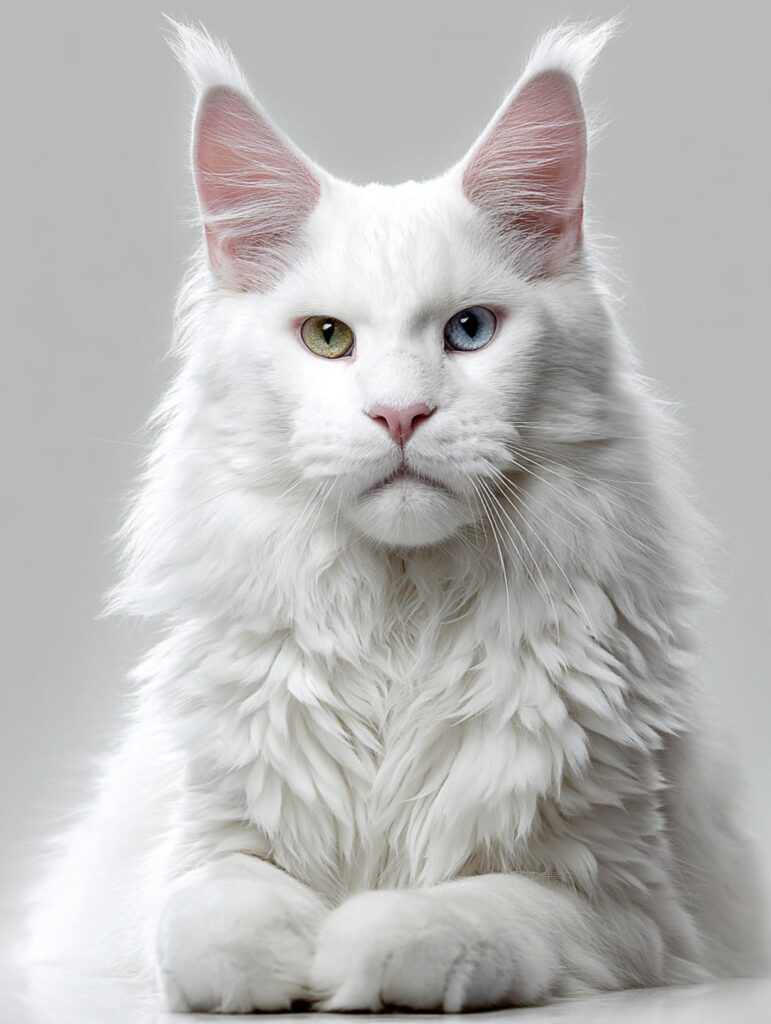
Maine Coons are one of the few cat breeds that are consistently associated with water interest. That reputation didn’t come out of nowhere. Across many households, owners notice the same patterns: Maine Coons showing up at the sink, watching faucets run, pawing at dripping water, or lingering near fountains and hoses.
At the same time, the advice people find online is sharply divided. One side insists “they all love water.” The other dismisses the idea entirely as a myth based on viral videos. Both positions oversimplify what’s actually happening.
The confusion comes from treating water interest as an all-or-nothing trait instead of a behavioral tendency with variation.
Most Maine Coons do show some level of interest in water. What that interest looks like, how often it appears, and whether it carries over into things like baths varies from cat to cat. When those distinctions aren’t explained, owners either build unrealistic expectations—or worry something is wrong when their cat doesn’t behave exactly like the internet says it should.
This post explains why most Maine Coons do show water interest, how that interest usually presents in real life, and why it’s often misunderstood. Rather than relying on single-cat anecdotes, it looks at patterns that emerge across many cats and many homes, which is where the reality becomes much clearer.
Maine Coons and Water — At a Glance
| Water Behavior | What It Usually Means | What It Does Not Mean |
|---|---|---|
| Watching faucets or sinks | Curiosity and engagement with movement | Desire for full immersion |
| Pawing at running water | Controlled exploration | Enjoyment of baths |
| Returning to water sources | Voluntary interest without stress | Obsession or fixation |
| Calm during baths | Tolerance | Pleasure or preference |
| Ignoring water entirely | Neutral preference | Fear, anxiety, or a problem |
| Avoiding baths | Normal boundary-setting | Breed inconsistency |
| Strong interest as a kitten | Developmental exploration | Lifelong behavior guarantee |
| Selective interest as an adult | Mature, intentional engagement | Loss of intelligence or confidence |
| Sudden obsession or avoidance | Possible behavioral change | Normal variation to ignore |
Do Most Maine Coons Like Water? (Clear, Honest Answer)
Yes — most Maine Coons show some form of water interest.
That statement is accurate, but it needs context. Showing interest in water does not mean every Maine Coon wants the same experience, reacts the same way, or enjoys water in the same form. What owners are usually seeing is curiosity and engagement, not a universal love of immersion.
The distinction matters:
- Interest ≠ immersion
A cat can be fascinated by water without wanting to step into it. - Engagement ≠ enjoyment
Watching, pawing, or interacting does not automatically mean pleasure. - Breed tendency ≠ guarantee
Maine Coons are more likely than average cats to show water interest, but individual temperament still determines how that interest appears.
Understanding those differences explains why so many owners say, “Mine likes water,” while others say, “Mine doesn’t.” In most cases, both are describing normal behavior.
What “Liking Water” Usually Looks Like in Maine Coons
(Naming lived reality clearly — not internet extremes)
When Maine Coons show water interest, it tends to follow recognizable patterns. These are the behaviors most owners actually see day to day.
See What Tiktok Gets Wrong About Maine Coons
Running Water Fascination
Maine Coons are especially drawn to moving water.
Common examples include:
- Faucets
- Sinks
- Hoses
- Water fountains
Movement and sound trigger engagement. Flowing water provides stimulation, predictability, and novelty without requiring full contact, which makes it particularly appealing.
Pawing, Testing, and Watching
Many Maine Coons interact with water in a measured, controlled way.
They may:
- Reach out with a paw
- Test droplets
- Watch water flow without stepping in
This interaction stays firmly on their terms. The cat controls distance, duration, and intensity, which keeps the experience comfortable rather than overwhelming.
Repeated, Voluntary Engagement
One of the clearest signs of genuine interest is choice.
Maine Coons that enjoy water often:
- Return to the same water sources
- Seek them out intentionally
- Engage without signs of stress or hesitation
Voluntary repetition tells you more than any single moment caught on video.
Calm Tolerance During Baths
Some Maine Coons remain calm during baths. They don’t panic, fight, or shut down.
That calmness is often misinterpreted as enjoyment. In reality, tolerance and enjoyment are different things. A Maine Coon may accept a bath without distress while still preferring not to repeat the experience.
This distinction explains why a cat can love faucets and still dislike baths—and why both behaviors can coexist without contradiction.
Why Maine Coons Are More Likely Than Average Cats to Show Water Interest
Maine Coons don’t show water interest by accident. Several breed-typical traits make them more likely than the average cat to investigate and interact with water when the opportunity appears.
High Environmental Engagement
Maine Coons tend to interact with their surroundings rather than simply occupy them.
Instead of avoiding new stimuli, they often investigate it. Sights, sounds, movement, and changes in the environment draw their attention. Water—especially when it moves or makes noise—fits naturally into that pattern of engagement.
This doesn’t mean they seek stimulation constantly. It means that when something interesting happens in their space, Maine Coons are more likely to approach it with curiosity rather than avoidance.
Confidence and Curiosity
Confidence plays a major role in water behavior.
Maine Coons are physically larger than many cats, and that size often correlates with a steadier, less reactive temperament. Instead of startling easily, many Maine Coons pause, observe, and explore.
That confidence supports curiosity. Rather than retreating from unfamiliar sensations, they’re more willing to test them. Water becomes something to investigate, not something to flee from.
Early Handling and Exposure
Early experience matters.
Well-socialized Maine Coons who grow up with regular handling, household noise, and gentle exposure to new experiences often show less aversion to unfamiliar stimuli—including water. Familiarity reduces surprise, and reduced surprise lowers stress.
This doesn’t create a guaranteed “water-loving” cat, but it does increase the likelihood of calm curiosity rather than immediate avoidance.
Why Water Interest Does Not Mean “Loves Baths”
One of the most common misunderstandings is assuming that faucet fascination automatically translates to bath enjoyment. These experiences are fundamentally different.
Running Water vs Full Immersion
Running water allows choice.
The cat can watch, paw, step closer, or walk away. Interaction happens at a distance, and the cat maintains control. Observation replaces commitment.
Baths remove that control. Full immersion introduces restraint, unfamiliar sensations, and loss of footing. The experience shifts from exploration to endurance.
Those are not comparable situations.
Control Is the Difference
Cats engage most confidently when they can exit freely.
When water interaction is voluntary, curiosity drives behavior. When exposure is forced, even a water-interested Maine Coon may resist.
Forced exposure changes the emotional experience, which is why enjoying faucets and disliking baths can coexist without contradiction.
Why Some Maine Coons Show Less Interest (And Why That’s Still Normal)
Water interest is common—but it is not universal. Variation is expected and healthy.
Individual Temperament
Curiosity varies from cat to cat.
Some Maine Coons investigate everything. Others prefer familiar routines and environments. Both fall well within normal behavior for the breed.
Sensory Preferences
Physical sensation plays a role.
A wet coat feels heavy. Temperature matters. Some cats dislike the way water alters balance or sensory feedback. These preferences influence behavior without indicating fear or stress.
Neutral Is Not Negative
Avoidance does not equal fear.
A Maine Coon that ignores water isn’t anxious, deprived, or deficient. Lack of interest simply means water doesn’t offer enough reward to compete with other activities.
Neutral behavior is still normal behavior—and it doesn’t require correction.
How Water Interest Changes With Age
Water behavior in Maine Coons often shifts as they mature. What looks like enthusiasm early on doesn’t always persist in the same way over time—and that change is normal.
Kittens and Adolescents
Exploration peaks early.
Kittens and adolescent Maine Coons investigate almost everything. Novelty drives engagement, and water provides movement, sound, and sensory feedback that naturally attracts attention. At this stage, curiosity often outweighs caution.
This doesn’t mean early water interest predicts lifelong behavior. It reflects a developmental phase where learning and exploration take priority.
Adults
As Maine Coons mature, water interest often becomes selective.
Adults tend to engage with intention rather than impulse. They may still visit faucets or watch water run, but interaction becomes occasional instead of constant. Novelty fades, and preference replaces experimentation.
A reduction in water play doesn’t signal loss of intelligence or confidence—it signals maturity.
Should You Encourage Water Play?
Encouragement isn’t necessary for most cats, but water interaction can be allowed when it remains positive and voluntary.
When It’s Fine
Water play is appropriate when it stays:
- Voluntary, initiated by the cat
- Supervised, to prevent accidents
- Low-stress, without restraint or pressure
In these conditions, curiosity can be safely explored without creating negative associations.
When to Stop
Water interaction should end immediately if you see:
- Forced exposure, even mild
- Signs of stress, such as freezing, vocalizing, or retreat
- Repeated avoidance, where the cat clearly opts out
Respecting boundaries prevents curiosity from turning into aversion.
What Water Interest Does Not Indicate
Water behavior carries far less meaning than people often assign to it.
It is not:
- A measure of intelligence
- A marker of breed purity
- An indicator of personality quality
- Something that needs training, encouragement, or correction
A Maine Coon’s relationship with water is a preference, not a benchmark.
When Water Behavior Might Matter
Most water-related behaviors fall well within normal variation. Only a few situations warrant closer attention.
Sudden Behavior Changes
Pay attention if you notice:
- A new fixation on water that wasn’t present before
- Abrupt avoidance after prior tolerance
Sudden changes deserve observation, especially if they appear alongside other shifts in behavior.
Compulsive Interaction
Water behavior may matter if it:
- Interferes with eating or rest
- Becomes repetitive and difficult to interrupt
In those cases, a veterinary or behavioral check-in can help rule out underlying issues. This isn’t cause for panic—it’s simply good monitoring.
Most Maine Coons interact with water in harmless, curious ways. Understanding the difference between normal variation and true change keeps expectations grounded and responses appropriate.
Setting Realistic Expectations Before Getting a Maine Coon
Understanding water behavior before bringing a Maine Coon home prevents unnecessary confusion and disappointment. The breed shows clear tendencies—but those tendencies still leave room for individual variation.
What You Can Expect
With Maine Coons, you can reasonably expect a higher likelihood of curiosity around water than with many other breeds.
That often includes:
- Interest in moving water, such as faucets, sinks, hoses, or fountains
- Investigation through watching, pawing, or testing rather than avoidance
This curiosity reflects engagement with the environment, not a promise of any specific behavior.
What You Shouldn’t Expect
Even with a breed-wide tendency toward curiosity, certain assumptions don’t hold up in real life.
You shouldn’t expect:
- Universal enjoyment of baths
- Consistent water play across all situations
A Maine Coon may love watching a faucet and still dislike being wet. They may interact with water occasionally rather than daily. These differences don’t contradict the breed—they reflect individual preference.
Maine Coons and Water — FAQ
Do Maine Coons really like water?
Many do. Most Maine Coons show some level of water interest, especially with running water like faucets or fountains. That interest varies by individual and doesn’t look the same in every cat.
Is it normal if my Maine Coon likes water?
Yes. Curiosity around water is common in the breed and often shows up as watching, pawing, or testing water rather than full immersion.
Do all Maine Coons like water?
No. While water curiosity is common, it isn’t universal. Some Maine Coons are indifferent or avoid water entirely, and that is still normal behavior.
Why does my Maine Coon like faucets but hate baths?
Faucets allow choice and control. Baths involve restraint, full-body immersion, and loss of footing. Enjoying running water does not translate to enjoying baths.
Does liking water mean my Maine Coon is smarter or more confident?
Not necessarily. Water interest reflects curiosity and preference, not intelligence, confidence level, or personality quality.
Is water interest a sign of breed purity?
No. Water behavior has nothing to do with pedigree, purity, or breeding quality. Mixed and purebred cats can show the same behaviors.
Should I encourage my Maine Coon to play with water?
Only if the interaction is voluntary, supervised, and low-stress. Forced exposure or repeated encouragement after avoidance can create aversion.
Is it bad if my Maine Coon ignores water completely?
No. Neutral behavior toward water is normal and does not indicate fear, stress, or a problem that needs fixing.
Does water interest change as Maine Coons get older?
Often, yes. Kittens and adolescents explore more. Adults tend to show more selective, intentional engagement rather than constant curiosity.
Can I train my Maine Coon to like water?
You can influence tolerance through gentle exposure, but you can’t train preference. Enjoyment of water is driven by temperament, not training.
When should I be concerned about water-related behavior?
Pay attention if there is a sudden change, such as new obsession or abrupt avoidance, especially if it interferes with eating, resting, or daily routines.
What’s the most accurate way to describe Maine Coons and water?
Most Maine Coons are water-curious, not water-obsessed. Interest is common, expression varies, and all normal responses fall within a healthy range.
Final Perspective — Most Maine Coons Are Water-Curious, Not Water-Obsessed
Water interest is common in Maine Coons, but it isn’t uniform.
Expression varies. Some cats engage frequently, some occasionally, and some not at all. All of those responses fall within normal behavior for the breed.
If your Maine Coon likes water, that’s common.
If they don’t, that’s normal too.
The breed tendency explains the pattern. The individual cat determines the expression.
Related Maine Coon Posts
If you’re continuing your research, these posts expand on Maine coon topics mentioned above:
- Maine Coon Kitten Colors Explained
Learn how Maine Coon coat colors appear in kittens, why early color can be misleading, and how to set realistic expectations as coats mature. - Maine Coon Colors: Complete Genetics, Identification, and More
A detailed breakdown of Maine Coons Colors. - Maine Coon Pricing Explained: What Goes Into the Cost of a Well-Bred Kitten
Understand how breeding practices, health testing, and care standards influence pricing—separate from color myths. - The Lifetime Cost of Owning a Maine Coon
A realistic look at long-term expenses, veterinary care, and planning for a 12–15+ year commitment. - Is a Maine Coon A Good First Time Cat
A practical guide to lifestyle fit, grooming needs, and what daily life with a Maine Coon actually looks like. - Maine Coon Cat ESA: Does a Maine Coon cat make a good emotional support animal?
Sources & Further Reading
- International Cat Care (iCatCare) — feline behavior, curiosity, environmental enrichment, and normal behavioral variation
https://icatcare.org - International Society of Feline Medicine (ISFM) — feline welfare, stress, sensory preferences, and behavioral responses
https://icatcare.org/isfm - American Association of Feline Practitioners (AAFP) — feline behavior guidelines, stress reduction, and environmental interaction
https://catvets.com - American Veterinary Medical Association (AVMA) — companion animal behavior, normal vs concerning behavior changes
https://www.avma.org - The International Cat Association (TICA) — Maine Coon breed profile, temperament tendencies, and behavioral traits
https://tica.org - Cat Behaviour & Welfare Research Group (University of Lincoln) — feline curiosity, choice, control, and environmental interaction
https://www.lincoln.ac.uk/research/groups/catbehaviourandwelfare/ - Cornell Feline Health Center — normal feline behavior, stress signals, and when behavior changes matter
https://www.vet.cornell.edu/departments-centers-and-institutes/cornell-feline-health-center





Read the Comments +