
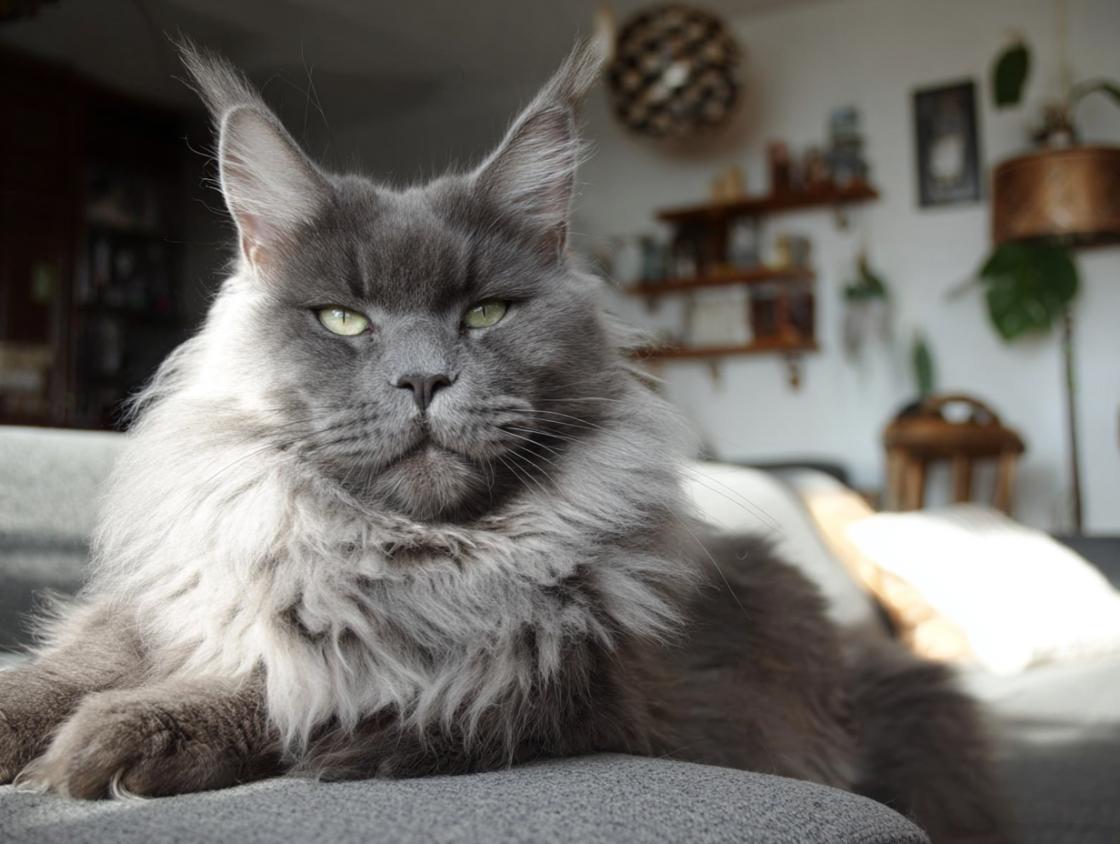
What Owning a Maine Coon Is Like After the First Year
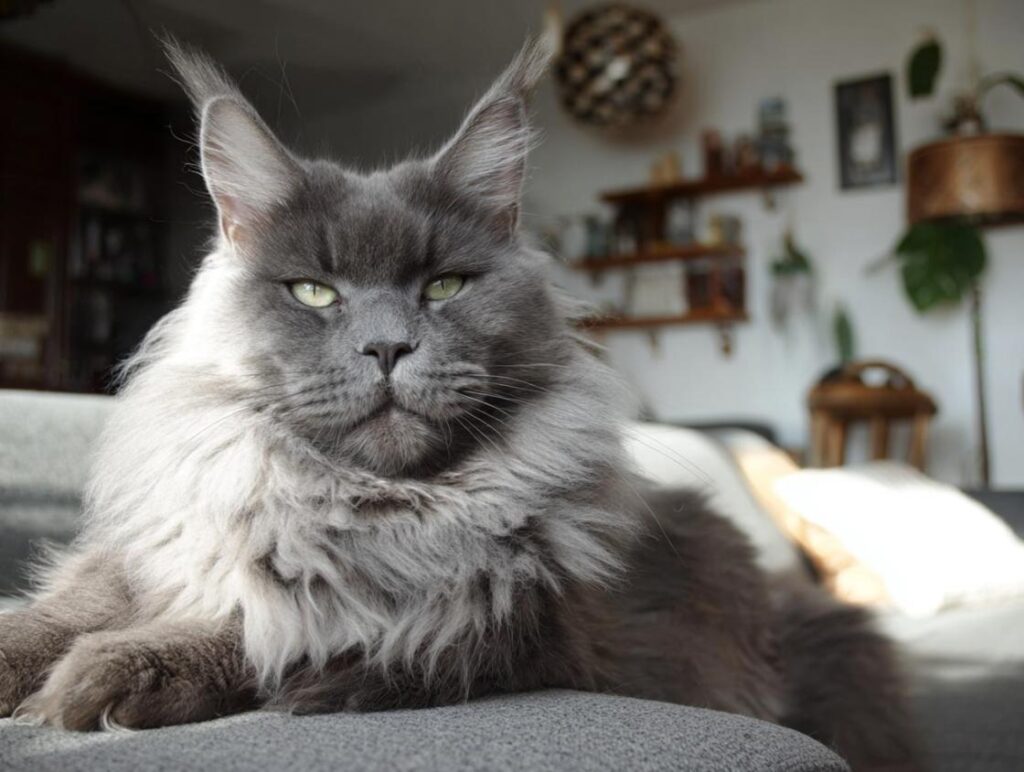
Adult Maine Coons do go viral — often more than kittens. Their size, confidence, expressions, and sheer presence are exactly what fuel so many of the internet’s most shared Maine Coon videos. Watching a cat keep growing, filling out, and carrying itself like a small wild animal is part of the appeal, and long-term owners enjoy that just as much as viewers do.
But virality isn’t the same thing as lived experience.
A video can capture how impressive an adult Maine Coon looks. It can’t show what daily life feels like once the kitten phase is over — the routines, the rhythm, the companionship, and the way the relationship settles into something more stable and enjoyable.
That’s where most misunderstandings come from.
The overlooked truth
For most well-matched homes, Maine Coons don’t become less fun after the first year. They become easier, more impressive, and more enjoyable to live with. The chaos fades, but the personality doesn’t. What replaces it is predictability, confidence, and a stronger sense of partnership between cat and owner.
This is why many experienced owners quietly say they prefer their Maine Coon after the first year — even if they don’t always explain why.
Why this post exists
This post is here to do three things clearly and honestly:
- Reset expectations around what adulthood actually looks like for this breed
- Explain why satisfaction often increases after the first year instead of dropping
- Help buyers evaluate Maine Coons for years 2–15, not just the kitten stage they see online
Maine Coons are a long-term commitment, and understanding how they mature is key to enjoying them long-term.
Who should read this
This guide is especially useful if you’re:
- A prospective buyer deciding whether the breed fits your lifestyle beyond kittenhood
- An owner nearing the one-year mark and wondering what comes next
- Someone worried that adulthood might mean “less personality” or “less fun”
If you’re still deciding whether this breed is truly right for you in the long run, start here first:
👉 Why Maine Coons are Not for Everyone
What Owning a Maine Coon Is Like: Year One vs After the First Year
| Aspect | First Year (Kitten → Adolescent) | After the First Year (Adult Reality) |
|---|---|---|
| Overall Experience | High involvement, constant adjustment | Easier, more predictable, more enjoyable |
| Owner Role | Raising, supervising, training | Living together, coexisting |
| Energy Level | High, scattered, impulsive | Still playful, but focused and intentional |
| Play Style | Frequent, chaotic, self-directed | Interactive, structured, more satisfying |
| Daily Routine | In flux, constantly changing | Stable, reliable, easy to plan around |
| Sleep Patterns | Irregular, disruptive at times | More aligned with household rhythm |
| Behavior & Manners | Boundary testing, experimentation | Boundaries understood, better manners |
| Communication | Learning signals on both sides | Clear, predictable, mutual understanding |
| Emotional Bond | Attachment driven by novelty | Deeper bond built on trust and security |
| Affection Style | Constant attention-seeking | Intentional proximity and quiet companionship |
| Size Impact | Growing, still adjusting | Normalized, impressive, fully integrated |
| Grooming Experience | Learning curve, anxiety common | Routine, confident, often bonding |
| Cost Experience | Front-loaded setup and surprises | Predictable, easier to budget |
| Mental Load for Owner | High | Significantly lower |
| Common Owner Sentiment | “This is a lot.” | “This is easier than I expected.” |
| Overall Satisfaction | Mixed due to adjustment phase | Often higher than during kittenhood |
Why Most Owners Actually Like Their Maine Coon More After the First Year
The Shift From Raising to Living
The first year with a Maine Coon often feels like raising, not owning.
You’re supervising constantly. You’re redirecting behavior, teaching boundaries, managing growth spurts, adjusting your home, and learning how this specific cat operates. Even when it’s enjoyable, it’s mentally demanding. Everything is new, and everything requires attention.
After the first year, that dynamic changes.
You move out of the phase where every day feels like a training exercise and into one where coexistence becomes natural. Your Maine Coon understands the house. You understand them. The rules don’t need to be reinforced constantly because they’re already internalized.
This shift is why many owners feel relief rather than loss after kittenhood ends. You’re no longer “on duty” all the time. You’re sharing space with a cat who knows how to live in your household instead of testing it.
The relationship stops being about management and starts being about enjoyment.
👉 Is a Maine Coon a Good First Time Cat
Predictability Improves Daily Life
One of the biggest reasons satisfaction increases after the first year is predictability.
By adulthood, most Maine Coons settle into consistent patterns:
- Routines stabilize
Feeding times, play preferences, and daily rhythms become reliable. You know when your cat is most active, when they want interaction, and when they prefer quiet. - Sleep cycles normalize
The erratic kitten sleep schedule fades. Adult Maine Coons tend to sync better with household rhythms, making nights quieter and days more predictable. - Litter habits and eating patterns even out
Digestive sensitivity often decreases, preferences are established, and you’re no longer constantly adjusting food, litter types, or setup. - Social rhythms become clear
You know how social your cat is, when they want attention, and when they want independence. That clarity removes a lot of second-guessing.
Predictability doesn’t make life boring — it makes it comfortable. Knowing what to expect lowers stress for both the cat and the owner, and that alone increases enjoyment dramatically.
👉 Maine Coon Diet and Feeding Schedules
Companionship Replaces Chaos
As the first year ends, something subtle but important happens: companionship replaces chaos.
Adult Maine Coons are still engaged and present, but they’re no longer interrupting every moment of the day. Instead of demanding constant redirection, they share space with intention. They sit nearby. They observe. They participate when it matters.
This is why adult Maine Coons often feel like real companions, not ongoing projects.
You’re no longer evaluating behavior all the time. You’re living alongside a cat who understands your home, your routines, and your expectations. That shared understanding deepens the bond and makes daily life feel smoother.
For many owners, this is the point where the breed’s reputation truly clicks.
👉 How To Care for a Maine Coon Cat
Energy After the First Year — Still Playful, Just Smarter About It
What Actually Changes After Adolescence
Maine Coons mature more slowly than the average cat, which is why adolescence often stretches well past the one-year mark. This slower development is also why the phrase “they calm down” is misleading.
What actually changes isn’t energy — it’s how that energy is used.
Instead of random bursts, constant motion, and unfocused exploration, adult Maine Coons shift toward intentional engagement. They still play. They still explore. They still get bursts of excitement. But it’s directed, purposeful, and more responsive to their environment and their people.
This isn’t a loss of personality. It’s maturity.
The cat hasn’t become less interesting — they’ve become more aware, more controlled, and more selective about how they interact with the world.
The way a Maine Coon kitten is raised has a lot to do with the wonderful adult cat they become.
Adult Play Is More Interactive
One of the biggest surprises for new owners is that adult Maine Coons are often more fun to play with, not less.
Play changes in a few important ways:
- Play becomes owner-directed
Adults respond better to structured play. Wand toys, puzzles, and interactive games become more rewarding because the cat can focus. - Less destruction, more participation
Instead of burning energy by knocking things over or racing through the house, adult Maine Coons are more likely to engage with you during play. - Better feedback loop
Adults read cues better. They pause, re-engage, and adapt, which makes play feel like interaction rather than chaos.
Many owners report that play sessions become shorter but more satisfying — and far less exhausting.
Why This Energy Level Fits Real Life Better
The adult Maine Coon energy profile fits modern households exceptionally well.
- Work-from-home households benefit from a cat that can be present without being disruptive
- Families with routines appreciate a cat that adapts instead of constantly demanding change
- Multi-pet homes function more smoothly when energy is controlled rather than explosive
Adult Maine Coons still bring enthusiasm and curiosity into the home, but they do it in a way that integrates with daily life instead of competing with it.
That balance is one of the main reasons long-term owners often say they enjoy their Maine Coon more after the first year — the cat hasn’t faded, they’ve settled in.
👉 Maine Coon Temperament and Personality
Watching Them Get Bigger Is Part of the Appeal — and the Adjustment
Why Adult Size Is What People Actually Fall in Love With
For most owners, watching a Maine Coon grow is not a drawback — it’s the moment the breed fully delivers on its promise.
Growth fuels the content people can’t stop sharing:
- Viral videos that showcase scale and presence
- “Horse cat” comparisons that highlight just how substantial these cats become
- Shoulder-cat clips that emphasize confidence, balance, and trust
But beyond the internet appeal, size changes how the relationship feels in real life. As a Maine Coon fills out, their body finally matches their personality. They move with confidence. They occupy space intentionally. They look and feel like the breed people envisioned when they chose a Maine Coon.
Owners don’t just enjoy how big their cat gets — they enjoy seeing the breed fully expressed. The size reinforces the sense that they’re living with something distinctive, not just a larger version of a typical house cat.
Living With a Large Cat Becomes Normal
At first, size can feel intimidating. A growing Maine Coon stretches across furniture, lands with weight, and carries strength you don’t expect from a cat. Then something shifts.
You adjust.
You develop furniture awareness, learning which surfaces need protection and which ones your cat naturally prefers. You gain handling confidence, lifting, grooming, and guiding your cat without hesitation. You stop bracing for impact when they jump because you understand their movement and balance.
Over time, size stops feeling like something to manage and starts feeling like something to appreciate. What once felt overwhelming becomes impressive. Owners often forget their Maine Coon is “large” at all — until a guest points it out.
That normalization is part of why adult Maine Coons feel easier to live with than people expect.
The Practical Side of Size (Without Drama)
Living with a large cat does require practical adjustments, but they’re straightforward and manageable.
- Litter box upgrades
Adult Maine Coons need boxes that allow full movement and comfortable posture. Once upgraded, most owners find litter habits improve, not worsen. - Scratching infrastructure
Bigger cats need taller, sturdier scratchers. This protects furniture and gives the cat appropriate outlets for stretching and marking. - Transport considerations
Carriers, harnesses, and vet handling need to match adult size. Planning ahead removes stress and makes travel routine instead of chaotic.
These adjustments don’t complicate life — they support it. Once in place, they fade into the background, just like the cat’s size itself.
👉 Maine Coon Size and Maine Coon Size Comparison: How Big are They Really?
Grooming After the First Year — Bigger Coat, Better Experience
The Adult Coat Is Different (But Not a Shock If You’re Prepared)
A Maine Coon’s coat does not reach its final form during kittenhood. After the first year, the coat continues to develop in texture, density, and length, and that progression is both normal and expected.
Most Maine Coons move through a clear coat maturity timeline. The baby softness fades, guard hairs strengthen, and the coat gains structure. Owners who understand this don’t experience it as a sudden change — they see it as the next phase of development.
Seasonal coat cycles also become more predictable with age. Shedding follows a pattern. Thickening and thinning occur at roughly the same times each year. Instead of guessing what’s happening, owners learn to anticipate it and adjust grooming frequency accordingly.
Prepared owners don’t panic when the coat gets fuller. They recognize it as the breed coming into itself. See Do Maine Coons Need Professional Grooming?
Owners Get Better at Grooming
As the coat grows, something else improves just as much: the owner’s skill.
Early grooming often comes with uncertainty. You second-guess your tools, worry about pulling, and feel tense every time you hit resistance. Over time, skill replaces anxiety.
You learn:
- Which tools work for your cat’s coat type
- How much pressure to use
- When to groom lightly and when to do a deeper session
Tools become familiar extensions of your hands instead of objects you hesitate to use. At the same time, adult Maine Coons usually tolerate handling more calmly. They understand the routine. They recognize grooming as part of daily life rather than something unpredictable.
The result is smoother, faster, and far less stressful grooming sessions for both cat and owner.
Grooming Becomes Routine, Not a Crisis
Even though coat volume increases after the first year, grooming often feels easier, not harder.
Why? Because routine replaces reaction.
Instead of discovering mats and scrambling to fix them, owners stay ahead of the coat. Regular maintenance prevents problems from forming in the first place. Grooming shifts from emergency management to normal care.
Many owners also notice that grooming becomes a form of bonding rather than conflict. The cat relaxes. The owner gains confidence. Sessions feel cooperative instead of confrontational.
When grooming stops being emotionally charged, it stops dominating the ownership experience — and that alone increases enjoyment.
👉 Do Maine Coons Mat Easily? How It Happens and How to Prevent It
Emotional Bonding Improves With Maturity
Affection Becomes Intentional
Adult Maine Coons don’t lose affection — they choose it.
Instead of constant demand for attention, adult cats decide when and where they want to be close. They sit beside you. They follow you into familiar spaces. They settle in without needing to be the center of activity.
This intentional proximity often feels deeper than kitten clinginess. When an adult Maine Coon chooses to be near you, it reflects trust and comfort, not dependency.
That choice is what many owners find most rewarding.
The “Dog-Like” Reputation Makes Sense Later
As Maine Coons mature, their behavior starts to match the reputation people talk about.
They:
- Follow routines
- Check in quietly throughout the day
- Stay present without demanding constant engagement
This isn’t performative behavior. It’s steady companionship.
Adult Maine Coons don’t need to entertain to stay connected. Their presence alone communicates attachment, and that subtle consistency is what many owners value most.
Why Owners Feel More Emotionally Connected Over Time
Over time, trust replaces novelty.
Kittens seek stimulation. Adults seek security. As a Maine Coon matures, their emotional priorities shift, and the relationship settles into something more grounded.
Owners feel this change clearly. The cat relaxes. The bond stabilizes. Interactions feel calmer and more meaningful because they’re built on familiarity and mutual understanding.
That sense of emotional security — on both sides — is why many owners say the connection feels stronger with age, not weaker.
👉 Are Maine Coons High Maintenance
Why Adult Maine Coons Feel Easier to Live With
Boundaries Are Established
By the time a Maine Coon reaches adulthood, most of the boundary-testing phase is over. The first year involves a lot of experimentation — jumping where they shouldn’t, testing reactions, and learning which behaviors get attention and which don’t. That phase serves a purpose, but it also creates unpredictability.
After the first year, those tests largely stop.
Adult Maine Coons understand the household rules because they’ve already lived them. They know which counters are off-limits, where they’re allowed to scratch, and how to move through the home without constant correction. This leads to better manners overall and far fewer moments where owners feel caught off guard.
With boundaries established, daily life feels calmer. You don’t brace for surprises. You trust your cat to navigate the house appropriately. That reduction in unpredictability is one of the biggest reasons owners describe adult Maine Coons as easier to live with.
Communication Improves
As time passes, communication becomes clearer on both sides.
Owners learn how their Maine Coon communicates needs — subtle body language, vocal cues, pacing, or positioning. You stop guessing and start recognizing patterns. At the same time, the cat learns how you respond, which behaviors work, and how to ask for what they want without escalation.
This two-way understanding reduces friction.
Misinterpretations drop. Frustration fades. Daily interactions feel smoother because both sides know what to expect from each other. The relationship becomes less reactive and more cooperative, which dramatically improves the living experience.
Intelligence Becomes an Asset
Maine Coons are highly intelligent, and in kittenhood that intelligence can feel overwhelming. Curiosity leads to mischief. Problem-solving leads to experimentation. Without structure, that brain works against the household.
In adulthood, that same intelligence becomes an asset.
Training sticks because the cat can focus. Routines click because they understand sequence and cause-and-effect. Problem-solving starts working with the household instead of against it. Doors, feeding routines, play schedules, and grooming sessions all benefit from this mental maturity.
Instead of constantly outsmarting you, your Maine Coon starts cooperating — and that shift makes daily life far more enjoyable.
👉 Pros and Cons of Maine Coons
The Cost Reality After the First Year (And Why It Feels More Predictable)
Expenses Stabilize After Kittenhood
The first year of Maine Coon ownership often comes with financial surprises. You’re buying large items for the first time, adjusting setups, and learning what works. Those early expenses can make the breed feel more costly than expected.
After the first year, spending stabilizes.
Most major purchases are already done. Food preferences are established. Grooming routines are in place. Vet visits shift from exploratory to maintenance-focused. Costs don’t disappear, but they become predictable.
That predictability changes how ownership feels.
Why Owners Feel Less Financial Stress
Once the “first-time setup” phase ends, financial stress drops significantly. You no longer scramble to buy new equipment or replace items that didn’t work. Instead, you’re maintaining systems you already understand.
Budgeting becomes easier because:
- Monthly costs remain consistent
- Grooming expenses follow a routine
- Food consumption stabilizes with adult metabolism
Knowing what to expect removes the anxiety that often accompanies early ownership. Instead of reacting to expenses, owners plan for them — and planning feels far less stressful.
Long-Term Cost vs Short-Term Shock
Most cost anxiety happens early because the expenses are front-loaded. Large cats require proper infrastructure, and that investment happens upfront.
Adulthood brings financial clarity.
Owners understand the long-term picture. They see where money goes, why it’s spent, and how to manage it sustainably. Instead of worrying about unknowns, they operate with informed expectations.
That clarity reinforces satisfaction. When costs align with expectations, ownership feels balanced rather than overwhelming.
👉 Maine Coon Lifetime Cost Breakdown
Social Media vs Real Life — Both Can Be True
What Viral Content Gets Right
Social media does not misrepresent Maine Coons as a breed — it highlights real, authentic traits that owners also experience firsthand.
Viral content gets several things absolutely right.
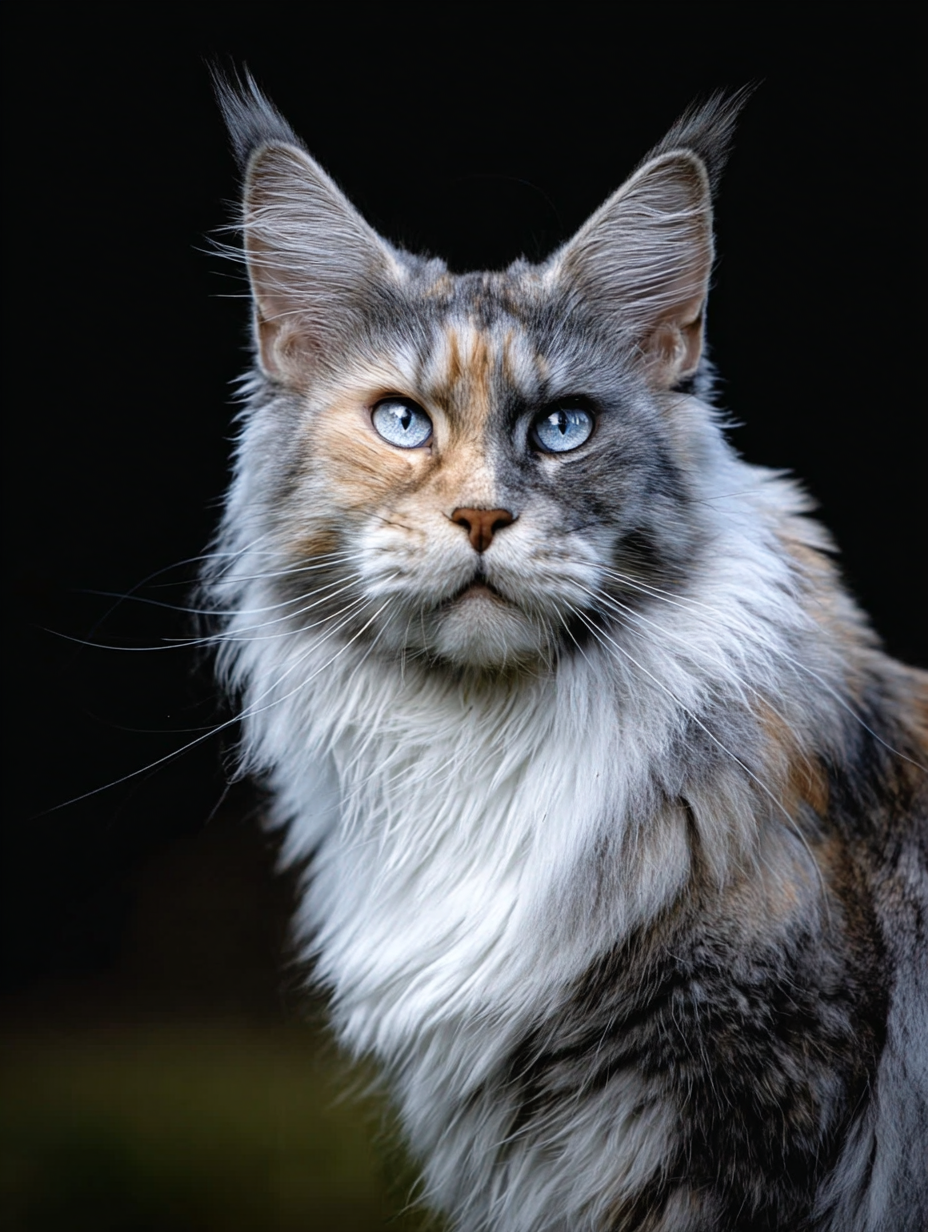
It captures size accurately. Adult Maine Coons really are that large, that long, and that visually striking. The scale people see online reflects what owners see in their homes every day, especially as the cat reaches full maturity.
It captures confidence. Maine Coons carry themselves differently than many other cats. They sit upright, move deliberately, and appear comfortable occupying space. That calm confidence is not staged — it’s a defining trait of the breed, and it becomes more obvious with age.
It captures expressiveness. Facial expressions, body language, vocalizations, and reactions all translate well on camera. Maine Coons communicate clearly, and that clarity is part of what makes them so compelling to watch.
In other words, viral content isn’t wrong. It’s just incomplete.
What It Can’t Show
What short clips cannot convey is daily life.
They can’t show daily rhythms — the way an adult Maine Coon moves through the home, settles into routines, and syncs with household energy. They can’t show the quiet moments: sitting nearby, observing, choosing proximity without demanding attention.
They also can’t show long-term companionship. That develops slowly, through repetition, familiarity, and shared experience. It doesn’t happen in dramatic moments. It happens over months and years of living together.
This is where admiration turns into attachment.
Watching a Maine Coon online creates appreciation. Living with one creates connection. The difference isn’t about disappointment — it’s about depth. Clips capture highlights. Real life builds relationship.
See Do Maine Coons Talk A Lot for more breed trait info.
Why Owners Still Love the Reality
Owners don’t feel misled when they step away from social media and into daily life. They recognize that living with the cat is different from watching clips, not lesser.
Real life includes routine, responsibility, and predictability. It also includes presence, familiarity, and emotional continuity. Those elements don’t conflict with what people love online — they complete it.
Both experiences can exist at the same time. Owners can enjoy viral content while also appreciating the quieter, steadier reality of sharing a home with their cat. There is no contradiction between the two, only a shift from spectacle to substance.
What Owners Commonly Say After the First Year
This is the language many long-term owners use when they describe life after the first year — especially in forums, comments, and private conversations:
- “Life is easier now.”
Daily routines feel settled. The constant supervision phase ends. Ownership feels sustainable. - “The bond feels real.”
The relationship no longer feels transitional. Trust is established. The connection feels mutual and stable. - “They’re still playful, just calmer.”
Energy hasn’t disappeared — it’s focused. Play becomes intentional rather than chaotic. - “I enjoy them more now than as a kitten.”
The stress of early development fades, and appreciation increases. - “They finally feel settled.”
The cat knows the home. The owner knows the cat. Everything works more smoothly.
These statements don’t come from disappointment. The Maine Coon is a really fun cat to live with, quirks and all.
When Enjoyment Doesn’t Increase (And Why That’s About Fit, Not the Breed)
Not every household enjoys a Maine Coon more after the first year, and acknowledging that reality builds trust rather than undermining the breed.
When enjoyment drops, the cause is almost always expectation mismatch, not a failure of the cat.
Expecting a Forever Kitten
Some people choose Maine Coons because they want constant motion, novelty, and visible entertainment. When adulthood brings stability, they misinterpret it as loss instead of maturity.
Maine Coons do not remain kittens — they grow into confident, grounded adults. Owners who value development enjoy that progression. Owners who expect perpetual chaos often feel disappointed.
Underestimating Grooming Commitment
Long coats require ongoing care. When owners assume grooming will be occasional or optional, frustration builds over time.
This isn’t unique to Maine Coons, but the size and coat density amplify the impact of unmet expectations. Owners who plan for grooming enjoy the routine. Owners who resist it feel burdened by it.
Choosing for Looks Instead of Lifestyle
Size and appearance attract attention, but they shouldn’t be the primary deciding factor.
Maine Coons thrive in homes that value engagement, routine, and relationship-building. When someone chooses the breed solely for aesthetics without considering daily involvement, satisfaction often declines.
👉 Pros and Cons of Maine Coons
Why Maine Coons Peak Later Than Most Breeds
Maine Coons follow a different developmental timeline than many other cats. While most breeds reach physical and emotional maturity relatively early, Maine Coons mature slowly, often continuing to grow and settle well into their second and even third year. This slow maturation is not a flaw — it is one of the defining characteristics of the breed.
Physically, their large frame takes longer to fill out. Mentally and emotionally, they move through adolescence at a measured pace. During the first year, curiosity and exploration dominate. After that, confidence begins to replace uncertainty, and behavior becomes more intentional.
As Maine Coons age, three traits consistently improve:
- Confidence
Adult Maine Coons move through the world with assurance. They understand their environment, trust their people, and navigate new situations with less reactivity. - Presence
Their size, posture, and calm engagement create a sense of steadiness. They don’t need constant motion to command attention — their presence alone does that. - Temperament
Emotional regulation improves. Reactions soften. Social interactions become smoother and more predictable.
This is why experienced owners often say they prefer adult Maine Coons. Adults showcase the breed’s best qualities without the volatility of early development. The cat you live with at maturity is not a toned-down version of the kitten — it is a more complete expression of the breed.
👉 Maine Coon Lifespan and Aging and How to Increase a Maine Coon’s Lifespan
Is a Maine Coon Still the Right Choice for You Long-Term?
Choosing a Maine Coon should always involve thinking beyond the first year. The question isn’t whether you’ll enjoy a Maine Coon kitten — most people do. The question is whether you’ll enjoy living with a Maine Coon for the next decade or more.
Maine Coons Are Ideal If You Want
Maine Coons thrive in homes that value stability, interaction, and long-term relationship-building. They are an excellent fit if you want:
- Predictable companionship
A cat that settles into routines and becomes a consistent part of daily life. - A confident, social presence
Not clingy, not aloof — present, aware, and engaged with the household. - A cat that integrates into daily life
One that follows routines, participates quietly, and coexists smoothly rather than demanding constant attention.
Owners who value these traits often find that their appreciation for the breed grows with time.
👉 Are Maine Coons Hypoallergenic
Maine Coons Are a Poor Fit If You Want
Maine Coons are not the right choice for every household, especially if your expectations don’t align with how the breed matures.
They are a poor fit if you want:
- Minimal grooming
Long coats require consistent care. There is no stage where this becomes optional. - A passive pet
Maine Coons engage with their environment. They notice changes. They participate. - A short-term novelty experience
This breed rewards patience and long-term commitment, not impulse decisions based on appearance alone.
Understanding this distinction early prevents disappointment later.
Downsides: What No One Tells You About Maine Coons
Frequently Asked Questions: Life With a Maine Coon After the First Year
Do Maine Coons get boring after the first year?
No. Most owners report the opposite.
What changes after the first year is not personality but how that personality shows up. Adult Maine Coons remain playful, curious, and engaged, but they express those traits with more intention and less chaos. For many households, this makes daily life more enjoyable, not less stimulating.
Owners who equate excitement with constant disruption sometimes misinterpret maturity as boredom. In reality, adulthood brings focus, predictability, and a calmer form of interaction that fits real life better.
Do Maine Coons calm down too much as adults?
“Calming down” is an oversimplification.
Maine Coons mature slowly, and as they move out of adolescence, their energy becomes more controlled rather than disappearing. Adults still play, explore, and engage — they simply do so without constant testing or impulsive behavior.
Most owners appreciate this shift because it preserves the fun parts of the breed while removing the exhausting ones.
Are adult Maine Coons still playful?
Yes. Adult Maine Coons remain playful well into maturity.
What changes is the quality of play. Instead of nonstop, unfocused activity, adults respond better to interactive play, puzzles, and structured engagement. Many owners find adult play sessions more satisfying because the cat participates intentionally rather than bouncing from one distraction to another.
Play doesn’t end — it evolves.
Do Maine Coons become less affectionate after kittenhood?
Affection does not decrease — it becomes intentional.
Kittens seek attention constantly because they rely on it for stimulation and reassurance. Adult Maine Coons choose proximity instead. They sit nearby, follow routines, and check in quietly throughout the day.
Many owners find this form of affection deeper and more meaningful because it reflects trust rather than dependency.
Why do so many owners say they like their Maine Coon more after the first year?
Because the relationship shifts.
After the first year:
- Routines stabilize
- Boundaries are understood
- Communication improves
- Daily life feels easier
Owners stop managing behavior and start enjoying companionship. That transition often increases satisfaction, especially for people who value predictability and emotional connection over constant novelty.
Is grooming harder once a Maine Coon reaches adulthood?
The coat gets bigger, but grooming often feels easier.
By adulthood, owners are more skilled, tools are familiar, and cats tolerate handling more calmly. Seasonal coat cycles become predictable, which reduces surprises.
Grooming shifts from crisis management to routine maintenance — and that change dramatically improves the experience.
Do adult Maine Coons require more work than kittens?
No. They usually require less day-to-day management.
Kittens need constant supervision, redirection, and adjustment. Adults understand household rules, routines, and expectations. While grooming and enrichment remain important, the mental load of ownership drops significantly after the first year.
Are Maine Coons harder to live with because of their size as adults?
Size requires adjustment, not difficulty.
Owners adapt to larger litter boxes, sturdier furniture, and appropriate scratching options. Once those systems are in place, size fades into the background and becomes part of what owners appreciate about the breed.
Most people stop noticing the size as a challenge and start seeing it as presence.
Do adult Maine Coons still go viral because of their size?
Yes. Adult Maine Coons often go viral because of their size.
Growth highlights the breed’s defining traits — scale, confidence, expressiveness, and composure. Many of the most widely shared Maine Coon videos feature fully grown adults, not kittens.
Virality reflects visual impact. Ownership satisfaction reflects daily life. Both can be true at the same time.
Does the bond really get stronger over time with a Maine Coon?
For most well-matched homes, yes.
As novelty fades, trust replaces stimulation-seeking. The cat relaxes. The relationship stabilizes. Interactions feel calmer and more secure.
This is why many long-term owners describe the bond as stronger, quieter, and more emotionally grounded after the first year.
When do Maine Coons reach full maturity?
Most Maine Coons continue maturing physically and emotionally beyond the first year. Many don’t fully settle until their second or even third year.
This slow maturation explains why the breed often “peaks” later than others and why experienced owners tend to prefer adult Maine Coons.
Do Maine Coons get easier or harder with age?
For most households, they get easier.
Boundaries are established. Communication improves. Intelligence starts working with the household instead of against it. Costs stabilize. Routines click.
The cat becomes a predictable part of daily life rather than an ongoing project.
Are Maine Coons a good long-term choice, or just a fun kitten phase?
They are a strong long-term choice if the lifestyle fit is right.
Maine Coons reward owners who value:
- Engagement
- Routine
- Companionship
- Long-term relationship building
They are not ideal for people seeking minimal grooming, passive pets, or short-term novelty.
Who is most likely to feel disappointed after the first year?
Disappointment usually comes from expectation mismatch, not from the breed itself.
Owners are more likely to struggle if they:
- Expect a forever kitten
- Underestimate grooming commitment
- Choose the breed for looks alone
Understanding how Maine Coons mature prevents most regret.
Is adulthood when Maine Coons lose their personality?
No. Adulthood is when personality becomes consistent.
Instead of fluctuating behavior driven by development, adult Maine Coons show stable traits. Owners finally see who their cat really is — and for many, that clarity is the most rewarding part of ownership.
What is the biggest surprise for new owners after the first year?
How much easier and more enjoyable daily life feels.
Most people expect adulthood to mean less fun. Instead, they discover more balance, better communication, and a stronger sense of companionship.
Maine Coons Get Better With Age
Maine Coons do not lose what makes them special as they grow up.
They stabilize.
They mature.
They become easier to live with.
The chaos of kittenhood gives way to confidence. Curiosity settles into presence. The relationship shifts from constant management to shared life.
This is why most long-term owners don’t miss the kitten phase. They appreciate what comes next.
A Maine Coon is best chosen not for how they start, but for who they become — a confident, expressive, Cat companion that grows more enjoyable with time.
Related Maine Coon Posts
If you’re continuing your research, these posts expand on Maine coon topics mentioned above:
- Maine Coon Kitten Colors Explained
Learn how Maine Coon coat colors appear in kittens, why early color can be misleading, and how to set realistic expectations as coats mature. - Maine Coon Colors: Complete Genetics, Identification, and More
A detailed breakdown of Maine Coons Colors. - Maine Coon Pricing Explained: What Goes Into the Cost of a Well-Bred Kitten
Understand how breeding practices, health testing, and care standards influence pricing—separate from color myths. - The Lifetime Cost of Owning a Maine Coon
A realistic look at long-term expenses, veterinary care, and planning for a 12–15+ year commitment. - Is a Maine Coon A Good First Time Cat
A practical guide to lifestyle fit, grooming needs, and what daily life with a Maine Coon actually looks like.
Sources & Further Reading
- International Cat Care (iCatCare): https://icatcare.org
- American Association of Feline Practitioners (AAFP): https://catvets.com
- VCA Animal Hospitals: https://vcahospitals.com
- Cornell University College of Veterinary Medicine: https://www.vet.cornell.edu
- The Cat Fanciers’ Association (CFA): https://cfa.org
- The International Cat Association (TICA): https://tica.org
- American Veterinary Medical Association (AVMA): https://www.avma.org
- ASPCA: https://www.aspca.org






Read the Comments +