
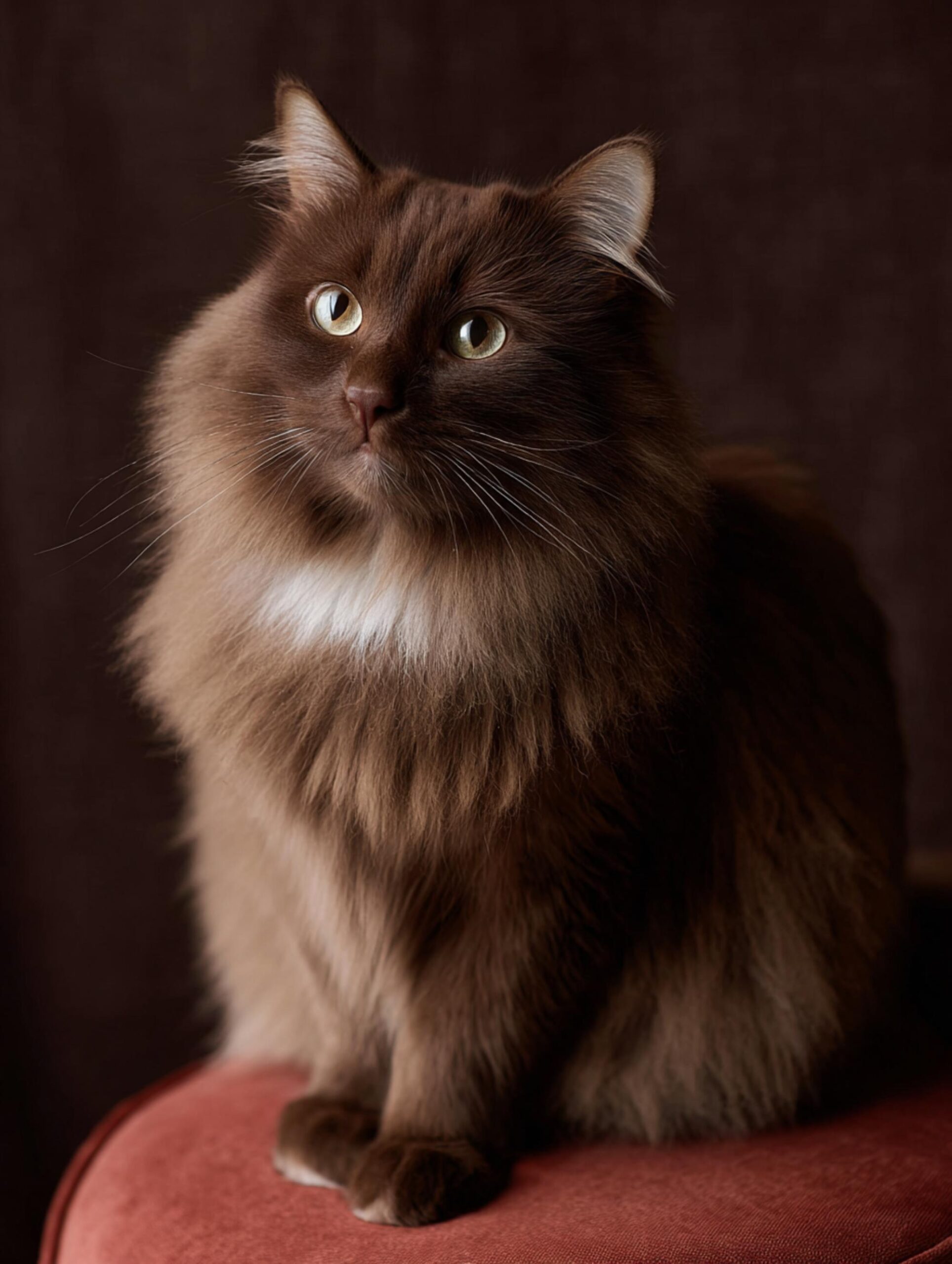
Ragdoll vs Cherubim: What’s the Difference and Which Fits Your Lifestyle?
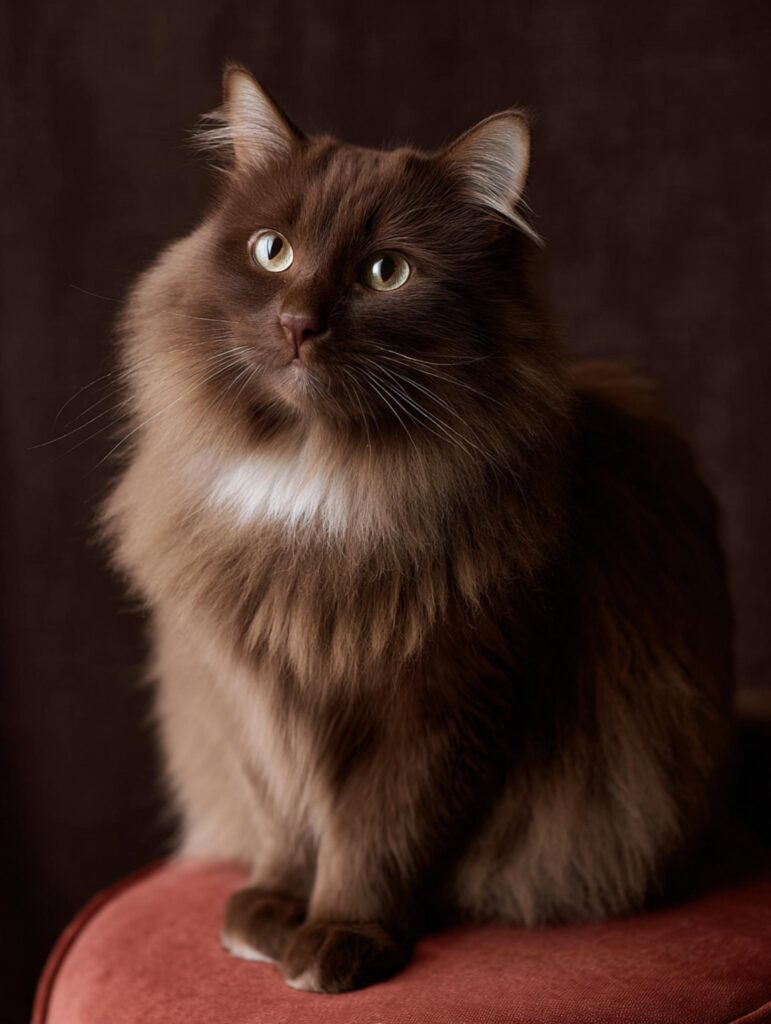
Ragdoll vs Cherubim is one of the most misunderstood comparisons in the cat world — because they are the same breed.
The Ragdoll vs Cherubim search is a common comparison for buyers who love the Ragdoll temperament but are confused by coat color terminology and registry classifications. The confusion is understandable: Ragdolls and Cherubim are the same cat, separated only by coat expression under TICA registration rules.
This guide explains the practical, real-world differences buyers experience between pointed Ragdolls and non-pointed Cherubim cats, so you can choose with clarity instead of registry confusion.
Rather than focusing on appearance alone, this comparison centers on what matters after the first year: temperament consistency, grooming expectations, daily interaction style, and long-term ownership satisfaction.
Ragdoll vs Cherubim: Quick Comparison Summary
| Category | Ragdoll (Pointed) | Cherubim (Non-Pointed) |
|---|---|---|
| Breed Status | Same breed | Same breed |
| Genetic Foundation | Identical | Identical |
| Registry Classification | Traditional Ragdoll | Separate class in TICA |
| Coat Expression | Pointed only | Non-pointed, mink, sepia, solid |
| Temperament | Calm, affectionate, people-oriented | Calm, affectionate, people-oriented |
| Activity Level | Low to moderate | Low to moderate |
| Grooming Needs | Moderate, routine brushing | Moderate, routine brushing |
| Shedding | Moderate, seasonal | Moderate, seasonal |
| Health Profile | Same health risks when well bred | Same health risks when well bred |
| Lifespan | 14–18+ years | 14–18+ years |
| Family & Kids | Excellent with proper socialization | Excellent with proper socialization |
| Show Eligibility | All registries recognizing Ragdolls | TICA only |
| Cost Range | $2,500–$5,000+ | $2,500–$5,000+ |
| Best For | Classic pointed look, broad show access | Exotic colors, same temperament |
| Real-World Difference | Registry label | Registry label |
Ragdoll vs Cherubim is a classification difference, not a breed difference.
Temperament, care, health, and lifestyle remain the same.
What This Comparison Focuses On
Ragdolls and Cherubim share the same foundation, structure, temperament, and slow-maturing development. The only defining difference is coat expression:
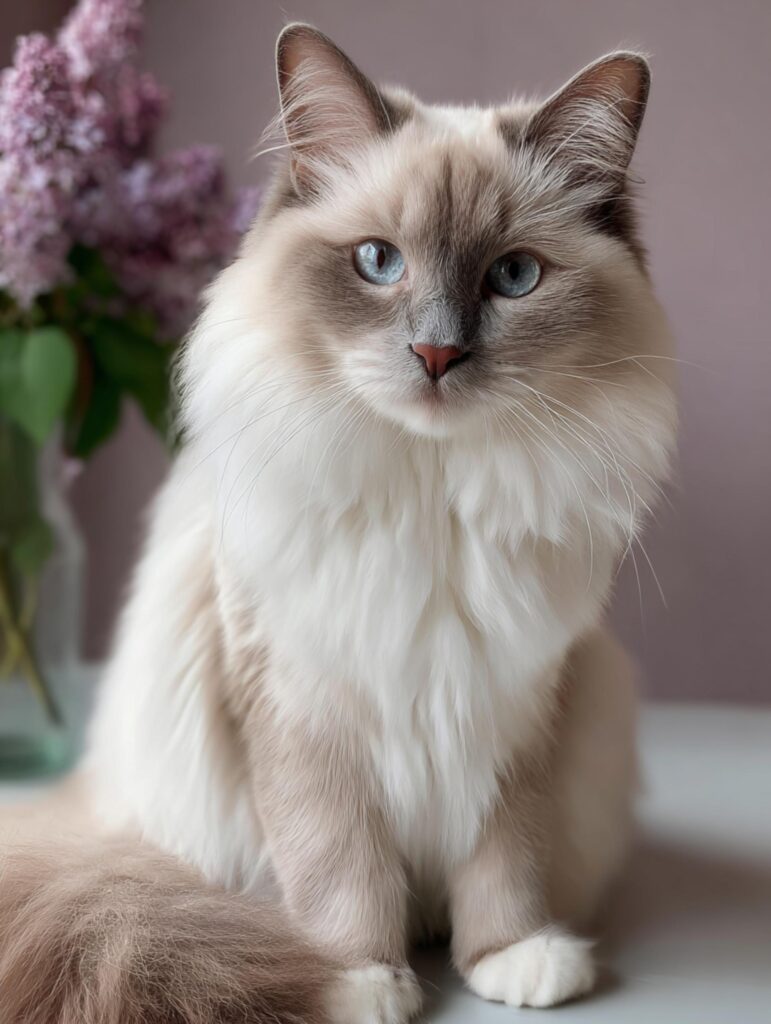
- Ragdoll: pointed coat (seal, blue, chocolate, lilac, lynx, etc.)
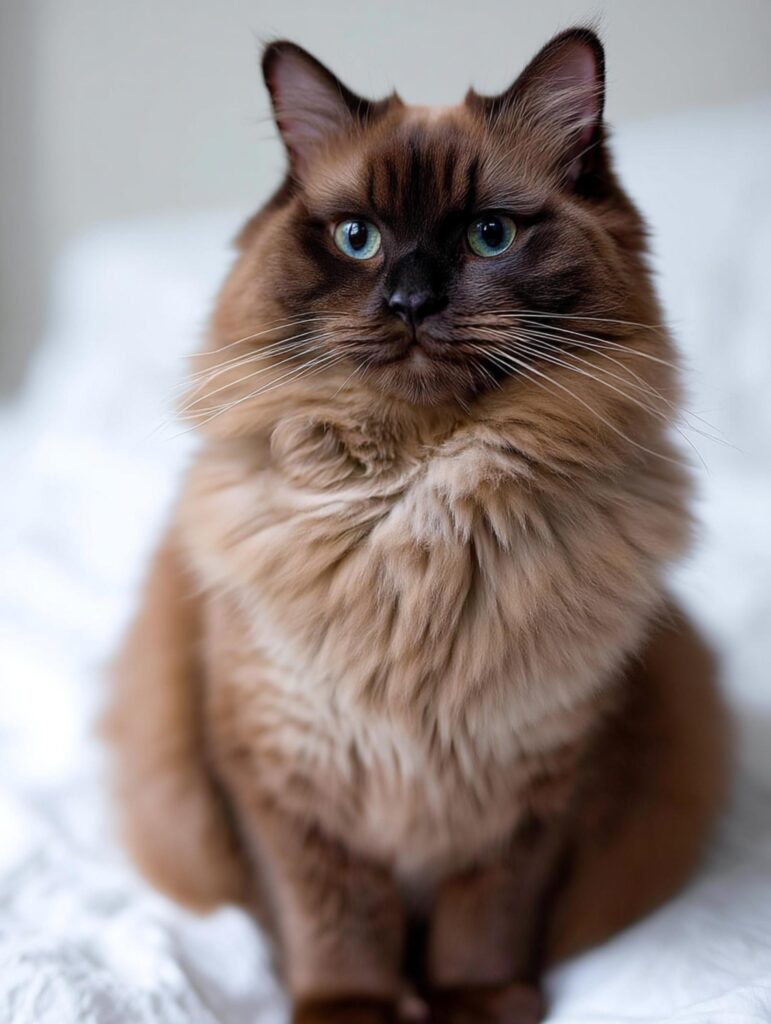
- Cherubim: non-pointed coat (solid, bicolor, tabby, tortie, etc.)
TICA separates these cats to preserve the traditional pointed Ragdoll standard — not because the cats differ in behavior, health, or quality.
That distinction can still influence buyer experience, expectations, and satisfaction, especially when people are searching by name rather than genetics.
This comparison addresses:
- Temperament expression in daily life
- Grooming and coat maintenance
- Social engagement and bonding style
- Household compatibility
- Long-term predictability for owners
This guide is written for buyers who value clarity, stability, and informed ownership — not novelty or misleading labels.
Ragdoll vs Cherubim: Quick Comparison
| Trait | Ragdoll (Pointed) | Cherubim (Non-Pointed) |
|---|---|---|
| Registry Classification | TICA Ragdoll | TICA Cherubim |
| Breed Origin | Same foundation lines | Same foundation lines |
| Coat Expression | Colorpoint only | Solid, bicolor, tabby, tortie |
| Temperament | Calm, people-oriented, steady | Calm, people-oriented, steady |
| Social Style | Affectionate without clinginess | Affectionate without clinginess |
| Activity Level | Low to moderate | Low to moderate |
| Grooming Needs | Moderate (regular brushing) | Moderate (regular brushing) |
| Shedding | Seasonal, manageable | Seasonal, manageable |
| Structure & Size | Large, slow-maturing | Large, slow-maturing |
| Health Profile | Generally low risk when well bred | Generally low risk when well bred |
| Typical Lifespan | 14–18+ years | 14–18+ years |
| Daily Maintenance | Moderate | Moderate |
| Best Fit For | Buyers wanting a traditional pointed look | Buyers wanting the same cat without point restriction |
The Key Takeaway Buyers Miss
A Cherubim is not a different breed from a Ragdoll.
It is a Ragdoll-type cat expressed outside the pointed color range.
Temperament, health, size, and companionship style do not change because of coat color. What changes is:
- how the cat is labeled in registries
- how it appears in search results
- how often misinformation surrounds it
For owners who prioritize temperament, predictability, and long-term companionship, coat expression should be a preference — not a deciding factor.
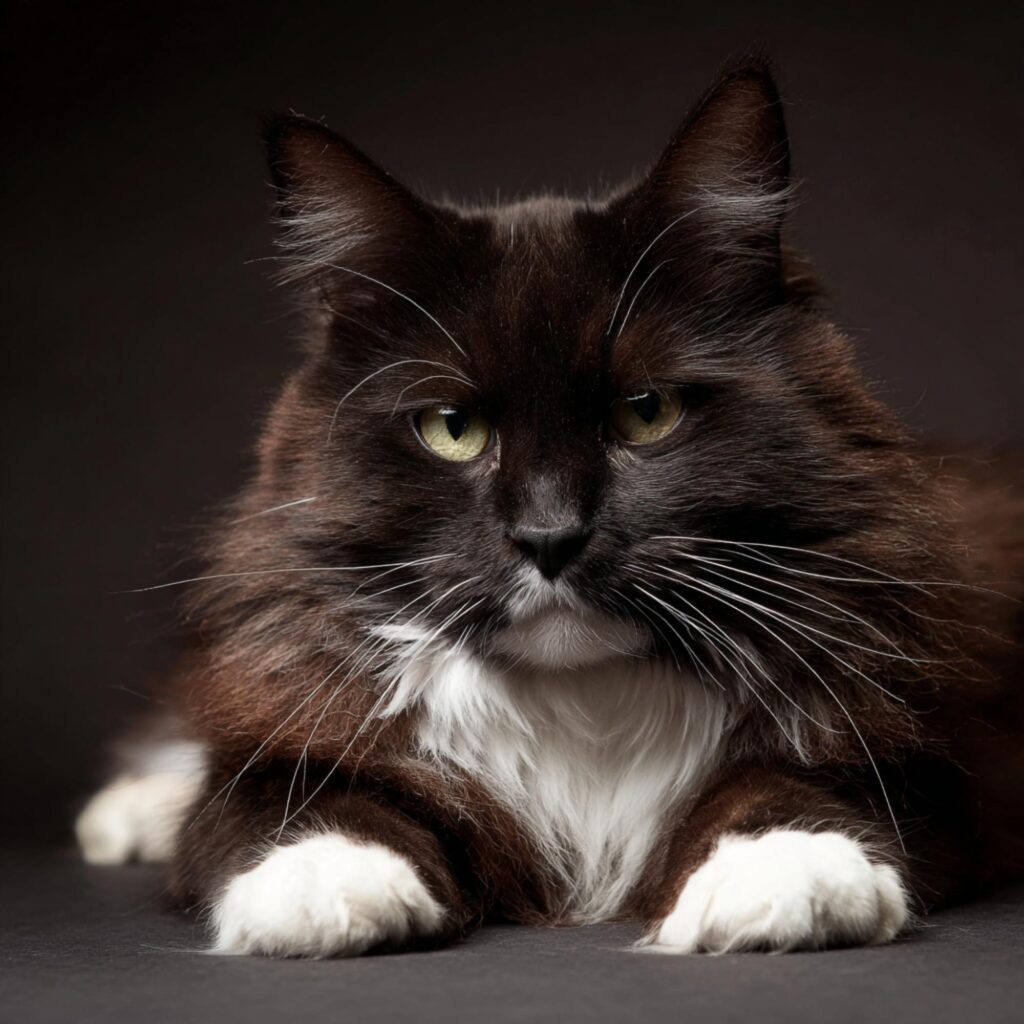
Breed Origins and Development: Ragdoll vs Cherubim
Ragdoll Origins (Pointed Expression)
The Ragdoll is a modern pedigreed breed developed in the United States with a clear goal: a large, slow-maturing cat with a calm temperament, strong human orientation, and predictable structure. From the beginning, breeders selected for emotional stability, handling tolerance, and physical balance rather than extreme features.
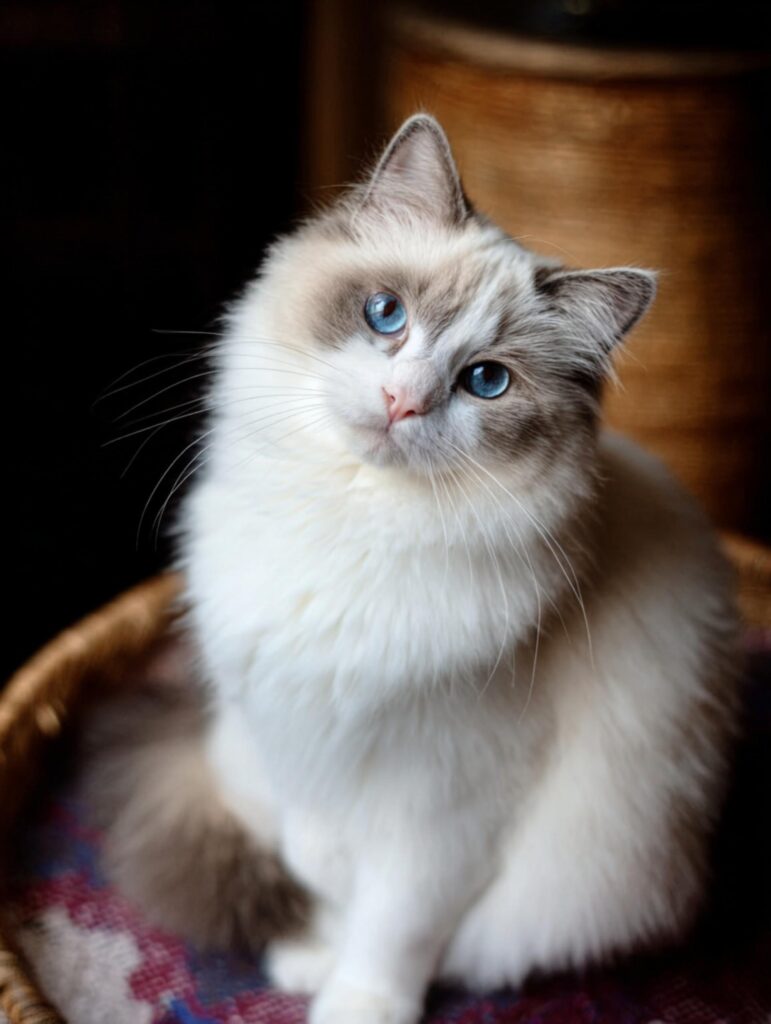
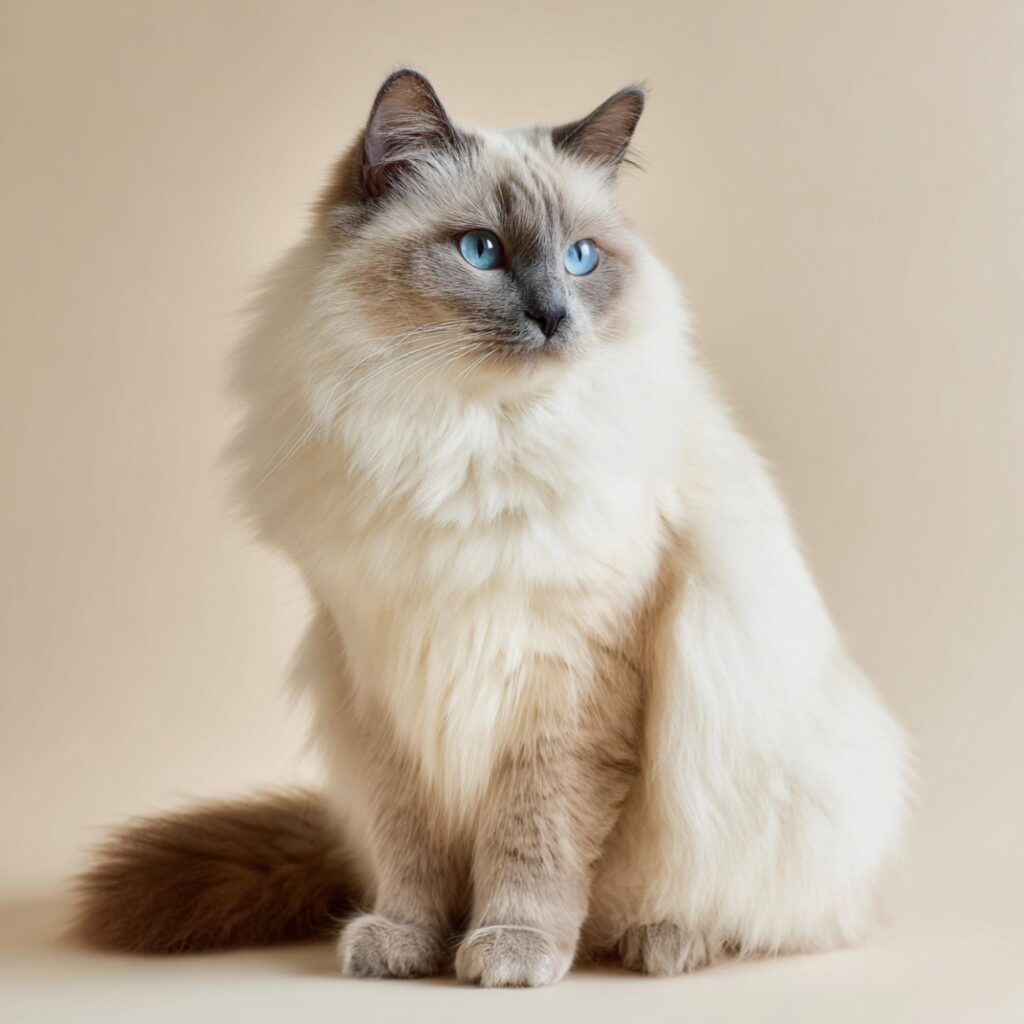
Traditional Ragdolls are defined by colorpoint expression, meaning darker coloration appears on the face, ears, legs, and tail while the body remains lighter.
Core traits established in early Ragdoll development include:
- Large, substantial bone structure
- Broad chest and balanced proportions
- Soft, semi-long coat with a plush texture
- Calm, people-focused temperament
- Slow physical and emotional maturity
These traits remain consistent across all legitimate Ragdoll lines today. The pointed coat is a visual expression, not a behavioral or structural one.
Cherubim Origins (Non-Pointed Expression)
Cherubim cats originate from the same Ragdoll foundation lines. They are not a separate breed in terms of genetics, temperament, or development. Instead, Cherubim is the registry designation used by TICA for non-pointed Ragdoll-type cats.
The separation exists to preserve the traditional pointed Ragdoll standard — not because Cherubim cats differ in health, structure, or personality.
Cherubim cats express coats that fall outside the pointed range, including:
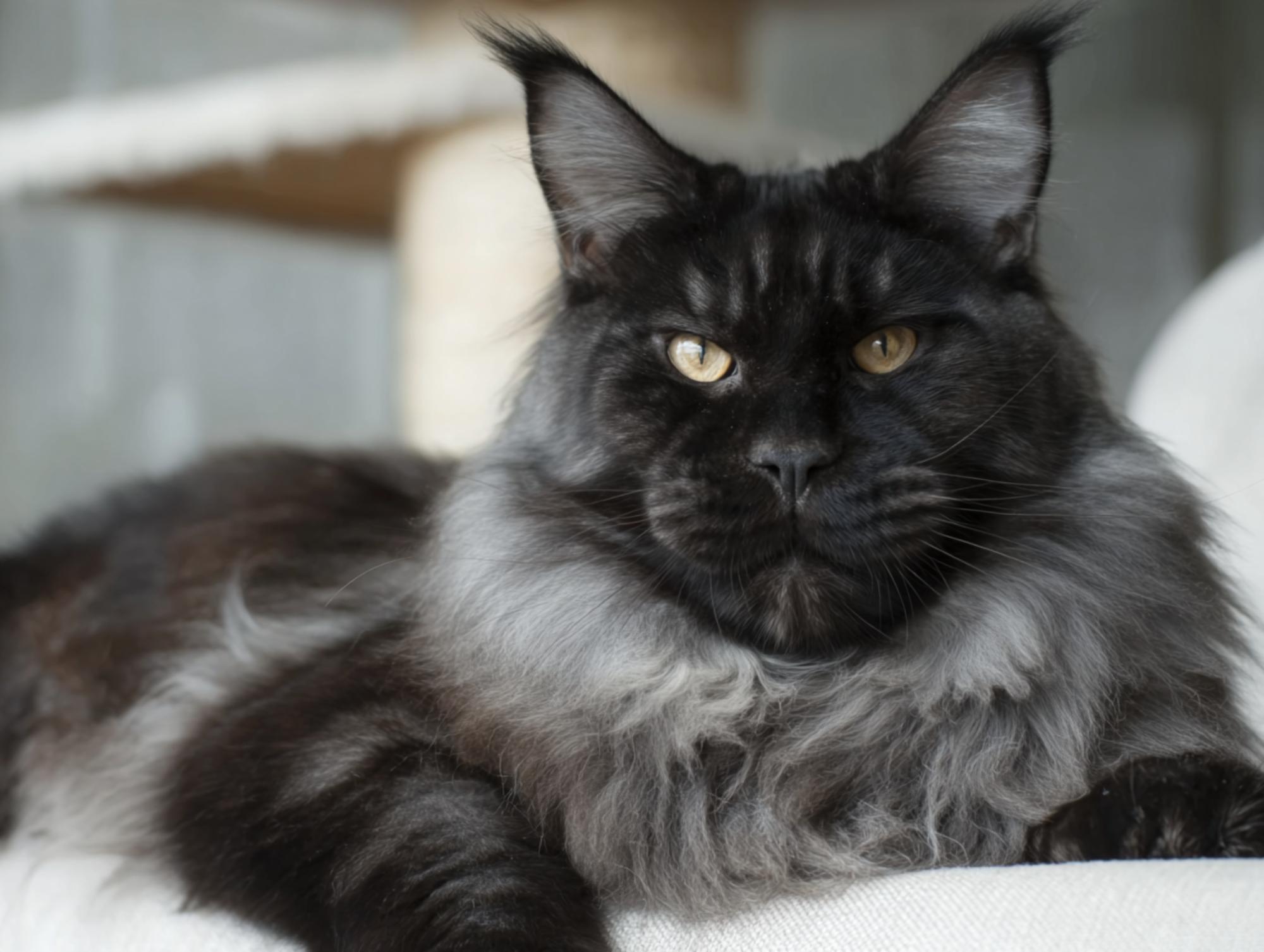
- Solid colors
- Bicolor patterns
- Tabby patterns
- Tortoiseshell and torbie expressions
From a development standpoint, Cherubim cats mature, behave, and integrate into households exactly like pointed Ragdolls. The difference is classification, not function.
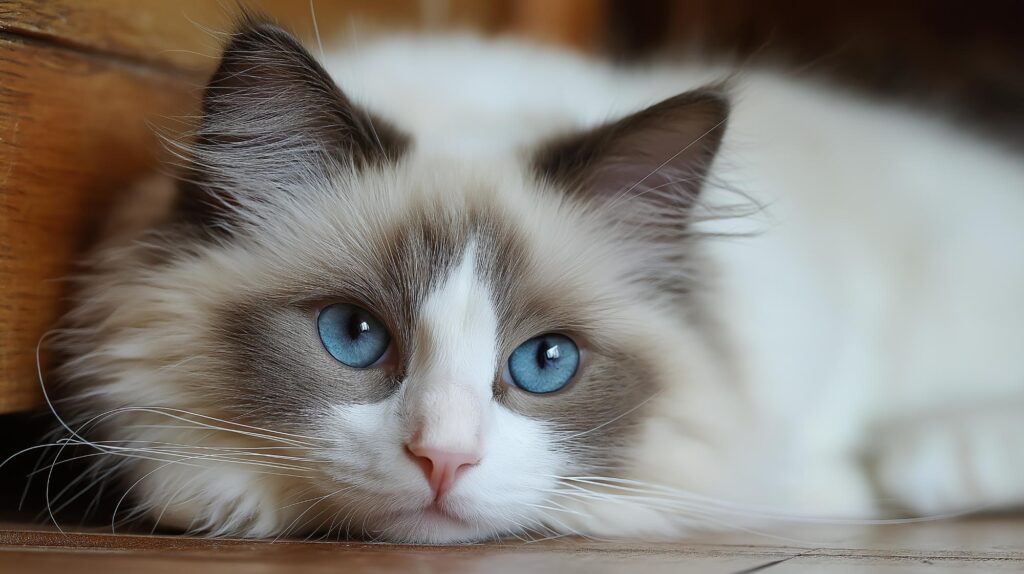
Ragdoll vs Cherubim Appearance and Structural Traits
Ragdoll Appearance (Pointed)
Pointed Ragdolls are large, well-balanced cats with a soft, flowing coat and gentle expression. Their physical structure emphasizes comfort, mobility, and longevity rather than extremes.
Key characteristics include:
- Large, sturdy bone structure
- Broad chest and strong shoulders
- Moderate head with a defined but not flattened nose
- Large, expressive eyes
- Semi-long, plush coat that lies close to the body
- Pointed coloration with contrast between body and extremities
Ragdolls are bred with moderate facial structure, supporting normal airflow, clear tear drainage, and efficient self-grooming.
Cherubim Appearance (Non-Pointed)
Cherubim cats share the exact same physical structure as Ragdolls. The difference is coat expression, not body type.
Defining traits include:
- Identical size and bone density to Ragdolls
- Same head shape, eye size, and ear placement
- Semi-long, plush coat with the same texture
- Non-pointed coloration across the full coat
Cherubim cats appear in a wide range of colors and patterns, including black, blue, cream, chocolate, lilac, red, silver, golden, smoke, shaded, bicolor, tabby, and tortoiseshell.
Structurally and functionally, a Cherubim moves, breathes, and ages the same way a Ragdoll does.
Structural Differences That Actually Matter (and Those That Don’t)
Because Ragdolls and Cherubim are the same breed, there are no structural differences that affect health or longevity. However, buyers often experience subtle lifestyle differences based on expectations tied to coat color and labeling.
Practical considerations include:
- Coat Care: Identical grooming needs for both; regular brushing is required
- Sensory Presence: Some owners perceive darker or solid coats as visually “denser,” but texture is the same
- Owner Expectations: Mislabeling can affect buyer assumptions, not the cat’s behavior
Any perceived difference is human-driven, not cat-driven.
Why Both Ragdolls and Cherubim Are Considered Structurally Healthy
Well-bred Ragdolls and Cherubim benefit from the same health-supportive traits:
- Moderate facial structure with open airways
- Functional tear ducts and clear eyes
- Low incidence of chronic respiratory issues
- Strong skeletal development and joint stability
- Excellent longevity when responsibly bred
The distinction between Ragdoll vs Cherubim is classification-based, not biology-based.
For owners choosing between them, the decision should be guided by coat preference and labeling comfort, not concerns about temperament, health, or quality.
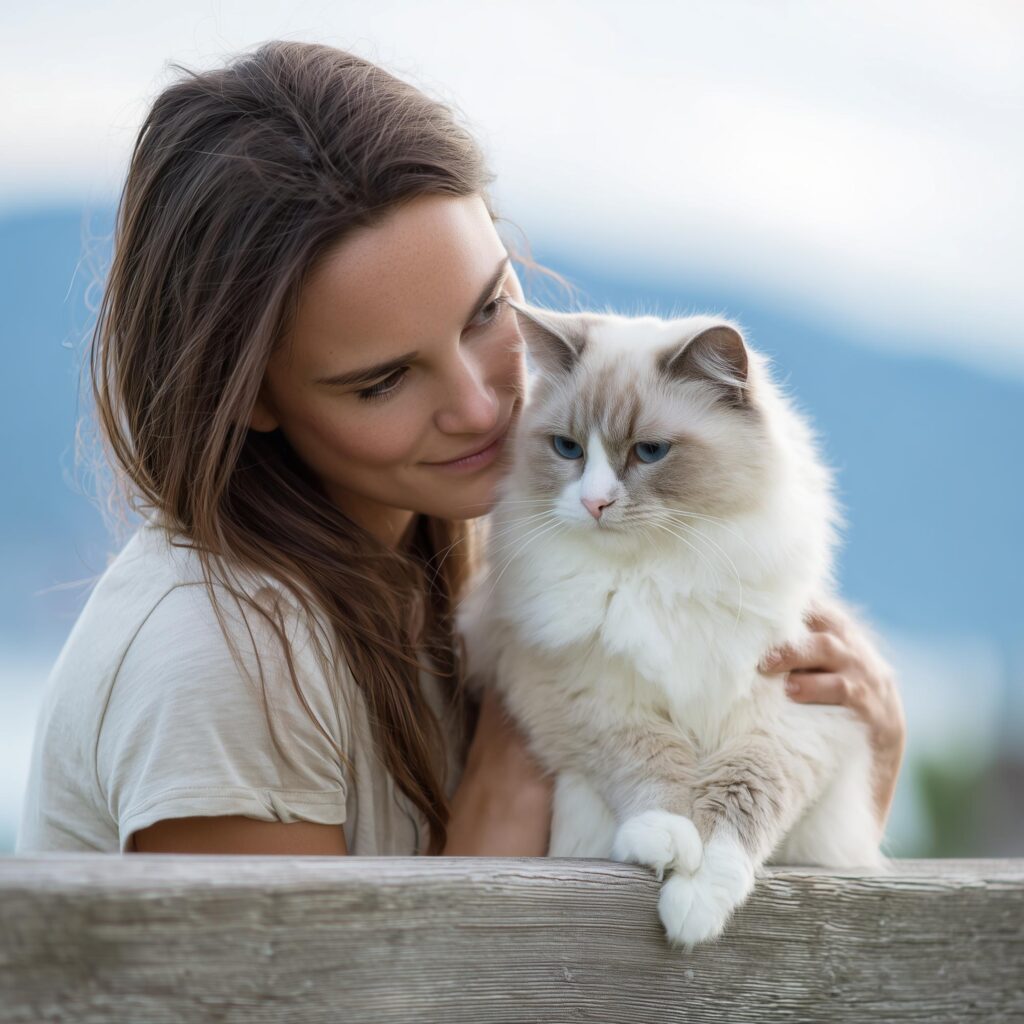
Personality & Temperament: Ragdoll vs Cherubim (No Behavioral Difference)
Ragdoll vs Cherubim comparisons often suggest differences in personality, affection level, or social needs. In reality, there is no temperament difference between Ragdolls and Cherubim. They share the same genetic foundation, the same breeding goals, and the same behavioral profile.
Both express the classic Ragdoll temperament: calm, emotionally steady, people-oriented, and predictable across life stages.
Any perceived difference comes from owner expectation or labeling, not from the cats themselves.
Ragdoll & Cherubim Temperament
Whether registered as a Ragdoll or Cherubim, these cats consistently show:
- Strong human orientation without clinginess
- Calm, regulated emotional responses
- Gentle, tolerant handling style
- Patience with children and respectful dogs
- Social adaptability without chaos-seeking behavior
- Comfort with routine and predictability
They bond deeply with their people but do not rely on constant stimulation. Most prefer proximity over pressure—being near their humans, sharing space, and participating quietly in daily life.
These cats are present and engaged without becoming needy or reactive.
Affection Style: Same Cat, Same Expression
Both Ragdolls and Cherubim commonly:
- Sit beside their owners rather than demanding attention
- Sleep nearby or in the same room
- Enjoy gentle handling and predictable affection
- Accept alone time without anxiety or vocalization
- Adjust well to visitors and routine household changes
They are emotionally available cats, not performative ones. Affection is offered calmly and consistently rather than demanded.
Coat color or pattern does not alter this behavior.
Independence vs Attachment: A False Comparison
Unlike comparisons between unrelated breeds, Ragdoll vs Cherubim is not a comparison of independence versus attachment.
Both are:
- Emotionally secure
- Comfortable with space and closeness
- Non-reactive and low-drama
- Predictable in social behavior
If one cat appears more cuddly or more reserved than another, that variation reflects individual personality, not registry classification.
What Actually Matters for Owners
When choosing between a Ragdoll and a Cherubim, temperament should not be a deciding factor. The temperament is the same.
What matters instead:
- Coat preference
- Visual aesthetics
- Comfort with registry terminology
- Breeder quality and early socialization
The cat you live with will behave like a Ragdoll—because it is one.
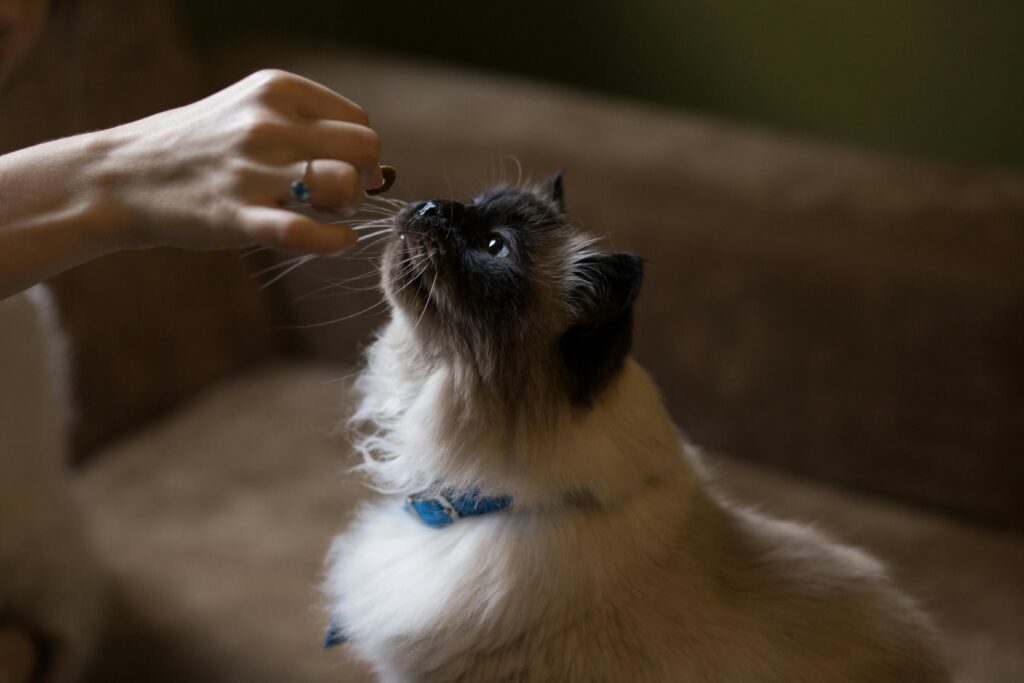
Grooming & Maintenance: Ragdoll vs Cherubim (No Difference)
Ragdoll vs Cherubim grooming comparisons often imply that one is easier to maintain than the other. In reality, there is no difference in grooming or daily maintenance between Ragdolls and Cherubim.
They share the same coat type, texture, density, and shedding patterns. Registry classification and coat color do not change how these cats are cared for.
Coat Type and Texture (Identical for Ragdoll and Cherubim)
Both Ragdolls and Cherubim share the same foundational coat structure:
- A semi-long, plush coat
- Soft, dense texture that resists tangling when brushed routinely
- A coat that lies close to the body rather than floating or feathering excessively
- Seasonal shedding cycles rather than constant heavy shedding
Some Cherubim cats may carry mink or mink-like coat expression, which can feel smoother and more velvety to the touch than a traditional Ragdoll coat. This affects feel, not function.
Importantly:
- Mink coats do not require additional grooming
- Shedding patterns remain the same
- Brushing frequency does not change
- Maintenance routines stay identical
Because the underlying coat structure is the same, grooming and care requirements do not differ between Ragdolls and Cherubim, regardless of whether the coat feels plush or exceptionally smooth.
Typical Grooming Routine for Ragdolls and Cherubim
A realistic, sustainable care routine includes:
- Brushing 2–3 times per week
- More frequent brushing during seasonal sheds
- Routine nail trimming
- Standard dental care
- Occasional sanitary trimming if needed
Daily grooming is not required, and professional grooming is optional rather than necessary. With consistent home care, coats remain clean, comfortable, and mat-free.
What Does Not Change With Classification
- Coat length
- Coat density
- Shedding level
- Matting risk
- Skin or coat health
- Grooming frequency
A Cherubim does not require more care than a Ragdoll, and a Ragdoll does not have an easier coat because it is pointed.
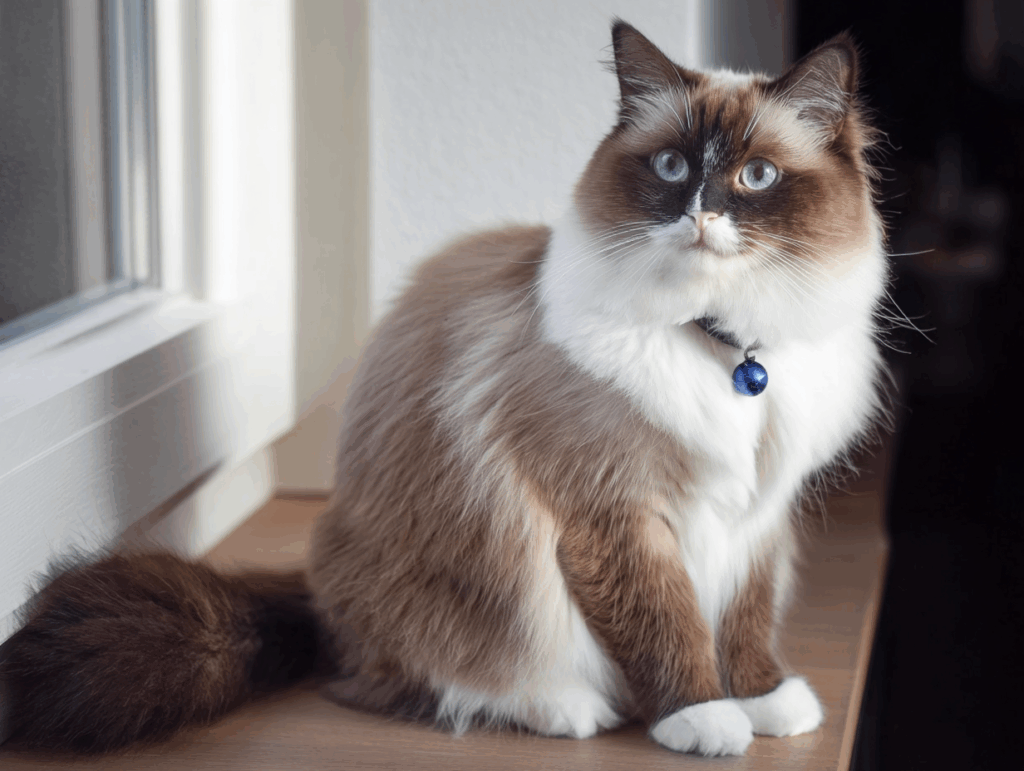
Health & Genetic Considerations: Shared Stability, Breeding Matters More Than Classification
Ragdoll vs Cherubim health comparisons often imply that one classification is healthier than the other. In reality, Ragdolls and Cherubim share the same genetic foundation and health profile. Registry classification does not determine health outcomes.
What matters far more than whether a cat is labeled Ragdoll or Cherubim is:
- Breeder selection practices
- Health testing protocols
- Genetic diversity and COI (Coefficient of Inbreeding)
- Long-term line management
When responsibly bred, both Ragdolls and Cherubim are considered structurally sound, stable, and long-lived companion cats.
Shared Structural Health Traits (Ragdoll & Cherubim)
Both classifications benefit from the same foundational anatomy:
- Moderate facial structure with open nasal passages
- Functional tear ducts and clear eyes
- Balanced skull and jaw alignment
- Strong bone density and joint stability
- Large but proportionate body structure
- Calm temperament that reduces stress-related illness
These traits support long-term comfort, normal breathing, and healthy aging. Neither Ragdolls nor Cherubim carry the extreme conformation risks seen in breeds selected for flattened faces or exaggerated features.
Common Health Considerations in Ragdolls and Cherubim
Because they are the same breed, health considerations are identical:
- Hypertrophic cardiomyopathy (HCM)
Screened in ethical breeding programs; risk increases in poorly managed lines - Weight management in adulthood
Calm temperament and slow metabolism require portion awareness - Dental tartar over time
Common in many calm, large-bodied breeds - General age-related changes
Managed through routine veterinary care and nutrition
Conditions such as PKD are uncommon in well-tested lines and should not appear when breeders follow responsible screening practices.
Why COI Matters More Than Ragdoll vs Cherubim
A cat’s COI (Coefficient of Inbreeding) has a far greater impact on long-term health than coat color or registry label.
Lower COI is associated with:
- Stronger immune resilience
- Reduced risk of inherited disease expression
- Better longevity and reproductive health
- Greater overall genetic stability
A high-COI pointed Ragdoll is not healthier than a low-COI Cherubim.
Likewise, a Cherubim is not “less healthy” because it falls outside the pointed standard.
Genetic diversity beats classification every time.
Health Management Differences That Do Not Reflect Genetics
Any practical differences owners notice relate to maintenance, not medical fragility:
- Coat length may affect brushing frequency, not health
- Grooming routines influence skin comfort, not genetic stability
- Veterinary visit patterns vary by owner attentiveness, not classification
Both Ragdolls and Cherubim show similar longevity, disease risk, and overall robustness when bred and raised responsibly.
The Real Health Decision for Buyers
When choosing between Ragdoll vs Cherubim, buyers should focus on:
- Breeder transparency
- Health testing documentation
- COI and line diversity
- Early nutrition and socialization practices
Not on registry terminology.
From a medical and genetic standpoint, Ragdolls and Cherubim are the same cat.
The difference is labeling — not health.
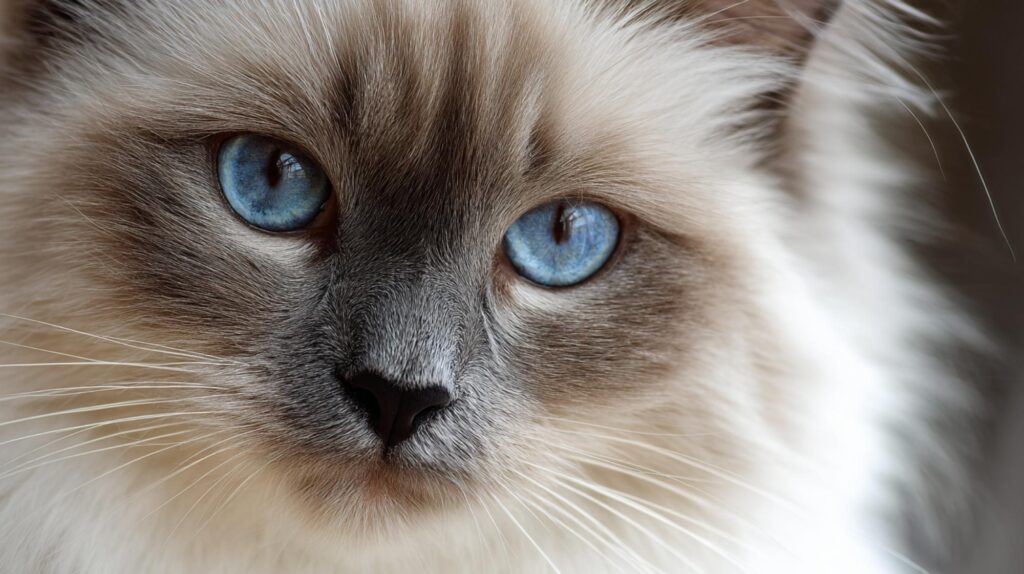
Lifespan: Do Ragdolls or Cherubim Live Longer?
Ragdoll vs Cherubim lifespan comparisons often assume that one classification lives longer than the other. In reality, Ragdolls and Cherubim share the same genetic foundation and lifespan expectations. When responsibly bred and properly cared for, both regularly live 14–18+ years, with many reaching their late teens.
Longevity is influenced far more by breeder practices, genetic diversity, weight management, indoor living, and routine veterinary care than by coat color or registry classification.
Ragdoll Lifespan — 14 to 18+ Years
Pointed Ragdolls are considered a long-lived pedigree breed when bred and managed responsibly. Their structure, temperament, and slow maturation support healthy aging over many years.
Factors that contribute to longevity include:
- Moderate facial structure with normal airflow
- Functional tear ducts and clear eyes
- Strong bone density and joint stability
- Calm, low-stress temperament
- Low incidence of structural disease in well-managed lines
Because Ragdolls are not bred for extreme features, they typically maintain mobility, comfort, and quality of life well into their senior years.
Cherubim Lifespan — 14 to 18+ Years
Cherubim cats match Ragdolls closely in lifespan because they are the same breed expressed outside the pointed color range.
Their longevity is supported by the same traits:
- Identical skeletal structure and size
- The same moderate head and facial anatomy
- Comparable metabolic and growth patterns
- The same calm, emotionally regulated temperament
There is no evidence that Cherubim live shorter or longer lives than pointed Ragdolls when bred and cared for under the same conditions.
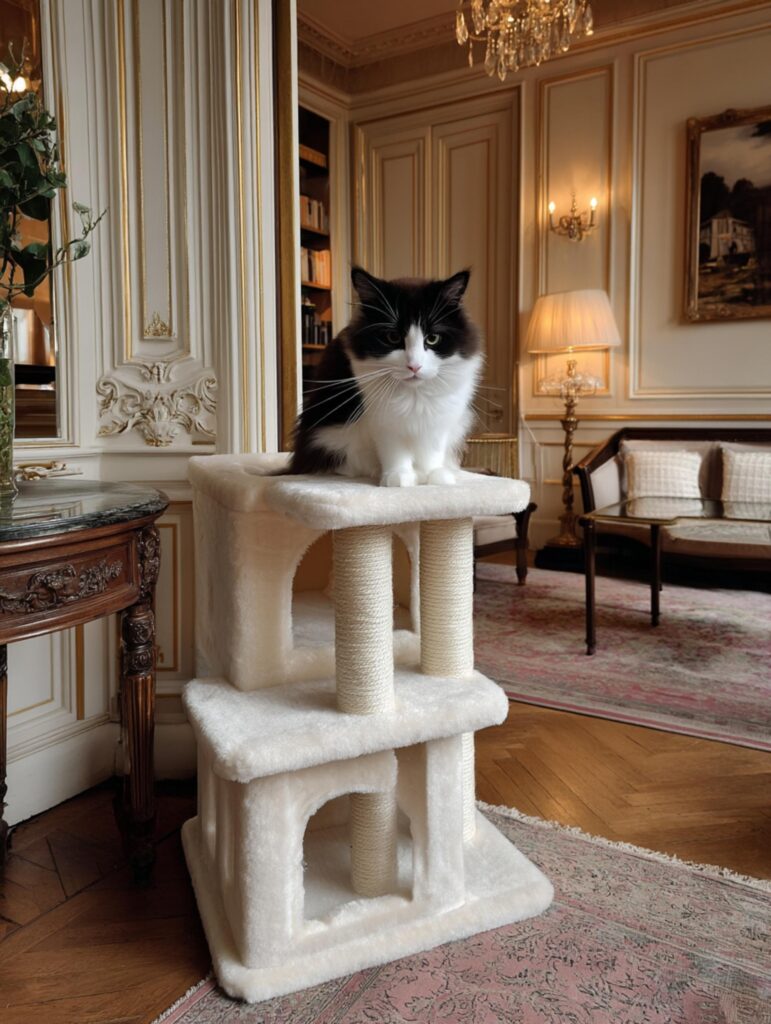
Activity Level & Energy: Ragdoll vs Cherubim
Ragdoll vs Cherubim comparisons sometimes suggest differences in energy or independence. In reality, there is no difference in activity level between Ragdolls and Cherubim. They share the same temperament, maturity pattern, and daily energy needs.
Both are calm, low-drama cats with low to moderate energy. They enjoy short, purposeful play sessions, gentle interaction with their people, and long rest periods throughout the day. Window watching, light puzzle toys, and brief interactive play are typically enough to keep them mentally and physically satisfied.
Neither Ragdolls nor Cherubim are high-drive or constantly active. They engage when invited, disengage easily, and settle comfortably into predictable routines. Any variation in playfulness or independence reflects individual personality, age, and environment, not coat color or registry classification.
Because both are slow-maturing and naturally relaxed, weight management depends more on portion control and routine movement than on increased activity. From a day-to-day lifestyle perspective, you will live with them the same way.
The difference is labeling — not energy.
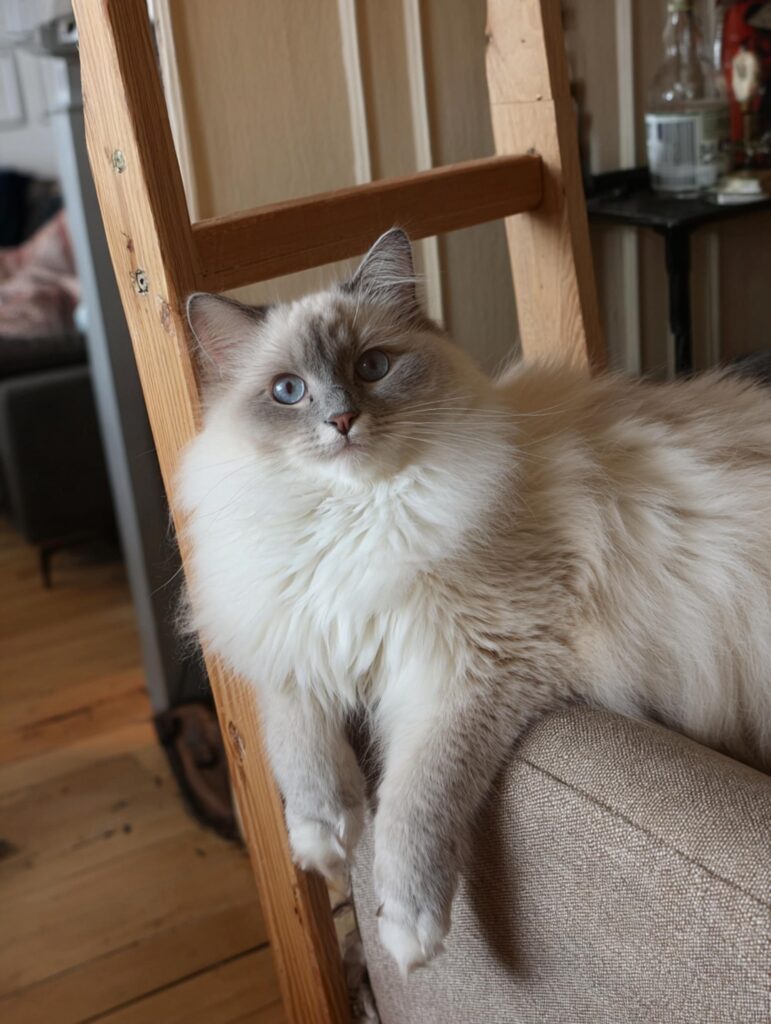
Shedding: Ragdoll vs Cherubim (No Difference)
Ragdoll vs Cherubim shedding comparisons often assume that coat color or registry classification affects how much a cat sheds. In reality, Ragdolls and Cherubim shed the same way. They share identical coat structure, density, and growth cycles.
Both shed moderately and seasonally, with the most noticeable coat drop occurring during spring and fall transitions.
What Shedding Looks Like in Daily Life
Across both Ragdolls and Cherubim, owners can expect:
- Moderate shedding rather than constant heavy hair loss
- Predictable seasonal coat changes
- Loose hair that is easily removed with brushing
- Minimal airborne hair compared to finer-coated breeds
Because the coat is plush and resilient rather than wispy, shed hair tends to stay contained instead of floating through the home.
Grooming and Shedding Control
Shedding remains very manageable with a simple routine:
- Brushing 2–3 times per week
- Increased brushing during seasonal sheds
- No need for daily grooming or professional deshedding
This applies equally to pointed Ragdolls, solid or patterned Cherubim, and mink-coated individuals.
The Takeaway for Owners
There is no shedding advantage or disadvantage when choosing between Ragdoll vs Cherubim. Coat color, pattern, and registry label do not affect how much these cats shed.
Cost, Price Ranges, and Lifetime Maintenance: Ragdoll vs Cherubim
Ragdoll vs Cherubim cost comparisons often assume that one classification is more expensive to buy or maintain than the other. In reality, Ragdolls and Cherubim fall into the same pricing tier and have the same lifetime ownership costs. Registry classification and coat color do not meaningfully change expenses.
What influences cost most is breeder quality, health testing, lineage, and early care, not whether a cat is labeled Ragdoll or Cherubim.
Ragdoll Cost & Pricing
Well-bred Ragdoll kittens typically range from:
- $2,500–$5,000+, depending on breeder reputation, health testing, lineage, and demand
Higher prices are usually tied to:
- Proven breeding lines
- Comprehensive health screening
- Breeder support and contracts
- Show or breeding-quality evaluation
Pointed coloration alone does not guarantee a higher or lower price.
Cherubim Cost & Pricing
Cherubim kittens fall into the same general price range:
- $2,500–$5,000+, depending on the same factors
While some breeders price Cherubim slightly lower due to market perception or buyer familiarity, this reflects consumer demand, not quality, health, or cost to raise the kitten.
From a production standpoint, Cherubim and Ragdoll kittens require the same investment in care, nutrition, testing, and socialization.
Lifetime Ownership Costs (Identical for Both)
Ongoing costs for Ragdolls and Cherubim are essentially the same and remain predictable:
- Routine home grooming (no professional grooming required)
- Preventive veterinary care rather than chronic management
- High-quality nutrition appropriate for a large, slow-maturing breed
- Enrichment and basic supplies
- Dental care and weight management as they age
Coat color, pattern, or registry label does not increase maintenance costs.
Show & Registry Comparison: Ragdoll vs Cherubim
When comparing Ragdoll vs Cherubim, the only meaningful difference lies in registry recognition and show classification, not in breed, health, or quality. Ragdolls and Cherubim come from the same foundation and share the same structural and temperament standards. What differs is how registries choose to categorize coat expression for show purposes.
TICA Recognition and Show Eligibility
At present, TICA (The International Cat Association) is the only major registry that formally recognizes Cherubim as a distinct classification within the Ragdoll breed group.
Under TICA:
- Ragdolls are the traditional blue-eyed, pointed cats shown under the Ragdoll standard
- Cherubim are non-pointed expressions (including solid, mink, sepia, and other patterns) shown under their own Cherubim classification
This allows Cherubim cats to be registered, shown, and titled in TICA-sanctioned shows rather than being excluded due to coat expression.
Importantly, this separation exists to preserve the traditional pointed Ragdoll standard in the show ring — not because Cherubim cats differ in structure, temperament, or genetic quality.
Recognition in Other Registries
Most other major registries recognize only the pointed Ragdoll standard and do not currently offer a separate Cherubim classification.
In those registries:
- Pointed Ragdolls may be fully eligible for show
- Non-pointed cats from the same lines may be registered differently or not shown under the Ragdoll standard
This does not make Cherubim cats lesser in quality or authenticity. It reflects differences in registry philosophy, not differences in the cats themselves.
What This Means for Breeders and Exhibitors
- If your goal is showing in TICA, both Ragdolls and Cherubim are eligible within their respective classifications
- If your goal is showing in non-TICA registries, only traditional pointed Ragdolls may be eligible
- For pet homes, registry classification has no impact on temperament, health, or companionship
Show classification affects titles and paperwork — not the lived experience of owning the cat.
The Takeaway for Buyers
If you are choosing between a Ragdoll and a Cherubim as a companion, registry and show status should not influence your decision. They are the same breed with the same temperament, care needs, and longevity.
If you are choosing with show goals in mind, registry participation matters more than the cat’s name.
The difference is show rules — not the cat.
Ragdoll vs Cherubim: Pros and Cons
When comparing Ragdoll vs Cherubim, it’s important to be clear: they are the same breed. There are no differences in temperament, health, care, or longevity. The pros and cons below reflect buyer experience, market perception, and registry realities, not differences in the cats themselves.
Ragdoll: Pros and Cons
| Ragdoll Pros | Ragdoll Cons |
|---|---|
| Widely recognized and familiar breed name | Restricted to pointed coat patterns |
| Accepted for showing in all major registries | Less color and pattern variety |
| Strong resale and recognition value | Higher competition in show rings |
| Easier public understanding and explanation | Often misunderstood as “only blue-eyed” |
| Clear expectations for buyers and exhibitors | Some buyers dismiss non-pointed cats unfairly |
Cherubim: Pros and Cons
| Cherubim Pros | Cherubim Cons |
|---|---|
| Same temperament and health as Ragdolls | Less widely recognized name |
| Greater coat color and pattern variety | Show eligibility primarily limited to TICA |
| Recognized and showable in TICA | Requires explanation to unfamiliar buyers |
| Often less influenced by trend pricing | Can be misrepresented or misunderstood |
| Ideal for buyers prioritizing cat over label | Not accepted as a separate class in all registries |
What These Pros and Cons Actually Mean
None of the pros or cons above relate to:
- Health
- Temperament
- Grooming
- Activity level
- Lifespan
- Quality of companionship
They reflect naming, registry structure, and market familiarity, not real-world ownership differences.
Pros and Cons Recap
If you want maximum name recognition and broad show eligibility, a traditional pointed Ragdoll may feel simpler.
If you want the same cat with more visual variety and less label-driven bias, a Cherubim offers equal quality with different classification.
In both cases, the cat you live with is the same.
Which Is Better for Kids and Families: Ragdoll vs Cherubim?
When it comes to children and family life, there is no difference between Ragdolls and Cherubim. They are the same breed with the same temperament traits that make Ragdolls one of the most family-friendly pedigree cats.
Both are known for being calm, patient, and emotionally regulated — qualities that matter far more in a household with children than coat color or registry classification.
Why Ragdolls and Cherubim Work Well With Children
Well-bred Ragdolls and Cherubim typically offer:
- High tolerance for gentle handling
- Calm responses to noise and activity
- Low startle reflex compared to more reactive breeds
- Strong preference for staying near family members
- Predictable, even-tempered behavior as they mature
They are not easily overstimulated and tend to disengage quietly rather than escalate when they need space. This makes them especially suitable for homes with younger children who are still learning boundaries.
What Families Should Still Teach Children
While the breed is forgiving, family success depends on guidance, not just genetics. Children should learn to:
- Avoid grabbing or carrying without support
- Respect resting and sleeping periods
- Use gentle touch rather than restraint
- Allow the cat to approach rather than chase
These expectations apply equally to Ragdolls and Cherubim.
The Real Factor That Matters for Families
For family homes, what matters most is:
- Breeder socialization practices
- Early handling and exposure
- Individual kitten temperament
- Household structure and routines
A well-socialized Cherubim will be just as patient and reliable with children as a pointed Ragdoll from the same program.
Bottom Line for Families
If you are choosing between Ragdoll vs Cherubim for a family with children, neither is better or worse. Both offer the same gentle temperament, emotional stability, and adaptability that families value.
Which Fits Your Lifestyle Better: Ragdoll vs Cherubim?
Because Ragdolls and Cherubim are the same breed, lifestyle fit is not about temperament, care, or health. Both offer the same calm energy, family-friendly nature, grooming needs, and longevity.
The deciding factors come down to how you plan to engage with the cat world and what you value visually.
Choose a Ragdoll if You:
- Prefer the traditional pointed Ragdoll look
- Want broad recognition across registries
- Are interested in showing outside of TICA
- Value immediate name recognition and familiarity
- Want a classic Ragdoll appearance with minimal explanation
For buyers with show ambitions beyond TICA or those who want the iconic blue-eyed pointed aesthetic, a Ragdoll is the more straightforward choice.
Choose a Cherubim if You:
- Want the same Ragdoll temperament and structure
- Are drawn to non-pointed, mink, sepia, or solid coats
- Prefer a more rare or visually distinctive appearance
- Plan to show specifically in TICA or are buying as a companion
- Value genetics, temperament, and individuality over labels
Cherubim cats appeal to owners who want something visually different without giving up the traits that make Ragdolls beloved.
What Does Not Affect Lifestyle
Regardless of whether you choose a Ragdoll or a Cherubim, you can expect the same:
- Calm, predictable temperament
- Family compatibility
- Grooming and shedding patterns
- Health profile and lifespan
- Daily care and interaction needs
There is no lifestyle advantage or disadvantage tied to classification.
Final Guidance
If your lifestyle includes show goals across multiple registries, choose a Ragdoll.
If your lifestyle values exotic color expression with the same companion experience, choose a Cherubim.
Either way, you are choosing the same cat — just expressed differently on paper.
Common Myths About Ragdoll vs Cherubim (And the Facts)
Myth 1: Cherubim Are Not Real Ragdolls
Reality: Cherubim are Ragdolls. They come from the same foundation lines and share the same genetics, structure, temperament, and care needs. The name exists for registry classification purposes, not because the cats are different.
Myth 2: Cherubim Are Mixed Breeds
Reality: A Cherubim is not a mixed breed. Non-pointed, mink, or solid coat expression does not indicate crossbreeding. Coat expression reflects genetics already present in Ragdoll lines.
Myth 3: Only Pointed Ragdolls Have the True Ragdoll Temperament
Reality: Temperament is not tied to coat color. Calm, affectionate, emotionally regulated behavior is a breed trait, not a color trait. Cherubim express the same Ragdoll temperament as pointed cats.
Myth 4: Cherubim Are Less Healthy Than Ragdolls
Reality: Health is determined by breeding practices, genetic diversity, and health testing — not registry labels. A well-bred Cherubim is just as healthy and long-lived as a well-bred Ragdoll.
Myth 5: Mink or Solid Coats Change Grooming or Shedding
Reality: Coat feel may vary slightly, but grooming needs and shedding patterns remain the same. Mink-coated Cherubim may feel smoother, but they do not require additional care.
Myth 6: Cherubim Are Cheaper Because They’re Lower Quality
Reality: Pricing reflects market familiarity and demand, not quality. Some breeders price Cherubim differently because the name is less widely recognized — not because the cats are inferior.
Myth 7: Cherubim Are Not Suitable for Families or Children
Reality: Cherubim are just as patient, calm, and family-friendly as pointed Ragdolls. Suitability for families depends on temperament, socialization, and breeder practices — not classification.
Ragdoll vs Cherubim: Frequently Asked Questions (FAQ)
Is a Cherubim the same breed as a Ragdoll?
Yes. Cherubim and Ragdolls are the same breed. They come from the same foundation lines and share the same genetics, structure, temperament, and care needs. The distinction exists for registry classification purposes only, primarily to separate pointed and non-pointed coat expressions.
In everyday life, there is no behavioral, health, or lifestyle difference between a Ragdoll and a Cherubim.
Why does TICA separate Ragdolls and Cherubim?
TICA separates them to preserve the traditional pointed Ragdoll standard in the show ring, not because the cats differ as companions.
Pointed cats are shown as Ragdolls.
Non-pointed, mink, sepia, or solid cats are shown as Cherubim.
This is a paperwork and judging distinction — not a statement about quality, purity, or authenticity.
Are Cherubim mixed breed cats?
No. Cherubim are not mixed breeds.
Non-pointed and mink expressions come from genetics already present in Ragdoll lines. Coat expression alone does not indicate crossbreeding. A Cherubim with proper lineage and registration is just as purebred as a pointed Ragdoll.
Claims that Cherubim are “mixed” usually stem from misunderstanding genetics or outdated registry rules.
Do Cherubim have a different temperament than Ragdolls?
No. Temperament is identical.
Both Ragdolls and Cherubim are known for being:
- Calm and emotionally regulated
- People-oriented without being clingy
- Gentle and tolerant of handling
- Well-suited to families and multi-pet homes
Any variation you see between individual cats reflects personality, socialization, and environment, not classification or coat color.
Are Cherubim more affectionate or less affectionate than Ragdolls?
Neither. Affection level does not change with classification.
Some cats are cuddlier than others, but this occurs within both Ragdolls and Cherubim. Coat color, pattern, or registry label does not influence bonding style.
Do Cherubim shed more than Ragdolls?
No. Shedding patterns are the same.
Both shed moderately and seasonally. Grooming routines, shedding control, and coat maintenance are identical regardless of whether the cat is labeled Ragdoll or Cherubim.
Mink-coated Cherubim may feel smoother to the touch, but they do not shed more or require extra grooming.
Are mink Cherubim harder to groom?
No. Mink coats do not increase grooming needs.
While mink coats can feel silkier or denser, they follow the same growth cycle and maintenance requirements as other Ragdoll coats. Brushing frequency and shedding control remain the same.
Are Cherubim healthier than Ragdolls — or less healthy?
Neither. Health is the same.
Health outcomes depend on:
- Breeder practices
- Health testing
- Genetic diversity and COI
- Nutrition and weight management
A well-bred Cherubim is just as healthy and long-lived as a well-bred Ragdoll. Classification does not affect disease risk or lifespan.
Do Ragdolls or Cherubim live longer?
Neither outlives the other.
Both typically live 14–18+ years when responsibly bred and cared for.
Longevity depends on genetics, weight control, indoor living, and veterinary care — not coat color or registry label.
Why are some Cherubim priced lower than Ragdolls?
Pricing differences reflect market familiarity, not quality.
Because the term “Ragdoll” is more widely recognized, some breeders price Cherubim slightly lower to align with buyer expectations. This does not mean the cat is cheaper to raise, lower quality, or less desirable.
Many experienced buyers see Cherubim as equal value or better value for the same breed traits.
Can Cherubim be shown in cat shows?
Yes — in TICA.
Cherubim are eligible for showing and titles in TICA-sanctioned shows under their own classification. Outside of TICA, most registries currently recognize only the traditional pointed Ragdoll standard.
This affects show participation, not pet quality.
If I want to show, should I choose a Ragdoll or a Cherubim?
If you plan to show outside of TICA, choose a traditional pointed Ragdoll.
But if you plan to show in TICA, either is acceptable depending on coat expression.
For pet homes, show eligibility is irrelevant.
Which is better for families and children?
Neither is better — both are equally suitable.
Ragdolls and Cherubim are among the most family-friendly pedigree cats when properly socialized. They are patient, calm, and tolerant, making them well-suited for homes with children when basic boundaries are taught.
Does registry classification affect daily life with the cat?
No. Registry classification affects:
- Paperwork
- Show eligibility
- Terminology
It does not affect temperament, grooming, health, shedding, or companionship.
Why is there so much confusion about Ragdoll vs Cherubim?
Because registry rules, breeder marketing, and online forums often mix terminology with judgment.
The confusion persists because some people equate “not standard” with “not real,” which is incorrect. Once you separate show rules from biology, the confusion disappears.
Bottom Line FAQ Summary
If you’re choosing between Ragdoll vs Cherubim as a companion:
- They are the same breed
- They behave the same
- They cost the same to care for
- They live the same length of time
The difference is classification and coat expression — not the cat.
Ragdoll vs Cherubim Cats
Ragdoll vs Cherubim is not a comparison of two different breeds. They are the same cat, sharing identical genetics, temperament, health profile, grooming needs, and lifespan. The only distinction is registry classification and coat expression, which affects show eligibility and aesthetics, not daily life.
For pet homes, the choice comes down to whether you prefer the traditional pointed Ragdoll look or a more exotic non-pointed Cherubim appearance. Either way, you are choosing the same calm, affectionate, family-friendly companion.
Related Ragdoll Guides You May Find Helpful
- Ragdoll Cat Guide: Temperament, Size, Care & What to Expect
(Primary pillar – anchors breed authority) - Ragdoll Cats Explained by a Breeder
(Reinforces the “same temperament” message) - Cherubim Cat Guide: Everything about the Cherubim Ragdolls Non-pointed Ragdoll cats explained.
- Cherubim Kittens Cherubim Ragdoll kittens belong to the nontraditional color and pattern group within the Ragdoll breed.
- Are Ragdoll Cats Good for Families and Children?
(Supports the family-friendly sections) - Ragdoll Cat Shedding, Grooming & Coat Care
(Direct support for grooming and shedding sections) - Ragdoll Cat Health, Lifespan & Common Concerns
(Health + longevity cross-link) - Ragdoll Cat Lifetime Costs
(Buyer-intent cost reinforcement) - Ragdoll Cat Colors & Patterns Explained
(Perfect tie-in for Cherubim / non-pointed discussion) - Mink Ragdoll Cats Explained: Genetics, Coat & Care
(Directly supports mink Cherubim clarification) - Black Ragdoll Cats Explained: Genetics, Coat & Care
(Cherubim color often researched) - Ragdoll vs Himalayan
(Search more ragdoll breed comparisons)
Sources & References
- Sources & References
- The International Cat Association (TICA) – Ragdoll Breed Standard (PDF)
https://tica.org/wp-content/uploads/2023/08/Ragdoll.pdf - The International Cat Association (TICA) – Ragdoll Breed Profile
https://tica.org/breed/ragdoll/ - Cat Fanciers’ Association (CFA) – Ragdoll Breed Information
https://cfa.org/ragdoll/ - General Breed History & Genetics Reference – Ragdoll Cat
https://en.wikipedia.org/wiki/Ragdoll - Cherubim Breed Explanation & Practical Ownership Context
https://almontecats.com






Read the Comments +