
Siberian Cat Size Guide: How Big Do Siberian Cats Get?
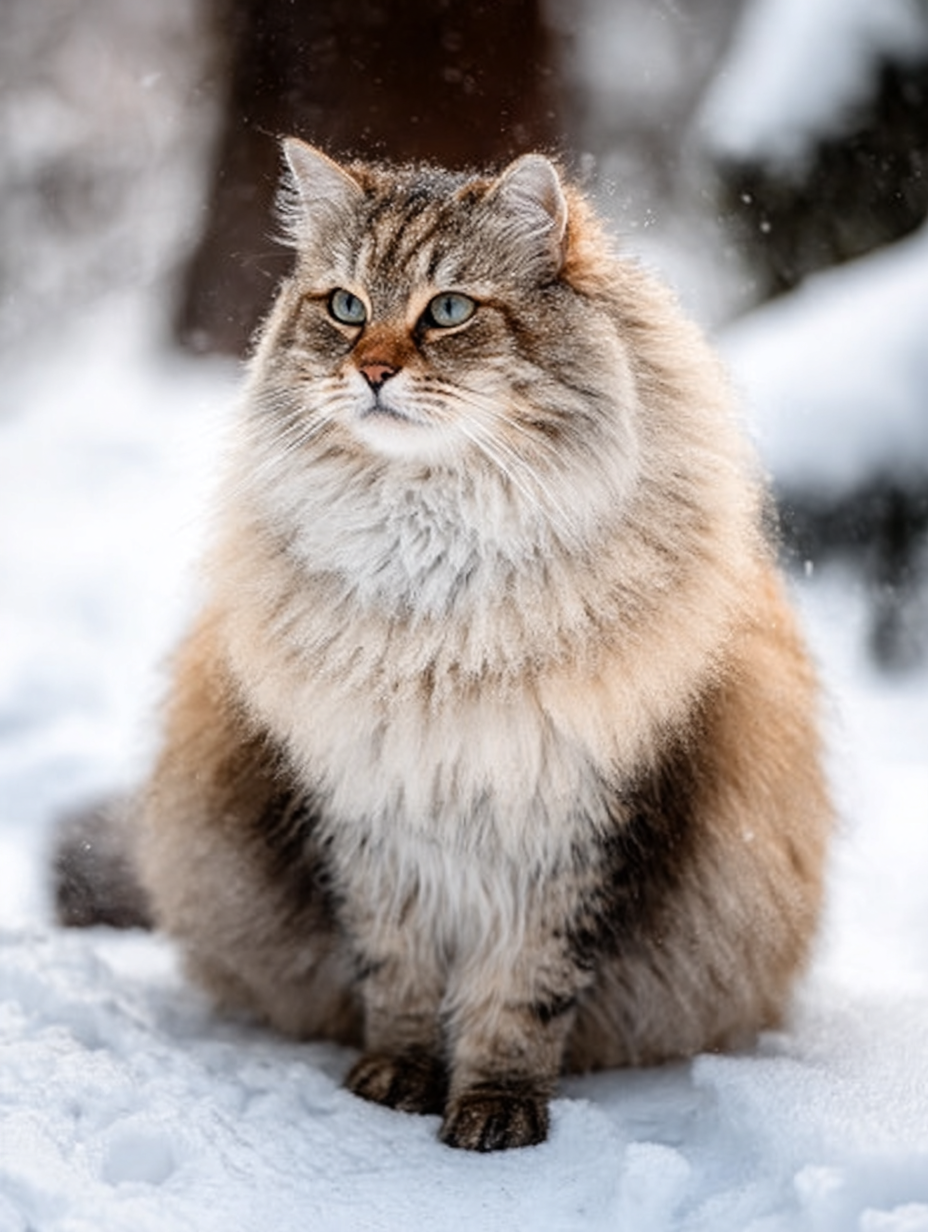
The Siberian cat is known for its powerful build, thick triple coat, and athletic strength rather than extreme length or delicacy. One of the most common questions prospective owners ask is, “How big do Siberian cats get?”
Siberians are a naturally large, slow-maturing breed with strong bone density, broad chests, and substantial muscle mass. Their dense, weather-resistant coat adds visual size, often making adult Siberians appear larger than the scale alone suggests.
Average Siberian Cat Size
On average:
- Adult male Siberian cats: 15–20 pounds
- Adult female Siberian cats: 10–15 pounds
Well-bred Siberians are solid, muscular, and heavy-boned—not overweight. Their size comes from structure and strength, not excess fat.
👉 View available Siberian kittens and future plans.
Siberian Cat Size: Quick Overview
| Topic | Summary |
|---|---|
| Breed size category | Large, muscular domestic cat |
| Adult male size | 15–20 lbs (some mature males slightly larger) |
| Adult female size | 10–15 lbs |
| Body type | Heavy-boned, broad-chested, powerful and well balanced |
| Coat type | Dense triple-layer semi-long coat |
| Growth rate | Slow maturation |
| Full maturity | 3–5 years |
| Why Siberians feel heavy | Dense bone structure + strong muscle mass |
| Visual size vs actual size | Coat adds volume, especially in winter |
| Healthy build indicator | Firm muscle tone, not softness or excess fat |
Why Siberian Cats Grow Slowly
The Siberian developed as a natural landrace breed, shaped by centuries of survival in harsh Russian climates. This history produced a cat built for endurance, agility, and strength rather than rapid growth.
Even as indoor companions, Siberians maintain:
- Heavy bone density
- Broad, well-developed chests
- Powerful shoulders and hindquarters
- Strong, athletic limbs
- A thick triple-layer coat
Their slow growth supports proper skeletal alignment, joint health, and balanced muscle development.
Why Slow Growth Is Beneficial for Siberian Cats
A gradual growth rate helps promote:
- Healthy joint formation
- Strong connective tissue
- Even muscle development
- Reduced risk of early obesity
- Long-term structural soundness
Reputable breeders monitor growth carefully and prioritize protein-rich, species-appropriate diets to support steady development rather than fast weight gain.
Average Siberian Cat Size Compared to Other Breeds
| Breed | Average Weight | Build Type | Growth Rate |
|---|---|---|---|
| Siberian | 15 – 20 lbs | Muscular, heavy-boned, athletic | Slow (3–5 years) |
| Maine Coon | 14 – 22 lbs | Long-bodied, tall | Moderate |
| Ragdoll | 12 – 20 lbs | Large, soft-bodied | Faster |
| Norwegian Forest Cat | 12 – 18 lbs | Athletic, sturdy | Moderate |
| Domestic Longhair | 10 – 15 lbs | Variable | Moderate |
Siberians are often shorter than Maine Coons, but noticeably denser and more compact. A 16-pound Siberian may feel heavier and look more substantial than a taller 18-pound cat due to:
- Thicker bone structure
- Dense muscle mass
- Broad torso
- Heavy triple coat
This gives the Siberian a powerful, grounded presence rather than a lanky silhouette.
Summary: What to Expect From a Full-Grown Siberian Cat
Siberian cats are not oversized for show—they are large, strong, and functional. Their size reflects natural development, not exaggeration. Owners should expect a slow-growing, muscular cat that matures over several years into a balanced, impressive adult.
Siberian Cat Body Shape Explained
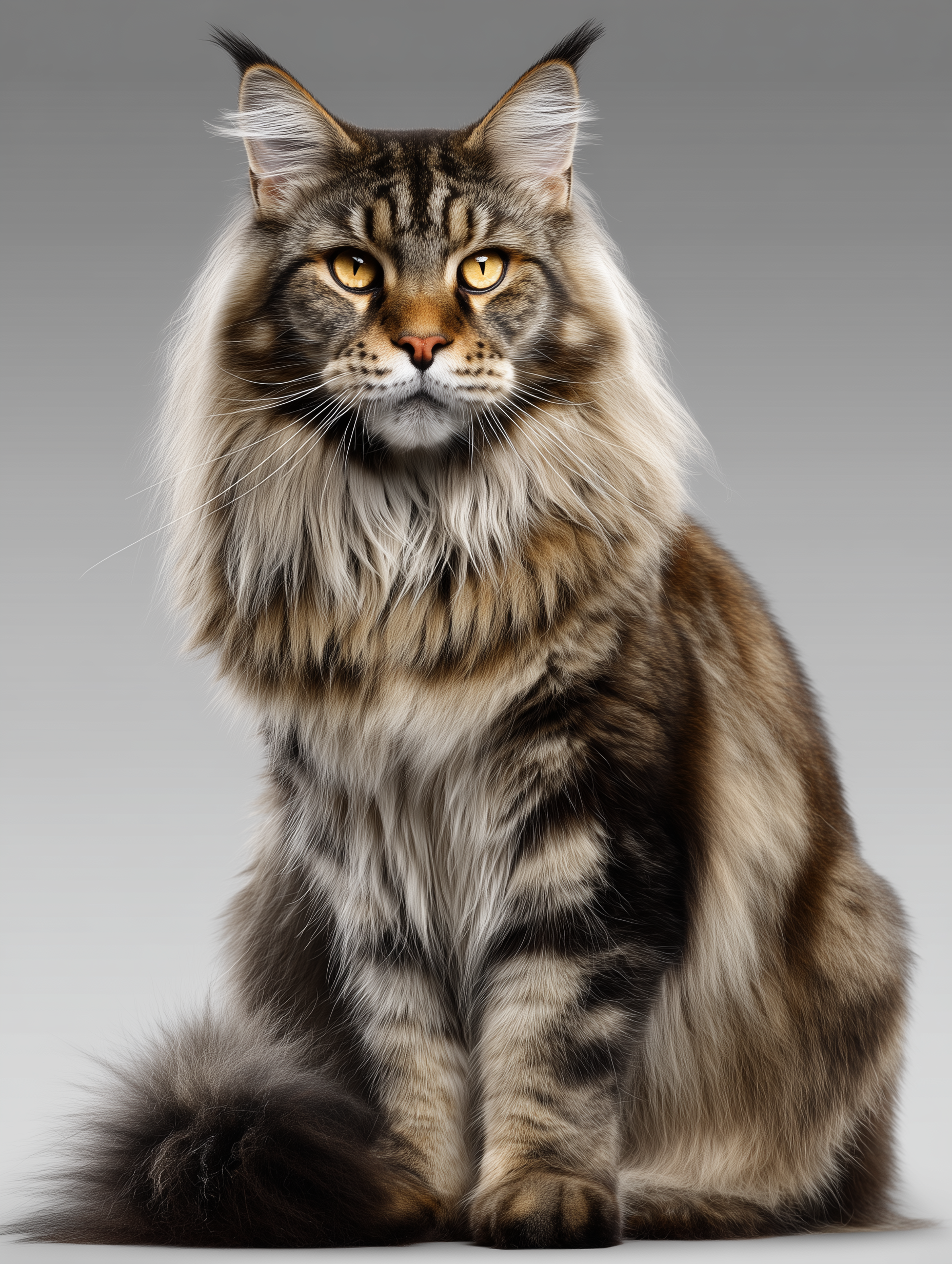
The Siberian cat has a powerful, athletic body type developed for strength, balance, and endurance rather than compact roundness. Unlike cobby breeds, the Siberian is described as medium-long to long in body, well-muscled, and substantial, with a natural, functional build shaped by centuries of survival in harsh climates.
Head
- Broad, modified wedge shape with rounded contours
- Strong skull without flat planes
- Rounded forehead
- Medium-length nose with a gentle curve
- Large, slightly oval eyes set wide apart
Body
- Medium-long body with excellent muscle tone
- Broad, deep chest
- Strong neck and shoulders
- Slightly arched back with powerful hindquarters
- Solid, heavy bone structure
Legs
- Medium to long legs with strong musculature
- Hind legs slightly longer than front legs
- Large, rounded paws, often with toe tufts
Tail
- Medium to long length
- Thick at the base and tapering slightly
- Fully plumed, especially in winter coat
The Siberian’s triple-layer coat enhances this structure, adding visual mass and volume, particularly around the neck, chest, and tail. This gives adult Siberians a strong, substantial appearance without exaggeration or bulkiness.
When Does a Siberian Cat Stop Growing?
Siberian cats are slow-maturing and late-developing. Most do not reach full physical maturity until 3 to 5 years of age.
- By 12 months, a Siberian appears close to adult height and length, but muscle density and bone mass are still developing.
- Between 2 and 3 years, the chest broadens and muscle tone increases significantly.
- Full structural maturity, including maximum bone density and strength, is often reached closer to 4–5 years, particularly in males.
- Coat maturity follows seasonal cycles, with the full adult triple coat typically settling after multiple winters.
Males generally mature more slowly and reach greater overall size and muscle mass than females.
Early spay or neuter may cause a Siberian to fill out slightly sooner, but final size and structure are largely genetic, not determined by sterilization timing.
How Diet Affects Size and Growth in Siberian Cats
Nutrition plays a critical role in supporting the Siberian’s slow, steady development. Because this breed builds muscle and bone over several years, diet should promote controlled growth rather than rapid weight gain.
A Proper Siberian Diet Should Include:
- High animal protein (at least 35–40%) to support muscle and skeletal development
- Moderate fat levels to fuel growth without encouraging excess weight
- Balanced omega-3 and omega-6 fatty acids to support skin health and the triple coat
- Adequate minerals to support joints and connective tissue
Siberians are athletic but not hyperactive. Portion control remains important, especially during adolescence, to prevent excess weight from masking proper structure.
Recommended Feeding Schedule:
- Kittens (up to 6 months): 3–4 meals per day
- 6–12 months: 2–3 meals per day
- Adults: 2 balanced meals per day, with an optional small evening portion
Proper nutrition supports:
- Strong, durable skeletal development
- Balanced muscle growth
- Long-term joint health
- Full, weather-resistant triple coat formation
For more detailed feeding guidance, link this section to your Siberian cat diet and nutrition guide.
Are Male Siberian Cats Bigger Than Females?
Yes. Male Siberian cats are typically 3–6 pounds heavier than females and develop noticeably more mass as they mature. Adult males often show:
- Broader heads with stronger facial structure
- Thicker necks and heavier musculature
- Denser bone structure
- Larger overall frame and chest
Female Siberians are smaller but remain solid, muscular, and well-proportioned. In multi-cat households, males often continue building muscle and bulk 12–24 months longer than females, reflecting the breed’s slow maturation.
Do Certain Siberian Coat Colors Grow Larger Than Others?
Coat color does not determine size in Siberian cats. However, some colors can appear larger due to coat texture, pattern, or visual contrast rather than actual body mass.
For example, darker colors, silvers, and tabby patterns may look more substantial because:
- The dense triple coat shows volume more clearly
- High-contrast patterning emphasizes body width
- Seasonal winter coats add dramatic fullness
These differences are visual, not genetic. Size is determined by structure, lineage, and sex, not coat color.
How to Tell if a Siberian Kitten Will Be Large
Several early indicators can suggest a Siberian kitten may grow into a larger adult:
- Large paws and thick legs at 8–10 weeks often signal strong bone density
- A wide chest and sturdy frame in kittenhood reflect structure, not fat
- Steady, gradual growth during the first year is typical of well-developed Siberians
- Genetics matter most—kittens from large, well-structured parents are far more likely to mature into large adults
Because Siberians mature slowly, rapid early growth is not a reliable predictor of adult size.
Siberian Cat Growth Chart by Age
| Age | Average Male Weight | Average Female Weight | Growth Notes |
|---|---|---|---|
| 8 weeks | 2 – 3 lbs | 1.8 – 2.5 lbs | Compact, sturdy kittens with dense coat |
| 4 months | 5 – 7 lbs | 4 – 6 lbs | Rapid bone and muscle development |
| 6 months | 8 – 11 lbs | 6 – 9 lbs | Broad chest and strong limbs emerging |
| 1 year | 11 – 15 lbs | 8 – 11 lbs | Around 70% of adult size |
| 2–3 years | 14 – 20 lbs | 10 – 15 lbs | Full skeletal maturity reached |
| 4–5 years | 15 – 22 lbs | 11 – 16 lbs | Muscle mass and coat fully mature |
Siberians are late bloomers. Most reach full skeletal size between 3 and 5 years, with muscle density and coat fullness continuing to develop well into adulthood.
Managing Weight in Adult Siberian Cats
Siberians are athletic and capable of strong bursts of activity, but adults can still gain excess weight if diet and movement are not balanced.
To maintain a healthy Siberian weight:
- Aim for firm muscle tone, not softness around the abdomen
- You should be able to feel the ribs easily under the coat without seeing them
- Encourage daily interactive play, including climbing and jumping
- Provide vertical space such as cat trees or shelving to support natural movement
A healthy Siberian feels dense and muscular, not soft or heavy due to fat.
Siberian Cat Weight Comparison Chart (Growth by Age)
| Age (Months) | Male Avg. Weight | Female Avg. Weight |
|---|---|---|
| 2 | 2.5 lbs | 2.0 lbs |
| 4 | 5.5 – 6.5 lbs | 4.5 – 5.5 lbs |
| 6 | 8.5 – 10.5 lbs | 7.0 – 9.0 lbs |
| 12 | 12 – 15 lbs | 9 – 12 lbs |
| 24 | 15 – 19 lbs | 11 – 14 lbs |
| 36+ | 17 – 22 lbs | 12 – 16 lbs |
This gradual progression reflects the 3–5 year Siberian maturation timeline, where bone density, muscle mass, and coat fullness continue developing long after height and length stabilize.
What Is the Average Weight for a Male Siberian Cat?
Male Siberian cats typically weigh:
15 to 20 pounds,
with some large-lined males reaching 21–22 pounds at full physical maturity.
Siberians are one of the naturally larger, heavier-boned longhair breeds, not because of bulk or fat, but due to:
- strong bone density
- broad, deep chest
- powerful shoulders and hindquarters
- dense muscle mass
- a thick triple coat that adds visual size
Compared to many domestic or mixed longhair males, which often average 10–15 pounds, Siberian males feel heavier and more substantial because of their compact strength and muscle density rather than length alone.
Siberian males mature slowly and may continue gaining muscle and body mass until 3–5 years of age, while lighter longhair and shorthair cats often finish growing closer to 12–18 months.
For a full developmental breakdown, refer to the Siberian Kitten Growth by Age section.
American / Domestic Longhair Average Weight (Comparison Baseline)
American Longhair and Domestic Longhair cats provide a useful baseline when comparing longhair size and structure.
- Average male longhair weight: 11–15 pounds
- Average female longhair weight: 8–12 pounds
These cats typically have a balanced, athletic frame with medium bone structure and moderate muscle. Their lighter build supports agility and endurance but lacks the dense, powerful feel of a true Siberian.
While both Siberians and Domestic Longhairs can share calm, family-friendly temperaments, their physical structure differs significantly:
- American / Domestic Longhair: longer, lighter, more athletic body; medium bone
- Siberian: muscular, heavy-boned, broad-chested; compact power with a thick coat
In simple terms:
Domestic Longhairs are medium-solid; Siberians are powerfully solid with dense coats.
Female Siberian Cat Average Weight (Comparison)
Across most breeds, female cats are smaller and more refined than males. Siberians follow this pattern while still remaining substantial.
- Average female Siberian weight: 10–15 pounds
Female Siberians are smaller than males but still display:
- solid bone structure
- strong muscle tone
- broad chest relative to body size
- thick triple coat that adds visual fullness
By comparison:
- Female Domestic Longhairs: usually 8–11 pounds
- longer legs
- narrower chest
- lighter, more flexible frame
Female Siberians typically reach near-full size around 2–3 years, while males may continue filling out and adding muscle for another year or two.
Siberian vs Other Longhair Cats: Size Comparison Chart
| Breed | Male Avg. Weight | Female Avg. Weight | Body Type | Growth Rate | Build Summary |
|---|---|---|---|---|---|
| Siberian | 15 – 20 lbs | 10 – 15 lbs | Muscular, heavy-boned | Slow (3–5 yrs) | Broad chest, dense muscle, thick triple coat |
| American / Domestic Longhair | 11 – 15 lbs | 8 – 12 lbs | Balanced, medium build | Moderate (1–2 yrs) | Athletic, longer frame |
| European Longhair | 10 – 14 lbs | 7 – 11 lbs | Lean-muscled | Moderate | Agile, working-cat structure |
| Domestic Longhair (Mixed) | 8 – 12 lbs | 6 – 10 lbs | Variable | Fast (≈1 yr) | Depends on lineage and nutrition |
| Maine Coon (reference) | 14 – 22 lbs | 10 – 15 lbs | Large, long-bodied | Moderate | Tall, rectangular frame |
Note:
The Siberian is not built for extreme height or length like the Maine Coon. Instead, the breed is defined by strength, balance, and dense muscle, with a triple coat that adds volume without exaggeration.
Siberian vs American Longhair Size Summary
The average longhair cat weighs 8–15 pounds, depending on genetics, sex, bone structure, and overall build.
The Siberian cat stands out as one of the most naturally substantial longhaired cats, known for strength and muscle rather than extreme height or length.
- Male Siberians: 15–20 pounds
- Female Siberians: 10–15 pounds
By comparison, the American Longhair / Domestic Longhair (DLH) typically weighs slightly less and carries a lighter, more athletic frame.
While both make adaptable, family-friendly companions, the Siberian’s slow maturation, heavy bone density, powerful musculature, and thick triple coat give the breed a solid, impressive presence that feels dense and well-balanced rather than oversized.
Siberian Cat Weight Compared to 10 Popular Cat Breeds
| Breed | Male Avg. Weight | Female Avg. Weight | Build Type | Coat Type | Growth Rate | Notable Trait |
|---|---|---|---|---|---|---|
| Siberian | 15 – 20 lbs | 10 – 15 lbs | Muscular, heavy-boned | Triple-layer semi-long | Slow (3–5 yrs) | Dense strength, balanced power |
| American Longhair / DLH | 11 – 15 lbs | 8 – 12 lbs | Medium, athletic | Variable longhair | Moderate | Agile, versatile frame |
| Maine Coon | 15 – 25 lbs | 12 – 18 lbs | Large, rectangular | Long, shaggy | Moderate | Tallest domestic breed |
| Ragdoll | 14 – 20 lbs | 10 – 15 lbs | Large, soft-bodied | Long, silky | Moderate | Relaxed, floppy temperament |
| Norwegian Forest Cat | 13 – 20 lbs | 9 – 15 lbs | Large, long-legged | Water-repellent long | Slow | Strong climber, forest build |
| Persian | 9 – 14 lbs | 7 – 12 lbs | Cobby, compact | Long, thick | Slow | Flat face, heavy coat |
| Himalayan | 9 – 14 lbs | 7 – 12 lbs | Medium-cobby | Long, dense | Slow | Persian body, pointed colors |
| Scottish Fold Longhair | 9 – 13 lbs | 7 – 11 lbs | Medium, rounded | Semi-long | Moderate | Folded ears, plush frame |
| Bengal | 10 – 16 lbs | 8 – 12 lbs | Lean, athletic | Short, dense | Fast | Muscular, wild-type movement |
| Sphynx | 8 – 12 lbs | 6 – 10 lbs | Medium, muscular | Hairless | Fast | Visible musculature, high metabolism |
Insights About Siberian Cat Size Compared to Other Breeds
- The Siberian ranks among the most physically substantial domestic cat breeds when bone density, muscle mass, and chest width are considered together.
- Although Siberians are not as tall or long-bodied as Maine Coons or Norwegian Forest Cats, they often feel heavier and denser due to compact strength and thick musculature.
- Like the Norwegian Forest Cat, the Siberian has a slow maturation timeline, often taking 3–5 years to reach full structural and muscular maturity.
- The Siberian’s triple-layer coat adds significant visual volume, especially in winter, making adults appear larger than their scale weight alone suggests.
- Compared to American or Domestic Longhairs, the Siberian is broader through the chest, heavier-boned, and more muscular, with a more powerful overall silhouette.
- The breed’s defining trait is functional strength rather than exaggeration—Siberians are built for endurance, balance, and resilience, not extreme size.
FAQ: Siberian Cat Weight Compared to Other Cat Breeds
1. Is the Siberian cat considered a large breed?
Yes. The Siberian is considered a large, substantial cat breed, especially when bone density and muscle mass are taken into account. While they may not be as tall or long-bodied as Maine Coons, Siberians are heavier and denser than many breeds of similar weight.
2. How much does a fully grown Siberian cat weigh?
Adult Siberian cats typically weigh:
- Males: 15–20 pounds
- Females: 10–15 pounds
Well-bred Siberians should feel solid and muscular rather than soft or overweight.
3. Why do Siberian cats feel heavier than they look?
Siberians have heavy bone structure, dense muscle, and a broad chest, which gives them a compact, powerful build. Their triple-layer coat also adds visual volume, especially in winter, making them appear larger than the scale alone suggests.
4. Are Siberian cats bigger than Maine Coons?
Not in height or length. Maine Coons are typically taller and longer-bodied. However, many Siberians feel heavier and more compact due to thicker bone density and muscle mass, even when their actual weight is similar.
5. How do Siberians compare in size to Norwegian Forest Cats?
Both breeds mature slowly and have strong working-cat builds. Norwegian Forest Cats are generally longer-legged and taller, while Siberians are broader through the chest and more compact, giving them a denser overall feel.
6. Are Siberian cats heavier than domestic longhair cats?
Yes. American and Domestic Longhairs typically have lighter bone structure and more athletic frames. Siberians are noticeably heavier-boned and more muscular, which places them at the upper end of longhair breed weights.
7. Does the Siberian’s coat affect how large they appear?
Yes. The Siberian’s triple-layer coat adds significant volume, particularly around the neck, chest, and tail. During winter coat cycles, this can make an adult Siberian appear much larger than their actual body measurements.
8. Do male Siberian cats weigh more than females?
Yes. Male Siberians are generally 3–6 pounds heavier than females and develop broader heads, thicker necks, and more muscle mass. Females are smaller but remain strong and well-built.
9. How long does it take for a Siberian cat to reach full size?
Siberians are slow-maturing cats. Most reach full structural and muscular maturity between 3 and 5 years of age, which is longer than many popular breeds that mature closer to 1–2 years.
10. Are Siberian cats prone to obesity because of their size?
Not inherently. A healthy Siberian should feel firm and muscular. Because the breed is dense and heavy-boned, weight should be evaluated by body condition, not numbers alone. Proper diet and regular activity help maintain healthy muscle mass.
11. Is a 20-pound Siberian cat overweight?
Not necessarily. A 20-pound male Siberian can be perfectly healthy if the weight comes from muscle and bone rather than fat. Physical assessment—feeling the ribs and muscle tone—is more accurate than relying on the scale alone.
12. How do Siberians compare in size to Ragdolls?
Siberians and Ragdolls can weigh similarly, but their bodies are very different. Ragdolls have a softer, longer build, while Siberians are more muscular and compact, often feeling heavier at the same weight.
13. Do Siberian cats grow larger than Bengals?
Yes. Bengals are athletic and muscular but generally leaner and faster-maturing. Siberians grow larger overall and carry significantly more bone density and mass.
14. Why do Siberian cats grow more slowly than other breeds?
The Siberian is a natural landrace breed developed for endurance and strength. Slow growth supports proper skeletal development, strong joints, and balanced muscle formation rather than rapid size gain.
15. Does coat color affect a Siberian cat’s size?
No. Coat color does not influence size. Some colors or patterns may make a Siberian appear larger or smaller visually, but actual size is determined by genetics, sex, and overall structure.
16. Are Siberians heavier than Persians or Himalayans?
Yes. Persians and Himalayans are more compact and lighter overall. Siberians are taller, more muscular, and significantly heavier-boned.
17. How does a Siberian compare to a Sphynx in weight?
Sphynx cats weigh much less overall. While Sphynx cats can feel muscular, they lack the bone density, mass, and coat volume of a Siberian.
18. What makes the Siberian’s build unique compared to other longhair cats?
The Siberian combines:
- Heavy bone density
- Strong muscle mass
- Broad chest
- Thick triple-layer coat
This creates a powerful, balanced cat built for resilience rather than exaggeration.
19. Are Siberians considered one of the strongest cat breeds?
Yes. Siberians are widely regarded as one of the most physically strong domestic cat breeds due to their compact power, jumping ability, and endurance.
20. What is the best way to judge whether a Siberian is a healthy size?
Use body condition, not just weight. A healthy Siberian should have:
- Firm muscle tone
- A visible waist when viewed from above
- Ribs that are easy to feel under the coat
Weight ranges provide guidance, but structure and fitness matter more.
Considering a Siberian Kitten?
If you are exploring the Siberian breed and would like to learn more about adopting a Siberian Kitten, you can view our kittens available and continue your research from there.
See Siberian Kittens Available
Related Siberian Cat Resources
If you are researching Siberian cats and allergies, these in-depth guides may also help you decide whether this breed fits your home, health needs, and lifestyle:
- Siberian Cat Complete Guide:
The Siberian cat adapts well to family life, multi-pet homes, and a wide range of living environments. - Siberian Cat Grooming & Coat Care:
A complete breakdown of brushing schedules, coat tools, bathing considerations, and maintenance tips for the Siberian’s triple coat. - Siberian Cat Temperament & Personality:
Understand how Siberians interact with people, children, and other pets, and whether their social nature affects allergy exposure. - Siberian Cat Health Overview:
Breed-specific health considerations, preventative care, and how skin and coat health influence dander production. - Siberian Kittens for Sale:
Realistic pricing ranges, what influences cost, and why allergy-aware breeding programs are priced differently. - Siberian Cats vs Other Hypoallergenic Breeds:
A side-by-side comparison of Siberians, Balinese, Devon Rex, Cornish Rex, and Sphynx for allergy-sensitive households. - Are Siberian Cat Hypoallergenic?
A focused guide explaining why Siberian cats may or may not be a good fit for allergy issues. - Siberian Cats for People With Allergies:
Siberian cats may improve the odds for some allergy-sensitive people, but there are no guarantees.
Sources & References
- The International Cat Association (TICA) – Siberian Breed Standard
Official breed description, body type, size, and structure
https://tica.org/breeds/browse-all-breeds?view=article&id=872:siberian-breed&catid=48 - Cat Fanciers’ Association (CFA) – Siberian Cat Breed Profile
Breed overview including size, build, and maturation
https://cfa.org/siberian/ - International Cat Care (iCatCare)
Evidence-based guidance on feline growth, body condition, and healthy size
https://icatcare.org/advice/understanding-your-cats-body-condition/ - Cornell University College of Veterinary Medicine
Veterinary information on feline growth, muscle mass, and body condition scoring
https://www.vet.cornell.edu/departments-centers-and-institutes/cornell-feline-health-center - UC Davis School of Veterinary Medicine – Feline Nutrition & Growth
Supports slow growth, muscle development, and size management in cats
https://www.vetmed.ucdavis.edu/hospital/animal-health-topics/feline-nutrition
Source Disclaimer
Allergy tolerance varies by individual and by cat. No breed, including the Siberian, can be guaranteed allergy-free. Medical decisions should be discussed with a qualified healthcare professional.





Read the Comments +