
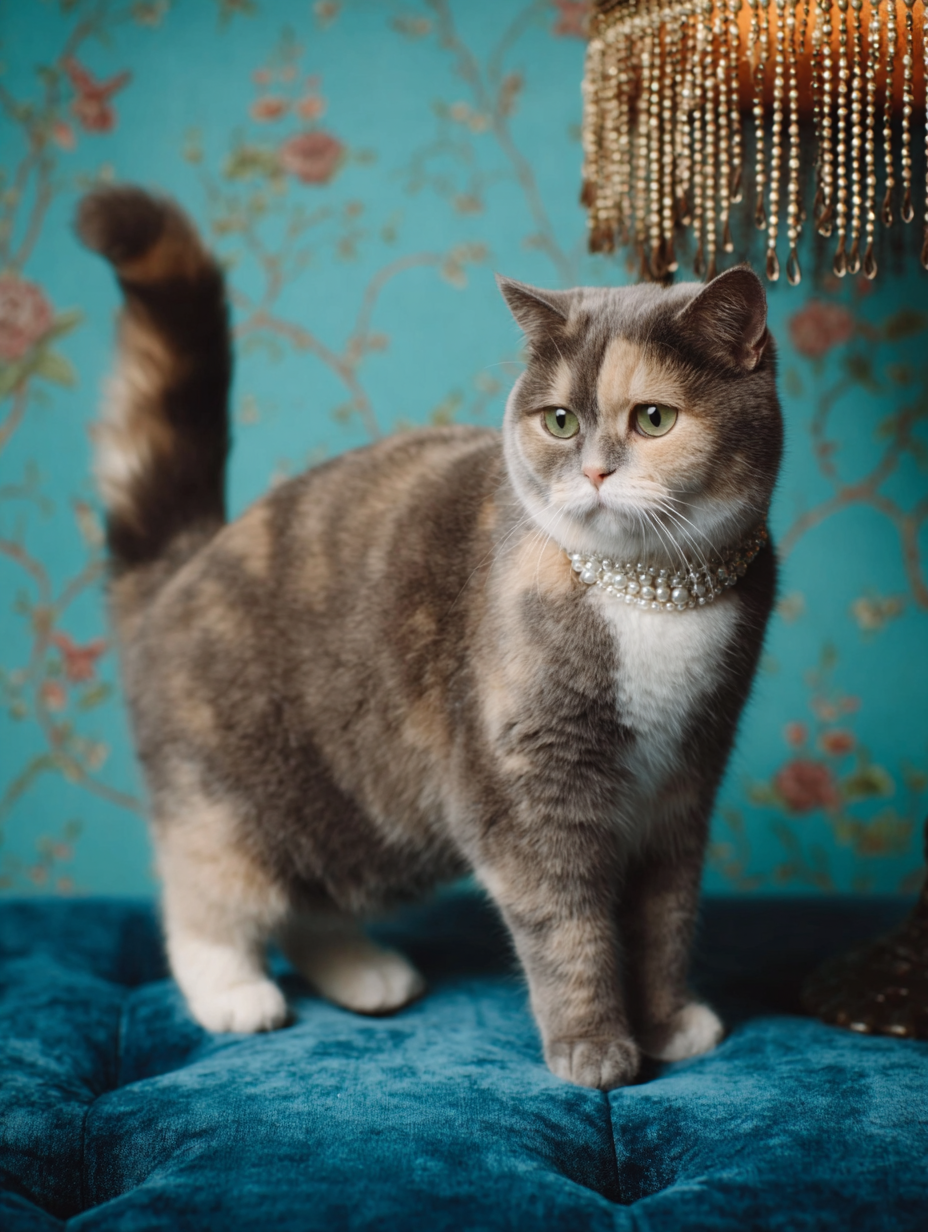
Tortoiseshell British Shorthair Cats: Color Genetics, Temperament, Rarity & Care Guide
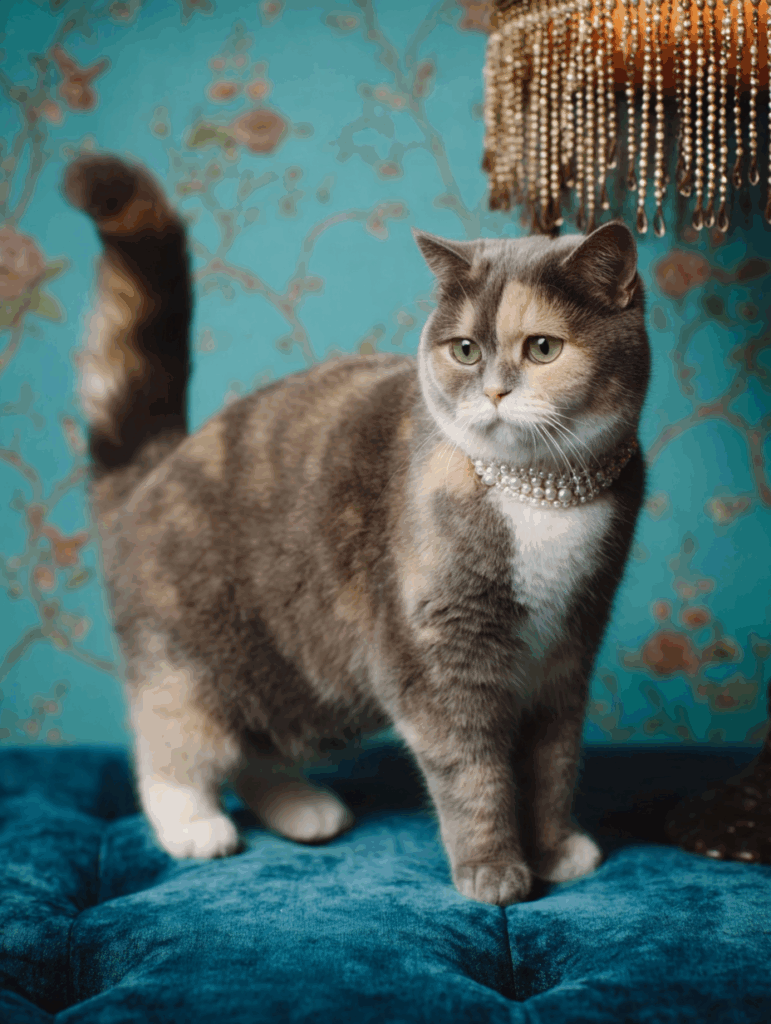
Tortoiseshell British Shorthair cats — often called torties — are some of the most striking and genetically unique cats in the breed. Their marbled mix of black and red creates a pattern that is completely one-of-a-kind, with no two tortoiseshell British Shorthairs ever looking the same. Tortie patterning is fully recognized in TICA, CFA, and GCCF, and is part of the breed’s long-standing color genetics.
Families love tortoiseshell British Shorthairs for their bold color blending, dramatic swirls and patches, and the classic British Shorthair build beneath it all. If you’re searching for a tortie British Shorthair kitten, this guide explains appearance, genetics, rarity, temperament expectations, care needs, and what reputable breeders provide.
Tortoiseshell British Shorthair Summary Table
| Feature | Summary |
|---|---|
| Pattern Type | Black and red mixed or marbled together with little to no white |
| Coat Recognition | Fully accepted in CFA, TICA, GCCF |
| Rarity Level | Moderately rare; requires specific black + red expression on X chromosome |
| Price Range | $2,500–$4,000 in the United States |
| Most Common Sex | Female; male torties are extremely rare and usually sterile |
| Kitten Appearance | Soft blended colors that intensify by 8–12 weeks |
| Adult Appearance | Rich intermingled black + red pattern; no large white patches |
| Eye Color | Gold, deep gold, or copper |
| Temperament | Classic British Shorthair: calm, steady, affectionate |
| Genetics | Requires black gene and red gene on X chromosome; little/no white spotting |
| Pattern Development Timeline | Full richness and contrast develop between 6–12 months |
| Breed Purity | Color does not affect purity; must come from registered BSH parents |
| Care Needs | Standard British Shorthair coat care |
| Show Quality Potential | Shown in tortie divisions; clarity of blending matters |
| Availability | Limited; torties do not appear in every litter |
Apply here for British Shorthair kittens raised in-home with health testing and registration.
See British Shorthair Kittens Here
Can British Shorthair Cats Be Tortoiseshell?
Yes. British Shorthair cats can absolutely be tortoiseshell. Tortie is a color pattern, not a breed variation, and appears when both black and red pigments are expressed on the coat without significant white spotting.
Torties are fully recognized by CFA, TICA, and GCCF. They are moderately rare because the black + red pigment combination is controlled by the X chromosome. As with calicos, most tortoiseshell British Shorthairs are female; males are extremely rare.
People Also Ask About Tortoiseshell British Shorthair Cats
What is a tortoiseshell British Shorthair?
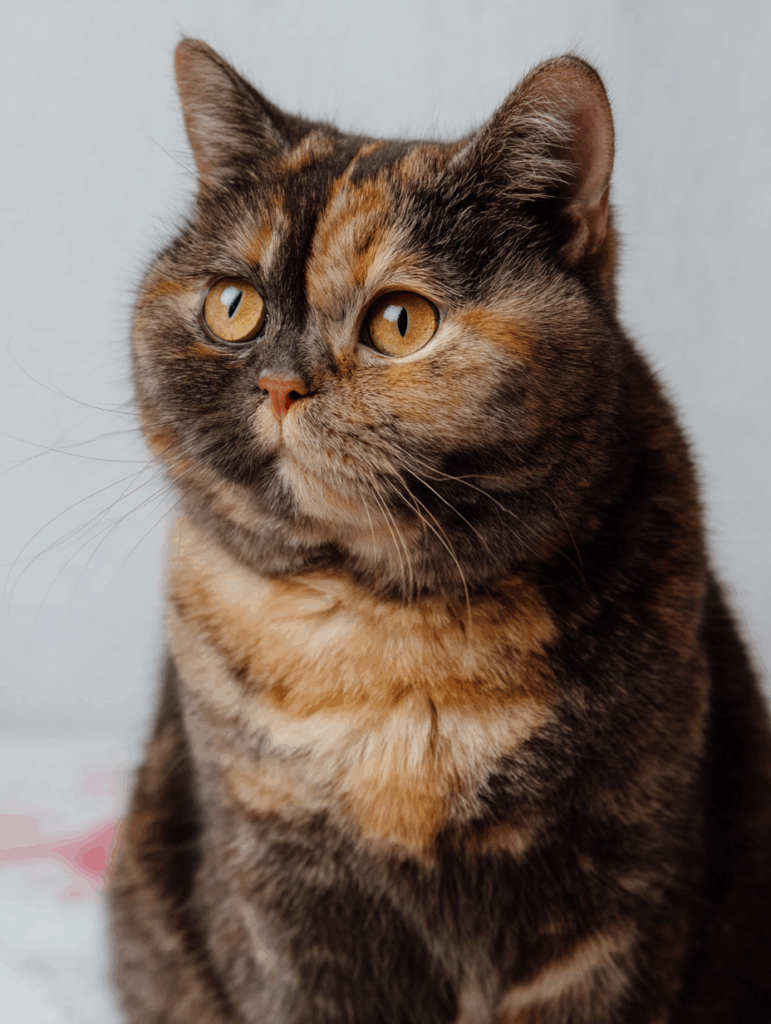
A tortoiseshell British Shorthair is a purebred BSH with black and red intermixed or marbled across the coat. Tortoiseshells typically have little to no white. The pattern is fully recognized by CFA, TICA, and GCCF.
Are tortoiseshell British Shorthairs rare?
They are moderately rare. Tortie patterning requires the correct expression of black and red pigments on the X chromosome. Many litters produce no torties at all, and male torties are extremely rare.
How is a tortoiseshell different from a calico?
A tortie has black and red mixed or interwoven with minimal or no white.
A calico has large, clear patches of black, red, and white.
Patch clarity (large vs blended) is the main difference.
Why are tortoiseshell British Shorthairs almost always female?
The genes for black and red pigments are located on the X chromosome. Females (XX) can express both colors. Males (XY) normally express only one unless they inherit an extra X chromosome due to a genetic anomaly.
Can male British Shorthairs be tortoiseshell?
Yes, but extremely rarely. Male torties occur only when the kitten inherits XXY chromosomes. These males are almost always sterile and cannot be used for breeding.
Do tortoiseshell British Shorthair kittens change color?
They keep the overall pattern layout, but the colors become richer with age. Black deepens, red becomes more vibrant, and the blending becomes clearer between 6–12 months.
Do tortoiseshell British Shorthairs have unique personalities?
Their temperament mirrors all British Shorthairs: calm, affectionate, steady, and observant. Personality is not influenced by coat color or pattern.
How much does a tortoiseshell British Shorthair kitten cost?
Prices are similar to calicos and other specialty colors, typically $2,500–$4,000, depending on breeder reputation, pedigree, pattern quality, and region.
Do tortoiseshell British Shorthairs shed more?
No. Torties have the same dense double coat as all British Shorthairs and shed at normal levels. Weekly brushing helps maintain coat quality and reduce loose hair.
Can two non-tortie British Shorthairs produce a tortoiseshell kitten?
Yes — if both parents carry the genes for black and red pigment. The tortie pattern can remain unexpressed in the parents and still appear in kittens.
Are tortoiseshell British Shorthairs showable?
Yes. Torties are shown in their own color division. Judges look for clear blending, coat density, correct British Shorthair structure, and solid temperament.
Are tortoiseshell British Shorthairs more expensive?
Often slightly more, due to their genetic rarity and high demand for their unique appearance. Pricing still depends more on health testing, pedigree, and breeder practices than color alone.
Do tortoiseshell British Shorthairs have special health needs?
No. Female torties have no color-related health concerns. Rare male torties may have sterility due to their chromosome makeup, but this does not affect females.
Can British Shorthair cats be longhaired tortoiseshells?
Yes. When both parents carry the longhair gene, British Longhair torties can occur. They display the same tortie coloration with a longer, fuller coat.
Tortoiseshell British Shorthair Appearance
Coat Color
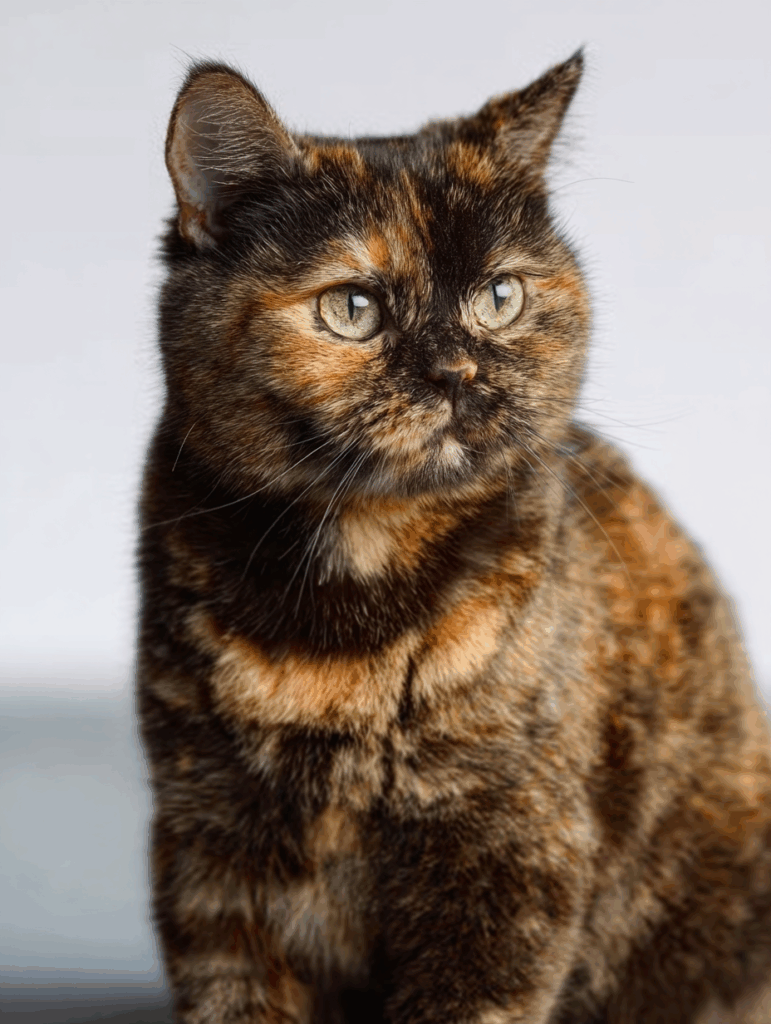
Tortoiseshell British Shorthair coats contain two colors: black and red, intermingled or marbled together with little to no white. Unlike calicos (which have large, clean patches of black, red, and white), torties show a blended, mottled distribution of pigment.
- Black areas range from jet black to warm seal.
- Red areas may appear bright, deep, or softly shaded.
- Colors appear mixed, swirled, or stippled together.
- Pattern placement is random and unique to each cat.
No two tortoiseshell British Shorthairs ever look the same, and the marbling becomes more defined as the kitten matures.
Eye Color
Most tortoiseshell British Shorthair cats have:
- copper
- gold
- deep orange
Kittens begin with blue eyes, which transition to their permanent eye color between 8 and 16 weeks. Green or hazel tones can occur rarely, especially in lines carrying silver, but are not standard for solid torties.
Body Type
Tortoiseshell British Shorthairs share the same structure as every BSH color:
- round head
- wide cheeks
- thick bone
- dense, plush double coat
- cobby, muscular body
The tortie pattern does not influence coat density or texture. Body type remains the classic British Shorthair build.
Are Tortoiseshell British Shorthairs Rare?
Yes. Tortoiseshell British Shorthairs are less common than blue, lilac, or cream because the pattern requires the correct combination of black and red pigment on the X chromosome. Nearly all tortoiseshells are female. Male tortoiseshell British Shorthairs are extremely rare and nearly always sterile.
Tortoiseshell British Shorthair Color Development Timeline (Birth to 2 Years)
Newborn Stage
Newborn tortie kittens show early black and red swirls or flecks. The blending may look muted or soft.
3 to 6 Weeks
Colors begin separating and intensifying. Red areas brighten while black areas deepen. Blending becomes more noticeable.
8 to 12 Weeks
The pattern becomes clear enough for buyers to see the developing layout. Some kittens may show light ticking that softens as they age.
6 to 12 Months
Black and red areas become richer and more defined. The overall marbling appears more balanced and uniform.
12 to 24 Months
Full coat density develops. The tortie pattern reaches its final level of depth and contrast by about two years.
Indoor vs Sunlight Color Differences
- Sunlight intensifies red tones and makes marbling more visible.
- Indoor lighting can soften the contrast, making the colors appear more blended.
- Black areas may appear warmer or cooler depending on the type of artificial light.
Genetics Behind the Tortoiseshell Coat
What Genes Create Tortoiseshell
Tortoiseshell requires:
- Black-based gene (B)
- Red-based gene (O)
- Minimal or no white spotting (s/s)
Black and red pigments are located on the X chromosome. Female cats (XX) can express both colors, which creates the tortoiseshell effect through X-inactivation, also called lyonization.
Simple Inheritance Examples
- A black female carrying red can produce tortie kittens.
- A red male paired with a black female can produce tortie females.
- Two non-red parents cannot produce red or tortie kittens.
Why Tortoiseshell Cats Are Harder to Produce
Torties only occur when:
- the kitten inherits black pigment
- the kitten inherits red pigment
- the genes randomly activate on different cells across the coat
Many breeding pairs will never produce tortoiseshell kittens even if they carry the genetic potential.

How to Identify a True Tortoiseshell British Shorthair
A true tortoiseshell has:
- two colors only (black + red)
- little to no white
- blended or marbled distribution
- no large, distinct white patches
Not tortoiseshell:
- calicos (which have black, red, + white patches)
- tricolors with large white areas
- heavily mottled tricolors lacking true red pigment
- mink or sepia cats with three-toned shading
- shaded or smoke patterns where pale undercoat is mistaken for white
Tortoiseshell British Shorthair Kittens
What Tortoiseshell Kittens Look Like at Birth
Newborn tortoiseshell British Shorthair kittens show early swirls of black and red, but the blending is not sharply defined at birth. Red areas often appear muted or brownish, making it difficult to predict their final richness. Because torties usually have little or no white, the pattern appears dense at first. The marbling and distribution of black and red become clearer as the kitten’s coat begins to thicken.
How Their Color Changes as They Grow
As tortoiseshell kittens mature:
- Red pigments brighten into warm copper or fire-like tones
- Black pigments deepen, creating stronger contrast
- Blending becomes more visible, especially over shoulders and flanks
- Distribution becomes clearer, but still maintains a naturally random pattern
By 8 to 12 weeks, owners can see the general layout, but the full richness and depth of the tortie coat continue developing over the first year.
Eye Color Progression in Kittens
All British Shorthair kittens — including torties — are born with blue eyes.
Between 8 and 16 weeks, eye color transitions into:
- gold
- deep gold
- copper
These are the standard eye colors for tortoiseshell British Shorthairs. Final depth may continue to shift slightly through the first 12 months.
How Temperament Develops
Tortoiseshell British Shorthair kittens grow into the same calm, steady companions that define the breed. Their personality is shaped by genetics, early handling, and socialization — not by coat color.
Typical tortie British Shorthair temperament includes:
- stable, predictable behavior
- affectionate but independent disposition
- gentle interest in people
- good adaptability to families and multi-pet homes
There is no behavioral difference between torties and any other British Shorthair color.
Price Range for Tortoiseshell British Shorthair Kittens
Tortoiseshell British Shorthair kittens typically cost $2,500 to $4,000 in the United States. They are priced in a similar rare-color range as calicos due to the limited availability of black + red female kittens.
Torties do not appear in every litter, and when they do, it is often only one kitten. Because male torties are rare and usually sterile, breeders cannot rely on tortie-producing studs, which limits production even more.
Pet-quality torties may cost more than blue, lilac, cream, or black kittens.
Show-quality torties with strong color balance and excellent British structure often fall at the upper end of the range.
Pricing is influenced by:
- rarity compared to common colors
- strong demand for tortie patterning
- health-tested parents
- pedigree and structure quality
- breeder reputation
- registration, microchipping, and vet care provided
Most families who want a tortoiseshell British Shorthair join a waitlist, as the pattern is not guaranteed in any litter.
How Reputable Breeders Raise Tortoiseshell Kittens
Because tortoiseshell British Shorthairs are uncommon, buyers should work with breeders who prioritize health, structure, and temperament over color production. Ethical breeders cannot intentionally “produce” torties on demand — the pattern appears only when specific genetic combinations align.
Reputable breeders provide:
- Health-tested breeding cats, screened for heart, kidney, and genetic conditions
- TICA or CFA registration for all kittens
- Correct British Shorthair type — round head, thick bone, plush coat
- In-home socialization, exposing kittens to people, sounds, and routines
- Veterinary care, deworming, and age-appropriate vaccinations
- Microchipping for identification
- Temperament evaluation to match kittens with homes
Even though tortoiseshell British Shorthair kittens are not available year-round, our program raises all kittens with the same high standards — structure-focused breeding, full health testing, and a social, home environment.
See British Shorthair Kittens
Grooming and Care for Tortoiseshell British Shorthair Cats
Coat Care
Tortoiseshell British Shorthair cats have the same dense double coat as every British Shorthair, so routine grooming helps maintain thickness and healthy shedding patterns. Because torties typically have little to no white, their coat maintenance focuses more on bringing out the richness of the black and red marbling rather than keeping white areas bright.
A weekly brushing is usually enough to remove loose hair and maintain the plush, even texture. During seasonal shedding (especially spring and fall), additional brushing supports coat health and helps reduce loose hair around the home.
Eye Care
Tortoiseshell British Shorthairs do not have an increased risk of tear staining, since they rarely have large white facial areas. Standard eye care — regular checkups, balanced nutrition, and occasional gentle wiping if needed — is sufficient. Eye color (gold to copper) does not require special upkeep.
Bathing and Grooming Tools
British Shorthairs generally do not need frequent baths, and tortoiseshells are no exception. Their coat maintains itself well, but an occasional bath may be helpful during heavy shedding seasons.
Useful tools include:
- rubber curry brush
- slicker brush
- metal comb for seasonal shedding
These tools help maintain the coat’s density, prevent buildup of loose hair, and highlight the tortie marbling. British Shorthair coats rarely mat, but regular brushing maintains optimal condition.
Diet and Coat Quality
Tortoiseshell British Shorthairs benefit from a high-protein diet to support coat density and overall health. Natural omega-3 sources or skin-and-coat supplements help deepen the contrast between the black and red pigments in the tortie pattern.
Hydration and balanced nutrition maintain:
- healthy skin
- consistent shedding cycles
- long-term coat resilience
Temperament of a Tortoiseshell British Shorthair
Tortoiseshell British Shorthairs share the classic British temperament: calm, steady, affectionate, observant, and easy to live with.
Many people believe torties have a unique “tortitude,” but this stereotype comes from folklore and does not apply to the British Shorthair breed. British Shorthair torties behave the same as blues, lilacs, creams, or any other color.
Typical tortie British Shorthair temperament includes:
- quiet confidence
- preference for peaceful environments
- gentle companionship
- strong but soft loyalty
- staying near their people without demanding attention
They do well with respectful children, relaxed households, busy professionals, and first-time cat owners wanting a stable, easygoing companion.
How Rare Is the Tortoiseshell British Shorthair?
Breeding Difficulty
Tortoiseshells require the correct combination of black and red pigments on the X chromosome, making them less common than solid colors. Since most torties are female and males are extremely rare and sterile, breeders cannot reliably produce torties on schedule.
Availability in the US vs. Europe
Tortoiseshell British Shorthairs appear more often in Europe due to a wider breeding base but are still considered uncommon. In the US, availability is limited and often requires joining a waitlist.
Breeder Demand vs. Pet Buyer Demand
Pet demand is high for unique color patterns. Breeders may produce torties occasionally, but only when the genetics align — not through intentional mass production.
Why Rarity Impacts Price
Because torties do not appear in every litter and female-only availability limits breeding potential, scarcity increases pricing and waitlist demand.
Tortoiseshell British Shorthair vs Other British Shorthair Colors
1. Tortoiseshell vs Calico
- Tortoiseshell has black and red intermingled with little to no white.
- Calico shows black, red, and white in large, clearly separated patches.
2. Tortoiseshell vs Bicolor
- Tortoiseshell uses two colors blended together (black and red).
- Bicolor uses one color + white with clear patch boundaries.
3. Tortoiseshell vs Tricolor Tabby
- Tortoiseshell displays solid black and red blending, not tabby patterning.
- Tricolor tabbies (patched tabbies) show tabby stripes or swirls within each color area.
Tortoiseshell British Shorthair vs Other Breeds
1. Tortoiseshell British Shorthair vs Tortoiseshell Persian
- British Shorthairs have a short, dense, crisp double coat.
- Persians are longhaired and require more intensive grooming.
- Facial structure, grooming needs, and overall body type differ significantly.
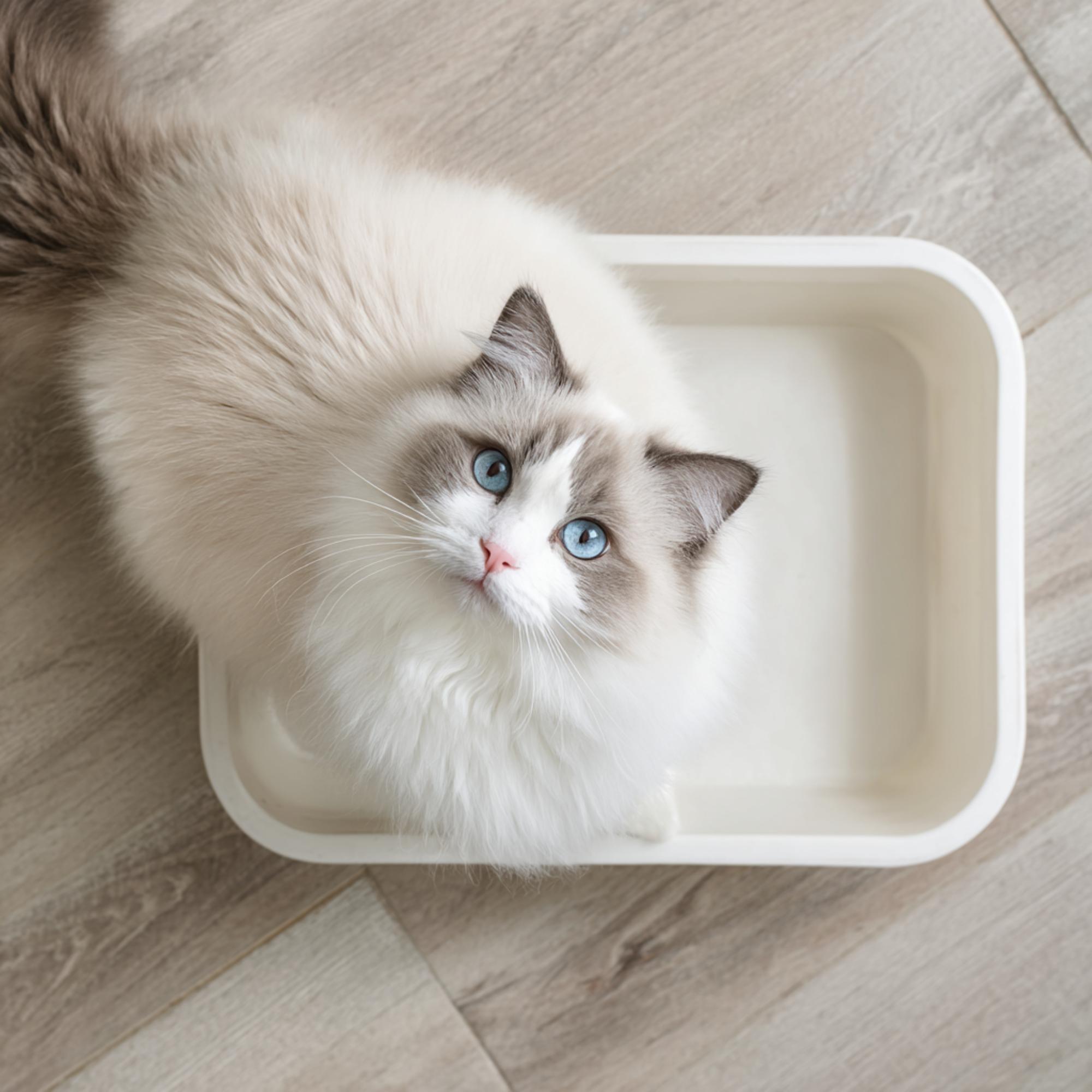
2. Tortoiseshell British Shorthair vs Tortoiseshell Ragdoll
- Ragdolls do not have true tortoiseshell in full color.
- Their “tortie” patterns appear within pointed genetics, with color restricted to the face, legs, and tail.
- British Shorthairs display full-body tortie blending, not pointed patterns.
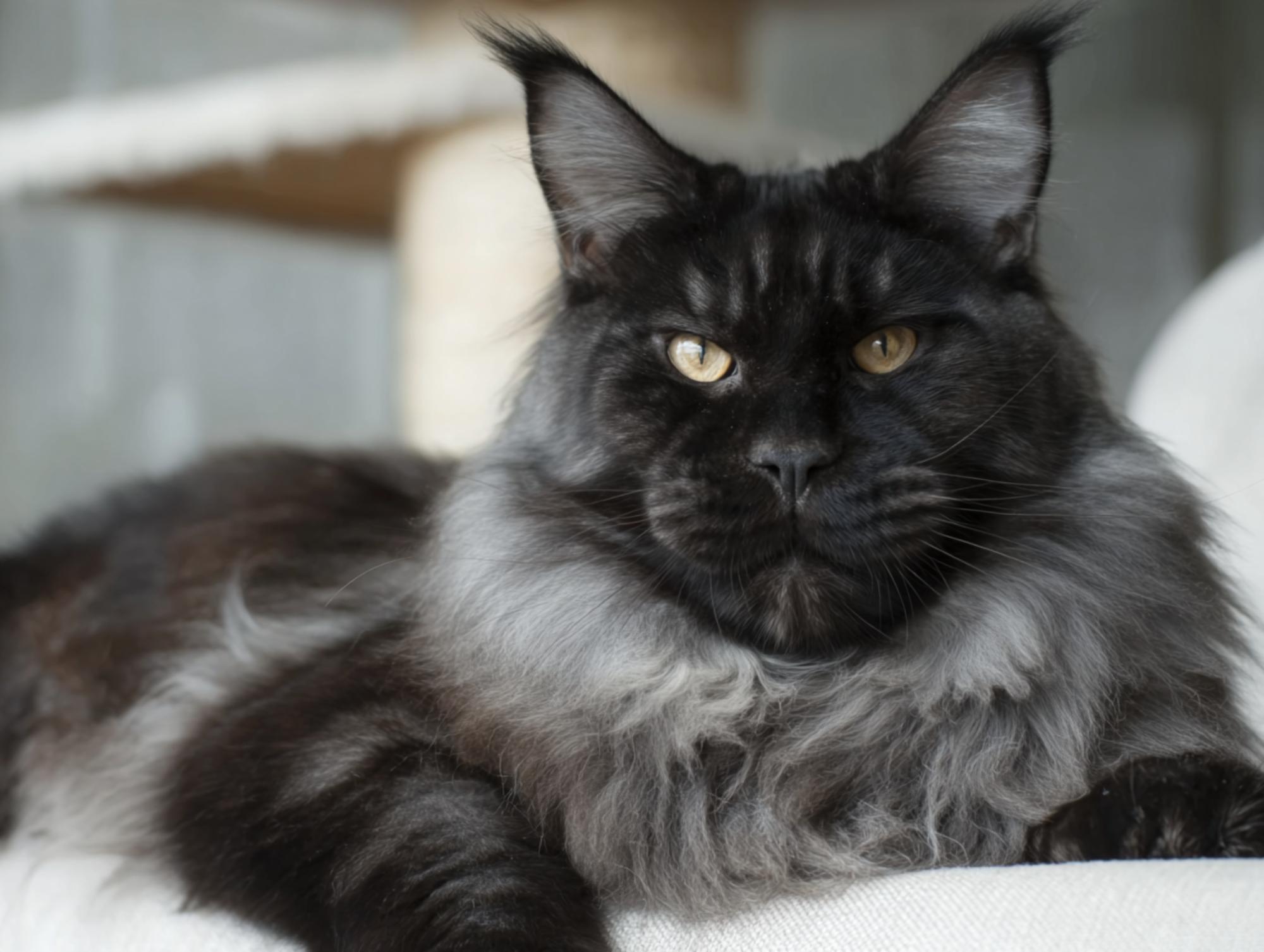
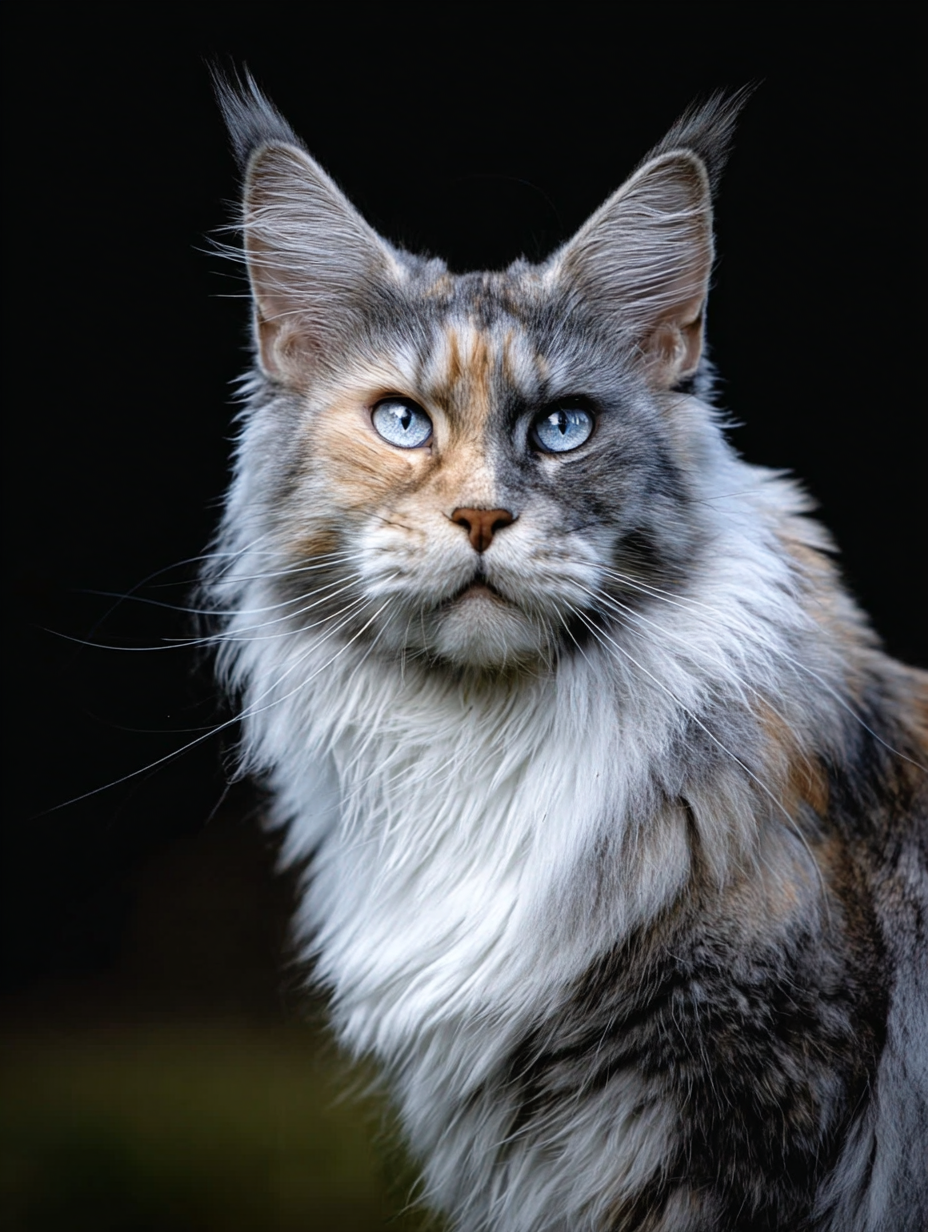
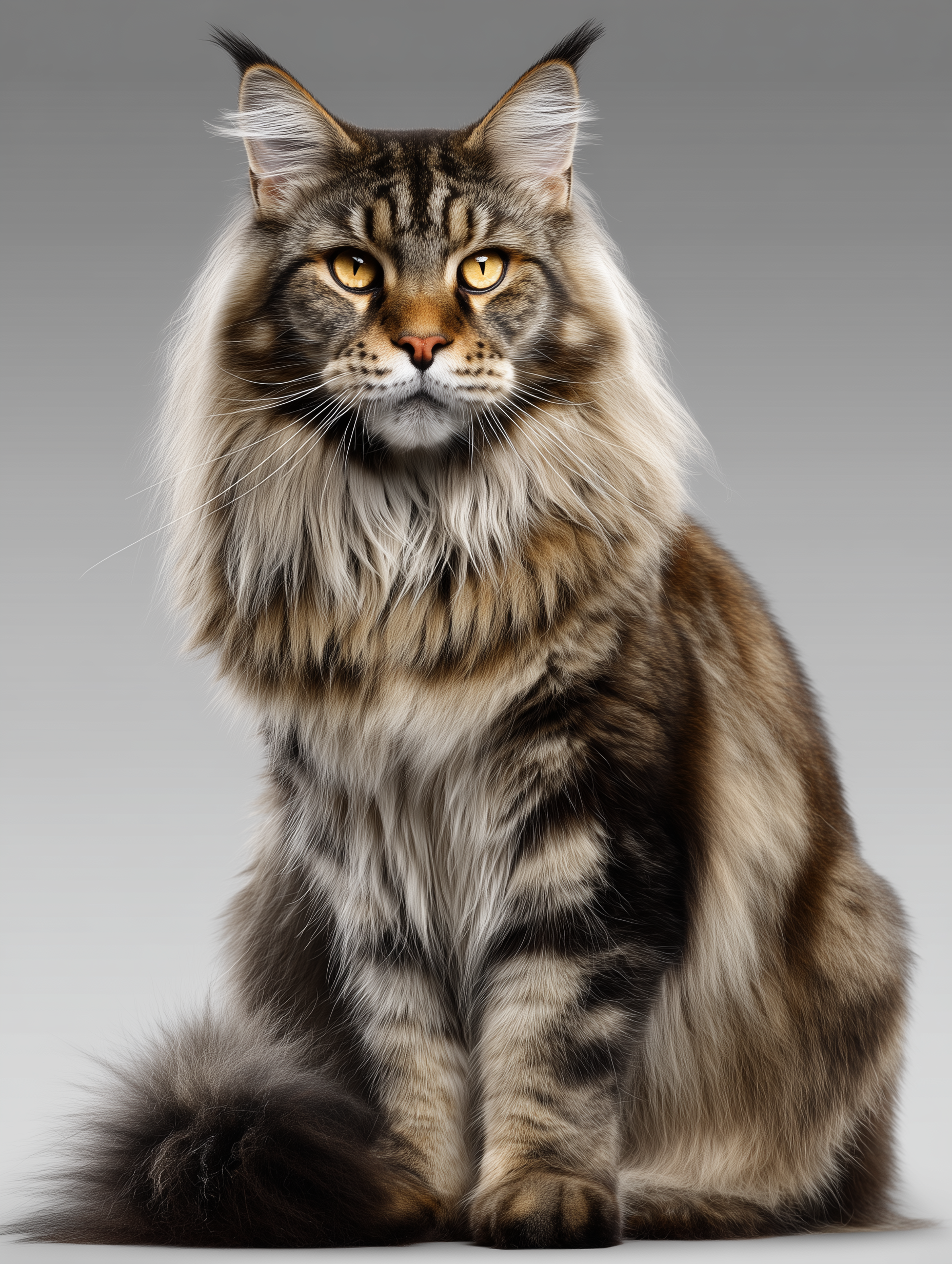
3. Tortoiseshell British Shorthair vs Tortoiseshell Maine Coon
- Maine Coons have a long coat, tall ears, and a rectangular body shape.
- British Shorthairs have a cobby build, round head, and plush short coat.
- Both can be tortie, but the pattern appears dramatically different due to coat length and structure.
Gallery of Tortoiseshell British Shorthair Cats
Insert:
- Newborn tortoiseshell kitten
- 8-week tortoiseshell kitten
- 12-week tortoiseshell kitten
- Adult tortoiseshell British Shorthair
- Senior tortoiseshell British Shorthair
- Dense-blend tortie (minimal red visibility)
- High-red tortie (bright red distribution)
Common Myths About Tortoiseshell British Shorthair Cats
Myth 1: Tortoiseshell British Shorthairs are always female.
Snippet: Almost all torties are female, but rare male tortoiseshells do exist due to genetic exceptions.
Female cats have two X chromosomes, allowing both black and red pigments to appear on the coat. Males typically have only one X chromosome, so they can express only one color. Male tortoiseshells occur only when a kitten inherits an extra X chromosome (XXY). These males are extremely rare and usually sterile, but they do prove that male torties exist.
Myth 2: Tortoiseshell cats have difficult personalities or “tortitude.”
Snippet: Tortoiseshell British Shorthairs behave like any British Shorthair, not a separate personality type.
“Tortitude” is folklore, not genetics. Personality is shaped by breed temperament, early socialization, and individual traits. British Shorthairs are calm, steady, and gentle — and torties share the same stable behavior as blues, lilacs, creams, or any other color.
Myth 3: Tortoiseshell is a breed.
Snippet: Tortie is a coat pattern, not a breed or subtype.
Tortoiseshell simply describes black and red blending with little or no white. British Shorthairs, Persians, Maine Coons, American Shorthairs, and many other breeds can all be tortie. The pattern does not alter breed structure or pedigree.
Myth 4: Tortoiseshell kittens stay the same color throughout life.
Snippet: Tortie kittens develop deeper, clearer marbling as they mature.
At birth, tortie kittens often appear muted or smudged. Throughout the first months, the black deepens, the red brightens, and the blending becomes more defined. Full richness usually emerges between six and twelve months, and final density continues to improve through the second year.
Myth 5: Tortoiseshell cats fade with age.
Snippet: Tortie coats may soften slightly over time, but true fading is rare.
Sunlight, coat density, and seasonal shedding can affect how bright the red or black appears. Mature British Shorthairs develop thicker coats that can slightly blur color edges, but the pattern itself stays stable.
Myth 6: Tortoiseshells are supposed to have white patches.
Snippet: True torties have black and red with minimal or no white.
If a cat has large white patches along with black and red, it is calico, not tortoiseshell. Torties may have very small white flecks, but they are not considered high-white patterns.
Myth 7: Any multicolor cat is a tortie.
Snippet: Tortoiseshell requires two blended colors — black and red — with limited or no white.
Cats with large white areas are calicos. Cats with patterned tabby stripes in multiple colors are patched tabbies (“torbies”). Torties must display blended, not patchy, coloration.
Myth 8: Tortoiseshell British Shorthairs are pricier solely because they are tortie.
Snippet: Rarity affects price, but structure, health, and breeder quality matter more.
A tortie from a weak program can cost less than a blue from a reputable breeder. Pricing is influenced by health testing, pedigree, breeder ethics, and demand — not only pattern.
Myth 9: Male tortoiseshell British Shorthairs can be used for breeding.
Snippet: Male torties are almost always sterile due to their chromosome structure.
Male torties are typically XXY, a congenital anomaly that prevents normal fertility. Even when a male tortie appears healthy, breeding capability is extremely unlikely.
Myth 10: Tortoiseshell British Shorthairs need special grooming or diet.
Snippet: Torties require the same care as any British Shorthair.
The pattern does not change coat texture or health needs. All British Shorthairs benefit from weekly brushing, balanced nutrition, and routine veterinary care.
Myth 11: Tortoiseshell British Shorthairs are easy to predict in litters.
Snippet: Producing torties is genetically unpredictable.
Even when both parents carry the needed genes, tortie expression depends on X-linked pigment activation. Breeders cannot guarantee tortie kittens in any litter.
Myth 12: Tortoiseshell British Shorthairs are more vocal or demanding.
Snippet: Torties are not more talkative or needy than other British Shorthairs.
The British Shorthair breed is naturally quiet and reserved. Torties follow this same temperament, not the folklore personality sometimes associated with other breeds.
Myth 13: Tortoiseshell British Shorthairs are more likely to be overweight.
Snippet: Weight gain is related to diet and activity, not coat pattern.
British Shorthairs have naturally sturdy builds. Proper portions and play routines prevent weight gain — coat color has no influence.
Myth 14: Tortoiseshell British Shorthairs are lucky.
Snippet: Tortie luck is cultural symbolism, not biology.
Many cultures associate torties with good fortune, but these beliefs are traditional stories and not genetic traits.
Myth 15: All torties have tabby stripes.
Snippet: Torties may be solid or tabby-patterned, depending on genetics.
When black or red pigments carry the tabby gene, the cat becomes a torbie (tortoiseshell tabby). Solid torties lack visible striping. Both patterns are accepted.
Myth 16: All tortoiseshell cats have the same pattern layout.
Snippet: Every tortie is unique because pigment distribution is random.
Some torties have heavy black areas; others show more red. The blending ratio and pattern flow differ for every individual.
Myth 17: Tortoiseshell British Shorthairs cannot be shown.
Snippet: Torties are fully showable in their color division in all major registries.
Judges assess structure, coat density, and balance. Pattern distribution is considered, but breed type matters more than exact marbling.
Myth 18: Tortoiseshells are harder to socialize.
Snippet: Socialization depends on how the kitten is raised, not the coat.
In-home handling, daily interaction, and exposure to routine make torties just as friendly and well-adjusted as any other British Shorthair.
Myth 19: Tortoiseshell British Shorthairs shed more.
Snippet: Shedding is identical to all British Shorthair colors.
The dense double coat sheds consistently; color pattern has no effect.
Myth 20: A tortoiseshell pattern indicates rare bloodlines.
Snippet: Color alone never determines pedigree quality.
A tortie can come from any British Shorthair line. Structure, health testing, and registration are the true markers of quality — not pigment blending.
Summary:
Tortoiseshell British Shorthairs are purebred British Shorthairs displaying a blend of black and red pigments with little or no white. This X-linked pattern is uncommon, appearing mostly in females and only rarely in males. Torties share the same calm, steady temperament, dense double coat, and cobby structure as all British Shorthairs, with the tortoiseshell pattern adding a uniquely marbled appearance that deepens over time. Although torties are not produced in every litter, their individuality, rich coloration, and classic British Shorthair temperament make them a highly sought-after choice for families looking for a distinctive yet easygoing companion.
Related British Shorthair Colors and Patterns
- Calico British Shorthair
- Black British Shorthair
- Brown Tabby British Shorthair
- Russian Blue vs British Shorthair
- Lilac British Shorthair
- Blue British Shorthair
- Orange British Shorthair
- Chocolate British Shorthair
- Intro to All British Shorthair Colors
- Golden British Shorthair Kittens
- White British Shorthair
SOURCES — TORTOISESHELL BRITISH SHORTHAIR ARTICLE
- CFA – Cat Fanciers’ Association. “British Shorthair Breed Standard.”
https://cfa.org/british-shorthair/ - TICA – The International Cat Association. “British Shorthair Breed Information & Accepted Colors.”
https://tica.org/breeds/british-shorthair - GCCF – Governing Council of the Cat Fancy. “British Shorthair Registration Policy & Colour Guidance.”
https://www.gccfcats.org/ - FIFe – Fédération Internationale Féline. “EMS Colour Codes & Pattern Definitions.”
http://www1.fifeweb.org/wp/breeds/ems.php - UC Davis Veterinary Genetics Laboratory. “Feline Coat Color Genetics — Orange Gene, Black Gene, and Sex-Linked Inheritance.”
https://vgl.ucdavis.edu/ - Langford Veterinary Genetics (University of Bristol). “Tortoiseshell and Calico Inheritance in Cats.”
https://www.langfordvets.co.uk/diagnostic-laboratories/veterinary-genetics - International Cat Care (ICC). “Understanding Cat Coat Colours and Patterns.”
https://icatcare.org/ - Messybeast Feline Genetics Resource – Sarah Hartwell. “Tortoiseshell & Calico Genetics and X-Linked Colour Inheritance.”
https://messybeast.com/





Read the Comments +