

What TikTok Gets Wrong About Maine Coons
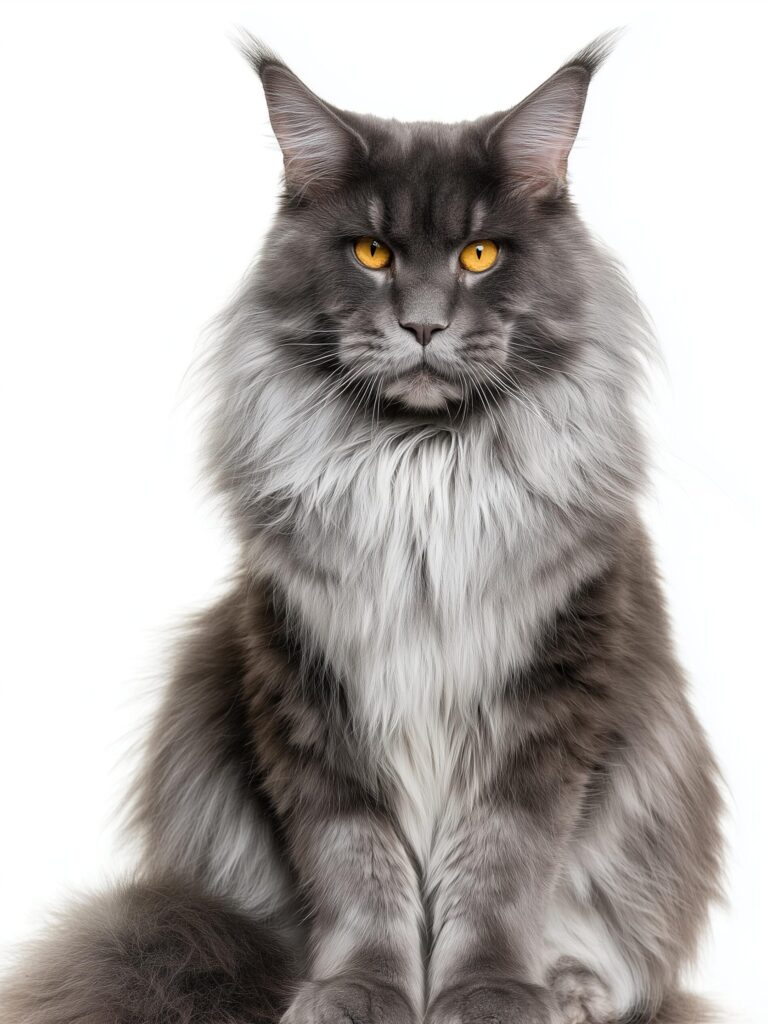
Today, TikTok often becomes a person’s first real exposure to Maine Coons. Long before someone reads a breeder website, talks to an experienced owner, or asks a veterinarian, they’ve already seen dozens—sometimes hundreds—of short videos showing giant cats draped over shoulders, opening doors, “talking” on command, or behaving in ways that feel almost scripted.
That matters, because first impressions stick.
Short-form video creates strong emotional reactions very quickly. In under 30 seconds, viewers absorb size, mood, and personality cues. They don’t just watch the cat—they imagine living with that cat. The platform does its job well: it creates desire.
However, the issue is not misinformation.
TikTok usually shows real Maine Coons doing real things. The problem is compression.
Separating Viral Clips From Real-Life Ownership
Compression strips away context. It removes time, routine, repetition, and variability. It turns moments into meaning. As a result, viewers walk away with a feeling—This is what owning a Maine Coon is like—without seeing the larger pattern those moments come from.
That gap is where disappointment can start.
To be clear, this is not a takedown of TikTok creators or their cats. Many creators genuinely love their animals and share authentic moments. But the platform itself rewards visual exaggeration and performance, not long-term reality. It pushes the biggest, most expressive, most dramatic clips forward, while quiet, ordinary days never appear on screen.
This post exists to do something different.
TikTok delivers visual exaggeration and performance.
This guide focuses on pattern recognition and lived reality.
And while Reddit often captures what happens after expectations collide with reality—through venting and frustration—this article organizes those same truths calmly, clearly, and before regret sets in.
Here’s the framing promise:
- TikTok shows real cats
- But it shows edited moments, not daily ownership
- This guide explains where perception drifts from experience, and why that drift matters
If you enjoy Maine Coon TikTok—and many people do—you don’t need to stop watching it. You simply need to understand what it shows well, what it can’t show at all, and how to separate viral moments from the reality of sharing your home with this breed long term.
That distinction is what protects people from hype-driven disappointment and helps future owners choose Maine Coons for who they really are—not just how they perform on camera.
TikTok vs Reality: Maine Coons at a Glance
| TikTok Shows | What’s Missing | Real-Life Ownership Looks Like |
|---|---|---|
| Extremely large cats in every clip | Camera angles and forced perspective | Large cats with confident presence that owners normalize quickly |
| “Dog-like” behavior on cue | Independence and choice | Social, engaged cats that retain feline autonomy |
| Calm, predictable personalities | Mood and context variability | Temperament that develops over time and varies by individual |
| Constant interaction and performance | Quiet, uneventful days | Routine, steady companionship |
| Trained or repeated behaviors | Training and timing behind the scenes | Behavior shaped by environment, maturity, and relationship |
| Dramatic, expressive moments | Normal daily rhythms | Presence without constant spectacle |
| Instant personality clarity | Slow emotional development | Personality revealed gradually with age |
| Highlight reels | No context | A long-term relationship, not a performance |
Why TikTok Is So Convincing (And Why That Matters)
TikTok doesn’t mislead people because it lies. It convinces people because it compresses reality into moments that feel complete.
Understanding why TikTok feels so believable is important, because once you see how the illusion forms, it becomes much easier to separate entertainment from expectation.
Visual Scale Is Hard to Interpret on Video
Size is one of the easiest things to exaggerate on camera—especially with animals.
Creators often use forced perspective without realizing it. When a Maine Coon is placed closer to the camera than surrounding objects or people, the cat appears dramatically larger than it is in normal context. The brain fills in the gaps and assumes that scale is constant.
Camera angles also do a lot of work. Low angles make bodies look taller and longer. Close framing removes reference points. A cat stretched toward a lens looks enormous, even if that same cat appears much more proportional across a room.
Then there are comparison tricks. Filming next to smaller people, children, compact furniture, or average-sized cats amplifies contrast. The Maine Coon looks extreme because the environment was chosen to make it look that way.
None of this is malicious. It’s how visual storytelling works. But it means viewers rarely see size in neutral, everyday proportion.
Personality Is Easier to Perform Than Explain
Personality is far more complex than a clip can capture—but performance is easy.
One well-timed moment can suggest an entire temperament. A calm sit. A slow blink. A gentle paw tap. On video, these moments look like stable personality traits rather than single data points.
The problem is that one moment does not equal temperament.
Editing plays a role here too. Calm moments get selected. Busy moments get cut. Over time, this creates the illusion of consistency. The cat appears endlessly patient, endlessly tolerant, endlessly relaxed.
In real life, behavior fluctuates. Mood changes. Energy rises and falls. Personality shows itself through patterns over time, not through isolated clips.
TikTok makes personality feel simple because explanation takes time—and time doesn’t perform well.
Algorithms Reward Extremes, Not Accuracy
TikTok doesn’t reward what’s typical. It rewards what stops scrolling.
That means bigger, louder, and more dramatic clips get pushed. The tallest Maine Coons. The most vocal moments. The biggest reactions. The most striking visuals.
Meanwhile, normal behavior doesn’t go viral.
A Maine Coon quietly following a routine. A cat spending most of the day nearby but not performing. A grooming session that looks exactly like yesterday’s grooming session—these moments make up real ownership, but they don’t generate engagement.
As a result, TikTok doesn’t show the average experience. It shows the extremes, repeated until they feel representative.
Myth #1 — “Maine Coons Are All Massive”
This is one of the most persistent myths TikTok reinforces—not because it’s entirely false, but because it’s flattened into an absolute.
Maine Coons are large cats. They are not all the same size, and they do not feel enormous every moment of the day.
How TikTok Exaggerates Size
Size exaggeration often starts with shoulder-cat framing. A cat draped across shoulders looks dramatic, especially when filmed close-up. The cat fills the frame, and the viewer’s brain assumes that scale applies everywhere.
Camera positioning amplifies this effect. Filming from below or zooming in during stretches elongates the body visually. A long cat becomes a towering cat.
Then come selective comparisons. Videos often show Maine Coons next to small dogs, children, or compact furniture. Without neutral reference points, size feels extreme rather than contextual.
Again, these cats are genuinely large—but TikTok consistently presents them at their most visually impressive angles.
What Size Actually Looks Like Day to Day
In real life, size becomes presence, not spectacle.
Maine Coons occupy space confidently. They move deliberately. They stretch across surfaces instead of curling into corners. That presence feels impressive—but also familiar.
Owners normalize size quickly. What once felt dramatic becomes ordinary. The cat fits into daily routines, furniture choices, and movement patterns. The scale doesn’t disappear, but it stops feeling shocking.
That’s why long-term owners often forget how big their Maine Coon is until someone new points it out.
Why Size Isn’t the Hard Part of Ownership
Most regret around size doesn’t come from inches or weight. It comes from infrastructure.
Litter boxes that are too small. Scratching posts that wobble. Furniture that can’t handle weight. Carriers designed for average cats. These are setup issues, not size problems.
Once owners choose equipment that matches the cat, size stops being disruptive. The home adapts. Life settles.
This is why size rarely remains a long-term regret. The challenge isn’t how big the cat is—it’s whether the environment was designed with that size in mind.
TikTok makes size feel like the defining challenge. Real ownership shows that planning matters more than proportions.
Myth #2 — “They’re Basically Dogs in Cat Form”
Calling Maine Coons “dog-like” isn’t wrong — but it’s often misunderstood. TikTok compresses that label into something far more literal than real life supports, and that’s where expectations drift.
What “Dog-Like” Actually Means in Cats
When people use “dog-like” to describe Maine Coons, they usually mean engagement, not obedience.
Maine Coons pay attention to what’s happening around them.
- They track movement.
- They follow routines.
- They position themselves near people and activity.
That awareness reads as dog-like because many cats choose distance instead.
However, dog-like does not mean compliance.
Maine Coons show presence, not performance. They stay involved without responding to every cue. They choose when to interact instead of reacting automatically. That distinction matters, because it shapes how the relationship feels day to day.
Owners who understand this enjoy the breed’s attentiveness without expecting it to override feline independence.
What TikTok Leaves Out
TikTok clips rarely show what dog-like behavior doesn’t override.
Independence still exists. Maine Coons make their own decisions. They step away when they want space. They disengage when they’ve had enough.
Boundaries still matter. Handling tolerance varies by individual. Affection happens on the cat’s terms, not on command.
Cat instincts don’t disappear. Prey drive, curiosity, and selective attention remain intact. Maine Coons don’t stop being cats because they’re social.
These realities don’t undermine the breed’s appeal — they define it. TikTok simply doesn’t have room to show nuance.
When the Dog Comparison Causes Regret
Regret tends to appear when the dog comparison turns into an expectation of training-level obedience.
Owners may expect:
- Consistent response to commands
- Predictable reactions in every setting
- Engagement on demand
When Maine Coons don’t behave that way, involvement can get misread as neediness instead of presence. What’s actually happening is normal feline autonomy expressing itself within a social breed.
This is why understanding what “dog-like” actually means prevents disappointment. The behavior isn’t misleading — the interpretation often is.
Myth #3 — “They Have Scripted Personalities”
Another TikTok-driven expectation is that Maine Coons come with pre-written personalities — calm, cuddly, talkative, and predictable across situations.
Real life is more complex.
Why TikTok Creates the Illusion of Predictable Traits
TikTok often shows the same cat performing similar behaviors across multiple clips. Viewers unconsciously generalize those moments into personality rules.
Editing also removes variance. Energetic moments get cut. Moody moments get skipped. The cat appears endlessly consistent because inconsistency doesn’t perform well.
Over time, this creates the illusion that Maine Coons behave the same way in every environment, at every age, with every person.
Why Maine Coons Share Tendencies, Not Scripts
Maine Coons do share breed tendencies — social interest, confidence, environmental awareness. However, tendencies are not scripts.
Individual temperament varies based on:
- Genetics
- Early socialization
- Household environment
- Stress levels
- Maturity
Two Maine Coons can share a breed label and still behave very differently. One may be vocal and expressive. Another may be quiet but present. Both are typical.
Understanding this prevents disappointment rooted in comparison.
How Personality Actually Reveals Itself Over Time
Maine Coon personality doesn’t arrive fully formed. It emerges.
Slow maturation means behavior evolves over months and years. Confidence builds. Preferences solidify. Reactions soften or sharpen depending on experience.
Personality also remains relationship-dependent. Maine Coons behave differently with different people, in different settings, and at different life stages. That flexibility is part of their intelligence, not a flaw.
TikTok makes personality look instant and fixed. Real life shows it as layered, adaptive, and shaped by time.
Understanding that difference helps owners appreciate who their cat becomes — instead of expecting them to follow a script written by viral clips.
Myth #4 — “This Is What Daily Life Looks Like”
One of the biggest misconceptions TikTok creates is subtle but powerful: the idea that what you see on screen represents a normal day.
It doesn’t.
What TikTok shows are moments, not rhythms. And when moments get mistaken for routines, expectations drift quickly.
How Much Content Is Structured or Repeated
Most viral Maine Coon content isn’t accidental. Even when creators love their cats deeply, the clips themselves are often intentional.
Creators use multiple takes to capture a clean moment. If the cat walks away, the clip doesn’t make it online. If the behavior doesn’t land, it gets tried again later.
Many moments are also trained or reinforced. Sitting on shoulders, responding to cues, tolerating handling, or holding a pose often involves repetition and conditioning that viewers never see.
Timing matters too. Clips get filmed during calm windows, not during chaos. Selective timing removes the ordinary parts of the day and leaves only the most watchable ones behind.
None of this is dishonest. It’s content creation. But it means viewers rarely see what fills the rest of the day.
What Daily Life Actually Includes
Real life with a Maine Coon looks quieter than TikTok suggests.
It includes routine. Feeding schedules. Grooming habits. Nap cycles. Familiar paths through the house. Days that look very similar to each other.
It includes quiet presence. A cat sitting nearby. Watching. Following from room to room. Being involved without performing.
It includes non-performative companionship. No tricks, cues or audience. Just a cat sharing space because that’s where it wants to be.
These moments don’t translate well to short-form video, but they make up the majority of ownership—and for most long-term owners, they’re the most rewarding part.
Why Owners Don’t Feel Lied To — Just Unprepared
Most owners don’t say, “TikTok lied to me.” They say, “I didn’t realize this part.”
That distinction matters.
The issue isn’t deception. It’s context.
TikTok works like a highlight reel. Real life works like a long-form documentary. When someone expects the highlight reel to be the baseline, disappointment follows—not because reality is bad, but because expectations were compressed.
In other words, disappointment comes from expectation, not deception.
Once owners recalibrate and understand that viral moments sit on top of a quiet, steady routine, frustration usually fades.
What TikTok Gets Right
TikTok isn’t wrong about Maine Coons. It’s incomplete.
Acknowledging what the platform gets right builds trust—and it’s where many Reddit threads fail.
Size and Presence Are Real
Maine Coons are genuinely large cats with a confident physical presence. They take up space comfortably, move with intention, and feel substantial in any room they enter.
That part of TikTok is accurate.
The only correction needed is scale over time. Size becomes familiar. Presence integrates into daily life. It stops feeling dramatic and starts feeling normal.
Confidence Develops With Maturity
TikTok often features adult Maine Coons for a reason. Confidence grows with age.
As Maine Coons mature, they settle into their bodies and environments. They react less, observe more, and carry themselves with ease.
That confidence is real—and it’s one of the breed’s most appealing long-term traits.
The Breed Is Expressive and Social
Maine Coons are expressive. They communicate clearly through body language, posture, and vocalization. They engage with people and notice what’s happening around them.
TikTok captures that expressiveness well.
The issue isn’t falsity. It’s framing. Expression doesn’t mean performance. Social doesn’t mean constant interaction. Once those distinctions are clear, the picture makes sense.
Why TikTok Hype Turns Into Reddit Regret
Understanding how TikTok and Reddit function differently explains why hype often turns into regret.
TikTok Creates Desire
TikTok excels at creating emotional pull. It shows what’s impressive, charming, and visually satisfying. It makes people want the experience—fast.
That desire forms before research begins.
Reddit Attracts Processing and Frustration
Reddit fills a different role. People arrive there when they’re confused, overwhelmed, or seeking validation. It’s where early frustration gets processed publicly.
As a result, Reddit skews toward problems because satisfied owners rarely need to post.
Why the Gap Feels Like Betrayal
When desire meets reality without preparation, the emotional shift can feel sharp.
TikTok builds expectation upward. Reddit absorbs the emotional fallout when reality doesn’t immediately match that expectation. That contrast creates emotional whiplash.
The experience feels like betrayal—even though no one actually lied.
Understanding this dynamic helps buyers pause, recalibrate, and choose Maine Coons for the right reasons: long-term companionship, not viral performance.
When expectations align with reality, TikTok stops being a problem—and Reddit stops being necessary.
See Common Maine Coon Buyer Mistakes
How to Watch TikTok Content Without Being Misled
You don’t need to stop watching Maine Coon content on TikTok to make a good decision. You just need to watch it differently.
When you shift how you interpret what you’re seeing, TikTok becomes entertainment and inspiration—not a substitute for education.
Questions to Ask While Watching
As you scroll, slow the moment down mentally and ask two simple questions.
Is this one moment or a pattern?
A single clip shows a behavior once. Real temperament shows itself through repetition over time. Ask yourself whether you’re seeing the same behavior across many different situations—or whether the clip simply captured a good moment.
If the video doesn’t show context before or after the action, assume you’re seeing a highlight, not a baseline.
Is this behavior trained or spontaneous?
Many impressive behaviors don’t happen by accident. Shoulder sitting, tolerance for handling, calm reactions, or cue-based responses often involve conditioning, repetition, or careful timing.
That doesn’t make the behavior fake—but it does mean it isn’t automatic or constant. Training creates reliability, not personality. Knowing the difference prevents unrealistic expectations.
What to Ignore
Certain types of content are designed to impress, not inform.
One-off extremes
The biggest cat. The loudest vocalization. The most dramatic reaction. These clips exist because they are unusual. Treat them as outliers, not averages.
Absolute claims
“All Maine Coons do this.”
“They’re basically dogs.”
“They’re always calm.”
Any statement that removes variability should trigger skepticism. Real animals don’t behave in absolutes.
Ignoring these signals doesn’t make you cynical—it makes you accurate.
What to Look For Instead
If you want TikTok to be useful rather than misleading, look for content that hints at continuity.
Long-term clips
Accounts that show the same cat over months or years give you a better sense of development, not just performance.
Adult cats
Adult behavior reflects maturity, routine, and settled temperament. Kittens perform chaos well; adults show lifestyle fit.
Neutral routines
Videos that include grooming, quiet time, normal movement through the home, or unremarkable days often reveal more than flashy tricks ever will.
These clips don’t go viral as often—but they tell the truth more consistently.
Who TikTok-Inspired Maine Coon Ownership Works Best For
TikTok doesn’t ruin Maine Coon ownership. In the right hands, it actually attracts people who end up loving the breed deeply.
The key is alignment.
Owners Who Enjoy Engagement and Presence
Maine Coons thrive in homes where people enjoy being noticed.
They suit owners who like a cat that:
- Pays attention to daily life
- Shares space consistently
- Participates without needing to perform
If presence feels comforting rather than intrusive, TikTok-inspired interest often turns into long-term satisfaction.
People Comfortable With Adaptation
Successful Maine Coon owners adjust their environment over time.
They expect to:
- Upgrade equipment
- Refine routines
- Learn as the cat matures
Realistic owners don’t expect everything to feel effortless immediately. They expect growth—on both sides.
That flexibility turns early surprises into manageable adjustments instead of regrets.
Buyers Who Research Beyond Social Media
TikTok works best as a starting point, not a finish line.
Owners who go on to:
- Read long-form guides
- Learn about maturity timelines
- Understand grooming, size, and engagement realistically
tend to enjoy their Maine Coons more—not because TikTok was wrong, but because it wasn’t their only source.
When social media sparks interest and education shapes expectations, Maine Coon ownership becomes what it should be: informed, intentional, and deeply rewarding over time. See Maine Coon Breeder Reviews here.
When TikTok Sets People Up for Disappointment
TikTok doesn’t cause disappointment by itself. Disappointment happens when platform expectations collide with real life and no one pauses to reset the frame.
This is where boundary-setting matters—not to criticize creators or viewers, but to protect future owners from mistaking entertainment for ownership reality.
Expecting Performance on Demand
TikTok trains viewers to expect response.
- A cat jumps when cued.
- A cat vocalizes on command.
- A cat tolerates handling perfectly every time.
On screen, these moments look effortless and repeatable.
In real life, performance has limits.
Maine Coons may repeat trained behaviors, but they don’t perform on demand the way dogs often do. Mood, environment, stimulation, and comfort all affect response. A behavior that happens easily one day may not happen at all the next.
When owners expect consistent performance, involvement can start to feel like disappointment instead of autonomy. What’s actually happening is normal feline choice—not defiance or regression.
Expecting Visual Drama Daily
TikTok compresses weeks into seconds. Real life unfolds slowly.
Daily life with a Maine Coon includes:
- Long stretches of quiet
- Familiar routines
- Repetition
These elements don’t look dramatic, but they form the backbone of ownership.
When people expect every day to feel visually exciting, reality can feel flat by comparison. The cat hasn’t changed. The expectation has.
The truth is that calm, uneventful days are a sign of stability, not boredom. Most long-term owners come to value those days more than the dramatic ones TikTok highlights.
Expecting a Scripted Personality
Perhaps the most damaging expectation is believing a Maine Coon will behave like a character rather than an individual.
TikTok often presents cats as if their personality is fixed and predictable: always gentle, always social, always expressive in the same way. Real animals don’t work like that.
Personality fluctuates with age, environment, stress, and relationship. Maine Coons show tendencies, not scripts. When owners expect consistency without variance, normal shifts can feel like something is “wrong.”
Understanding this difference prevents disappointment rooted in comparison rather than reality.
Frequently Asked Questions: TikTok vs Real Life With Maine Coons
Are Maine Coons really like they appear on TikTok?
They are real Maine Coons, but TikTok shows moments, not patterns.
Short clips highlight size, expressiveness, or trained behaviors, while leaving out routine, variability, and quiet companionship. The breed traits are real — the representation is incomplete.
Why do Maine Coons look so much bigger on TikTok than in real life?
Video exaggerates scale. Camera angles, forced perspective, and selective comparisons make cats appear larger than they feel day to day. In real life, owners normalize size quickly, and presence replaces spectacle.
Are Maine Coons actually “dog-like”?
They are social and engaged, not obedient in a dog-like way.
Maine Coons notice routines, follow activity, and enjoy interaction, but they retain feline independence. “Dog-like” describes presence, not compliance.
Do Maine Coons perform tricks or behaviors on command?
Some behaviors are trained or reinforced, but Maine Coons do not perform on demand consistently. Mood, environment, and choice still matter. TikTok often shows trained moments without showing the work behind them.
Why does my Maine Coon act differently than TikTok cats?
Because TikTok shows edited highlights, not daily life.
Your cat’s behavior reflects personality, maturity, environment, and relationship — not a script. Variability is normal and expected.
Are Maine Coons always calm and cuddly like videos show?
No cat is always calm or cuddly.
TikTok often edits out energy shifts, boundary-setting, and independent moments. Adult Maine Coons are often steady and present, but affection still happens on their terms.
Do all Maine Coons have the same personality?
No. They share breed tendencies, not fixed personalities.
Temperament varies based on genetics, socialization, environment, and maturity. Personality reveals itself over time, not instantly.
Why does TikTok make Maine Coon ownership look more exciting than it feels?
TikTok compresses time.
It turns weeks of routine into seconds of performance. Real life is quieter, steadier, and less dramatic — which many long-term owners actually prefer once expectations adjust.
Is TikTok misleading about Maine Coons?
TikTok isn’t wrong — it’s incomplete.
It shows what performs well visually, not what defines daily ownership. Misunderstanding happens when entertainment replaces education. See Maine Coon Owner Regrets and How to Avoid Them
Why do people complain about Maine Coons on Reddit after seeing TikTok?
TikTok creates desire. Reddit absorbs processing and frustration.
When expectations formed through short-form video meet real-world responsibility, the emotional shift can feel jarring. That gap often shows up as venting, not long-term regret.
Are Maine Coons disappointing in real life?
For well-matched homes, no.
Disappointment usually comes from confusing performance with permanence, not from the breed itself. Owners who expect routine and relationship — not constant spectacle — report high satisfaction.
See Downsides of Maine Coon Cats
How should I use TikTok when researching Maine Coons?
Use it for inspiration, not instruction.
Enjoy the visuals, then look for long-form sources that explain maturity, grooming, engagement, and lifestyle fit. TikTok works best as a starting point, not a decision guide.
Who does TikTok-inspired Maine Coon ownership work best for?
It works best for people who:
- Enjoy engagement and presence
- Accept adaptation over time
- Research beyond social media
For these owners, TikTok sparks interest — education builds confidence.
Final Perspective — TikTok Shows Moments, Not Ownership
TikTok isn’t wrong. It’s incomplete.
It shows real Maine Coons doing real things—but only in isolated, edited moments designed to perform well on screen. It cannot show daily rhythm, long-term bonding, or the quiet satisfaction of shared routine.
Maine Coons aren’t disappointing in real life. For well-matched homes, they are confident, expressive, deeply present companions who integrate smoothly over time.
Disappointment happens when people confuse performance with permanence—when they expect a highlight reel to represent everyday experience.
The healthiest way to use TikTok is as inspiration, not education. Let it spark interest. Let it showcase what’s possible. Then step away from the screen and learn what ownership actually looks like.
When expectations align with reality, TikTok stops being a source of regret and becomes what it should be: entertainment that points toward a breed many people truly love living with.
Related Articles From Almonte Cats
If you are researching Maine Coons carefully, the following guides may also be helpful. These posts explain our standards, expectations, and long-term approach in more depth.
- Maine Coon Size, Growth, and Weight: What’s Normal and What’s Not
A detailed breakdown of realistic size ranges, growth timelines, and how to tell healthy structure from excess weight. - How to find a Maine Coon Breeder You can Trust
A practical guide explaining common scam patterns, verification steps, and what ethical programs do differently. - Maine Coon Health Overview: What Responsible Owners Should Know
Covers genetic screening, lifespan expectations, preventive care, and early warning signs owners should never ignore. - Why Maine Coons are Not for Everyone
An honest look at temperament, grooming, space needs, and daily life with a Maine Coon. - Maine Coon Kitten Growth Stages: What to Expect From 8 Weeks to Adulthood
Explains normal development, awkward phases, and why slow growth is a feature of the breed. - Why Ethical Maine Coon Breeders Have Waitlists Waitlists help breeders plan limited litters with intentional placement
These resources reflect how we approach breeding, placement, and long-term support, and they are written to help families make informed decisions rather than rushed ones.
Sources & Further Reading
- International Cat Care (iCatCare) — feline behavior, social needs, routines, and life-stage development
https://icatcare.org - American Association of Feline Practitioners (AAFP) — feline behavior guidelines, human–cat interaction, and realistic owner expectations
https://catvets.com - Cornell University College of Veterinary Medicine — normal feline behavior, development, and environmental influence
https://www.vet.cornell.edu - VCA Animal Hospitals — cat behavior by age, training limits, enrichment, and daily routines
https://vcahospitals.com - The Cat Fanciers’ Association (CFA) — Maine Coon breed standard, size, temperament, and slow maturation
https://cfa.org - The International Cat Association (TICA) — Maine Coon breed profile and breed-specific traits
https://tica.org - American Veterinary Medical Association (AVMA) — companion animal behavior, owner expectations, and welfare considerations
https://www.avma.org





Read the Comments +