
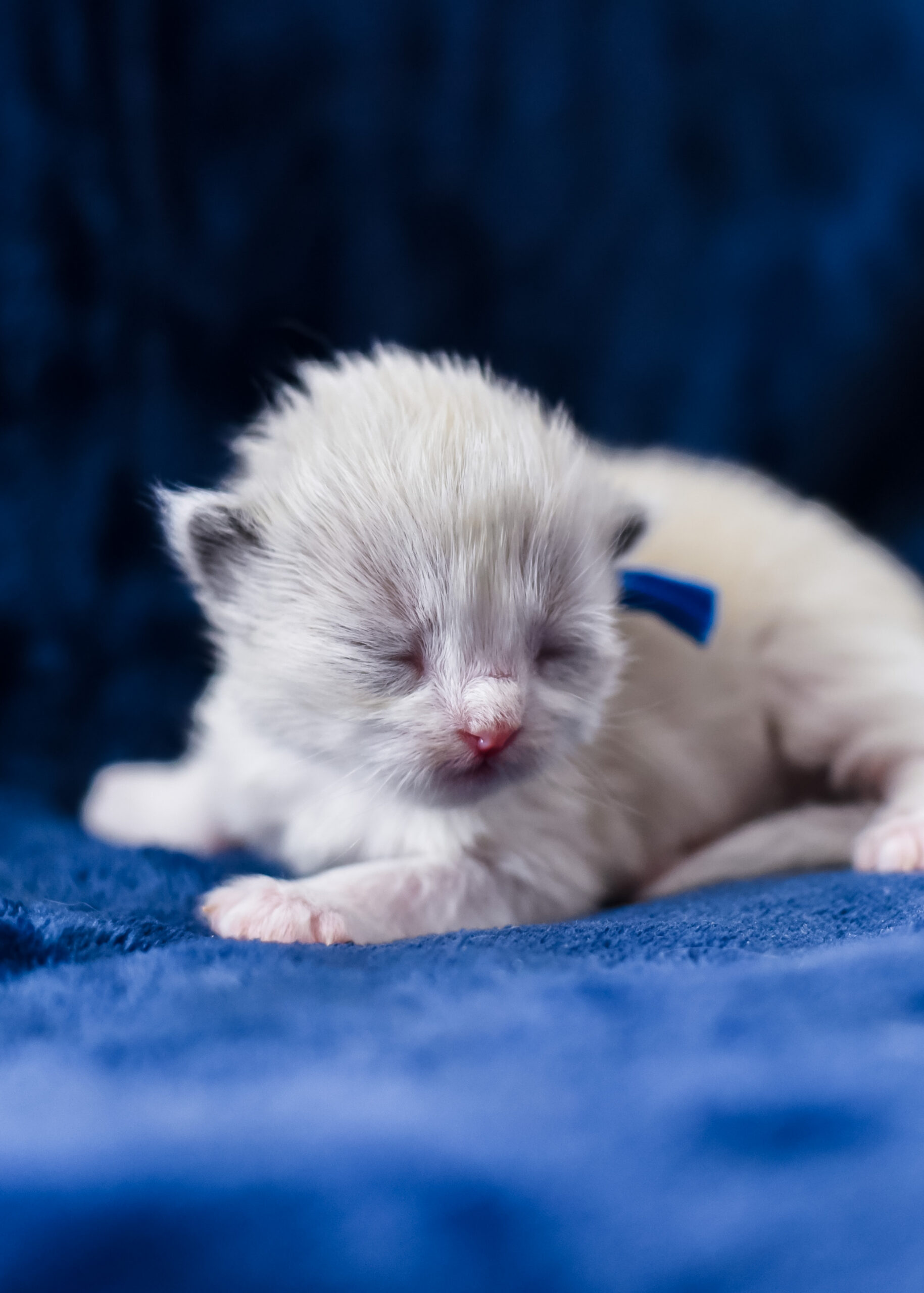
When Do Kittens Open Their Eyes? Newborn Kitten Eye Development Timeline
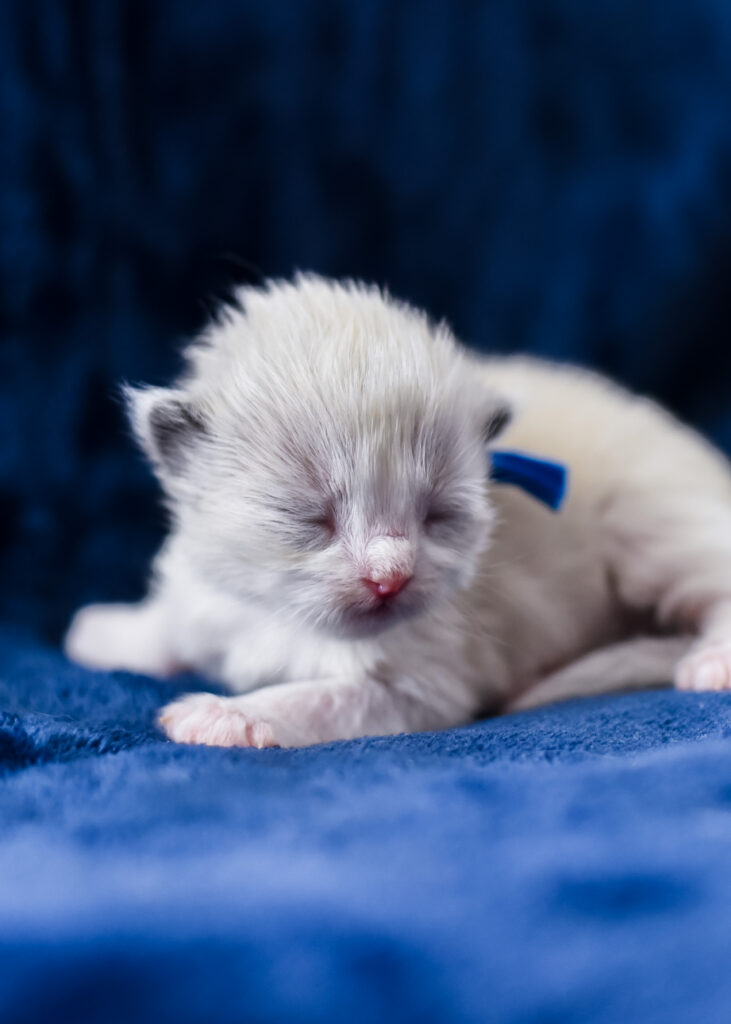
Kittens usually open their eyes between 7 and 14 days after birth. Most begin opening them around day 10, though the process happens gradually over several days. Their vision is very blurry at first and continues developing over the next several weeks.
Quick Answer — When Do Kittens Open Their Eyes?
| Kitten Age | Eye Development |
| Birth – Day 5 | Eyes fully closed |
| Day 6–10 | Eyelids begin separating |
| Day 10–14 | Eyes open gradually |
| 2–3 weeks | Vision improving |
| 4 weeks | Eyes fully functional |
Key takeaway:
Most kittens open their eyes between 7–14 days, but development varies slightly between litters.
Why Kittens Are Born With Their Eyes Closed
Kittens are born with their eyes closed because their bodies and nervous systems are still developing. Unlike some animals that are born fully mobile and alert, kittens enter the world in a very early stage of development.
Cats are altricial mammals, which means their young are born relatively immature and continue developing after birth. During the first weeks of life, many important systems are still maturing, including the brain, sensory organs, and coordination.
Keeping the eyes closed at birth helps protect delicate structures inside the eye. The retina and optic nerve are still forming connections with the brain, and exposure to bright light too early could damage these sensitive tissues.
Closed eyelids also help prevent dehydration and irritation of the eye surface while the tear production system is still developing. In addition, the sealed eyelids act as a natural barrier that protects newborn kittens from dust, bacteria, and environmental debris.
As the kitten’s brain and nervous system mature, the eyelids gradually separate. This timing ensures the eyes begin functioning only when the visual system is ready to process light and movement safely.
In short, kittens are born with closed eyes because their bodies are designed to finish critical development after birth, while being protected by the mother and the nest environment.
What Happens When Kittens First Open Their Eyes
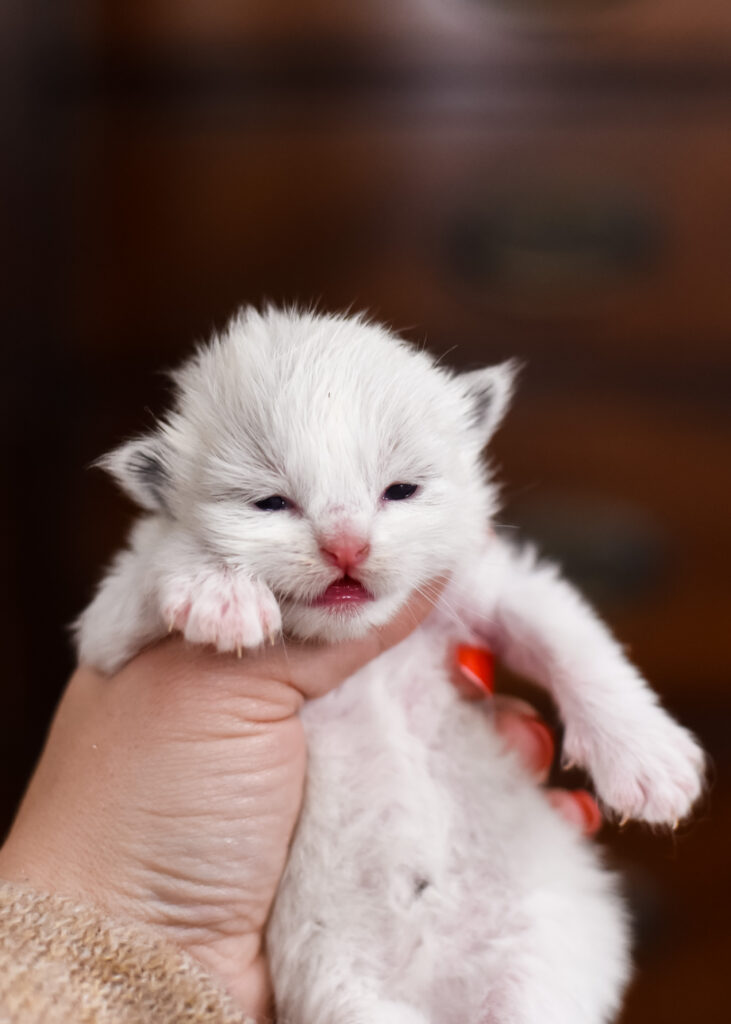
When kittens begin opening their eyes, the process happens slowly rather than all at once. The eyelids usually start separating around 7 to 10 days of age, and full opening can take several days.
In many litters, one eye opens before the other. This is normal and not a cause for concern. Some kittens may have both eyes open on the same day, while others take two or three days for both to fully open.
Even though the eyes are technically open, the kitten’s vision is still extremely limited. At this stage they can usually detect light and vague shapes, but their ability to focus or recognize objects is very poor.
Another noticeable feature during this stage is eye color. When kittens first open their eyes, they typically appear blue or blue-gray. This color is temporary and occurs because pigment has not fully developed in the iris yet.
Over the next several weeks, the kitten’s eyes strengthen and visual processing improves. Clear vision develops gradually as the brain continues forming connections with the eyes.
Week-by-Week Kitten Eye Development
Week 1 (Birth – Day 7)
During the first week of life, kittens remain in a completely dependent stage.
- Eyes remain fully closed
- Ears are folded against the head
- Kittens rely entirely on their mother for warmth and nutrition
- Movement is limited to crawling
- They navigate using smell, touch, and temperature cues
At this stage, the nervous system is still immature and sensory development is just beginning.
Week 2 (Day 7–14)
The second week is when eye opening typically begins.
- Eyelids slowly start separating
- One eye may open before the other
- Light sensitivity is very high
- Vision remains extremely blurry
Kittens may begin lifting their heads more and showing slightly stronger movements, but they still rely heavily on their mother.
Week 3 (Day 14–21)
By the third week, most kittens have their eyes fully open.
- Vision continues improving
- Kittens begin responding to movement
- Early attempts at walking and standing occur
- Exploration of the nesting area begins
Although sight is improving, coordination is still developing.
Week 4
By the fourth week, vision becomes much more functional.
- Kittens can track moving objects
- Eye coordination improves significantly
- Walking becomes more stable
- Curiosity and play behavior increase
At this point, kittens are entering a stage where their senses start working together, helping them interact more confidently with their surroundings.
What Color Are Kittens’ Eyes When They First Open?
When kittens first open their eyes, they almost always appear blue or blue-gray. This happens because pigment has not yet developed in the iris.
At birth and during the first few weeks of life, a kitten’s body has not produced enough melanin, the pigment responsible for eye color. Without this pigment, light reflects inside the eye in a way that makes the eyes appear blue.
As the kitten grows, melanin gradually begins developing in the iris. This process slowly changes the eye color from the original blue to its final shade. The transition typically begins around 6 weeks of age and continues for several weeks.
The final eye color depends on the kitten’s genetics and breed. Some cats keep blue eyes permanently, while others develop green, gold, copper, or amber eyes.
| Age | Eye Color |
|---|---|
| 1–3 weeks | Blue |
| 4–6 weeks | Blue-gray |
| 6–12 weeks | Changing color |
| 3–4 months | Final color develops |
By around 12–16 weeks, most kittens have developed their permanent eye color.
Should You Help a Kitten Open Its Eyes?
No. You should never try to force a kitten’s eyes open.
The eyelids naturally separate when the kitten’s eyes and nervous system are ready. Attempting to open them early can damage delicate structures that are still developing.
Forcing the eyelids apart can lead to:
- infection
- corneal damage
- irritation and inflammation
- permanent vision problems
In healthy kittens, the eyes will open on their own within the normal developmental window.
If a kitten appears to have swelling, discharge, or sealed eyelids that are not opening properly, the safest approach is to consult a veterinarian. A veterinarian can safely evaluate the eyes and treat any underlying infection or developmental issue.
What If a Kitten’s Eyes Haven’t Opened Yet?
In many cases, slight delays are completely normal. While most kittens open their eyes between 7 and 14 days, some may take a little longer.
It is not unusual for certain kittens to open their eyes around 14 to 16 days, especially if they are smaller or developing slightly more slowly than their littermates.
However, if the eyes remain sealed beyond this period, it may indicate a problem that needs attention.
Possible causes include:
- Eye infection, which can cause swelling and sealed eyelids
- Eyelid adhesion, where the eyelids remain stuck together
- Neonatal illness affecting development
You should contact a veterinarian if you notice:
- eyes still closed after 16–18 days of age
- swelling around the eyelids
- discharge or fluid from the eyes
- crusting that seals the eyelids shut
Early veterinary care can usually resolve these issues quickly and helps protect the kitten’s long-term vision.
Signs of Healthy Eye Development in Kittens
Healthy kitten eye development happens gradually during the first few weeks of life. While every kitten develops at its own pace, several signs typically indicate that the eyes are opening and maturing normally.
Healthy signs include:
- Gradual eyelid separation over several days rather than sudden opening
- Clear, bright eyes once the eyelids have opened
- No swelling around the eyelids or surrounding skin
- No discharge or crusting around the eye area
- Sensitivity to light and movement, such as turning the head toward light or motion
During the early weeks, kittens may squint slightly because their eyes are still sensitive to light. As long as the eyes remain clear and free from swelling or discharge, this is usually part of normal development.
Monitoring these signs helps breeders and caretakers quickly identify whether a kitten’s vision is developing as expected.
Common Eye Problems in Newborn Kittens
Although most kittens open their eyes without issues, eye infections and other problems can occasionally occur during the newborn stage. Early recognition helps prevent long-term complications.
Neonatal Conjunctivitis
Neonatal conjunctivitis is one of the most common eye problems in young kittens. It is typically caused by bacterial infection that develops before or shortly after the eyes open.
Common symptoms include:
- sealed or stuck eyelids
- swelling around the eye area
- yellow or green discharge
- crusting that prevents the eyes from opening
If untreated, pressure can build behind the eyelids and damage the eye. Veterinary care is usually required to safely open the eyelids and treat the infection.
Upper Respiratory Infection
Respiratory infections can also affect a kitten’s eyes. Viruses and bacteria that infect the respiratory tract often cause eye irritation at the same time.
Symptoms may include:
- watery or runny eyes
- sneezing
- nasal discharge
- crusting around the eyelids
Young kittens have immature immune systems, so respiratory infections can spread quickly within a litter.
Eye Injury
Eye injuries are less common but can occur in crowded litters or during rough early movement.
Possible causes include:
- scratching from littermates
- irritation from bedding or debris
- accidental pressure from other kittens
Any signs of redness, cloudiness, or visible injury should be evaluated by a veterinarian to protect the kitten’s developing vision.
When Do Kittens Start Seeing Clearly?
Even after kittens open their eyes, their vision takes several weeks to fully develop. At first they can only detect light and vague shapes. Over time, the brain and eyes begin working together to process movement and distance.
The development of kitten vision typically follows this timeline:
| Age | Vision Ability |
|---|---|
| 2 weeks | Blurry shapes and light detection |
| 3 weeks | Able to detect movement |
| 4 weeks | Basic coordination with improving vision |
| 6 weeks | Vision much clearer |
By around 6 to 8 weeks of age, most kittens can see nearly as well as adult cats. At this stage they can track objects, coordinate movement during play, and explore their environment with increasing confidence.
When Do Kittens Open Their Ears?
Kittens are born both blind and deaf, which means their ears are not functional at birth. During the first few days of life, the ear canals remain closed and the outer ear is folded tightly against the head.
Around day 5, the ears begin to slowly unfold and lift away from the head. This physical change is one of the earliest visible milestones in kitten development.
Although the ears start unfolding early, kittens do not begin hearing right away. The ear canals gradually open during the second week of life, and hearing typically begins between 10 and 14 days.
This timing closely overlaps with the stage when kittens open their eyes. As a result, hearing and vision develop at roughly the same time, allowing kittens to gradually become more aware of their surroundings.
Once both senses begin functioning, kittens start reacting to sounds, light, and movement around the nesting area.
How Breeders Monitor Newborn Kitten Development
Responsible breeders closely monitor kittens during the first weeks of life to ensure they are developing normally. Careful observation during this stage allows early detection of health problems and supports healthy growth across the entire litter.
Daily litter monitoring typically includes:
- Daily litter checks to observe nursing behavior, activity level, and general health
- Weighing kittens regularly to confirm steady weight gain and adequate milk intake
- Monitoring eye opening to ensure development occurs within the expected timeframe
- Checking for signs of infection, such as swelling, discharge, or respiratory symptoms
- Maintaining proper temperature, since newborn kittens cannot regulate their body heat effectively
These simple but consistent checks help breeders quickly identify problems and ensure each kitten continues developing normally during the critical early weeks.
Common Myths About Kittens Opening Their Eyes
Many myths about newborn kittens circulate online and in forums. These misunderstandings often come from outdated advice or confusion about how kitten development works. Understanding the facts helps ensure kittens receive proper care during their earliest weeks.
Myth: Touching a newborn kitten will cause an eye infection
This is a common belief, but it is not accurate. Simply touching or gently handling a kitten does not cause eye infections.
Eye infections in newborn kittens are usually caused by bacteria or viruses, often associated with neonatal conjunctivitis or upper respiratory infections. These infections can spread in crowded environments or when hygiene is poor.
Clean hands and gentle handling are generally safe. Responsible breeders and caretakers regularly handle kittens for health checks and monitoring without causing eye problems.
Myth: If you touch a kitten, the mother will reject it
This is another widespread myth. Most healthy mother cats do not reject their kittens simply because a human touched them.
Mother cats recognize their kittens primarily through scent and sound. Brief handling for health checks or weighing is common in responsible breeding programs and does not normally disrupt the mother’s care.
However, excessive disturbance of the nesting area can create stress, so handling should remain calm and limited during the first days of life.
Myth: You should help kittens open their eyes
Some people believe they should help the process by gently opening the eyelids. This is incorrect and can be dangerous.
The eyelids naturally separate when the kitten’s eyes are ready for light exposure. Forcing them open can damage the cornea and delicate eye tissues, potentially causing permanent vision problems.
Kittens should always be allowed to open their eyes on their own.
Myth: If a kitten’s eyes haven’t opened by 10 days something is wrong
Eye opening does not occur on the same exact day for every kitten. While many kittens begin opening their eyes around day 7 to 10, others may take slightly longer.
It is still considered normal for some kittens to open their eyes up to about 14 days, and occasionally a little later. Only if the eyes remain closed beyond 16 to 18 days should a veterinarian be consulted.
Myth: Kittens can see clearly as soon as their eyes open
When kittens first open their eyes, their vision is extremely limited. They can detect light and movement but cannot focus clearly.
Full visual development takes several more weeks as the brain and eyes continue developing together. Most kittens begin seeing clearly around 5 to 6 weeks of age.
Myth: Blue kitten eyes mean they will stay blue forever
All kittens appear to have blue eyes when they first open them, but this color is temporary in many cats.
The blue appearance occurs because the iris has not yet developed melanin pigment. As the kitten grows, pigment develops and the eye color may change to green, gold, amber, or copper depending on genetics.
Myth: A kitten with closed eyes is unhealthy
Closed eyes in newborn kittens are completely normal. In fact, it is an important part of healthy development.
Kittens are born in an early developmental stage, and their eyes remain closed to protect the retina and optic nerves while they mature. Closed eyes during the first week of life are expected and healthy.
Myth: Bright light helps kittens open their eyes faster
Exposing newborn kittens to bright light will not speed up eye development. In fact, strong light can be uncomfortable for kittens whose eyes are still developing.
Kittens should remain in a quiet, dim nesting environment during the first weeks of life to protect their sensitive eyes and nervous system.
Myth: If kittens open their eyes early, they are stronger
Early eye opening does not necessarily indicate a healthier or stronger kitten. Developmental timing varies slightly between individuals.
Some kittens open their eyes a little earlier, while others take a few extra days. As long as the kitten is gaining weight and appears healthy, small variations in timing are normal.
Myth vs Fact Summary — Kitten Eye Opening
| Myth | Fact |
|---|---|
| Touching a newborn kitten will cause an eye infection | Eye infections are caused by bacteria or viruses, not gentle handling. Clean hands and brief health checks do not cause eye infections. |
| If you touch a kitten, the mother will reject it | Most mother cats do not reject kittens because of human scent. Responsible breeders handle kittens briefly for weighing and health monitoring without issues. |
| You should help kittens open their eyes | Never force a kitten’s eyes open. The eyelids separate naturally when the eyes are ready, and forcing them open can cause injury or infection. |
| If a kitten’s eyes haven’t opened by 10 days something is wrong | Many kittens begin opening their eyes around day 10, but it is normal for the process to occur anytime between 7 and 14 days. |
| Kittens can see clearly as soon as their eyes open | Vision is very blurry at first. Kittens usually begin seeing clearly closer to 5–6 weeks of age. |
| Blue kitten eyes mean they will stay blue forever | All kittens start with blue eyes. Eye color may change between 6–12 weeks depending on genetics. |
| Closed eyes mean the kitten is unhealthy | Newborn kittens are supposed to have closed eyes. This protects the retina while the visual system continues developing. |
| Bright light helps kittens open their eyes faster | Bright light does not speed up development and can actually irritate sensitive newborn eyes. |
| If one eye opens before the other something is wrong | It is common for one eye to open first and the other to follow a day or two later. |
| Earlier eye opening means a stronger kitten | Developmental timing varies slightly between kittens and does not necessarily reflect health or strength. |
Newborn Kitten Milestone Timeline
The first six weeks of a kitten’s life involve rapid physical and neurological development. Many important milestones occur during this short period.
| Age | Development |
|---|---|
| Birth | Eyes closed, deaf |
| Day 5 | Ears begin unfolding |
| Day 7–14 | Eyes opening |
| 3 weeks | Walking begins |
| 4 weeks | Vision improving |
| 6 weeks | Coordinated play and exploration |
Tracking these milestones helps breeders and caretakers confirm that kittens are progressing through early development at a healthy pace.
FAQ — When Do Kittens Open Their Eyes?
When do kittens usually open their eyes?
Most kittens open their eyes between 7 and 14 days after birth. The eyelids begin separating gradually rather than opening all at once. Many kittens start opening their eyes around day 10, but slight variation between littermates is completely normal.
Do kittens open their eyes all at once?
No, the process happens gradually over several days. One eye often opens first while the other may take a day or two longer. During this time the eyelids slowly separate until the eyes are fully open.
Can kittens see right after their eyes open?
No. When kittens first open their eyes, their vision is still very blurry. At this stage they can detect light and basic movement, but they cannot focus or recognize objects clearly yet.
Why are kittens born with their eyes closed?
Kittens are altricial mammals, meaning they are born in an early developmental stage and continue developing after birth. Their brain, optic nerves, and retina are still forming connections. Closed eyelids protect these delicate structures from light and environmental exposure while development continues.
Is it normal for one eye to open before the other?
Yes, this is very common. Many kittens open one eye first and the other eye opens within a few days. This uneven timing is a normal part of early development and usually resolves quickly.
What color are kittens’ eyes when they first open?
Most kittens have blue eyes when they first open them. This happens because melanin pigment has not yet developed in the iris. As the kitten grows, pigment slowly develops and the eye color may change.
When do kittens’ eyes change color?
Eye color usually begins changing around 6 to 8 weeks of age. The final color typically becomes clear between 3 and 4 months as melanin production increases. The exact shade depends largely on genetics and breed.
Should you help a kitten open its eyes?
No, you should never try to force a kitten’s eyes open. The eyelids separate naturally when the kitten’s eyes are ready for light exposure. Forcing them open can damage the cornea and lead to infection or permanent vision problems.
What if a kitten’s eyes haven’t opened after two weeks?
Some kittens open their eyes slightly later than others, sometimes around 14 to 16 days. However, if the eyes remain closed past 16 to 18 days, it may indicate a health issue such as infection or eyelid adhesion. In those cases, a veterinarian should evaluate the kitten.
How long does it take for kittens’ eyes to fully open?
Once the eyelids begin separating, the process usually takes two to three days. The eyes may appear partially open at first before widening fully. Even after they open, vision continues improving for several weeks.
What should healthy kitten eyes look like?
Healthy kitten eyes should appear clear, slightly blue, and free of discharge. There should be no swelling, redness, or crusting around the eyelids. The kitten may squint slightly at first because newborn eyes are sensitive to light.
Why are kittens’ eyes sensitive to light at first?
Newborn kittens’ eyes are still developing and have not yet adapted to bright light. The retina and optic nerves are still maturing, so strong light can be uncomfortable. This is why kittens often squint or keep their eyes partially closed during the first few days after opening.
What happens if a kitten’s eyes are crusted shut?
Crusting around the eyelids may indicate neonatal conjunctivitis or infection. Infections can cause the eyelids to swell or stick together, preventing normal eye opening. Veterinary treatment is often required to safely clean and treat the eye.
Do kittens see clearly at two weeks old?
No, kittens still have very limited vision at two weeks of age. They can usually detect light and movement but cannot focus clearly. Their vision continues improving over the following weeks.
When do kittens start seeing clearly?
Kittens usually begin seeing much more clearly around five to six weeks of age. By this stage their eyes and brain have developed stronger visual connections. They can track moving objects and navigate their environment more confidently.
When do kittens open their ears?
Kittens’ ears start unfolding around day 5 after birth. However, the ear canals remain closed for several more days. Hearing usually begins between 10 and 14 days, around the same time kittens open their eyes.
Do kittens react to light when their eyes open?
Yes, kittens often react strongly to light when their eyes first open. They may squint, turn their head away, or keep their eyes partially closed. This sensitivity decreases as the eyes continue developing.
Can kittens open their eyes too early?
Early eye opening is uncommon but can happen in some cases. If the eyes open significantly earlier than expected or appear irritated, it may indicate infection or irritation. A veterinarian should examine the kitten if anything appears abnormal.
What should you do if a kitten’s eye looks swollen?
Swelling around the eyelids can indicate infection or injury. Because kitten eyes are still developing, prompt veterinary care is important. Early treatment can prevent long-term vision damage.
Do all kittens start with blue eyes?
Yes, almost all kittens are born with blue eyes initially. The blue color occurs because the iris has not yet developed pigment. As melanin develops, the eye color may change to green, gold, copper, or amber depending on genetics.
When do kittens begin exploring their surroundings?
Exploration usually begins around three weeks of age. At this stage kittens have their eyes open, their ears functioning, and their coordination improving. This allows them to start investigating the nesting area and interacting with littermates.
When do kittens become fully coordinated?
Kittens gain much better coordination around five to six weeks of age. Their vision, hearing, and muscle control begin working together effectively. By this stage they can run, play, and chase objects.
Final Perspective — Eye Opening Is One of the First Major Kitten Milestones
The moment kittens open their eyes marks one of the first visible stages of early development. Most kittens reach this milestone between 7 and 14 days after birth, though slight variation between littermates is completely normal.
As the eyelids gradually separate, the eyes begin functioning while the brain continues building visual connections. Over the following weeks, vision becomes clearer and coordination improves.
Gradual eye opening followed by steady visual development is an important sign that a kitten is progressing normally through the earliest stages of life.
Sources
- American Veterinary Medical Association — Kitten Development and Care
https://www.avma.org/resources-tools/pet-owners/petcare/caring-new-kittens - Cornell University College of Veterinary Medicine — Neonatal Kitten Development
https://www.vet.cornell.edu/departments-centers-and-institutes/cornell-feline-health-center/health-information - VCA Animal Hospitals — Kitten Growth and Development
https://vcahospitals.com/know-your-pet/kitten-growth-and-development - ASPCA — Kitten Development Timeline
https://www.aspca.org/pet-care/cat-care/kitten-care - International Cat Care — Caring for Newborn Kittens
https://icatcare.org/advice/caring-for-a-newborn-kitten/












Read the Comments +