
Maine Coon M on Forehead: What the Famous “M” Marking Really Means
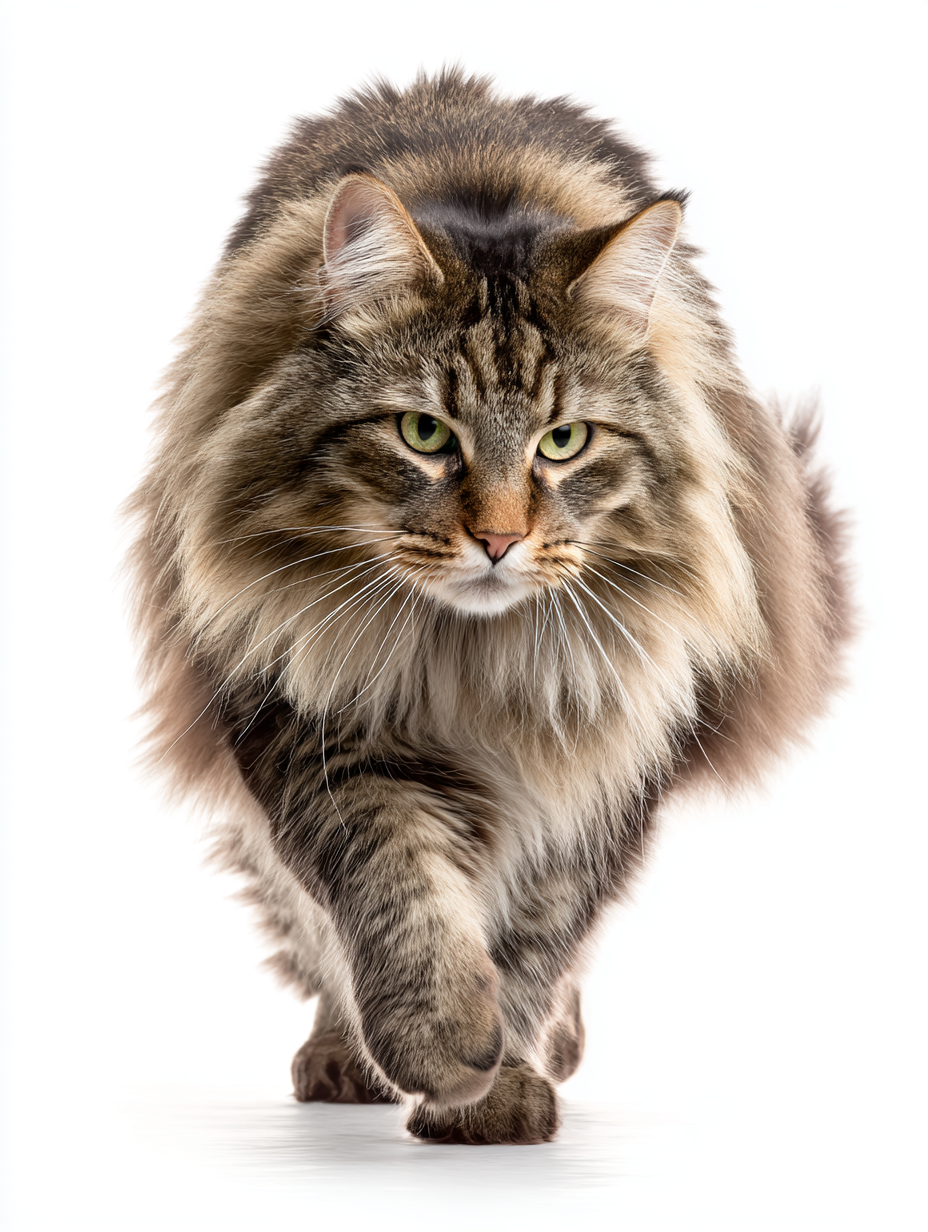
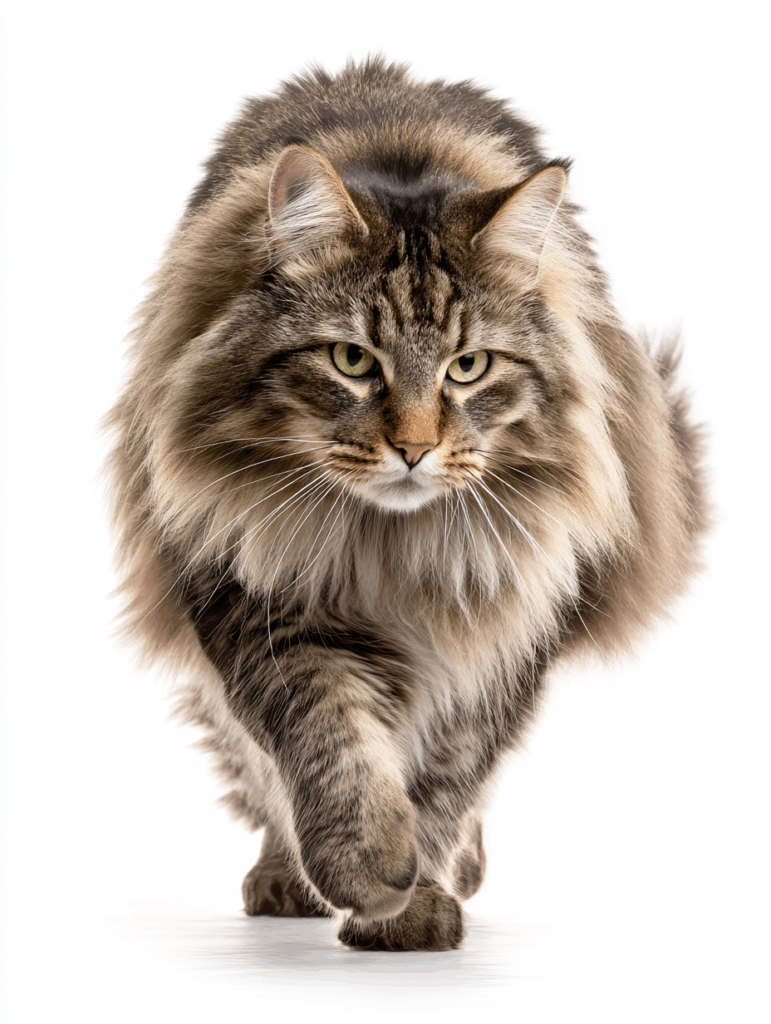
The Maine Coon M on forehead is one of the most recognizable markings owners notice when researching the breed. Many people assume the M proves a cat is a purebred Maine Coon, but this is not correct. The marking comes from tabby coat genetics, which show up in countless breeds and mixed-breed cats. What makes it so closely associated with Maine Coons is how the breed’s structure, coat density, and facial patterning highlight the M more than in most other cats. In this guide, we will break down what the M is, why so many Maine Coons display it, and how tabby genetics create the cat with M marking on head pattern seen across the world.
Do Maine Coon Cats Have an M on Their Head?
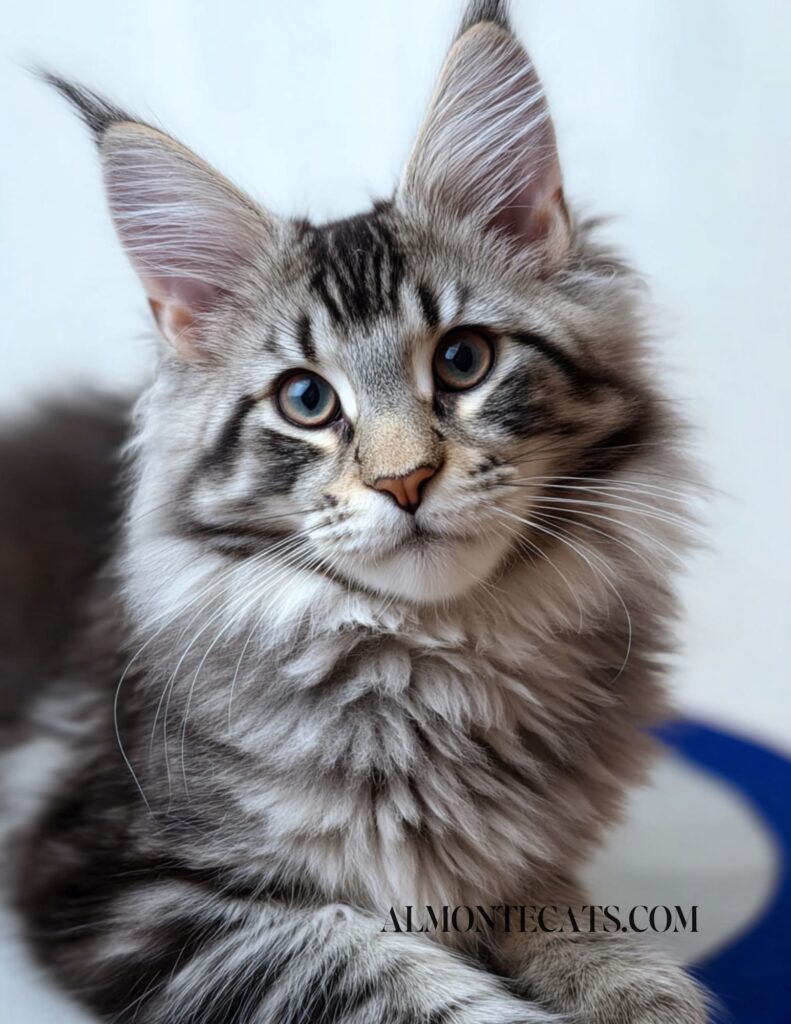
Many people ask, do Maine Coon cats have an M on their head, and the answer is that many do, but not because it is a Maine Coon trait. It is a tabby trait. The M appears when a cat carries the agouti gene and one of the tabby pattern variations. The M is not connected to Maine Coon breed standards, pedigree, or registration. However, since a large percentage of Maine Coons are brown tabbies, silver tabbies, or other forms of tabby-patterned cats, the marking is extremely common in the breed.
Tabby Maine Coons have stronger facial markings than shorthaired cats because their facial fur is thicker and the contrast between light and dark pigments is more dramatic. This makes the Maine Coon cat M on face stand out more clearly than it does on many other cats.
This is why so many owners believe the M is a breed signature. In reality, it simply shows that the cat is a tabby. Tabby domestic shorthairs, Bengals, Savannahs, and Norwegian Forest Cats all show similar patterns, proving the M is widely shared across breeds. Maine Coons are just the breed most popularly photographed and discussed online, so people connect the M with them more than others.
People Also Ask Snippet
What does the M on a Maine Coon’s forehead mean?
The M on a Maine Coon’s forehead comes from tabby genetics, not from the breed itself. Any tabby cat can show the marking, but Maine Coons often display it more boldly due to their facial structure and thick fur.
Do Maine Coon cats always have an M on their head?
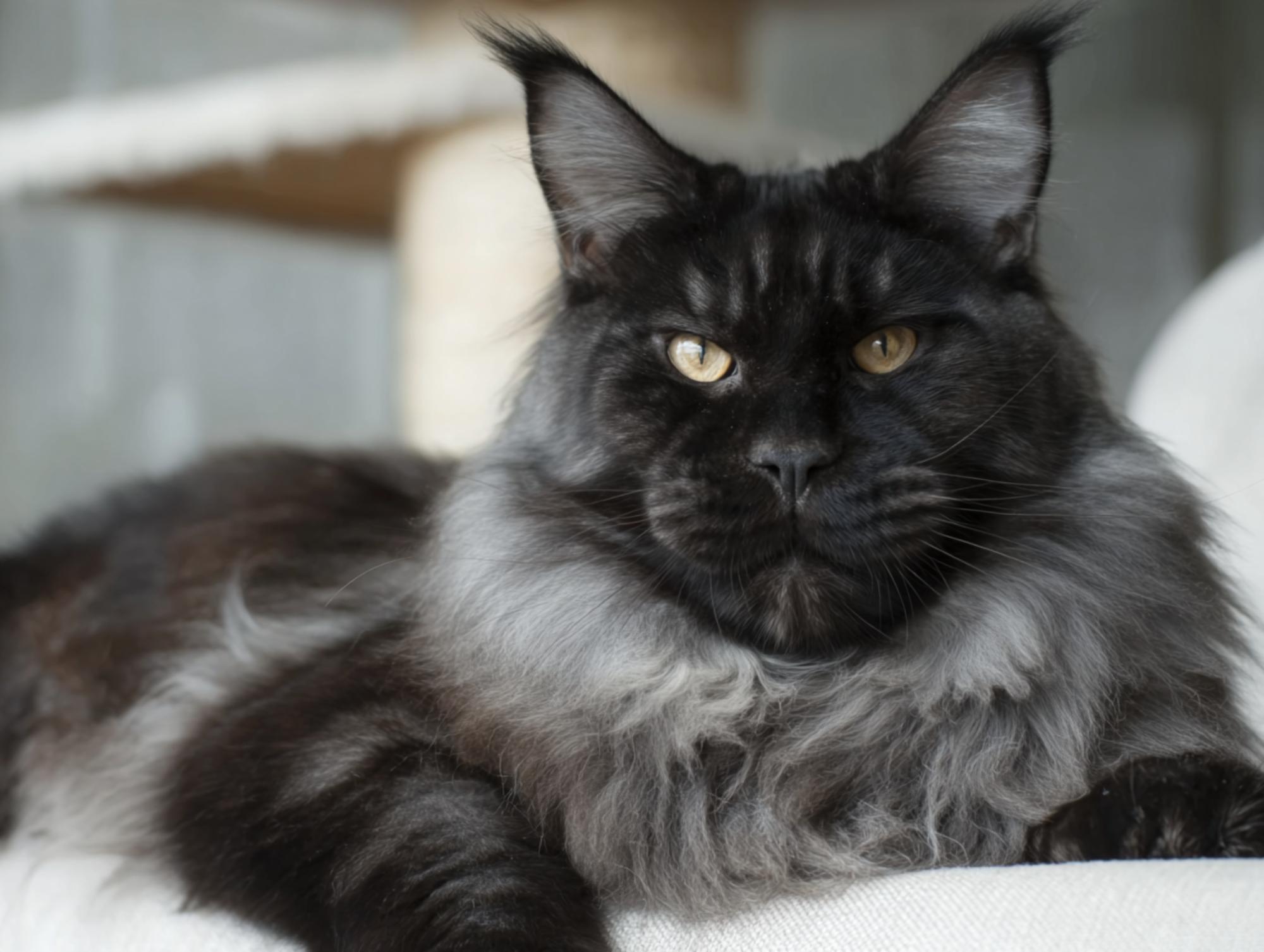
No. Only tabby Maine Coons have the M marking. Solid, shaded, and smoke-colored Maine Coons typically do not show it because they lack visible tabby patterning.
Does the M prove a cat is a Maine Coon?
No. The M marking is common in many breeds and mixed-breed cats. Breed identification must be based on structure, pedigree, and coat type—not forehead markings.
Why is the M more visible on Maine Coons?
Maine Coons often have a more dramatic M due to high-contrast tabby colors, strong brow structure, and long guard hairs that enhance pattern visibility.
Maine Coon M on Head: What Causes It?
The Maine Coon M on head comes from pigment clustering created by tabby genetics. The M develops when the agouti gene allows alternating light and dark bands of pigment on each hair shaft. The tabby gene then organizes these bands into the specific forehead pattern that creates the M shape. This is why every tabby-patterned cat can form the marking regardless of breed, coat length, or origin.
In Maine Coons, the pattern appears bold because their coat is longer, thicker, and has a stronger separation between light undercoat and darker guard hairs. The facial structure of the Maine Coon also contributes. Their wide forehead and pronounced brow ridge make the M appear sharper and more defined. On cats with shorter fur or flatter face structure, the marking may look softer.
What confuses many owners is that the M can be extremely clear on some Maine Coons and barely visible on others. This depends on how strong the tabby pattern is, the coat color, and the age of the cat. Patterns develop over time, so Maine Coon kittens with a faint M may grow into a much more visible one within their first year.
Maine Coon M on Forehead: Tabby Patterning Explained
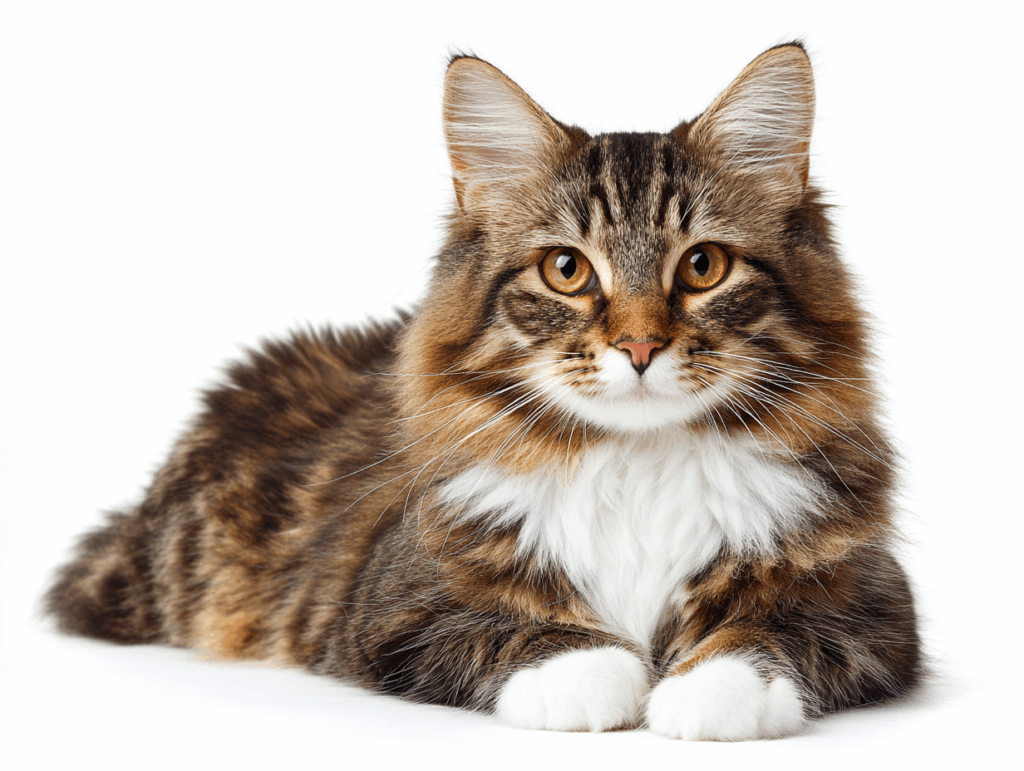
Tabby patterning is the source of the Maine Coon M on forehead, and it appears only in cats that have the agouti gene. The agouti gene controls banding along each hair shaft, which creates movement, pattern variation, and color contrast. Once a cat has agouti, the next factor is which tabby pattern it carries.
The main tabby patterns include:
- Classic tabby – swirling, bold markings with a strong M
- Mackerel tabby – narrow stripes and a clean M
- Spotted tabby – broken stripes with a softer M
- Ticked tabby – subtle striping with a faint M
Tabby patterns are dominant, meaning many Maine Coons inherit them easily from their parents. Since the Maine Coon population includes a high number of traditional brown tabbies, the marking is widely seen. Even diluted tabby colors like blue, cream, or cameo can display an M if the pattern is strong enough.
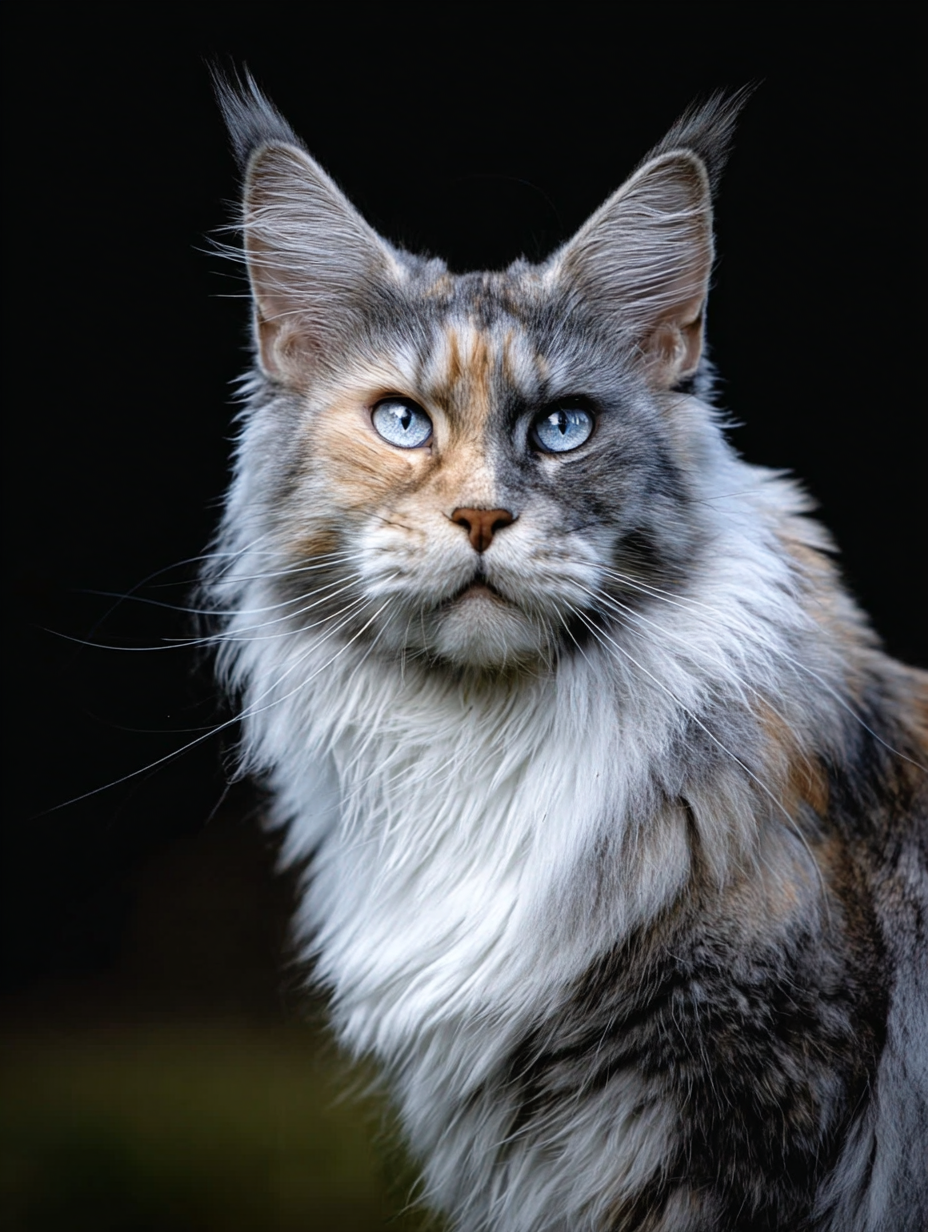
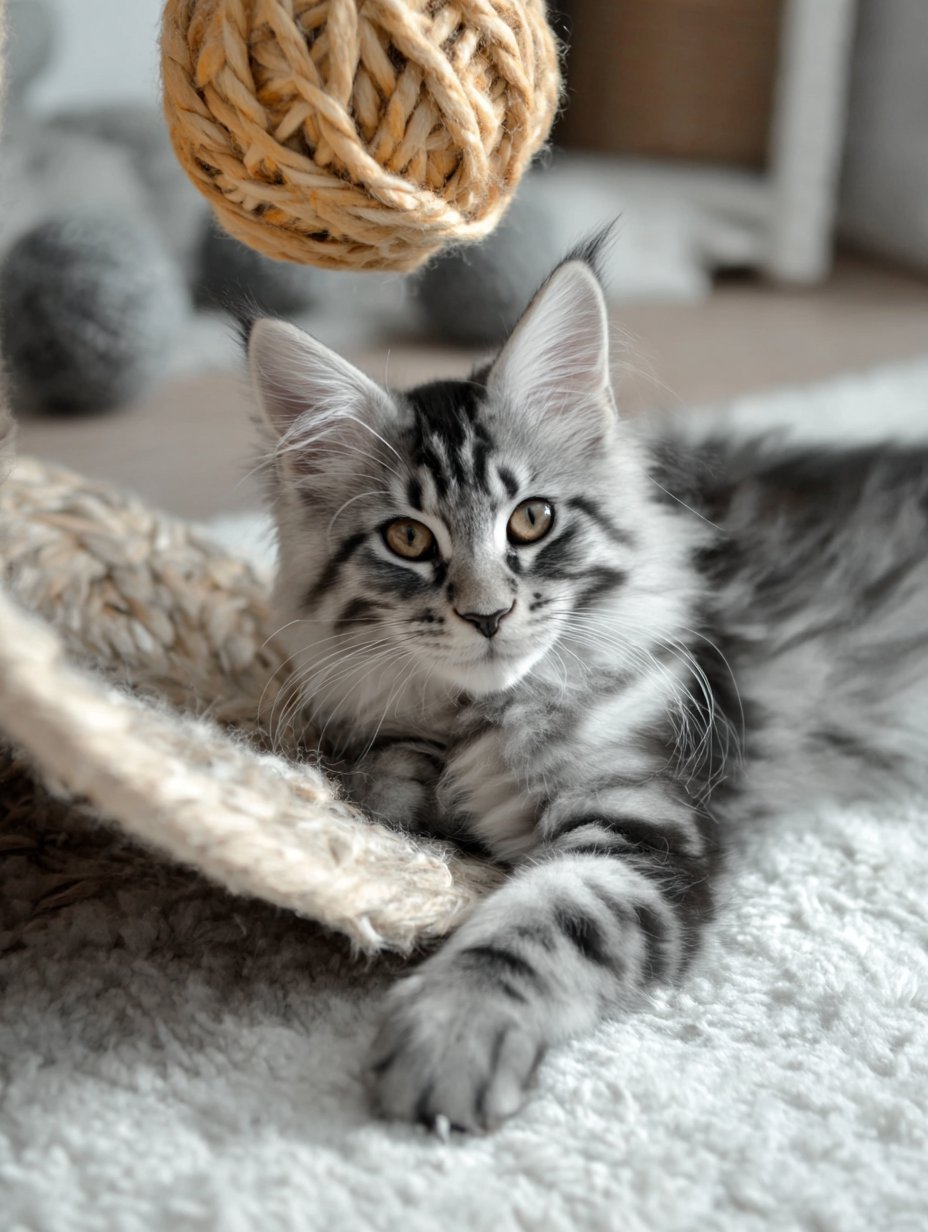
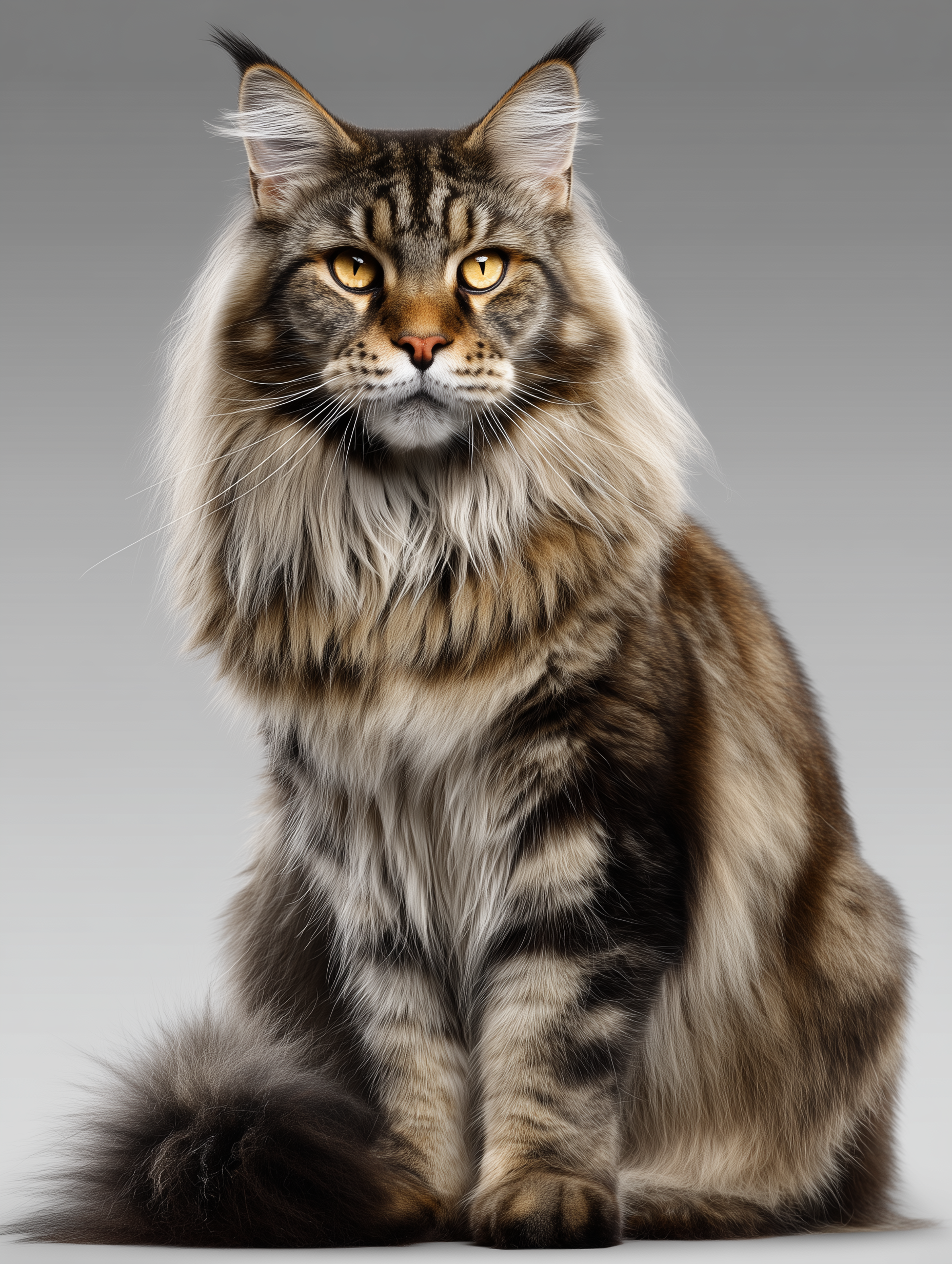
The M marking is easiest to see in brown classic tabbies because the contrast is high. Silver tabbies also show the M clearly because the white undercoat enhances the dark lines on the forehead.
Maine Coon M on Forehead
| Pattern | Description | Genetics | Appearance | Frequency |
|---|---|---|---|---|
| Strong M | High-contrast tabby lines on the forehead | Agouti + clear tabby pattern | Bold, dark, well-defined M | Common |
| Medium M | Standard tabby striping | Agouti + standard pattern expression | Visible M with medium contrast | Very common |
| Soft M | Diluted or light tabby striping | Agouti + dilute gene | Pale or faint M marking | Less common |
| Ghost M | Shadow-like faint markings | Non-agouti with ghost tabby influence | M appears only in strong light | Uncommon |
| No M | No tabby pattern present | Non-agouti (solid, shaded, smoke) | No visible M at any age | Common |
Tabby M on Head Genetics
The tabby M on head genetics are determined by two primary gene groups: the agouti gene and the tabby gene. The agouti gene decides whether the cat shows banding (A) or is solid (aa). Only agouti cats show tabby markings. Solid-colored cats may show ghost tabby stripes as kittens, but these usually fade as they mature because the agouti gene is not present.
The tabby gene determines the style of the pattern. Classic, mackerel, spotted, and ticked patterns all carry the M, but the visibility changes based on modifier genes that affect pigment distribution. Some Maine Coons have very defined brow lines because they have a strong expression of the tabby gene. Others may have weaker expression, resulting in a faint or broken M shape.
What makes the M particularly interesting in Maine Coons is how often the genetics align for maximum visibility. The breed’s history includes generations of strong tabby lines, contributing to the consistency of the marking. As breeders select for overall pattern clarity, the M often becomes even more defined in each new generation. See Tabby Genetics Explained here.
Is the M Marking Unique to Maine Coon Cats?
No. The M marking is not exclusive to Maine Coons. It appears in countless breeds and mixed-breed cats. What makes people think it is unique is simply how visible it is on Maine Coons. Long fur, strong bone structure, and deep color contrast make the Maine Coon M on forehead look more dramatic. When people look at photos of other breeds, especially shorthaired cats, the marking is present but much less noticeable.
This misconception became common online as Maine Coon content spread across social media. When people saw the bold M on many Maine Coon photos, they assumed it was part of the breed standard. But no breed registry — including CFA, TICA, or FIFe — recognizes the M as a breed trait. It is purely a tabby genetic feature.
Owners should avoid using the M marking as a way to identify whether a cat is a Maine Coon. Many shelters have cats with the same pattern, and thousands of domestic shorthairs have similar M shapes. Breed identification must be based on structure, size, fur length, temperament, and pedigree — not forehead patterning. Learn more about Maine Coon hybrid mixes.
Why the M Marking Looks More Dramatic on Maine Coons
The Maine Coon M on forehead often appears stronger and more defined than on other breeds because several physical features make the pattern easier to see. Maine Coons have a naturally wide skull, a pronounced brow ridge, and long, thick fur that creates deeper contrast between the light and dark areas of the tabby pattern. These physical characteristics give the Maine Coon cat M on face a bold appearance that is difficult to miss. Even owners who have never noticed the M marking in other cats often recognize it instantly on a Maine Coon.
Another reason the M appears so dramatic is the breed’s overall coat density. Maine Coons have a double coat with a fine undercoat and longer guard hairs. When the tabby pattern forms along these longer guard hairs, it stretches the lines higher up along the forehead, accentuating the shape of the M. This is especially true in classic and mackerel tabby Maine Coons, where the striping around the eyes and nose enhances facial symmetry. When light hits the coat, the alternating bands of pigment create a sharper, more contrasted look compared to shorthaired cats. See pics Cute Maine Coon Cats.
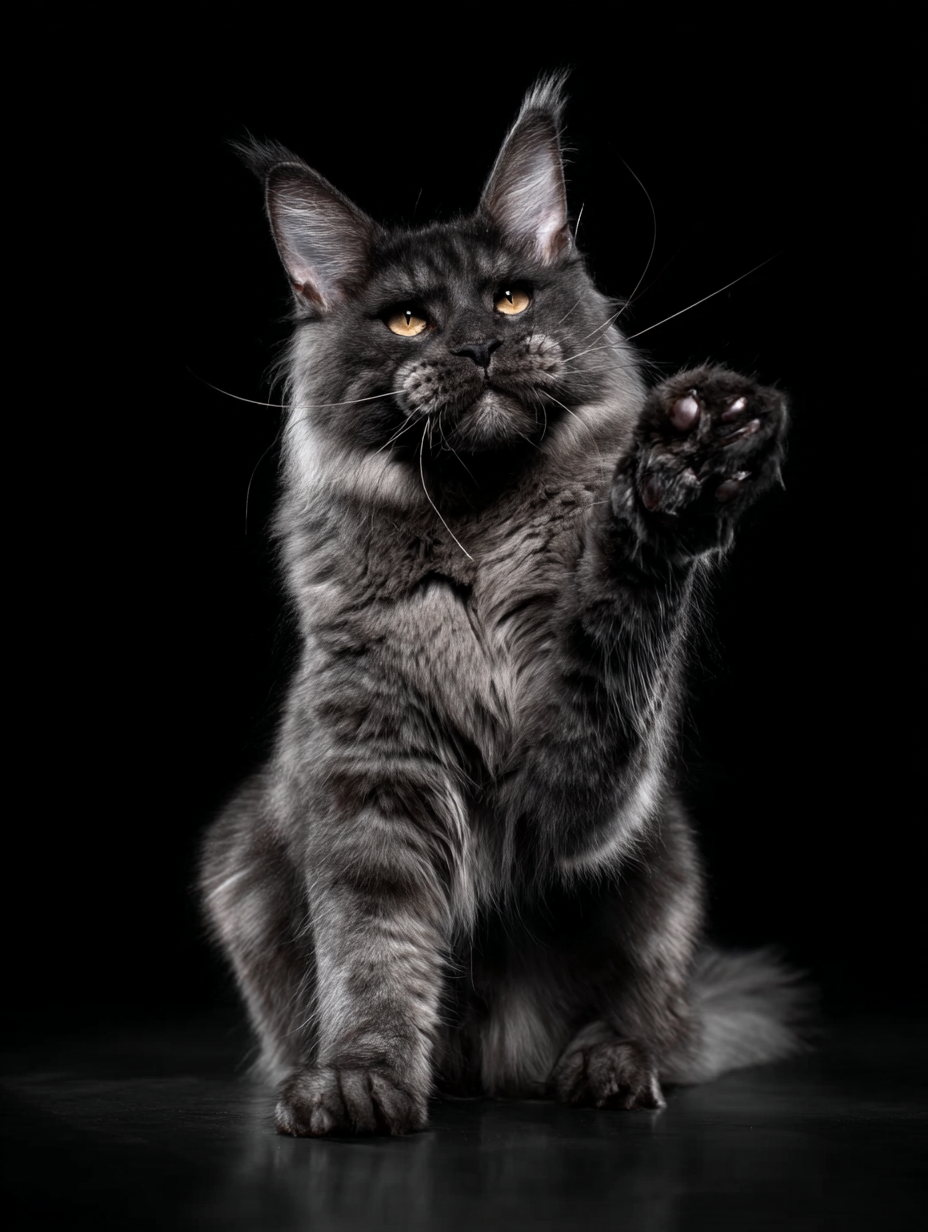
Color also plays a major role. Brown tabbies, silver tabbies, blue tabbies, and black smokes with visible tabby influence often show the strongest version of the M. The contrast between dark facial patterning and lighter surrounding fur makes the M one of the first features people notice. Even in dilute or softer colors, the M may still be visible, but the darker, richer tabby shades are what make the marking famous in the breed. This combination of structure, coat density, and tabby genetics explains why the Maine Coon M on head often becomes part of the breed’s identity, even though it is never listed in any official standard.
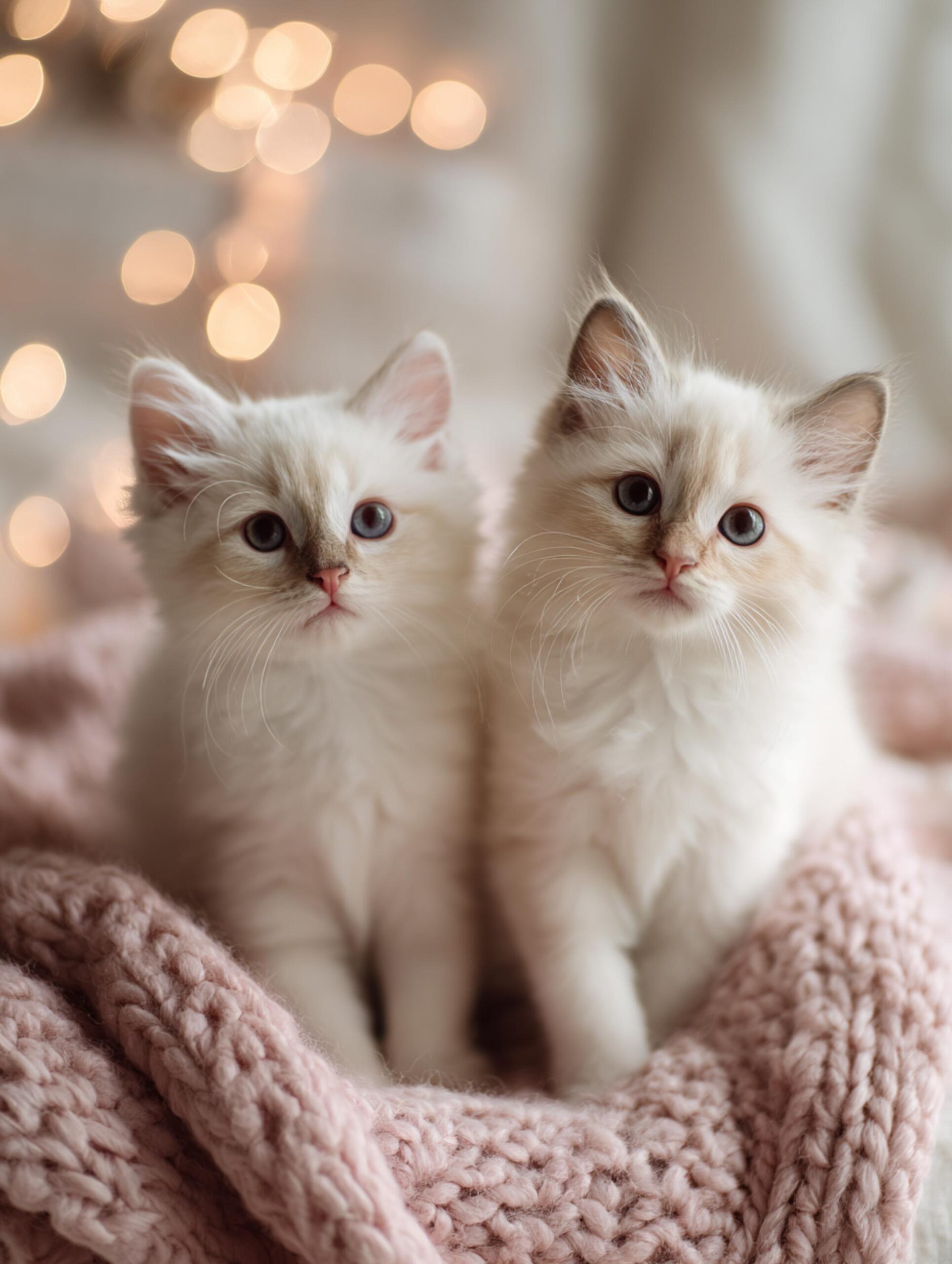
Do All Maine Coon Kittens Show the M Marking?
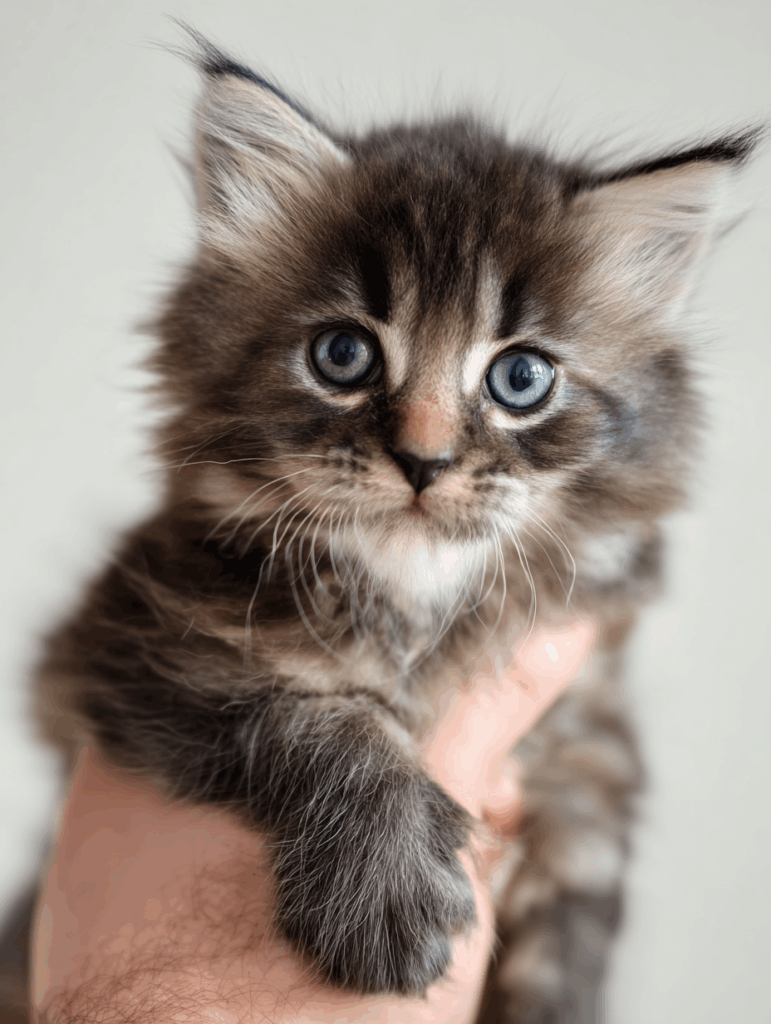
Not all Maine Coon kittens will display the M marking right away, even if they carry tabby genetics. Some kittens are born with very faint striping that only becomes noticeable as their coat thickens and patterns mature. The M marking may be nearly invisible at birth on lighter-colored kittens or those with a strong undercoat that masks the pigment distribution. As kittens grow, the guard hairs lengthen, revealing more contrast and making the cat with M marking on head more obvious.
Pattern development can take several months. Many Maine Coon kittens show clearer facial striping by 8–12 weeks, but some do not fully develop distinct facial patterns until they are several months old. This is especially true for kittens with shaded, silver, or dilute coloring, where the base coat can temporarily soften the M. The M marking often becomes more prominent around the time the facial ruff begins to form, because the longer hair frames the forehead and draws attention to the tabby pattern. See Maine Coon Kittens Week by Week here.
Faint Colored Ghost Tabby Coloring in Maine Coon Kittens
Solid-colored and smoke-colored Maine Coon kittens may show faint “ghost tabby” lines early in life, including a light suggestion of an M. These usually fade as the kitten matures because solid-color genetics override the agouti signaling responsible for tabby expression. Owners sometimes confuse early ghost lines for a permanent tabby pattern, but a true Maine Coon M on forehead only exists when the kitten carries the agouti gene. Without agouti, the tabby pattern disappears as the coat thickens.
This is why breeders often wait until kittens are older before labeling patterns. A kitten that looks solid at birth may reveal tabby striping as early as six weeks, while a kitten that appears tabby at birth may turn out to be shaded or smoke once adult fur starts growing. Understanding how slowly Maine Coon coats develop helps owners recognize why the M marking is sometimes delayed, faint, or inconsistent in early life. Find a Reputable Maine Coon breeder near me here.
Maine Coon Cat M on Face: Pattern Types That Show It Best
Different tabby patterns influence how bold or soft the Maine Coon cat M on face appears. Classic tabbies typically display the strongest, darkest, and most well-defined M shape because their patterning centers around bold swirls and heavy face striping. The thick, symmetrical lines create a dramatic brow region where pigment naturally accumulates. This makes the classic tabby one of the most photographed Maine Coon looks, and one of the main reasons people associate the trademark M with the breed.
Mackerel tabbies also show a very recognizable M, though their brow lines are narrower and more delicate. Their stripes tend to run vertically, creating a cleaner, more structured M shape. Many brown mackerel tabby Maine Coons have extremely crisp lines across the forehead, producing an unmistakable version of the M. Because mackerel striping is more linear, it often enhances the sharpness of the marking compared to the swirling classic pattern.
Spotted tabbies and ticked tabbies can display the M marking as well, but the visibility varies. Spotted tabbies break the vertical lines into dots, which can soften the M or create a dotted outline. Ticked tabbies have the faintest version because each individual hair carries multiple bands of pigment instead of forming strong face striping. Even so, the M marking exists genetically in all tabby patterns, including the subtle ones.
Color intensity also affects visibility. Darker tabbies—brown, black silver, red, or blue—show the clearest M shapes. Dilutes, creams, and cameo tabbies may show the marking more softly. Regardless of intensity, any cat with a functioning combination of agouti and tabby genes will display the M to some degree. For Maine Coons, the high contrast and thick guard hairs enhance whatever pattern they inherit, making even soft tabbies appear more defined than in many other breeds.
Why Some Maine Coons Have No M Marking
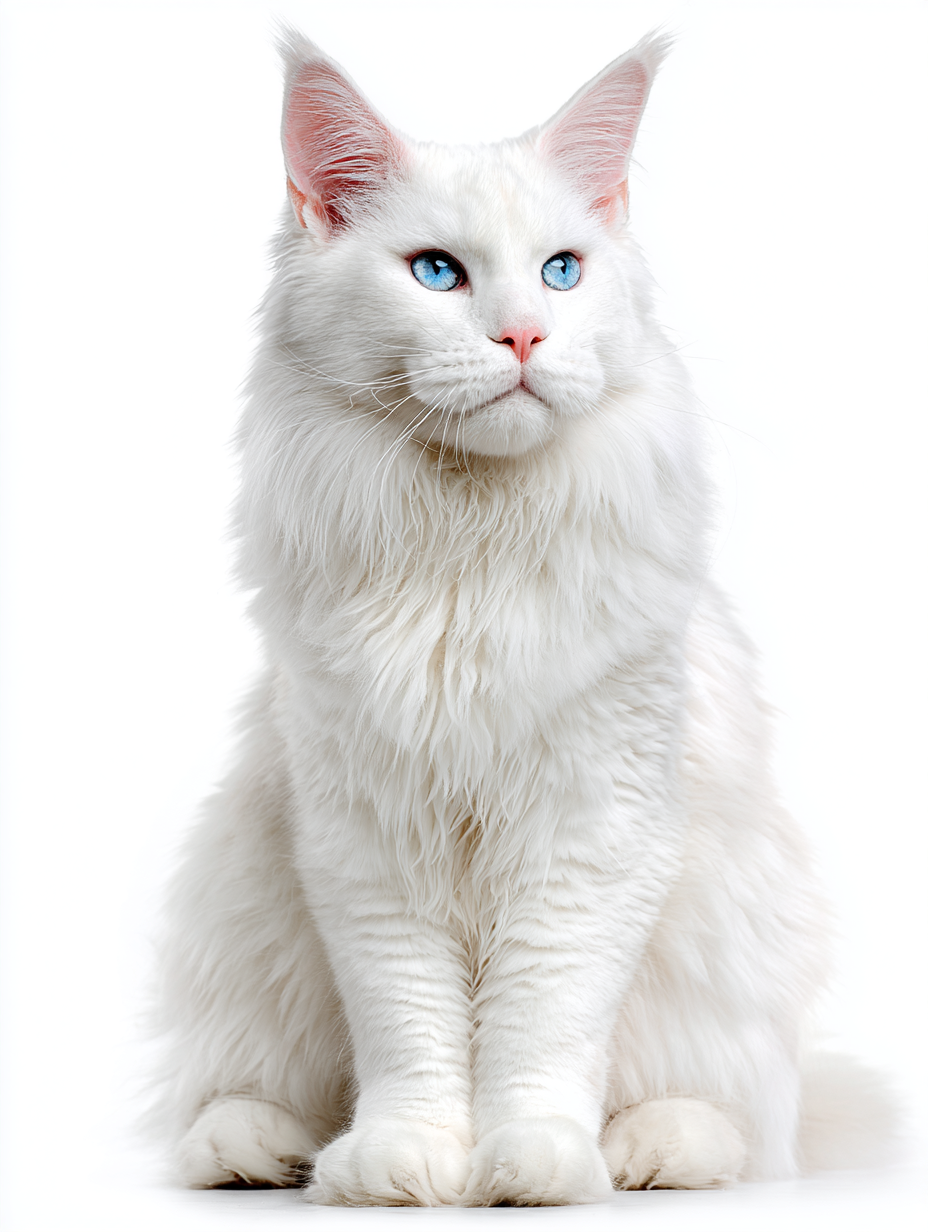
Some Maine Coons do not display the M marking at all, and this often surprises owners who assume the marking is universal. In reality, only tabby-patterned Maine Coons can show the Maine Coon M on forehead. Solid-colored Maine Coons, shaded Maine Coons, and smoke Maine Coons lack the contrast necessary for the pattern to appear. This does not reduce their quality or pedigree—these cats simply express different genetics.
Solid-colored Maine Coons (genotype aa) do not have agouti signaling, which means the patterning mechanism that produces the M is suppressed. Smoke and shaded Maine Coons can sometimes show faint “ghost tabby” lines early in kittenhood, but these almost always fade with maturity. Without continuous agouti activity, the full tabby pattern—including the M—cannot form clearly on the forehead.
Color dilution also affects visibility. Blue, cream, cameo, lilac, and other dilute shades can mute the facial pattern so heavily that the M marking appears extremely faint even if the cat does carry tabby genetics. Light-colored cats may require direct lighting or specific angles for the M to show at all. Some owners never see it until the cat is photographed with a flash or in bright sunlight.
It’s also important to consider that Maine Coons mature slowly. A cat that appears to lack an M at six months old may develop a faint or medium-strength pattern by the time it reaches a year or two. Conversely, a kitten that shows a bold ghost M early in life may lose it completely when its adult coat replaces the kitten fur. Breed quality is never determined by whether the cat displays an M. Instead, pedigree, structure, health, and temperament define whether the cat meets Maine Coon standards.
20 FAQ About the Maine Coon M on Forehead
1. Do all Maine Coon cats have an M on their forehead?
Not all Maine Coons have the M marking because it only appears on cats with tabby genetics. Solid, smoke, and shaded Maine Coons usually do not show it at all. The marking depends on whether the cat carries the agouti gene, which controls tabby expression. If a Maine Coon is not a tabby, the M will not appear.
2. What causes the M marking on a Maine Coon’s head?
The M comes from tabby coat genetics, not from the Maine Coon breed itself. The agouti gene and tabby pattern genes work together to form the marking on the forehead. These genes create pigment clusters that naturally form the shape of an M. Any tabby-patterned breed can show the same feature.
3. Does the M marking prove that a cat is a Maine Coon?
No, the M marking is not proof of breed identity. Many domestic mixed-breed cats and other pedigreed breeds display the same pattern. Breed identification must be based on structure, coat type, pedigree, and overall traits—not forehead markings. The M is simply a tabby characteristic shared across many breeds. Find purebred Maine Coon kittens here.
4. Why does the M marking look so bold on Maine Coons?
Maine Coons have a broad forehead, strong brow ridge, and long thick fur that enhance the contrast of the tabby pattern. These physical traits make the M appear sharper and more defined compared to shorthaired cats. Darker tabby colors such as brown and silver also make the M very visible. The combination of structure and coat texture is why people associate the marking with Maine Coons. See European Maine Coon cats here.
5. Are Maine Coon kittens born with an M on their head?
Some tabby Maine Coon kittens show a faint M when they are young, but others develop it gradually. As the coat thickens and patterns mature, the marking becomes more visible. Kittens with lighter or dilute tabby colors may have a very soft M that is easy to miss. Solid kittens will not develop the marking at all.
6. What tabby patterns show the M marking the strongest?
Classic and mackerel tabby Maine Coons typically show the boldest M shapes. Classic tabbies have thick swirling patterns that create heavy pigment around the forehead. Mackerel tabbies have clean vertical stripes that form a sharp M. Spotted and ticked tabbies may show a softer or lighter marking.
7. Can a Maine Coon without an M still be purebred?
Yes, the absence of the M marking has no connection to pedigree or breed quality. Many purebred Maine Coons are solid or shaded and do not display tabby markings. Breed standards never mention the M as a requirement. A Maine Coon’s structure, temperament, and pedigree determine its quality, not forehead patterns. See Maine coon kittens for sale here.
8. Why do some Maine Coons have no visible M even when they are tabby?
Some tabby Maine Coons have low-contrast coloring that makes the M faint. Dilute colors like blue and cream soften the markings, reducing visibility. Fur length and lighting also affect how clearly the M appears. Even genetically tabby cats may have minimal facial striping depending on modifiers.
9. Does the M marking change as a Maine Coon matures?
Yes, the marking can change over time. Many kittens start with a faint M that strengthens as their adult coat grows in. Conversely, ghost tabby markings on non-agouti kittens may fade completely. Long-haired breeds like Maine Coons often reveal more contrast as they age.
10. Is the M marking specific to tabby Maine Coons?
The M marking appears only in tabby-patterned cats, regardless of breed. It is not a Maine Coon feature but a tabby feature. Classic, mackerel, spotted, and ticked tabbies all show it. Solid and shaded Maine Coons cannot display it because they lack the agouti expression that forms patterns.
11. Are there myths about the M on a Maine Coon’s forehead?
Yes, there are several popular myths. Some stories claim the M came from Mary, who marked a cat that comforted baby Jesus. Others say the marking comes from ancient Egyptian cats or Viking cats. While charming, these stories are folklore and not based on genetics.
12. How do genetics create the M marking on a Maine Coon?
The agouti gene controls whether hair shafts display alternating bands of pigment. The tabby gene then organizes this pigment into patterns, including the forehead M. Modifier genes control contrast, thickness, and clarity of the stripes. Together, these genes create the familiar tabby markings seen on many Maine Coons.
13. Can shaded or smoke Maine Coons have an M marking?
Shaded and smoke Maine Coons sometimes show faint ghost tabby stripes as kittens. However, these markings usually fade with age because the cats are not genetically agouti. Without continuous tabby expression, a true M will not remain visible. Most shaded and smoke Maine Coons appear patternless as adults.
14. Is the M marking easier to see on certain coat colors?
Yes. Brown, black silver, and red tabbies typically show the clearest M marking. These colors have strong contrast between light and dark areas of the coat. Dilutes like blue and cream may show a much softer version. The stronger the contrast, the sharper the M appears.
15. Can the M marking help identify a cat’s coat pattern type?
To an extent, yes. A crisp, bold M is often seen in classic or mackerel tabbies. A softer or dotted M may indicate spotted tabby or ticked tabby genetics. However, the M alone cannot determine the full pattern type. It must be evaluated along with body striping and coat distribution.
16. Are Maine Coons the only long-haired breed with the M marking?
No. Any long-haired tabby cat can display the M. Norwegian Forest Cats, Siberians, Persians, and domestic longhairs can all show the same marking. Maine Coons are simply photographed more often, which makes the marking seem exclusive to them.
17. Will grooming affect the visibility of the M marking?
Proper grooming can enhance the visibility of the M because it keeps the coat clean and smooth. When the fur around the forehead becomes oily or matted, the pattern can look muted. Brushing separates the guard hairs, allowing more contrast to show through. Grooming will not change the pattern genetically but can make it easier to see.
18. Why do some photos show the M more clearly than in person?
Lighting plays a major role in how clearly the M marking appears. Bright natural light or camera flash makes the pattern stand out. Indoor lighting or shadowed areas may hide the marking. Maine Coons with silver or high-contrast tabby patterns often photograph with a stronger M than what owners see day-to-day.
19. Is the M marking present in all tabby breeds?
Yes, it is present in all tabby cats regardless of breed. The M is a universal tabby trait caused by pigment concentration on the forehead. Whether the cat is a Maine Coon, domestic shorthair, or Bengal, the marking forms the same way. Breed does not influence its genetic origin.
20. Can the M marking help determine whether a Maine Coon is purebred?
No. The M marking has no connection to pedigree, lineage, or breed standards. Many non-Maine Coon cats share the same marking, so it cannot be used as evidence of breed purity. Only documentation, breeder verification, and structural traits can confirm whether a Maine Coon is purebred. The M is a tabby trait, not a breed trait.
Conclusion: The Maine Coon M on Forehead Is a Tabby Trait, Not a Breed Trait
The Maine Coon M on forehead is widely recognized, frequently photographed, and often mistaken for a breed-specific feature. However, the M is not part of any Maine Coon breed standard, and it is not used by breeders to determine quality or purity. The marking comes from tabby genetics—specifically the agouti gene paired with one of the tabby pattern types. Any cat carrying these genes can display the M, including mixed-breed cats and many other pedigreed breeds.
What makes the marking so iconic in Maine Coons is the combination of features that amplify it: strong bone structure, long dense fur, bold striping, and high-contrast colors. These features work together to make the Maine Coon cat M on face noticeable and often striking. But it is always a coat pattern trait, not a breed identifier. Solid, smoke, and shaded Maine Coons are equally purebred even without the M marking.
How can I reserve a Maine Coon kitten?
Submit an adoption application on the Almonte Cats website. Approved families are matched by temperament and color preference. Early reservations are recommended due to limited availability.
See our Available Maine Coon Kittens for Sale Here.
Related Colors and Patterns
- Tuxedo Kitten for Sale
- Giant Maine Coon Cats
- Baby Maine Coon Kittens
- Maine Coon Personality
- How Much is a Maine Coon
- Black Smoke Maine Coon Cats
About the Author
At Almonte Cats, we raise Soul Cats for families who value beauty, temperament, and trust. Every kitten carries our promise of health, love, and lifelong support.
Sources & References
- Sources & Further Reading
- The International Cat Association (TICA) – Maine Coon Breed Standard
Official breed description, conformation standards, and accepted color categories.- Cat Fanciers’ Association (CFA) – Maine Coon Breed
Detailed overview of Maine Coon history, temperament, and show requirements.- Winn Feline Foundation / EveryCat Health Foundation – Genetic Health Research
Research on HCM, SMA, and PKD testing — the core genetic conditions Maine Coon breeders screen for.- Cornell University College of Veterinary Medicine – Feline Growth & Nutrition
Veterinary guidance on kitten growth, development, and diet.- PawPeds Maine Coon Database – Pedigree and Health Registry
Comprehensive, open-access database of pedigrees and health test results for responsible breeders.- American Veterinary Medical Association (AVMA) – Kitten Health & Early Care Guidelines






Read the Comments +