
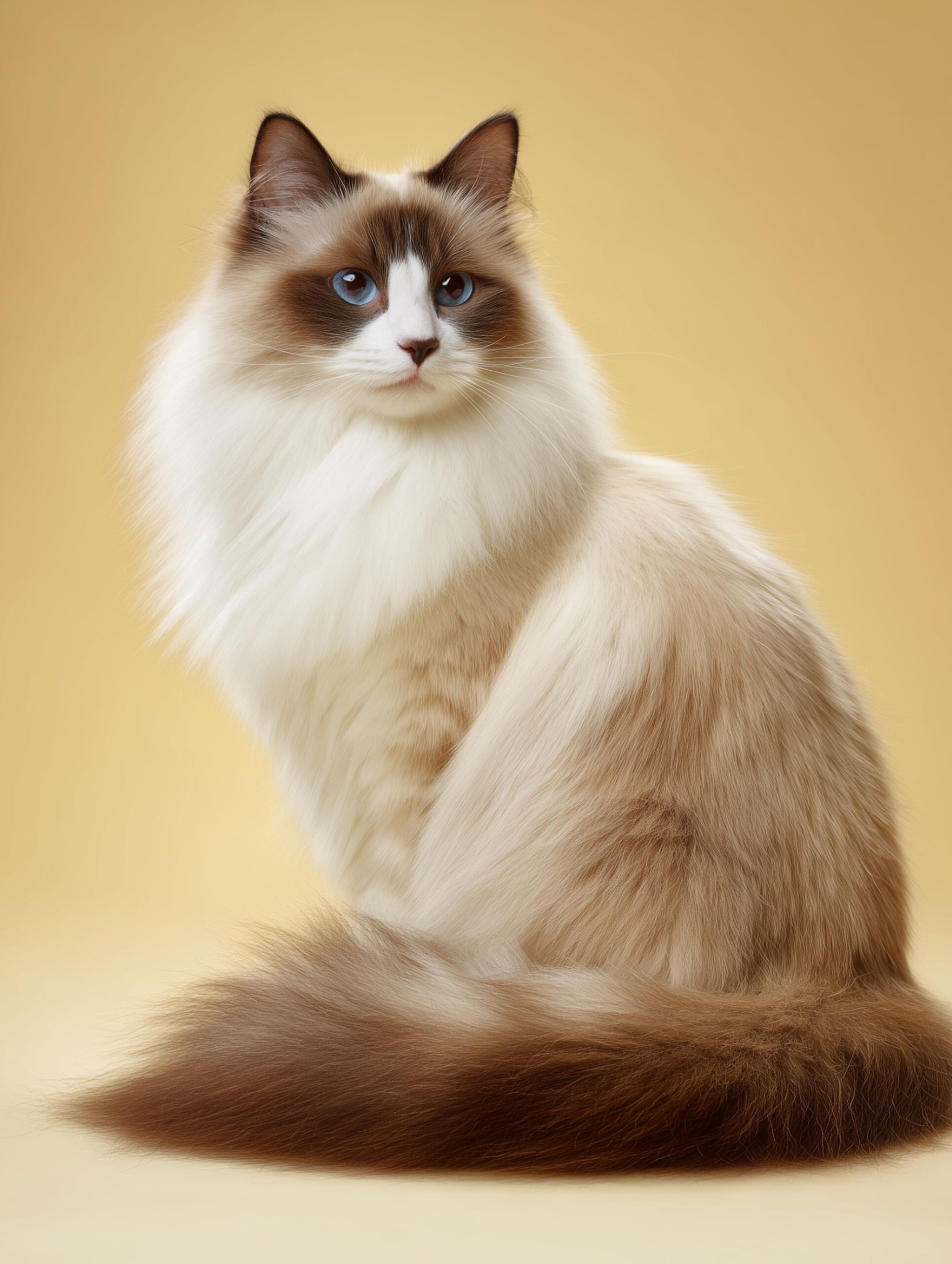
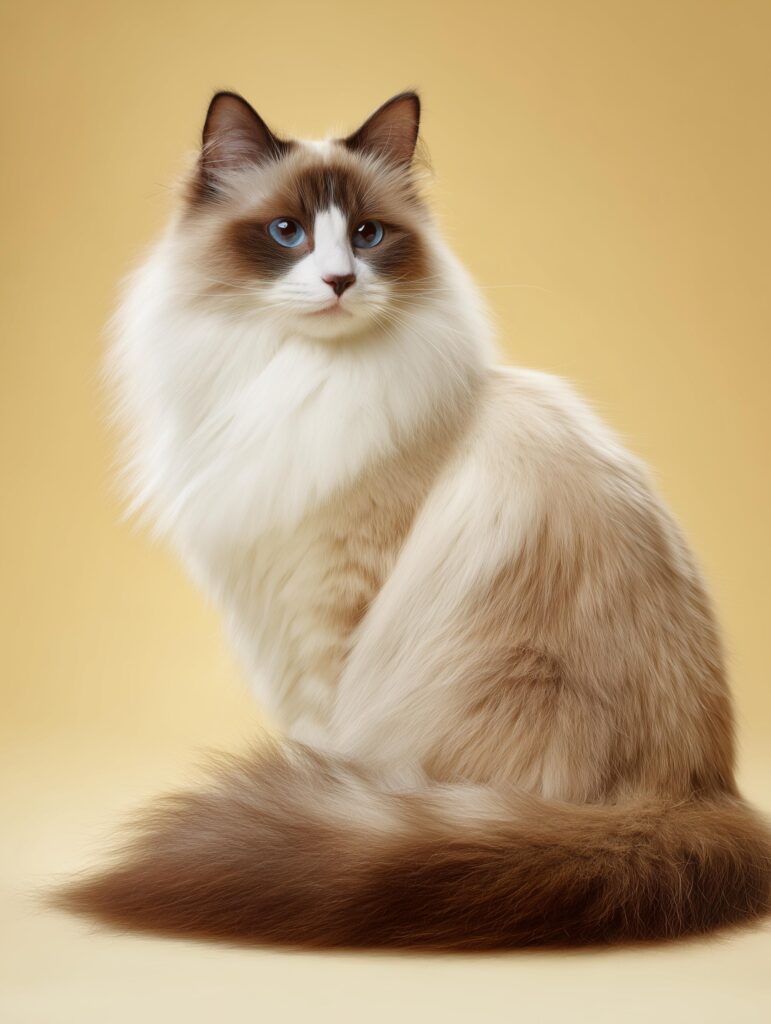
Ragdoll Cat Colors and Coat Patterns Explained
Ragdoll cat colors are defined by a genetic framework that separates base color, pattern type, overlays, and modifiers, each describing a distinct part of how a Ragdoll’s coat develops and is classified. This guide explains how Ragdoll colors change over time, how they are identified correctly, and why they are often misunderstood.
Much of the confusion around Ragdoll cat colors comes from inconsistent terminology, simplified charts, and marketing-driven descriptions used across online sources. In reality, understanding Ragdoll color genetics requires separating color, pattern, point modifiers, and eye color, rather than treating them as interchangeable labels.
This post focuses on how Ragdoll colors and coat patterns are classified, not on preference or promotion. It does not rank colors by rarity, value, or desirability, and it does not compare breeders, pricing, or breeding programs.
Ragdoll Colors at a Glance
| Category | What It Covers | Key Clarification |
|---|---|---|
| Point Colors | Seal, blue, chocolate, lilac, red, cream | All Ragdolls are pointed; body color develops over time |
| Point Patterns | Colorpoint, mitted, bicolor | Pattern describes white distribution, not color |
| Lynx (Tabby) Points | Seal lynx, blue lynx, chocolate lynx, lilac lynx | Lynx is a pattern overlay, not a color |
| Tortie & Torbie Points | Seal tortie, blue tortie, lynx tortie | Nearly all torties are female due to genetics |
| Color Modifiers | Mink, sepia, solid (non-traditional) | These affect contrast and eye color |
| White Patterning | Mittens, inverted V, white blaze | White is controlled by a masking gene |
| Eye Color | Blue, aqua, green, odd-eyed | Eye color is genetically linked to point type |
| Color Development | Kitten to adult progression | Final color may take 2–4 years to fully mature |
| Misrepresented Colors | Cinnamon, fawn, champagne | Not accepted Ragdoll colors despite marketing claims |
What This Post Covers
This guide explains how Ragdoll colors and coat patterns are classified, including:
- Recognized Ragdoll point colors
- Colorpoint, mitted, and bicolor patterns
- Lynx (tabby) point overlays
- Tortie and torbie point combinations
- Mink, sepia, and solid (non-traditional) modifiers
- White patterning and masking genetics
- Eye color relationships to coat genetics
- Commonly misidentified or inaccurately marketed color terms
- Registry-aligned classification standards
Each section focuses on genetic structure and accurate classification, not trend-based descriptions or sales language.
Intended Audience
This guide is written for:
- Ragdoll buyers researching coat colors and patterns
- Breeders seeking consistent, registry-aligned terminology
- Cat enthusiasts and researchers looking for a reliable reference
The goal is to provide a clear, neutral resource that explains Ragdoll colors accurately, without hype, exaggeration, or oversimplification. For a complete overview of the Ragdoll cat breed read the Ragdoll Cat Guide.
Why Ragdoll Colors Are Often Misunderstood
Ragdoll colors are frequently misunderstood because multiple genetic elements are combined into single labels in casual descriptions. Online listings and social media often merge color, pattern, overlay, and modifier into one term, which creates confusion.
Common examples include:
- Treating lynx or tortie as colors instead of overlays
- Describing bicolor as a color rather than a white pattern
- Marketing mink or sepia as rare colors
- Relying on kitten photos to predict adult appearance
Ragdolls are born very light due to temperature-sensitive colorpoint genetics, and color, contrast, and pattern develop slowly over several years. Without this context, early descriptions often fail to match adult appearance.
Key takeaway: When base color, pattern, overlay, and modifier are identified separately — and development is considered — Ragdoll color classification becomes consistent and accurate.
Ragdoll Color & Pattern Classification Summary
| Classification Element | What It Defines | Ragdoll-Specific Details | Common Misunderstanding |
|---|---|---|---|
| Base Color | The pigment expressed at the points | Seal, blue, chocolate, lilac, red, cream | Treated as full-body color instead of point color |
| Pattern Type | White distribution | Colorpoint, mitted, bicolor | Mistaken for color (especially bicolor) |
| Overlay | Patterning on colored areas | Lynx, tortie, torbie | Called a color instead of an overlay |
| Modifier | Contrast and pigment expression | Mink, sepia, solid (non-traditional) | Marketed as rare colors |
| Point Genetics | Where pigment appears | Color limited to face, ears, legs, tail | Body shading misread as incorrect color |
| Development Timeline | How color changes with age | Full expression often 2–4 years | Kitten photos assumed final |
| Seasonal Influence | Temperature effects on pigment | Colder temps deepen color | Seasonal darkening mistaken for color change |
| Eye Color | Linked to point genetics | Blue (traditional), aqua/green in mink/sepia | Used as a quality indicator |
| Breed Classification | Determines valid colors | Ragdoll vs Cherubim standards | Cinnamon/fawn labeled as Ragdoll colors |
| Registry Alignment | Confirms legitimacy | Classification based on breed standards | Social media terminology treated as official |
How Ragdoll Colors Are Classified
Ragdoll coat classification is based on four distinct elements, each describing a different genetic component of appearance. Confusion arises when these elements are combined, shortened, or mislabeled in listings and online discussions.
A complete Ragdoll color description always includes:
1. Base Color
The base color refers to the underlying pigment expressed at the points. In Ragdolls, recognized base colors include seal, blue, chocolate, lilac, red, and cream. Base color does not describe white markings, striping, or mottling.
2. Pattern Type
The pattern type describes how white is distributed, not what color the cat is. Ragdolls are classified as colorpoint, mitted, or bicolor based on the presence and placement of white spotting.
3. Overlay (Optional)
Overlays modify the appearance of the colored areas without changing the base color. Common overlays include lynx (tabby striping) and tortie (mottled color patches). Overlays appear only on the points.
4. Modifier (Optional)
Modifiers affect contrast, body shading, and eye color expression. Mink and sepia are examples of modifiers. They do not represent separate colors.
Understanding these four elements separately is essential for accurate identification. When they are combined incorrectly, colors are often mislabeled, misunderstood, or marketed inaccurately.
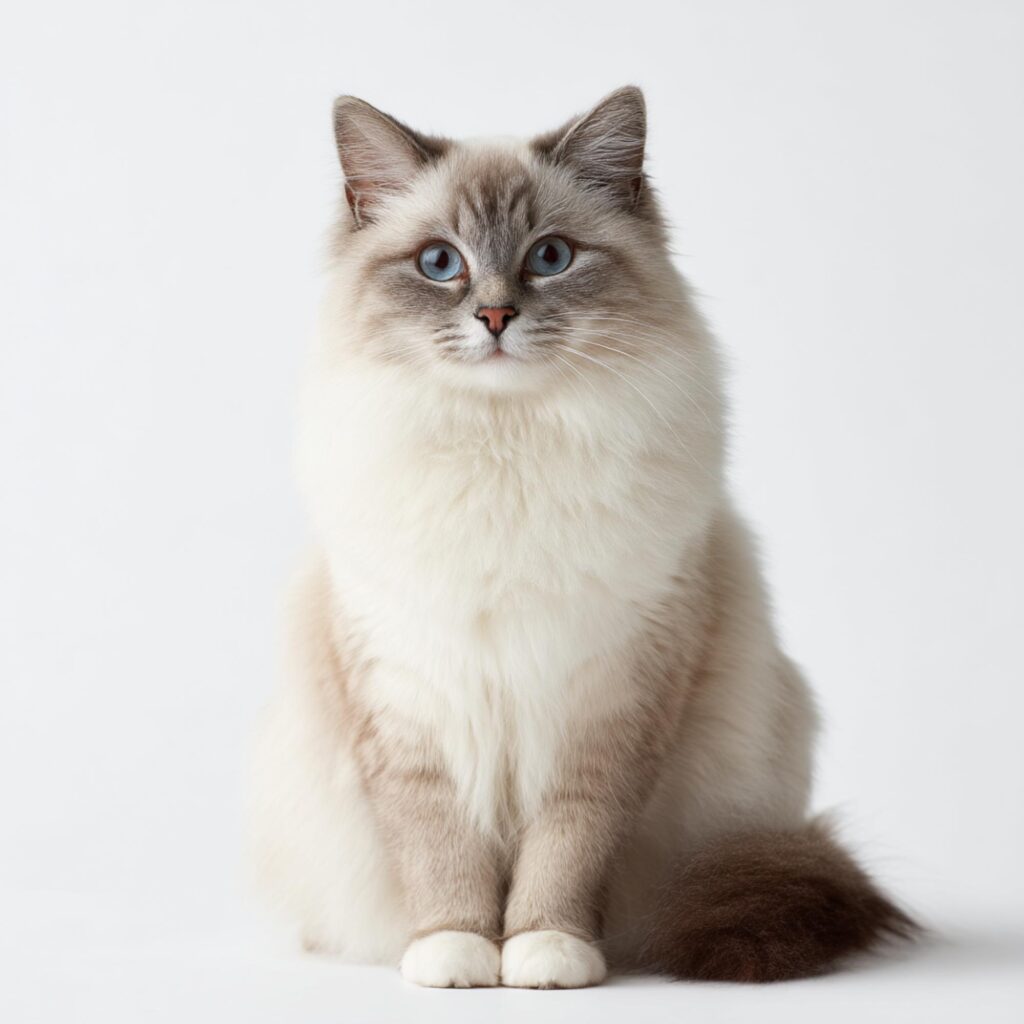
Color vs Pattern in Ragdoll Cats
What “Color” Means in Ragdolls
In breed classification, color refers to the base pigmentation expressed at the points. This is the underlying pigment produced by the cat’s genetics, independent of white patterning or striping.
In Ragdolls, recognized base colors include:
- Seal
- Blue (dilute seal)
- Chocolate
- Lilac (dilute chocolate)
- Red
- Cream
All traditional Ragdolls are pointed, meaning color appears primarily on the face, ears, legs, and tail. The body remains lighter due to temperature-sensitive pigment expression.
What “Pattern” Means in Ragdolls
A pattern describes how the color is distributed, particularly the presence and placement of white. Patterns do not change the base pigment; they describe its visual layout.
Recognized Ragdoll patterns include:
- Colorpoint
- Mitted
- Bicolor
Pattern inheritance is separate from color inheritance, which is why the same color can appear in multiple pattern forms.
Lynx as a Pattern Overlay, Not a Color
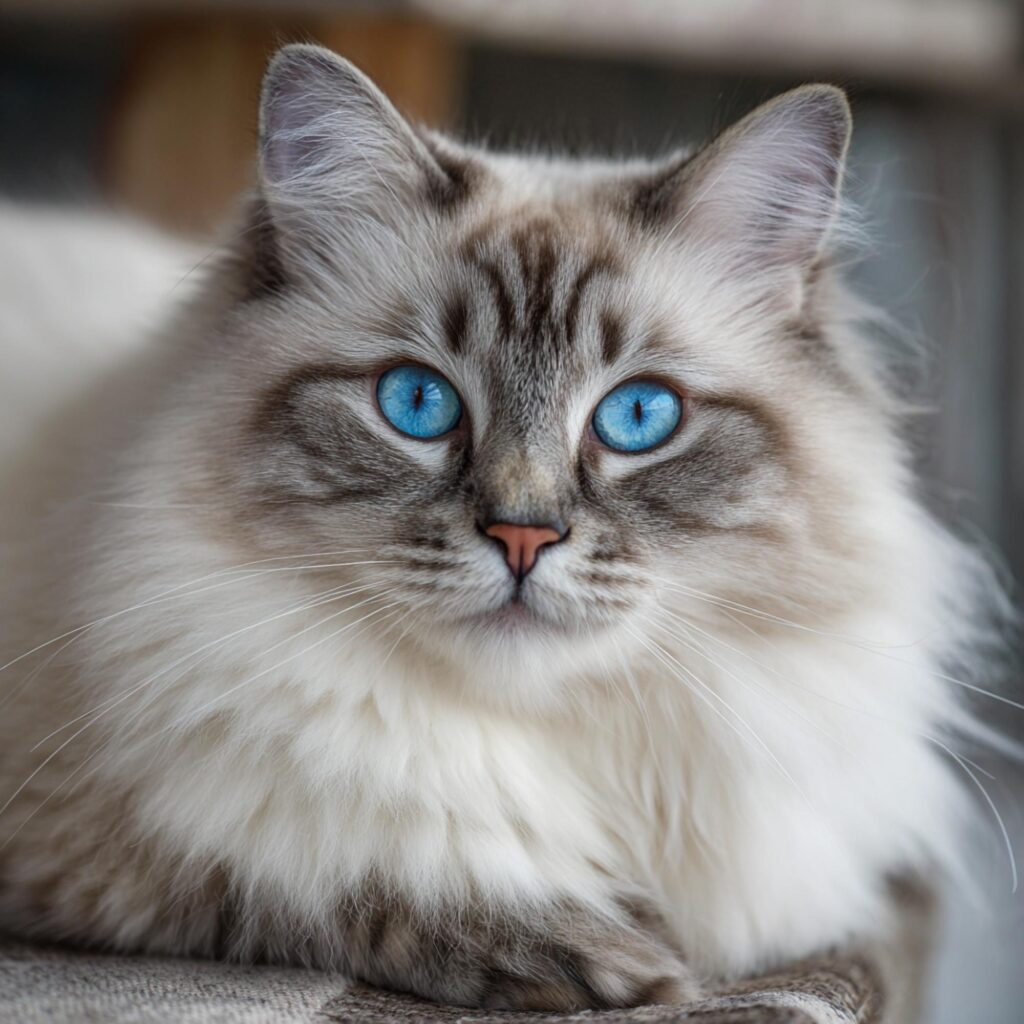
Lynx is frequently treated as a color descriptor, but in accurate classification it is a pattern overlay, not a color. The lynx genes introduces tabby striping to the points but does not replace the base pigment.
Correct descriptions include:
- Seal lynx point
- Blue lynx mitted
- Chocolate lynx bicolor
A Ragdoll cannot be “just lynx” without a base color. Understanding lynx as a pattern overlay explains why lynx Ragdolls vary so widely in contrast and definition.
Modifiers in Ragdoll Cats
Modifiers alter how color is expressed without changing the underlying pigment. In Ragdolls, common modifiers include:
- Mink
- Sepia
- Solid (non-traditional expression)
These modifiers affect contrast, body shading, and eye color. They do not represent separate colors, though they are often marketed as such.
Distinguishing between color, pattern, and modifier is essential for accurately identifying Ragdoll coat types and avoiding misrepresentation.
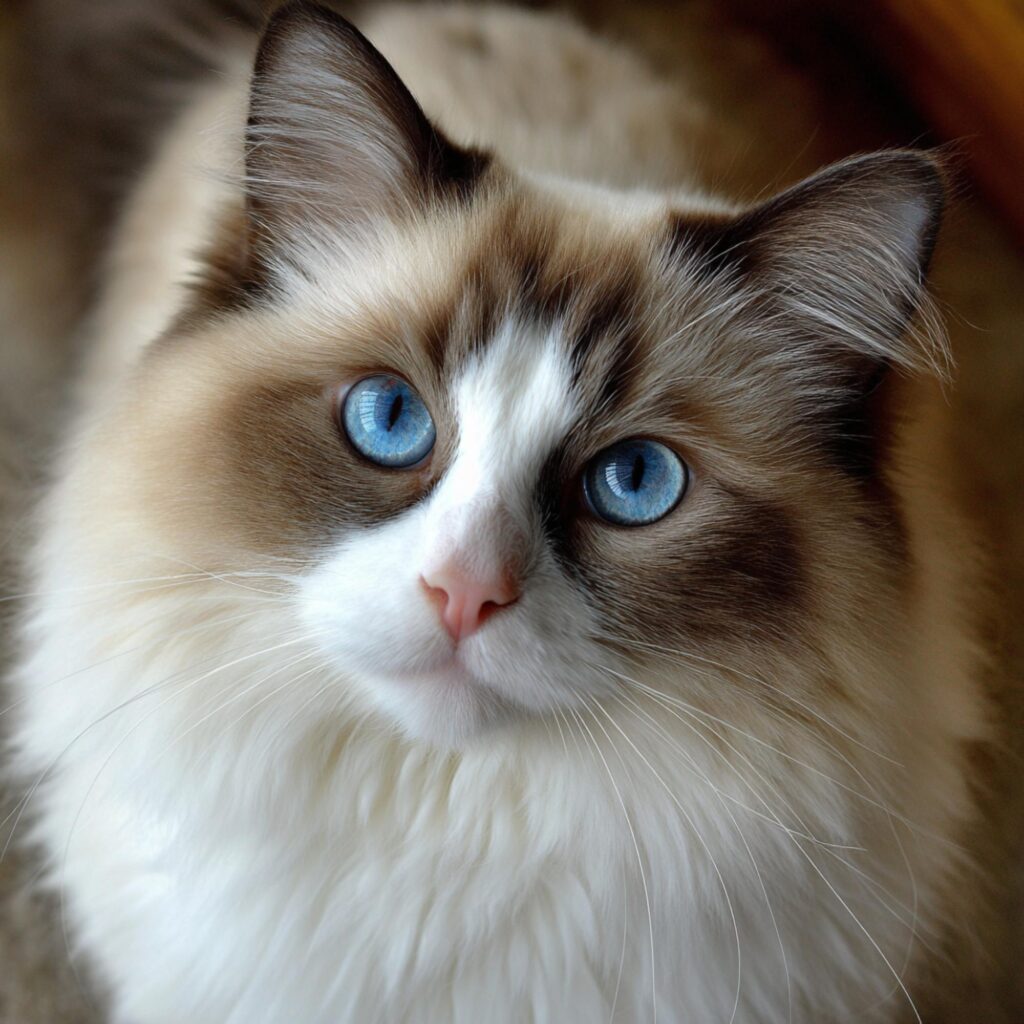
Accepted Ragdoll Colors, Patterns, and Overlays (Reference Section)
Ragdoll cats are classified using standardized categories recognized across major registries. For accuracy, base color, pattern type, overlays, and modifiers are listed separately, as each describes a different genetic component of the coat.
These elements combine to form a complete Ragdoll color description.
Accepted Ragdoll Base Colors
Base color refers to the pigment expressed at the points.
The only base colors recognized for Ragdolls are:
- Seal
- Blue (dilute seal)
- Chocolate
- Lilac (dilute chocolate)
- Red
- Cream (dilute red)
All Ragdolls are pointed. Body color may darken with age but does not change base color classification.
Accepted Ragdoll Pattern Types
Pattern describes white distribution, not color.
Recognized Ragdoll patterns include:
- Colorpoint (no white)
- Mitted (white feet, chin, and belly stripe)
- Bicolor (inverted white V on the face with white body areas)
Pattern does not alter the base color.
Accepted Pattern Overlays
Overlays modify the appearance of the colored areas and always sit on top of a base color and pattern.
Recognized overlays include:
- Lynx (tabby striping at the points)
- Tortie (mottled red or cream patches)
- Torbie (tortie combined with lynx striping)
Overlays appear only on the points.
Common Modifiers
Modifiers affect contrast, body shading, and eye color expression.
Common modifiers include:
- Mink
- Sepia
- Solid (non-traditional expression)
Modifiers do not represent separate colors.
How to Read a Complete Ragdoll Color Description
A correct Ragdoll color description includes all applicable elements, for example:
- Seal lynx bicolor
- Blue tortie mitted
- Chocolate colorpoint
- Lilac torbie bicolor
Omitting any element results in an incomplete or misleading description.
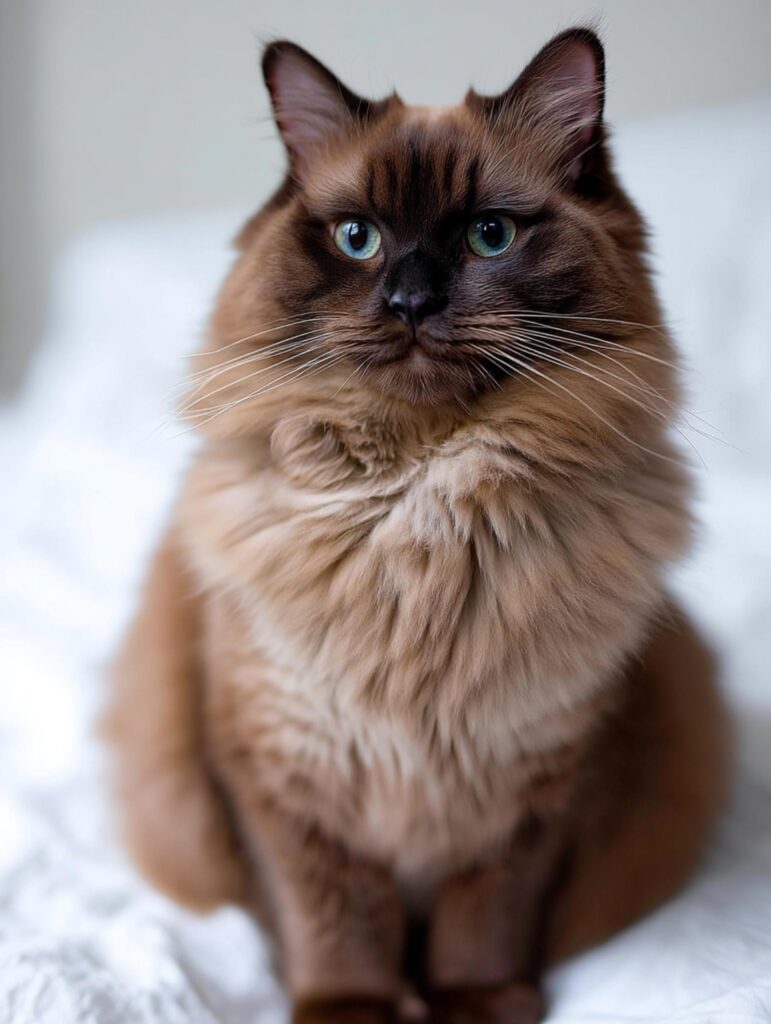
Colors Often Confused With Ragdolls but Classified Separately
Some coat colors are genetically real and registry-classified, but they do not belong to the Ragdoll breed standard. These colors appear in Cherubim and related outcross programs, which are classified separately from traditional Ragdolls.
Common examples include:
- Cinnamon
- Fawn
- Caramel
- Champagne
Cats expressing these colors may resemble Ragdolls in structure or temperament, but color legitimacy is determined by breed classification, not appearance alone.
For clarity:
- Cinnamon and related colors are recognized within Cherubim classification
- They are not recognized Ragdoll colors
- These colors should not be included in Ragdoll color guides or labeled as Ragdolls
This distinction helps prevent mislabeling and ensures accurate, registry-aligned color classification.
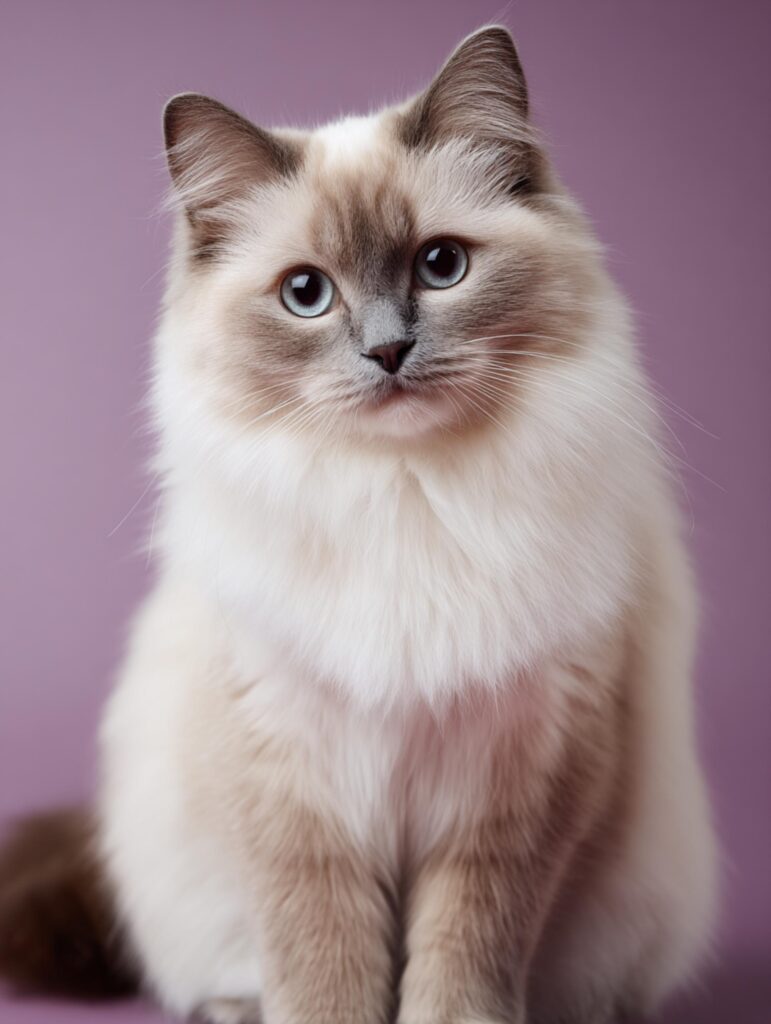
Ragdoll Main Colors (Point Colors Explained)
Ragdoll cats do not come in true solid (self-colored) coats in the traditional sense. Instead, all Ragdolls are genetically pointed, meaning color appears primarily on the cooler areas of the body: the face, ears, legs, and tail. The body remains lighter due to temperature-sensitive pigment expression.
Because of this, Ragdoll colors are best understood as point colors, not full-body solids. These colors deepen gradually over time and are often misunderstood when assessed based on kitten photos alone.
What Defines a Ragdoll Color?
In Ragdolls, color refers to the base pigment expressed at the points, not the overall body shade. Registry classification evaluates:
- Clarity and depth of point color
- Contrast between points and body
- Evenness of pigment at maturity
Body shading, especially in adults, varies by genetics, environment, and modifier type, and does not change the underlying color classification.
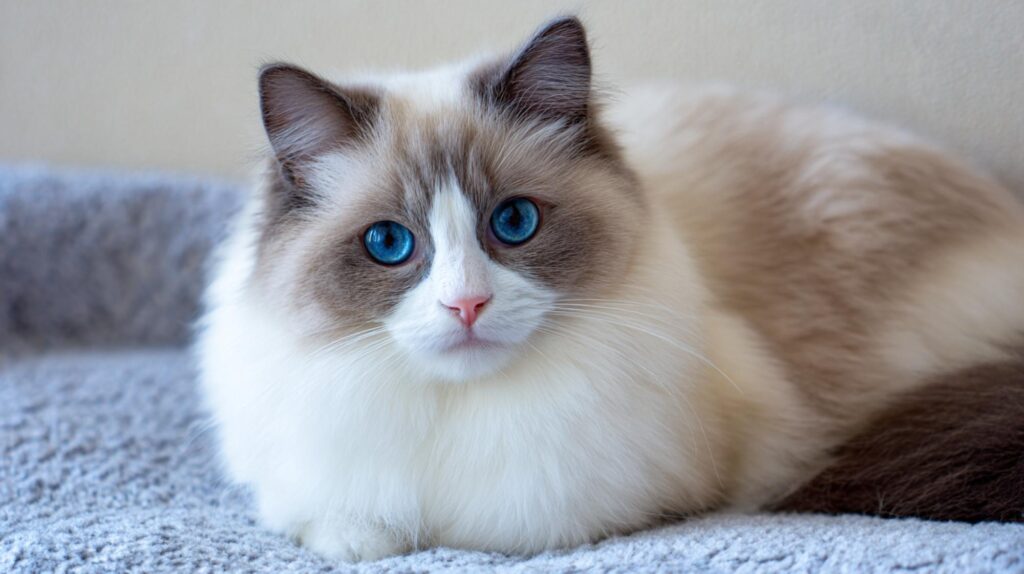
Recognized Ragdoll Point Colors
The main Ragdoll colors recognized across registries include:
- Seal
- Blue (dilute seal)
- Chocolate
- Lilac (dilute chocolate)
- Red
- Cream (dilute red)
These colors may appear in colorpoint, mitted, or bicolor patterns and may also carry lynx or tortie overlays.
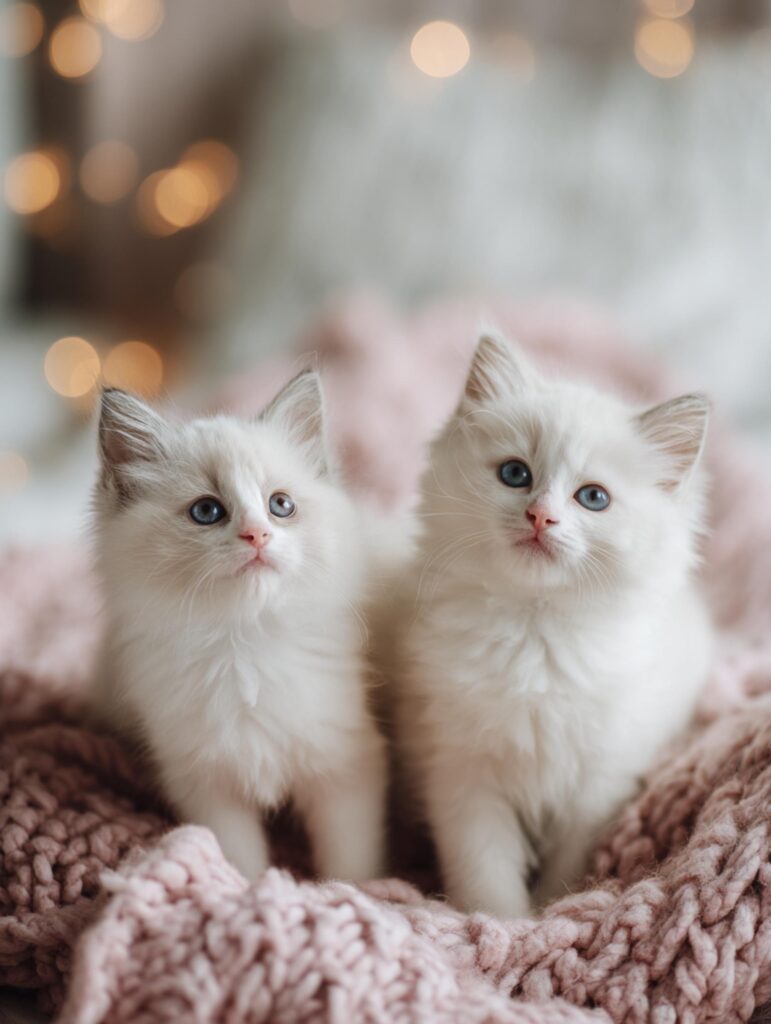
Why Ragdoll Colors Look Different in Kittens vs Adults
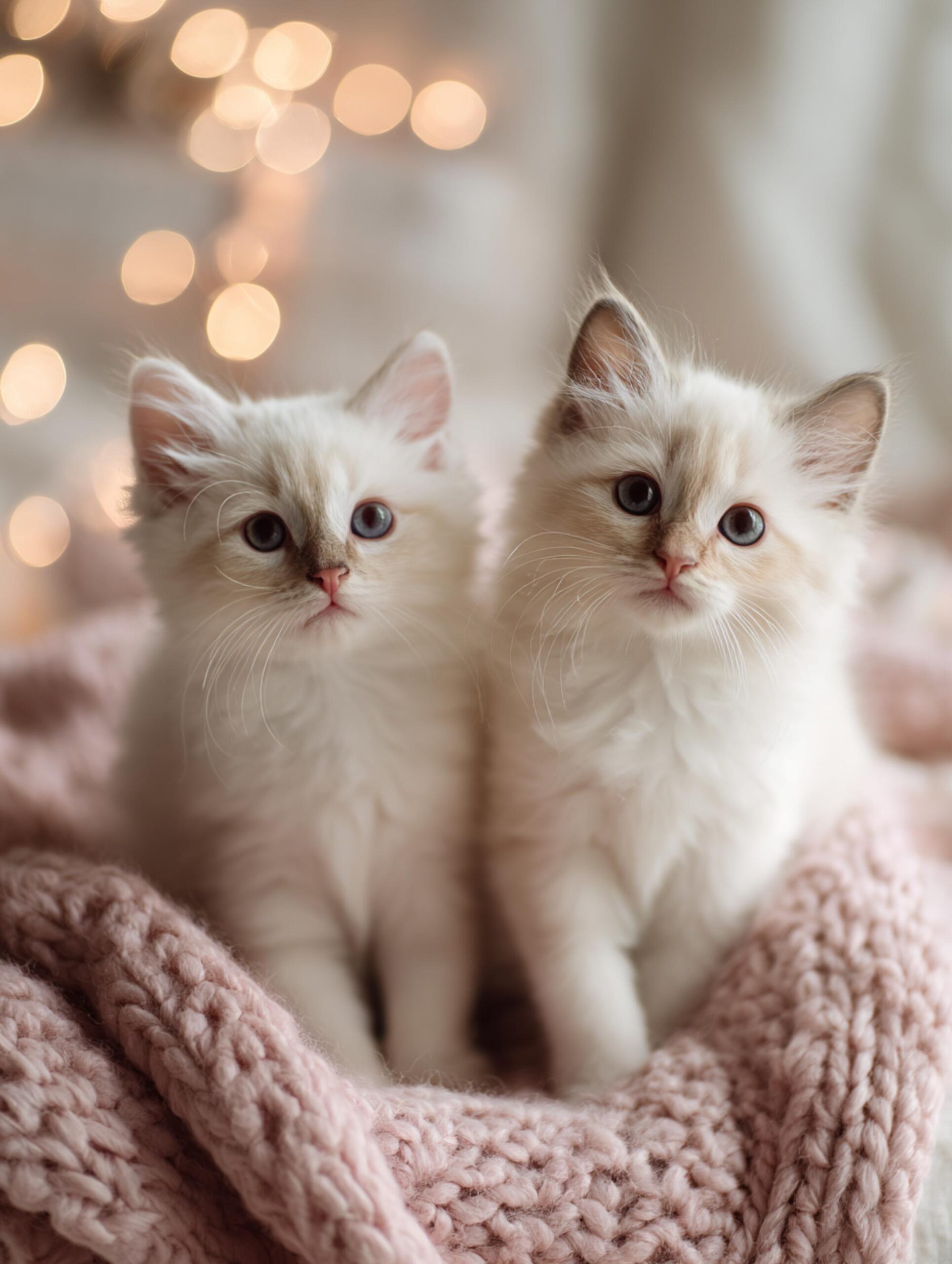
Ragdoll kittens are born very light, often appearing nearly white. Color develops slowly as the cat matures, and final depth is not typically reached until two to four years of age.
Several factors influence how a Ragdoll’s color changes over time:
- Gradual pigment activation at the points
- Seasonal temperature changes
- Hormonal shifts during growth
- Coat length and density increasing with maturity
Early kitten photos cannot reliably predict final contrast or depth of color.
Seal Ragdoll
Seal is the darkest and most classic Ragdoll color.
True Seal vs Lighter Seal
A mature seal Ragdoll displays:
- Deep brown to near-black points
- Strong contrast against a lighter body
- Dark nose leather and paw pads
Some seals appear lighter in youth and deepen significantly with age. Lighter seal expression does not indicate poor quality or incorrect color.
Body Shading in Seal Ragdolls
As seal Ragdolls mature, body shading often increases, especially in colder climates. This is normal and does not change classification. Well-bred seals retain clear point definition even with darker body color.
Blue Ragdoll
A Blue Ragdoll is the dilute version of seal and is sometimes casually described as gray.
Blue vs Gray Terminology
“Blue” is the correct registry term. “Gray” is an informal descriptor and should not be used in formal classification.
Appearance and Maturation
Blue Ragdolls show:
- Soft slate or steel-blue points
- Cooler-toned body color
- Less dramatic contrast than seal
Blue kittens often appear very pale initially. Color depth increases gradually, particularly after the first major coat change.
Chocolate Ragdoll
Chocolate Ragdolls have a warmer, lighter brown tone compared to seal.
Distinguishing Chocolate from Seal
Chocolate points are:
- Milk-chocolate to warm cocoa in tone
- Lighter than seal even at maturity
- Paired with pinkish nose leather and paw pads
Chocolate Ragdolls are genetically distinct from seal and should not be confused with lighter seals.
Lilac Ragdoll
A Lilac Ragdoll is the dilute form of chocolate and one of the palest Ragdoll colors.
Lilac Characteristics
Lilac Ragdolls display:
- Pale pinkish-gray points
- Very light body color
- Subtle contrast overall
Because lilac develops slowly, kittens may appear almost white for an extended period. Full expression often takes several years.
Red Ragdoll
The Red Ragdolls are sometimes referred to as flame, orange, or ginger, though “red” is the correct registry term.
Red Pigment Expression
The Red pigment behaves differently from darker colors:
- Points may show softer contrast
- Faint patterning is common
- Color depth increases gradually
Red Ragdolls are visually lighter and warmer overall, even in adulthood.
Cream Ragdoll
A Cream Ragdoll is the dilute form of red and produces a soft, pastel appearance.
Cream Coat Development
The Cream Ragdolls typically show:
- Very light peach or ivory-toned points
- Low contrast as kittens
- Gradual deepening with age
Cream coloration often remains subtle throughout life and is especially influenced by lighting and seasonal coat changes.
Pattern Visibility and Color Clarity
Unlike breeds with full-body pigment, Ragdoll colors are evaluated primarily at the points. Body shading, minor pattern visibility, or seasonal changes do not disqualify a cat from its color classification.
Understanding this prevents common mislabeling and unrealistic expectations when comparing kittens to adults.
Recap: Understanding Ragdoll Main Colors
Ragdoll colors are defined by point pigmentation and genetic structure, not by first impressions. Many kittens appear nearly colorless at birth, while adults reveal depth and clarity only after full maturation.
Recognizing how dilution, temperature sensitivity, and slow development affect appearance ensures accurate identification and realistic expectations for adult Ragdoll color.
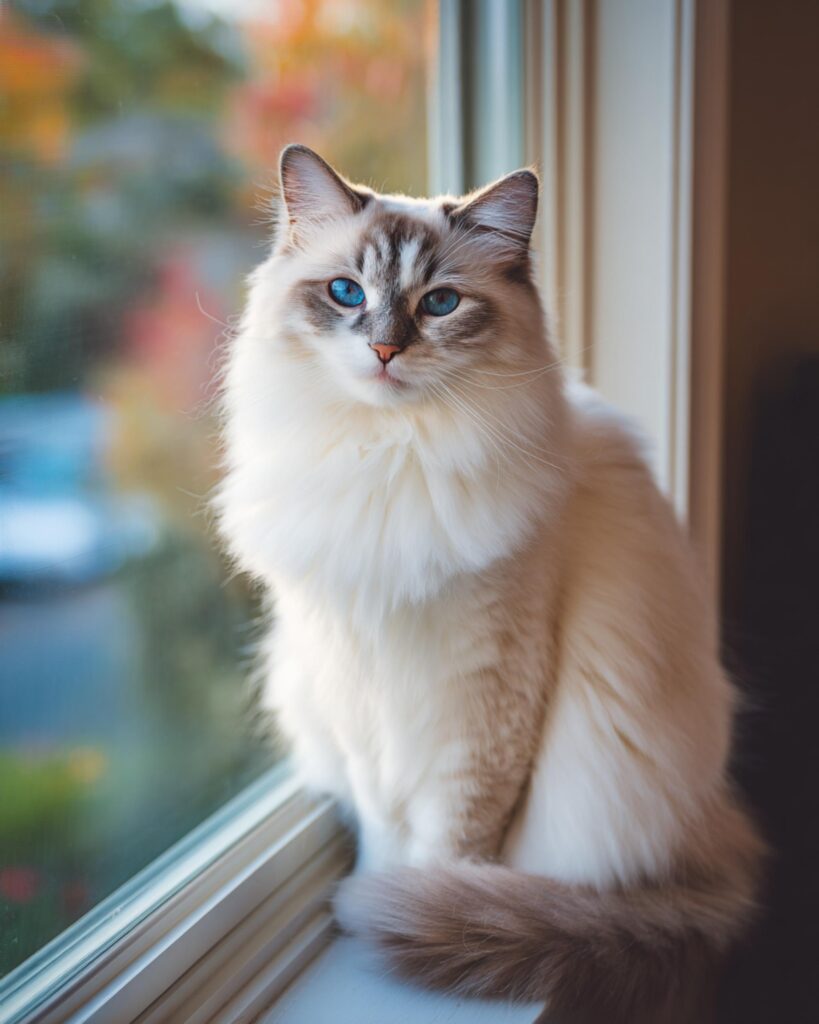
Ragdoll Pattern Types (Colorpoint, Mitted, and Bicolor Explained)
In Ragdolls, pattern refers to white distribution, not color. While point color determines pigment at the extremities, pattern determines where white masking appears and how it is expressed across the body. This distinction is frequently misunderstood, leading to incorrect labels in listings and unrealistic expectations among buyers.
Ragdoll patterns are genetically distinct from color and from pattern overlays such as lynx or tortie. A Ragdoll’s full classification always includes:
- Base color (seal, blue, chocolate, lilac, red, cream)
- Pattern type (colorpoint, mitted, or bicolor)
- Optional overlays (lynx, tortie, torbie)
- Optional modifiers (mink, sepia, solid)
Understanding pattern structure is essential for accurate identification and proper placement within the breed standard.
What Determines Ragdoll Pattern?
Ragdoll patterning is controlled by white spotting genes that regulate how much pigment is masked by white and where that white appears. These genes do not change the underlying color. They only affect visual distribution.
At a high level:
- No white spotting produces a colorpoint
- Limited white spotting produces a mitted pattern
- Extensive white spotting produces a bicolor pattern
The amount and placement of white are inherited traits, but exact symmetry and markings cannot be precisely predicted, even within the same litter.
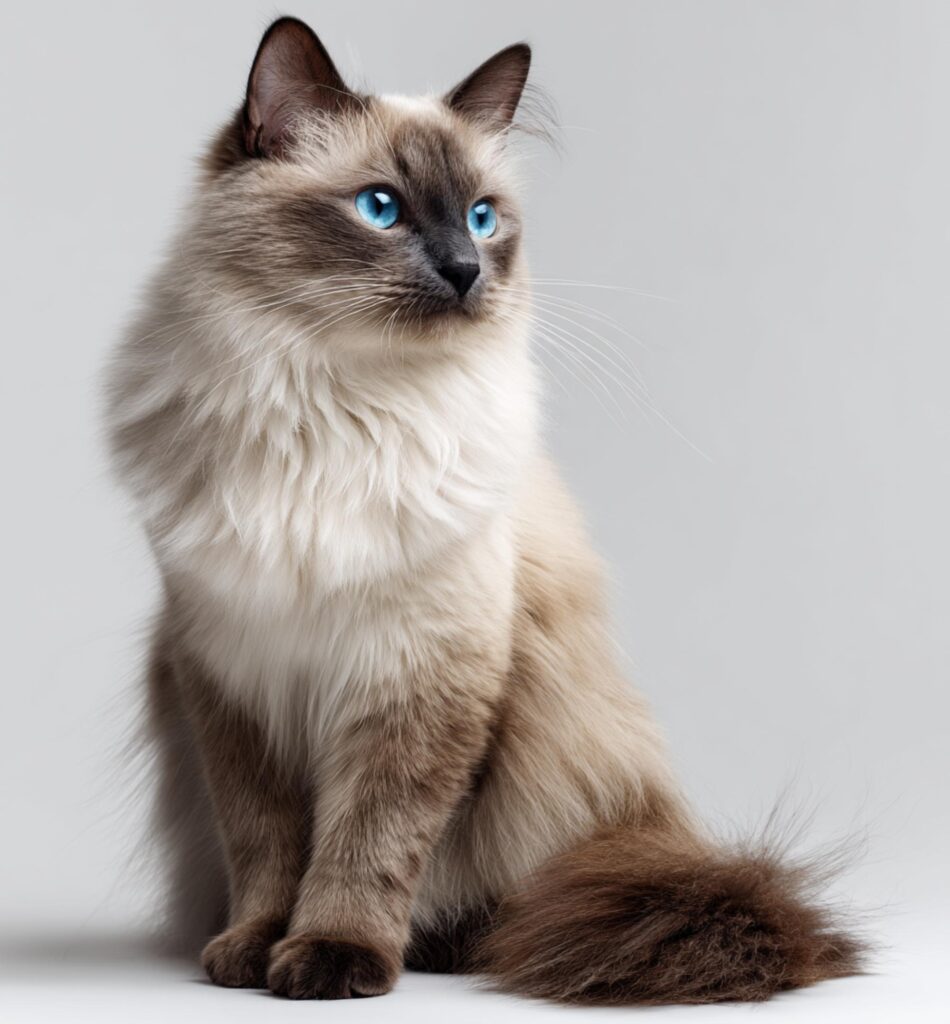
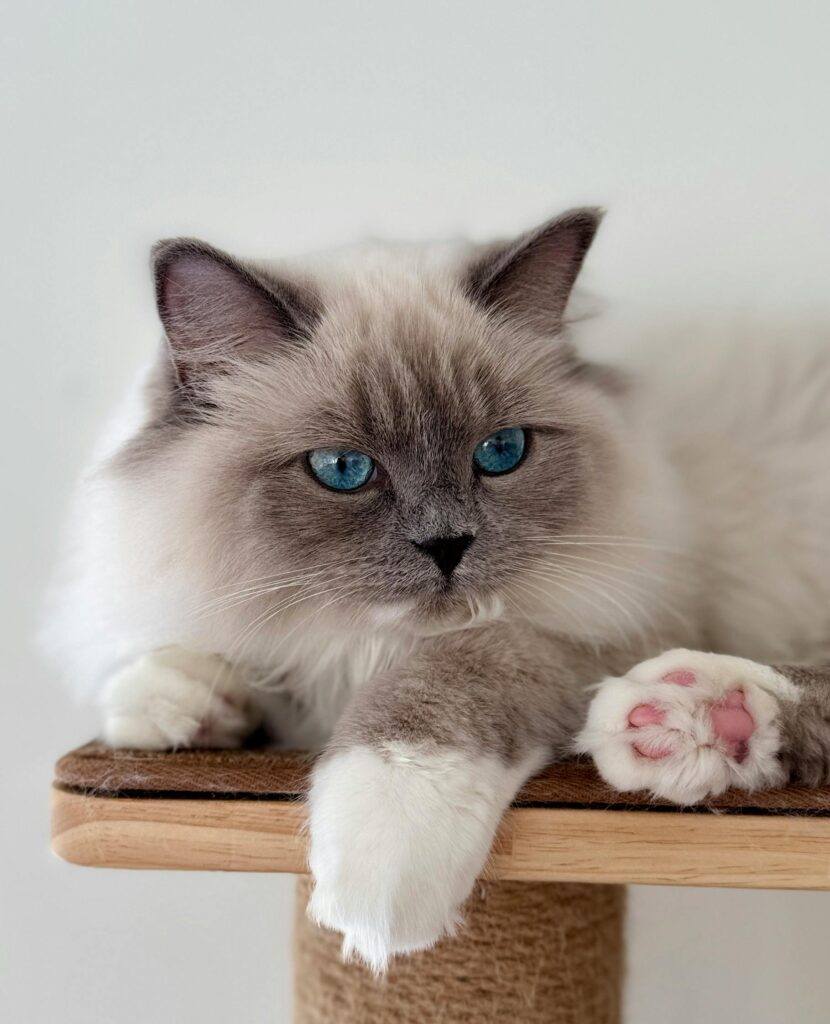
Colorpoint Ragdolls (No White Patterning)
The colorpoint pattern is the foundation of the breed and the least visually complex.
Defining Features of Colorpoint Ragdolls
Colorpoint Ragdolls display:
- Solid-colored points on the face, ears, legs, and tail
- No white spotting on the body or extremities
- A lighter body color due to temperature-sensitive pigment expression
The contrast between points and body varies by color and modifier, but the absence of white is the defining characteristic.
Common Misinterpretations
Colorpoint kittens are sometimes mislabeled as mitted or bicolor when faint pale areas appear on the chin or belly. These areas are normal developmental variations and do not indicate white spotting.
True colorpoints do not have white mittens, blazes, or inverted V markings.
Mitted Ragdolls (Moderate White Patterning)
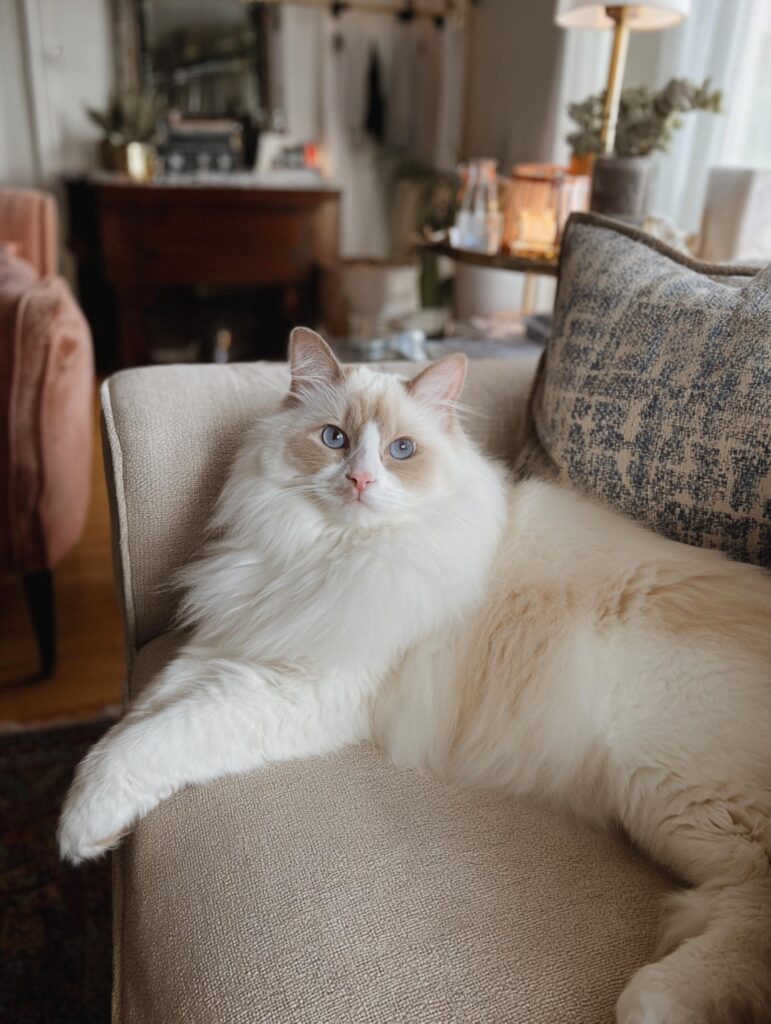
The mitted pattern introduces controlled white markings while preserving strong point definition.
Defining Features of Mitted Ragdolls
Mitted Ragdolls typically have:
- White front mittens
- White rear boots extending partway up the legs
- A white chin
- A white belly stripe running from chin to tail
The rest of the body follows standard colorpoint placement.
Variability in Mitted Expression
While the mitted pattern follows general guidelines, exact expression varies:
- Mitten height may differ between front and back legs
- White may extend slightly higher or lower
- The belly stripe may be narrow or wide
This variation is normal and does not indicate incorrect classification.
Why Mitted Ragdolls Are Often Misidentified
Mitted Ragdolls are frequently confused with bicolors, especially as kittens, because white can appear more prominent before full color development. The key difference lies in face patterning.
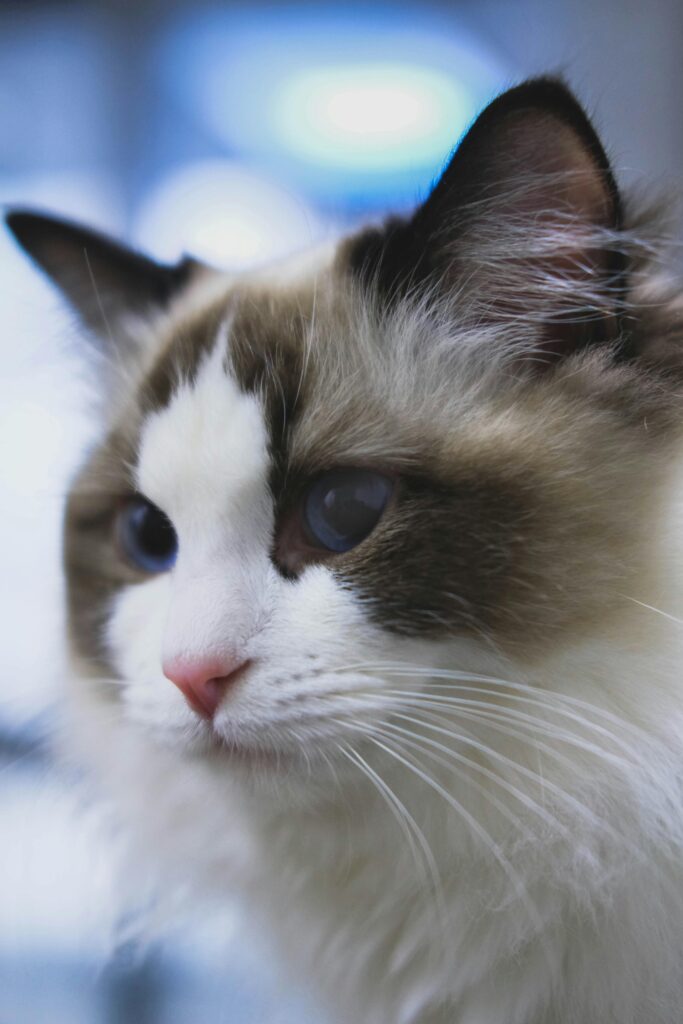
Mitted Ragdolls do not have an inverted V on the face. Their facial points remain fully colored aside from a white chin.
Bicolor Ragdolls (Extensive White Patterning)
Bicolor Ragdolls are the most visually distinctive pattern in the breed and the most frequently misunderstood.
Defining Features of Bicolor Ragdolls
A true bicolor Ragdoll displays:
- An inverted white “V” on the face
- White legs and feet
- A mostly white body
- Colored tail and ears
- Colored patches on the back or flanks
The inverted V should be symmetrical and confined to the face, though perfect symmetry is uncommon in real-world breeding.
High-White vs Low-White Bicolors
Bicolor expression exists on a spectrum:
- Low-white bicolors retain more body color and smaller facial markings
- High-white bicolors may have large white areas and minimal body color
Both are considered bicolor as long as the inverted V is present and pattern placement aligns with registry definitions.
Body Color Expectations in Bicolors
Because bicolors carry extensive white masking, body color is often lighter and slower to develop. This can lead buyers to assume the cat is lighter-colored genetically than it actually is.
The point color remains the same, regardless of how much white is present.
Mislabeling Between Mitted and Bicolor Patterns
One of the most common errors in Ragdoll listings is confusing mitted and bicolor patterns.
Key distinctions:
- Mitted: white feet, white chin, no inverted V
- Bicolor: inverted V, extensive white on body
A white blaze alone does not make a cat bicolor. Likewise, mittens alone do not qualify as bicolor.
Accurate classification requires evaluating face markings, leg white, and body distribution together, not in isolation.
Pattern Development From Kitten to Adult
Ragdoll pattern clarity improves with age.
As kittens mature:
- Point color deepens, increasing contrast with white
- Facial markings become more defined
- Body color may darken slightly, especially in colorpoints and mitteds
In bicolors, white areas remain white, but surrounding color may expand or sharpen, changing visual balance. Final pattern clarity often stabilizes between two and four years of age.
Pattern and Overlays: Lynx, Tortie, and Torbie
Pattern types can combine with overlays.
Examples include:
- Seal lynx bicolor
- Blue tortie mitted
- Chocolate lynx point
- Lilac torbie bicolor
Overlays do not change the underlying pattern. They simply add striping or mottling to the colored areas.
Registry Considerations for Ragdoll Patterns
Registries evaluate Ragdoll patterns based on:
- White distribution
- Facial markings
- Balance and clarity at maturity
Because kittens change dramatically, pattern classification is best confirmed by experienced breeders rather than early photos or casual observation.
Ragdoll Pattern Types Explained (Quick Comparison)
| Pattern Type | White Distribution | Key Visual Markers | Common Mislabeling | Important Clarification |
|---|---|---|---|---|
| Colorpoint | No white spotting | Fully colored face, ears, legs, tail | Mistaken for mitted when chin looks pale | Pale areas in kittens are developmental, not white |
| Mitted | Moderate white | White feet, white chin, white belly stripe | Labeled as bicolor due to white paws | Mitted cats do not have an inverted V on the face |
| Bicolor | Extensive white | Inverted white V on face, white legs, white body areas | Confused with high-white mitted | Facial V is required for bicolor classification |
| High-White Bicolor | Very extensive white | Mostly white body, limited color patches | Called “van” or “harlequin” | Still bicolor if facial V is present |
| Low-White Bicolor | Balanced white | Clear V with more body color | Misclassified as mitted | Body color amount does not override facial pattern |
| Any Pattern + Lynx | Pattern overlay | Tabby striping on points | Lynx called a color | Lynx is an overlay, not a pattern or color |
| Any Pattern + Tortie | Pattern overlay | Red/cream mottling on points | Tortie listed without base color | Tortie must always pair with a base color |
Summary: Understanding Ragdoll Patterns
Ragdoll patterns define how color is distributed, not what color the cat is. Color point, mitted, and bicolor patterns each follow specific genetic rules, but expression varies naturally within the breed. Understanding these patterns prevents mislabeling, sets realistic expectations, and allows buyers to appreciate the full range of Ragdoll expression as these cats mature.
Lynx Point Ragdolls
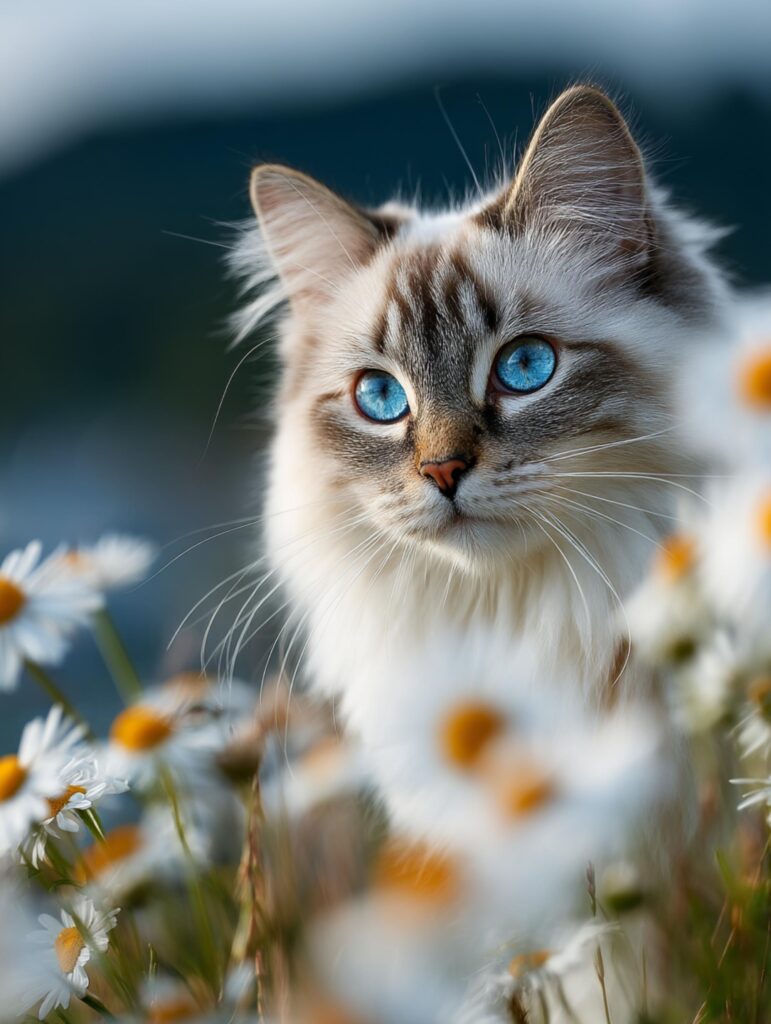
Lynx point Ragdolls represent one of the most common and visually diverse pattern overlays in the breed. While “lynx” is often treated as a color in casual conversation, it is more accurately understood as a tabby (agouti) pattern expressed only at the points. This distinction explains why lynx Ragdolls can look dramatically different from one another despite sharing the same base color.
Lynx striping may be bold or subtle, high-contrast or softly blended, and its visibility changes significantly as the cat matures. This range of expression is normal and expected in the breed.
What Makes a Ragdoll a Lynx?
A Ragdoll is classified as lynx when it carries the agouti gene, which introduces tabby banding into the point coloration. Unlike full-body tabbies, Ragdolls express this pattern only on the points due to their temperature-sensitive colorpoint genetics.
At a high level:
- The agouti gene enables tabby striping
- Lynx expression appears on the face, ears, legs, and tail
- The body remains lighter and largely unpatterned
Because the agouti gene is widespread in Ragdoll lines, lynx is a very common pattern overlay, even when striping appears faint in kittens.
Pattern vs Base Color in Lynx Ragdolls
Every lynx Ragdoll has:
- A base color (seal, blue, chocolate, lilac, red, or cream)
- A point pattern (colorpoint, mitted, or bicolor)
- A lynx overlay affecting striping at the points
For example:
- A seal lynx has a seal base color with lynx striping
- A blue lynx has a dilute seal base with the same pattern
- A red lynx expresses red pigment with tabby banding
Lynx does not replace the base color. It overlays it. This distinction is critical for accurate identification and prevents mislabeling in listings.
Facial Striping and Mask Definition
One of the most recognizable features of lynx Ragdolls is facial striping.
Typical lynx facial traits include:
- An “M” marking on the forehead
- Delicate striping around the eyes
- Light eyeliner effect enhancing eye shape
These markings often appear early but sharpen with age. In some cats, facial striping remains soft and blended rather than sharply defined.
Ear, Leg, and Tail Striping
Lynx patterning is most visible on extremities.
Common expressions include:
- Ringed tails with alternating light and dark bands
- Striped legs, especially on the front legs
- Ear barring and lighter inner ear shading
Contrast varies widely. Some lynx Ragdolls show bold striping, while others appear nearly solid at the points except under close inspection.
High-Contrast vs Low-Contrast Lynx Expression
Not all lynx Ragdolls look the same. Contrast plays a major role in visual impact.
- High-contrast lynx show clearly defined stripes against lighter point color
- Low-contrast lynx have subtle striping that blends into the point shade
Contrast is influenced by genetics, dilution, and overall color depth. Blue and lilac lynx typically appear softer than seal or red lynx.
How Lynx Pattern Changes With Age
Lynx patterning evolves significantly over time.
As Ragdolls mature:
- Striping becomes more defined
- Point color deepens, increasing contrast
- Seasonal coat changes can soften or sharpen markings
Many lynx Ragdolls do not reach full pattern clarity until two to four years of age, consistent with the breed’s slow maturation.
Lynx vs Solid-Looking Points in Kittens
Some lynx kittens appear nearly solid at the points early on. This does not mean they lack the lynx pattern.
Reasons lynx can be difficult to identify in kittens include:
- Very pale early point color
- Soft kitten coats masking banding
- Low initial contrast
As pigment develops, the lynx pattern often becomes more obvious, particularly on the tail and face.
Red and Cream Lynx Ragdolls
Red and cream lynx Ragdolls deserve special mention.
Because red pigment expresses pattern more readily:
- Striping is often visible even in low-contrast coats
- Facial markings may appear earlier
- Pattern may remain visible throughout life
This is normal and does not represent a different classification.
Registry Considerations for Lynx Ragdolls
Registries recognize lynx as a pattern overlay rather than a standalone color. Accurate classification depends on identifying:
- Base color
- Pattern type (colorpoint, mitted, bicolor)
- Presence of lynx striping
Because expression can be subtle, especially in lighter colors, proper identification relies on experienced evaluation rather than casual visual assessment.
Tortie Ragdolls (Tortoiseshell Pattern Overlay)
Tortie Ragdolls are defined by a tortoiseshell pattern overlay, not by a standalone color. The Tortie pattern occurs when both red-based and black-based pigment appear together, creating mottled or patched coloration. In Ragdolls, this pattern is expressed only on the points due to the breed’s colorpoint genetics.
Tortie is always combined with a base color and a pattern type. Accurate descriptions include seal tortie point, blue tortie mitted, or chocolate tortie bicolor.
Why Tortie Ragdolls Are Almost Always Female
Tortie expression requires two X chromosomes carrying different color genes. For this reason, nearly all tortie Ragdolls are female. Rare male torties exist due to genetic anomalies, but they are uncommon and typically sterile.
Where Tortie Pattern Appears
In Ragdolls, tortie markings may appear on:
- The face mask
- The ears
- The legs and feet
- The tail
The body remains lighter, though mild body shading may develop with age.
Tortie vs Torbie
Tortie and torbie are often confused.
- Tortie shows mottled color patches without striping
- Torbie combines tortie coloration with lynx (tabby) striping
Both are pattern overlays and must be paired with a base color and pattern type.
Development and Variation
Tortie contrast varies widely. Some Ragdolls show bold, high-contrast patches, while others display soft, blended coloration. Pattern visibility often increases as the cat matures, with full expression typically appearing between two and four years of age.
Key Clarification
Tortie is not a color, does not affect temperament, and does not indicate rarity or value on its own. It is a normal, genetically driven overlay that adds visual variation to Ragdoll points.
How Ragdoll Genetics Influence Appearance
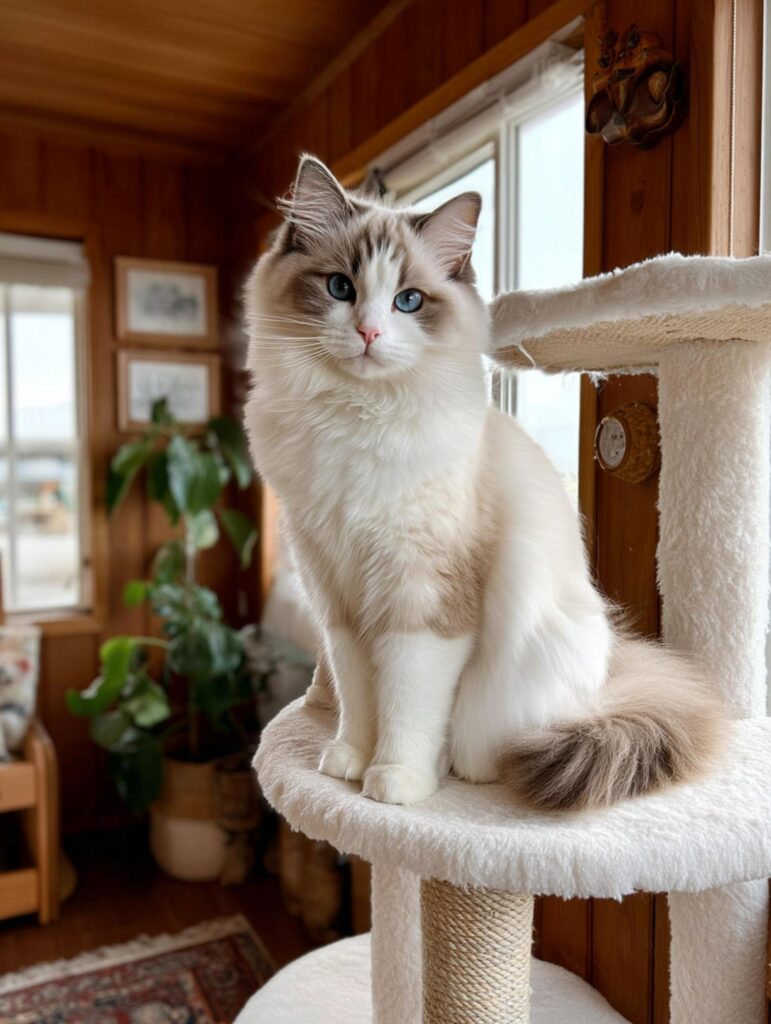
Ragdoll coat color is shaped by temperature-sensitive colorpoint genetics, which limit pigment expression to the cooler areas of the body. This is why Ragdolls have darker points and lighter bodies, regardless of base color or pattern.
Color development follows a slow timeline. Ragdolls are born very light, and pigment deepens gradually as they mature. Most do not reach full color depth or contrast until two to four years of age.
Seasonal temperature changes also influence appearance. Colder environments often lead to darker coats, while warmer conditions may soften contrast. These shifts are normal and do not affect color classification.
Kitten Coat Appearance vs Adult Ragdoll Color
Kitten coat appearance is a poor predictor of adult Ragdoll color. Early photos capture a temporary stage of development rather than the final expression.
As Ragdolls mature:
- Point color deepens
- Contrast increases
- Overlays such as lynx or tortie become more defined
- Body shading may gradually change
These changes occur over several years and can vary with environment and season. Evaluating adult color requires patience and an understanding of the breed’s slow maturation, rather than relying on early visual impressions.
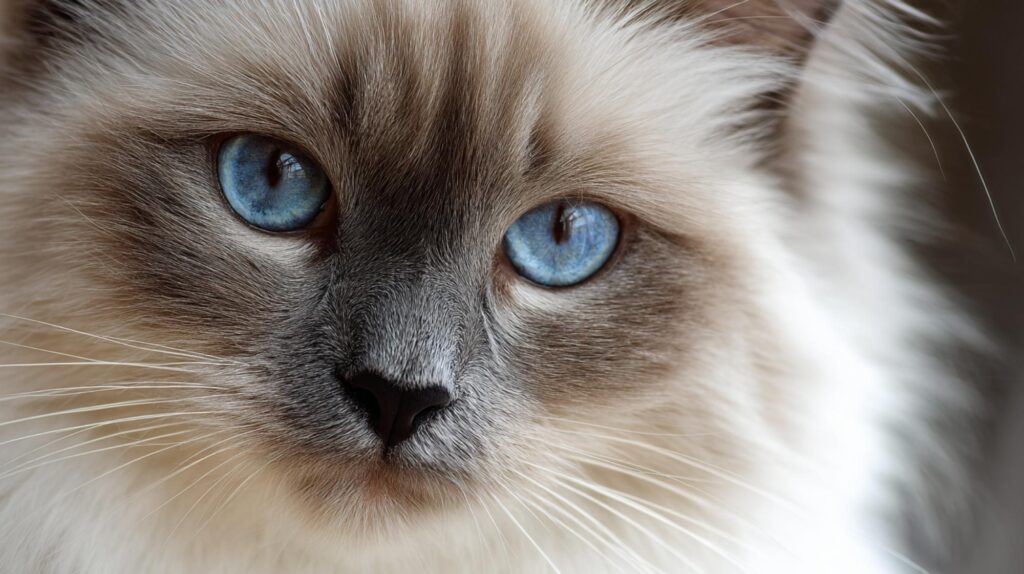
Common Ragdoll Color & Pattern Mislabeling (And Why It Happens)
Ragdoll colors and patterns are commonly mislabeled not because the classification system is unclear, but because descriptive shortcuts replace genetic terminology. In practice, labels are often simplified, merged, or based on appearance alone, which gradually disconnects them from how Ragdoll colors are actually classified.
Below are the most frequent mislabeling patterns, along with the correct way to interpret them.
Lynx Listed as a Color
How it is often labeled:
- Lynx Ragdoll
- Blue lynx
Why this happens:
Because lynx striping is visually obvious, it is often treated as the defining feature.
Why this is incorrect:
In reality, lynx is not a color at all. Instead, it is a pattern overlay that adds tabby striping to the points.
Correct classification:
- Seal lynx bicolor
- Blue lynx mitted
Without the base color and pattern type, the description remains incomplete.
Bicolor Treated as a Color Category
How it is often labeled:
- Bicolor Ragdoll
Why this happens:
White distribution is highly visible, especially in kittens, which leads people to treat it as a color trait.
Why this is incorrect:
Bicolor does not describe pigment. Rather, it describes how white is distributed across the coat.
Correct classification:
- Seal bicolor
- Blue lynx bicolor
What determines bicolor status is the facial inverted V, not the total amount of white on the body.
Mitted and Bicolor Confused With One Another
How it is often mislabeled:
- High-white mitted labeled as bicolor
- Low-white bicolor labeled as mitted
Why this happens:
As color develops, white areas can appear more or less prominent, especially during kittenhood.
How to distinguish them correctly:
- Mitted Ragdolls have white feet and a white chin, but no facial V
- Bicolor Ragdolls must show an inverted white V on the face
In other words, facial markings matter more than paw height or body color.
Tortie Listed Without a Base Color
How it is often labeled:
- Tortie Ragdoll
Why this happens:
The tortie pattern stands out visually, so it is treated as a complete description.
Why this is incomplete:
Tortie does not replace a color. Instead, it overlays an existing base color.
Correct classification:
- Blue tortie mitted
- Seal tortie bicolor
Without the base color, the genetic description is unfinished.
Torbie and Tortie Used Interchangeably
How it is often mislabeled:
- Torbie used for any tortie
- Tortie used even when striping is present
Why this happens:
The difference between mottling and striping is subtle, especially as coats develop.
Correct distinction:
- Tortie shows mottled color patches only
- Torbie combines tortie coloring with lynx striping
Both overlays appear only on the points in Ragdolls.
Mink or Sepia Marketed as Colors
How it is often labeled:
- Mink Ragdoll color
- Sepia Ragdoll color
Why this happens:
Because these cats look darker and have different eye colors, they are framed as separate color categories.
Why this is incorrect:
Mink and sepia are modifiers, meaning they affect contrast and shading without changing the underlying color.
Correct classification:
- Seal mink bicolor
- Blue sepia mitted
Cinnamon or Fawn Labeled as Ragdoll Colors
How it is often labeled:
- Cinnamon Ragdoll
- Fawn Ragdoll
Why this happens:
Visual similarity leads to breed assumptions without classification context.
Why this is misleading:
These colors belong to separately classified programs, such as Cherubim, rather than the Ragdoll breed standard.
A similar appearance does not override breed classification.
Kitten Appearance Treated as Final Color
How it is often mislabeled:
- Very light kittens labeled as lilac prematurely
- Low-contrast kittens assumed to lack overlays
Why this happens:
Ragdolls mature slowly, and early appearance is often mistaken for permanence.
Correct perspective:
Color, contrast, and overlays can continue developing for years, making early descriptions provisional.
Marketing Language Replacing Classification
How it is often labeled:
- Rare color
- Exclusive shade
- Unusual pattern
Why this causes confusion:
These phrases describe appeal, not genetics, and they vary widely between sources.
Correct approach:
Use base color, pattern type, overlays, and modifiers consistently.
Why Correct Labeling Matters
When labeling stays accurate and consistent, expectations remain realistic, communication improves, and classification stays aligned across breeders, registries, and educational sources. Mislabeling does not make a cat more distinctive — it simply makes information harder to trust.
Key Takeaways: Understanding Ragdoll Colors
- Ragdoll colors are defined by base color, pattern type, overlay, and modifier, not by a single label.
- All Ragdolls are genetically pointed, and color develops gradually over several years.
- Kitten photos do not reliably predict adult color, contrast, or pattern clarity.
- Lynx and tortie are overlays, not base colors.
- White distribution defines pattern (colorpoint, mitted, bicolor), not color.
- Some colors that resemble Ragdolls belong to separately classified programs, not the Ragdoll breed standard.
Frequently Asked Questions About Ragdoll Colors & Patterns
What colors do Ragdoll cats come in?
Ragdoll cats come in six recognized base colors: seal, blue, chocolate, lilac, red, and cream. These colors are expressed at the points — the face, ears, legs, and tail — due to temperature-sensitive colorpoint genetics. Meanwhile, the body remains lighter and may darken gradually as the cat matures.
Do all Ragdolls have blue eyes?
In traditional Ragdolls, blue eyes are expected because of colorpoint genetics. However, Ragdolls with modifiers such as mink or sepia may have aqua, green, or gold-toned eyes. Importantly, eye color reflects genetic expression rather than quality, value, or temperament.
Is lynx a Ragdoll color?
No. Rather than being a color, lynx is a pattern overlay that introduces tabby striping to the colored points. As a result, a lynx Ragdoll must still have both a base color and a pattern type, such as seal lynx bicolor or blue lynx mitted.
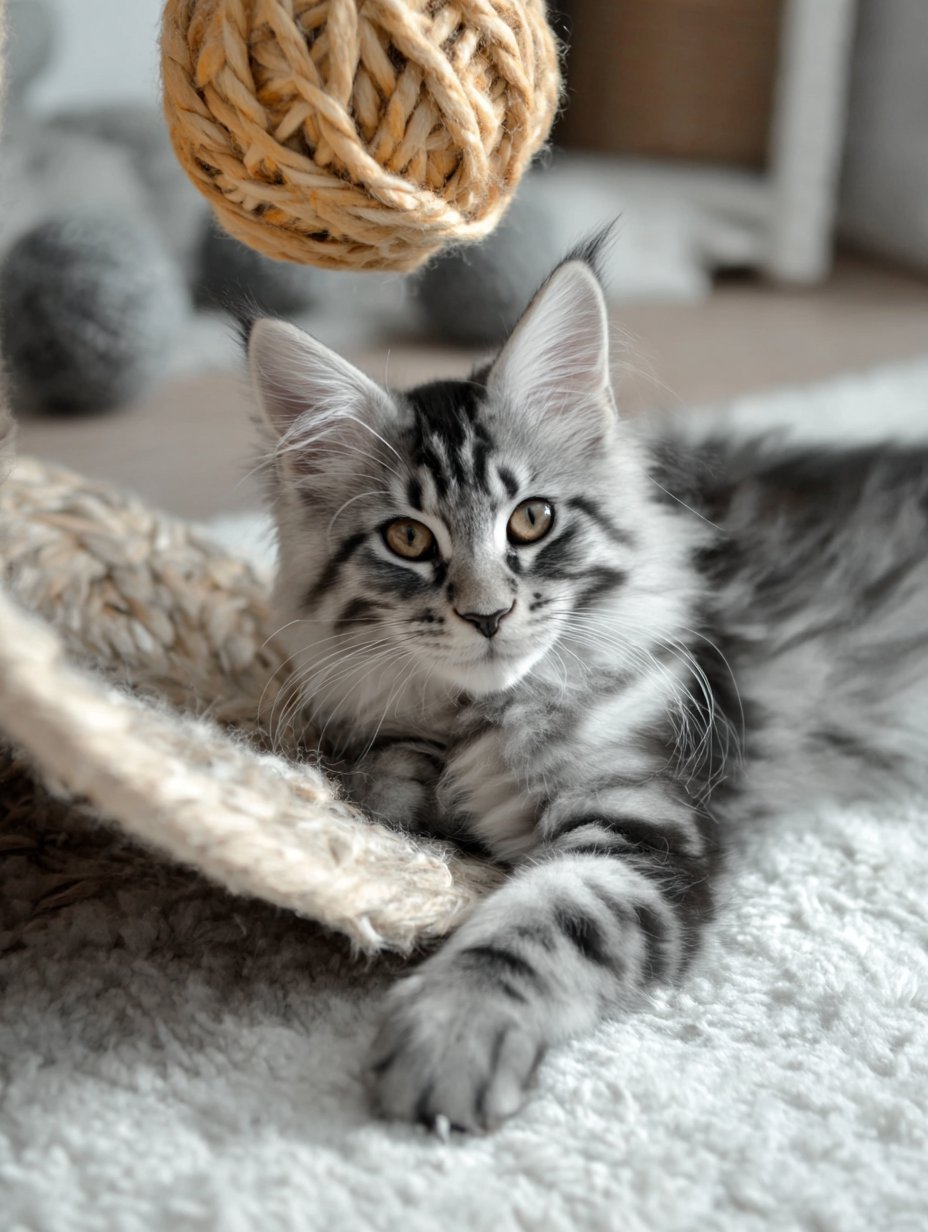
Can Ragdoll cats be tabby?
In a traditional sense, Ragdolls are not full-body tabbies. Instead, Ragdolls can express the lynx gene, which adds tabby striping only to the points. This is why lynx Ragdolls show facial striping and ringed tails while the body remains largely unpatterned.
Can Ragdoll Cats be Tabby? Understanding the lynx point gene.
What is the difference between colorpoint, mitted, and bicolor?
These terms describe white distribution, not color itself.
- Colorpoint: no white
- Mitted: white feet, white chin, and a white belly stripe
- Bicolor: an inverted white V on the face with white body areas
Regardless of pattern, the underlying base color remains the same.
Are tortie Ragdolls always female?
Nearly all tortie Ragdolls are female because tortie pattern requires two X chromosomes carrying different color genes. Occasionally, male torties occur due to genetic anomalies; however, they are rare and typically sterile.
What is the difference between tortie and torbie?
Although the terms sound similar, they describe different overlays.
- Tortie refers to mottled red or cream patches without striping
- Torbie combines tortie coloration with lynx striping
In both cases, these overlays appear only on the colored points.
Do Ragdoll colors change as they age?
Yes. Ragdoll colors change noticeably over time. Kittens are born very light, and pigment deepens gradually. In most cases, full color depth and pattern clarity do not stabilize until two to four years of age.
Can you predict adult color from kitten photos?
No. Kitten photos capture an early developmental stage and are therefore unreliable predictors of adult color, contrast, or pattern clarity. For example, overlays such as lynx or tortie may not be visible early, and body shading often increases with age.
Why do some Ragdolls look darker in winter?
Because Ragdoll pigment expression is temperature-sensitive, cooler temperatures can deepen coat color. Conversely, warmer conditions may soften contrast. These seasonal changes are normal and do not affect color classification.
Are mink and sepia Ragdolls different colors?
No. Mink and sepia are modifiers, not colors. While they affect contrast, body shading, and eye color, they do not replace the base color. A mink or sepia Ragdoll still has a standard base color such as seal or blue.
Are cinnamon or fawn Ragdolls real?
Cinnamon, fawn, and related colors are genetically real. However, they are not part of the Ragdoll breed standard. These colors appear in separately classified programs, such as Cherubim, and should not be labeled as Ragdolls in color-based discussions.
Does color affect Ragdoll temperament?
No. There is no evidence that coat color or pattern influences temperament. Instead, Ragdoll personality is shaped by genetics, early handling, and environment.
Are some Ragdoll colors rarer or more valuable than others?
Color alone does not determine value or quality. Rather, pricing and availability depend on breeding programs, health testing, demand, and placement considerations — not color classification.
Why do some Ragdolls have darker bodies than others?
Body shading varies due to genetics, age, environment, and modifiers. Importantly, increased body color does not indicate incorrect classification or mixed breeding.
How should a Ragdoll’s color be properly described?
A complete description includes:
- Base color
- Pattern type
- Any overlays
- Any modifiers
For example, blue lynx bicolor or seal tortie mitted. Omitting elements leads to incomplete or misleading descriptions.
Why do different sources use different color terms?
Inconsistent terminology often results from marketing language, social media shorthand, or incomplete understanding of classification. By contrast, registry-aligned terminology provides the most consistent and accurate framework.
Is it normal for siblings to look very different in color?
Yes. Even within the same litter, siblings can vary widely in contrast, pattern expression, and development timeline. This variation is normal and expected within the breed.
When is the best time to evaluate a Ragdoll’s final color?
Adult color is best evaluated after full maturity, typically between two and four years of age. Until then, earlier assessments should be considered provisional.
Related Ragdoll & Cherubim Color Guides
For detailed breakdowns of individual colors and patterns, see the dedicated posts below. Each page focuses on genetics, development, and correct classification.
Ragdoll Base Color Guides
- Seal Bicolor Ragdoll Cat
- Blue Bicolor Ragdoll Cat
- Chocolate Ragdoll Cat
- Lilac Ragdoll Cat
- Red (Flame) Point Ragdoll Cat
- Cream Ragdoll Cat
Ragdoll Pattern & Overlay Guides
- Lynx Ragdoll Cats
- Tortie Ragdoll Cats
- Torbie Ragdoll Cats
- Colorpoint Ragdoll Cats
- Mitted Ragdoll Cats
- Bicolor Ragdoll Cats
Cherubim & Related Color Classifications
- Cherubim Ragdoll Cat Guide
- Mink Cherubim Cats
- Cherubim vs Ragdoll: Color & Classification Differences
- Black Ragdoll Cat
Summary: Ragdoll Colors and Coat Patterns Explained
Ragdoll colors and coat patterns are defined by a clear genetic framework based on base color, pattern type, overlays, and modifiers. All Ragdolls are pointed, with pigment developing slowly over time and influenced by temperature, age, and environment. Because kittens are born very light and mature gradually, early appearance does not reliably predict adult color or contrast.
Understanding the distinction between color, pattern, and overlays such as lynx or tortie prevents common mislabeling and confusion. When registry-aligned classification is applied consistently, Ragdoll colors become predictable, accurate, and easy to interpret—without relying on marketing language, photos alone, or informal terminology.
This guide serves as a neutral reference for correctly identifying and understanding Ragdoll colors from kittenhood through full maturity.
Related Ragdoll Cat Guides & Resources
The following articles provide focused explanations and practical detail on specific aspects of Ragdoll ownership:
- Ragdoll Temperament Explained
A focused explanation of personality traits, emotional sensitivity, and everyday behavior. - Ragdoll Kittens vs Adult Ragdolls
A clear comparison of temperament development, predictability, cost, and adjustment expectations. - Ragdoll Size, Weight & Growth Chart
A breakdown of growth stages, size ranges, and what healthy development looks like from kittenhood through maturity. - Ragdoll Cat Health and Longevity Guide
An overview of common health considerations, lifespan expectations, genetics, and preventative care. - Best Diet for Ragdoll Cats
Feeding principles, moisture needs, protein requirements, and common nutrition mistakes. - Ragdoll Grooming and Shedding Guide
Coat care routines, shedding expectations, and practical grooming maintenance. - How Much Does a Ragdoll Cat Cost?
Purchase price ranges, ongoing expenses, and long-term cost planning. - How to Choose a Ragdoll Breeder
What responsible breeders prioritize, questions buyers should ask, and warning signs to avoid. - Ragdoll Cat Breed Standard
How the breed was developed and why temperament and predictability were intentional goals. - Pet Insurance for Ragdoll Cats
When to enroll, what coverage supports, and why insurance matters for this breed.
Sources, Standards & Reference Materials
This guide reflects registry-aligned breed standards, established feline color genetics, and long-standing classification practices used by ethical breeders. The following sources were consulted to ensure accuracy, consistency, and proper scope.
Breed Standards & Registry Classification
- Cat Fanciers’ Association (CFA)
Official Ragdoll breed standard, accepted colors and patterns, and show classification guidelines
https://cfa.org/breeds/ragdoll/ - The International Cat Association (TICA)
Ragdoll and Cherubim breed standards, color and pattern recognition, and classification scope
https://tica.org/breeds/browse-all-breeds?view=article&id=849 - Governing Council of the Cat Fancy (GCCF)
Standardized feline color and pattern terminology used internationally
https://www.gccfcats.org/owners/breeding/cat-colours/
Feline Coat Color Genetics
- UC Davis Veterinary Genetics Laboratory
Authoritative explanations of colorpoint genetics, dilution, agouti (tabby), white spotting, and X-linked color inheritance
https://vgl.ucdavis.edu/resources/cat-coat-color - Robinson’s Genetics for Cat Breeders and Veterinarians
Foundational reference for feline color inheritance and pattern expression used across registries - The Cat Fanciers’ Association Complete Cat Book
Breed descriptions, coat color terminology, and historical standardization context
Pattern & Classification References
- CFA and TICA classification guidelines for:
- Colorpoint, mitted, and bicolor patterns
- Lynx (tabby) overlays
- Tortie and torbie overlays
- White masking and spotting genes
- Registry documentation distinguishing Ragdoll classification from Cherubim and other outcross programs, particularly in relation to cinnamon, fawn, and caramel colors
Scope & Interpretation Notes
- This guide focuses on Ragdoll breed classification, not cross-breed or experimental programs
- Color legitimacy is determined by breed standards, not appearance alone
- Genetic principles referenced here reflect consensus models used across major registries
This resource is intended as an educational reference, not a substitute for official registry documentation or show rules.





Read the Comments +