
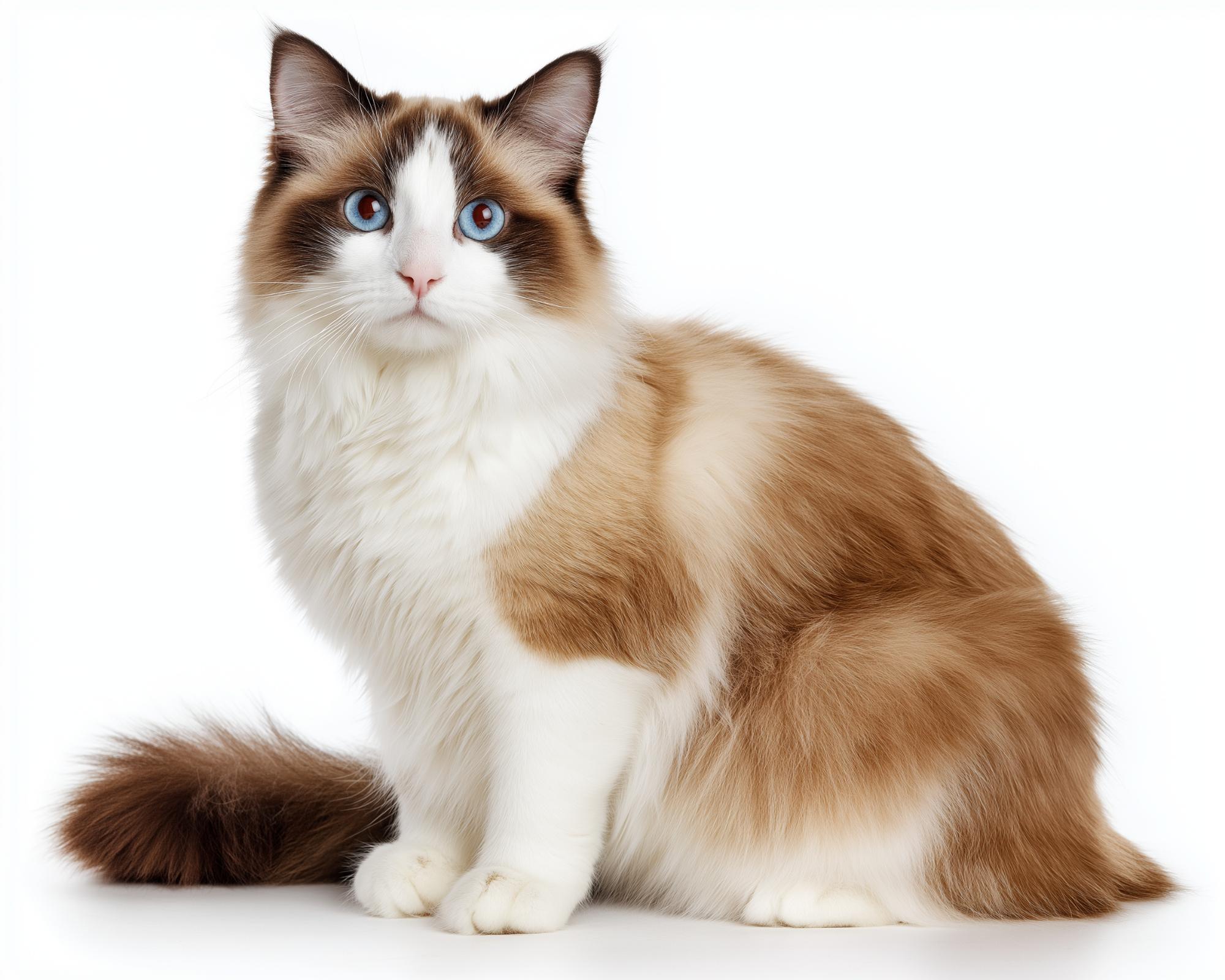
The Complete Guide to Ragdoll Cats
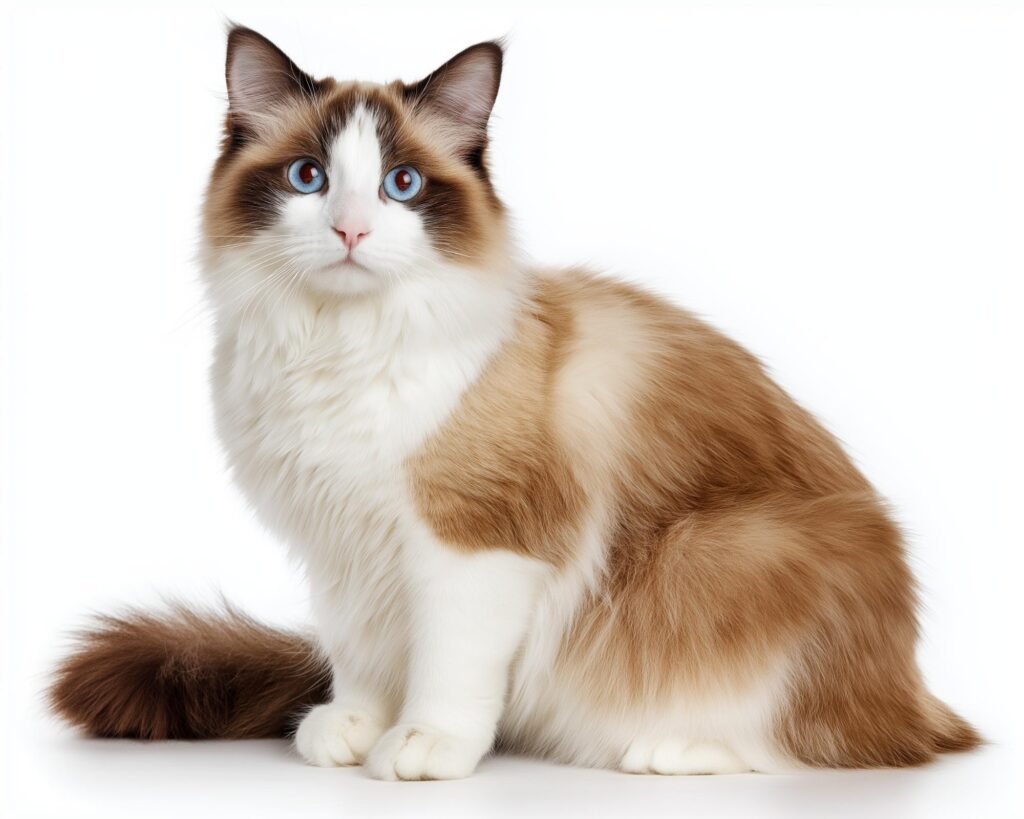
The Complete Ragdoll Cat Guide: Temperament, Size, Health, Care, Cost & Ownership
This Ragdoll cat guide provides a clear, practical overview of the breed, including temperament, size, health, care needs, and what to expect when living with a Ragdoll.
Known for their calm disposition and people-oriented nature, Ragdolls are a large, slow-maturing breed whose needs and development are often misunderstood. This guide is designed to set accurate expectations, explain how the breed was intentionally developed, and help readers decide whether a Ragdoll is the right fit for their home and lifestyle.
Ragdoll Cat Guide Summary
| Topic | Key Takeaway |
|---|---|
| Temperament | Calm, people-oriented, emotionally steady, with quiet communication rather than high reactivity |
| Size & Growth | Large-bodied breed with slow maturation; full physical development often takes 3–4 years |
| Coat & Shedding | Plush, semi-long coat that sheds seasonally; regular brushing needed but heavy matting is uncommon |
| Health & Lifespan | Generally long-lived (12–15+ years) with attention to weight, dental care, and preventative health |
| Diet & Feeding | Benefits from moisture-rich, protein-focused diets; prone to quiet weight gain if overfed |
| Grooming Needs | Moderate, consistent grooming required; routine brushing and nail care are essential |
| Behavior & Training | Highly tolerant and trainable for routines; thrives on predictability rather than constant stimulation |
| Kittens vs Adults | Kittens are active and still developing; adults offer greater temperament and size predictability |
| Cost of Ownership | Higher upfront cost with steady long-term expenses for food, vet care, and maintenance |
| Ideal Home | Best suited to calm, structured households that value presence, routine, and long-term companionship |
Who This Ragdoll Cat Guide Is For (and Who It Is Not)
This guide is for people who want clear, realistic information before choosing a Ragdoll cat. It is written for future owners who value predictability, emotional steadiness, and long-term compatibility, as well as current owners looking for deeper understanding as their cat matures.
This guide is not for impulse buyers, trend-driven shoppers, or anyone expecting a low-effort or purely decorative pet. Ragdolls are calm cats, but they are not passive.
Why Ragdolls Require More Understanding Than Marketing Suggests
Ragdolls are often described as “easy,” “floppy,” or “perfect for everyone,” but those labels strip away important context. The breed is known for calm emotional regulation rather than a lack of engagement. Affection tends to be steady and reliable instead of constant or demanding. Physical development follows a slow, intentional timeline rather than indicating delay. Their needs exist in quieter forms and still require attentive care and understanding.
When these differences are misunderstood, owners are surprised later by grooming demands, emotional sensitivity, adjustment stress, or long-term costs.
What This Guide Covers
This guide is structured as a single reference resource and covers:
- Ragdoll temperament and real-world behavior
- Size, weight, and slow growth patterns
- Coat types, colors, and shedding reality
- Health considerations, genetics, and lifespan
- Feeding, diet, and nutrition needs
- Grooming, care routines, and daily maintenance
- Emotional needs, behavior, and training capacity
- Ragdoll kittens vs adult Ragdolls
- Purchase price, lifetime cost, and ownership planning
- How to choose a responsible Ragdoll breeder
- Who a Ragdoll is right for — and who should reconsider
How to Use This Guide
This guide is written as a neutral, expert-authored reference, based on long-term observation and breeder-level experience across life stages. It is designed to connect to more detailed articles where deeper explanations are helpful.
For focused deep dives, you can also read:
- the Ragdoll temperament guide
- the Ragdoll kitten vs adult comparison
- how much does a Ragdoll cat cost?
Together, this guide and its supporting articles are intended to provide clarity before commitment and confidence over time.
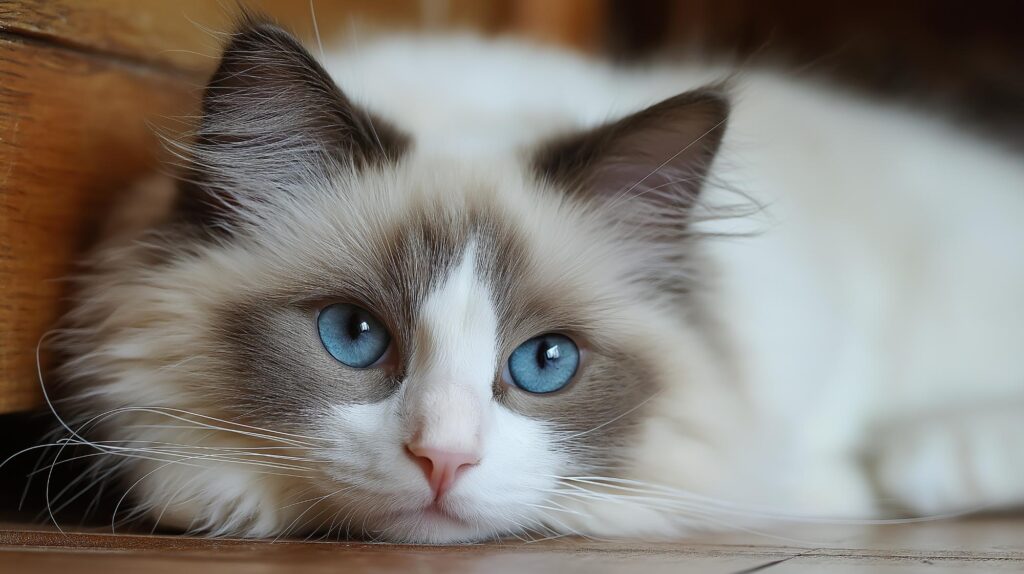
What Is a Ragdoll Cat?
Breed Origin and Purpose
Ragdolls were intentionally developed, not discovered by accident. The breed was created with a clear goal: to produce a cat with a stable, people-oriented temperament that could thrive in close contact with humans. Early breeding decisions prioritized calm emotional responses, tolerance of handling, and predictable behavior over extreme looks or high activity levels.
This temperament-first approach is what separates Ragdolls from many other longhaired cats. While random-bred longhairs can be affectionate, reactive, aloof, or high-energy depending on the individual, pedigreed Ragdolls were selected generation after generation for consistency. That predictability is the defining value of the breed.
Predictability matters because it shapes daily life. It affects how a cat responds to noise, children, handling, routine changes, and emotional stress. A Ragdoll is not guaranteed to be identical to every other Ragdoll, but the range of likely behavior is far narrower than in non-pedigreed cats.
What Makes a Ragdoll a Ragdoll
A Ragdoll is defined by a combination of temperament, structure, coat, and development, not by a single trait.
Temperament consistency is the foundation. Ragdolls are selected for calm reactions, steady attachment to people, and low reactivity rather than for independence or high drive. They tend to seek proximity over constant interaction and show stress quietly rather than dramatically.
Physically, Ragdolls are a large, solidly built breed with substantial bone, broad chests, and slow muscular development. They are not meant to look refined or delicate. Their size develops gradually and continues well beyond the first year of life.
The coat is plush and soft, often described as silky, with less tendency to mat than many dense double-coated breeds. While often mistaken for being low-maintenance, the coat still requires regular care.
Growth rate is another defining feature. Ragdolls mature slowly, both physically and emotionally. Many are not fully developed until three to four years of age, which affects size expectations, energy levels, and behavior during adolescence.
A deeper, standard-based explanation is covered in Ragdoll breed standards explained.
Common Misunderstandings About the Breed
Several persistent myths shape unrealistic expectations about Ragdolls.
“They go limp.”
Some Ragdolls relax when held, but this is not universal, guaranteed, or permanent. The behavior depends on individual comfort, handling style, and trust. Treating limpness as a requirement often leads owners to ignore boundaries.
“They’re lazy.”
Ragdolls are calm, not inactive. They play, explore, and engage, especially as kittens and young adults. What they lack is frantic or chaotic energy, not interest in their environment.
“They don’t need stimulation.”
Because Ragdolls are quiet and emotionally regulated, it is easy to assume they need less enrichment. In reality, they thrive on predictable routines, gentle play, and mental engagement. Understimulation often shows up as subtle stress, weight gain, or withdrawal rather than obvious misbehavior.
These misconceptions are addressed in detail in Ragdoll temperament myths, where expectation gaps and real-world behavior are explained more fully.
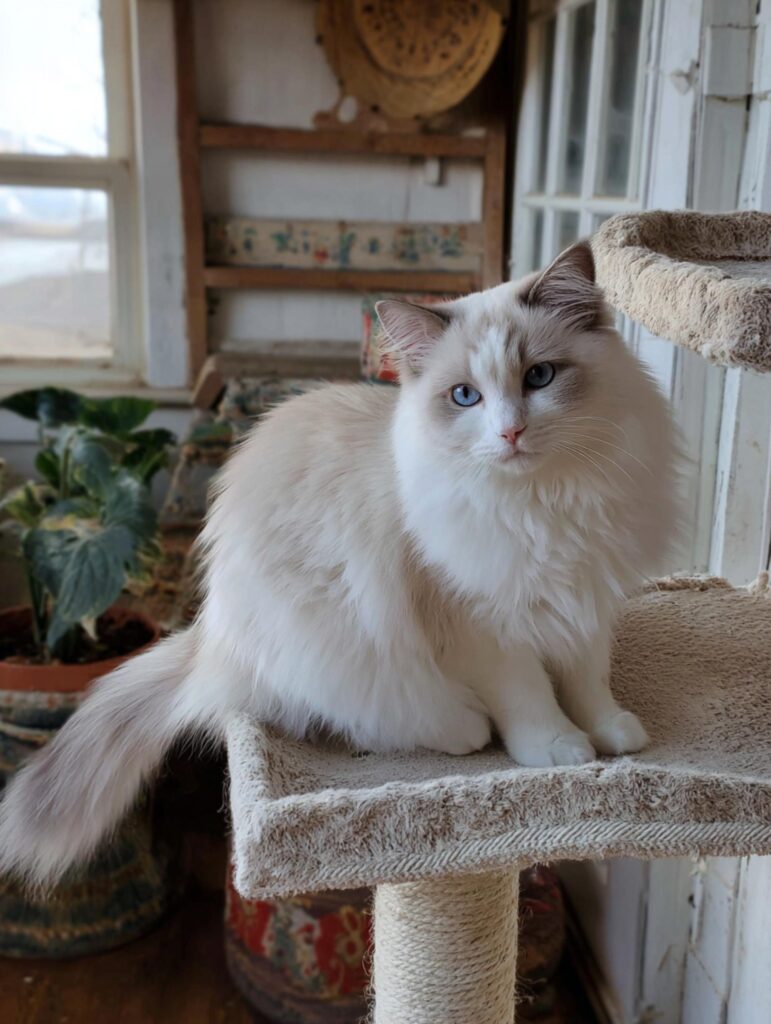
History and Origins of the Ragdoll Breed
The Ragdoll is a modern, intentionally created breed, not a naturally occurring landrace or a variation that emerged over centuries. Its history is relatively short, but unusually well documented compared to many popular cat breeds. Understanding how the Ragdoll came to exist explains why the breed behaves the way it does today and why predictability remains its defining feature.
The California Origins (1960s)
The Ragdoll breed originated in California in the early 1960s, during a period when purposeful companion-animal breeding was becoming more common in the United States. The foundation of the breed traces back to a domestic longhaired white cat named Josephine, owned by Ann Baker, a breeder with a strong interest in temperament, appearance, and control over breeding outcomes.
Josephine was not a purebred cat in the modern sense. She was a domestic longhair with distinctive traits that stood out to Baker: a notably calm demeanor, a high tolerance for handling, and kittens that displayed unusually consistent personalities. When Josephine was bred to selected males, some of her offspring showed a combination of large size, placid temperament, and affectionate behavior that Baker believed could be stabilized through selective breeding.
This point is critical. The Ragdoll did not emerge because a group of cats happened to look alike. It emerged because a breeder identified repeatable behavioral traits and deliberately chose to preserve and amplify them.
For a detailed breakdown of how the breed developed and why those early decisions still matter today, see the full post on History of the Ragdoll Cat Breed.
Temperament-First Selection
Unlike many breeds that were initially shaped around hunting ability, visual novelty, or regional adaptation, the Ragdoll was developed with companion temperament as the primary goal. Baker focused on cats that showed low reactivity, calm responses to stress, and a strong tendency to remain relaxed when handled.
These traits were not incidental. Cats that displayed nervousness, aggression, or unpredictability were excluded from breeding. Over successive generations, this created a population of cats that behaved differently from typical domestic cats, particularly in how they responded to human interaction.
This is why Ragdolls are often described as “dog-like” or unusually tolerant. That behavior is not accidental or trained into them later. It is the result of intentional behavioral selection, reinforced across generations.
Controlled Breeding and Early Identity
In the early years, breeding was tightly controlled. Baker maintained strict oversight of which cats could be bred and how the breed was represented. She was highly protective of the developing identity of the Ragdoll and emphasized consistency in both appearance and behavior.
During this phase, the breed was defined by several core characteristics:
- Large, substantial body structure
- Slow physical maturation
- Colorpoint-based patterns
- Calm, people-oriented temperament
Because the breed was still young, these traits were more fragile than they are today. Careful pairing and selection were necessary to avoid dilution of temperament or excessive variation.
Recognition and Expansion
As interest in the breed grew, Ragdolls began to spread beyond California into other parts of the United States and eventually into Europe. Over time, breeders outside Baker’s original program refined and standardized the breed, working toward recognition by major cat registries.
Unlike ancient breeds with regional roots, the Ragdoll’s expansion was intentional and rapid. Breeders were drawn to the clarity of the breed’s purpose and the strong demand for calm, affectionate companion cats.
With wider recognition came the need for clearer standards. Breed organizations established formal descriptions covering body structure, coat type, color patterns, and temperament expectations. This helped stabilize the breed and ensured that Ragdolls bred in different regions still shared the same foundational traits.
A Modern Breed With a Clear Purpose
Compared to breeds that evolved naturally over hundreds of years, the Ragdoll is young. Its modern origin is sometimes misunderstood as a weakness. In reality, it is one of the breed’s strengths.
Because the Ragdoll was created deliberately:
- Its temperament is more predictable than most domestic cats
- Its physical development follows a known pattern
- Its needs are well understood when breeding is done responsibly
The Ragdoll is not simply a large, calm cat that happened to exist. It is the result of a specific vision for a companion animal, shaped through selective breeding rather than chance.
Why the Origins Still Matter Today
Understanding the Ragdoll’s origins helps explain why mismatches occur when expectations are unclear. A cat bred for tolerance and emotional regulation will not behave like a high-drive or highly independent breed. When placed in chaotic or emotionally distant environments, the Ragdoll does not “act out.” It withdraws.
The breed’s history reminds us that Ragdolls were shaped to live with people, not around them. Their success depends on environments that respect that design.
Seen in this context, the Ragdoll’s popularity is not accidental. It reflects decades of selection aimed at creating a cat whose behavior, presence, and companionship are as intentional as its appearance.
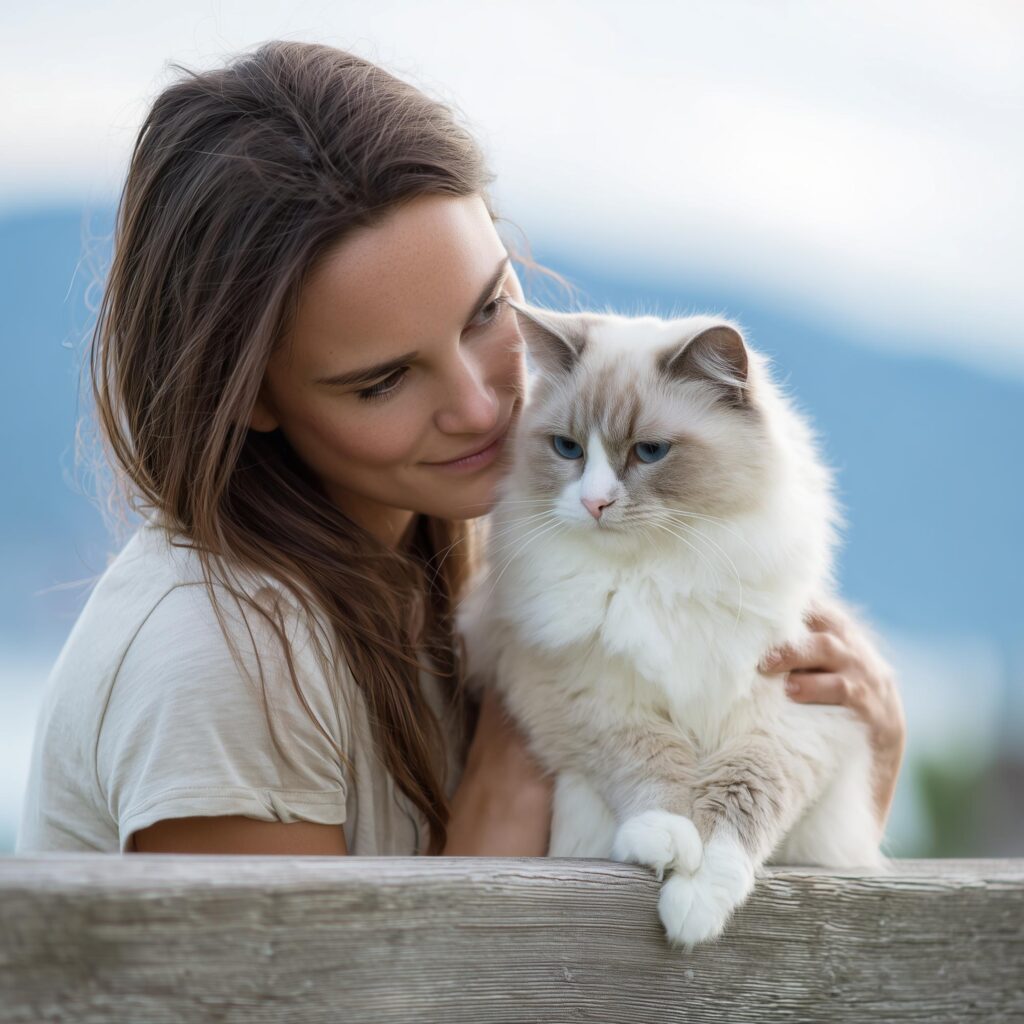
Ragdoll Temperament & Personality
Ragdoll temperament is often described in simple terms, but the reality is more nuanced. This breed is defined less by dramatic behaviors and more by how it regulates emotion, responds to people, and maintains stability across environments. Understanding these traits is essential, because most long-term satisfaction or frustration with a Ragdoll comes down to expectation alignment, not training failures.
Core Temperament Traits
Emotional regulation
Ragdolls are known for steady emotional responses. They are less likely to escalate quickly, panic easily, or react explosively to normal household stimuli. This does not mean they feel less. It means they process stress more quietly and often internalize discomfort rather than acting out. Owners who expect obvious signals sometimes miss early stress cues as a result.
Human orientation
Ragdolls are strongly people-focused. They prefer to be near their humans, track movement from room to room, and orient their behavior around household routines. This is not clinginess by default. It is a preference for shared space and predictability rather than independence.
Sensitivity vs softness
Calm does not equal resilient. Ragdolls are emotionally sensitive cats with a low tolerance for chaotic handling, unpredictable schedules, or constant disruption. They are soft in response, not weak in constitution. When overwhelmed, they withdraw rather than protest.
Predictability vs trainability
Ragdolls are predictable more than they are train-driven. They can learn routines, tolerate handling, and respond to gentle training, but they are not motivated by novelty or constant challenge. Their strength is consistency, not performance.
A more detailed behavioral breakdown is available in Ragdoll temperament explained in depth.
Affection Style and Attachment Patterns
Following behavior
Many Ragdolls follow their owners from room to room, not to demand attention, but to maintain proximity. This behavior is often misinterpreted as neediness when it is better understood as orientation and interest.
Lap vs proximity bonding
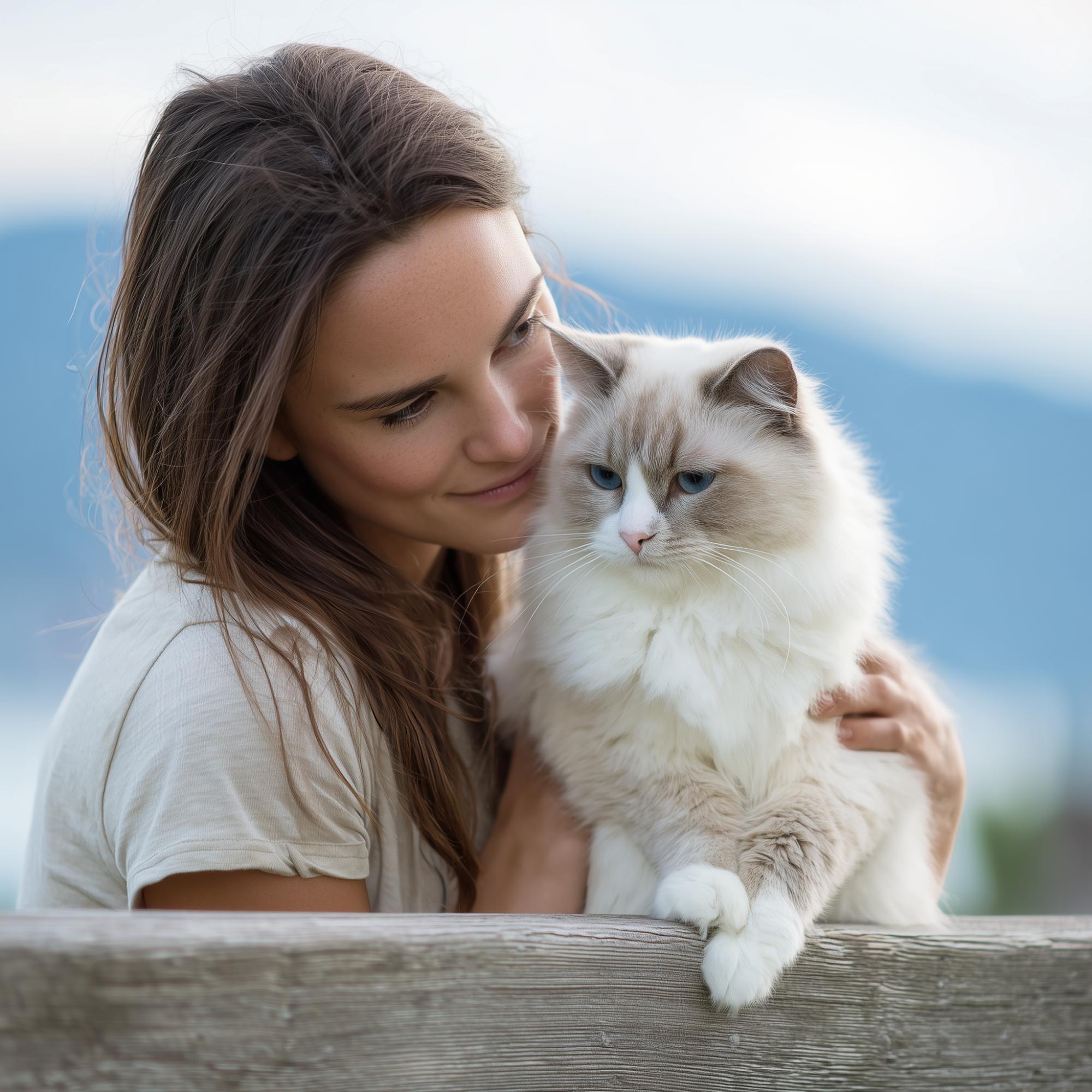
Some Ragdolls enjoy laps. Many prefer to sit beside, behind, or near their person rather than directly on them. Affection is often expressed through presence rather than physical pressure. Expecting constant lap behavior leads to unnecessary disappointment.
Eye contact and quiet communication
Ragdolls communicate subtly. Slow blinks, eye tracking, body positioning, and small posture shifts carry more meaning than vocalization or overt gestures. Owners who learn to notice these cues tend to experience a stronger bond over time.
For a deeper look at how affection shows up day to day, see How Ragdoll cats show affection.
Energy Levels Across Life Stages
Kitten chaos vs adult calm
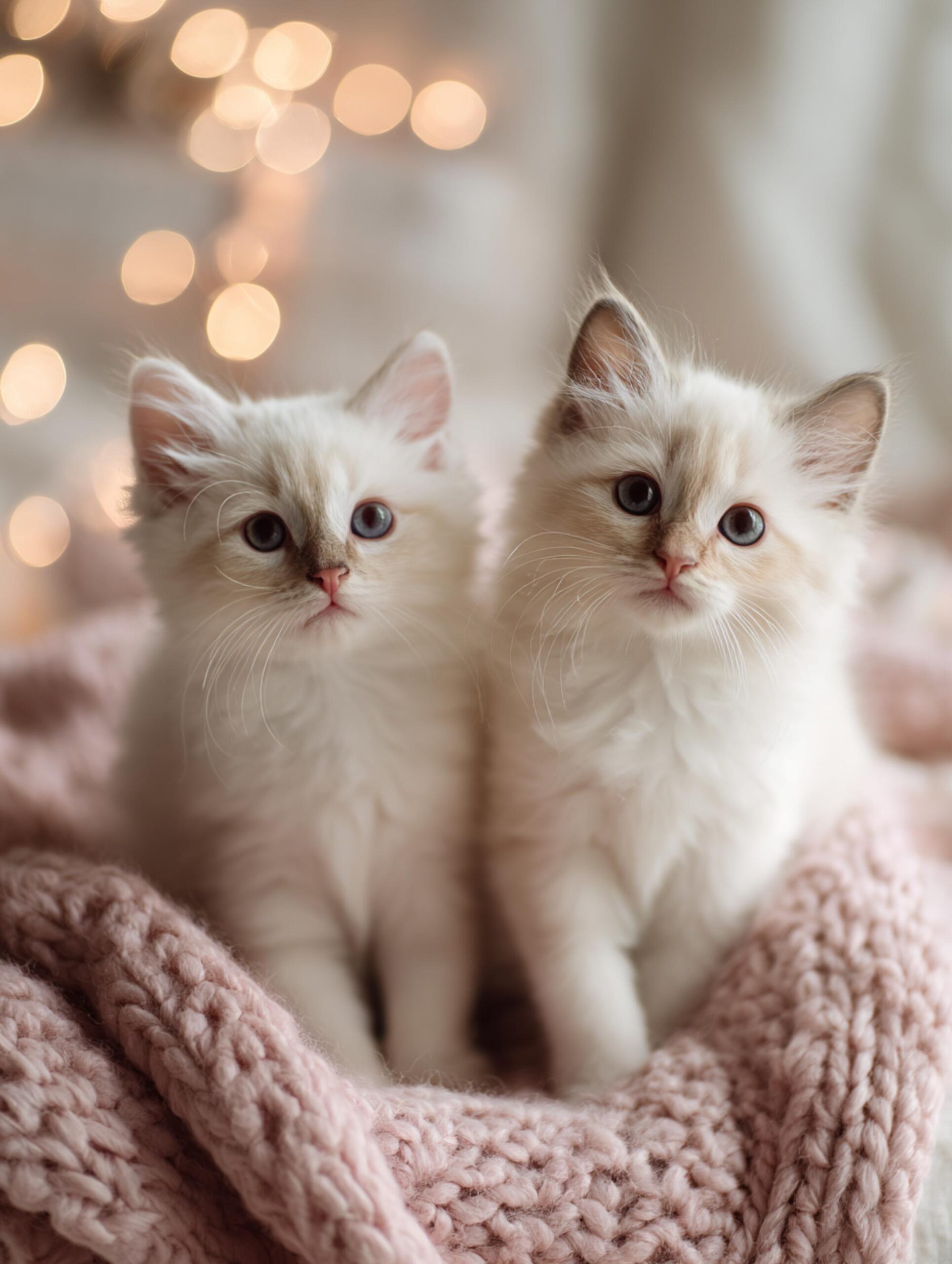
Ragdoll kittens are playful, clumsy, and energetic. This surprises many first-time owners who expected immediate calm. Like all kittens, they explore physically and test boundaries. Calm temperament does not eliminate kitten energy; it shapes how that energy expresses itself.
Why adults are misunderstood
Adult Ragdolls are often described as “boring” by people expecting constant engagement. In reality, adult Ragdolls shift from active play to ambient companionship. They prefer routines, shared space, and predictable interaction. This makes them ideal for stable households, but confusing for people who associate affection with constant motion.
A direct comparison between stages is covered in Ragdoll kitten vs adult behavior comparison.
What Ragdolls Are Not
Not fearless
Ragdolls can be cautious in new environments. Their calm response often masks uncertainty rather than eliminating it. Forcing exposure or ignoring hesitation erodes trust.
Not independent
Ragdolls do not thrive in emotionally hands-off homes. They need consistent human presence, even if interaction is low-key. Long periods of isolation often lead to subtle stress rather than obvious behavioral problems.
Not emotionally flat
Quiet does not mean unfeeling. Ragdolls experience stress, attachment, and discomfort deeply, but they express it softly. Owners who understand this tend to intervene earlier and maintain better long-term wellbeing.
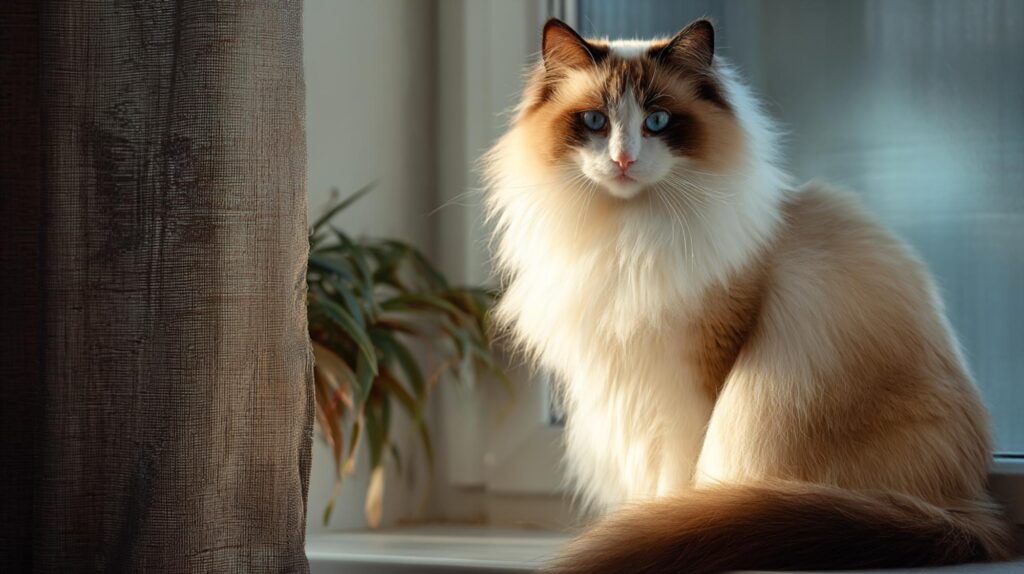
Ragdoll Size, Weight & Slow Growth Pattern
Ragdolls are one of the slowest-maturing domestic cat breeds. Size, weight, and physical presence develop gradually, and many misunderstandings about the breed come from assuming they should follow a typical one-year growth timeline. Understanding how Ragdolls grow helps owners set realistic expectations and avoid overfeeding, unnecessary concern, or premature conclusions about adult size.
Adult Size Ranges (Male vs Female)
Adult Ragdolls are a large, solidly built breed, but size varies widely depending on sex, genetics, and breeding lines.
Males typically mature larger than females, with broader chests, heavier bone, and greater overall mass. Females are usually more moderate in size but still substantial compared to most domestic cats. What matters most is structure, not the number on the scale.
Structural size refers to bone, frame, and muscle development. Obesity, by contrast, adds weight without improving strength or balance and often masks whether a cat is still growing. Because Ragdolls mature slowly, it is common for them to appear “thin” or “unfinished” during adolescence, leading owners to overfeed in an attempt to speed growth.
Line variation also plays a role. Some lines produce heavier, more substantial adults, while others mature into slightly lighter but still well-proportioned cats. This variation is normal within the breed and does not indicate quality or health on its own.
Ragdoll Growth Stages & Owner Expectations
| Age Range | Physical Development | Behavior & Energy | Owner Expectations |
|---|---|---|---|
| 0–3 months | Rapid early growth, soft structure | High curiosity, short play bursts | Frequent feeding, gentle handling |
| 3–6 months | Lanky frame, coordination improving | Playful, exploratory | Normal clumsiness, uneven growth |
| 6–12 months | Growth slows visually, frame still developing | Energy fluctuates | Avoid overfeeding, expect “awkward” stage |
| 12–24 months | Muscle and bone continue to fill out | Calmer, more predictable | Adult behavior emerging, not finished growing |
| 2–4 years | Full physical and coat maturity | Stable temperament | Final adult size and presence |
For a more detailed breakdown of expected weights and how to evaluate healthy condition, see the Ragdoll size and weight guide.
Why Ragdolls Mature Slowly
Ragdolls do not simply grow bigger than other cats. They grow for longer.
Skeletal development continues well past the first year. Bones lengthen and widen gradually, and joints strengthen over time. This extended skeletal growth is one reason Ragdolls benefit from controlled nutrition and steady exercise rather than rapid weight gain.
Muscle density develops later as well. Many young Ragdolls look soft or loosely built before muscle fills in during the second and third years. This delayed muscular development contributes to the breed’s characteristic solid feel in adulthood.
Coat maturation follows its own timeline. While kittens have plush coats, full texture, density, and length often do not appear until adulthood. Seasonal coat cycles become more pronounced as the cat matures, which can make growth appear uneven.
A deeper explanation of why this timeline exists is covered in Ragdoll growth pace explained.
Full Growth Timeline (Birth to 4 Years)
Ragdoll development occurs in distinct phases, each with different expectations.
From birth through early kittenhood, growth is rapid but proportional. Between three and six months, kittens gain coordination, strength, and confidence, often appearing lanky or unbalanced.
Adolescence, typically from six to eighteen months, is the most misleading stage. Growth slows visually, frames look incomplete, and energy levels fluctuate. Many cats are still adding bone and muscle even when their weight plateaus.
Between eighteen months and three years, adult structure becomes clearer. Muscle fills out, posture stabilizes, and overall presence increases. Coat quality also improves during this period.
Final maturity often occurs between three and four years of age. At this stage, size, muscle density, and coat have fully settled. The cat’s adult temperament usually aligns closely with its physical maturity.
For a stage-by-stage visual and weight reference, see the Ragdoll growth chart (kitten to adult).
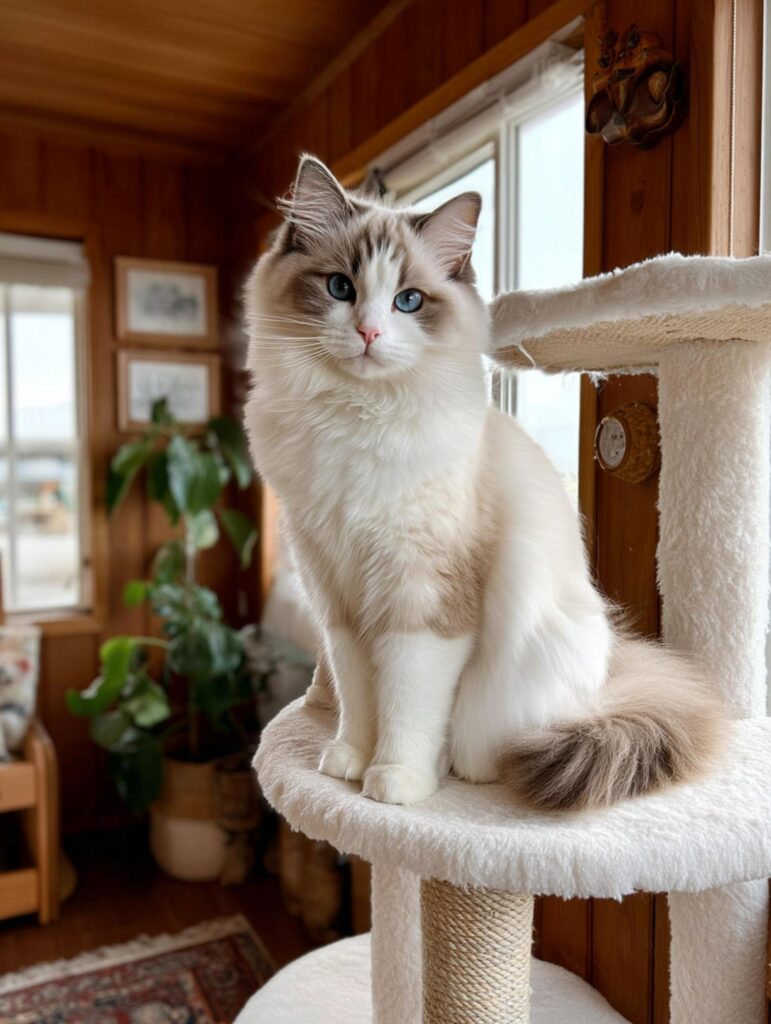
Coat Type, Color Genetics & Pattern Variations
Ragdoll appearance is often discussed in terms of beauty, but coat type and color genetics also affect grooming expectations, shedding patterns, pricing, and buyer misconceptions. Understanding how these elements work together helps separate genetic reality from marketing language.
Coat Structure and Texture
The single coat myth
Ragdolls are frequently described as having a “single coat,” which leads many people to assume they are low-shedding or low-maintenance. In reality, Ragdolls have a plush, semi-long coat with reduced undercoat density, not the absence of one entirely. This is why their fur tends to feel soft and silky rather than woolly, and why matting is often less severe than in heavily double-coated breeds.
Seasonal shedding reality
Ragdolls do shed, and shedding follows seasonal light and temperature changes more than calendar months. Coat density typically increases in colder seasons and releases during warmer months. Because shedding can be gradual rather than dramatic, owners sometimes underestimate how much grooming is needed until loose coat begins to accumulate.
A deeper breakdown of coat behavior and shedding expectations is covered in Do Ragdoll cats shed?
Patterns Explained
Ragdoll patterns are genetically defined and standardized, not stylistic labels. Each pattern affects markings and contrast, but not temperament.
Colorpoint
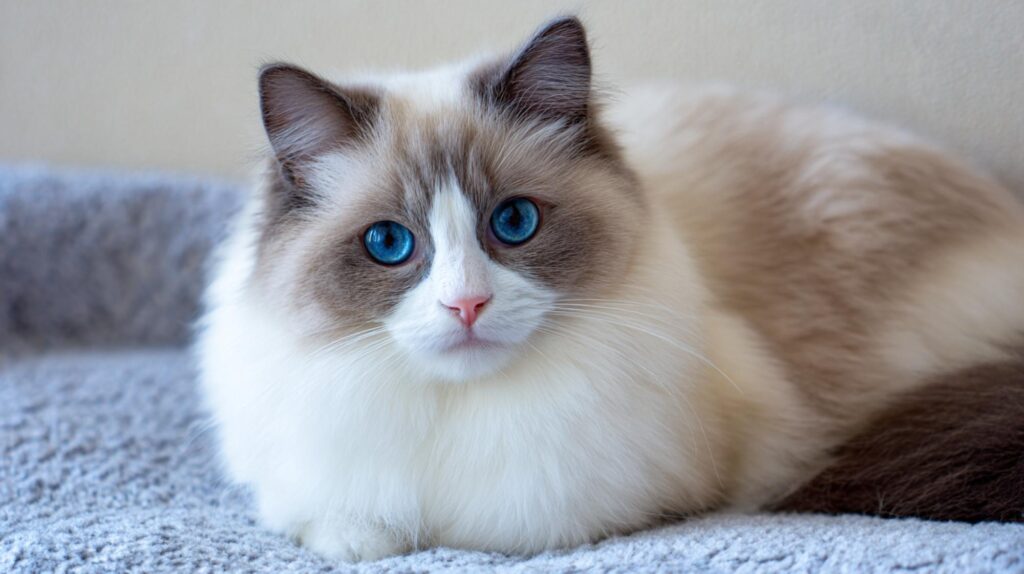
Color is concentrated on the ears, face, legs, and tail, with a lighter body. This pattern produces the classic pointed look many people associate with Ragdolls.
Mitted
Mitted Ragdolls have white paws, often with a chin and belly stripe, layered over a colorpoint base. The white is controlled and symmetrical rather than random.
Bicolor
Bicolor Ragdolls display a larger amount of white, typically including an inverted V on the face, white legs, and white underbody. Contrast between color and white is a defining feature.
Lynx
Lynx refers to tabby striping overlaid on another pattern. Lynx can appear in colorpoint, mitted, or bicolor Ragdolls and becomes more pronounced as the cat matures.
Tortie / Torbie
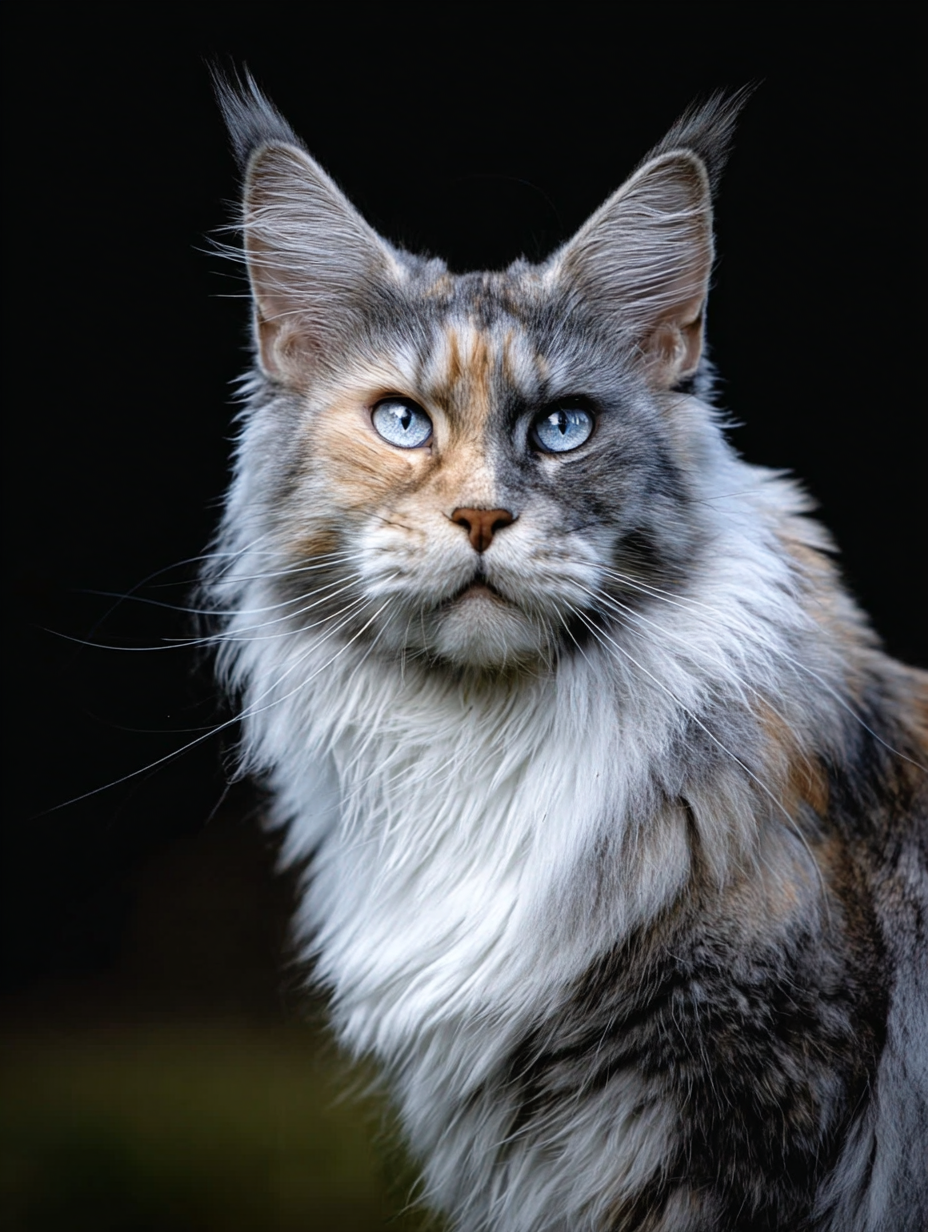
Tortie patterns combine two colors, usually red or cream with another base color. Torbie adds tabby striping to the tortie pattern. These patterns are most commonly seen in females due to genetics.
Ragdoll Coat Patterns at a Glance
| Pattern | Defining Features | Common Misconception |
|---|---|---|
| Colorpoint | Dark points with lighter body | Always darker at birth |
| Mitted | White paws with pointed body | Less shedding |
| Bicolor | Inverted V and high white | Calmer temperament |
| Lynx | Tabby striping overlay | More active personality |
| Tortie / Torbie | Two-color overlay, often female | Rarer equals better |
For a visual and genetic breakdown, see the Ragdoll color patterns guide, as well as individual posts covering seal, blue, chocolate, lilac, and other color variations.
Does Color Affect Personality or Price?
Genetics vs marketing
Color and pattern do not influence temperament. Personality is shaped by genetics related to behavior, early socialization, and environment, not coat color. Claims that certain colors are calmer, friendlier, or more affectionate are marketing narratives rather than genetic truths.
Why rare colors cost more
Pricing differences are driven by genetic rarity, breeding complexity, and demand, not superiority. Colors like chocolate and lilac require specific genetic combinations, which limits availability. Higher prices reflect scarcity and production effort rather than health or behavioral advantages.
Understanding this distinction helps buyers make decisions based on lifestyle fit and long-term care rather than perceived exclusivity.
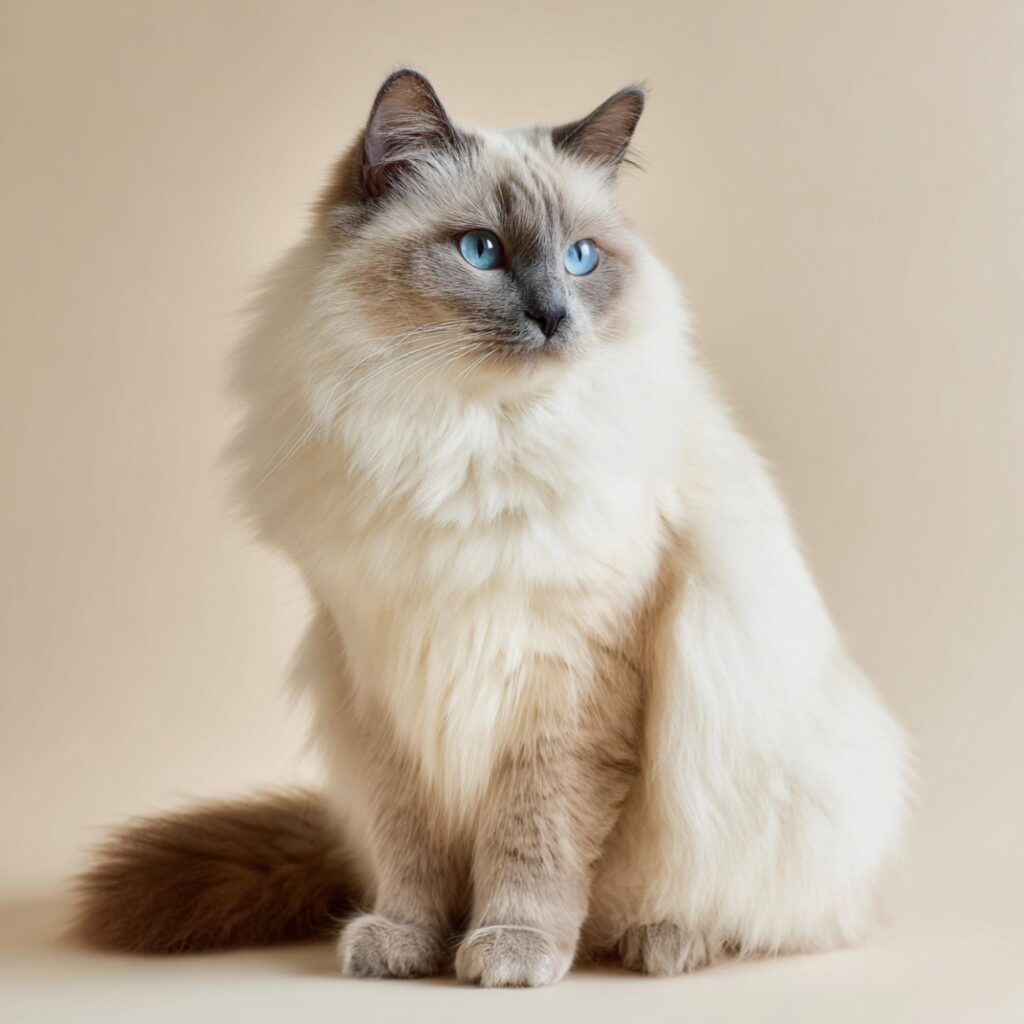
Ragdoll Health, Genetics & Lifespan
Health in Ragdoll cats is best understood through patterns over time, not isolated incidents. This breed is generally robust when well bred and well managed, but its calm temperament and slow development can mask early issues if owners rely only on obvious warning signs. A clear understanding of lifespan expectations, common vulnerabilities, and preventative strategy is essential for long-term quality of life.
Average Lifespan and Quality of Life
Most Ragdoll cats live 12–15 years, with many reaching the upper end of that range when genetics, nutrition, and routine care align. Some individuals exceed this, particularly when weight is well managed and stress is minimized throughout adulthood.
Longevity is influenced less by a single factor and more by cumulative management. Stable routines, appropriate nutrition, regular veterinary care, and early intervention when subtle changes appear all contribute to extended quality of life. Because Ragdolls are emotionally regulated and physically tolerant, they often continue functioning normally while underlying issues develop quietly.
Factors that tend to shorten lifespan include chronic obesity, unmanaged dental disease, repeated digestive stress, delayed diagnosis of cardiac conditions, and prolonged emotional stress in unstable environments. Factors that extend lifespan include controlled growth during kittenhood, consistent adult weight, preventative care, and owners who recognize small deviations from baseline behavior.
Common Health Issues in Ragdolls
Ragdolls are not uniquely fragile, but certain trends appear more frequently in the breed due to genetics, size, and temperament. Understanding these risks helps owners respond early rather than react late.
Hypertrophic cardiomyopathy (HCM)
HCM is a heart condition seen across many cat breeds, including Ragdolls. Ethical breeders screen breeding cats to reduce risk, but no test can guarantee lifetime immunity. The presence of HCM in the breed should be understood contextually rather than fearfully. Regular veterinary monitoring and awareness of subtle changes in breathing or activity are more useful than anxiety-driven assumptions.
Digestive sensitivity
Many Ragdolls show mild digestive sensitivity, particularly during periods of stress or diet change. Loose stool, transient diarrhea, or reduced appetite after transitions are common. These issues often reflect gut reactivity rather than chronic disease, but persistent symptoms warrant evaluation rather than repeated food switching.
Dental Disease trends
Dental disease is common in large, slow-maturing cats. Plaque buildup, gingivitis, and tooth resorption can progress quietly, especially in cats that continue eating normally despite discomfort. Routine dental checks are important, even when outward behavior appears unchanged.
Weight-related concerns
Ragdolls gain weight easily once growth slows, especially if free-fed or overfed during adolescence. Because they carry weight calmly, obesity often goes unnoticed until it is advanced. Maintaining a lean adult condition is one of the most impactful health decisions an owner can make.
A more detailed breakdown of health considerations and long-term outcomes is covered in the Ragdoll health and longevity guide.
Stress, Go-Home Adjustment & Immune Flare-Ups
One of the most misunderstood aspects of kitten health is timing. Many health concerns appear shortly after adoption, not because the kitten was unhealthy, but because stress temporarily suppresses the immune system.
Why issues appear after adoption
Changes in environment, routine, diet, and social structure create a stress response, even in calm breeds. In Ragdolls, this stress is often internalized rather than expressed behaviorally. Latent viruses, parasites, or mild imbalances that were previously controlled can surface during this adjustment window.
What is normal vs concerning
Short-term appetite changes, mild digestive upset, and temporary lethargy are common during the first weeks at home. Persistent symptoms, worsening diarrhea, respiratory signs, or failure to rebound after the initial adjustment period should prompt veterinary attention rather than continued observation.
Understanding this distinction prevents both panic and neglect. Owners who expect a brief adjustment period are better prepared to act appropriately if recovery stalls.
For more detail, see Ragdoll kitten adjustment period and Common kitten illnesses after adoption.
Preventative Care & Insurance
Preventative care matters more in calm breeds precisely because problems are less visible.
Why insurance matters with calm breeds
Ragdolls tolerate discomfort quietly and often continue eating, interacting, and using the litter box even when something is wrong. This can delay diagnosis and increase treatment complexity. Insurance allows owners to pursue diagnostics earlier without financial hesitation, which often leads to better outcomes.
When to enroll
The ideal time to enroll in insurance is during kittenhood, before exclusions apply and while premiums are lowest. Early enrollment protects against unexpected illness or injury and supports proactive care rather than crisis-driven decisions.
Insurance does not replace good breeding or good care, but it provides a safety net that aligns well with the Ragdoll’s tendency to mask symptoms.
A full discussion of coverage considerations is available in Pet insurance for Ragdoll cats.

Feeding, Diet & Nutritional Needs
Nutrition plays a central role in a Ragdoll’s long-term health because of the breed’s slow growth, sensitive stomachs, and tendency to mask discomfort. Feeding decisions made in kittenhood often influence adult weight, digestive stability, and energy levels years later. The goal is not maximal growth or convenience, but steady development and metabolic balance.
Ideal Diet for Ragdolls
Moisture needs
Ragdolls, like many cats, have a low natural thirst drive. Their calm demeanor can further reduce spontaneous water intake. Diets with adequate moisture help support kidney health, digestion, and overall hydration. Cats consuming primarily dry food often exist in a state of mild dehydration, even when water is available.
Protein requirements
As a large-bodied breed, Ragdolls require high-quality animal protein to support muscle development and maintenance. Protein supports lean body mass during the extended growth phase and helps prevent the soft, under-muscled condition sometimes mistaken for “normal” in young adults.
Why dry-only diets cause issues
Dry-only feeding is convenient, but it often contributes to several common problems in Ragdolls, including weight gain, constipation, urinary concentration issues, and dull coat texture. Because Ragdolls eat calmly and steadily, it is easy to overfeed calorie-dense dry food without noticing gradual changes in body condition.
A detailed breakdown of appropriate food types, moisture balance, and ingredient considerations is available in Best diet for Ragdoll cats.
Feeding by Life Stage
Kittens
Ragdoll kittens grow for longer than most cats and benefit from frequent, nutrient-dense meals. During early growth, appetite fluctuates alongside developmental spurts. Consistent feeding schedules and gradual adjustments support steady skeletal and muscle development without encouraging excessive weight gain.
Adults
Once growth slows, calorie needs decrease even though size remains large. Adult Ragdolls often maintain weight easily, which makes portion control important. Diets should support muscle tone and digestive stability rather than continued growth.
Seniors
As Ragdolls age, activity levels may decrease while digestion becomes more sensitive. Senior diets should prioritize digestibility, hydration, and dental comfort while avoiding unnecessary calorie density. Subtle changes in appetite or weight should be monitored closely, as seniors may not show overt signs of discomfort.
Ragdoll Feeding Priorities by Life Stage Summary
| Life Stage | Primary Nutrition Focus | Common Risk | Owner Priority |
|---|---|---|---|
| Kitten | Growth support, hydration | Overfeeding during slow growth | Frequent meals, gradual changes |
| Adult | Muscle maintenance, weight control | Quiet weight gain | Portion control, wet food base |
| Senior | Digestibility, hydration | Reduced appetite, dental issues | Monitor intake, adjust texture |
Common Feeding Mistakes
Overfeeding
Because Ragdolls are calm and tolerant, weight gain often happens gradually and quietly. Overfeeding during adolescence is especially common, as owners misinterpret the slow growth phase as a need for more calories rather than more time.
Rapid transitions
Sudden food changes frequently cause digestive upset in Ragdolls. Loose stool, reduced appetite, or vomiting often reflect transition stress rather than food intolerance. Gradual changes allow the digestive system to adapt without unnecessary disruption.
Free feeding
Leaving food available at all times makes it difficult to assess intake and often leads to overeating once growth slows. Structured feeding supports healthier weight management and makes early appetite changes easier to detect.
These pitfalls, and how to avoid them, are explained in more detail in Ragdoll feeding mistakes to avoid.
Grooming, Shedding & Coat Maintenance
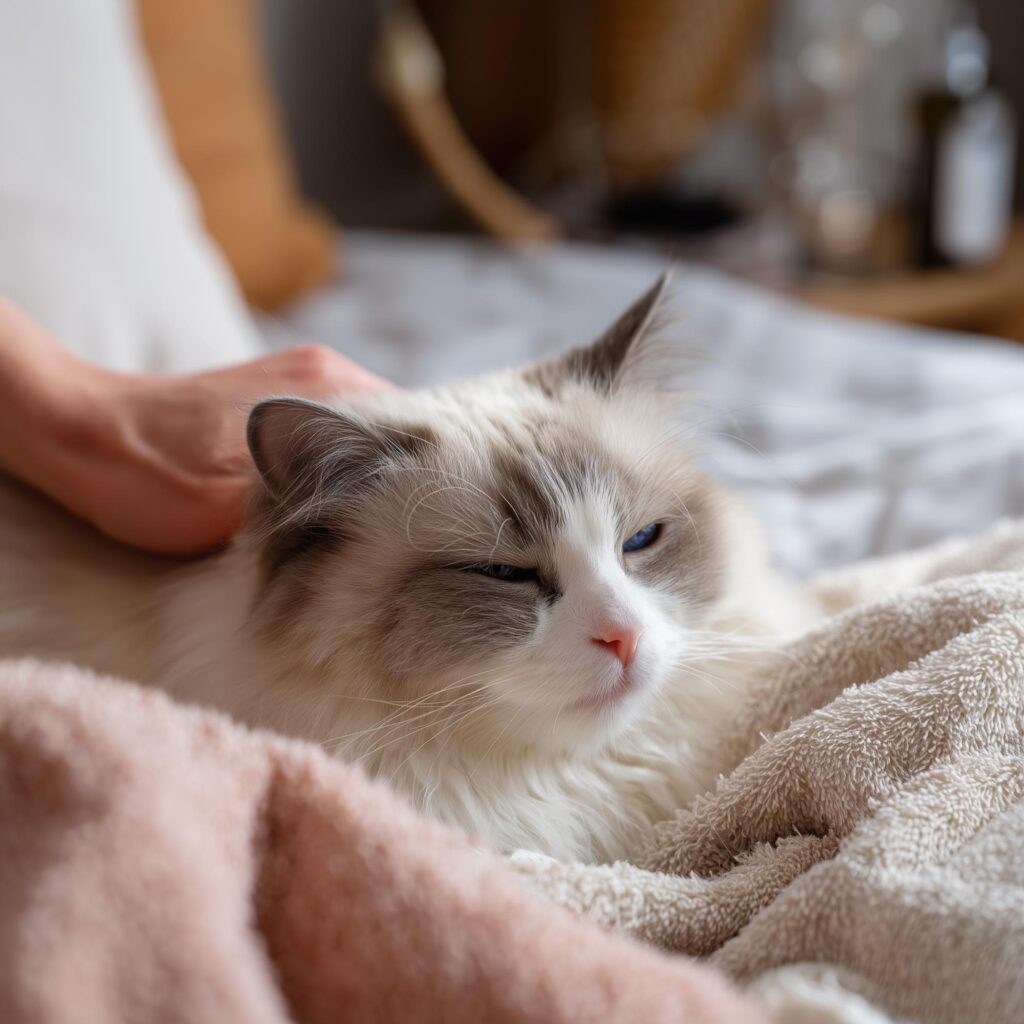
Ragdoll grooming is often underestimated because the breed lacks the heavy, woolly undercoat seen in some longhaired cats. This leads to the assumption that grooming is optional or minimal. In reality, Ragdolls benefit from consistent, low-stress grooming routines that support coat health, skin condition, and early detection of issues that might otherwise go unnoticed.
Grooming Routine by Coat Density
Brushing schedules
Ragdoll coats vary in density depending on genetics, age, and season. Some adults carry lighter, silkier coats that resist matting, while others develop fuller coats that require more frequent attention. As a baseline, most Ragdolls benefit from brushing two to three times per week. During seasonal shedding periods, daily light brushing may be appropriate.
Regular brushing serves multiple purposes. It removes loose hair before it tangles, distributes natural oils through the coat, and provides an opportunity to check skin condition and body weight. Because Ragdolls tolerate handling well, grooming sessions can be calm and brief rather than prolonged or forceful.
Mat prevention
While Ragdolls are less prone to severe matting than many longhaired breeds, mats can still form in friction areas such as behind the ears, under the arms, along the belly, and at the base of the tail. Mats often develop slowly and silently, especially in cats that do not object to touch. Owners may not notice them until they are well established.
Preventing mats is easier than removing them. Short, regular grooming sessions focused on high-risk areas are more effective than infrequent full grooming attempts. Mats that are allowed to tighten can pull on the skin, cause discomfort, and lead to avoidance of handling over time.
Bathing, Nails & Hygiene
What’s actually necessary
Routine bathing is not required for most Ragdolls. Their coats naturally repel dirt, and overbathing can dry the skin and disrupt coat texture. Baths may be useful in specific situations such as heavy shedding periods, accidental soiling, or medical needs, but they are not part of standard care.
Nail trimming, however, is necessary. Ragdolls often tolerate nail trims well, but because they are less active climbers than some breeds, nails may not wear down naturally. Regular trimming helps prevent snagging, overgrowth, and accidental scratches during handling.
Basic hygiene checks, including ears, eyes, and teeth, should be part of routine care. Because Ragdolls often continue behaving normally despite discomfort, these quiet checks are important for catching early issues.
What’s optional
Professional grooming, specialty products, and cosmetic trimming are optional rather than required. Some owners choose professional grooming during heavy shedding seasons or before major events, but this is a convenience choice rather than a necessity.
The key is consistency, not intensity. Calm, predictable grooming routines support trust and long-term coat health far more effectively than sporadic deep grooming sessions.
A more detailed breakdown of grooming tools, shedding patterns, and maintenance expectations is available in the Ragdoll grooming and shedding guide.
Behavior, Training & Emotional Wellbeing
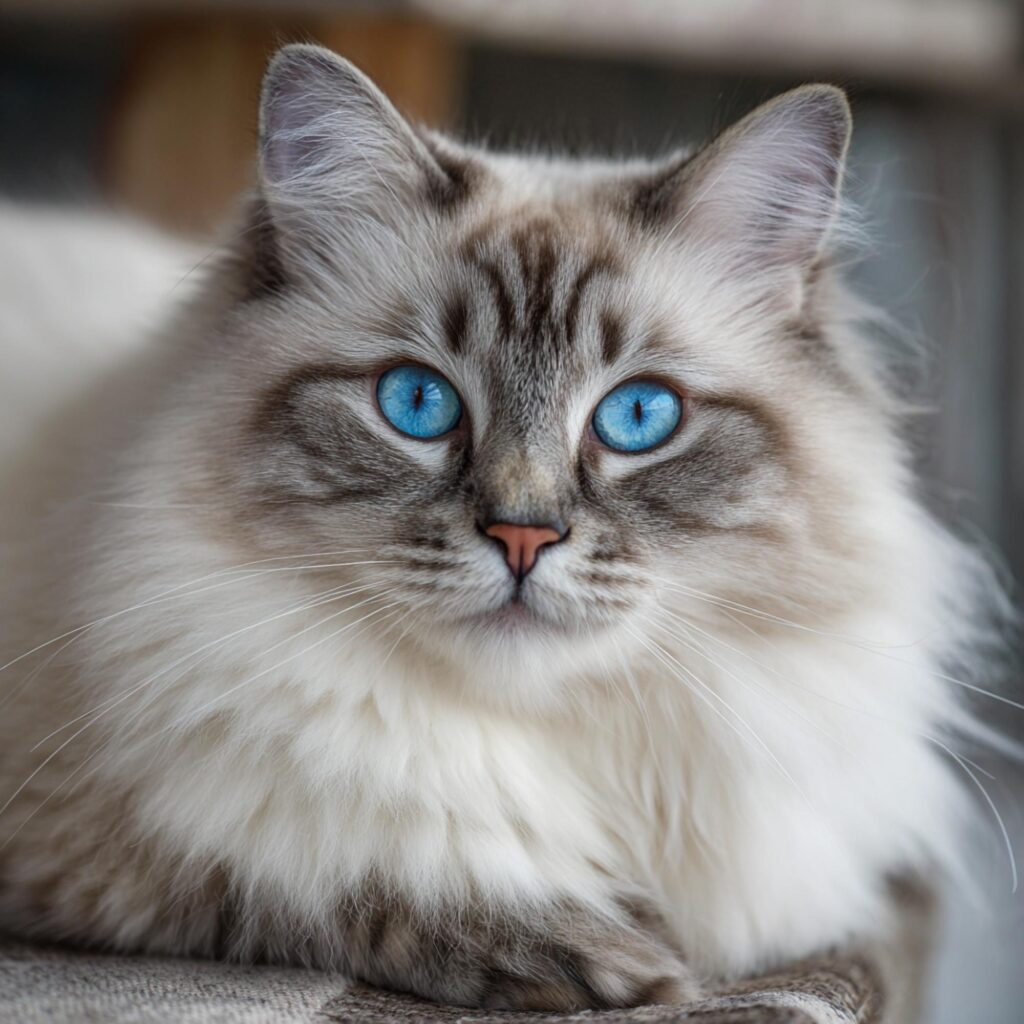
Ragdoll behavior is best understood through the lens of emotional sensitivity combined with outward calm. This combination makes them highly adaptable in stable environments and quietly stressed in chaotic ones. Training and behavioral support should focus on predictability, trust, and respect for subtle signals rather than correction or force.
Can Ragdolls Be Trained?
Litter habits
Ragdolls are generally reliable with litter box use when the environment is clean, predictable, and appropriately sized. Issues that arise are more often related to stress, box placement, or cleanliness than defiance or confusion. Because Ragdolls dislike disruption, changes to litter type or location should be introduced gradually.
Handling tolerance
One of the breed’s defining traits is handling tolerance. Ragdolls often accept being picked up, examined, and groomed without protest. This tolerance should not be mistaken for consent. Gentle handling, clear cues, and respecting moments of withdrawal help preserve trust over time.
Clicker training
Ragdolls can respond well to clicker training and positive reinforcement, particularly for routine behaviors such as coming when called, entering carriers, or participating calmly in care routines. Their motivation is usually comfort and predictability rather than novelty or challenge, so training sessions should be short and low-pressure.
Emotional Sensitivity and Stress Signals
Quiet discomfort
Ragdolls rarely display dramatic stress behaviors. Instead, discomfort often appears as subtle changes: decreased engagement, altered sleep patterns, reduced appetite, or quiet withdrawal. Because these signs are easy to miss, owners who rely only on overt behaviors may overlook early stress.
Behavioral masking
The breed’s calm demeanor can mask pain or emotional strain. A Ragdoll may continue using the litter box, eating meals, and interacting normally even while something is wrong. This makes attentive observation of baseline behavior especially important.
A detailed explanation of subtle stress signals and how to recognize them is covered in How Ragdolls show discomfort.
Preventing Behavior Problems
Routine
Ragdolls thrive on predictable schedules. Feeding times, play periods, and rest routines provide a sense of security that reduces stress-related behaviors. Frequent, unnecessary changes often lead to withdrawal rather than misbehavior.
Environmental stability
Stable environments support emotional regulation. Loud, chaotic households or frequent rearrangement of space can create ongoing low-grade stress. Providing consistent resting spots, vertical space, and quiet areas helps Ragdolls self-regulate.
Respecting boundaries
Because Ragdolls tolerate handling, boundaries are often unintentionally crossed. Respecting subtle signals such as turning away, stiffening, or disengaging prevents long-term avoidance and preserves trust. Emotional wellbeing is maintained through cooperation, not endurance.
Ragdoll Kittens vs Adult Ragdolls
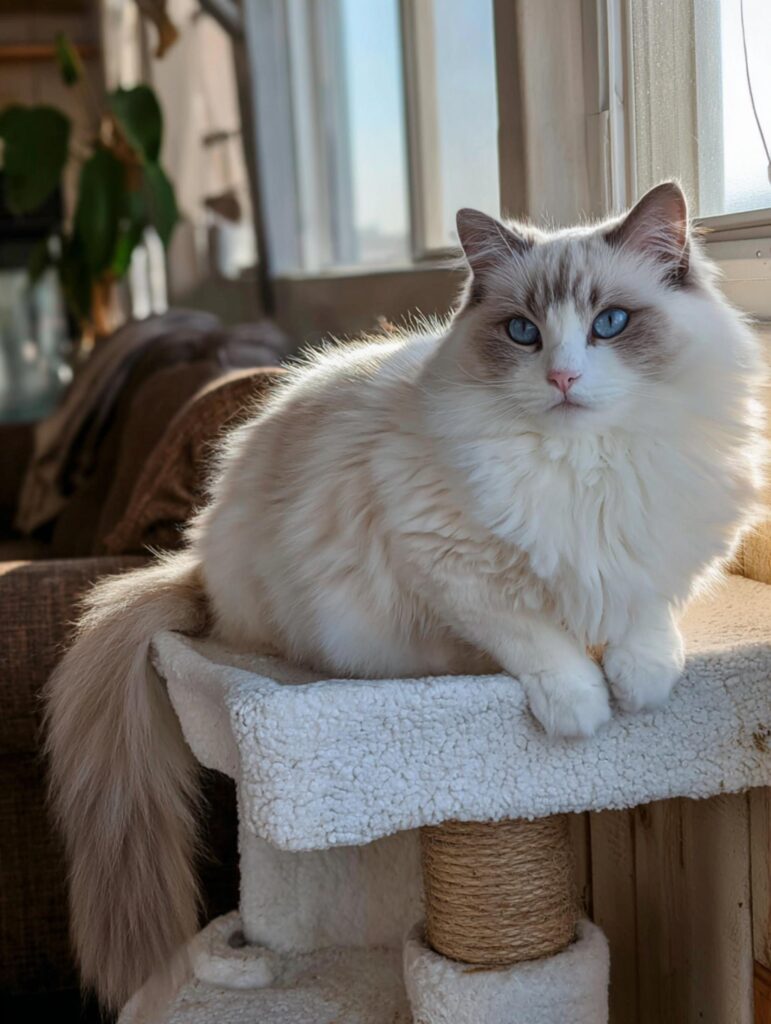
Choosing between a Ragdoll kitten and an adult Ragdoll is less about preference and more about predictability, lifestyle fit, and timing. While kittens attract attention because of their novelty and appearance, adult Ragdolls often provide greater clarity in temperament, size, and daily needs. Understanding these differences helps buyers make decisions based on compatibility rather than impulse.
Temperament Predictability
Kittens
Ragdoll kittens are playful, curious, and physically active. At this stage, temperament is still forming and influenced by development, environment, and learning. While early personality traits can be observed, behaviors such as confidence, energy level, and social preferences continue to shift throughout adolescence.
Kittens also experience developmental phases that temporarily exaggerate behavior. Periods of high activity, boundary testing, or emotional sensitivity are normal and do not reliably predict adult temperament. Buyers who expect a kitten to behave like a finished adult are often surprised by this transition period.
Adults
Adult Ragdolls offer significantly greater predictability. By adulthood, core temperament traits are established and stable. Energy levels are more consistent, preferences for interaction are clearer, and emotional responses are easier to interpret. What you see is much closer to what you will live with long term.
For households that value calm presence, routine, and clarity, adult Ragdolls often provide a smoother integration. Their behavior reflects the breed’s true temperament more accurately than kitten behavior does.
Cost Differences
Upfront costs
Kittens typically come with a higher initial price due to demand, extended care before placement, and the cost of early veterinary work. Buyers are often paying for potential rather than certainty.
Adult Ragdolls may be priced similarly or lower depending on age, placement context, and whether the cat is being rehomed or retired from a breeding program. The initial cost difference does not necessarily reflect quality or health.
Long-term costs
Kittens require multiple veterinary visits, vaccinations, spay or neuter surgery, and early-life supplies. Their higher activity level can also result in more frequent replacement of toys and enrichment items.
Adults often come with completed medical procedures and established routines, making long-term costs more predictable. Their calmer energy level may also reduce incidental expenses related to damage or overconsumption.
Adjustment Expectations
Kittens
Kittens adapt quickly in some ways but are more sensitive in others. They require supervision, frequent interaction, and patience during the adjustment period. Changes in routine, diet, and environment can lead to digestive upset or stress-related behaviors that resolve with time and consistency.
Because kittens are still learning how to regulate emotion, their adjustment may involve trial and error as they explore boundaries and develop confidence.
Adults
Adult Ragdolls typically adjust more quietly and deliberately. They may take longer to fully settle, but their responses are steadier and less chaotic. Once trust is established, adults often integrate deeply into household routines.
Adults are also more likely to communicate discomfort subtly rather than through overt misbehavior. This makes observation and respect for boundaries especially important during the transition period.
For a deeper comparison of lifestyle fit, cost considerations, and behavioral differences, see Adult Ragdoll cats vs kittens. And Ragdoll Cat Senior Care.
Cost of Owning a Ragdoll Cat (Lifetime View)
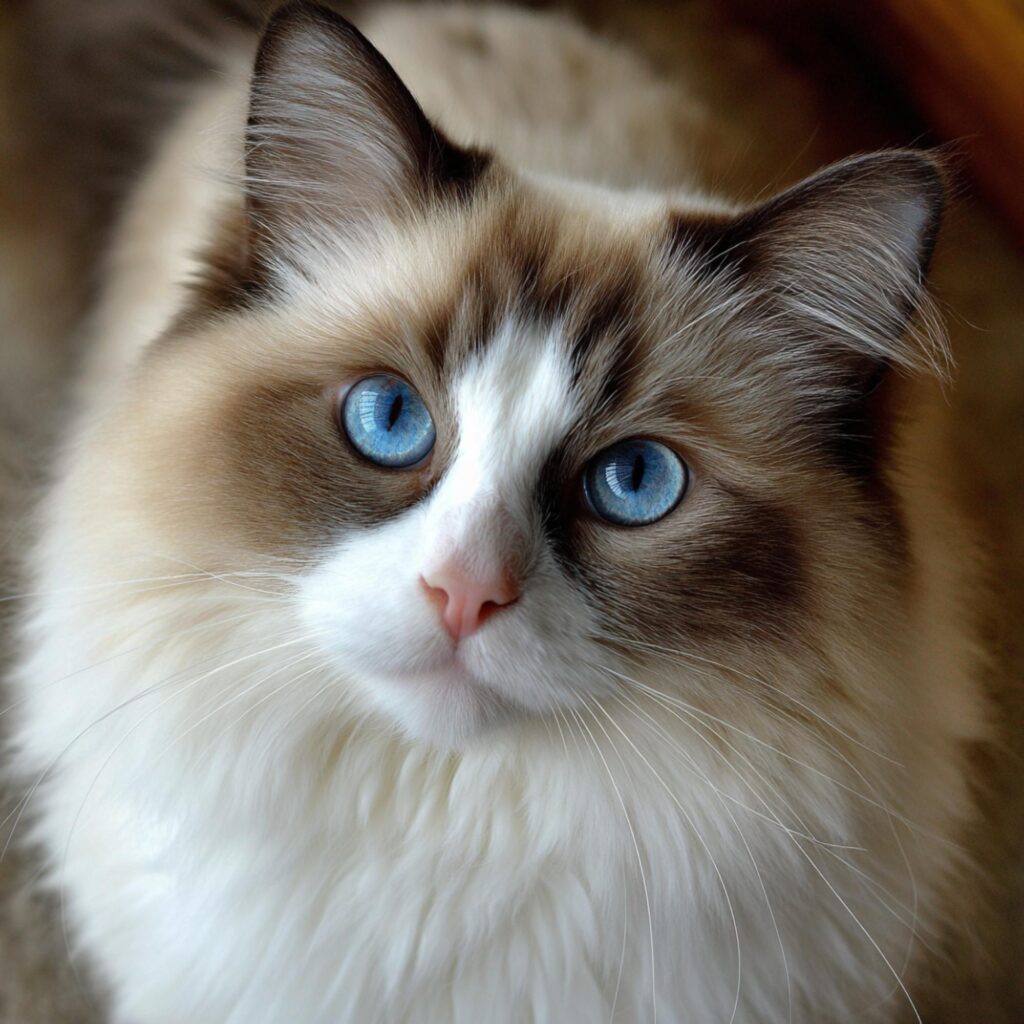
The cost of a Ragdoll cat is best understood as a long-term commitment, not a one-time purchase. While the initial price often gets the most attention, ongoing care, preventative health decisions, and lifestyle alignment have a much greater impact on total cost over the cat’s lifetime. Planning with a realistic view prevents financial strain and improves long-term outcomes for both cat and owner.
Purchase Price Ranges
Why prices vary
Ragdoll prices vary widely due to factors that go beyond appearance. Ethical breeding involves health testing, controlled pairings, early socialization, veterinary care, and long-term breeder responsibility. These investments are reflected in price.
Differences in price may also reflect lineage, breeding goals, placement type, and regional demand. Companion placements, breeding or show prospects, and retired adults often fall into different pricing categories. Higher prices do not guarantee perfection, but extremely low prices almost always signal corners being cut.
Red flags in cheap listings
Listings that emphasize availability, discounts, or urgency often lack transparency about health testing, parentage, or after-sale support. Vague descriptions, refusal to answer detailed questions, lack of contracts, or pressure to pay quickly are common warning signs.
Cheap upfront pricing frequently shifts cost later through veterinary bills, behavioral support, or emotional stress when expectations are not met. A realistic purchase price reflects preparation, not profit alone.
A detailed breakdown of current pricing trends and what they include is covered in How much does a Ragdoll cat cost?
Ongoing Monthly and Annual Costs
Food and nutrition
High-quality diets appropriate for a large-bodied, slow-maturing cat are an ongoing expense. Costs vary depending on food type, portion control, and whether wet food forms the dietary foundation. Nutrition decisions directly influence weight management, digestion, and long-term health costs.
Veterinary care
Routine veterinary visits, vaccinations, parasite prevention, and dental care are predictable annual expenses. Because Ragdolls mask discomfort well, preventative diagnostics may be recommended more often than reactive care, especially as the cat ages.
Grooming and maintenance
While Ragdolls do not require professional grooming by default, tools, brushes, nail care, and occasional professional services may be part of annual care. Grooming-related costs are generally moderate but consistent.
Insurance and unexpected care
Insurance premiums are an optional but increasingly common expense. Coverage helps offset the cost of diagnostics, treatment, or emergency care that might otherwise be delayed. Calm breeds benefit particularly from this safety net due to their subtle symptom presentation.
Supplies and enrichment
Litter, scratching posts, beds, toys, and environmental enrichment contribute to quality of life and require periodic replacement. While not excessive, these costs accumulate steadily over time.
Lifetime Cost Projection
Over a 12–15 year lifespan, the total cost of owning a Ragdoll cat often reaches several tens of thousands of dollars, depending on health, diet choices, insurance use, and veterinary needs. The most significant expenses tend to occur gradually rather than suddenly, which can create a false sense of affordability early on.
Owners who plan for long-term care rather than minimum survival costs are better equipped to make calm decisions when needs change. Budgeting for quality food, routine care, and occasional medical intervention supports both longevity and daily comfort.
Choosing a Responsible Ragdoll Breeder
Selecting a breeder is one of the most important decisions in the ownership process. A responsible breeder influences not only the health of the cat, but also temperament stability, early development, and the level of support available throughout the cat’s life. Ethical breeding is intentional, limited, and accountable.
Ethical breeders evaluate temperament, structure, and placement differently than general breed descriptions. For insight into how breeders assess Ragdolls in practice, see Ragdoll cats explained by a breeder.
What Ethical Breeders Do Differently
Ethical breeders prioritize temperament, health, and placement quality over volume or speed. They plan litters carefully, health test breeding cats, and limit production to what they can responsibly support.
They raise kittens in clean, enriched environments with appropriate human interaction and gradual exposure to household routines. Ethical breeders track development, communicate openly, and remain available after placement to answer questions or provide guidance.
Importantly, responsible breeders are selective. They may decline placements that are not a good fit, even when there is demand. This selectivity protects both the cat and the buyer. See Ragdoll Breeder Waitlists and Deposits Explained
Questions Buyers Should Ask
Buyers should feel comfortable asking detailed questions and expect thoughtful answers. Good questions include inquiries about health testing, breeding goals, kitten socialization, and how breeders handle issues that arise after placement.
Asking how a breeder defines correct Ragdoll temperament, how they support owners during adjustment periods, and what happens if placement fails reveals priorities and accountability. Ethical breeders welcome these questions because they reflect informed ownership rather than suspicion.
Red Flags and Scam Warning Signs
Warning signs include constant availability, lack of health documentation, refusal to provide contracts, and pressure to commit without discussion. Poor communication, inconsistent answers, or dismissive responses to health or temperament questions should raise concern.
Scams often rely on urgency, emotional manipulation, or unusually low pricing. Ethical breeders focus on fit and preparation rather than speed.
For step-by-step guidance on evaluating breeders, see How to choose a Ragdoll breeder and Ragdoll breeder guarantees explained.

Is a Ragdoll Cat Right for You?
Ragdolls are often recommended broadly because they are calm, tolerant, and people-oriented. That reputation is accurate, but incomplete. This breed thrives in specific environments and quietly struggles in others. Determining whether a Ragdoll is right for you is less about experience level and more about lifestyle alignment, expectations, and consistency.
This section is meant to function as a self-selection filter. A good match leads to an easy, deeply bonded relationship. A poor match often results in subtle stress, unmet needs, and disappointment that is misinterpreted as “personality issues.”
Ideal Homes for a Ragdoll Cat
Ragdolls do best in homes that value predictability and presence. They thrive with owners who are emotionally available, even if interaction is low-key. Shared space matters more than constant play or stimulation.
Homes with stable routines are especially well suited. Consistent feeding times, regular human schedules, and predictable environments help Ragdolls regulate emotionally. This makes them excellent companions for remote workers, retirees, families with established routines, or households where someone is home most days.
Ragdolls are also well suited to calm families with respectful children. Their tolerance for handling and low reactivity allow them to coexist comfortably when interactions are gentle and supervised. They often integrate well with other pets when introductions are slow and structured.
Owners who appreciate quiet companionship tend to find Ragdolls deeply rewarding. These cats may not demand attention, but they notice absence, disruption, and inconsistency. In return for stability, they offer steady affection and a strong sense of presence.
Homes That May Struggle With a Ragdoll
Highly chaotic households often struggle with this breed. Frequent schedule changes, loud environments, or unpredictable handling can create ongoing low-grade stress that Ragdolls express through withdrawal rather than obvious behavior problems.
Homes where the cat is expected to entertain itself for long periods may also find challenges. Ragdolls are not independent cats. Extended isolation or minimal daily interaction can lead to emotional disengagement that is easy to miss but difficult to reverse.
Very busy lifestyles with long work hours, frequent travel, or rotating caregivers may not be ideal unless additional support is in place. While Ragdolls tolerate change outwardly, repeated disruptions erode their sense of security over time.
Common Lifestyle Mismatches
Ragdolls are not a good fit for people seeking a highly active or novelty-driven pet. They do not thrive on constant stimulation, trick training, or high-energy play. Owners who interpret calm behavior as boredom may unintentionally overstimulate them.
They are also not ideal for those who prefer a hands-off pet relationship. While Ragdolls are not demanding, they require emotional awareness. Ignoring subtle signals or assuming silence equals contentment often leads to long-term stress.
First-time cat owners can succeed with Ragdolls, but only when expectations are realistic. This breed does not “train itself,” nor does it adapt effortlessly to every environment. Success comes from understanding the cat’s temperament rather than relying on reputation alone.
See: Who Should Not Get a Ragdoll Cat?
Making the Decision Honestly
Choosing a Ragdoll cat should be a deliberate decision grounded in lifestyle fit rather than aesthetics or trend. When placed in the right environment, Ragdolls are stable, affectionate, and deeply bonded companions. When mismatched, they become quiet reminders that temperament requires context to thrive.
If your home values routine, calm presence, and long-term commitment, a Ragdoll may be an excellent match. If your lifestyle is unpredictable, highly social, or constantly changing, another breed or life stage may suit you better.
Is a Ragdoll Cat Right for You?
Frequently Asked Questions About Ragdoll Cats
1. Do Ragdoll cats really like to be held?
Some Ragdolls tolerate being held well, but this should not be interpreted as a universal or permanent preference. The breed is known for handling tolerance, not guaranteed enjoyment of restraint. Many Ragdolls will relax when picked up briefly, especially if trust is established and handling is calm. Others prefer to remain close without being lifted.
What matters most is how they are held and when. Forcing prolonged holding, lifting without warning, or ignoring subtle resistance can erode trust over time. A Ragdoll that allows handling today may avoid it tomorrow if boundaries are repeatedly crossed. Respectful handling preserves tolerance far better than testing it. Do Ragdoll Cats Like to be Held?
2. Are Ragdoll cats good for first-time cat owners?
Ragdolls can be excellent for first-time cat owners when expectations are realistic. Their calm temperament, low reactivity, and tolerance for routine make them easier to live with than many high-energy or highly independent breeds.
However, they are not “automatic” cats. First-time owners who assume the breed requires little engagement or observation may struggle. Ragdolls communicate discomfort quietly, so success depends on attentiveness rather than experience. Owners who are observant, consistent, and willing to learn tend to do very well, regardless of prior cat ownership. Are Ragdoll Cats Good for First-time Cat Owners?
3. Are Ragdoll cats hypoallergenic?
No cat breed is truly hypoallergenic, and Ragdolls are no exception. While some individuals may produce lower levels of allergens or shed in ways that feel more manageable, this varies by cat and environment, not breed guarantees.
Allergic reactions are typically caused by proteins in saliva and skin secretions, not fur length. Because Ragdolls groom themselves like all cats, allergen exposure still occurs. Anyone with allergies should spend time with adult Ragdolls in real environments before committing, rather than relying on breed reputation.
4. Do Ragdoll cats get lonely?
Ragdolls are strongly people-oriented and can experience loneliness if left without consistent companionship. They do not always express this through destructive behavior or vocalization. Instead, loneliness may appear as withdrawal, reduced engagement, or changes in sleep and eating patterns.
This does not mean a Ragdoll requires constant attention, but it does mean emotional presence matters. Homes where someone is regularly present, or where companionship is provided through another compatible pet, tend to suit the breed better than environments with long daily absences and minimal interaction.
5. Are Ragdoll cats lazy?
Ragdolls are calm, not lazy. They enjoy play, exploration, and interaction, especially as kittens and young adults. What distinguishes them is how they use energy. They prefer moderate, predictable engagement rather than frantic activity or constant stimulation.
As adults, many Ragdolls shift toward ambient companionship. They may observe rather than participate continuously. This is often misinterpreted as laziness when it is actually emotional regulation. They still require play and enrichment, but in gentler, more structured forms.
6. Do Ragdoll cats shed a lot?
Ragdolls do shed, although shedding patterns are often more gradual than dramatic. Their coat structure tends to release hair steadily rather than in heavy clumps, which can create the impression of lower shedding until accumulation becomes noticeable.
Seasonal changes influence shedding more than breed myths. Regular brushing reduces loose hair and prevents mat formation, but no grooming routine eliminates shedding entirely. Owners should expect ongoing coat maintenance rather than seasonal surprise. See Ragdoll Cat Shedding and Solutions
7. How big do Ragdoll cats actually get?
Ragdolls are a large-bodied breed, but size varies significantly based on sex, genetics, and lineage. Males typically grow larger than females, with broader frames and greater muscle mass. Females are usually more moderate but still substantial compared to average domestic cats.
Importantly, Ragdolls grow slowly. Many are not fully mature until three to four years of age. Judging adult size based on a one-year-old cat often leads to incorrect assumptions about underdevelopment or feeding needs.
8. How long do Ragdoll cats live?
Most Ragdoll cats live between 12 and 15 years, with many reaching older ages when well cared for. Longevity depends on genetics, weight management, preventative veterinary care, and stress levels throughout life.
Because Ragdolls mask discomfort well, owners who rely only on obvious illness signs may miss early issues. Attentive care and routine monitoring tend to have a greater impact on lifespan than breed alone.
9. Are Ragdoll cats good with children and other pets?
Ragdolls often do well with respectful children and other animals when introductions are calm and structured. Their low reactivity and tolerance for handling make them adaptable, but tolerance should not be mistaken for unlimited patience.
Children should be taught appropriate interaction, and other pets should be introduced gradually. Ragdolls coexist best in environments where boundaries are respected and interactions are predictable rather than chaotic. Are Ragdolls Good with Children?
10. Why does my Ragdoll follow me everywhere?
Following behavior is common in Ragdolls and reflects human orientation, not separation anxiety by default. Many Ragdolls prefer proximity to their people and track movement as part of social awareness.
This behavior does not necessarily mean the cat wants constant interaction. Often, they are content simply sharing space. When following escalates into distress behaviors, it may signal environmental stress or unmet needs rather than affection alone. How Much Attention Does a Ragdoll Cat Need?
11. Do Ragdoll cats need another cat for companionship?
Ragdolls benefit from companionship, but it does not have to come from another cat in every situation. Many Ragdolls bond strongly to their humans and do well as single cats in homes where someone is present regularly and interaction is consistent.
However, in households with long work hours or frequent absences, a compatible companion cat can provide social continuity. The success of multi-cat households depends more on personality matching and introduction style than on breed alone. A poorly matched companion can increase stress rather than reduce it.
Should You Get One Ragdoll Kitten or Two?
12. Are Ragdoll cats vocal?
Ragdolls are generally moderately vocal, not silent and not excessively talkative. Their vocalizations tend to be soft and purposeful rather than constant. Many use quiet chirps, trills, or short meows to communicate needs or locate their people.
Sudden increases in vocalization often signal a change in environment, routine, or health. Because Ragdolls typically communicate subtly, noticeable vocal changes should be taken seriously rather than dismissed as attention-seeking.
13. Do Ragdoll cats require special grooming tools?
Ragdolls do not require specialized or breed-exclusive grooming tools, but tool choice matters. Wide-tooth combs, soft slicker brushes, and gentle de-shedding tools are usually sufficient when used correctly.
Aggressive grooming tools or excessive force can damage coat texture and create aversion to grooming. The most effective approach is regular, gentle maintenance rather than infrequent intensive sessions. Grooming success is based on consistency, not equipment complexity.
14. Why does my Ragdoll seem calm even when something is wrong?
This is a common and important question. Ragdolls often mask discomfort due to their calm temperament and high tolerance. They may continue eating, using the litter box, and interacting normally even when experiencing pain or stress.
Subtle signs such as reduced engagement, changes in posture, altered sleep patterns, or slight appetite shifts often appear before obvious illness. Owners who learn their cat’s baseline behavior are better equipped to notice these early deviations.
15. Do Ragdoll cats have health problems?
Ragdolls are not inherently unhealthy, but like all pedigreed cats, they have breed-associated trends. Responsible breeding reduces risk, but no breed is immune to health issues.
Common concerns include cardiac conditions, digestive sensitivity, dental disease, and weight-related complications. Most of these issues are manageable with preventative care and early intervention. Panic-driven assumptions are less helpful than informed monitoring.
16. Is it normal for Ragdoll kittens to have digestive issues after adoption?
Yes, mild digestive upset after adoption is common and usually stress-related rather than pathological. Environmental change, new food, new water, and altered routines can temporarily disrupt digestion.
Loose stool or reduced appetite during the first weeks often resolves with consistency and time. Persistent symptoms, worsening diarrhea, or lethargy should be evaluated by a veterinarian rather than managed through repeated diet changes.
17. How much space does a Ragdoll cat need?
Ragdolls adapt well to apartments and smaller homes when the environment is enriched vertically and emotionally. Floor space is less important than access to shared areas, predictable routines, and quiet resting places.
Vertical space such as cat trees, shelves, or window perches supports physical comfort and emotional regulation. Overcrowded or chaotic spaces, rather than small ones, are more likely to cause stress. Are Ragdoll Cats Indoor Only?
18. Do Ragdoll cats like routine?
Yes. Ragdolls thrive on routine more than many other breeds. Predictable feeding times, play sessions, and household rhythms support emotional stability.
Frequent changes, inconsistent schedules, or rotating caregivers can create low-grade stress that is not immediately obvious. Ragdolls adjust best when changes are introduced gradually and paired with familiar anchors.
19. Are Ragdoll cats good lap cats?
Some Ragdolls enjoy laps, but this is not a guaranteed breed trait. Many prefer sitting beside, near, or behind their person rather than directly on them.
Lap behavior often increases with age as energy levels settle. Expecting constant lap use can lead to disappointment, while allowing affection to develop organically tends to strengthen the bond. See Ragdoll Cat Energy Levels.
20. Why do Ragdoll cats seem “different” from other cats?
Ragdolls were bred specifically for temperament predictability and human orientation, which changes how they interact with people and environments. They often appear more emotionally regulated, tolerant, and observant than reactive or independent breeds.
This difference is subtle rather than dramatic. Ragdolls do not perform for attention; they integrate quietly into daily life. Owners who appreciate this style often find the relationship deeply satisfying, while those expecting high-intensity interaction may feel something is missing. See Are Ragdolls Easy Cats?
21. How much does a Ragdoll cat cost to own each year?
Annual costs vary based on diet, veterinary care, insurance, and grooming needs. Most owners should expect consistent yearly expenses for quality food, routine vet visits, litter, and preventative care. Unexpected medical costs can significantly increase annual spending, which is why many owners choose insurance early. See Ragdoll Cat Yearly and Lifetime Costs
22. Why are Ragdoll cats so expensive compared to other cats?
Ragdoll pricing reflects intentional breeding, health testing, limited litter sizes, early socialization, and long-term breeder responsibility. Higher prices are tied to predictability and preparation, not appearance alone. Very low prices often indicate missing health safeguards or lack of support. See Ragdoll Kitten Pricing Explained
23. Can Ragdoll cats be left alone during the day?
Ragdolls can tolerate normal workday absences in stable homes, but extended or irregular absences may lead to emotional withdrawal. They do best when daily routines include consistent interaction before and after time alone.
24. Do Ragdoll cats need pet insurance?
Insurance is not required, but it can be valuable due to the breed’s tendency to hide discomfort. Coverage helps owners pursue diagnostics and treatment early rather than delaying care because of cost concerns.
25. Are Ragdoll cats prone to heart problems?
Ragdolls, like many large breeds, can be affected by cardiac conditions such as hypertrophic cardiomyopathy. Ethical breeders screen breeding cats, but ongoing veterinary monitoring remains important throughout life.
26. Is it better to adopt a retired adult Ragdoll?
For many homes, yes. Retired adults offer stable temperament, completed growth, and predictable needs. They are often easier to integrate than kittens and can be a good option for owners seeking calm companionship.
27. How long does it take for a Ragdoll to adjust to a new home?
Adjustment timelines vary. Some settle within weeks, while others take months to fully relax. Quiet observation, routine, and patience support smoother transitions.
28. Do Ragdoll cats scratch furniture?
Ragdolls scratch like all cats, but providing appropriate scratching surfaces and stable routines usually prevents furniture damage. Scratching behavior is a normal physical and emotional outlet. See What Living with a Ragdoll Cat is Really Like?
29. Can Ragdoll cats live in apartments?
Yes. Ragdolls adapt well to apartment living when vertical space, enrichment, and consistent routines are provided. Space quality matters more than square footage.
30. Are Ragdoll cats aggressive?
Ragdolls are not an aggressive breed. When aggression appears, it is typically linked to fear, pain, or environmental stress rather than temperament. Calm handling and early intervention are key.
Ragdoll Cat Guide Conclusion
Ragdolls represent a modern breed shaped for companionship. Their size, beauty, and personality make them a choice unlike any other. For those willing to invest in proper care, they offer years of loyalty and presence.
Choosing a ragdoll is more than acquiring a pet. It is a commitment to preserving a breed created with intention and to living with a cat that reflects the harmony of thoughtful breeding and gentle spirit.
Considering a Ragdoll Kitten?
This Ragdoll cat guide is designed to help you understand the breed clearly before making a decision. If, after reading, you feel a Ragdoll fits your home and lifestyle, you may want to explore current or upcoming kitten options.
You can learn more about how our breeding program approaches temperament, health, and placement, or review what the adoption process looks like before reaching out.
👉 View Ragdoll kitten information
👉 Learn about our breeding philosophy
Related Ragdoll Cat Guides & Resources
This post introduces each topic at a high level. The following articles provide focused explanations and practical detail on specific aspects of Ragdoll ownership:
- Ragdoll Temperament Explained
A focused explanation of personality traits, emotional sensitivity, and everyday behavior. - Ragdoll Kittens vs Adult Ragdolls
A clear comparison of temperament development, predictability, cost, and adjustment expectations. - Ragdoll Size, Weight & Growth Chart
A breakdown of growth stages, size ranges, and what healthy development looks like from kittenhood through maturity. - Ragdoll Cat Health and Longevity Guide
An overview of common health considerations, lifespan expectations, genetics, and preventative care. - Best Diet for Ragdoll Cats
Feeding principles, moisture needs, protein requirements, and common nutrition mistakes. - Ragdoll Grooming and Shedding Guide
Coat care routines, shedding expectations, and practical grooming maintenance. - How Much Does a Ragdoll Cat Cost?
Purchase price ranges, ongoing expenses, and long-term cost planning. - How to Choose a Ragdoll Breeder
What responsible breeders prioritize, questions buyers should ask, and warning signs to avoid. - Ragdoll Cat Breed Standard
How the breed was developed and why temperament and predictability were intentional goals. - Pet Insurance for Ragdoll Cats
When to enroll, what coverage supports, and why insurance matters for this breed.
Sources & References
- Cat Fanciers’ Association (CFA). Ragdoll Breed Profile.
https://cfa.org/breed/ragdoll/ - The International Cat Association (TICA). Ragdoll Breed Standard.
https://tica.org/breeds/browse-all-breeds?view=article&id=823:ragdoll-breed&catid=48 - Cornell University College of Veterinary Medicine. Hypertrophic Cardiomyopathy in Cats.
https://www.vet.cornell.edu/departments-centers-and-institutes/cornell-feline-health-center/health-information/hypertrophic-cardiomyopathy - PetMD. Ragdoll Cat Breed Information.
https://www.petmd.com/cat/breeds/ragdoll - Daily Paws. Ragdoll Cat Breed Overview.
https://www.dailypaws.com/cats-kittens/cat-breeds/ragdoll - The Spruce Pets. Ragdoll Cat Breed Profile.
https://www.thesprucepets.com/ragdoll-cat-breed-profile-4583144 - UC Davis Veterinary Genetics Laboratory. Inherited Diseases in Cats.
https://vgl.ucdavis.edu/resources/cat-genetic-diseases - American Veterinary Medical Association (AVMA). Cat Nutrition and Feeding Guidelines.
https://www.avma.org/resources-tools/pet-owners/petcare/feeding-your-cat





Read the Comments +